

翻訳
過去
過去分詞
三人称単数
動名詞
意味
例文
例文の翻訳
同義語
対義語
コロケーション
ニーモニック
Swipe left or right, or use the buttons. Tap image to zoom.
例文の翻訳
単語
Lesson 372Lesson 372 - マスクトグル
|
絵文字
|
単語 | Images | 翻訳 | 過去 | 過去分詞 | 三人称単数 | 動名詞 | 意味 | 例文 | 例文の翻訳 | 表現例 | 表現例の意味 | 表現例の翻訳 | 同義語 | 対義語 | コロケーション | ニーモニック |
|---|---|---|---|---|---|---|---|---|---|---|---|---|---|---|---|---|---|
|
#11125
❤️
|
/hɑːrt/
noun
(ハート)
••••••
|
- •••••• |
心臓
shinzou
••••••
|
- •••••• | - •••••• | - •••••• | - •••••• |
the organ that pumps blood through the body; also the center of emotions
••••••
|
Her heart was beating fast with excitement.
彼女の心臓は興奮で速く鼓動していた。
••••••
|
彼女の心臓は興奮で速く鼓動していた。
Kanojo no shinzou wa koufun de hayaku kodou shiteita.
••••••
|
at heart
心から
••••••
|
in essence or fundamentally
••••••
|
心から
kokoro kara
••••••
|
core, center, emotion, spirit, soul
••••••
|
mind, brain
••••••
|
heart attack, broken heart, kind heart, follow your heart
••••••
|
心臓 ❤️ つまり心臓 – 愛と感情は心臓から生まれる
••••••
|
|
#11126
👩
|
/hɜːrˈsɛlf/
pronoun
(ハーセルフ)
••••••
|
- •••••• |
自分自身
jibun jishin
••••••
|
- •••••• | - •••••• | - •••••• | - •••••• |
used to refer to a female person as the object of a verb or preposition when she is the subject
••••••
|
She prepared the meal all by herself.
彼女は一人で食事を作った。
••••••
|
彼女は一人で食事を作った。
Kanojo wa hitori de shokuji o tsukutta.
••••••
|
by herself
一人で
••••••
|
alone, without help
••••••
|
一人で
hitori de
••••••
|
on her own, alone, independently, solo, unaided
••••••
|
together, with others
••••••
|
by herself, for herself, to herself, herself alone
••••••
|
Her SELF は '自分自身' という意味です — 思い出して、herself は自分で何かをすることを意味します。
••••••
|
|
#11127
🦸
|
/ˈhɪəroʊ/
noun
(ヒーロー)
••••••
|
|
ヒーロー
hīrō
••••••
|
- •••••• | - •••••• | - •••••• | - •••••• |
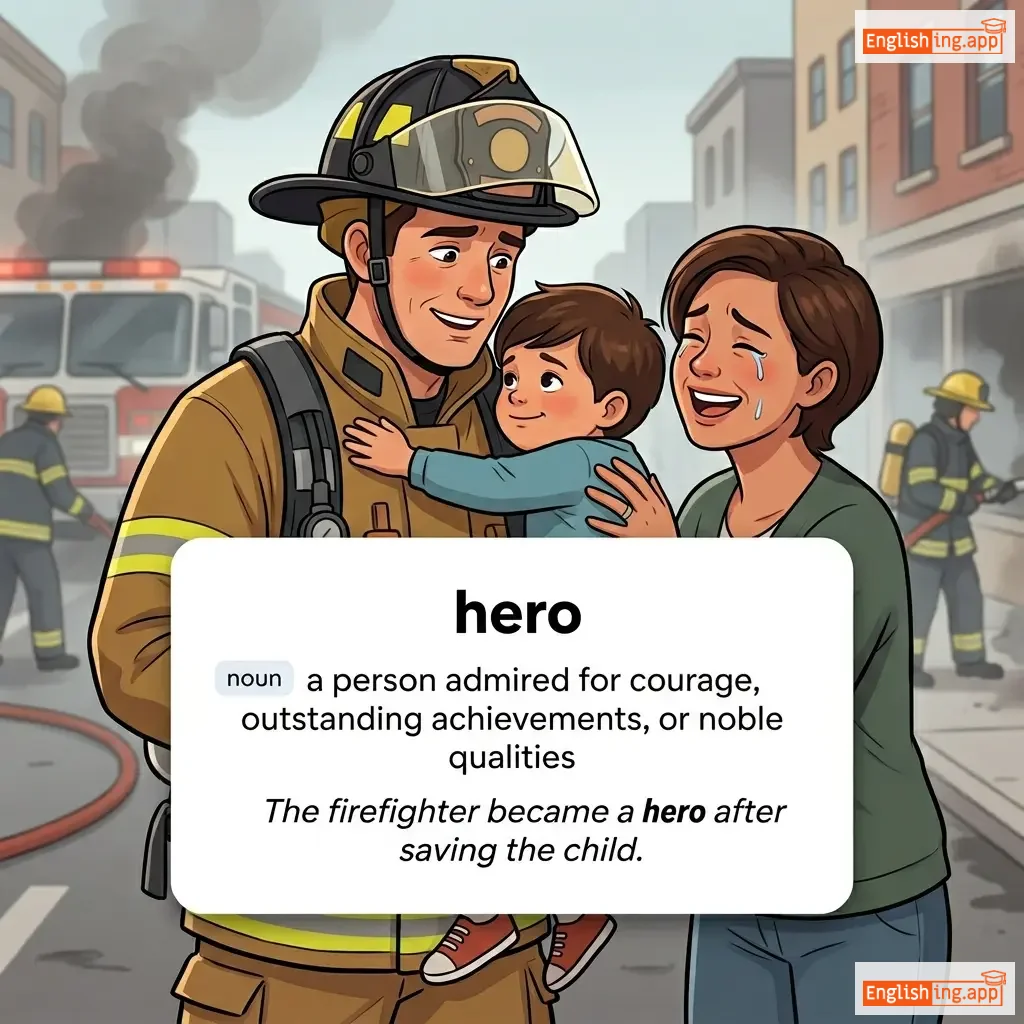
a person admired for courage, outstanding achievements, or noble qualities
••••••
|
The firefighter became a hero after saving the child. |
消防士は子供を救った後、ヒーローになった。
Shōbōshi wa kodomo o sukutta ato, hīrō ni natta.
••••••
|
unsung hero |
a person who makes a great contribution without recognition
••••••
|
無名のヒーロー
mumei no hīrō
••••••
|
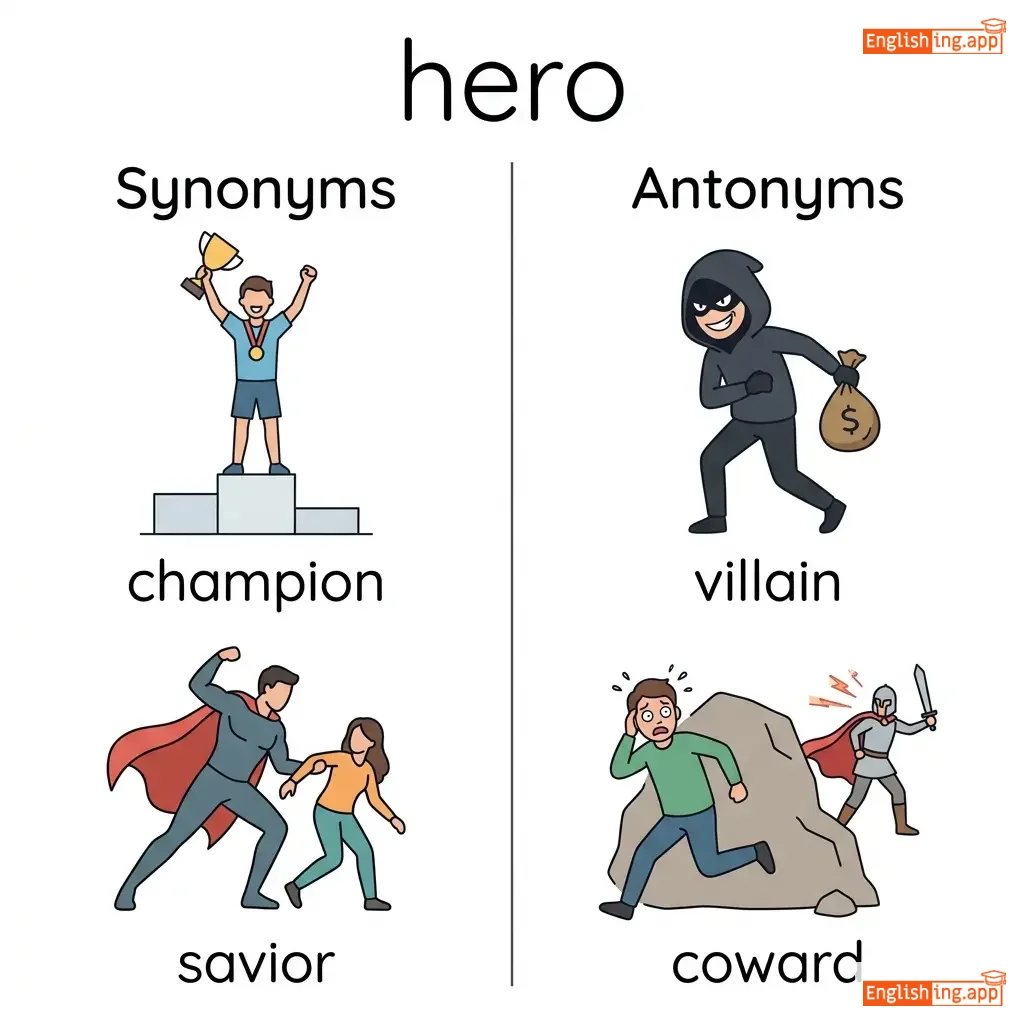
champion, savior, idol, warrior, legend
••••••
|
villain, coward
••••••
|
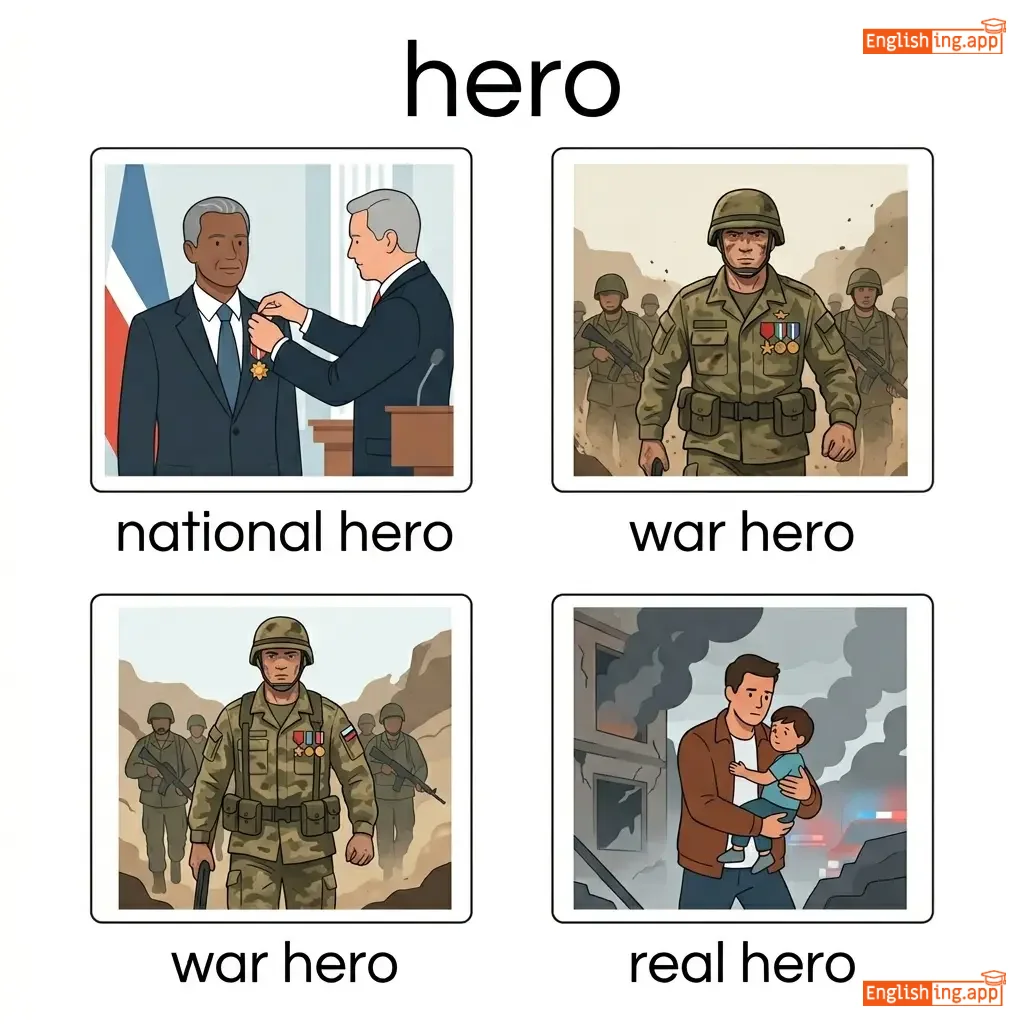
national hero, war hero, real hero, unsung hero
••••••
|
ヒーローとはヒーロー 🦸 - 日本語ではヒーローは素晴らしいことをした人です。
••••••
|
|
#11128
📍
|
/hɪr/
adverb
(ヒア)
••••••
|
- •••••• |
ここ
koko
••••••
|
- •••••• | - •••••• | - •••••• | - •••••• |
in, at, or to this place
••••••
|
Please come here quickly.
ここに早く来てください。
••••••
|
ここに早く来てください。
Koko ni hayaku kite kudasai.
••••••
|
here and there
ここやあそこ
••••••
|
in various places
••••••
|
ここやあそこ
Koko ya asoko
••••••
|
present, nearby, close, around
••••••
|
there, away
••••••
|
come here, right here, here today, stay here
••••••
|
Hereは日本語でここ 📍 - 'ここ'といえば、'here'を思い出します
••••••
|
|
#11129
👩
|
/hɜːr/
pronoun
(ハー)
••••••
|
- •••••• |
彼女
kanojo
••••••
|
- •••••• | - •••••• | - •••••• | - •••••• |
used to refer to a female person or animal already mentioned or easily identified
••••••
|
I saw her at the park yesterday. |
昨日公園で彼女を見ました。
Kinō kōen de kanojo o mimashita.
••••••
|
give her a hand |
to help her
••••••
|
彼女に手を貸す
kanojo ni te o kasu
••••••
|
herself, that woman, the girl
••••••
|
him, his
••••••
|
her book, her house, with her, for her
••••••
|
Her は '彼女' を意味します(女性に関して)- 覚えておいてください:'Her house' は '彼女の家' を意味します
••••••
|
|
#11130
🤝
|
/ˈhɛlpfəl/
adjective
(ヘルプフル)
••••••
|
- •••••• |
役に立つ
yaku ni tatsu
••••••
|
- •••••• | - •••••• | - •••••• | - •••••• |
giving help or being useful
••••••
|
The guide was very helpful during our trip. |
旅行中、ガイドはとても役に立ちました。
Ryokou-chuu, gaido wa totemo yaku ni tachimashita.
••••••
|
- •••••• | - •••••• | - •••••• |
supportive, useful, kind, accommodating, beneficial
••••••
|
unhelpful, useless, uncooperative
••••••
|
helpful advice, helpful guide, helpful information, helpful staff
••••••
|
Helpfulは役に立つ、まるで役立つガイド
••••••
|
|
#11131
👋
|
/həˈloʊ/
interjection
(ハロー)
••••••
|
- •••••• |
ハロー
harō
••••••
|
- •••••• | - •••••• | - •••••• | - •••••• |
a greeting or expression used when meeting someone or starting a conversation
••••••
|
She answered the phone with a cheerful hello.
彼女は電話を取って、元気にハローと言った。
••••••
|
彼女は電話を取って、元気にハローと言った。
Kanojo wa denwa o totte, genki ni harō to itta.
••••••
|
say hello to
誰かにハローを言う
••••••
|
to greet someone
••••••
|
誰かにハローを言う
dareka ni harō o iu
••••••
|
hi, greetings, hey, howdy, welcome
••••••
|
goodbye, farewell
••••••
|
say hello, hello there, big hello, hello everyone
••••••
|
日本語では'ハロー'と言います、英語の'hello'と同じように。
••••••
|
|
#11132
🔥
|
/hɛl/
noun
(ヘル)
••••••
|
- •••••• |
地獄
jigoku
••••••
|
- •••••• | - •••••• | - •••••• | - •••••• |
a place or state of great suffering and torment, often in religious belief
••••••
|
He feared that his sins would send him to hell. |
彼は自分の罪が彼を地獄に送るのではないかと恐れていました。
Kare wa jibun no tsumi ga kare o jigoku ni okuru no de wa nai ka to osorete imashita.
••••••
|
raise hell |
to cause trouble or a noisy disturbance
••••••
|
騒ぎを起こす
sawagi o okosu
••••••
|
inferno, torment, misery, damnation
••••••
|
heaven, paradise
••••••
|
living hell, go to hell, raise hell
••••••
|
地獄は苦しみの場所 🔥—「地獄」を思い出してください、痛みと苦しみがいっぱいの場所です。
••••••
|
|
#11133
🚁
|
/ˈhɛlɪˌkɒptər/
noun
(ヘリコプター)
••••••
|
- •••••• |
ヘリコプター
herikoputā
••••••
|
- •••••• | - •••••• | - •••••• | - •••••• |
an aircraft with rotating blades that can take off and land vertically
••••••
|
The helicopter landed safely on the hospital roof. |
ヘリコプターは病院の屋上に安全に着陸しました。
Herikoputā wa byōin no okujō ni anzen ni chakuriku shimashita.
••••••
|
helicopter parenting |
a style of parenting where parents are overly focused on their children
••••••
|
ヘリコプターペアレンティング
Herikoputā pērentingu
••••••
|
chopper, rotorcraft, whirlybird
••••••
|
airplane, glider
••••••
|
helicopter ride, helicopter landing, helicopter rescue
••••••
|
ヘリコプター 🚁 ‘ヘリ’ は空を意味し、‘コプター’ は回転するブレードを意味します。
••••••
|
|
#11134
📏
|
/haɪt/
noun
(ハイト)
••••••
|
- •••••• |
高さ
takasa
••••••
|
- •••••• | - •••••• | - •••••• | - •••••• |
the measurement of someone or something from base to top
••••••
|
The height of the tower impressed the visitors. |
塔の高さは訪問者を感動させました。
Tou no takasa wa houmonsha wo kandou sasemashita.
••••••
|
at the height of |
at the most intense point of something
••••••
|
頂点で
chouten de
••••••
|
altitude, elevation, tallness, stature
••••••
|
depth, low
••••••
|
average height, great height, height measurement
••••••
|
Heightは高さを意味します — 高い位置を想像してみてください。
••••••
|
|
#11135
👠
|
/hiːl/
noun
(ヒール)
••••••
|
- •••••• |
かかと
kakato
••••••
|
- •••••• | - •••••• | - •••••• | - •••••• |
the back part of the human foot below the ankle
••••••
|
Her shoe was rubbing against her heel.
彼女の靴は彼女のかかとにこすれていた。
••••••
|
彼女の靴は彼女のかかとにこすれていた。
Kanojo no kutsu wa kanojo no kakato ni kosurete ita.
••••••
|
at someone's heels
誰かのかかとを追う
••••••
|
closely following someone
••••••
|
誰かのかかとを追いかける
Dareka no kakato o oikakeru
••••••
|
backfoot, rear, sole, spur
••••••
|
toe, front
••••••
|
high heel, cracked heel, Achilles heel
••••••
|
かかと — 足の後ろの部分です。高いヒールはかかとを高くします。
••••••
|
|
#11136
⚖️
|
/ˈhɛvi/
adjective
(ヘヴィ)
••••••
|
- •••••• |
重い
omoi
••••••
|
- •••••• | - •••••• | - •••••• | - •••••• |
having great weight; difficult to lift or move
••••••
|
The box was too heavy for her to carry alone. |
その箱は彼女が一人で運ぶには重すぎました。
Sono hako wa kanojo ga hitori de hakobu ni wa omosugimashita.
••••••
|
heavy heart |
a feeling of deep sadness
••••••
|
重い心
omoi kokoro
••••••
|
weighty, massive, bulky, hefty, substantial
••••••
|
light, weightless, airy
••••••
|
heavy rain, heavy traffic, heavy bag, heavy burden
••••••
|
Heavy とは重いです — 重すぎて持ち上げられない箱を想像してみてください。
••••••
|
|
#11137
🌧️
|
/ˈhɛvɪli/
adverb
(ヘヴィリー)
••••••
|
- •••••• |
重く / 大量に
omoku / tairyou ni
••••••
|
- •••••• | - •••••• | - •••••• | - •••••• |
to a great degree; with a lot of weight, intensity, or force
••••••
|
It rained heavily all night. |
一晩中激しく雨が降った。
Hitobanjuu hageshiku ame ga futta.
••••••
|
- •••••• | - •••••• | - •••••• |
intensely, strongly, severely, weightily
••••••
|
lightly, mildly
••••••
|
heavily loaded, heavily armed, heavily influenced, heavily involved
••••••
|
Heavily 🌧️は重いことを意味します - 思い出して:heavy rainはheavily rainを意味します
••••••
|
|
#11138
☁️
|
/ˈhɛvən/
noun
(ヘヴン)
••••••
|
- •••••• |
天国
tengoku
••••••
|
- •••••• | - •••••• | - •••••• | - •••••• |
the place believed to be the home of God and the afterlife of the good; a state of extreme happiness
••••••
|
They believe that good people go to heaven after death. |
彼らは良い人々が死後天国に行くと信じている。
Karera wa yoi hitobito ga shigo tengoku ni iku to shinjite iru.
••••••
|
move heaven and earth |
to do everything possible to achieve something
••••••
|
天と地を動かす
ten to chi o ugokasu
••••••
|
paradise, bliss, afterlife, nirvana, delight
••••••
|
hell, misery
••••••
|
go to heaven, heaven on earth, gates of heaven, pray to heaven
••••••
|
天国 = 幸せな場所 ☁️ – 幸せなら、まるで天国にいるみたいな気分!
••••••
|
|
#11139
🔥
|
/hiːt/
noun/verb
(ヒート)
••••••
|
|
熱 / 暖める
netsu / atatameru
••••••
|
heated
ヒーテッド
••••••
|
heated
ヒーテッド
••••••
|
heats
ヒーツ
••••••
|
heating
ヒーティング
••••••
|
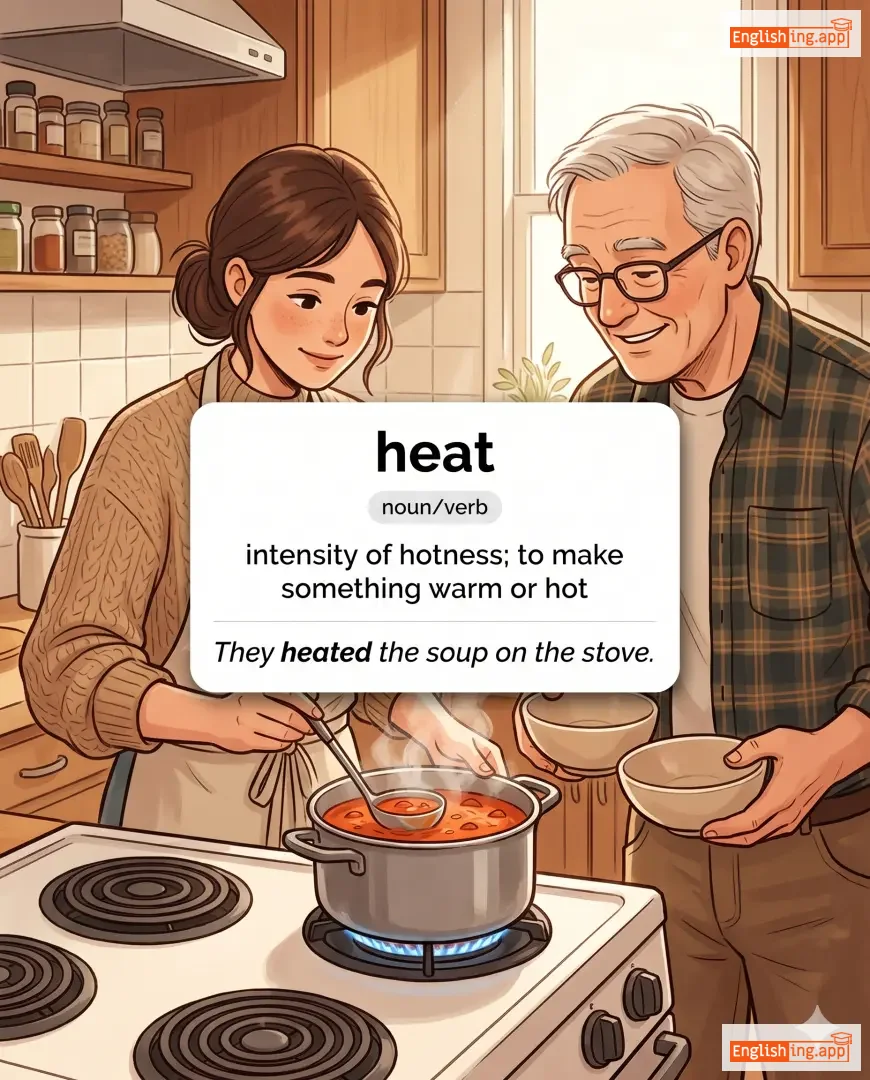
intensity of hotness; to make something warm or hot
••••••
|
They heated the soup on the stove.
彼らはストーブでスープを温めた。
••••••
|
彼らはストーブでスープを温めた。
Karera wa sutōbu de sūpu o atatameta.
••••••
|
in the heat of the moment
その瞬間の熱気の中で
••••••
|
acting without thinking due to strong emotions
••••••
|
強い感情で思考せずに行動する
Tsuyoi kanjō de shikō sezu ni kōdō suru
••••••
|
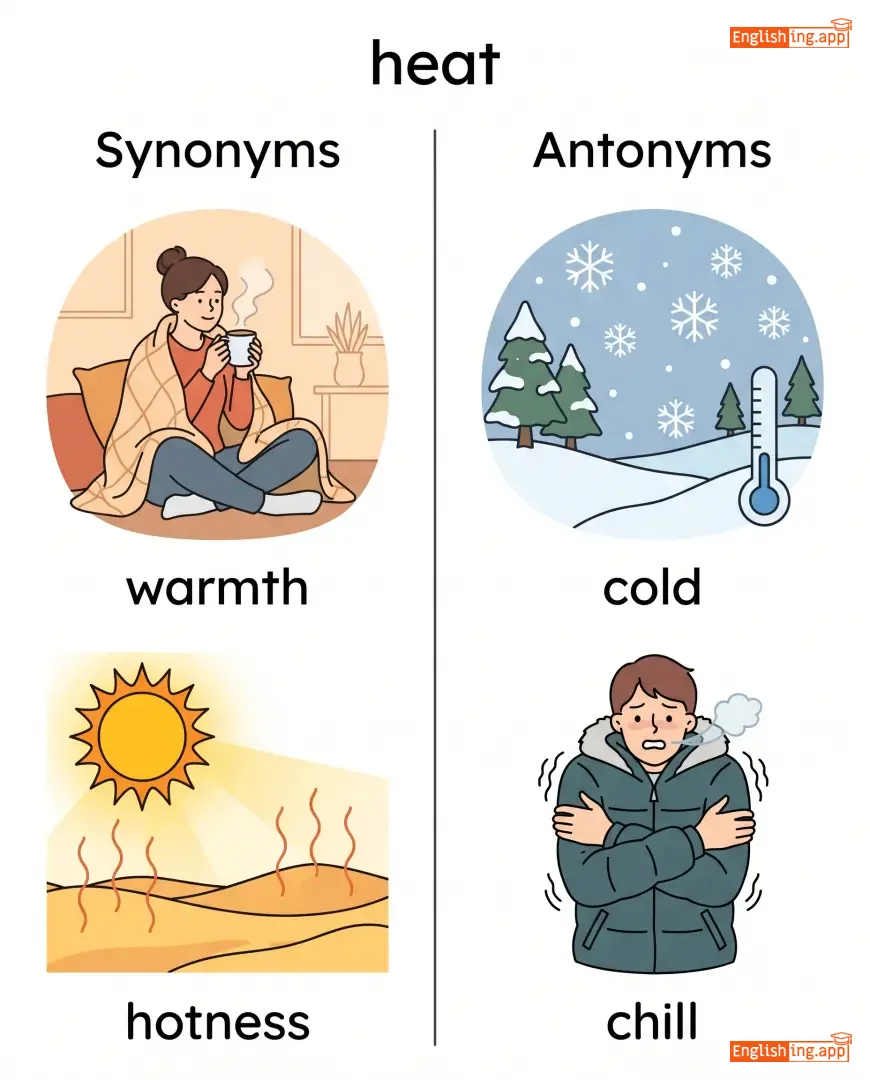
warmth, hotness, fire, passion, energy
••••••
|
cold, chill
••••••
|
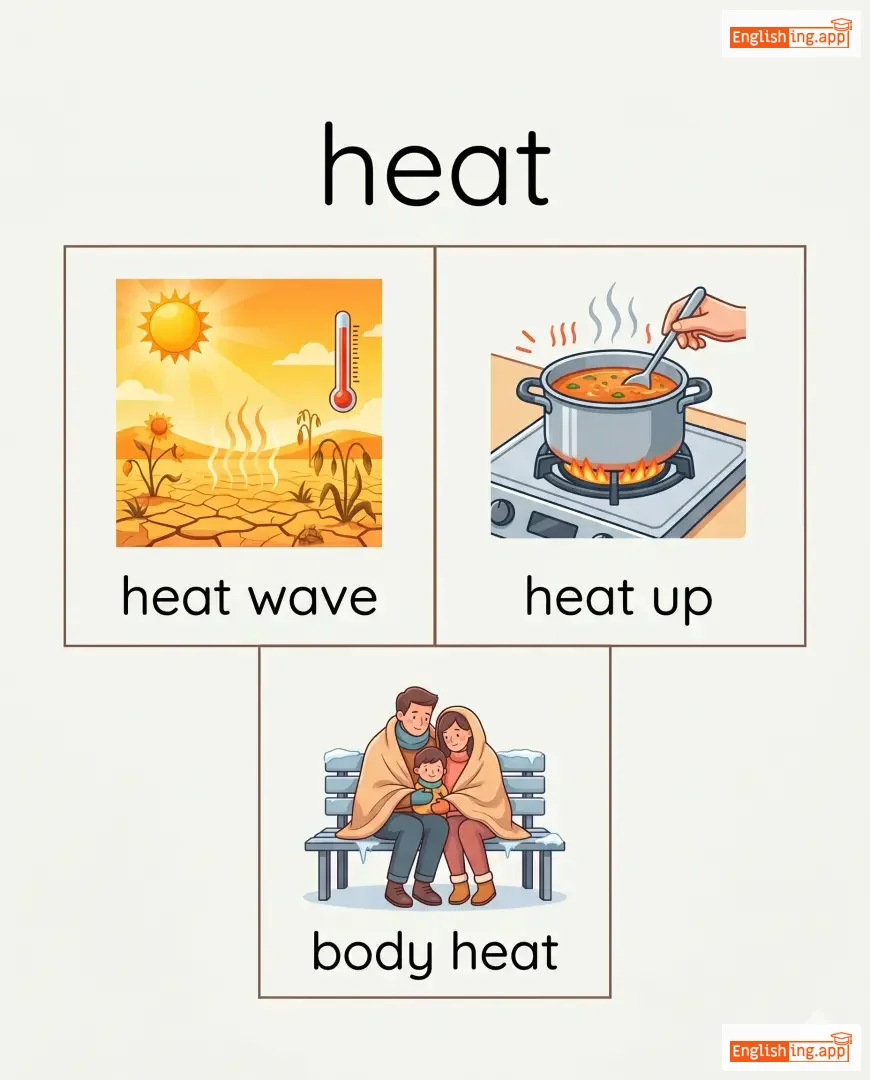
heat wave, heat up, body heat, generate heat
••••••
|
Heatは熱い🔥 – それはすべてを温める
••••••
|
|
#11140
½
|
/hæf/
noun, adjective
(ハーフ)
••••••
|
- •••••• |
半分
hanbun
••••••
|
- •••••• | - •••••• | - •••••• | - •••••• |
one of two equal parts of something
••••••
|
He ate half of the cake. |
彼はケーキの半分を食べました。
Kare wa keeki no hanbun o tabemashita.
••••••
|
half-hearted |
without much effort or enthusiasm
••••••
|
中途半端
chuuto hanpa
••••••
|
portion, part, piece, division
••••••
|
whole, complete
••••••
|
half price, half hour, half life, half way
••••••
|
Halfは半分、ケーキを二つに分けると半分 = half
••••••
|
|
#11141
👂
|
/ˈhɪərɪŋ/
noun
(ヒアリング)
••••••
|
- •••••• |
ヒアリング / 聴覚
hīringu / chōkaku
••••••
|
- •••••• | - •••••• | - •••••• | - •••••• |
the ability to perceive sounds or an official meeting to listen to arguments or evidence
••••••
|
The judge scheduled a hearing for next week. |
裁判官は来週のヒアリングを予定しています。
Saibankan wa raishū no hīringu o yotei shiteimasu.
••••••
|
hard of hearing |
having partial hearing loss
••••••
|
部分的な聴力低下
bubun-teki na chōryoku teika
••••••
|
listening, audition, perception, trial, meeting
••••••
|
deafness, silence
••••••
|
court hearing, public hearing, hearing aid, hearing loss
••••••
|
Hearing はヒアリングの意味 – 裁判所でヒアリングを行い、耳で聴くことができます 👂
••••••
|
|
#11142
👂
|
/hɪr/
verb
(hiā)
••••••
|
|
聞く
kiku
••••••
|
heard
hādo
••••••
|
heard
hādo
••••••
|
hears
hiāzu
••••••
|
hearing
hīringu
••••••
|
To perceive sound with the ear.
••••••
|
I can hear birds singing outside.
私は外で鳥が歌っているのを聞くことができます。
••••••
|
私は外で鳥が歌っているのを聞くことができます。
Watashi wa soto de tori ga utatte iru no o kiku koto ga dekimasu.
••••••
|
hear from someone
誰かから聞く
••••••
|
to receive news or communication from someone
••••••
|
誰かから聞く
Dareka kara kiku
••••••
|
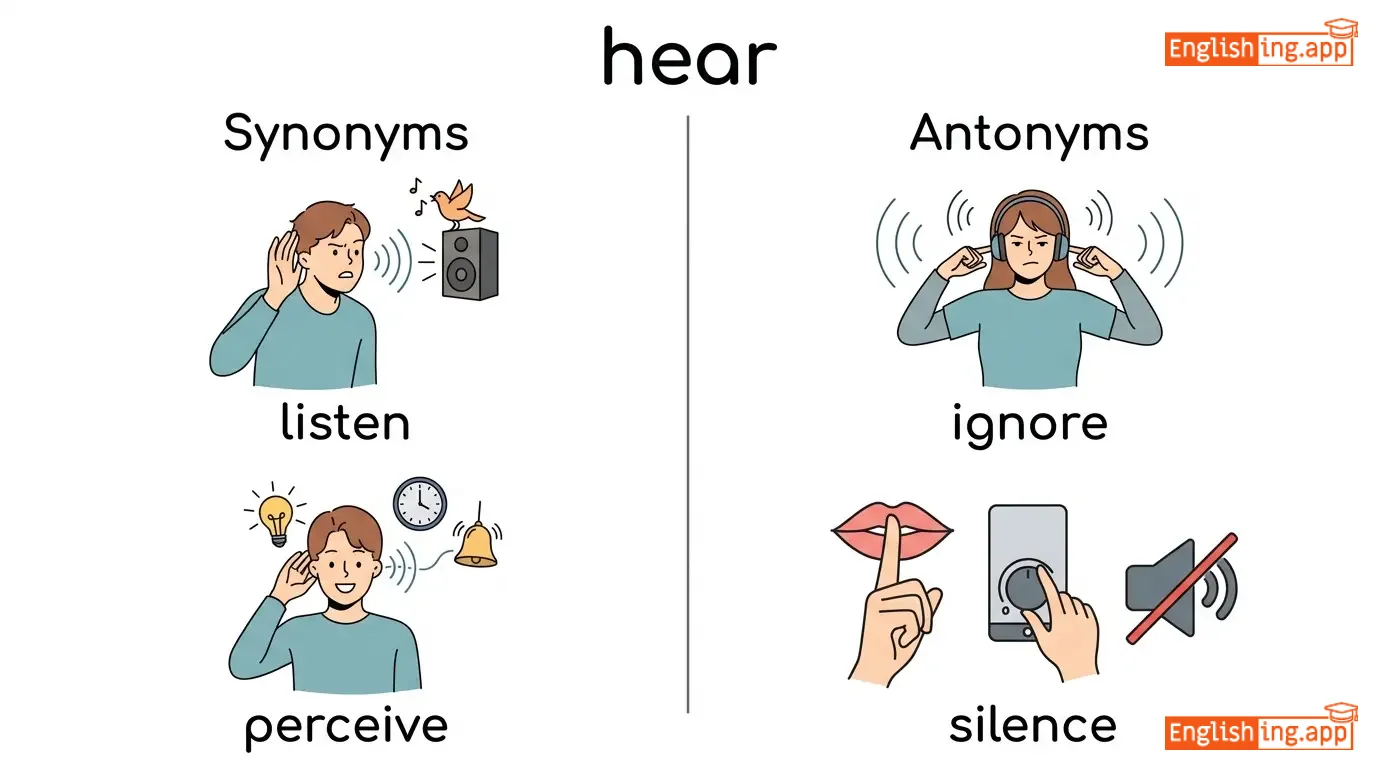
listen, perceive, detect, notice, overhear
••••••
|
ignore, silence
••••••
|
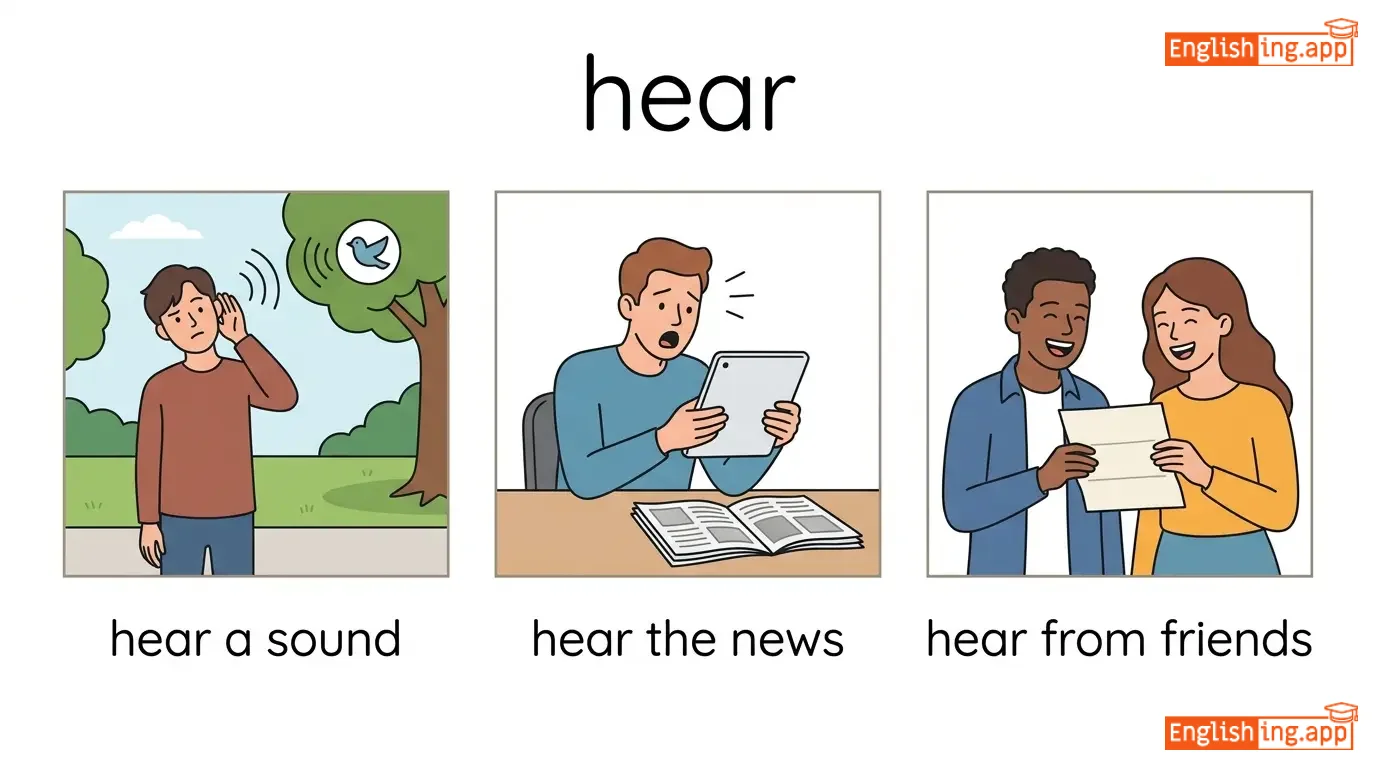
hear a sound, hear the news, hear from friends, hear clearly
••••••
|
聞くは耳で音を感じ取ること。
••••••
|
|
#11143
💪
|
/hɛlθ/
noun
(ヘルス)
••••••
|
- •••••• |
健康
kenkō
••••••
|
- •••••• | - •••••• | - •••••• | - •••••• |
The state of being free from illness or injury.
••••••
|
Exercise is important for good health. |
運動は良い健康のために重要です。
Undō wa yoi kenkō no tame ni jūyōdesu.
••••••
|
in good health |
being healthy
••••••
|
健康であること
kenkō de aru koto
••••••
|
wellness, fitness, condition, wellbeing
••••••
|
illness, sickness, disease
••••••
|
good health, health care, public health, mental health
••••••
|
Healthは健康、健康は幸福の源です。
••••••
|
|
#11144
🏢
|
/ˈhɛdˌkwɔːrtərz/
noun
(ヘッドクォーターズ)
••••••
|
- •••••• |
本社
honsha
••••••
|
- •••••• | - •••••• | - •••••• | - •••••• |
The main office or center of operations of an organization.
••••••
|
The company’s headquarters is located in New York. |
その会社の本社はニューヨークにあります。
Sono kaisha no honsha wa Nyūyōku ni arimasu.
••••••
|
- •••••• | - •••••• | - •••••• |
main office, center, base, hub, command post
••••••
|
branch, outpost
••••••
|
corporate headquarters, police headquarters, company headquarters, military headquarters
••••••
|
Headquarters = head + quarters → 本社、企業の中心となる場所。
••••••
|
|
#11145
📰
|
/ˈhɛdˌlaɪn/
noun
(ヘッドライン)
••••••
|
- •••••• |
見出し
midashi
••••••
|
- •••••• | - •••••• | - •••••• | - •••••• |
The title of a newspaper article printed in large letters.
••••••
|
The scandal made front-page headlines.
そのスキャンダルはフロントページのヘッドラインになった。
••••••
|
そのスキャンダルはフロントページの見出しになった。
Sono sukyandaru wa furonto pēji no midashi ni natta.
••••••
|
grab the headlines
注目を集める
••••••
|
to attract public attention
••••••
|
注目を集める
Chūmoku o atsumeru
••••••
|
title, heading, banner, caption, news
••••••
|
detail, footnote
••••••
|
front-page headline, news headline, headline story, write a headline
••••••
|
見出し = 新聞の大きなタイトル = 見出し
••••••
|
|
#11146
👤
|
/hɛd/
noun, verb
(ヘッド)
••••••
|
- •••••• |
頭 / リーダー
atama / rīdā
••••••
|
headed
ヘッディッド
••••••
|
headed
ヘッディッド
••••••
|
heads
ヘッズ
••••••
|
heading
ヘディング
••••••
|
The upper part of the human body or to lead or be in charge of something.
••••••
|
She turned her head to look out the window.
彼女は窓の外を見るために頭を回した。
••••••
|
彼女は窓の外を見るために頭を回した。
kanojo wa mado no soto o miru tame ni atama o mawaseta.
••••••
|
head over heels
頭から足元まで
••••••
|
completely in love
••••••
|
完全に恋に落ちる
kanzen ni koi ni ochiru
••••••
|
chief, leader, boss, director, skull
••••••
|
follower, subordinate
••••••
|
head of department, head office, head a team, shake your head
••••••
|
ヘッドは頭を意味します。頭から足元までが完全に恋に落ちるという意味です。
••••••
|
|
#11147
👨
|
/hiː/
pronoun
(hi)
••••••
|
- •••••• |
彼 (男性)
kare (dansei)
••••••
|
- •••••• | - •••••• | - •••••• | - •••••• |
used to refer to a male person or animal already mentioned or easily identified
••••••
|
He is my best friend. |
彼は私の親友です。
Kare wa watashi no shin'yū desu.
••••••
|
- •••••• | - •••••• | - •••••• |
the man, that person, him
••••••
|
she, her
••••••
|
he said, he was, he went, he did
••••••
|
Heは彼 (男性)を意味します。HE-ro (ヒーロー)は通常男性です。
••••••
|
|
#11148
👒
|
/hæt/
noun
(ハット)
••••••
|
- •••••• |
帽子
bōshi
••••••
|
- •••••• | - •••••• | - •••••• | - •••••• |
a shaped covering for the head, often with a brim
••••••
|
He wore a black hat to the party. |
彼はパーティーに黒い帽子をかぶっていった。
Kare wa pātii ni kuroi bōshi o kabutte itta.
••••••
|
to wear many hats |
to have many roles or responsibilities
••••••
|
多くの役割や責任を持つ
ōku no yakuwari ya sekinin o motsu
••••••
|
cap, headgear, helmet, bonnet
••••••
|
barehead
••••••
|
wear a hat, take off hat, straw hat, cowboy hat
••••••
|
Hatは日本語で帽子です。頭にかぶるものです。
••••••
|
|
#11149
😯
|
/ˈhɑːrdli/
adverb
(ハードリー)
••••••
|
- •••••• |
ほとんどない
hotondo nai
••••••
|
- •••••• | - •••••• | - •••••• | - •••••• |
almost not; scarcely
••••••
|
She could hardly believe her eyes.
彼女は目を信じることができなかった。
••••••
|
彼女は目を信じることができなかった。
Kanojo wa me wo shinjiru koto ga dekinakatta.
••••••
|
- •••••• | - •••••• | - •••••• |
barely, scarcely, rarely, seldom, infrequently
••••••
|
easily, certainly, often
••••••
|
hardly ever, hardly any, hardly noticeable, hardly believe
••••••
|
HARDly は日本語で 'ほとんどない' という意味です。
••••••
|
|
#11150
✨
|
/ˈhæpən/
verb
(ハピネス)
••••••
|
- •••••• |
起こる
okoru
••••••
|
happened
ハピネスト
••••••
|
happened
ハピネスト
••••••
|
happens
ハピネス
••••••
|
happening
ハピニング
••••••
|
to take place or occur, usually by chance
••••••
|
Accidents can happen at any time.
事故はいつでも起こり得ます。
••••••
|
事故はいつでも起こり得ます。
Jiko wa itsu demo okoriemasu.
••••••
|
what happens, happens
起こることは起こる
••••••
|
an expression used to accept events as they occur without worry
••••••
|
起こることは起こる
Okoru koto wa okoru
••••••
|
occur, take place, transpire, arise, ensue
••••••
|
prevent, stop, avoid
••••••
|
happen suddenly, happen accidentally, happen again, happen quickly
••••••
|
HAPPENは何かが突然起こる可能性があることを意味します。
••••••
|
|
#11151
🖼️
|
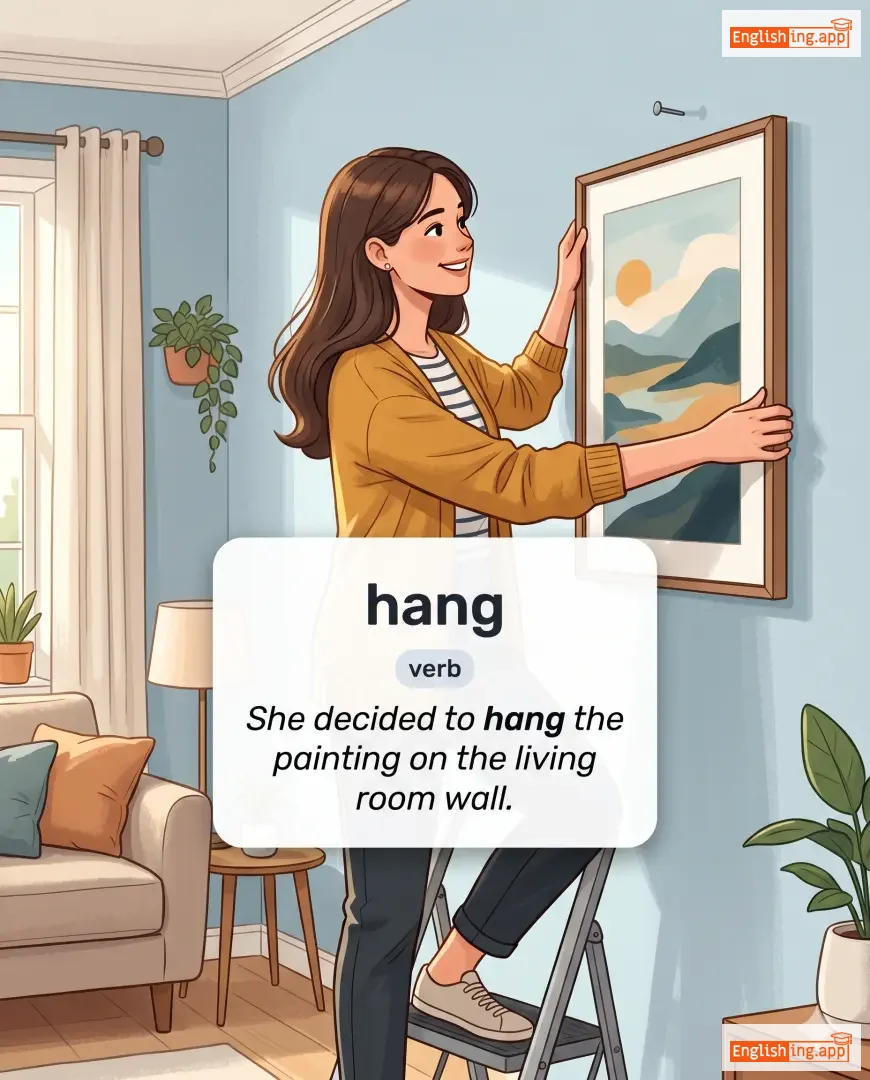
/hæŋ/
verb
••••••
|
|
- •••••• |
hung
••••••
|
hung
••••••
|
hangs
••••••
|
hanging
••••••
|
to suspend or attach something from above so that it moves freely or is supported
••••••
|
She decided to hang the painting on the living room wall. |
- •••••• |
hang in there |
used to encourage someone to persevere through a difficult time
••••••
|
- •••••• |
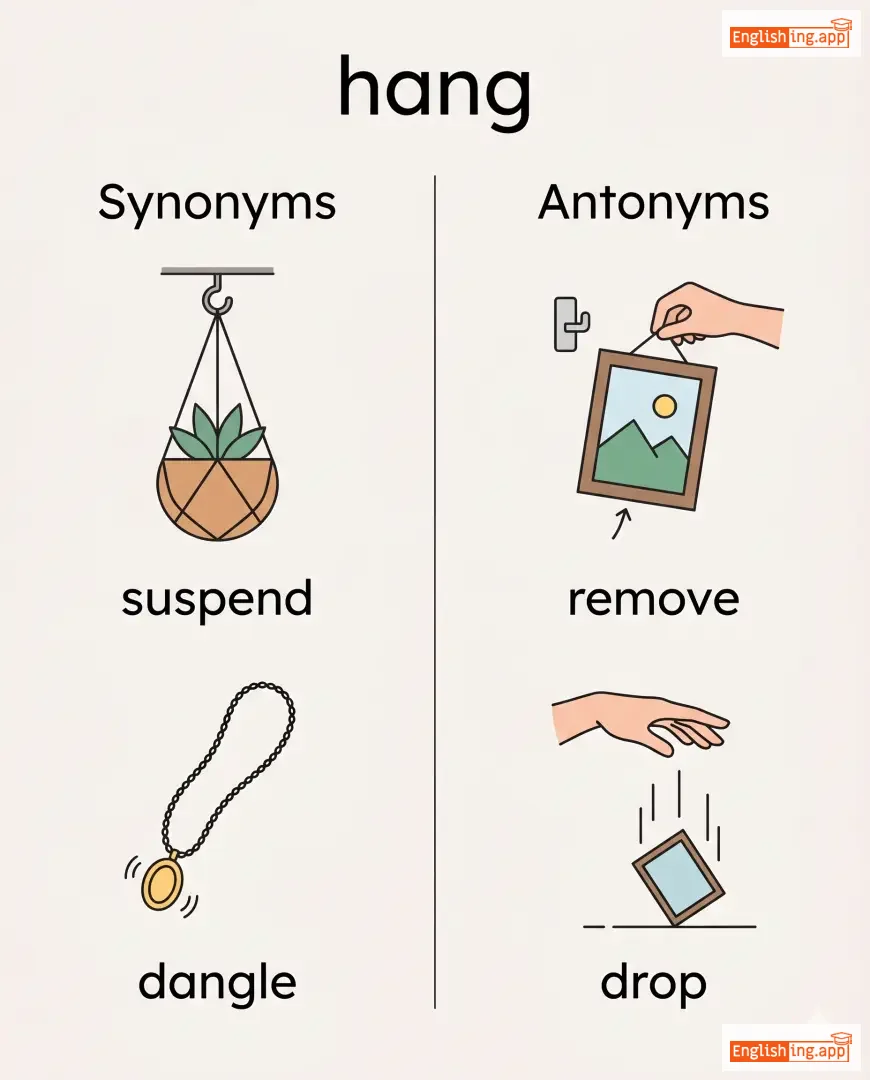
suspend, dangle, attach, display, drape
••••••
|
remove, drop, take down
••••••
|
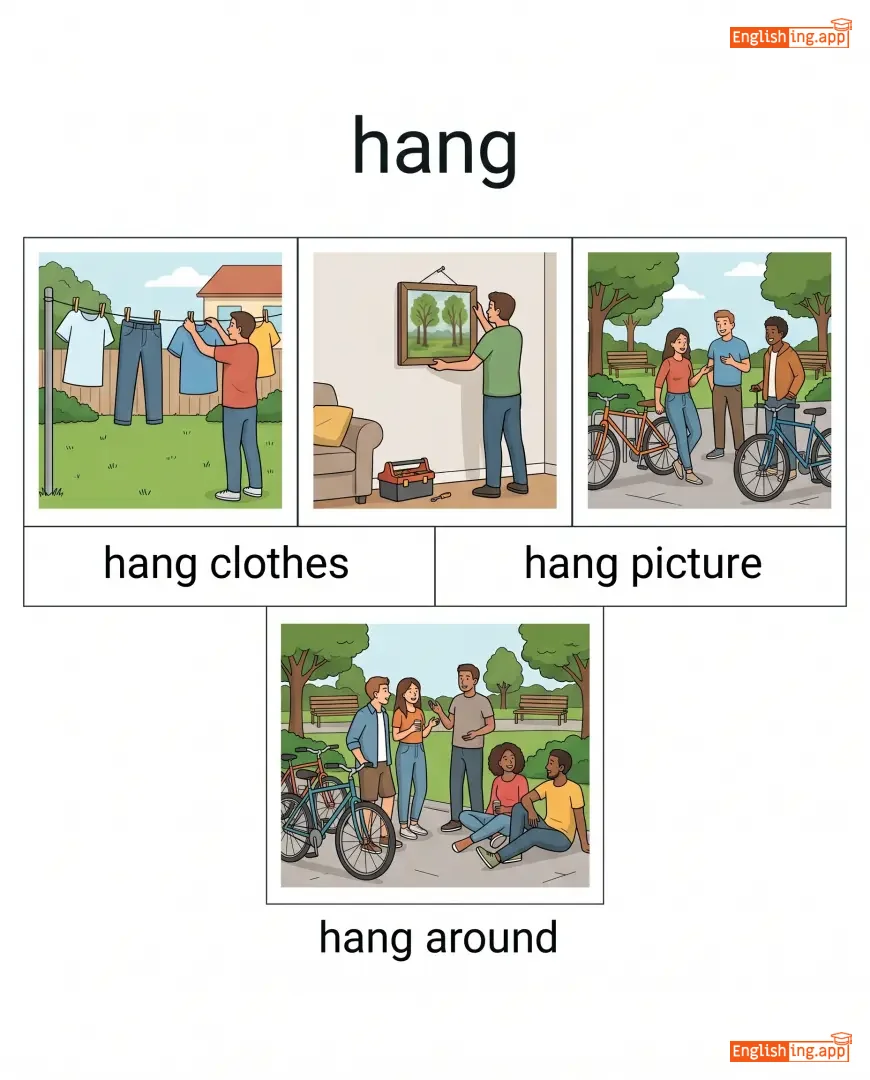
hang clothes, hang picture, hang around, hang up
••••••
|
No •••••• |
|
#11152
🪟
|
/ˈhændl̩/
noun, verb
(ハンドル)
••••••
|
|
取っ手 / 扱う
totte / atsukau
••••••
|
handled
ハンドルド
••••••
|
handled
ハンドルド
••••••
|
handles
ハンドルズ
••••••
|
handling
ハンドリング
••••••
|
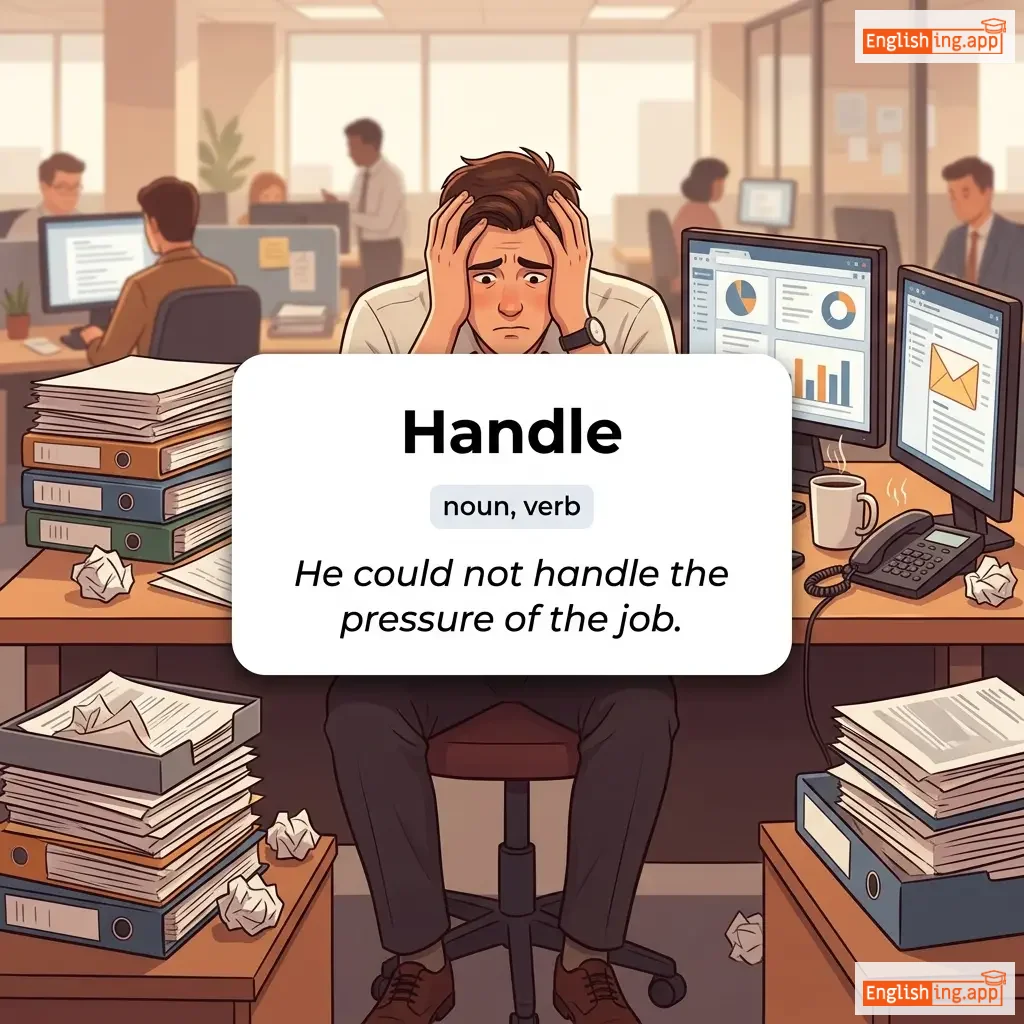
the part of an object designed to be held in the hand; to deal with or manage a situation
••••••
|
He could not handle the pressure of the job.
彼は仕事のプレッシャーをうまく扱えなかった。
••••••
|
彼は仕事のプレッシャーをうまく扱えなかった。
Kare wa shigoto no puresshā wo umaku atsukaenakatta.
••••••
|
fly off the handle
かっとなる
••••••
|
to suddenly become very angry
••••••
|
突然激怒する
totsuzen gekido suru
••••••
|
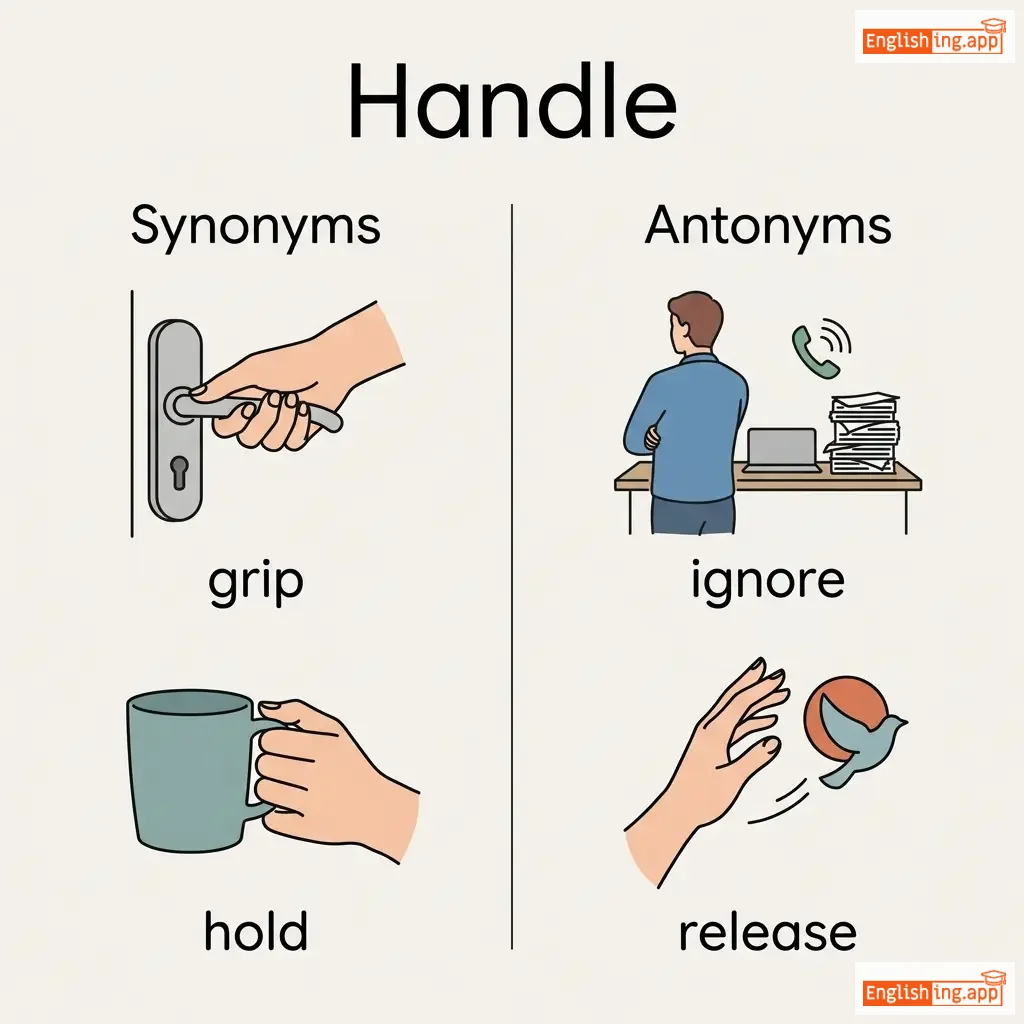
grip, hold, control, manage
••••••
|
ignore, release
••••••
|
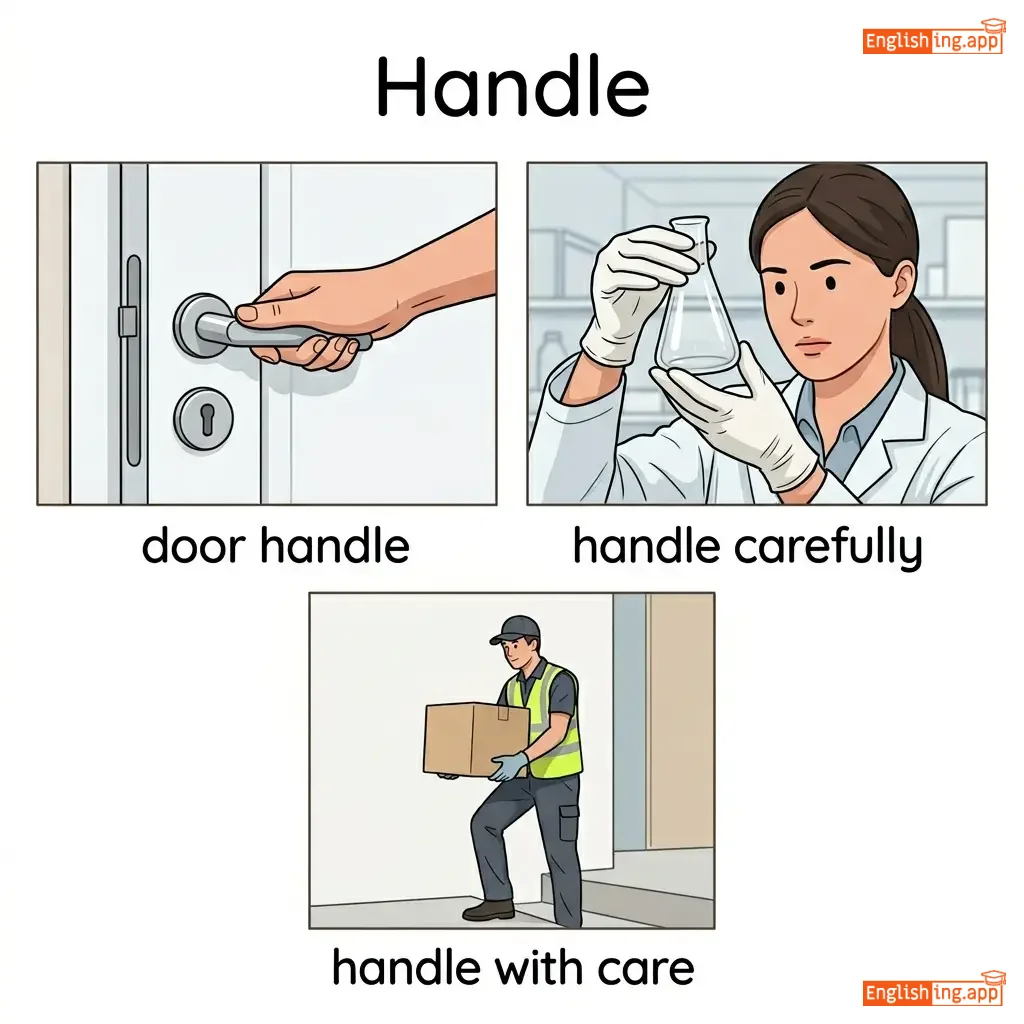
door handle, handle carefully, handle with care
••••••
|
取っ手 - 手で取るから取っ手、難しい状況を扱う
••••••
|
|
#11153
✋
|
/ˈhænd.fʊl/
noun
(ハンドフル)
••••••
|
- •••••• |
ひと握り
hito nigiri
••••••
|
- •••••• | - •••••• | - •••••• | - •••••• |
the amount of something that can be held in one hand; a small number
••••••
|
She took a handful of nuts. |
彼女はひと握りのナッツを取った。
kanojo wa hito nigiri no nattsu o totta.
••••••
|
a handful |
a small number of people or things; someone difficult to manage
••••••
|
少数の人々や物;扱いにくい人
shōsū no hitobito ya mono; atsukai nikui hito
••••••
|
few, small amount, little, portion
••••••
|
many, plenty
••••••
|
a handful of, only a handful, just a handful
••••••
|
ひと握りで簡単に覚えられる
••••••
|
|
#11154
🤚
|
/hænd/
noun, verb
••••••
|
- •••••• | - •••••• |
handed
••••••
|
handed
••••••
|
hands
••••••
|
handing
••••••
|
the part of the body at the end of the arm used for holding things
••••••
|
She raised her hand to ask a question. |
- •••••• |
in safe hands |
being looked after by someone competent and reliable
••••••
|
- •••••• |
palm, fist, grip, hold
••••••
|
foot, neglect
••••••
|
shake hands, hand in, hand out, raise hand
••••••
|
No •••••• |
Vocabulary Quiz
Test your vocabulary by matching words with their translations or meanings.
Login to take the quiz
Comments (0)
Share your thoughts and join the discussion.
Join the discussion by logging in
Login to CommentNo comments yet
Be the first to share your thoughts!