

翻訳
過去
過去分詞
三人称単数
動名詞
意味
例文
例文の翻訳
同義語
対義語
コロケーション
ニーモニック

Swipe left or right, or use the buttons. Tap image to zoom.
例文の翻訳
単語
Lesson 256Lesson 256 - マスクトグル
|
絵文字
|
単語 | Images | 翻訳 | 過去 | 過去分詞 | 三人称単数 | 動名詞 | 意味 | 例文 | 例文の翻訳 | 表現例 | 表現例の意味 | 表現例の翻訳 | 同義語 | 対義語 | コロケーション | ニーモニック |
|---|---|---|---|---|---|---|---|---|---|---|---|---|---|---|---|---|---|
|
#7650
⚔️
|
/rɪˈvoʊlt/
verb
(リボルト)
••••••
|
|
反乱
hanran
••••••
|
revolted
リボルテッド
••••••
|
revolted
リボルテッド
••••••
|
revolts
リボルツ
••••••
|
revolting
リボルティング
••••••
|
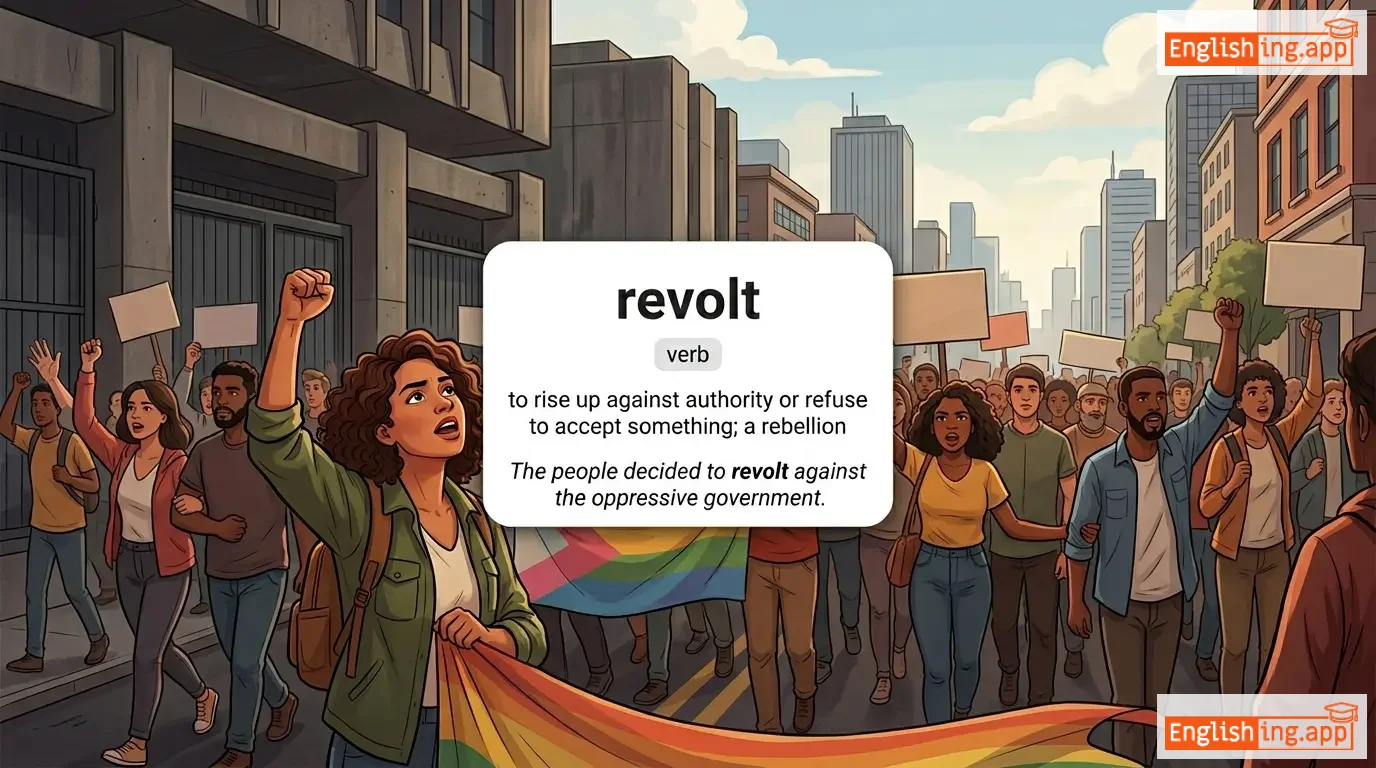
to rise up against authority or refuse to accept something; a rebellion
••••••
|
The people decided to revolt against the oppressive government.
人々は圧制政府に対して反乱を決意した。
••••••
|
人々は圧制政府に対して反乱を決意した。
Hitobito wa assē seifu ni taishite hanran o ketsui shita.
••••••
|
rise in revolt
反乱に立ち上がる
••••••
|
to rebel or resist against authority
••••••
|
反乱に立ち上がる
Hanran ni tachiagaru
••••••
|
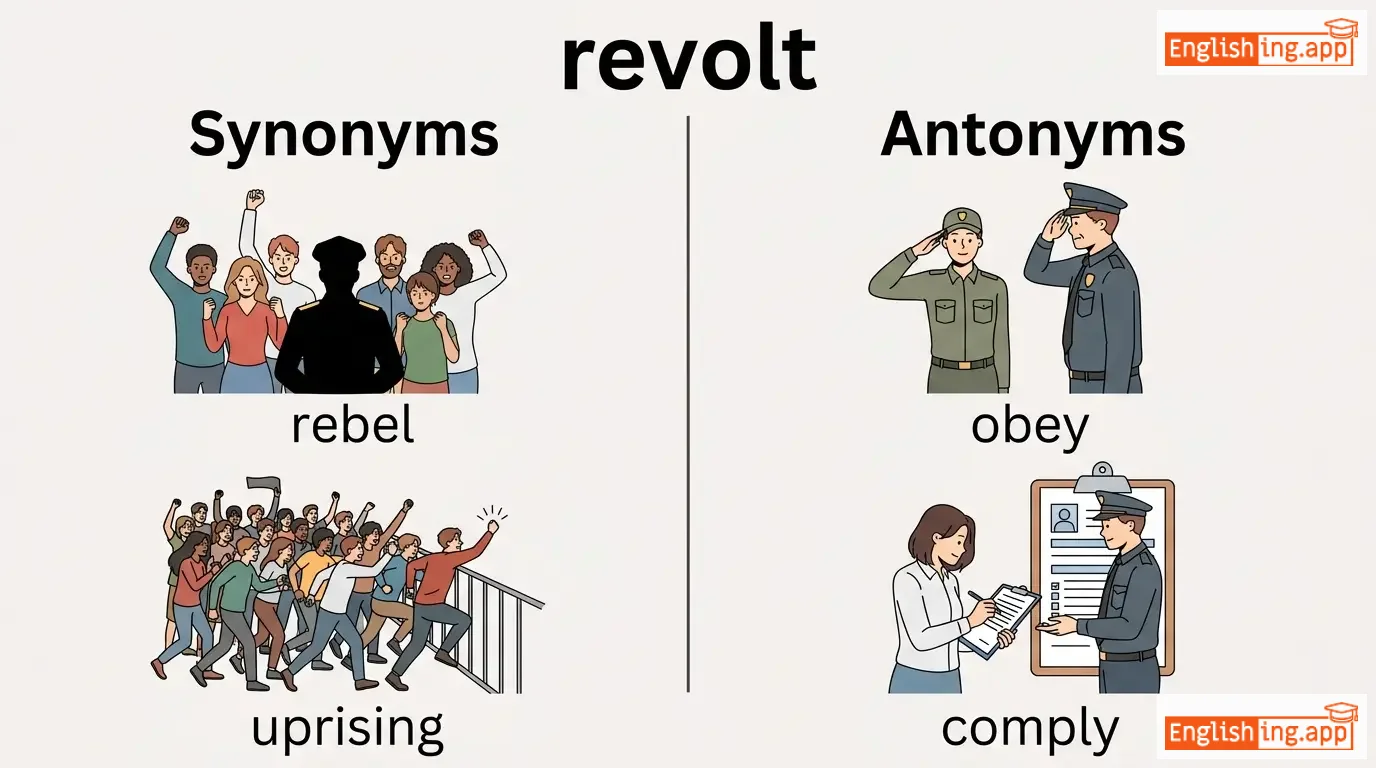
rebel, uprising, insurrection, mutiny, resist
••••••
|
obey, comply, submit
••••••
|
armed revolt, popular revolt, revolt against, suppress revolt
••••••
|
Re-volt 電気 ⚡ - 稲妻のように人々は立ち上がる
••••••
|
|
#7651
🤣
|
/rɪˈdɪkjʊləs/
adjective
(リディキュラス)
••••••
|
- •••••• |
馬鹿げた
bakageta
••••••
|
- •••••• | - •••••• | - •••••• | - •••••• |
Deserving mockery; absurd or unreasonable.
••••••
|
The idea of flying pigs is ridiculous. |
飛ぶ豚のアイデアは馬鹿げている。
Tobu buta no aidea wa bakageteiru.
••••••
|
look ridiculous |
Appear very silly or absurd.
••••••
|
馬鹿げて見える
bakagete mieru
••••••
|
absurd, laughable, ludicrous, silly, preposterous
••••••
|
reasonable, sensible, serious
••••••
|
utterly ridiculous, seem ridiculous, look ridiculous
••••••
|
馬鹿げたは笑いの対象、意味不明なことです。
••••••
|
|
#7652
😂
|
/ˈrɪdɪkjuːl/
verb
(リディキュール)
••••••
|
- •••••• |
嘲笑する
choushou suru
••••••
|
ridiculed
リディキュールド
••••••
|
ridiculed
リディキュールド
••••••
|
ridicules
リディキュールズ
••••••
|
ridiculing
リディキュリング
••••••
|
To make fun of someone or something in a cruel or dismissive way.
••••••
|
He was ridiculed for his strange ideas.
彼は奇妙な考えのために嘲笑されました。
••••••
|
彼は奇妙な考えのために嘲笑されました。
Kare wa kimyou na kangae no tame ni choushou saremashita.
••••••
|
hold up to ridicule
嘲笑にさらす
••••••
|
Expose someone to mockery or derision.
••••••
|
嘲笑にさらす
Choushou ni sarasu
••••••
|
mock, deride, taunt, scorn, jeer
••••••
|
praise, admire, respect
••••••
|
face ridicule, subject to ridicule, ridicule someone
••••••
|
嘲笑するのは、物事が馬鹿げているときに行うことです。
••••••
|
|
#7653
🏇
|
/ˈraɪdər/
noun
(ライダー)
••••••
|
- •••••• |
ライダー
raidā
••••••
|
- •••••• | - •••••• | - •••••• | - •••••• |
A person who rides a horse, bicycle, motorcycle, or other vehicle.
••••••
|
The rider fell off the horse. |
ライダーは馬から落ちました。
Raidā wa uma kara ochimashita.
••••••
|
- •••••• | - •••••• | - •••••• |
cyclist, motorcyclist, jockey, equestrian
••••••
|
pedestrian, walker
••••••
|
skilled rider, horse rider, motorcycle rider, rider safety
••••••
|
Riderはそのままライダーとして使われ、馬に乗る人を意味します。
••••••
|
|
#7654
❓
|
/ˈrɪdəl/
noun
(rideru)
••••••
|
- •••••• |
なぞなぞ
nazonazo
••••••
|
- •••••• | - •••••• | - •••••• | - •••••• |
A question or statement designed to test ingenuity or puzzle the mind.
••••••
|
The children enjoyed solving the riddle. |
子供たちはなぞなぞを解くのが好きでした。
Kodomotachi wa nazo nazo o toku no ga suki deshita.
••••••
|
riddle with |
To fill with or spread throughout.
••••••
|
〜で満たす
〜de mitasu
••••••
|
puzzle, enigma, conundrum, mystery
••••••
|
answer, solution, explanation
••••••
|
solve a riddle, ancient riddle, riddle with bullets
••••••
|
Riddle はなぞなぞの意味です。なぞなぞを解くと、新しい視点が開けます。
••••••
|
|
#7655
😔
|
/ˈrɪdən/
adjective
(riden)
••••••
|
- •••••• |
覆われた
oowareta
••••••
|
- •••••• | - •••••• | - •••••• | - •••••• |
Full of or dominated by something unpleasant.
••••••
|
The country was ridden with corruption. |
その国は腐敗に覆われていた。
Sono kuni wa fuhai ni oowarete ita.
••••••
|
guilt-ridden |
Overwhelmed or dominated by feelings of guilt.
••••••
|
罪悪感に覆われた
Zaiakukan ni oowareta
••••••
|
afflicted, burdened, plagued, overwhelmed, tormented
••••••
|
free, relieved, untroubled
••••••
|
guilt-ridden, disease-ridden, crime-ridden, poverty-ridden
••••••
|
Riddenは覆われたという意味です – 例えばguilt-ridden、罪悪感に覆われた。
••••••
|
|
#7656
🚮
|
/ˈrɪdəns/
noun
(riddansu)
••••••
|
- •••••• |
解放
kaihō
••••••
|
- •••••• | - •••••• | - •••••• | - •••••• |
The action of getting rid of something unwanted or unpleasant.
••••••
|
His departure was considered a welcome riddance by the team. |
彼の退職はチームにとって歓迎すべき解放と見なされた。
Kare no taishoku wa chīmu ni totte kangei subeki kaihō to minasareta.
••••••
|
good riddance |
A phrase used to express relief at being free of someone or something unwanted.
••••••
|
良い解放
Yoi kaihō
••••••
|
removal, elimination, disposal, clearance
••••••
|
retention, keeping
••••••
|
good riddance, welcome riddance, riddance of problems
••••••
|
Riddanceは解放の意味で、望ましくないものから解放されること。
••••••
|
|
#7657
🌉
|
/ˈrɪkɪti/
adjective
(riketi)
••••••
|
- •••••• |
ぐらつく
guratsuku
••••••
|
- •••••• | - •••••• | - •••••• | - •••••• |
Poorly made and likely to collapse; shaky.
••••••
|
They crossed a rickety wooden bridge over the river. |
彼らは川を越える不安定な木製の橋を渡りました。
Karera wa kawa o koeru fuantei na mokusei no hashi o watarimashita.
••••••
|
- •••••• | - •••••• | - •••••• |
unstable, shaky, weak, fragile, wobbly
••••••
|
strong, stable, sturdy
••••••
|
rickety bridge, rickety chair, rickety ladder
••••••
|
Ricketyは壊れやすいもののようです
••••••
|
|
#7658
😏
|
/ˈrɪbɔːld/
adjective
(リバルド)
••••••
|
- •••••• |
下品な冗談
gehin na jōdan
••••••
|
- •••••• | - •••••• | - •••••• | - •••••• |
Referring to sexual matters in a humorous or vulgar way.
••••••
|
The comedian’s ribald jokes made the audience laugh uncomfortably. |
コメディアンの下品な冗談は観客を不快にさせながら笑わせた。
Komedian no gehin na jōdan wa kankyaku o fukai ni sasenagara warawaseta.
••••••
|
- •••••• | - •••••• | - •••••• |
vulgar, coarse, indecent, bawdy, crude
••••••
|
polite, refined, decent
••••••
|
ribald humor, ribald joke, ribald laughter
••••••
|
Ribaldは‘rib’と‘bal’で覚える、下品な冗談を意味する。
••••••
|
|
#7659
👀
|
/ˈruːmi/
adjective
(ルーミ)
••••••
|
- •••••• |
涙目
namidame
••••••
|
- •••••• | - •••••• | - •••••• | - •••••• |
Watery, especially referring to the eyes.
••••••
|
His rheumy eyes showed signs of age and fatigue. |
彼の涙目は年齢と疲れの兆しを示していた。
Kare no namidame wa nenrei to tsukare no kizashi o shimeshite ita.
••••••
|
- •••••• | - •••••• | - •••••• |
watery, teary, moist, weepy
••••••
|
dry, clear
••••••
|
rheumy eyes, rheumy gaze, rheumy look
••••••
|
涙目の目は涙で満たされている
••••••
|
|
#7660
🗣️
|
/ˌrɛtəˈrɪʃən/
noun
(レトリシアン)
••••••
|
- •••••• |
雄弁家
yūbenka
••••••
|
- •••••• | - •••••• | - •••••• | - •••••• |
A person who is skilled in the art of rhetoric or persuasive speaking/writing.
••••••
|
The rhetorician captivated the audience with his eloquence. |
雄弁家はその雄弁さで聴衆を魅了しました。
Yūbenka wa sono yūbensa de chōshū o miryō shimashita.
••••••
|
- •••••• | - •••••• | - •••••• |
orator, speaker, lecturer, debater, wordsmith
••••••
|
listener, audience, mute
••••••
|
famous rhetorician, skilled rhetorician, Greek rhetorician
••••••
|
雄弁家、レトリックに通じた人
••••••
|
|
#7661
🗣️
|
/ˈrɛtərɪk/
noun
(レトリック)
••••••
|
|
修辞学
shūjigaku
••••••
|
- •••••• | - •••••• | - •••••• | - •••••• |
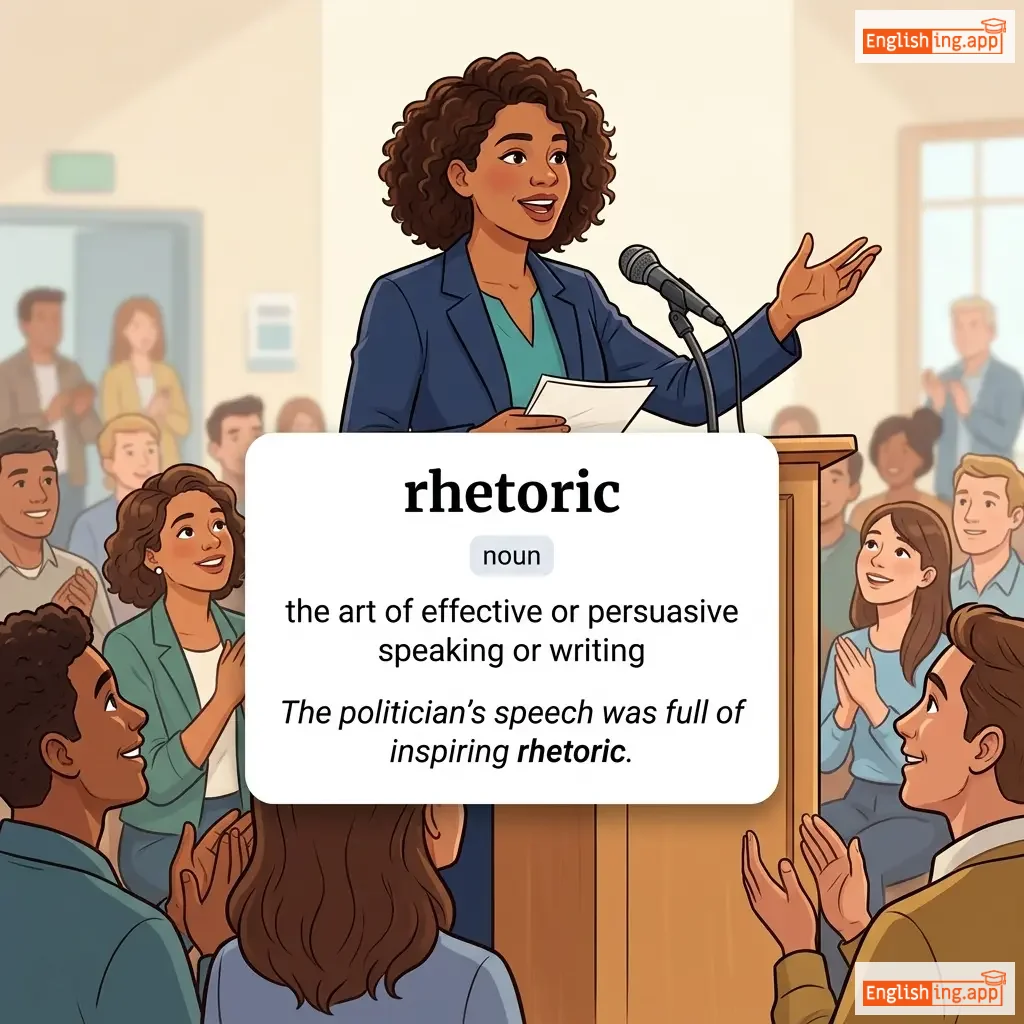
the art of effective or persuasive speaking or writing
••••••
|
The politician’s speech was full of inspiring rhetoric.
その政治家のスピーチは、インスピレーションを与えるレトリックで満ちていました。
••••••
|
その政治家のスピーチは、インスピレーションを与える修辞学で満ちていました。
Sono seijika no supīchi wa, insupirēshon o ataeru shūjigaku de michite imashita.
••••••
|
empty rhetoric
空虚なレトリック
••••••
|
persuasive but meaningless or insincere speech
••••••
|
空虚な修辞学
kūkyona shūjigaku
••••••
|
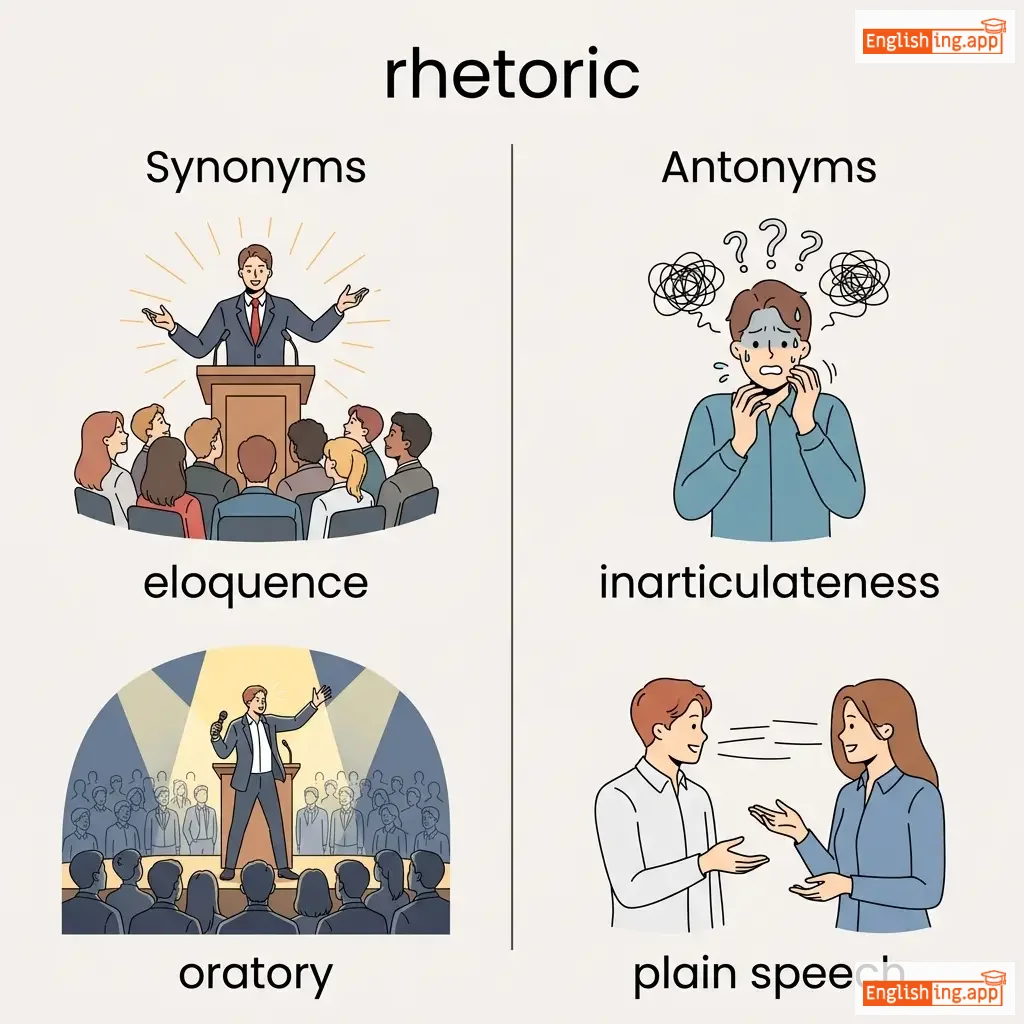
eloquence, oratory, discourse, persuasion
••••••
|
inarticulateness, plain speech
••••••
|
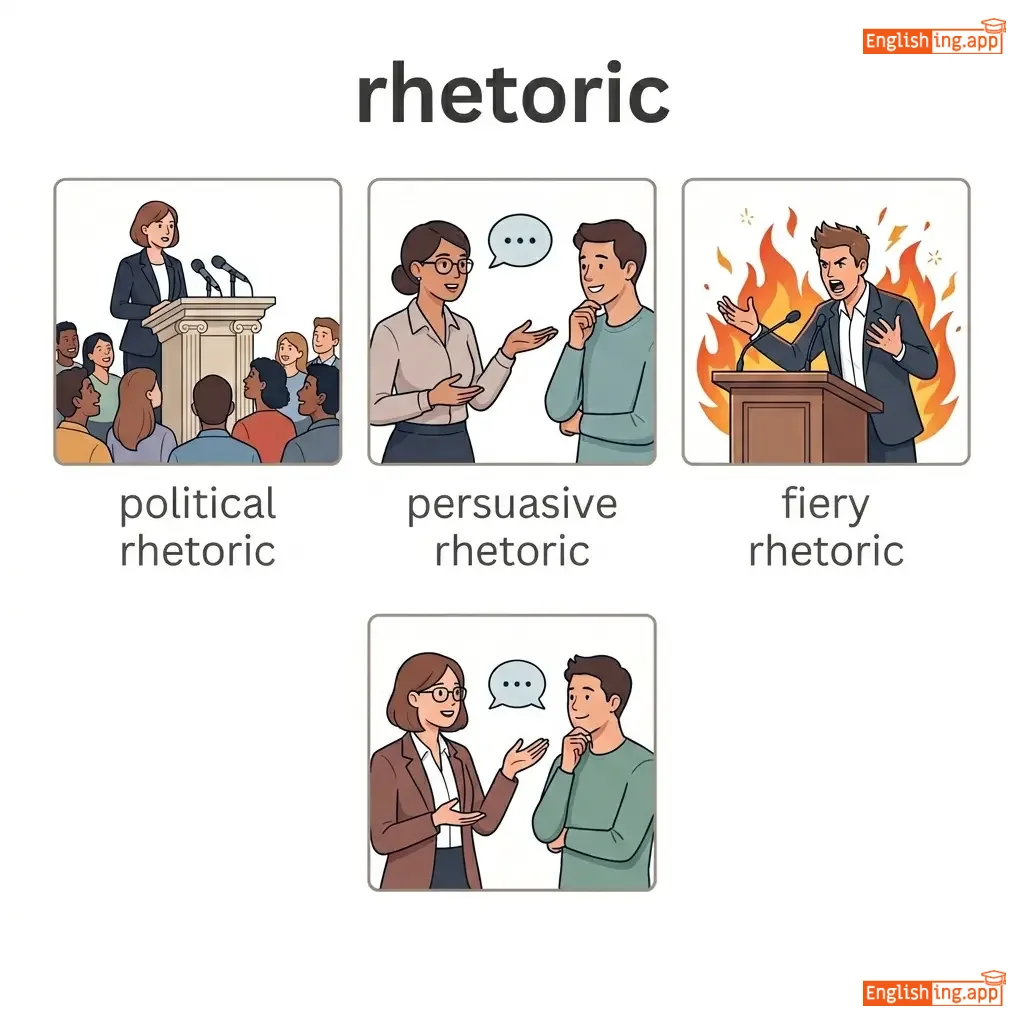
political rhetoric, persuasive rhetoric, fiery rhetoric, rhetorical device
••••••
|
Rhetoric → Ret + Trick 🗣️ 話す際にトリックを使って影響を与える
••••••
|
|
#7662
🎼
|
/ˈræpsədi/
noun
(ラプソディ)
••••••
|
- •••••• |
高揚した歌/賛美
kōyō shita uta/sanbi
••••••
|
- •••••• | - •••••• | - •••••• | - •••••• |
an expression of great enthusiasm or an epic musical composition
••••••
|
The singer’s performance was a rhapsody of emotions. |
歌手のパフォーマンスは感情のラプソディでした。
Kashu no pafōmansu wa kanjō no rhapsody deshita.
••••••
|
Bohemian Rhapsody |
a famous song by Queen symbolizing mixed emotions and artistic expression
••••••
|
ボヘミアン・ラプソディ
Bohemian Rhapsody
••••••
|
ecstasy, euphoria, enthusiasm, lyrical piece
••••••
|
boredom, dullness
••••••
|
musical rhapsody, poetic rhapsody, rhapsody of joy, romantic rhapsody
••••••
|
Rhapsody = RAP + メロディ 🎼 → 感情に満ちた歌や賛美
••••••
|
|
#7663
🎶
|
/ˈræpsəˌdaɪz/
verb
(ラプソダイズ)
••••••
|
- •••••• |
熱狂的に話す
nekkyōteki ni hanasu
••••••
|
rhapsodized
ラプソダイズド
••••••
|
rhapsodized
ラプソダイズド
••••••
|
rhapsodizes
ラプソダイズズ
••••••
|
rhapsodizing
ラプソダイジング
••••••
|
to speak or write with great enthusiasm and admiration
••••••
|
He would often rhapsodize about his travels to Europe.
彼はよくヨーロッパ旅行について熱心に話していた。
••••••
|
彼はよくヨーロッパ旅行について熱心に話していた。
Kare wa yoku Yōroppa ryokō ni tsuite nesshin ni hanashite ita.
••••••
|
- •••••• | - •••••• | - •••••• |
praise, enthuse, gush, exalt
••••••
|
criticize, condemn
••••••
|
rhapsodize about, rhapsodize over, rhapsodize on
••••••
|
Rhapsody (音楽) → Rhapsodizeはメロディのように熱狂的に賞賛すること 🎶
••••••
|
|
#7664
🤢
|
/rɪˈvʌlʃən/
noun
(レヴルション)
••••••
|
- •••••• |
嫌悪
ken'o
••••••
|
- •••••• | - •••••• | - •••••• | - •••••• |
a strong feeling of disgust or repulsion
••••••
|
She felt revulsion at the sight of the cruel act. |
彼女はその残酷な行為を見て嫌悪感を覚えた。
Kanojo wa sono zankokuna kōi o mite ken'o-kan o oboeta.
••••••
|
- •••••• | - •••••• | - •••••• |
disgust, repulsion, abhorrence, loathing
••••••
|
attraction, admiration
••••••
|
feel revulsion, cause revulsion, revulsion against, sense of revulsion
••••••
|
Revulsion = REverse + VULtion → 嫌悪感が強く湧く
••••••
|
|
#7665
⚔️
|
/rɪˈvɛndʒ/
noun, verb
(リベンジ)
••••••
|
- •••••• |
復讐
fukushū
••••••
|
revenged
••••••
|
revenged
••••••
|
revenges
••••••
|
revenging
••••••
|
The action of inflicting harm on someone as punishment for a wrong suffered.
••••••
|
She sought revenge for the betrayal of her trust. |
彼女は信頼を裏切られたことで復讐を求めた。
Kanojo wa shinrai o uragirareta koto de fukushū o motometa.
••••••
|
revenge is sweet |
It feels satisfying to get back at someone who wronged you.
••••••
|
復讐は甘い
Fukushū wa amai
••••••
|
retaliation, vengeance, retribution, payback, reprisal
••••••
|
forgiveness, pardon, mercy
••••••
|
seek revenge, take revenge, exact revenge, sweet revenge
••••••
|
Revengeは‘re-復讐’のように聞こえる – 復讐は戻って報復することを意味します。
••••••
|
|
#7666
🛑
|
/rɪˈvoʊk/
verb
(リヴォーク)
••••••
|
- •••••• |
取り消す
torikesu
••••••
|
revoked
リヴォークド
••••••
|
revoked
リヴォークド
••••••
|
revokes
リヴォークス
••••••
|
revoking
リヴォーキング
••••••
|
To officially cancel or withdraw a decision, privilege, or right.
••••••
|
The government decided to revoke his passport.
政府は彼のパスポートを取り消すことを決定した。
••••••
|
政府は彼のパスポートを取り消すことを決定した。
Seifu wa kare no pasupōto o torikesu koto o kettei shita.
••••••
|
revoke a license
ライセンスを取り消す
••••••
|
to officially cancel a legal permission
••••••
|
ライセンスを取り消す
Raisensu o torikesu
••••••
|
cancel, annul, abolish, withdraw, repeal
••••••
|
grant, approve, authorize
••••••
|
revoke decision, revoke order, revoke access, revoke agreement
••••••
|
取り消す = 許可を取り消すことをイメージしよう。
••••••
|
|
#7667
❌
|
/ˌrɛv.əˈkeɪ.ʃən/
noun
(リヴォケーション)
••••••
|
- •••••• |
取り消し
torikeshi
••••••
|
- •••••• | - •••••• | - •••••• | - •••••• |
The act of officially canceling or withdrawing something.
••••••
|
The court ordered the revocation of his license. |
裁判所は彼のライセンスの取り消しを命じました。
Saibansho wa kare no raisensu no torikeshi o meijimashita.
••••••
|
- •••••• | - •••••• | - •••••• |
cancellation, annulment, repeal, withdrawal
••••••
|
approval, confirmation, validation
••••••
|
revocation of license, revocation order, revocation decision
••••••
|
取り消し(torikeshi)は、‘revocation’と同じくキャンセルや撤回の意味です。
••••••
|
|
#7668
🌱
|
/rɪˈvaɪv/
verb
(リヴァイヴ)
••••••
|
- •••••• |
蘇生する
sosei suru
••••••
|
revived
リヴァイヴド
••••••
|
revived
リヴァイヴド
••••••
|
revives
リヴァイヴス
••••••
|
reviving
リヴァイヴィング
••••••
|
To bring back to life, consciousness, or activity.
••••••
|
The paramedics managed to revive the unconscious man.
パラメディックは意識不明の男性を蘇生させることに成功した。
••••••
|
救急隊員は意識不明の男性を蘇生させることに成功した。
Kyūkyū taiin wa ishiki fumei no dansei o sosei saseru koto ni seikō shita.
••••••
|
revive the economy
経済を蘇生させる
••••••
|
to restore economic growth and activity
••••••
|
経済を蘇生させる
Keizai o sosei saseru
••••••
|
resuscitate, restore, rejuvenate, awaken, revitalize
••••••
|
kill, suppress, extinguish
••••••
|
revive interest, revive culture, revive spirit, revive tradition
••••••
|
蘇生するは植物に水をあげるように、命を戻すことです。
••••••
|
|
#7669
✏️
|
/rɪˈvaɪz/
verb
(リヴァイズ)
••••••
|
- •••••• |
修正する
shūsei suru
••••••
|
revised
リヴァイズド
••••••
|
revised
リヴァイズド
••••••
|
revises
リヴァイズズ
••••••
|
revising
リヴァイジング
••••••
|
To change, improve, or update something, especially a written work.
••••••
|
She had to revise her essay before submission.
彼女は提出前にエッセイをリヴァイズする必要があった。
••••••
|
彼女は提出前にエッセイをリヴァイズする必要があった。
Kanojo wa teishutsu mae ni essei o rivaizu suru hitsuyō ga atta.
••••••
|
revise for an exam
試験のためにリヴァイズする
••••••
|
to study and prepare for an exam
••••••
|
試験のためにリヴァイズする
Shiken no tame ni rivaizu suru
••••••
|
edit, modify, update, amend, correct
••••••
|
keep, preserve
••••••
|
revise draft, revise essay, revise thoroughly, revise notes
••••••
|
リヴァイズするのはテストの準備、リヴァイズして準備を整えましょう。
••••••
|
|
#7670
📑
|
/rɪˈvaɪ.zəl/
noun
(リヴァイザル)
••••••
|
- •••••• |
改訂
kaitei
••••••
|
- •••••• | - •••••• | - •••••• | - •••••• |
The act of revising, reviewing, or making changes to something.
••••••
|
The revisal of the contract took longer than expected. |
契約の改訂には予想以上の時間がかかりました。
Keiyaku no kaitei ni wa yosō ijō no jikan ga kakarimashita.
••••••
|
- •••••• | - •••••• | - •••••• |
review, amendment, correction, modification
••••••
|
approval, acceptance
••••••
|
revisal process, revisal of law, contract revisal
••••••
|
No •••••• |
|
#7671
👎
|
/rɪˈvaɪlər/
noun
(リヴァイラー)
••••••
|
- •••••• |
侮辱者
bujokusha
••••••
|
- •••••• | - •••••• | - •••••• | - •••••• |
a person who criticizes or insults others abusively
••••••
|
He was known as a reviler of all who opposed him. |
彼は自分に反対する全ての人々を侮辱する者として知られていました。
Kare wa jibun ni hantai suru subete no hitobito o bujoku suru mono to shite shirarete imashita.
••••••
|
- •••••• | - •••••• | - •••••• |
abuser, insulter, vilifier, detractor
••••••
|
admirer, supporter, praiser
••••••
|
constant reviler, harsh reviler, public reviler
••••••
|
Revilerは'侮辱者'を意味します。'Revile' + 'er' = 侮辱する人
••••••
|
|
#7672
😡
|
/rɪˈvaɪl/
verb
(リヴァイル)
••••••
|
- •••••• |
非難する
hinan suru
••••••
|
reviled
リヴァイルド
••••••
|
reviled
リヴァイルド
••••••
|
reviles
リヴァイルズ
••••••
|
reviling
リヴァイリング
••••••
|
to criticize in an abusive or angrily insulting manner
••••••
|
The politician was reviled by the public for his corruption.
その政治家は腐敗のために公衆から非難されました。
••••••
|
その政治家は腐敗のために公衆から非難されました。
Sono seijika wa fuhai no tame ni kōshū kara hinan saremashita.
••••••
|
- •••••• | - •••••• | - •••••• |
insult, abuse, berate, vilify
••••••
|
praise, commend, respect
••••••
|
revile strongly, revile for, revile against
••••••
|
Revile は非難する意味で、誰かが '非難' と怒って言う場面を想像してください。
••••••
|
|
#7673
↩️
|
/rɪˈvɜːrt/
verb
(リヴァート)
••••••
|
- •••••• |
戻る
modoru
••••••
|
reverted
リヴァーテッド
••••••
|
reverted
リヴァーテッド
••••••
|
reverts
リヴァーツ
••••••
|
reverting
リヴァーティング
••••••
|
to return to a previous state, condition, or practice
••••••
|
The system will revert to its original settings after the update.
システムは更新後、元の設定に戻ります。
••••••
|
システムは更新後、元の設定に戻ります。
Shisutemu wa kōshin-go, moto no settei ni modorimasu.
••••••
|
revert to type
タイプに戻る
••••••
|
to return to one's normal character or behavior
••••••
|
タイプに戻る
taipu ni modoru
••••••
|
return, relapse, regress, backslide
••••••
|
advance, continue, persist
••••••
|
revert back, revert to normal, revert settings
••••••
|
Revert は戻るという意味で、元の状態に戻ることです。
••••••
|
|
#7674
🔄
|
/rɪˈvɜːrʒən/
noun
(rɪˈvɜːrʒən)
••••••
|
- •••••• |
逆転
gikuten
••••••
|
- •••••• | - •••••• | - •••••• | - •••••• |
the act of returning to a previous state or condition
••••••
|
The new policy marked a reversion to traditional methods. |
新しい政策は伝統的な方法への逆転を意味しました。
Atarashī seisaku wa dentō-teki na hōhō e no gikuten o imi shimashita.
••••••
|
- •••••• | - •••••• | - •••••• |
return, relapse, regression, backslide
••••••
|
progress, advancement, improvement
••••••
|
reversion to type, legal reversion, reversion clause
••••••
|
逆転は元の状態に戻ることを意味します。
••••••
|
|
#7675
💭
|
/ˈrɛvəri/
noun
(レヴェリー)
••••••
|
|
夢想
musou
••••••
|
- •••••• | - •••••• | - •••••• | - •••••• |
a state of being pleasantly lost in one's thoughts; a daydream
••••••
|
She drifted into a reverie while staring at the sunset.
彼女は夕日を見ながら夢想にふけっていた。
••••••
|
彼女は夕日を見ながら夢想にふけっていた。
Kanojo wa yūhi o minagara musou ni fukette ita.
••••••
|
- •••••• | - •••••• | - •••••• |
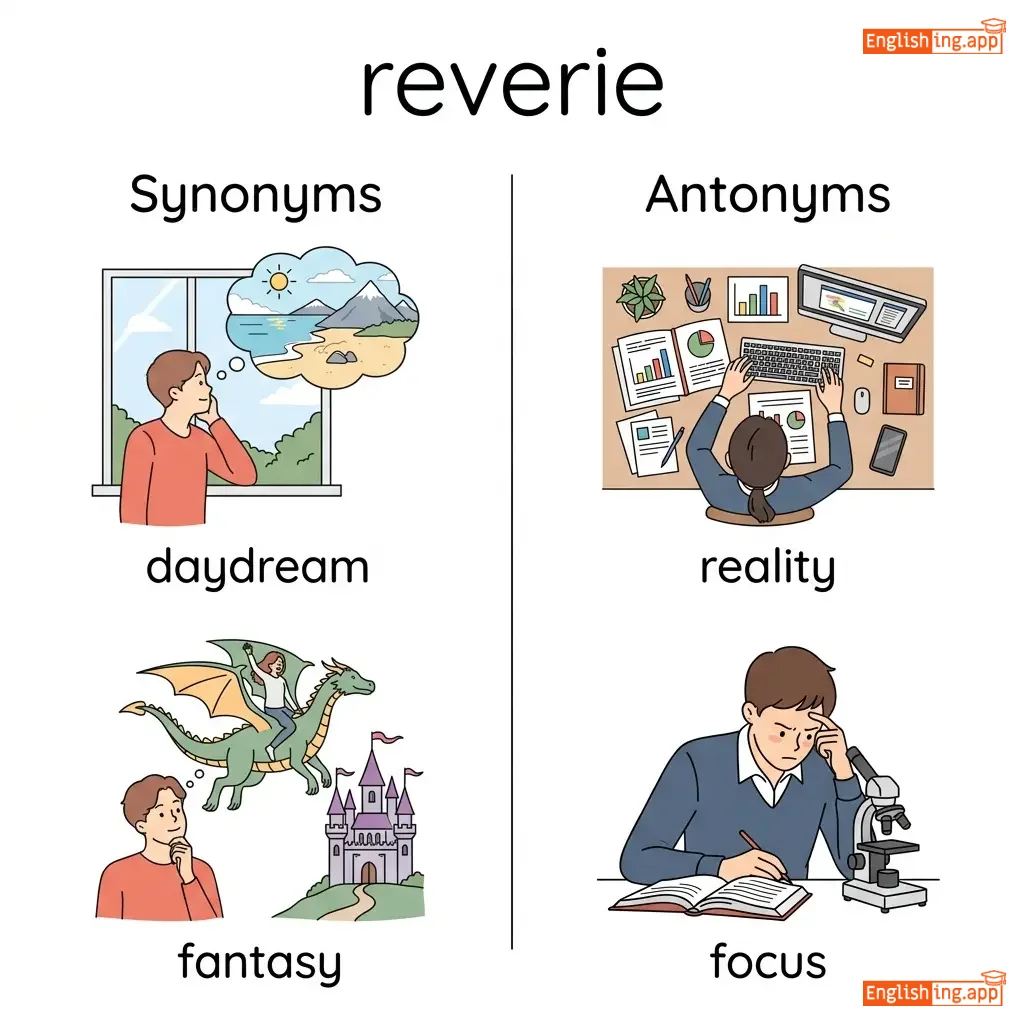
daydream, fantasy, dream, trance, contemplation
••••••
|
reality, focus, concentration
••••••
|
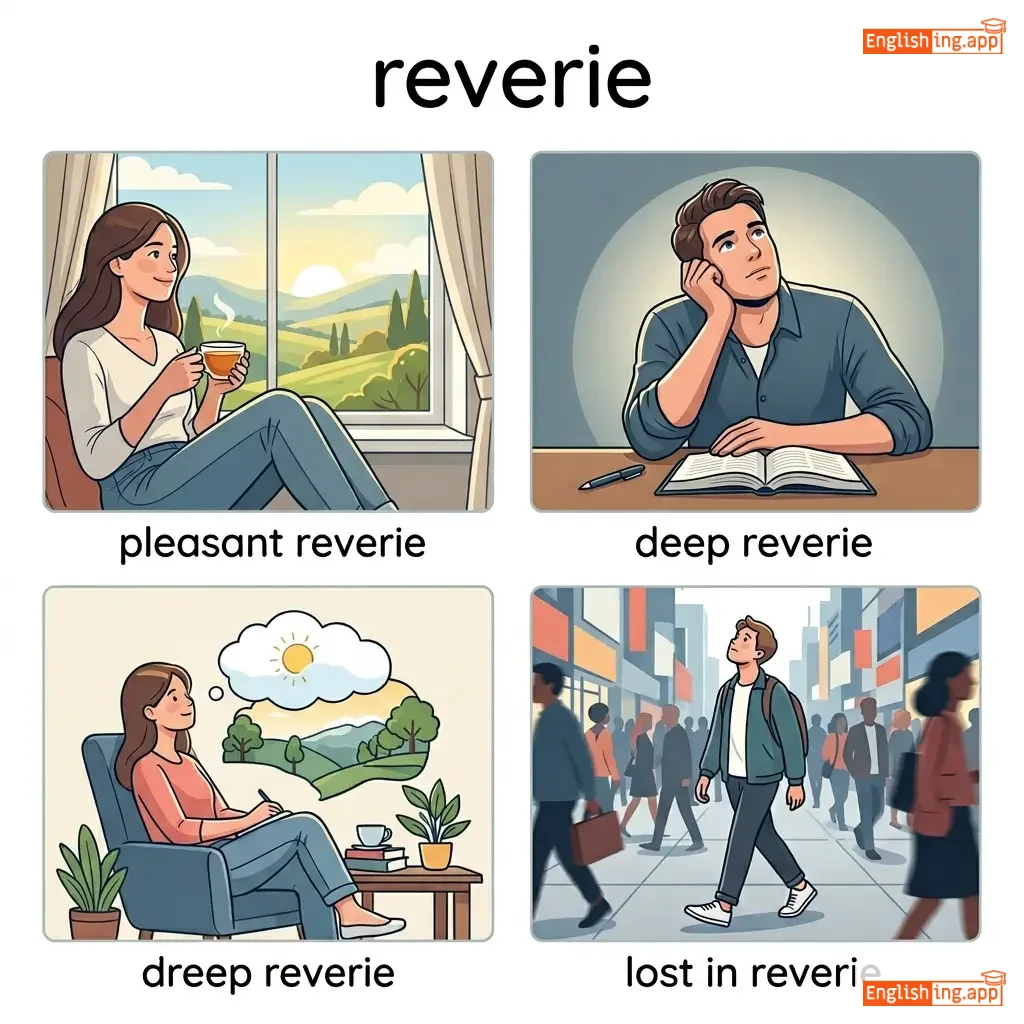
pleasant reverie, deep reverie, lost in reverie
••••••
|
夢想は夕日を見ながらの昼寝のようなものです。
••••••
|
|
#7676
🕊️
|
/ˈrɛvərənt/
adjective
(レヴェレント)
••••••
|
|
敬虔な
keiken na
••••••
|
- •••••• | - •••••• | - •••••• | - •••••• |
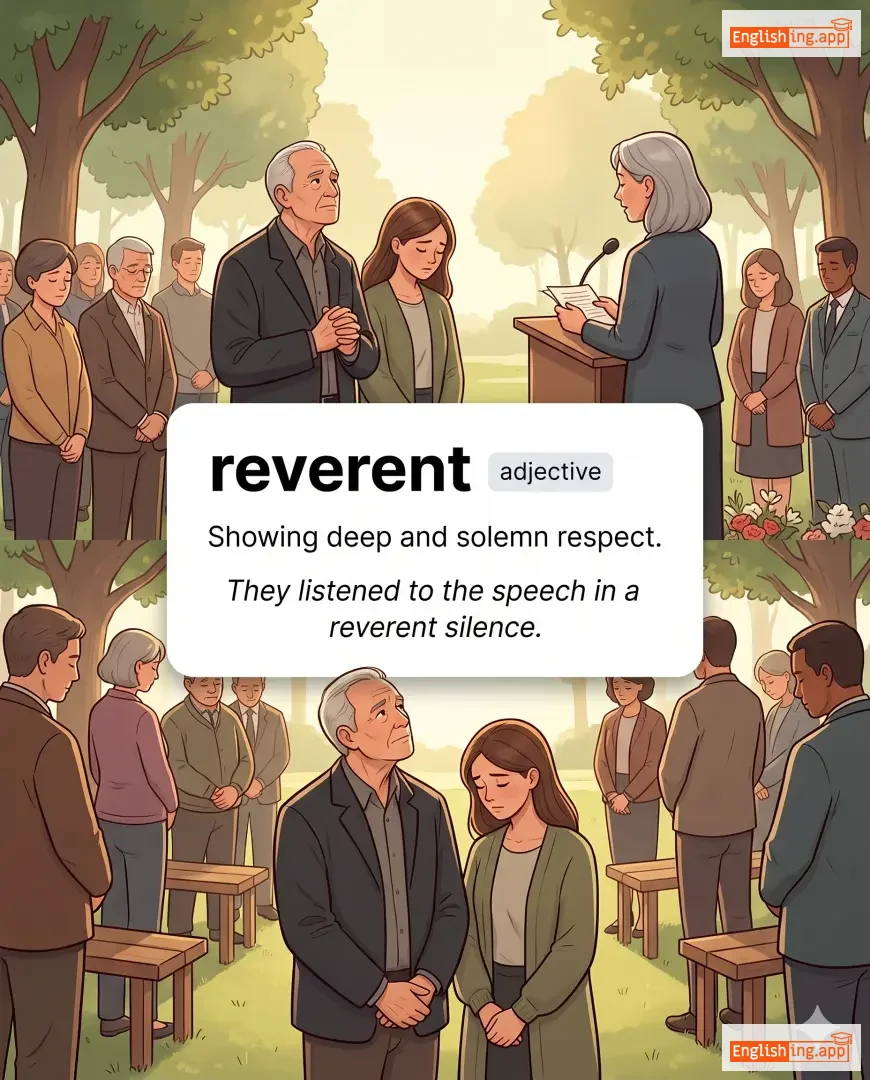
Showing deep and solemn respect.
••••••
|
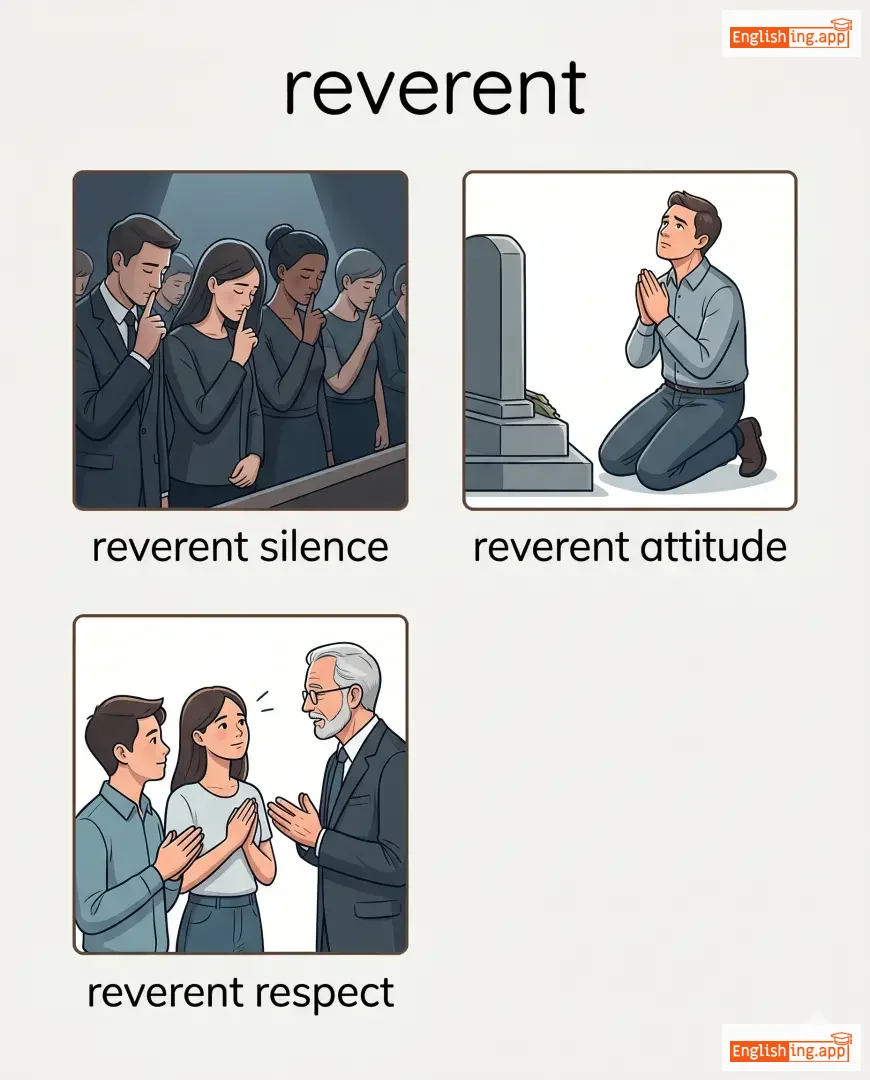
They listened to the speech in a reverent silence.
彼らは敬虔な沈黙の中でスピーチを聞いた。
••••••
|
彼らは敬虔な沈黙の中でスピーチを聞いた。
Karera wa keiken na chinmoku no naka de supīchi o kiita.
••••••
|
- •••••• | - •••••• | - •••••• |
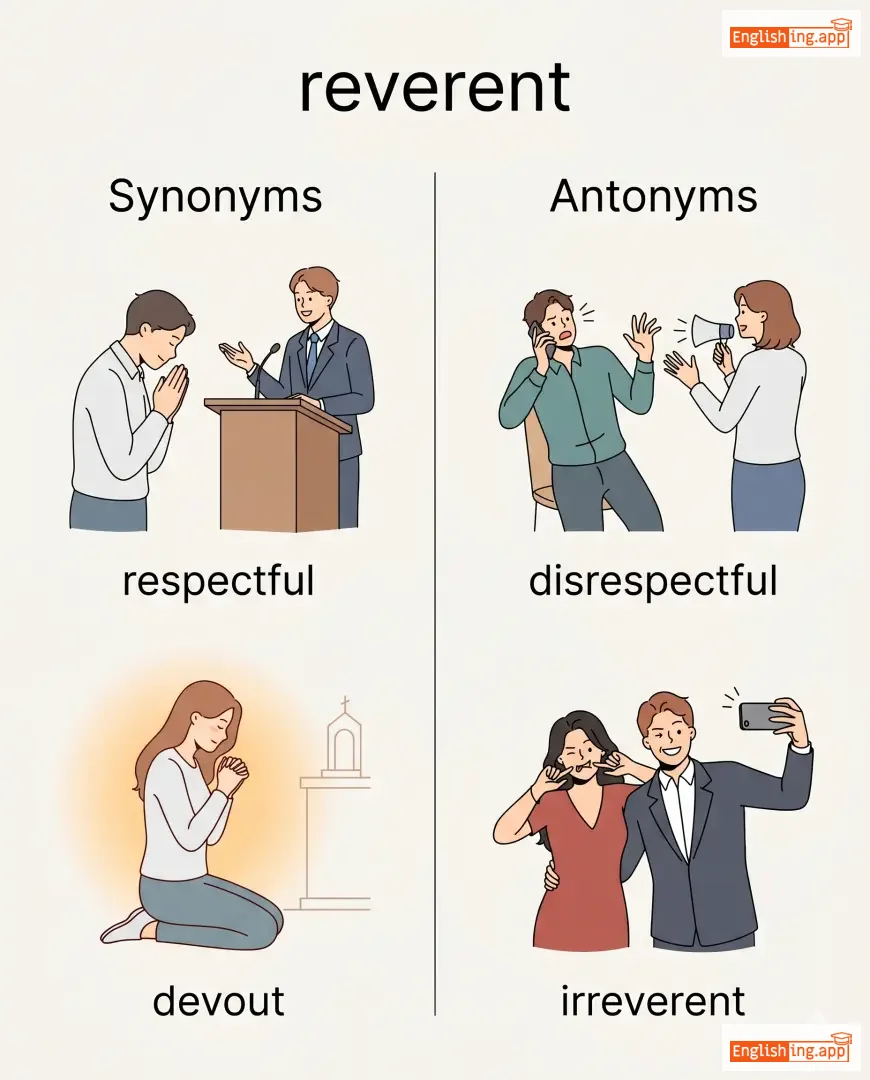
respectful, devout, admiring, dutiful
••••••
|
disrespectful, irreverent
••••••
|
reverent silence, reverent attitude, reverent respect, reverent tone
••••••
|
敬虔なは深い尊敬を示す – keiken na.
••••••
|
|
#7677
⛪
|
/ˈrɛvərənd/
noun, adjective
(レヴァレンド)
••••••
|
- •••••• |
牧師, 尊敬される
bokushi, sonkei sareru
••••••
|
- •••••• | - •••••• | - •••••• | - •••••• |
A title of respect used for members of the clergy; deserving deep respect.
••••••
|
The Reverend gave an inspiring sermon at the church. |
レヴァレンドは教会で感動的な説教をしました。
Reverend wa kyōkai de kandōteki na sekkyō o shimashita.
••••••
|
- •••••• | - •••••• | - •••••• |
pastor, minister, clergyman, priest
••••••
|
layperson, secular
••••••
|
Reverend Father, Reverend Smith, Reverend Doctor, most reverend
••••••
|
Reverend は尊敬されるべき人物 – 宗教的指導者。
••••••
|
|
#7678
🙏
|
/rɪˈvɪər/
verb
(リビア)
••••••
|
- •••••• |
尊敬する
sonkei suru
••••••
|
revered
リヴィアード
••••••
|
revered
リヴィアード
••••••
|
reveres
リヴィアーズ
••••••
|
revering
リビアリング
••••••
|
To deeply respect or admire someone or something.
••••••
|
The students revered their teacher for his wisdom.
生徒たちはその知恵に対して教師を崇敬しました。
••••••
|
生徒たちはその知恵に対して教師を崇敬しました。
Seito-tachi wa sono chie ni taishite kyōshi o sūkei shimashita.
••••••
|
- •••••• | - •••••• | - •••••• |
respect, honor, admire, esteem, venerate
••••••
|
disrespect, dishonor, despise
••••••
|
revere greatly, revere highly, revered figure, revered tradition
••••••
|
Revere = 尊敬 + 強 = 強く尊敬する
••••••
|
|
#7679
🔊
|
/rɪˈvɜːrbəreɪt/
verb
(リバーベレート)
••••••
|
- •••••• |
反響する
hankyō suru
••••••
|
reverberated
リバーベレイテッド
••••••
|
reverberated
リバーベレイテッド
••••••
|
reverberates
リバーベレイツ
••••••
|
reverberating
リバーベレイティング
••••••
|
To echo repeatedly or have continuing effects.
••••••
|
The sound of the explosion reverberated through the valley.
爆発音は谷を通り過ぎて反響しました。
••••••
|
爆発音は谷を通り過ぎて反響しました。
Baku hatsu on wa tani o tōrisugite hankyō shimashita.
••••••
|
- •••••• | - •••••• | - •••••• |
echo, resound, resonate, boom, reflect
••••••
|
silence, hush
••••••
|
reverberate through, reverberate around, reverberating sound, reverberate across
••••••
|
反響は、音が繰り返し戻ってくること!
••••••
|
Vocabulary Quiz
Test your vocabulary by matching words with their translations or meanings.
Login to take the quiz
Comments (0)
Share your thoughts and join the discussion.
Join the discussion by logging in
Login to CommentNo comments yet
Be the first to share your thoughts!