

翻訳
過去
過去分詞
三人称単数
動名詞
意味
例文
例文の翻訳
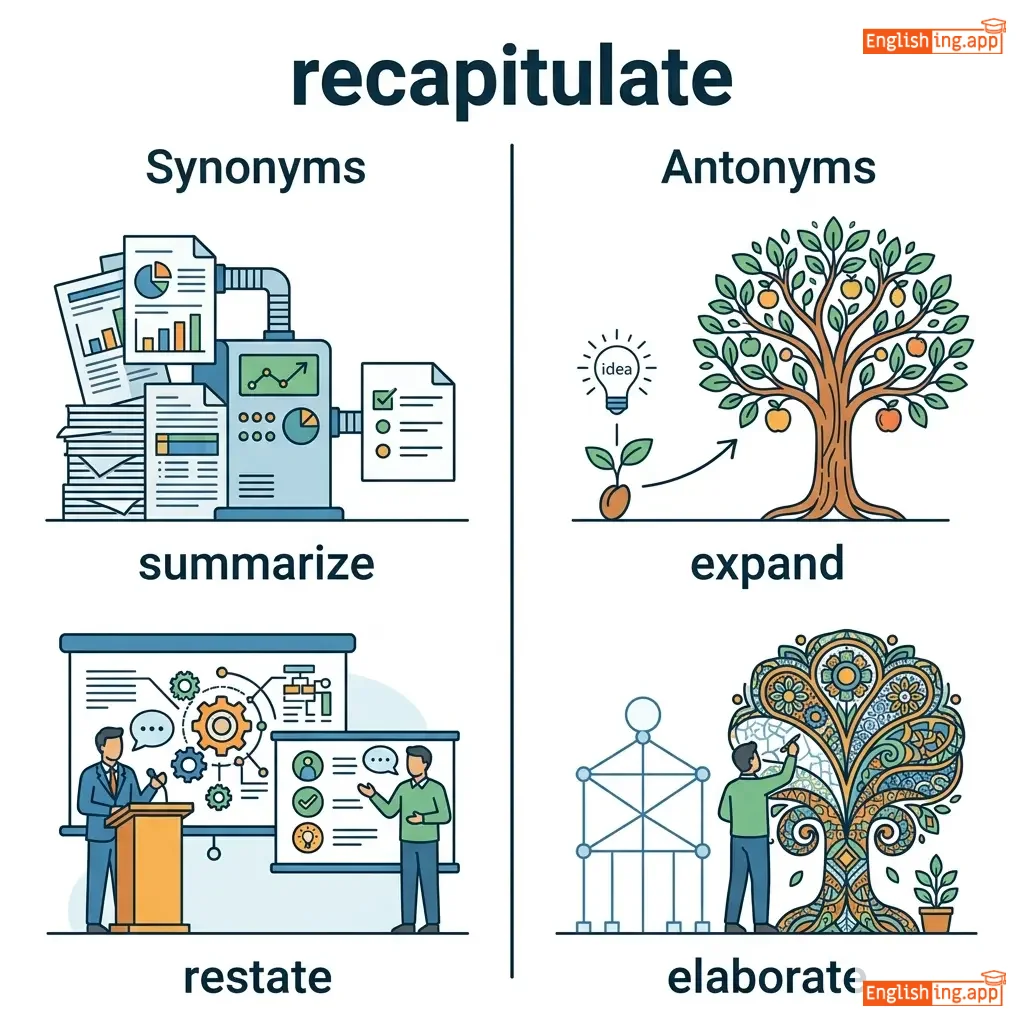
同義語
対義語
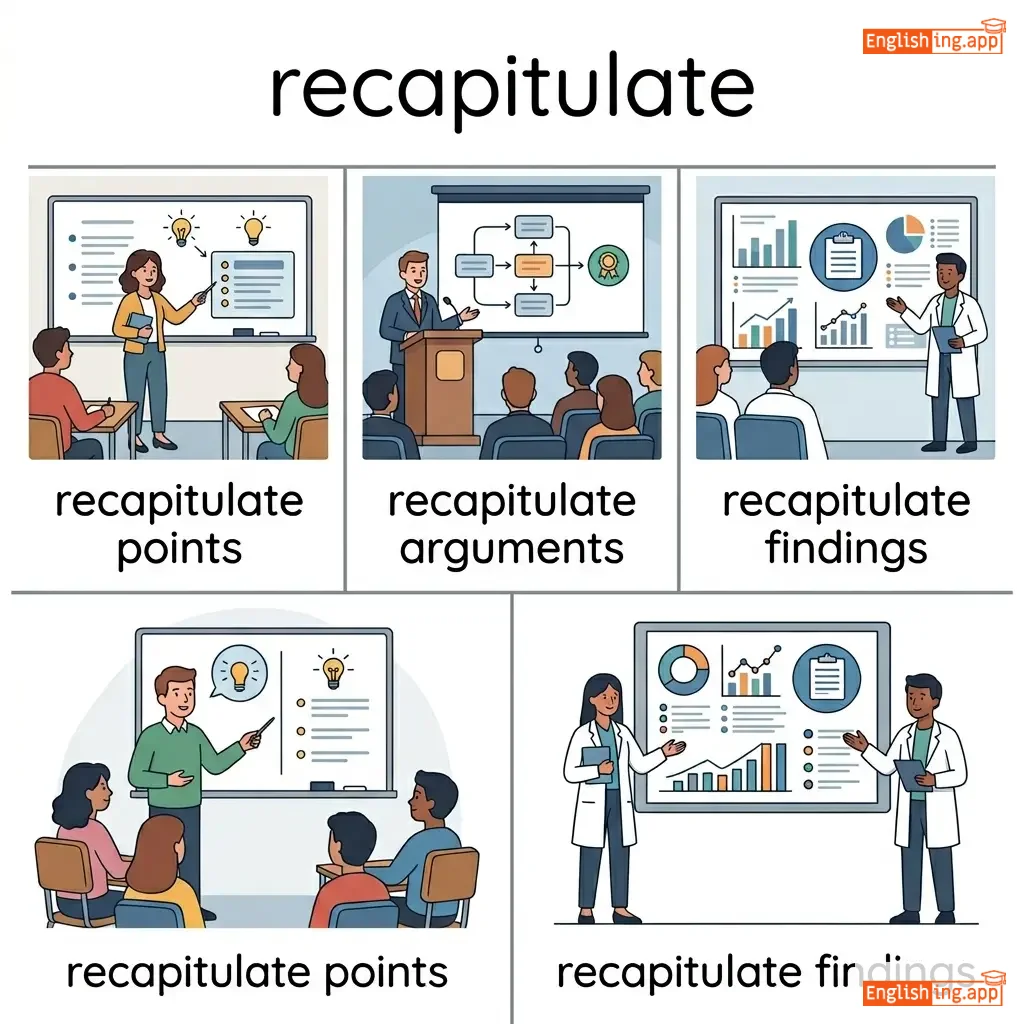
コロケーション
ニーモニック
Swipe left or right, or use the buttons. Tap image to zoom.
例文の翻訳
単語
Lesson 245Lesson 245 - マスクトグル
|
絵文字
|
単語 | Images | 翻訳 | 過去 | 過去分詞 | 三人称単数 | 動名詞 | 意味 | 例文 | 例文の翻訳 | 表現例 | 表現例の意味 | 表現例の翻訳 | 同義語 | 対義語 | コロケーション | ニーモニック |
|---|---|---|---|---|---|---|---|---|---|---|---|---|---|---|---|---|---|
|
#7320
⚖️
|
/rɪˈbʌt/
verb
(リバット)
••••••
|
- •••••• |
反論する
hanron suru
••••••
|
rebutted
リバッテッド
••••••
|
rebutted
リバッテッド
••••••
|
rebuts
リバッツ
••••••
|
rebutting
リバッティング
••••••
|
to argue against or prove wrong; to refute
••••••
|
The lawyer rebutted the false accusations with strong evidence.
弁護士は強力な証拠で虚偽の告発を反論しました。
••••••
|
弁護士は強力な証拠で虚偽の告発を反論しました。
Bengoshi wa kyōryoku na shōko de kyogi no kokuhatsu o hanron shimashita.
••••••
|
rebut an argument
議論を反論する
••••••
|
to present counterarguments or evidence to disprove an argument
••••••
|
議論を反論する
Giron o hanron suru
••••••
|
refute, deny, counter, disprove, contradict
••••••
|
accept, confirm, concede
••••••
|
rebut an argument, rebut evidence, rebut claim, rebut charge
••••••
|
ReBUT の反論で間違いを指摘する。
••••••
|
|
#7321
🎨
|
/rəˈʃɛrʃ/
adjective
(リシュルシュ)
••••••
|
- •••••• |
希少
kishō
••••••
|
- •••••• | - •••••• | - •••••• | - •••••• |
Rare, exotic, or obscure, often in a sophisticated or refined way.
••••••
|
The gallery displayed many recherche artworks from unknown artists. |
ギャラリーは、未知のアーティストによる多くの希少なアート作品を展示しました。
Gyararī wa, michi no ātisuto ni yoru ōku no kishō na āto sakuhin o tenji shimashita.
••••••
|
- •••••• | - •••••• | - •••••• |
rare, exotic, unusual, refined, obscure
••••••
|
common, ordinary, familiar
••••••
|
recherche style, recherche taste, recherche collection
••••••
|
Rechercheは希少な、エキゾチックなアート作品を探すことです。
••••••
|
|
#7322
🧬
|
/rɪˈsɛsɪv/
adjective
(リセシブ)
••••••
|
- •••••• |
潜性
qiansheng
••••••
|
- •••••• | - •••••• | - •••••• | - •••••• |
In genetics, relating to a trait that is expressed only when two copies of the gene are present.
••••••
|
Blue eye color is often a recessive trait.
青い目の色はしばしばリセシブな特徴です。
••••••
|
青い目の色はしばしばリセシブな特徴です。
Aoi me no iro wa shibashiba riseshibu na tokuchou desu.
••••••
|
- •••••• | - •••••• | - •••••• |
submissive, latent, hidden, underlying
••••••
|
dominant, prevailing, leading
••••••
|
recessive trait, recessive gene, recessive inheritance
••••••
|
潜性とは、二つの遺伝子があるときにのみ現れる特徴です。
••••••
|
|
#7323
📉
|
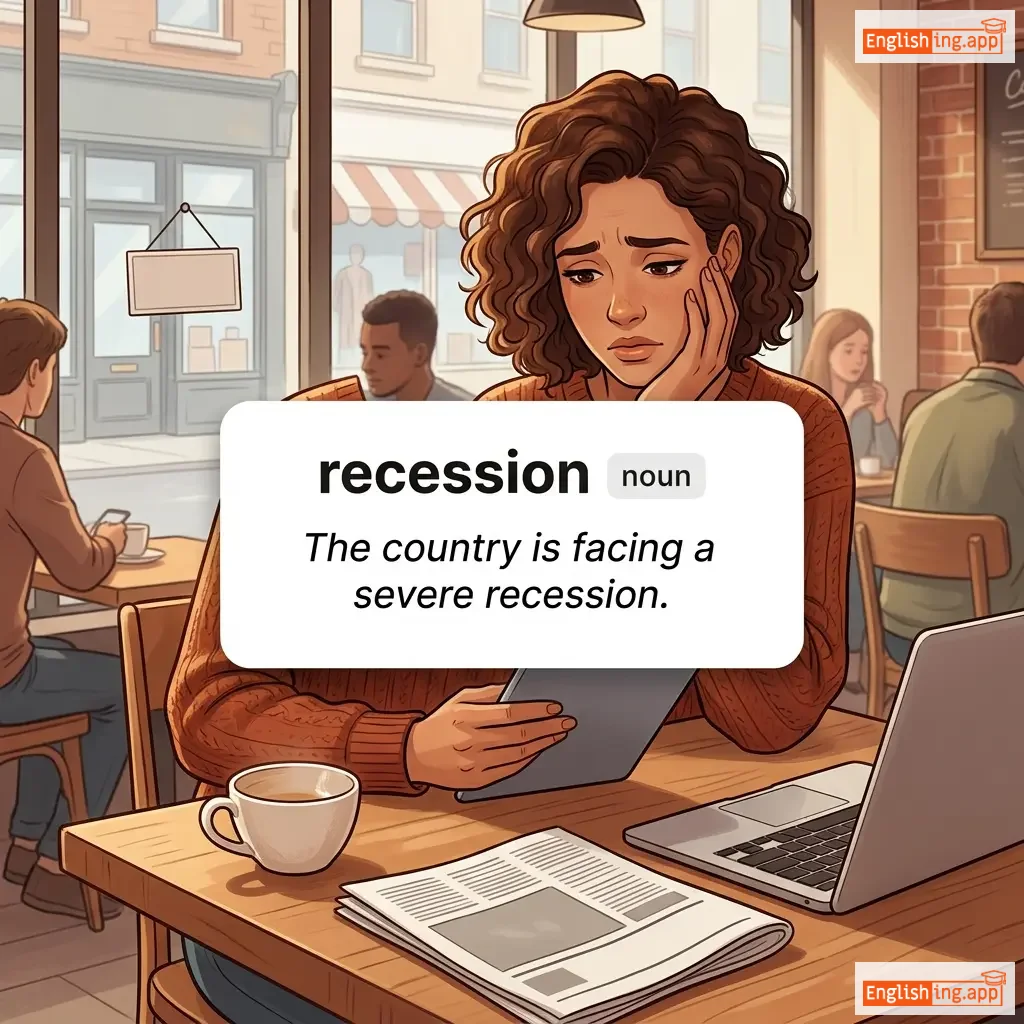
/rɪˈsɛʃən/
noun
••••••
|
|
- •••••• | - •••••• | - •••••• | - •••••• | - •••••• |
A period of temporary economic decline during which trade and industrial activity are reduced.
••••••
|
The country is facing a severe recession. |
- •••••• |
economic recession |
a period of economic decline in general
••••••
|
- •••••• |
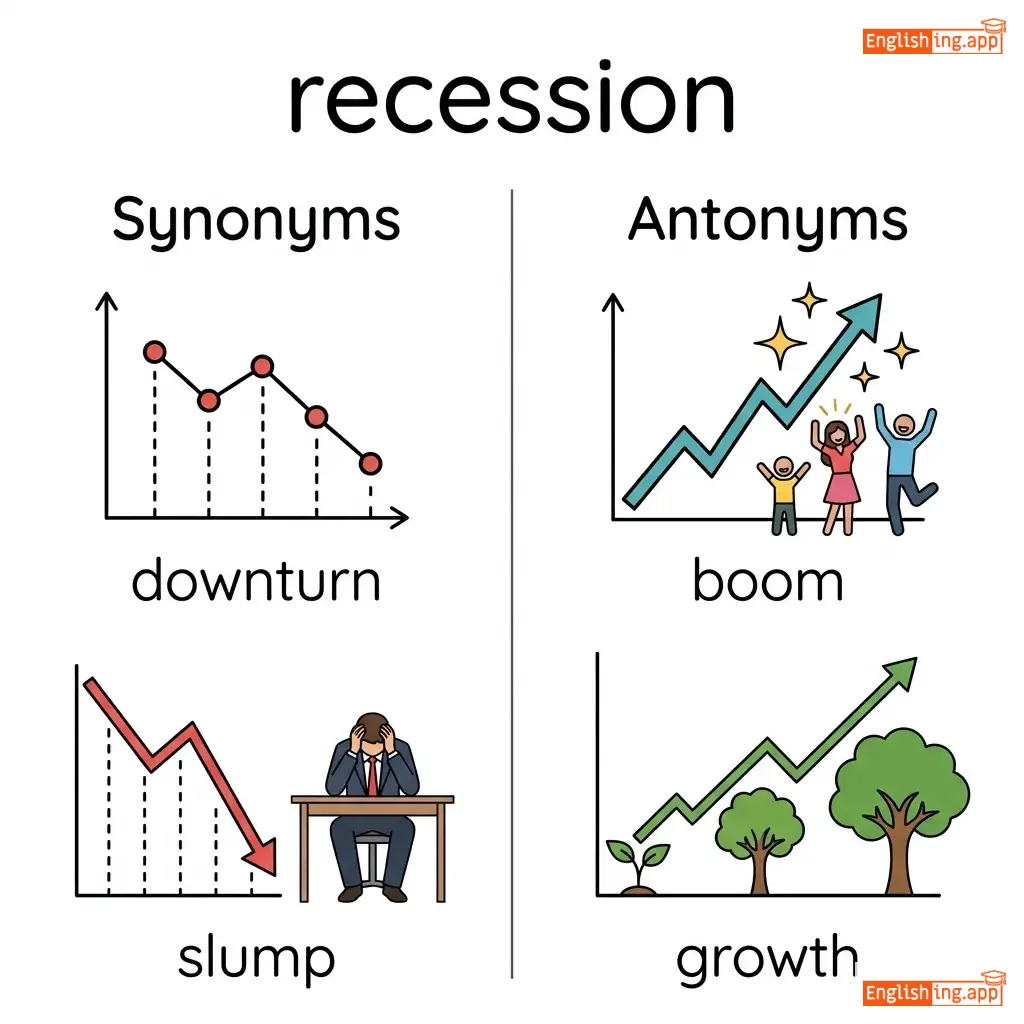
downturn, slump, slowdown, depression, stagnation
••••••
|
boom, growth, prosperity
••••••
|
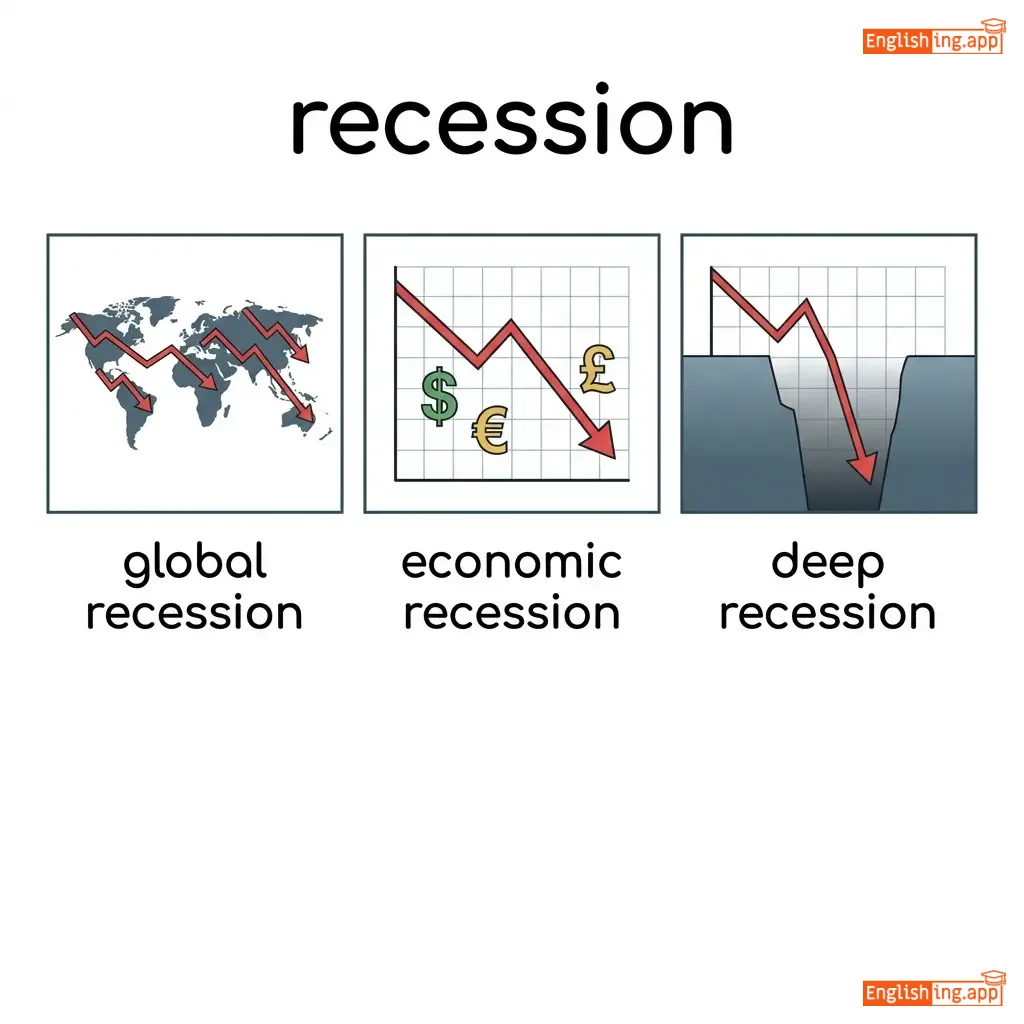
global recession, economic recession, deep recession, severe recession
••••••
|
No •••••• |
|
#7324
🛑
|
/rɪˈsɛs/
noun
(リセス)
••••••
|
- •••••• |
休憩
kyūkei
••••••
|
- •••••• | - •••••• | - •••••• | - •••••• |
A short break from work or school; also a small space set back in a wall.
••••••
|
The children played outside during recess. |
子供たちは休憩中に外で遊びました。
Kodomotachi wa kyūkei-chū ni soto de asobimashita.
••••••
|
summer recess |
a long break from school or parliament during summer
••••••
|
夏休みの休憩
natsu yasumi no kyūkei
••••••
|
break, pause, holiday, interval, vacation
••••••
|
work, session, meeting
••••••
|
school recess, lunch recess, court recess, brief recess
••••••
|
Recess means Rest (休憩) time at school.
••••••
|
|
#7325
👂
|
/rɪˈsɛptɪv/
adjective
(リセプティブ)
••••••
|
- •••••• |
受容的
juyouteki
••••••
|
- •••••• | - •••••• | - •••••• | - •••••• |
Willing to listen to or accept new ideas, suggestions, or experiences.
••••••
|
She was receptive to feedback from her colleagues.
彼女は同僚からのフィードバックを受け入れる姿勢を持っていました。
••••••
|
彼女は同僚からのフィードバックを受け入れる姿勢を持っていました。
Kanojo wa doryou kara no feedback wo ukeireru shisei wo motteimashita.
••••••
|
- •••••• | - •••••• | - •••••• |
open, responsive, approachable, accepting, welcoming
••••••
|
closed, resistant, unresponsive
••••••
|
receptive to criticism, receptive audience, receptive mind, highly receptive
••••••
|
受容的は新しいアイデアを受け入れる準備ができていることを意味します。
••••••
|
|
#7326
💰
|
/rɪˈsiːvəbl/
adjective, noun
(リシーバブル)
••••••
|
- •••••• |
回収可能
kaishū kanō
••••••
|
- •••••• | - •••••• | - •••••• | - •••••• |
Money that is owed to a company and is expected to be paid.
••••••
|
The company's receivables increased significantly this quarter.
会社の売掛金は今四半期に大幅に増加しました。
••••••
|
会社の売掛金は今四半期に大幅に増加しました。
Kaisha no urikakekin wa ima shihanki ni ōhaba ni zōka shimashita.
••••••
|
- •••••• | - •••••• | - •••••• |
collectible, due, payable, outstanding
••••••
|
payable (opposite when company owes), liability
••••••
|
accounts receivable, trade receivable, receivable balance, outstanding receivable
••••••
|
Receivableは企業が回収することができるお金を意味します。
••••••
|
|
#7327
🌊
|
/rɪˈsiːd/
verb
(リシード)
••••••
|
- •••••• |
後退する
kōtai suru
••••••
|
receded
リシーデッド
••••••
|
receded
リシーデッド
••••••
|
recedes
リシーズ
••••••
|
receding
リシーディング
••••••
|
To move back or further away from a previous position.
••••••
|
The floodwaters began to recede after the heavy rain stopped.
洪水は激しい雨が止んだ後に後退し始めました。
••••••
|
激しい雨が止んだ後、洪水は後退し始めました。
Hageshī ame ga yanda ato, kōzui wa kōtai shi hajimemashita.
••••••
|
recede into the background
背景に退く
••••••
|
To become less noticeable or less important.
••••••
|
背景に退く
Haikei ni shirizoku
••••••
|
retreat, withdraw, diminish, ebb, decline
••••••
|
advance, approach
••••••
|
recede into the distance, recede into memory, recede slowly, recede gradually
••••••
|
Re + seed → 種(seed)が後退する意味、後退する。
••••••
|
|
#7328
🎭
|
/ˌriːˈkæst/
verb
(リキャスト)
••••••
|
- •••••• |
再キャスティング
saikasutingu
••••••
|
recast
リキャスト
••••••
|
recast
リキャスト
••••••
|
recasts
リキャストス
••••••
|
recasting
リキャスティング
••••••
|
To present or change something in a different form or style.
••••••
|
The director decided to recast the role with a younger actor.
監督は役を若い俳優でリキャストすることに決めました。
••••••
|
監督は役を若い俳優でリキャストすることに決めました。
Kantoku wa yaku o wakai haiyu de rikyasuto suru koto ni kimemashita.
••••••
|
- •••••• | - •••••• | - •••••• |
reshape, redefine, remodel, rework, reformulate
••••••
|
preserve, retain
••••••
|
recast the role, recast the plan, recast the sentence, recast in new form
••••••
|
Re + cast は新しいキャスティングを意味し、役に新しい俳優を選ぶことのようです。
••••••
|
|
#7329
🎯
|
/riːˈkæptʃər/
verb
(rikapuchā)
••••••
|
- •••••• |
再び奪回する
futatabi dakai suru
••••••
|
recaptured
rikapuchādo
••••••
|
recaptured
rikapuchādo
••••••
|
recaptures
rikapuchāzu
••••••
|
recapturing
rikapuchāringu
••••••
|
To take back or regain possession of something.
••••••
|
The army managed to recapture the lost territory.
軍隊は失われた領土を再び奪回することに成功しました。
••••••
|
軍隊は失われた領土を再び奪回することに成功しました。
Guntai wa ushinawareta ryōdo o futatabi dakai suru koto ni seikō shimashita.
••••••
|
recapture the moment
その瞬間を再び捉える
••••••
|
To relive or experience again a special feeling or time.
••••••
|
その瞬間を再び体験する
sono shunkan o futatabi taiken suru
••••••
|
retake, regain, reclaim, recover, repossess
••••••
|
lose, surrender
••••••
|
recapture a city, recapture territory, recapture attention, recapture imagination
••••••
|
Re + captureは再び奪回する意味で、映画のような瞬間を再び体験したい。
••••••
|
|
#7330
🔄
|
/ˌriːkəˌpɪtjʊˈleɪʃən/
noun
(リキャピチュレーション)
••••••
|
- •••••• |
要約
yōyaku
••••••
|
- •••••• | - •••••• | - •••••• | - •••••• |
The act of summarizing or repeating the main points of something.
••••••
|
The professor gave a brief recapitulation of the lecture before ending the class.
教授はクラスを終える前に講義の簡単な要約を行いました。
••••••
|
教授はクラスを終える前に講義の簡単な要約を行いました。
Kyōju wa kurasu o oeru mae ni kōgi no kantan na yōyaku o okonaimashita.
••••••
|
- •••••• | - •••••• | - •••••• |
summary, reiteration, restatement, review, repetition
••••••
|
introduction, expansion
••••••
|
brief recapitulation, final recapitulation, recapitulation of ideas, recapitulation of events
••••••
|
要約は要点を繰り返す(summary)。
••••••
|
|
#7331
🔄
|
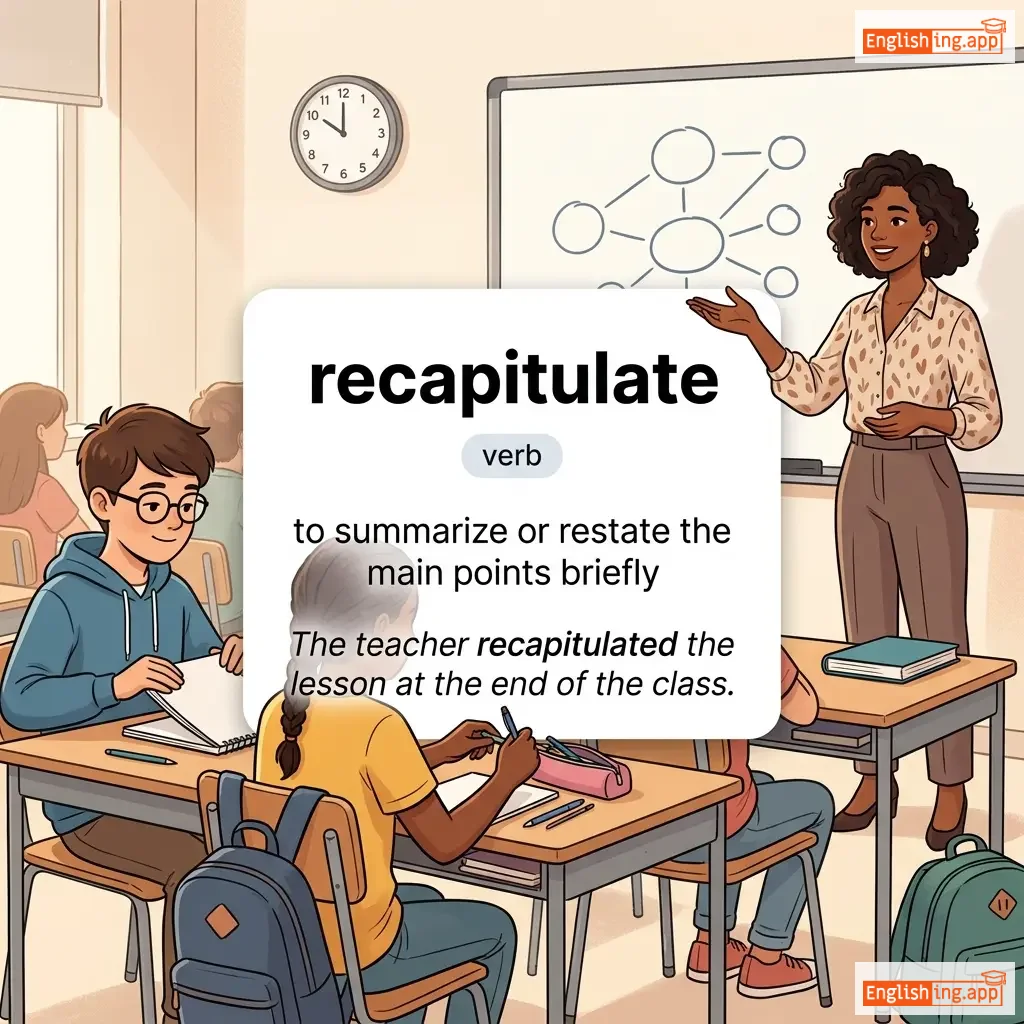
/ˌriːkəˈpɪtjʊleɪt/
verb
(レキャピチュレイト)
••••••
|
|
要約する
yōyaku suru
••••••
|
recapitulated
レキャピチュレイテッド
••••••
|
recapitulated
レキャピチュレイテッド
••••••
|
recapitulates
レキャピチュレイツ
••••••
|
recapitulating
レキャピチュレイティング
••••••
|
to summarize or restate the main points briefly
••••••
|
The teacher recapitulated the lesson at the end of the class.
先生はクラスの最後に授業を要約しました。
••••••
|
先生はクラスの最後に授業を要約しました。
Sensei wa kurasu no saigo ni jugyō o yōyaku shimashita.
••••••
|
to recapitulate
レキャピチュレイト
••••••
|
to sum up briefly
••••••
|
要約する
yōyaku suru
••••••
|
summarize, restate, review, repeat, encapsulate
••••••
|
expand, elaborate, lengthen
••••••
|
recapitulate points, recapitulate arguments, recapitulate findings, recapitulate lesson
••••••
|
RE CAP - 授業を簡潔に要約する
••••••
|
|
#7332
🗣️
|
/rɪˈkænt/
verb
(リカント)
••••••
|
|
撤回する
tekkai suru
••••••
|
recanted
リカンテッド
••••••
|
recanted
リカンテッド
••••••
|
recants
リカンツ
••••••
|
recanting
リカンティング
••••••
|
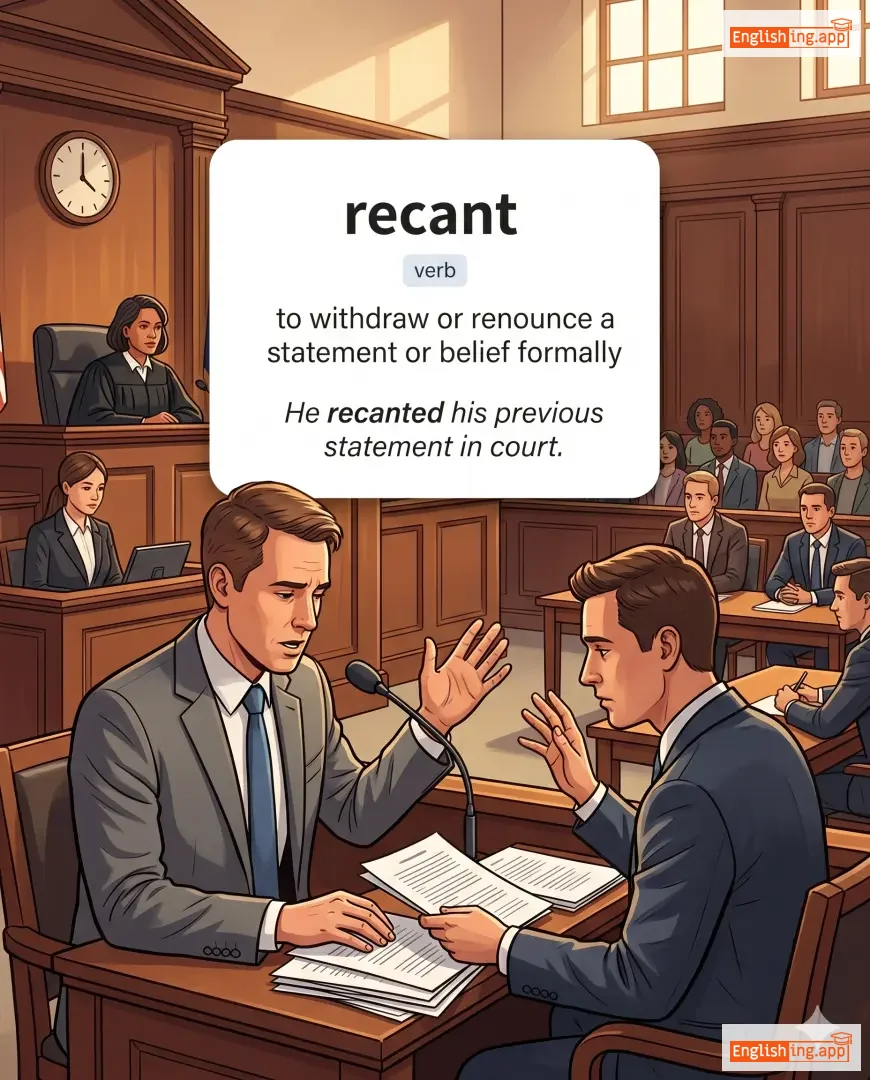
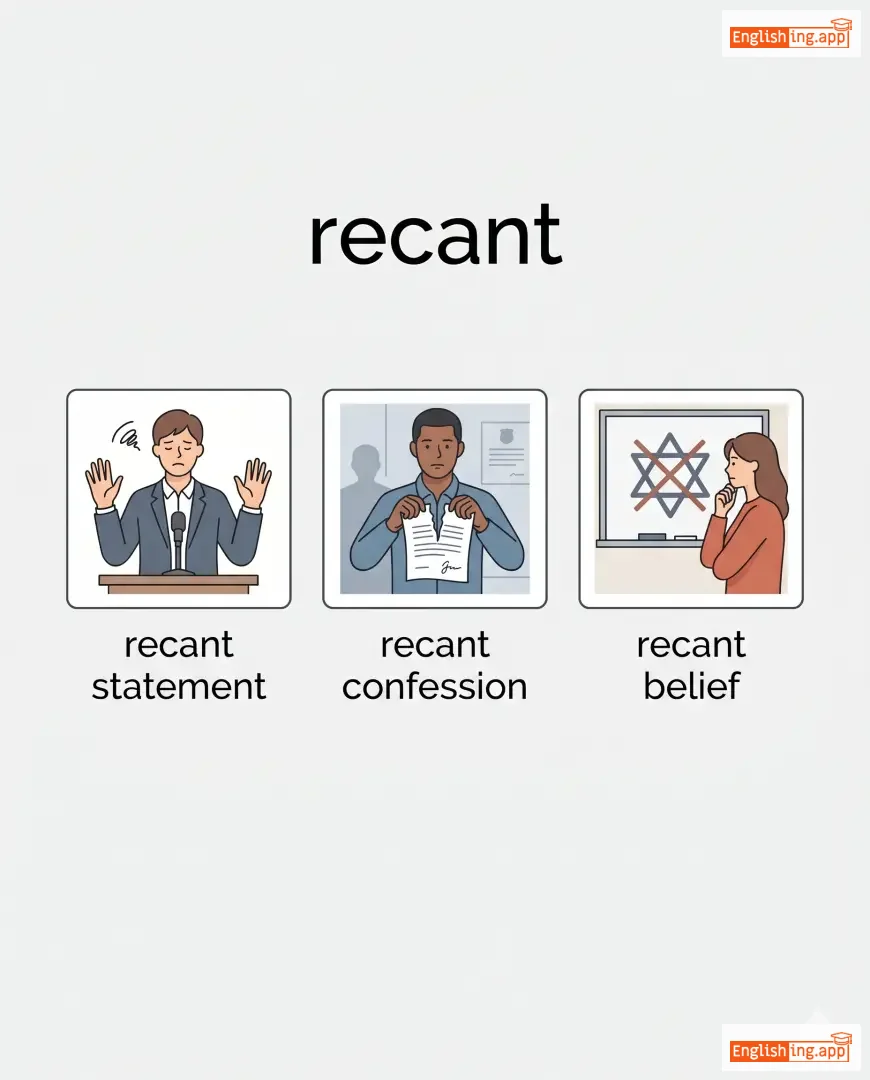
to withdraw or renounce a statement or belief formally
••••••
|
He recanted his previous statement in court.
彼は裁判で以前の発言を撤回しました。
••••••
|
彼は裁判で以前の発言を撤回しました。
Kare wa saiban de izen no hatsugen o tekkai shimashita.
••••••
|
recant a confession
自白を撤回する
••••••
|
to officially take back an earlier confession
••••••
|
自白を撤回する
jihaku o tekkai suru
••••••
|
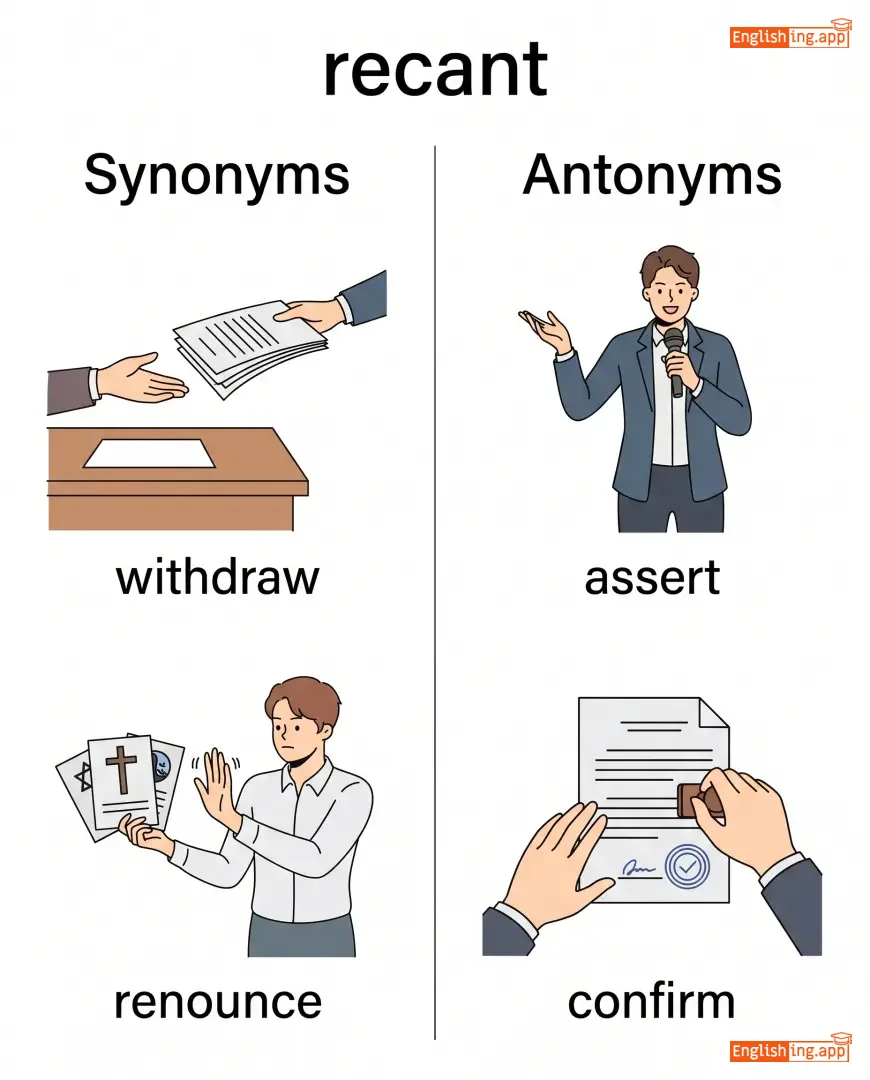
withdraw, renounce, retract, deny, repudiate
••••••
|
assert, confirm, maintain
••••••
|
recant statement, recant confession, recant belief, recant testimony
••••••
|
Re-CANTと言って言ったことを撤回すること。
••••••
|
|
#7333
🙅
|
/rɪˈkælsɪtrənt/
adjective
••••••
|
|
- •••••• | - •••••• | - •••••• | - •••••• | - •••••• |
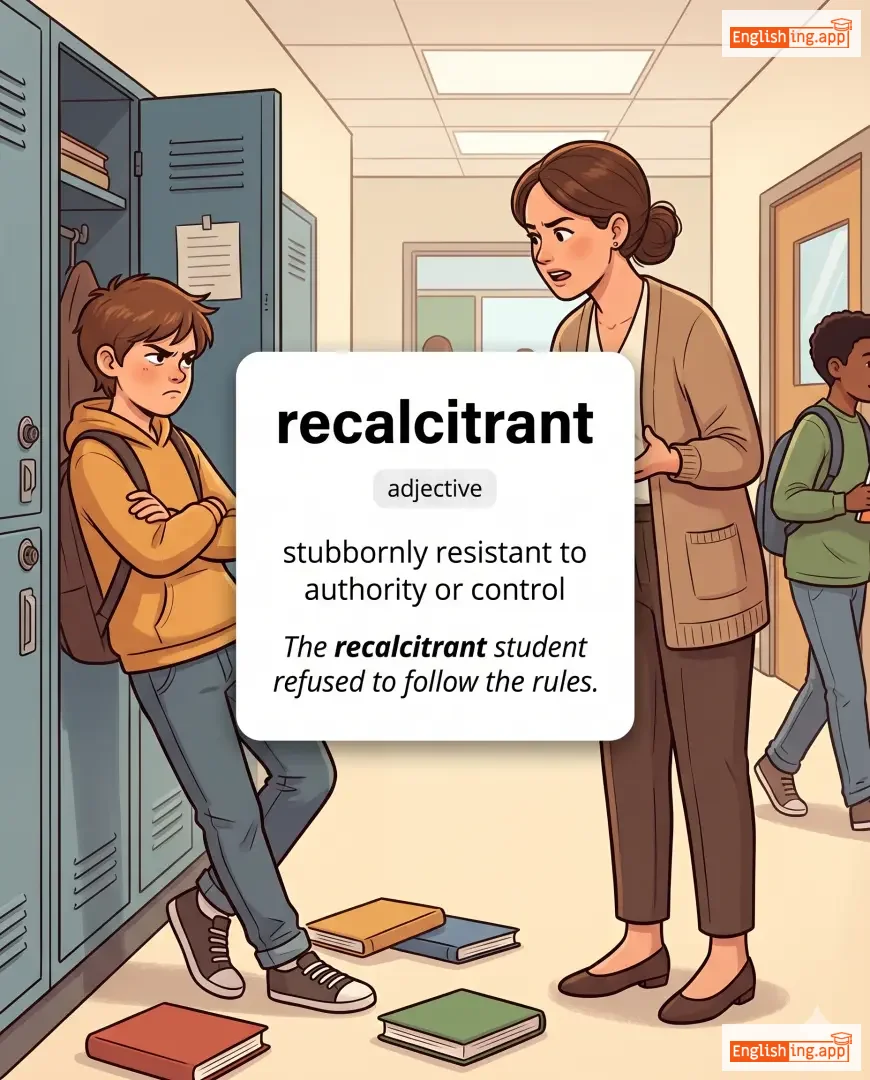
stubbornly resistant to authority or control
••••••
|
The recalcitrant student refused to follow the rules. |
- •••••• | - •••••• | - •••••• | - •••••• |
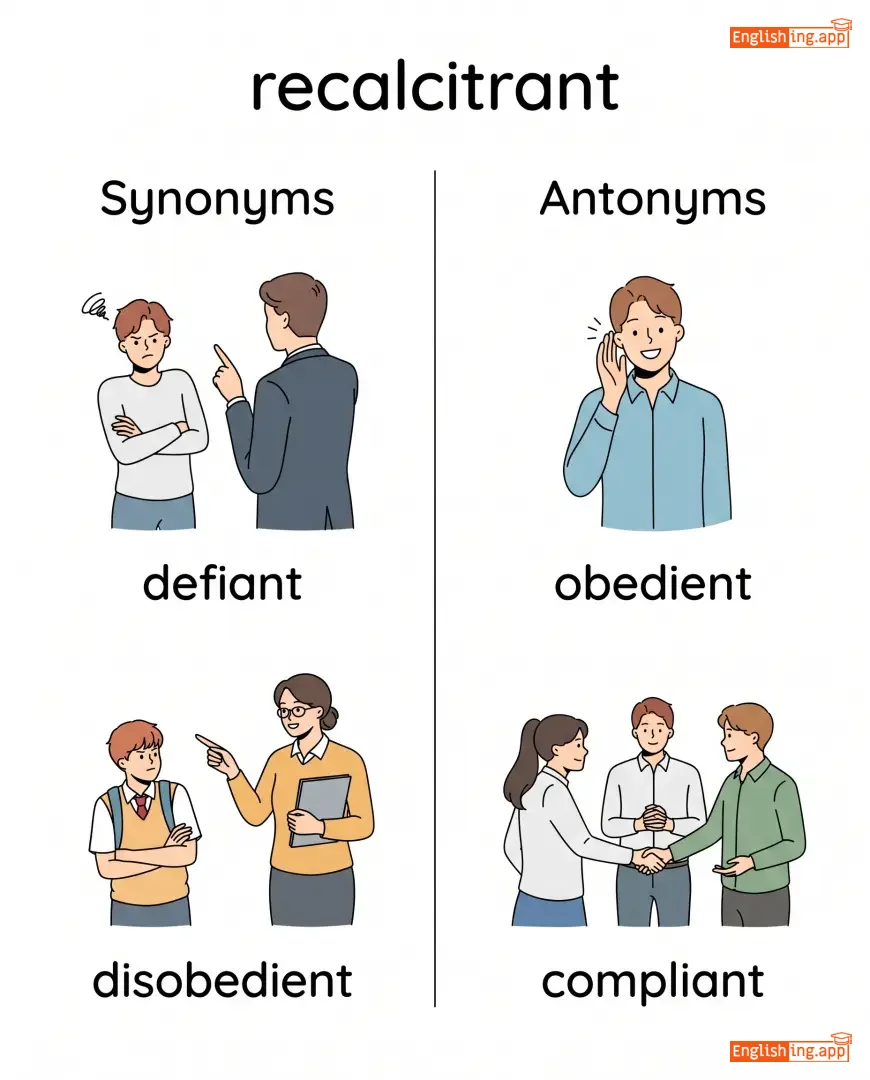
defiant, disobedient, rebellious, obstinate, uncooperative
••••••
|
obedient, compliant, cooperative
••••••
|
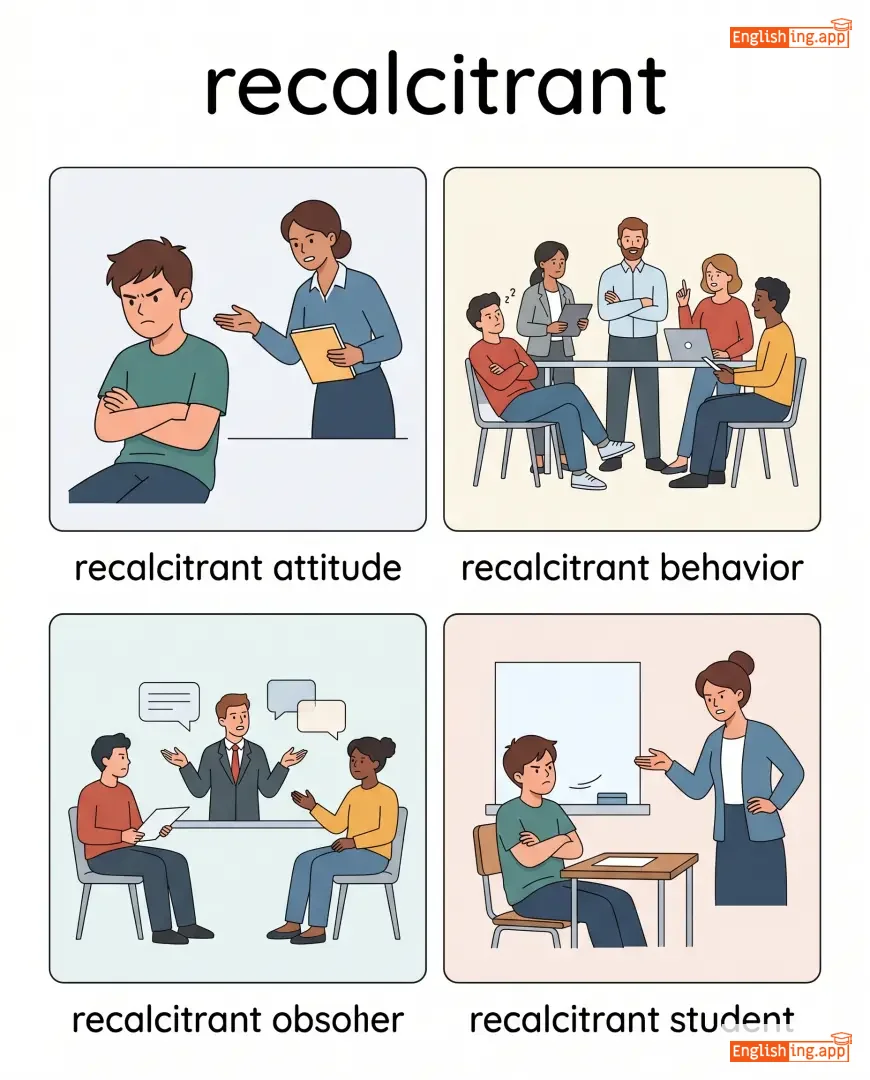
recalcitrant attitude, recalcitrant behavior, recalcitrant student
••••••
|
No •••••• |
|
#7334
📝
|
/rɪˈbʌtəl/
noun
(リバタル)
••••••
|
- •••••• |
反論
hanron
••••••
|
- •••••• | - •••••• | - •••••• | - •••••• |
a statement or argument made to oppose or disprove another
••••••
|
Her rebuttal was clear and convincing. |
彼女の反論は明確で説得力がありました。
Kanojo no hanron wa meikaku de settokuryoku ga arimashita.
••••••
|
final rebuttal |
the last chance to respond to an argument or accusation
••••••
|
最終的な反論
saishūteki na hanron
••••••
|
refutation, denial, counterargument, contradiction
••••••
|
acceptance, confirmation, concession
••••••
|
strong rebuttal, written rebuttal, legal rebuttal, rebuttal statement
••••••
|
Re BUT で反論 (hanron) はBUTで反論することを意味します。
••••••
|
|
#7335
🔄
|
/ˌriː.əˈdʒʌst.mənt/
noun
••••••
|
- •••••• | - •••••• | - •••••• | - •••••• | - •••••• | - •••••• |
The act of changing or correcting something again to make it suitable or balanced.
••••••
|
After moving to a new city, he went through a period of readjustment. |
- •••••• | - •••••• | - •••••• | - •••••• |
adaptation, adjustment, modification, alteration, correction
••••••
|
stability, constancy
••••••
|
social readjustment, economic readjustment, readjustment period, policy readjustment
••••••
|
No •••••• |
|
#7336
🧩
|
/ˈriːbəs/
noun
(リバス)
••••••
|
- •••••• |
なぞなぞ
nazonazo
••••••
|
- •••••• | - •••••• | - •••••• | - •••••• |
a puzzle in which words are represented by pictures, symbols, or letters
••••••
|
The children enjoyed solving the rebus puzzles in the magazine. |
子供たちは雑誌のなぞなぞを解くのを楽しみました。
Kodomotachi wa zasshi no nazo nazo o toku no o tanoshimimashita.
••••••
|
- •••••• | - •••••• | - •••••• |
puzzle, riddle, brainteaser, enigma
••••••
|
answer, solution
••••••
|
rebus puzzle, solve a rebus, rebus challenge, rebus game
••••••
|
ReBUSは '絵で謎を解く' のようななぞなぞ
••••••
|
|
#7337
👎
|
/rɪˈbjuːk/
verb
••••••
|
|
- •••••• |
rebuked
••••••
|
rebuked
••••••
|
rebukes
••••••
|
rebuking
••••••
|
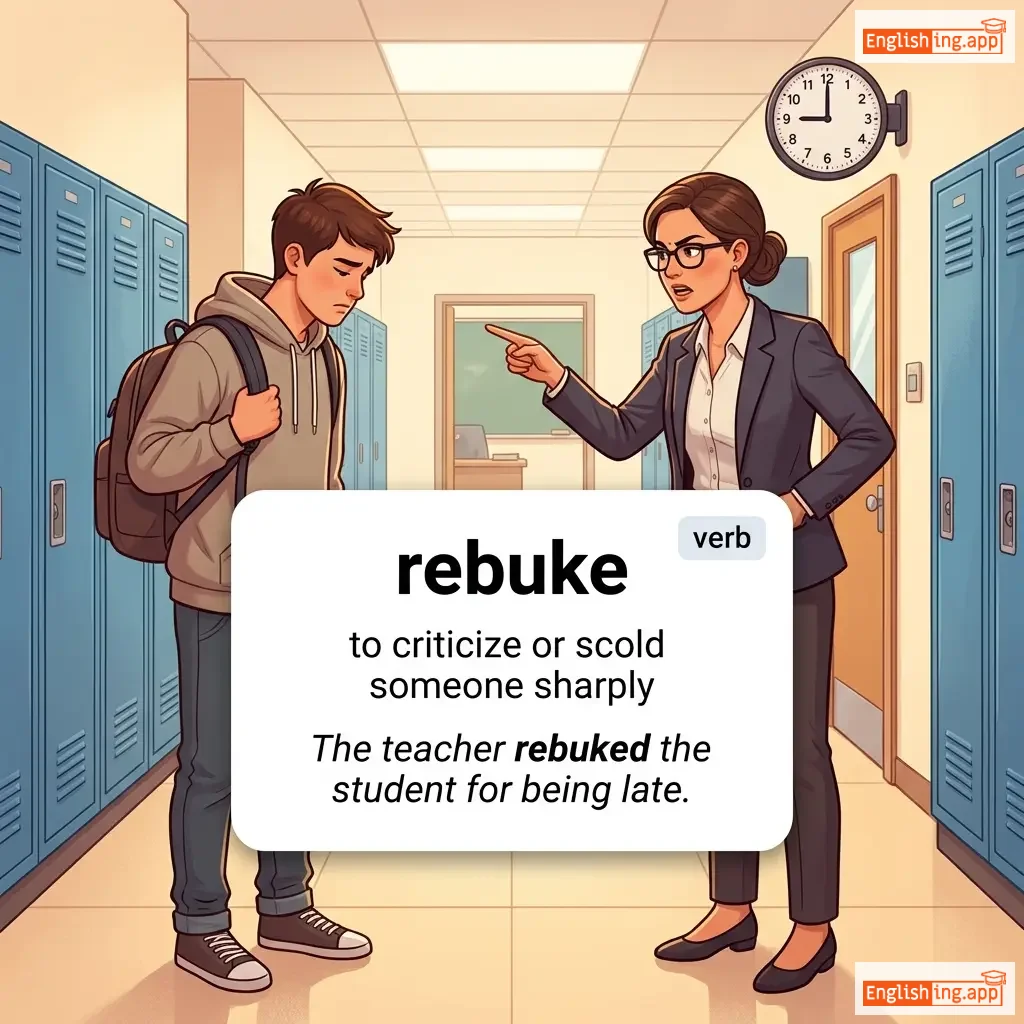
to criticize or scold someone sharply
••••••
|
The teacher rebuked the student for being late. |
- •••••• |
rebuke someone sharply |
to criticize strongly and directly
••••••
|
- •••••• |
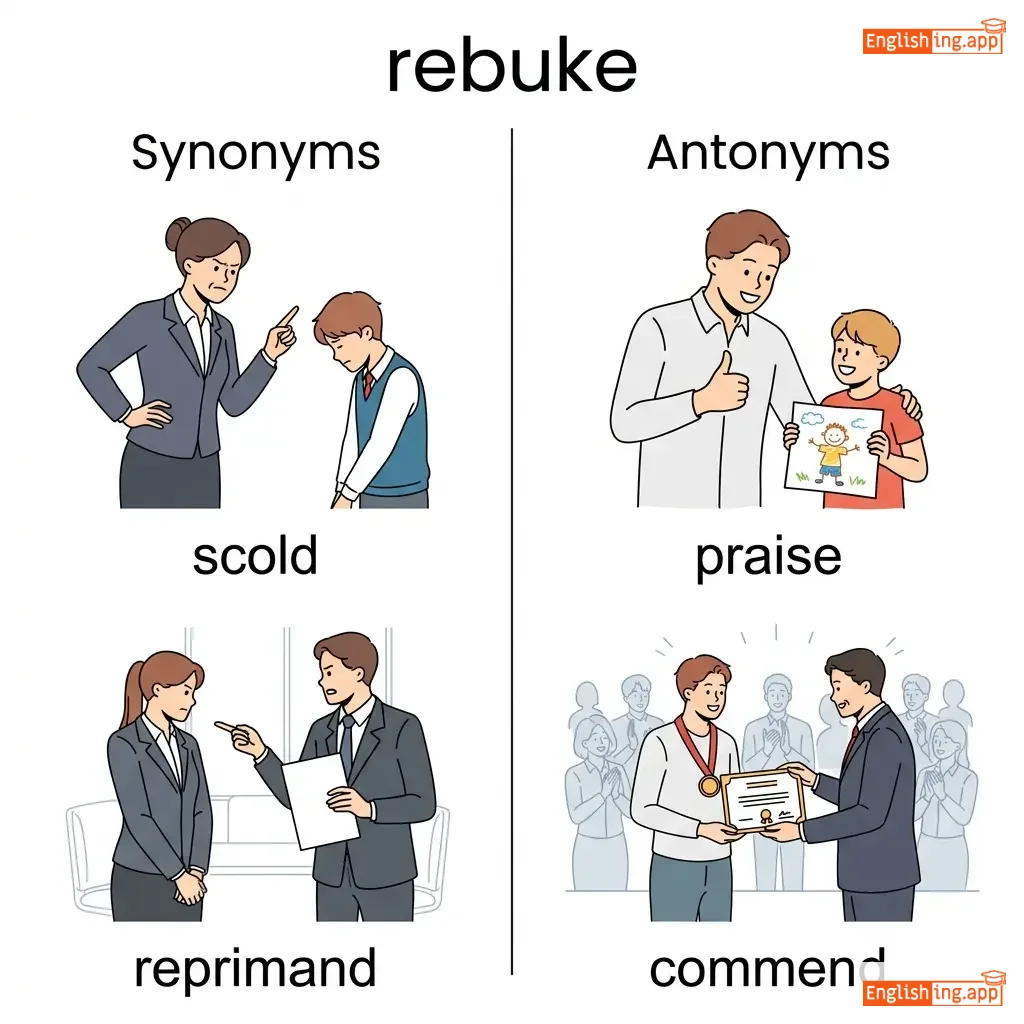
scold, reprimand, criticize, reproach, chastise
••••••
|
praise, commend
••••••
|
rebuke a child, rebuke strongly, rebuke publicly, rebuke for behavior
••••••
|
No •••••• |
|
#7338
🏗️
|
/ˌriːˈbɪld/
verb
(ribildu)
••••••
|
- •••••• |
再建する
saiken suru
••••••
|
rebuilt
ribilto
••••••
|
rebuilt
ribilto
••••••
|
rebuilds
ribilduzu
••••••
|
rebuilding
ribilduingu
••••••
|
to build something again after it has been damaged or destroyed
••••••
|
The villagers worked together to rebuild the bridge after the flood.
村人たちは洪水の後、橋を再建するために協力しました。
••••••
|
村人たちは洪水の後、橋を再建するために協力しました。
Murabito-tachi wa kōzui no ato, hashi o saiken suru tame ni kyōryoku shimashita.
••••••
|
- •••••• | - •••••• | - •••••• |
restore, reconstruct, renovate, repair, remake
••••••
|
destroy, demolish
••••••
|
rebuild the bridge, rebuild confidence, rebuild home, rebuild life
••••••
|
ReBUILD は再び作ること — 破壊されたものを再建する
••••••
|
|
#7339
🙅
|
/rɪˈbʌf/
verb
(リバフ)
••••••
|
- •••••• |
拒絶する
kyozetsu suru
••••••
|
rebuffed
リバフド
••••••
|
rebuffed
リバフド
••••••
|
rebuffs
リバフス
••••••
|
rebuffing
リバフィング
••••••
|
to reject or refuse in a sharp or abrupt way
••••••
|
She rebuffed his invitation to dinner.
彼女はディナーの招待を断った。
••••••
|
彼女はディナーの招待を断った。
Kanojo wa dinā no shōtai o kotowatta.
••••••
|
- •••••• | - •••••• | - •••••• |
reject, refuse, decline, snub, dismiss
••••••
|
accept, approve, welcome
••••••
|
rebuff an offer, rebuff advances, rebuff suggestion, rebuff request
••••••
|
ReBUFF は拒絶を意味する — 強い態度で断る
••••••
|
|
#7340
✊
|
/rɪˈbɛljəs/
adjective
(レベリオス)
••••••
|
- •••••• |
反抗的な
hankōteki na
••••••
|
- •••••• | - •••••• | - •••••• | - •••••• |
resisting authority or control; showing a desire to rebel
••••••
|
The rebellious teenager refused to follow the school rules.
その反抗的なティーンエイジャーは学校の規則に従うことを拒否しました。
••••••
|
その反抗的なティーンエイジャーは学校の規則に従うことを拒否しました。
Sono hankōteki na tīneijā wa gakkō no kisoku ni shitagau koto o kyohi shimashita.
••••••
|
rebellious spirit
反抗的な精神
••••••
|
a strong tendency to resist authority or tradition
••••••
|
反抗的な精神
hankōteki na seishin
••••••
|
defiant, disobedient, unruly, resistant, nonconformist
••••••
|
obedient, compliant, submissive
••••••
|
rebellious teenager, rebellious spirit, rebellious attitude, rebellious nature
••••••
|
ReBELlious — 反抗の精神で、ルールを破ろう!
••••••
|
|
#7341
💵
|
/ˈriːbeɪt/
noun
(リベート)
••••••
|
- •••••• |
リベート/払い戻し
ribeeto/harai modoshi
••••••
|
- •••••• | - •••••• | - •••••• | - •••••• |
a partial refund given to someone who has paid too much money for something
••••••
|
The store offered a rebate on bulk purchases.
ザ ストア オファード ア リベート オン バルク パーチェシズ
••••••
|
その店は大量購入に対してリベートを提供しました。
Sono mise wa tairyou kounyuu ni taishite ribeeto wo teikyoushimashita.
••••••
|
- •••••• | - •••••• | - •••••• |
refund, discount, reimbursement, deduction
••••••
|
surcharge, addition
••••••
|
rebate offer, tax rebate, rebate program, rebate check
••••••
|
Rebateは払い戻しを意味します—払い過ぎたお金が返金されます。
••••••
|
|
#7342
🤗
|
/ˌriːəˈʃʊr/
verb
(リアシュア)
••••••
|
- •••••• |
安心させる
anshin saseru
••••••
|
reassured
リアシュアード
••••••
|
reassured
リアシュアード
••••••
|
reassures
リアシュアーズ
••••••
|
reassuring
リアシュアリング
••••••
|
to say or do something to remove someone's doubts or fears
••••••
|
The teacher reassured the students before the exam.
教師は試験前に生徒を安心させました。
••••••
|
教師は試験前に生徒を安心させました。
Kyōshi wa shiken mae ni seito o anshin sasemashita.
••••••
|
- •••••• | - •••••• | - •••••• |
comfort, encourage, console, support, calm
••••••
|
alarm, worry, upset
••••••
|
reassure someone, reassured by, reassured that
••••••
|
Reassure は '安心させる' という意味—教師が試験前に生徒を安心させました。
••••••
|
|
#7343
🔄
|
/ˌriːəˈreɪndʒ/
verb
(リアレンジ)
••••••
|
- •••••• |
再配置する
saīhaichi suru
••••••
|
rearranged
リアレンジド
••••••
|
rearranged
リアレンジド
••••••
|
rearranges
リアレンジズ
••••••
|
rearranging
リアレンジング
••••••
|
to change the order or position of something
••••••
|
She decided to rearrange the furniture in her living room.
彼女はリビングルームの家具を再配置することに決めました。
••••••
|
彼女はリビングルームの家具を再配置することに決めました。
Kanojo wa ribingu rūmu no kagu o saīhaichi suru koto ni kimemashita.
••••••
|
- •••••• | - •••••• | - •••••• |
reorder, reorganize, shuffle, restructure, adjust
••••••
|
maintain, keep, preserve
••••••
|
rearrange schedule, rearrange furniture, rearrange plans
••••••
|
Rearrangeは再配置する意味。家具を再配置すれば、部屋が新しく感じられる。
••••••
|
|
#7344
👤🌾
|
/ˈriːpər/
noun
(リーパー)
••••••
|
- •••••• |
作物を刈り取り集める人または機械
sakumotsu o karitori atsumeru hito mata wa kikai
••••••
|
- •••••• | - •••••• | - •••••• | - •••••• |
a person or machine that cuts and gathers crops
••••••
|
The reaper moved slowly through the golden fields.
リーパーは金色の畑をゆっくりと進んでいきました。
••••••
|
リーパーは金色の畑をゆっくりと進んでいきました。
Rīpā wa kiniro no hatake o yukkuri to susunde ikimashita.
••••••
|
grim reaper
グリム・リーパー
••••••
|
a personification of death
••••••
|
死の具現化
shi no gugenka
••••••
|
harvester, cutter, farmer, mower
••••••
|
sower, planter
••••••
|
mechanical reaper, grim reaper, reaper machine
••••••
|
Reaperは刈り取る、グリム・リーパーは命を刈り取るために来る。
••••••
|
|
#7345
🌾
|
/riːp/
verb
(リープ)
••••••
|
- •••••• |
収穫する
shuukaku suru
••••••
|
reaped
リープド
••••••
|
reaped
リープド
••••••
|
reaps
リープス
••••••
|
reaping
リーピング
••••••
|
to cut or gather a crop; to receive as a consequence of actions
••••••
|
Farmers reap wheat in the late summer.
農家は晩夏に小麦を収穫します。
••••••
|
農家は晩夏に小麦を収穫します。
Nouka wa banken ni komugi o shuukaku shimasu.
••••••
|
reap what you sow
まいた種は必ず刈り取る
••••••
|
you eventually face the consequences of your actions
••••••
|
まいた種は必ず刈り取る
maita tane wa kanarazu karitoru
••••••
|
harvest, gather, collect, acquire, obtain
••••••
|
sow, plant, lose
••••••
|
reap benefits, reap rewards, reap success, reap profits
••••••
|
Reapは収穫するという意味です—収穫することで報酬(リワード)を得る。
••••••
|
|
#7346
📄
|
/riːm/
noun
(リーム)
••••••
|
- •••••• |
リーム
riimu
••••••
|
- •••••• | - •••••• | - •••••• | - •••••• |
A large quantity of paper (typically 500 sheets); informally, a large amount of something.
••••••
|
The office ordered ten reams of paper. |
オフィスは10リームの紙を注文した。
Ofisu wa 10 riimu no kami o chūmon shita.
••••••
|
reams of |
a large amount of something
••••••
|
大量の
tairyō no
••••••
|
bundle, stack, pile, mass
••••••
|
scarcity, shortage
••••••
|
ream of paper, reams of information, reams of data, reams of documents
••••••
|
Ream = 大量の紙
••••••
|
|
#7347
👑
|
/rɛlm/
noun
••••••
|
- •••••• | - •••••• | - •••••• | - •••••• | - •••••• | - •••••• |
A kingdom or domain; a field or area of activity or interest.
••••••
|
He is well known in the realm of science. |
- •••••• |
beyond the realm of possibility |
impossible
••••••
|
- •••••• |
kingdom, domain, territory, sphere
••••••
|
outside, void
••••••
|
realm of science, realm of fantasy, political realm, within the realm
••••••
|
No •••••• |
|
#7348
🎨
|
/ˈrɪə.lɪ.zəm/
noun
(リアリズム)
••••••
|
- •••••• |
リアリズム
riarizumu
••••••
|
- •••••• | - •••••• | - •••••• | - •••••• |
The quality of representing things as they are; a practical or factual view.
••••••
|
Her paintings are admired for their realism. |
彼女の絵画はそのリアリズムで賞賛されています。
Kanojo no kaiga wa sono riarizumu de shōsan sareteimasu.
••••••
|
face reality |
to accept things as they really are
••••••
|
現実に直面する
genjitsu ni chokumen suru
••••••
|
practicality, authenticity, truth, naturalism
••••••
|
idealism, fantasy, illusion
••••••
|
artistic realism, realism in literature, stark realism, political realism
••••••
|
Real + ism = 物事をありのまま見る = リアリズム
••••••
|
|
#7349
✅
|
/ˈrɛd.i/
adjective
(レディ)
••••••
|
- •••••• |
準備ができた
junbi ga dekita
••••••
|
- •••••• | - •••••• | - •••••• | - •••••• |
Prepared or available for use or action.
••••••
|
She was ready to leave for the airport. |
彼女は空港に行く準備ができていた。
Kanojo wa kuukou ni iku junbi ga dekite ita.
••••••
|
get ready |
to prepare oneself
••••••
|
準備をする
junbi o suru
••••••
|
prepared, set, equipped, arranged
••••••
|
unprepared, unready
••••••
|
ready to go, get ready, ready for use, ready access
••••••
|
準備ができたということは、準備している状態。例えば、大事な場面に備えるとき。
••••••
|
Vocabulary Quiz
Test your vocabulary by matching words with their translations or meanings.
Login to take the quiz
Comments (0)
Share your thoughts and join the discussion.
Join the discussion by logging in
Login to CommentNo comments yet
Be the first to share your thoughts!