

翻訳
過去
過去分詞
三人称単数
動名詞
意味
例文
例文の翻訳
同義語
対義語
コロケーション
ニーモニック
Swipe left or right, or use the buttons. Tap image to zoom.
例文の翻訳
単語
Lesson 143Lesson 143 - マスクトグル
|
絵文字
|
単語 | Images | 翻訳 | 過去 | 過去分詞 | 三人称単数 | 動名詞 | 意味 | 例文 | 例文の翻訳 | 表現例 | 表現例の意味 | 表現例の翻訳 | 同義語 | 対義語 | コロケーション | ニーモニック |
|---|---|---|---|---|---|---|---|---|---|---|---|---|---|---|---|---|---|
|
#4261
😔
|
/ˈɪɡ.nəˌmɪn.i/
noun
(イグノミニー)
••••••
|
- •••••• |
恥辱
chijoku
••••••
|
- •••••• | - •••••• | - •••••• | - •••••• |
Public shame, disgrace, or dishonor.
••••••
|
He lived the rest of his life in ignominy after the scandal.
スキャンダル後、彼は生涯をイグノミニーの中で過ごした。
••••••
|
スキャンダル後、彼は生涯を恥辱の中で過ごした。
Sukyandaru go, kare wa shōgai o chijoku no naka de sugoshita.
••••••
|
- •••••• | - •••••• | - •••••• |
disgrace, shame, dishonor, humiliation
••••••
|
honor, glory, dignity
••••••
|
live in ignominy, suffer ignominy, face ignominy, bring ignominy
••••••
|
Ignominy は I KNOW MINImum respect - 恥辱を意味します。
••••••
|
|
#4262
💡
|
/ɪˈluːmɪnənt/
noun
(イルミナント)
••••••
|
- •••••• |
光源
kōgen
••••••
|
- •••••• | - •••••• | - •••••• | - •••••• |
A substance or device that produces light.
••••••
|
The lamp acted as an illuminant in the dark cave. |
ランプは暗い洞窟で光源として機能しました。
Ranpu wa kurai dōkutsu de kōgen to shite kinō shimashita.
••••••
|
- •••••• | - •••••• | - •••••• |
light source, lamp, torch, lantern
••••••
|
darkness, shadow
••••••
|
artificial illuminant, natural illuminant, powerful illuminant
••••••
|
Illuminate(光を放つ)→ 光源(kōgen)
••••••
|
|
#4263
🤯
|
/ɪˈlɒdʒɪkl/
adjective
(イロジカル)
••••••
|
- •••••• |
非論理的
hironriteki
••••••
|
- •••••• | - •••••• | - •••••• | - •••••• |
Not making sense or lacking clear reasoning.
••••••
|
It is illogical to blame children for adult mistakes.
子供たちを大人の過ちのせいにするのは非論理的です。
••••••
|
子供たちを大人の過ちのせいにするのは非論理的です。
Kodomo-tachi o otona no ayamachi no sei ni suru no wa hironriteki desu.
••••••
|
- •••••• | - •••••• | - •••••• |
irrational, unreasonable, absurd, nonsensical
••••••
|
logical, rational, reasonable
••••••
|
illogical decision, illogical reasoning, completely illogical, seem illogical
••••••
|
Logical = 論理的 → Illogical = 非論理的
••••••
|
|
#4264
🙈
|
/ɪˈlɪtərət/
adjective
(イリテレート)
••••••
|
- •••••• |
読み書きできない
yomikaki dekinai
••••••
|
- •••••• | - •••••• | - •••••• | - •••••• |
Unable to read or write.
••••••
|
Many villagers were still illiterate in the past. |
多くの村人たちは過去に読み書きできないままでした。
Ooku no murabito tachi wa kako ni yomikaki dekinai mamadeshita.
••••••
|
computer illiterate |
Lacking basic knowledge or skill in using computers
••••••
|
コンピュータ無知
konpyu-ta muchi
••••••
|
uneducated, unread, ignorant, unschooled
••••••
|
literate, educated, knowledgeable
••••••
|
illiterate person, remain illiterate, largely illiterate, computer illiterate
••••••
|
読み書きできない = イリテレート → 読み書きできない
••••••
|
|
#4265
📚
|
/ɪˈlɪtərəsi/
noun
(イリテラシー)
••••••
|
|
識字率の低さ
shikijiritsu no hikusa
••••••
|
- •••••• | - •••••• | - •••••• | - •••••• |
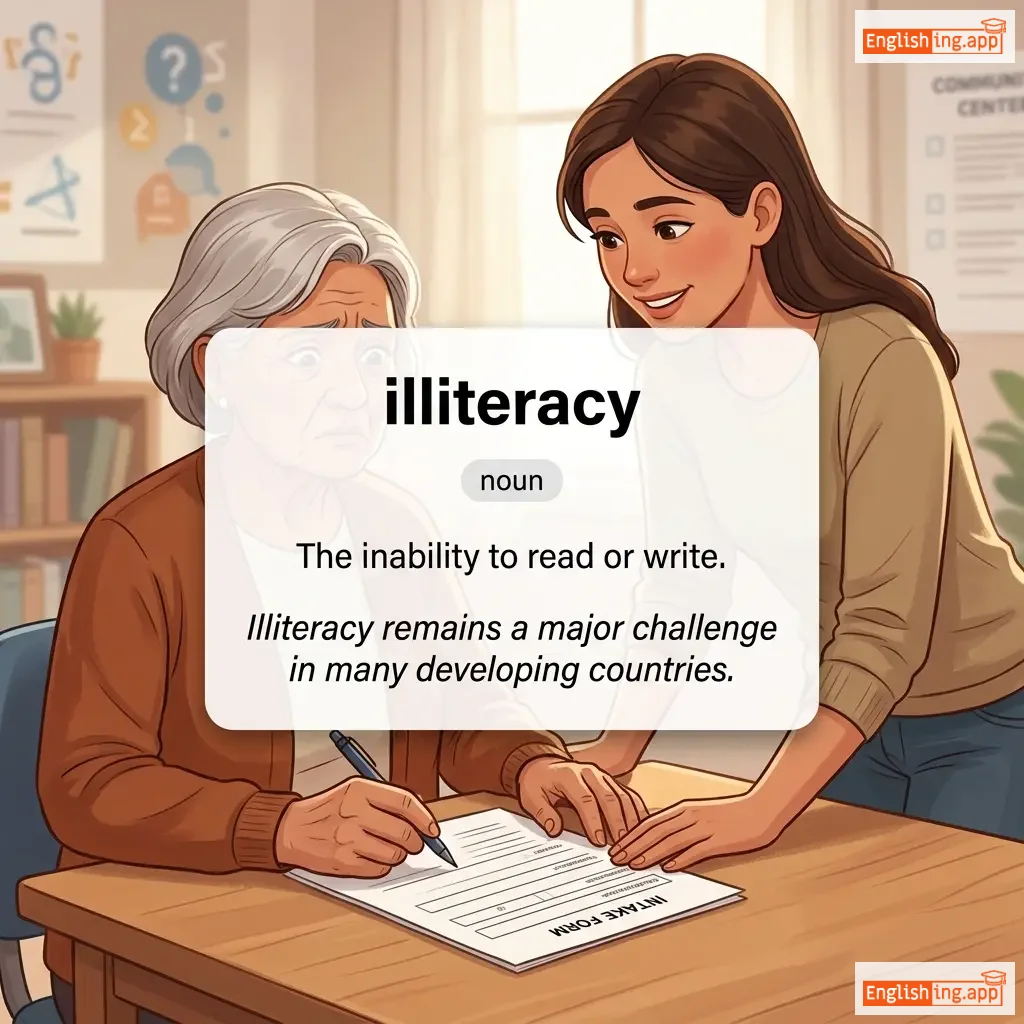
The inability to read or write.
••••••
|
Illiteracy remains a major challenge in many developing countries. |
識字率の低さは、多くの発展途上国において重要な課題のままである。
Shikijiritsu no hikusa wa, ooku no hatten tojoukoku ni oite juuyou na kadai no mama de aru.
••••••
|
- •••••• | - •••••• | - •••••• |
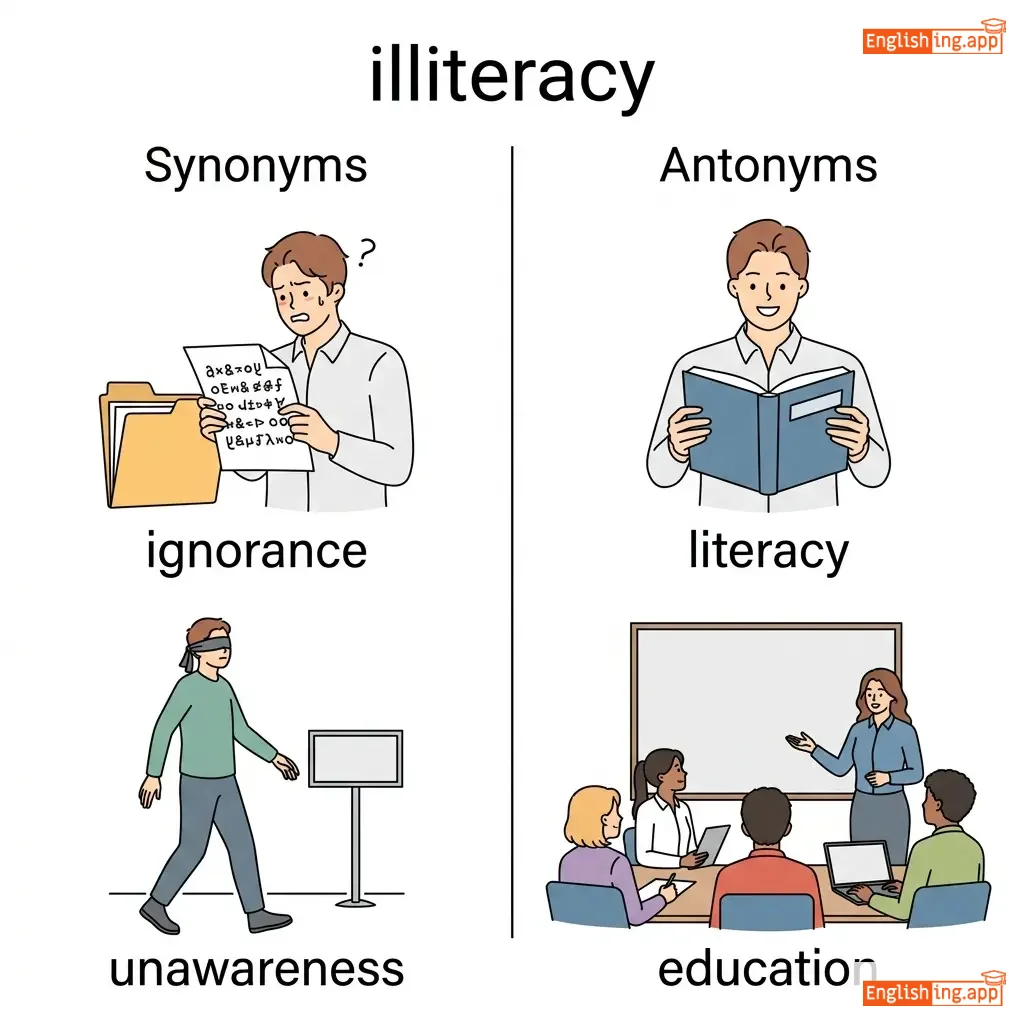
ignorance, unawareness, ill-education, illiterateness
••••••
|
literacy, education, knowledge
••••••
|
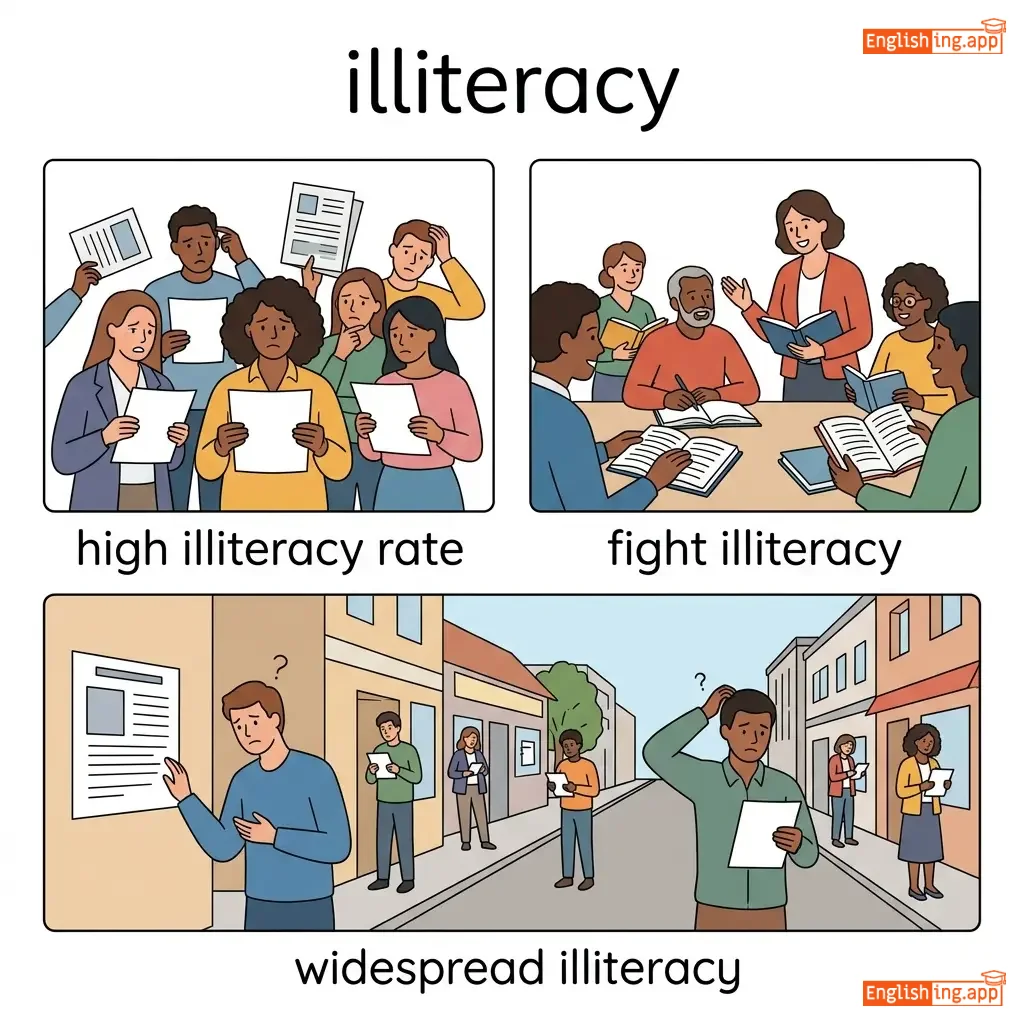
high illiteracy rate, fight illiteracy, widespread illiteracy, adult illiteracy
••••••
|
Illiterate とは読むことや書くことができないこと → Illiteracy = 識字率の低さ
••••••
|
|
#4266
🌌
|
/ɪˈlɪmɪtəbl/
adjective
(irimitēburu)
••••••
|
- •••••• |
無限
mugen
••••••
|
- •••••• | - •••••• | - •••••• | - •••••• |
Without limits or bounds.
••••••
|
The universe is often described as illimitable.
宇宙はしばしば無限であると説明されます。
••••••
|
宇宙はしばしば無限であると説明されます。
Uchū wa shibashiba mugen de aru to setsumei saremasu.
••••••
|
- •••••• | - •••••• | - •••••• |
infinite, boundless, endless, limitless
••••••
|
limited, finite, restricted
••••••
|
illimitable space, illimitable power, illimitable possibilities
••••••
|
Illimitable = 限界がない、だから無限。
••••••
|
|
#4267
🚔
|
/ɪˈlɪsɪt/
adjective
(ilisitto)
••••••
|
- •••••• |
不法な
fuhō na
••••••
|
- •••••• | - •••••• | - •••••• | - •••••• |
Forbidden by law, rules, or custom.
••••••
|
The police shut down the illicit drug operation. |
警察は不法な麻薬取引を閉鎖しました。
Keisatsu wa fuhō na mayaku torihiki o heisa shimashita.
••••••
|
- •••••• | - •••••• | - •••••• |
illegal, unlawful, forbidden, prohibited
••••••
|
legal, lawful, permitted
••••••
|
illicit trade, illicit affair, illicit drug, illicit activity
••••••
|
Illicit は ‘不法な’ を意味し、不法な麻薬取引は ‘不法な麻薬’ を意味します。
••••••
|
|
#4268
❌
|
/ˌɪlɪbəˈræləti/
noun
(イリベラリティ)
••••••
|
- •••••• |
不寛容
fukanyou
••••••
|
- •••••• | - •••••• | - •••••• | - •••••• |
The quality of being illiberal; lack of tolerance or generosity.
••••••
|
The illiberality of the new laws alarmed the citizens.
新しい法律のイリベラリティが市民を驚かせました。
••••••
|
新しい法律の不寛容が市民を驚かせました。
Atarashī hōritsu no fukanyō ga shimin o odorokasemashita.
••••••
|
- •••••• | - •••••• | - •••••• |
intolerance, narrow-mindedness, bigotry, authoritarianism
••••••
|
liberality, tolerance, open-mindedness
••••••
|
political illiberality, religious illiberality, social illiberality
••••••
|
Illiberalityは自由主義がないこと、つまり不寛容です。
••••••
|
|
#4269
🚷
|
/ɪˈlɪbərəl/
adjective
(イリベラル)
••••••
|
- •••••• |
非リベラル
hi riberaru
••••••
|
- •••••• | - •••••• | - •••••• | - •••••• |
Opposed to liberal principles; restricting freedom of thought or behavior.
••••••
|
The government was criticized for its illiberal policies.
政府はその非リベラルな政策について批判された。
••••••
|
政府はその非リベラルな政策について批判された。
Seifu wa sono hi riberaru na seisaku ni tsuite hihan sareta.
••••••
|
- •••••• | - •••••• | - •••••• |
narrow-minded, intolerant, authoritarian, repressive
••••••
|
liberal, tolerant, open-minded
••••••
|
illiberal regime, illiberal policies, illiberal attitude, illiberal practices
••••••
|
Illiberal は liberal とは反対なので、非リベラル。
••••••
|
|
#4270
🚫
|
/ˌɪlɪˈdʒɪtɪmət/
adjective
(イリジティメイト)
••••••
|
- •••••• |
不正
fusei
••••••
|
- •••••• | - •••••• | - •••••• | - •••••• |
Not authorized by law, rules, or standards; not recognized as valid.
••••••
|
The court ruled the contract to be illegitimate.
裁判所は契約が不正であると判断しました。
••••••
|
裁判所は契約が不正であると判断しました。
Saibansho wa keiyaku ga fusei de aru to handan shimashita.
••••••
|
- •••••• | - •••••• | - •••••• |
invalid, unlawful, improper, false, unrecognized
••••••
|
legitimate, valid, lawful
••••••
|
illegitimate child, illegitimate claim, illegitimate ruler, illegitimate contract
••••••
|
Illegitimateはlegitでないことを意味し、したがって不正です。
••••••
|
|
#4271
✍️
|
/ɪˈledʒ.ə.bəl/
adjective
(イレジブル)
••••••
|
- •••••• |
読めない
yomenai
••••••
|
- •••••• | - •••••• | - •••••• | - •••••• |
Not clear enough to be read; unreadable.
••••••
|
The doctor’s handwriting was almost illegible. |
医者の手書きはほとんど読めなかった。
Isha no tegaki wa hotondo yomenakatta.
••••••
|
- •••••• | - •••••• | - •••••• |
unreadable, unclear, indecipherable, obscure
••••••
|
legible, readable, clear
••••••
|
illegible handwriting, illegible text, illegible note, illegible document
••••••
|
illegible は読めないという意味 → 読めない
••••••
|
|
#4272
🚫
|
/ɪˈliː.ɡəl/
adjective
(イリーガル)
••••••
|
- •••••• |
違法
ihou
••••••
|
- •••••• | - •••••• | - •••••• | - •••••• |
Not allowed by law; unlawful.
••••••
|
It is illegal to drive without a valid license. |
有効な免許なしで運転することは違法です。
Yūkō na menkyo nashi de unten suru koto wa ihō desu.
••••••
|
- •••••• | - •••••• | - •••••• |
unlawful, criminal, forbidden, prohibited, illicit
••••••
|
legal, lawful, legitimate
••••••
|
illegal activity, illegal trade, illegal immigrant, illegal action
••••••
|
illegal は法律で許可されていない、したがって → 違法。
••••••
|
|
#4273
😒
|
/ˌɪlˈneɪ.tʃəd/
adjective
(イル・ネイチャード)
••••••
|
- •••••• |
性格が悪い
seikaku ga warui
••••••
|
- •••••• | - •••••• | - •••••• | - •••••• |
Having a bad or unpleasant character; unkind or malicious.
••••••
|
He made an ill-natured remark about his colleague. |
彼は同僚について悪意のある発言をしました。
Kare wa dōryō ni tsuite akui no aru hatsugen o shimashita.
••••••
|
- •••••• | - •••••• | - •••••• |
unkind, malicious, mean, spiteful, hostile
••••••
|
kind, friendly, good-natured
••••••
|
ill-natured remark, ill-natured comment, ill-natured look, ill-natured attitude
••••••
|
illは病気を意味し、ill-naturedは性格が悪いを意味します → 性格が悪い。
••••••
|
|
#4274
📜
|
/ˈɪl.i.æd/
noun
(イリアス)
••••••
|
- •••••• |
イリアス
Irias
••••••
|
- •••••• | - •••••• | - •••••• | - •••••• |
An ancient Greek epic poem attributed to Homer, describing the events of the Trojan War.
••••••
|
Students studied the Iliad to understand Greek mythology and heroism.
学生たちはイリアスを学び、ギリシャ神話と英雄主義を理解しました。
••••••
|
学生たちはイリアスを学び、ギリシャ神話と英雄主義を理解しました。
Gakusei-tachi wa Irias wo manabi, Girisha shinwa to eiyuu shugi wo rikai shimashita.
••••••
|
- •••••• | - •••••• | - •••••• |
epic, poem, saga, legend, tale
••••••
|
fact, truth, reality
••••••
|
Homer's Iliad, epic Iliad, Iliad story, Iliad translation
••••••
|
イリアス = Ili (トロイの都市) + as (物語を加える) → トロイ戦争の物語。
••••••
|
|
#4275
🖼️
|
/ˈaɪ.kɒn/
noun
(アイコン)
••••••
|
- •••••• |
宗教的な画像やシンボル
shūkyō-teki na gazō ya shinboru
••••••
|
- •••••• | - •••••• | - •••••• | - •••••• |
A religious image or symbol, especially in the Eastern Orthodox Church.
••••••
|
The church displayed a beautifully painted ikon of the Virgin Mary.
教会は美しく描かれた聖母マリアのアイコンを展示しました。
••••••
|
教会は美しく描かれた聖母マリアのアイコンを展示しました。
Kyōkai wa utsukushiku egakareta Seibo Maria no aikon o tenji shimashita.
••••••
|
- •••••• | - •••••• | - •••••• |
image, idol, emblem, figure, representation
••••••
|
reality, object, being
••••••
|
religious ikon, Byzantine ikon, sacred ikon, painted ikon
••••••
|
アイコンは、神聖な意味を持つ宗教的な画像やシンボルです。
••••••
|
|
#4276
💬
|
/ˈɪd.i.əm/
noun
(イディオム)
••••••
|
- •••••• |
イディオム
idion
••••••
|
- •••••• | - •••••• | - •••••• | - •••••• |
A group of words whose meaning is different from the meanings of the individual words.
••••••
|
The idiom 'break the ice' means to start a conversation in a friendly way. |
イディオム '氷を破る' は、友好的な方法で会話を始めることを意味します。
Idiomu 'kōri o yaburu' wa, yūkōtekina hōhō de kaiwa o hajimeru koto o imi shimasu.
••••••
|
break the ice |
to initiate social interaction or conversation in a relaxed manner
••••••
|
氷を破る
kōri o yaburu
••••••
|
phrase, expression, saying, figure of speech
••••••
|
literal meaning, direct statement
••••••
|
English idiom, common idiom, idiom usage
••••••
|
イディオム - 直訳ではなく、その背後にある意味を捉えよう!
••••••
|
|
#4277
😓
|
/ˌɪɡ.nəˈmɪn.i.əs/
adjective
(イグノミニアス)
••••••
|
- •••••• |
不名誉な
fumei na
••••••
|
- •••••• | - •••••• | - •••••• | - •••••• |
Marked by shame, disgrace, or humiliation.
••••••
|
The team suffered an ignominious defeat in the finals. |
チームは決勝で不名誉な敗北を喫した。
Chiimu wa kesshou de fumei na haiboku o kitta.
••••••
|
- •••••• | - •••••• | - •••••• |
disgraceful, humiliating, shameful, degrading
••••••
|
glorious, honorable, dignified
••••••
|
ignominious defeat, ignominious failure, ignominious end, ignominious retreat
••••••
|
Ignominious は恥ずかしいという意味で、'MINImum' 尊重がないようなものです。
••••••
|
|
#4278
😞
|
/ɪɡˈnoʊ.bəl/
adjective
(イグノーブル)
••••••
|
- •••••• |
卑劣な
hiretsu na
••••••
|
- •••••• | - •••••• | - •••••• | - •••••• |
Dishonorable, shameful, or lacking nobility.
••••••
|
His ignoble actions ruined his reputation. |
彼の卑劣な行動は彼の評判を台無しにした。
Kare no hiretsu na kōdō wa kare no hyōban o dainashi ni shita.
••••••
|
- •••••• | - •••••• | - •••••• |
dishonorable, base, shameful, mean, degraded
••••••
|
honorable, noble, dignified
••••••
|
ignoble act, ignoble motive, ignoble character, ignoble conduct
••••••
|
Ignobleは貴族の気質がないことを意味し、卑劣または恥ずべきです。
••••••
|
|
#4279
🔥
|
/ɪɡˈnaɪt/
verb
(イグナイト)
••••••
|
- •••••• |
点火する
tenka suru
••••••
|
ignited
イグナイテッド
••••••
|
ignited
イグナイテッド
••••••
|
ignites
イグナイツ
••••••
|
igniting
イグナイティング
••••••
|
To catch fire or cause to catch fire; to start or arouse.
••••••
|
The sparks ignited the dry leaves in seconds.
ザ・スパークス・イグナイテッド・ザ・ドライ・リーブス・イン・セカンズ。
••••••
|
火花が数秒で乾燥した葉に火をつけた。
Hibana ga suubyou de kansou shita ha ni hi o tsuketa.
••••••
|
ignite a passion
イグナイト・ア・パッション
••••••
|
to strongly inspire or motivate someone
••••••
|
情熱を燃やす
jounetsu o moyasu
••••••
|
kindle, inflame, spark, light, trigger
••••••
|
extinguish, douse, smother
••••••
|
ignite a fire, ignite interest, ignite debate, ignite violence
••••••
|
Igniteは火をつける意味 - igniteで情熱に火をつけよう!
••••••
|
|
#4280
🌋
|
/ˈɪɡ.ni.əs/
adjective
(イグニアス)
••••••
|
|
火成
kasei
••••••
|
- •••••• | - •••••• | - •••••• | - •••••• |
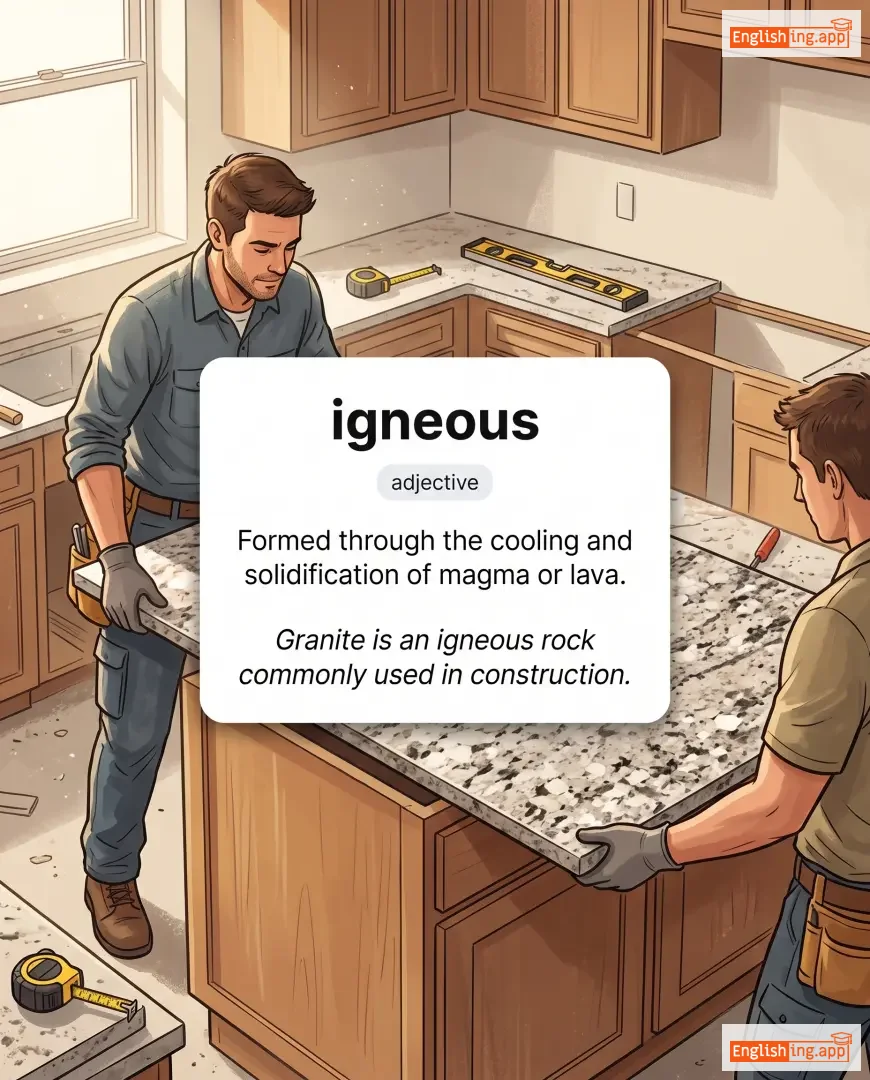
Formed through the cooling and solidification of magma or lava.
••••••
|
Granite is an igneous rock commonly used in construction.
花崗岩は建設に一般的に使用される火成岩です。
••••••
|
花崗岩は建設に一般的に使用される火成岩です。
Kōgan'yan wa kensetsu ni ippan-teki ni shiyō sareru kasei-gan desu.
••••••
|
- •••••• | - •••••• | - •••••• |
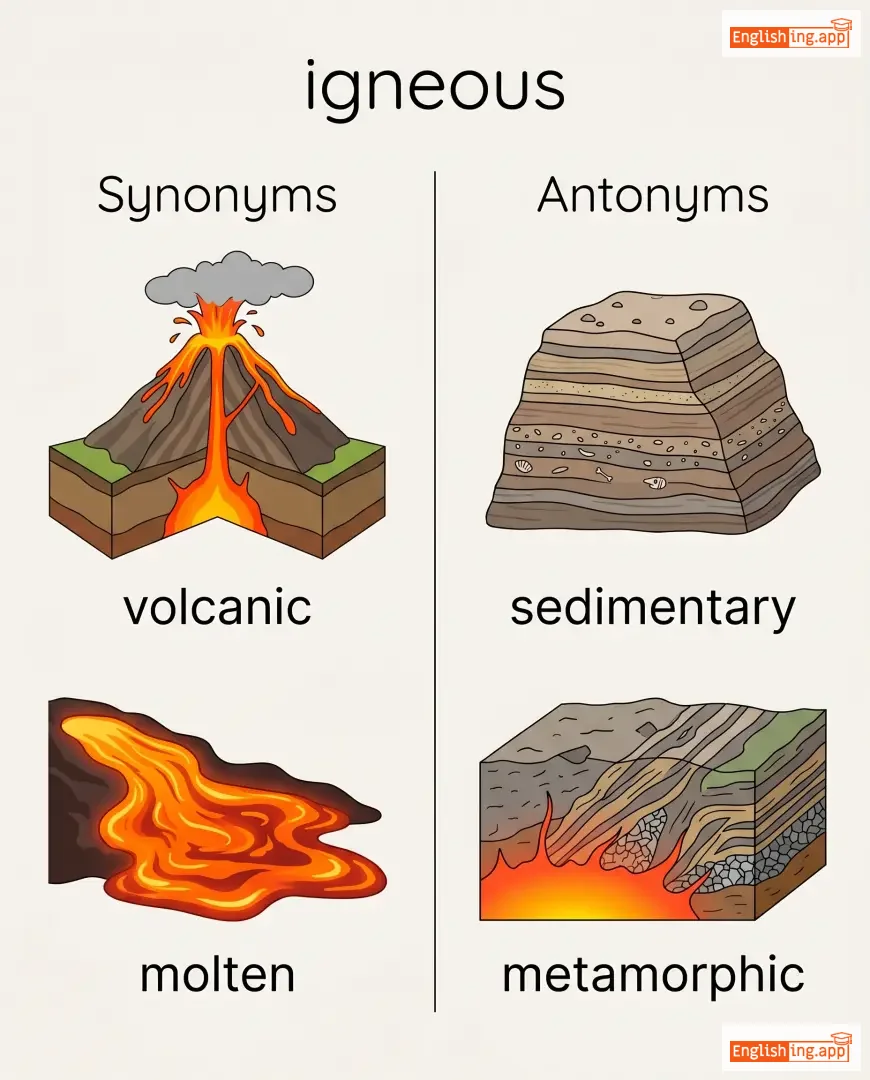
volcanic, molten, fiery, magmatic
••••••
|
sedimentary, metamorphic
••••••
|
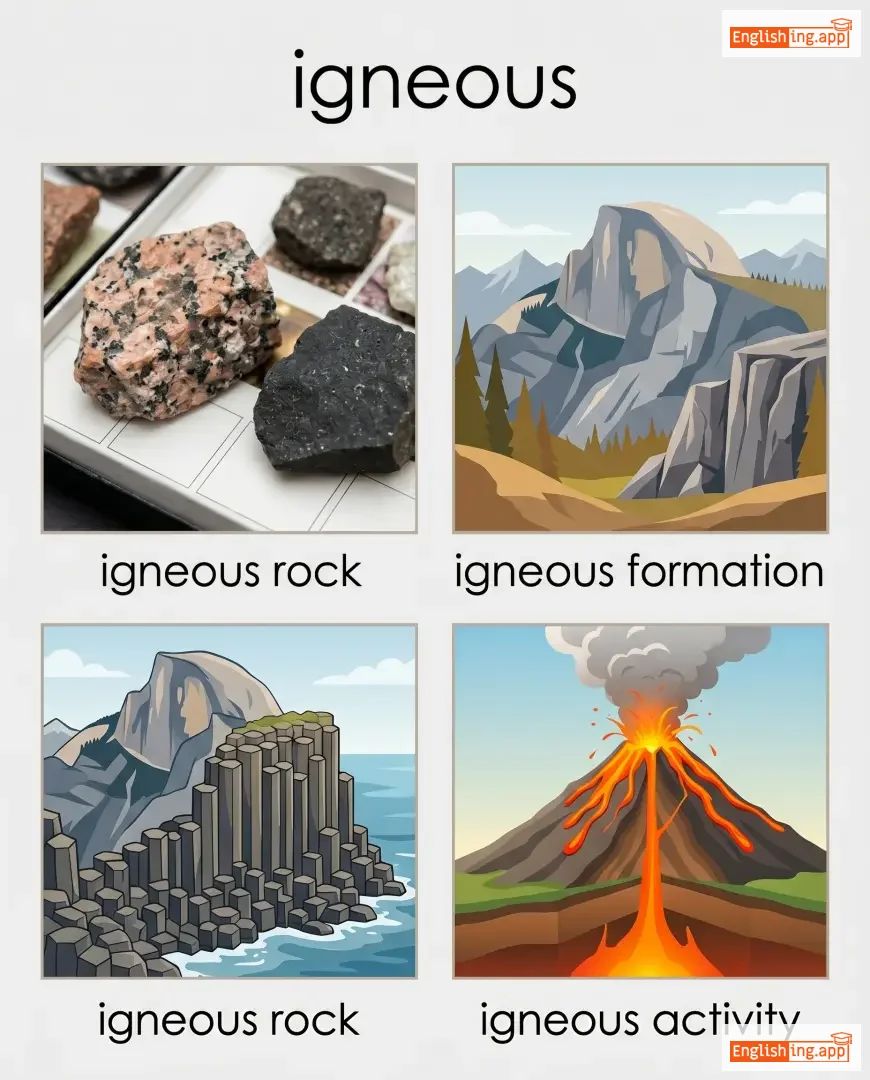
igneous rock, igneous formation, igneous activity, igneous process
••••••
|
Igneous は火からできた岩 - 火成岩。
••••••
|
|
#4281
🌅
|
/aɪˈdɪlɪk/
adjective
(アイディリック)
••••••
|
- •••••• |
田園詩のように美しい
den'en-shi no yō ni utsukushī
••••••
|
- •••••• | - •••••• | - •••••• | - •••••• |
Like an idyll; extremely happy, peaceful, or picturesque.
••••••
|
They enjoyed an idyllic vacation by the sea. |
彼らは海辺で田園詩のような休暇を楽しみました。
Karera wa umibe de den'en-shi no yō na kyūka o tanoshimimashita.
••••••
|
- •••••• | - •••••• | - •••••• |
picturesque, peaceful, blissful, charming, serene
••••••
|
chaotic, unpleasant, miserable
••••••
|
idyllic setting, idyllic life, idyllic place, idyllic vacation
••••••
|
Idyllic = ideal + click → 完璧な休暇
••••••
|
|
#4282
🏝️
|
/ˈaɪdɪl/
noun
(アイディル)
••••••
|
- •••••• |
田園詩的なシーン
den'en shiteki na shīn
••••••
|
- •••••• | - •••••• | - •••••• | - •••••• |
An extremely happy, peaceful, or picturesque episode or scene, often idealized.
••••••
|
Their honeymoon was an idyll on a tropical island. |
彼らのハネムーンは熱帯の島での田園詩的なシーンでした。
Karera no hanemūn wa nettai no shima de no den'en shiteki na shīn deshita.
••••••
|
- •••••• | - •••••• | - •••••• |
paradise, bliss, utopia, haven, dream
••••••
|
nightmare, chaos, misery
••••••
|
romantic idyll, rural idyll, summer idyll, idyllic idyll
••••••
|
Idyll = 理想的なシーン → 田園詩的なシーン = idyll
••••••
|
|
#4283
🌟
|
/ˈaɪdəlaɪz/
verb
(アイドライズ)
••••••
|
- •••••• |
偶像視する
gūzō-shi suru
••••••
|
idolized
アイドライズド
••••••
|
idolized
アイドライズド
••••••
|
idolizes
アイドライゼス
••••••
|
idolizing
アイドライジング
••••••
|
To admire or worship someone excessively.
••••••
|
Fans often idolize celebrities for their talent and lifestyle.
ファンはしばしばその才能とライフスタイルのために有名人を偶像視します。
••••••
|
ファンはしばしばその才能とライフスタイルのために有名人を偶像視します。
Fan wa shibashiba sono sainō to raifusutairu no tame ni yūmeijin o gūzō-shi shimasu.
••••••
|
- •••••• | - •••••• | - •••••• |
admire, adore, revere, venerate, worship
••••••
|
despise, hate, scorn
••••••
|
idolize heroes, idolize celebrities, idolize someone, idolize stars
••••••
|
Idol + eyes → 目に偶像があるのが idolize
••••••
|
|
#4284
🛐
|
/aɪˈdɒlətri/
noun
(偶像崇拝)
••••••
|
|
偶像崇拝
guuzou suuhai
••••••
|
- •••••• | - •••••• | - •••••• | - •••••• |
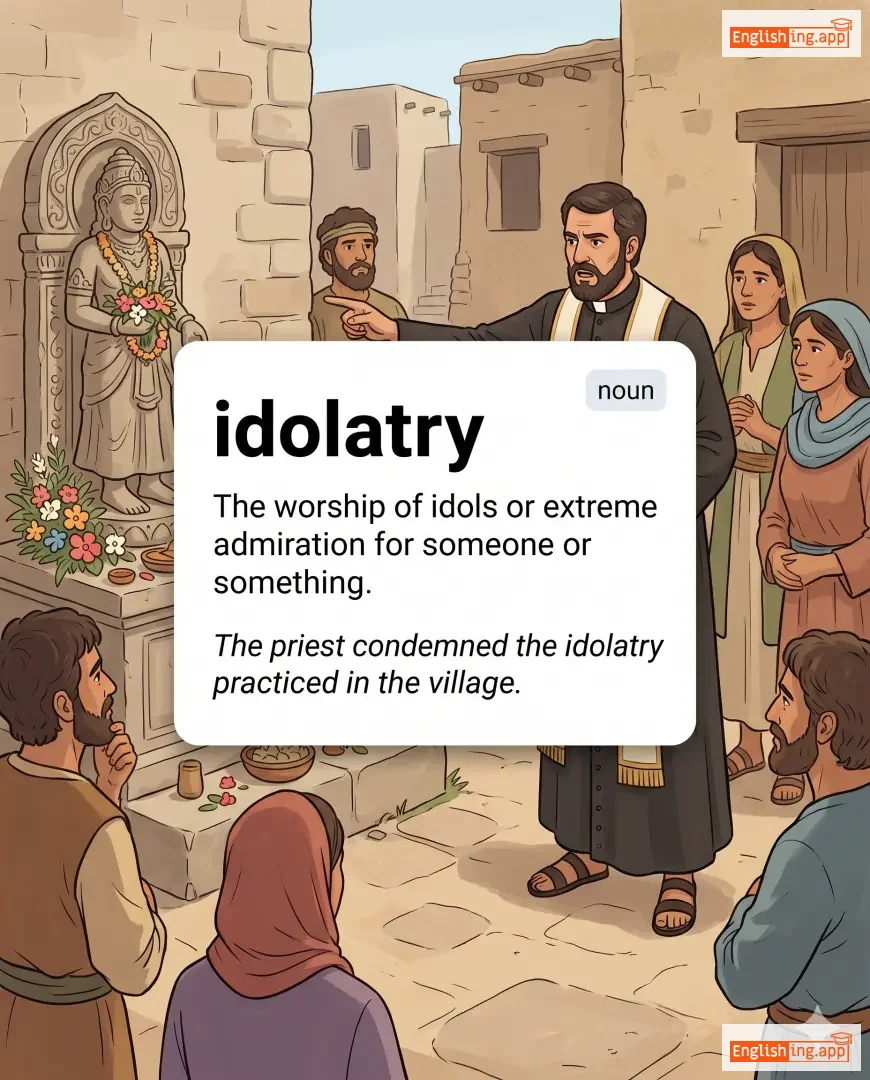
The worship of idols or extreme admiration for someone or something.
••••••
|
The priest condemned the idolatry practiced in the village. |
司祭は村で行われている偶像崇拝を非難した。
Shisai wa mura de okonawarete iru guuzou suuhai wo hinan shita.
••••••
|
- •••••• | - •••••• | - •••••• |
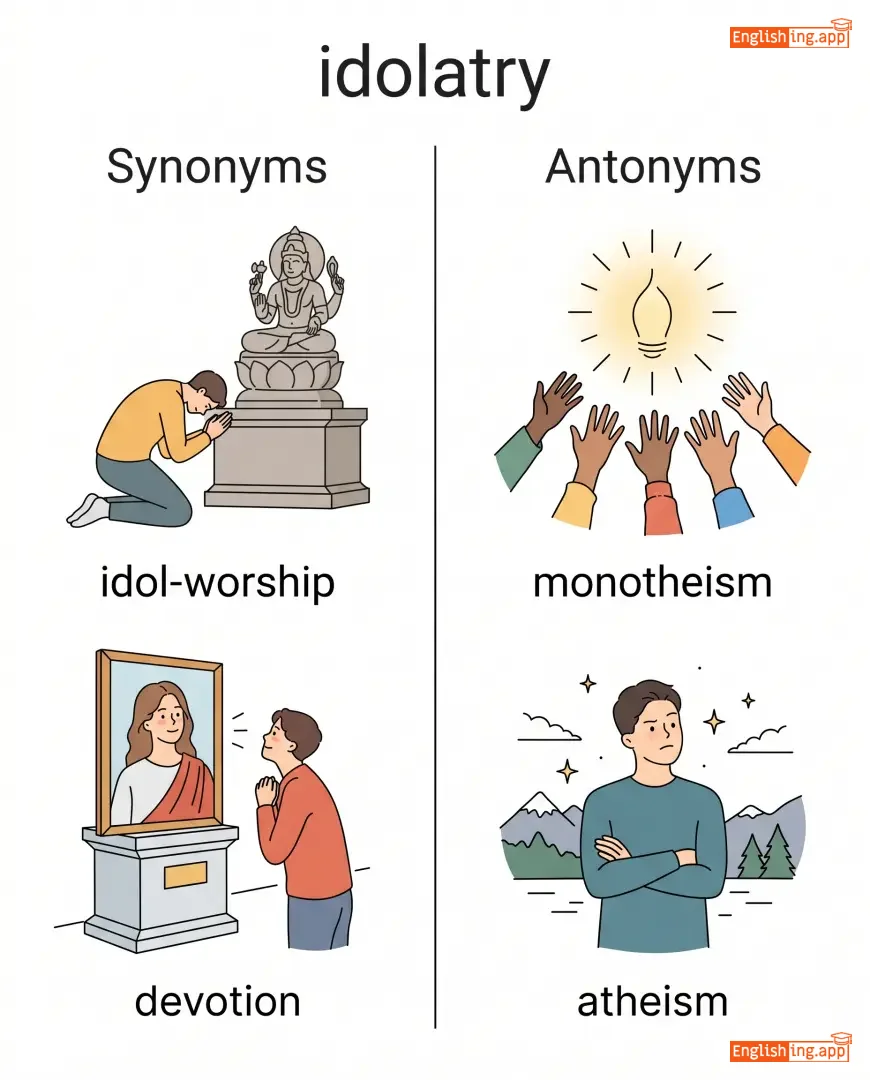
idol-worship, devotion, adoration, reverence, veneration
••••••
|
monotheism, atheism, irreverence
••••••
|
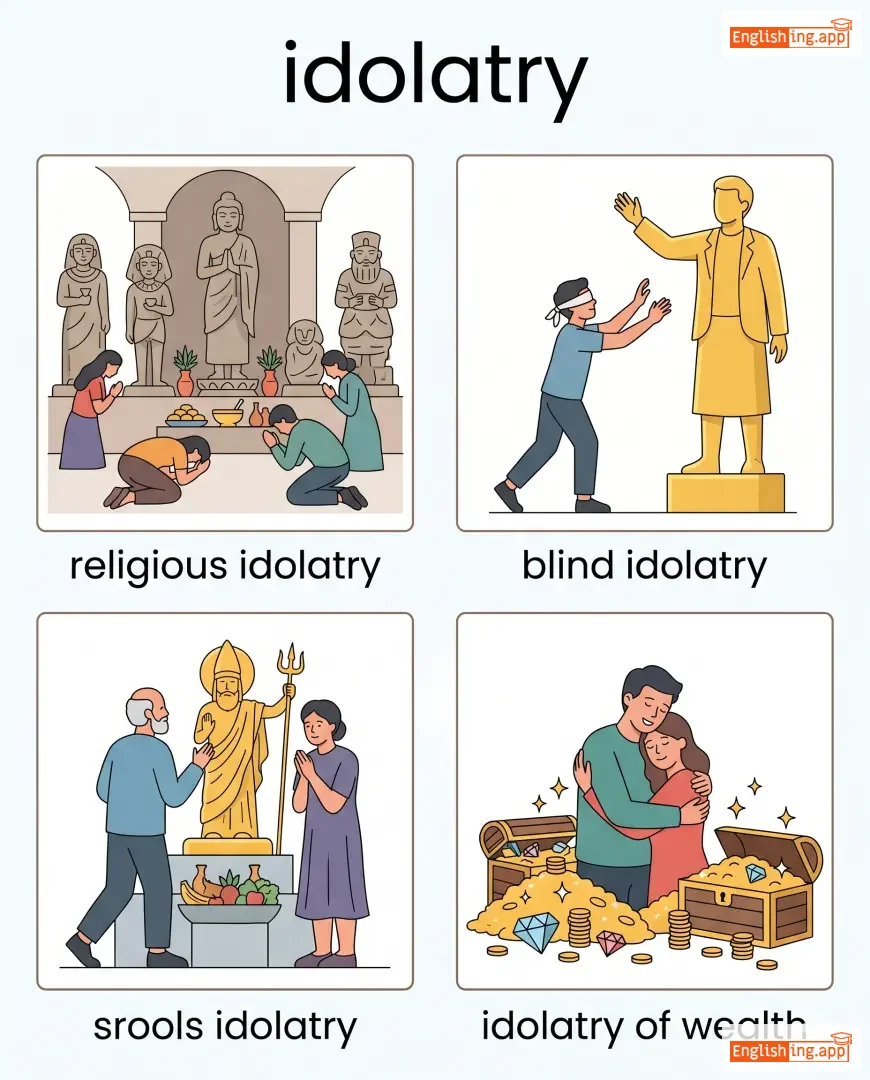
religious idolatry, blind idolatry, idolatry of wealth, idolatry of power
••••••
|
idol + tree, 木のようなidol崇拝
••••••
|
|
#4285
🙏
|
/aɪˈdɒlətrəs/
adjective
(アイドラス)
••••••
|
- •••••• |
偶像崇拝者
guuzou suuhai-sha
••••••
|
- •••••• | - •••••• | - •••••• | - •••••• |
Excessively admiring or worshipping someone or something as an idol.
••••••
|
The king was criticized for his idolatrous devotion to wealth. |
王は富に対する偶像崇拝的な献身で批判されました。
Ou wa tomi ni taisuru guuzou suuhai-teki na kenshin de hihan saremashita.
••••••
|
- •••••• | - •••••• | - •••••• |
idol-worshiping, devoted, reverent, fanatical, adoring
••••••
|
atheistic, irreverent, indifferent
••••••
|
idolatrous worship, idolatrous practices, idolatrous devotion, idolatrous culture
••••••
|
アイドル + 崇拝 = 偶像崇拝者
••••••
|
|
#4286
🙏
|
/aɪˈdɒləˌtraɪz/
verb
(アイドラトライズ)
••••••
|
- •••••• |
偶像崇拝
gūzō sūhai
••••••
|
idolatrized
アイドラトライズド
••••••
|
idolatrized
アイドラトライズド
••••••
|
idolatrizes
アイドラトライズズ
••••••
|
idolatrizing
アイドラトライズイング
••••••
|
To worship idols; to regard with excessive devotion or admiration.
••••••
|
They began to idolatrize the statue as a deity.
彼らはその像を神として崇拝し始めました。
••••••
|
彼らはその像を神として崇拝し始めました。
Karera wa sono zō o kami to shite sūhai shihajimemashita.
••••••
|
- •••••• | - •••••• | - •••••• |
worship, revere, adore, venerate
••••••
|
despise, disrespect
••••••
|
idolatrize statues, idolatrize leaders, idolatrize objects
••••••
|
Idol + trize は偶像を過度に崇拝することを意味します。
••••••
|
|
#4287
🛐
|
/ˌaɪdəˈlɑːtrɪəs/
adjective
(アイドルアトリオス)
••••••
|
- •••••• |
偶像崇拝的な
gūzō sūhai-teki na
••••••
|
- •••••• | - •••••• | - •••••• | - •••••• |
Excessively devoted or reverent towards idols or false gods.
••••••
|
The ancient tribe was known for its idolatrious practices. |
その古代の部族は偶像崇拝的な習慣で知られていました。
Sono kodai no buzoku wa gūzō sūhai-teki na shūkan de shirarete imashita.
••••••
|
- •••••• | - •••••• | - •••••• |
idol-worshipping, devoted, reverent, pagan
••••••
|
monotheistic, faithful
••••••
|
idolatrious worship, idolatrious practices, idolatrious devotion
••••••
|
Idol + atrious = 偶像に対する過度の献身
••••••
|
|
#4288
😴
|
/ˈaɪd(ə)l/
adjective, verb
(アイドル)
••••••
|
- •••••• |
アイドル
aidoru
••••••
|
idled
アイドルド
••••••
|
idled
アイドルド
••••••
|
idles
アイドルス
••••••
|
idling
アイドリング
••••••
|
Adjective: not active or in use; lazy. Verb: to spend time doing nothing.
••••••
|
The workers sat idle during the power outage.
停電中、作業員たちはアイドル状態で座っていました。
••••••
|
停電中、作業員たちはアイドル状態で座っていました。
teidenchuu, sagyouin tachi wa aidoru joutai de suwatte imashita.
••••••
|
idle hands
アイドルハンズ
••••••
|
People with nothing to do are more likely to get into trouble.
••••••
|
アイドルハンズ
aidoru hando
••••••
|
inactive, lazy, unoccupied, dormant
••••••
|
busy, active, industrious
••••••
|
idle talk, idle time, idle hands, sit idle
••••••
|
IdleはI’d + l(怠け者)を意味する – アイドルは時間を無駄にすることを意味する
••••••
|
|
#4289
🌀
|
/ˌɪdiəsɪnˈkrætɪk/
adjective
(イディオシンクラティック)
••••••
|
|
風変わりな
fukewari na
••••••
|
- •••••• | - •••••• | - •••••• | - •••••• |
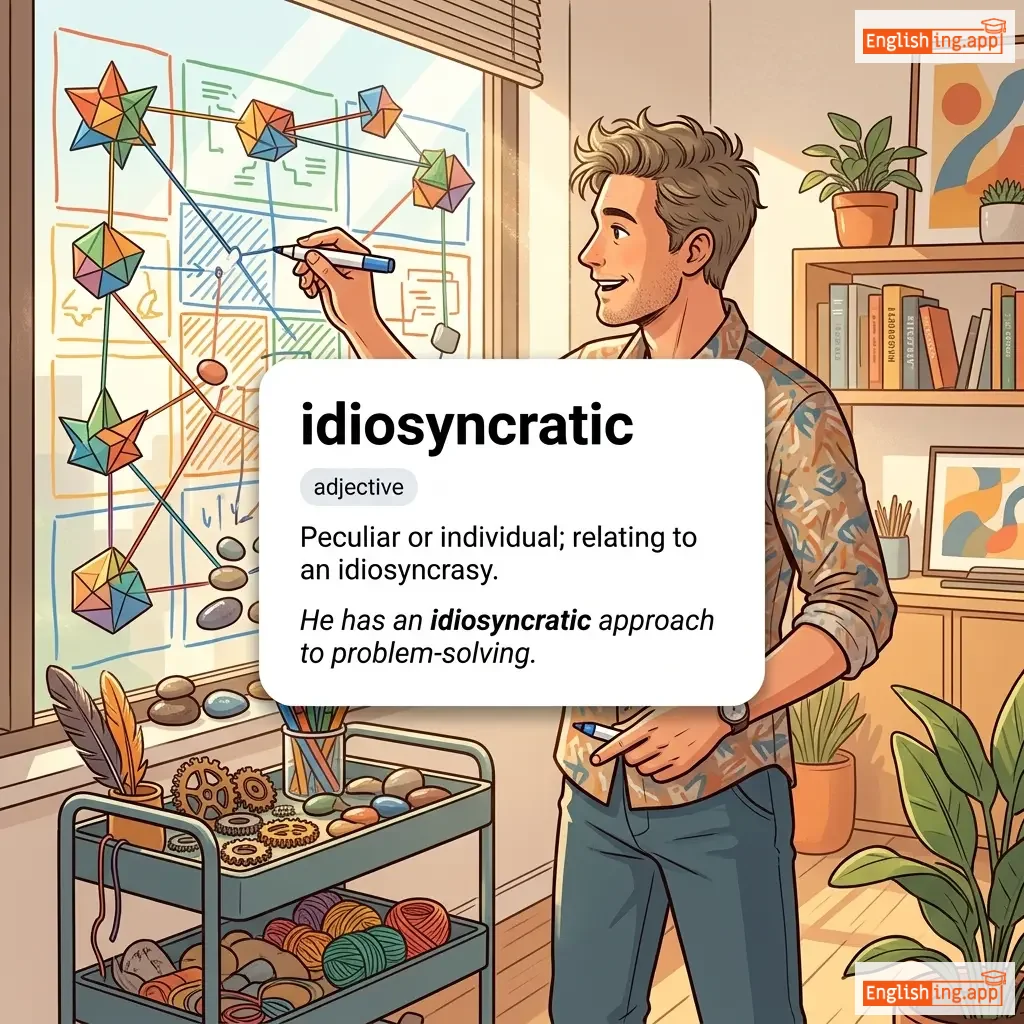
Peculiar or individual; relating to an idiosyncrasy.
••••••
|
He has an idiosyncratic approach to problem-solving. |
彼は問題解決に風変わりなアプローチを持っている。
Kare wa mondai kaiketsu ni fukewari na apurōchi o motte iru.
••••••
|
- •••••• | - •••••• | - •••••• |
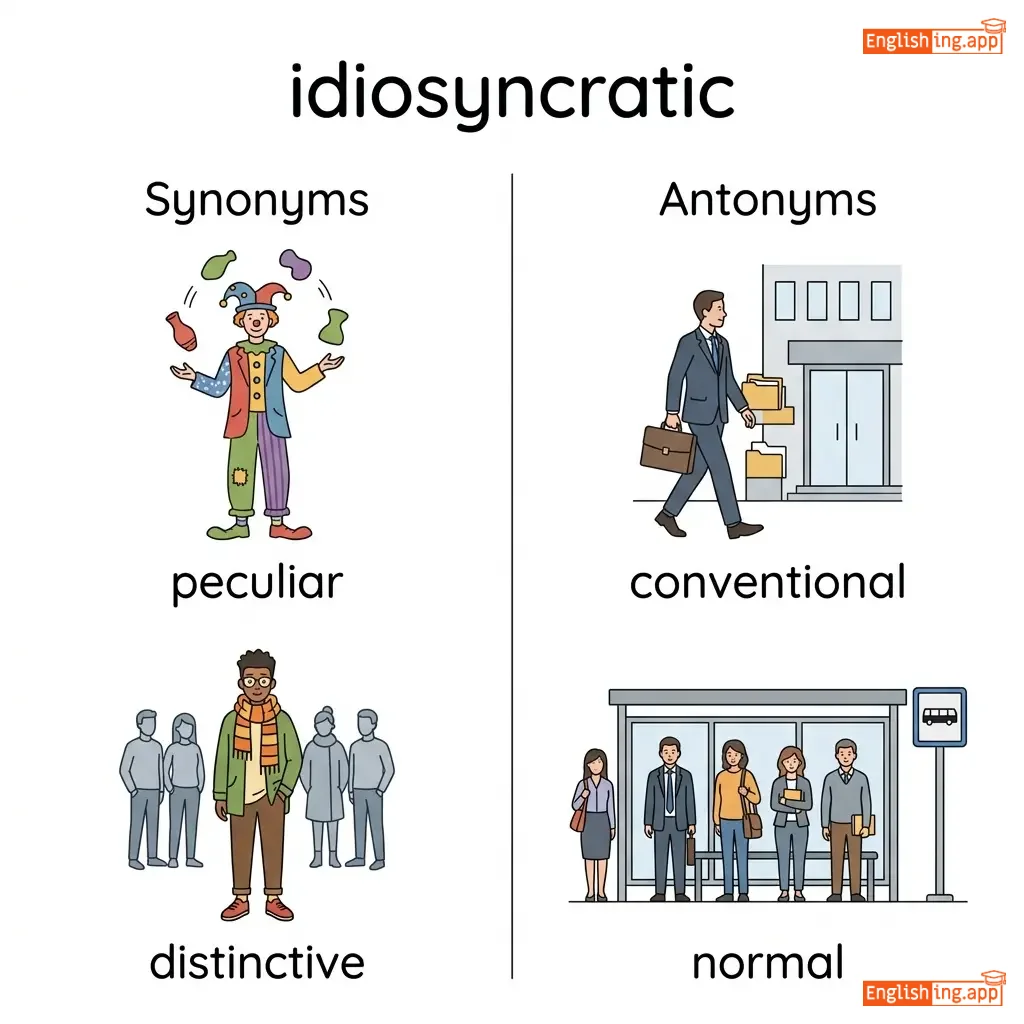
peculiar, distinctive, quirky, eccentric, unusual
••••••
|
conventional, normal, ordinary
••••••
|
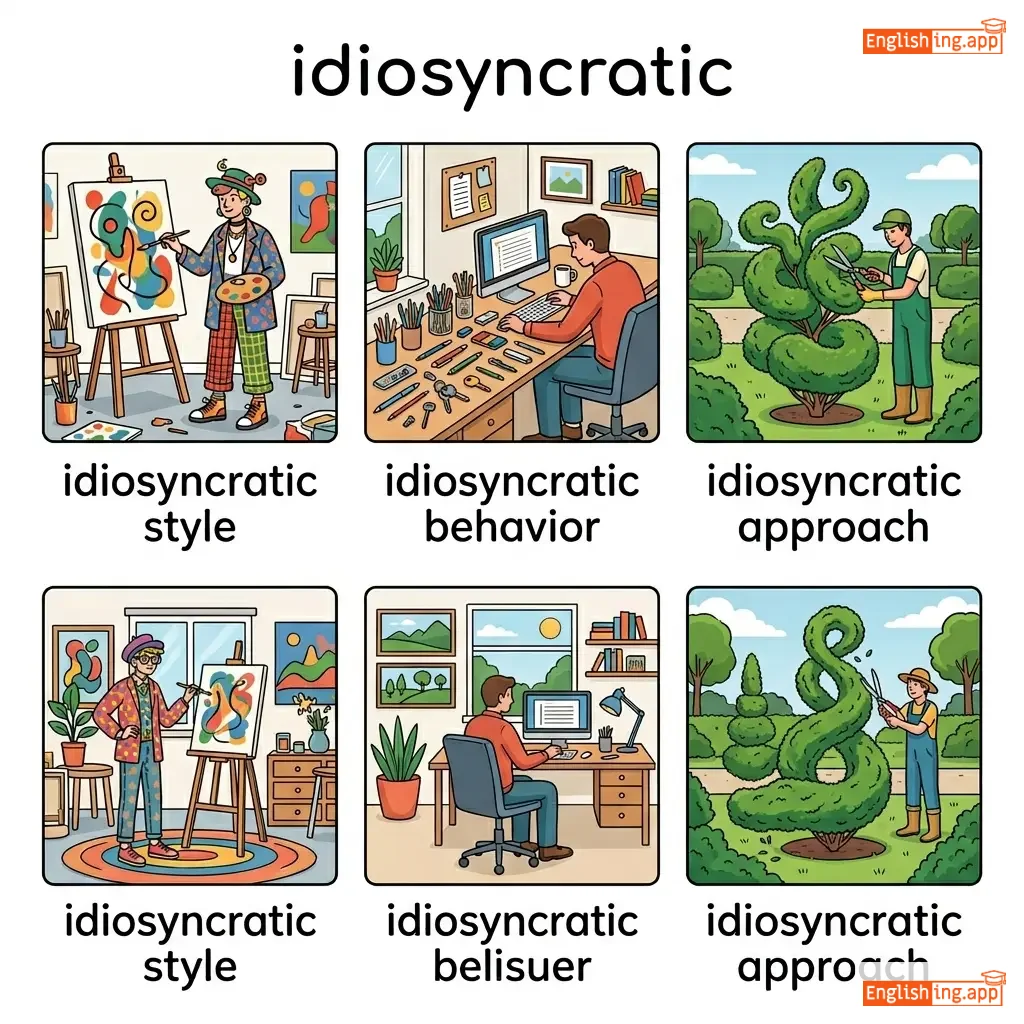
idiosyncratic style, idiosyncratic behavior, idiosyncratic approach, idiosyncratic view
••••••
|
Idioは個人的、cratischは異なる—風変わりな方法
••••••
|
|
#4290
🎭
|
/ˌɪdiəˈsɪŋkrəsi/
noun
(イディオシンクラシー)
••••••
|
- •••••• |
特異性
tokuiseki
••••••
|
- •••••• | - •••••• | - •••••• | - •••••• |
A distinctive or peculiar characteristic, habit, or mannerism unique to an individual.
••••••
|
One of her idiosyncrasies was humming while working.
彼女の一つの特異性は、仕事中に口ずさむことでした。
••••••
|
彼女の一つの特異性は、仕事中に口ずさむことでした。
Kanojo no hitotsu no tokuiseki wa, shigotochu ni kuchizusamu koto deshita.
••••••
|
- •••••• | - •••••• | - •••••• |
quirk, peculiarity, eccentricity, trait, mannerism
••••••
|
normality, conformity
••••••
|
personal idiosyncrasy, cultural idiosyncrasy, little idiosyncrasy, individual idiosyncrasy
••••••
|
Idio + sin = 変わった習慣
••••••
|
Vocabulary Quiz
Test your vocabulary by matching words with their translations or meanings.
Login to take the quiz
Comments (0)
Share your thoughts and join the discussion.
Join the discussion by logging in
Login to CommentNo comments yet
Be the first to share your thoughts!