

翻訳
過去
過去分詞
三人称単数
動名詞
意味
例文
例文の翻訳
同義語
対義語
コロケーション
ニーモニック




Swipe left or right, or use the buttons. Tap image to zoom.
例文の翻訳
単語
Lesson 64Lesson 64 - マスクトグル
|
絵文字
|
単語 | Images | 翻訳 | 過去 | 過去分詞 | 三人称単数 | 動名詞 | 意味 | 例文 | 例文の翻訳 | 同義語 | 対義語 | コロケーション | ニーモニック |
|---|---|---|---|---|---|---|---|---|---|---|---|---|---|---|
|
#1891
🦅
|
/ˈkɔːrmərənt/
noun
(コウモリ)
••••••
|
- •••••• |
魚を捕まえるために潜る大きな黒い海鳥
sakana o tsukamaeru tame ni moguru ōkina kuroi umitori
••••••
|
- •••••• | - •••••• | - •••••• | - •••••• |
a large black sea bird that catches fish by diving
••••••
|
The cormorant perched on the rock, drying its wings after a dive. |
コウモリは岩の上に止まり、ダイブの後に羽を乾かしていました。
Kōmori wa iwa no ue ni tomari, daibu no ato ni hane o kawakashiteimashita.
••••••
|
shag, sea bird, diver, seabird
••••••
|
sparrow, pigeon
••••••
|
great cormorant, cormorant dive, cormorant colony
••••••
|
コウモリは潜って魚を捕まえ、その後羽を乾かす。
••••••
|
|
#1892
📚
|
/ˈkɔːrpəs/
noun
(コーパス)
••••••
|
|
コレクション、主要部分
korekushon, shuyou bubun
••••••
|
- •••••• | - •••••• | - •••••• | - •••••• |
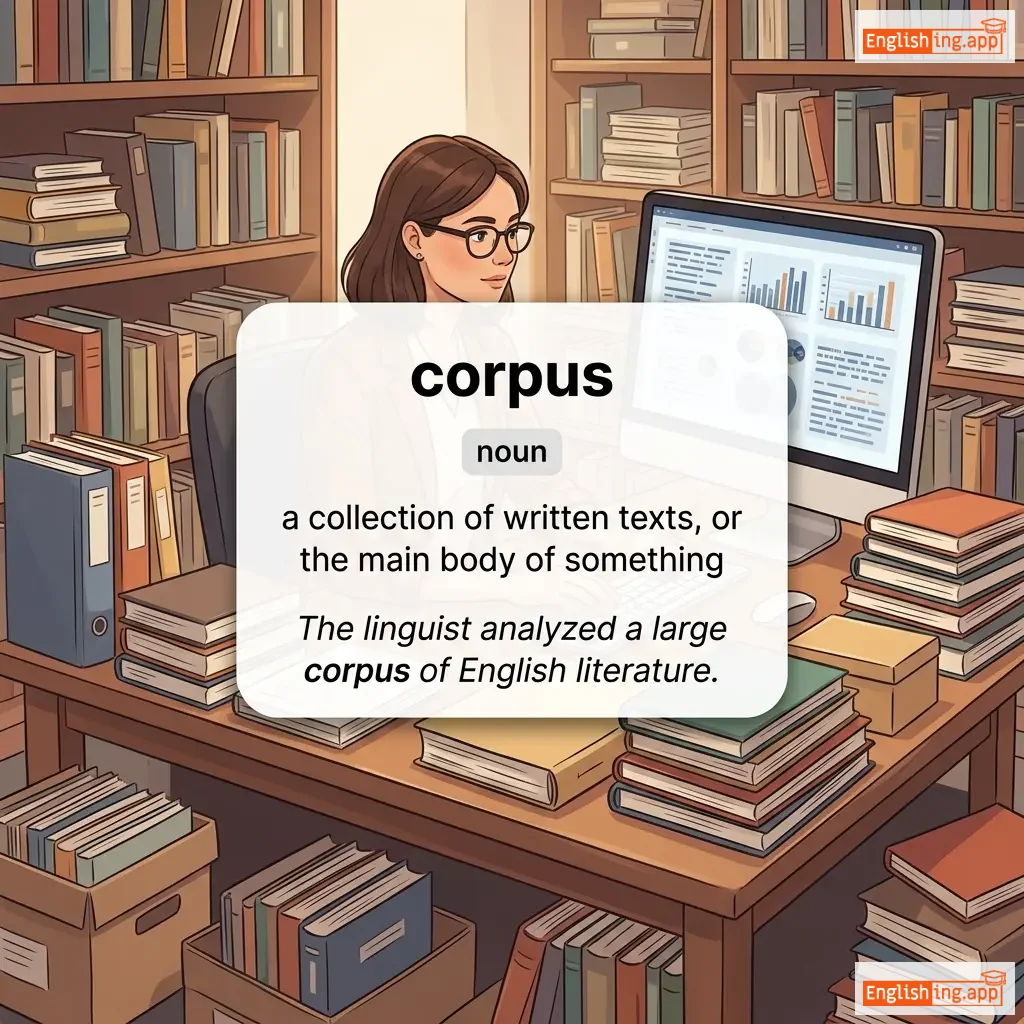
a collection of written texts, or the main body of something
••••••
|
The linguist analyzed a large corpus of English literature. |
言語学者は大量の英文学コーパスを分析しました。
Gengogakusha wa tairyo no eigobungaku kopasu o bunseki shimashita.
••••••
|
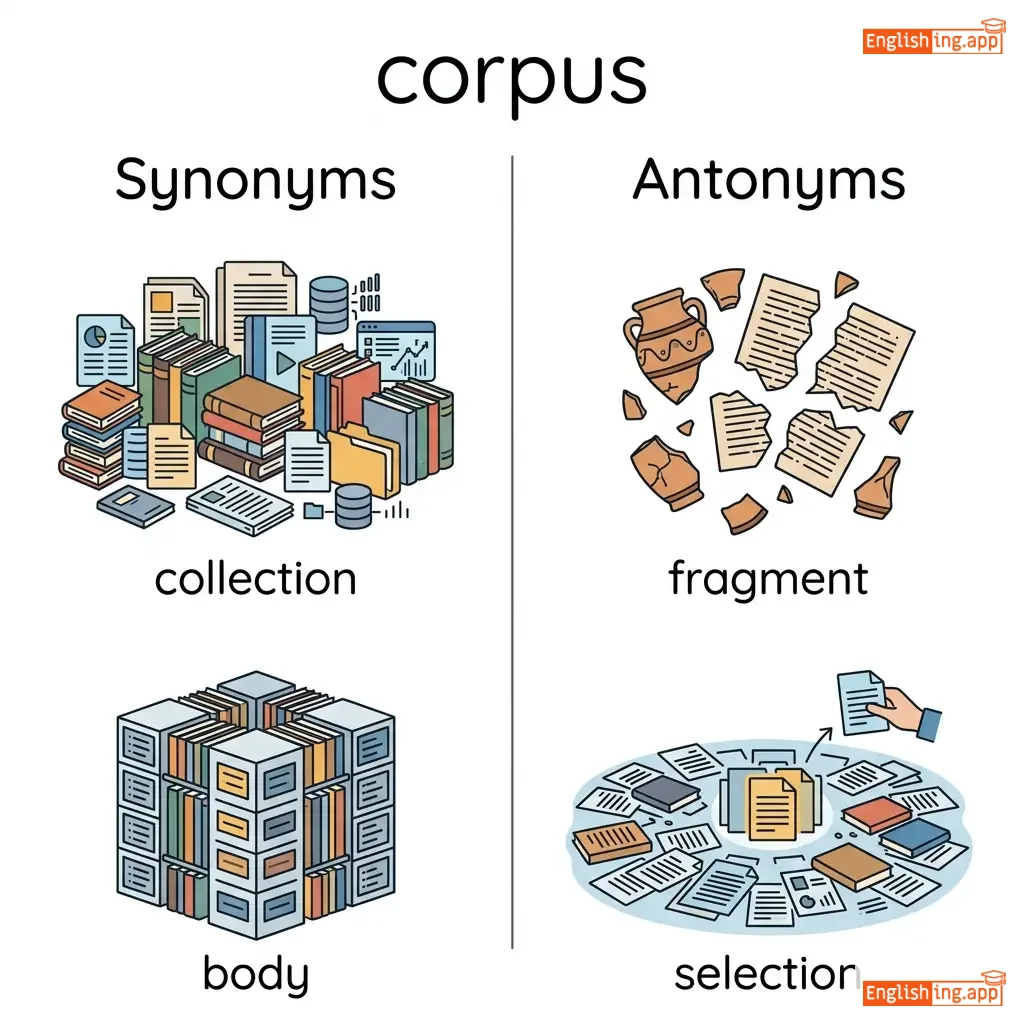
collection, body, compilation, anthology
••••••
|
- •••••• |
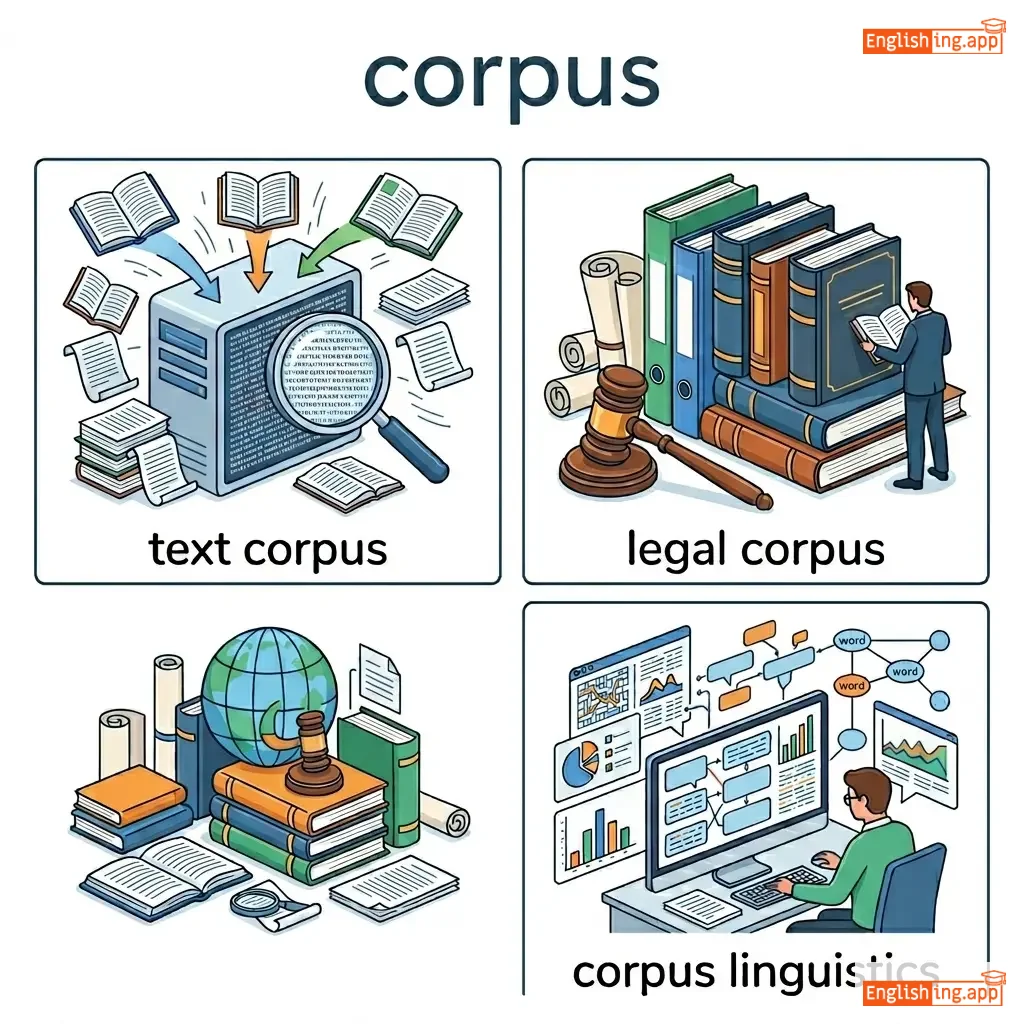
text corpus, legal corpus, corpus linguistics
••••••
|
CORPusはコレクションや主要部分を意味します - corpusをテキストの集まりと考えてみてください。
••••••
|
|
#1893
🧍♂️
|
/ˈkɔːpjʊlənt/
adjective
(コーポレント)
••••••
|
- •••••• |
肥満の, 太った
himan no, futotta
••••••
|
- •••••• | - •••••• | - •••••• | - •••••• |
fat or obese; having a large bulky body
••••••
|
The corpulent man struggled to fit into the small chair.
その太った男性は、小さな椅子に座るのに苦労していました。
••••••
|
その太った男性は、小さな椅子に座るのに苦労していました。
Sono futotta dansei wa, chīsana isu ni suwaru no ni kurō shiteimashita.
••••••
|
fat, obese, plump, stout
••••••
|
slim, thin, lean
••••••
|
corpulent figure, corpulent body, corpulent man
••••••
|
CORPulent = 大きな体、ボリュームを覚えて
••••••
|
|
#1894
☠️
|
/kɔːrps/
noun
(コープス)
••••••
|
- •••••• |
遺体
itai
••••••
|
- •••••• | - •••••• | - •••••• | - •••••• |
a dead body, especially of a human
••••••
|
The police discovered a corpse in the abandoned house.
警察は廃墟の家で遺体を発見しました。
••••••
|
警察は廃墟の家で遺体を発見しました。
Keisatsu wa haikyo no ie de itai o hakken shimashita.
••••••
|
body, cadaver, remains, carcass
••••••
|
- •••••• |
dead corpse, lifeless corpse, human corpse
••••••
|
CORPse = 遺体 (itai) = Dead body
••••••
|
|
#1895
🪖
|
/kɔːr/
noun
(コープス)
••••••
|
- •••••• |
軍隊の部門、グループ
guntai no bumon, gurūpu
••••••
|
- •••••• | - •••••• | - •••••• | - •••••• |
a branch of the military or a group organized for a specific purpose
••••••
|
He joined the army corps after graduation. |
彼は卒業後、軍隊の部門に参加しました。
Kare wa sotsugyōgo, guntai no bumon ni sanka shimashita.
••••••
|
unit, division, regiment, squad
••••••
|
- •••••• |
peace corps, marine corps, army corps
••••••
|
CORPS: 軍隊のグループを思い出して。
••••••
|
|
#1896
🫀
|
/kɔːrˈpɔːriəl/
adjective
(kɔːrpɔˈrɪəl)
••••••
|
- •••••• |
肉体的, 物質的
nikutai-teki, busshitsu-teki
••••••
|
- •••••• | - •••••• | - •••••• | - •••••• |
relating to the physical body; material or tangible
••••••
|
Ghosts are often described as having no corporeal form. |
幽霊はしばしば肉体的な形がないと説明されます。
Yūrei wa shibashiba nikutai-teki na katachi ga nai to setsumei saremasu.
••••••
|
physical, material, bodily, tangible
••••••
|
spiritual, intangible
••••••
|
corporeal form, corporeal existence, corporeal body
••••••
|
CORPoreal は肉体に関連することを意味します - CORPoreal を肉体的なものとして考えてください。
••••••
|
|
#1897
🏢
|
/ˈkɔːrpərət/
adjective, noun
(コーポレート)
••••••
|
- •••••• |
企業/コーポレートに関連する
kigyo/corporate ni kanren suru
••••••
|
- •••••• | - •••••• | - •••••• | - •••••• |
relating to a corporation or large company; united as a single body
••••••
|
Corporate social responsibility is important for modern businesses.
企業の社会的責任は現代のビジネスにとって重要です。
••••••
|
企業の社会的責任は現代のビジネスにとって重要です。
Kigyo no shakaiteki sekinin wa gendai no bijinesu ni totte jūyō desu.
••••••
|
business, company, collective, enterprise
••••••
|
individual, personal
••••••
|
corporate culture, corporate strategy, corporate governance, corporate identity
••••••
|
CORP は会社のこと。Corporate はビジネスに関するもの。
••••••
|
|
#1898
💂
|
/ˈkɔːrpərəl/
adjective, noun
(コーポラル)
••••••
|
- •••••• |
伍長
gochou
••••••
|
- •••••• | - •••••• | - •••••• | - •••••• |
relating to the body; a low-ranking officer in the military
••••••
|
He suffered a corporal punishment for his mistake.
彼はミスのために体罰を受けました。
••••••
|
彼はミスのために体罰を受けました。
Kare wa misu no tame ni taibatsu wo ukemashita.
••••••
|
physical, bodily, military officer, non-commissioned officer
••••••
|
spiritual, mental
••••••
|
corporal punishment, corporal injury, corporal services, corporal role
••••••
|
CORPOraL 身体に関する - Corporal is about the body
••••••
|
|
#1899
👑
|
/ˈkɒrənɛt/
noun
(コロネット)
••••••
|
- •••••• |
小さな王冠
chiisana ōkan
••••••
|
- •••••• | - •••••• | - •••••• | - •••••• |
a small crown, especially one worn by a prince, princess, or noble
••••••
|
She wore a delicate coronet on her head for the ceremony. |
彼女は式典のために頭に繊細な小さな王冠をかぶっていました。
Kanojo wa shikiten no tame ni atama ni sensai na chiisana ōkan o kabutte imashita.
••••••
|
tiara, diadem, crownlet, headpiece
••••••
|
- •••••• |
golden coronet, jeweled coronet, ceremonial coronet, ornate coronet
••••••
|
CORO 頭の上に小さな王冠 - Coronet on the head like a small crown
••••••
|
|
#1900
⚰️
|
/ˈkɒrənər/
noun
(コロナー)
••••••
|
- •••••• |
検死官
kenshikan
••••••
|
- •••••• | - •••••• | - •••••• | - •••••• |
an official who investigates sudden, violent, or suspicious deaths
••••••
|
The coroner determined the cause of death was natural. |
検死官は死因が自然死であると判定しました。
Kenshikan wa shiin ga shizenshi de aru to hantei shimashita.
••••••
|
medical examiner, pathologist, investigator, inquest officer
••••••
|
- •••••• |
coroner's report, coroner's office, coroner's inquest, coroner investigation
••••••
|
検死官は死を調べる - Coroner investigates death
••••••
|
|
#1901
👑
|
/ˌkɒrəˈneɪʃən/
noun
(koronēshon)
••••••
|
- •••••• |
戴冠式
taikan-shiki
••••••
|
- •••••• | - •••••• | - •••••• | - •••••• |
the act or ceremony of crowning a sovereign or monarch
••••••
|
The coronation of the new king was attended by thousands of people. |
新しい王の戴冠式には何千人もの人々が参加しました。
Atarashii ō no taikan-shiki ni wa nan-sen nin mo no hitobito ga sanka shimashita.
••••••
|
crowning, enthronement, investiture, inauguration
••••••
|
abdication, dethronement
••••••
|
coronation ceremony, royal coronation, grand coronation, public coronation
••••••
|
戴冠式 = 王の冠をかぶる
••••••
|
|
#1902
👑
|
/kəˈroʊnə/
noun
(コロナ)
••••••
|
- •••••• |
王冠または王冠のような構造; また、太陽の外層大気を指すこともあります
ōkan mata wa ōkan no yō na kōzō; mata, taiyō no gaisō taiki o sasu koto mo arimasu
••••••
|
- •••••• | - •••••• | - •••••• | - •••••• |
a crown or crown-like structure; also refers to the outer atmosphere of the sun
••••••
|
The sun's corona was visible during the total solar eclipse. |
太陽のコロナは皆既日食中に見ることができました。
Taiyō no korona wa kaikī nisshoku-chū ni miru koto ga dekimashita.
••••••
|
crown, halo, aureole, corona
••••••
|
- •••••• |
solar corona, golden corona, corona ring
••••••
|
Coronaは王冠を意味し、太陽が王冠をかぶっているのを想像してみてください。
••••••
|
|
#1903
🔗
|
/kəˈrɑːləri/
noun
(コロラリー)
••••••
|
- •••••• |
直接的または自然な結果
chokusetsuteki matawa shizenna kekka
••••••
|
- •••••• | - •••••• | - •••••• | - •••••• |
a direct or natural consequence or result
••••••
|
One corollary of the new policy was increased public awareness.
新しい政策の結果の一つは、公共の認識の向上でした。
••••••
|
新しい政策の結果の一つは、公共の認識の向上でした。
Atarashī seisaku no kekka no hitotsu wa, kōkyō no ninshiki no kōjō deshita.
••••••
|
consequence, result, outcome, effect
••••••
|
cause, origin
••••••
|
logical corollary, direct corollary, inevitable corollary
••••••
|
Corollaryは '結果' や '影響' のような意味です。
••••••
|
|
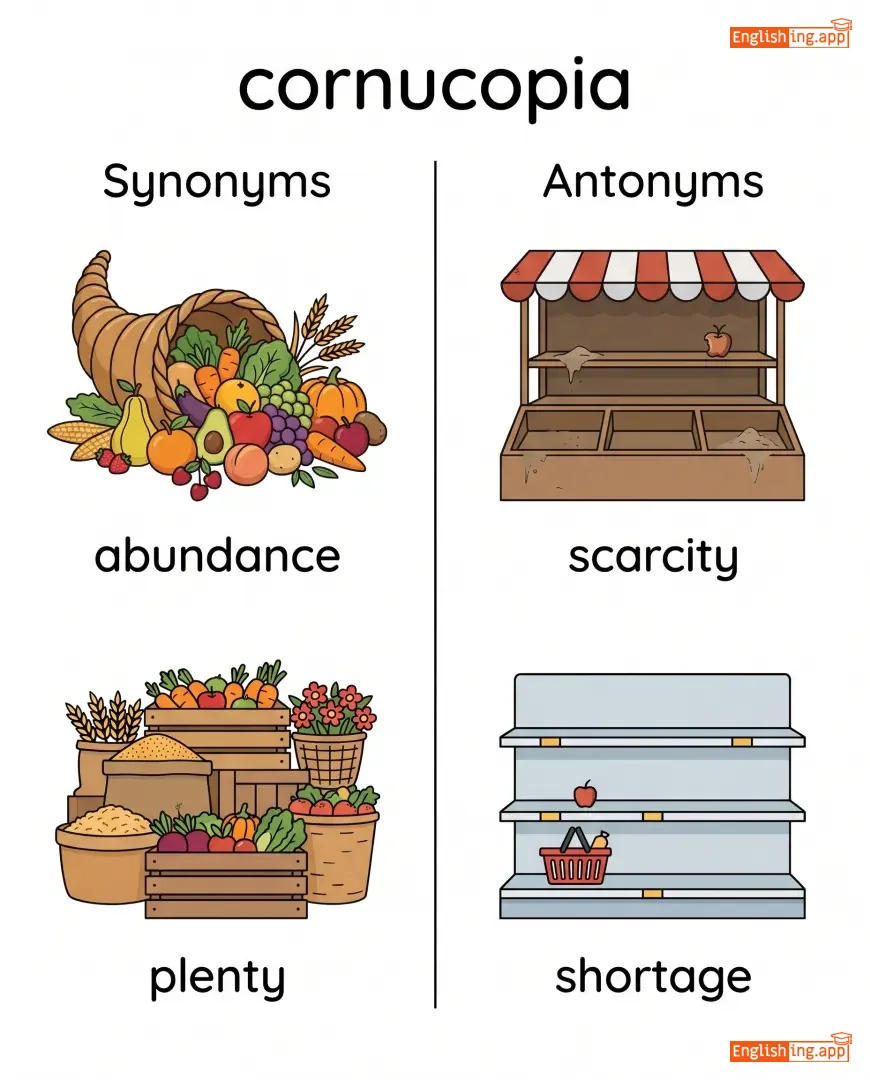
#1904
🌽
|
/ˌkɔːrnjuˈkoʊpiə/
noun
(コルヌコピア)
••••••
|
|
物事の豊富な供給または溢れんばかりの供給
monogoto no houfu na kyoukyuu matawa afurenbakari no kyoukyuu
••••••
|
- •••••• | - •••••• | - •••••• | - •••••• |
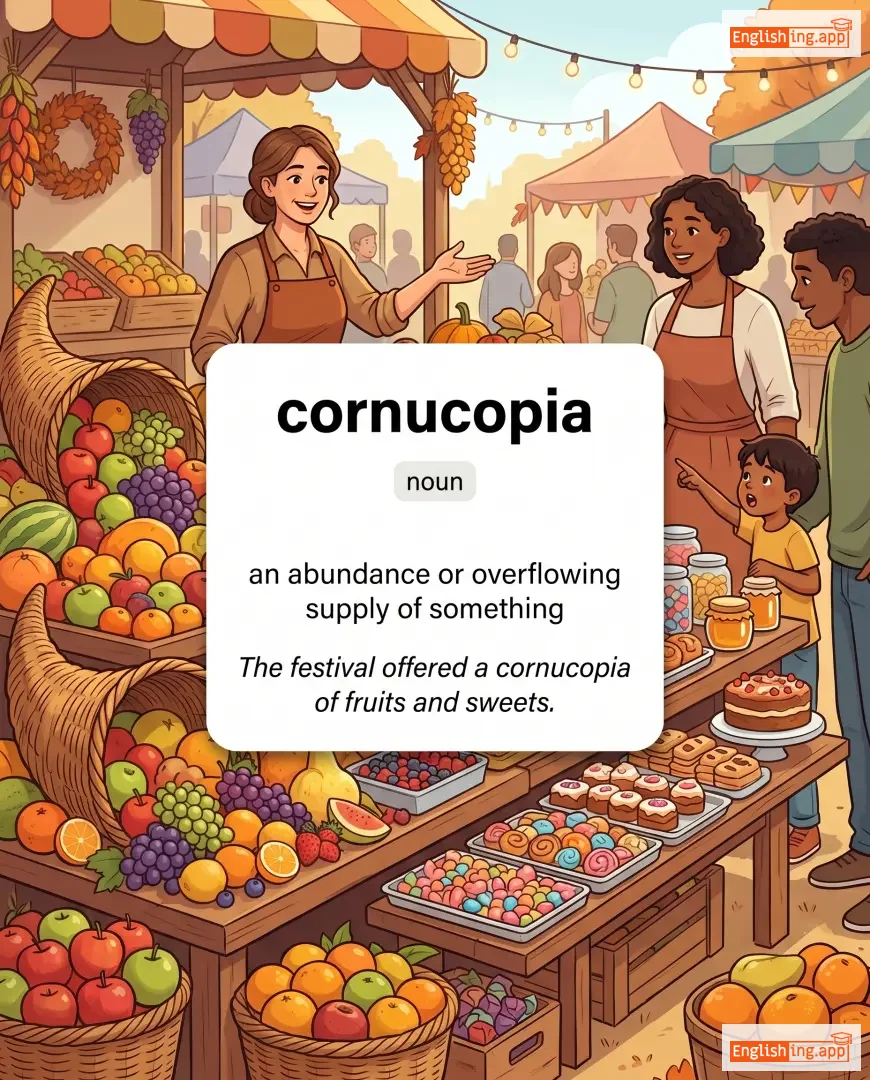
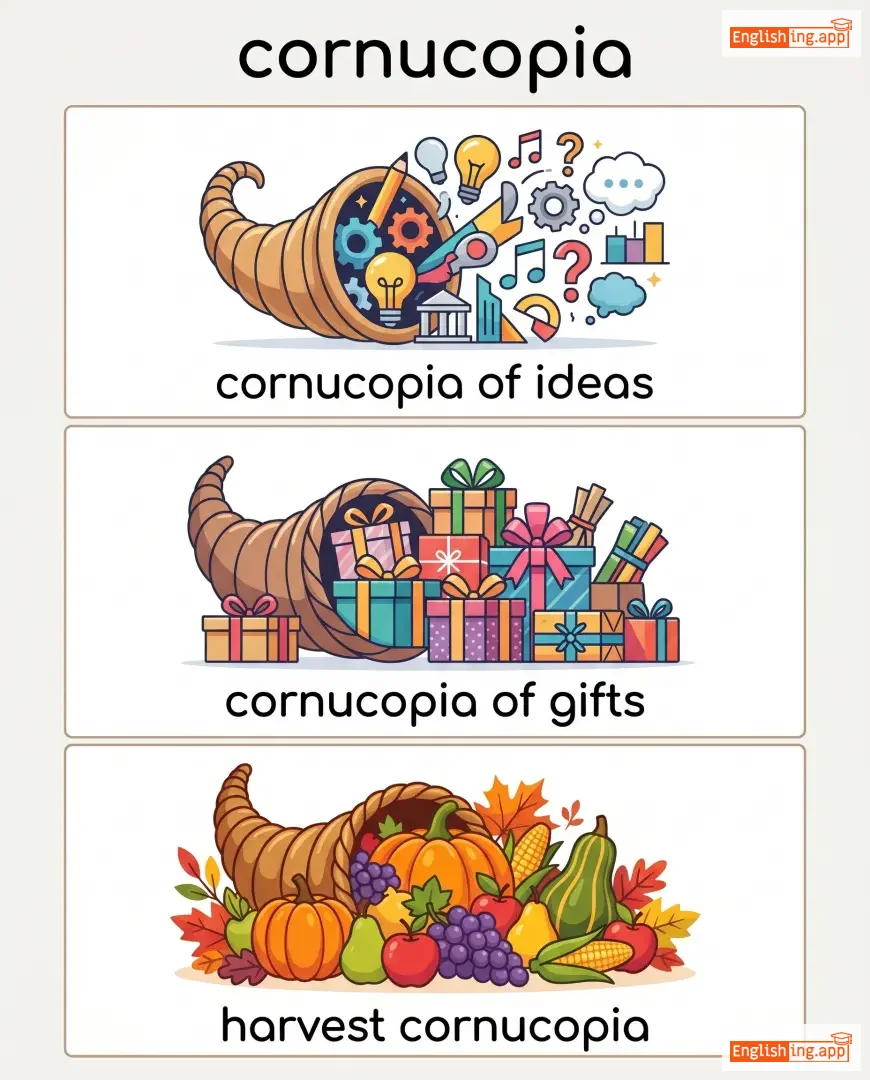
an abundance or overflowing supply of something
••••••
|
The festival offered a cornucopia of fruits and sweets.
祭りでは果物とお菓子のコルヌコピアが提供されました。
••••••
|
祭りでは果物とお菓子のコルヌコピアが提供されました。
Matsuri de wa kudamono to okashi no cornucopia ga teikyou saremashita.
••••••
|
abundance, plenty, profusion, bounty
••••••
|
scarcity, shortage
••••••
|
cornucopia of ideas, cornucopia of gifts, harvest cornucopia
••••••
|
コルヌコピアは「満杯の角」- 豊富な供給を意味します。
••••••
|
|
#1905
🏛️
|
/ˈkɔːrnɪs/
noun
(コーニス)
••••••
|
- •••••• |
コーニス
kōnisu
••••••
|
- •••••• | - •••••• | - •••••• | - •••••• |
an ornamental molding around the wall of a room just below the ceiling
••••••
|
The elegant cornice added a classical touch to the living room. |
エレガントなコーニスはリビングルームにクラシックなタッチを加えました。
Ereganto na kōnisu wa ribingu rūmu ni kurashikku na tacchi o kuwaemashita.
••••••
|
molding, ledge, overhang, eave
••••••
|
plain wall, flat surface
••••••
|
decorative cornice, plaster cornice, cornice design
••••••
|
コーニスは部屋の隅に美しい装飾があることを覚えよう。
••••••
|
|
#1906
🗣️
|
/kənˈvɪns/
verb
(コンヴィンス)
••••••
|
- •••••• |
納得させる
nattoku saseru
••••••
|
convinced
コンヴィンスド
••••••
|
convinced
コンヴィンスド
••••••
|
convinces
コンヴィンスズ
••••••
|
convincing
コンヴィンシング
••••••
|
to make someone believe or feel certain about something
••••••
|
She convinced him to attend the meeting.
彼女は彼に会議に参加するように納得させた。
••••••
|
彼女は彼に会議に参加するように納得させた。
Kanojo wa kare ni kaigi ni sanka suru you ni nattoku saseta.
••••••
|
persuade, assure, sway, influence
••••••
|
dissuade, discourage
••••••
|
convince someone, convince the jury, convince oneself, convince others
••••••
|
納得させる: 物事を納得させて会議に参加させよう
••••••
|
|
#1907
🚓
|
/ˈkɔːrdən/
noun
(コルドン)
••••••
|
- •••••• |
封鎖線
fūsasen
••••••
|
- •••••• | - •••••• | - •••••• | - •••••• |
a line or circle of police, soldiers, or guards preventing access
••••••
|
The police set up a cordon around the crime scene.
警察は犯罪現場の周りにコルドンを設置しました。
••••••
|
警察は犯罪現場の周りにコルドンを設置しました。
Keisatsu wa hanzai genba no mawari ni korudon o setchi shimashita.
••••••
|
barrier, line, perimeter, fence
••••••
|
- •••••• |
cordon off, police cordon, military cordon, cordon around
••••••
|
COR-DON 警察が犯罪現場を封鎖するためにコルドンを設置
••••••
|
|
#1908
🤗
|
/ˈkɔːrdʒəl/
adjective
(kɔːrdʒəl)
••••••
|
- •••••• |
心温かく、親しみやすい
kokoro atatakai, shitashimi yasui
••••••
|
- •••••• | - •••••• | - •••••• | - •••••• |
warm and friendly; heartfelt
••••••
|
They exchanged cordial greetings after the meeting.
会議後、彼らは心温まる挨拶を交わしました。
••••••
|
Kaigi go, karera wa kokoro atatakai aisatsu o kawashimashita.
Kaigi go, karera wa kokoro atatakai aisatsu o kawashimashita.
••••••
|
friendly, warm, heartfelt, sincere
••••••
|
hostile, cold, unfriendly
••••••
|
cordial atmosphere, cordial relations, cordial welcome, cordial reception
••••••
|
Cordialとは心温まる挨拶のこと
••••••
|
|
#1909
🪢
|
/kɔːrd/
noun
(コード)
••••••
|
- •••••• |
ひも
himo
••••••
|
- •••••• | - •••••• | - •••••• | - •••••• |
a long, thin, flexible string or rope
••••••
|
He tied the package with a strong cord. |
彼は強いひもで荷物を結びました。
Kare wa tsuyoi himo de nimotsu o musubimashita.
••••••
|
rope, string, twine, cable
••••••
|
none
••••••
|
electric cord, cord of wood, leather cord, tie with cord
••••••
|
CORd ひもで結ぶ - Cord とはひも
••••••
|
|
#1910
💃
|
/koʊˈkɛt/
noun
(コケット)
••••••
|
|
コケットな女性
koketto na josei
••••••
|
- •••••• | - •••••• | - •••••• | - •••••• |
a woman who flirts lightheartedly
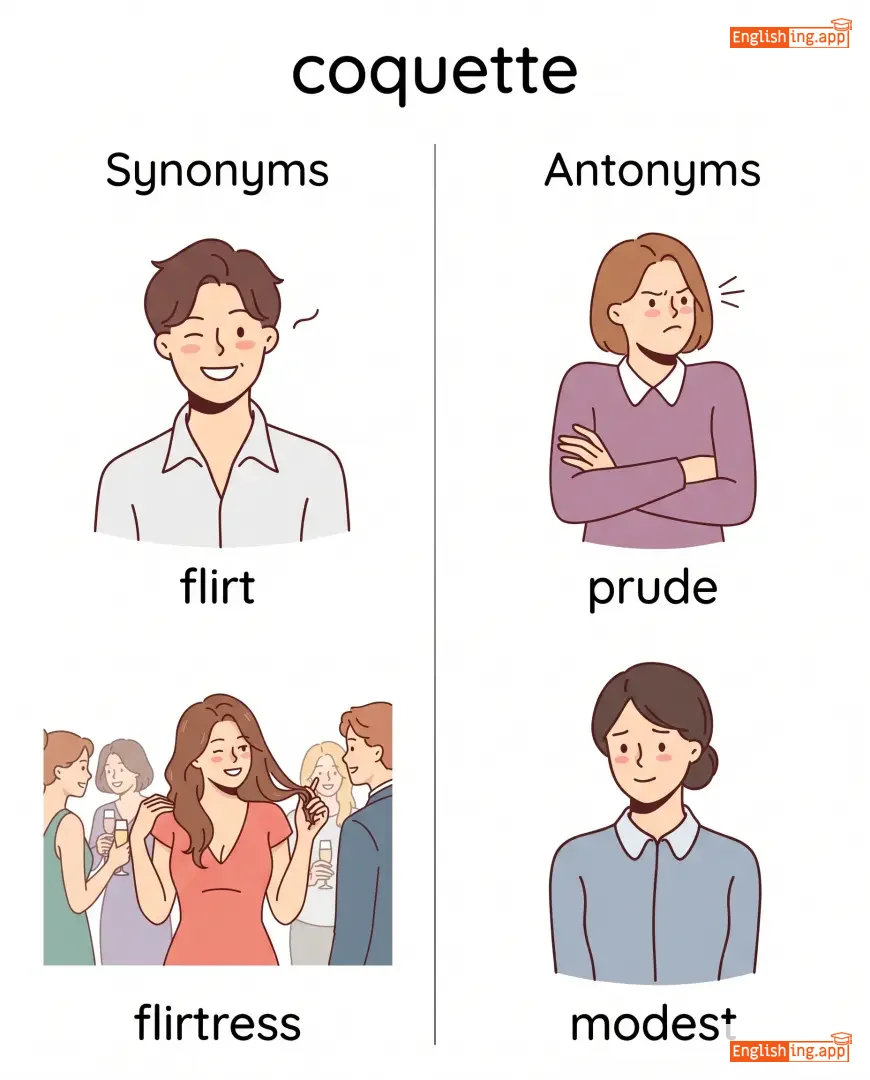
••••••
|
She was a coquette, always charming everyone at the party.
彼女はコケットで、パーティーで誰にでも魅力を振りまいていました。
••••••
|
彼女はコケットで、パーティーで誰にでも魅力を振りまいていました。
Kanojo wa koketto de, pātii de dare ni demo miryoku o furimaitemashita.
••••••
|
flirt, flirtress, tease, siren
••••••
|
prude, modest
••••••
|
playful coquette, notorious coquette, young coquette
••••••
|
コケット - パーティーでみんなを魅了する女性
••••••
|
|
#1911
📝
|
/ˈkoʊpiəs/
adjective
(kōpīasu)
••••••
|
|
豊富
hōfu
••••••
|
- •••••• | - •••••• | - •••••• | - •••••• |
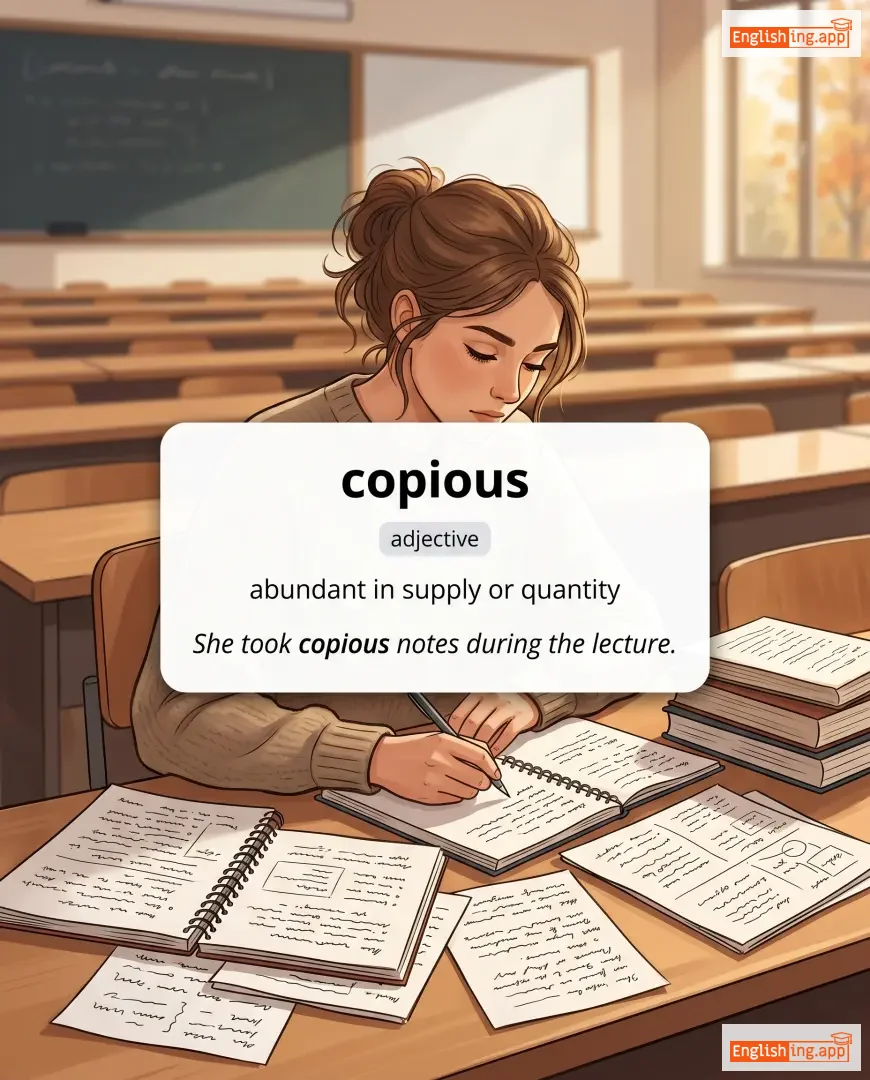
abundant in supply or quantity
••••••
|
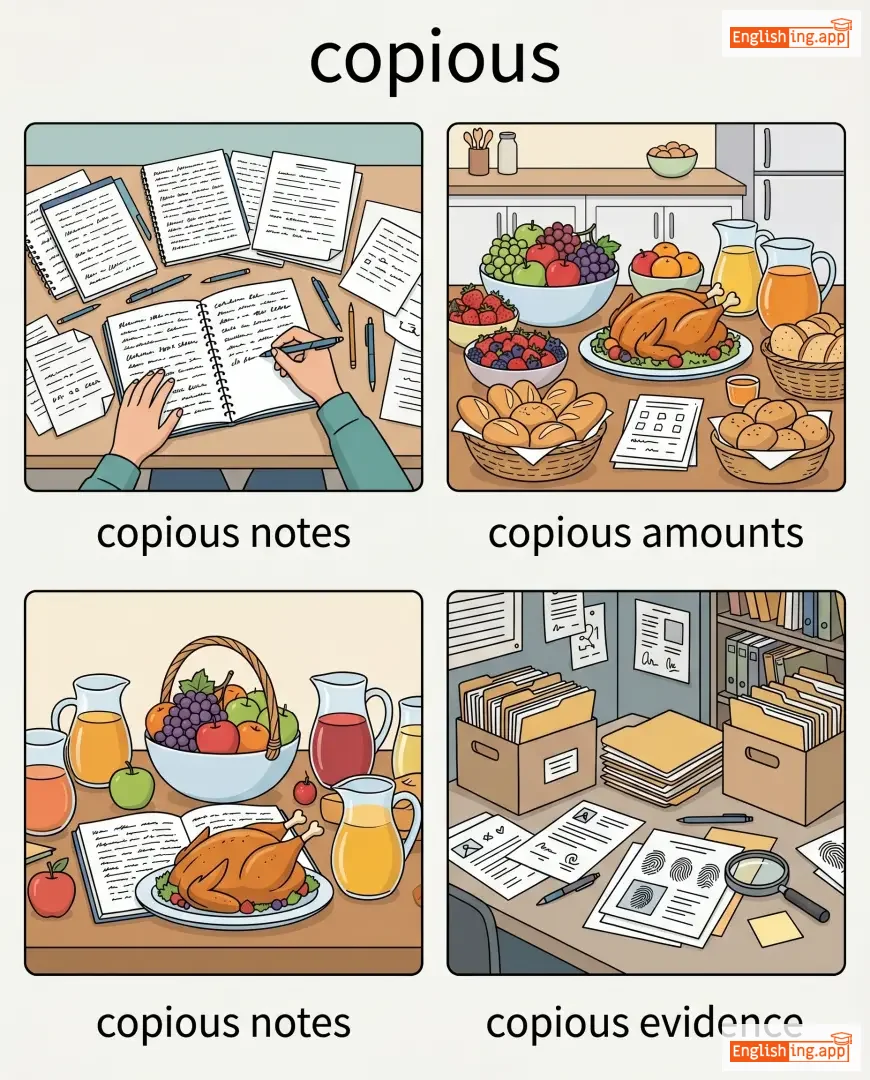
She took copious notes during the lecture.
Shī tōk kōpīasu nōts dūring dhe rēkuchā.
••••••
|
彼女は講義中に豊富なノートを取った。
Kanojo wa kōgi-chū ni hōfu na nōto o totta.
••••••
|
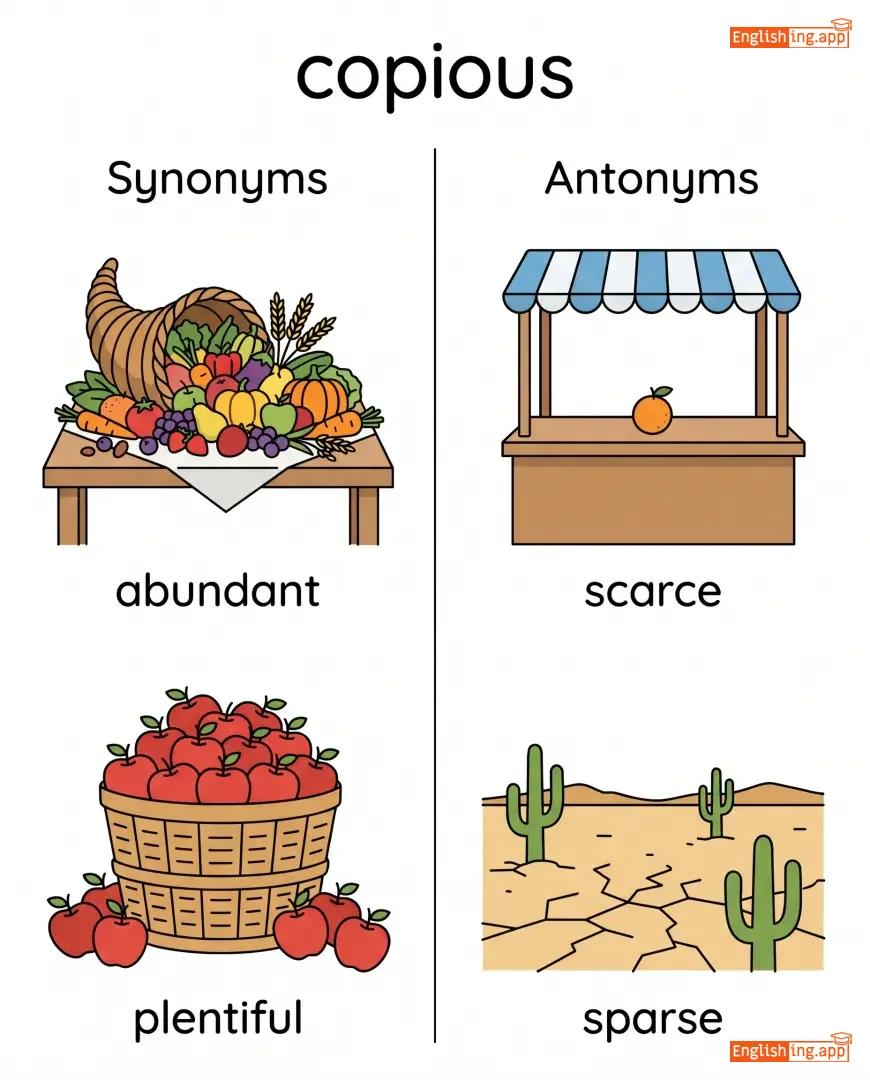
abundant, plentiful, ample, profuse
••••••
|
scarce, sparse, meager
••••••
|
copious notes, copious amounts, copious evidence, copious writing
••••••
|
Co-PIOUSたくさんのノートを取る - 豊富はたくさんの意味です。
••••••
|
|
#1912
🐔
|
/kuːp/
noun
(kūpu)
••••••
|
- •••••• |
鶏や他の鳥のための小さな囲いまたは小屋
niwatori ya hoka no tori no tame no chiisana kakoi matawa koya
••••••
|
- •••••• | - •••••• | - •••••• | - •••••• |
a small enclosure or cage for chickens or other birds
••••••
|
The farmer checked the chickens in the coop every morning. |
農夫は毎朝小屋の中の鶏をチェックしていました。
Nōfu wa mai asa koya no naka no niwatori o chekku shite imashita.
••••••
|
cage, pen, enclosure, hutch
••••••
|
open space, free range
••••••
|
chicken coop, bird coop, coop door, coop space
••••••
|
鶏はコープに住んでいます - Chickens live in the coop
••••••
|
|
#1913
💥
|
/kənˈvʌl.ʃən/
noun
(コンヴォルション)
••••••
|
- •••••• |
痙攣
keiren
••••••
|
- •••••• | - •••••• | - •••••• | - •••••• |
a sudden, violent, involuntary contraction of muscles; a seizure
••••••
|
The medicine helped prevent convulsions in children. |
薬は子供たちの痙攣を防ぐのに役立ちました。
Kusuri wa kodomotachi no keiren o fusegu no ni yakudachimashita.
••••••
|
seizure, spasm, jerk, fit
••••••
|
calm, stability
••••••
|
suffer convulsion, convulsion attack, prevent convulsions
••••••
|
痙攣 = 筋肉が急に収縮する
••••••
|
|
#1914
⚡
|
/kənˈvʌls/
verb
(コンヴァルス)
••••••
|
- •••••• |
激しく震える; 突然の不随意な収縮に苦しむ
hageshiku furu; totsuzen no fuzui na shūshuku ni kurushimu
••••••
|
convulsed
コンヴァルスド
••••••
|
convulsed
コンヴァルスド
••••••
|
convulses
コンヴァルセス
••••••
|
convulsing
コンヴァルシング
••••••
|
to shake violently; to suffer sudden involuntary contractions
••••••
|
The patient convulsed during the seizure.
患者は発作中にコンヴァルスした。
••••••
|
患者は発作中に震えました。
Kanja wa hōsachū ni furuemashita.
••••••
|
shake, tremble, spasm, jerk
••••••
|
calm, relax
••••••
|
convulse with, convulse violently, body convulses
••••••
|
Convulseは体を激しく震わせることです
••••••
|
|
#1915
🚚
|
/ˈkɒn.vɔɪ/
noun
(コンボイ)
••••••
|
- •••••• |
コンボイ
konboi
••••••
|
- •••••• | - •••••• | - •••••• | - •••••• |
a group of vehicles or ships traveling together, often for protection
••••••
|
The military convoy moved through the desert at dawn. |
軍のコンボイは夜明けに砂漠を横断しました。
Gun no konboi wa yoake ni sabaku o ōdan shimashita.
••••••
|
fleet, procession, caravan, armada
••••••
|
individual, lone vehicle
••••••
|
military convoy, naval convoy, convoy escort
••••••
|
コンボイという言葉は同じ意味で英語と日本語にあります - The word convoy has the same meaning in both English and Japanese
••••••
|
|
#1916
🌀
|
/kənˈvɑːlv/
verb
(コンヴォルブ)
••••••
|
- •••••• |
一緒に巻いたり、ねじったりする; 巻きつけたり、絡めたりする
Issho ni makitari, nejittari suru; makitsukettari, karamettari suru
••••••
|
convolved
コンヴォルブド
••••••
|
convolved
コンヴォルブド
••••••
|
convolves
コンヴォルブス
••••••
|
convolving
コンヴォルビング
••••••
|
to roll or twist together; to coil or entwine
••••••
|
The vines convolve around the tree trunk.
ツルは木の幹の周りをコンヴォルブします。
••••••
|
ツルは木の幹の周りを巻きつけます。
Tsuru wa ki no mikiri no mawari o makitsukemasu.
••••••
|
coil, twist, entwine, spiral
••••••
|
uncoil, straighten
••••••
|
convolve around, convolve together, convolve naturally
••••••
|
ツルは木の幹にコンヴォルブします - Vines convolve around tree
••••••
|
|
#1917
🧠
|
/ˌkɒnvəˈluːʃən/
noun
(コンボリューション)
••••••
|
- •••••• |
コンボリューション、複雑な曲線または構造
konboryūshon, fukuzatsu na kyokusen mata wa kōzō
••••••
|
- •••••• | - •••••• | - •••••• | - •••••• |
a twist, coil, or a complex and intricate shape or arrangement
••••••
|
The brain has many convolutions that increase its surface area.
脳には多くのコンボリューションがあり、その表面積を増加させます。
••••••
|
脳には多くのコンボリューションがあり、その表面積を増加させます。
Nō ni wa ōku no konboryūshon ga ari, sono hyōmenshiki o zōka sasemasu.
••••••
|
twist, coil, complexity, intricacy
••••••
|
straightness, simplicity
••••••
|
convolution of the brain, mathematical convolution, structural convolution
••••••
|
脳のCONVOLUTIONは複雑な曲線のように見えます。
••••••
|
|
#1918
🌀
|
/ˈkɒnvəluːtɪd/
adjective
(コンヴォリューテッド)
••••••
|
|
複雑で入り組んだ
fukuzatsu de irikunda
••••••
|
- •••••• | - •••••• | - •••••• | - •••••• |
complex, intricate, and difficult to follow
••••••
|
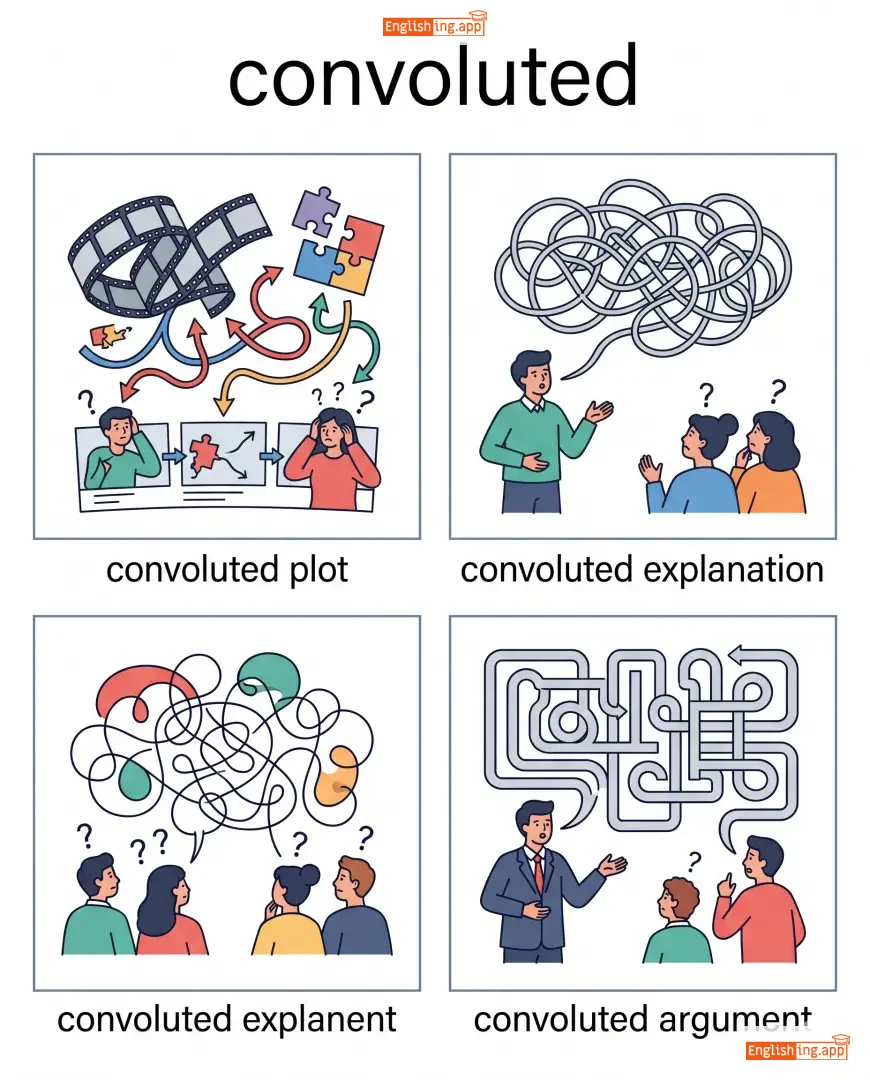
The plot of the movie was so convoluted that I lost track halfway. |
映画のプロットはとても複雑で、途中で方向を見失ってしまった。
Eiga no purotto wa totemo fukuzatsu de, tochu de hokou o miushinatte shimatta.
••••••
|
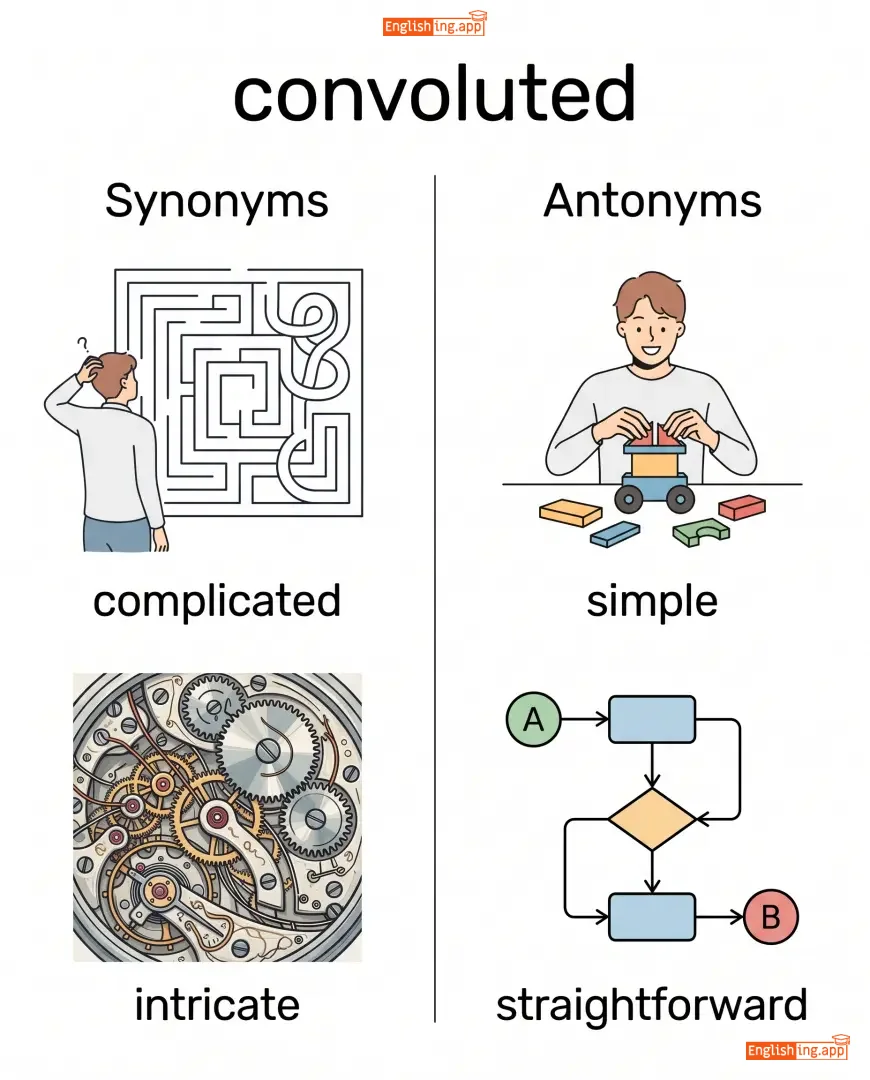
complicated, intricate, twisted, tangled
••••••
|
simple, straightforward
••••••
|
convoluted plot, convoluted explanation, convoluted argument
••••••
|
複雑な道、迷子になる
••••••
|
|
#1919
📢
|
/kənˈvoʊk/
verb
(コンヴォーク)
••••••
|
- •••••• |
召集する
shoushuu suru
••••••
|
convoked
コンヴォクド
••••••
|
convoked
コンヴォクド
••••••
|
convokes
コンヴォクス
••••••
|
convoking
コンヴォーキング
••••••
|
to call together or summon a meeting or assembly
••••••
|
The committee convoked an emergency session to discuss the crisis.
委員会は危機を議論するために緊急セッションを召集しました。
••••••
|
委員会は危機を議論するために緊急セッションを召集しました。
Iinkai wa kiki wo giron suru tame ni kinkyu sesshon wo shoushuu shimashita.
••••••
|
summon, assemble, call, gather
••••••
|
dismiss, disperse
••••••
|
convoke a meeting, convoke a council, convoke members
••••••
|
委員会が緊急会議を召集して危機を解決する
••••••
|
|
#1920
🎉
|
/kənˈvɪviəl/
adjective
(コンヴィヴィアル)
••••••
|
|
友好的で生き生きとした、楽しい; 社交的
yūkō-teki de ikigiki to shita, tanoshī; shakō-teki
••••••
|
- •••••• | - •••••• | - •••••• | - •••••• |
friendly, lively, and enjoyable; sociable
••••••
|
The party had a convivial atmosphere with music and laughter.
パーティーは音楽と笑いに満ちたコンヴィヴィアルな雰囲気でした。
••••••
|
パーティーは音楽と笑いに満ちたコンヴィヴィアルな雰囲気でした。
Pātī wa ongaku to warai ni michita konviviaru na fun'iki deshita.
••••••
|
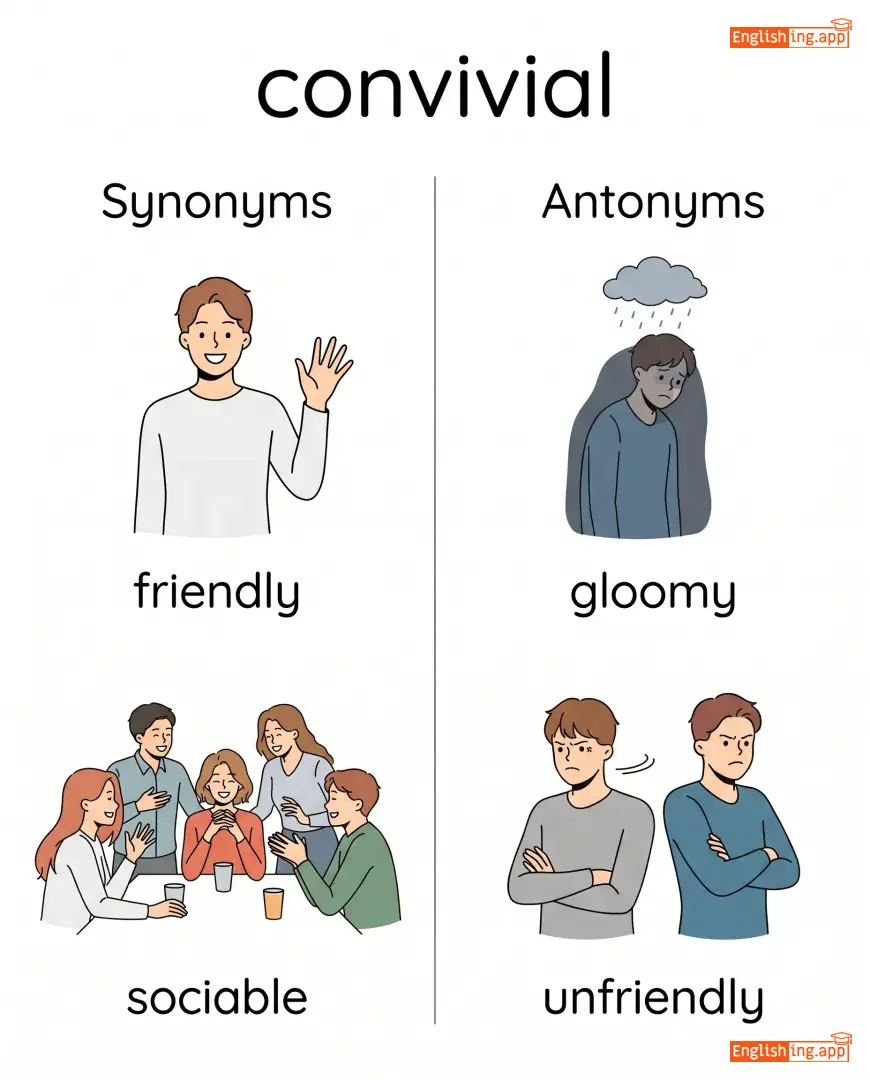
friendly, sociable, jovial, festive
••••••
|
gloomy, unfriendly
••••••
|
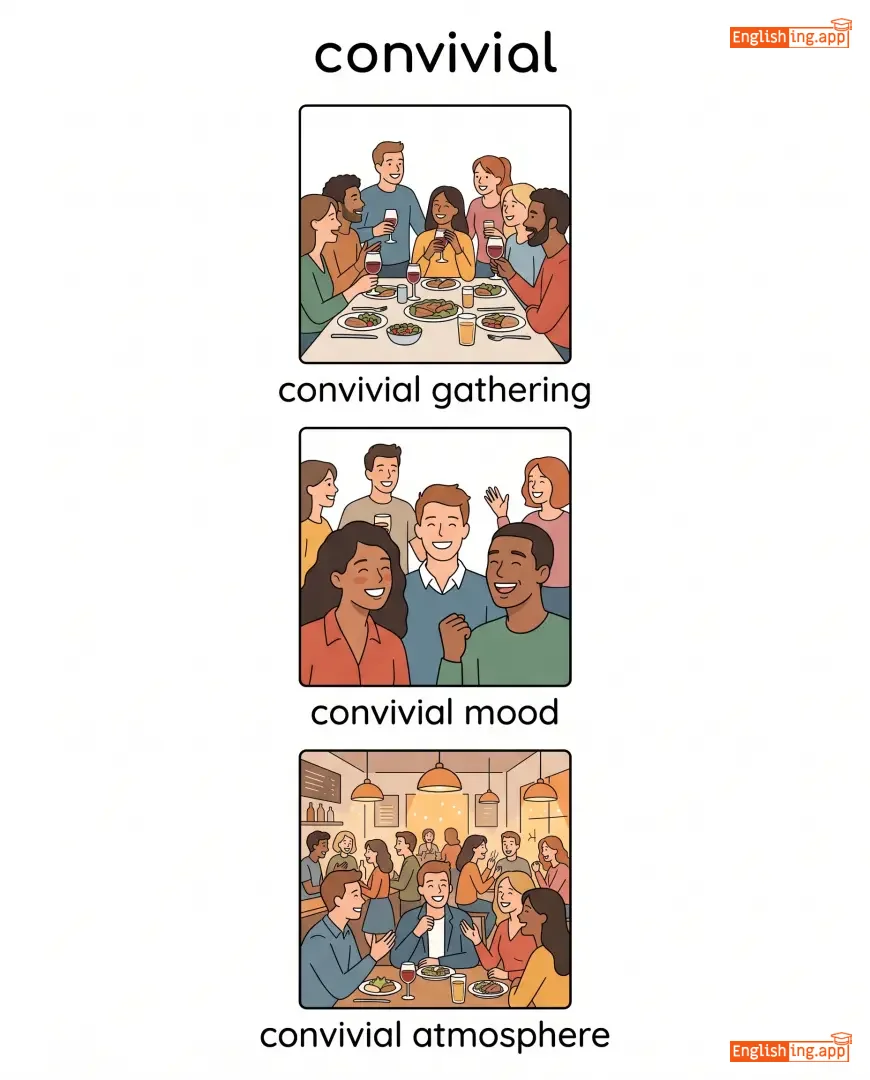
convivial gathering, convivial mood, convivial atmosphere
••••••
|
パーティーの CONVIVIAL vibe, 皆で楽しんだ
••••••
|
Vocabulary Quiz
Test your vocabulary by matching words with their translations or meanings.
Login to take the quiz
Comments (0)
Share your thoughts and join the discussion.
Join the discussion by logging in
Login to CommentNo comments yet
Be the first to share your thoughts!