

翻訳
過去
過去分詞
三人称単数
動名詞
意味
例文
例文の翻訳
同義語
対義語
コロケーション
ニーモニック


Swipe left or right, or use the buttons. Tap image to zoom.
例文の翻訳
単語
Lesson 423Lesson 423 - マスクトグル
|
絵文字
|
単語 | Images | 翻訳 | 過去 | 過去分詞 | 三人称単数 | 動名詞 | 意味 | 例文 | 例文の翻訳 | 表現例 | 表現例の意味 | 表現例の翻訳 | 同義語 | 対義語 | コロケーション | ニーモニック |
|---|---|---|---|---|---|---|---|---|---|---|---|---|---|---|---|---|---|
|
#1
🧾
|
/ɪnˈroʊl/
verb
(エンロール)
••••••
|
- •••••• |
登録する
tōroku suru
••••••
|
enrolled
エンロールド
••••••
|
enrolled
エンロールド
••••••
|
enrolls
エンロールズ
••••••
|
enrolling
エンロリング
••••••
|
to officially join or register in a school, course, or organization
••••••
|
He decided to enroll in a computer programming course.
彼はコンピュータプログラミングのコースに登録することを決めました。
••••••
|
彼はコンピュータプログラミングのコースに登録することを決めました。
Kare wa konpyūta puroguramingu no kōsu ni tōroku suru koto o kimemashita.
••••••
|
enroll in
登録する
••••••
|
to sign up or register for something
••••••
|
登録する
tōroku suru
••••••
|
register, join, sign up, enlist, admit
••••••
|
withdraw, leave, exclude
••••••
|
enroll in school, enroll students, enroll participants, enroll for a course
••••••
|
Enroll とは、学校に自分の名前を書くことのようなものです。
••••••
|
|
#1
🔒
|
/ɪkˈskluːsɪvli/
adverb
(イクスクルーシブリー)
••••••
|
- •••••• |
独占的に
dokusenteki ni
••••••
|
- •••••• | - •••••• | - •••••• | - •••••• |
only; not shared with others
••••••
|
This service is available exclusively to premium members. |
このサービスはプレミアムメンバーのみが利用できます。
Kono sābisu wa puremiamu menbā nomi ga riyō dekimasu.
••••••
|
- •••••• | - •••••• | - •••••• |
solely, only, entirely, uniquely, purely
••••••
|
jointly, commonly, generally
••••••
|
exclusively for, available exclusively, exclusively designed, exclusively produced
••••••
|
独占的に - あなた専用!
••••••
|
|
#1
🚪
|
/ɪkˈskluːsɪv/
adjective
(エクスクルーシブ)
••••••
|
- •••••• |
特定の人物、グループ、またはエリアに制限された; 他の人と共有しない
tokutei no jinbutsu, gurūpu, matawa eria ni seigen sareta; hoka no hito to kyōyū shinai
••••••
|
- •••••• | - •••••• | - •••••• | - •••••• |
restricted to a particular person, group, or area; not shared with others
••••••
|
The hotel offers exclusive access to a private beach. |
ホテルはプライベートビーチへのエクスクルーシブなアクセスを提供します。
Hoteru wa puraibēto bīchi e no ekusukurūshibu na akusesu o teikyō shimasu.
••••••
|
exclusive club |
a private club open only to select members
••••••
|
エクスクルーシブクラブ
ekusukurūshibu kurabu
••••••
|
restricted, limited, private, elite, unique
••••••
|
inclusive, common, public
••••••
|
exclusive interview, exclusive offer, exclusive rights, exclusive access
••••••
|
エクスクルーシブは、あなた以外に誰もクルース (clues) を持っていないことを意味します!
••••••
|
|
#1
🎉
|
/ɪkˈsaɪtmənt/
noun
(エキサイトメント)
••••••
|
- •••••• |
興奮
koufun
••••••
|
- •••••• | - •••••• | - •••••• | - •••••• |
a feeling of great enthusiasm and eagerness
••••••
|
There was a lot of excitement before the concert began. |
コンサートが始まる前に多くの興奮がありました。
Konsāto ga hajimaru mae ni ōku no kōfun ga arimashita.
••••••
|
in a state of excitement |
feeling or showing strong enthusiasm or agitation
••••••
|
興奮状態で
kōfun jōtai de
••••••
|
thrill, joy, enthusiasm, eagerness, delight
••••••
|
boredom, calm, indifference
••••••
|
feel excitement, great excitement, cause excitement, full of excitement
••••••
|
Excitement は日本語で興奮— 何か大きなことが始まる時のワクワク感!
••••••
|
|
#1
🤩
|
/ɪkˈsaɪtɪd/
adjective
(エキサイト)
••••••
|
- •••••• |
興奮した
koufun shita
••••••
|
- •••••• | - •••••• | - •••••• | - •••••• |
very enthusiastic and eager about something
••••••
|
The children were excited to open their presents. |
子供たちはプレゼントを開けるのを楽しみにして興奮していました。
Kodomotachi wa purezento o akeru no o tanoshimi ni shite koufun shite imashita.
••••••
|
get excited about |
to become enthusiastic or eager about something
••••••
|
何かに対して興奮する
nanika ni taishite koufun suru
••••••
|
thrilled, delighted, enthusiastic, eager, joyful
••••••
|
bored, indifferent, calm
••••••
|
feel excited, get excited, excited about, excited to see
••••••
|
Excitedは‘興奮した’、待ちきれない気持ちのように、特別な瞬間を待つ時に使う言葉です。
••••••
|
|
#1
🚫
|
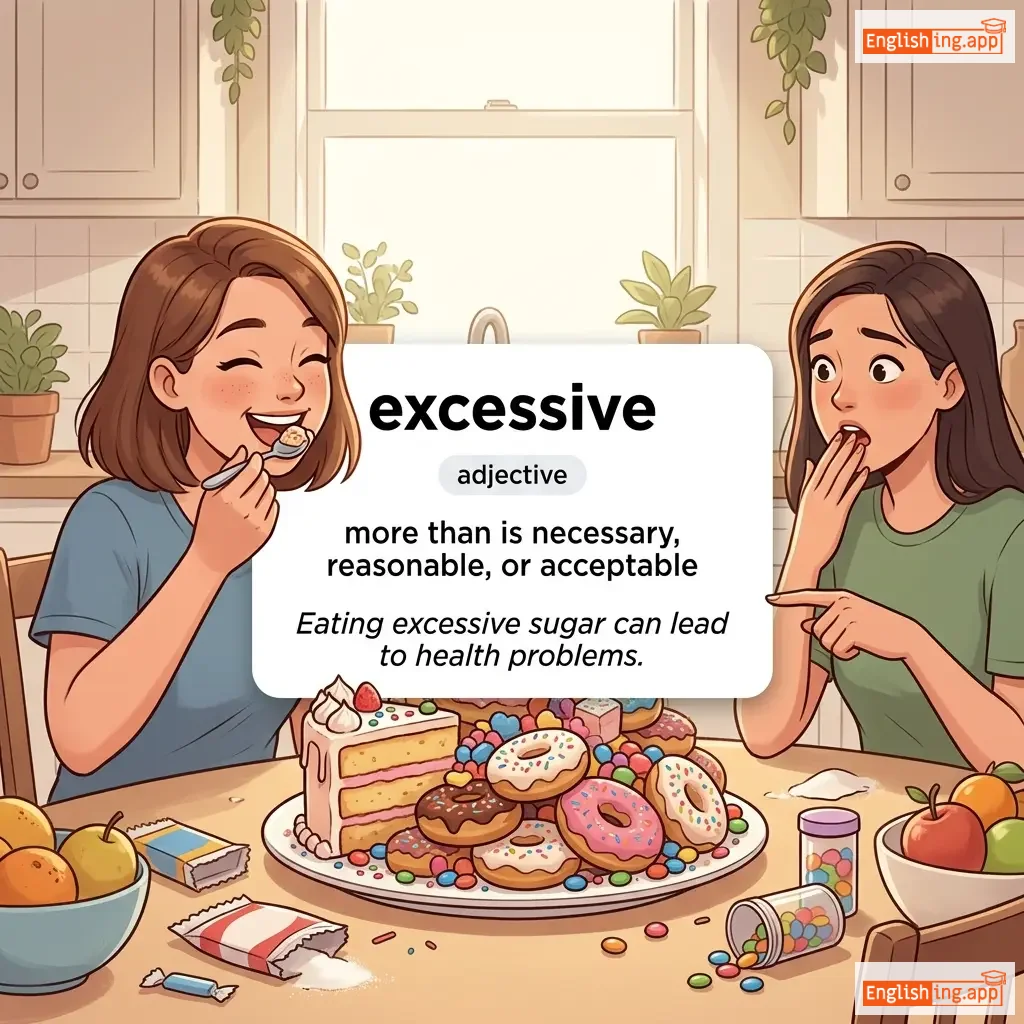
/ɪkˈsɛsɪv/
adjective
(ikˈsɛsɪv)
••••••
|
|
過度
kado
••••••
|
- •••••• | - •••••• | - •••••• | - •••••• |
more than is necessary, reasonable, or acceptable
••••••
|
Eating excessive sugar can lead to health problems. |
過剰な砂糖の摂取は健康問題を引き起こす可能性があります。
Kajou na satou no sesshu wa kenko mondai o hikiokosu kanousei ga arimasu.
••••••
|
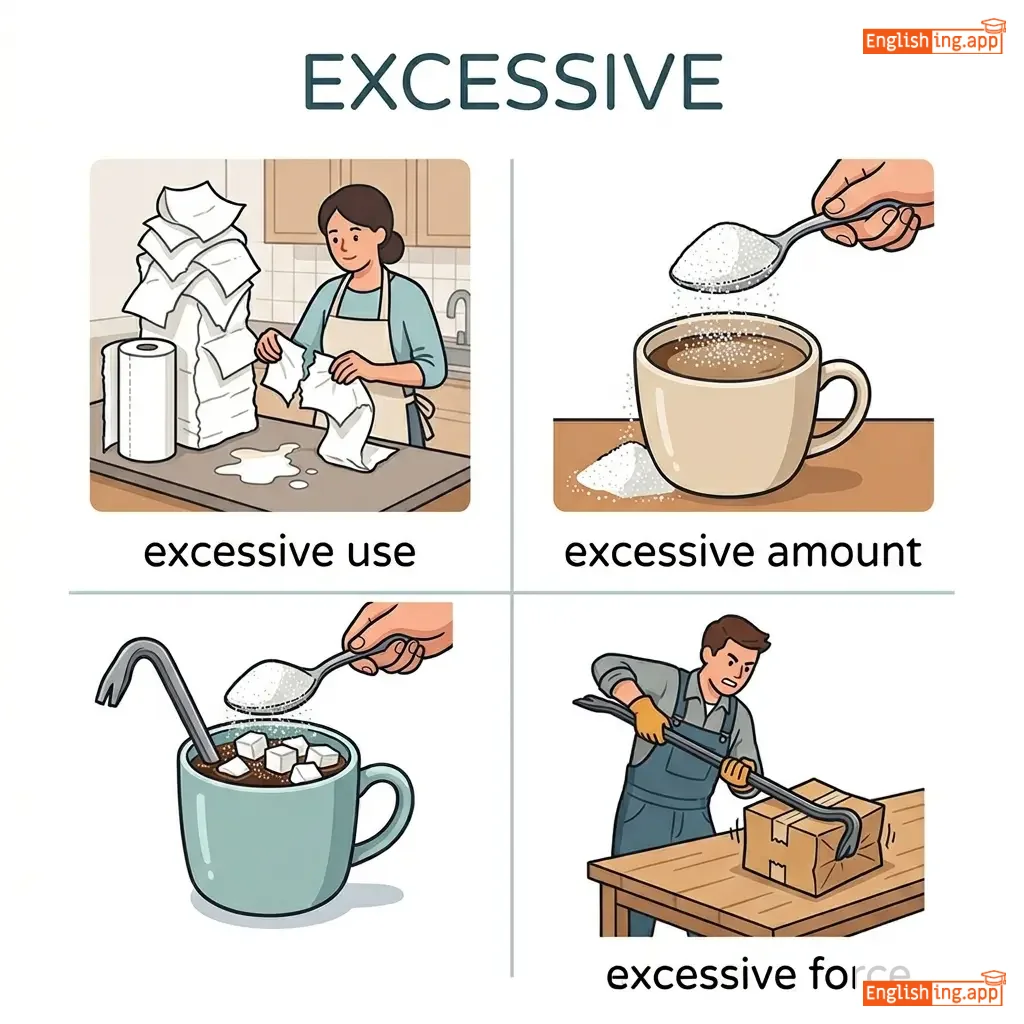
excessive force |
more physical power or effort than necessary
••••••
|
過度な力
kado na chikara
••••••
|
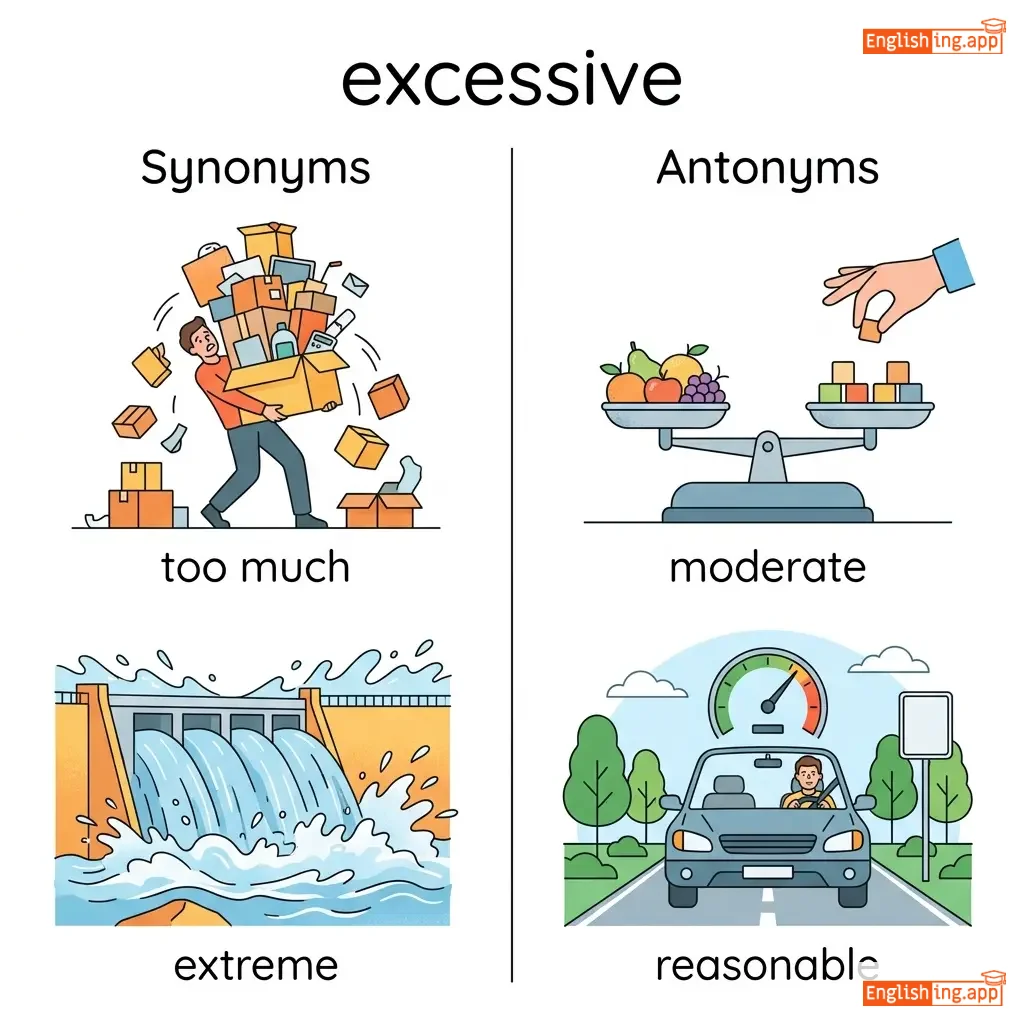
too much, extreme, unreasonable, extravagant, overdone
••••••
|
moderate, reasonable, limited
••••••
|
excessive use, excessive amount, excessive force, excessive cost
••••••
|
過度 = Excessはたくさんの意味です, だから過度!
••••••
|
|
#1
📝
|
/ɪɡˈzæm/
noun
(エグザム)
••••••
|
- •••••• |
試験
shiken
••••••
|
- •••••• | - •••••• | - •••••• | - •••••• |
a formal test of a person's knowledge or skill in a subject
••••••
|
She studied hard for her final exam. |
彼女は最終試験のために一生懸命勉強した。
Kanojo wa saishū shiken no tame ni isshōkenmei benkyō shita.
••••••
|
cram for an exam |
to study intensively before an exam
••••••
|
試験前に詰め込む
shiken mae ni tsumekomu
••••••
|
test, examination, assessment, quiz
••••••
|
break, vacation
••••••
|
take an exam, pass an exam, fail an exam, final exam, entrance exam
••••••
|
試験 = 自分の能力を試す大事な時!
••••••
|
|
#1
⚖️
|
/ˈɛθɪkəl/
adjective
(エシカル)
••••••
|
|
倫理的
rinriteki
••••••
|
- •••••• | - •••••• | - •••••• | - •••••• |
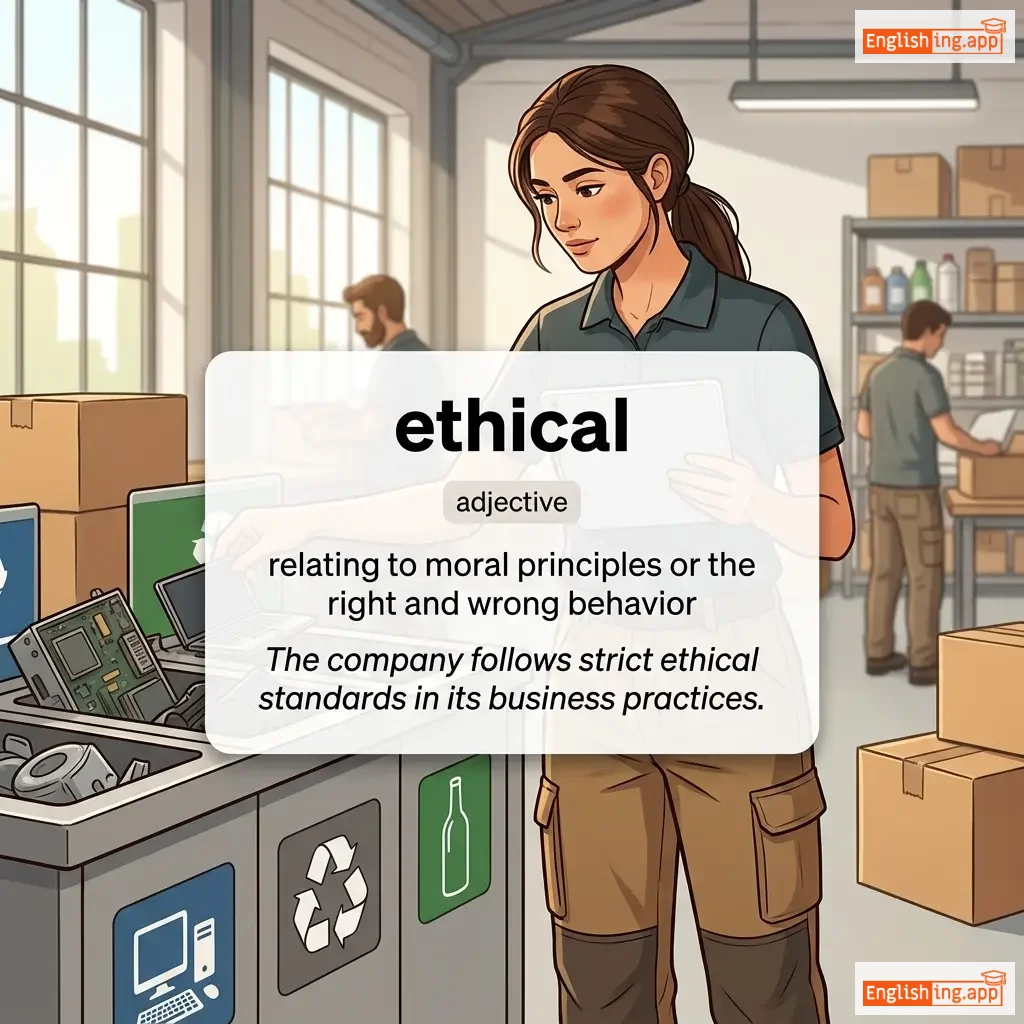
relating to moral principles or the right and wrong behavior
••••••
|
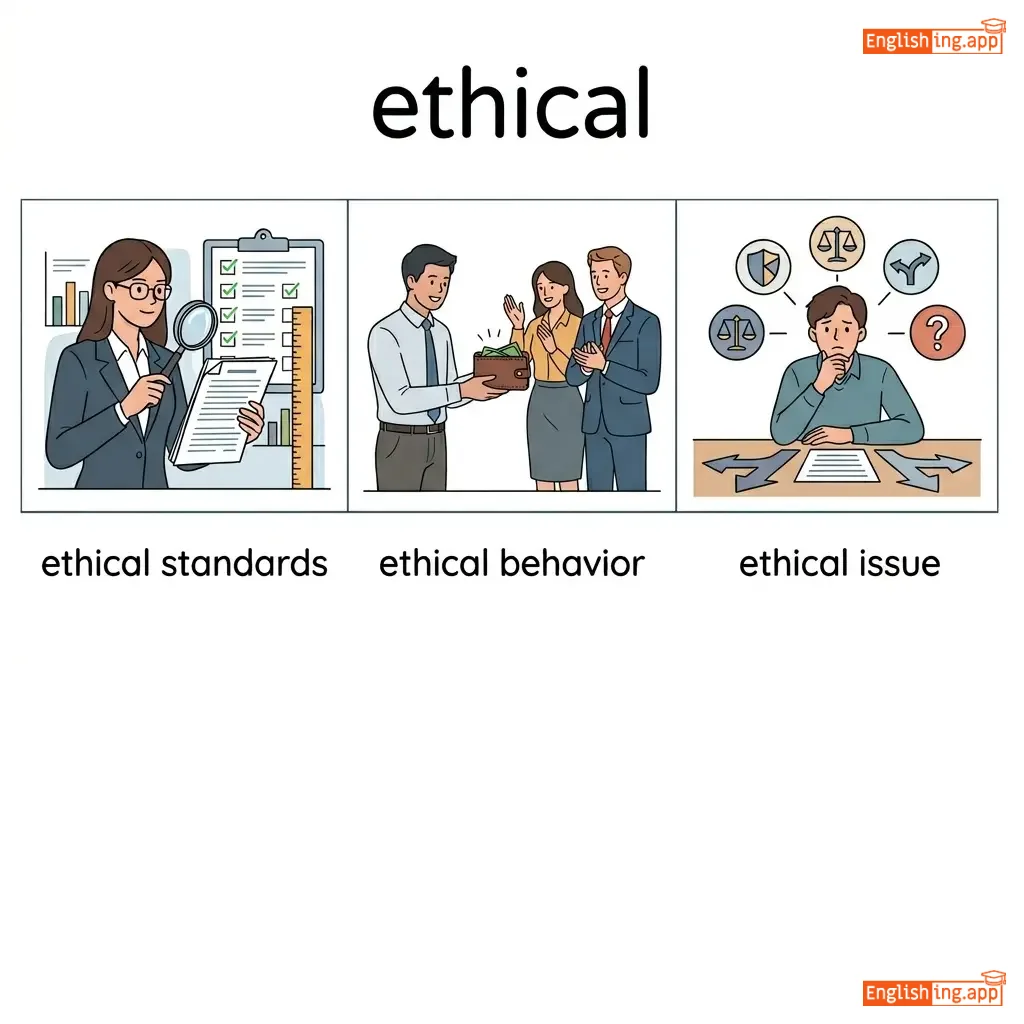
The company follows strict ethical standards in its business practices. |
その会社はビジネス慣行において厳格な倫理基準を守っています。
Sono kaisha wa bijinesu kankou ni oite genkaku na rinri kijun wo mamotteimasu.
••••••
|
ethical dilemma |
a situation in which a difficult choice has to be made between two moral principles
••••••
|
倫理的ジレンマ
rinriteki jirenma
••••••
|
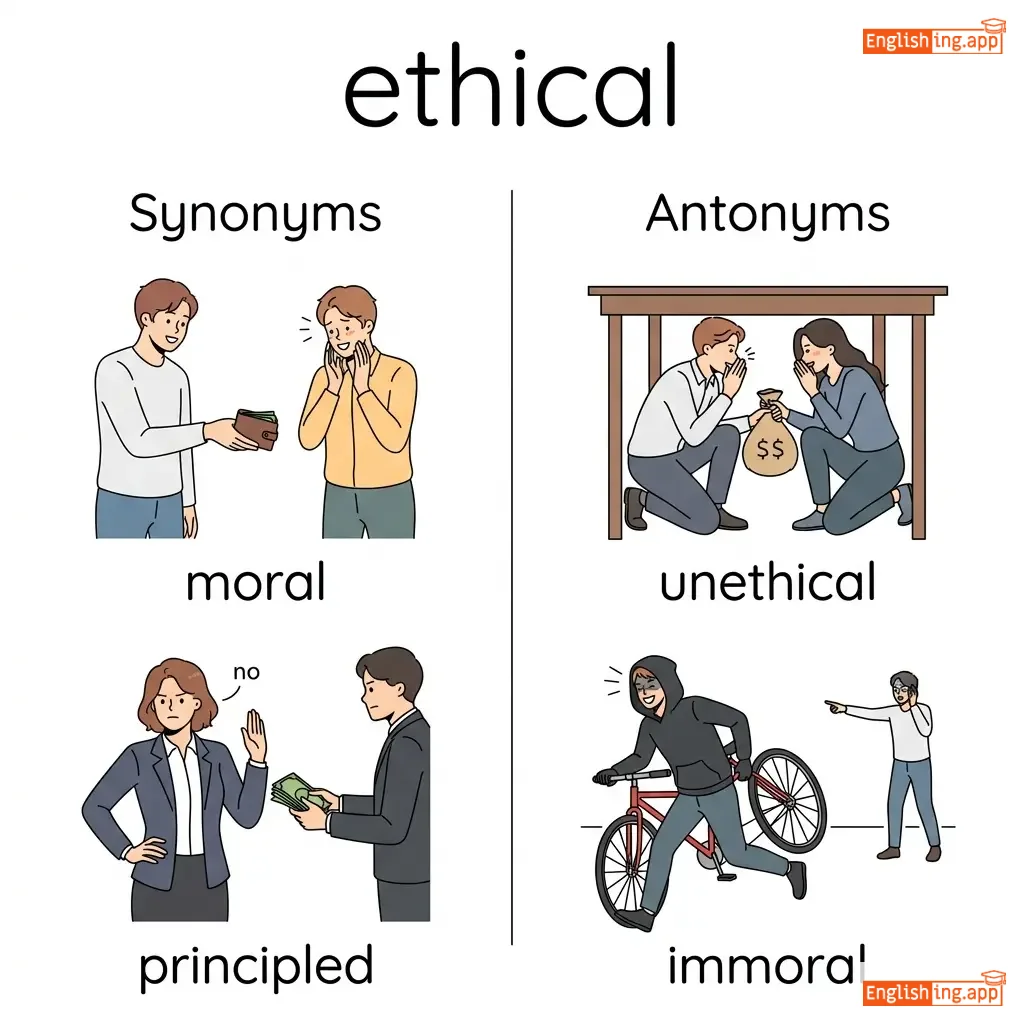
moral, principled, righteous, virtuous, honest
••••••
|
unethical, immoral, dishonest
••••••
|
ethical standards, ethical behavior, ethical issue, ethical dilemma, ethical decision
••••••
|
Ethicalは倫理的を意味します — 'Ethics'という言葉が道徳的原則を示唆しています。
••••••
|
|
#1
📊
|
/ˈɛstɪmeɪtɪd/
adjective
(es-ti-mei-ted)
••••••
|
- •••••• |
見積もりの
mitsumori no
••••••
|
- •••••• | - •••••• | - •••••• | - •••••• |
roughly calculated or judged; an approximate value or amount
••••••
|
The estimated cost of the project is five million dollars. |
そのプロジェクトの見積もりコストは500万ドルです。
Sono purojekuto no mitsumori kosuto wa gohyakuman dorā desu.
••••••
|
- •••••• | - •••••• | - •••••• |
approximate, assumed, calculated, projected, expected
••••••
|
exact, precise, definite
••••••
|
estimated cost, estimated time, estimated value, estimated population
••••••
|
Estimateは見積もり、見積もりのは大体の計算!
••••••
|
|
#1
🧰
|
/ɪˈkwɪp/
verb
(イクイップ)
••••••
|
- •••••• |
装備する
soubisuru
••••••
|
equipped
イクイップド
••••••
|
equipped
イクイップド
••••••
|
equips
イクイップス
••••••
|
equipping
イクイッピング
••••••
|
to provide someone or something with the necessary items or skills for a task
••••••
|
The school equipped its students with modern technology.
学校は生徒たちに最新の技術を装備させました。
••••••
|
学校は生徒たちに最新の技術を装備させました。
Gakkou wa seitotachi ni saishin no gijutsu o soubi sagemashita.
••••••
|
well-equipped
良く装備された
••••••
|
having all the necessary tools or resources
••••••
|
良く装備された
yoku soubi sareta
••••••
|
supply, furnish, provide, prepare, arm
••••••
|
deprive, strip, disarm
••••••
|
equip with, properly equipped, equip someone for, equip team
••••••
|
装備は準備を整えることだ!
••••••
|
|
#1
🧮
|
/ɪˈkweɪʒən/
noun
(方程式)
••••••
|
- •••••• |
方程式
hōtenshiki
••••••
|
- •••••• | - •••••• | - •••••• | - •••••• |
a mathematical statement that shows the equality of two expressions
••••••
|
He solved the equation to find the value of x. |
彼はxの値を見つけるために方程式を解いた。
Kare wa x no atai o mitsukeru tame ni hōtenshiki o toita.
••••••
|
balance the equation |
to make both sides of an equation or situation equal
••••••
|
方程式をバランスさせる
hōtenshiki o baransu saseru
••••••
|
formula, expression, equality, calculation
••••••
|
inequality, imbalance
••••••
|
solve an equation, linear equation, quadratic equation, mathematical equation
••••••
|
方程式は等式、両側が等しいとき、方程式は正しいです。
••••••
|
|
#1
⚖️
|
/ɪˈkwɒləti/
noun
(iˈkwɒləti)
••••••
|
|
平等
byoudou
••••••
|
- •••••• | - •••••• | - •••••• | - •••••• |
the state of being equal, especially in rights, status, and opportunities
••••••
|
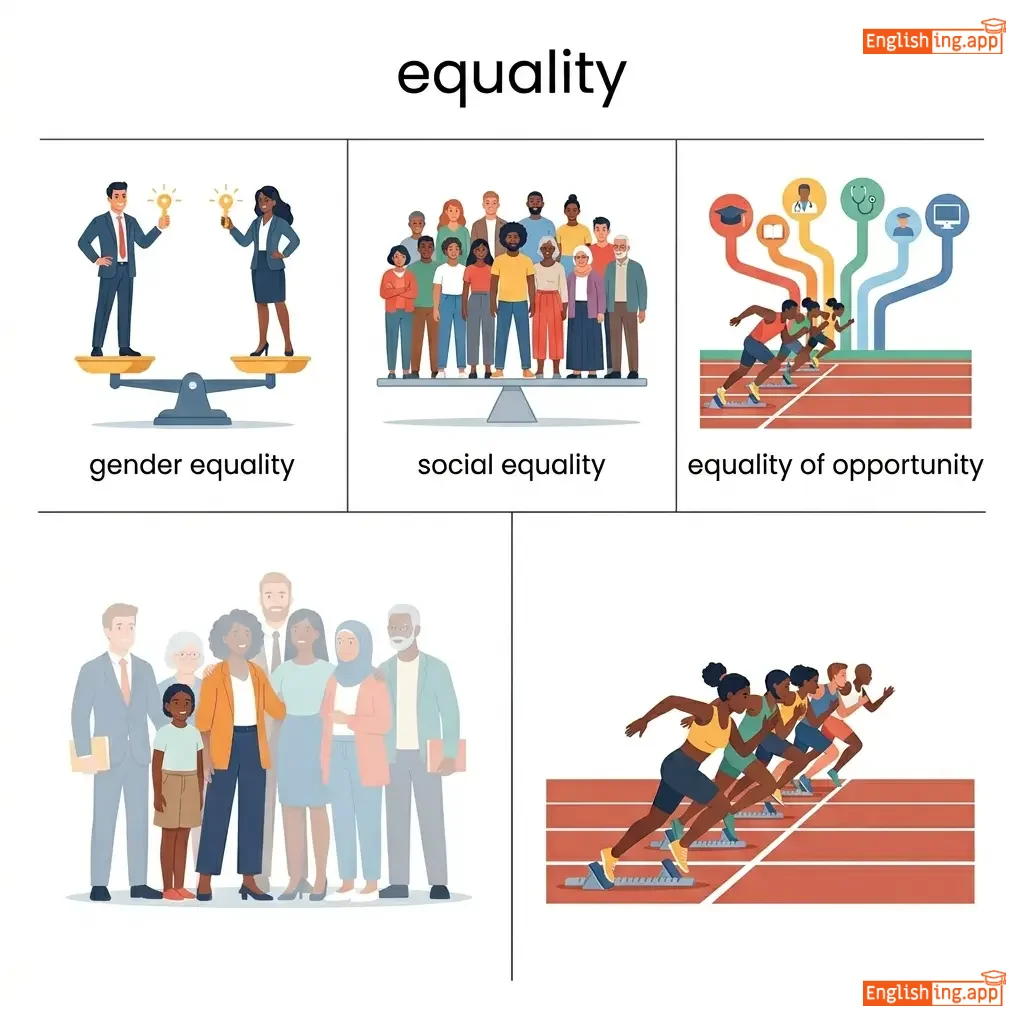
The organization works to promote gender equality in the workplace.
その組織は職場での男女平等を推進するために働いています。
••••••
|
その組織は職場での男女平等を推進するために働いています。
Sono soshiki wa shokuba de no danjo byoudou o suishin suru tame ni hataraiteimasu.
••••••
|
- •••••• | - •••••• | - •••••• |
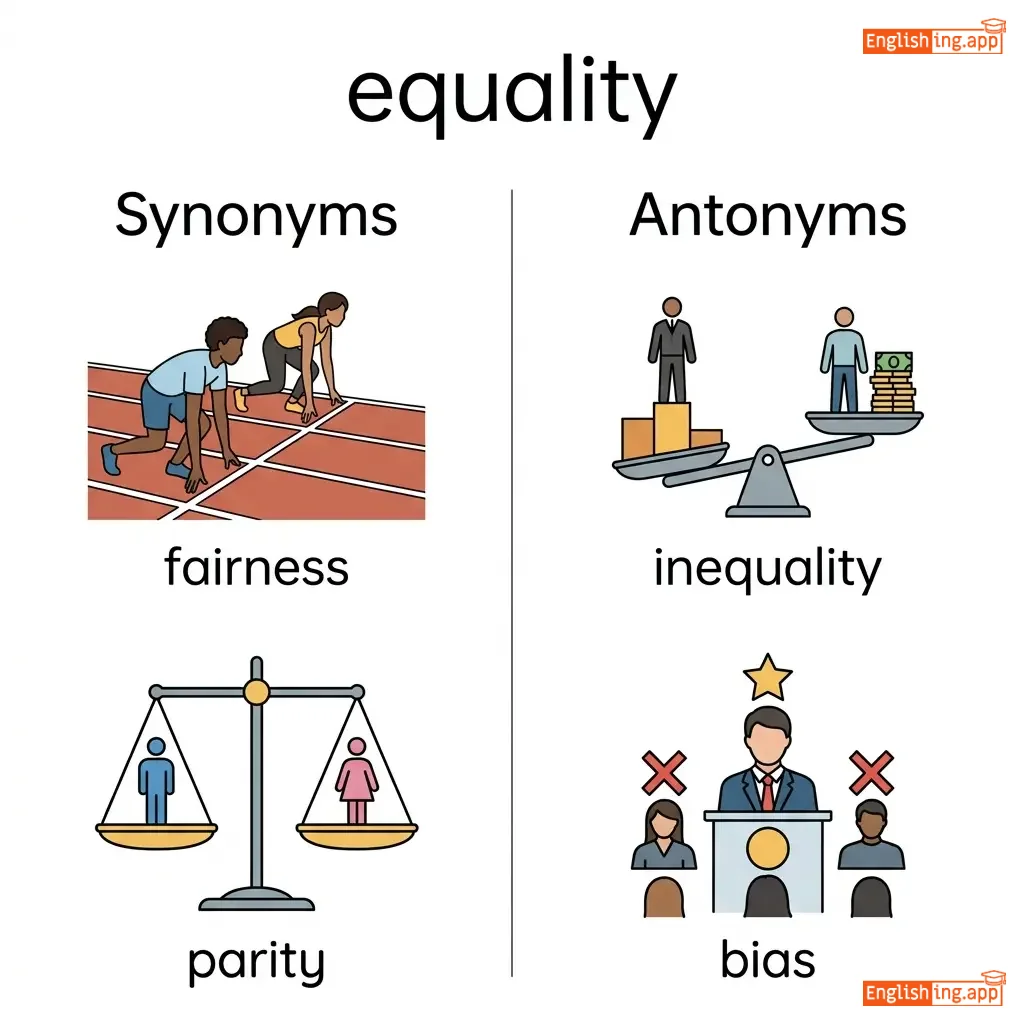
fairness, parity, balance, justice
••••••
|
inequality, bias, discrimination
••••••
|
gender equality, social equality, equality of opportunity, promote equality
••••••
|
Byou + dou = 平等 — 平等はすべての人々に平等な権利と機会を意味します!
••••••
|
|
#1
🌅
|
/ɪnˈvɪʒən/
verb
(エンヴィジョン)
••••••
|
- •••••• |
想像する
sōzō suru
••••••
|
envisioned
エンヴィジョンド
••••••
|
envisioned
エンヴィジョンド
••••••
|
envisions
エンヴィジョンズ
••••••
|
envisioning
エンヴィジョニング
••••••
|
to imagine or picture something in the future; to visualize a possibility or goal
••••••
|
She envisions a world where everyone has equal access to education.
彼女はすべての人が平等に教育を受けられる世界を想像しています。
••••••
|
彼女はすべての人が平等に教育を受けられる世界を想像しています。
Kanojo wa subete no hito ga byōdō ni kyōiku o ukerareru sekai o sōzō shiteimasu.
••••••
|
- •••••• | - •••••• | - •••••• |
imagine, visualize, foresee, picture, conceive
••••••
|
ignore, overlook, disregard
••••••
|
envision a future, envision a plan, envision success, clearly envision
••••••
|
Envision = En (内側) + vision (見る) — それはあなたの心の目で見ることです。
••••••
|
|
#1
✉️
|
/ˈɛnvəloʊp/
noun
(エンベロープ)
••••••
|
- •••••• |
封筒
fūtō
••••••
|
- •••••• | - •••••• | - •••••• | - •••••• |
a flat paper container used to enclose a letter or document
••••••
|
She sealed the letter in an envelope and posted it. |
彼女は手紙を封筒に入れて、郵送しました。
Kanojo wa tegami o fūtō ni irete, yūsō shimashita.
••••••
|
push the envelope |
to go beyond normal limits; to innovate or take risks
••••••
|
限界を超える
genkai o koeru
••••••
|
wrapper, cover, packet, casing, container
••••••
|
uncovering, exposure
••••••
|
seal an envelope, open an envelope, address an envelope, brown envelope
••••••
|
Envelope は封筒です 📬 — 手紙を‘封筒に入れて’送ることを覚えてください。
••••••
|
|
#1
📜
|
/ɪnˈtaɪtəl/
verb
(エンタイトル)
••••••
|
- •••••• |
権利を与える
kenri o ateru
••••••
|
entitled
エンタイトルド
••••••
|
entitled
エンタイトルド
••••••
|
entitles
エンタイトルズ
••••••
|
entitling
エンタイトルイング
••••••
|
to give someone the right to have or do something
••••••
|
Employees are entitled to receive paid holidays.
従業員は有給休暇を受ける権利があります。
••••••
|
従業員は有給休暇を受ける権利があります。
jūgyōin wa yūkyū kyūka o ukeru kenri ga arimasu.
••••••
|
be entitled to
権利を有する
••••••
|
to have a right or claim to something
••••••
|
権利を有する
kenri o yū suru
••••••
|
authorize, allow, permit, empower, grant
••••••
|
forbid, deny, disqualify
••••••
|
entitle someone to, entitled to benefits, entitled to rights, entitled book
••••••
|
Title は権利を意味します。だから en-title は権利を与えることを意味します。
••••••
|
|
#1
⚡
|
/ɪˈlɛktrɪkəl/
adjective
(エレクトリカル)
••••••
|
- •••••• |
電気的な
denkitena
••••••
|
- •••••• | - •••••• | - •••••• | - •••••• |
related to electricity or the use of electrical power
••••••
|
The electrical system in the house needs repair. |
家の電気システムは修理が必要です。
Ie no denki shisutemu wa shūri ga hitsuyō desu.
••••••
|
- •••••• | - •••••• | - •••••• |
power, electric, electronic, voltage-related
••••••
|
non-electric, mechanical
••••••
|
electrical system, electrical engineer, electrical power, electrical circuit
••••••
|
電気的な = 電気に関する ⚡
••••••
|
|
#1
💍
|
/ɪnˈɡeɪdʒmənt/
noun
(エンゲージメント)
••••••
|
|
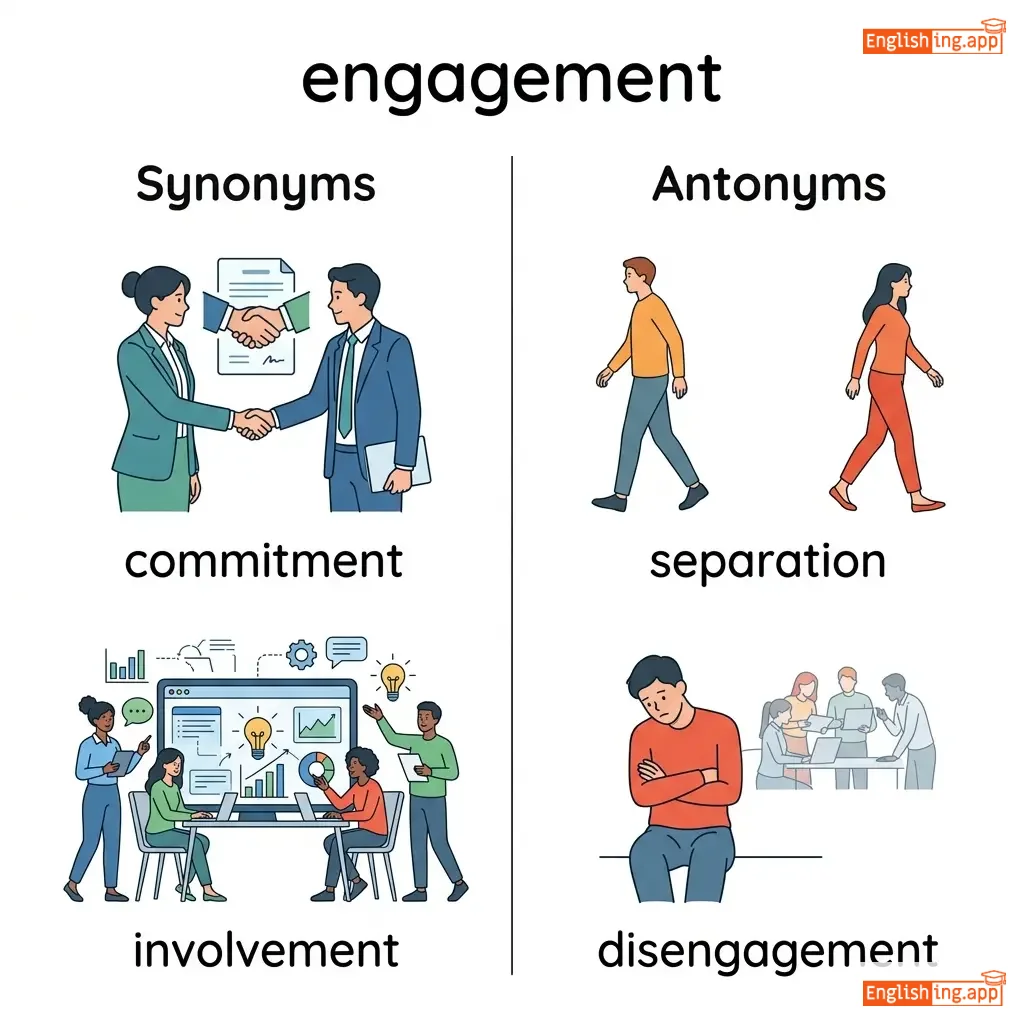
婚約, 参加
kon'yaku, sanka
••••••
|
- •••••• | - •••••• | - •••••• | - •••••• |
a formal agreement to get married; or active involvement in an activity
••••••
|
Their engagement was announced last week. |
彼らの婚約は先週発表されました。
Karera no kon'yaku wa senshū happyō sareました。
••••••
|
social engagement |
a planned social event or meeting
••••••
|
社会的な参加
shakaiteki na sanka
••••••
|
commitment, involvement, participation, appointment, betrothal
••••••
|
separation, disengagement, withdrawal
••••••
|
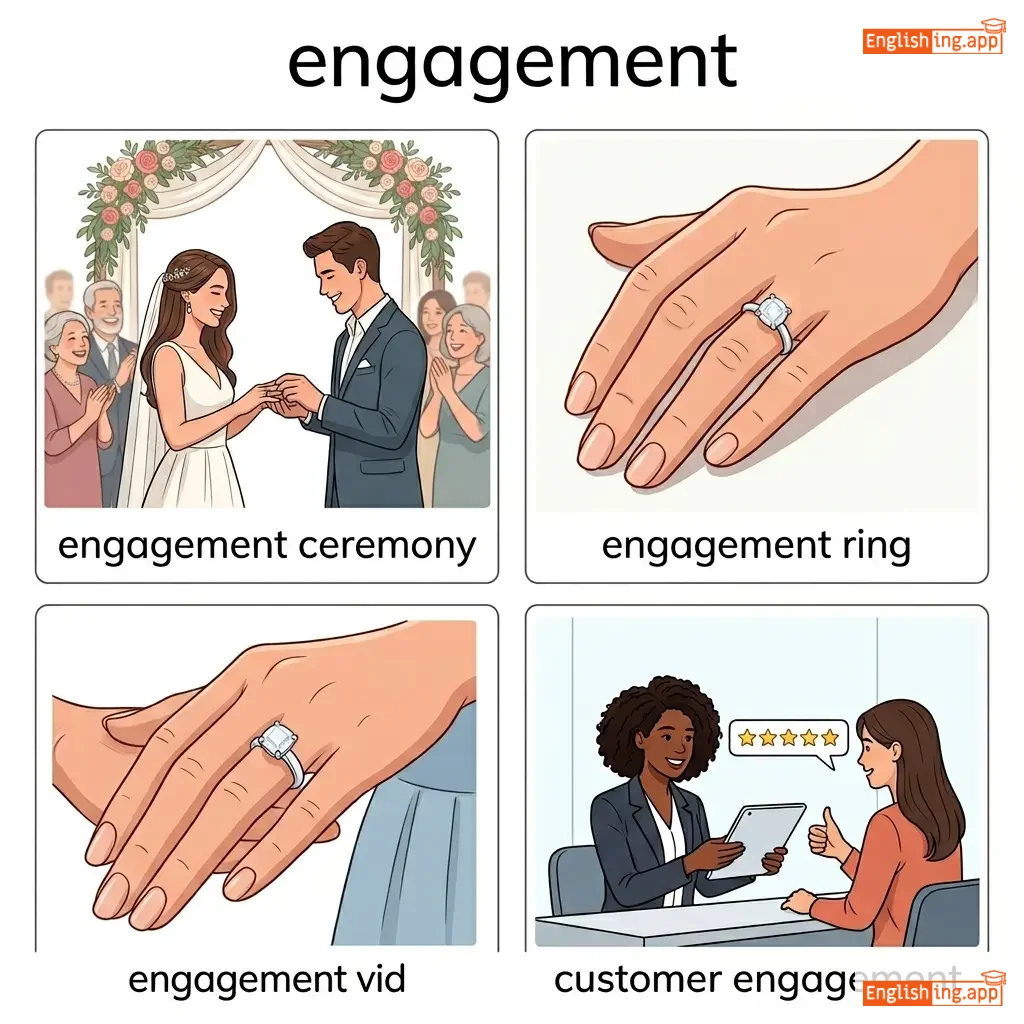
engagement ceremony, engagement ring, customer engagement, social engagement
••••••
|
Engageは参加することを意味し、したがってengagementは活動やイベントに参加することを意味します💍
••••••
|
|
#1
👮♂️
|
/ɪnˈfɔːrs/
verb
(enfōsu)
••••••
|
- •••••• |
施行する
shikō suru
••••••
|
enforced
enfōsudo
••••••
|
enforced
enfōsudo
••••••
|
enforces
enfōsu
••••••
|
enforcing
enfōshingu
••••••
|
to make sure that a rule, law, or policy is obeyed
••••••
|
The police are responsible for enforcing the law.
警察は法律を施行する責任があります。
••••••
|
警察は法律を施行する責任があります。
Keisatsu wa hōritsu o shikō suru sekinin ga arimasu.
••••••
|
enforce the law
法律を施行する
••••••
|
to ensure laws are followed and obeyed
••••••
|
法律を施行する
hōritsu o shikō suru
••••••
|
implement, apply, uphold, execute, impose
••••••
|
ignore, neglect, abandon
••••••
|
enforce rules, enforce regulations, enforce discipline, enforce policy
••••••
|
施行 = 法律を強制する
••••••
|
|
#1
🧘
|
/ɪnˈdjʊər/
verb
(エンデュア)
••••••
|
- •••••• |
耐える
taeru
••••••
|
endured
エンデュアード
••••••
|
endured
エンデュアード
••••••
|
endures
エンデュアーズ
••••••
|
enduring
エンデュアリング
••••••
|
to suffer something difficult or unpleasant patiently
••••••
|
He had to endure years of hardship before achieving success.
彼は成功を収める前に何年もの困難に耐えなければならなかった。
••••••
|
成功を収める前に何年もの困難に耐えなければならなかった。
Seikou o osameru mae ni nannen mo no konnan ni taenakereba naranakatta.
••••••
|
endure the pain
痛みを耐える
••••••
|
to tolerate or bear pain without giving up
••••••
|
痛みを耐える
itami o taeru
••••••
|
tolerate, withstand, suffer, persevere, bear
••••••
|
give up, quit, avoid
••••••
|
endure hardship, endure pain, endure suffering, endure stress
••••••
|
Endure は 'end' という意味で、最終的に耐えることを意味します。
••••••
|
|
#1
♾️
|
/ˈendləs/
adjective
(エンドレス)
••••••
|
- •••••• |
無限
mugen
••••••
|
- •••••• | - •••••• | - •••••• | - •••••• |
having or seeming to have no end or limit
••••••
|
They gazed at the endless desert stretching before them.
彼らは前に広がる終わりのない砂漠を見つめていた。
••••••
|
彼らは前に広がる終わりのない砂漠を見つめていた。
Karera wa mae ni hirogaru owari no nai sabaku o mitsumete ita.
••••••
|
endless possibilities
無限の可能性
••••••
|
many potential opportunities or options
••••••
|
無限の可能性
mugen no kanōsei
••••••
|
infinite, boundless, perpetual, eternal, limitless
••••••
|
limited, finite, short-lived
••••••
|
endless love, endless possibilities, endless road, endless patience
••••••
|
Endless は終わりがないという意味 = 無限 ♾️.
••••••
|
|
#1
💪
|
/ɪnˈkʌrɪdʒɪŋ/
adjective
(エンクラジング)
••••••
|
- •••••• |
励みになる
hagemi ni naru
••••••
|
- •••••• | - •••••• | - •••••• | - •••••• |
giving someone support or confidence; optimistic
••••••
|
Her words were very encouraging during the hard times.
彼女の言葉は、困難な時期に非常に励みになりました。
••••••
|
彼女の言葉は、困難な時期に非常に励みになりました。
Kanojo no kotoba wa, konnan na jiki ni hijō ni hagemi ni narimashita.
••••••
|
encouraging sign
励みになる兆し
••••••
|
a positive indication that something is improving
••••••
|
励みになる兆し
hagemi ni naru kizashi
••••••
|
supportive, hopeful, reassuring, promising, positive
••••••
|
discouraging, depressing
••••••
|
encouraging news, encouraging sign, encouraging smile, encouraging words
••••••
|
励みになる = エネルギー + 勇気 — 支援と自信を与える。
••••••
|
|
#1
🏰
|
/ˈempaɪər/
noun
(empaiā)
••••••
|
- •••••• |
帝国
teikoku
••••••
|
- •••••• | - •••••• | - •••••• | - •••••• |
a group of countries or regions controlled by one ruler or government
••••••
|
The Roman Empire lasted for centuries. |
ローマ帝国は何世代にもわたって続きました。
Rōma teikoku wa nan sedai ni mo watatte tsuzukimashita.
••••••
|
build an empire |
to create a large and powerful organization or business
••••••
|
帝国を築く
teikoku o kizuku
••••••
|
kingdom, realm, dominion, federation, sovereignty
••••••
|
colony, dependency
••••••
|
Roman empire, British empire, build an empire, vast empire
••••••
|
帝国はまるで'帝'(皇帝)を意味する。支配の象徴。
••••••
|
|
#1
💓
|
/ɪˈməʊʃənəli/
adverb
(エモーショナリー)
••••••
|
- •••••• |
感情的に
kanjōteki ni
••••••
|
- •••••• | - •••••• | - •••••• | - •••••• |
in a way that relates to a person's feelings or emotions
••••••
|
She became emotionally attached to her pet. |
彼女はペットに感情的に結びついていた。
Kanojo wa petto ni kanjōteki ni musubitsuite ita.
••••••
|
emotionally drained |
feeling exhausted due to strong emotional experiences
••••••
|
感情的に疲れた
kanjōteki ni tsukareta
••••••
|
feelingly, sensitively, passionately, sentimentally, affectively
••••••
|
coldly, indifferently
••••••
|
emotionally strong, emotionally stable, emotionally attached, emotionally drained
••••••
|
Emotion + ally = 感情的に誰かや何かに結びつく。
••••••
|
|
#1
🌱
|
/ɪˈmɜːrdʒɪŋ/
adjective
(エマージング)
••••••
|
- •••••• |
新興
shinko
••••••
|
- •••••• | - •••••• | - •••••• | - •••••• |
becoming known, developing, or starting to exist
••••••
|
Bangladesh is one of the fastest emerging economies in the world. |
バングラデシュは世界で最も急速に成長している新興経済の一つです。
Banguradeshu wa sekai de mottomo kyūsoku ni seichō shite iru shinkō keizai no hitotsu desu.
••••••
|
emerging markets |
developing countries with growing economies
••••••
|
新興市場
shinko shijou
••••••
|
developing, growing, rising, evolving
••••••
|
declining, fading, disappearing
••••••
|
emerging trend, emerging talent, emerging market, emerging technology
••••••
|
Emerging = 新興、まるで芽が出るようなもの。
••••••
|
|
#1
😳
|
/ɪmˈbærəst/
adjective
(エンバラスト)
••••••
|
- •••••• |
恥ずかしい
hazukashii
••••••
|
- •••••• | - •••••• | - •••••• | - •••••• |
feeling awkward, ashamed, or self-conscious about something
••••••
|
He felt embarrassed when he forgot her name. |
彼は彼女の名前を忘れたとき、恥ずかしいと感じた。
Kare wa kanojo no namae o wasureta toki, hazukashii to kanjita.
••••••
|
embarrassed silence |
an uncomfortable quietness after something awkward happens
••••••
|
恥ずかしい沈黙
hazukashii chinmoku
••••••
|
ashamed, awkward, uneasy, flustered, humiliated
••••••
|
confident, proud, relaxed
••••••
|
feel embarrassed, look embarrassed, deeply embarrassed, embarrassed smile
••••••
|
Embarrassed は恥ずかしい – プレゼン中に名前を忘れると恥ずかしい気持ちになる。
••••••
|
|
#1
1️⃣1️⃣
|
/ɪˈlɛvən/
number
(イレブン)
••••••
|
- •••••• |
十一
juuichi
••••••
|
- •••••• | - •••••• | - •••••• | - •••••• |
the number after ten and before twelve; 11
••••••
|
There are eleven students in the classroom. |
教室には十一人の学生がいます。
Kyoushitsu ni wa juuichi-nin no gakusei ga imasu.
••••••
|
the eleventh hour |
the last possible moment to do something
••••••
|
十一番目の時間
juuichibanme no jikan
••••••
|
11, elevenfold
••••••
|
ten, twelve
••••••
|
eleven o'clock, eleven people, eleven years old
••••••
|
Eleven は 十一 — サッカーチームには十一人の選手がいます!
••••••
|
|
#1
🛗
|
/ˈɛləˌveɪtər/
noun
(エレベーター)
••••••
|
- •••••• |
エレベーター
erebētā
••••••
|
- •••••• | - •••••• | - •••••• | - •••••• |
a machine that carries people or goods up and down between floors in a building
••••••
|
We took the elevator to the tenth floor. |
私たちはエレベーターで10階に行きました。
Watashitachi wa erebētā de jukkai ni ikimashita.
••••••
|
elevator pitch |
a brief, persuasive speech to spark interest in an idea or project
••••••
|
エレベーターピッチ
erebētā picchi
••••••
|
lift, hoist, escalator, platform
••••••
|
stairs, descent
••••••
|
take the elevator, elevator door, elevator button, elevator ride
••••••
|
エレベーターは、上に下に動くことから、エレベーターピッチで興味を引き起こす!
••••••
|
|
#1
🐘
|
/ˈɛlɪfənt/
noun
(ハピネス)
••••••
|
- •••••• |
幸せ
shiawase
••••••
|
- •••••• | - •••••• | - •••••• | - •••••• |
a very large animal with a trunk, long curved tusks, and thick gray skin, found in Africa and Asia
••••••
|
The elephant sprayed water over itself with its trunk. |
彼女は賞を受け取ったとき、自分の幸せを隠すことができませんでした。
Kanojo wa shō o uketotta toki, jibun no shiawase o kakusu koto ga dekimasen deshita.
••••••
|
the elephant in the room |
an obvious problem or issue that people avoid discussing
••••••
|
幸せを追い求める
shiawase o oi motomeru
••••••
|
mammal, giant, pachyderm, tusker
••••••
|
mouse, insect
••••••
|
herd of elephants, African elephant, elephant tusks, baby elephant
••••••
|
幸せは人生の中で最も価値のあるものを追い求めること!
••••••
|
|
#1
💃
|
/ˈɛlɪɡənt/
adjective
(エレガント)
••••••
|
- •••••• |
優雅で洗練された
yūga de senren sareta
••••••
|
- •••••• | - •••••• | - •••••• | - •••••• |
pleasingly graceful and stylish in appearance or manner
••••••
|
She looked elegant in her evening gown. |
彼女はイブニングガウンでエレガントに見えた。
Kanojo wa ibuningu gaun de ereganto ni mieta.
••••••
|
simple yet elegant |
beautiful and stylish without being complicated
••••••
|
シンプルでありながらエレガント
shinpurude arinagara ereganto
••••••
|
graceful, stylish, classy, refined, sophisticated
••••••
|
clumsy, messy, crude
••••••
|
elegant dress, elegant design, elegant solution, elegant lady
••••••
|
エレガントはまるで素晴らしい服を着て'わぁ!'と言いたくなる感じ
••••••
|
|
#1
💻
|
/ɪˌlɛkˈtrɒnɪks/
noun
(エレクトロニクス)
••••••
|
- •••••• |
エレクトロニクス
erekutoronikusu
••••••
|
- •••••• | - •••••• | - •••••• | - •••••• |
the branch of physics and technology dealing with circuits and devices using transistors, microchips, and other components
••••••
|
He studied electronics at university. |
彼は大学でエレクトロニクスを学びました。
Kare wa daigaku de erekutoronikusu o manabimashita.
••••••
|
- •••••• | - •••••• | - •••••• |
tech, circuitry, electrotechnology, computing
••••••
|
mechanics, manual systems
••••••
|
electronics engineer, consumer electronics, electronics lab, electronics industry
••••••
|
エレクトロニクスはガジェットの世界 — テレビ、携帯電話、コンピューター、すべてが一緒に!
••••••
|
Vocabulary Quiz
Test your vocabulary by matching words with their translations or meanings.
Login to take the quiz
Comments (0)
Share your thoughts and join the discussion.
Join the discussion by logging in
Login to CommentNo comments yet
Be the first to share your thoughts!