

翻訳
過去
過去分詞
三人称単数
動名詞
意味
例文
例文の翻訳
同義語
対義語
コロケーション
ニーモニック

Swipe left or right, or use the buttons. Tap image to zoom.
例文の翻訳
単語
Lesson 315Lesson 315 - マスクトグル
|
絵文字
|
単語 | Images | 翻訳 | 過去 | 過去分詞 | 三人称単数 | 動名詞 | 意味 | 例文 | 例文の翻訳 | 表現例 | 表現例の意味 | 表現例の翻訳 | 同義語 | 対義語 | コロケーション | ニーモニック |
|---|---|---|---|---|---|---|---|---|---|---|---|---|---|---|---|---|---|
|
#9420
💣
|
/ˈwɔːrˌmʌŋɡər/
noun
(ウォーモンガー)
••••••
|
- •••••• |
戦争煽動者
sensō sandōsha
••••••
|
- •••••• | - •••••• | - •••••• | - •••••• |
A person who advocates or promotes war or conflict.
••••••
|
The leader was criticized as a warmonger by his opponents. |
そのリーダーは、対立者から戦争煽動者として批判された。
Sono rīdā wa, tairitsusha kara sensō sandōsha to shite hihan sareta.
••••••
|
- •••••• | - •••••• | - •••••• |
agitator, instigator, militarist, hawk
••••••
|
peacemaker, pacifist, mediator
••••••
|
political warmonger, accused of being a warmonger, labeled a warmonger
••••••
|
WAR (戦争)をMONGER (商売する)する人が戦争煽動者
••••••
|
|
#9421
😈
|
/ˈweɪwərd/
adjective
(ウェイワード)
••••••
|
- •••••• |
反抗的な
hankōteki na
••••••
|
- •••••• | - •••••• | - •••••• | - •••••• |
Difficult to control or predict because of unusual or perverse behavior.
••••••
|
The teacher struggled to manage the wayward students. |
教師は反抗的な生徒を管理するのに苦労していた。
Kyōshi wa hankōteki na seito o kanri suru no ni kurō shite ita.
••••••
|
wayward child |
A child who is difficult to control and often behaves badly.
••••••
|
反抗的な子供
hankōteki na kodomo
••••••
|
unruly, headstrong, stubborn, defiant, rebellious
••••••
|
obedient, compliant, disciplined
••••••
|
wayward child, wayward behavior, wayward son, wayward path
••••••
|
Wayward = 反抗的な、管理が難しい子供。
••••••
|
|
#9422
🚧
|
/ˌweɪˈleɪ/
verb
(ウェイレイ)
••••••
|
- •••••• |
突然立ち止まる / 攻撃する
totsuzen tachidomaru / kougeki suru
••••••
|
waylaid
ウェイレイド
••••••
|
waylaid
ウェイレイド
••••••
|
waylays
ウェイレイズ
••••••
|
waylaying
ウェイレイング
••••••
|
to stop or interrupt someone unexpectedly, often to attack or detain them
••••••
|
He was waylaid by reporters as he left the courthouse.
彼は裁判所を出るとき、記者に道を遮られた。
••••••
|
彼は裁判所を出るとき、記者に道を遮られた。
Kare wa saiban-sho o deru toki, kisha ni michi o saegirareta.
••••••
|
- •••••• | - •••••• | - •••••• |
ambush, intercept, accost, attack
••••••
|
allow, let go, ignore
••••••
|
waylay someone, waylay travelers, waylay on the road
••••••
|
Waylay は誰かを突然止めるか攻撃することを意味します。
••••••
|
|
#9423
🛣️
|
/weɪ/
noun
(ウェイ)
••••••
|
- •••••• |
道 / 方法
michi / hōhō
••••••
|
- •••••• | - •••••• | - •••••• | - •••••• |
a path, direction, or method of doing something
••••••
|
He found a new way to solve the problem. |
彼は問題を解決する新しい方法を見つけました。
Kare wa mondai o kaiketsu suru atarashī hōhō o mitsukemashita.
••••••
|
by the way |
used to introduce a new or additional topic
••••••
|
ちなみに
chinami ni
••••••
|
path, route, road, method, manner
••••••
|
blockage, obstacle, impasse
••••••
|
find a way, make way, on the way, by the way
••••••
|
Way は道を意味します — '高速道路' は大きな道です。
••••••
|
|
#9424
🌕
|
/wæks/
verb
••••••
|
- •••••• | - •••••• |
waxed
••••••
|
waxed
••••••
|
waxes
••••••
|
waxing
••••••
|
to increase gradually in size, number, strength, or intensity
••••••
|
The moon will wax until it becomes full. |
- •••••• |
wax and wane |
to increase and decrease alternately
••••••
|
- •••••• |
grow, enlarge, expand, intensify, strengthen
••••••
|
wane, shrink, diminish
••••••
|
wax strong, wax poetic, waxing moon, wax enthusiastic
••••••
|
No •••••• |
|
#9425
🤔
|
/ˈweɪvər/
verb
(ウェイヴァー)
••••••
|
- •••••• |
揺れる
yureru
••••••
|
wavered
ウェイヴァード
••••••
|
wavered
ウェイヴァード
••••••
|
wavers
ウェイヴァーズ
••••••
|
wavering
ウェイヴァリング
••••••
|
to become unsteady or indecisive; to hesitate or shake
••••••
|
She began to waver in her decision to move abroad.
彼女は海外に引っ越す決断に揺れ始めた。
••••••
|
彼女は海外に引っ越す決断に揺れ始めた。
Kanojo wa kaigai ni hikkosu ketsudan ni yurehajimeta.
••••••
|
without wavering
揺るがずに
••••••
|
to act firmly without hesitation
••••••
|
揺るがずに
yurugazu ni
••••••
|
hesitate, falter, vacillate, tremble, oscillate
••••••
|
decide, persist, remain
••••••
|
waver in decision, waver between, waver under pressure
••••••
|
揺れる — どちらに行くか決められない時に揺れているように。
••••••
|
|
#9426
🌊
|
/ˈweɪvlət/
noun
(ウェイブレット)
••••••
|
- •••••• |
小さな波
chiisana nami
••••••
|
- •••••• | - •••••• | - •••••• | - •••••• |
a small wave or ripple on the surface of water or another medium
••••••
|
The pond was disturbed only by the tiny wavelets caused by the breeze.
池は風によって引き起こされた小さな波によってのみ乱されました。
••••••
|
池は風によって引き起こされた小さな波によってのみ乱されました。
Ike wa kaze ni yotte hikiokosareta chiisana nami ni yotte nomi midasaremashita.
••••••
|
- •••••• | - •••••• | - •••••• |
ripple, undulation, oscillation, swell
••••••
|
stillness, calm
••••••
|
tiny wavelet, wavelet transform, small wavelet, water wavelet
••••••
|
Wavelet は小さな波 🌊 — 'let' が小さいという意味で、小さな波 = wavelet。
••••••
|
|
#9427
⛰️
|
/ˈwɔːtəʃɛd/
noun
(ワーターシェッド)
••••••
|
- •••••• |
分水嶺, 重要な転換点
watershed
••••••
|
- •••••• | - •••••• | - •••••• | - •••••• |
An event or period marking a turning point in a situation; also refers to a ridge dividing two drainage areas.
••••••
|
The independence movement was a watershed in the nation's history.
独立運動は国の歴史の中で分水嶺となった。
••••••
|
独立運動は国の歴史の中で分水嶺となった。
Dokuritsu undō wa kuni no rekishi no naka de bun suiri e to natta.
••••••
|
watershed moment
分水嶺の瞬間
••••••
|
A critical turning point in history or life
••••••
|
分水嶺の瞬間
bun suiri no shunkan
••••••
|
turning point, milestone, landmark, breakthrough
••••••
|
continuity, stagnation
••••••
|
watershed event, watershed moment, watershed year, watershed decision
••••••
|
Watershed = 水 + 境界線 – 水が分かれるように、人生で大きな転換が起こる。
••••••
|
|
#9428
💸
|
/ˈweɪstrəl/
noun
(ウェイストレル)
••••••
|
- •••••• |
浪費者, 怠け者
wastrel
••••••
|
- •••••• | - •••••• | - •••••• | - •••••• |
A person who wastes time, money, or resources; an idler or spendthrift.
••••••
|
The young man was dismissed as a wastrel by his family. |
その若者は家族から浪費者として追放されました。
Sono wakamono wa kazoku kara rūhi-sha to shite tsuihō saremashita.
••••••
|
- •••••• | - •••••• | - •••••• |
idler, loafer, spendthrift, profligate, squanderer
••••••
|
hardworker, saver
••••••
|
idle wastrel, spoiled wastrel, wastrel youth, family wastrel
••••••
|
Wastrel = Waste + real – 本当にすべてを無駄にする人。
••••••
|
|
#9429
👀
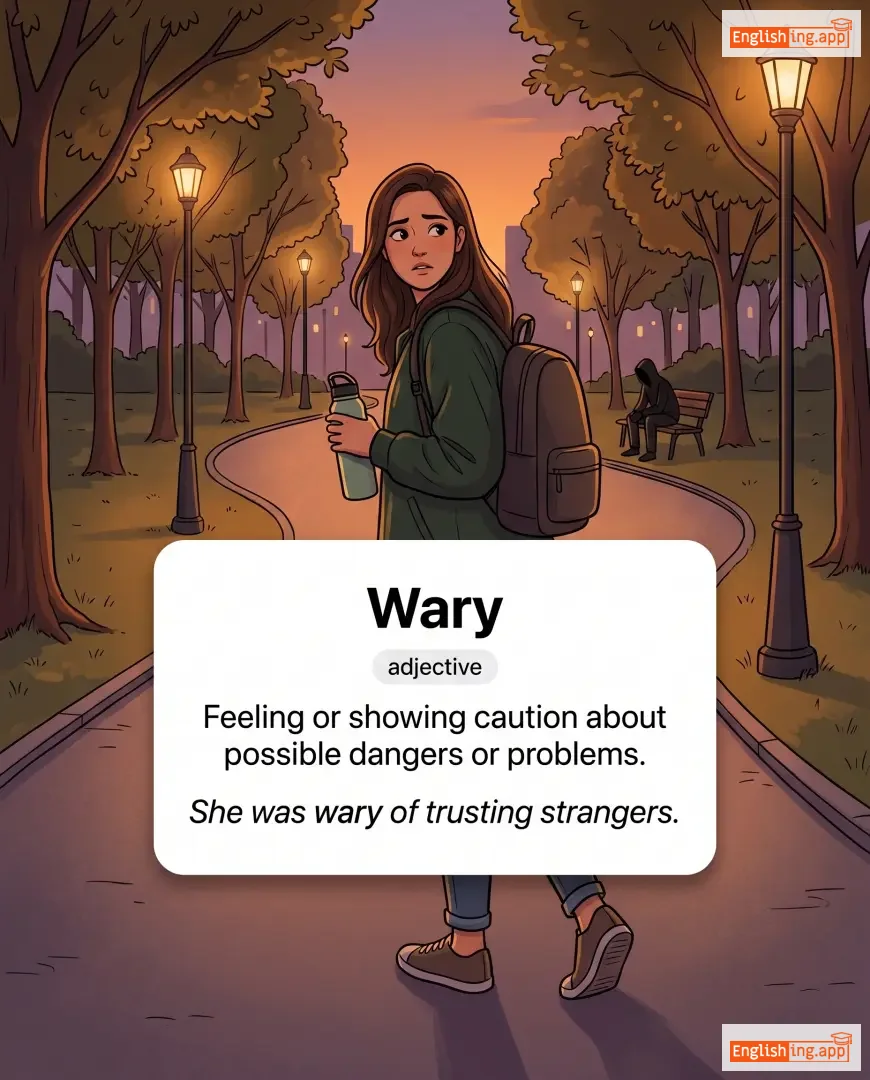
|
/ˈweəri/
adjective
(ウェアリ)
••••••
|
|
用心深い
wary
••••••
|
- •••••• | - •••••• | - •••••• | - •••••• |
Feeling or showing caution about possible dangers or problems.
••••••
|
She was wary of trusting strangers. |
彼女は見知らぬ人を信じることに用心深かった。
Kanojo wa mishiranu hito o shinjiru koto ni yōjinbukatta.
••••••
|
wary eye |
A cautious and watchful look
••••••
|
用心深い目
Yōjinbukai me
••••••
|
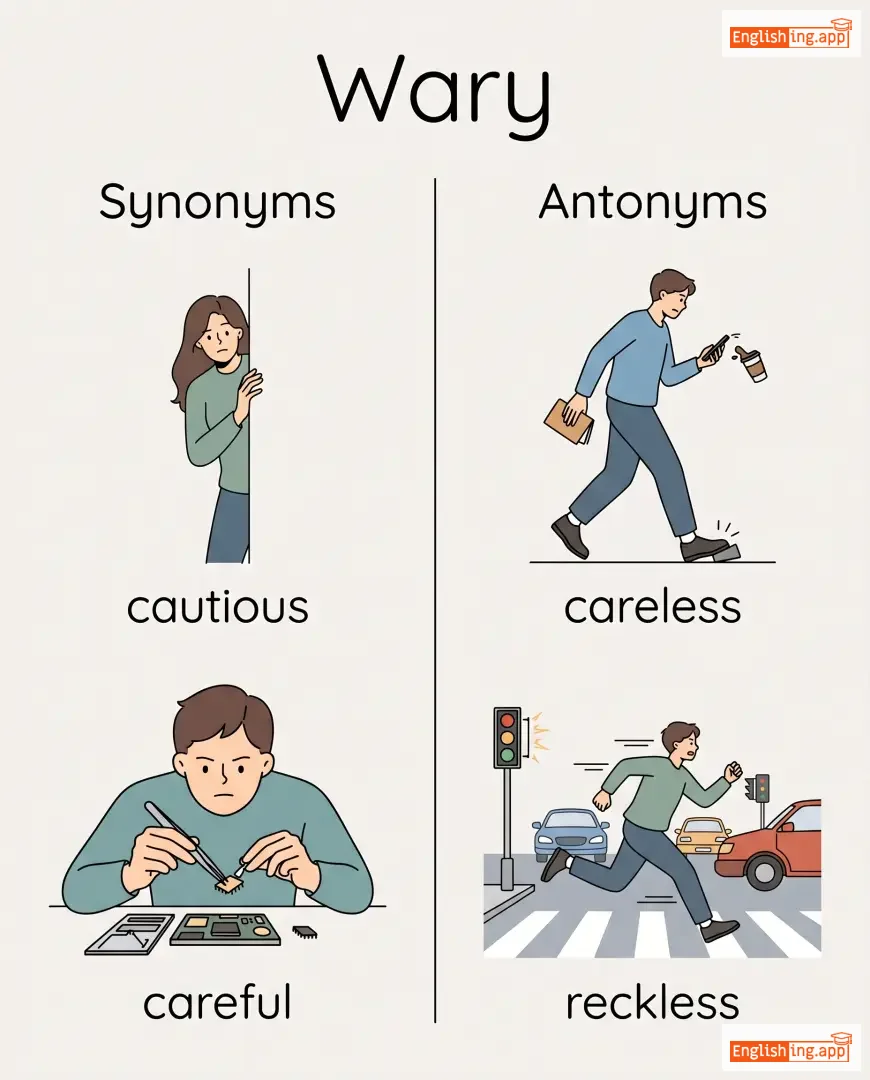
cautious, careful, alert, suspicious, vigilant
••••••
|
careless, reckless, unwary
••••••
|
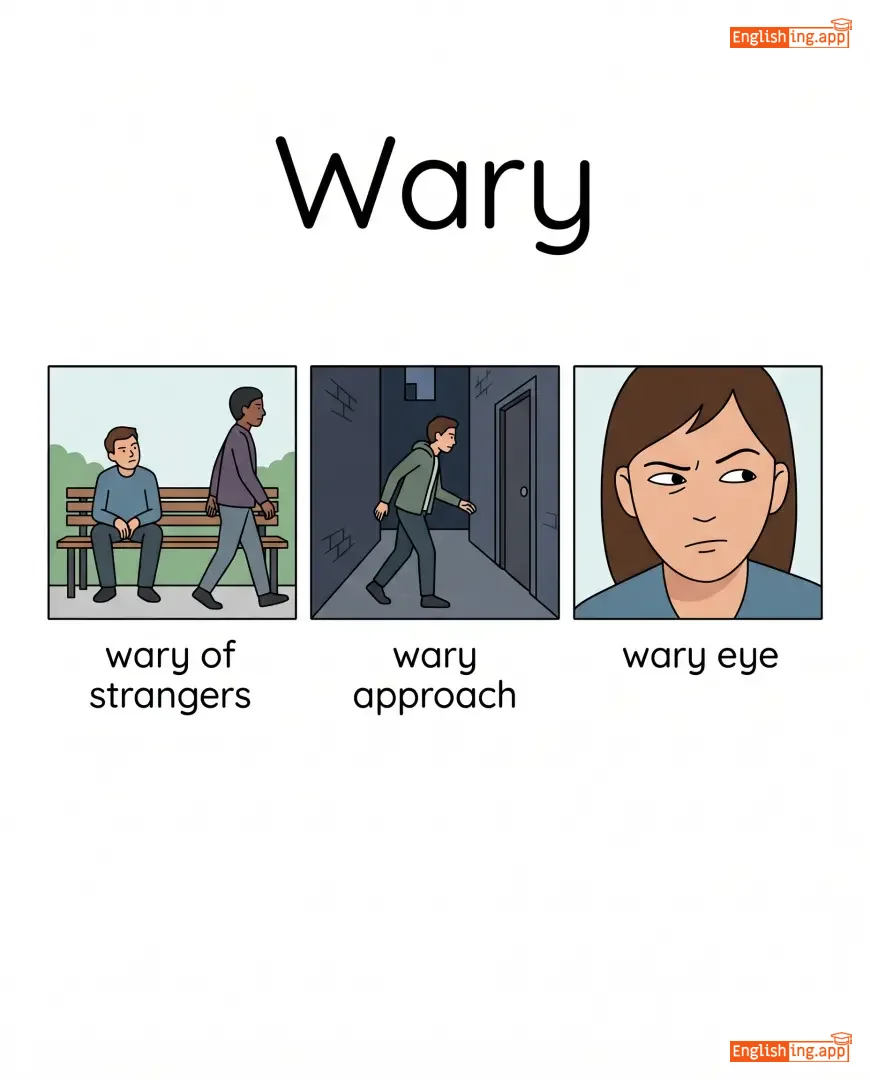
wary of strangers, wary approach, wary eye, be wary
••••••
|
Wary = Very 用心深い – 'wary' はいつも慎重であることを意味します!
••••••
|
|
#9430
🐇
|
/ˈwɒrən/
noun
(ワレン)
••••••
|
- •••••• |
ウサギの巣穴のネットワーク
warren
••••••
|
- •••••• | - •••••• | - •••••• | - •••••• |
A network of interconnected rabbit burrows; also used metaphorically for a densely populated building or district.
••••••
|
The old part of the city is a warren of narrow streets. |
街の古い部分は、狭い通りが入り組んだ迷路のようです。
Machi no furui bubun wa, semai tōri ga hairikonda meiro no yō desu.
••••••
|
- •••••• | - •••••• | - •••••• |
maze, labyrinth, network, hive
••••••
|
open space, field
••••••
|
rabbit warren, human warren, warren of streets, crowded warren
••••••
|
Warrenはウサギの穴のようなもの、複雑で狭い場所。
••••••
|
|
#9431
📜
|
/ˈwɒrənti/
noun
(ワランティ)
••••••
|
- •••••• |
保証
hoshō
••••••
|
- •••••• | - •••••• | - •••••• | - •••••• |
A written guarantee given by a manufacturer or seller promising to repair or replace a product if necessary within a specified period.
••••••
|
The laptop comes with a two-year warranty.
そのノートパソコンには2年間の保証が付いています。
••••••
|
そのノートパソコンには2年間の保証が付いています。
Sono nōto pasokon ni wa 2-nenkan no hoshō ga tsuiteimasu.
••••••
|
under warranty
保証期間内
••••••
|
Still covered by the warranty period
••••••
|
保証期間内
hoshō kikan-nai
••••••
|
guarantee, assurance, contract, pledge, bond
••••••
|
breach, denial
••••••
|
valid warranty, extended warranty, warranty period, warranty claim
••••••
|
保証は安心 – '心配しないで、保証があるから!'
••••••
|
|
#9432
✅
|
/ˈwɒrəntɪd/
adjective/verb
(warranted)
••••••
|
|
正当化された
seitouka sareta
••••••
|
warranted
warranted
••••••
|
warranted
warranted
••••••
|
- •••••• | - •••••• |
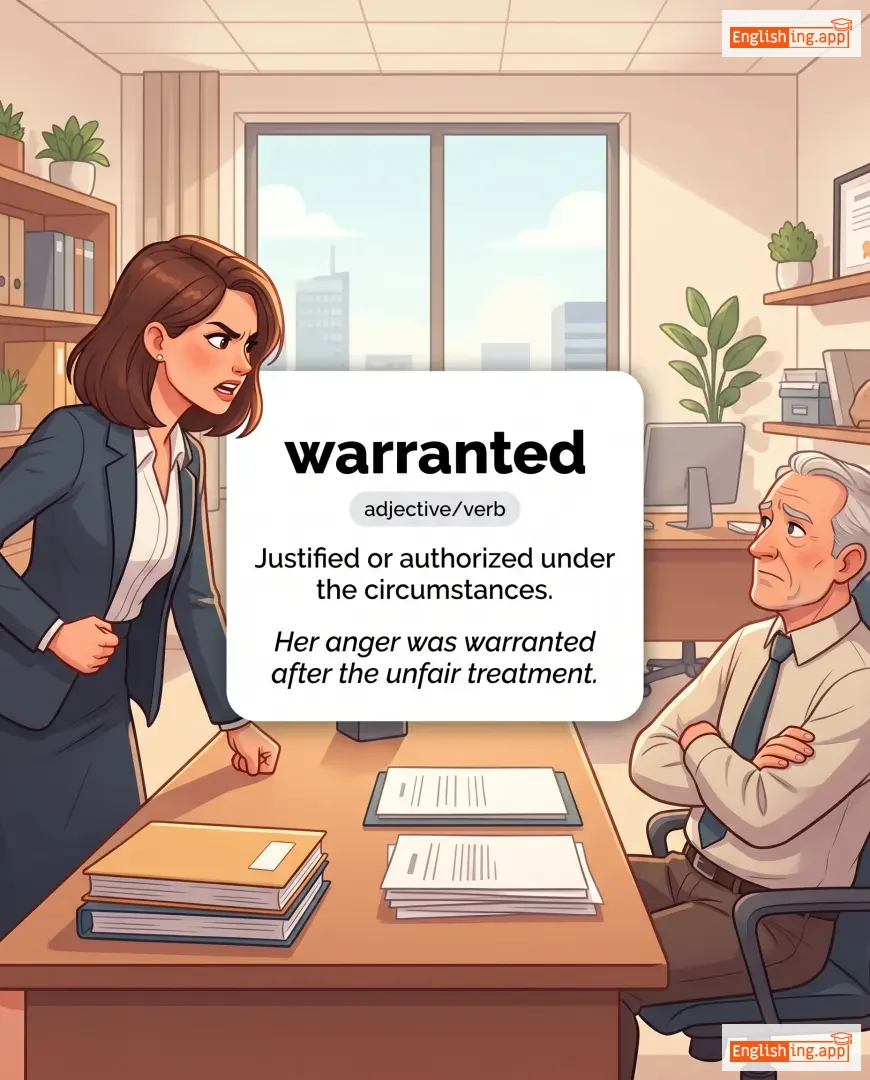
Justified or authorized under the circumstances.
••••••
|
Her anger was warranted after the unfair treatment.
不公平な扱いの後、彼女の怒りは正当化されていました。
••••••
|
不公平な扱いの後、彼女の怒りは正当化されていました。
Fukouhei na atsukai no ato, kanojo no ikari wa seitouka sarete imashita.
••••••
|
- •••••• | - •••••• | - •••••• |
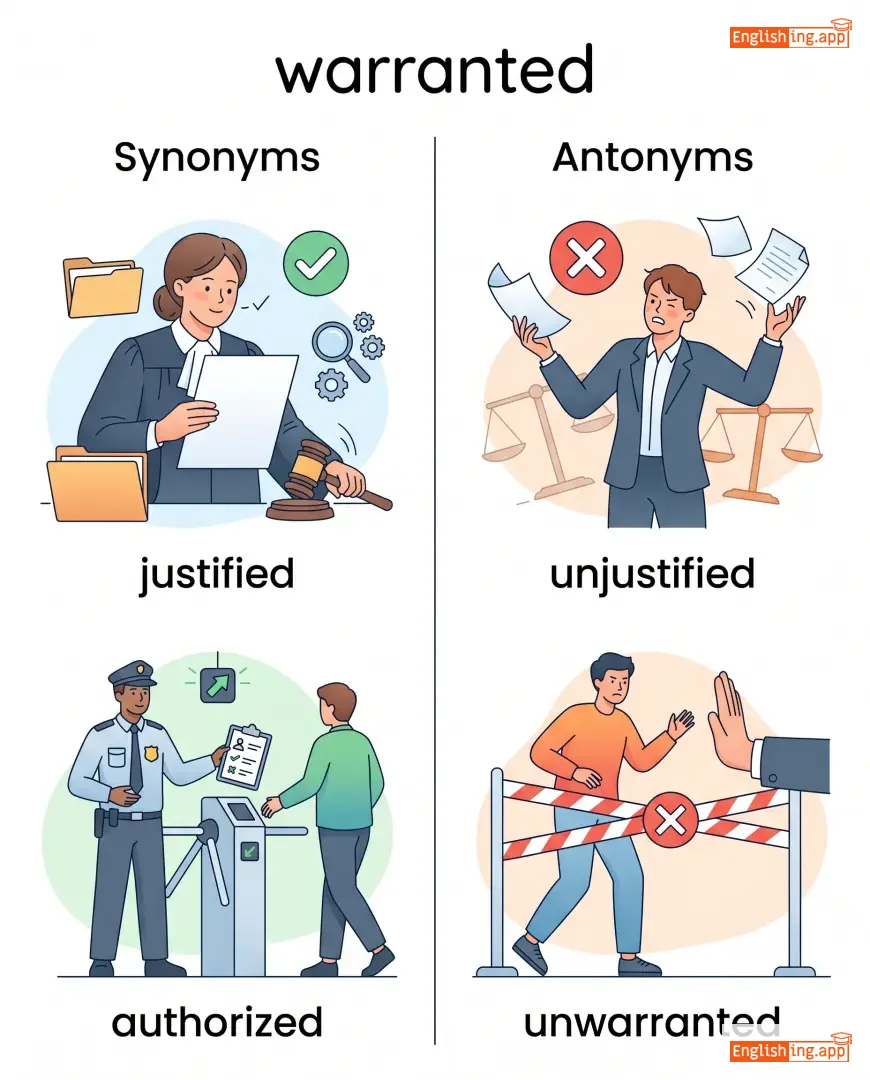
justified, authorized, reasonable, valid
••••••
|
unjustified, unwarranted, invalid
••••••
|
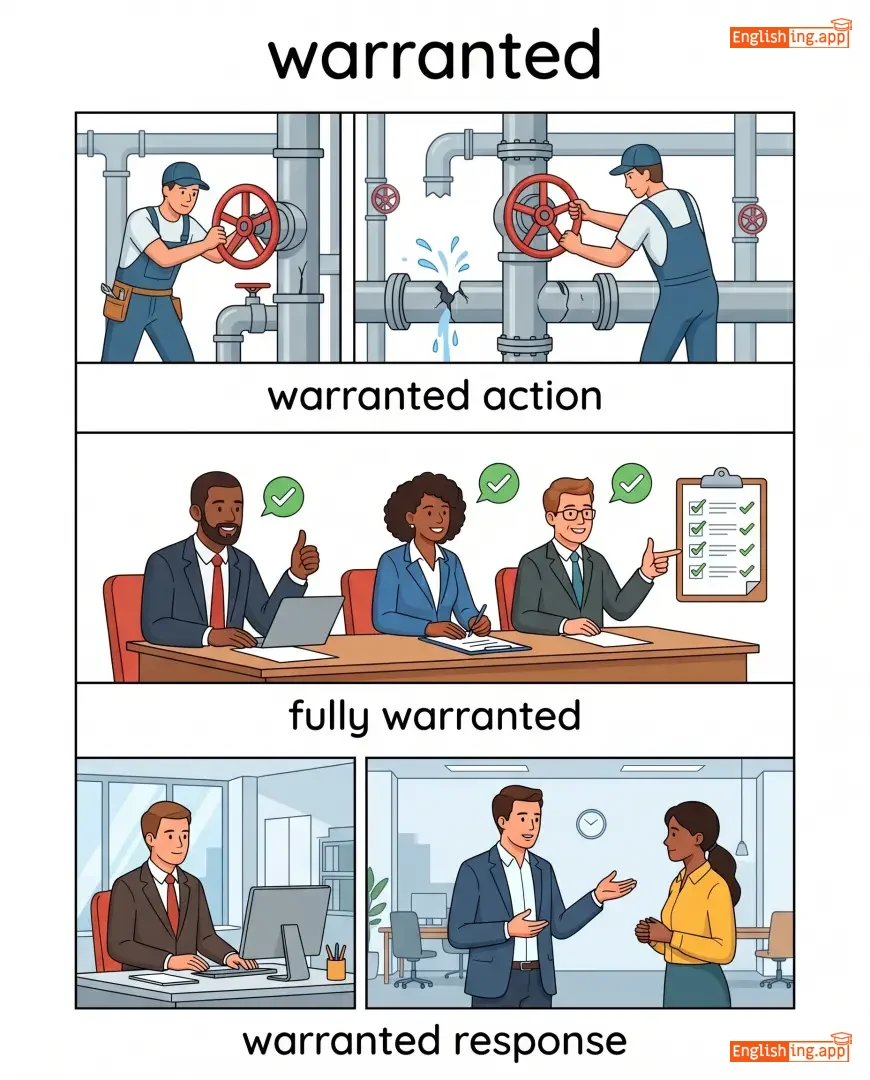
warranted action, fully warranted, warranted response, legally warranted
••••••
|
正当であれば、それは WARRANTED ✅
••••••
|
|
#9433
📜
|
/ˈwɒrənt/
noun/verb
(ワラント)
••••••
|
- •••••• |
令状
reijō
••••••
|
warranted
ワラントッド
••••••
|
warranted
ワラントッド
••••••
|
warrants
ワランツ
••••••
|
warranting
ワランティング
••••••
|
As a noun: An official authorization or order. As a verb: To justify or make something necessary.
••••••
|
The judge issued a warrant for his arrest.
裁判官は彼の逮捕状を発行しました。
••••••
|
裁判官は彼の逮捕状を発行しました。
Saibankan wa kare no taihojō o hakkō shimashita.
••••••
|
search warrant
捜索令状
••••••
|
a legal document authorizing the police to search a place
••••••
|
捜索令状
sōsaku reijō
••••••
|
authorization, permit, justification, license
••••••
|
ban, prohibition, denial
••••••
|
arrest warrant, search warrant, warrant issued, warrant action
••••••
|
警察は令状を使って捜索を行います 📜
••••••
|
|
#9434
🌀
|
/wɔːrp/
verb
••••••
|
- •••••• | - •••••• |
warped
••••••
|
warped
••••••
|
warps
••••••
|
warping
••••••
|
To twist or bend out of shape, often due to heat or moisture.
••••••
|
The wooden door warped in the summer heat. |
- •••••• |
time warp |
a distortion of the perception of time or an anomaly in time flow
••••••
|
- •••••• |
bend, distort, deform, twist
••••••
|
straighten, align, flatten
••••••
|
warp the wood, metal warps, warp speed, warped sense
••••••
|
No •••••• |
|
#9435
🐃
|
/ˈwɒloʊ/
verb
(ワロウ)
••••••
|
- •••••• |
ゴロゴロする, ふける
gorogoro suru, fukeru
••••••
|
wallowed
ワロウド
••••••
|
wallowed
ワロウド
••••••
|
wallows
ワロウズ
••••••
|
wallowing
ワロウイング
••••••
|
to roll about or indulge oneself in something excessively
••••••
|
The buffalo likes to wallow in the mud on hot days.
バッファローは暑い日には泥の中でゴロゴロするのが好きです。
••••••
|
バッファローは暑い日には泥の中でゴロゴロするのが好きです。
Baffarō wa atsui hi ni wa doro no naka de gorogoro suru no ga suki desu.
••••••
|
wallow in self-pity
自分の哀れみに浸る
••••••
|
to spend too much time feeling sorry for oneself
••••••
|
自分の哀れみに浸る
jibun no awaremi ni hitaru
••••••
|
roll, sprawl, luxuriate, indulge
••••••
|
restrain, abstain, deny
••••••
|
wallow in mud, wallow in self-pity, wallow in sorrow
••••••
|
バッファローのように泥の中でゴロゴロするのが 'wallow' です。
••••••
|
|
#9436
⚔️
|
/ˈwɔːrˌlaɪk/
adjective
(ウォーライク)
••••••
|
- •••••• |
戦闘的
sentōteki
••••••
|
- •••••• | - •••••• | - •••••• | - •••••• |
Having an aggressive or militant nature; inclined to fight or engage in war.
••••••
|
The tribe was known for its warlike traditions. |
その部族は戦闘的な伝統で知られていました。
Sono buzoku wa sentōteki na dentō de shirarete imashita.
••••••
|
- •••••• | - •••••• | - •••••• |
militant, aggressive, martial, hostile, belligerent
••••••
|
peaceful, calm, pacifist
••••••
|
warlike nation, warlike behavior, warlike stance, warlike attitude
••••••
|
戦いを好む者は'戦闘的' (sentōteki)
••••••
|
|
#9437
👗
|
/ˈwɔːdrəʊb/
noun
(ワードローブ)
••••••
|
- •••••• |
クローゼット
kurōzetto
••••••
|
- •••••• | - •••••• | - •••••• | - •••••• |
A large cupboard where clothes are stored; also the collection of clothes someone owns.
••••••
|
Her wardrobe is full of colorful dresses.
彼女のワードローブはカラフルなドレスでいっぱいです。
••••••
|
彼女のクローゼットはカラフルなドレスでいっぱいです。
Kanojo no kurōzetto wa karafuru na doresu de ippai desu.
••••••
|
capsule wardrobe
カプセルワードローブ
••••••
|
a small, versatile collection of essential clothing items
••••••
|
カプセルワードローブ
kapuseru wādorōbu
••••••
|
closet, cupboard, dresser, clothing collection
••••••
|
emptiness, nakedness
••••••
|
open wardrobe, build a wardrobe, capsule wardrobe, wardrobe malfunction
••••••
|
Ward + robe → クローゼット、服を収納する場所 (robe)
••••••
|
|
#9438
🏥
|
/wɔːrd/
noun
(ワード)
••••••
|
- •••••• |
病棟
byoutou
••••••
|
- •••••• | - •••••• | - •••••• | - •••••• |
A separate room in a hospital for patients; also a division of a city or a person under guardianship.
••••••
|
She was admitted to the children's ward. |
彼女は子供病棟に入院しました。
Kanojo wa kodomo byoutou ni nyu'in shimashita.
••••••
|
under someone's ward |
being under the guardianship or protection of someone
••••••
|
誰かの保護の下で
dareka no hogo no shita de
••••••
|
unit, section, division, department
••••••
|
freedom, independence
••••••
|
hospital ward, children's ward, surgical ward, ward off
••••••
|
Ward = 病棟 → 病棟で子供たちが面倒を見てもらう
••••••
|
|
#9439
🎶
|
/ˈwɔːbəl/
verb
(ワーブル)
••••••
|
- •••••• |
震える声で歌うまたはトリルで口笛を吹く
furueteru koe de utau mata wa toriru de kuchibue wo fuku
••••••
|
warbled
ワーブルド
••••••
|
warbled
ワーブルド
••••••
|
warbles
ワーブルス
••••••
|
warbling
ワーブルイング
••••••
|
To sing or whistle with a quavering voice or with trills.
••••••
|
The bird warbled a sweet tune in the morning.
その鳥は朝に甘いメロディを歌った。
••••••
|
その鳥は朝に甘いメロディを歌った。
Sono tori wa asa ni amai merodi wo utatta.
••••••
|
- •••••• | - •••••• | - •••••• |
sing, trill, chirp, whistle
••••••
|
silence, mute
••••••
|
warble a song, warble a tune, bird warbling
••••••
|
Warble → 戦争中の鳥も歌って、戦場でもワーブルする。
••••••
|
|
#9440
😈
|
/ˈwɒntənnəs/
noun
(ワントンネス)
••••••
|
- •••••• |
無意味な残虐
muimi na zankyaku
••••••
|
- •••••• | - •••••• | - •••••• | - •••••• |
The quality of being reckless, cruel, or deliberately malicious.
••••••
|
His wantonness shocked everyone at the gathering. |
彼の無意味な残虐は集まりの全員を驚かせました。
Kare no muimi na zankyaku wa atsumari no zen'in o odokasemashita.
••••••
|
- •••••• | - •••••• | - •••••• |
recklessness, cruelty, immorality, depravity
••••••
|
restraint, morality, control
••••••
|
act of wantonness, display of wantonness, sheer wantonness
••••••
|
Wanton + ness = 無駄な残虐
••••••
|
|
#9441
🔥
|
/ˈwɒntən/
adjective
(ワントン)
••••••
|
- •••••• |
不必要な残虐行為
fuhitsuyōna zangyaku kōi
••••••
|
- •••••• | - •••••• | - •••••• | - •••••• |
Deliberate and unprovoked; reckless or cruel.
••••••
|
The soldiers were accused of wanton destruction. |
兵士たちは不必要な破壊で非難されました。
Heishitachi wa fuhitsuyōna hakai de hinan saremashita.
••••••
|
wanton cruelty |
deliberate and unnecessary cruelty
••••••
|
不必要な残虐行為
fuhitsuyōna zangyaku kōi
••••••
|
reckless, malicious, deliberate, cruel, unprovoked
••••••
|
justified, restrained, controlled
••••••
|
wanton cruelty, wanton destruction, wanton violence, wanton disregard
••••••
|
Want ON destruction は意図的な破壊を意味します - wanton は不必要な残虐行為を意味します
••••••
|
|
#9442
⚠️
|
/ˈwɒntɪŋ/
adjective
(ウォンティング)
••••••
|
- •••••• |
不足
fusoku
••••••
|
- •••••• | - •••••• | - •••••• | - •••••• |
Lacking or deficient in quality or quantity.
••••••
|
His explanation was wanting in clarity.
彼の説明は明確さに欠けていた。
••••••
|
彼の説明は明確さに欠けていた。
kare no setsumei wa meikakusa ni kaketeita.
••••••
|
- •••••• | - •••••• | - •••••• |
lacking, deficient, incomplete, inadequate, insufficient
••••••
|
sufficient, adequate, complete
••••••
|
wanting in quality, wanting in respect, wanting evidence
••••••
|
Wantingは欲しいものがないという意味、つまり不足
••••••
|
|
#9443
☕
|
/wɒnt/
verb
(ウォント)
••••••
|
|
欲しい
hoshii
••••••
|
wanted
ウォンテッド
••••••
|
wanted
ウォンテッド
••••••
|
wants
ウォンツ
••••••
|
wanting
ウォンティング
••••••
|
To desire to have or do something.
••••••
|
I want a cup of coffee before the meeting.
私は会議の前にコーヒーを一杯欲しいです。
••••••
|
私は会議の前にコーヒーを一杯欲しいです。
Watashi wa kaigi no mae ni koohii wo ippai hoshii desu.
••••••
|
for want of
何かが足りないため
••••••
|
due to the lack of something
••••••
|
何かが足りないため
nanika ga tarinai tame
••••••
|
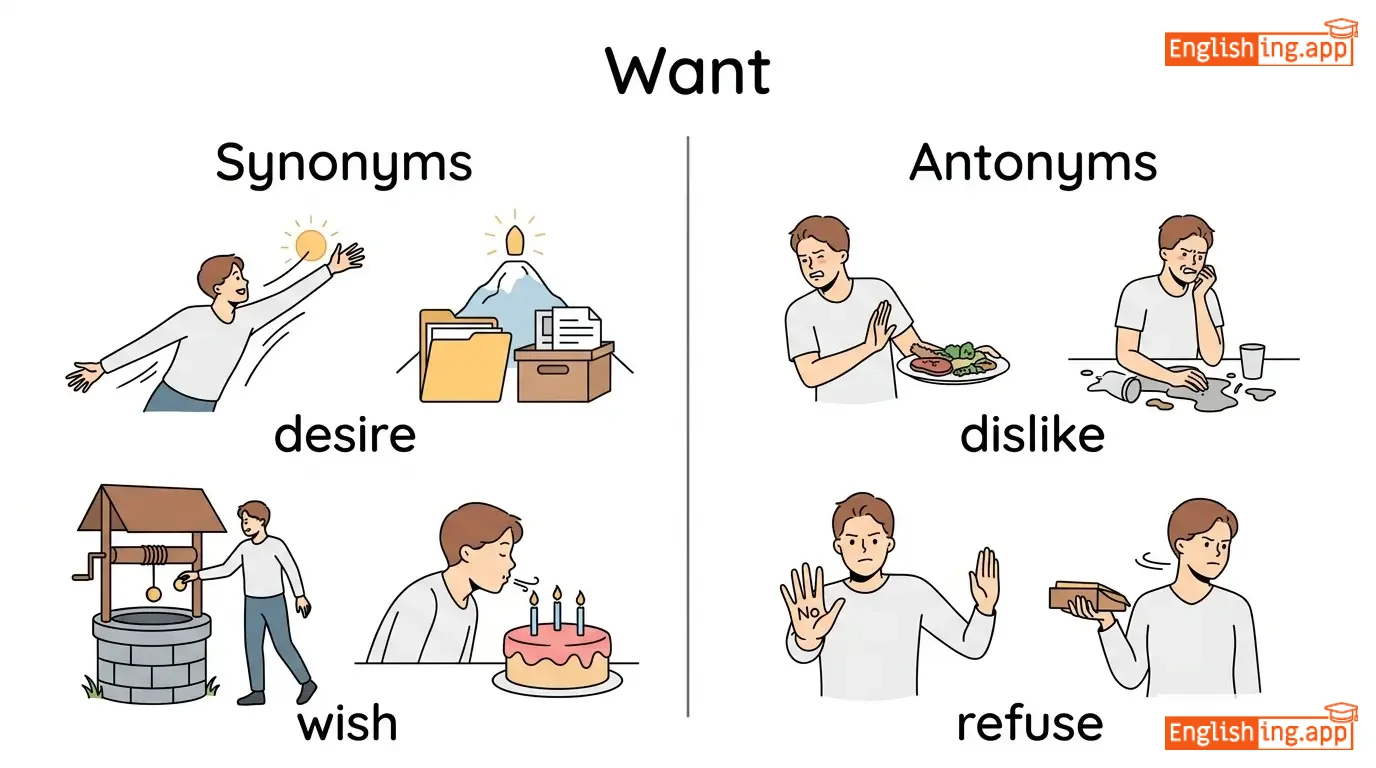
desire, wish, crave, need, long-for
••••••
|
dislike, refuse, reject
••••••
|
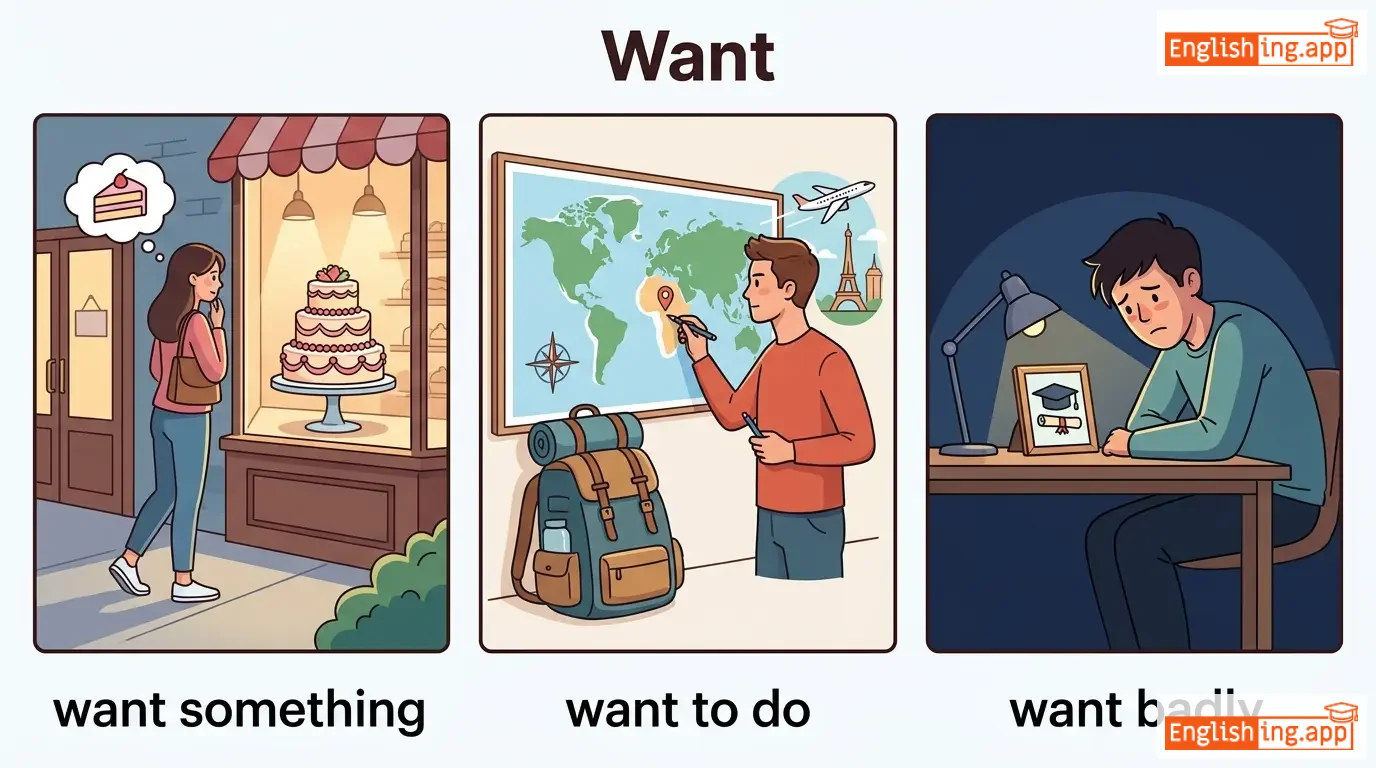
want something, want to do, want badly
••••••
|
欲しい = 'want' 日本語
••••••
|
|
#9444
🎟️
|
/ˈwaŋɡl/
verb
(ワングル)
••••••
|
- •••••• |
巧妙に何かを達成する
kōmyō ni nanika o tassei suru
••••••
|
wangled
ワングルド
••••••
|
wangled
ワングルド
••••••
|
wangles
ワングルス
••••••
|
wangling
ワングリング
••••••
|
To achieve something by clever or sometimes dishonest persuasion or trickery.
••••••
|
He wangled a free ticket to the concert.
彼はコンサートの無料チケットをワングルド。
••••••
|
彼はコンサートの無料チケットを巧妙に手に入れた。
Kare wa konsāto no muryō chiketto o kōmyō ni te ni iretā.
••••••
|
- •••••• | - •••••• | - •••••• |
manipulate, finagle, scheme, maneuver, obtain
••••••
|
lose, surrender, fail
••••••
|
wangle a ticket, wangle permission, wangle a job
••••••
|
Wangleは'日本語で賢く手に入れる'という意味
••••••
|
|
#9445
🌙
|
/weɪn/
verb
(ウェイン)
••••••
|
- •••••• |
減少する
genshousuru
••••••
|
waned
ウェンド
••••••
|
waned
ウェンド
••••••
|
wanes
ウェンス
••••••
|
waning
ウェイニング
••••••
|
To decrease gradually in power, intensity, or size.
••••••
|
The moon wanes after the full moon night.
月は満月の夜の後に減少する。
••••••
|
月は満月の夜の後に減少する。
Tsuki wa mangetsu no yoru no ato ni genshousuru.
••••••
|
on the wane
衰退中
••••••
|
gradually declining or diminishing
••••••
|
衰退中
suitaichuu
••••••
|
diminish, decline, weaken, ebb, fade
••••••
|
grow, increase, rise
••••••
|
waning power, waning influence, waning interest
••••••
|
Wane 衰退中、減少し続ける
••••••
|
|
#9446
🌍
|
/ˈwɒndərlʌst/
noun
(ワンダーラスト)
••••••
|
- •••••• |
旅行への欲望
ryokou e no yokubou
••••••
|
- •••••• | - •••••• | - •••••• | - •••••• |
A strong desire to travel and explore the world.
••••••
|
Her wanderlust took her to every corner of the globe. |
彼女の旅行への欲望は、世界の隅々まで彼女を連れて行った。
Kanojo no ryokou e no yokubou wa, sekai no sumizumi made kanojo o tsurete itta.
••••••
|
- •••••• | - •••••• | - •••••• |
restlessness, travel-bug, desire-to-travel, yearning-to-explore
••••••
|
homebody, rooted, settled
••••••
|
strong wanderlust, feeling wanderlust, satisfy wanderlust
••••••
|
Wander + last = 旅行への欲望、終わらない冒険
••••••
|
|
#9447
🚶
|
/ˈwɒndər/
verb
(ワンダー)
••••••
|
|
さまよう
samayou
••••••
|
wandered
ワンダード
••••••
|
wandered
ワンダード
••••••
|
wanders
ワンダーズ
••••••
|
wandering
ワンダリング
••••••
|
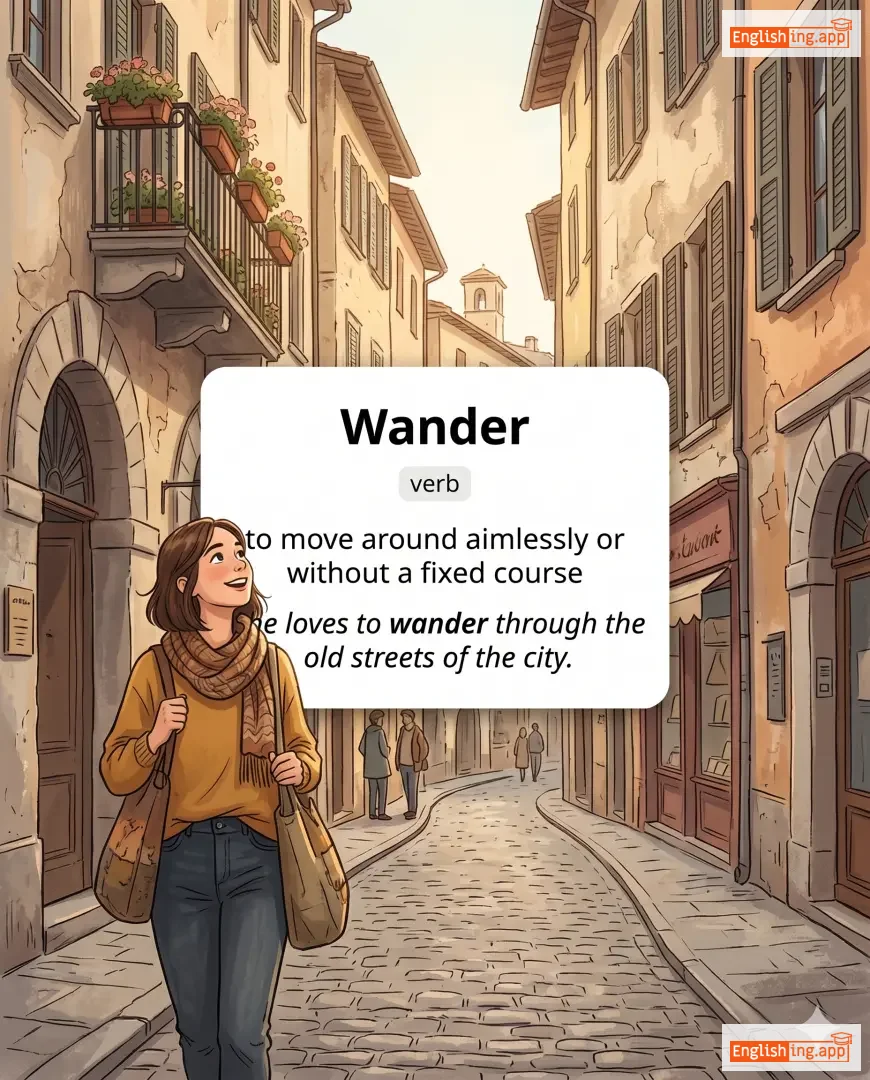
to move around aimlessly or without a fixed course
••••••
|
She loves to wander through the old streets of the city.
彼女は街の古い通りを歩くのが好きです。
••••••
|
彼女は街の古い通りを歩くのが好きです。
Kanojo wa machi no furui toori wo aruku no ga suki desu.
••••••
|
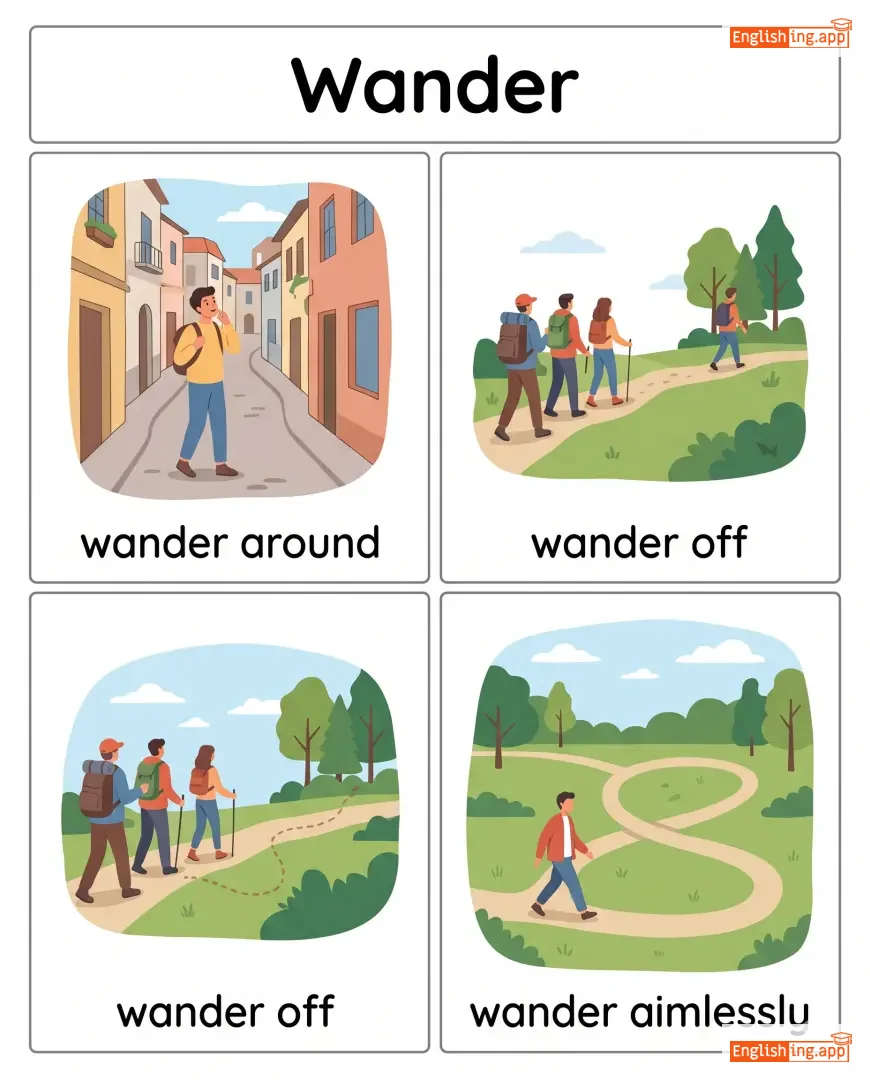
wander off
迷子になる
••••••
|
to leave a place or group without telling anyone
••••••
|
どこかに行ってしまう
dokoka ni itte shimau
••••••
|
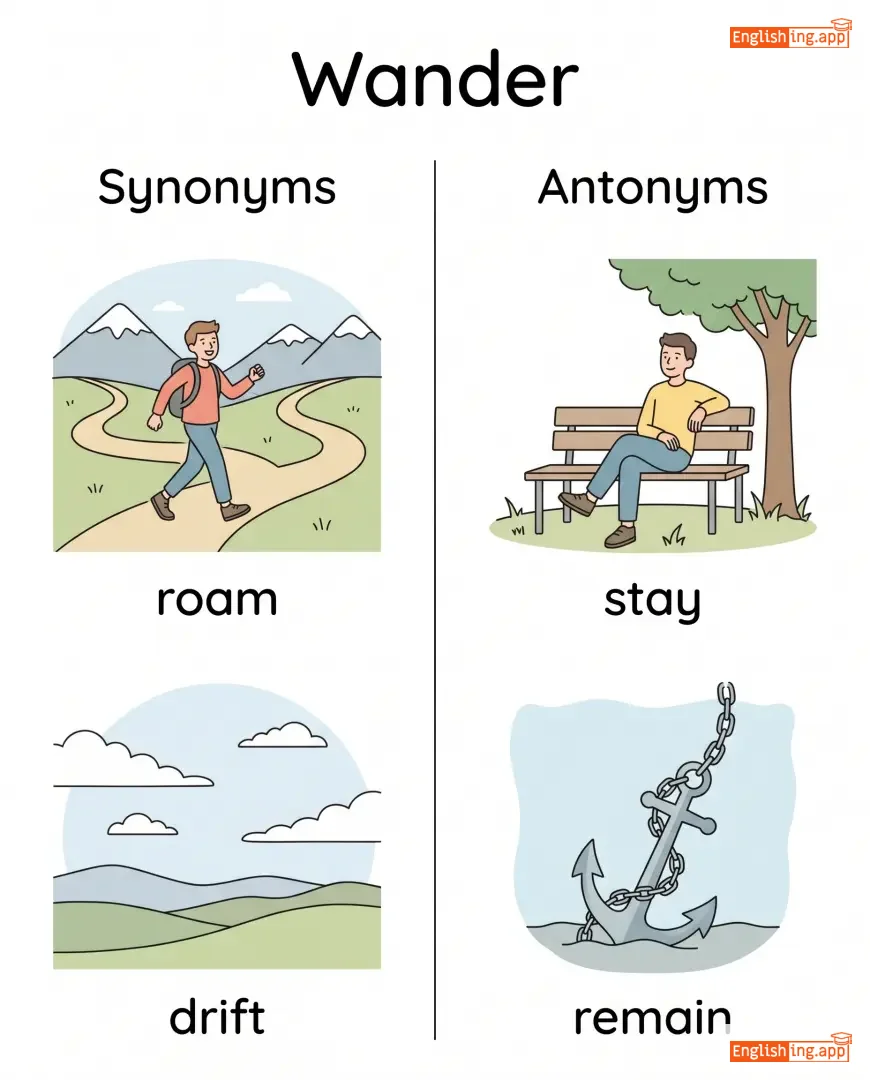
roam, drift, meander, stray, stroll
••••••
|
stay, remain, settle
••••••
|
wander around, wander off, wander aimlessly, wander through
••••••
|
Wanderはさまよう、例えばwindow shoppingのように。
••••••
|
|
#9448
😷
|
/wɒn/
adjective
(ワン)
••••••
|
- •••••• |
青白い
aoshiroi
••••••
|
- •••••• | - •••••• | - •••••• | - •••••• |
looking pale or sickly; lacking color or vitality
••••••
|
After the long illness, his face looked wan and tired. |
長い病気の後、彼の顔は青白くて疲れて見えた。
Nagai byouki no ato, kare no kao wa aoshirokute tsukarete mietā.
••••••
|
- •••••• | - •••••• | - •••••• |
pale, sickly, ashen, colorless, weak
••••••
|
rosy, healthy, vibrant
••••••
|
wan smile, wan face, look wan
••••••
|
青白い顔のように、力が抜けて色が失われている。
••••••
|
|
#9449
📿
|
/ˈwɑːmpəm/
noun
(ワンプム)
••••••
|
- •••••• |
貝殻のネックレス
kaigara no nekkuresu
••••••
|
- •••••• | - •••••• | - •••••• | - •••••• |
beads made by Native Americans from shells, used as money or decoration
••••••
|
The tribe traded furs for wampum. |
部族は毛皮と引き換えに貝殻のネックレスを取引した。
Buzoku wa kegawa to hiki kae ni kaigara no nekkuresu o torihiki shita.
••••••
|
- •••••• | - •••••• | - •••••• |
beads, shells, ornaments, currency
••••••
|
paper money, coins
••••••
|
string of wampum, trade wampum, wampum belt
••••••
|
Wampum は貝殻のネックレスを意味します - 覚えておいて、beads は通貨の意味です。
••••••
|
Vocabulary Quiz
Test your vocabulary by matching words with their translations or meanings.
Login to take the quiz
Comments (0)
Share your thoughts and join the discussion.
Join the discussion by logging in
Login to CommentNo comments yet
Be the first to share your thoughts!