

翻訳
過去
過去分詞
三人称単数
動名詞
意味
例文
例文の翻訳
同義語
対義語
コロケーション
ニーモニック
Swipe left or right, or use the buttons. Tap image to zoom.
例文の翻訳
単語
Lesson 212Lesson 212 - マスクトグル
|
絵文字
|
単語 | Images | 翻訳 | 過去 | 過去分詞 | 三人称単数 | 動名詞 | 意味 | 例文 | 例文の翻訳 | 表現例 | 表現例の意味 | 表現例の翻訳 | 同義語 | 対義語 | コロケーション | ニーモニック |
|---|---|---|---|---|---|---|---|---|---|---|---|---|---|---|---|---|---|
|
#6331
🧩
|
/ˈpɑːrʃəl/
adjective
(pāshiaru)
••••••
|
- •••••• |
部分的な、偏った
bubun-teki na, katagatta
••••••
|
- •••••• | - •••••• | - •••••• | - •••••• |
existing only in part; biased toward one side
••••••
|
The report gave a partial view of the situation.
レポートは状況の部分的な見解を示しました。
••••••
|
レポートは状況の部分的な見解を示しました。
Repōto wa jōkyō no bubun-teki na kenkai o shimeshimashita.
••••••
|
partial to
部分的に
••••••
|
to show favor or preference for someone or something
••••••
|
~に偏っている
~ni katagatte iru
••••••
|
incomplete, biased, limited, fragmentary
••••••
|
complete, impartial, unbiased
••••••
|
partial view, partial payment, partial solution, partiality towards
••••••
|
Partial は不完全、そして日本語で部分的なまたは偏ったという意味です。
••••••
|
|
#6332
🧘
|
/ˈpæsɪv/
adjective
(パッシブ)
••••••
|
- •••••• |
受動的; (文法) 受動態
judōteki; (bunpō) judōtai
••••••
|
- •••••• | - •••••• | - •••••• | - •••••• |
not actively responding or participating; in grammar, denoting the voice in which the subject undergoes the action
••••••
|
Instead of taking charge, he remained passive during the meeting. |
会議では責任を取る代わりに、彼は受動的なままでした。
Kaigi de wa sekinin o toru kawari ni, kare wa judōteki na mama deshita.
••••••
|
passive voice |
a grammatical construction where the subject is acted upon
••••••
|
受動態
judōtai
••••••
|
inactive, submissive, unresponsive, compliant, receptive
••••••
|
active, assertive, dynamic
••••••
|
passive income, passive resistance, passive investor, passive role, passive voice
••••••
|
受動的 → ‘パッシブ’ → 何もしない、ただ結果を受け取る。
••••••
|
|
#6333
😌
|
/ˈpæsɪbəl/
adjective
(パシブル)
••••••
|
- •••••• |
感じることができる; 苦しみに対して敏感
kanjiru koto ga dekiru; kurushimi ni taishite binkan
••••••
|
- •••••• | - •••••• | - •••••• | - •••••• |
capable of feeling or suffering; susceptible to sensation or emotion (often theological)
••••••
|
In some traditions, deities are described as passible, sharing human emotions. |
いくつかの伝統では、神々は感じることができるとされ、人間の感情を共有している。
Ikutsuka no dentō de wa, kamigami wa kanjiru koto ga dekiru to sare, ningen no kanjō o kyōyū shite iru.
••••••
|
- •••••• | - •••••• | - •••••• |
sensitive, susceptible, sentient, receptive
••••••
|
impassible, insensitive, unfeeling
••••••
|
passible deity, passible nature, passible beings, passible emotions
••••••
|
Passible ≠ passive; ‘感じることができる’ - 覚えておいて:パシブルは感じることができる可能性を意味します!
••••••
|
|
#6334
🕰️
|
/pæˈseɪ/
adjective
(パセ)
••••••
|
- •••••• |
時代遅れの; 流行遅れ
jidaiokure no; ryūkōokure
••••••
|
- •••••• | - •••••• | - •••••• | - •••••• |
no longer fashionable or current; out of date
••••••
|
Some trends from last decade feel utterly passé now. |
昨今のトレンドのいくつかは今や完全に時代遅れに見える。
Sakonkō no torendo no ikutsuka wa imaya kanzen ni jidaiokure ni mieru.
••••••
|
so passé |
used to say something is very outdated or uncool
••••••
|
非常に時代遅れ
hijō ni jidaiokure
••••••
|
outdated, unfashionable, old-fashioned, stale, antiquated
••••••
|
trendy, fashionable, modern
••••••
|
passé style, passé idea, considered passé, utterly passé
••••••
|
Passe は passé を意味します—‘パセ’はもう流行に乗っていない!
••••••
|
|
#6335
🚪
|
/ˈpæsɪdʒ/
noun
(パッセージ)
••••••
|
- •••••• |
狭い通路; 断片/引用; 一つの状態や場所から他の場所へ移動するプロセス
semai tōro; danpen/inyō; hitotsu no jōtai ya basho kara hoka no basho e idō suru purosezu
••••••
|
- •••••• | - •••••• | - •••••• | - •••••• |
a narrow way through or between; a section of text or music; the process of moving from one state or place to another
••••••
|
The narrow passage led from the courtyard to the library. |
狭い通路は中庭から図書館へと続いていた。
semai tōro wa nakaniwa kara toshokan e to tsudzuite ita.
••••••
|
rite of passage |
a significant event marking a transition in a person’s life
••••••
|
成人の儀式
seijin no gishiki
••••••
|
corridor, hallway, excerpt, segment, transition
••••••
|
blockage, dead end, whole
••••••
|
passage of time, narrow passage, a passage from the novel, safe passage
••••••
|
‘Passage’ のための通路を見つけ、人生の過渡期を迎えよう!
••••••
|
|
#6336
🤥
|
/ˈpæs ˌɔːf/
verb (phrasal)
••••••
|
- •••••• | - •••••• |
passed off
••••••
|
passed off
••••••
|
passes off
••••••
|
passing off
••••••
|
to present something or someone falsely as something else; to pretend or deceive
••••••
|
He tried to pass off the fake watch as a luxury brand. |
- •••••• |
pass off as |
to claim that something or someone is something they are not
••••••
|
- •••••• |
pretend, fake, misrepresent, palm off, disguise
••••••
|
reveal, confess, disclose
••••••
|
pass off as genuine, pass off blame, pass off counterfeit, attempt to pass off
••••••
|
No •••••• |
|
#6337
💼
|
/ˈpɑːrvənuː/
noun
(パルヴェヌ)
••••••
|
- •••••• |
新興富裕層
shinkō fuyūsō
••••••
|
- •••••• | - •••••• | - •••••• | - •••••• |
A person who has recently gained wealth or influence but is not yet accepted socially.
••••••
|
He was seen as a parvenu who lacked refinement despite his riches.
彼は、金持ちでありながら洗練されていないパルヴェヌとして見られていました。
••••••
|
彼は、金持ちでありながら洗練されていないパルヴェヌとして見られていました。
Kare wa, kanemochi de arinagara senren sarete inai parvenu to shite mirarete imashita.
••••••
|
- •••••• | - •••••• | - •••••• |
upstart, social climber, newcomer, arriviste
••••••
|
aristocrat, noble
••••••
|
parvenu millionaire, social parvenu, parvenu family
••••••
|
Parvenu = 新興富裕層、社会に受け入れられていない富裕層
••••••
|
|
#6338
👶
|
/ˌpɑːrtjʊˈrɪʃən/
noun
(パートゥリション)
••••••
|
- •••••• |
分娩
bunben
••••••
|
- •••••• | - •••••• | - •••••• | - •••••• |
The act of giving birth; childbirth.
••••••
|
The doctor explained the stages of parturition to the students. |
医者は学生たちに分娩の段階を説明しました。
Isha wa gakuseitachi ni bunben no dankai o setsumei shimashita.
••••••
|
- •••••• | - •••••• | - •••••• |
childbirth, delivery, labor, birth
••••••
|
conception, infertility
••••••
|
stages of parturition, process of parturition, during parturition
••••••
|
Parturition = Part + 解決; 新しい生命の誕生
••••••
|
|
#6339
🪟
|
/pɑːrˈtɪʃən/
noun, verb
(パーティション)
••••••
|
|
仕切り / 分割
shikiri / bunkatsu
••••••
|
partitioned
パーティションド
••••••
|
partitioned
パーティションド
••••••
|
partitions
パーティションズ
••••••
|
partitioning
パーティショニング
••••••
|
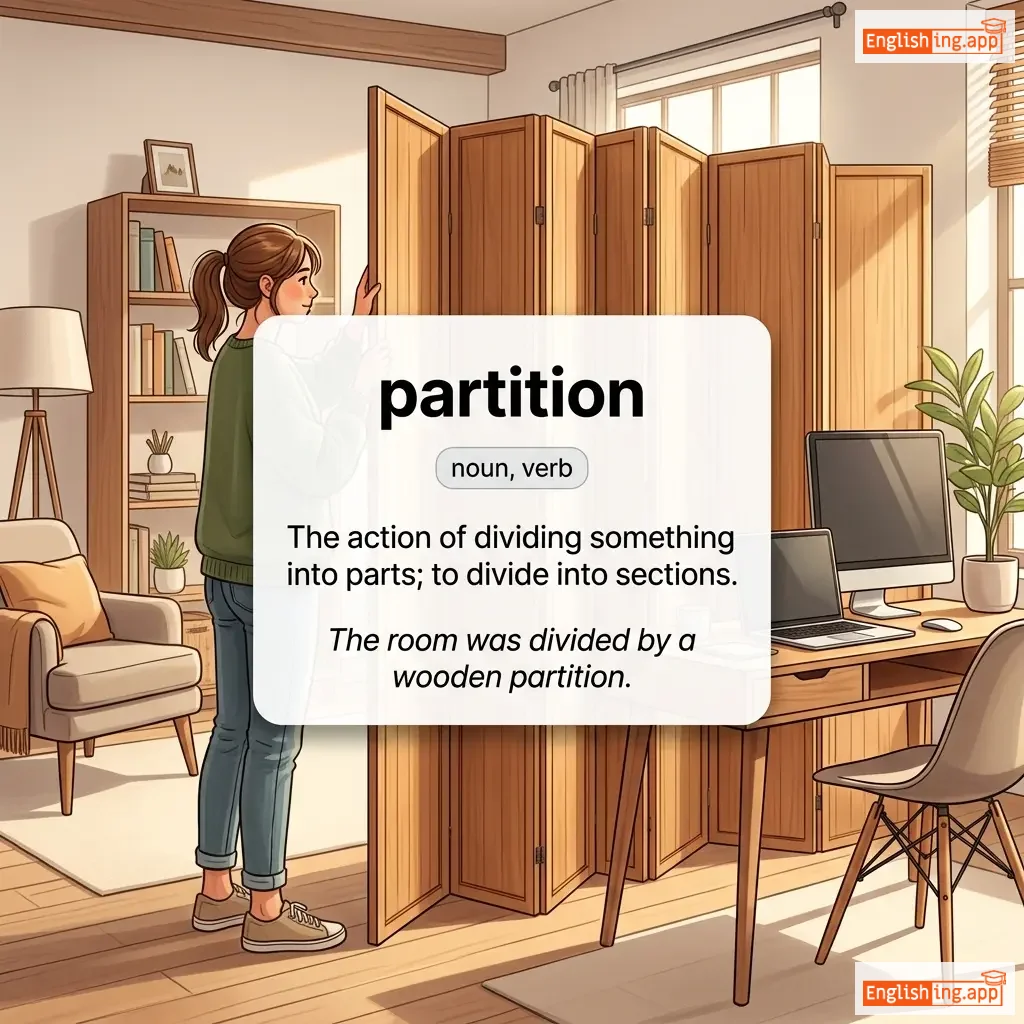
The action of dividing something into parts; to divide into sections.
••••••
|
The room was divided by a wooden partition.
部屋は木製のパーティションで仕切られていました。
••••••
|
部屋は木製のパーティションで仕切られていました。
Heya wa mokusei no pātishon de shikirarete imashita.
••••••
|
- •••••• | - •••••• | - •••••• |
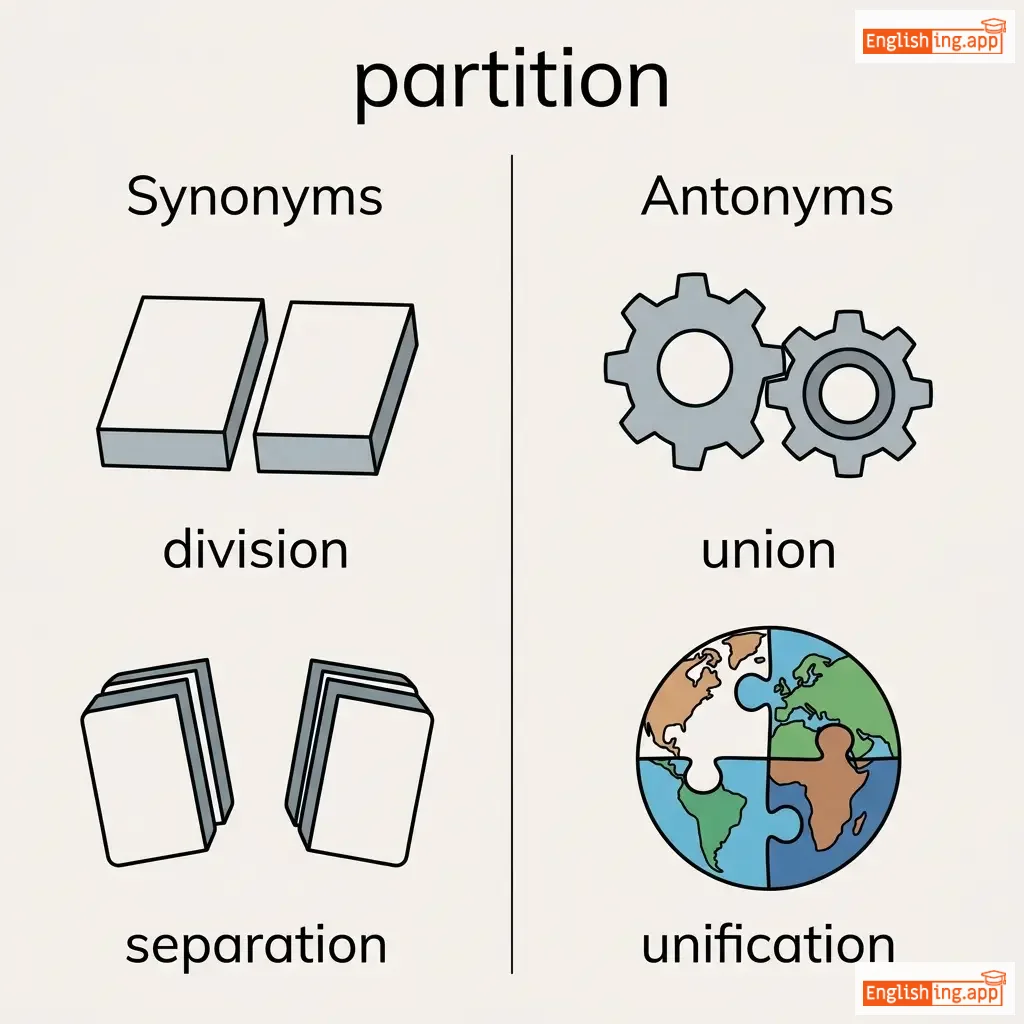
division, separation, split, segregation
••••••
|
union, unification, integration
••••••
|
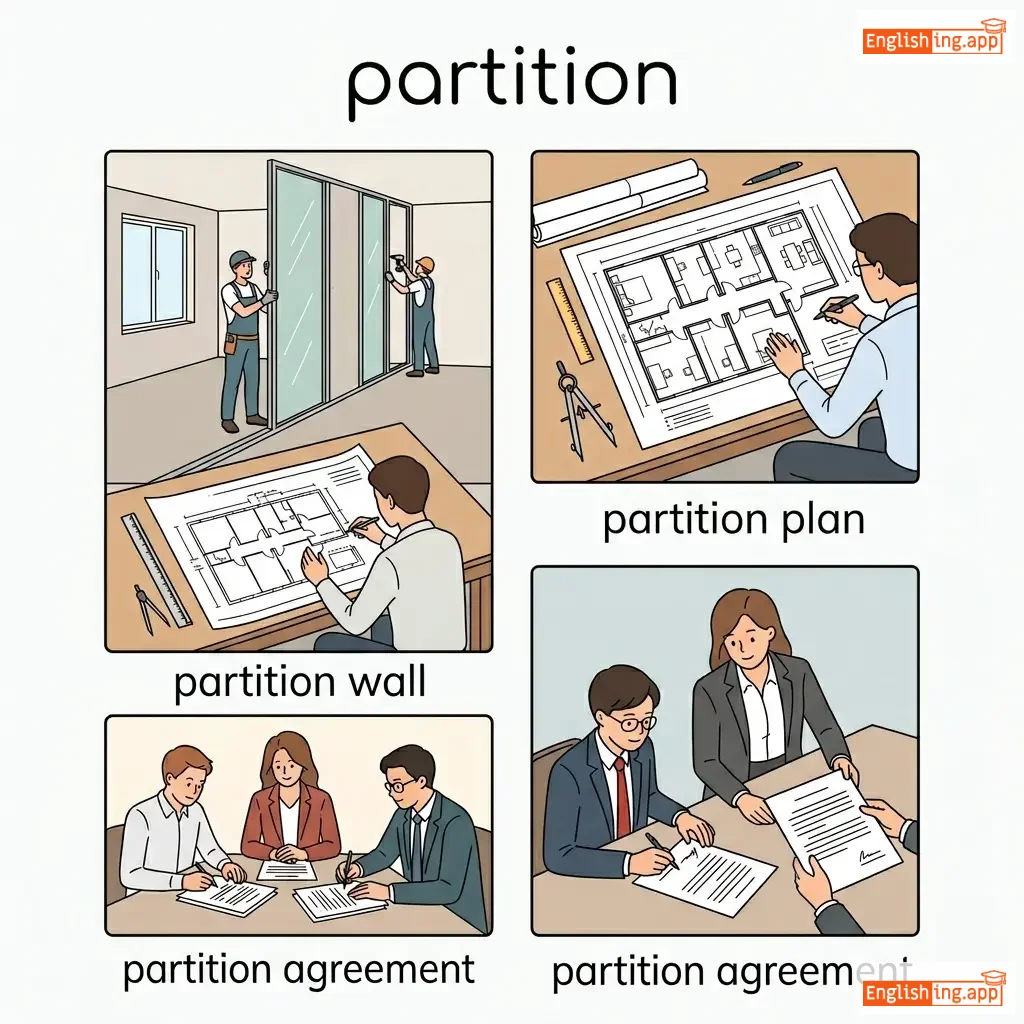
partition wall, partition plan, partition agreement, partition property
••••••
|
Partition は何かを分けることを意味します
••••••
|
|
#6340
⚔️
|
/ˈpɑːrtɪzən/
noun, adjective
(パルティザン)
••••••
|
|
党派の支持者
tōha no shijisha
••••••
|
- •••••• | - •••••• | - •••••• | - •••••• |
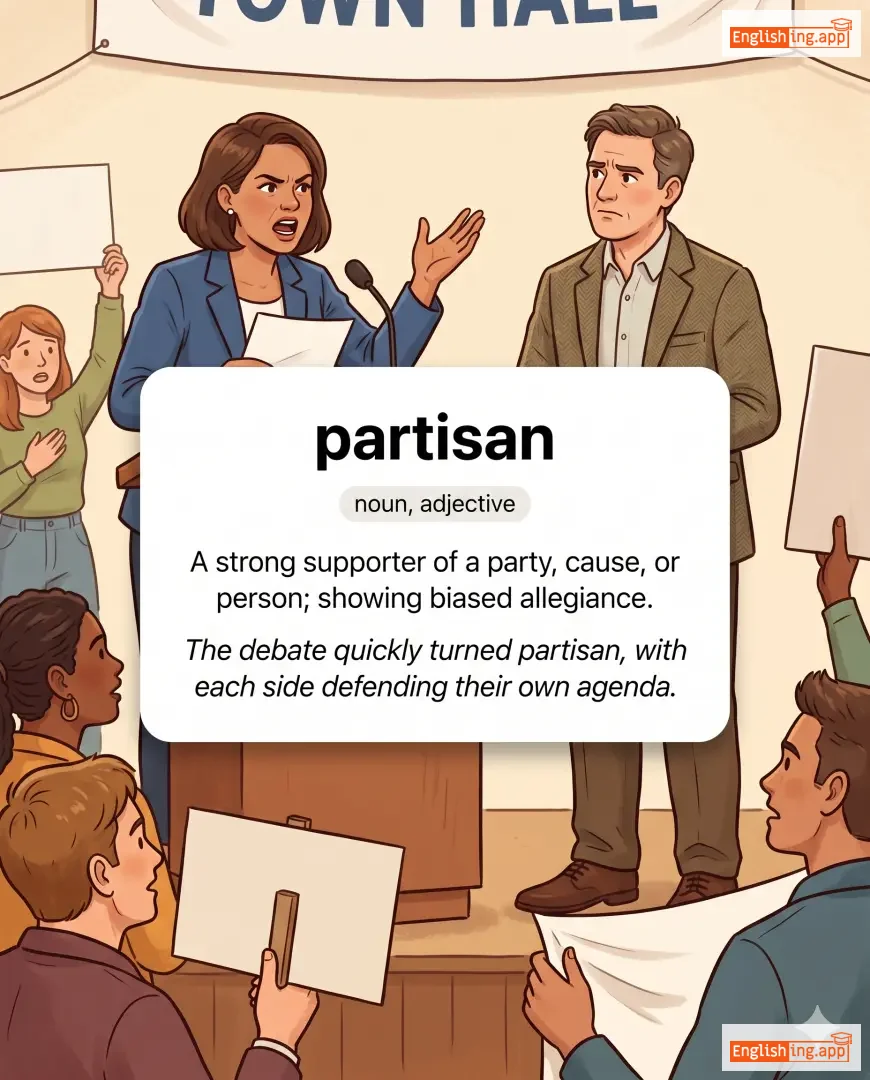
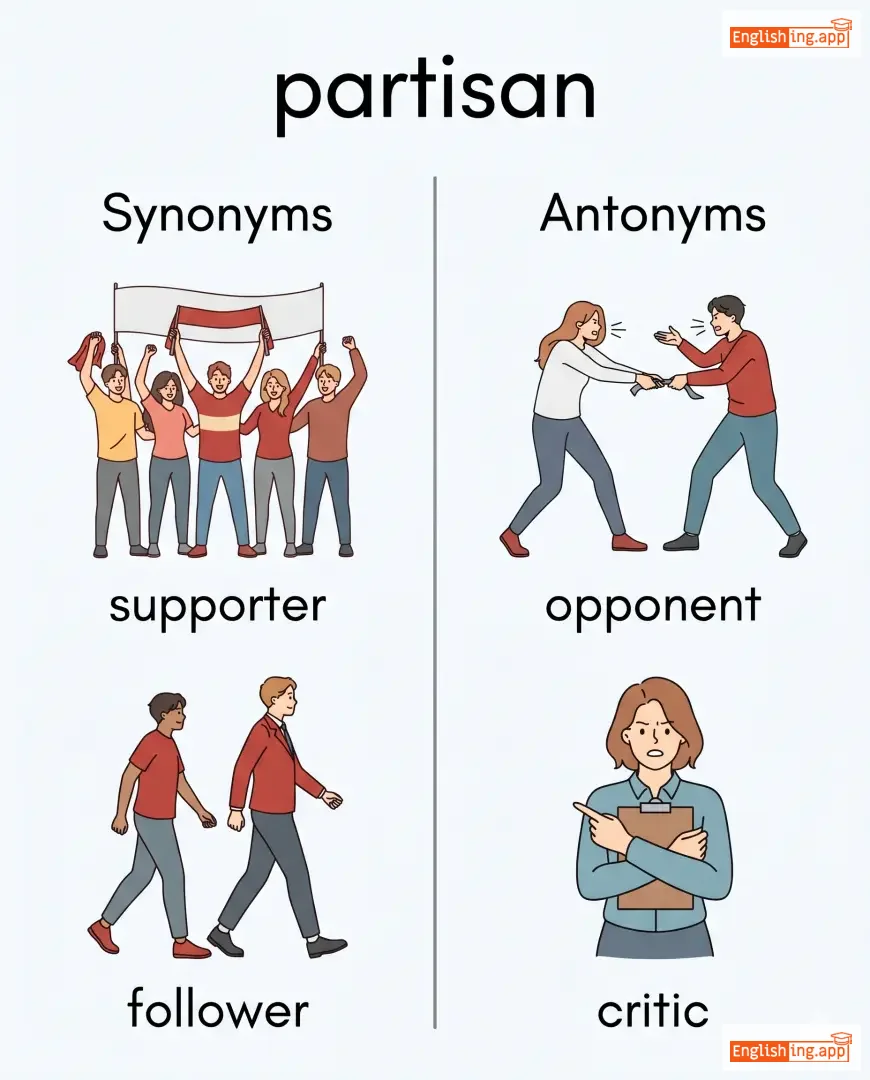
A strong supporter of a party, cause, or person; showing biased allegiance.
••••••
|
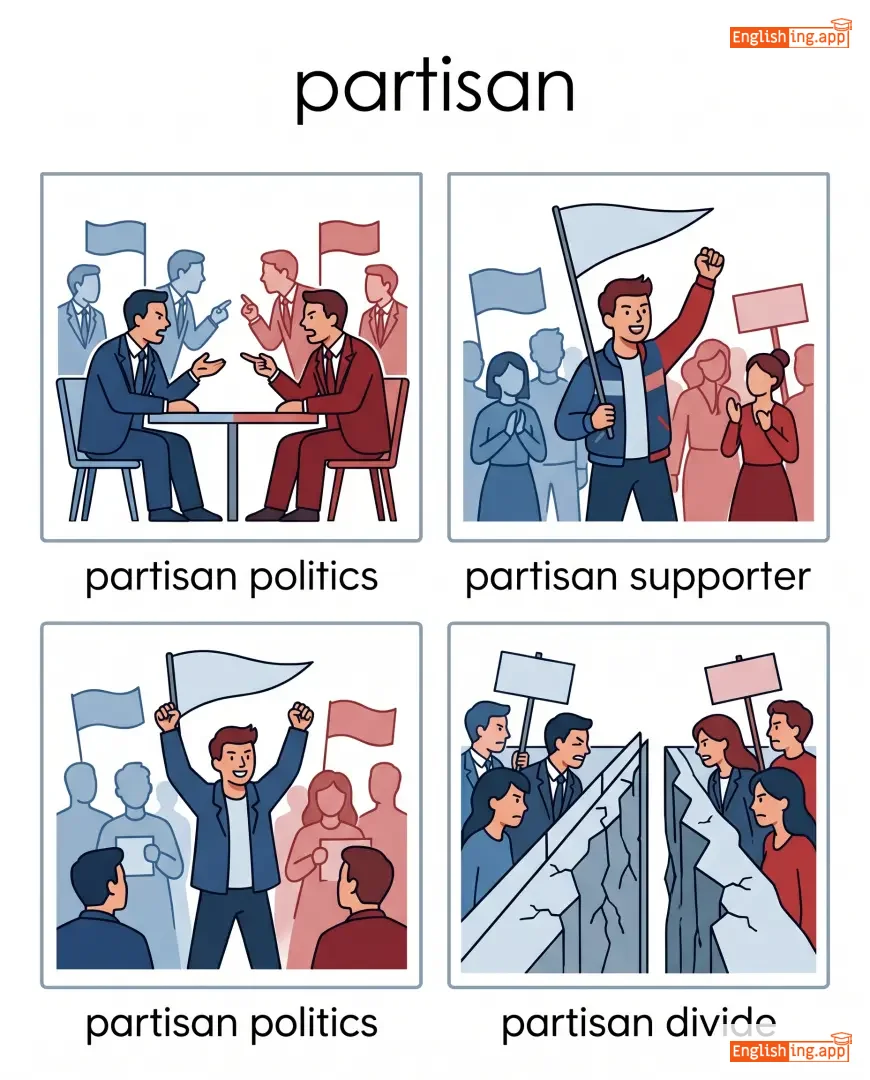
The debate quickly turned partisan, with each side defending their own agenda.
議論はすぐに党派的になり、各側は自分のアジェンダを擁護しました。
••••••
|
議論はすぐに党派的になり、各側は自分のアジェンダを擁護しました。
Giron wa sugu ni tōhateki ni nari, kaku-gawa wa jibun no ajenda o yōgo shimashita.
••••••
|
- •••••• | - •••••• | - •••••• |
supporter, follower, adherent, devotee, zealot
••••••
|
opponent, critic, adversary
••••••
|
partisan politics, partisan supporter, partisan divide, highly partisan
••••••
|
Party + Son = 党派の支持者
••••••
|
|
#6341
🔍
|
/pərˈtɪkjələrˌaɪz/
verb
(パーティキュラライズ)
••••••
|
- •••••• |
詳細に述べる
shousai ni noberu
••••••
|
particularized
パーティキュラライズド
••••••
|
particularized
パーティキュラライズド
••••••
|
particularizes
パーティキュラライズズ
••••••
|
particularizing
パーティキュラライズイング
••••••
|
to mention or describe something in detail
••••••
|
The witness was asked to particularize the events of that night.
証人はその夜の出来事を詳細に説明するように求められました。
••••••
|
証人はその夜の出来事を詳細に説明するように求められました。
Shōnin wa sono yoru no dekigoto o shōsai ni setsumei suru yō ni motomeraremashita.
••••••
|
- •••••• | - •••••• | - •••••• |
specify, detail, describe, enumerate, itemize
••••••
|
generalize, summarize
••••••
|
particularize details, particularize events, asked to particularize
••••••
|
Particularizeは詳細に述べることです。
••••••
|
|
#6342
🙋
|
/pɑːrˈtɪsɪpeɪt/
verb
(パーティシペイト)
••••••
|
|
参加する
sanka suru
••••••
|
participated
パーティシペイテッド
••••••
|
participated
パーティシペイテッド
••••••
|
participates
パーティシペイツ
••••••
|
participating
パーティシペイティング
••••••
|
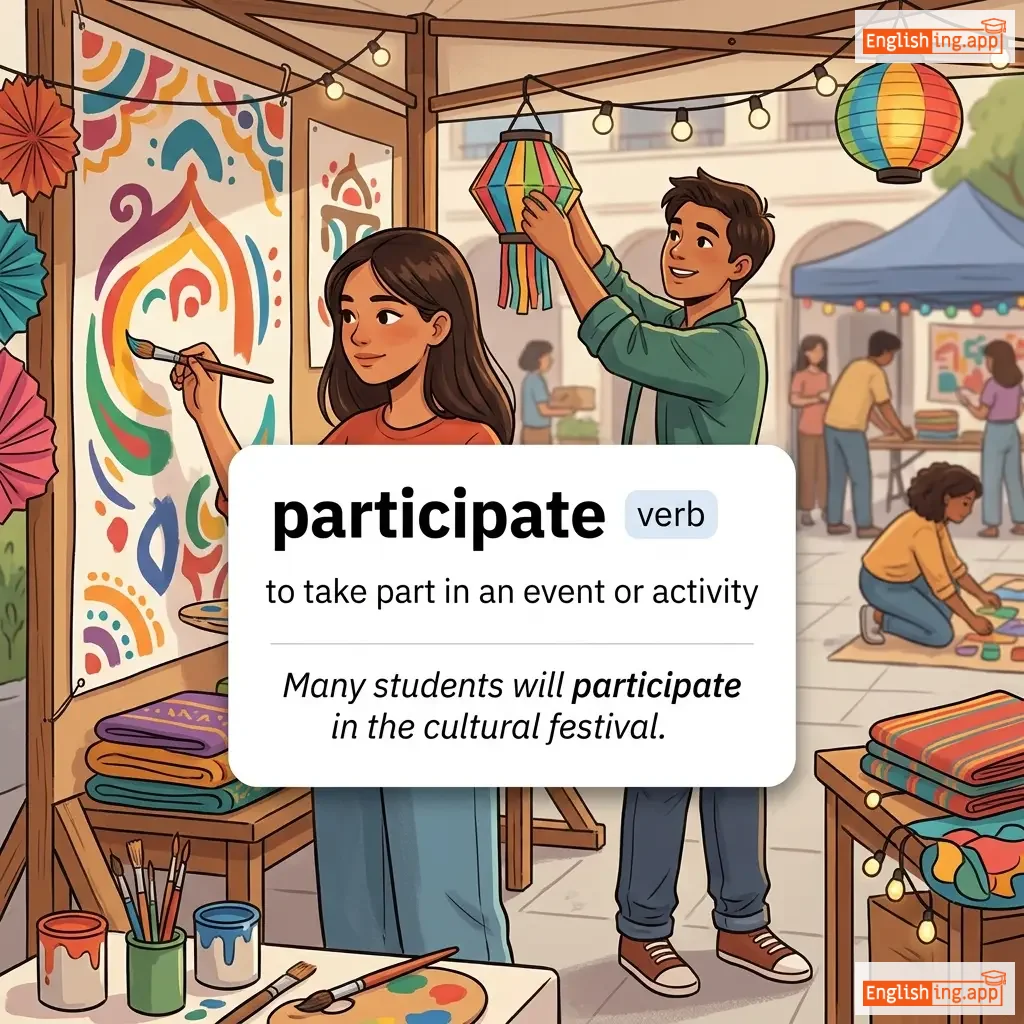
to take part in an event or activity
••••••
|
Many students will participate in the cultural festival.
多くの学生が文化祭に参加する予定です。
••••••
|
多くの学生が文化祭に参加する予定です。
Ōku no gakusei ga bunkasai ni sanka suru yotei desu.
••••••
|
participate in
参加する
••••••
|
to take part in something
••••••
|
参加する
sanka suru
••••••
|
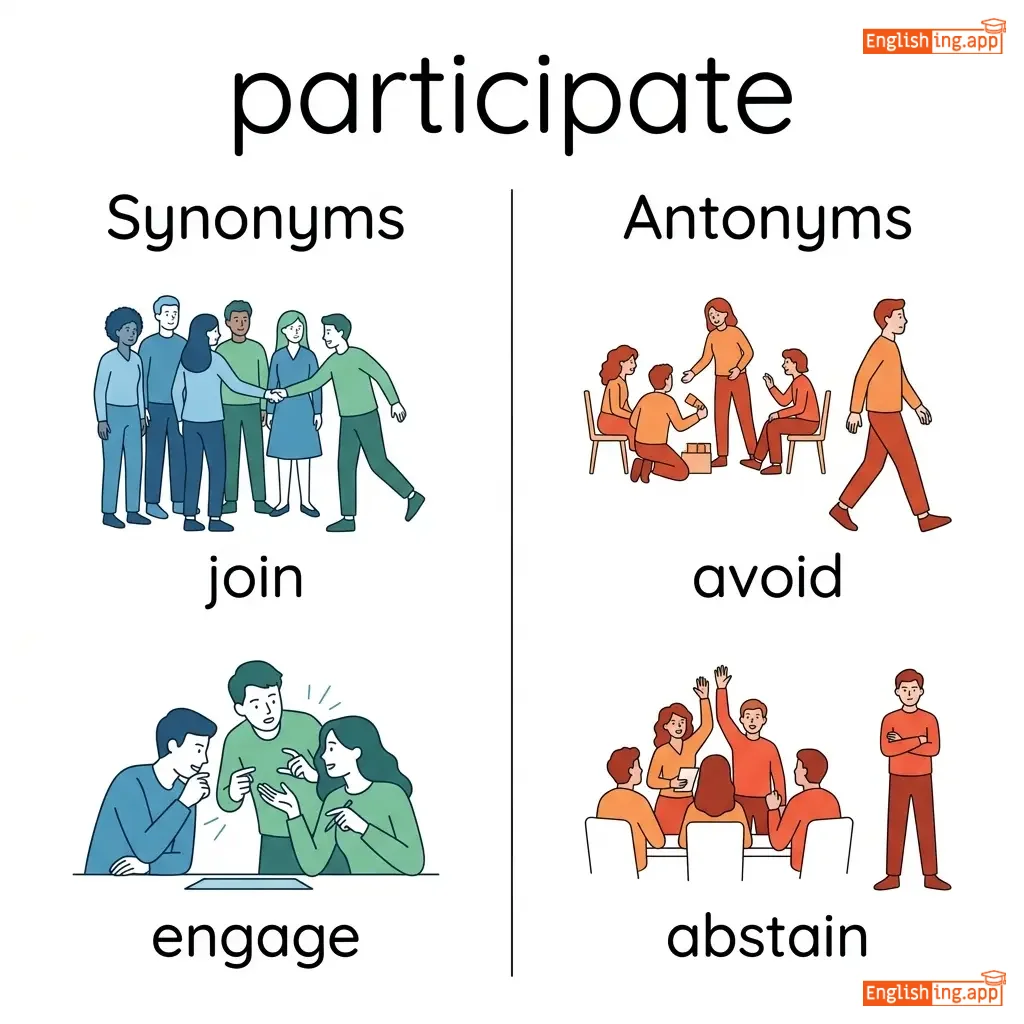
join, engage, take part, involve, contribute
••••••
|
avoid, abstain
••••••
|
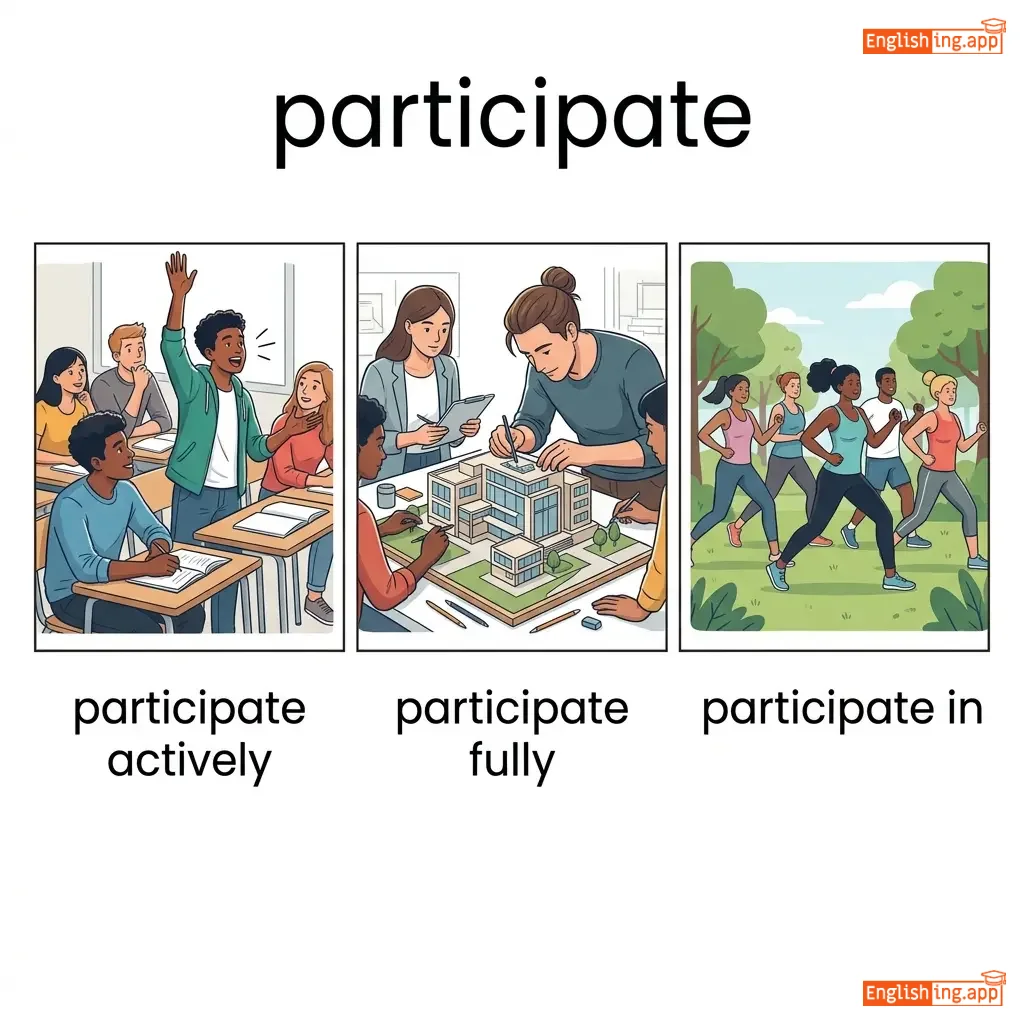
participate actively, participate fully, participate in
••••••
|
Participateは参加する意味 → 参加する。
••••••
|
|
#6343
🧑🤝🧑
|
/pɑːrˈtɪsɪpənt/
noun
(パーティシパント)
••••••
|
- •••••• |
参加者
sankasha
••••••
|
- •••••• | - •••••• | - •••••• | - •••••• |
a person who takes part in an event or activity
••••••
|
Each participant received a certificate after the workshop.
各参加者はワークショップ後に証明書を受け取りました。
••••••
|
各参加者はワークショップ後に証明書を受け取りました。
Kaku sankasha wa wākushoppu go ni shōmeisho o uketorimashita.
••••••
|
active participant
積極的な参加者
••••••
|
someone who takes an active role in an activity
••••••
|
積極的な参加者
sekkyokuteki na sankasha
••••••
|
attendee, entrant, contestant, member, player
••••••
|
observer, spectator
••••••
|
active participant, workshop participant, study participant
••••••
|
Participant → 参加する → 活動に参加する人が参加者です。
••••••
|
|
#6344
➗
|
/ˈpɑːrtəbl/
adjective
(パーティブル)
••••••
|
- •••••• |
分割可能な
bunkatsu kanō na
••••••
|
- •••••• | - •••••• | - •••••• | - •••••• |
capable of being divided or separated
••••••
|
The estate was partible among the heirs. |
その財産は相続人の間で分割可能でした。
Sono zaisan wa sōzokunin no aida de bunkatsu kanō deshita.
••••••
|
- •••••• | - •••••• | - •••••• |
divisible, separable, distributable, splittable
••••••
|
indivisible, inseparable
••••••
|
partible inheritance, partible property, partible division
••••••
|
Partibleは、部分に分けられることを意味します。
••••••
|
|
#6345
⚖️
|
/ˌpɑːrʃiˈæləti/
noun
(パーシャリティ)
••••••
|
- •••••• |
偏見
henken
••••••
|
- •••••• | - •••••• | - •••••• | - •••••• |
an unfair preference or bias toward one side or person
••••••
|
The judge was criticized for showing partiality in the case. |
裁判官は事件で偏見を示したとして批判されました。
Saibankan wa jiken de henken o shimeshita to shite hihan saremashita.
••••••
|
show partiality |
to favor one side unfairly
••••••
|
偏見を示す
henken o shimesu
••••••
|
bias, favoritism, prejudice, preference, inclination
••••••
|
fairness, neutrality, impartiality
••••••
|
show partiality, accused of partiality, act with partiality
••••••
|
偏見 = 偏った考え方、偏っているときは偏見が生じる。
••••••
|
|
#6346
🛋️
|
/ˈpɑːrlər/
noun
(パーラー)
••••••
|
- •••••• |
サロン、店
parlor
••••••
|
- •••••• | - •••••• | - •••••• | - •••••• |
A sitting room in a private house, or a shop providing specified services.
••••••
|
They welcomed the guests into the front parlor.
彼らは前のパーラーでゲストを迎えました。
••••••
|
彼らは前のパーラーでゲストを迎えました。
Karera wa mae no pāra de gesuto o mukaemashita.
••••••
|
ice cream parlor
アイスクリームパーラー
••••••
|
A shop that sells ice cream.
••••••
|
アイスクリーム店
aisukurīmu ten
••••••
|
living room, lounge, salon, sitting room
••••••
|
hallway, corridor
••••••
|
front parlor, funeral parlor, ice cream parlor
••••••
|
パーラーは、アイスクリーム店のようにくつろげる場所です。
••••••
|
|
#6347
🪙
|
/ˈpɑːrsɪmoʊni/
noun
(パーシモニー)
••••••
|
- •••••• |
けち
kechi
••••••
|
- •••••• | - •••••• | - •••••• | - •••••• |
extreme unwillingness to spend money or use resources
••••••
|
His parsimony was evident in the way he avoided any unnecessary expenses.
ヒズ パーシモニー ワズ エヴィデント イン ザ ウェイ ヒー アヴォイド エニ アンネセサリー エクスペンシズ。
••••••
|
彼のけちは、どんな無駄な出費も避ける様子に表れていた。
Kare no kechi wa, donna muda na shuppi mo sakeru yosu ni arawarete ita.
••••••
|
- •••••• | - •••••• | - •••••• |
stinginess, frugality, miserliness, thrift
••••••
|
generosity, extravagance, lavishness
••••••
|
act of parsimony, extreme parsimony, parsimony in spending
••••••
|
PARSiMONY → PARSU money を守る人は けち kechi。
••••••
|
|
#6348
💰
|
/ˌpɑːrsɪˈmoʊniəs/
adjective
(パルシモニアス)
••••••
|
- •••••• |
けち
kechi
••••••
|
- •••••• | - •••••• | - •••••• | - •••••• |
unwilling to spend money or use resources; stingy
••••••
|
The company was too parsimonious to invest in better equipment. |
その会社は良い設備に投資するにはあまりにもけちだった。
Sono kaisha wa yoi setsubi ni tōshi suru ni wa amari ni mo kechi datta.
••••••
|
- •••••• | - •••••• | - •••••• |
stingy, frugal, miserly, tightfisted
••••••
|
generous, lavish, extravagant
••••••
|
parsimonious approach, parsimonious lifestyle, extremely parsimonious
••••••
|
Parsimoniousはお金をけちって使わない人のこと。
••••••
|
|
#6349
📝
|
/pɑːrs/
verb
(パース)
••••••
|
- •••••• |
文法解析
bunpou kaiseki
••••••
|
parsed
パースド
••••••
|
parsed
パースド
••••••
|
parses
パーセス
••••••
|
parsing
パーシング
••••••
|
to analyze a sentence or text grammatically or logically
••••••
|
The software can parse large amounts of text data efficiently.
ソフトウェアは、大量のテキストデータを効率的に解析できます。
••••••
|
ソフトウェアは、大量のテキストデータを効率的に解析できます。
Sofutowea wa, tairyou no tekisuto dēta o kōritsuteki ni kaiseki dekimasu.
••••••
|
- •••••• | - •••••• | - •••••• |
analyze, examine, interpret, dissect, process
••••••
|
ignore, confuse, misinterpret
••••••
|
parse a sentence, parse data, parse code, parse input
••••••
|
Parse は部分を分けることを意味します 📝 - 日本語では文法解析。
••••••
|
|
#6350
🛡️
|
/ˈpæri/
verb
(パリー)
••••••
|
- •••••• |
攻撃をかわす
kōgeki o kawasu
••••••
|
parried
パリード
••••••
|
parried
パリード
••••••
|
parries
パリーズ
••••••
|
parrying
パリング
••••••
|
to ward off or deflect an attack, especially in fencing or conversation
••••••
|
He managed to parry the opponent’s sword with quick reflexes.
ヒー マネージド トゥ パリー ザ オポーネントズ ソード ウィズ クイック リフレクシズ。
••••••
|
彼は素早い反応で相手の剣をかわすことができた。
Kare wa subayai hannō de aite no ken o kawasu koto ga dekita.
••••••
|
- •••••• | - •••••• | - •••••• |
deflect, block, fend off, repel, avoid
••••••
|
accept, allow, yield
••••••
|
parry a blow, parry a question, quick parry, skillful parry
••••••
|
Parry は攻撃をかわす ⚔️、日本語では攻撃をかわす。
••••••
|
|
#6351
🦜
|
/ˈpær.ət/
noun/verb
(オウム)
••••••
|
- •••••• |
オウム
oumu
••••••
|
parroted
オウムのように言う
••••••
|
parroted
オウムのように言う
••••••
|
parrots
オウムたち
••••••
|
parroting
オウムのように言う
••••••
|
A brightly colored bird that can imitate human speech; to repeat words mechanically without understanding.
••••••
|
The child parroted the teacher's words without thinking.
子供は考えずに先生の言葉を繰り返しました。
••••••
|
子供は考えずに先生の言葉を繰り返しました。
Kodomo wa kangaezu ni sensei no kotoba wo kurikaeshimashita.
••••••
|
parrot fashion
オウム方式
••••••
|
Learning or repeating something mechanically without understanding it.
••••••
|
オウム方式
oumu hōshiki
••••••
|
imitate, echo, repeat, mimic
••••••
|
original, create
••••••
|
parrot fashion, parrot the words, green parrot
••••••
|
オウム 🦜 はオウム、繰り返すだけ - だからオウムは繰り返すという意味です。
••••••
|
|
#6352
🗡️
|
/ˈpær.ɪ.saɪd/
noun
(パリサイド)
••••••
|
- •••••• |
親殺し
oyagoroshi
••••••
|
- •••••• | - •••••• | - •••••• | - •••••• |
The act of killing one's father, mother, or other close relative.
••••••
|
The court tried him for parricide after the tragic incident. |
悲劇的な事件の後、裁判所は彼を親殺しの罪で裁いた。
Higeki-tekina jiken no ato, saiban-sho wa kare wo oyagoroshi no tsumi de sabaita.
••••••
|
- •••••• | - •••••• | - •••••• |
patricide, matricide, familicide, murder
••••••
|
protection, guardianship
••••••
|
accused of parricide, case of parricide, crime of parricide
••••••
|
Parricideは親を殺すこと。
••••••
|
|
#6353
🪚
|
/ˈpɑːr.kə.tri/
noun
(パーケット工芸)
••••••
|
- •••••• |
パーケットフローリングの技術
pāketto furōringu no gijutsu
••••••
|
- •••••• | - •••••• | - •••••• | - •••••• |
The art or technique of laying parquet floors.
••••••
|
The craftsman specialized in parquetry for luxury homes. |
職人は高級住宅のためにパーケット工芸を専門にしていました。
Shokunin wa kōkyū jūtaku no tame ni pāketto kōgei o senmon ni shite imashita.
••••••
|
- •••••• | - •••••• | - •••••• |
wood inlay, flooring design, marquetry, woodwork
••••••
|
plain flooring, simple tiling
••••••
|
parquetry design, parquetry pattern, parquetry work
••••••
|
Parquetry = パーケットフローリングの技術 🪚
••••••
|
|
#6354
🪵
|
/ˈpɑːr.keɪ/
noun
(パルケ)
••••••
|
- •••••• |
木製の床
mokusei no yuka
••••••
|
- •••••• | - •••••• | - •••••• | - •••••• |
A floor made of wooden blocks arranged in a geometric pattern.
••••••
|
The old mansion had a beautiful parquet floor. |
その古い邸宅には美しい木製の床がありました。
Sono furui teitaku ni wa utsukushii mokusei no yuka ga arimashita.
••••••
|
- •••••• | - •••••• | - •••••• |
wood flooring, hardwood floor, mosaic floor, panel flooring
••••••
|
concrete floor, carpet
••••••
|
parquet floor, parquet design, parquet pattern
••••••
|
パルケは木でできた美しい床で、模様が美しい!
••••••
|
|
#6355
⚡
|
/ˈpær.əkˌsɪz.əm/
noun
(パロキズム)
••••••
|
- •••••• |
突然の爆発的な感情
totsuzen no bakuhatsuteki na kanjō
••••••
|
- •••••• | - •••••• | - •••••• | - •••••• |
A sudden, violent outburst of emotion or activity.
••••••
|
She was seized by a paroxysm of laughter. |
彼女は突然の笑いの爆発に襲われた。
Kanojo wa totsuzen no warai no bakuhatsu ni osowareta.
••••••
|
- •••••• | - •••••• | - •••••• |
outburst, convulsion, spasm, fit, eruption
••••••
|
calm, peace, composure
••••••
|
paroxysm of anger, paroxysm of rage, paroxysm of laughter
••••••
|
Paroxysm は突然の爆発、まるで雷のような感情の嵐!
••••••
|
|
#6356
🔤
|
/pəˈrɒnɪməs/
adjective
(パロニマス)
••••••
|
- •••••• |
同義語
dōgigo
••••••
|
- •••••• | - •••••• | - •••••• | - •••••• |
Words that are derived from the same root or sound alike.
••••••
|
The words 'effect' and 'effective' are paronymous. |
‘Effect’ と ‘Effective’ は同義語です。
'Effect' to 'Effective' wa dōgigo desu.
••••••
|
- •••••• | - •••••• | - •••••• |
derivative, cognate, related, similar-sounding
••••••
|
unrelated, distinct
••••••
|
paronymous words, paronymous terms, paronymous relationship
••••••
|
Paronymous – 音が似ている言葉のように、‘同義語’です。
••••••
|
|
#6357
🎭
|
/ˈpærədi/
noun
(パロディ)
••••••
|
- •••••• |
パロディ
parodi
••••••
|
- •••••• | - •••••• | - •••••• | - •••••• |
A humorous or satirical imitation of a serious piece of literature, music, or style.
••••••
|
The comedian performed a parody of the president’s speech. |
コメディアンは大統領の演説のパロディを演じた。
Komedian wa daitōryō no enzetsu no parodi o enjita.
••••••
|
parody account |
A fake account that imitates someone humorously, especially on social media.
••••••
|
パロディアカウント
parodi akaunto
••••••
|
satire, spoof, lampoon, caricature
••••••
|
original, authenticity
••••••
|
political parody, parody video, parody song
••••••
|
Parody = パロディソング – パロディはユーモアの模倣です。
••••••
|
|
#6358
🏫
|
/pəˈroʊkiəl/
adjective
(パロキアル)
••••••
|
- •••••• |
狭い
parokial
••••••
|
- •••••• | - •••••• | - •••••• | - •••••• |
Having a limited or narrow outlook; relating to a parish.
••••••
|
His parochial view prevented him from understanding global issues. |
彼の狭い視点は、彼が世界的な問題を理解するのを妨げました。
Kare no semai shiten wa, kare ga sekaiteki na mondai o rikai suru no o samatagemashita.
••••••
|
- •••••• | - •••••• | - •••••• |
narrow-minded, provincial, insular, limited
••••••
|
cosmopolitan, broad-minded, open-minded
••••••
|
parochial school, parochial view, parochial interests
••••••
|
Parochial とは教区レベルを意味します。つまり、限られた視点です。
••••••
|
|
#6359
⚠️
|
/ˈpɑːrləs/
adjective
(パールス)
••••••
|
- •••••• |
危険な
parlus
••••••
|
- •••••• | - •••••• | - •••••• | - •••••• |
Full of danger or risk; precarious.
••••••
|
The company is in a parlous financial state.
その会社は危険な財政状態にあります。
••••••
|
その会社は危険な財政状態にあります。
Sono kaisha wa kiken na zaisei jōtai ni arimasu.
••••••
|
- •••••• | - •••••• | - •••••• |
dangerous, risky, precarious, hazardous, unsafe
••••••
|
safe, secure, stable
••••••
|
parlous condition, parlous state, parlous situation
••••••
|
Parlusはperilousに似ている – 両方とも危険を意味します。
••••••
|
Vocabulary Quiz
Test your vocabulary by matching words with their translations or meanings.
Login to take the quiz
Comments (0)
Share your thoughts and join the discussion.
Join the discussion by logging in
Login to CommentNo comments yet
Be the first to share your thoughts!