

翻訳
過去
過去分詞
三人称単数
動名詞
意味
例文
例文の翻訳
同義語
対義語
コロケーション
ニーモニック



Swipe left or right, or use the buttons. Tap image to zoom.
例文の翻訳
単語
Lesson 94Lesson 94 - マスクトグル
|
絵文字
|
単語 | Images | 翻訳 | 過去 | 過去分詞 | 三人称単数 | 動名詞 | 意味 | 例文 | 例文の翻訳 | 表現例 | 表現例の意味 | 表現例の翻訳 | 同義語 | 対義語 | コロケーション | ニーモニック |
|---|---|---|---|---|---|---|---|---|---|---|---|---|---|---|---|---|---|
|
#2791
🌊
|
/ɛb/
verb
(エブ)
••••••
|
- •••••• |
衰える
otoroeru
••••••
|
ebbed
エブド
••••••
|
ebbed
エブド
••••••
|
ebbs
エブス
••••••
|
ebbing
エビング
••••••
|
to recede, decline, or lessen gradually, often referring to the tide or emotions
••••••
|
Her confidence began to ebb after the repeated failures.
繰り返しの失敗の後、彼女の自信は衰え始めた。
••••••
|
繰り返しの失敗の後、彼女の自信は衰え始めた。
Kurikaeshi no shippai no ato, kanojo no jishin wa otoroe hajimeta.
••••••
|
at a low ebb
低迷している
••••••
|
in a weakened, depressed, or declining state
••••••
|
低迷している
teimei shiteiru
••••••
|
recede, diminish, decline, wane, fade
••••••
|
flow, increase, rise
••••••
|
ebb and flow, tide ebbs, ebb away, at a low ebb
••••••
|
Ebbは衰えるという意味 🌊 - 潮が引くように、自信も衰える
••••••
|
|
#2792
📖
|
/iː ˈdʒiː/
abbreviation
(イージー)
••••••
|
- •••••• |
例えば
tatoeba
••••••
|
- •••••• | - •••••• | - •••••• | - •••••• |
For example (from Latin 'exempli gratia').
••••••
|
You should eat more fruits, e.g., apples and bananas. |
もっと果物を食べるべきです。例えば、リンゴやバナナです。
Motto kudamono wo taberu beki desu. Tatoeba, ringo ya banana desu.
••••••
|
- •••••• | - •••••• | - •••••• |
for example, for instance, such as
••••••
|
none
••••••
|
use e.g., examples e.g., e.g. followed by
••••••
|
e.g. は '例えば' を意味します - Example Given.
••••••
|
|
#2793
💰
|
/ˌiːkəˈnɒmɪkl/
adjective
(エコノミカル)
••••••
|
- •••••• |
経済的
keizaiteki
••••••
|
- •••••• | - •••••• | - •••••• | - •••••• |
Careful in the use of resources; providing good value or efficiency.
••••••
|
Driving a hybrid car is economical in the long run. |
ハイブリッド車を運転することは長期的には経済的です。
Haiburiddo-sha wo unten suru koto wa choukitekini wa keizaiteki desu.
••••••
|
economical with the truth |
A polite way of saying someone is not telling the whole truth.
••••••
|
真実に対して経済的
Shinjitsu ni taishite keizaiteki
••••••
|
thrifty, frugal, efficient, cost-effective, prudent
••••••
|
wasteful, extravagant, lavish
••••••
|
economical choice, economical use, economical car, economical lifestyle
••••••
|
経済的 = 経済 + 的 (節約), つまり経済的
••••••
|
|
#2794
🌿
|
/iˈkɒlədʒɪst/
noun
(エコロジスト)
••••••
|
- •••••• |
エコロジスト
ekorojisuto
••••••
|
- •••••• | - •••••• | - •••••• | - •••••• |
A scientist who studies the relationships between living organisms and their environment.
••••••
|
The ecologist studied the effects of pollution on the forest ecosystem. |
エコロジストは森林の生態系に対する汚染の影響を研究しました。
Ekorojisuto wa shinrin no seitai kei ni taisuru osen no eikyō o kenkyū shimashita.
••••••
|
- •••••• | - •••••• | - •••••• |
environmentalist, naturalist, conservationist, biologist, researcher
••••••
|
polluter, exploiter
••••••
|
field ecologist, marine ecologist, conservation ecologist, research ecologist
••••••
|
エコロジスト = エコ + ロジスト (環境を研究する人)
••••••
|
|
#2795
☀️
|
/ɪˈklɪptɪk/
noun, adjective
(エクリプティック)
••••••
|
- •••••• |
黄道
koudou
••••••
|
- •••••• | - •••••• | - •••••• | - •••••• |
The apparent path of the sun across the sky; relating to eclipses or this path.
••••••
|
The ecliptic is the plane of Earth's orbit around the Sun. |
黄道は地球の太陽の周りの軌道の平面です。
Koudou wa chikyuu no taiyou no mawari no kidou no heimen desu.
••••••
|
- •••••• | - •••••• | - •••••• |
orbital path, solar path, celestial plane, trajectory
••••••
|
zenith, nadir
••••••
|
ecliptic plane, ecliptic path, ecliptic longitude, ecliptic coordinate
••••••
|
Ecliptic = 日食の道
••••••
|
|
#2796
🌑
|
/ɪˈklɪps/
noun, verb
(エクリプス)
••••••
|
- •••••• |
日食
nisshoku
••••••
|
eclipsed
エクリプスド
••••••
|
eclipsed
エクリプスド
••••••
|
eclipses
エクリプスセス
••••••
|
eclipsing
エクリプシング
••••••
|
The blocking of light from one celestial body by another; to overshadow or outshine something.
••••••
|
The solar eclipse drew thousands of spectators to the field.
太陽のエクリプスは、数千人の観客をフィールドに引き寄せました。
••••••
|
太陽のエクリプスは、数千人の観客をフィールドに引き寄せました。
Taiyō no ekuripusu wa, sūsen-nin no kankyaku o fīrudo ni hikiyosemashita.
••••••
|
total eclipse of the sun
太陽の皆既日食
••••••
|
When the moon completely covers the sun, blocking its light.
••••••
|
太陽の皆既日食
Taiyō no kaiki nisshoku
••••••
|
obscuration, overshadowing, concealment, blotting out, occultation
••••••
|
illumination, brightness, radiance
••••••
|
solar eclipse, lunar eclipse, total eclipse, partial eclipse, eclipse event
••••••
|
エクリプスは他の天体によって光が遮られることを意味します。
••••••
|
|
#2797
🌀
|
/ɪˈklɛktɪˌsɪzəm/
noun
(エクレクティズム)
••••••
|
- •••••• |
エクレクティズム
ekurekutizumu
••••••
|
- •••••• | - •••••• | - •••••• | - •••••• |
A method or practice of deriving ideas, style, or taste from a broad and diverse range of sources.
••••••
|
The architect’s work shows eclecticism by blending modern and traditional elements. |
建築家の仕事は、現代的な要素と伝統的な要素を組み合わせてエクレクティズムを示しています。
Kenchikuka no shigoto wa, gendaiteki na yōso to dentōteki na yōso o kumiawasete ekurekutizumu o shimeshiteimasu.
••••••
|
- •••••• | - •••••• | - •••••• |
diversity, variety, heterogeneity, assortment
••••••
|
uniformity, monotony
••••••
|
artistic eclecticism, philosophical eclecticism, cultural eclecticism
••••••
|
エクレクティズム 🌀 とは、あらゆる方向からアイデアをミックスすること。日本語ではエクレクティズム。
••••••
|
|
#2798
🎨
|
/ɪˈklɛktɪk/
adjective
(エクレクティック)
••••••
|
|
エクレクティック
ekurekutikku
••••••
|
- •••••• | - •••••• | - •••••• | - •••••• |
Selecting or deriving ideas, styles, or tastes from a broad and diverse range of sources.
••••••
|
Her taste in music is eclectic, ranging from classical to hip-hop.
彼女の音楽の好みはエクレクティックで、クラシックからヒップホップまで幅広いです。
••••••
|
彼女の音楽の好みはエクレクティックで、クラシックからヒップホップまで幅広いです。
Kanojo no ongaku no konomi wa ekurekutikku de, kurashikku kara hippu hoppu made habahiroi desu.
••••••
|
- •••••• | - •••••• | - •••••• |
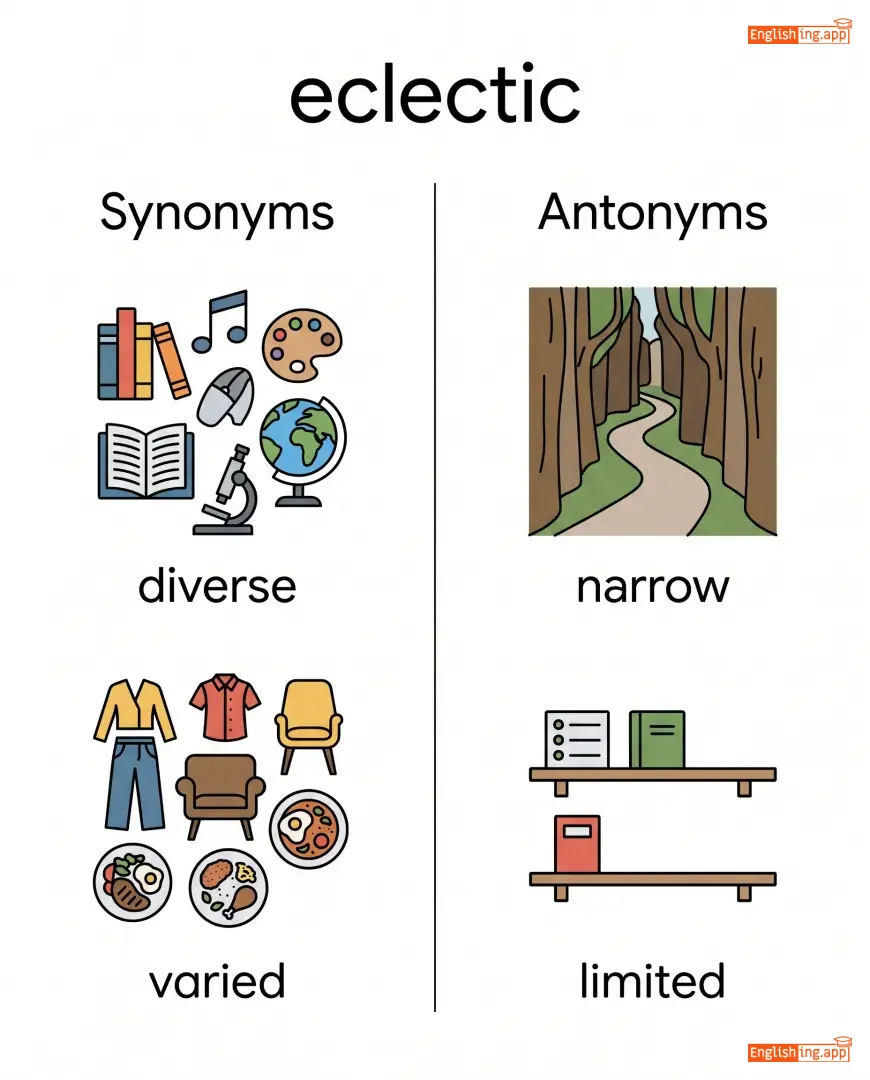
diverse, varied, broad, wide-ranging, assorted
••••••
|
narrow, limited, exclusive
••••••
|
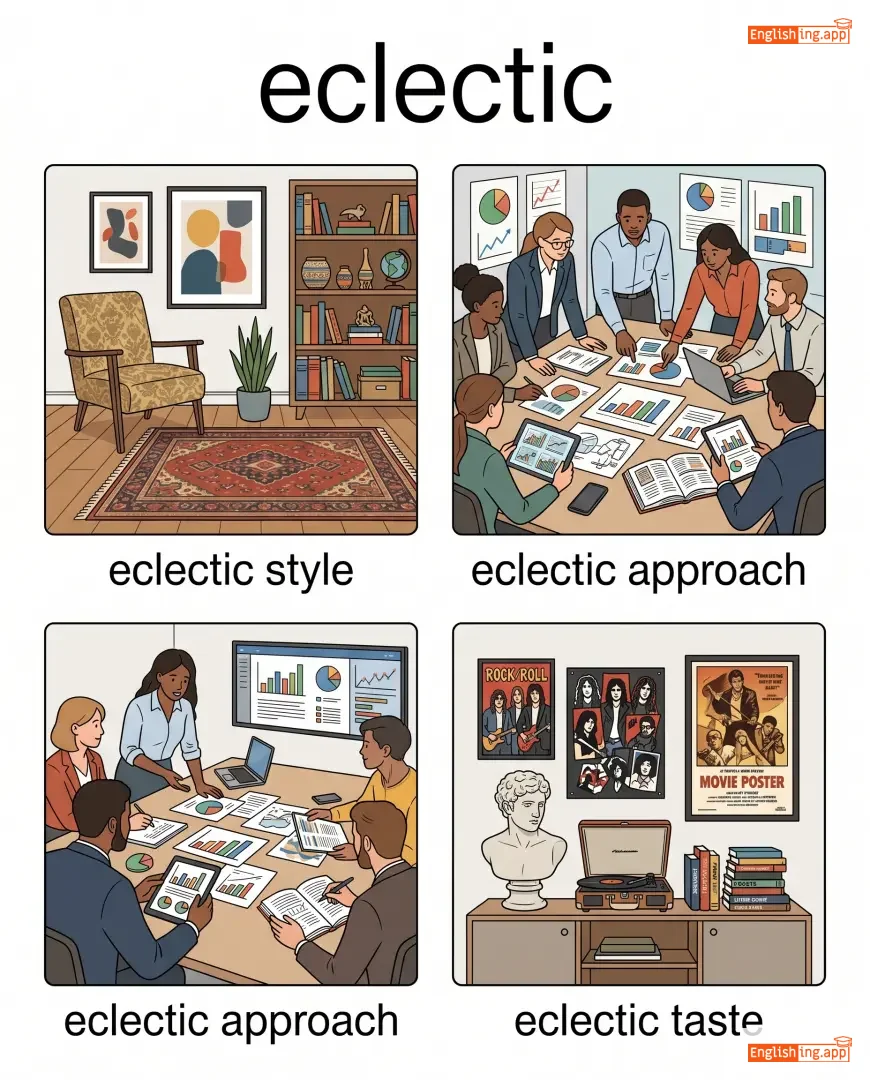
eclectic style, eclectic approach, eclectic taste, eclectic mix
••••••
|
エクレクティックな味覚は、さまざまなスタイルが混ざったキャンバスのようなものです。
••••••
|
|
#2799
🌟
|
/eɪˈklɑː/
noun
(エクラ)
••••••
|
- •••••• |
大成功
daiseikou
••••••
|
- •••••• | - •••••• | - •••••• | - •••••• |
Brilliant success, acclaim, or great public approval.
••••••
|
The artist's debut performance was met with great éclat. |
アーティストの初めてのパフォーマンスは大成功を収めました。
Aatisuto no hajimete no pafōmansu wa daiseikou o osamemashita.
••••••
|
- •••••• | - •••••• | - •••••• |
acclaim, brilliance, prestige, success, renown
••••••
|
failure, obscurity
••••••
|
with éclat, great éclat, éclat of success
••••••
|
Eclatは大成功を意味します、まるで輝く星のように。覚えておいて、エクラは一つの成功を意味します。
••••••
|
|
#2800
📊
|
/ˈɛʃəlɒn/
noun
(エシェロン)
••••••
|
|
階層
kaisou
••••••
|
- •••••• | - •••••• | - •••••• | - •••••• |
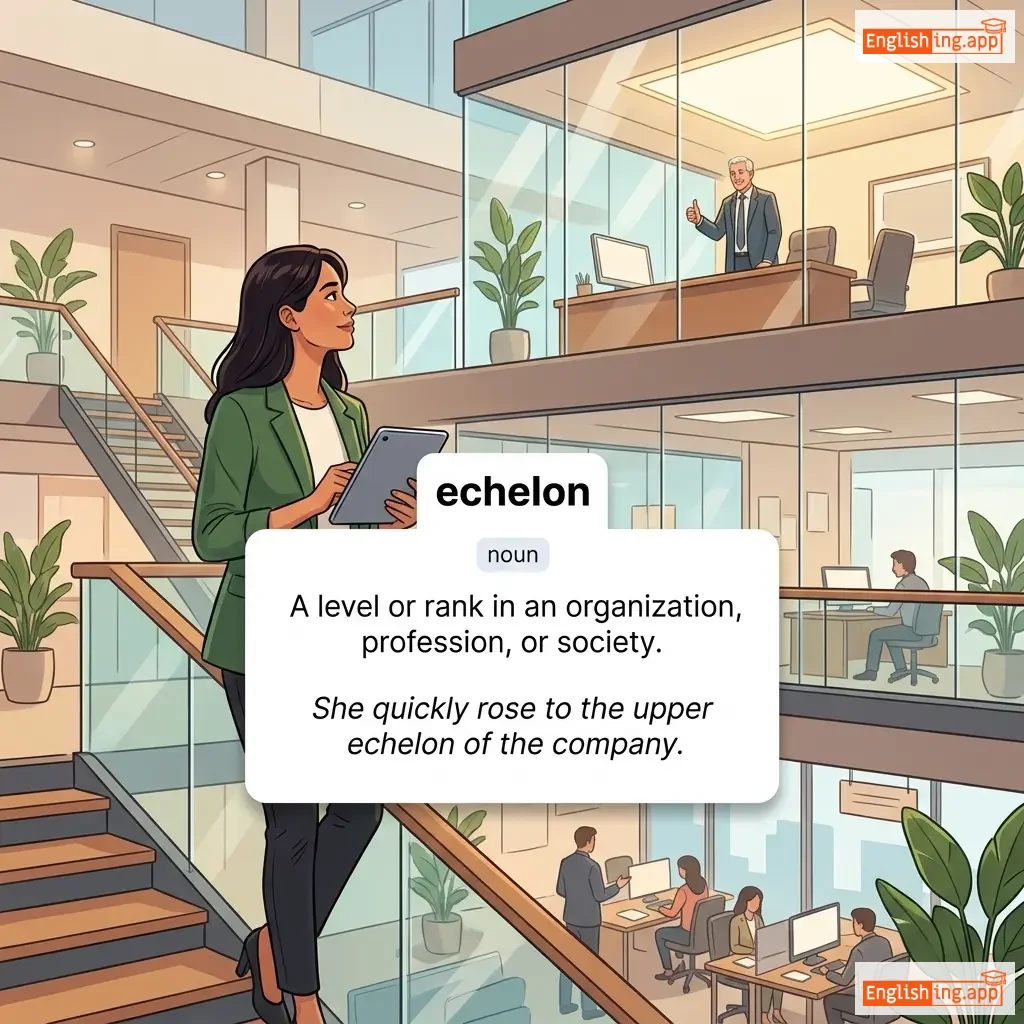
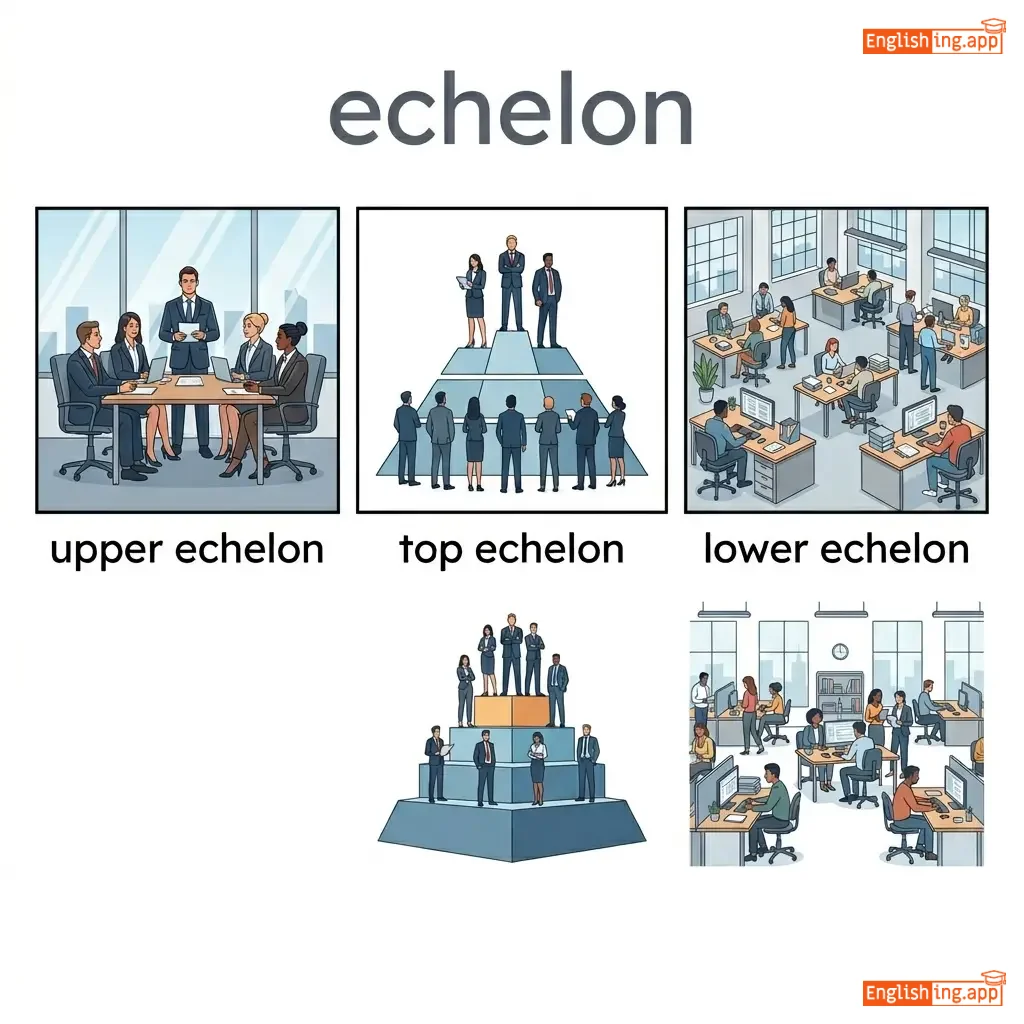
A level or rank in an organization, profession, or society.
••••••
|
She quickly rose to the upper echelon of the company.
彼女はすぐに会社の上層部に昇進した。
••••••
|
彼女はすぐに会社の上層部に昇進した。
Kanojo wa sugu ni kaisha no jousoubu ni shoushin shita.
••••••
|
upper echelon
上層部
••••••
|
The highest level of authority or status within an organization or society.
••••••
|
上層部
jousoubu
••••••
|
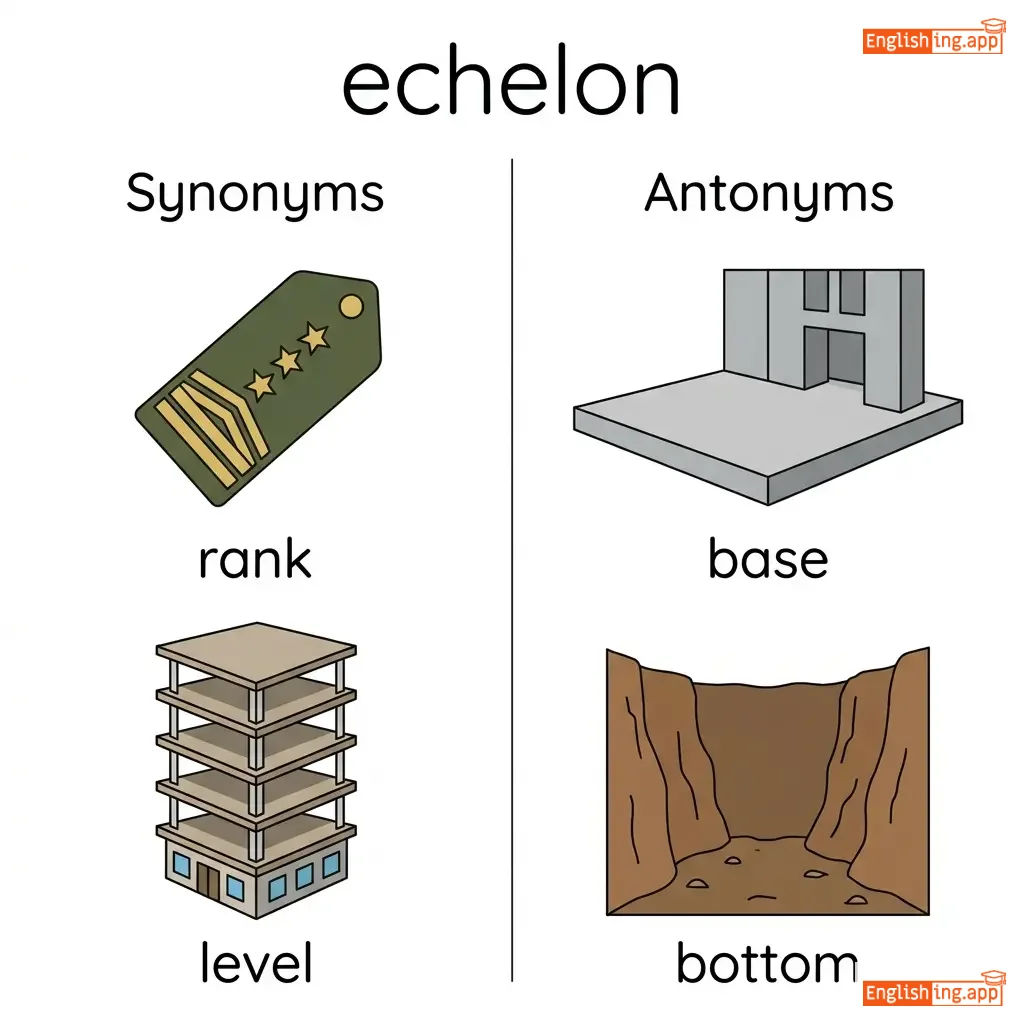
rank, level, tier, grade, class
••••••
|
base, bottom
••••••
|
upper echelon, top echelon, lower echelon, echelon of power
••••••
|
Echelon - 組織の階層を想像し、上の階層が 'upper echelon' です。
••••••
|
|
#2801
⛪
|
/ɪˌkliːziˈæstɪk/
noun
(エクレシアスティック)
••••••
|
- •••••• |
教会の
kyōkai no
••••••
|
- •••••• | - •••••• | - •••••• | - •••••• |
A member of the clergy or church official.
••••••
|
The council was attended by several high-ranking ecclesiastics. |
その会議には数人の高位の教会役員が出席しました。
Sono kaigi ni wa sūnin no kōi no kyōkai yakuin ga shusseki shimashita.
••••••
|
- •••••• | - •••••• | - •••••• |
clergyman, priest, minister, pastor, reverend
••••••
|
layman, secular
••••••
|
high-ranking ecclesiastic, Catholic ecclesiastic, medieval ecclesiastic
••••••
|
Ecclesiastic は教会に関連している意味です - ⛪、これは教会の役員です。
••••••
|
|
#2802
🤹
|
/ˌɛksɛnˈtrɪsəti/
noun
(エキセントリシティ)
••••••
|
- •••••• |
奇抜さ
kibatsusa
••••••
|
- •••••• | - •••••• | - •••••• | - •••••• |
the quality of being unconventional or slightly strange
••••••
|
His eccentricity made him both admired and misunderstood. |
彼の奇抜さは、彼を賞賛されると同時に誤解される原因となった。
Kare no kibatsusa wa, kare wo shousan sareru to douji ni gokai sareru gen'in to natta.
••••••
|
- •••••• | - •••••• | - •••••• |
oddity, peculiarity, quirk, unconventionality
••••••
|
normality, conventionality
••••••
|
display eccentricity, show eccentricity, eccentricity of behavior
••••••
|
Eccentricityは奇抜さ 🎩 - Extra centricみんなを驚かせる
••••••
|
|
#2803
🎨
|
/ɪkˈsɛntrɪk/
adjective
(エキセントリック)
••••••
|
- •••••• |
奇抜な
kibatsuna
••••••
|
- •••••• | - •••••• | - •••••• | - •••••• |
unconventional and slightly strange in behavior or appearance
••••••
|
The artist was known for his eccentric style. |
そのアーティストは奇抜なスタイルで知られていた。
Sono ātisuto wa kibatsuna sutairu de shirarete ita.
••••••
|
- •••••• | - •••••• | - •••••• |
unusual, odd, quirky, unconventional
••••••
|
normal, conventional, ordinary
••••••
|
eccentric behavior, eccentric style, eccentric personality
••••••
|
Eccentric = Extra + centric 🎨 - ちょっと変わったスタイルを持つ人
••••••
|
|
#2804
😄
|
/ɪˈbʊliənt/
adjective
(エブリエント)
••••••
|
|
陽気な
youkina
••••••
|
- •••••• | - •••••• | - •••••• | - •••••• |
cheerful and full of energy
••••••
|
She was ebullient after receiving the good news. |
良いニュースを受け取った後、彼女は陽気でした。
Yoi nyu-su o uketotta ato, kanojo wa youki deshita.
••••••
|
- •••••• | - •••••• | - •••••• |
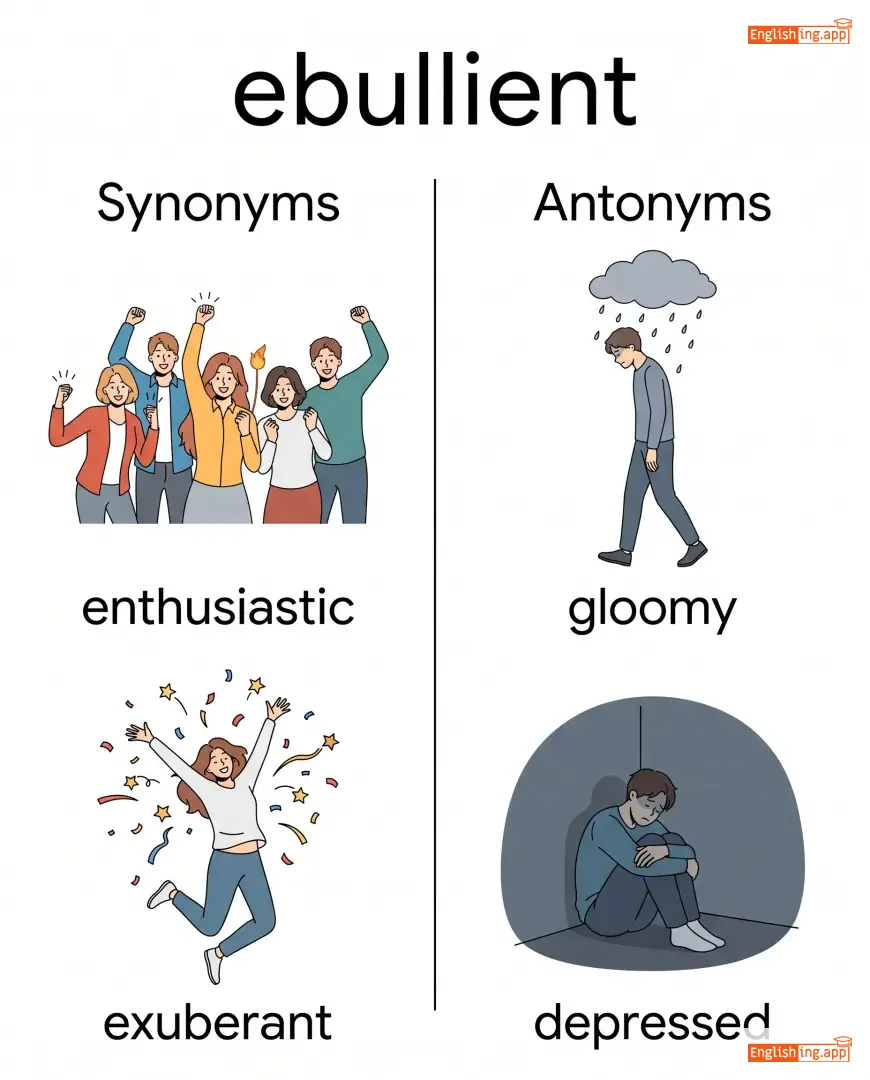
enthusiastic, exuberant, joyful, lively
••••••
|
gloomy, depressed, dull
••••••
|
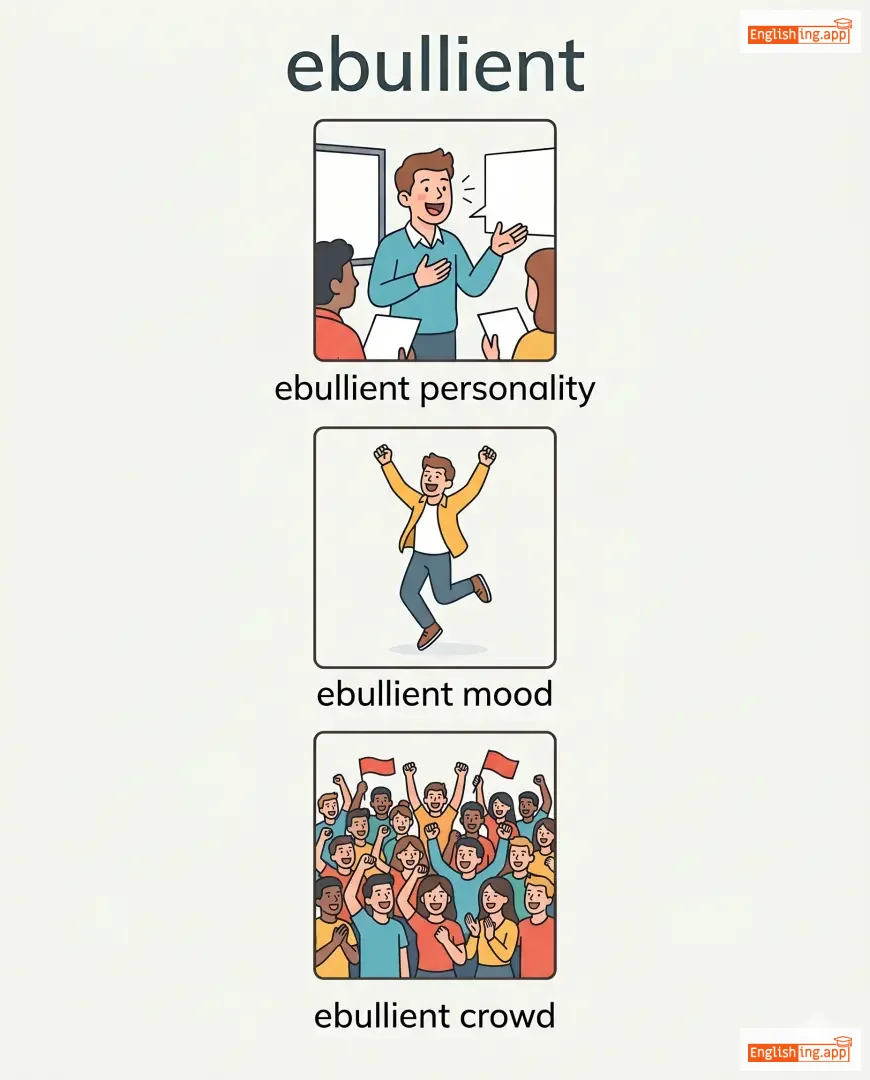
ebullient personality, ebullient mood, ebullient crowd
••••••
|
Ebullient は完全なエネルギー 😄 - 良いニュースを聞いた後、みんな陽気になる
••••••
|
|
#2805
✨
|
/ɪˈbʊliəns/
noun
(エブリエンス)
••••••
|
- •••••• |
熱狂
nekkyou
••••••
|
- •••••• | - •••••• | - •••••• | - •••••• |
the quality of being cheerful, enthusiastic, and full of energy
••••••
|
The teacher's ebullience inspired her students. |
教師の熱狂が生徒たちをインスパイアしました。
Kyoushi no nekkyou ga seitotachi wo insupaishimashita.
••••••
|
- •••••• | - •••••• | - •••••• |
enthusiasm, exuberance, cheerfulness, liveliness
••••••
|
gloom, sadness, dullness
••••••
|
ebullience of youth, display ebullience, show ebullience
••••••
|
Ebullience = エネルギー + 熱狂、エネルギッシュな先生のように
••••••
|
|
#2806
🤝
|
/deɪˈtɒnt/
noun
(デタント)
••••••
|
- •••••• |
緊張関係の緩和
kinchou kankei no kanwa
••••••
|
- •••••• | - •••••• | - •••••• | - •••••• |
the easing of strained relations, especially between countries
••••••
|
The treaty helped bring about a détente between the two nations. |
その条約は、二国間の緊張関係を緩和するのに役立ちました。
Sono jouyaku wa, nikokukan no kinchou kankei o kanwa suru no ni yakudachimashita.
••••••
|
- •••••• | - •••••• | - •••••• |
truce, reconciliation, peace, easing, relaxation
••••••
|
conflict, hostility, tension
••••••
|
political détente, Cold War détente, period of détente
••••••
|
Detenteは'関係の緩和'を意味します。緊張が'解ける'ように。
••••••
|
|
#2807
👂
|
/ˈiːvzdrɒp/
verb
(イーブズドロップ)
••••••
|
- •••••• |
盗み聞き
nusumigiki
••••••
|
eavesdropped
イーブズドロップド
••••••
|
eavesdropped
イーブズドロップド
••••••
|
eavesdrops
イーブズドロップス
••••••
|
eavesdropping
イーブズドロッピング
••••••
|
to secretly listen to a conversation
••••••
|
She stood near the door to eavesdrop on their conversation.
彼女はその会話をこっそり聞くためにドアの近くに立っていました。
••••••
|
彼女はその会話をこっそり聞くためにドアの近くに立っていました。
Kanojo wa sono kaiwa o kossori kiku tame ni doa no chikaku ni tatte imashita.
••••••
|
eavesdrop on a conversation
会話を盗み聞きする
••••••
|
to secretly listen to what someone else is saying
••••••
|
会話を盗み聞きする
kaiwa o nusumigiki suru
••••••
|
listen secretly, overhear, spy, snoop
••••••
|
ignore, avoid
••••••
|
eavesdrop on, secretly eavesdrop, caught eavesdropping
••••••
|
Eavesdrop = 盗み聞き、まるで扉の隙間から音を聞いているよう。
••••••
|
|
#2808
🍓
|
/ˈiːtəbl̩/
adjective
(itāburu)
••••••
|
- •••••• |
食べられる
taberareru
••••••
|
- •••••• | - •••••• | - •••••• | - •••••• |
suitable or safe for eating
••••••
|
The berries are not only eatable but also quite tasty.
そのベリーは食べられるだけでなく、かなりおいしいです。
••••••
|
そのベリーは食べられるだけでなく、かなりおいしいです。
Sono berī wa taberareru dake de naku, kanari oishī desu.
••••••
|
- •••••• | - •••••• | - •••••• |
edible, consumable, palatable, digestible
••••••
|
inedible, poisonous, harmful
••••••
|
eatable food, eatable berries, eatable plants, eatable portions
••••••
|
Eatable = 食べられる, 食べる+able!
••••••
|
|
#2809
🎨
|
/ˈiːzl̩/
noun
(īzeru)
••••••
|
- •••••• |
イーゼル
īzeru
••••••
|
- •••••• | - •••••• | - •••••• | - •••••• |
a frame for supporting an artist's canvas while painting or drawing
••••••
|
The artist placed the canvas on the easel before starting to paint. |
アーティストは絵を描き始める前にキャンバスをイーゼルに置きました。
Ātisuto wa e o kakehajimeru mae ni kyanbasu o īzeru ni okimashita.
••••••
|
- •••••• | - •••••• | - •••••• |
stand, frame, support
••••••
|
floor, ground
••••••
|
painting easel, wooden easel, adjustable easel, artist's easel
••••••
|
Easelは‘easy sell’のように聞こえ、イーゼルがアートを簡単に売る手助けをすることを思い出させます。
••••••
|
|
#2810
🌱
|
/ˈɜːrθi/
adjective
(ˈɜːrθi)
••••••
|
- •••••• |
土のような / シンプル
tsuchi no yō na / shimpuru
••••••
|
- •••••• | - •••••• | - •••••• | - •••••• |
resembling or suggestive of earth or soil; simple, natural, and sometimes coarse
••••••
|
The dish had a rich, earthy flavor from the mushrooms. |
その料理はきのこからの豊かな土のような味がしました。
Sono ryōri wa kinoko kara no yutaka na tsuchi no yō na aji ga shimashita.
••••••
|
- •••••• | - •••••• | - •••••• |
natural, rustic, coarse, organic, robust
••••••
|
refined, artificial, delicate
••••••
|
earthy flavor, earthy humor, earthy tone, earthy smell
••••••
|
Earthy とは土のような (tsuchi no yō na) 意味です。そして、きのこはその土のような味があることを覚えておいてください。
••••••
|
|
#2811
🌍
|
/ˈɜːrθli/
adjective
(アースリー)
••••••
|
- •••••• |
現世の
gense no
••••••
|
- •••••• | - •••••• | - •••••• | - •••••• |
relating to the physical world as opposed to the spiritual or heavenly; worldly
••••••
|
He was more concerned with earthly pleasures than spiritual matters. |
彼は精神的な事柄よりも現世の快楽に興味がありました。
Kare wa seishinteki na koto kara yori mo gense no kairaku ni kyōmi ga arimashita.
••••••
|
- •••••• | - •••••• | - •••••• |
worldly, mortal, temporal, mundane, terrestrial
••••••
|
heavenly, spiritual, divine
••••••
|
earthly pleasures, earthly life, earthly matters, earthly concerns
••••••
|
現世の = 物質的な世界、現世の楽しみを思い出してください。
••••••
|
|
#2812
🏺
|
/ˈɜːrθənˌwɛr/
noun
(アースンウェア)
••••••
|
- •••••• |
陶器
touki
••••••
|
- •••••• | - •••••• | - •••••• | - •••••• |
pottery made of clay and hardened by heat
••••••
|
The shop displayed beautiful earthenware pots and bowls. |
店は美しい陶器の壺と鉢を展示していました。
Mise wa utsukushii touki no tsubo to hachi o tenji shite imashita.
••••••
|
- •••••• | - •••••• | - •••••• |
pottery, ceramics, clayware, stoneware
••••••
|
metalware, plasticware
••••••
|
earthenware pot, earthenware bowl, earthenware jug
••••••
|
Earth + Ware = 陶器 = 熱で硬化させた陶器。
••••••
|
|
#2813
🔊
|
/ˈɪrˌsplɪtɪŋ/
adjective
(イヤースプリッティング)
••••••
|
- •••••• |
耳をつんざくような
mimi o tsunzaku you na
••••••
|
- •••••• | - •••••• | - •••••• | - •••••• |
extremely loud or piercing sound
••••••
|
The earsplitting noise of the fire alarm startled everyone. |
火災警報の耳をつんざくような音がみんなを驚かせた。
Kasai keihou no mimi o tsunzaku you na oto ga minna o odorokaseta.
••••••
|
- •••••• | - •••••• | - •••••• |
deafening, piercing, thunderous, loud
••••••
|
quiet, soft, faint
••••••
|
earsplitting noise, earsplitting scream, earsplitting sound
••••••
|
Ear splittingは耳をつんざくような、耳が破れるほどの大きな音です。
••••••
|
|
#2814
👂
|
/ˈɪrˌʃɑːt/
noun
(イアショット)
••••••
|
- •••••• |
耳の届く範囲
mimi no todoku han'i
••••••
|
- •••••• | - •••••• | - •••••• | - •••••• |
the range or distance within which a sound can be heard
••••••
|
The children whispered secrets out of earshot of their parents. |
子供たちは親の耳の届く範囲外で秘密をささやいた。
Kodomotachi wa oya no mimi no todoku han'i gai de himitsu wo sasayaita.
••••••
|
within earshot |
close enough to hear
••••••
|
耳の届く範囲内
mimi no todoku han'i nai
••••••
|
hearing range, sound range, listening distance
••••••
|
out of range, inaudible
••••••
|
within earshot, out of earshot, barely in earshot
••••••
|
Ear + Shot = 耳の届く範囲、つまり音が聞こえる範囲。
••••••
|
|
#2815
🔇
|
/ˈɪrˌplʌɡ/
noun
(イヤープラグ)
••••••
|
- •••••• |
イヤープラグ
iyāpuragu
••••••
|
- •••••• | - •••••• | - •••••• | - •••••• |
a device inserted into the ear to block out noise or water
••••••
|
He wore earplugs to sleep during the noisy night.
彼は騒がしい夜に寝るためにイヤープラグを着けました。
••••••
|
彼は騒がしい夜に寝るためにイヤープラグを着けました。
Kare wa sawagashī yoru ni neru tame ni iyāpuragu o tsukemashita.
••••••
|
- •••••• | - •••••• | - •••••• |
ear protector, hearing protector, sound blocker, ear shield
••••••
|
speaker, amplifier
••••••
|
wear earplugs, foam earplugs, silicone earplugs, use earplugs
••••••
|
Ear + Plug = イヤープラグで音を遮る
••••••
|
|
#2816
🙏
|
/ˈɜːrnɪst/
adjective
(アーネスト)
••••••
|
- •••••• |
真剣で誠実
shinken de seijitsu
••••••
|
- •••••• | - •••••• | - •••••• | - •••••• |
showing sincere and intense conviction
••••••
|
She spoke in an earnest voice about the importance of honesty.
彼女は正直さの重要性について真剣に話しました。
••••••
|
彼女は正直さの重要性について真剣に話しました。
Kanojo wa shoujikisa no juuyousei ni tsuite shinken ni hanashimashita.
••••••
|
in earnest
真剣に
••••••
|
with sincere and serious intention
••••••
|
真剣に
shinken ni
••••••
|
serious, sincere, honest, heartfelt, genuine
••••••
|
frivolous, insincere, playful
••••••
|
earnest desire, earnest effort, speak in earnest, earnest appeal
••••••
|
Earnestとは‘真剣で誠実’の意味 – Earnestly学べば、試験で成功する!
••••••
|
|
#2817
💵
|
/ɜːrn/
verb
(アーン)
••••••
|
|
稼ぐ
kasegu
••••••
|
earned
アーンド
••••••
|
earned
アーンド
••••••
|
earns
アーンズ
••••••
|
earning
アーニング
••••••
|
To receive money or reward in return for work or service.
••••••
|
She worked hard to earn enough money for college.
彼女は大学のために十分なお金を稼ぐために一生懸命働いた。
••••••
|
彼女は大学のために十分なお金を稼ぐために一生懸命働いた。
Kanojo wa daigaku no tame ni jūbun na okane o kasegu tame ni isshōkenmei hataraita.
••••••
|
earn a living
生計を立てる
••••••
|
To make enough money to support oneself financially.
••••••
|
生計を立てる
seikei o tateru
••••••
|
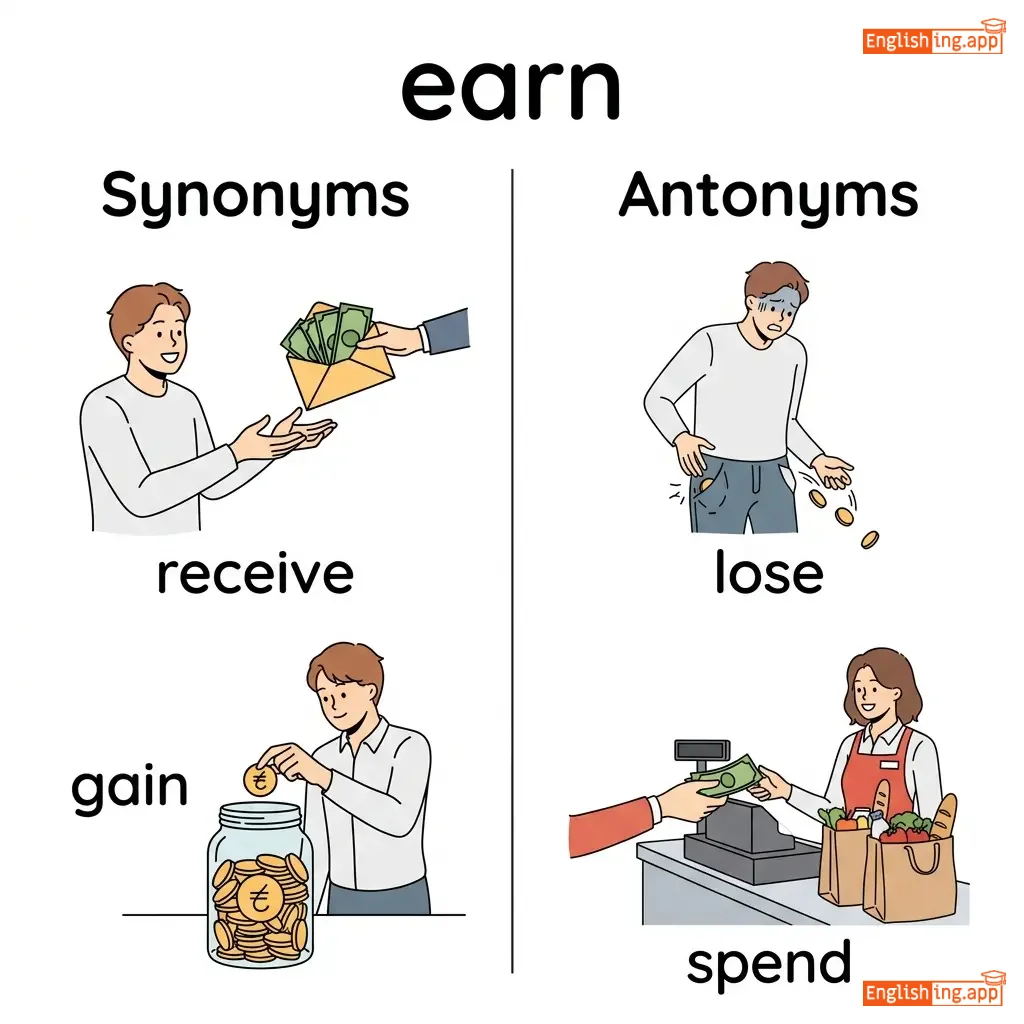
receive, gain, obtain, secure, acquire
••••••
|
lose, spend, forfeit
••••••
|
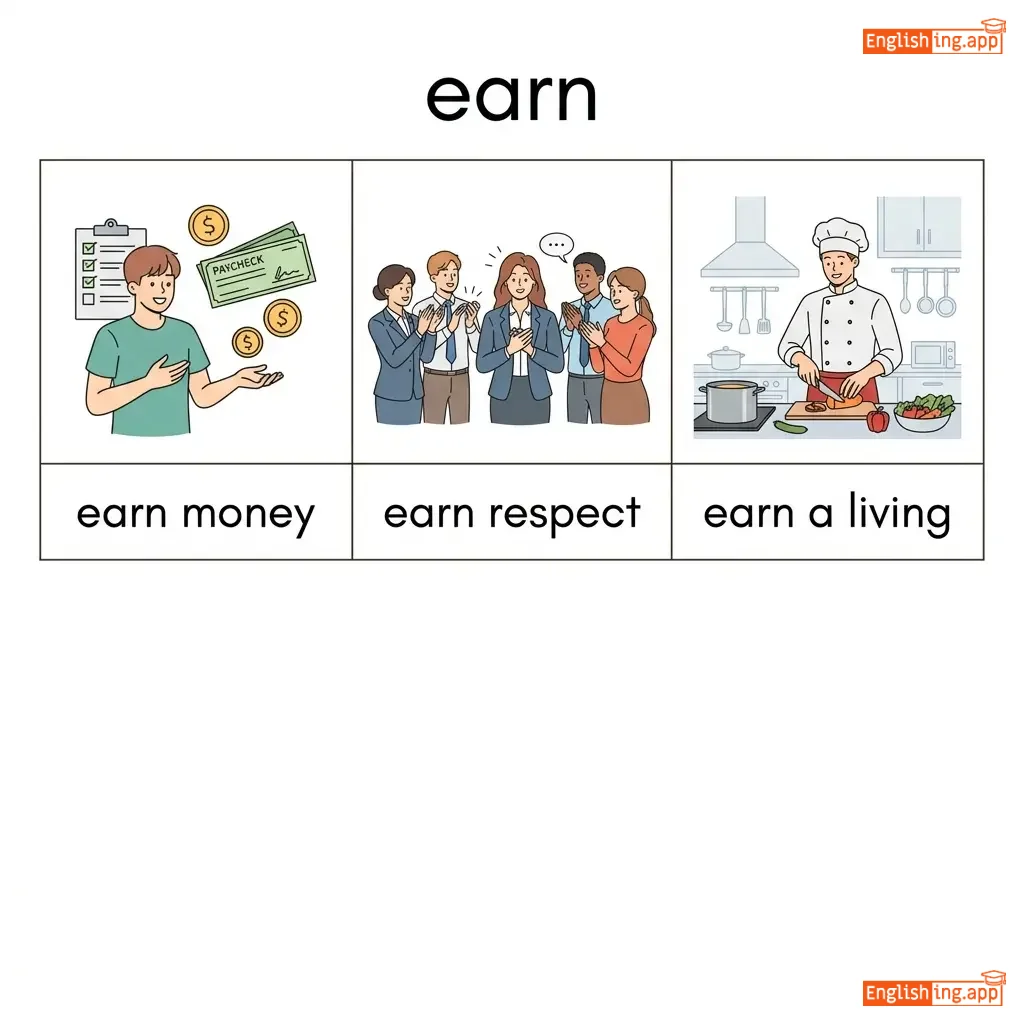
earn money, earn respect, earn a living, earn interest
••••••
|
Earnは'稼ぐ'という意味 - 一生懸命働いて稼ぐ。
••••••
|
|
#2818
💰
|
/ˈɪə.mɑːrk/
verb
(イヤーマーク)
••••••
|
- •••••• |
指定する
shitei suru
••••••
|
earmarked
イヤーマークド
••••••
|
earmarked
イヤーマークド
••••••
|
earmarks
イヤーマークス
••••••
|
earmarking
イヤーマーキング
••••••
|
To designate funds, resources, or time for a particular purpose.
••••••
|
The government has earmarked funds for education.
政府は教育のための資金を指定しました。
••••••
|
政府は教育のための資金を指定しました。
Seifu wa kyouiku no tame no shikin o shitei shimashita.
••••••
|
- •••••• | - •••••• | - •••••• |
allocate, assign, designate, reserve, set aside
••••••
|
withdraw, deny, refuse
••••••
|
earmark funds, earmark money, earmark resources
••••••
|
EarMark = 資金を指定する。
••••••
|
|
#2819
🦅
|
/ˈiːɡlət/
noun
(イーグレット)
••••••
|
- •••••• |
イーグルのひな
īguru no hina
••••••
|
- •••••• | - •••••• | - •••••• | - •••••• |
A young eagle.
••••••
|
The eaglet waited in the nest for its mother to return.
イーグレットは巣の中で母親が戻るのを待っていた。
••••••
|
イーグレットは巣の中で母親が戻るのを待っていた。
Īguretto wa su no naka de hahaoya ga modoru no o matte ita.
••••••
|
- •••••• | - •••••• | - •••••• |
young eagle, nestling, fledgling, chick
••••••
|
adult eagle, grown eagle
••••••
|
baby eaglet, eaglet nest, hungry eaglet
••••••
|
Eagletはイーグルのひな、'let'は小さいという意味。
••••••
|
|
#2820
😖
|
/dɪsˈpɛptɪk/
adjective
(ディスペプティック)
••••••
|
- •••••• |
消化不良, イライラした
shouka furyou, iraira shita
••••••
|
- •••••• | - •••••• | - •••••• | - •••••• |
Relating to indigestion or having a gloomy or irritable disposition.
••••••
|
After the heavy meal, he felt dyspeptic and uncomfortable. |
重い食事の後、彼は消化不良で不快に感じました。
Omoi shokuji no ato, kare wa shouka furyou de fukai ni kanjimashita.
••••••
|
- •••••• | - •••••• | - •••••• |
irritable, morose, gloomy, sour, testy
••••••
|
cheerful, pleasant, good-humored
••••••
|
dyspeptic mood, dyspeptic attitude, dyspeptic complaint
••••••
|
Dyspepticとは消化不良を意味し、そのため気分もイライラする。
••••••
|
Vocabulary Quiz
Test your vocabulary by matching words with their translations or meanings.
Login to take the quiz
Comments (0)
Share your thoughts and join the discussion.
Join the discussion by logging in
Login to CommentNo comments yet
Be the first to share your thoughts!