

翻訳
過去
過去分詞
三人称単数
動名詞
意味
例文
例文の翻訳
同義語
対義語
コロケーション
ニーモニック
Swipe left or right, or use the buttons. Tap image to zoom.
例文の翻訳
単語
Lesson 277Lesson 277 - マスクトグル
|
絵文字
|
単語 | Images | 翻訳 | 過去 | 過去分詞 | 三人称単数 | 動名詞 | 意味 | 例文 | 例文の翻訳 | 表現例 | 表現例の意味 | 表現例の翻訳 | 同義語 | 対義語 | コロケーション | ニーモニック |
|---|---|---|---|---|---|---|---|---|---|---|---|---|---|---|---|---|---|
|
#8280
🏇
|
/spɜːr/
verb
(espar)
••••••
|
- •••••• |
促す / 奨励する
unagasu / shōrei suru
••••••
|
spurred
esparrd
••••••
|
spurred
esparrd
••••••
|
spurs
espars
••••••
|
spurring
esparring
••••••
|
To encourage or motivate someone to take action.
••••••
|
The teacher's praise spurred him to study harder.
教師の賞賛は彼にもっと一生懸命勉強するように促した。
••••••
|
教師の賞賛は彼にもっと一生懸命勉強するように促した。
Kyōshi no shōsan wa kare ni motto isshōkenmei benkyō suru yō ni unagashita.
••••••
|
spur of the moment
spur of the moment
••••••
|
An impulsive or unplanned decision.
••••••
|
衝動的な決断
shōdō-teki na ketsudan
••••••
|
encourage, motivate, inspire, prompt, stimulate
••••••
|
deter, discourage
••••••
|
spur action, spur growth, spur development
••••••
|
Spurは馬を駆り立てるもの、同じように私たちを動かす力となる。
••••••
|
|
#8281
⚖️
|
/ˈsteɪ.bə.laɪz/
verb
(ステイビライズ)
••••••
|
- •••••• |
安定させる
antei saseru
••••••
|
stabilized
ステイビライズド
••••••
|
stabilized
ステイビライズド
••••••
|
stabilizes
ステイビライズズ
••••••
|
stabilizing
ステイビライズイング
••••••
|
to make something steady, secure, or unlikely to change suddenly
••••••
|
The government took measures to stabilize the economy.
政府は経済を安定させるための措置を講じた。
••••••
|
政府は経済を安定させるための措置を講じた。
seifu wa keizai o antei saseru tame no sochi o kōjita.
••••••
|
stabilize the situation
状況を安定させる
••••••
|
to bring a situation under control or make it steady
••••••
|
状況を安定させる
jōkyō o antei saseru
••••••
|
steady, secure, balance, fix, support
••••••
|
destabilize, weaken, disrupt
••••••
|
stabilize economy, stabilize situation, stabilize prices, stabilize market
••••••
|
Stable + eyes → 目(eyes)があればすべて安定(antei)する
••••••
|
|
#8282
😑
|
/skwɪnt/
verb
(sukuinto)
••••••
|
- •••••• |
目を細める
me wo hosomeru
••••••
|
squinted
sukuinteddo
••••••
|
squinted
sukuinteddo
••••••
|
squints
sukuintsu
••••••
|
squinting
sukuintingu
••••••
|
to look with partly closed eyes
••••••
|
She squinted at the bright sunlight.
彼女は明るい日差しで目を細めた。
••••••
|
彼女は明るい日差しで目を細めた。
Kanojo wa akarui hizashi de me wo hosometa.
••••••
|
squint at
目を細める
••••••
|
to look at something with eyes partly closed
••••••
|
目を細める
me wo hosomeru
••••••
|
peer, glance, blink, peer closely
••••••
|
stare, gaze, look openly
••••••
|
squint eyes, squint hard, squint slightly
••••••
|
太陽の下では、みんな目を細めます
••••••
|
|
#8283
🌧️
|
/skwɛltʃ/
verb
••••••
|
- •••••• | - •••••• |
squelched
••••••
|
squelched
••••••
|
squelches
••••••
|
squelching
••••••
|
to make a soft sucking sound, such as when walking on mud; to suppress or silence
••••••
|
His boots squelched in the wet ground. |
- •••••• |
squelch a rumor |
to stop or silence a rumor quickly
••••••
|
- •••••• |
suppress, silence, smother, extinguish
••••••
|
encourage, spread, amplify
••••••
|
squelch noise, squelch rumor, squelch dissent
••••••
|
No •••••• |
|
#8284
🤢
|
/ˈskwiːmɪʃ/
adjective
(スキーミッシュ)
••••••
|
- •••••• |
簡単に気分が悪くなったり、吐き気を催したり、嫌悪感を抱いたりする
kantan ni kibun ga warukunattari, hakike o moyōshitari, ken'okan o idaishitari suru
••••••
|
- •••••• | - •••••• | - •••••• | - •••••• |
easily made to feel sick, faint, or disgusted
••••••
|
She felt squeamish at the sight of blood. |
彼女は血を見て気分が悪くなった。
Kanojo wa chi o mite kibun ga warukunatta.
••••••
|
- •••••• | - •••••• | - •••••• |
sensitive, nauseated, delicate, faint
••••••
|
hardy, tough, unbothered
••••••
|
squeamish about, squeamish reaction, squeamish feeling
••••••
|
スキーミッシュは 'scream-ish' に似ている - 血を見るとすぐに吐き気がする
••••••
|
|
#8285
🚷
|
/ˈskwɒtər/
noun
(スクワッター)
••••••
|
- •••••• |
不法占拠者
fuhō senkyo-sha
••••••
|
- •••••• | - •••••• | - •••••• | - •••••• |
a person who unlawfully occupies an uninhabited building or unused land
••••••
|
The police removed the squatters from the abandoned house. |
警察は廃墟から不法占拠者を追い出しました。
Keisatsu wa haikyo kara fuhō senkyo-sha o oidasimashita.
••••••
|
- •••••• | - •••••• | - •••••• |
occupant, settler, trespasser, intruder
••••••
|
owner, landlord, tenant
••••••
|
illegal squatter, squatter rights, squatter settlement
••••••
|
スクワッターは不法に土地を占拠する人。
••••••
|
|
#8286
🏋️
|
/skwɒt/
(スコワット)
••••••
|
- •••••• |
しゃがむ
shagamu
••••••
|
squatted
スコワテッド
••••••
|
squatted
スコワテッド
••••••
|
squats
スコワッツ
••••••
|
squatting
スコワティング
••••••
|
to crouch or sit with knees bent and body close to the ground
••••••
|
He squatted down to tie his shoes.
彼は靴を結ぶためにしゃがんだ。
••••••
|
彼は靴を結ぶためにしゃがんだ。
Kare wa kutsu o musubu tame ni shaganda.
••••••
|
squat down
しゃがむ
••••••
|
to lower oneself into a squatting position
••••••
|
しゃがむ
shagamu
••••••
|
crouch, hunker, duck, bend, stoop
••••••
|
stand, rise, straighten
••••••
|
squat position, squat exercise, squat building, squat rack
••••••
|
ジムではみんなしゃがんでスクワットをします。
••••••
|
|
#8287
🦟
|
/skwɒʃ/
verb
(スクワッシュ)
••••••
|
- •••••• |
潰す
tsubusu
••••••
|
squashed
スクワッシュド
••••••
|
squashed
スクワッシュド
••••••
|
squashes
スクワッシュズ
••••••
|
squashing
スクワッシング
••••••
|
to crush or squeeze something with force so that it becomes flat or broken
••••••
|
She accidentally squashed the bug with her shoe.
彼女はうっかり靴で虫を潰しました。
••••••
|
彼女はうっかり靴で虫を潰しました。
Kanojo wa ukkari kutsu de mushi o tsubushimashita.
••••••
|
squash the rumor
噂を潰す
••••••
|
to stop a rumor from spreading
••••••
|
噂を潰す
uwasa o tsubusu
••••••
|
crush, flatten, compress, squeeze
••••••
|
inflate, expand
••••••
|
squash a bug, squash the rumor, squash competition, squash against
••••••
|
Squashは靴で虫を潰すことを意味します。
••••••
|
|
#8288
💸
|
/ˈskwɒndər/
verb
(スクワンダー)
••••••
|
|
浪費する
rouhi suru
••••••
|
squandered
スクワンダード
••••••
|
squandered
スクワンダード
••••••
|
squanders
スクワンダーズ
••••••
|
squandering
スクワンダリング
••••••
|
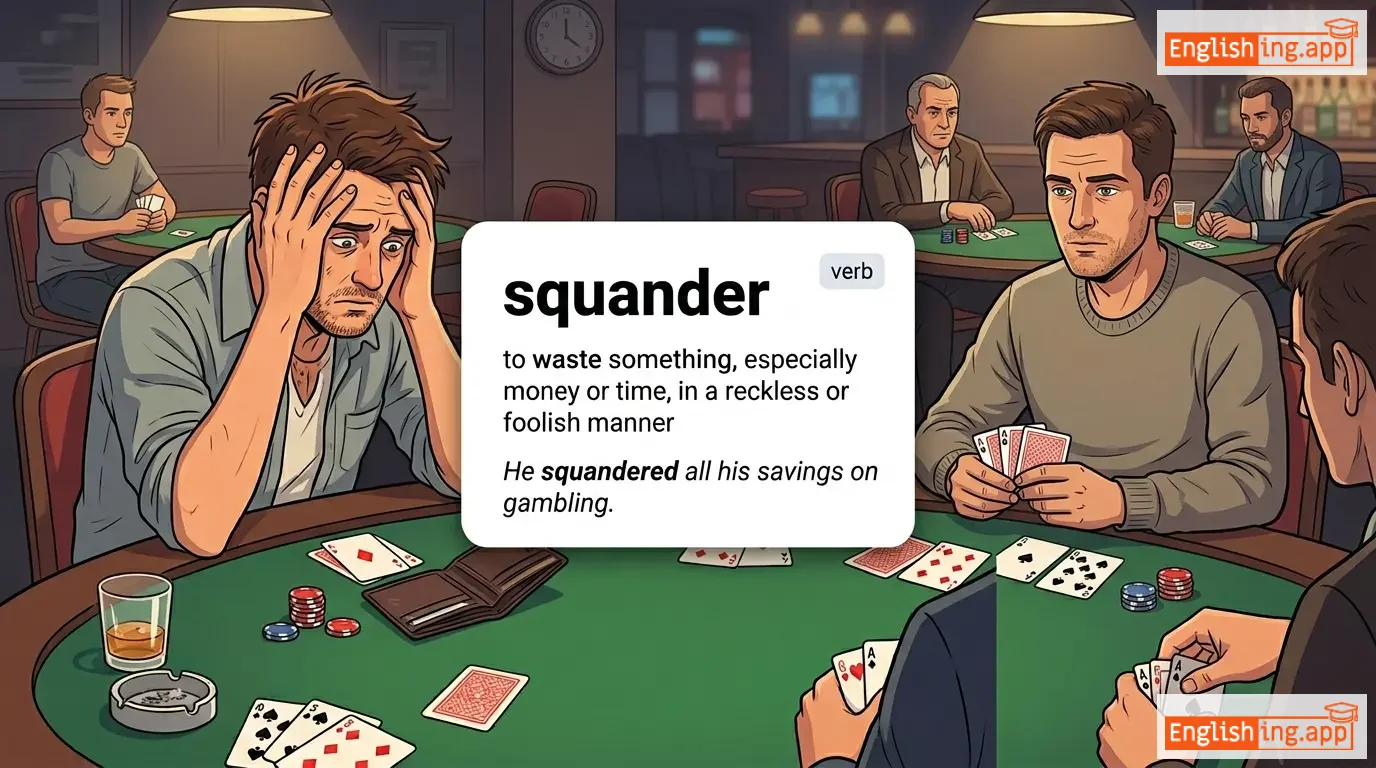
to waste something, especially money or time, in a reckless or foolish manner
••••••
|
He squandered all his savings on gambling.
彼はギャンブルに全ての貯金を浪費した。
••••••
|
彼はギャンブルに全ての貯金を浪費した。
Kare wa gyanburu ni subete no chokin o rouhi shita.
••••••
|
- •••••• | - •••••• | - •••••• |
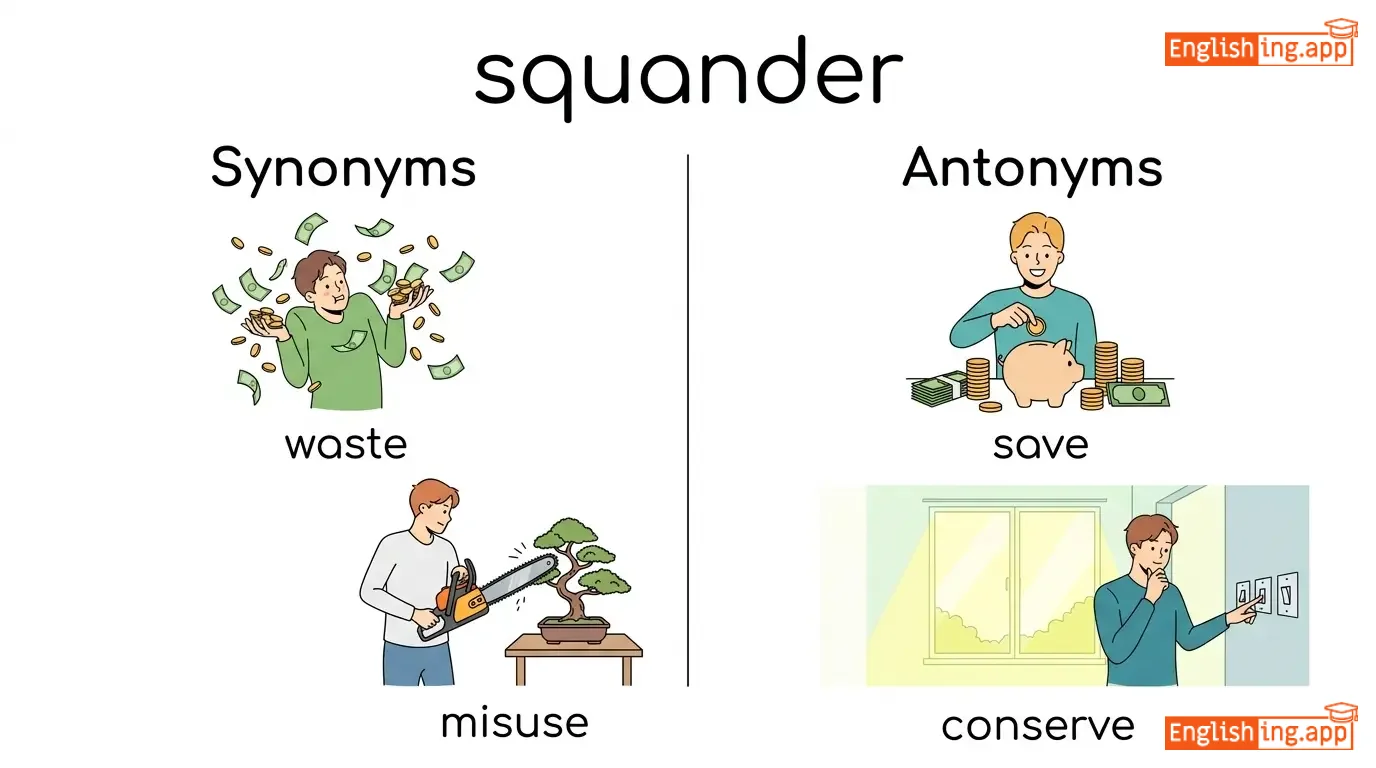
waste, misuse, dissipate, fritter
••••••
|
save, conserve, invest
••••••
|
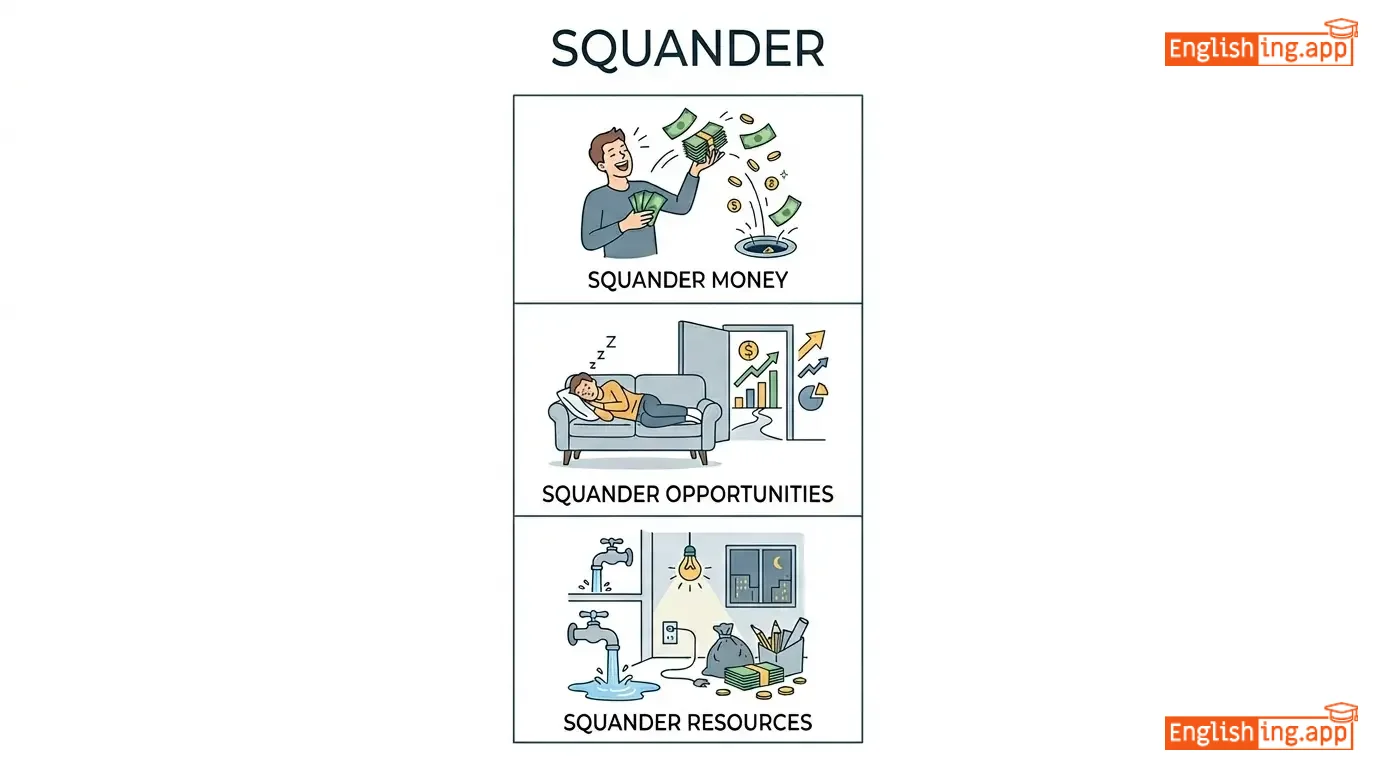
squander money, squander opportunities, squander resources, squander wealth
••••••
|
Squander はお金や時間を無駄に使うことを意味します。
••••••
|
|
#8289
🗑️
|
/ˈskwɒlər/
noun
(スカラー)
••••••
|
|
貧困
hinkon
••••••
|
- •••••• | - •••••• | - •••••• | - •••••• |
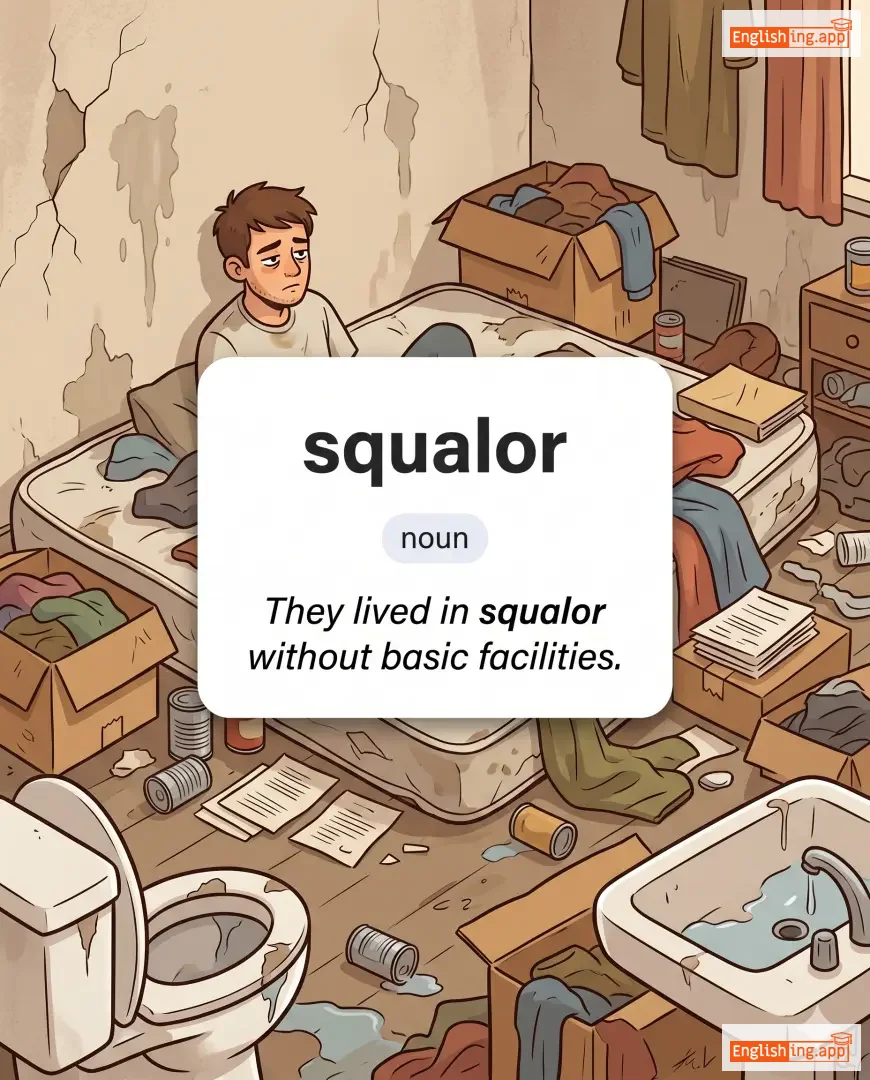
the state of being extremely dirty and unpleasant, especially due to poverty or neglect
••••••
|
They lived in squalor without basic facilities.
彼らは基本的な施設なしで貧困に住んでいました。
••••••
|
彼らは基本的な施設なしで貧困に住んでいました。
Karera wa kihonteki na shisetsu nashi de hinkon ni sundeimashita.
••••••
|
- •••••• | - •••••• | - •••••• |
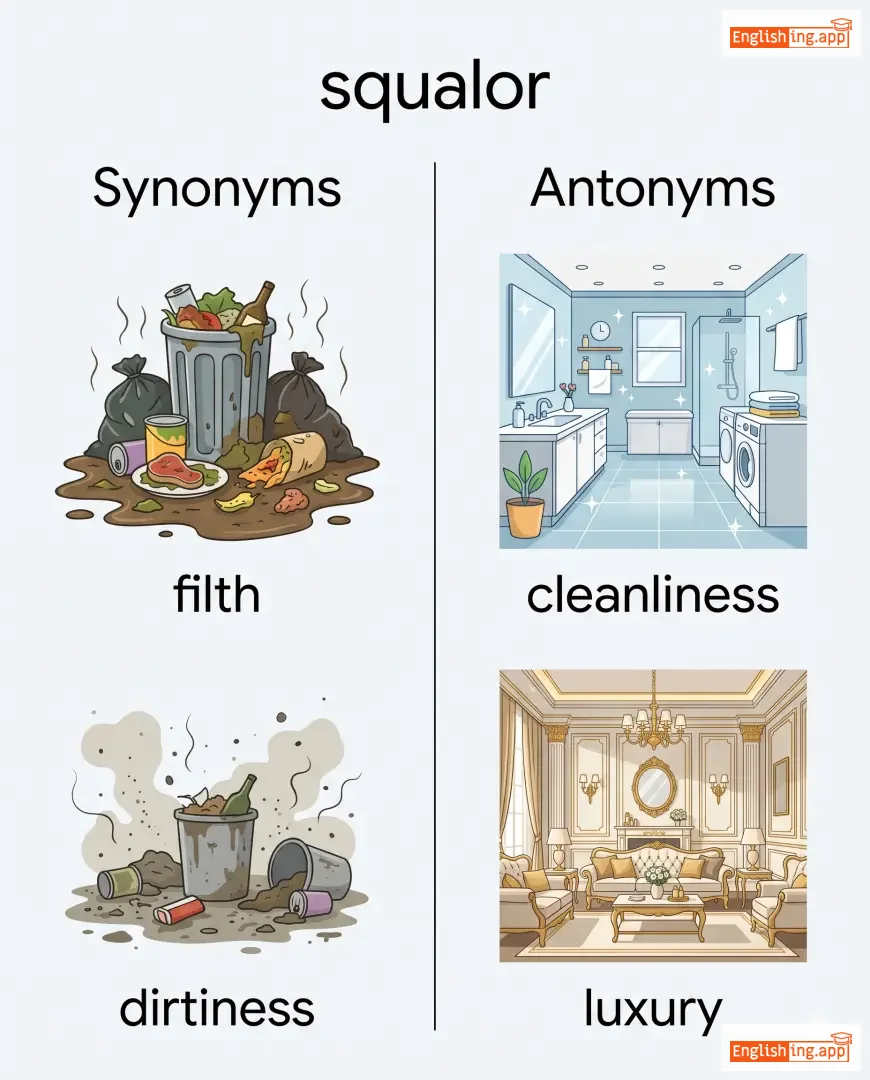
filth, dirtiness, poverty, misery
••••••
|
cleanliness, luxury
••••••
|
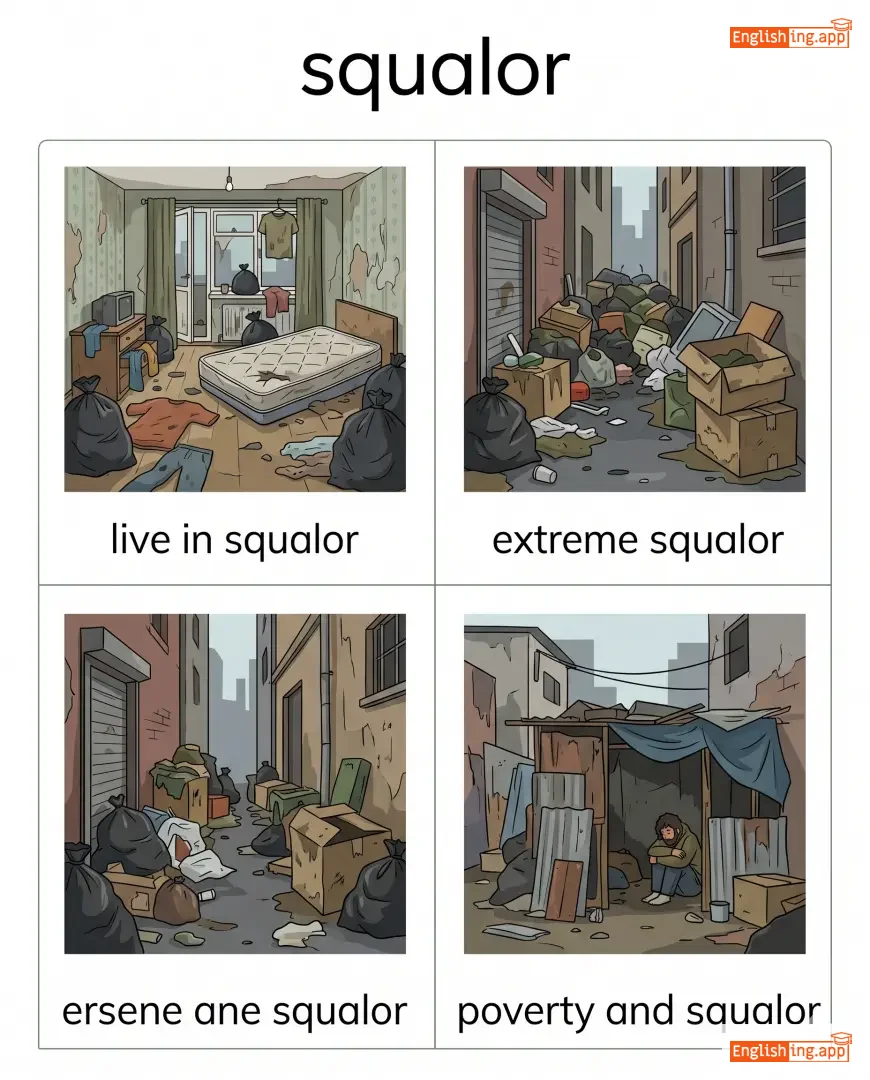
live in squalor, extreme squalor, poverty and squalor
••••••
|
Squalor = 貧困、ひどい環境で生きる
••••••
|
|
#8290
🌬️
|
/skwɔːl/
noun
(スコール)
••••••
|
- •••••• |
突風
toppu
••••••
|
- •••••• | - •••••• | - •••••• | - •••••• |
a sudden violent gust of wind, often accompanied by rain, snow, or sleet
••••••
|
A sudden squall caught the sailors off guard. |
突然の突風が船員たちを驚かせた。
Totsuzen no toppu ga sen'in tachi wo odorokaseta.
••••••
|
- •••••• | - •••••• | - •••••• |
gust, storm, outburst, gale
••••••
|
calm, stillness
••••••
|
sudden squall, snow squall, rain squall, violent squall
••••••
|
学校を出たときに急に突風が吹いたように、squall がやってきた。
••••••
|
|
#8291
🏚️
|
/ˈskwɒlɪd/
adjective
(スクワリッド)
••••••
|
- •••••• |
非常に汚い
hijō ni kitanai
••••••
|
- •••••• | - •••••• | - •••••• | - •••••• |
extremely dirty and unpleasant, often due to poverty or neglect
••••••
|
He lived in a squalid room with broken furniture. |
彼は壊れた家具のある汚い部屋に住んでいた。
Kare wa kowareta kagu no aru kitanai heya ni sunde ita.
••••••
|
- •••••• | - •••••• | - •••••• |
filthy, dirty, shabby, grimy, foul
••••••
|
clean, neat, tidy
••••••
|
squalid conditions, squalid room, squalid life, squalid environment
••••••
|
学校で汚い部屋を見たら、それはsqualidだと覚えておいてください。
••••••
|
|
#8292
👶🍰
|
/ˈskwɒbəl/
verb
(スカブル)
••••••
|
- •••••• |
些細なことで口論する
sasai na koto de kōron suru
••••••
|
squabbled
スカブルド
••••••
|
squabbled
スカブルド
••••••
|
squabbles
スカブルズ
••••••
|
squabbling
スカブリング
••••••
|
To argue noisily over something small or unimportant.
••••••
|
The children squabbled over the last piece of cake.
子供たちはケーキの最後の一切れを巡って争っていました。
••••••
|
子供たちはケーキの最後の一切れを巡って争っていました。
Kodomotachi wa kēki no saigo no hitokire o megutte arasotte imashita.
••••••
|
- •••••• | - •••••• | - •••••• |
argue, quarrel, bicker, dispute, wrangle
••••••
|
agree, cooperate
••••••
|
squabble over, family squabble, childish squabble
••••••
|
Squabbleは、些細なことでの喧嘩を意味します。
••••••
|
|
#8293
🚫
|
/spɜːrn/
verb
(スパーン)
••••••
|
- •••••• |
軽蔑して拒絶する
keibetsu shite kyozetsu suru
••••••
|
spurned
スパーンド
••••••
|
spurned
スパーンド
••••••
|
spurns
スパーンズ
••••••
|
spurning
スパーニング
••••••
|
To reject something or someone with disdain or contempt.
••••••
|
She spurned his offer of help.
彼女は彼の助けの申し出を拒否した。
••••••
|
彼女は軽蔑の気持ちで彼の助けの申し出を拒絶した。
Kanojo wa keibetsu no kimochi de kare no tasuke no mōshide o kyozetsu shita.
••••••
|
- •••••• | - •••••• | - •••••• |
reject, refuse, decline, dismiss, scorn
••••••
|
accept, embrace, approve
••••••
|
spurn an offer, spurn a suggestion, spurn advances
••••••
|
SPURN は 'Super NO' を意味する - 軽蔑して拒絶する。
••••••
|
|
#8294
⚠️
|
/ˈspjʊəriəs/
adjective
(スピュリアス)
••••••
|
- •••••• |
偽の / 虚偽の
nise no / kyogi no
••••••
|
- •••••• | - •••••• | - •••••• | - •••••• |
Not genuine, authentic, or true; false or fake.
••••••
|
The report was based on spurious claims. |
その報告書は偽の主張に基づいていた。
Sono houkokusho wa nise no shuchou ni motozuite ita.
••••••
|
- •••••• | - •••••• | - •••••• |
false, fake, counterfeit, bogus, fraudulent
••••••
|
genuine, authentic, true
••••••
|
spurious claim, spurious argument, spurious reasoning
••••••
|
SPURiousはSpurのように聞こえますが、実際のSpurではありません - 偽の意味です。
••••••
|
|
#8295
🙅
|
/ˈspɔɪlˌspɔːrt/
noun
(スポイルスポート)
••••••
|
- •••••• |
スポイルスポート
supoirusupoto
••••••
|
- •••••• | - •••••• | - •••••• | - •••••• |
A person who ruins other people's enjoyment or fun.
••••••
|
Don't be a spoilsport and let us enjoy the party.
スポイルスポートにならないで、パーティーを楽しませてください。
••••••
|
スポイルスポートにならないで、パーティーを楽しませてください。
Supoirusupoto ni naranai de, pātii o tanoshimase te kudasai.
••••••
|
- •••••• | - •••••• | - •••••• |
killjoy, party pooper, wet blanket, grouch
••••••
|
cheerleader, encourager
••••••
|
act like a spoilsport, don't be a spoilsport, real spoilsport
••••••
|
Spoil + sport = スポーツ台無し、スポイルスポート。
••••••
|
|
#8296
🌊
|
/spjuːm/
noun
(spyum)
••••••
|
- •••••• |
泡
awa
••••••
|
- •••••• | - •••••• | - •••••• | - •••••• |
Froth or foam, especially found on waves or liquids.
••••••
|
The waves crashed against the rocks, leaving spume in the air. |
波が岩にぶつかり、空気中に泡を残した。
Nami ga iwa ni butsukari, kuuchichuu ni awa wo nokoshita.
••••••
|
- •••••• | - •••••• | - •••••• |
foam, froth, bubbles, spray, suds
••••••
|
calm, stillness
••••••
|
sea spume, spume of the waves, ocean spume
••••••
|
SPUME = 海の泡 - 覚えておいて、SPUME = 泡
••••••
|
|
#8297
🏃
|
/spraɪ/
adjective
(su-purai)
••••••
|
- •••••• |
活発
kappatsu
••••••
|
- •••••• | - •••••• | - •••••• | - •••••• |
active and lively, especially in old age
••••••
|
The spry grandmother surprised everyone with her quick dance steps. |
活発な祖母は素早いダンスステップで皆を驚かせました。
Kappatsu na sobo wa subayai dansu suteppu de mina o odorokasemashita.
••••••
|
- •••••• | - •••••• | - •••••• |
lively, agile, energetic, nimble
••••••
|
weak, sluggish, inactive
••••••
|
spry old man, spry movements, spry personality
••••••
|
Spryは活発を意味し、素早くダンスする祖母のようです。
••••••
|
|
#8298
🌲
|
/spruːs/
verb, adjective, noun
(スプルース)
••••••
|
- •••••• |
整える / 一種の木
tonoeru / isshu no ki
••••••
|
spruced
スプルースド
••••••
|
spruced
スプルースド
••••••
|
spruces
スプルースズ
••••••
|
sprucing
スプルーシング
••••••
|
to make neat or tidy in appearance; also refers to an evergreen tree
••••••
|
He spruced up his room before the guests arrived.
彼はゲストが到着する前に部屋を整えました。
••••••
|
彼はゲストが到着する前に部屋を整えました。
Kare wa gesuto ga tōchaku suru mae ni heya o totonoemashita.
••••••
|
spruce up
整える
••••••
|
to make something look cleaner or neater
••••••
|
整える
tonoeru
••••••
|
tidy, groom, neaten, smarten
••••••
|
mess, dirty
••••••
|
spruce tree, spruce up, spruce forest
••••••
|
モミの木 🌲 美しい木、整然とした場所
••••••
|
|
#8299
🌱
|
/spraʊt/
verb, noun
(スプラウト)
••••••
|
- •••••• |
発芽する
hatsuga suru
••••••
|
sprouted
スプラウテッド
••••••
|
sprouted
スプラウテッド
••••••
|
sprouts
スプラウツ
••••••
|
sprouting
スプラウティング
••••••
|
to begin to grow; to produce new leaves or shoots
••••••
|
The seeds began to sprout after a few days of rain.
種は数日間の雨の後に発芽し始めました。
••••••
|
種は数日間の雨の後に発芽し始めました。
Tane wa sūjitsukan no ame no ato ni hatsuga shi hajimemashita.
••••••
|
sprout up
急速に発芽する
••••••
|
to appear or grow quickly
••••••
|
急速に成長する
kyūsoku ni seichō suru
••••••
|
grow, germinate, bud, shoot
••••••
|
wither, die
••••••
|
sprout leaves, sprout roots, bean sprout
••••••
|
発芽するように、小さな芽が急速に土の中から成長するように。
••••••
|
|
#8300
💃
|
/ˈspraɪtli/
adjective
(スプライトリー)
••••••
|
- •••••• |
活発な
kappatsu na
••••••
|
- •••••• | - •••••• | - •••••• | - •••••• |
full of energy and life; lively
••••••
|
The sprightly old man danced with joy at the wedding. |
活発な老紳士は結婚式で喜びながら踊った。
Kappatsu na rō shinshi wa kekkonshiki de yorokobi nagara odotta.
••••••
|
- •••••• | - •••••• | - •••••• |
lively, energetic, spirited, vivacious, cheerful
••••••
|
dull, sluggish, lifeless
••••••
|
sprightly dance, sprightly mood, sprightly conversation
••••••
|
Spriteのようにフレッシュな感じで、'sprightly'は活発で生き生きとしていることを意味します。
••••••
|
|
#8301
🤕
|
/spreɪn/
noun, verb
(esprein)
••••••
|
- •••••• |
捻挫
nenza
••••••
|
sprained
espreind
••••••
|
sprained
espreind
••••••
|
sprains
espreins
••••••
|
spraining
espreining
••••••
|
an injury to a joint in which the ligaments are stretched or torn
••••••
|
She sprained her ankle while running in the park.
公園で走っているときに足首をねんざした。
••••••
|
公園で走っているときに足首をねんざした。
Kōen de hashitte iru toki ni ashi kubi o nenza shita.
••••••
|
sprain an ankle
足首をねんざする
••••••
|
to injure the ligaments of the ankle by twisting it
••••••
|
足首をねんざする
ashikubi o nenza suru
••••••
|
twist, wrench, strain, injury
••••••
|
heal, recovery
••••••
|
ankle sprain, wrist sprain, severe sprain, minor sprain
••••••
|
ねんざは足首をひねって激しい痛みを感じるような状況です。
••••••
|
|
#8302
😄
|
/ˈspɔːrtɪv/
adjective
(スポーティブ)
••••••
|
- •••••• |
スポーティブ
supōtibu
••••••
|
- •••••• | - •••••• | - •••••• | - •••••• |
Playful, lively, or full of fun.
••••••
|
The children were in a sportive mood during the picnic.
子供たちはピクニック中にスポーティブな気分でした。
••••••
|
子供たちはピクニック中にスポーティブな気分でした。
Kodomotachi wa pikunikku-chū ni supōtibu na kibun deshita.
••••••
|
- •••••• | - •••••• | - •••••• |
playful, lively, cheerful, frolicsome, jocular
••••••
|
serious, solemn, grave
••••••
|
sportive behavior, sportive spirit, sportive mood, sportive attitude
••••••
|
スポーティブは遊びと楽しさを意味します。
••••••
|
|
#8303
🌧️
|
/spəˈrædɪk/
adjective
(スポラディック)
••••••
|
|
散発的
sanpatsuteki
••••••
|
- •••••• | - •••••• | - •••••• | - •••••• |
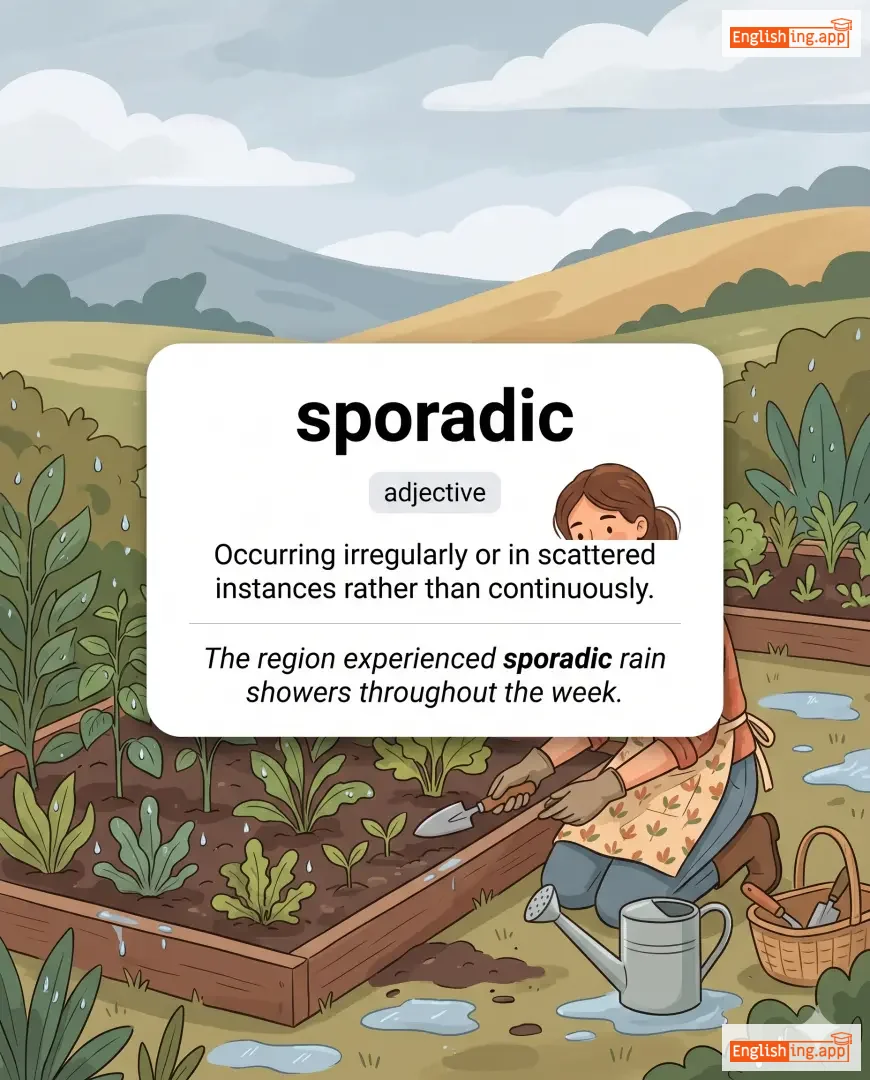
Occurring irregularly or in scattered instances rather than continuously.
••••••
|
The region experienced sporadic rain showers throughout the week.
その地域は1週間にわたって散発的な雨に見舞われました。
••••••
|
その地域は1週間にわたって散発的な雨が降りました。
Sono chiiki wa 1 shūkan ni watatte sanpatsuteki na ame ga furimashita.
••••••
|
- •••••• | - •••••• | - •••••• |
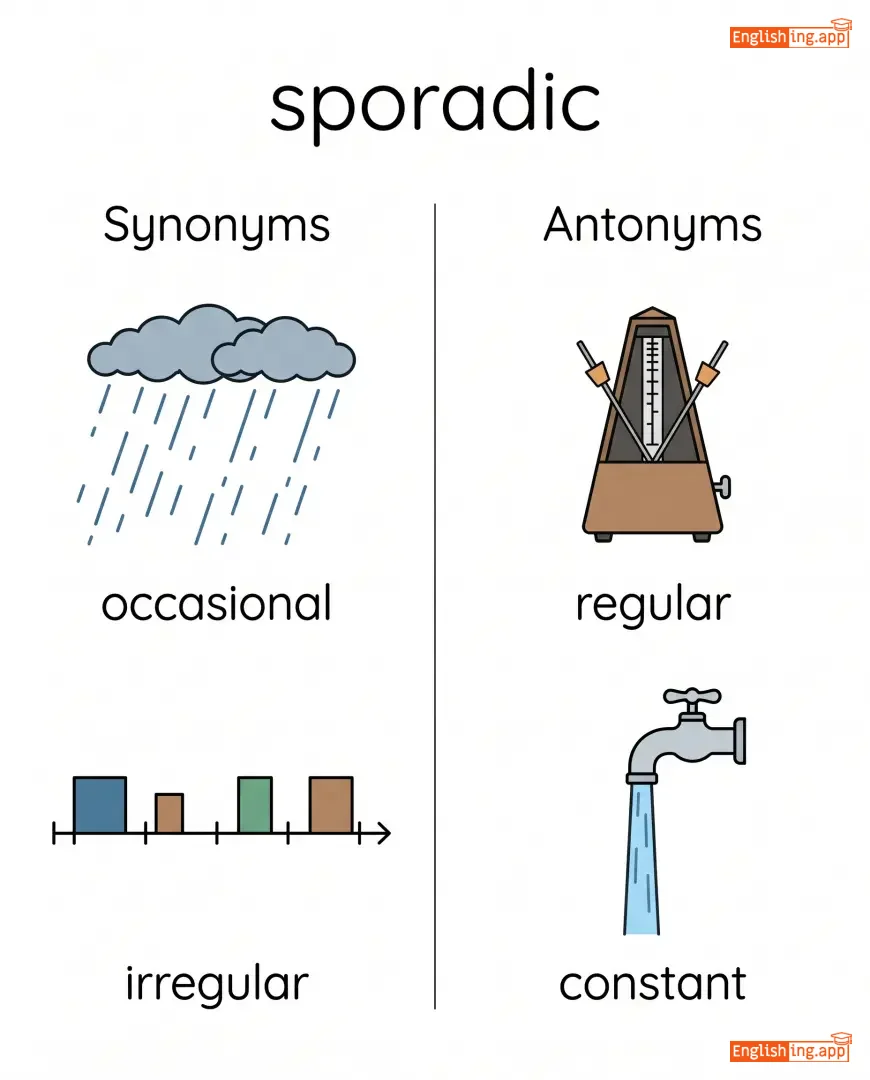
occasional, irregular, infrequent, scattered, random
••••••
|
regular, constant, continuous
••••••
|
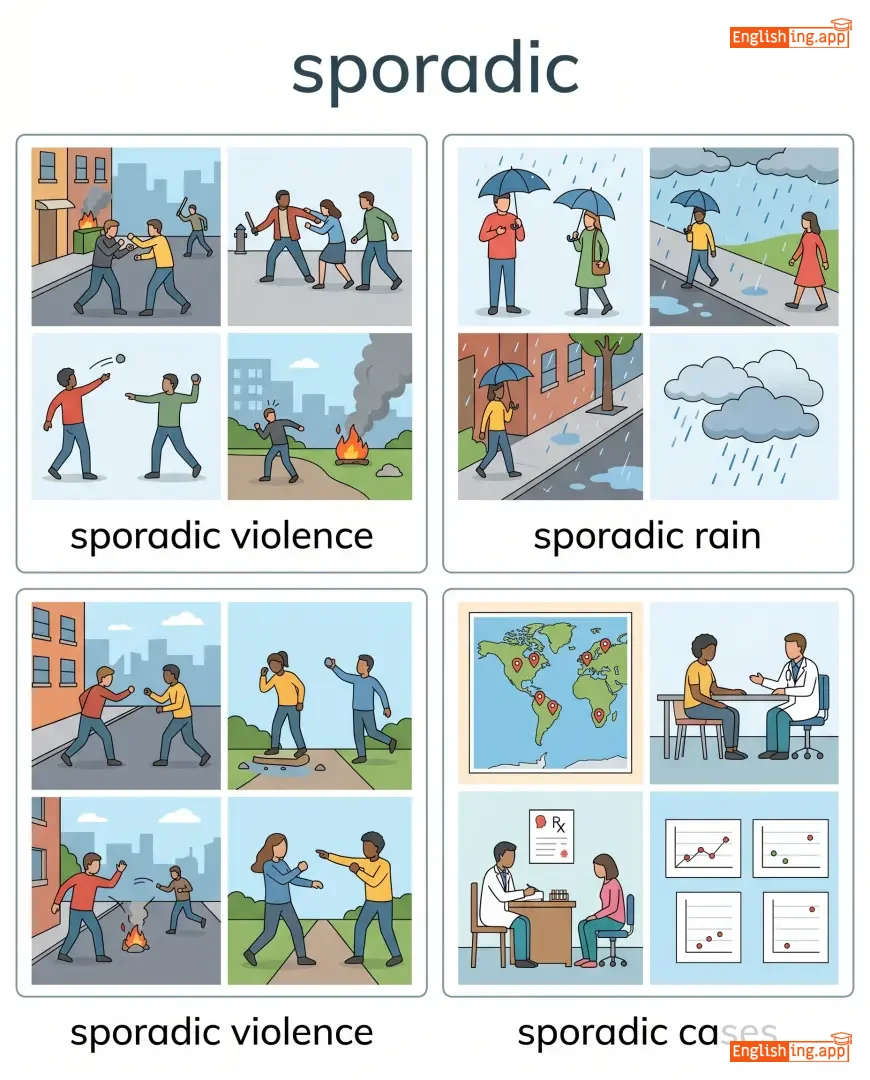
sporadic violence, sporadic rain, sporadic cases, sporadic attacks
••••••
|
Sporadicは、散発的な雨のように、ランダムに降ることを意味します。
••••••
|
|
#8304
😅
|
/ˈspuːnərɪzəm/
noun
(スプーナリズム)
••••••
|
- •••••• |
スプーナリズム
supunarizumu
••••••
|
- •••••• | - •••••• | - •••••• | - •••••• |
A verbal error in which the initial sounds of words are swapped to create a humorous effect.
••••••
|
He made a spoonerism by saying 'queer old dean' instead of 'dear old queen'. |
彼は『変な老院長』と言って『親愛なる老女王』の代わりにスプーナリズムを作った。
Kare wa 'hen na rōin chō' to itte 'shin'ai naru rō joō' no kawari ni supunarizumu o tsukutta.
••••••
|
- •••••• | - •••••• | - •••••• |
slip of the tongue, wordplay, malapropism, error
••••••
|
clarity, accuracy, correctness
••••••
|
classic spoonerism, humorous spoonerism, accidental spoonerism
••••••
|
スプーナリズムは、スプーン(spoon)で言葉を交換してユーモアを生み出すようなものです。
••••••
|
|
#8305
🎭
|
/spuːf/
noun/verb
(supūfu)
••••••
|
- •••••• |
ユーモアのある模倣
yūmoa no aru mohō
••••••
|
spoofed
supūfudo
••••••
|
spoofed
supūfudo
••••••
|
spoofs
supūfusu
••••••
|
spoofing
supūfingu
••••••
|
A humorous imitation of something, or to trick or parody someone or something.
••••••
|
The comedian spoofed the politician’s speech to entertain the audience.
コメディアンは政治家の演説を模倣して観客を楽しませました。
••••••
|
コメディアンは政治家の演説を模倣して観客を楽しませました。
Komedian wa seijika no enzetsu o mohō shite kankyaku o tanoshimemashita.
••••••
|
email spoofing
電子メールの詐欺
••••••
|
The creation of email messages with forged sender addresses.
••••••
|
電子メール詐欺
denshīmeru sagi
••••••
|
parody, satire, mockery, hoax, prank
••••••
|
seriousness, authenticity, truth
••••••
|
spoof movie, spoof comedy, spoof email, spoof character
••••••
|
Spoof = だますためのユーモアやパロディ。
••••••
|
|
#8306
🌟
|
/spɒnˈteɪniəs/
adjective
(スパウンテイネス)
••••••
|
- •••••• |
自発的
jihatsuteki
••••••
|
- •••••• | - •••••• | - •••••• | - •••••• |
Happening naturally without planning or external cause; impulsive or unplanned.
••••••
|
Their spontaneous trip to the mountains turned out to be the highlight of the summer. |
彼らの自発的な山への旅行は夏のハイライトとなった。
Karera no jihatsuteki na yama e no ryokou wa natsu no hairaito to natta.
••••••
|
spontaneous combustion |
The sudden ignition of a substance without an external flame or spark.
••••••
|
自発的発火
jihatsuteki hakka
••••••
|
impulsive, instinctive, unplanned, voluntary, automatic
••••••
|
planned, deliberate, calculated
••••••
|
spontaneous decision, spontaneous laughter, spontaneous action, spontaneous reaction
••••••
|
自発的は自然に来るもの、例えば自発的な笑顔。
••••••
|
|
#8307
✨
|
/ˌspɑːntəˈneɪəti/
noun
(スポンテネイティ)
••••••
|
|
自発性
jihatsusei
••••••
|
- •••••• | - •••••• | - •••••• | - •••••• |
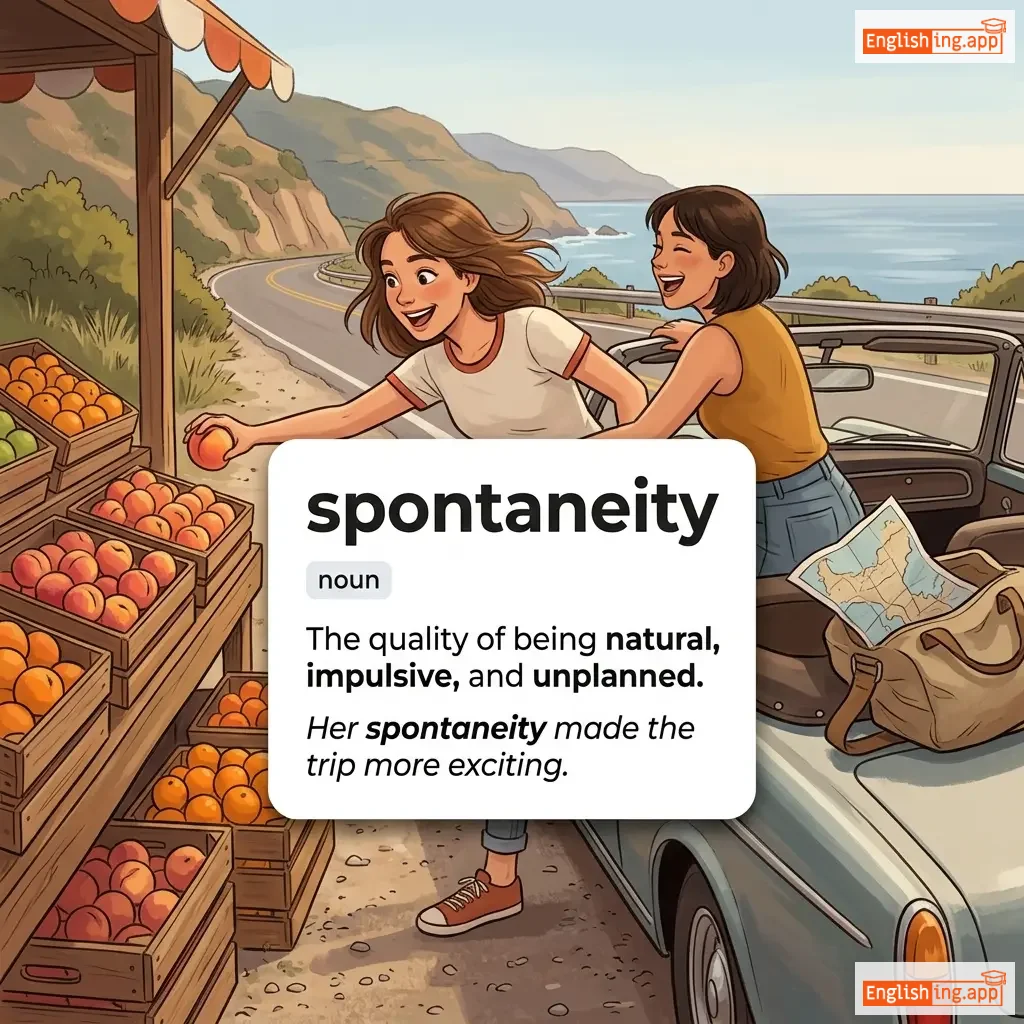
The quality of being natural, impulsive, and unplanned.
••••••
|
Her spontaneity made the trip more exciting.
ハー スポンテネイティ メイド ザ トリップ モア エキサイティング。
••••••
|
彼女の自発性は旅行をもっと刺激的にした。
kanojo no jihatsusei wa ryokou o motto shigekiteki ni shita.
••••••
|
- •••••• | - •••••• | - •••••• |
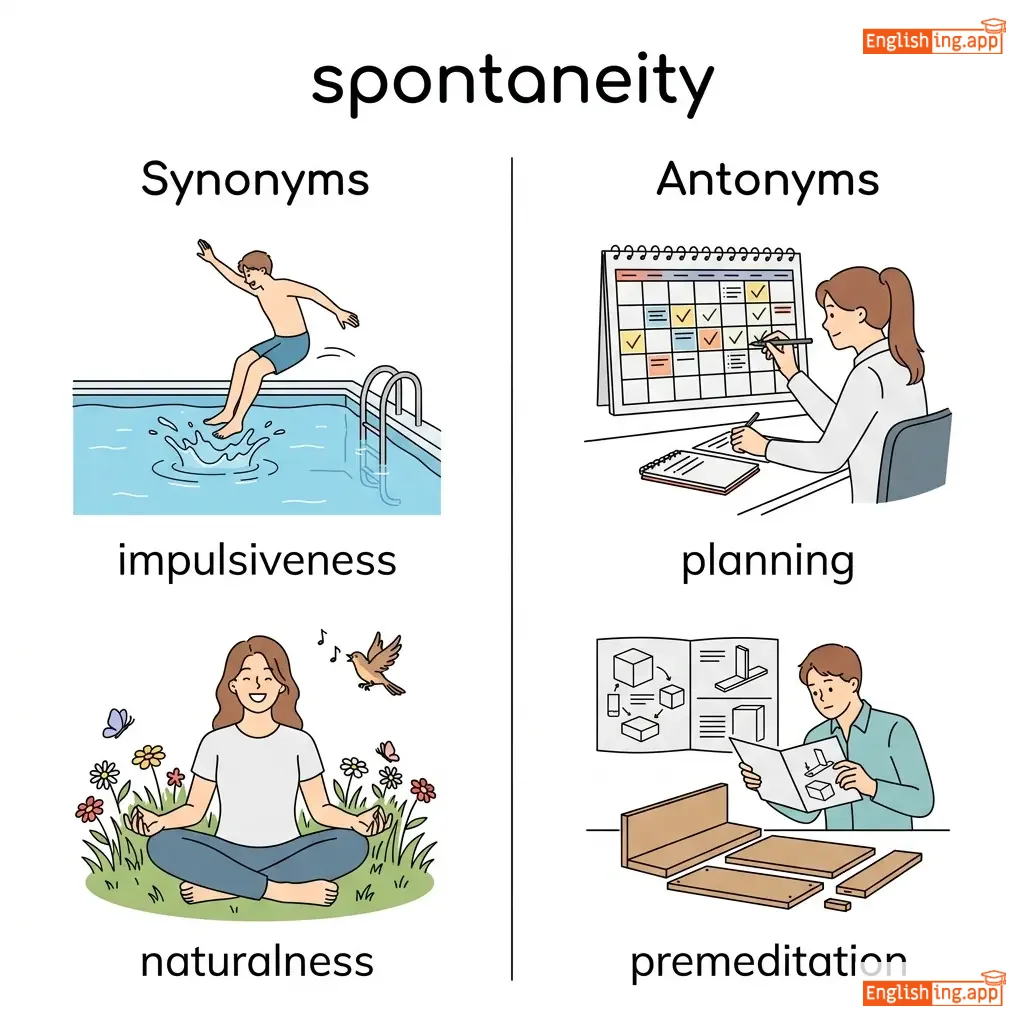
impulsiveness, naturalness, improvisation, freedom
••••••
|
planning, premeditation
••••••
|
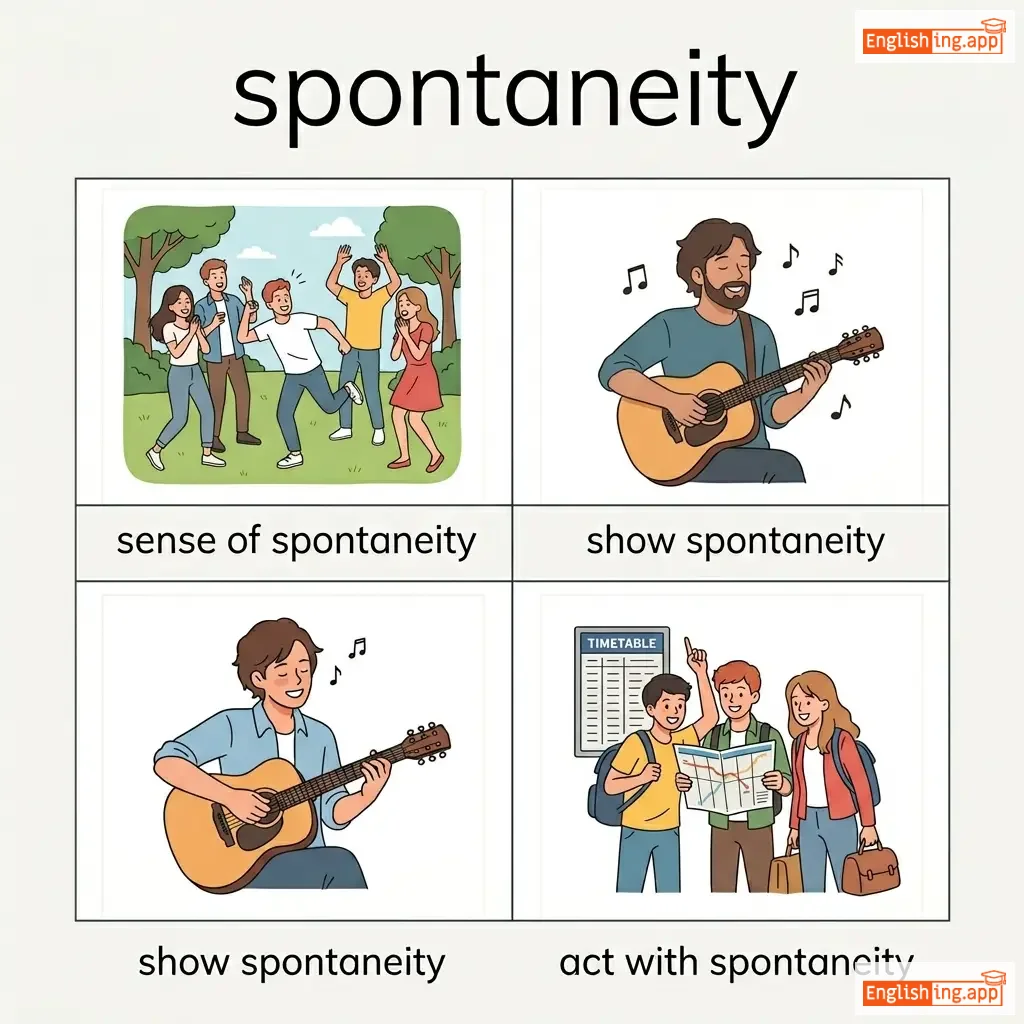
sense of spontaneity, show spontaneity, act with spontaneity
••••••
|
Jihatsusei means spontaneity, like 'ji' (self) 'hatsu' (emit) actions.
••••••
|
|
#8308
🔥
|
/ˌspoʊliˈeɪʃən/
noun
(スポリエーション)
••••••
|
- •••••• |
破壊
hakai
••••••
|
- •••••• | - •••••• | - •••••• | - •••••• |
The act of destroying or ruining something, often evidence or property.
••••••
|
The court punished the company for the spoliation of evidence. |
裁判所は証拠の破壊のために会社を罰しました。
Saibansho wa shōko no hakai no tame ni kaisha o bashimashita.
••••••
|
- •••••• | - •••••• | - •••••• |
destruction, ruin, devastation, obliteration
••••••
|
preservation, protection
••••••
|
spoliation of evidence, historical spoliation, spoliation claim
••••••
|
Spoil + nation = Spoliation は国を破壊することを意味します。
••••••
|
|
#8309
🚲
|
/spoʊk/
noun, verb
(スポーク)
••••••
|
- •••••• |
スポーク / 言った
supōku / itta
••••••
|
spoke
スポーク
••••••
|
spoken
スポークン
••••••
|
speaks
スピークス
••••••
|
speaking
スピーキング
••••••
|
As a noun, a bar connecting the center of a wheel to its rim; as the past tense of 'speak'.
••••••
|
The bicycle's spoke was bent after the accident.
自転車のスポークは事故後に曲がっていた。
••••••
|
自転車のスポークは事故後に曲がっていた。
Jitensha no supōku wa jiko-go ni magatte ita.
••••••
|
spoke out
発言する
••••••
|
To express one's opinion openly and forcefully.
••••••
|
意見を表明する
iken o hyōmei suru
••••••
|
rod, bar, strut, connector
••••••
|
hub, rim
••••••
|
wheel spoke, broken spoke, steel spoke, spoke out
••••••
|
Spoke は '言った' の過去形で、車輪のスポークでもあります。
••••••
|
Vocabulary Quiz
Test your vocabulary by matching words with their translations or meanings.
Login to take the quiz
Comments (0)
Share your thoughts and join the discussion.
Join the discussion by logging in
Login to CommentNo comments yet
Be the first to share your thoughts!