

翻訳
過去
過去分詞
三人称単数
動名詞
意味
例文
例文の翻訳
同義語
対義語
コロケーション
ニーモニック
Swipe left or right, or use the buttons. Tap image to zoom.
例文の翻訳
単語
Lesson 428Lesson 428 - マスクトグル
|
絵文字
|
単語 | Images | 翻訳 | 過去 | 過去分詞 | 三人称単数 | 動名詞 | 意味 | 例文 | 例文の翻訳 | 表現例 | 表現例の意味 | 表現例の翻訳 | 同義語 | 対義語 | コロケーション | ニーモニック |
|---|---|---|---|---|---|---|---|---|---|---|---|---|---|---|---|---|---|
|
#1
👖
|
/dʒiːnz/
noun
(ハピネス)
••••••
|
- •••••• |
幸せ
shiawase
••••••
|
- •••••• | - •••••• | - •••••• | - •••••• |
pants made of denim fabric, often blue, worn as casual clothing
••••••
|
He bought a new pair of blue jeans yesterday. |
彼女は賞を受け取ったとき、自分の幸せを隠せなかった。
Kanojo wa shō o uketotta toki, jibun no shiawase o kakesenakatta.
••••••
|
in one's jeans |
to be a natural trait or inherited characteristic
••••••
|
幸せの追求
shiawase no tsuikyū
••••••
|
denim pants, trousers, slacks, dungarees, denim
••••••
|
shorts, skirt
••••••
|
blue jeans, pair of jeans, tight jeans, ripped jeans, skinny jeans
••••••
|
幸せ、シアワセ(幸せ)を感じる!
••••••
|
|
#1
😂
|
/ˈlæftər/
noun
(ハピネス)
••••••
|
- •••••• |
笑い
warai
••••••
|
- •••••• | - •••••• | - •••••• | - •••••• |
the act or sound of laughing
••••••
|
The room was filled with laughter.
部屋は笑いで満ちていた。
••••••
|
部屋は笑いで満ちていた。
Heya wa warai de michite ita.
••••••
|
burst into laughter
笑い出す
••••••
|
to suddenly start laughing
••••••
|
笑い出す
Waraidasu
••••••
|
giggle, chuckle, laugh, mirth, joy
••••••
|
crying, sadness, tears
••••••
|
burst into laughter, loud laughter, uncontrollable laughter
••••••
|
Laughter → 笑い、笑うことで幸せを感じる。
••••••
|
|
#1
🕒
|
/ˈleɪtli/
adverb
(レイトリー)
••••••
|
- •••••• |
最近
saikin
••••••
|
- •••••• | - •••••• | - •••••• | - •••••• |
recently; during a period of time not long ago
••••••
|
I haven’t seen her much lately. |
最近彼女をあまり見かけません。
Saikin kanojo o amari mikakemasu.
••••••
|
- •••••• | - •••••• | - •••••• |
recently, newly, just, freshly, currently
••••••
|
formerly, previously, long ago
••••••
|
quite lately, very lately, recently lately
••••••
|
Late+ly は '最近' を意味します — だから lately は最近という意味です。
••••••
|
|
#1
🔦
|
/ˈleɪzər/
noun
(レーザー)
••••••
|
- •••••• |
レーザー
reezaa
••••••
|
- •••••• | - •••••• | - •••••• | - •••••• |
a device that emits a concentrated beam of light
••••••
|
The doctor used a laser to perform eye surgery. |
医師は目の手術のためにレーザーを使用しました。
Ishi wa me no shujutsu no tame ni reezaa o shiyō shimashita.
••••••
|
laser focus |
extreme and unwavering concentration on a task
••••••
|
レーザーフォーカス
reezaa fōkasu
••••••
|
beam, ray, light, emitter, photonic device
••••••
|
diffusion, scatter
••••••
|
laser beam, laser surgery, laser light, laser focus
••••••
|
レーザーは光のビーム — レーザーでレーザーフォーカス!
••••••
|
|
#1
🚗
|
/leɪn/
noun
(レイン)
••••••
|
- •••••• |
小道
komichi
••••••
|
- •••••• | - •••••• | - •••••• | - •••••• |
a narrow road or path, often in the countryside or for specific traffic
••••••
|
They walked down a quiet country lane. |
彼らは静かな田舎道を歩いていました。
Karera wa shizukana inakamichi o aruite imashita.
••••••
|
memory lane |
a metaphor for reminiscing about the past
••••••
|
思い出の小道
omoide no komichi
••••••
|
path, road, alley, track, passage
••••••
|
highway, main road
••••••
|
bus lane, fast lane, traffic lane, country lane
••••••
|
Laneは狭い道、小道もlane!
••••••
|
|
#1
🛬
|
/ˈlændɪŋ/
noun
(ランドイング)
••••••
|
- •••••• |
着陸
chakuriku
••••••
|
- •••••• | - •••••• | - •••••• | - •••••• |
the act of coming down to the ground or a surface from the air
••••••
|
The plane made a smooth landing on the runway. |
飛行機は滑走路にスムーズに着陸した。
hikōki wa kassōro ni sumūzu ni chakuriku shita.
••••••
|
crash landing |
an emergency or rough landing of an aircraft
••••••
|
緊急着陸
kinkyū chakuriku
••••••
|
arrival, touchdown, descent, docking, approach
••••••
|
takeoff, departure
••••••
|
safe landing, rough landing, landing gear, landing strip
••••••
|
Landingとは着陸のこと。飛行機が着陸するとき、みんなが‘やっと地面に降りた!’と言うようなものです。
••••••
|
|
#1
💡
|
/læmp/
noun
(幸福)
••••••
|
- •••••• |
幸福
kōfuku
••••••
|
- •••••• | - •••••• | - •••••• | - •••••• |
a device that produces light, often using electricity
••••••
|
She turned on the lamp beside the bed. |
彼女は賞を受け取ったとき、喜びを隠せなかった。
Kanojo wa shō o uketotta toki, yorokobi o kakusenakatta.
••••••
|
burn the midnight oil |
to work or study late into the night
••••••
|
幸福を追い求める
kōfuku o oi motomeru
••••••
|
light, lantern, bulb, torch, spotlight
••••••
|
darkness, shadow
••••••
|
table lamp, floor lamp, desk lamp, oil lamp
••••••
|
幸福は心の平和から生まれる。
••••••
|
|
#1
🪜
|
/ˈlædər/
noun
(レダー)
••••••
|
- •••••• |
はしご
hashigo
••••••
|
- •••••• | - •••••• | - •••••• | - •••••• |
a structure with steps used for climbing up or down
••••••
|
He used a ladder to reach the roof. |
彼は屋根に登るためにはしごを使いました。
Kare wa yane ni noboru tame ni hashigo o tsukaimashita.
••••••
|
climb the corporate ladder |
to advance in one's career or position within a company
••••••
|
キャリアのはしごを登る
kyaria no hashigo o noboru
••••••
|
stairway, steps, staircase, scale, rung
••••••
|
elevator, descent
••••••
|
wooden ladder, climb a ladder, ladder safety, ladder rung
••••••
|
はしごで上へ、成功へ向かって登ろう!
••••••
|
|
#1
🇰🇷
|
/kəˈriːən/
adjective
(韓国の)
••••••
|
- •••••• |
韓国の
Kankoku no
••••••
|
- •••••• | - •••••• | - •••••• | - •••••• |
relating to Korea, its people, language, or culture
••••••
|
We went to a Korean restaurant for dinner. |
私たちは夕食のために韓国のレストランに行きました。
Watashitachi wa yūshoku no tame ni Kankoku no resutoran ni ikimashita.
••••••
|
- •••••• | - •••••• | - •••••• |
Asian, East Asian, Korean-born, South Korean
••••••
|
non-Korean, foreign
••••••
|
Korean food, Korean language, Korean culture, Korean restaurant
••••••
|
韓国のは韓国から — 韓国料理はいつも辛くて美味しい 🇰🇷
••••••
|
|
#1
📖
|
/noʊn/
adjective
(ノン)
••••••
|
- •••••• |
知られている
shira rete iru
••••••
|
- •••••• | - •••••• | - •••••• | - •••••• |
recognized or familiar; something that is identified or acknowledged
••••••
|
He is a well-known actor in the country. |
彼は国でよく知られた俳優です。
Kare wa kuni de yoku shirareta haiyū desu.
••••••
|
known quantity |
something or someone familiar or predictable
••••••
|
知られた量
shira reta ryō
••••••
|
famous, familiar, recognized, established, acknowledged
••••••
|
unknown, obscure, unfamiliar
••••••
|
well known, little known, widely known, known fact
••••••
|
Known は '知られている' という意味 — '知られている = known' 📖
••••••
|
|
#1
🧰
|
/kɪt/
noun
(キット)
••••••
|
- •••••• |
道具セット
dōgu setto
••••••
|
- •••••• | - •••••• | - •••••• | - •••••• |
a set of tools, equipment, or materials used for a particular purpose
••••••
|
He bought a first aid kit for emergencies. |
彼は緊急事態に備えて救急キットを購入しました。
Kare wa kinkyū jitai ni sonaete kyūkyū kitto o kōnyū shimashita.
••••••
|
- •••••• | - •••••• | - •••••• |
set, pack, equipment, toolbox, gear
••••••
|
single item, piece
••••••
|
first aid kit, repair kit, tool kit, survival kit
••••••
|
Kit は、緊急時に役立つ道具セットです — 準備万端!
••••••
|
|
#1
👑
|
/ˈkɪŋdəm/
noun
(キングダム)
••••••
|
- •••••• |
王国
ōkoku
••••••
|
- •••••• | - •••••• | - •••••• | - •••••• |
a country or territory ruled by a king or queen
••••••
|
The kingdom was known for its rich culture and traditions. |
その王国は豊かな文化と伝統で知られていた。
Sono ōkoku wa yutakana bunka to dentō de shirarete ita.
••••••
|
animal kingdom |
the world of living animals
••••••
|
動物界
dōbutsukai
••••••
|
realm, empire, monarchy, domain, territory
••••••
|
republic, democracy, colony
••••••
|
ancient kingdom, powerful kingdom, united kingdom, vast kingdom
••••••
|
王国(Kingdom)とは王が支配する場所 👑
••••••
|
|
#1
🌴
|
/ˈdʒʌŋɡəl/
noun
(ジャングル)
••••••
|
- •••••• |
ジャングル
janguru
••••••
|
- •••••• | - •••••• | - •••••• | - •••••• |
a dense forest, typically in a tropical region, filled with wild plants and animals
••••••
|
They got lost in the thick jungle during their trip. |
彼らは旅行中に密林で迷子になった。
Karera wa ryokouchuu ni mitsurin de maigo ni natta.
••••••
|
the law of the jungle |
a situation where only the strongest survive or succeed
••••••
|
ジャングルの掟
janguru no okite
••••••
|
forest, wilderness, rainforest, woods, bush
••••••
|
desert, city, plain
••••••
|
dense jungle, tropical jungle, deep jungle, jungle trail
••••••
|
ジャングルで迷子にならないように、ジャングルは密な森だよ!
••••••
|
|
#1
📰
|
/ˈdʒɜːrnəlɪzəm/
noun
(ジャーナリズム)
••••••
|
- •••••• |
ジャーナリズム
jānarizumu
••••••
|
- •••••• | - •••••• | - •••••• | - •••••• |
the activity or profession of collecting, writing, and publishing news and articles for newspapers, magazines, or broadcast media
••••••
|
He studied journalism to become a news reporter. |
彼はニュースリポーターになるためにジャーナリズムを学びました。
Kare wa nyūsu ripōtā ni naru tame ni jānarizumu o manabimashita.
••••••
|
yellow journalism |
journalism that is based upon sensationalism and exaggeration
••••••
|
黄色いジャーナリズム
kiiroi jānarizumu
••••••
|
reporting, news writing, media, press, communication
••••••
|
fiction, silence
••••••
|
investigative journalism, professional journalism, modern journalism, online journalism, citizen journalism
••••••
|
ジャーナリズムはニュースを集めて書くこと、それがジャーナリズムです!
••••••
|
|
#1
💍
|
/ˈdʒuːəlri/
noun
(ジュエリー)
••••••
|
- •••••• |
宝石
hōseki
••••••
|
- •••••• | - •••••• | - •••••• | - •••••• |
personal ornaments such as necklaces, rings, or bracelets that are typically made from precious metals and stones
••••••
|
She wore gold jewelry at the wedding.
彼女は結婚式で金のジュエリーを身につけていました。
••••••
|
彼女は結婚式で金の宝石を身につけていました。
Kanojo wa kekkonshiki de kin no hōseki o mi ni tsukete imashita.
••••••
|
- •••••• | - •••••• | - •••••• |
ornaments, gems, accessories, trinkets, adornments
••••••
|
plainness, simplicity
••••••
|
gold jewelry, silver jewelry, wear jewelry, fine jewelry, handmade jewelry
••••••
|
ジュエリーは金や宝石で作られていて、体を美しく飾ります!
••••••
|
|
#1
🎯
|
/ɪnˈtɛnt/
noun
(インテント)
••••••
|
- •••••• |
意図
ito
••••••
|
- •••••• | - •••••• | - •••••• | - •••••• |
the purpose or reason behind an action; a strong determination to do something
••••••
|
Her intent was to improve the quality of education in the community. |
彼女の意図はコミュニティの教育の質を向上させることでした。
Kanojo no ito wa komyuniti no kyōiku no shitsu o kōjōsuru koto deshita.
••••••
|
good intent |
having honest or positive motivation behind an action
••••••
|
良い意図
yoi ito
••••••
|
purpose, aim, goal, objective, determination
••••••
|
indifference, neglect
••••••
|
criminal intent, clear intent, good intent, intent to harm
••••••
|
Intent = ‘in tent’ — テントの中に何かが隠れているように、意図も心の中に隠れています。
••••••
|
|
#1
🎷
|
/dʒæz/
noun
(ハピネス)
••••••
|
- •••••• |
幸せ
shiawase
••••••
|
- •••••• | - •••••• | - •••••• | - •••••• |
a style of music characterized by improvisation, syncopation, and strong rhythm, originating in African American communities
••••••
|
She loves listening to live jazz on weekends. |
彼女は賞を受け取ったとき、自分の幸せを隠せませんでした。
Kanojo wa shō o uketotta toki, jibun no shiawase o kakusemasendeshita.
••••••
|
all that jazz |
and similar things; and so on
••••••
|
幸せを追い求めて
shiawase o oimotomete
••••••
|
blues, swing, bebop, music, improvisation
••••••
|
silence, stillness
••••••
|
jazz music, jazz band, live jazz, smooth jazz, jazz club
••••••
|
幸せ:それは人生を照らす光!
••••••
|
|
#1
🦷
|
/dʒɔː/
noun
••••••
|
- •••••• | - •••••• | - •••••• | - •••••• | - •••••• | - •••••• |
the lower movable bone of the face that holds the teeth; the mouth area used for chewing and talking
••••••
|
The dentist examined my jaw for any signs of pain. |
- •••••• |
drop one's jaw |
to be extremely surprised or shocked
••••••
|
- •••••• |
chin, mouth, mandible, muzzle, jowl
••••••
|
skull, cranium
••••••
|
strong jaw, clenched jaw, jaw pain, square jaw, lower jaw
••••••
|
No •••••• |
|
#1
🥫
|
/dʒɑːr/
noun
(ジャー)
••••••
|
- •••••• |
ジャー
jaa
••••••
|
- •••••• | - •••••• | - •••••• | - •••••• |
a round glass or clay container with a wide mouth used for storing food or liquids
••••••
|
She kept the cookies in a glass jar.
彼女はガラスのジャーにクッキーを入れました。
••••••
|
彼女はガラスのジャーにクッキーを入れました。
Kanojo wa garasu no jaa ni kukkii o iremashita.
••••••
|
pickle jar
ピクルスジャー
••••••
|
a jar used to store pickles
••••••
|
ピクルスジャー
pikurusu jaa
••••••
|
container, pot, bottle, vessel, canister
••••••
|
bag, box
••••••
|
glass jar, cookie jar, pickle jar, jam jar
••••••
|
ジャー — そのままピクルスをジャーに入れる 🍶
••••••
|
|
#1
🧍♂️
|
/ˌaɪsəˈleɪʃən/
noun
(アイソレーション)
••••••
|
- •••••• |
隔離
kakuri
••••••
|
- •••••• | - •••••• | - •••••• | - •••••• |
the state of being separated from others; solitude or detachment
••••••
|
He lived in complete isolation after his retirement. |
彼は引退後、完全に隔離された生活をしていました。
Kare wa intai-go, kanzen ni kakuri sareta seikatsu o shiteimashita.
••••••
|
in isolation |
alone or without contact with others
••••••
|
隔離の中で
kakuri no naka de
••••••
|
seclusion, loneliness, separation, detachment, solitude
••••••
|
connection, inclusion, community
••••••
|
social isolation, in isolation, complete isolation
••••••
|
Isolation とは一人でいること — 'I so alone' → 隔離 🧍♂️
••••••
|
|
#1
☪️
|
/ɪsˈlɑːm/
noun
(イスラム)
••••••
|
- •••••• |
イスラム教
Isuramu kyō
••••••
|
- •••••• | - •••••• | - •••••• | - •••••• |
the religion founded by the Prophet Muhammad, based on belief in one God (Allah)
••••••
|
Islam emphasizes peace, justice, and compassion. |
イスラム教は平和、正義、そして慈悲を強調します。
Isuramu kyō wa heiwa, seigi, soshite jihi o kyōchō shimasu.
••••••
|
- •••••• | - •••••• | - •••••• |
muslim faith, religion of peace, monotheism
••••••
|
atheism, polytheism
••••••
|
practice Islam, convert to Islam, teachings of Islam
••••••
|
イスラムは平和を意味します — イスラムは平和を意味します ☪️
••••••
|
|
#1
😏
|
/aɪˈrɒnɪkli/
adverb
(アイロニカリー)
••••••
|
- •••••• |
皮肉にも
hiniku ni mo
••••••
|
- •••••• | - •••••• | - •••••• | - •••••• |
in a way that is contrary to what is expected or intended
••••••
|
Ironically, the fire station burned down. |
皮肉にも、消防署が焼け落ちた。
Hiniku ni mo, shōbōsho ga yakeochita.
••••••
|
- •••••• | - •••••• | - •••••• |
sarcastically, paradoxically, unexpectedly, amusingly
••••••
|
literally, seriously
••••••
|
ironically enough, say ironically, ironically true
••••••
|
Ironicallyは皮肉、予期せぬことが起きる時に使います。
••••••
|
|
#1
💌
|
/ˌɪnvɪˈteɪʃən/
noun
(ハピネス)
••••••
|
- •••••• |
幸せ
shiawase
••••••
|
- •••••• | - •••••• | - •••••• | - •••••• |
a written or spoken request to attend an event or to participate in something
••••••
|
She sent me an invitation to her wedding. |
彼女は賞を受け取ったとき、自分の幸せを隠すことができませんでした。
Kanojo wa shō o uketotta toki, jibun no shiawase o kakusu koto ga dekimasen deshita.
••••••
|
extend an invitation |
to formally invite someone
••••••
|
幸せの追求
shiawase no tsuikyū
••••••
|
request, call, summon, appeal, proposal
••••••
|
rejection, refusal
••••••
|
send invitation, wedding invitation, formal invitation, accept invitation
••••••
|
幸せ = 心が喜びで満たされる時。
••••••
|
|
#1
👻
|
/ɪnˈvɪzɪbəl/
adjective
(インヴィジブル)
••••••
|
- •••••• |
見えない
mienai
••••••
|
- •••••• | - •••••• | - •••••• | - •••••• |
unable to be seen; not visible to the eye
••••••
|
The stars became invisible as the sun rose. |
太陽が昇ると、星々は見えなくなった。
Taiyō ga noboru to, hoshiboshi wa mienaku natta.
••••••
|
invisible hand |
an unseen force guiding economic or social outcomes
••••••
|
見えない手
mienai te
••••••
|
unseen, hidden, concealed, imperceptible, obscure
••••••
|
visible, clear, apparent
••••••
|
invisible force, invisible power, invisible ink, invisible barrier
••••••
|
Invisible = 見えない = 見ることができない
••••••
|
|
#1
⚙️
|
/ɪnˈvɛnʃən/
noun
(インヴェンション)
••••••
|
|
発明
hatsumei
••••••
|
- •••••• | - •••••• | - •••••• | - •••••• |
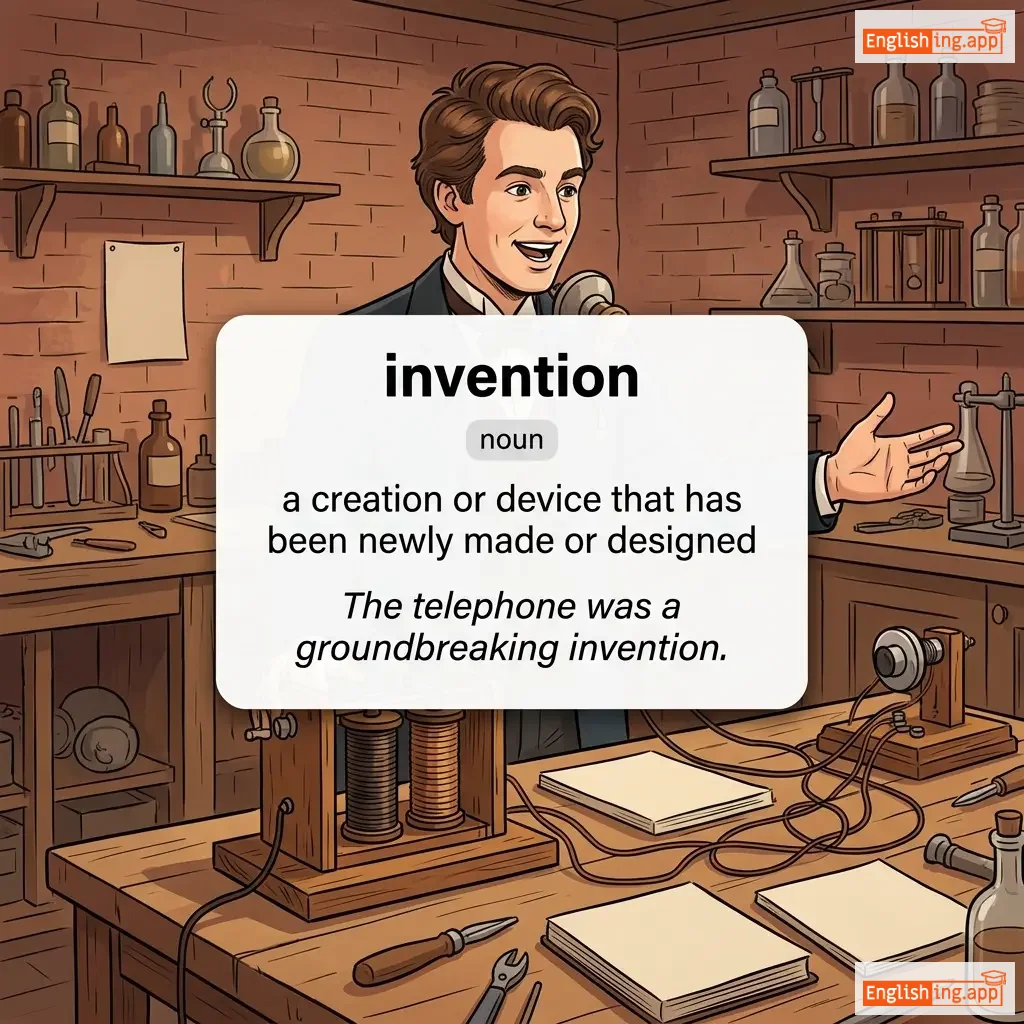
a creation or device that has been newly made or designed
••••••
|
The telephone was a groundbreaking invention. |
電話は画期的な発明でした。
Denwa wa kakiteki na hatsumei deshita.
••••••
|
mother of invention |
necessity drives people to create solutions
••••••
|
必要は発明の母
Hitsuyō wa hatsumei no haha
••••••
|
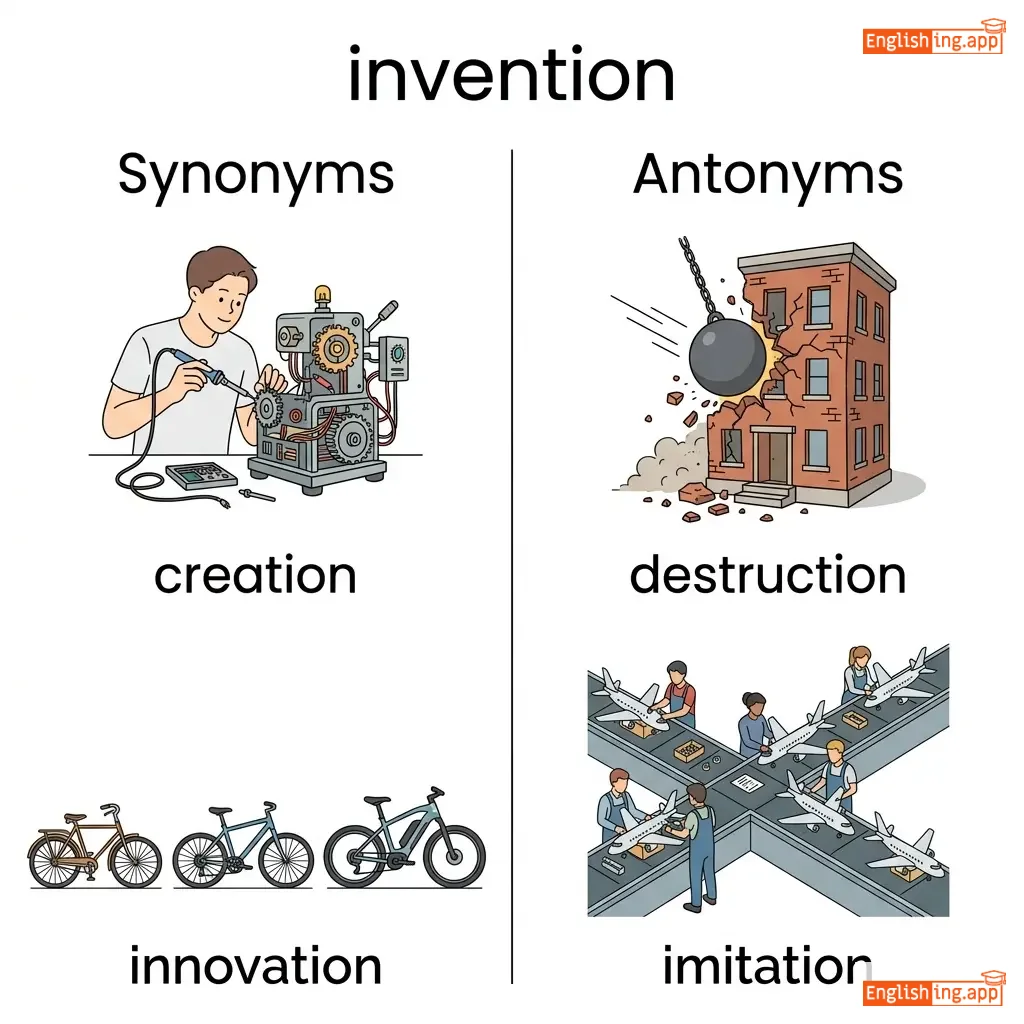
creation, innovation, discovery, contraption, device
••••••
|
destruction, imitation
••••••
|
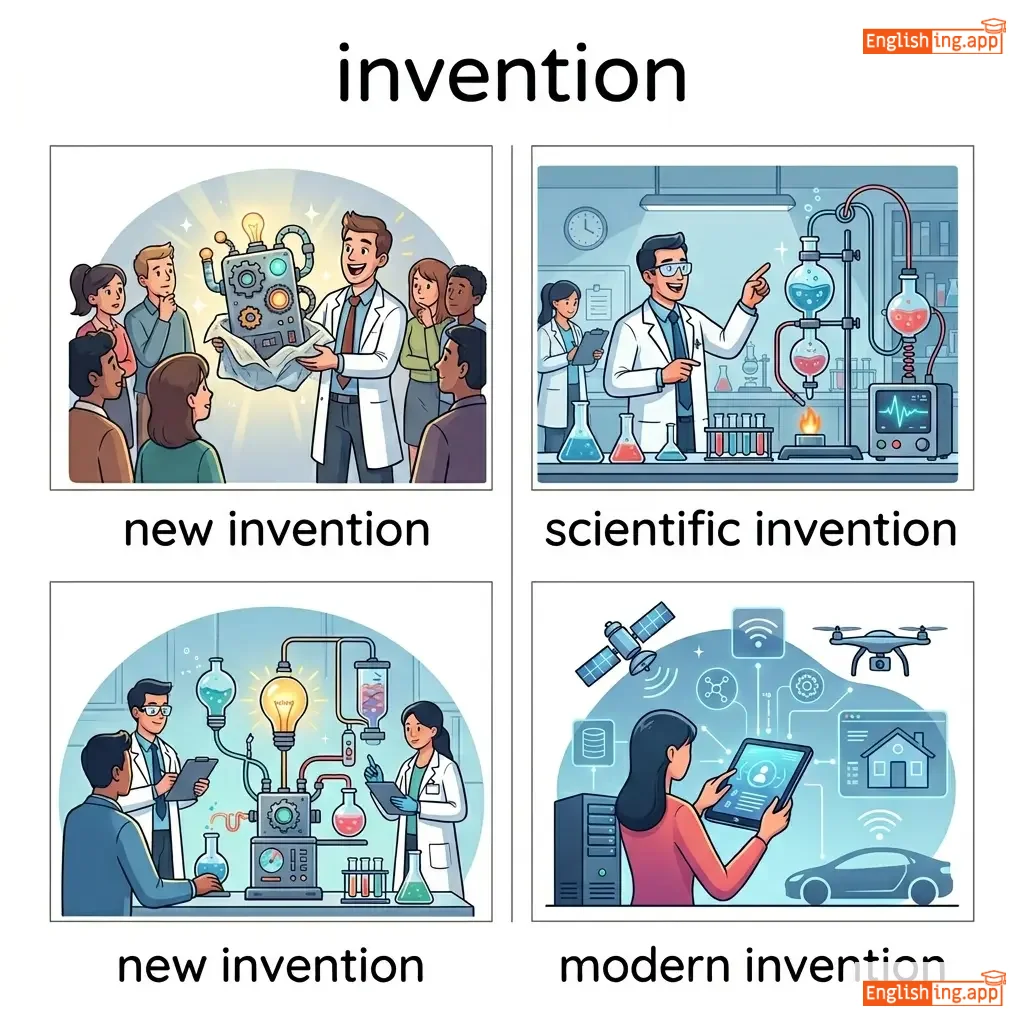
new invention, scientific invention, modern invention, patent an invention
••••••
|
発明は新しいものを作り出すことです!
••••••
|
|
#1
💡
|
/ɪnˈvɛnt/
verb
(インベント)
••••••
|
- •••••• |
発明する
hatsumei suru
••••••
|
invented
インヴェンテッド
••••••
|
invented
インヴェンテッド
••••••
|
invents
インヴェンツ
••••••
|
inventing
インヴェンティング
••••••
|
to create or design something that has not existed before
••••••
|
Thomas Edison invented the electric bulb.
トーマス・エジソンは電球を発明しました。
••••••
|
トーマス・エジソンは電球を発明しました。
Tōmasu Ejison wa denkyū o hatsumei shimashita.
••••••
|
reinvent the wheel
車輪を再発明する
••••••
|
to waste time creating something that already exists
••••••
|
既存のものを再度作り直す
kison no mono o saido tsukurinaosu
••••••
|
create, design, develop, originate, devise
••••••
|
destroy, copy, imitate
••••••
|
invent a machine, invent a device, invent story, invent technology
••••••
|
発明 = 発 + 明 (明 = 明るい) — 新しい明るいものを発明すること。
••••••
|
|
#1
⚔️
|
/ɪnˈveɪd/
verb
(インベード)
••••••
|
- •••••• |
侵入する
shin'nyū suru
••••••
|
invaded
インベイデッド
••••••
|
invaded
インベイデッド
••••••
|
invades
インベイズ
••••••
|
invading
インベイディング
••••••
|
to enter a place or country forcefully, especially as an enemy
••••••
|
The army invaded the neighboring country.
軍隊は隣国に侵入しました。
••••••
|
軍隊は隣国に侵入しました。
Guntai wa ringoku ni shin'nyū shimashita.
••••••
|
invade someone's privacy
誰かのプライバシーを侵害する
••••••
|
to intrude into someone's personal life
••••••
|
誰かのプライバシーを侵害する
Dareka no puraibashī o shingai suru
••••••
|
attack, conquer, occupy, overrun, intrude
••••••
|
withdraw, retreat, leave
••••••
|
invade territory, invade privacy, invaded country, invading force
••••••
|
In + Vade (入る) — 入って侵入することがinvadeです。
••••••
|
|
#1
⏱️
|
/ˈɪntərvəl/
noun
(インターバル)
••••••
|
- •••••• |
インターバル
intābaru
••••••
|
- •••••• | - •••••• | - •••••• | - •••••• |
a period of time between two events or points; a pause or break in activity
••••••
|
There was a short interval between the two performances.
二つの公演の間には短いインターバルがありました。
••••••
|
二つの公演の間には短いインターバルがありました。
Futatsu no kōen no aida ni wa mijikai intābaru ga arimashita.
••••••
|
at regular intervals
定期的なインターバルで
••••••
|
repeatedly at the same time gaps
••••••
|
定期的なインターバルで
Teikiteki na intābaru de
••••••
|
gap, break, pause, duration, span
••••••
|
continuation, flow
••••••
|
time interval, regular interval, short interval, interval training
••••••
|
インターバルは時間の間の小休止、まるでイベント間のポーズ。
••••••
|
|
#1
🏠
|
/ɪnˈtɪəriər/
noun
(インテリア)
••••••
|
- •••••• |
インテリア
interia
••••••
|
- •••••• | - •••••• | - •••••• | - •••••• |
the inside part of something; inner area of a place or object
••••••
|
The interior of the hotel was beautifully decorated. |
ホテルのインテリアは美しく装飾されていました。
Hoteru no interia wa utsukushiku shōshoku sarete imashita.
••••••
|
interior design |
the art or process of designing the inside of a building or room
••••••
|
インテリアデザイン
interia dezain
••••••
|
inside, inner part, core, center, internal area
••••••
|
exterior, outside
••••••
|
interior design, interior wall, interior space, car interior
••••••
|
インテリアは「中の部分」を意味し、美しいデザインでさらに良くなります! 🏠
••••••
|
|
#1
🚫
|
/ˌɪntərˈfɪər/
verb
(ハピネス)
••••••
|
- •••••• |
幸せ
shiawase
••••••
|
interfered
••••••
|
interfered
••••••
|
interferes
••••••
|
interfering
••••••
|
to become involved in something that is not your concern; to hinder or obstruct
••••••
|
Parents should not interfere in their children’s personal choices.
彼女は賞を受け取ったとき、自分の幸せを隠すことができませんでした。
••••••
|
彼女は賞を受け取ったとき、自分の幸せを隠すことができませんでした。
Kanojo wa shō o uketotta toki, jibun no shiawase o kakusu koto ga dekimasen deshita.
••••••
|
interfere with
幸せの追求
••••••
|
to get involved in a way that causes problems or prevents something from happening
••••••
|
幸せの追求
shiawase no tsuikyū
••••••
|
meddle, obstruct, hinder, intrude, intervene
••••••
|
assist, support, cooperate
••••••
|
interfere with, interfere in, badly interfere, refuse to interfere
••••••
|
幸せを追求することは、喜びの一歩一歩です。
••••••
|
Vocabulary Quiz
Test your vocabulary by matching words with their translations or meanings.
Login to take the quiz
Comments (0)
Share your thoughts and join the discussion.
Join the discussion by logging in
Login to CommentNo comments yet
Be the first to share your thoughts!