

翻訳
過去
過去分詞
三人称単数
動名詞
意味
例文
例文の翻訳
同義語
対義語
コロケーション
ニーモニック
Swipe left or right, or use the buttons. Tap image to zoom.
例文の翻訳
単語
Lesson 227Lesson 227 - マスクトグル
|
絵文字
|
単語 | Images | 翻訳 | 過去 | 過去分詞 | 三人称単数 | 動名詞 | 意味 | 例文 | 例文の翻訳 | 表現例 | 表現例の意味 | 表現例の翻訳 | 同義語 | 対義語 | コロケーション | ニーモニック |
|---|---|---|---|---|---|---|---|---|---|---|---|---|---|---|---|---|---|
|
#6780
💪
|
/ˈpoʊtənsi/
noun
(ポテンシー)
••••••
|
- •••••• |
効力
kōryoku
••••••
|
- •••••• | - •••••• | - •••••• | - •••••• |
The power or ability of something to affect or influence; strength or effectiveness.
••••••
|
The potency of the new medicine amazed the doctors. |
新薬の効力に医者たちは驚きました。
Shinyaku no kōryoku ni ishatachi wa odorokimashita.
••••••
|
- •••••• | - •••••• | - •••••• |
strength, power, force, effectiveness, vigor
••••••
|
weakness, impotence, ineffectiveness
••••••
|
potency of medicine, sexual potency, potency level, potency of herbs
••••••
|
Potencyは効力を意味し、powerが効力を高めます。
••••••
|
|
#6781
👩⚕️
|
/prækˈtɪʃ.ən.ər/
noun
(プラクティショナー)
••••••
|
- •••••• |
実務家
jitsumuka
••••••
|
- •••••• | - •••••• | - •••••• | - •••••• |
a person actively engaged in a profession, especially medicine or law
••••••
|
She is a skilled medical practitioner. |
彼女は優れた医療実務家です。
Kanojo wa sugureta iryō jitsumuka desu.
••••••
|
- •••••• | - •••••• | - •••••• |
professional, specialist, expert, clinician, doctor
••••••
|
amateur, novice, layman
••••••
|
legal practitioner, medical practitioner, experienced practitioner
••••••
|
Practitioner はその職業を実践している人で、医者や弁護士のような人です。
••••••
|
|
#6782
🎻
|
/ˈpræk.tɪs/
noun/verb
(プラクティス)
••••••
|
|
練習
renshuu
••••••
|
practiced
プラクティスド
••••••
|
practiced
プラクティスド
••••••
|
practices
プラクティセズ
••••••
|
practicing
プラクティシング
••••••
|
the act of doing something repeatedly to improve skill, or the actual application of an idea
••••••
|
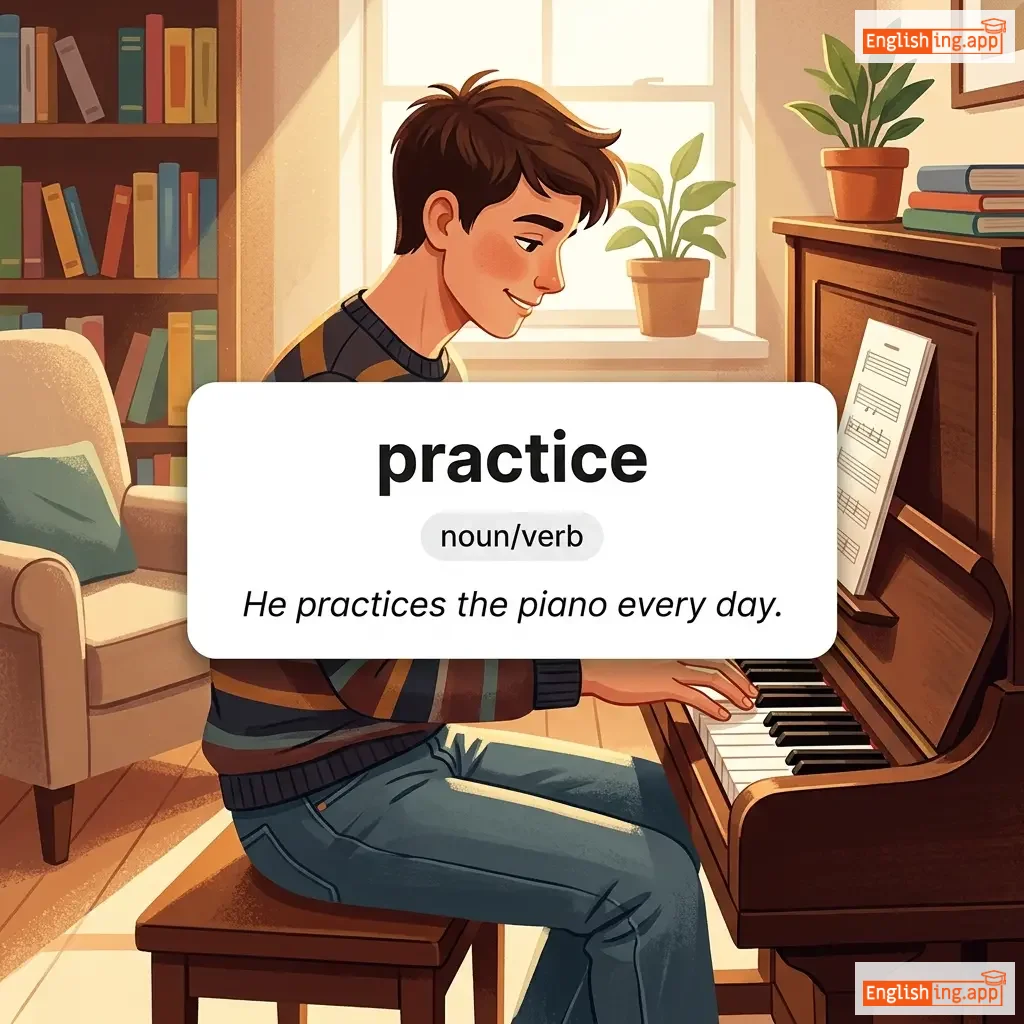
He practices the piano every day.
彼は毎日ピアノを練習します。
••••••
|
彼は毎日ピアノを練習します。
Kare wa mainichi piano wo renshuu shimasu.
••••••
|
in practice
実際には
••••••
|
in reality, as opposed to theory
••••••
|
実際には
jissai ni wa
••••••
|
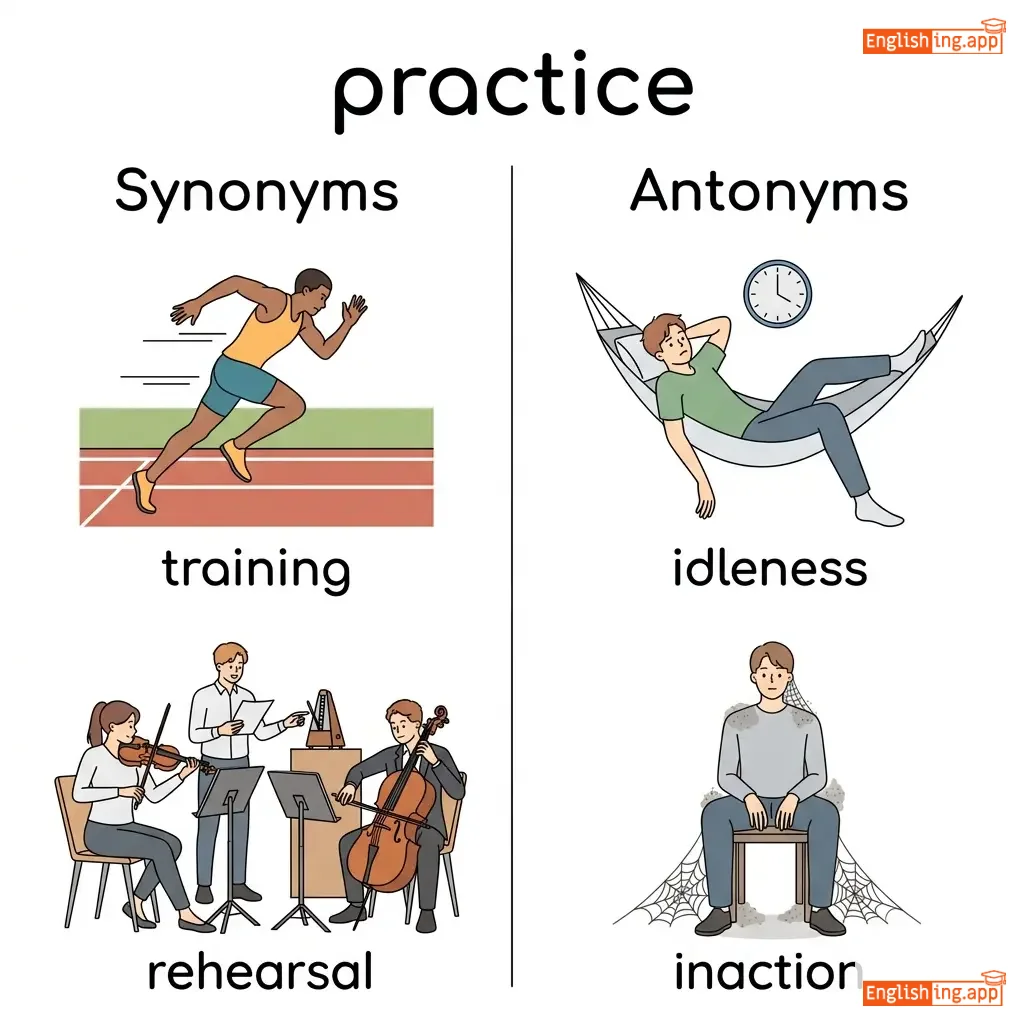
training, rehearsal, exercise, habit, application
••••••
|
idleness, inaction, neglect
••••••
|
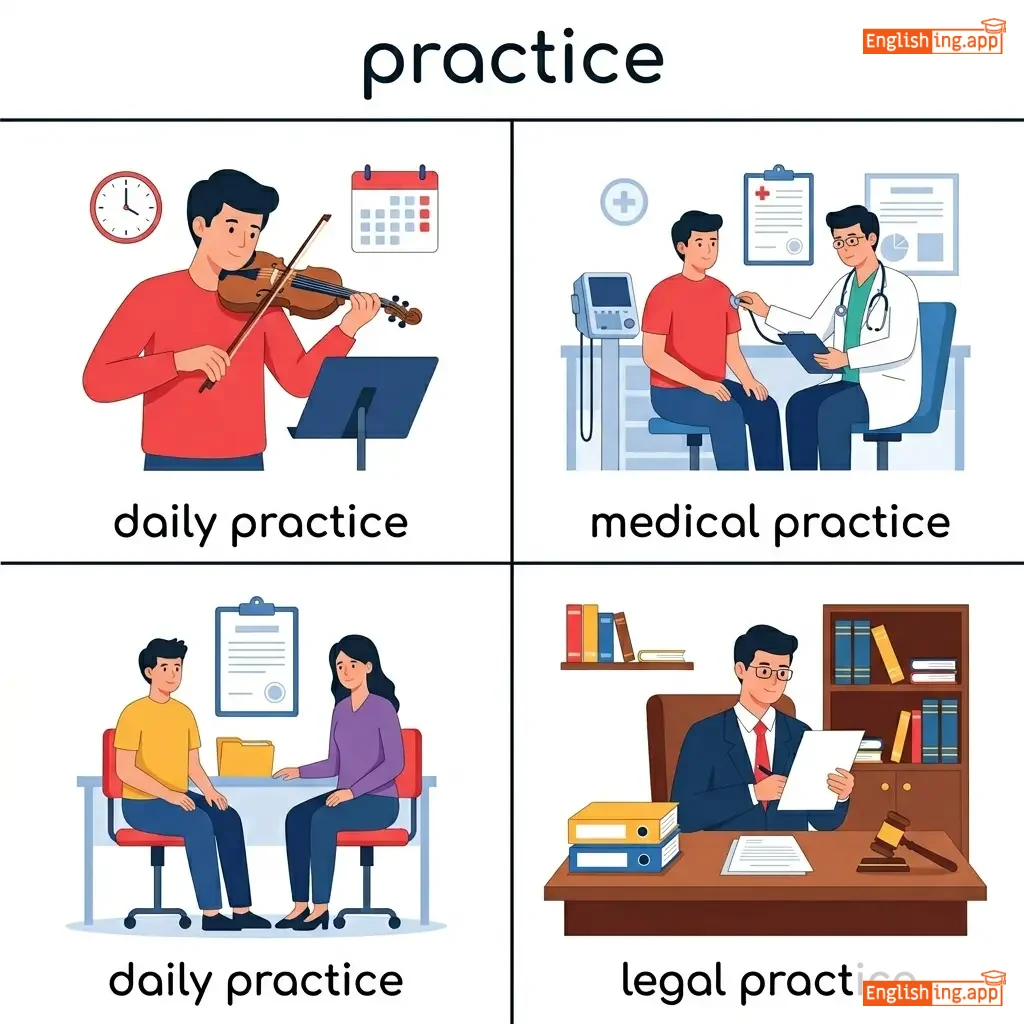
daily practice, medical practice, legal practice, practice session
••••••
|
練習で完璧になる - 'Practice makes perfect'
••••••
|
|
#6783
🔧
|
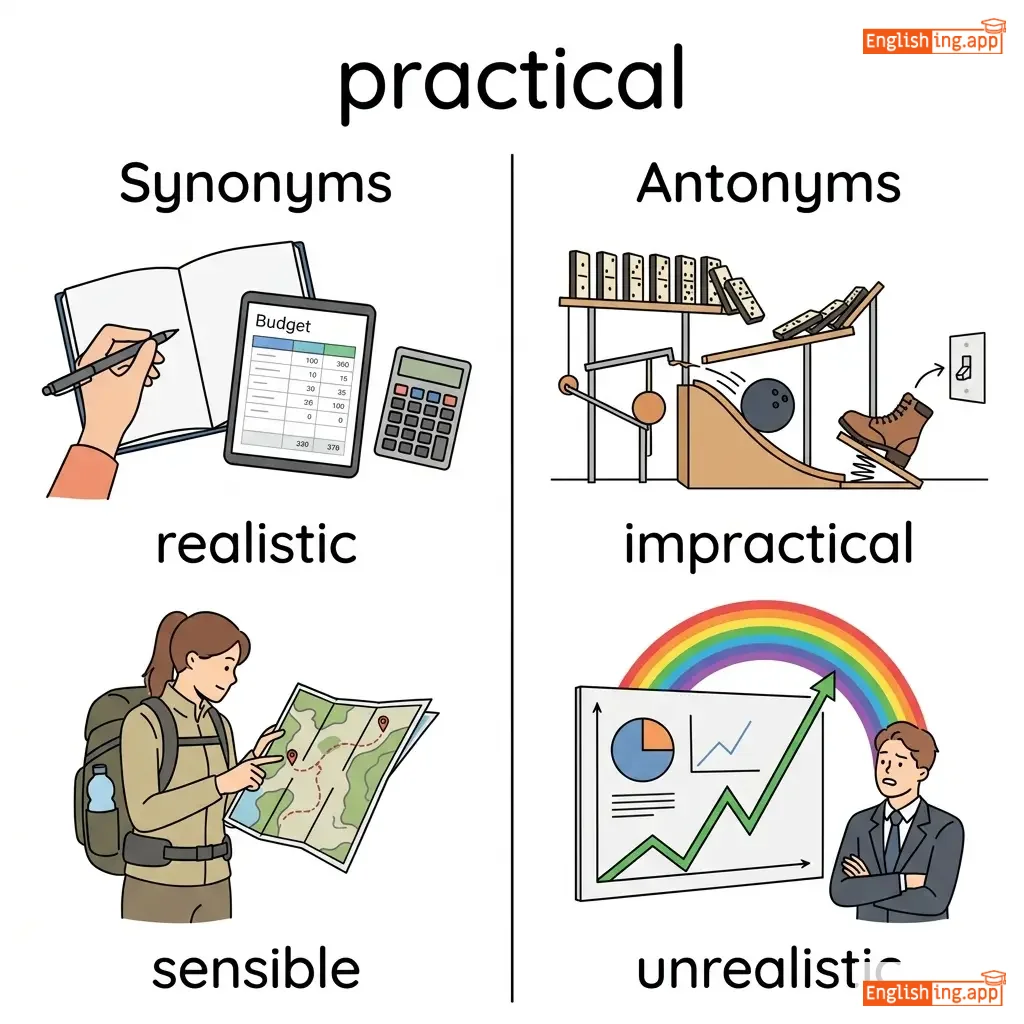
/ˈpræk.tɪ.kəl/
adjective
(プラクティカル)
••••••
|
|
実用的な
jitsuyō-teki na
••••••
|
- •••••• | - •••••• | - •••••• | - •••••• |
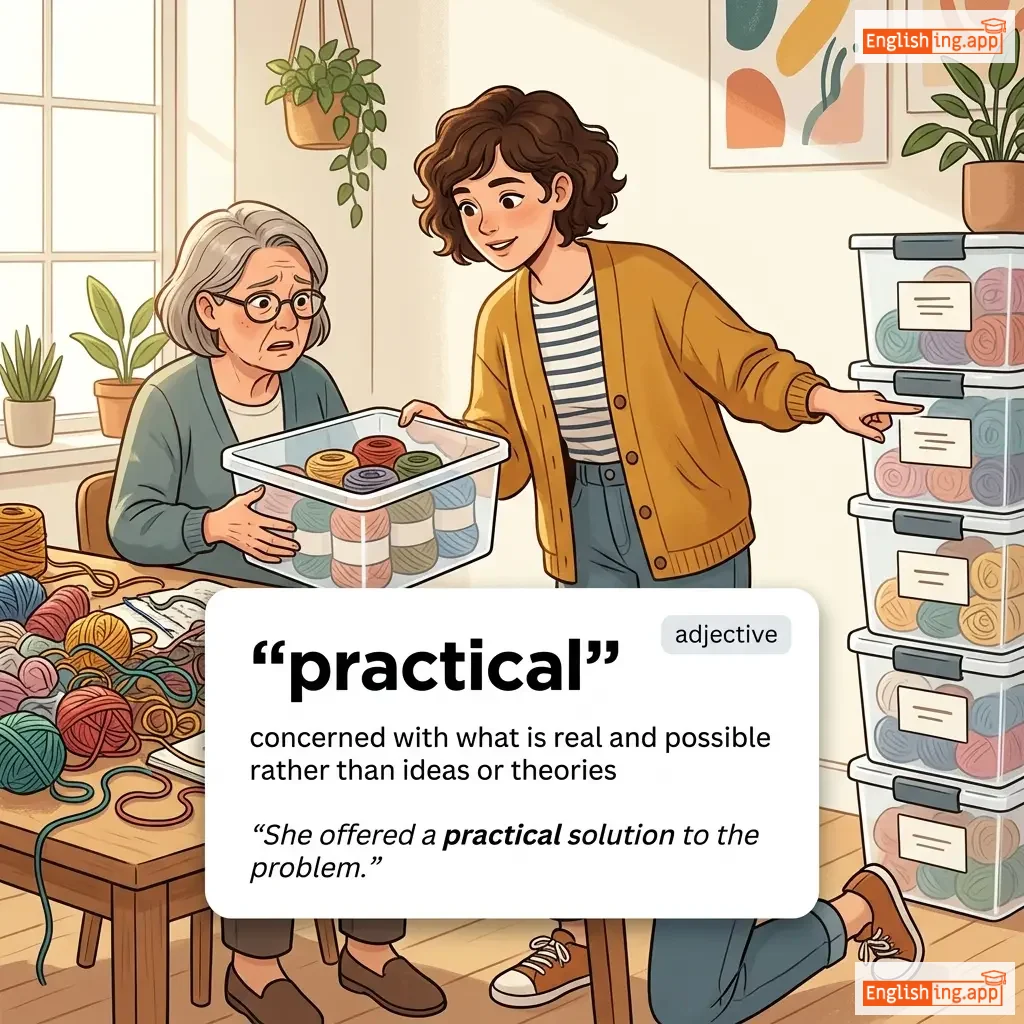
concerned with what is real and possible rather than ideas or theories
••••••
|
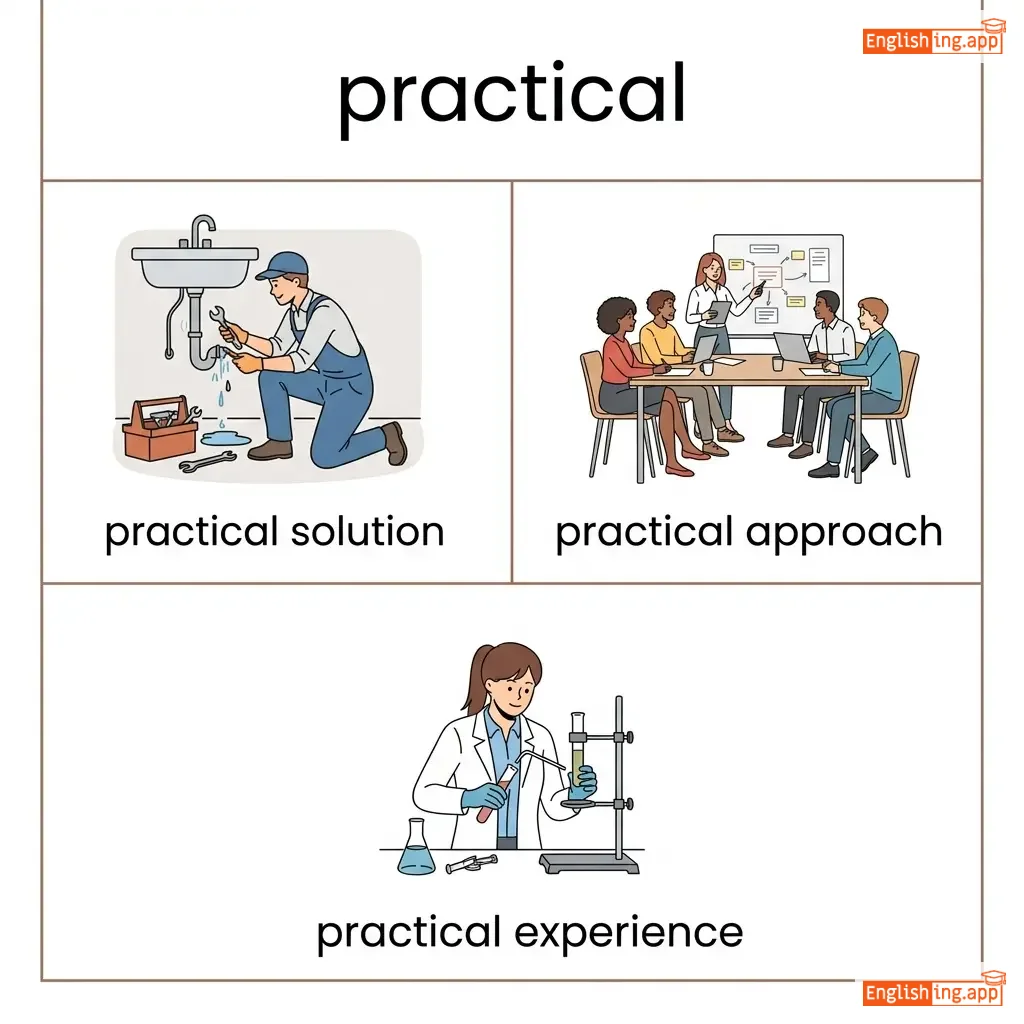
She offered a practical solution to the problem. |
彼女は問題に対して実用的な解決策を提供しました。
Kanojo wa mondai ni taishite jitsuyō-teki na kaiketsu-saku o teikyō shimashita.
••••••
|
practice makes perfect |
the more you practice something, the better you become at it
••••••
|
練習が完璧を作る
renshū ga kanpeki o tsukuru
••••••
|
realistic, sensible, useful, logical, pragmatic
••••••
|
impractical, unrealistic, theoretical
••••••
|
practical solution, practical approach, practical experience, practical advice
••••••
|
実用的なことは理論ではなく、実際に行動すること
••••••
|
|
#6784
🛠️
|
/ˈpræk.tɪ.kə.bəl/
adjective
(プラクティカブル)
••••••
|
- •••••• |
実行可能
jikkou kanou
••••••
|
- •••••• | - •••••• | - •••••• | - •••••• |
able to be done or put into practice successfully
••••••
|
The plan is not practicable without more resources.
その計画はより多くのリソースがなければ実行不可能です。
••••••
|
その計画はより多くのリソースがなければ実行不可能です。
Sono keikaku wa yori ooku no risōsu ga nakereba jikkou fukanou desu.
••••••
|
- •••••• | - •••••• | - •••••• |
feasible, workable, possible, viable, achievable
••••••
|
impracticable, impossible, unworkable
••••••
|
practicable solution, practicable method, practicable approach
••••••
|
実行できるならそれは実行可能だ。
••••••
|
|
#6785
🪶
|
/ˈpaʊ.waʊ/
noun
(パウワウ)
••••••
|
- •••••• |
インフォーマルミーティング
infōmaru mītingu
••••••
|
- •••••• | - •••••• | - •••••• | - •••••• |
an informal meeting or conference to discuss something
••••••
|
The team held a quick powwow before the presentation. |
チームはプレゼンテーションの前に迅速なインフォーマルミーティングを開催しました。
Chīmu wa purezentēshon no mae ni jinsoku na infōmaru mītingu o kaisai shimashita.
••••••
|
- •••••• | - •••••• | - •••••• |
meeting, gathering, discussion, huddle, conference
••••••
|
silence, isolation, solitude
••••••
|
quick powwow, team powwow, informal powwow, morning powwow
••••••
|
Pow + wow はクイックな非公式ミーティング
••••••
|
|
#6786
💤
|
/ˈpaʊərləs/
adjective
(パワーレス)
••••••
|
- •••••• |
無力
muryoku
••••••
|
- •••••• | - •••••• | - •••••• | - •••••• |
without ability, influence, or strength
••••••
|
She felt powerless against the unfair system. |
彼女は不公平なシステムに対して無力だと感じていた。
Kanojo wa fukōhei na shisutemu ni taishite muryoku da to kanjite ita.
••••••
|
feel powerless |
to feel unable to act or control a situation
••••••
|
無力を感じる
muryoku o kanjiru
••••••
|
helpless, weak, defenseless, vulnerable
••••••
|
powerful, strong, capable
••••••
|
feel powerless, completely powerless, powerless against
••••••
|
Powerless は力がないこと → 力や影響がないこと。
••••••
|
|
#6787
😒
|
/paʊt/
verb
(パウト)
••••••
|
- •••••• |
口を尖らせる
kuchi wo togaraseru
••••••
|
pouted
パウテッド
••••••
|
pouted
パウテッド
••••••
|
pouts
パウツ
••••••
|
pouting
パウティング
••••••
|
to push one's lips forward as an expression of annoyance or sulkiness
••••••
|
The child began to pout when he didn’t get the toy.
おもちゃをもらえなかったとき、子供はふくれっ面を始めた。
••••••
|
おもちゃをもらえなかったとき、子供は口を尖らせることを始めた。
Omocha wo moraenakatta toki, kodomo wa kuchi wo togaraseru koto wo hajimeta.
••••••
|
pouty face
ふくれっ面
••••••
|
an exaggerated sulky expression with lips pushed out
••••••
|
ふくれっ面
fukuretsura
••••••
|
sulk, frown, brood, mope
••••••
|
smile, grin
••••••
|
pout lips, pout face, pout in anger, pout child
••••••
|
Poutは口を尖らせることを意味します → 子供はおもちゃをもらえなかったときにふくれっ面をする。
••••••
|
|
#6788
🩹
|
/ˈpoʊltɪs/
noun
(ポウルティス)
••••••
|
- •••••• |
温かい薬草の湿布
atatakai yakusou no shippu
••••••
|
- •••••• | - •••••• | - •••••• | - •••••• |
a soft, moist mass of material applied to the body to relieve soreness and inflammation
••••••
|
The nurse applied a warm poultice to his injured leg.
看護師は彼の怪我した足に温かい湿布を貼った。
••••••
|
看護師は彼の怪我した足に温かい湿布を貼った。
Kangoshi wa kare no kega shita ashi ni atatakai shippu o hatteta.
••••••
|
- •••••• | - •••••• | - •••••• |
compress, dressing, plaster, bandage
••••••
|
ointment, lotion
••••••
|
apply a poultice, warm poultice, herbal poultice
••••••
|
Poultice は湿布を意味します → 覚えておいて、温かい薬草の湿布。
••••••
|
|
#6789
🌸
|
/ˌpoʊpʊˈriː/
noun
(ポプリ)
••••••
|
- •••••• |
乾燥花の混合物
kansou hana no kongou-mono
••••••
|
- •••••• | - •••••• | - •••••• | - •••••• |
a mixture of dried flowers and spices kept in a bowl to perfume a room; a miscellaneous collection
••••••
|
The living room was filled with the scent of potpourri. |
リビングルームはポプリの香りで満たされていました。
Ribingurumu wa popuri no kaori de mitasarete imashita.
••••••
|
- •••••• | - •••••• | - •••••• |
mixture, assortment, medley, collection, variety
••••••
|
uniformity, singularity
••••••
|
bowl of potpourri, scented potpourri, potpourri collection
••••••
|
Pot + Puri → Pot (ボウル) と Puri (花), つまり花の混合物。
••••••
|
|
#6790
🧪
|
/ˈpoʊʃən/
noun
(ポーション)
••••••
|
- •••••• |
薬の飲み物
kusuri no nomimono
••••••
|
- •••••• | - •••••• | - •••••• | - •••••• |
a liquid with healing, magical, or poisonous properties
••••••
|
The witch gave the hero a healing potion. |
魔女はヒーローに治療用のポーションを渡しました。
Majo wa hīrō ni chiryōyō no pōshon o watashimashita.
••••••
|
love potion |
a magical drink that causes someone to fall in love
••••••
|
愛のポーション
ai no pōshon
••••••
|
elixir, draught, mixture, tonic, brew
••••••
|
poison, toxin
••••••
|
healing potion, magic potion, drink a potion, brew a potion
••••••
|
Potionは魔法の飲み物のようで、ハリー・ポッターに登場するポーションのようです。
••••••
|
|
#6791
🔋
|
/poʊˈtɛnʃiˌeɪt/
verb
(ポテンシエート)
••••••
|
- •••••• |
強化する
kyouka suru
••••••
|
potentiated
ポテンシエーテッド
••••••
|
potentiated
ポテンシエーテッド
••••••
|
potentiates
ポテンシエーツ
••••••
|
potentiating
ポテンシエーティング
••••••
|
To increase the power, effect, or likelihood of something.
••••••
|
Caffeine can potentiate the effects of some medicines.
カフェインは一部の薬の効果を高めることができます。
••••••
|
カフェインは一部の薬の効果を高めることができます。
Kafein wa ichibu no kusuri no kouka wo takameru koto ga dekimasu.
••••••
|
- •••••• | - •••••• | - •••••• |
enhance, strengthen, boost, amplify
••••••
|
weaken, diminish, reduce
••••••
|
potentiate effect, potentiate action, potentiate response
••••••
|
強化するはエネルギーを増加させる、バッテリーの充電のように。
••••••
|
|
#6792
🌱
|
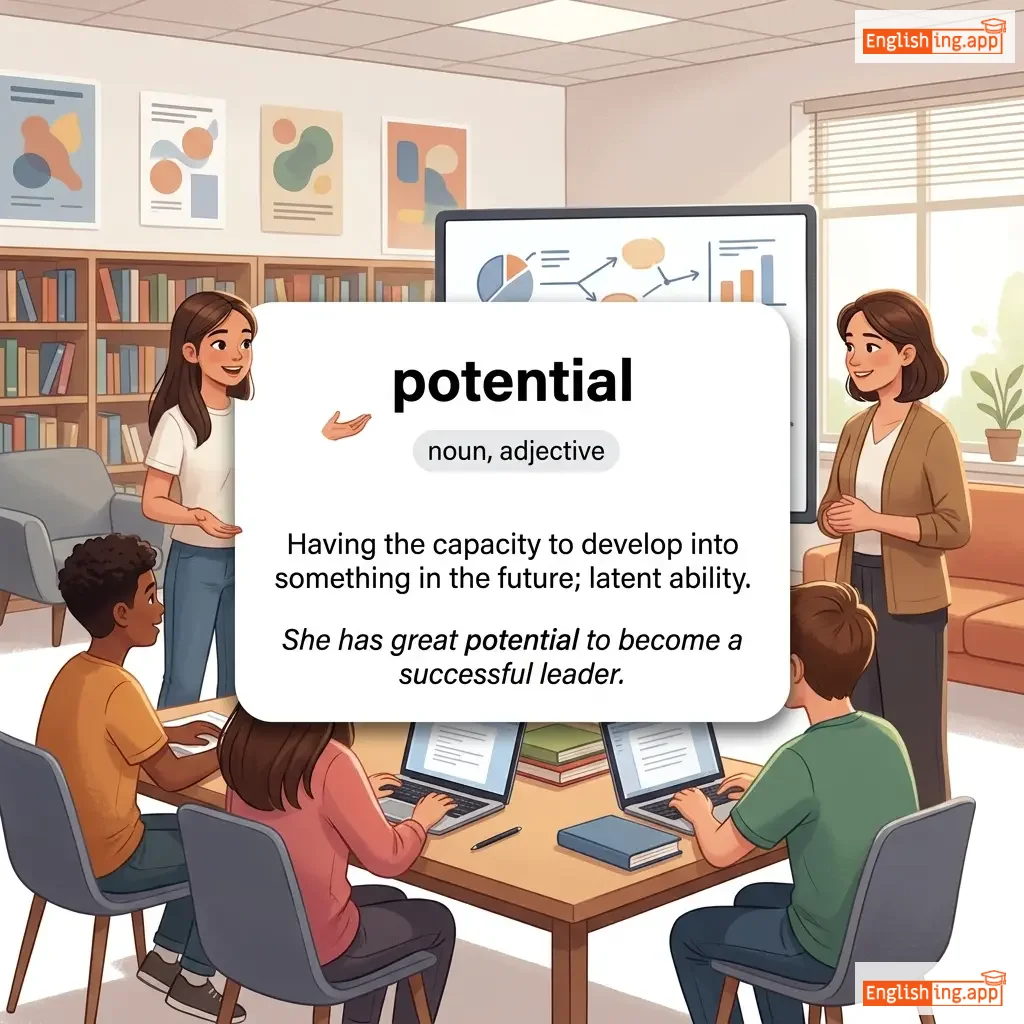
/pəˈtɛnʃəl/
noun, adjective
(ポテンシャル)
••••••
|
|
可能性
kanousei
••••••
|
- •••••• | - •••••• | - •••••• | - •••••• |
Having the capacity to develop into something in the future; latent ability.
••••••
|
She has great potential to become a successful leader. |
彼女には成功したリーダーになる大きな可能性がある。
Kanojo ni wa seikō shita rīdā ni naru ōkina kanōsei ga aru.
••••••
|
untapped potential |
Unused or unrecognized ability or capacity.
••••••
|
未開拓の可能性
Mikai-taku no kanōsei
••••••
|
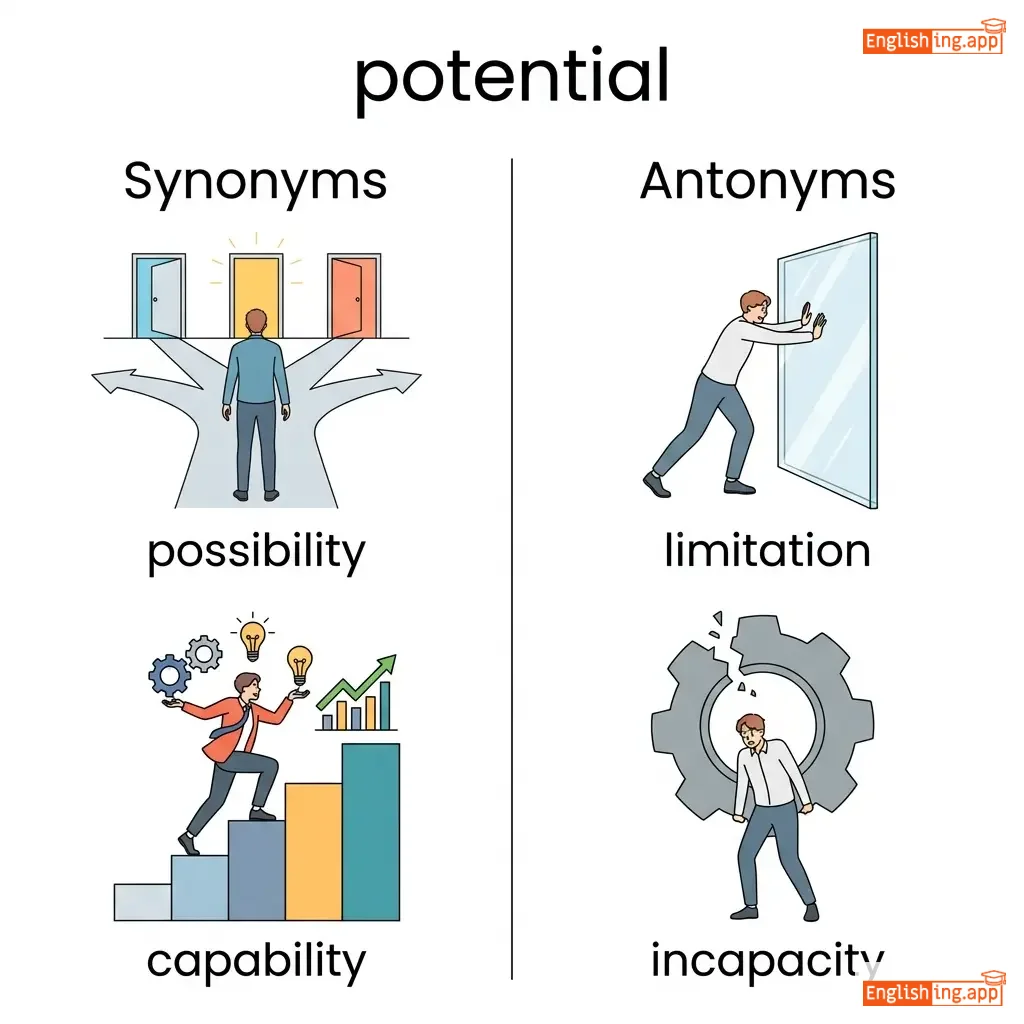
possibility, capability, capacity, promise, ability
••••••
|
limitation, incapacity, inability
••••••
|
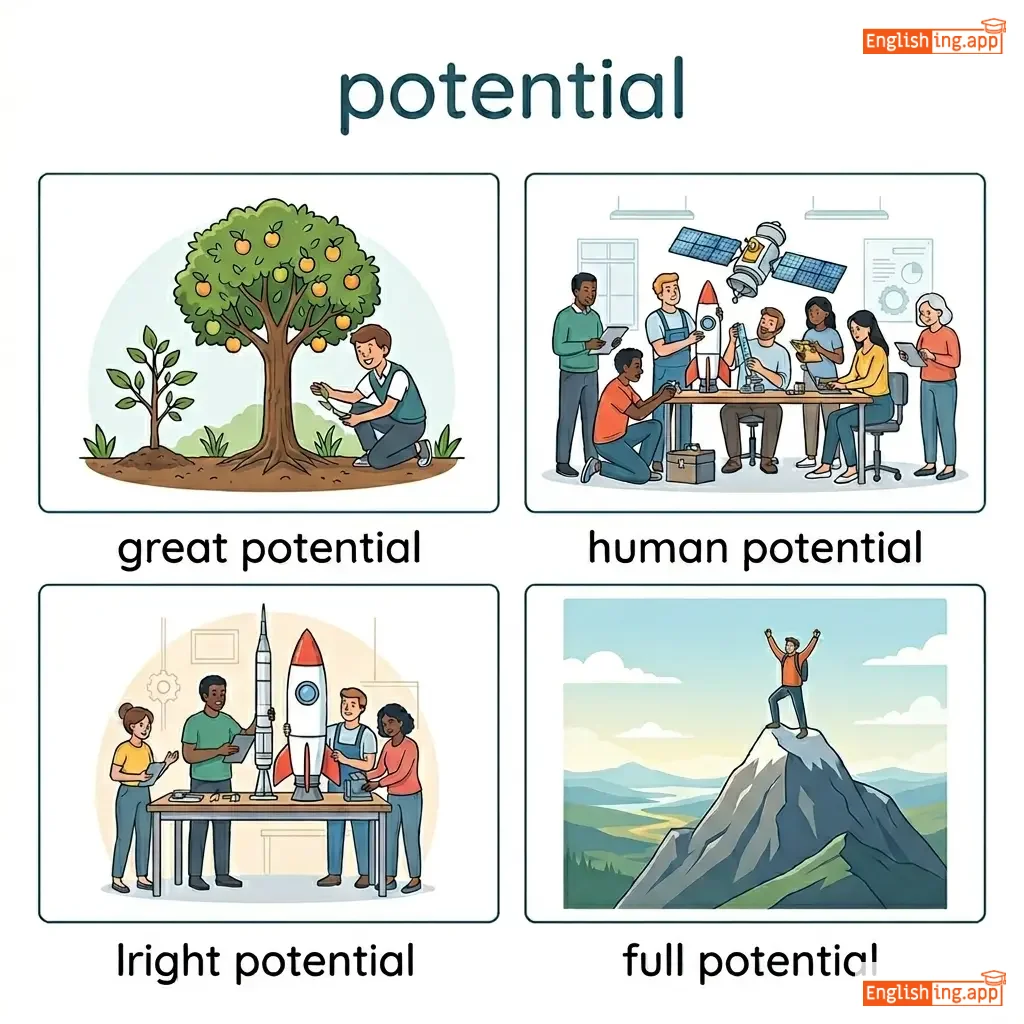
great potential, human potential, full potential, untapped potential
••••••
|
Potentialは未来に発展する力🌱 種が木になるように。
••••••
|
|
#6793
👑
|
/ˈpoʊtənˌteɪt/
noun
(ポテントテイト)
••••••
|
- •••••• |
君主
kunshu
••••••
|
- •••••• | - •••••• | - •••••• | - •••••• |
A monarch or ruler, especially one with absolute power.
••••••
|
The ancient land was ruled by a powerful potentate. |
古代の土地は強力な君主によって支配されていました。
Kodai no tochi wa kyōryoku na kunshu ni yotte shihai sarete imashita.
••••••
|
- •••••• | - •••••• | - •••••• |
ruler, monarch, sovereign, despot, king
••••••
|
subject, citizen, commoner
••••••
|
absolute potentate, powerful potentate, ancient potentate
••••••
|
Potentate は ruler を意味します; 王様がすべてを支配していることを覚えておいてください。
••••••
|
|
#6794
⚡
|
/ˈpoʊtənt/
adjective
(ポテント)
••••••
|
- •••••• |
強力
kyōryoku
••••••
|
- •••••• | - •••••• | - •••••• | - •••••• |
Having great power, influence, or effect.
••••••
|
This is a very potent drug that should be used carefully. |
これは非常に強力な薬で、慎重に使用する必要があります。
Kore wa hijō ni kyōryoku na kusuri de, shinchō ni shiyō suru hitsuyō ga arimasu.
••••••
|
potent symbol |
A strong or powerful representation of something.
••••••
|
強力なシンボル
kyōryoku na shinboru
••••••
|
powerful, strong, influential, forceful
••••••
|
weak, ineffective, powerless
••••••
|
potent drug, potent force, potent influence, potent effect
••••••
|
Potentは強力を意味します。強力な薬 = 強力な薬
••••••
|
|
#6795
🙄
|
/pəˈzɛsɪv/
adjective
(ポゼシブ)
••••••
|
- •••••• |
所有欲の強い
shoyoyoku no tsuyoi
••••••
|
- •••••• | - •••••• | - •••••• | - •••••• |
Showing a desire to own or control; relating to possession.
••••••
|
He became very possessive about his old books. |
彼は自分の古い本について非常に所有欲が強くなった。
Kare wa jibun no furui hon ni tsuite hijou ni shoyoyoku ga tsuyoku natta.
••••••
|
possessive nature |
A tendency to control or hold tightly to people or things.
••••••
|
所有欲が強い性格
shoyoyoku ga tsuyoi seikaku
••••••
|
controlling, clingy, dominating, overprotective, proprietary
••••••
|
indifferent, detached, generous
••••••
|
possessive pronoun, possessive nature, overly possessive
••••••
|
Possessive - すべてが 'posess' されているべきだ - すべて自分のものにしたい。
••••••
|
|
#6796
📚
|
/ˈpɒtˌbɔɪlə/
noun
(ポットボイラー)
••••••
|
- •••••• |
安物の作品
amono no sakuhin
••••••
|
- •••••• | - •••••• | - •••••• | - •••••• |
a book, play, or film produced quickly to make money rather than for artistic value
••••••
|
The novel was dismissed by critics as a mere potboiler. |
その小説は批評家によってただの安物の作品だと退けられた。
Sono shōsetsu wa hihyōka ni yotte tada no amono no sakuhin da to shikirerareta.
••••••
|
- •••••• | - •••••• | - •••••• |
hackwork, cheap novel, pulp fiction, commercial work
••••••
|
masterpiece, classic, high art
••••••
|
cheap potboiler, mere potboiler, write a potboiler
••••••
|
Potboilerは安物の作品を意味します—'Potで早く煮てお金を稼ぐ仕事。'
••••••
|
|
#6797
💧
|
/ˈpəʊtəbl/
adjective
(ポタブル)
••••••
|
- •••••• |
飲料水
inryousui
••••••
|
- •••••• | - •••••• | - •••••• | - •••••• |
safe to drink; drinkable
••••••
|
The villagers did not have access to potable water.
村人たちは飲用水へのアクセスがありませんでした。
••••••
|
村人たちは飲用水へのアクセスがありませんでした。
Murabito-tachi wa inryousui e no akusesu ga arimasen deshita.
••••••
|
- •••••• | - •••••• | - •••••• |
drinkable, safe, pure, clean, fit to drink
••••••
|
undrinkable, contaminated, polluted
••••••
|
potable water, potable source, potable supply
••••••
|
Potable は飲料水を意味します - まるで 'pot' に入った飲料水のようです。
••••••
|
|
#6798
🧘
|
/ˈpɒstʃə/
noun
(ハピネス)
••••••
|
- •••••• |
幸せ
shiawase
••••••
|
- •••••• | - •••••• | - •••••• | - •••••• |
the position in which someone holds their body; an attitude or approach
••••••
|
Good posture helps prevent back pain. |
彼女は賞を受け取ったとき、幸せを隠すことができませんでした。
Kanojo wa shō o uketotta toki, shiawase o kakusu koto ga dekimasen deshita.
••••••
|
adopt a posture |
to take on a certain body position or attitude
••••••
|
幸せを追求する
shiawase o tsuikyū suru
••••••
|
stance, position, attitude, bearing, carriage
••••••
|
slouch, crouch
••••••
|
good posture, body posture, adopt posture, correct posture
••••••
|
幸せはいつでも君のそばにある、ただそれに気づくことが大切だよ。
••••••
|
|
#6799
🤔
|
/ˈpɒstjʊˌleɪt/
verb
(ポスチュレート)
••••••
|
|
仮定する
katei suru
••••••
|
postulated
ポスチュレーテッド
••••••
|
postulated
ポスチュレーテッド
••••••
|
postulates
ポスチュレーツ
••••••
|
postulating
ポスチュレーティング
••••••
|
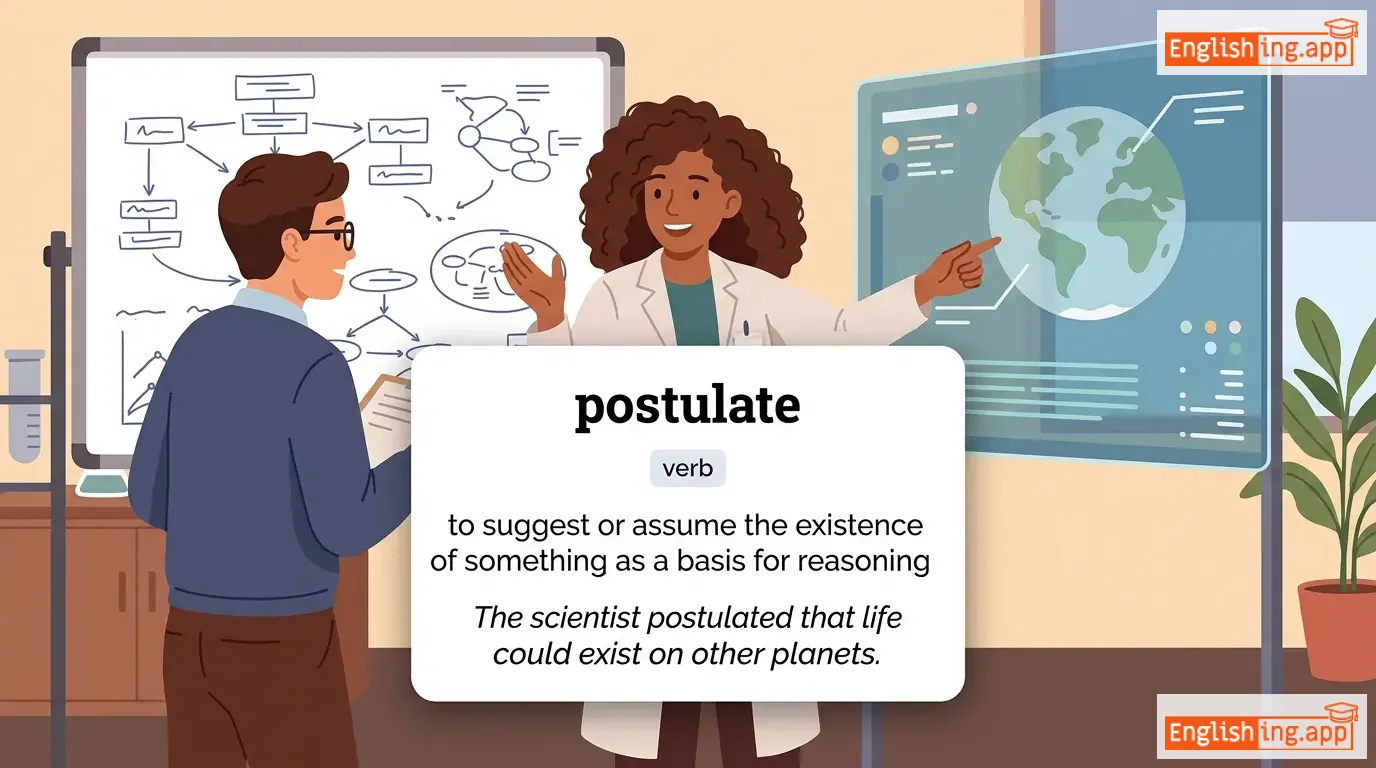
to suggest or assume the existence of something as a basis for reasoning
••••••
|
The scientist postulated that life could exist on other planets.
科学者は他の惑星で生命が存在する可能性があると仮定しました。
••••••
|
科学者は他の惑星で生命が存在する可能性があると仮定しました。
Kagakusha wa hoka no wakusei de seimei ga sonzai suru kanōsei ga aru to katei shimashita.
••••••
|
- •••••• | - •••••• | - •••••• |
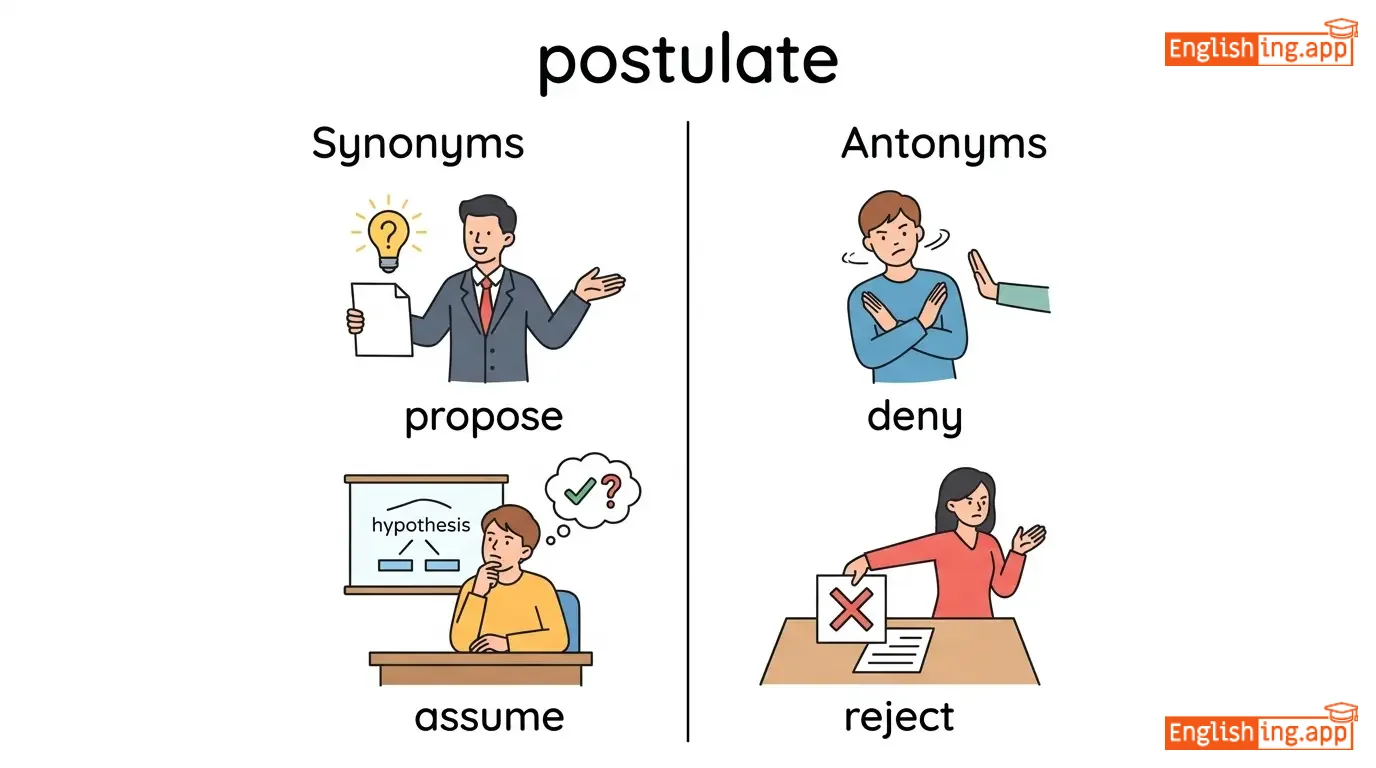
propose, assume, hypothesize, suggest, theorize
••••••
|
deny, reject, disprove
••••••
|
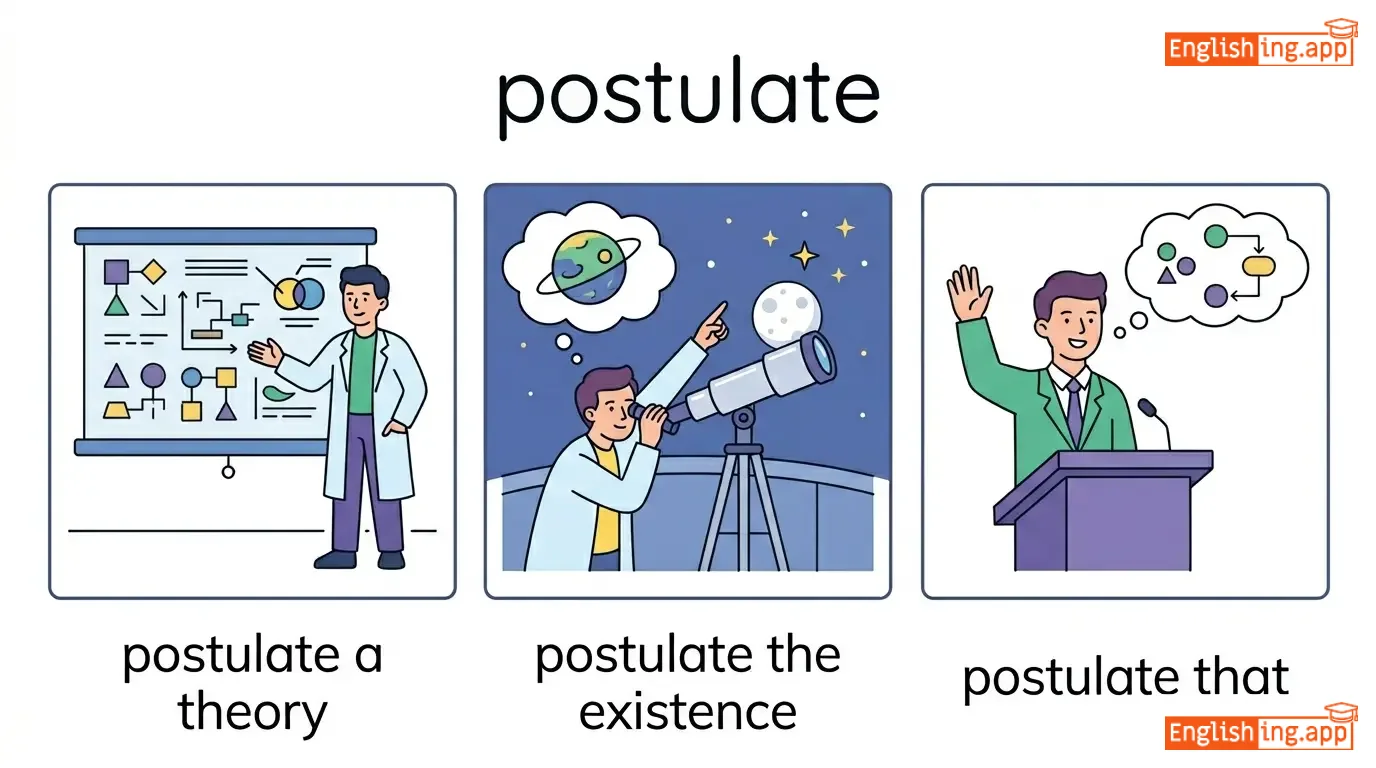
postulate a theory, postulate the existence, postulate that
••••••
|
Postulateは仮定する意味—'Post'は仮定、'Late'は後で推論するという意味。
••••••
|
|
#6800
✍️
|
/ˈpəʊstˌskrɪpt/
noun
(ポストスクリプト)
••••••
|
- •••••• |
追伸
tsuishin
••••••
|
- •••••• | - •••••• | - •••••• | - •••••• |
an additional remark at the end of a letter or text, after the signature
••••••
|
She added a brief postscript to thank him again. |
彼女は再度彼に感謝するために簡単な追伸を加えました。
Kanojo wa saido kare ni kansha suru tame ni kantan na tsuishin o kuwaemashita.
••••••
|
P.S. |
used to indicate a postscript in writing
••••••
|
P.S.
P.S.
••••••
|
afterthought, note, addendum, appendix, epilogue
••••••
|
introduction, foreword
••••••
|
short postscript, add a postscript, handwritten postscript
••••••
|
追伸はP.S.の意味、手紙に最後に追加するコメントです。
••••••
|
|
#6801
🍽️
|
/ˌpəʊstˈprændɪəl/
adjective
(ポストプランディアル)
••••••
|
- •••••• |
食後
shokugo
••••••
|
- •••••• | - •••••• | - •••••• | - •••••• |
Occurring after a meal.
••••••
|
He went for a postprandial walk after dinner. |
彼は夕食後にポストプランディアルウォークに出かけた。
Kare wa yuushoku go ni postprandial walk ni dekaketa.
••••••
|
- •••••• | - •••••• | - •••••• |
after-meal, digestive, following a meal
••••••
|
preprandial, before-meal
••••••
|
postprandial walk, postprandial glucose, postprandial nap
••••••
|
Postprandialは食事後 — Postは後、prandialは食事に関連しています。
••••••
|
|
#6802
🔬
|
/ˌpəʊstˈmɔːtəm/
noun, adjective
(ポストモーテム)
••••••
|
- •••••• |
死後解剖
shigo kaibou
••••••
|
- •••••• | - •••••• | - •••••• | - •••••• |
An examination of a dead body to determine the cause of death.
••••••
|
The doctor carried out a postmortem on the body. |
医者は死体にポストモーテムを行った。
Isha wa shitai ni posutomootemu o okonatta.
••••••
|
postmortem analysis |
a detailed examination after an event to understand its causes
••••••
|
ポストモーテム分析
posutomootemu bunseki
••••••
|
autopsy, examination, necropsy, investigation
••••••
|
diagnosis, prognosis
••••••
|
postmortem report, conduct a postmortem, postmortem analysis
••••••
|
Postmortem とは死後の調査です。Post は後、mortem は死です。
••••••
|
|
#6803
⚰️
|
/ˈpɒstjʊməs/
adjective
(ポストヒューマス)
••••••
|
- •••••• |
死後の
shigo no
••••••
|
- •••••• | - •••••• | - •••••• | - •••••• |
Occurring, awarded, or appearing after the death of the originator.
••••••
|
He received a posthumous award for his bravery. |
彼は勇気に対して死後の賞を受けました。
Kare wa yūki ni taishite shigo no shō o ukemashita.
••••••
|
- •••••• | - •••••• | - •••••• |
after-death, post-death, belated, memorial
••••••
|
living, lifetime
••••••
|
posthumous award, posthumous publication, posthumous honor
••••••
|
Posthumous は死後を意味します — Post は後、Human は人間です。
••••••
|
|
#6804
🎓
|
/ˌpəʊstˈɡrædʒuət/
noun, adjective
(ポストグラジュエイト)
••••••
|
- •••••• |
大学院生
daigakuinsei
••••••
|
- •••••• | - •••••• | - •••••• | - •••••• |
A student who has completed a first degree and is studying for a further degree.
••••••
|
She is doing postgraduate research in physics. |
彼女は物理学の大学院研究をしています。
Kanojo wa butsuri-gaku no daigakuin kenkyuu o shiteimasu.
••••••
|
- •••••• | - •••••• | - •••••• |
graduate student, master's student, doctoral student, scholar
••••••
|
undergraduate, freshman
••••••
|
postgraduate study, postgraduate degree, postgraduate research
••••••
|
大学院生は学位後の研究生 - 大学(大学)院(院生)
••••••
|
|
#6805
👶
|
/pɒˈstɛrɪti/
noun
(ポステリティ)
••••••
|
- •••••• |
後世
kōsei
••••••
|
- •••••• | - •••••• | - •••••• | - •••••• |
All future generations of people.
••••••
|
The monument was built for the benefit of posterity.
記念碑は後世のために建てられました。
••••••
|
記念碑は後世のために建てられました。
Kinenhi wa kōsei no tame ni tateraremashita.
••••••
|
for posterity
後世のために
••••••
|
to preserve something for future generations
••••••
|
後世のために
kōsei no tame ni
••••••
|
future generations, descendants, heirs, progeny
••••••
|
ancestors, forefathers
••••••
|
for posterity, posterity will remember, legacy to posterity
••••••
|
Posterityは未来の世代を意味します - Poster poster 未来の世代のために保存します。
••••••
|
|
#6806
🔙
|
/pɒˈstɪəriər/
adjective
(ポステリオール)
••••••
|
- •••••• |
後部
kōbu
••••••
|
- •••••• | - •••••• | - •••••• | - •••••• |
Situated at or toward the back; later in time.
••••••
|
The posterior part of the brain controls vision.
脳の後部は視覚を制御します。
••••••
|
脳の後部は視覚を制御します。
Nō no kōbu wa shikaku o seigyo shimasu.
••••••
|
- •••••• | - •••••• | - •••••• |
rear, back, hind, subsequent
••••••
|
anterior, front, prior
••••••
|
posterior part, posterior view, posterior region
••••••
|
Posteriorは後ろに位置する – まるでポスターが後ろに貼ってあるかのようです。
••••••
|
|
#6807
🗓️
|
/ˌpoʊstˈdeɪt/
verb
(ポストデイト)
••••••
|
- •••••• |
後日の日付を記入する
gojitsu no hizuke o kinyū suru
••••••
|
postdated
ポストデイテッド
••••••
|
postdated
ポストデイテッド
••••••
|
postdates
ポストデイツ
••••••
|
postdating
ポストデイティング
••••••
|
To assign a date later than the actual date to a document or event.
••••••
|
She postdated the check to next month.
彼女は小切手に来月の日付を付けました。
••••••
|
彼女は小切手に来月の日付を付けました。
Kanojo wa kogitte ni raigetsu no hizuke o tsukemashita.
••••••
|
- •••••• | - •••••• | - •••••• |
defer, delay, date forward
••••••
|
antedate, predate
••••••
|
postdate a check, postdate agreement, postdate document
••••••
|
Postは後、dateは日付を意味し、postdateは後日の日付を記入することを意味します。
••••••
|
|
#6808
✨
|
/ˈpɒsəbl̩/
adjective
(ポッシブル)
••••••
|
- •••••• |
可能
kanou
••••••
|
- •••••• | - •••••• | - •••••• | - •••••• |
Able to be done or achieved.
••••••
|
Anything is possible if you work hard.
一生懸命働けば、何でも可能です。
••••••
|
一生懸命働けば、何でも可能です。
Isshoukenmei hataraakeba, nandemo kanou desu.
••••••
|
make it possible
それを可能にする
••••••
|
To cause something to happen or be achievable.
••••••
|
それを可能にする
sore wo kanou ni suru
••••••
|
feasible, achievable, attainable, doable
••••••
|
impossible, unachievable, unattainable
••••••
|
as soon as possible, possible solution, possible outcome
••••••
|
Possibleは日本語で「可能」, 頑張れば何でも可能!
••••••
|
|
#6809
🗝️
|
/pəˈzɛsər/
noun
(ポゼッサー)
••••••
|
- •••••• |
所有者
shoyuusha
••••••
|
- •••••• | - •••••• | - •••••• | - •••••• |
A person who owns or holds something.
••••••
|
The possessor of the land built a new house.
土地の所有者は新しい家を建てました。
••••••
|
土地の所有者は新しい家を建てました。
Tochi no shoyuusha wa atarashii ie o tatemashita.
••••••
|
- •••••• | - •••••• | - •••••• |
owner, holder, proprietor, keeper
••••••
|
tenant, borrower, guest
••••••
|
lawful possessor, true possessor, possessor of wealth
••••••
|
Possessor は所有者と意味が似ている — 物を持っている人。
••••••
|
Vocabulary Quiz
Test your vocabulary by matching words with their translations or meanings.
Login to take the quiz
Comments (0)
Share your thoughts and join the discussion.
Join the discussion by logging in
Login to CommentNo comments yet
Be the first to share your thoughts!