

翻訳
過去
過去分詞
三人称単数
動名詞
意味
例文
例文の翻訳
同義語
対義語
コロケーション
ニーモニック
Swipe left or right, or use the buttons. Tap image to zoom.
例文の翻訳
単語
Lesson 318Lesson 318 - マスクトグル
|
絵文字
|
単語 | Images | 翻訳 | 過去 | 過去分詞 | 三人称単数 | 動名詞 | 意味 | 例文 | 例文の翻訳 | 表現例 | 表現例の意味 | 表現例の翻訳 | 同義語 | 対義語 | コロケーション | ニーモニック |
|---|---|---|---|---|---|---|---|---|---|---|---|---|---|---|---|---|---|
|
#9510
🪚
|
/ˈwɜːkmənˌʃɪp/
noun
(ワークマンシップ)
••••••
|
|
職人技
shokuninwaza
••••••
|
- •••••• | - •••••• | - •••••• | - •••••• |
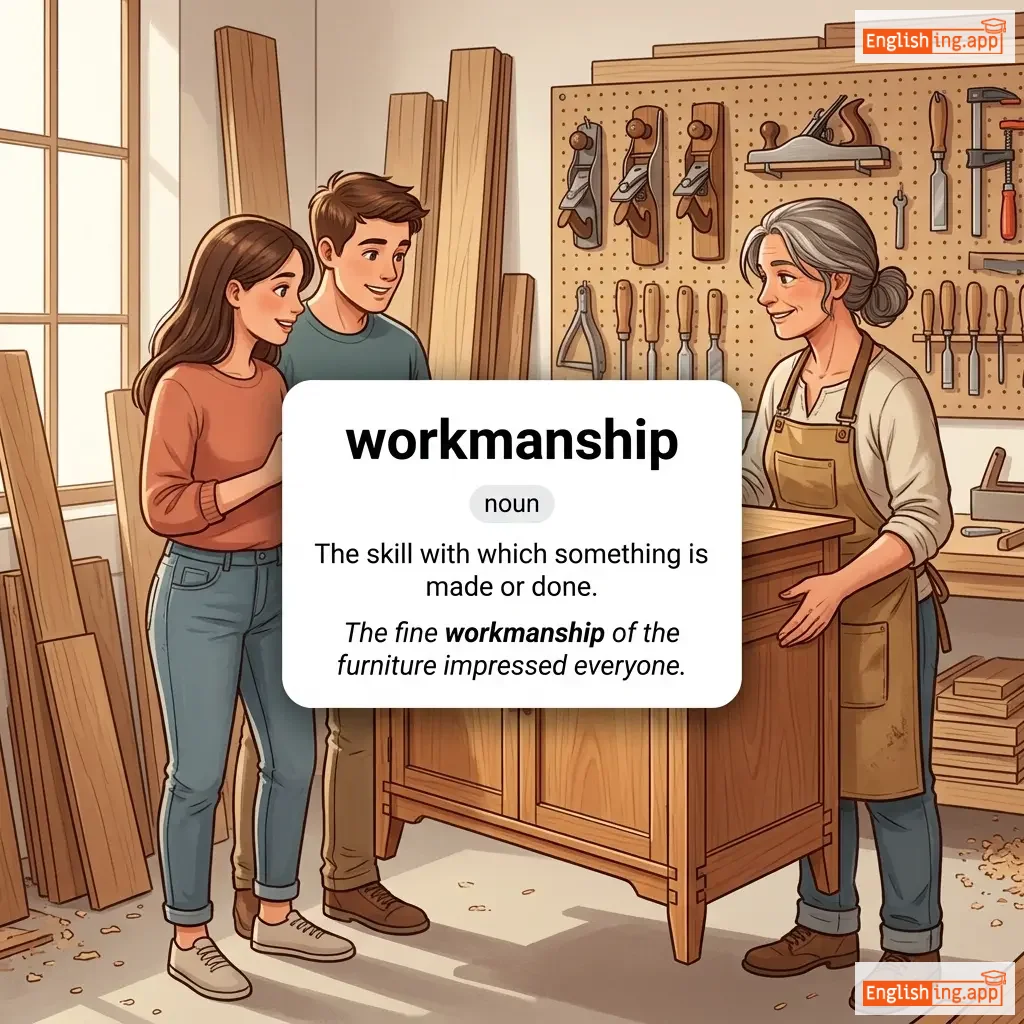
The skill with which something is made or done.
••••••
|
The fine workmanship of the furniture impressed everyone.
家具の優れた職人技は、皆に感銘を与えました。
••••••
|
家具の優れた職人技は、皆に感銘を与えました。
Kagu no sugureta shokuninwaza wa, mina ni kanmei o ataemashita.
••••••
|
- •••••• | - •••••• | - •••••• |
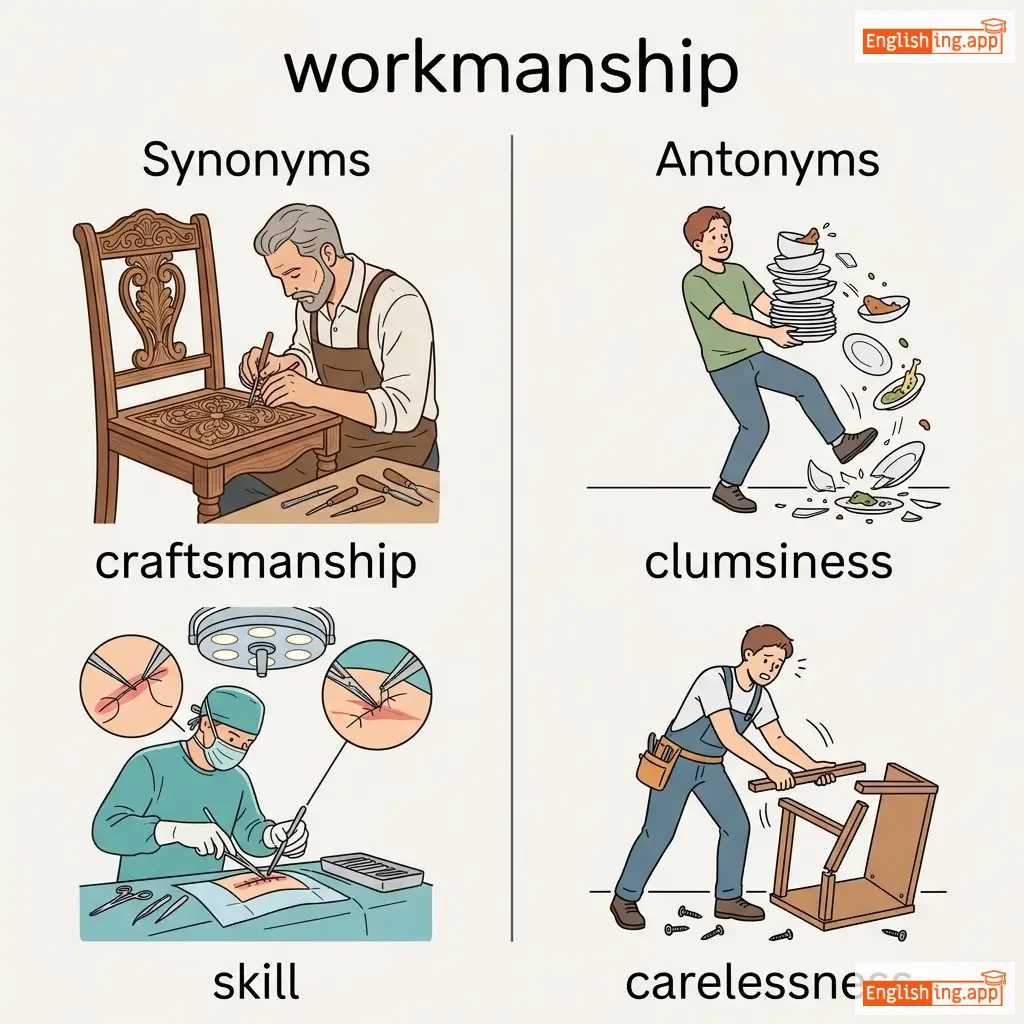
craftsmanship, skill, artistry, quality
••••••
|
clumsiness, carelessness, ineptitude
••••••
|
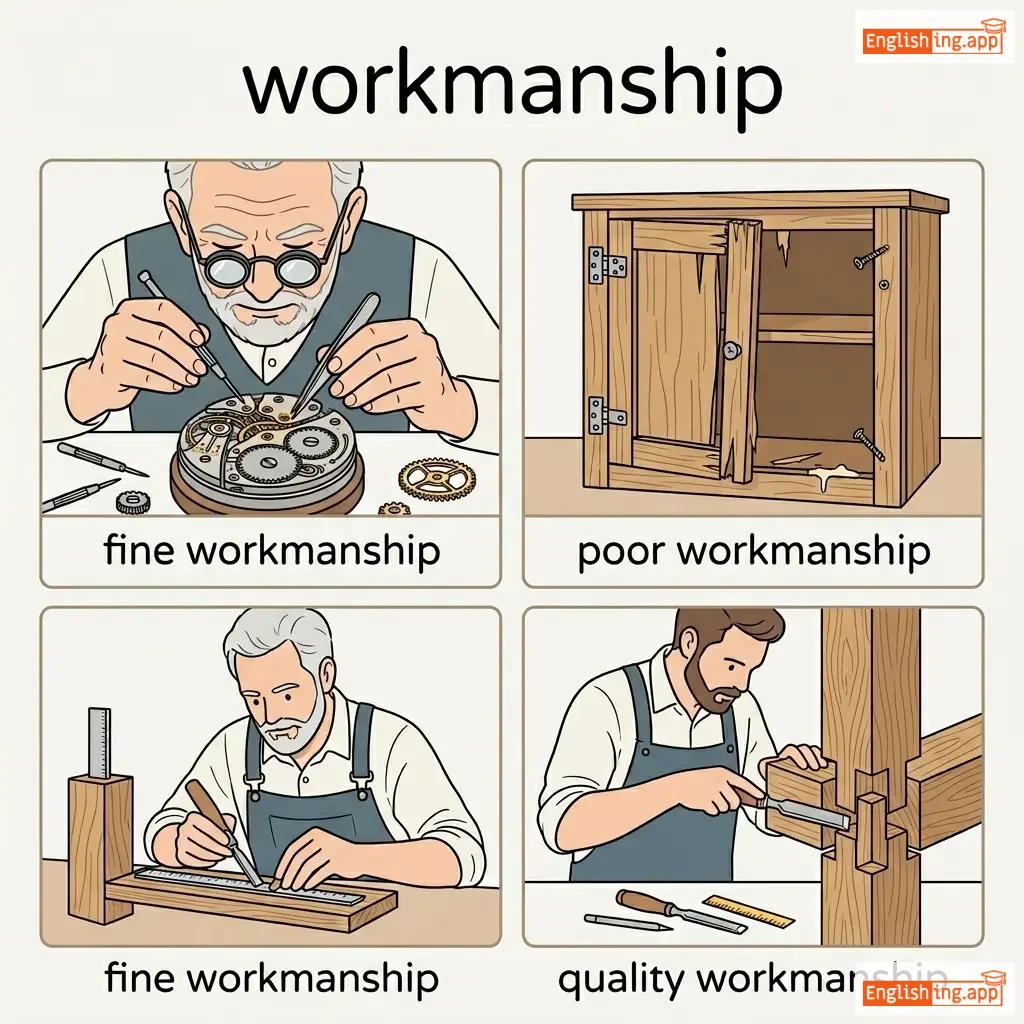
fine workmanship, poor workmanship, quality workmanship
••••••
|
Work + ship → 職人技、工芸や職人技を表します。
••••••
|
|
#9511
👵
|
/ˈrɪŋ.kəl/
noun/verb
(rinkle)
••••••
|
- •••••• |
しわ
shiwa
••••••
|
wrinkled
rinkled
••••••
|
wrinkled
rinkled
••••••
|
wrinkles
wrinkles
••••••
|
wrinkling
wrinkling
••••••
|
A small line or fold in the skin or fabric; to form small folds or lines.
••••••
|
The old shirt had many wrinkles.
The old shirt had many wrinkles.
••••••
|
その古いシャツにはたくさんのしわがありました。
Sono furui shatsu ni wa takusan no shiwa ga arimashita.
••••••
|
iron out the wrinkles
iron out the wrinkles
••••••
|
to fix small problems or difficulties
••••••
|
小さな問題を解決する
Chīsana mondai o kaiketsu suru
••••••
|
crease, fold, line, crinkle, furrow
••••••
|
smoothness, flatness
••••••
|
deep wrinkles, facial wrinkles, wrinkle cream, iron wrinkles
••••••
|
Wrinkleはしわを意味し、しわ取りクリームでしわを取り除けます。
••••••
|
|
#9512
🌀
|
/rɪŋ/
verb
(happiness)
••••••
|
- •••••• |
幸せ
shiawase
••••••
|
wrung
••••••
|
wrung
••••••
|
wrings
••••••
|
wringing
••••••
|
to squeeze and twist something to force liquid out; to extract with effort
••••••
|
She had to wring the towel after washing it. |
彼女は賞を受け取ったとき、幸せを隠すことができませんでした。
Kanojo wa shō o uketotta toki, shiawase o kakusu koto ga dekimasen deshita.
••••••
|
wring one's hands |
to show worry or distress by twisting one's hands
••••••
|
幸せの追求
shiawase no tsuikyū
••••••
|
twist, squeeze, extract, compress
••••••
|
release, loosen, free
••••••
|
wring out, wring the towel, wring hands, wring a confession
••••••
|
Happinessは日本語で幸せ – ハッピーな気分を覚えましょう!
••••••
|
|
#9513
😭
|
/ˈrɛtʃɪdnəs/
noun
(レッチドネス)
••••••
|
- •••••• |
悲惨
hisan
••••••
|
- •••••• | - •••••• | - •••••• | - •••••• |
a state of misery, unhappiness, or poor condition
••••••
|
The novel depicts the wretchedness of war victims. |
その小説は戦争の犠牲者の悲惨さを描いています。
Sono shousetsu wa sensou no giseisha no hisansa o egaki masu.
••••••
|
- •••••• | - •••••• | - •••••• |
misery, poverty, despair, unhappiness
••••••
|
happiness, joy, prosperity
••••••
|
human wretchedness, deep wretchedness, state of wretchedness
••••••
|
Wretchedness は悲惨を意味します – 戦争の犠牲者は悲惨な状況にあります。
••••••
|
|
#9514
😢
|
/ˈrɛtʃɪd/
adjective
(ˈrɛtʃɪd)
••••••
|
- •••••• |
悲惨
hisan
••••••
|
- •••••• | - •••••• | - •••••• | - •••••• |
in a very unhappy, miserable, or poor condition
••••••
|
They lived in a wretched hut with no clean water. |
彼らは清潔な水がない悲惨な小屋に住んでいた。
Karera wa seiketsuna mizu ga nai hisan na koya ni sunde ita.
••••••
|
wretched condition |
a miserable or poor state
••••••
|
悲惨な状態
hisan na jōtai
••••••
|
miserable, poor, pitiful, terrible
••••••
|
fortunate, blessed, happy
••••••
|
wretched condition, wretched life, wretched man, wretched poverty
••••••
|
Wretched は非常に悲惨な状態を意味します – ‘悲惨’という言葉がその状態を表しています。
••••••
|
|
#9515
😞
|
/rɛtʃ/
noun
(レッチ)
••••••
|
- •••••• |
不幸な人
fukouna hito
••••••
|
- •••••• | - •••••• | - •••••• | - •••••• |
an unfortunate or miserable person; a despicable or contemptible person
••••••
|
The poor wretch was left out in the cold with no shelter.
貧しいレッチは避難所なしで寒さの中に放置された。
••••••
|
貧しい不幸な人は避難所なしで寒さの中に放置された。
Mazushii fukou na hito wa hinanjo nashi de samusa no naka ni houchi sareta.
••••••
|
poor wretch
貧しいレッチ
••••••
|
used to describe someone pitiable or miserable
••••••
|
不幸な人
fukouna hito
••••••
|
miserable person, unfortunate, outcast, villain
••••••
|
gentleman, lady, nobleman
••••••
|
poor wretch, miserable wretch, wretched wretch
••••••
|
Wretchは非常に不幸な意味で、'retch'を言うと病気になったような気分になるように。
••••••
|
|
#9516
🤼
|
/rɛst/
verb
(レスト)
••••••
|
- •••••• |
力づくで奪う
rikidukude ubau
••••••
|
wrested
レステッド
••••••
|
wrested
レステッド
••••••
|
wrests
レストス
••••••
|
wresting
レスティング
••••••
|
to forcibly pull something from a person's grasp; to seize with effort or struggle
••••••
|
The police had to wrest the weapon from the suspect's hand.
警察は容疑者の手から武器を引き離さなければならなかった。
••••••
|
警察は容疑者の手から武器を引き離さなければならなかった。
Keisatsu wa yōgisha no te kara buki o hikihanasanakereba naranakatta.
••••••
|
wrest control
コントロールを引き離す
••••••
|
to take control by force or effort
••••••
|
コントロールを引き離す
kontorōru o hikihanasu
••••••
|
seize, grab, snatch, extract, yank
••••••
|
release, surrender, yield
••••••
|
wrest control, wrest power, wrest the title, wrest freedom
••••••
|
Wrestとは'rest'から何かを奪うことです。
••••••
|
|
#9517
🔧
|
/rɛntʃ/
verb
(レンチ)
••••••
|
- •••••• |
強く引っ張る
tsuyoku hipparu
••••••
|
wrenched
レンチド
••••••
|
wrenched
レンチド
••••••
|
wrenches
レンチェス
••••••
|
wrenching
レンチング
••••••
|
to pull or twist suddenly and violently
••••••
|
He wrenched the door open in anger.
彼は怒りでドアを無理に開けた。
••••••
|
彼は怒りでドアを引っ張って開けた。
Kare wa ikari de doa wo hippatte aketa.
••••••
|
throw a wrench into
計画にレンチを投げ込む
••••••
|
to cause problems or difficulties in a plan or process
••••••
|
問題を引き起こす
mondai wo hikiokosu
••••••
|
twist, yank, jerk, pull
••••••
|
release, loosen, relax
••••••
|
wrench free, wrench away, emotional wrench
••••••
|
Wrenchは引っ張ることを意味します: 物を開けるためにはレンチが必要です
••••••
|
|
#9518
🌪️
|
/riːk/
verb
(rik)
••••••
|
- •••••• |
被害を与える
higai o ataeru
••••••
|
wreaked
rikt
••••••
|
wreaked
rikt
••••••
|
wreaks
riks
••••••
|
wreaking
riking
••••••
|
to cause or inflict something, especially damage or harm
••••••
|
The storm wreaked havoc on the coastal villages.
嵐は沿岸の村に大きな被害をもたらしました。
••••••
|
嵐は沿岸の村に大きな被害をもたらしました。
Arashi wa engan no mura ni ōkina higai o motarashimashita.
••••••
|
wreak havoc
大きな被害をもたらす
••••••
|
to cause great damage or disruption
••••••
|
大きな損害を与える
ōkina songai o ataeru
••••••
|
inflict, cause, unleash, impose
••••••
|
prevent, protect, save
••••••
|
wreak havoc, wreak destruction, wreak damage
••••••
|
Wreak Havoc は大きな破壊を意味する – Wreak するとすべてが弱くなる。
••••••
|
|
#9519
😡
|
/ræθ/
noun
(ラース)
••••••
|
- •••••• |
怒り
ikari
••••••
|
- •••••• | - •••••• | - •••••• | - •••••• |
extreme anger or rage
••••••
|
The king's wrath terrified the villagers. |
王の怒りは村人たちを恐れさせた。
Ō no ikari wa murabito-tachi o osore saseta.
••••••
|
incur someone's wrath |
to make someone extremely angry
••••••
|
誰かの怒りを買う
dareka no ikari o kau
••••••
|
anger, fury, rage, outrage
••••••
|
calmness, peace, forgiveness
••••••
|
divine wrath, wrath of God, unleash wrath
••••••
|
Wrathは怒り – 王の怒りが村人たちを怖がらせる
••••••
|
|
#9520
🤠
|
/ˈræŋɡlər/
noun
(レングラー)
••••••
|
- •••••• |
牧畜者
bokuchusha
••••••
|
- •••••• | - •••••• | - •••••• | - •••••• |
a person who argues noisily; or someone who takes care of livestock on a ranch
••••••
|
The cowboy worked as a wrangler on the ranch.
カウボーイはランチでレングラーとして働いた。
••••••
|
カウボーイはランチでレングラーとして働いた。
Kaubōi wa ranchi de rengurā toshite hataraita.
••••••
|
- •••••• | - •••••• | - •••••• |
cowboy, herder, rancher, arguer
••••••
|
peacemaker, mediator
••••••
|
horse wrangler, cattle wrangler, film wrangler
••••••
|
Wrangler は牧畜者 – ランチで家畜を世話する
••••••
|
|
#9521
🤼
|
/ˈræŋɡl̩/
verb
(ラングル)
••••••
|
- •••••• |
議論する
giron suru
••••••
|
wrangled
ラングルド
••••••
|
wrangled
ラングルド
••••••
|
wrangles
ラングルズ
••••••
|
wrangling
ラングリング
••••••
|
to argue or dispute noisily or angrily
••••••
|
The two neighbors wrangled over the property line for hours.
二人の隣人は、敷地の境界について何時間も議論しました。
••••••
|
二人の隣人は、敷地の境界について何時間も議論しました。
Futari no rinjin wa, shikichi no kyōkai ni tsuite nan-jikan mo giron shimashita.
••••••
|
wrangle over
議論する
••••••
|
to argue or dispute about something
••••••
|
何かについて議論する
nanika ni tsuite giron suru
••••••
|
argue, quarrel, bicker, dispute, squabble
••••••
|
agree, concur, harmonize
••••••
|
wrangle over money, wrangle with authorities, political wrangle
••••••
|
Wrangleは議論することを意味します – 議論を始めると、wrangleが始まります!
••••••
|
|
#9522
👻
|
/reɪθ/
noun
(レイス)
••••••
|
- •••••• |
幽霊
yūrei
••••••
|
- •••••• | - •••••• | - •••••• | - •••••• |
A ghost or ghostlike image of someone, especially seen shortly before or after their death.
••••••
|
A wraith appeared in the fog near the old castle. |
古い城の近くの霧の中に幽霊が現れました。
Furui shiro no chikaku no kiri no naka ni yūrei ga arawaremashita.
••••••
|
- •••••• | - •••••• | - •••••• |
ghost, specter, phantom, spirit, apparition
••••••
|
being, human, reality
••••••
|
wraith-like figure, ghostly wraith, pale wraith
••••••
|
Wraithは幽霊のように聞こえ、意味も幽霊です。
••••••
|
|
#9523
🙏
|
/ˈwɜːʃɪp/
verb
(ウォーシップ)
••••••
|
- •••••• |
礼拝
reihaï
••••••
|
worshipped
ウォーシップト
••••••
|
worshipped
ウォーシップト
••••••
|
worships
ウォーシップス
••••••
|
worshipping
ウォーシッピング
••••••
|
To show reverence and adoration for a deity or sacred being.
••••••
|
They gathered at the temple to worship together.
彼らは寺院に集まり、一緒に礼拝しました。
••••••
|
彼らは寺院に集まり、一緒に礼拝しました。
Karera wa jiin ni atsumari, issho ni reihai shimashita.
••••••
|
worship the ground someone walks on
誰かが歩く場所を崇拝する
••••••
|
To admire or adore someone greatly.
••••••
|
誰かを極度に崇拝する
dareka o kyokudo ni suuhai suru
••••••
|
adore, revere, venerate, honor, praise
••••••
|
despise, dishonor, disrespect
••••••
|
worship God, worship in church, idol worship, worship service
••••••
|
Worship は礼拝を意味し、寺院で礼拝するようなものです。
••••••
|
|
#9524
🌍
|
/ˈwɜːldli/
adjective
(ワールドリー)
••••••
|
- •••••• |
世俗的
sesokuteki
••••••
|
- •••••• | - •••••• | - •••••• | - •••••• |
Concerned with material values or ordinary life rather than spiritual matters.
••••••
|
He was more interested in worldly success than in spiritual growth. |
彼は精神的な成長よりも世俗的な成功に興味がありました。
Kare wa seishinteki na seichou yori mo sesokuteki na seikou ni kyomi ga arimashita.
••••••
|
worldly wise |
Experienced and shrewd in worldly matters.
••••••
|
世俗的な知恵
sesokuteki na chie
••••••
|
materialistic, secular, earthly, sophisticated
••••••
|
spiritual, unworldly, naive
••••••
|
worldly goods, worldly success, worldly matters, worldly experience
••••••
|
Worldly は世俗的なことで、sesokuteki はその意味です。
••••••
|
|
#9525
🛡️
|
/wɪðˈstænd/
verb
(ウィズスタンド)
••••••
|
- •••••• |
耐える / 抵抗する
taeru / teikou suru
••••••
|
withstood
ウィズストゥッド
••••••
|
withstood
ウィズストゥッド
••••••
|
withstands
ウィズスタンズ
••••••
|
withstanding
ウィズスタンディング
••••••
|
to resist or endure something without being harmed
••••••
|
This building can withstand strong earthquakes.
この建物は強い地震に耐えることができます。
••••••
|
この建物は強い地震に耐えることができます。
Kono tatemono wa tsuyoi jishin ni taeru koto ga dekimasu.
••••••
|
stand the test of time
時の試練に耐える
••••••
|
to last or remain strong for a long period
••••••
|
時の試練に耐える
Toki no shiren ni taeru
••••••
|
endure, resist, survive, tolerate, bear
••••••
|
surrender, collapse, yield
••••••
|
withstand pressure, withstand attack, withstand force, withstand heat
••••••
|
With STAND, stay strong through life’s trials!
••••••
|
|
#9526
🛠️
|
/ˈwɜːkmənˌlaɪk/
adjective
(wɜːrkˌmaɪnˈlaɪk)
••••••
|
- •••••• |
職人仕事
shokunin shigoto
••••••
|
- •••••• | - •••••• | - •••••• | - •••••• |
Showing efficient, competent, and practical skill, but without flair or creativity.
••••••
|
The carpenter delivered a workmanlike performance on the project.
大工はプロジェクトで仕事のようなパフォーマンスを発揮しました。
••••••
|
大工はプロジェクトで職人仕事のようなパフォーマンスを発揮しました。
Daiku wa purojekuto de shokunin shigoto no yōna pafōmansu o hakki shimashita.
••••••
|
- •••••• | - •••••• | - •••••• |
competent, efficient, skilled, practical, capable
••••••
|
unskilled, incompetent, sloppy
••••••
|
workmanlike manner, workmanlike performance, workmanlike approach
••••••
|
職人=創造的ではない仕事。
••••••
|
|
#9527
👷
|
/ˈwɜːrkɪŋ mæn/
noun
(ワーキング・マン)
••••••
|
- •••••• |
労働者
roudousha
••••••
|
- •••••• | - •••••• | - •••••• | - •••••• |
a man engaged in manual labor or industrial work, often considered as part of the working class
••••••
|
The working-man fought hard for better wages and conditions. |
労働者はより良い賃金と条件のために懸命に戦った。
Roudousha wa yori yoi chingin to jouken no tame ni kenmei ni tatakatta.
••••••
|
- •••••• | - •••••• | - •••••• |
laborer, worker, employee, breadwinner
••••••
|
employer, capitalist
••••••
|
working-man wages, working-man rights, working-man struggle
••••••
|
working-man とは労働者 – 仕事をする人。
••••••
|
|
#9528
🔁
|
/woʊnt/ or /wɔːnt/
adjective
(ウォント)
••••••
|
- •••••• |
習慣
shūkan
••••••
|
- •••••• | - •••••• | - •••••• | - •••••• |
accustomed or used to doing something
••••••
|
She rose early, as she was wont to do.
彼女は早く起きました、彼女がするのが習慣だったように。
••••••
|
彼女は早く起きました、彼女がするのが習慣だったように。
Kanojo wa hayaku okimashita, kanojo ga suru no ga shūkan datta yō ni.
••••••
|
- •••••• | - •••••• | - •••••• |
accustomed, used, habituated, inclined
••••••
|
unaccustomed, unused
••••••
|
as he is wont to, as she was wont to do
••••••
|
彼女はいつも早く起きる、それが彼女の習慣です。
••••••
|
|
#9529
😭
|
/ˈwoʊ.fəl/
adjective
(woful)
••••••
|
- •••••• |
悲惨な
hisan na
••••••
|
- •••••• | - •••••• | - •••••• | - •••••• |
full of woe; very sad or miserable; also used to mean very bad or deplorable
••••••
|
He gave me a woeful look when he lost the match. |
彼は試合に負けたとき、悲惨な顔をして僕を見た。
Kare wa shiai ni maketa toki, hisan na kao o shite boku o mita.
••••••
|
- •••••• | - •••••• | - •••••• |
miserable, sorrowful, pitiful, tragic, deplorable
••••••
|
cheerful, joyful, pleasant
••••••
|
woeful expression, woeful condition, woeful state
••••••
|
woeは悲しみを意味します、だからwoefulは悲しみに満ちたという意味です。
••••••
|
|
#9530
😢
|
/woʊ/
noun
(ウィ)
••••••
|
- •••••• |
悲哀
hiai
••••••
|
- •••••• | - •••••• | - •••••• | - •••••• |
great sorrow, distress, or trouble
••••••
|
Her heart was filled with woe after hearing the sad news. |
悲しいニュースを聞いて、彼女の心は悲哀でいっぱいでした。
Kanashii nyuusu wo kiite, kanojo no kokoro wa hiai de ippai deshita.
••••••
|
woe is me |
an exclamation of sorrow or distress
••••••
|
ああ私
aa watashi
••••••
|
sorrow, misery, grief, anguish, despair
••••••
|
joy, happiness, delight
••••••
|
filled with woe, tales of woe, woe upon woe
••••••
|
痛みを感じるとき、'woe' は 'ああ私' を意味します。
••••••
|
|
#9531
⚖️
|
/ˈwɒb.l̩/
verb
(ワブル)
••••••
|
- •••••• |
揺れる
yureru
••••••
|
wobbled
ワブリッド
••••••
|
wobbled
ワブリッド
••••••
|
wobbles
ワブルズ
••••••
|
wobbling
ワブリング
••••••
|
to move unsteadily from side to side; to shake or tremble slightly
••••••
|
The table began to wobble when he leaned on it.
彼がそれに寄りかかったとき、テーブルは揺れ始めました。
••••••
|
彼がそれに寄りかかったとき、テーブルは揺れ始めました。
Kare ga sore ni yorikakatta toki, teeburu wa yurehajimemashita.
••••••
|
on the wobble
ワブル状態で
••••••
|
in an unstable or uncertain state
••••••
|
不安定な状態で
fuantei na joutai de
••••••
|
shake, tremble, totter, sway, oscillate
••••••
|
stabilize, steady, balance
••••••
|
wobble slightly, wobble chair, wobble table, wobble board
••••••
|
テーブルが wobble すると、揺れるようになる。
••••••
|
|
#9532
🌳
|
/ˈwɪznd/
adjective
(ウィゼンド)
••••••
|
- •••••• |
しわくちゃな
shiwakuchana
••••••
|
- •••••• | - •••••• | - •••••• | - •••••• |
Shriveled, wrinkled, or withered, often due to age.
••••••
|
The wizened tree stood in the field for centuries. |
そのしわくちゃな木は何世代にもわたって野原に立っていた。
Sono shiwakuchana ki wa nan-sedai ni mo watatte nohara ni tatte ita.
••••••
|
- •••••• | - •••••• | - •••••• |
shriveled, withered, wrinkled, aged
••••••
|
fresh, blooming, youthful
••••••
|
wizened face, wizened hands, wizened figure, wizened old man
••••••
|
Wizened = しわ + 終わり - 年齢とともにしわくちゃになっていく。
••••••
|
|
#9533
👴
|
/ˈwɪzn feɪst/
adjective
(ウィゼン・フェイスド)
••••••
|
- •••••• |
乾燥ししわだらけの顔
kansou shi shiwadarake no kao
••••••
|
- •••••• | - •••••• | - •••••• | - •••••• |
Having a dry, wrinkled, and withered face.
••••••
|
A wizen-faced old man sat quietly in the corner. |
乾燥ししわだらけの顔をした老人が静かに隅に座っていた。
Kansou shi shiwadarake no kao o shita rōjin ga shizuka ni sumi ni suwatte ita.
••••••
|
- •••••• | - •••••• | - •••••• |
wrinkled, shriveled, withered, aged
••••••
|
youthful, fresh, smooth
••••••
|
wizen-faced man, wizen-faced woman, old wizen-faced, wizen-faced beggar
••••••
|
Wizen-faced は乾燥ししわだらけの顔を意味する。
••••••
|
|
#9534
🥀
|
/ˈwɪzn/
verb
(ワイゼン)
••••••
|
- •••••• |
しおれる
shioreru
••••••
|
wizened
ワイゼンド
••••••
|
wizened
ワイゼンド
••••••
|
wizened
ワイゼンド
••••••
|
wizening
ワイゼニング
••••••
|
To become dry, shrunken, and wrinkled.
••••••
|
The flowers began to wizen after days without water.
花は数日間水なしでしおれ始めました。
••••••
|
花は数日間水なしでしおれ始めました。
Hana wa suūjitsukann mizu nashi de shiore hajimemashita.
••••••
|
- •••••• | - •••••• | - •••••• |
shrivel, wither, dry, wrinkle
••••••
|
bloom, flourish, thrive
••••••
|
wizen face, wizen hands, wizen body, wizen skin
••••••
|
Wizen = ゼンを持ってゆっくりしおれる。
••••••
|
|
#9535
🧙♂️
|
/ˈwɪzərdri/
noun
(ウィザードリー)
••••••
|
- •••••• |
魔法の技術
mahō no gijutsu
••••••
|
- •••••• | - •••••• | - •••••• | - •••••• |
The art or practice of magic; great skill or expertise in something.
••••••
|
The programmer's wizardry amazed everyone in the room.
プログラマーのウィザードリーは部屋の中の全員を驚かせました。
••••••
|
プログラマーの魔法の技術は部屋の中の全員を驚かせました。
Puroguramā no mahō no gijutsu wa heya no naka no zen'in o odorokasemashita.
••••••
|
- •••••• | - •••••• | - •••••• |
sorcery, magic, enchantment, mastery, expertise
••••••
|
clumsiness, incompetence, ineptitude
••••••
|
technical wizardry, display of wizardry, computer wizardry, wizardry skills
••••••
|
Wizardryは魔法のような技術、魔法使いのスキルです。
••••••
|
|
#9536
🎯
|
/ˈwɪtɪŋli/
adverb
(ウィッティングリー)
••••••
|
- •••••• |
意図的に
itoteki ni
••••••
|
- •••••• | - •••••• | - •••••• | - •••••• |
Consciously and intentionally; on purpose.
••••••
|
He wittingly withheld information from the police.
彼は意図的に警察に情報を隠した。
••••••
|
彼は意図的に警察に情報を隠した。
Kare wa itoteki ni keisatsu ni jōhō o kakushita.
••••••
|
- •••••• | - •••••• | - •••••• |
knowingly, deliberately, intentionally, purposely
••••••
|
unknowingly, accidentally, unintentionally
••••••
|
wittingly or unwittingly, act wittingly, wittingly ignore, wittingly commit
••••••
|
Wittingly は意図的に (itoteki ni) 何かをすることを意味します。
••••••
|
|
#9537
😂
|
/ˈwɪtɪˌsɪzəm/
noun
(ウィティシズム)
••••••
|
- •••••• |
機知に富んだ言葉 / 冗談
kichi ni tondan kotoba / joudan
••••••
|
- •••••• | - •••••• | - •••••• | - •••••• |
a clever or funny remark
••••••
|
Her witticism made everyone laugh during the meeting. |
彼女の機知に富んだ言葉は会議中、みんなを笑わせた。
Kanojo no kichi ni tondan kotoba wa kaigi chuu, minna o warawase ta.
••••••
|
- •••••• | - •••••• | - •••••• |
quip, joke, jest, pun, wisecrack
••••••
|
serious remark, dullness
••••••
|
sharp witticism, clever witticism, witty witticism
••••••
|
Witty + ism は賢い面白い言葉を意味する
••••••
|
|
#9538
🤡
|
/ˈwɪtlɪŋ/
noun
(ウィットリング)
••••••
|
- •••••• |
馬鹿 / 偽の賢い人
baka / nise no kashikoi hito
••••••
|
- •••••• | - •••••• | - •••••• | - •••••• |
a person who has little wit or pretends to be witty
••••••
|
He acted like a witling among scholars.
彼は学者たちの中でウィットリングのように振る舞った。
••••••
|
彼は学者たちの中で馬鹿のように振る舞った。
Kare wa gakusha-tachi no naka de baka no yō ni furumatta.
••••••
|
- •••••• | - •••••• | - •••••• |
fool, jester, clown, dunce
••••••
|
genius, intellect
••••••
|
silly witling, poor witling, foolish witling
••••••
|
Wit-ling は賢いふりをする馬鹿な人。
••••••
|
|
#9539
🤦
|
/ˈwɪtləs/
adjective
(ウィットレス)
••••••
|
- •••••• |
愚かな
orokana
••••••
|
- •••••• | - •••••• | - •••••• | - •••••• |
lacking intelligence or good sense
••••••
|
It was a witless decision to leave the door unlocked. |
ドアを解除したままにするのは愚かな決断だった。
Doa o kaijo shita mama ni suru no wa orokana ketsudan datta.
••••••
|
- •••••• | - •••••• | - •••••• |
foolish, stupid, brainless, senseless, idiotic
••••••
|
wise, intelligent, sensible
••••••
|
witless remark, witless behavior, witless mistake
••••••
|
Witは知恵を意味し、Wit-lessは知恵がないことを意味します
••••••
|
Vocabulary Quiz
Test your vocabulary by matching words with their translations or meanings.
Login to take the quiz
Comments (0)
Share your thoughts and join the discussion.
Join the discussion by logging in
Login to CommentNo comments yet
Be the first to share your thoughts!