

翻訳
過去
過去分詞
三人称単数
動名詞
意味
例文
例文の翻訳
同義語
対義語
コロケーション
ニーモニック

Swipe left or right, or use the buttons. Tap image to zoom.
例文の翻訳
単語
Lesson 161Lesson 161 - マスクトグル
|
絵文字
|
単語 | Images | 翻訳 | 過去 | 過去分詞 | 三人称単数 | 動名詞 | 意味 | 例文 | 例文の翻訳 | 表現例 | 表現例の意味 | 表現例の翻訳 | 同義語 | 対義語 | コロケーション | ニーモニック |
|---|---|---|---|---|---|---|---|---|---|---|---|---|---|---|---|---|---|
|
#4801
💞
|
/ˈɪntɪməsi/
noun
(インティマシー)
••••••
|
- •••••• |
親密
shinmitsu
••••••
|
- •••••• | - •••••• | - •••••• | - •••••• |
A close familiarity or friendship; a close personal relationship.
••••••
|
Their friendship developed into a deep intimacy over the years. |
彼らの友情は年々深い親密な関係に発展しました。
Karera no yūjō wa nen nen fukai shinmitsu na kankei ni hatten shimashita.
••••••
|
emotional intimacy |
A close connection where individuals share feelings and thoughts openly.
••••••
|
感情的親密
kanjō-teki shinmitsu
••••••
|
closeness, familiarity, affection, attachment, warmth
••••••
|
distance, coldness, detachment
••••••
|
emotional intimacy, physical intimacy, sense of intimacy, intimacy with
••••••
|
Intimacy は ‘intim’(親密)— 親密な関係や友情です。
••••••
|
|
#4802
🚫
|
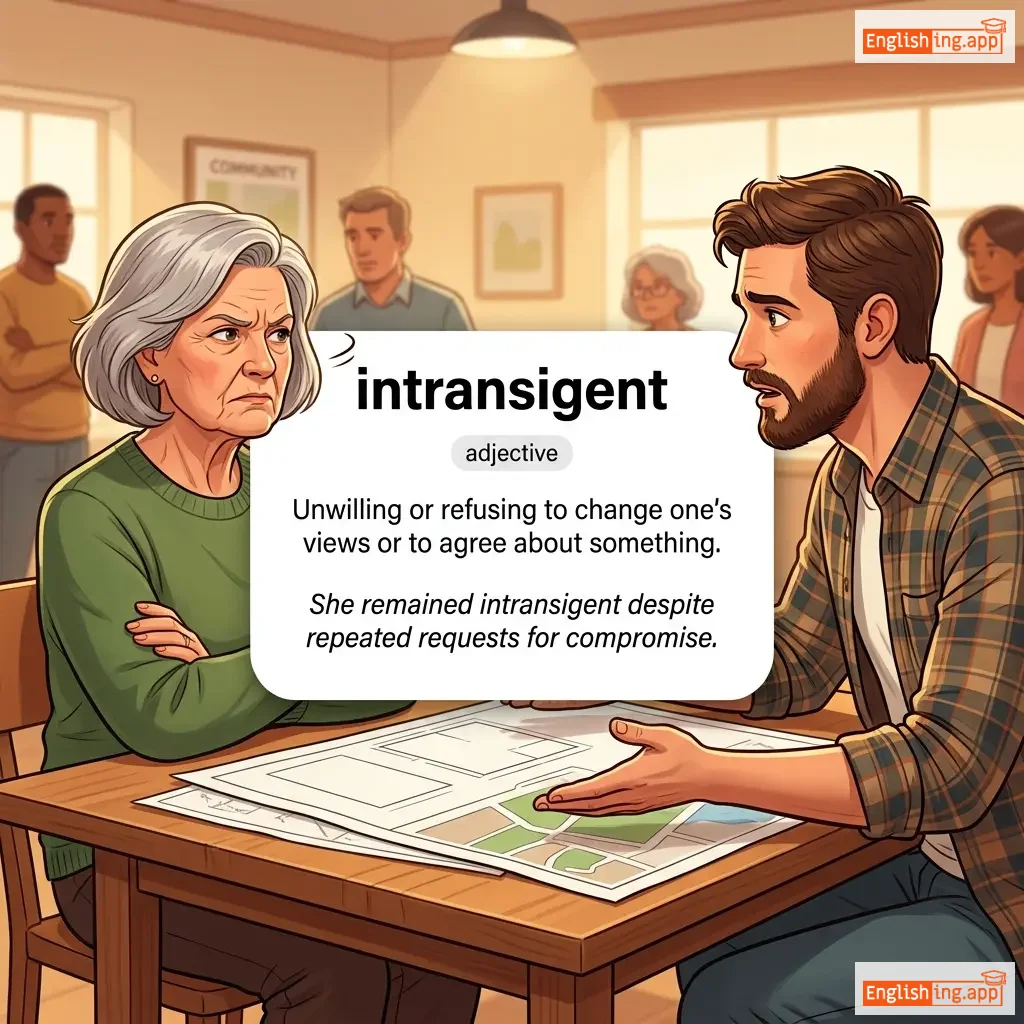
/ɪnˈtræn.sɪ.dʒənt/
adjective
(イントランシジェント)
••••••
|
|
譲らない
yuzuranai
••••••
|
- •••••• | - •••••• | - •••••• | - •••••• |
Unwilling or refusing to change one's views or to agree about something.
••••••
|
She remained intransigent despite repeated requests for compromise. |
妥協の繰り返しのお願いにもかかわらず、彼女は譲らなかった。
Dakyō no kurikaeshi no onegai ni mo kakawarazu, kanojo wa yuzuranakatta.
••••••
|
- •••••• | - •••••• | - •••••• |
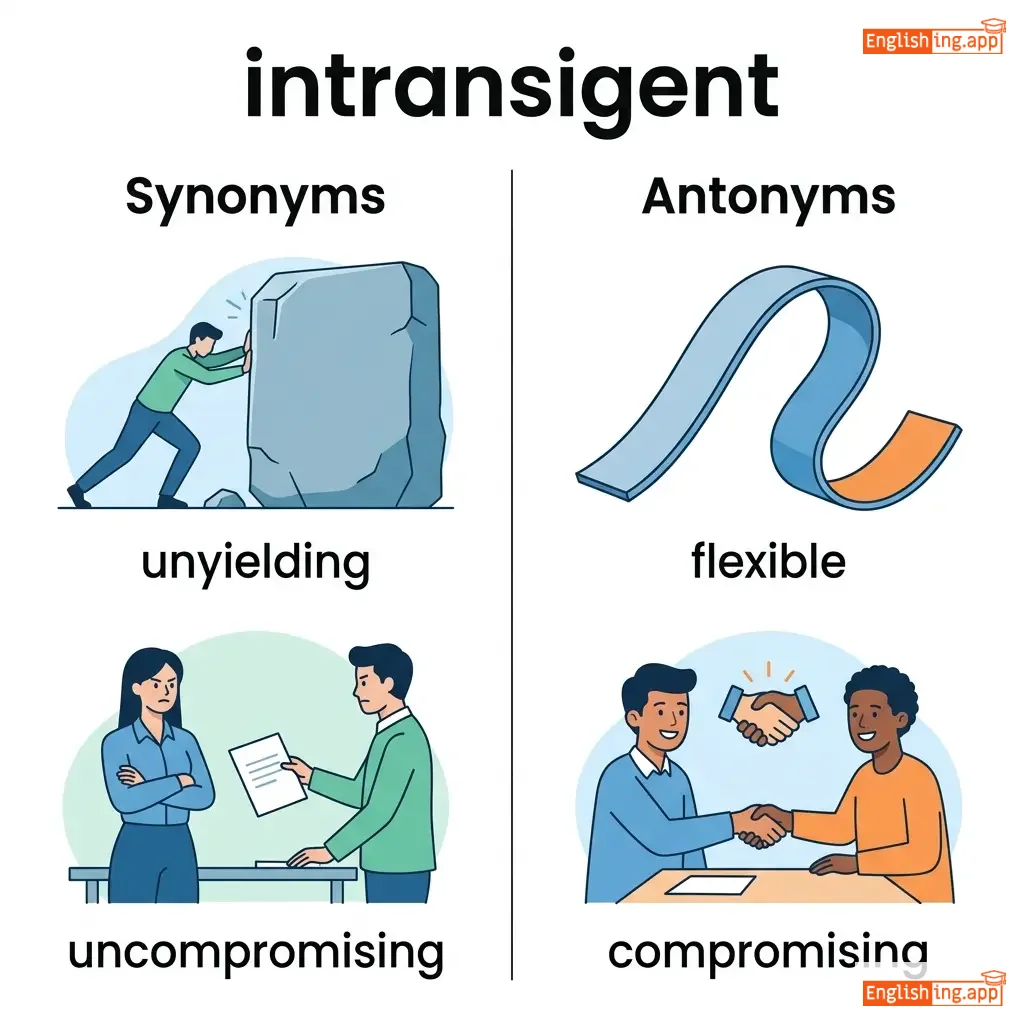
unyielding, uncompromising, stubborn, inflexible
••••••
|
flexible, compromising, yielding
••••••
|
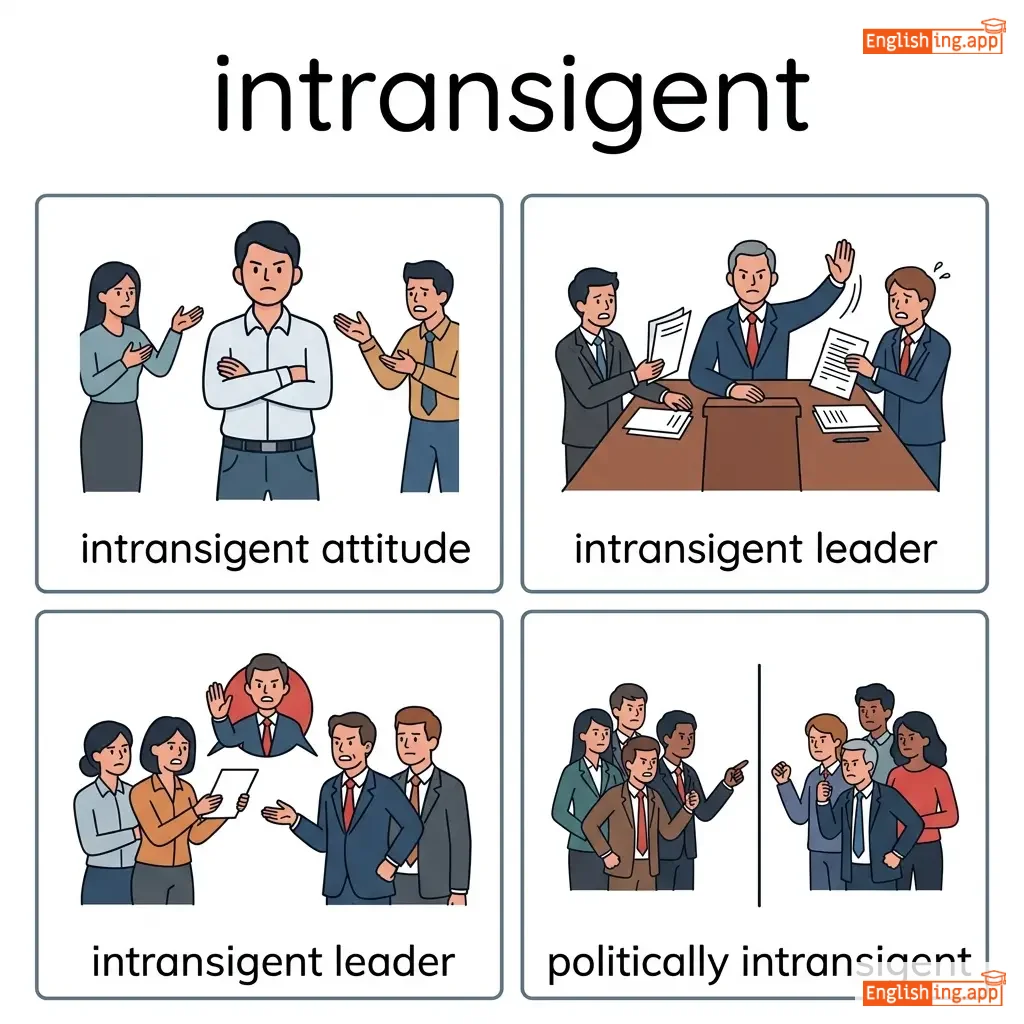
intransigent attitude, intransigent leader, politically intransigent, remain intransigent
••••••
|
In + Transit 無し → 動かない → 譲らない
••••••
|
|
#4803
🛑
|
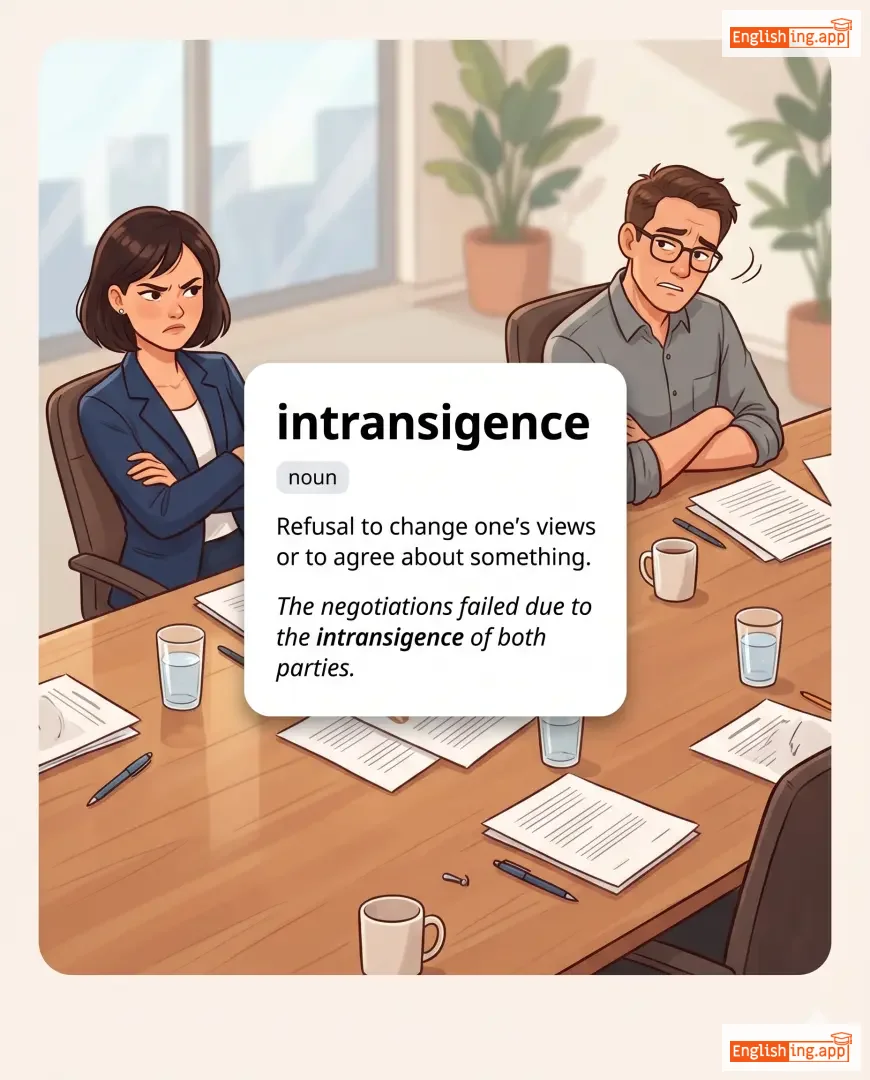
/ɪnˈtræn.sɪ.dʒəns/
noun
(イントランシジェンス)
••••••
|
|
不屈
fukutsu
••••••
|
- •••••• | - •••••• | - •••••• | - •••••• |
Refusal to change one's views or to agree about something.
••••••
|
The negotiations failed due to the intransigence of both parties. |
両者の不屈の姿勢のために交渉は失敗した。
Ryōsha no fukutsu no shisei no tame ni kōshō wa shippai shita.
••••••
|
- •••••• | - •••••• | - •••••• |
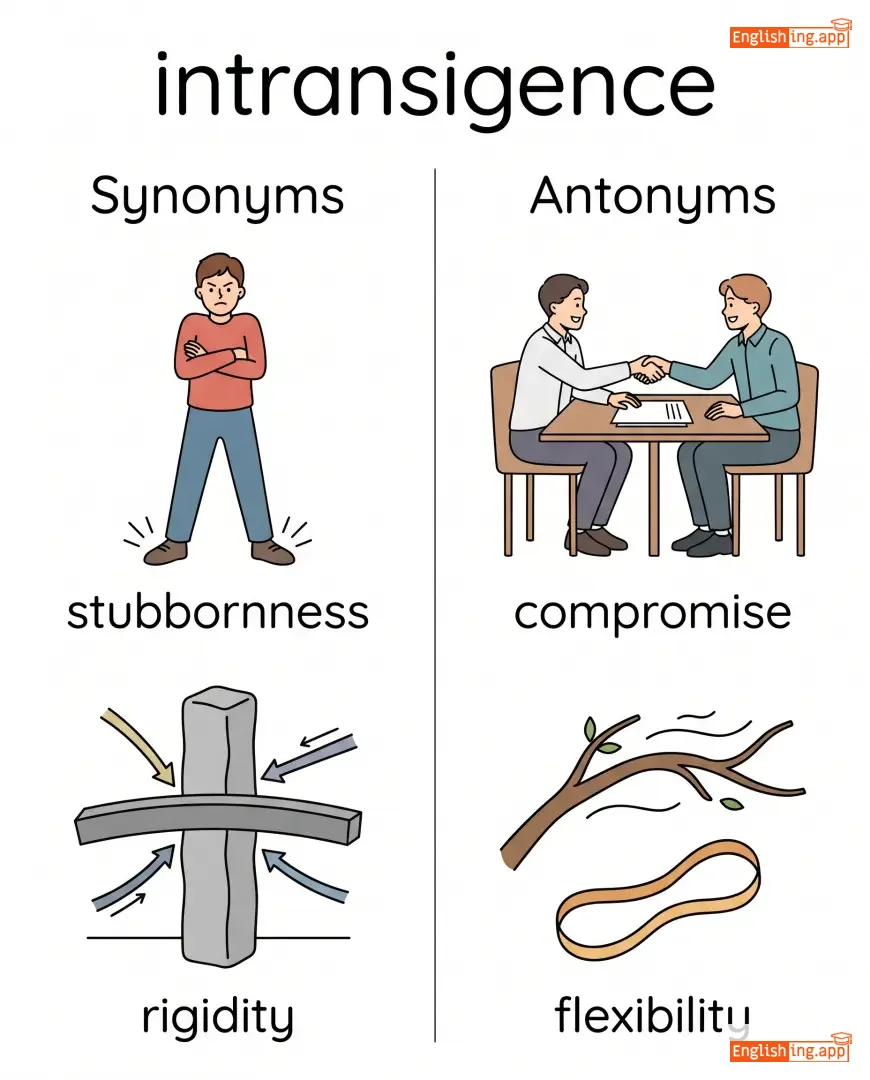
stubbornness, rigidity, inflexibility, obstinacy
••••••
|
compromise, flexibility, willingness
••••••
|
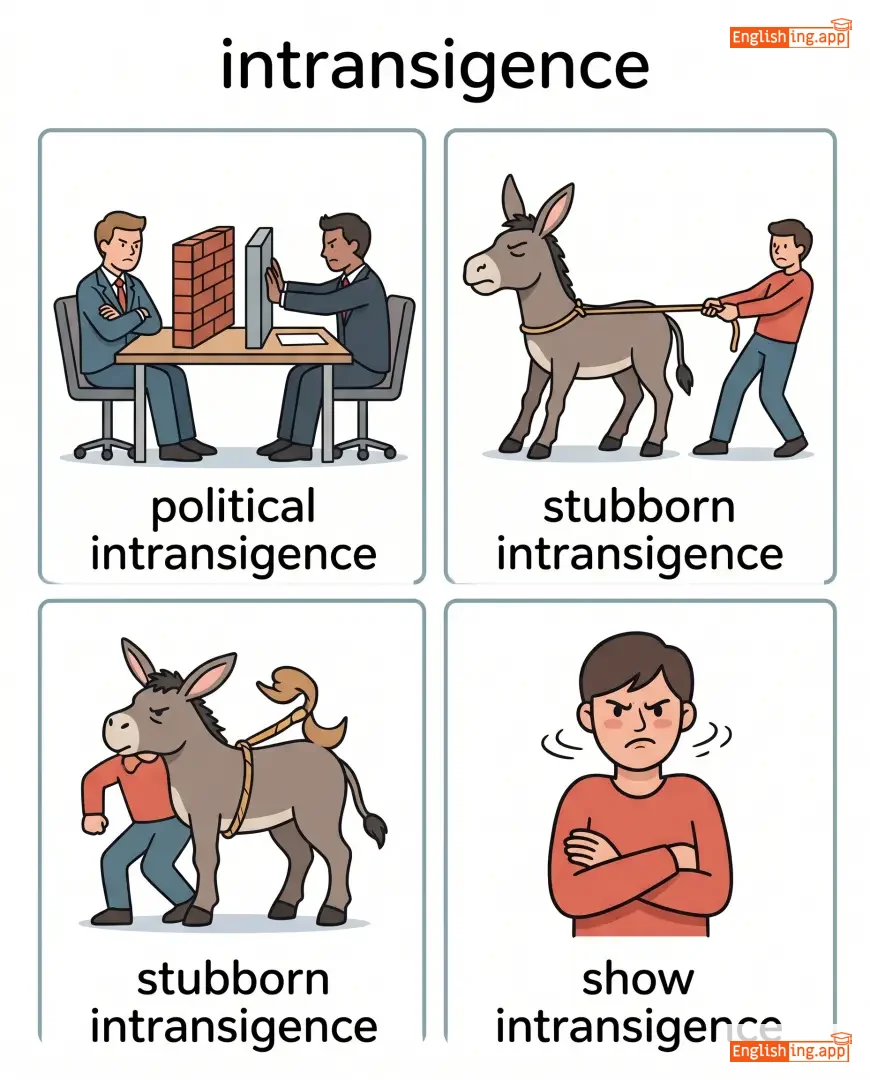
political intransigence, stubborn intransigence, show intransigence, display intransigence
••••••
|
In + Transit なし → 進まない → 変わらない → 不屈
••••••
|
|
#4804
🏫
|
/ˌɪn.trəˈmjʊə.rəl/
adjective
(イントラマラル)
••••••
|
- •••••• |
学内
gakunai
••••••
|
- •••••• | - •••••• | - •••••• | - •••••• |
Occurring within the walls of a single institution, especially a school or college.
••••••
|
The college organizes intramural sports competitions every semester. |
大学は毎学期、学内スポーツ競技を開催しています。
Daigaku wa mai gakki, gakunai supōtsu kyōgi o kaisai shiteimasu.
••••••
|
- •••••• | - •••••• | - •••••• |
internal, inside, within, domestic
••••••
|
extramural, external, outside
••••••
|
intramural sports, intramural competition, intramural activities, intramural program
••••••
|
Intra (内部) + Mural (壁) → 学内で行われる
••••••
|
|
#4805
🪨
|
/ɪnˈtræk.tə.bəl/
adjective
(イントラクトブル)
••••••
|
|
管理不能
kanri funō
••••••
|
- •••••• | - •••••• | - •••••• | - •••••• |
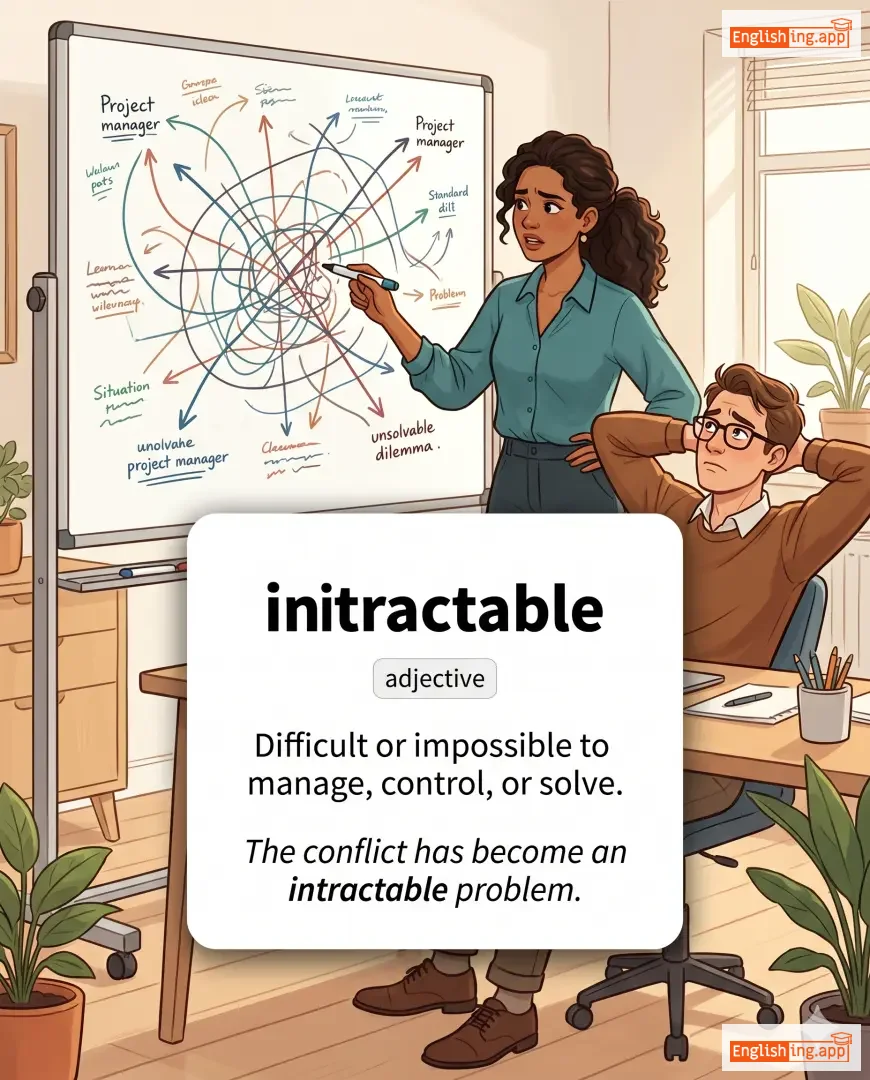
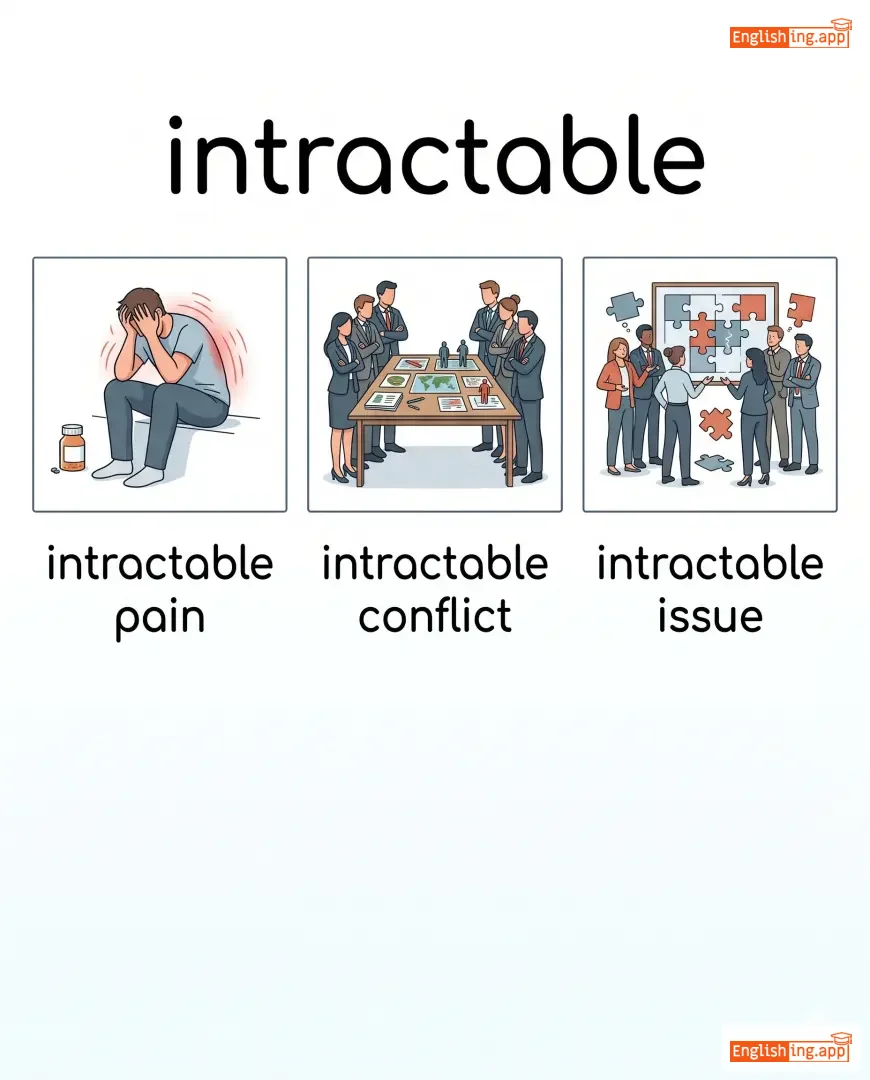
Difficult or impossible to manage, control, or solve.
••••••
|
The conflict has become an intractable problem. |
その対立は管理不能な問題になった。
Sono tairitsu wa kanri funō na mondai ni natta.
••••••
|
- •••••• | - •••••• | - •••••• |
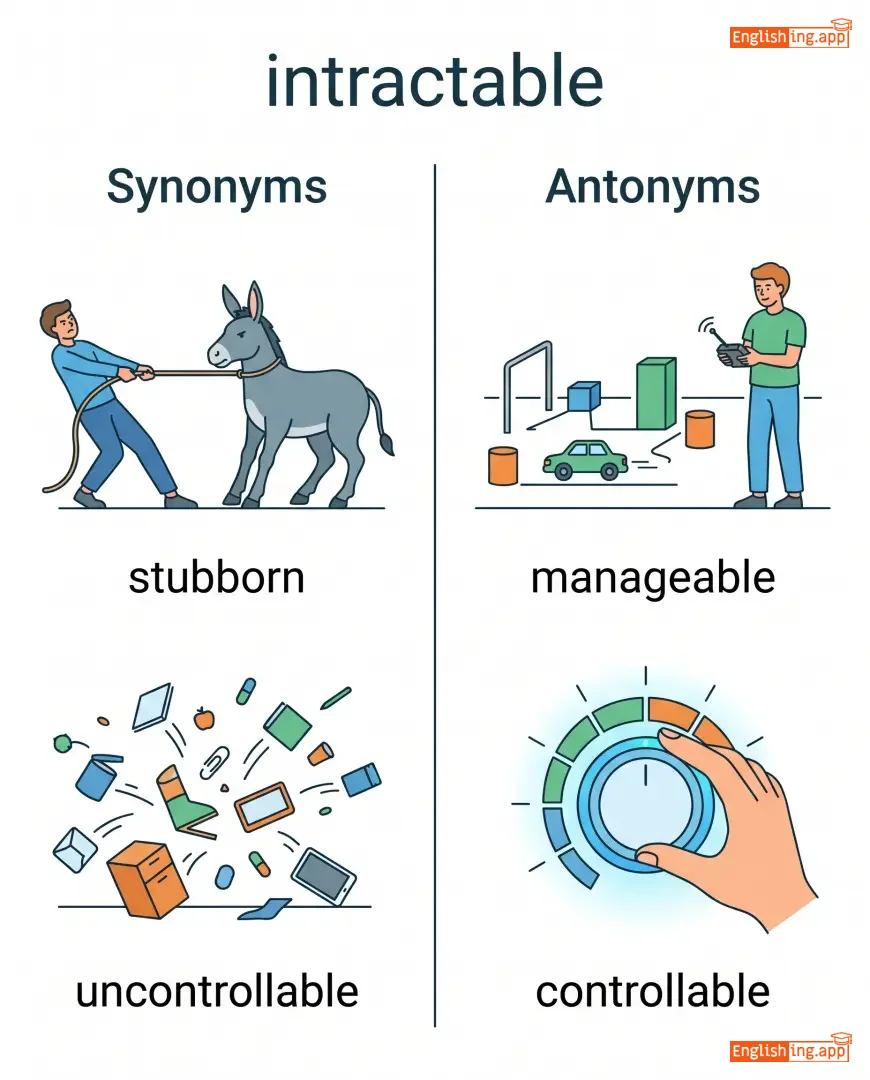
stubborn, uncontrollable, unmanageable, obstinate
••••••
|
manageable, controllable, flexible
••••••
|
intractable pain, intractable conflict, intractable issue, intractable disease
••••••
|
In + Track (トラック) + able → 解決できない問題 → 管理不能
••••••
|
|
#4806
🧫
|
/ˌɪn.trəˈsɛl.jʊ.lər/
adjective
(イントラセルラー)
••••••
|
- •••••• |
細胞内
saibōnai
••••••
|
- •••••• | - •••••• | - •••••• | - •••••• |
Located or occurring within a cell.
••••••
|
The drug works by targeting intracellular bacteria. |
薬は細胞内の細菌をターゲットにして作用します。
Kusuri wa saibōnai no saikin o tāgetto ni shite sayō shimasu.
••••••
|
- •••••• | - •••••• | - •••••• |
within-cell, internal, cytoplasmic, inside-cell
••••••
|
extracellular, outside-cell
••••••
|
intracellular fluid, intracellular process, intracellular activity, intracellular space
••••••
|
Intraは内部を意味する + Cell → Intracellular = 細胞内
••••••
|
|
#4807
🥂
|
/ɪnˈtɒksɪkeɪt/
verb
(ハピネス)
••••••
|
- •••••• |
幸せ
shiawase
••••••
|
intoxicated
••••••
|
intoxicated
••••••
|
intoxicates
••••••
|
intoxicating
••••••
|
to make someone lose control of their faculties or behavior due to alcohol or drugs
••••••
|
The strong drink quickly intoxicated him. |
彼女は賞を受け取ったとき、自分の幸せを隠すことができなかった。
Kanojo wa shō o uketotta toki, jibun no shiawase o kakusu koto ga dekinakatta.
••••••
|
intoxicated with success |
overwhelmed or excited by achievement
••••••
|
幸せを追い求める
shiawase o oi motomeru
••••••
|
inebriate, drug, stupefy, overwhelm, exhilarate
••••••
|
sober, clear
••••••
|
intoxicate the senses, intoxicate with power, intoxicate with success, intoxicate quickly
••••••
|
幸せ = 幸 + せ = 幸せな気持ち
••••••
|
|
#4808
🍷
|
/ɪnˈtɒksɪkənt/
noun
(イントキシカント)
••••••
|
- •••••• |
酔わせる物質
yowaseru busshitsu
••••••
|
- •••••• | - •••••• | - •••••• | - •••••• |
a substance, especially alcohol or a drug, that causes intoxication
••••••
|
Alcohol is the most commonly used intoxicant in many cultures. |
アルコールは多くの文化で最も一般的に使用される酔わせる物質です。
Arukōru wa ōku no bunka de mottomo ippanteki ni shiyō sareru yowaseru busshitsu desu.
••••••
|
harmful intoxicant |
a substance that damages health while causing intoxication
••••••
|
有害な酔わせる物質
yūgaina yowaseru busshitsu
••••••
|
alcohol, drug, stimulant, narcotic, liquor
••••••
|
medicine, remedy
••••••
|
strong intoxicant, harmful intoxicant, natural intoxicant, intoxicant effect
••••••
|
INTOXICANT = 酔わせる物質 → 有害
••••••
|
|
#4809
🙅
|
/ɪnˈtɒlərənt/
adjective
(インテレラント)
••••••
|
- •••••• |
不寛容
fukan'yō
••••••
|
- •••••• | - •••••• | - •••••• | - •••••• |
unwilling to accept or respect beliefs or behavior different from one's own
••••••
|
He is intolerant of any opinion that differs from his own. |
彼は自分の意見と異なる意見を全く容認しません。
Kare wa jibun no iken to kotonaru iken o mattaku yōnin shimasen.
••••••
|
intolerant attitude |
a mindset that does not accept differences
••••••
|
不寛容な態度
fukan'yōna taido
••••••
|
narrow-minded, prejudiced, bigoted, biased, discriminatory
••••••
|
tolerant, open-minded, accepting
••••••
|
intolerant behavior, intolerant attitude, intolerant remark, intolerant society
••••••
|
INTOLERANT = 寛容ではない → 他の意見を受け入れない
••••••
|
|
#4810
🚫
|
/ɪnˈtɒlərəns/
noun
(インタレランス)
••••••
|
- •••••• |
不寛容
fukanyou
••••••
|
- •••••• | - •••••• | - •••••• | - •••••• |
unwillingness to accept or endure beliefs, behaviors, or conditions different from one's own
••••••
|
The leader was criticized for his intolerance toward other religions. |
リーダーは他の宗教に対する不寛容さで批判されました。
Rīdā wa hoka no shūkyō ni taisuru fukanyōsa de hihan saremashita.
••••••
|
religious intolerance |
lack of acceptance of people from different religions
••••••
|
宗教的な不寛容
shūkyō-teki na fukanyō
••••••
|
bigotry, prejudice, bias, narrow-mindedness, discrimination
••••••
|
tolerance, acceptance, open-mindedness
••••••
|
religious intolerance, social intolerance, racial intolerance, intolerance of criticism
••••••
|
INTOLERANCE は tolerancia がない → 耐えられない → 不寛容
••••••
|
|
#4811
🔥
|
/ɪnˈtɒlərəbl̩/
adjective
(イントレラブル)
••••••
|
- •••••• |
耐えられない
taerarenai
••••••
|
- •••••• | - •••••• | - •••••• | - •••••• |
so bad, difficult, or unpleasant that it cannot be endured
••••••
|
The heat during the summer was almost intolerable.
夏の暑さはほとんど耐えられないほどでした。
••••••
|
夏の暑さはほとんど耐えられないほどでした。
Natsu no atsusa wa hotondo taerarenai hodo deshita.
••••••
|
an intolerable situation
耐えられない状況
••••••
|
a condition or state that is too difficult or unpleasant to continue
••••••
|
耐えられない状況
taerarenai joukyou
••••••
|
unbearable, insufferable, unendurable, extreme, unacceptable
••••••
|
tolerable, bearable, acceptable
••••••
|
intolerable pain, intolerable pressure, intolerable behavior, intolerable burden
••••••
|
INTOLERABLE = IN + TOLERABLE → 耐えられない → 耐えられない
••••••
|
|
#4812
⚠️
|
/ɪnˌtɪmɪˈdeɪʃən/
noun
(インティミデーション)
••••••
|
- •••••• |
威圧
iatsu
••••••
|
- •••••• | - •••••• | - •••••• | - •••••• |
The action of frightening or threatening someone to make them do something.
••••••
|
The workers reported cases of intimidation by the management.
労働者たちは経営陣による威圧の事例を報告しました。
••••••
|
労働者たちは経営陣による威圧の事例を報告しました。
Rōdōsha-tachi wa keiei-jin ni yoru iatsu no jirei o hōkoku shimashita.
••••••
|
- •••••• | - •••••• | - •••••• |
threat, bullying, coercion, fear, pressure
••••••
|
encouragement, support, reassurance
••••••
|
use of intimidation, act of intimidation, intimidation tactics, intimidation by
••••••
|
威圧: 恐怖で他人をコントロールする手段。
••••••
|
|
#4813
😨
|
/ɪnˈtɪmɪdeɪt/
verb
••••••
|
- •••••• | - •••••• |
intimidated
••••••
|
intimidated
••••••
|
intimidates
••••••
|
intimidating
••••••
|
To frighten or overawe someone, especially to make them do what one wants.
••••••
|
The bully tried to intimidate the smaller kids. |
- •••••• |
intimidate into silence |
To frighten someone so much that they do not speak out.
••••••
|
- •••••• |
frighten, scare, bully, terrify, overawe
••••••
|
encourage, reassure, comfort
••••••
|
intimidate someone, intimidate into, intimidate others, attempt to intimidate
••••••
|
No •••••• |
|
#4814
💡
|
/ˌɪntɪˈmeɪʃən/
noun
(intiméshon)
••••••
|
- •••••• |
示唆
shisa
••••••
|
- •••••• | - •••••• | - •••••• | - •••••• |
A subtle or indirect hint or suggestion.
••••••
|
She gave no intimation of her plans. |
彼女は自分の計画について何の示唆も与えなかった。
Kanojo wa jibun no keikaku ni tsuite nan no shisa mo ataenakatta.
••••••
|
- •••••• | - •••••• | - •••••• |
hint, suggestion, indication, signal, clue
••••••
|
declaration, statement, announcement
••••••
|
slight intimation, clear intimation, intimation of change, intimation of plans
••••••
|
Intimation は示唆を意味し、何かを直接言わずにヒントを与えることです。
••••••
|
|
#4815
🌹
|
/ˈɪntɪmət/
adjective
(インティメート)
••••••
|
|
親密
shinmitsu
••••••
|
- •••••• | - •••••• | - •••••• | - •••••• |
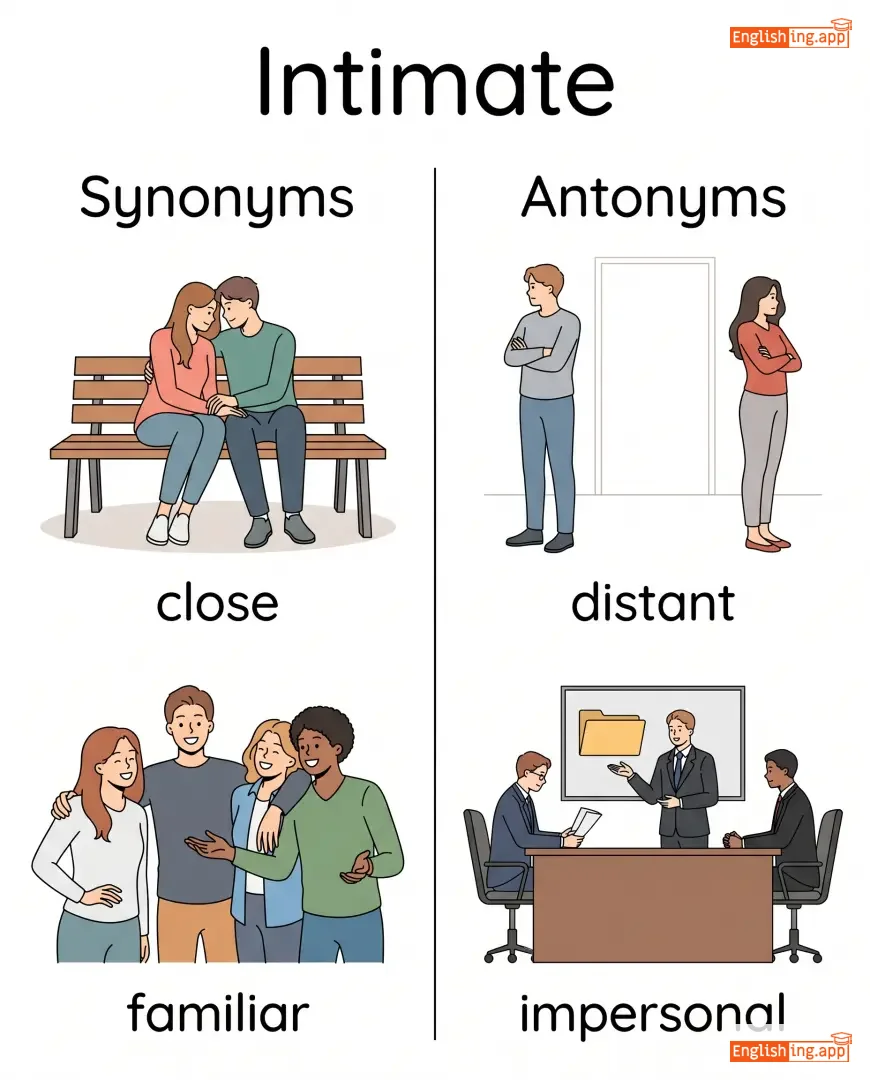
Closely acquainted; very familiar and personal.
••••••
|
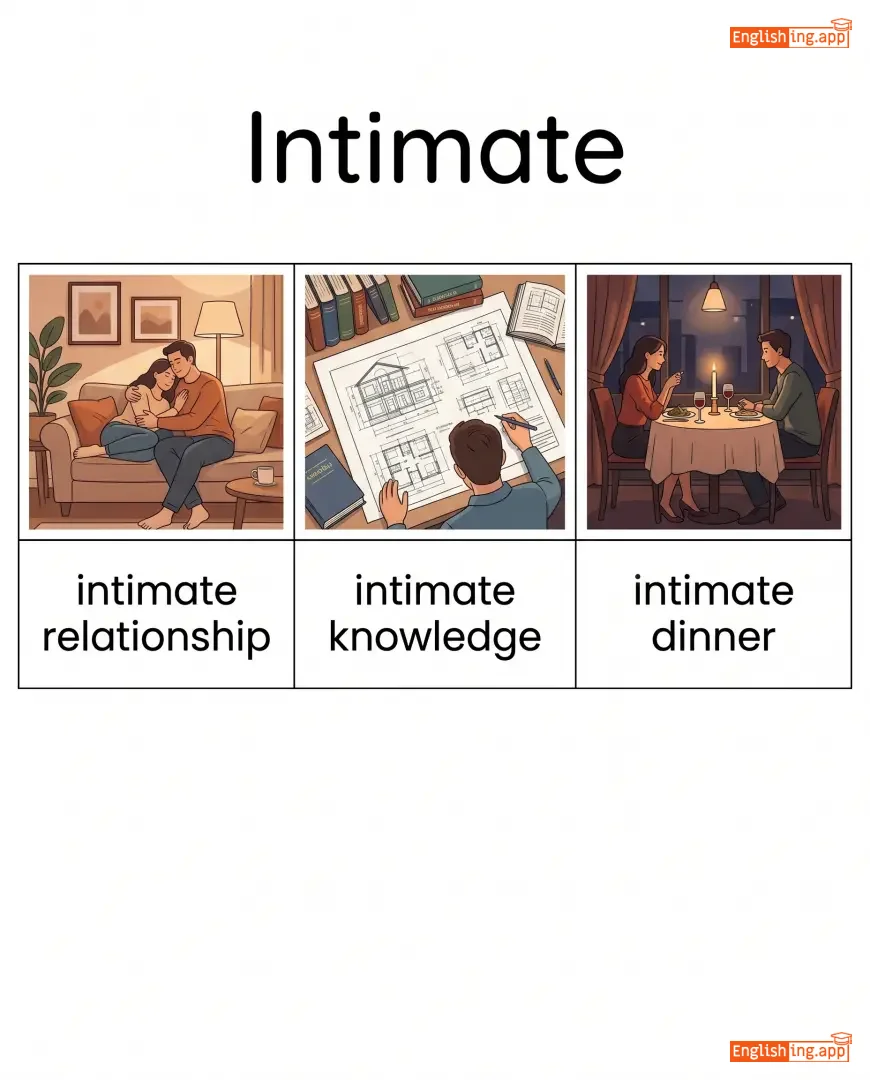
They shared an intimate dinner by candlelight. |
彼らはキャンドルライトの中で親密な夕食を共にした。
Karera wa kyandoru raito no naka de shinmitsu na yūshoku o tomo ni shita.
••••••
|
intimate knowledge |
A deep or detailed understanding of something.
••••••
|
親密な知識
shinmitsu na chishiki
••••••
|
close, familiar, personal, confidential, warm
••••••
|
distant, impersonal, formal
••••••
|
intimate relationship, intimate knowledge, intimate dinner, intimate friend
••••••
|
Intimate = 親密な友人との特別な時間。
••••••
|
|
#4816
🛑
|
/ˌɪntərpəˈzɪʃən/
noun
(インターポジション)
••••••
|
- •••••• |
介入
kainyū
••••••
|
- •••••• | - •••••• | - •••••• | - •••••• |
The act of intervening or coming between two things, often to influence or prevent an outcome.
••••••
|
The manager’s interposition prevented a heated argument from escalating. |
マネージャーの介入は、激しい議論がエスカレートするのを防ぎました。
Manējā no kainyū wa, hageshī giron ga esukarēto suru no o fusegimashita.
••••••
|
- •••••• | - •••••• | - •••••• |
intervention, mediation, interference, involvement, interruption
••••••
|
withdrawal, neglect, avoidance
••••••
|
act of interposition, interposition of authority, political interposition
••••••
|
Interposition は inter(間)と position(位置)を取ること — 介入することで、間に入って結果を変える。
••••••
|
|
#4817
🫃
|
/ɪnˈtɛstɪn/
noun
(インテスティン)
••••••
|
- •••••• |
腸
chou
••••••
|
- •••••• | - •••••• | - •••••• | - •••••• |
The part of the digestive system where food is digested and absorbed, extending from the stomach to the anus.
••••••
|
The doctor explained how nutrients are absorbed in the small intestine. |
医者は、小腸で栄養素がどのように吸収されるかを説明しました。
Isha wa, shouchou de eiyouso ga dono you ni kyushuu sareru ka wo setsumei shimashita.
••••••
|
gut feeling |
an instinctive or intuitive feeling without logical reasoning
••••••
|
直感
chokkan
••••••
|
bowel, gut, alimentary canal, digestive tract
••••••
|
stomach, esophagus
••••••
|
small intestine, large intestine, intestinal tract, intestinal wall
••••••
|
腸はchou、直感は腸から来る。
••••••
|
|
#4818
⚖️
|
/ɪnˈtɛsteɪt/
adjective
(インテステート)
••••••
|
- •••••• |
遺言なしで死亡
igon nashi de shibou
••••••
|
- •••••• | - •••••• | - •••••• | - •••••• |
Having died without leaving a valid will.
••••••
|
She died intestate, so her assets were distributed by law. |
彼女は遺言なしで死亡したため、財産は法に従って分配されました。
Kanojo wa igon nashi de shibou shita tame, zaisan wa hō ni shitagatte bunpai saremashita.
••••••
|
- •••••• | - •••••• | - •••••• |
will-less, heirless, unwilled, without a will
••••••
|
testate, with-will
••••••
|
died intestate, intestate property, intestate succession, intestate estate
••••••
|
Intestate → 遺言なしで死亡
••••••
|
|
#4819
📜
|
/ɪnˈtɛstəsi/
noun
(インテスタシー)
••••••
|
- •••••• |
遺言なしで死亡
yigon nashi de shibou
••••••
|
- •••••• | - •••••• | - •••••• | - •••••• |
The condition of dying without having made a valid will.
••••••
|
His estate was divided according to the laws of intestacy. |
彼の財産は遺言なしでの法則に従って分けられた。
kare no zaisan wa yigon nashi de no hōsoku ni shitagatte wakerareta.
••••••
|
laws of intestacy |
legal rules that govern inheritance when there is no will
••••••
|
遺言なしでの法則
yigon nashi de no hōsoku
••••••
|
inheritance law, succession law, estate distribution, probate
••••••
|
testacy, will-making
••••••
|
laws of intestacy, intestacy rules, intestacy laws, intestacy succession
••••••
|
Intestacy → 遺言なしで死亡
••••••
|
|
#4820
🛑
|
/ˌɪntərˈviːn/
verb
(インタービーン)
••••••
|
- •••••• |
介入する
kainyū suru
••••••
|
intervened
インタービーンド
••••••
|
intervened
インタービーンド
••••••
|
intervenes
インタービーンズ
••••••
|
intervening
インタービーニング
••••••
|
To come between people, groups, or events, often to prevent conflict or improve a situation.
••••••
|
The teacher had to intervene to stop the fight between the students.
教師は生徒たちの間で喧嘩を止めるために介入しなければならなかった。
••••••
|
教師は生徒たちの間で喧嘩を止めるために介入しなければならなかった。
Kyōshi wa seito-tachi no aida de kenka o tomeru tame ni kainyū shinakereba naranakatta.
••••••
|
intervene in a dispute
争いに介入する
••••••
|
to get involved in an argument or disagreement to try to resolve it
••••••
|
争いに介入する
arasoi ni kainyū suru
••••••
|
mediate, intercede, interfere, step in, arbitrate
••••••
|
ignore, avoid, neglect
••••••
|
intervene in conflict, intervene directly, intervene quickly, intervene diplomatically
••••••
|
インタービーンは介入すること、まるで教師のように!
••••••
|
|
#4821
🏞️
|
/ˈɪntərˌveɪl/
noun
(インターヴェール)
••••••
|
- •••••• |
川沿いの低地、通常は肥沃で平坦
kawa-zoi no teichi, tsūjō wa hiwoku de heitan
••••••
|
- •••••• | - •••••• | - •••••• | - •••••• |
A low-lying tract of land along a river, usually fertile and flat.
••••••
|
The farmers cultivated crops on the lush intervale by the river. |
農民たちは川沿いの肥沃な土地で作物を育てた。
Nōmintachi wa kawa-zoi no hiwoku na tochi de sakumotsu o sodateta.
••••••
|
- •••••• | - •••••• | - •••••• |
valley, meadow, plain, lowland, flatland
••••••
|
highland, mountain, hill
••••••
|
fertile intervale, river intervale, green intervale, cultivated intervale
••••••
|
インターヴェールは川沿いの肥沃な土地を意味します。
••••••
|
|
#4822
🪢
|
/ˌɪntərˈtwaɪnd/
adjective
(幸福)
••••••
|
- •••••• |
幸福
koufuku
••••••
|
- •••••• | - •••••• | - •••••• | - •••••• |
closely connected or twisted together
••••••
|
Their lives became deeply intertwined after the accident. |
彼女は賞を受け取ったとき、幸せを隠せませんでした。
Kanojo wa shou wo uketotta toki, koufuku wo kakusemasendeshita.
••••••
|
closely intertwined |
tightly connected or inseparably linked
••••••
|
幸福を追求する
koufuku wo tsuikyuu suru
••••••
|
connected, linked, entangled, united, bound
••••••
|
separate, detached
••••••
|
intertwined lives, intertwined relationships, closely intertwined
••••••
|
幸福は明るい日のように、あなたを温かく包み込むものです。
••••••
|
|
#4823
🕳️
|
/ɪnˈtɜːrstɪs/
noun
(インタースティス)
••••••
|
- •••••• |
隙間
sukima
••••••
|
- •••••• | - •••••• | - •••••• | - •••••• |
a small space that lies between things
••••••
|
Light filtered through the narrow interstices of the wall. |
光は壁の狭い隙間を通して漏れた。
Hikari wa kabe no semai sukima o tōshite moreta.
••••••
|
- •••••• | - •••••• | - •••••• |
gap, crevice, opening, space, crack
••••••
|
solid, block
••••••
|
tiny interstices, interstices of society, interstices of the wall
••••••
|
Interstice = inter (間) + stice (空間) = 隙間.
••••••
|
|
#4824
✖️
|
/ˌɪntəˈsɛkt/
verb
(インターセクト)
••••••
|
- •••••• |
交差する
kōsa suru
••••••
|
intersected
インターセクテッド
••••••
|
intersected
インターセクテッド
••••••
|
intersects
インターセクツ
••••••
|
intersecting
インターセクティング
••••••
|
to cross or pass through each other
••••••
|
The two roads intersect at the city center.
二つの道路は市内中心で交差する。
••••••
|
二つの道路は市内中心で交差する。
Futatsu no dōro wa shinaichūshin de kōsa suru.
••••••
|
points intersect
ポイントが交差する
••••••
|
when two lines or paths cross each other
••••••
|
ポイントが交差する
Pointo ga kōsa suru
••••••
|
cross, meet, connect, overlap, converge
••••••
|
diverge, separate
••••••
|
roads intersect, lines intersect, paths intersect
••••••
|
Intersect = inter (交) + sect (道) = 交差する
••••••
|
|
#4825
⏸️
|
/ˌɪntəˈrʌpt/
verb
(インタラプト)
••••••
|
- •••••• |
割り込む
warikomu
••••••
|
interrupted
••••••
|
interrupted
••••••
|
interrupts
••••••
|
interrupting
••••••
|
to stop someone from speaking or doing something by suddenly saying or doing something
••••••
|
She tried not to interrupt while he was speaking. |
彼女は彼が話している間、割り込まないようにした。
Kanojo wa kare ga hanashite iru aida, warikomanai yō ni shita.
••••••
|
interrupt the flow |
to break the natural course of something
••••••
|
流れを割り込む
nagare o warikomu
••••••
|
disturb, hinder, intrude, disrupt, break in
••••••
|
continue, allow, support
••••••
|
interrupt the conversation, interrupt the process, rudely interrupt
••••••
|
割り込むは、会話の流れを急に止めること。
••••••
|
|
#4826
❓
|
/ˌɪntəˈrɒɡətəri/
adjective
(インタローガトリー)
••••••
|
- •••••• |
尋問的な
jinmon-tekina
••••••
|
- •••••• | - •••••• | - •••••• | - •••••• |
expressed in the form of a question; relating to questioning
••••••
|
The lawyer’s interrogatory tone made the witness uncomfortable. |
弁護士の尋問的な口調は証人を不快にさせました。
Bengoshi no jinmon-tekina kuchou wa shounin wo fukai ni sasemashita.
••••••
|
- •••••• | - •••••• | - •••••• |
inquisitive, questioning, probing, examining
••••••
|
declarative, assertive
••••••
|
interrogatory tone, interrogatory statement, interrogatory form
••••••
|
尋問的なものは質問するような口調です。
••••••
|
|
#4827
❔
|
/ˌɪntəˈrɑːɡətɪv/
adjective
(インタローゲイティブ)
••••••
|
- •••••• |
疑問の
gimon no
••••••
|
- •••••• | - •••••• | - •••••• | - •••••• |
Relating to or conveying a question; in grammar, used to form questions.
••••••
|
She raised an interrogative eyebrow when she heard the news. |
彼女はそのニュースを聞いて疑問のまなざしを向けました。
Kanojo wa sono nyūsu o kiite gimon no manazashi o mukemashita.
••••••
|
- •••••• | - •••••• | - •••••• |
questioning, curious, probing, inquiring
••••••
|
declarative, assertive
••••••
|
interrogative sentence, interrogative mood, interrogative pronoun
••••••
|
疑問のは inter (間) + rogativ (質問) — 質問を作る形です。
••••••
|
|
#4828
❓
|
/ɪnˈtɛrəˌɡeɪt/
verb
(インターロゲート)
••••••
|
|
尋問する
shinmon suru
••••••
|
interrogated
インターロゲーテッド
••••••
|
interrogated
インターロゲーテッド
••••••
|
interrogates
インターロゲーツ
••••••
|
interrogating
インターロゲーティング
••••••
|
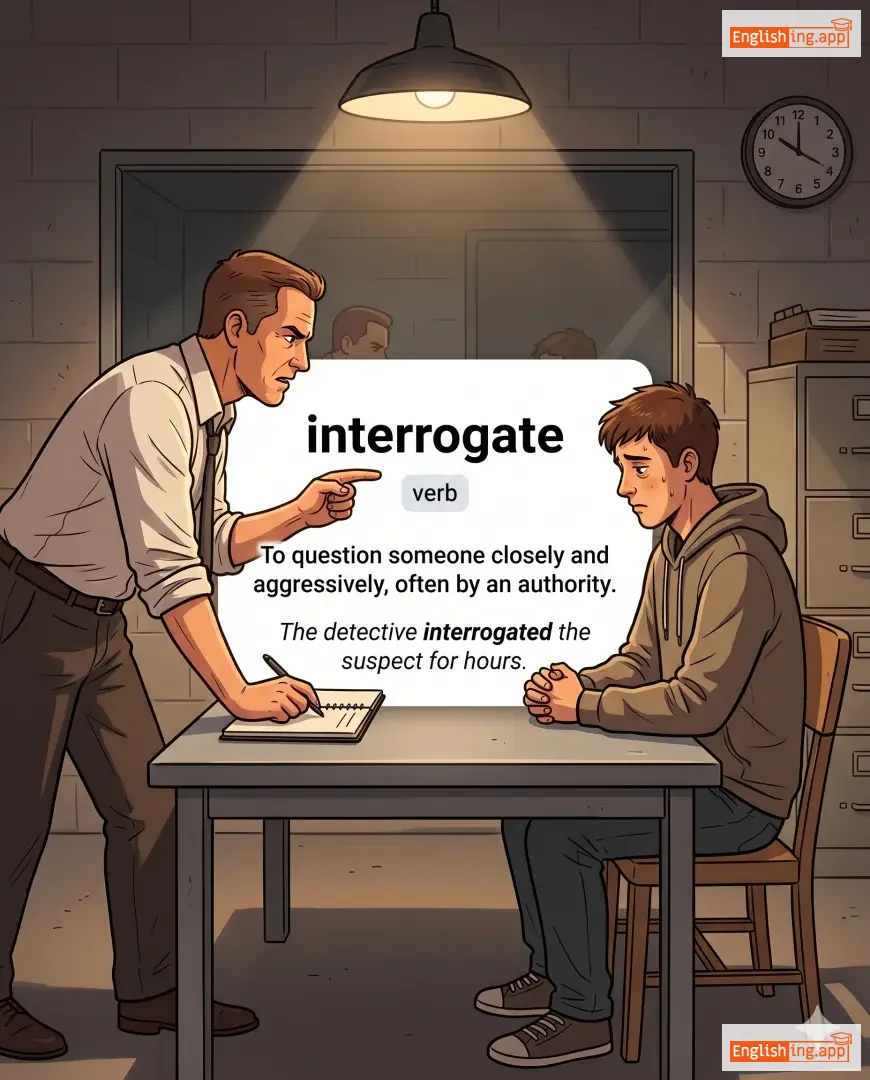
To question someone closely and aggressively, often by an authority.
••••••
|
The detective interrogated the suspect for hours.
探偵は容疑者を何時間も取り調べた。
••••••
|
探偵は容疑者を何時間も取り調べた。
Tantei wa yogisha o nan jikan mo torishirabeta.
••••••
|
- •••••• | - •••••• | - •••••• |
question, grill, examine, probe, cross-examine
••••••
|
answer, respond
••••••
|
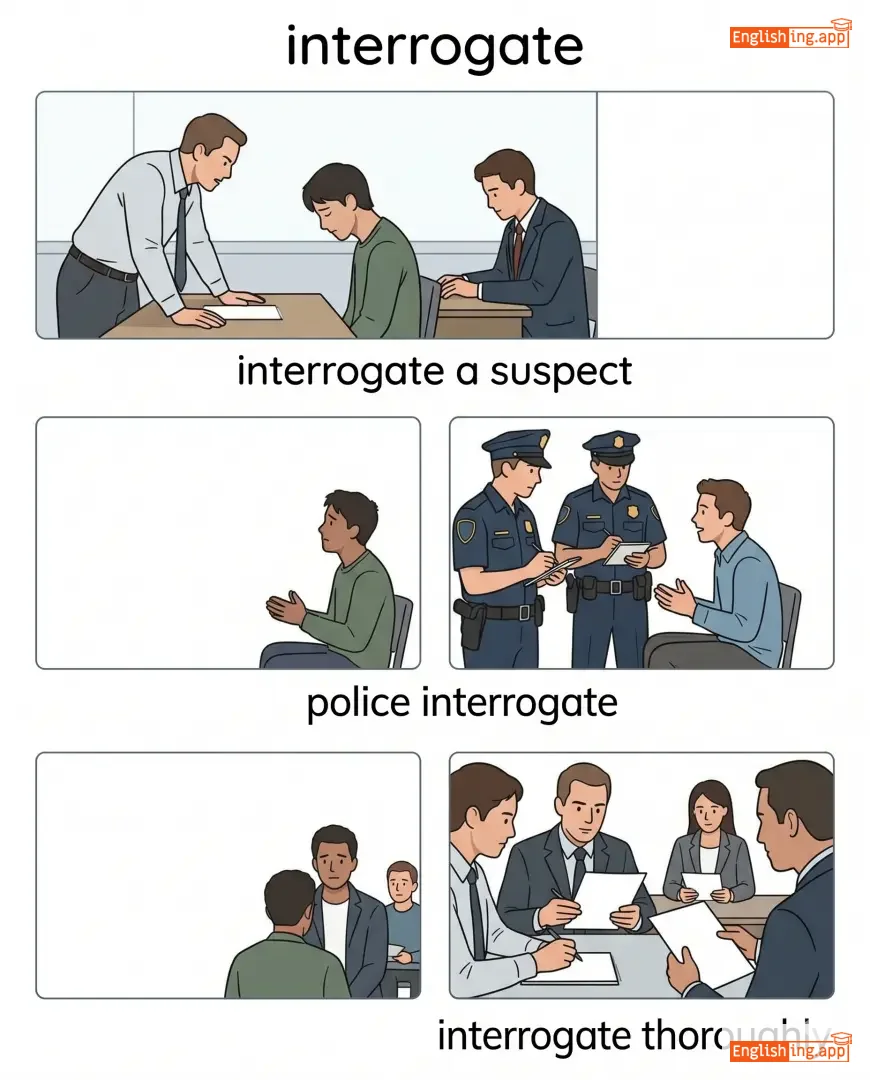
interrogate a suspect, police interrogate, interrogate thoroughly
••••••
|
インターロゲートは尋問することで、探偵が長時間質問する感じを思い出させます。
••••••
|
|
#4829
⏳
|
/ˌɪntərˈrɛɡnəm/
noun
(インターレグナム)
••••••
|
|
政権空白期
seiken kūhaku-ki
••••••
|
- •••••• | - •••••• | - •••••• | - •••••• |
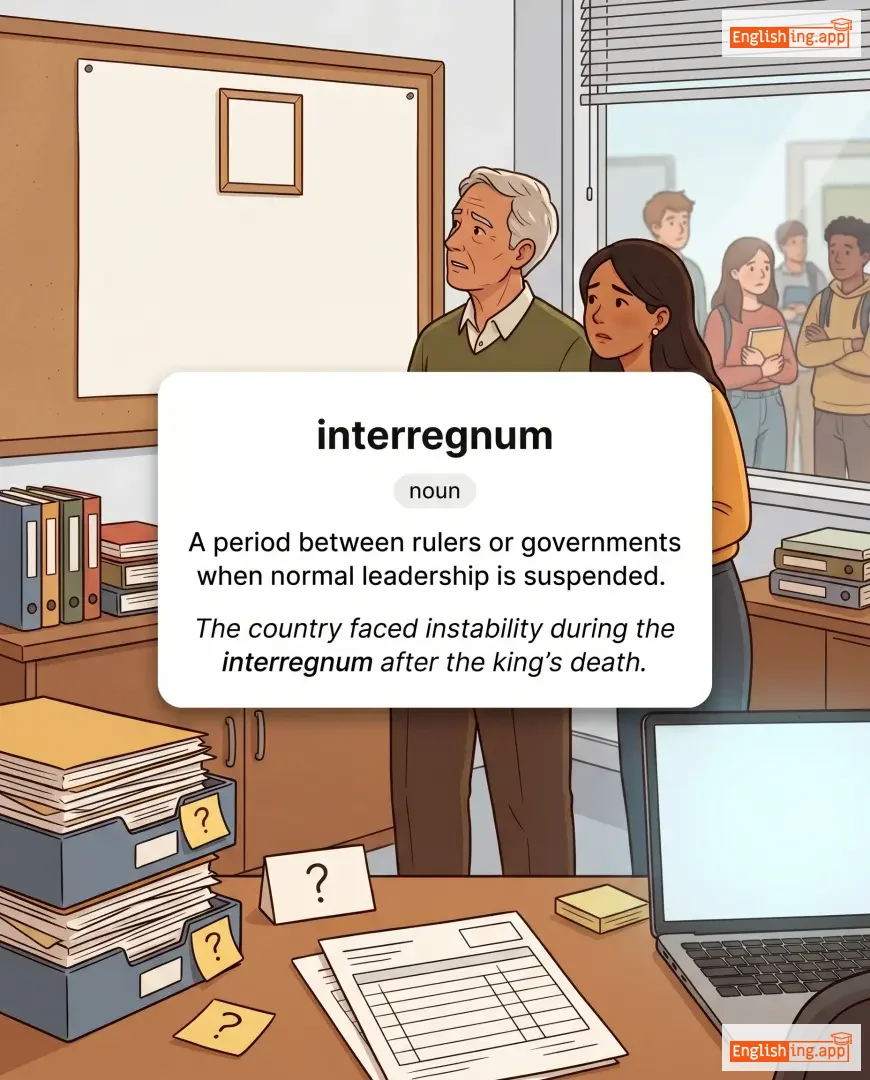
A period between rulers or governments when normal leadership is suspended.
••••••
|
The country faced instability during the interregnum after the king’s death. |
国王の死後、国は政権空白期に不安定さに直面した。
Kokuō no shigo, kuni wa seiken kūhaku-ki ni fuansei ni chokumen shita.
••••••
|
- •••••• | - •••••• | - •••••• |
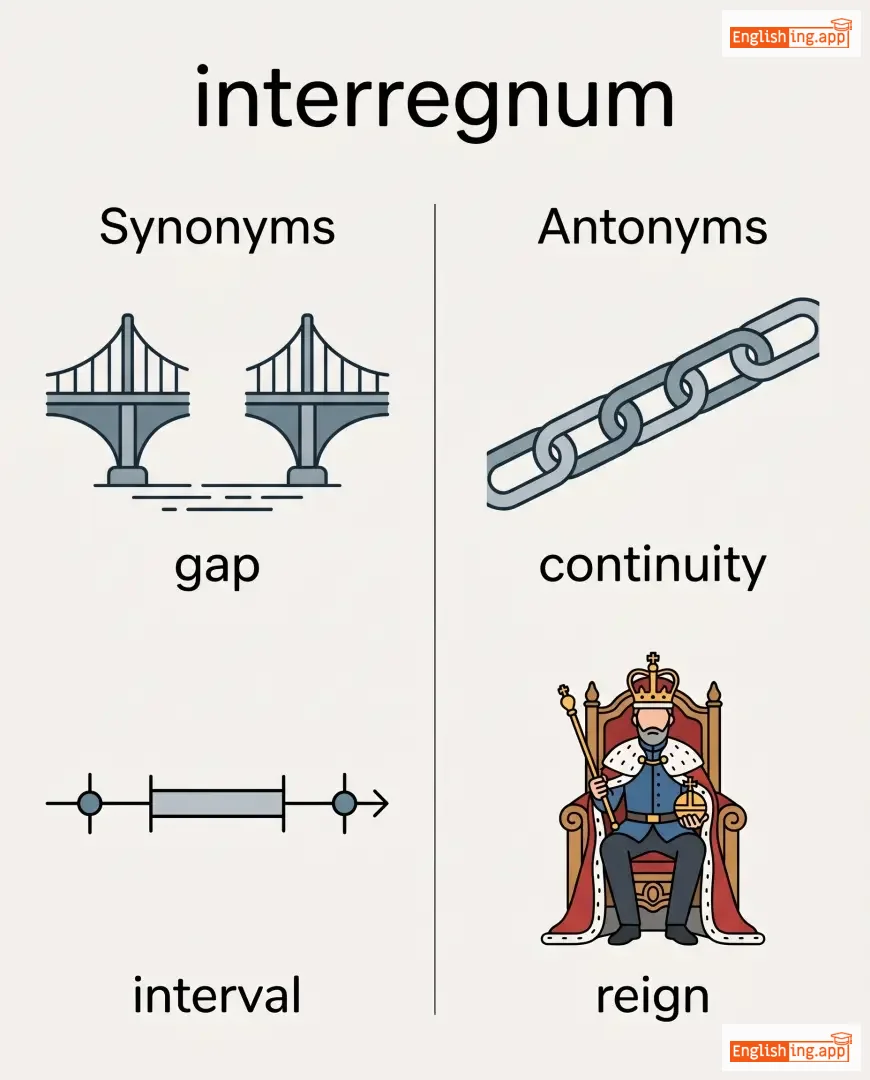
gap, interval, suspension, hiatus, pause
••••••
|
continuity, reign
••••••
|
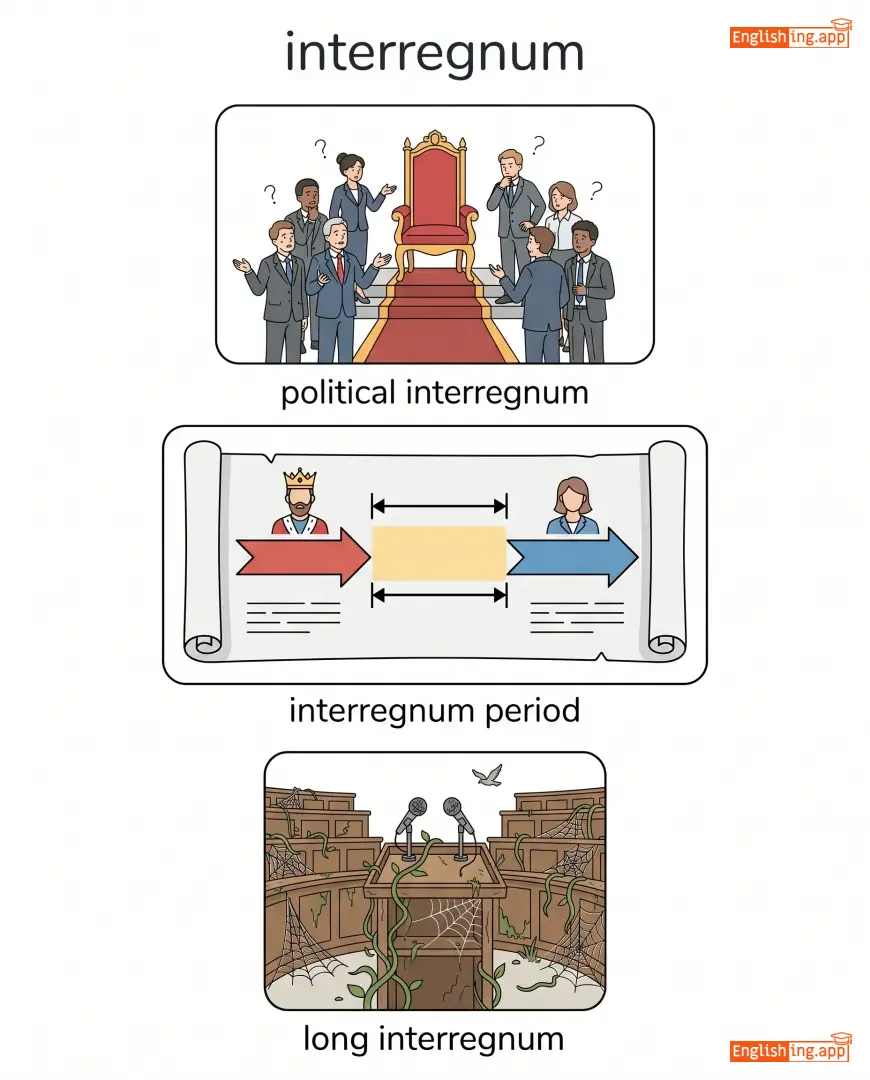
political interregnum, interregnum period, long interregnum
••••••
|
Interregnum は inter (間) + regnum (王国) — 王がいない期間。
••••••
|
|
#4830
🗣️
|
/ɪnˈtɜːrprɪtər/
noun
(インタープリター)
••••••
|
- •••••• |
通訳者
tsūyaku-sha
••••••
|
- •••••• | - •••••• | - •••••• | - •••••• |
A person who translates spoken language orally in real time.
••••••
|
The interpreter helped the tourists communicate with the locals. |
通訳者は観光客が地元の人々とコミュニケーションするのを助けました。
Tsūyaku-sha wa kankōkyaku ga jimoto no hitobito to komyunikeeshon suru no o tasukemashita.
••••••
|
- •••••• | - •••••• | - •••••• |
translator, linguist, mediator, communicator
••••••
|
speaker, listener
••••••
|
professional interpreter, court interpreter, simultaneous interpreter
••••••
|
通訳者は言語を橋渡しする人です。
••••••
|
Vocabulary Quiz
Test your vocabulary by matching words with their translations or meanings.
Login to take the quiz
Comments (0)
Share your thoughts and join the discussion.
Join the discussion by logging in
Login to CommentNo comments yet
Be the first to share your thoughts!