

翻訳
過去
過去分詞
三人称単数
動名詞
意味
例文
例文の翻訳
同義語
対義語
コロケーション
ニーモニック
Swipe left or right, or use the buttons. Tap image to zoom.
例文の翻訳
単語
Lesson 335Lesson 335 - マスクトグル
|
絵文字
|
単語 | Images | 翻訳 | 過去 | 過去分詞 | 三人称単数 | 動名詞 | 意味 | 例文 | 例文の翻訳 | 表現例 | 表現例の意味 | 表現例の翻訳 | 同義語 | 対義語 | コロケーション | ニーモニック |
|---|---|---|---|---|---|---|---|---|---|---|---|---|---|---|---|---|---|
|
#10015
🔪
|
/ˈmɜːrdərər/
noun
(マーダラー)
••••••
|
- •••••• |
殺人犯
satsujinhan
••••••
|
- •••••• | - •••••• | - •••••• | - •••••• |
a person who unlawfully kills another human being with intent
••••••
|
The murderer was caught by the police within hours. |
殺人犯は数時間以内に警察に捕まった。
Satsujinhan wa suujikan inai ni keisatsu ni tsukamatta.
••••••
|
- •••••• | - •••••• | - •••••• |
killer, assassin, slayer, culprit, criminal
••••••
|
victim, protector
••••••
|
serial murderer, cold-blooded murderer, notorious murderer
••••••
|
Murdererは「殺人犯」- 殺すことができるのは殺人犯です。
••••••
|
|
#10016
🆕
|
/njuː/
adjective
(ニュウ)
••••••
|
- •••••• |
新しい
atarashī
••••••
|
- •••••• | - •••••• | - •••••• | - •••••• |
recently made, discovered, or introduced; not existing before
••••••
|
He bought a new car yesterday.
彼は昨日新しい車を買いました。
••••••
|
彼は昨日新しい車を買いました。
Kare wa kinō atarashī kuruma o kaimashita.
••••••
|
brand new
全く新しい
••••••
|
completely new, unused, and fresh
••••••
|
全く新しい
mattaku atarashī
••••••
|
fresh, recent, modern, novel, latest
••••••
|
old, used, ancient
••••••
|
new car, new job, new idea, new technology
••••••
|
NEWはATARASHII — すべての新しいものはいつも新しい
••••••
|
|
#10017
💢
|
/njʊˈrældʒə/
noun
(ニューロルギア)
••••••
|
- •••••• |
神経痛
shinkei tsuu
••••••
|
- •••••• | - •••••• | - •••••• | - •••••• |
intense, often intermittent pain along a nerve pathway
••••••
|
The patient suffers from neuralgia in her face.
患者は顔に神経痛を抱えています。
••••••
|
患者は顔に神経痛を抱えています。
Kanja wa kao ni shinkei tsuu wo kakaeteimasu.
••••••
|
- •••••• | - •••••• | - •••••• |
nerve pain, sharp pain, nerve disorder
••••••
|
comfort, relief
••••••
|
facial neuralgia, trigeminal neuralgia, neuralgia symptoms
••••••
|
Neuro (神経) + algia (痛) = 神経痛
••••••
|
|
#10018
😰
|
/ˈnɜːrvəs/
adjective
(ナーヴァス)
••••••
|
- •••••• |
緊張
kinchou
••••••
|
- •••••• | - •••••• | - •••••• | - •••••• |
anxious, worried, or fearful about something
••••••
|
She felt nervous before giving her presentation.
彼女はプレゼンテーションの前に緊張していた。
••••••
|
彼女はプレゼンテーションの前に緊張していた。
Kanojo wa purezentēshon no mae ni kinchou shite ita.
••••••
|
nervous wreck
神経質な壊滅的
••••••
|
a person who is very anxious, worried, or stressed
••••••
|
非常に緊張している人
hijou ni kinchou shite iru hito
••••••
|
anxious, uneasy, tense, restless, jittery
••••••
|
calm, relaxed, confident
••••••
|
nervous about, nervous smile, nervous feeling, nervous breakdown
••••••
|
試験中、みんな NERVOUS (緊張)
••••••
|
|
#10019
👗
|
/ˈnɛkˌlaɪn/
noun
(nekurain)
••••••
|
- •••••• |
ネックライン
nekkurain
••••••
|
- •••••• | - •••••• | - •••••• | - •••••• |
the edge of a garment around the neck, especially as cut to form a particular shape
••••••
|
The dress has a beautiful V-shaped neckline.
そのドレスには美しいV字型のネックラインがあります。
••••••
|
そのドレスには美しいV字型のネックラインがあります。
Sono doresu ni wa utsukushī V-ji-gata no nekkurain ga arimasu.
••••••
|
- •••••• | - •••••• | - •••••• |
collar, neck opening, neck edge, upper cut
••••••
|
hemline, bottom edge
••••••
|
low neckline, high neckline, round neckline, V-shaped neckline
••••••
|
Neck + line = ネックライン
••••••
|
|
#10020
✨
|
/niːt/
adjective
(ニート)
••••••
|
- •••••• |
きれい
kirei
••••••
|
- •••••• | - •••••• | - •••••• | - •••••• |
tidy, orderly, and well-arranged; simple and elegant
••••••
|
His handwriting is very neat and easy to read. |
彼の手書きはとてもきれいで、読みやすいです。
Kare no tegaki wa totemo kirei de, yomiyasui desu.
••••••
|
neat and tidy |
extremely clean, organized, and well-arranged
••••••
|
きれいで整頓された
kirei de seiton sareta
••••••
|
tidy, orderly, clean, elegant, organized
••••••
|
messy, untidy, disorderly
••••••
|
neat handwriting, neat solution, neat appearance, neat arrangement
••••••
|
NEATはきれいと同じ — すべてをきれいに整理すること
••••••
|
|
#10021
📍
|
/nɪə(r)/
preposition
(ニア)
••••••
|
- •••••• |
近く
chikaku
••••••
|
- •••••• | - •••••• | - •••••• | - •••••• |
At or to a short distance away; close in space, time, or relationship.
••••••
|
There is a park near my house. |
私の家の近くに公園があります。
Watashi no ie no chikaku ni kōen ga arimasu.
••••••
|
near and dear |
very close and important to someone
••••••
|
非常に親しいと大切な
hijō ni shitashī to taisetsu na
••••••
|
close, adjacent, next to, nearby
••••••
|
far, distant
••••••
|
near future, near death, near place, near completion
••••••
|
Nearは近くを意味する—大切な人は近くにいるものです。
••••••
|
|
#10022
😈
|
/ˈnɔːti/
adjective
(ノーティ)
••••••
|
- •••••• |
いたずら
itazura
••••••
|
- •••••• | - •••••• | - •••••• | - •••••• |
Disobedient or mischievous, often in a playful or mildly bad way.
••••••
|
The naughty child drew on the walls with crayons. |
いたずらな子供がクレヨンで壁に絵を描きました。
Itazura na kodomo ga kureyon de kabe ni e o kakimashita.
••••••
|
- •••••• | - •••••• | - •••••• |
mischievous, disobedient, cheeky, playful
••••••
|
obedient, well-behaved
••••••
|
naughty child, naughty behavior, naughty joke, naughty smile
••••••
|
Naughty とは 'Not tea' です – お茶はない、いたずらだけ!
••••••
|
|
#10023
🌍
|
/ˈneɪtɪv/
adjective
(ネイティブ)
••••••
|
- •••••• |
ネイティブ
neitibu
••••••
|
- •••••• | - •••••• | - •••••• | - •••••• |
Belonging to a person by birth; originating in a particular place.
••••••
|
He is a native speaker of Bengali.
彼はベンガル語のネイティブスピーカーです。
••••••
|
彼はベンガル語のネイティブスピーカーです。
Kare wa bengaru-go no neitibu supīka desu.
••••••
|
native land
故郷
••••••
|
the country where a person was born
••••••
|
故郷
furusato
••••••
|
indigenous, local, original, natural
••••••
|
foreign, alien
••••••
|
native speaker, native language, native culture, native people
••••••
|
ネイティブ = 故郷 – ネイティブスピーカー = 自分の故郷の言葉を話す人
••••••
|
|
#10024
💊
|
/nɑːrˈkɒtɪk/
noun
(ナコティック)
••••••
|
- •••••• |
麻薬
mayaku
••••••
|
- •••••• | - •••••• | - •••••• | - •••••• |
A drug that dulls the senses and relieves pain, often causing sleep and sometimes addiction.
••••••
|
The police seized a large amount of narcotic substances.
警察は大量の麻薬を押収した。
••••••
|
警察は大量の麻薬を押収した。
Keisatsu wa tairyo no mayaku o oshū shita.
••••••
|
- •••••• | - •••••• | - •••••• |
drug, opiate, sedative, painkiller, depressant
••••••
|
stimulant, energizer
••••••
|
narcotic drugs, narcotic abuse, narcotic control, narcotic effect
••••••
|
ナコティックは眠気を引き起こし、依存症を引き起こす薬です。
••••••
|
|
#10025
🍽️
|
/ˈnæpkɪn/
noun
(ナプキン)
••••••
|
- •••••• |
ナプキン
napukin
••••••
|
- •••••• | - •••••• | - •••••• | - •••••• |
a piece of cloth or paper used to wipe the mouth and hands while eating
••••••
|
She placed a napkin on her lap before eating. |
彼女は食事の前に膝の上にナプキンを置きました。
Kanojo wa shokuji no mae ni hiza no ue ni napukin wo okimashita.
••••••
|
- •••••• | - •••••• | - •••••• |
serviette, tissue, towel, wipe
••••••
|
tablecloth
••••••
|
paper napkin, cloth napkin, folded napkin
••••••
|
ナプキン = ナップとキンで、食事中に口や手を拭く必需品。
••••••
|
|
#10026
🚼
|
/ˈneɪkɪd/
adjective
(ネイキッド)
••••••
|
- •••••• |
裸
hadaka
••••••
|
- •••••• | - •••••• | - •••••• | - •••••• |
not covered by clothing or without protection
••••••
|
The child was running naked in the yard. |
その子は庭で裸で走っていた。
Sono ko wa niwa de hadaka de hashitte ita.
••••••
|
the naked truth |
the complete and unembellished truth
••••••
|
裸の真実
hadaka no shinjitsu
••••••
|
bare, unclothed, exposed, nude
••••••
|
clothed, covered
••••••
|
naked body, naked eye, naked truth
••••••
|
Nakedは裸を意味します – 衣服がないと、あなたは裸です。
••••••
|
|
#10027
😇
|
/naɪˈiːv/
adjective
(ナイーブ)
••••••
|
- •••••• |
素直
sunao
••••••
|
- •••••• | - •••••• | - •••••• | - •••••• |
Lacking experience, wisdom, or judgment; too trusting.
••••••
|
She was naïve to believe every advertisement she saw. |
彼女は見たすべての広告を信じることに素直だった。
Kanojo wa mita subete no kōkoku o shinjiru koto ni sunao datta.
••••••
|
naïve optimism |
a simplistic or overly trusting belief in a positive outcome
••••••
|
素直な楽観主義
sunao na rakkan shugi
••••••
|
innocent, gullible, trusting, simple
••••••
|
wise, skeptical, experienced
••••••
|
naïve belief, naïve hope, naïve assumption, naïve person
••••••
|
Naïveは'素直'を意味します – 何でも信じてしまうこと
••••••
|
|
#10028
🕵️♂️
|
/mɪˈstɪəriəs/
adjective
(ミステリアス)
••••••
|
|
神秘的
shinpiteki
••••••
|
- •••••• | - •••••• | - •••••• | - •••••• |
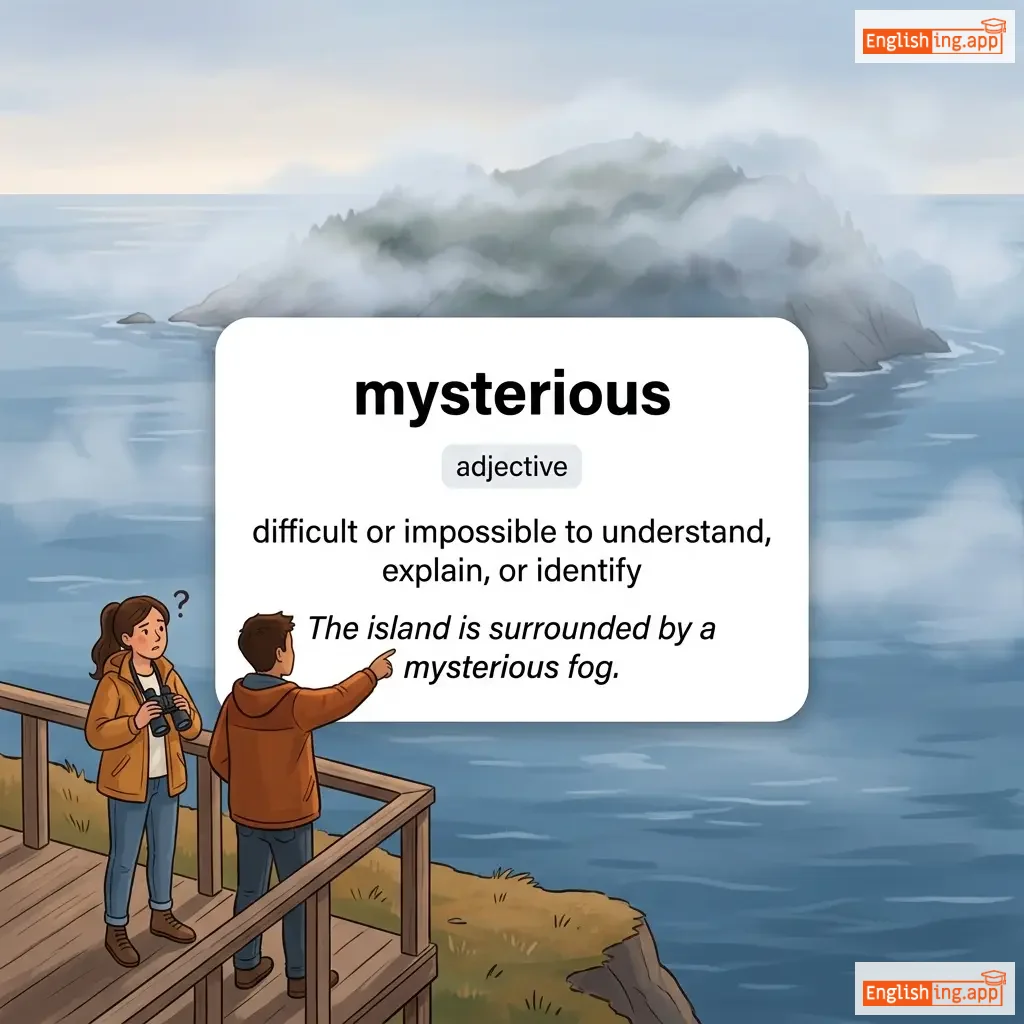
difficult or impossible to understand, explain, or identify
••••••
|
The island is surrounded by a mysterious fog. |
島は神秘的な霧に包まれています。
Shima wa shinpiteki na kiri ni tsutsumareteimasu.
••••••
|
mysterious ways |
unexpected or unexplainable methods or actions
••••••
|
神秘的な方法
shinpiteki na houhou
••••••
|
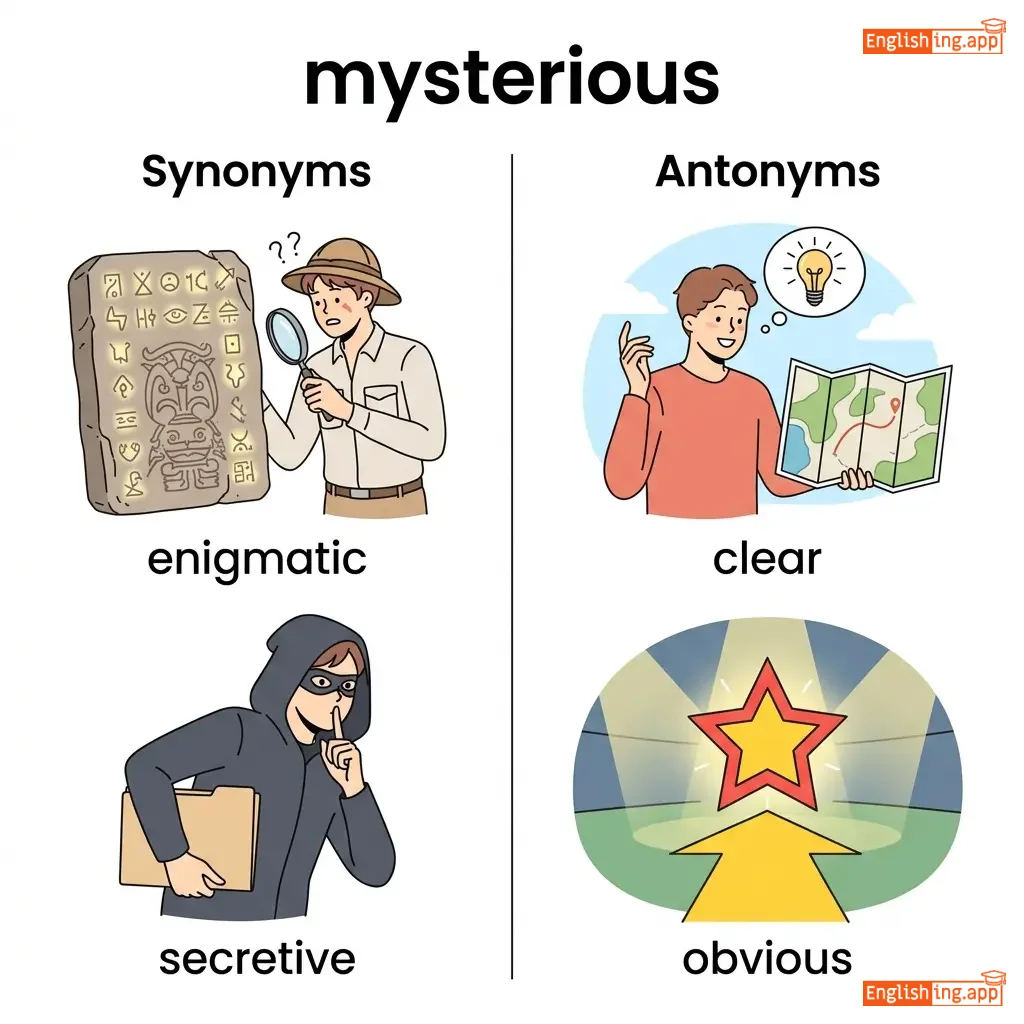
enigmatic, secretive, puzzling, cryptic, obscure
••••••
|
clear, obvious
••••••
|
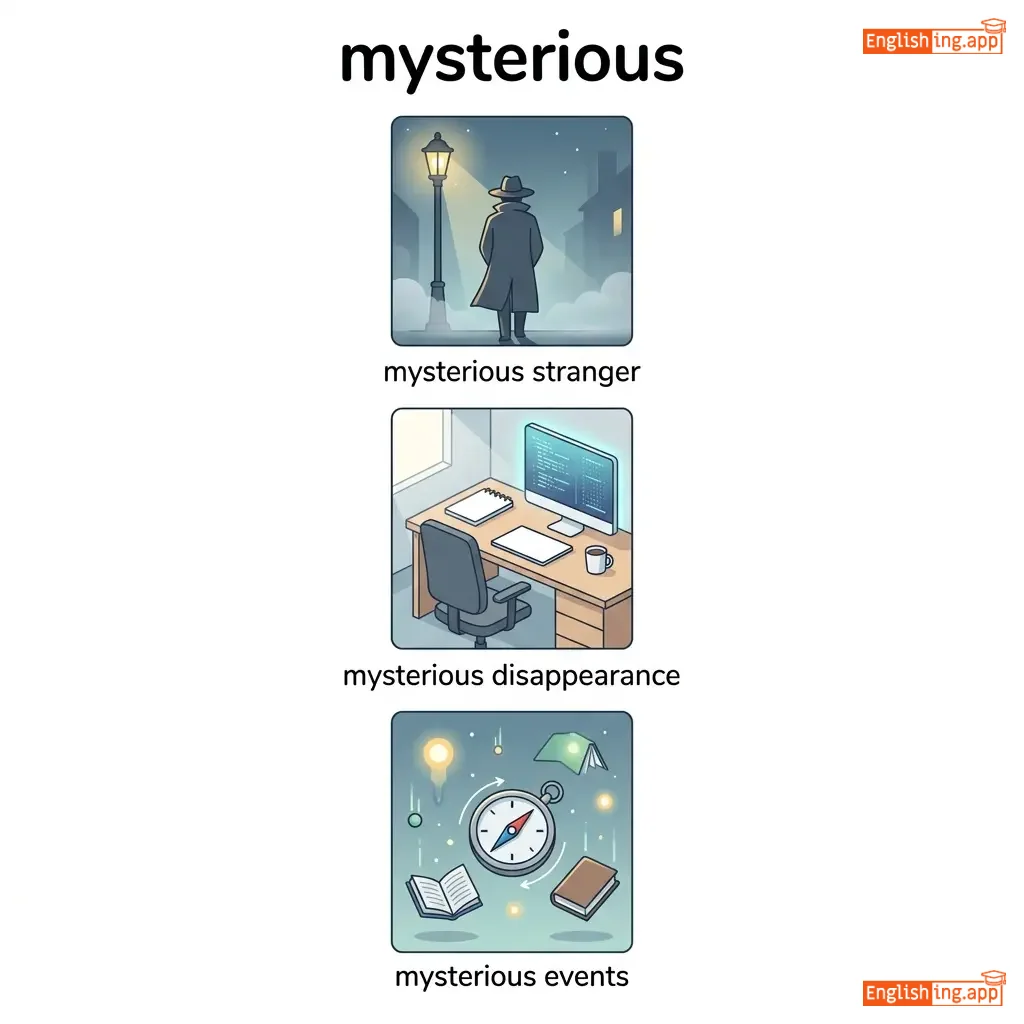
mysterious stranger, mysterious disappearance, mysterious events
••••••
|
神秘的はまるで‘神秘’のようなものです。
••••••
|
|
#10029
🤝
|
/ˈmjuːtʃuəl/
adjective
(ミューチュアル)
••••••
|
- •••••• |
相互の
sōgo no
••••••
|
- •••••• | - •••••• | - •••••• | - •••••• |
felt, shared, or done by two or more people equally
••••••
|
They have mutual respect for each other. |
彼らはお互いに相互の敬意を持っています。
Karera wa otagai ni sōgo no keii o motteimasu.
••••••
|
mutual understanding |
shared comprehension between two or more parties
••••••
|
相互理解
sōgo rikai
••••••
|
reciprocal, shared, common, joint, collective
••••••
|
one-sided, unilateral
••••••
|
mutual respect, mutual benefit, mutual agreement
••••••
|
相互は平等を意味します - '相' と '互' は平等な関係を表します。
••••••
|
|
#10030
✨
|
/mɪˈrækjələs/
adjective
(ミラクラス)
••••••
|
- •••••• |
奇跡的な
kiseki-tekina
••••••
|
- •••••• | - •••••• | - •••••• | - •••••• |
Extraordinarily wonderful or unusual, as if by a miracle.
••••••
|
Her recovery after the accident was truly miraculous. |
事故後の彼女の回復は本当に奇跡的でした。
Jiko go no kanojo no kaifuku wa hontōni kiseki-tekideshita.
••••••
|
a miraculous escape |
an escape from danger that seems almost impossible or magical
••••••
|
奇跡的な脱出
kiseki-tekina dasshutsu
••••••
|
amazing, extraordinary, marvelous, wondrous, phenomenal
••••••
|
ordinary, usual, normal
••••••
|
miraculous recovery, miraculous escape, miraculous event, almost miraculous
••••••
|
奇跡的な (kiseki-tekina) という言葉を思い出してください。それは奇跡のような救出です。
••••••
|
|
#10031
🎬
|
/ˈmuːvi/
noun
(ハピネス)
••••••
|
- •••••• |
幸福
kōfuku
••••••
|
- •••••• | - •••••• | - •••••• | - •••••• |
A motion picture or film shown in a cinema or on television.
••••••
|
We watched a movie together last night. |
彼女は賞を受け取ったとき、自分の幸せを隠すことができませんでした。
Kanojo wa shō o uketotta toki, jibun no kōfuku o kakusu koto ga dekimasen deshita.
••••••
|
movie night |
An informal gathering to watch films together.
••••••
|
幸せの追求
shiawase no tsuikyū
••••••
|
film, picture, motion picture, flick
••••••
|
reality, documentary
••••••
|
watch a movie, movie theater, movie star, movie ticket
••••••
|
ハピネス = Happy + ness、つまり幸せの状態。
••••••
|
|
#10032
🚶
|
/muːv/
verb
(ムーヴ)
••••••
|
|
動かす
ugokasu
••••••
|
moved
ムーヴド
••••••
|
moved
ムーヴド
••••••
|
moves
ムーヴス
••••••
|
moving
ムービング
••••••
|
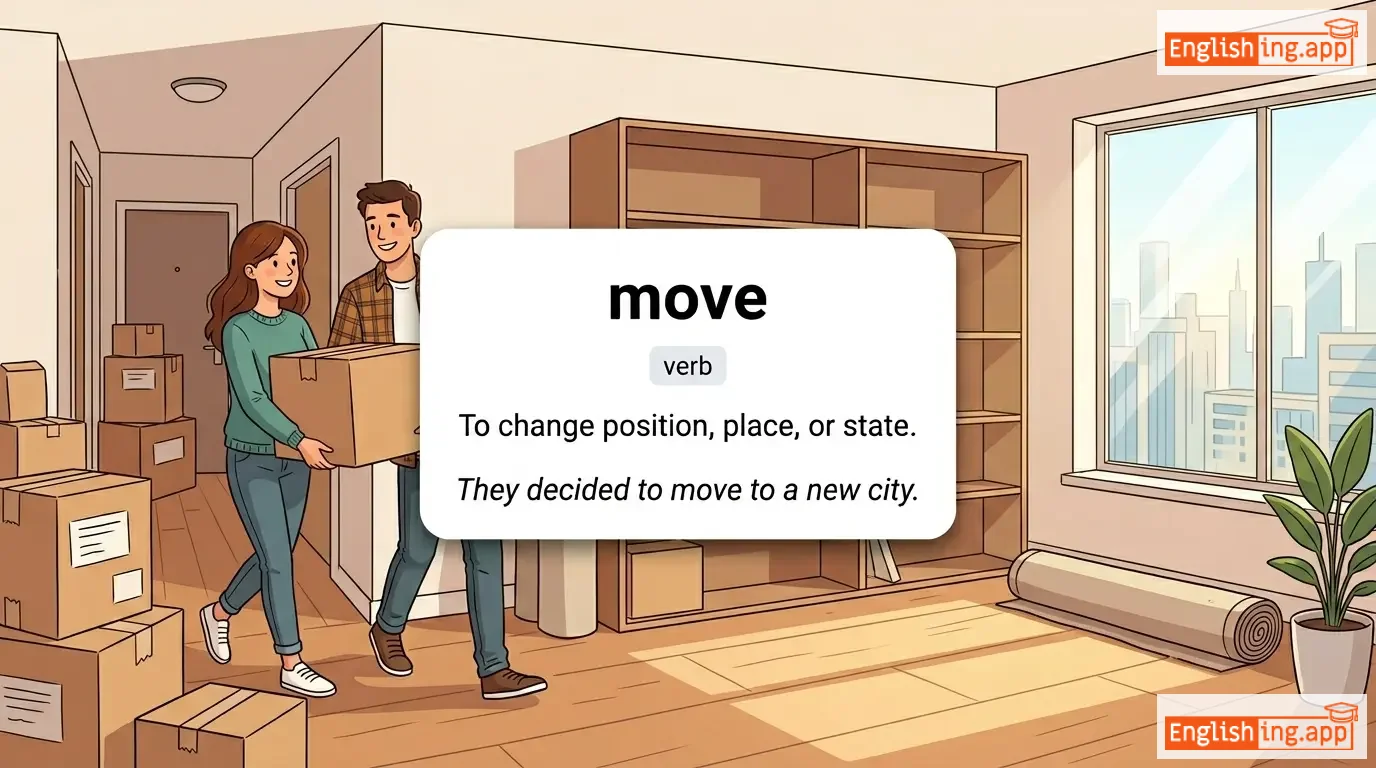
To change position, place, or state.
••••••
|
They decided to move to a new city.
彼らは新しい都市に引っ越すことを決めました。
••••••
|
彼らは新しい都市に引っ越すことを決めました。
Karera wa atarashī toshi ni hikkosu koto o kimemashita.
••••••
|
make a move
動きを作る
••••••
|
To take action or begin doing something.
••••••
|
動きを作る
Ugoki o tsukuru
••••••
|
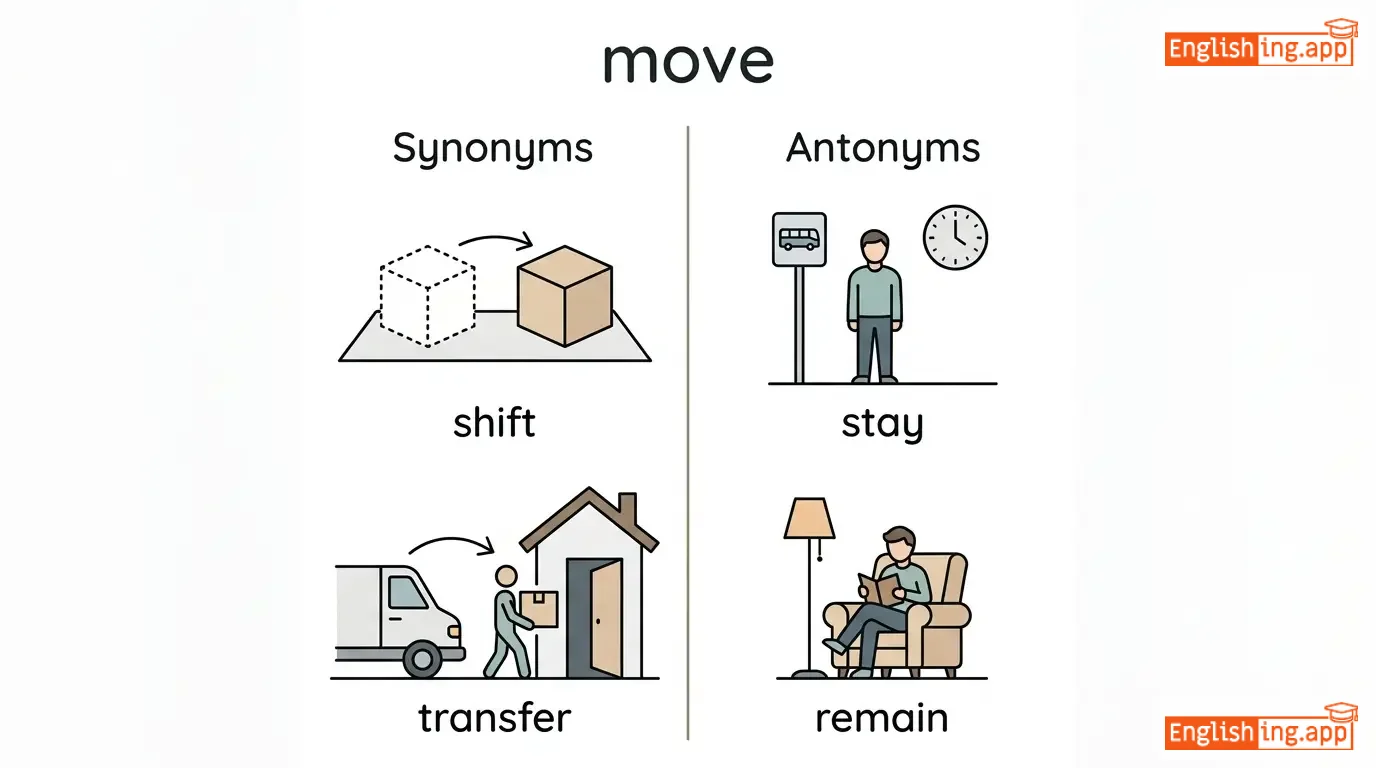
shift, transfer, relocate, progress
••••••
|
stay, remain
••••••
|
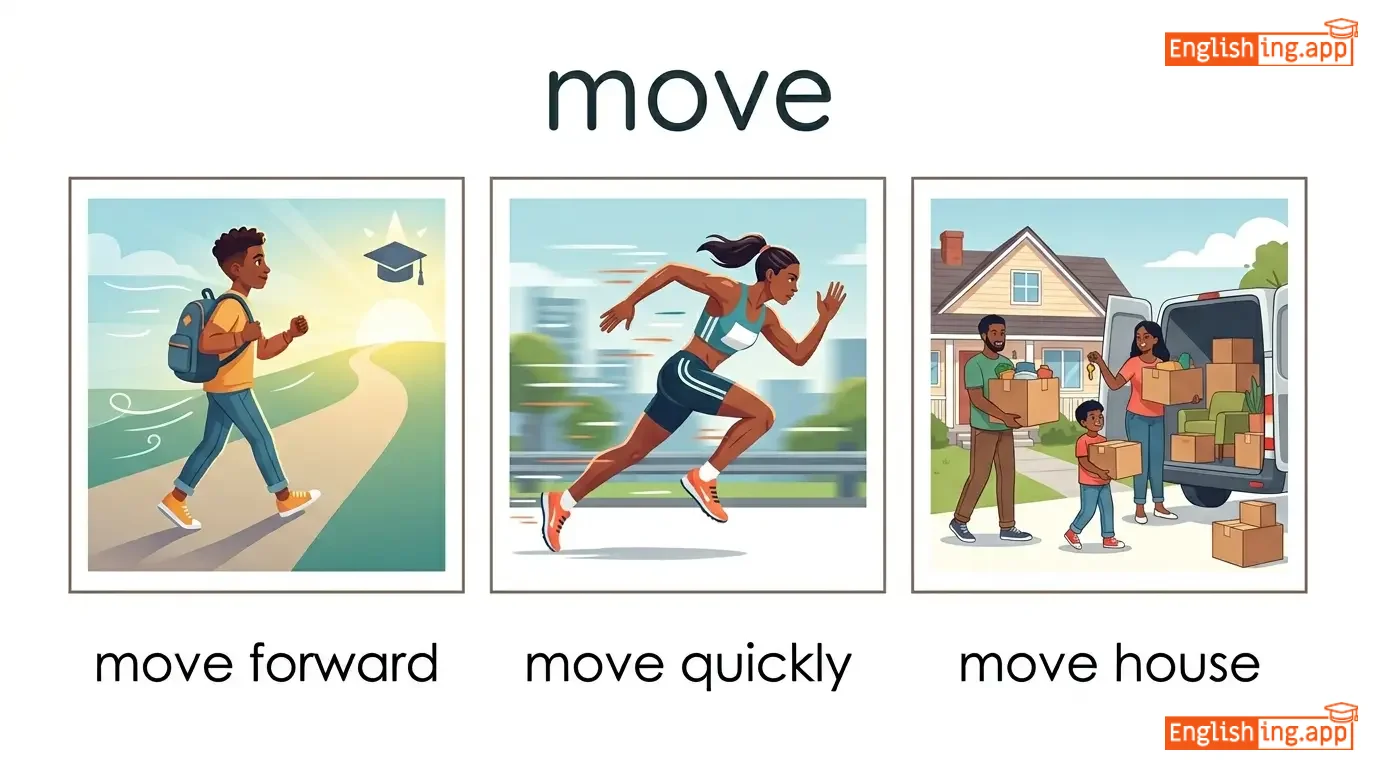
move forward, move quickly, move house, move away
••••••
|
動かすとは前進すること—一歩一歩進んでいこう。
••••••
|
|
#10033
😢
|
/mɔːrn/
verb
(モーン)
••••••
|
- •••••• |
哀悼する
aitō suru
••••••
|
mourned
モーンド
••••••
|
mourned
モーンド
••••••
|
mourns
モーンズ
••••••
|
mourning
モーニング
••••••
|
To feel or express deep sadness or grief, especially because of someone's death.
••••••
|
They gathered to mourn the loss of their friend.
彼らは友人の死を悼むために集まりました。
••••••
|
彼らは友人の死を悼むために集まりました。
Karera wa yūjin no shi o aitō suru tame ni atsumarimashita.
••••••
|
mourn one's loss
誰かの損失を悼む
••••••
|
To grieve for the death of someone close.
••••••
|
誰かの損失を悼む
Dareka no sonshitsu o aitō suru
••••••
|
lament, grieve, sorrow, weep
••••••
|
celebrate, rejoice
••••••
|
mourn deeply, mourn a death, mourn publicly
••••••
|
Mourn は日本語で '哀悼する' です。
••••••
|
|
#10034
➕
|
/mɔːr/
adjective, adverb, pronoun
(モア)
••••••
|
- •••••• |
もっと
motto
••••••
|
- •••••• | - •••••• | - •••••• | - •••••• |
A greater or additional amount or degree.
••••••
|
She wanted more time to finish the project. |
彼女はプロジェクトを終わらせるためにもっと時間が欲しかった。
Kanojo wa purojekuto o owaraseru tame ni motto jikan ga hoshikatta.
••••••
|
more or less |
Approximately, almost.
••••••
|
多かれ少なかれ
ōkare sukunakare
••••••
|
additional, extra, further, greater
••••••
|
less, fewer
••••••
|
more than, much more, more time, more money
••••••
|
More は 'もっと' という意味—時間や労力をもっと求める。
••••••
|
|
#10035
💰
|
/ˈmʌni/
noun
(happiness)
••••••
|
- •••••• |
幸福
koufuku
••••••
|
- •••••• | - •••••• | - •••••• | - •••••• |
A medium of exchange in the form of coins and banknotes; wealth or financial resources.
••••••
|
He saved enough money to buy a new car. |
彼女は賞を受け取ったとき、幸せを隠せなかった。
Kanojo wa shou o uketotta toki, koufuku o kakusenakatta.
••••••
|
money talks |
Wealth has great influence or power.
••••••
|
幸福の追求
koufuku no tsuikyuu
••••••
|
cash, currency, funds, capital, wealth
••••••
|
poverty, debt
••••••
|
make money, save money, spend money, invest money
••••••
|
幸福は心の中で咲く花のようなものです。
••••••
|
|
#10036
🚫
|
/məˈlɛst/
verb
(モレスト)
••••••
|
- •••••• |
嫌がらせ / 性的虐待
iyagarase / seiteki gyakutai
••••••
|
molested
モレステッド
••••••
|
molested
モレステッド
••••••
|
molests
モレストス
••••••
|
molesting
モレスティング
••••••
|
to assault or abuse someone, especially in a sexual or physical way
••••••
|
The criminal was arrested for attempting to molest a child.
犯罪者は子供を誘惑しようとしたため逮捕されました。
••••••
|
犯罪者は子供を誘惑しようとしたため逮捕されました。
Hanzaisha wa kodomo o yuuwaku shiyou to shita tame taiho saremashita.
••••••
|
- •••••• | - •••••• | - •••••• |
harass, assault, abuse, attack
••••••
|
protect, respect
••••••
|
molest children, molest women, arrested for molesting
••••••
|
Molestは嫌がらせや虐待を意味します - 覚えておいて: ‘No-lest’(いいえ、意味はいいえ)。
••••••
|
|
#10037
🏙️
|
/ˈmɒdən/
adjective
(モダン)
••••••
|
- •••••• |
現代的
gendai-teki
••••••
|
- •••••• | - •••••• | - •••••• | - •••••• |
relating to the present or recent times, not ancient or old-fashioned
••••••
|
They live in a modern apartment with new facilities. |
彼らは新しい設備のある現代的なアパートに住んでいます。
Karera wa atarashī setsubi no aru gendai-teki na apāto ni sundeimasu.
••••••
|
modern times |
the present period of history
••••••
|
現代
gendai
••••••
|
contemporary, current, up-to-date, new, trendy
••••••
|
ancient, old-fashioned
••••••
|
modern technology, modern art, modern world, modern lifestyle
••••••
|
現代的は 'modern' と同じ、新しいものを指します。
••••••
|
|
#10038
⚖️
|
/ˈmɒdərətli/
adverb
(モデレトリ)
••••••
|
- •••••• |
適度に
tekido ni
••••••
|
- •••••• | - •••••• | - •••••• | - •••••• |
to a reasonable extent, not excessively
••••••
|
She exercises moderately to stay healthy.
彼女は健康を保つために適度に運動しています。
••••••
|
彼女は健康を保つために適度に運動しています。
Kanojo wa kenko wo tamotsu tame ni tekido ni undou shiteimasu.
••••••
|
moderately priced
適度な価格
••••••
|
not too expensive, reasonably priced
••••••
|
適度な価格
tekido na kakaku
••••••
|
reasonably, fairly, somewhat, decently
••••••
|
excessively, extremely
••••••
|
moderately successful, moderately priced, moderately difficult, moderately large
••••••
|
適度にとは、事を適度に行うことです。
••••••
|
|
#10039
❓
|
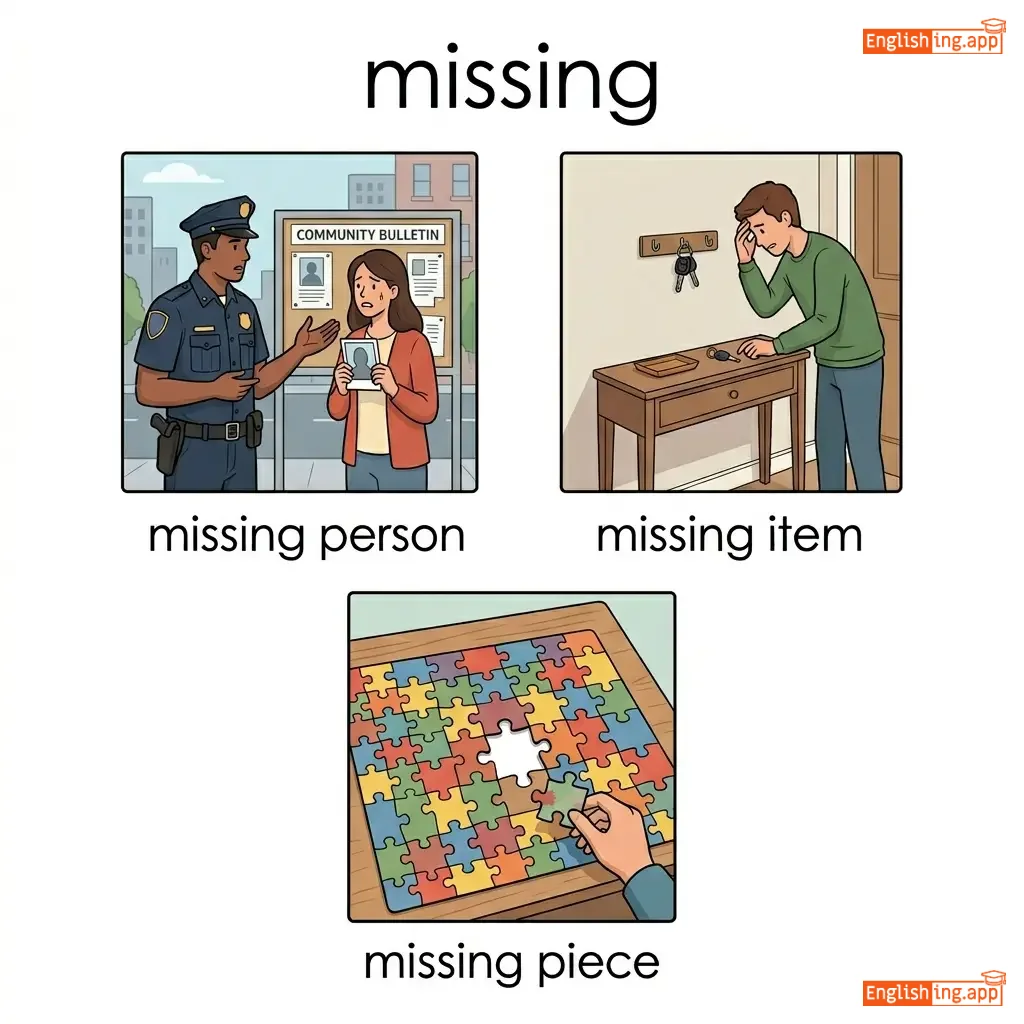
/ˈmɪsɪŋ/
adjective
(mísing)
••••••
|
|
行方不明
yūkōfumei
••••••
|
- •••••• | - •••••• | - •••••• | - •••••• |
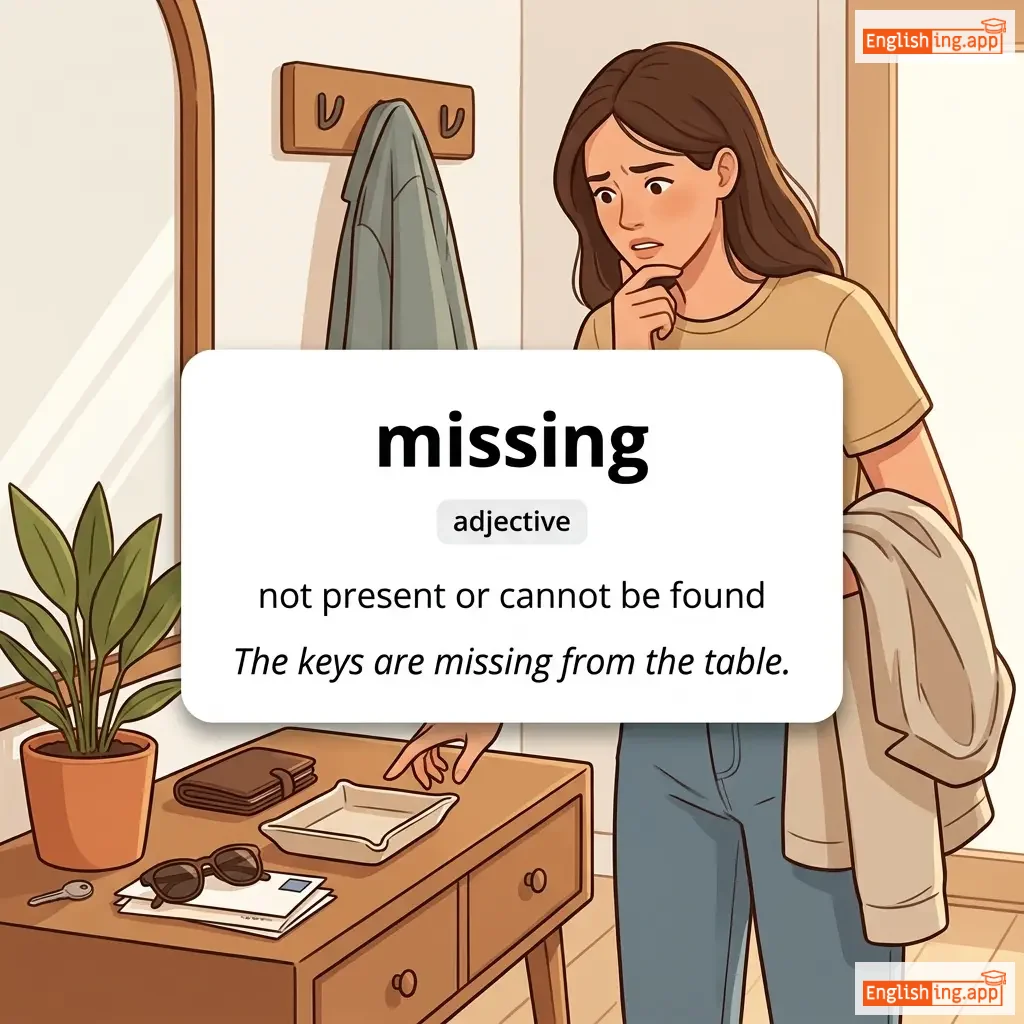
not present or cannot be found
••••••
|
The keys are missing from the table.
de keys are missing from de table.
••••••
|
テーブルから鍵が行方不明です。
Tēburu kara kagi ga yūkōfumei desu.
••••••
|
missing in action
missing in aksion
••••••
|
not present or unaccounted for
••••••
|
行方不明の状態
yūkōfumei no jōtai
••••••
|
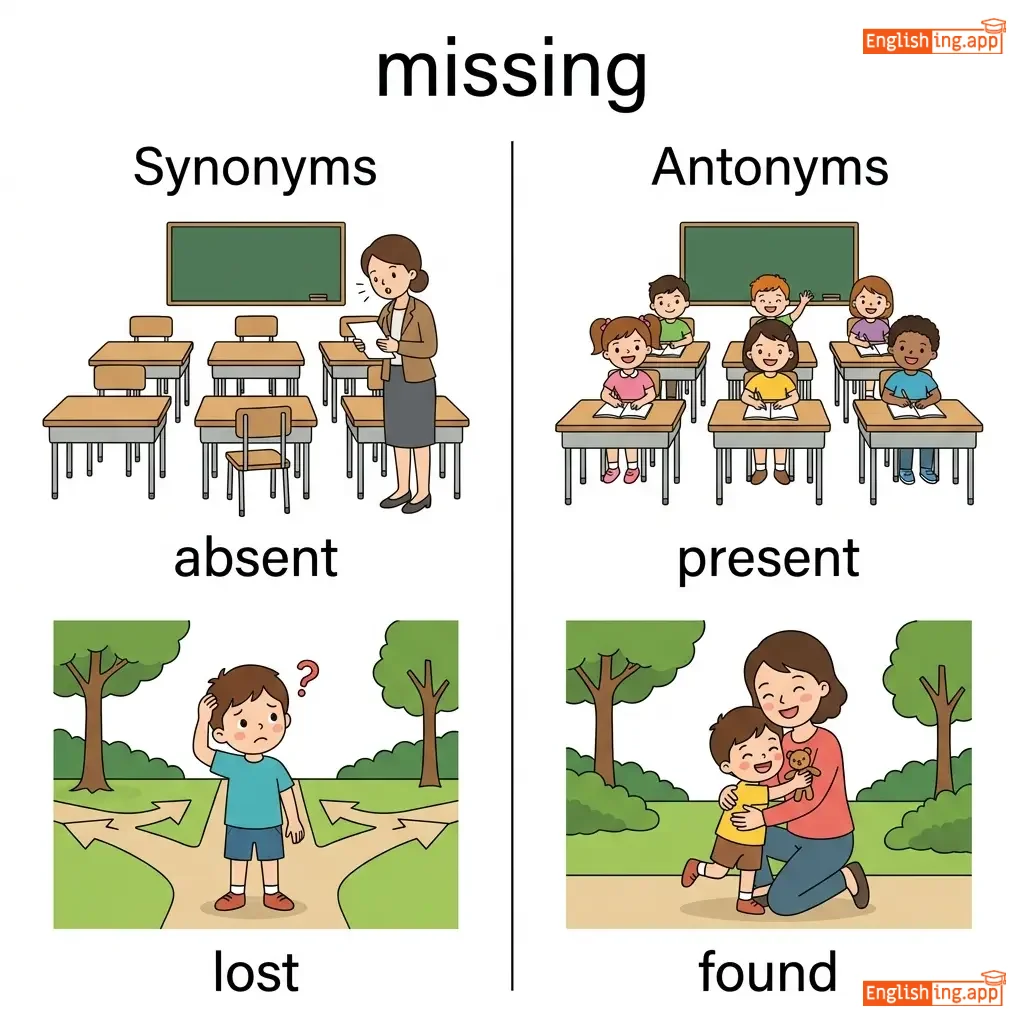
absent, lost, gone, vanished, misplaced
••••••
|
present, found
••••••
|
missing person, missing item, missing piece, missing child
••••••
|
Missing = 行方不明 – 何かが見つからない。
••••••
|
|
#10040
📖
|
/ˌmɪsˈriːd/
verb
(ミスリード)
••••••
|
- •••••• |
誤って読む
ayamatte yomu
••••••
|
misread
ミスリード
••••••
|
misread
ミスリード
••••••
|
misreads
ミスリードス
••••••
|
misreading
ミスリーディング
••••••
|
to read something incorrectly or interpret wrongly
••••••
|
He misread the instructions and built the shelf incorrectly.
彼は指示を誤読して棚を間違って作った。
••••••
|
彼は指示を誤読して棚を間違って作った。
Kare wa shiji o godoku shite tana o machigatte tsukutta.
••••••
|
misread the situation
状況を誤解する
••••••
|
to misunderstand the circumstances
••••••
|
状況を誤解する
joukyou o gokai suru
••••••
|
misinterpret, misunderstand, mistake, confuse, misconstrue
••••••
|
understand, comprehend
••••••
|
misread signals, misread the text, misread the situation, misread her intentions
••••••
|
Misreadは誤って読むことです。誤って読むと、miss(見逃す)となります。
••••••
|
|
#10041
😭
|
/ˈmɪzəri/
noun
(ミゼリー)
••••••
|
- •••••• |
苦しみ
kurushimi
••••••
|
- •••••• | - •••••• | - •••••• | - •••••• |
A state of great suffering, unhappiness, or discomfort.
••••••
|
The refugees lived in constant misery. |
難民たちは絶え間ない苦しみの中で暮らしていました。
Nanmin-tachi wa taemanai kurushimi no naka de kurashite imashita.
••••••
|
make life a misery |
to cause someone to live in continuous unhappiness or suffering
••••••
|
人生を苦しみにする
Jinsei o kurushimi ni suru
••••••
|
suffering, distress, hardship, agony, sadness
••••••
|
happiness, joy, comfort
••••••
|
live in misery, endless misery, cause misery, human misery
••••••
|
Miseria = 苦しみ、辛い時に思い出して!
••••••
|
|
#10042
😞
|
/ˈmɪzərəbəl/
adjective
(ミゼラブル)
••••••
|
- •••••• |
惨めな
mijimena
••••••
|
- •••••• | - •••••• | - •••••• | - •••••• |
Extremely unhappy or uncomfortable.
••••••
|
He felt miserable after losing his job. |
仕事を失った後、彼は惨めに感じていた。
Shigoto o ushinatta ato, kare wa mijime ni kanjite ita.
••••••
|
make someone miserable |
to cause someone to feel very unhappy
••••••
|
誰かを惨めにさせる
Dareka o mijime ni saseru
••••••
|
unhappy, sad, depressed, gloomy, downcast
••••••
|
happy, cheerful, joyful
••••••
|
feel miserable, look miserable, miserable weather, utterly miserable
••••••
|
Miser + able = 苦しみに耐えることができる; 忘れないでください、miserable は惨めな意味です。
••••••
|
|
#10043
🤔
|
/ˌmɪskənˈsiːv/
verb
(ミスコンシーブ)
••••••
|
- •••••• |
誤解する
gokai suru
••••••
|
misconceived
ミスコンシーブド
••••••
|
misconceived
ミスコンシーブド
••••••
|
misconceives
ミスコンシーヴズ
••••••
|
misconceiving
ミスコンシーヴィング
••••••
|
To misunderstand or form an incorrect idea about something.
••••••
|
He misconceived the purpose of the project.
彼はプロジェクトの目的を誤解しました。
••••••
|
彼はプロジェクトの目的を誤解しました。
Kare wa purojekuto no mokuteki o gokai shimashita.
••••••
|
- •••••• | - •••••• | - •••••• |
misunderstand, misinterpret, mistake, misjudge
••••••
|
understand, comprehend
••••••
|
misconceive the idea, misconceive the purpose, easy to misconceive
••••••
|
Mis + Conceive = 誤解する; misは誤解を意味し、それを思い出すための手助けとなります。
••••••
|
|
#10044
🪞
|
/ˈmɪrər/
noun
••••••
|
- •••••• | - •••••• | - •••••• | - •••••• |
mirrors
••••••
|
mirroring
••••••
|
A reflective surface, typically made of glass, that shows an image.
••••••
|
She looked at herself in the mirror before leaving. |
- •••••• |
hold a mirror up to |
to reflect or reveal the true nature of something
••••••
|
- •••••• |
looking glass, reflection, glass, speculum
••••••
|
reality, original
••••••
|
look in the mirror, rear-view mirror, bathroom mirror, mirror image
••••••
|
No •••••• |
Vocabulary Quiz
Test your vocabulary by matching words with their translations or meanings.
Login to take the quiz
Comments (0)
Share your thoughts and join the discussion.
Join the discussion by logging in
Login to CommentNo comments yet
Be the first to share your thoughts!