

翻訳
過去
過去分詞
三人称単数
動名詞
意味
例文
例文の翻訳
同義語
対義語
コロケーション
ニーモニック
Swipe left or right, or use the buttons. Tap image to zoom.
例文の翻訳
単語
Lesson 192Lesson 192 - マスクトグル
|
絵文字
|
単語 | Images | 翻訳 | 過去 | 過去分詞 | 三人称単数 | 動名詞 | 意味 | 例文 | 例文の翻訳 | 表現例 | 表現例の意味 | 表現例の翻訳 | 同義語 | 対義語 | コロケーション | ニーモニック |
|---|---|---|---|---|---|---|---|---|---|---|---|---|---|---|---|---|---|
|
#5731
🖼️
|
/moʊˈzeɪɪk/
noun
••••••
|
- •••••• | - •••••• | - •••••• | - •••••• | - •••••• | - •••••• |
A picture or pattern produced by arranging together small pieces of stone, tile, or glass.
••••••
|
The church ceiling was decorated with a beautiful mosaic. |
- •••••• |
cultural mosaic |
A society made up of many different cultural groups.
••••••
|
- •••••• |
pattern, collage, medley, montage, arrangement
••••••
|
uniformity, monotony, plainness
••••••
|
mosaic art, mosaic tiles, cultural mosaic, mosaic design
••••••
|
No •••••• |
|
#5732
🎭
|
/ˈmaʊntɪˌbæŋk/
noun
(マウンテバンク)
••••••
|
- •••••• |
ペテン師
petenshi
••••••
|
- •••••• | - •••••• | - •••••• | - •••••• |
A charlatan or trickster who deceives others, often for personal gain.
••••••
|
The crowd was fooled by the mountebank’s false promises. |
群衆はそのペテン師の虚偽の約束に騙されました。
Gunshū wa sono petenshi no kyogi no yakusoku ni damasaremashita.
••••••
|
- •••••• | - •••••• | - •••••• |
charlatan, fraud, impostor, trickster, swindler
••••••
|
honest person, genuine, truth-teller
••••••
|
clever mountebank, political mountebank, mountebank tricks
••••••
|
Mountebankは山のような詐欺師、つまり人々を欺く者です。
••••••
|
|
#5733
🏔️
|
/ˈmaʊntənəs/
adjective
(マウンテンナス)
••••••
|
- •••••• |
山岳地帯の
sangaku chitai no
••••••
|
- •••••• | - •••••• | - •••••• | - •••••• |
Having many mountains; very large or huge in size.
••••••
|
They traveled through a mountainous region of Nepal. |
彼らはネパールの山岳地帯を通って旅行しました。
Karera wa Nepāru no sangaku chitai o tōtte ryokō shimashita.
••••••
|
- •••••• | - •••••• | - •••••• |
hilly, rugged, alpine, colossal, massive
••••••
|
flat, plain, small
••••••
|
mountainous terrain, mountainous region, mountainous landscape
••••••
|
Mountainousは山のように、山々に囲まれた地域。
••••••
|
|
#5734
⛰️
|
/ˌmaʊntəˈnɪə/
noun
(マウンテンイア)
••••••
|
- •••••• |
登山者
tozan-sha
••••••
|
- •••••• | - •••••• | - •••••• | - •••••• |
A person who climbs mountains as a sport or profession.
••••••
|
The mountaineer reached the summit after a long climb. |
登山者は長い登山の後、頂上に到達しました。
Tozan-sha wa nagai tozan no ato, chōjō ni tōtatsu shimashita.
••••••
|
- •••••• | - •••••• | - •••••• |
climber, alpinist, adventurer, explorer
••••••
|
settler, resident
••••••
|
skilled mountaineer, famous mountaineer, experienced mountaineer
••••••
|
Mountaineer = Mountain + Near - 登山者は常に山の近くにいます。
••••••
|
|
#5735
📜
|
/ˈmɒtəʊ/
noun
(モットー)
••••••
|
- •••••• |
モットー
motto
••••••
|
- •••••• | - •••••• | - •••••• | - •••••• |
A short sentence or phrase that expresses a guiding belief or principle.
••••••
|
Her motto in life is 'never give up.'
彼女の人生のモットーは「決して諦めないこと」です。
••••••
|
彼女の人生のモットーは「決して諦めないこと」です。
Kanojo no jinsei no motto wa 'kesshite akiramenai koto' desu.
••••••
|
- •••••• | - •••••• | - •••••• |
slogan, maxim, catchphrase, proverb, saying
••••••
|
silence, speechlessness
••••••
|
company motto, school motto, personal motto, famous motto
••••••
|
Motto - 人生の指針、進むべき道を示す言葉。
••••••
|
|
#5736
🐍
|
/ˈmɒtld/
adjective
(モトルド)
••••••
|
- •••••• |
斑点模様の
hanten moyou no
••••••
|
- •••••• | - •••••• | - •••••• | - •••••• |
Marked with spots, streaks, or blotches of different shades or colors.
••••••
|
The snake's mottled skin helped it blend into the forest floor. |
ヘビの斑点模様の皮膚は、森の床に溶け込むのを助けました。
Hebi no hanten moyou no hifu wa, mori no yuka ni toke komu no o tasukemashita.
••••••
|
- •••••• | - •••••• | - •••••• |
speckled, spotted, blotchy, marbled, dappled
••••••
|
plain, uniform, solid
••••••
|
mottled skin, mottled pattern, mottled leaves, mottled surface
••••••
|
Mottled = 斑点模様のような不規則なパターン。
••••••
|
|
#5737
🖌️
|
/ˈmɒtl/
verb
(モットル)
••••••
|
- •••••• |
斑点
hanten
••••••
|
mottled
モットルド
••••••
|
mottled
モットルド
••••••
|
mottles
モットルズ
••••••
|
mottling
モットリング
••••••
|
To mark with spots or patches of color.
••••••
|
The leaves were mottled with shades of yellow and brown.
葉は黄色と茶色の斑点で斑入りでした。
••••••
|
葉は黄色と茶色の斑点で斑入りでした。
Ha wa kiiro to chairo no hanten de haniri deshita.
••••••
|
- •••••• | - •••••• | - •••••• |
speckle, spot, blotch, streak
••••••
|
clear, plain
••••••
|
mottled skin, mottled leaves, mottled pattern, mottled appearance
••••••
|
Mottleは斑点を意味します – '色の斑点で覆われた葉'を思い出してください。
••••••
|
|
#5738
🎭
|
/ˈmɒtli/
adjective
(モトリー)
••••••
|
- •••••• |
混成
konsei
••••••
|
- •••••• | - •••••• | - •••••• | - •••••• |
Made up of different, often incongruous or diverse elements.
••••••
|
The festival attracted a motley crowd of artists, musicians, and tourists. |
フェスティバルはアーティスト、ミュージシャン、観光客からなる混成の群衆を引き寄せた。
Fesutibaru wa aatisuto, myuujishan, kankoukyaku kara naru konsei no gunshuu wo hiki yoseta.
••••••
|
motley crew |
A diverse, sometimes mismatched group of people.
••••••
|
混成チーム
konsei chiimu
••••••
|
mixed, varied, diverse, assorted, heterogeneous
••••••
|
uniform, homogeneous
••••••
|
motley crowd, motley crew, motley collection, motley assortment
••••••
|
Motley crew は混成チーム、みんな違うメンバーで構成されている。
••••••
|
|
#5739
🔥
|
/ˈmoʊtɪveɪt/
verb
••••••
|
- •••••• | - •••••• |
motivated
••••••
|
motivated
••••••
|
motivates
••••••
|
motivating
••••••
|
To provide someone with a reason or incentive to do something.
••••••
|
The coach motivated the players to give their best performance. |
- •••••• |
self-motivate |
To inspire oneself to take action or improve.
••••••
|
- •••••• |
encourage, inspire, stimulate, urge, drive
••••••
|
discourage, demotivate
••••••
|
motivate people, motivate employees, motivate to succeed, motivated by
••••••
|
No •••••• |
|
#5740
⚡
|
/moʊˈtɪləti/
noun
(モティリティ)
••••••
|
- •••••• |
運動性
undousei
••••••
|
- •••••• | - •••••• | - •••••• | - •••••• |
The ability of an organism or cell to move independently.
••••••
|
The motility of sperm is crucial for successful fertilization.
精子の運動性は受精成功のために重要です。
••••••
|
精子の運動性は受精成功のために重要です。
Seishi no undousei wa jusei seikou no tame ni juuyou desu.
••••••
|
- •••••• | - •••••• | - •••••• |
movement, mobility, locomotion, motion
••••••
|
immobility, stillness
••••••
|
sperm motility, gastrointestinal motility, cell motility, reduced motility
••••••
|
Moto + ability = motility (独立して移動できる能力)
••••••
|
|
#5741
🏃
|
/ˈmoʊtaɪl/
adjective
(モタイル)
••••••
|
- •••••• |
運動性のある
undōsei no aru
••••••
|
- •••••• | - •••••• | - •••••• | - •••••• |
Capable of movement or locomotion.
••••••
|
Certain bacteria are motile and can swim toward nutrients.
特定の細菌は運動性があり、栄養素に向かって泳ぐことができます。
••••••
|
特定の細菌は運動性があり、栄養素に向かって泳ぐことができます。
Tokutei no saikin wa undōsei ga ari, eiyōso ni mukatte oyogu koto ga dekimasu.
••••••
|
- •••••• | - •••••• | - •••••• |
mobile, moving, locomotive, dynamic
••••••
|
immobile, stationary
••••••
|
motile organisms, motile bacteria, motile cells, highly motile
••••••
|
Moto (モーター) が動くので、motileは運動性のあるという意味です。
••••••
|
|
#5742
🎭
|
/moʊˈtiːf/
noun
••••••
|
- •••••• | - •••••• | - •••••• | - •••••• | - •••••• | - •••••• |
A recurring theme, subject, or idea in a work of art or literature.
••••••
|
The motif of love is central to the novel. |
- •••••• | - •••••• | - •••••• | - •••••• |
theme, pattern, concept, idea, design
••••••
|
randomness, disorganization
••••••
|
literary motif, design motif, recurring motif
••••••
|
No •••••• |
|
#5743
🧥
|
/ˈmɒθ ˌiːtən/
adjective
(moth eaten)
••••••
|
- •••••• |
虫に食べられた
mushi ni taberareta
••••••
|
- •••••• | - •••••• | - •••••• | - •••••• |
Damaged or worn out, especially by moths or age.
••••••
|
He wore a moth-eaten sweater on the cold day. |
彼は寒い日に虫に食べられたセーターを着ていた。
Kare wa samui hi ni mushi ni taberareta seetaa o kite ita.
••••••
|
- •••••• | - •••••• | - •••••• |
shabby, worn, tattered, ragged
••••••
|
new, fresh, pristine
••••••
|
moth-eaten clothes, moth-eaten fabric, moth-eaten book
••••••
|
Moth-eatenは虫に食べられた、だから古くて傷んだ服です。
••••••
|
|
#5744
🔬
|
/moʊt/
noun
(モート)
••••••
|
- •••••• |
微粒
biryu
••••••
|
- •••••• | - •••••• | - •••••• | - •••••• |
A tiny particle or speck, especially of dust.
••••••
|
A mote of dust floated in the sunlight. |
ほこりの微粒が日光の中で浮かんでいた。
Hokori no biryu ga nikkou no naka de ukande ita.
••••••
|
mote in the eye |
A very small fault or flaw compared to a larger one.
••••••
|
目の中の微粒
Me no naka no biryu
••••••
|
speck, particle, grain, bit, fragment
••••••
|
bulk, mass, whole
••••••
|
mote of dust, tiny mote, mote floating
••••••
|
Moteは微粒と同じように、小さくて目立たないものです。
••••••
|
|
#5745
🕌
|
/mɒsk/
noun
(モスク)
••••••
|
- •••••• |
モスク
mosuku
••••••
|
- •••••• | - •••••• | - •••••• | - •••••• |
A Muslim place of worship.
••••••
|
They gathered at the mosque for the Friday prayer. |
彼らは金曜日の祈りのためにモスクに集まりました。
Karera wa kin'yōbi no inori no tame ni mosuku ni atsumarimashita.
••••••
|
- •••••• | - •••••• | - •••••• |
masjid, place of worship, Islamic temple
••••••
|
church, temple, synagogue
••••••
|
grand mosque, local mosque, mosque prayer, mosque visit
••••••
|
Mosque はモスクを意味します — ここでムスリムは祈りを捧げます。
••••••
|
|
#5746
⏸️
|
/ˌmɔːrəˈtɔːriəm/
noun
(モラトリアム)
••••••
|
- •••••• |
モラトリアム
moratorium
••••••
|
- •••••• | - •••••• | - •••••• | - •••••• |
A temporary suspension or delay of an activity, law, or obligation.
••••••
|
The government announced a moratorium on new mining licenses. |
政府は新しい鉱鉱許可に対してモラトリアムを発表しました。
Seifu wa atarashī kōkō kyoka ni taishite moratorium o happyō shimashita.
••••••
|
moratorium on |
a temporary halt or suspension of something
••••••
|
モラトリアムの
moratorium no
••••••
|
ban, suspension, halt, freeze, prohibition
••••••
|
continuation, allowance, permission
••••••
|
moratorium on loans, moratorium on evictions, declare a moratorium, extend the moratorium
••••••
|
モラトリアムは、一時的に停止することを意味します。
••••••
|
|
#5747
😳
|
/ˈmɔːrtɪfaɪ/
verb
(モーティファイ)
••••••
|
- •••••• |
恥をかかせる
haji o kakaseru
••••••
|
mortified
モーティファイド
••••••
|
mortified
モーティファイド
••••••
|
mortifies
モーティファイズ
••••••
|
mortifying
モーティファイング
••••••
|
to cause someone to feel great embarrassment or shame
••••••
|
She was mortified when she tripped on stage.
彼女はステージでつまずいたとき、とても恥ずかしかった。
••••••
|
彼女はステージでつまずいたとき、とても恥ずかしかった。
Kanojo wa suteeji de tsumazuita toki, totemo hazukashikatta.
••••••
|
mortified with embarrassment
恥ずかしさで困惑
••••••
|
deeply ashamed or embarrassed
••••••
|
- •••••• |
embarrass, humiliate, shame, degrade
••••••
|
praise, honor, respect
••••••
|
feel mortified, deeply mortify, mortified with embarrassment
••••••
|
No •••••• |
|
#5748
⚰️
|
/mɔːrˈtɪʃən/
noun
(モーティシャン)
••••••
|
- •••••• |
葬儀屋
sōgiya
••••••
|
- •••••• | - •••••• | - •••••• | - •••••• |
a person whose job is to prepare dead bodies for burial or cremation and to arrange funerals
••••••
|
The mortician prepared the body for the funeral service. |
葬儀屋は葬儀サービスのために遺体を準備しました。
Sōgiya wa sōgi sābisu no tame ni itai o junbi shimashita.
••••••
|
- •••••• | - •••••• | - •••••• |
undertaker, funeral director, embalmer
••••••
|
newborn, midwife
••••••
|
licensed mortician, funeral mortician, skilled mortician
••••••
|
Mortician は葬儀の専門家、'mort' は死を意味します。
••••••
|
|
#5749
🧱
|
/ˈmɔːrtər/
noun
(モルタル)
••••••
|
- •••••• |
レンガをつなげるための混合物 / 小さな大砲
renga o tsunageru tame no kongō-mono / chīsana taihō
••••••
|
- •••••• | - •••••• | - •••••• | - •••••• |
a mixture used in building to bond bricks or stones together; also, a small cannon for firing shells
••••••
|
The workers applied mortar between the bricks. |
作業員たちはレンガの間にモルタルを塗りました。
Sagyouin-tachi wa renga no aida ni mortar o nurimashita.
••••••
|
bricks and mortar |
a business with a physical presence, as opposed to online
••••••
|
レンガとモルタル
renga to mortar
••••••
|
cement, paste, adhesive, shell launcher
••••••
|
gap, void
••••••
|
apply mortar, mortar between bricks, bricks and mortar
••••••
|
モルタルはレンガをつなげるために使われます。mortar = レンガの接着剤
••••••
|
|
#5750
🔬
|
/mɔːrˈfɑːlədʒi/
noun
(モルフォロジー)
••••••
|
- •••••• |
形態学
keitai-gaku
••••••
|
- •••••• | - •••••• | - •••••• | - •••••• |
the study of the form and structure of things, especially in language and biology
••••••
|
Morphology studies the structure of words and how they are formed.
形態学は、単語の構造とその形成方法を研究します。
••••••
|
形態学は、単語の構造とその形成方法を研究します。
Keitai-gaku wa, tango no kouzou to sono keisei houhou o kenkyuu shimasu.
••••••
|
- •••••• | - •••••• | - •••••• |
structure, form, anatomy, configuration
••••••
|
chaos, disorganization
••••••
|
word morphology, plant morphology, linguistic morphology
••••••
|
Morphologyは日本語で形態学、つまり形の科学です。
••••••
|
|
#5751
🦋
|
/mɔːrf/
verb
(モーフ)
••••••
|
- •••••• |
変形する
henkei suru
••••••
|
morphed
モーフド
••••••
|
morphed
モーフド
••••••
|
morphs
モーフス
••••••
|
morphing
モーフィング
••••••
|
to change smoothly from one form, shape, or character into another
••••••
|
The caterpillar will morph into a butterfly.
イモムシは蝶に変わるでしょう。
••••••
|
イモムシは蝶に変わるでしょう。
Imomushi wa chō ni kawaru deshō.
••••••
|
morph into
変化する
••••••
|
to gradually change into something else
••••••
|
変化する
henka suru
••••••
|
transform, change, evolve, convert, alter
••••••
|
remain, stay, persist
••••••
|
morph into, morph over time, morph together
••••••
|
変形するとは、イモムシが蝶に変わるように、形が変わることです。
••••••
|
|
#5752
😔
|
/məˈroʊs/
adjective
(モローズ)
••••••
|
|
陰鬱
in'utsu
••••••
|
- •••••• | - •••••• | - •••••• | - •••••• |
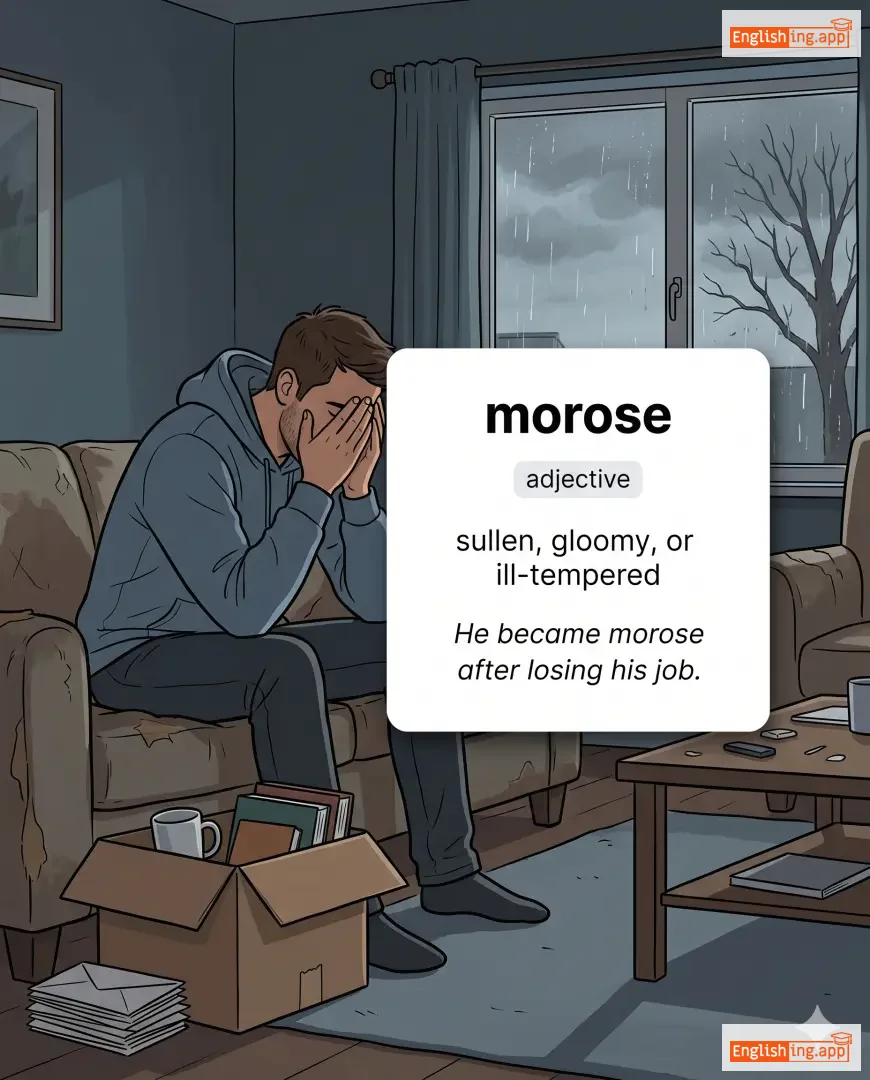
sullen, gloomy, or ill-tempered
••••••
|
He became morose after losing his job.
彼は仕事を失った後、落ち込んでしまった。
••••••
|
彼は仕事を失った後、落ち込んでしまった。
Kare wa shigoto o ushinatta ato, ochikonde shimatta.
••••••
|
- •••••• | - •••••• | - •••••• |
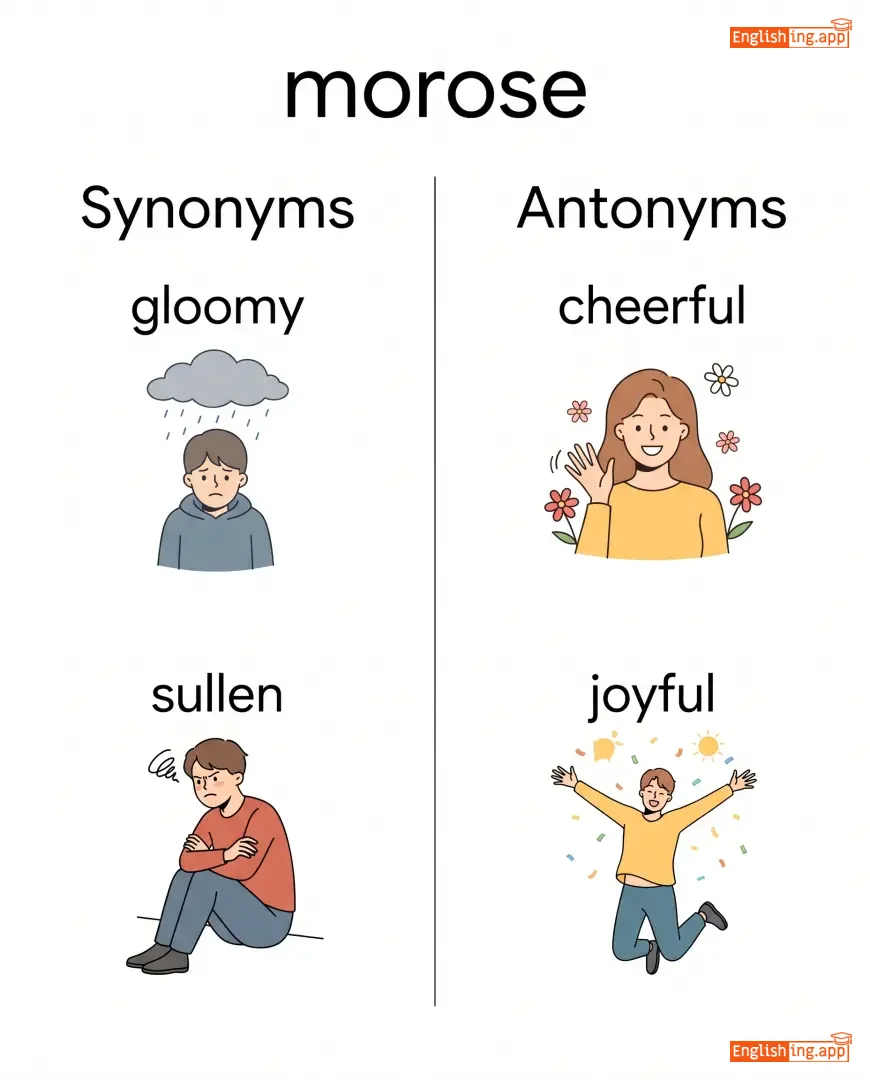
gloomy, sullen, melancholic, depressed
••••••
|
cheerful, joyful, optimistic
••••••
|
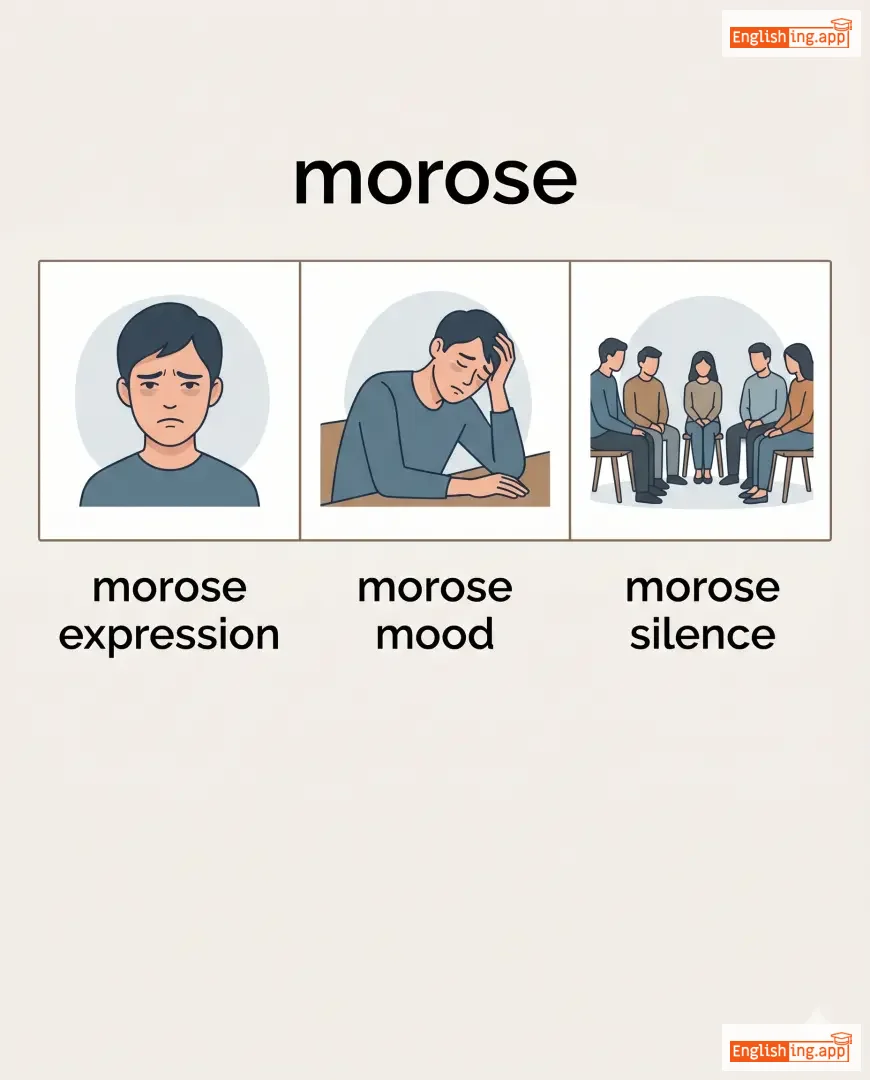
morose expression, morose mood, morose silence
••••••
|
Morose = 陰鬱 → morose = 陰鬱
••••••
|
|
#5753
💀
|
/ˈmɔːrɪbʌnd/
adjective
(モリバンド)
••••••
|
- •••••• |
死にかけている
shinikaketeiru
••••••
|
- •••••• | - •••••• | - •••••• | - •••••• |
in a dying state; near death or becoming obsolete
••••••
|
The moribund industry was soon replaced by modern technology. |
死にかけている産業はすぐに現代技術によって置き換えられました。
Shinikaketeiru sangyō wa sugu ni gendai gijutsu ni yotte okikaeraremashita.
••••••
|
- •••••• | - •••••• | - •••••• |
dying, declining, stagnant, failing
••••••
|
thriving, flourishing, growing
••••••
|
moribund economy, moribund industry, moribund system
••••••
|
Mori = 死 → 死にかけている = shinikaketeiru
••••••
|
|
#5754
⚰️
|
/mɔːrɡ/
noun
••••••
|
- •••••• | - •••••• | - •••••• | - •••••• | - •••••• | - •••••• |
a place where dead bodies are kept, especially to be identified or claimed
••••••
|
The police took the body to the morgue for identification. |
- •••••• | - •••••• | - •••••• | - •••••• |
mortuary, funeral home, chapel of rest
••••••
|
hospital, home
••••••
|
city morgue, public morgue, morgue attendant
••••••
|
No •••••• |
|
#5755
💍
|
/ˌmɔːrɡəˈnætɪk/
adjective
(モルガナティック)
••••••
|
- •••••• |
モルガナティック結婚
morganatiku kekkon
••••••
|
- •••••• | - •••••• | - •••••• | - •••••• |
relating to a marriage in which one partner, usually of lower social rank, does not share the titles or privileges of the other
••••••
|
The prince entered into a morganatic marriage with a commoner.
王子は平民とモルガナティック結婚をしました。
••••••
|
王子は平民とモルガナティック結婚をしました。
Ōji wa heimin to morganatikku kekkon o shimashita.
••••••
|
- •••••• | - •••••• | - •••••• |
non-dynastic, unequal, limited, conditional
••••••
|
dynastic, equal, royal
••••••
|
morganatic marriage, morganatic union
••••••
|
モーガンという王子の変わった結婚 = モルガナティック結婚
••••••
|
|
#5756
👥
|
/ˈmɔːreɪz/
noun
(モーレス)
••••••
|
- •••••• |
風習
fūshū
••••••
|
- •••••• | - •••••• | - •••••• | - •••••• |
the essential or characteristic customs and conventions of a community
••••••
|
Social mores often dictate how people behave in public. |
社会的な風習は、しばしば人々が公共の場でどのように振る舞うかを決定します。
Shakaiteki na fūshū wa, shibashiba hitobito ga kōkyō no ba de dono yō ni furumau ka o kettei shimasu.
••••••
|
- •••••• | - •••••• | - •••••• |
customs, traditions, conventions, practices, norms
••••••
|
law, anarchy, disorder
••••••
|
social mores, cultural mores, traditional mores, community mores
••••••
|
More + es = たくさんの風習 (fūshū) に従う
••••••
|
|
#5757
➕
|
/mɔːrˈoʊvər/
adverb
(モアローバー)
••••••
|
- •••••• |
その上
sono ue
••••••
|
- •••••• | - •••••• | - •••••• | - •••••• |
Used to add information that supports or emphasizes what has already been said.
••••••
|
The job is challenging; moreover, it requires excellent communication skills. |
その仕事は挑戦的です。その上、優れたコミュニケーションスキルが必要です。
Sono shigoto wa chōsenteki desu. Sono ue, sugureta komyunikeishon sukiru ga hitsuyō desu.
••••••
|
- •••••• | - •••••• | - •••••• |
besides, furthermore, also, additionally
••••••
|
however, but
••••••
|
moreover, it is..., challenging and moreover, moreover, he said
••••••
|
MOREOVERは何かを追加することを意味します - 'more'はもっと、'over'は追加→その上
••••••
|
|
#5758
🗯️
|
/ˈmɔːrdənt/
adjective
••••••
|
- •••••• | - •••••• | - •••••• | - •••••• | - •••••• | - •••••• |
Having a sharp, critical, or biting quality; especially in humor.
••••••
|
Her mordant wit often left her friends speechless. |
- •••••• |
mordant wit |
biting or sharply critical sense of humor
••••••
|
- •••••• |
caustic, biting, sarcastic, incisive
••••••
|
bland, mild, gentle
••••••
|
mordant wit, mordant humor, mordant remark, mordant criticism
••••••
|
No •••••• |
|
#5759
🗡️
|
/mɔːrˈdeɪʃəs/
adjective
(モルデイシャス)
••••••
|
- •••••• |
辛辣または皮肉な
shinratsu matawa hinikuna
••••••
|
- •••••• | - •••••• | - •••••• | - •••••• |
Sharp or biting in style, tone, or remark; sarcastic.
••••••
|
The critic’s mordacious review offended the author.
批評家の辛辣なレビューは著者を怒らせた。
••••••
|
批評家の辛辣なレビューは著者を怒らせた。
Hihyōka no shinratsu na rebyū wa chosha o okorase ta.
••••••
|
- •••••• | - •••••• | - •••••• |
biting, cutting, caustic, sarcastic, acerbic
••••••
|
gentle, kind, mild
••••••
|
mordacious remark, mordacious wit, mordacious criticism, mordacious humor
••••••
|
MORDはかみつくこと、DACIOUSは鋭いこと - Mordaciousは鋭く辛辣なコメントを意味します。
••••••
|
|
#5760
💀
|
/ˈmɔːrbɪd/
adjective
(モービッド)
••••••
|
- •••••• |
死や病気など、不快または不安を引き起こすテーマへの異常な関心
shi ya byouki nado, fukai matawa fuan wo hikiokosu tema e no ijou na kanshin
••••••
|
- •••••• | - •••••• | - •••••• | - •••••• |
Having an abnormal interest in disturbing or unpleasant subjects such as death or disease.
••••••
|
She had a morbid fascination with crime stories.
彼女は犯罪の話に対してモービッドな魅力を持っていた。
••••••
|
彼女は犯罪の話に対してモービッドな魅力を持っていた。
Kanojo wa hanzai no hanashi ni taishite mobiddo na miryoku wo motte ita.
••••••
|
morbid curiosity
モービッドな好奇心
••••••
|
an unhealthy interest in disturbing topics
••••••
|
モービッドな好奇心
mobiddo na koukishin
••••••
|
gruesome, unhealthy, macabre, gloomy
••••••
|
healthy, cheerful, pleasant
••••••
|
morbid curiosity, morbid fascination, morbid thoughts, morbid interest
••••••
|
モービッド = モ (死) + ビッド (恐怖) = 死に対する異常な興味
••••••
|
Vocabulary Quiz
Test your vocabulary by matching words with their translations or meanings.
Login to take the quiz
Comments (0)
Share your thoughts and join the discussion.
Join the discussion by logging in
Login to CommentNo comments yet
Be the first to share your thoughts!