

翻訳
過去
過去分詞
三人称単数
動名詞
意味
例文
例文の翻訳
同義語
対義語
コロケーション
ニーモニック

Swipe left or right, or use the buttons. Tap image to zoom.
例文の翻訳
単語
Lesson 195Lesson 195 - マスクトグル
|
絵文字
|
単語 | Images | 翻訳 | 過去 | 過去分詞 | 三人称単数 | 動名詞 | 意味 | 例文 | 例文の翻訳 | 表現例 | 表現例の意味 | 表現例の翻訳 | 同義語 | 対義語 | コロケーション | ニーモニック |
|---|---|---|---|---|---|---|---|---|---|---|---|---|---|---|---|---|---|
|
#5821
🤢
|
/ˈnɔːʃəs/
adjective
(ノーシャス)
••••••
|
- •••••• |
吐き気を感じる
hakike o kanjiru
••••••
|
- •••••• | - •••••• | - •••••• | - •••••• |
feeling like you are about to vomit; causing a feeling of sickness
••••••
|
The smell of rotten food made her feel nauseous. |
腐った食べ物の匂いが彼女に吐き気を感じさせた。
kusatta tabemono no nioi ga kanojo ni hakike o kanjiraseta.
••••••
|
feel nauseous |
to experience a sensation of sickness or urge to vomit
••••••
|
吐き気を感じる
hakike o kanjiru
••••••
|
queasy, sick, ill, uneasy, dizzy
••••••
|
healthy, comfortable, well
••••••
|
feel nauseous, look nauseous, nauseous feeling, nauseous smell
••••••
|
Nauseous は吐き気を感じることを意味します — 悪臭がすると吐き気を感じます。
••••••
|
|
#5822
🪦
|
/nɪˈkrɒlədʒi/
noun
(ネクロロジー)
••••••
|
- •••••• |
訃報
fuhou
••••••
|
- •••••• | - •••••• | - •••••• | - •••••• |
An obituary notice or a list of people who have recently died.
••••••
|
The newspaper published a necrology of notable figures who passed away that year.
その新聞は、その年に亡くなった著名な人物のネクロロジーを発表しました。
••••••
|
その新聞は、その年に亡くなった著名な人物のネクロロジーを発表しました。
Sono shinbun wa, sono toshi ni nakunatta chomei na jinbutsu no nekuroji o happyō shimashita.
••••••
|
- •••••• | - •••••• | - •••••• |
obituary, death notice, memorial
••••••
|
birth announcement, celebration
••••••
|
necrology section, annual necrology, publish necrology
••••••
|
Necroは死を意味し、Logyは学問を意味する — ネクロロジーは死者のリストまたは訃報を意味する。
••••••
|
|
#5823
🥖
|
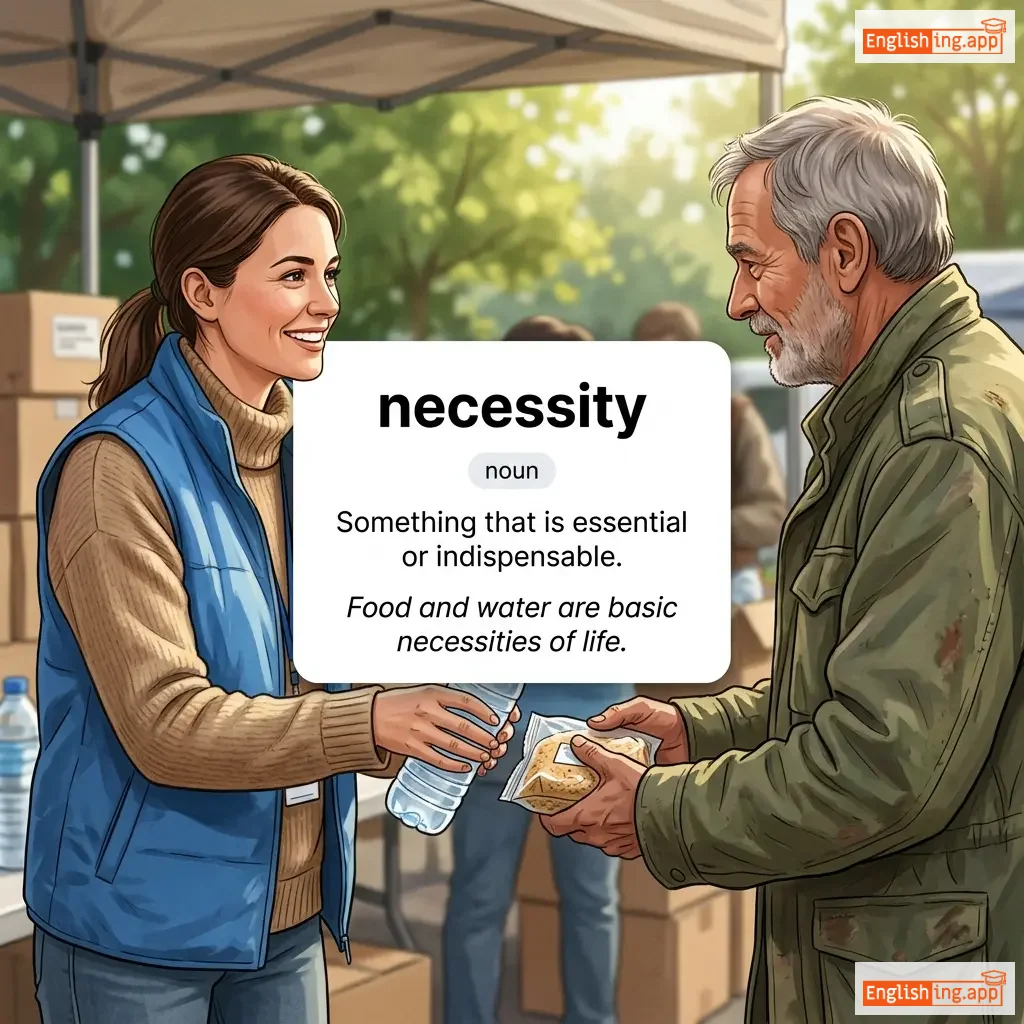
/nəˈsɛsəti/
noun
(ネセシティ)
••••••
|
|
必要性
hitsuyousei
••••••
|
- •••••• | - •••••• | - •••••• | - •••••• |
Something that is essential or indispensable.
••••••
|
Food and water are basic necessities of life. |
食べ物と水は生活の基本的な必要性です。
Tabemono to mizu wa seikatsu no kihonteki na hitsuyousei desu.
••••••
|
out of necessity |
because it is necessary
••••••
|
必要から
hitsuyou kara
••••••
|
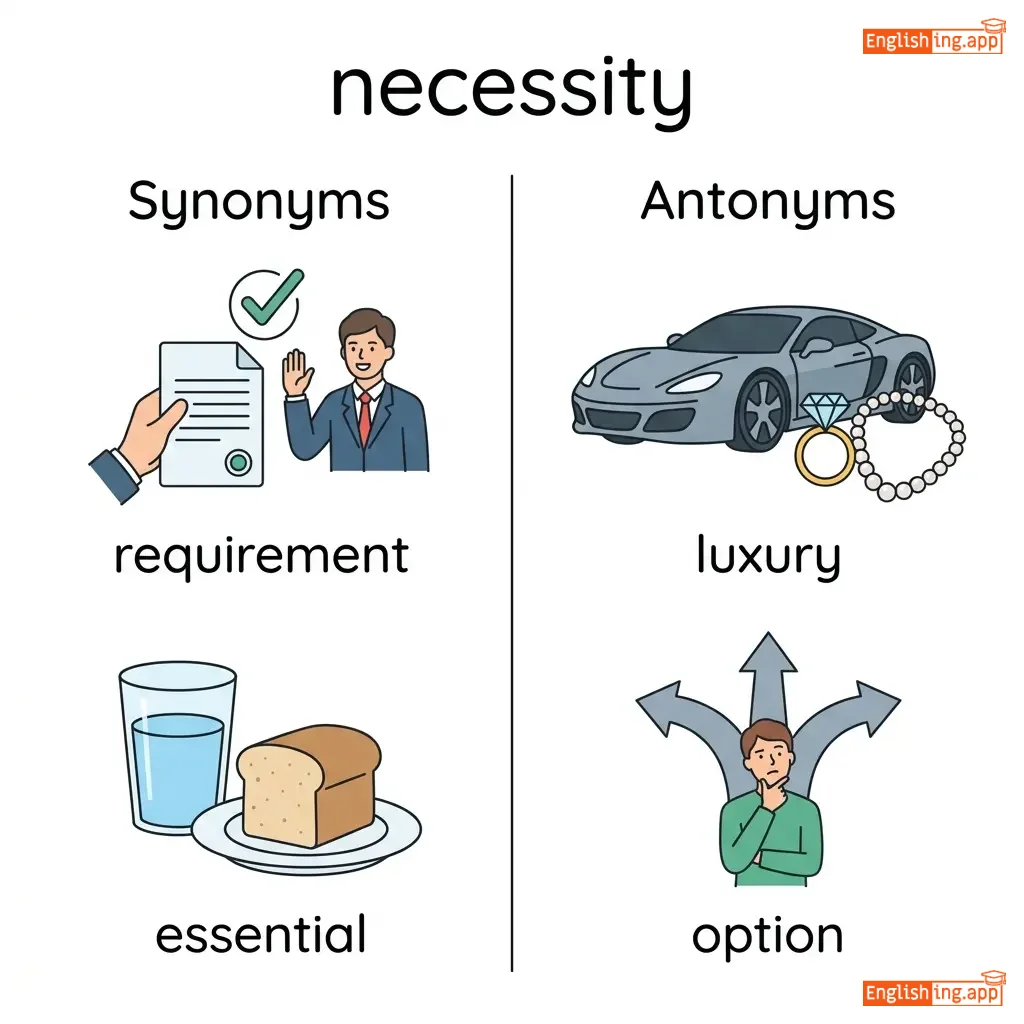
requirement, essential, need, must
••••••
|
luxury, option
••••••
|
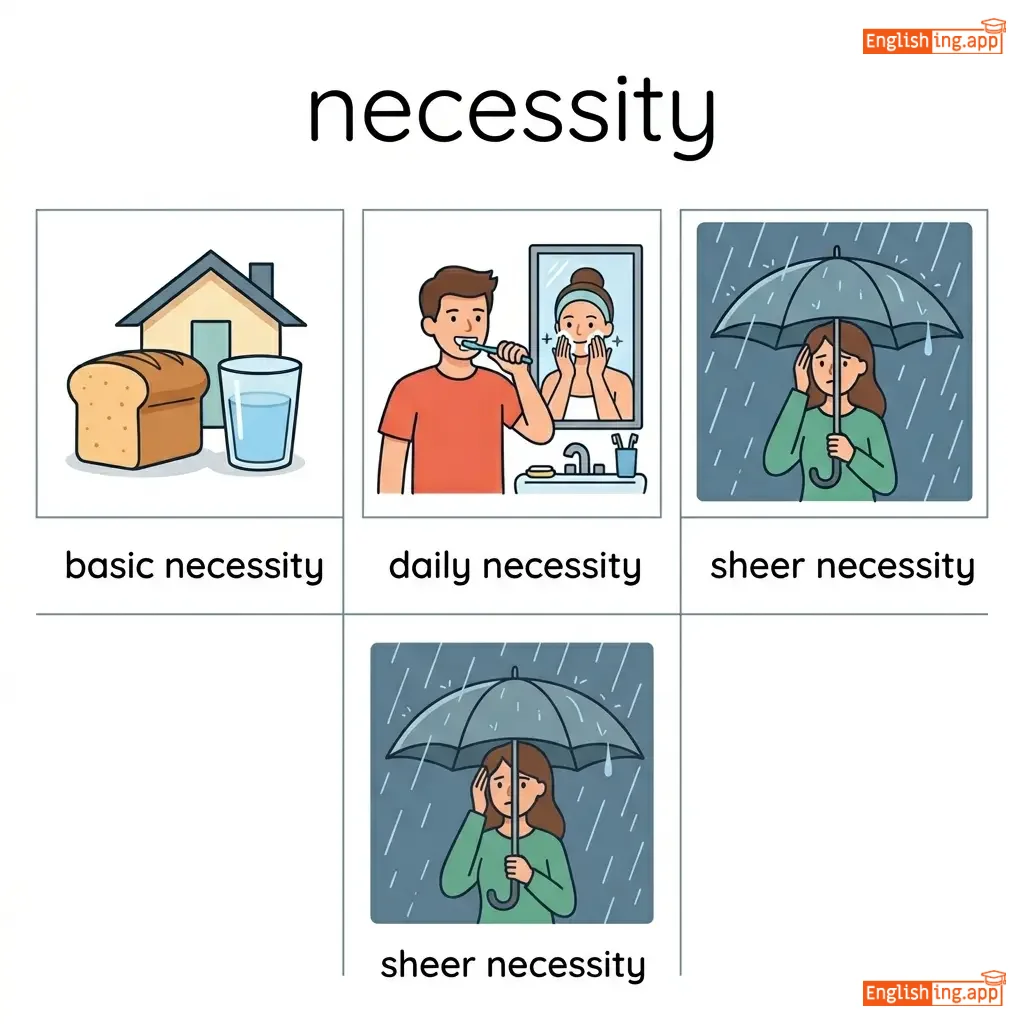
basic necessity, daily necessity, sheer necessity
••••••
|
Necessity は必要性を意味します — 食べ物と水なしでは生命は不可能です。
••••••
|
|
#5824
⚠️
|
/nəˈsɛsɪteɪt/
verb
(ネセシテイト)
••••••
|
- •••••• |
必要とする
hitsuyou to suru
••••••
|
necessitated
ネセシテイテッド
••••••
|
necessitated
ネセシテイテッド
••••••
|
necessitates
ネセシテイツ
••••••
|
necessitating
ネセシテイティング
••••••
|
To make something necessary or unavoidable.
••••••
|
The heavy rains necessitated the cancellation of the event.
激しい雨はイベントのキャンセルを必要としました。
••••••
|
激しい雨はイベントのキャンセルを避けられないものにしました。
Hageshī ame wa ibento no kyansel o sakerarenai mono ni shimashita.
••••••
|
- •••••• | - •••••• | - •••••• |
require, demand, compel, force
••••••
|
avoid, prevent
••••••
|
necessitate action, necessitate change, circumstances necessitate
••••••
|
必要から発生する強制的な行動
••••••
|
|
#5825
✔️
|
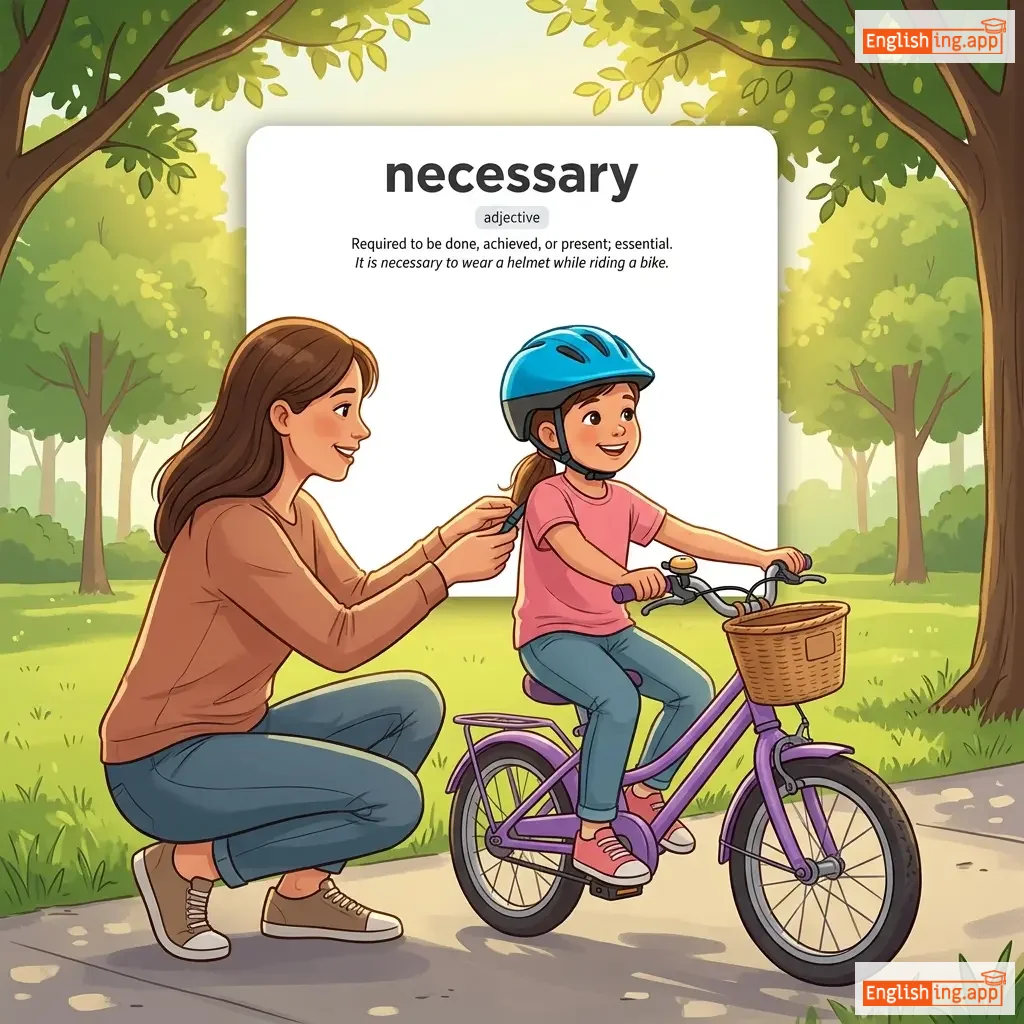
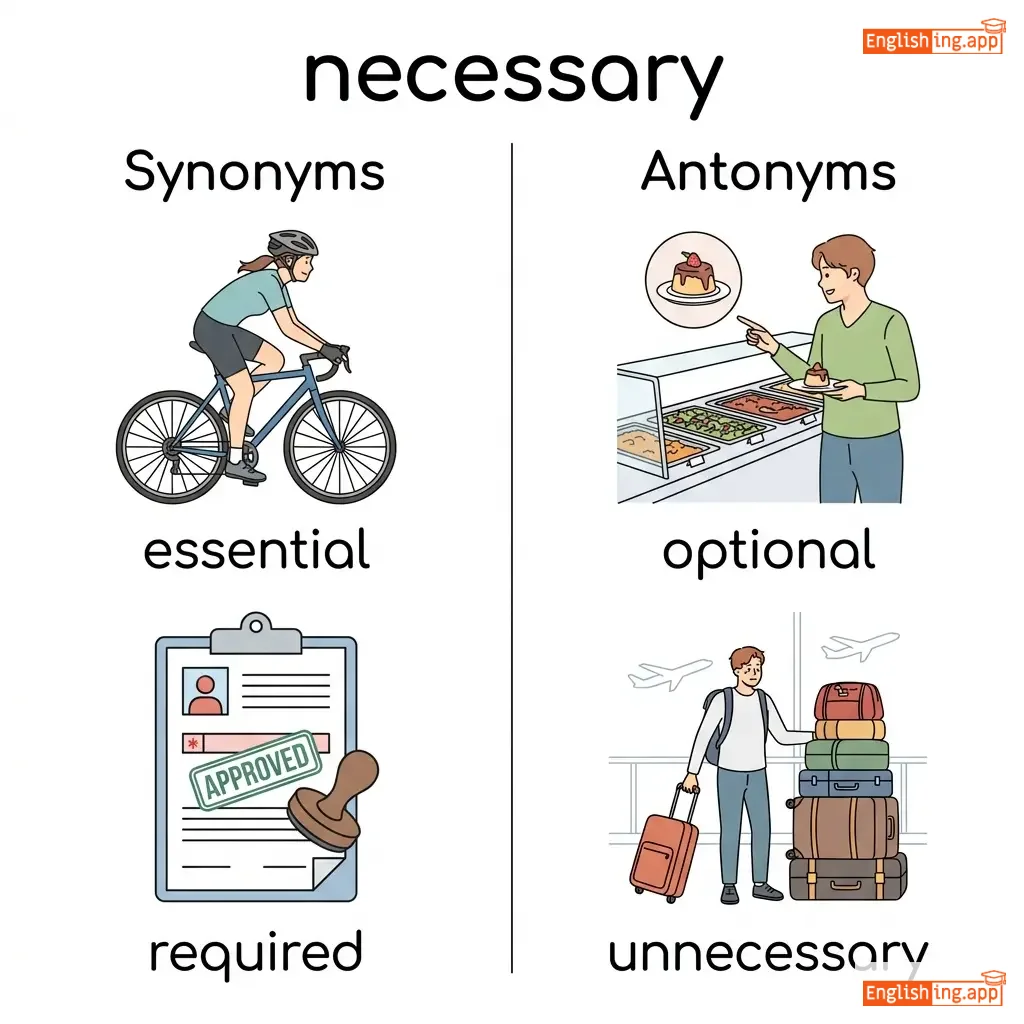
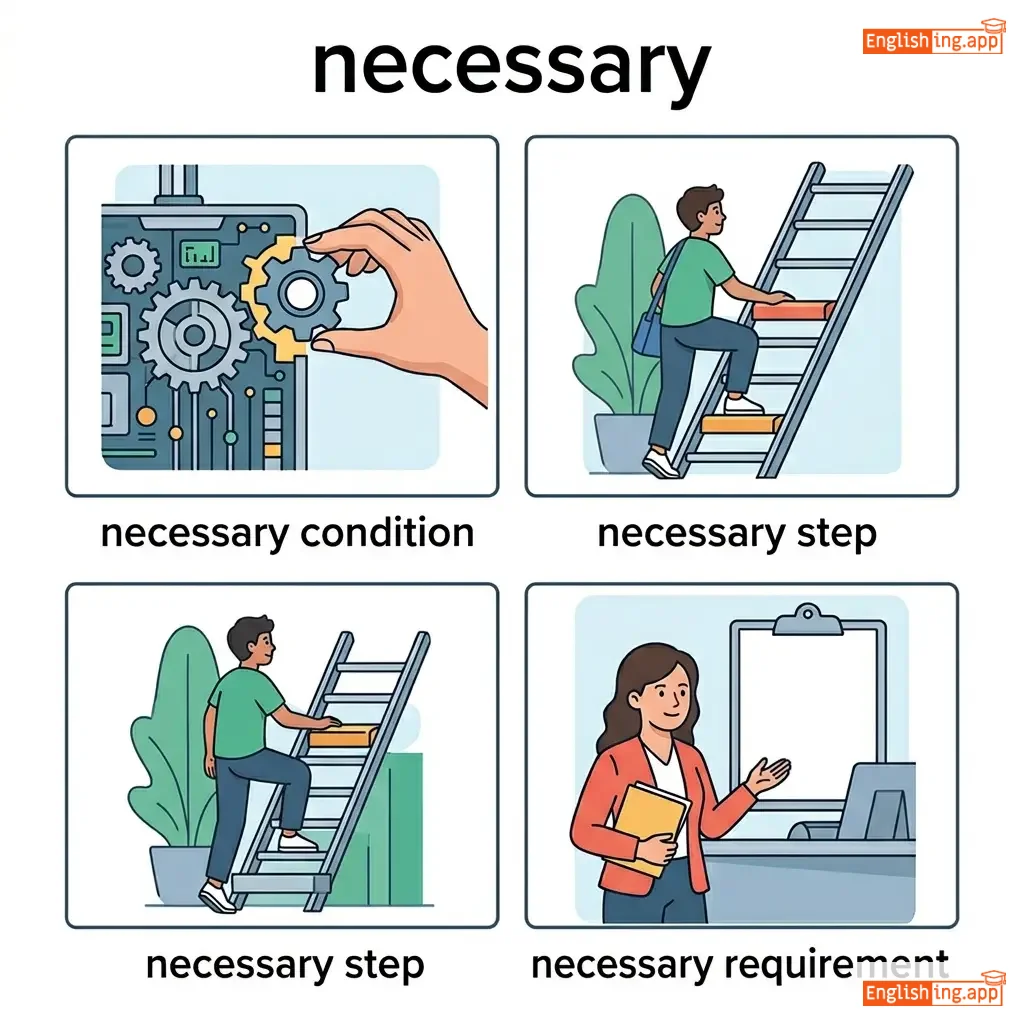
/ˈnɛsəsɛri/
adjective
••••••
|
|
- •••••• | - •••••• | - •••••• | - •••••• | - •••••• |
Required to be done, achieved, or present; essential.
••••••
|
It is necessary to wear a helmet while riding a bike. |
- •••••• |
make necessary arrangements |
to prepare the essential things needed
••••••
|
- •••••• |
essential, required, vital, crucial, mandatory
••••••
|
optional, unnecessary, needless
••••••
|
necessary condition, necessary step, necessary requirement, absolutely necessary
••••••
|
No •••••• |
|
#5826
🌫️
|
/ˈnɛbjələs/
adjective
(ネビュラス)
••••••
|
- •••••• |
曖昧な
aimaina
••••••
|
- •••••• | - •••••• | - •••••• | - •••••• |
Unclear, vague, or ill-defined; resembling a cloud or haze.
••••••
|
His plan for the future was still nebulous and hard to understand. |
彼の未来に対する計画はまだ曖昧で、理解するのが難しかった。
Kare no mirai ni taisuru keikaku wa mada aimai de, rikai suru no ga muzukashikatta.
••••••
|
- •••••• | - •••••• | - •••••• |
vague, unclear, hazy, indefinite, indistinct
••••••
|
clear, definite, precise
••••••
|
nebulous concept, nebulous idea, nebulous notion, nebulous vision
••••••
|
Nebula という言葉は曖昧な雲を指し、nebulous はそのような曖昧な状態を意味します。
••••••
|
|
#5827
✨
|
/ˈneb.jʊ.lə/
noun
(ネビュラ)
••••••
|
- •••••• |
星雲
seiun
••••••
|
- •••••• | - •••••• | - •••••• | - •••••• |
A cloud of gas and dust in outer space, sometimes visible in the night sky.
••••••
|
The Orion Nebula is one of the brightest in the sky. |
オリオン星雲は空で最も明るいものの一つです。
Orion seiun wa sora de mottomo akarui mono no hitotsu desu.
••••••
|
- •••••• | - •••••• | - •••••• |
gas cloud, star nursery, interstellar cloud
••••••
|
star, planet
••••••
|
Orion Nebula, bright nebula, planetary nebula, diffuse nebula
••••••
|
星雲(seiun)は'nebula'と似ていて、空に浮かぶガスとほこりの雲です。
••••••
|
|
#5828
🌊
|
/niːp/
noun
(ニープ)
••••••
|
- •••••• |
小潮
shōchō
••••••
|
- •••••• | - •••••• | - •••••• | - •••••• |
A tide just after the first or third quarters of the moon when the difference between high and low tide is least.
••••••
|
During a neap tide, the water level change is minimal.
ニープタイドの間、水位の変化は最小限です。
••••••
|
ニープタイドの間、水位の変化は最小限です。
Nīpu taido no aida, suii no henka wa saishōgen desu.
••••••
|
- •••••• | - •••••• | - •••••• |
weak tide, low tide
••••••
|
spring tide, high tide
••••••
|
neap tide, neap current, neap phase
••••••
|
Neap — 小潮(最小の潮位変化)。
••••••
|
|
#5829
🙅
|
/ˈneɪˌseɪ.ɪŋ/
noun
(ネイセイイング)
••••••
|
- •••••• |
否定的な発言
hiteiteki na hatsugen
••••••
|
- •••••• | - •••••• | - •••••• | - •••••• |
The act of expressing negative or pessimistic views.
••••••
|
His constant naysaying discouraged the team.
彼の絶え間ないネイセイイングはチームをがっかりさせました。
••••••
|
彼の絶え間ない否定的な発言はチームをがっかりさせました。
Kare no taemanai hiteiteki na hatsugen wa chiimu wo gakkari saseshimashita.
••••••
|
- •••••• | - •••••• | - •••••• |
negativity, pessimism, opposition, criticism
••••••
|
support, encouragement
••••••
|
constant naysaying, political naysaying, naysaying attitude
••••••
|
Nay wa iie, saying wa iu — itsumo iie to iu koto ga naysaying desu.
••••••
|
|
#5830
🧭
|
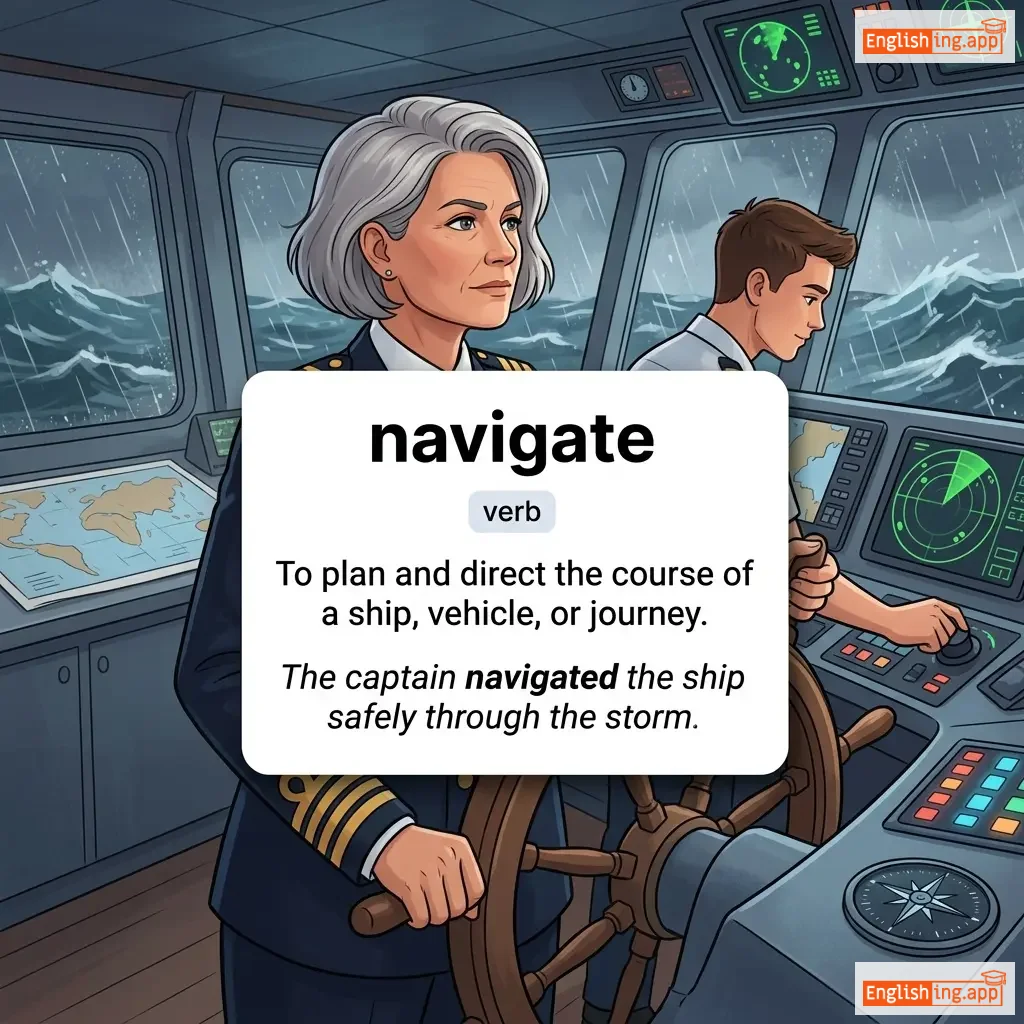
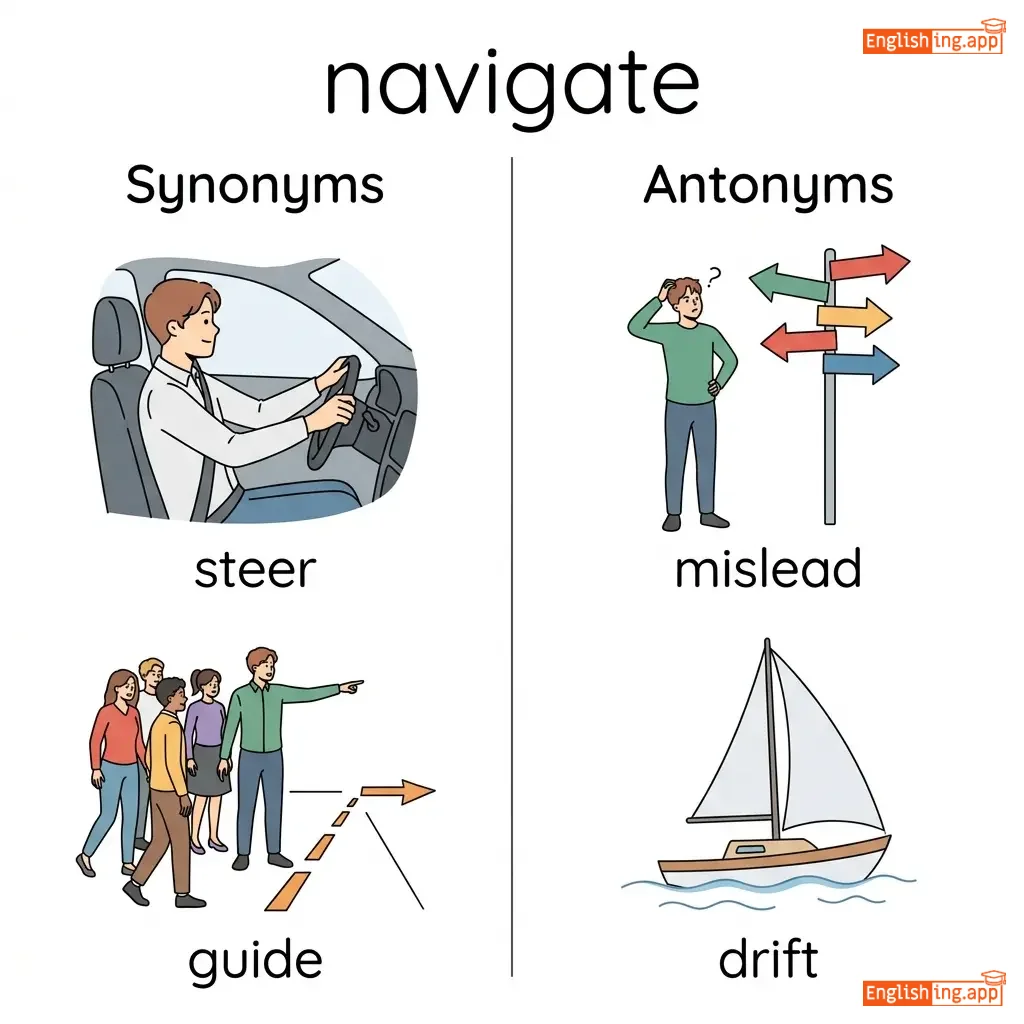
/ˈnæv.ɪ.ɡeɪt/
verb
••••••
|
|
- •••••• |
navigated
••••••
|
navigated
••••••
|
navigates
••••••
|
navigating
••••••
|
To plan and direct the course of a ship, vehicle, or journey.
••••••
|
The captain navigated the ship safely through the storm. |
- •••••• |
navigate through difficulties |
to manage or deal with problems successfully
••••••
|
- •••••• |
steer, guide, pilot, control, maneuver
••••••
|
mislead, drift
••••••
|
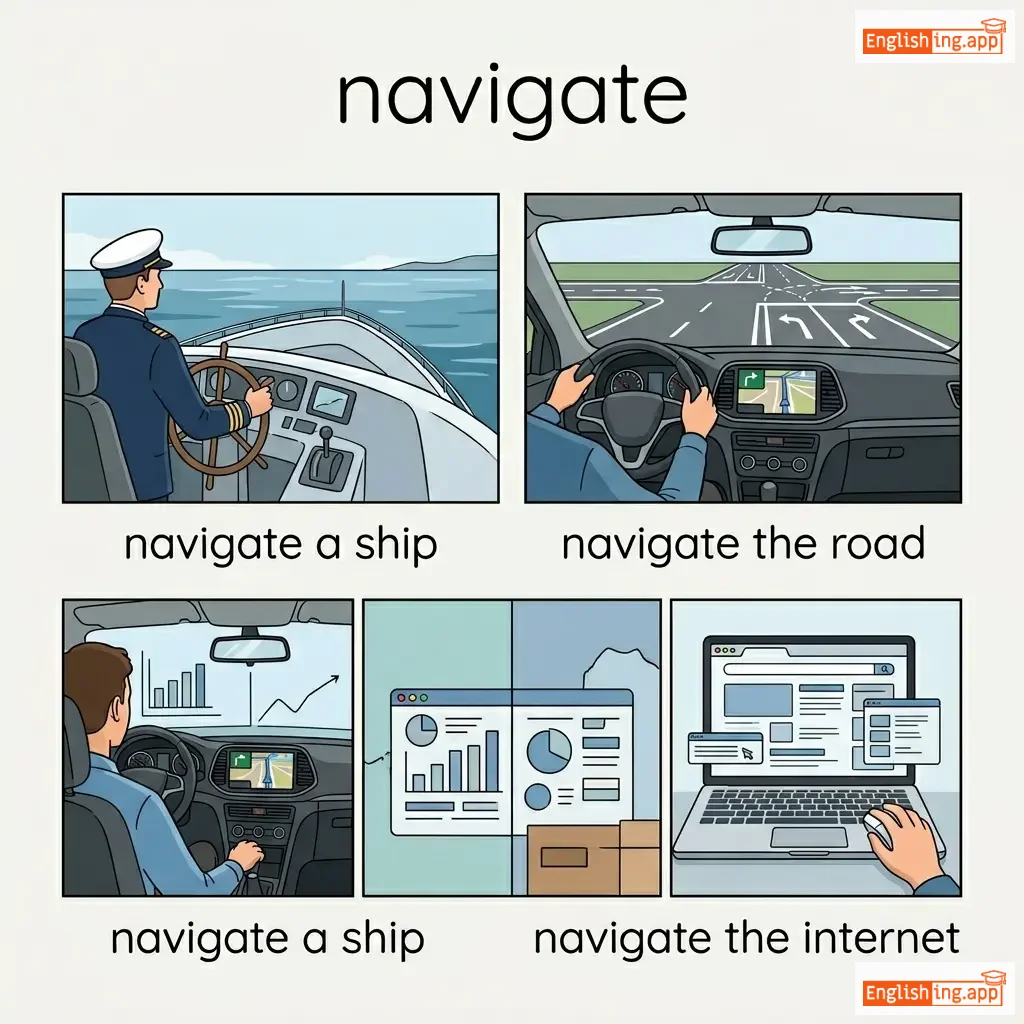
navigate a ship, navigate the road, navigate the internet, navigate through
••••••
|
No •••••• |
|
#5831
⛴️
|
/ˈnæv.ɪ.ɡə.bəl/
adjective
(ナヴィガブル)
••••••
|
- •••••• |
航行可能
kōkō kanō
••••••
|
- •••••• | - •••••• | - •••••• | - •••••• |
Able to be sailed on or through by ships or boats.
••••••
|
The river is navigable for large cargo ships.
その川は大型貨物船にとって航行可能です。
••••••
|
その川は大型貨物船にとって航行可能です。
Sono kawa wa ōgata kamotsusen ni totte kōkō kanō desu.
••••••
|
- •••••• | - •••••• | - •••••• |
passable, traversable, open, accessible
••••••
|
blocked, impassable
••••••
|
navigable river, navigable waters, navigable channel
••••••
|
航行可能は船が進むことができる、例えば川のように!
••••••
|
|
#5832
👶
|
/ˈneɪvəl/
noun
••••••
|
- •••••• | - •••••• | - •••••• | - •••••• | - •••••• | - •••••• |
the small hollow or raised area in the middle of the stomach, also called the belly button
••••••
|
The baby’s navel was carefully cleaned after birth. |
- •••••• |
navel-gazing |
excessive self-contemplation or focus on oneself
••••••
|
- •••••• |
belly button, umbilicus, tummy button
••••••
|
back, spine
••••••
|
clean the navel, navel piercing, navel area
••••••
|
No •••••• |
|
#5833
⛪
|
/neɪv/
noun
(ネイヴ)
••••••
|
- •••••• |
教会の中央部
kyoukai no chuoubu
••••••
|
- •••••• | - •••••• | - •••••• | - •••••• |
the central part of a church building intended to accommodate the congregation
••••••
|
The choir sang beautifully in the church nave.
合唱団は教会のネイヴで美しく歌いました。
••••••
|
合唱団は教会のネイヴで美しく歌いました。
Gasshoudan wa kyoukai no neivu de utsukushiku utaimashita.
••••••
|
- •••••• | - •••••• | - •••••• |
hall, sanctuary, aisle, chamber
••••••
|
altar, transept
••••••
|
church nave, wide nave, central nave
••••••
|
Naveは教会の中心部で、Navyではありません。
••••••
|
|
#5834
🚢
|
/ˈneɪvəl/
adjective
(ネイヴァル)
••••••
|
- •••••• |
海軍の
kaigun no
••••••
|
- •••••• | - •••••• | - •••••• | - •••••• |
relating to a country's navy or military ships
••••••
|
The country invested heavily in naval defense. |
その国は海軍防衛に多額の投資をしました。
Sono kuni wa kaigun bōei ni tagaku no tōshi o shimashita.
••••••
|
naval forces |
a nation's warships and related military strength
••••••
|
海軍力
kaigun ryoku
••••••
|
maritime, seafaring, oceanic, military
••••••
|
civilian, land-based
••••••
|
naval base, naval battle, naval defense, naval fleet
••••••
|
Navalは海軍を意味します — NavyとBattleを合わせてNavalを覚えましょう!
••••••
|
|
#5835
⚓
|
/ˈnɔːtɪkəl/
adjective
(ナウティカル)
••••••
|
- •••••• |
航海
koukai
••••••
|
- •••••• | - •••••• | - •••••• | - •••••• |
relating to ships, sailors, or navigation on water
••••••
|
He studied nautical charts before setting sail.
彼は出航前に海図を勉強しました。
••••••
|
彼は出航前に海図を勉強しました。
Kare wa shukkou mae ni kaizu wo benkyou shimashita.
••••••
|
nautical mile
海里
••••••
|
a unit of distance used in sea and air navigation
••••••
|
海里
kairi
••••••
|
marine, naval, maritime, seafaring
••••••
|
terrestrial, land-based
••••••
|
nautical chart, nautical mile, nautical theme, nautical terms
••••••
|
航海(koukai)は海や船に関連しています — 船が海を航行しているのを想像してみてください。
••••••
|
|
#5836
🌼
|
/nɑːrˈsɪsəs/
noun
(ナルシス)
••••••
|
- •••••• |
ナルシスの花
narushisu no hana
••••••
|
- •••••• | - •••••• | - •••••• | - •••••• |
A type of flowering plant with yellow or white blooms, often associated with self-love from Greek mythology.
••••••
|
A narcissus bloomed in the garden during spring. |
春に、庭でナルシスの花が咲きました。
Haru ni, niwa de narushisu no hana ga sakimashita.
••••••
|
- •••••• | - •••••• | - •••••• |
daffodil, jonquil, flower, bloom
••••••
|
weed, shrub
••••••
|
narcissus flower, narcissus bulbs, narcissus bloom, narcissus garden
••••••
|
ナルシスの花は美しい花ですが、ギリシャ神話では自己愛の象徴です。
••••••
|
|
#5837
🤮
|
/ˈnɔːzieɪt/
verb
(ノーズィエイト)
••••••
|
- •••••• |
吐き気を催す
hakike o moyasu
••••••
|
nauseated
ナウジエイテッド
••••••
|
nauseated
ナウジエイテッド
••••••
|
nauseates
ナウジエイツ
••••••
|
nauseating
ナウジエイティング
••••••
|
To make someone feel sick, with an inclination to vomit.
••••••
|
The spoiled food nauseated him quickly.
腐った食べ物は彼をすぐに吐き気を催させました。
••••••
|
腐った食べ物は彼をすぐに吐き気を催させました。
Kusatta tabemono wa kare o sugu ni hakike o moyosase mashita.
••••••
|
- •••••• | - •••••• | - •••••• |
sicken, disgust, repel, upset
••••••
|
comfort, please
••••••
|
nauseate someone, nauseating smell, nauseated feeling
••••••
|
Nauseate: 'nose' の匂いで吐き気を感じさせる
••••••
|
|
#5838
🤢
|
/ˈnɔːziə/
noun
(ノージア)
••••••
|
- •••••• |
吐き気
hakike
••••••
|
- •••••• | - •••••• | - •••••• | - •••••• |
A feeling of sickness with an inclination to vomit.
••••••
|
The strong smell of paint gave her a sudden nausea. |
強いペンキの匂いが彼女に突然吐き気を与えた。
Tsuyoi penki no nioi ga kanojo ni totsuzen hakike o ataeta.
••••••
|
waves of nausea |
Repeated or strong feelings of sickness
••••••
|
吐き気の波
Hakike no nami
••••••
|
sickness, queasiness, discomfort, retching
••••••
|
comfort, wellness
••••••
|
feel nausea, cause nausea, sudden nausea, nausea and vomiting
••••••
|
吐き気は、悪臭を感じたときに生じる体の反応です。
••••••
|
|
#5839
🌱
|
/ˈnætʃrəli/
adverb
(ナチュラリー)
••••••
|
- •••••• |
自然に
shizen ni
••••••
|
- •••••• | - •••••• | - •••••• | - •••••• |
In a way that is normal, expected, or without effort.
••••••
|
He spoke so naturally that everyone felt comfortable.
彼はとてもナチュラリー話したので、みんなが快適に感じました。
••••••
|
彼はとても自然に話したので、みんなが快適に感じました。
Kare wa totemo shizen ni hanashita node, minna ga kaiteki ni kanjimashita.
••••••
|
naturally enough
ナチュラリーイナフ
••••••
|
Not surprisingly; as expected
••••••
|
自然に十分
shizen ni jūbun
••••••
|
obviously, surely, normally, effortlessly
••••••
|
unnaturally, artificially
••••••
|
behave naturally, speak naturally, occur naturally, naturally gifted
••••••
|
自然に—自然のように、何の努力もなく。
••••••
|
|
#5840
👔
|
/ˈnæti/
adjective
(ナティ)
••••••
|
- •••••• |
おしゃれ
oshare
••••••
|
- •••••• | - •••••• | - •••••• | - •••••• |
Neat, stylish, and fashionable in appearance.
••••••
|
He looked very natty in his new suit.
彼は新しいスーツでとてもナティに見えた。
••••••
|
彼は新しいスーツでとてもおしゃれに見えた。
Kare wa atarashī sūtsu de totemo oshare ni mietta.
••••••
|
- •••••• | - •••••• | - •••••• |
stylish, smart, dapper, elegant, sharp
••••••
|
messy, shabby, untidy
••••••
|
natty dresser, natty outfit, natty appearance, natty style
••••••
|
Nattyはおしゃれで洗練された外見 - natty = おしゃれな外見
••••••
|
|
#5841
🌍
|
/ˌnæʃəˈnæləti/
noun
(ネイショナリティ)
••••••
|
- •••••• |
国籍
kokuseki
••••••
|
- •••••• | - •••••• | - •••••• | - •••••• |
The status of belonging to a particular nation, either by birth or naturalization.
••••••
|
Her nationality is Canadian, though she was born in France. |
彼女の国籍はカナダのもので、フランスで生まれました。
Kanojo no kokuseki wa Kanada no mono de, Furansu de umaremashita.
••••••
|
of all nationalities |
Including people from different nations or backgrounds
••••••
|
すべての国籍の人々
Subete no kokuseki no hitobito
••••••
|
citizenship, origin, ethnicity, heritage, identity
••••••
|
statelessness, foreignness
••••••
|
dual nationality, acquire nationality, nationality law, nationality status
••••••
|
国籍 = 国 + 籍、あなたがどの国に属しているかを示す
••••••
|
|
#5842
🏊
|
/næˈteɪʃən/
noun
(ネイテーション)
••••••
|
- •••••• |
水泳
suiei
••••••
|
- •••••• | - •••••• | - •••••• | - •••••• |
The act or sport of swimming.
••••••
|
She took lessons in natation to improve her swimming skills.
彼女は泳ぎの技術を向上させるために水泳のレッスンを受けました。
••••••
|
彼女は泳ぎの技術を向上させるために水泳のレッスンを受けました。
Kanojo wa oyogi no gijutsu o kōjōsaseru tame ni suiei no ressun o ukemashita.
••••••
|
- •••••• | - •••••• | - •••••• |
swimming, aquatic sport, floating, diving, water activity
••••••
|
drowning, sinking
••••••
|
natation skills, natation training, natation competition
••••••
|
NATationは水泳、NATuralな泳ぎ 🏊
••••••
|
|
#5843
👶
|
/ˈneɪtl/
adjective
(ネイタル)
••••••
|
- •••••• |
出生に関連する
shussei ni kanren suru
••••••
|
- •••••• | - •••••• | - •••••• | - •••••• |
Relating to birth or the place of birth.
••••••
|
She returned to her natal village after many years. |
彼女は何年も経った後、故郷の村に帰りました。
Kanojo wa nannen mo tatta ato, kokyou no mura ni kaerimashita.
••••••
|
natal home |
The house or place where someone was born
••••••
|
故郷
kokyou
••••••
|
birth, native, congenital, natural, origin
••••••
|
foreign, alien
••••••
|
natal home, natal village, natal chart, natal care
••••••
|
Natal は出生に関連する — あなたの故郷を思い出してください!
••••••
|
|
#5844
🌱
|
/ˈneɪsnt/
adjective
(ネイセント)
••••••
|
|
萌芽
hōga
••••••
|
- •••••• | - •••••• | - •••••• | - •••••• |
Just coming into existence and beginning to develop.
••••••
|
The nascent technology has great potential. |
萌芽中の技術は大きな可能性を持っています。
Hōgachū no gijutsu wa ōkina kanōsei o motteimasu.
••••••
|
nascent stage |
The early phase of development
••••••
|
萌芽段階
Hōga dankai
••••••
|
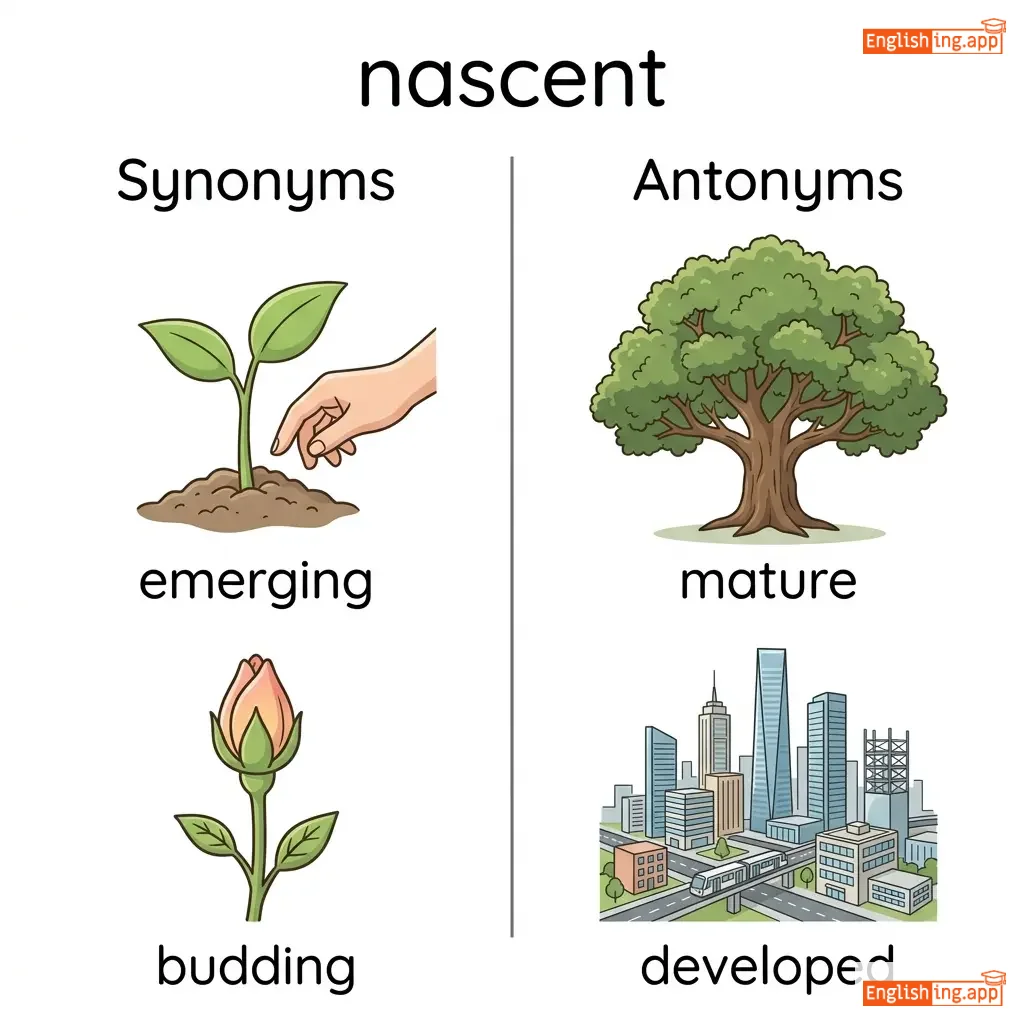
emerging, budding, developing, rising, incipient
••••••
|
mature, developed, established
••••••
|
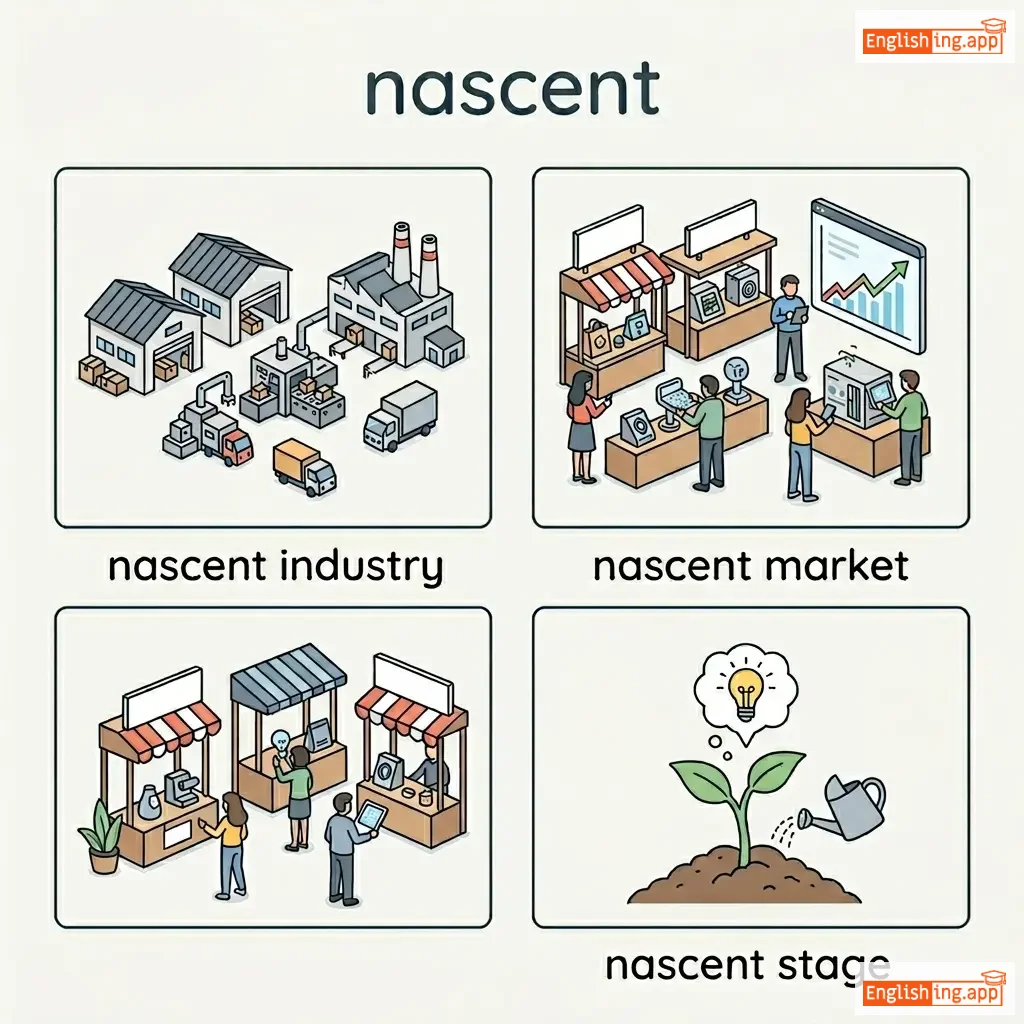
nascent industry, nascent market, nascent stage, nascent idea
••••••
|
萌芽は新たに芽生えたもの、まさに発展の始まりの象徴。
••••••
|
|
#5845
👃
|
/ˈneɪzl/
adjective
(ネイザル)
••••••
|
- •••••• |
鼻音の
bion no
••••••
|
- •••••• | - •••••• | - •••••• | - •••••• |
Relating to the nose; a sound produced through the nose.
••••••
|
He spoke with a nasal voice due to his cold. |
風邪で彼は鼻声で話した。
Kaze de kare wa hanagoe de hanashita.
••••••
|
nasal tone |
A voice sound that passes through the nose
••••••
|
鼻声
hanagoe
••••••
|
snuffly, stuffy, resonant, vocal, nasalized
••••••
|
clear, open
••••••
|
nasal voice, nasal sound, nasal cavity, nasal passage
••••••
|
Nasal = 鼻に関連する
••••••
|
|
#5846
🙄
|
/ˌnæroʊˈmaɪndɪd/
adjective
••••••
|
- •••••• | - •••••• | - •••••• | - •••••• | - •••••• | - •••••• |
Having a limited outlook or unwillingness to accept different opinions or ideas.
••••••
|
She was too narrow-minded to consider other perspectives. |
- •••••• |
narrow-minded attitude |
An intolerant or prejudiced way of thinking
••••••
|
- •••••• |
intolerant, prejudiced, biased, conservative, close-minded
••••••
|
open-minded, tolerant, broad-minded
••••••
|
narrow-minded view, narrow-minded approach, narrow-minded prejudice
••••••
|
No •••••• |
|
#5847
🗣️
|
/ˈnæreɪtər/
noun
(ナレーター)
••••••
|
- •••••• |
語り手
katarite
••••••
|
- •••••• | - •••••• | - •••••• | - •••••• |
A person who tells the story in a book, play, or film.
••••••
|
The narrator guided the audience through the complex plot.
ナレーターは複雑なプロットを通じて観客を導きました。
••••••
|
語り手は複雑なプロットを通じて観客を導きました。
Katarite wa fukuzatsu na purotto wo tsūjite kankyaku wo michibikimashita.
••••••
|
- •••••• | - •••••• | - •••••• |
storyteller, commentator, announcer, describer
••••••
|
listener, audience
••••••
|
narrator voice, first-person narrator, omniscient narrator, narrator role
••••••
|
ナレーターは物語を語る人、語り手(katarite)です。
••••••
|
|
#5848
📝
|
/ˈnærətɪv/
noun
••••••
|
- •••••• | - •••••• | - •••••• | - •••••• | - •••••• | - •••••• |
A spoken or written account of connected events; a story.
••••••
|
The novel’s narrative explores themes of identity and freedom. |
- •••••• |
control the narrative |
To influence or shape how a story or situation is understood.
••••••
|
- •••••• |
story, account, tale, chronicle, description
••••••
|
silence, randomness
••••••
|
narrative style, narrative voice, personal narrative, political narrative
••••••
|
No •••••• |
|
#5849
📖
|
/næˈreɪʃən/
noun
(ナレーション)
••••••
|
- •••••• |
ナレーション
nareeshon
••••••
|
- •••••• | - •••••• | - •••••• | - •••••• |
The act of telling a story or describing events in detail.
••••••
|
The movie’s narration was done by a famous actor.
映画のナレーションは有名な俳優によって行われました。
••••••
|
映画のナレーションは有名な俳優によって行われました。
Eiga no nareeshon wa yuumei na haiyuu ni yotte okonawaremashita.
••••••
|
voice narration
ボイスナレーション
••••••
|
Spoken commentary or storytelling provided through voice.
••••••
|
ボイスナレーション
Boisu nareeshon
••••••
|
storytelling, recounting, commentary, description
••••••
|
silence, quiet
••••••
|
narration of events, narration in movies, narration style, narration voice
••••••
|
Narrationは物語を語る、ナレーションで話す。
••••••
|
|
#5850
🎤
|
/ˈnæreɪt/
verb
(ナレイト)
••••••
|
- •••••• |
物語る
monogatari
••••••
|
narrated
ナレイテッド
••••••
|
narrated
ナレイテッド
••••••
|
narrates
ナレイツ
••••••
|
narrating
ナレイティング
••••••
|
To tell a story or describe events, often in detail.
••••••
|
She will narrate the events of her journey to the audience.
彼女は観客に自分の旅の出来事を語るでしょう。
••••••
|
彼女は観客に自分の旅の出来事を語るでしょう。
Kanojo wa kankyaku ni jibun no tabi no dekigoto o kataru deshou.
••••••
|
narrate a story
物語を語る
••••••
|
To tell or describe a story to others.
••••••
|
物語を語る
Monogatari o kataru
••••••
|
tell, recount, describe, relate, detail
••••••
|
conceal, hide
••••••
|
narrate a story, narrate events, narrate experiences, narrate history
••••••
|
Narrate in Japanese is 物語る, like narrating your story with 'monogatari'.
••••••
|
Vocabulary Quiz
Test your vocabulary by matching words with their translations or meanings.
Login to take the quiz
Comments (0)
Share your thoughts and join the discussion.
Join the discussion by logging in
Login to CommentNo comments yet
Be the first to share your thoughts!