

翻訳
過去
過去分詞
三人称単数
動名詞
意味
例文
例文の翻訳
同義語
対義語
コロケーション
ニーモニック
Swipe left or right, or use the buttons. Tap image to zoom.
例文の翻訳
単語
Lesson 400Lesson 400 - マスクトグル
|
絵文字
|
単語 | Images | 翻訳 | 過去 | 過去分詞 | 三人称単数 | 動名詞 | 意味 | 例文 | 例文の翻訳 | 同義語 | 対義語 | コロケーション | ニーモニック |
|---|---|---|---|---|---|---|---|---|---|---|---|---|---|---|
|
#11965
🏙️
|
/səˈsaɪəti/
noun
(ソサエティ)
••••••
|
|
社会
shakai
••••••
|
- •••••• | - •••••• | - •••••• | - •••••• |
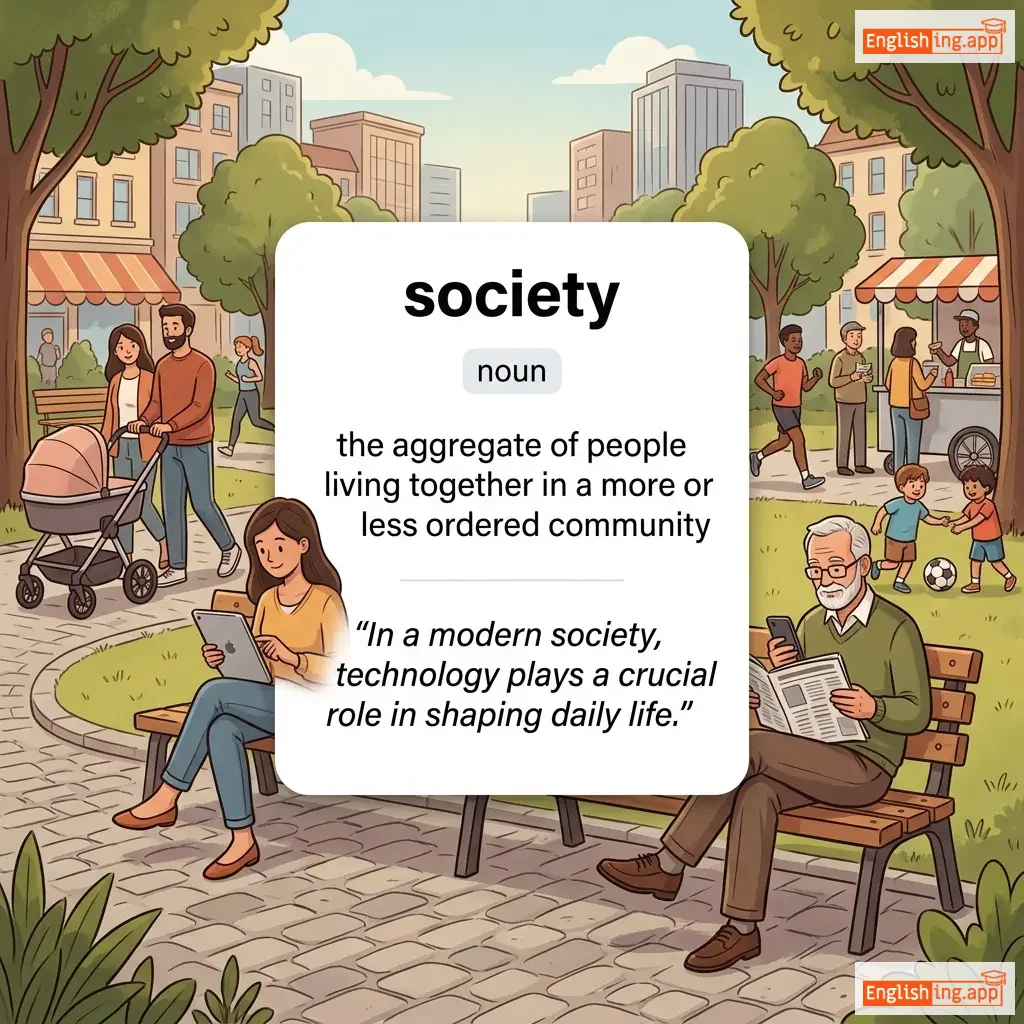
the aggregate of people living together in a more or less ordered community
••••••
|
In a modern society, technology plays a crucial role in shaping daily life. |
現代の社会では、技術が日常生活の形成において重要な役割を果たしています。
Gendai no shakai de wa, gijutsu ga nichijō seikatsu no keisei ni oite jūyōna yakuwari o hatashiteimasu.
••••••
|
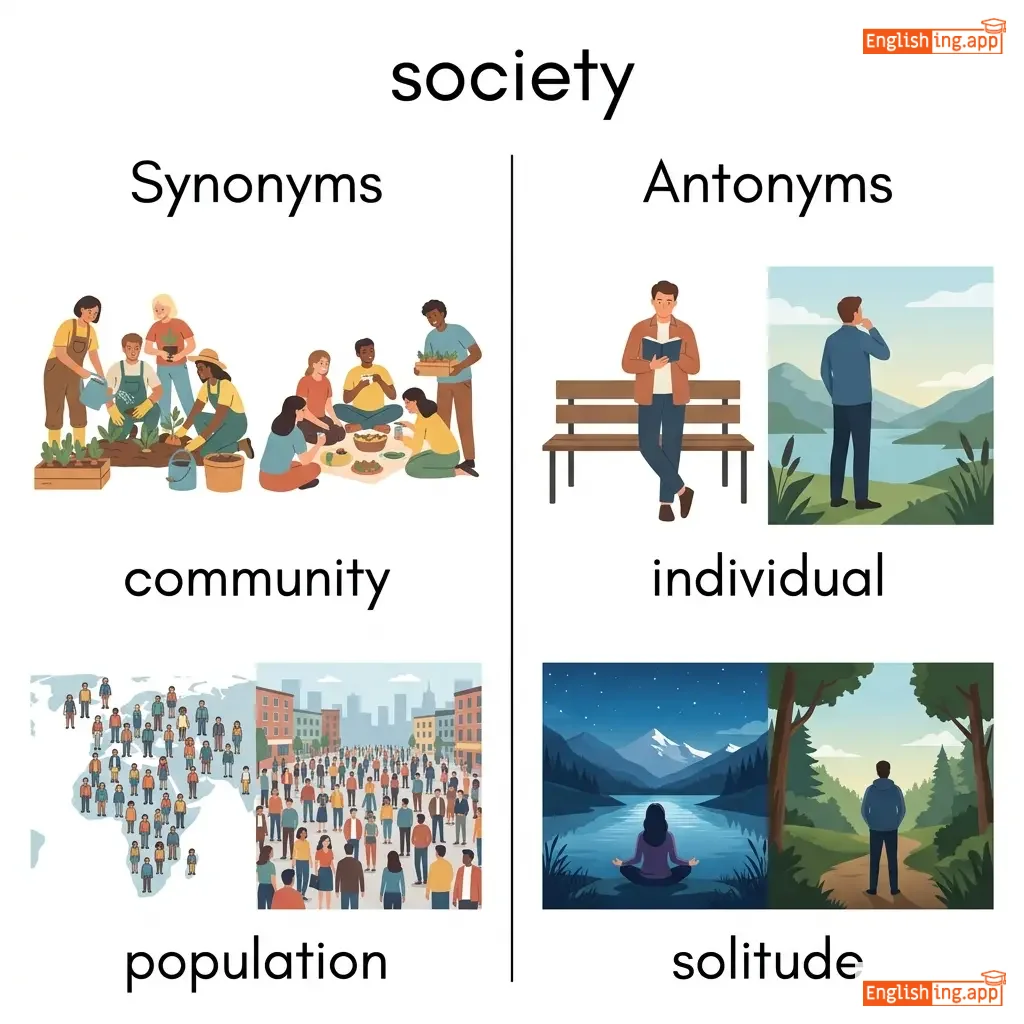
community, population, group, public
••••••
|
individual, solitude
••••••
|
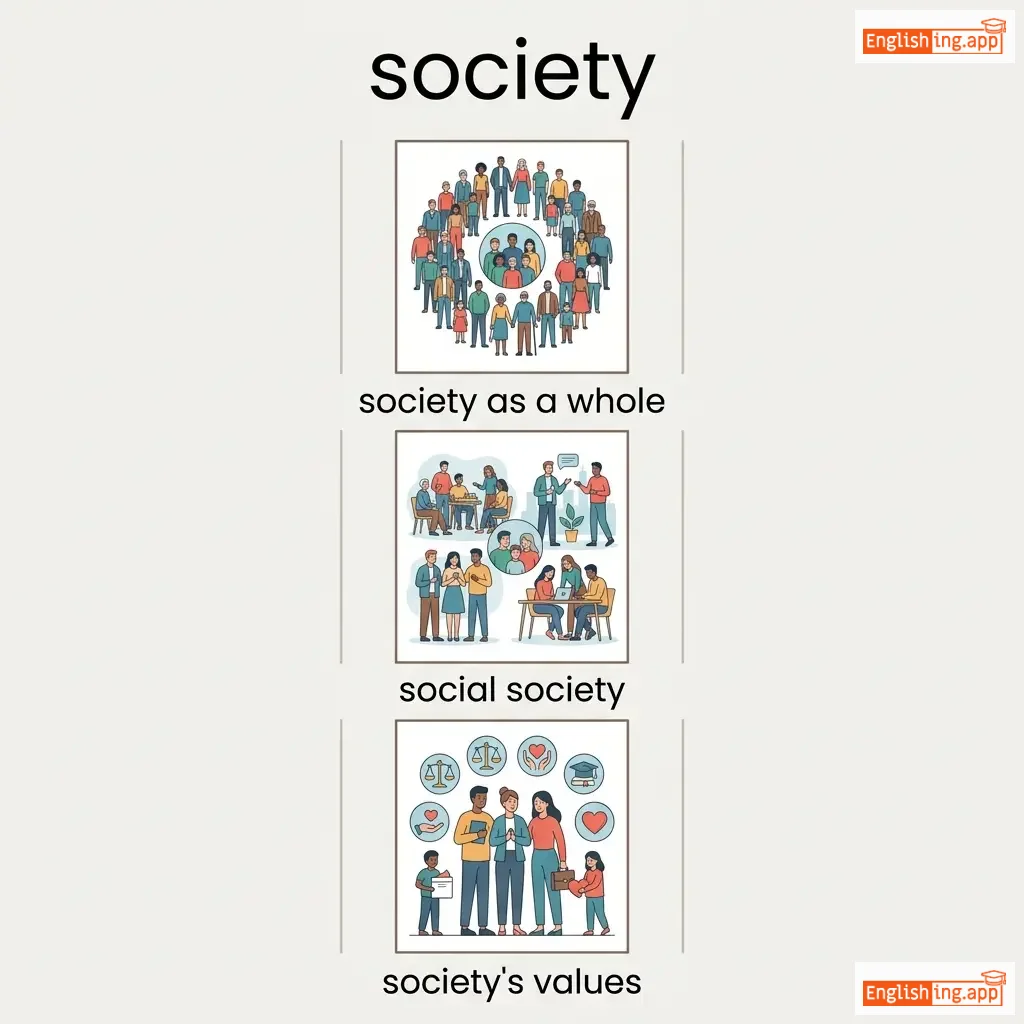
society as a whole, social society, society's values, modern society
••••••
|
社会は一緒に生活する人々から成り立っています。
••••••
|
|
#11966
👦
|
/sʌn/
noun
(サン)
••••••
|
- •••••• |
息子
musuko
••••••
|
- •••••• | - •••••• | - •••••• | - •••••• |
a male child of a parent
••••••
|
His son is very talented in music. |
彼の息子は音楽に非常に才能があります。
Kare no musuko wa ongaku ni hijou ni sainou ga arimasu.
••••••
|
child, offspring, male heir
••••••
|
daughter, female child
••••••
|
only son, beloved son, son of a king
••••••
|
His SON is so talented at music, you'll be proud of him.
••••••
|
|
#11967
📍
|
/ˈsʌmˌwɛr/
adverb
(サムウェア)
••••••
|
- •••••• |
どこか
dokoka
••••••
|
- •••••• | - •••••• | - •••••• | - •••••• |
in, at, or to a place that is not known or specified
••••••
|
Somewhere in the city, there is a hidden café. |
街のどこかに隠れたカフェがあります。
Machi no dokoka ni kakureta kafe ga arimasu.
••••••
|
anywhere, someplace, in a place
••••••
|
nowhere
••••••
|
somewhere nearby, somewhere far away, somewhere special
••••••
|
SOMEWHERE = どこかに, somewhere in the city.
••••••
|
|
#11968
➖
|
/ˈsʌmˌwʌt/
adverb
(samuwatto)
••••••
|
- •••••• |
少し
sukoshi
••••••
|
- •••••• | - •••••• | - •••••• | - •••••• |
to a small degree or extent
••••••
|
The new policy is somewhat better than the previous one.
新しい政策は前のものより少し良いです。
••••••
|
新しい政策は前のものより少し良いです。
Atarashii seisaku wa mae no mono yori sukoshi yoi desu.
••••••
|
slightly, a little, somewhat more
••••••
|
completely, fully
••••••
|
somewhat difficult, somewhat better, somewhat complicated
••••••
|
SOMEWHAT = 少し(sukoshi)でも違いを生む
••••••
|
|
#11969
⏳
|
/ˈsʌmˌtaɪmz/
adverb
(samtimesu)
••••••
|
- •••••• |
時々
tokidoki
••••••
|
- •••••• | - •••••• | - •••••• | - •••••• |
at certain times, but not always
••••••
|
Sometimes I wonder what life would have been like if I had made different choices. |
時々、もし私が違う選択をしていたら、人生がどうなっていたか考えることがあります。
Tokidoki, moshi watashi ga chigau sentaku o shite itara, jinsei ga dō natte ita ka kangaeru koto ga arimasu.
••••••
|
occasionally, from time to time, every now and then
••••••
|
always, never
••••••
|
sometimes feel, sometimes wonder, sometimes think
••••••
|
SOMETIMES = Tokidoki in the day.
••••••
|
|
#11970
🙋
|
/ˈsʌmwʌn/
pronoun
(サムワン)
••••••
|
- •••••• |
誰か
dareka
••••••
|
- •••••• | - •••••• | - •••••• | - •••••• |
a person, but not specifically known or named
••••••
|
Someone left their umbrella in the hallway. |
誰かが廊下に傘を忘れました。
Dareka ga rouka ni kasa o wasuremashita.
••••••
|
somebody, person, individual
••••••
|
nobody
••••••
|
someone special, someone else, someone new
••••••
|
Someone can be remembered as 'Some ONE person'.
••••••
|
|
#11971
🤷
|
/ˈsʌmˌhaʊ/
adverb
(samhau)
••••••
|
- •••••• |
なんとか
nantoka
••••••
|
- •••••• | - •••••• | - •••••• | - •••••• |
in some way, but not exactly known or specified
••••••
|
Somehow, they managed to finish the project on time. |
なんとか、彼らはプロジェクトを時間通りに終わらせることができました。
Nantoka, karera wa purojekuto o jikan douri ni owaraseru koto ga dekimashita.
••••••
|
by some means, in some manner, in any way, one way or another
••••••
|
certainly, definitely, surely
••••••
|
somehow manage, somehow find, somehow do, somehow achieve
••••••
|
SomeHOW can be remembered as 'NANTOKAできる!'
••••••
|
|
#11972
🙋♂️
|
/ˈsʌmbədi/
pronoun
(サムバディ)
••••••
|
- •••••• |
誰か
dareka
••••••
|
- •••••• | - •••••• | - •••••• | - •••••• |
an unspecified person
••••••
|
Somebody is knocking at the door. |
誰かがドアをノックしています。
Dareka ga doa o nokkushiteimasu.
••••••
|
someone, a person, an individual, a soul
••••••
|
nobody
••••••
|
somebody is, somebody did, somebody told me
••••••
|
Somebody, like 'dareka', is always there knocking on your door!
••••••
|
|
#11973
🔢
|
/sʌm/
determiner
(サム)
••••••
|
- •••••• |
いくつか
ikutsuka
••••••
|
- •••••• | - •••••• | - •••••• | - •••••• |
an unspecified amount or number of something
••••••
|
I have some money in my wallet. |
財布に少しお金があります。
Saifu ni sukoshi okane ga arimasu.
••••••
|
a few, several, a number of, certain
••••••
|
none, all
••••••
|
some time, some people, some things, some amount
••••••
|
Some 'ikutsuka' things are part of your day - like money in your wallet!
••••••
|
|
#11974
🧩
|
/sɒlv/
verb
(ソルヴ)
••••••
|
|
解決する
kaiketsu suru
••••••
|
solved
ソルヴド
••••••
|
solved
ソルヴド
••••••
|
solves
ソルヴス
••••••
|
solving
ソルヴィング
••••••
|
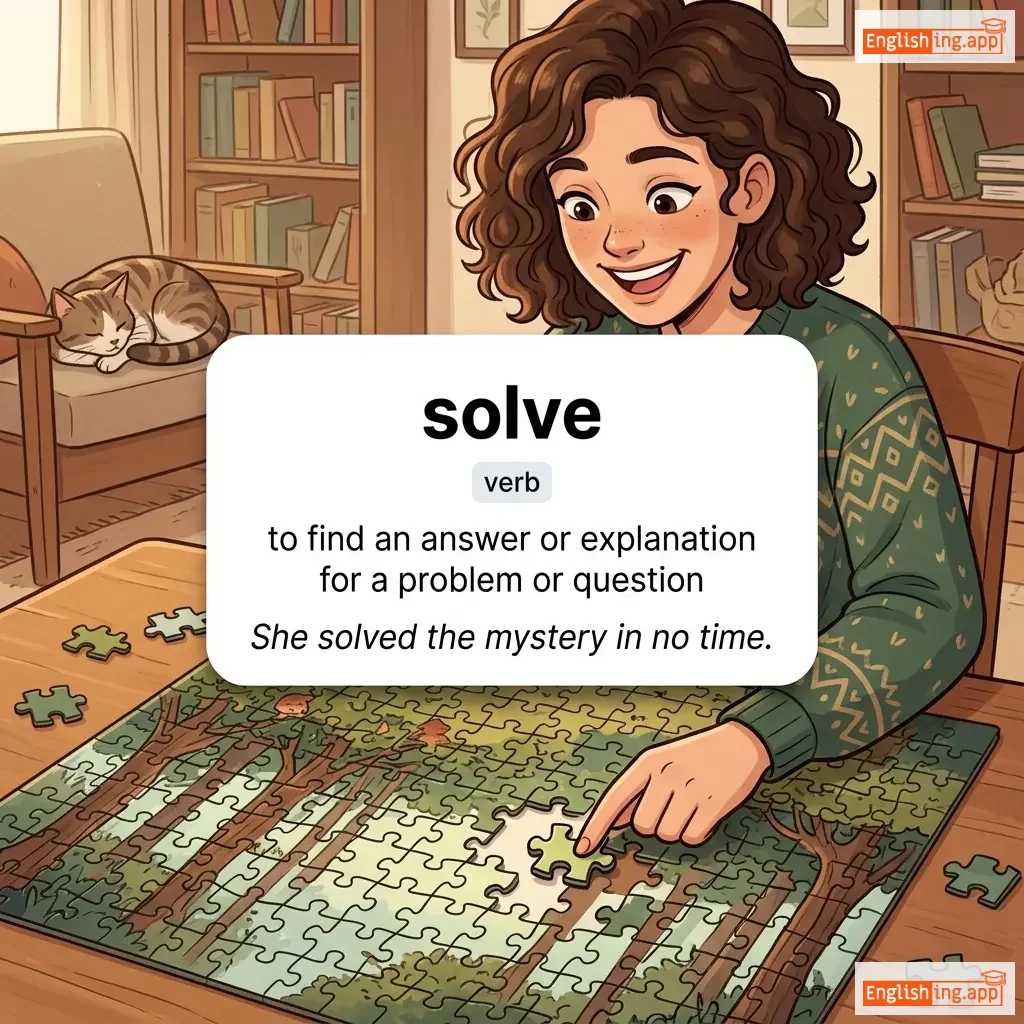
to find an answer or explanation for a problem or question
••••••
|
She solved the mystery in no time.
彼女はすぐに謎を解決しました。
••••••
|
彼女はすぐに謎を解決しました。
Kanojo wa sugu ni nazo o kaiketsu shimashita.
••••••
|
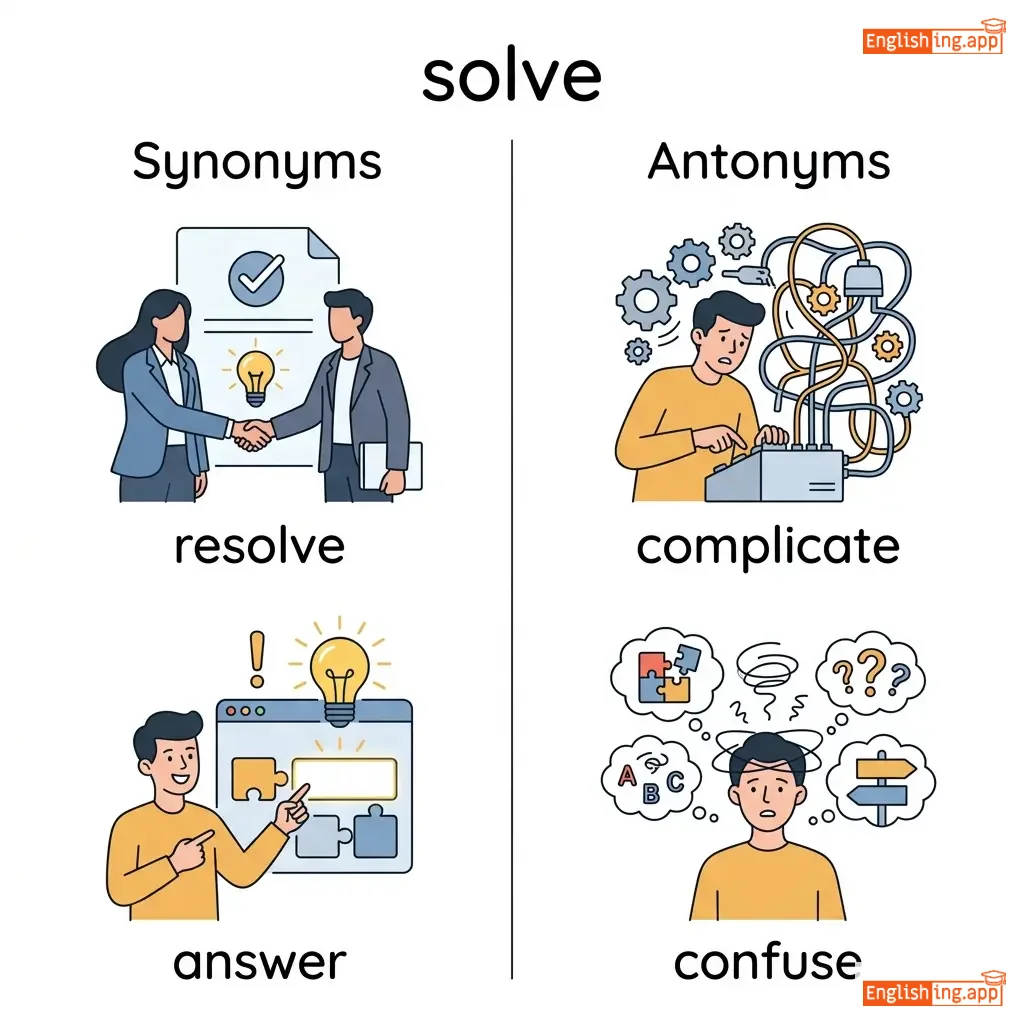
resolve, answer, figure out, work out
••••••
|
complicate, confuse
••••••
|
solve a problem, solve a puzzle, solve a question, solve an issue
••••••
|
問題を解決する時、解決するか答えを見つける!
••••••
|
|
#11975
💡
|
/səˈluːʃən/
noun
(ソリューション)
••••••
|
- •••••• |
解決策
kaiketsusaku
••••••
|
- •••••• | - •••••• | - •••••• | - •••••• |
a means of solving a problem or dealing with a difficult situation
••••••
|
The solution to the problem was simpler than we thought. |
問題の解決策は思ったより簡単でした。
Mondai no kaiketsusaku wa omotta yori kantan deshita.
••••••
|
answer, resolution, remedy, fix
••••••
|
problem, issue, dilemma
••••••
|
find a solution, offer a solution, solve the problem, quick solution
••••••
|
A 'solution' finds answers, just like '解決策' clears the path!
••••••
|
|
#11976
🪨
|
/ˈsɒlɪd/
adjective
(ソリッド)
••••••
|
- •••••• |
固体
kotai
••••••
|
- •••••• | - •••••• | - •••••• | - •••••• |
firm and stable in shape; not liquid or fluid
••••••
|
The ground was solid underfoot. |
地面は足元で固かった。
Jimen wa ashimoto de katakatta.
••••••
|
hard, firm, sturdy, unyielding
••••••
|
liquid, soft, weak
••••••
|
solid foundation, solid object, solid surface, solid structure
••••••
|
Solid rock under your feet means strength! 'Solid' and '固体' are strong!
••••••
|
|
#11977
🌱
|
/sɔɪl/
noun
(ソイル)
••••••
|
|
土壌
dojō
••••••
|
- •••••• | - •••••• | - •••••• | - •••••• |
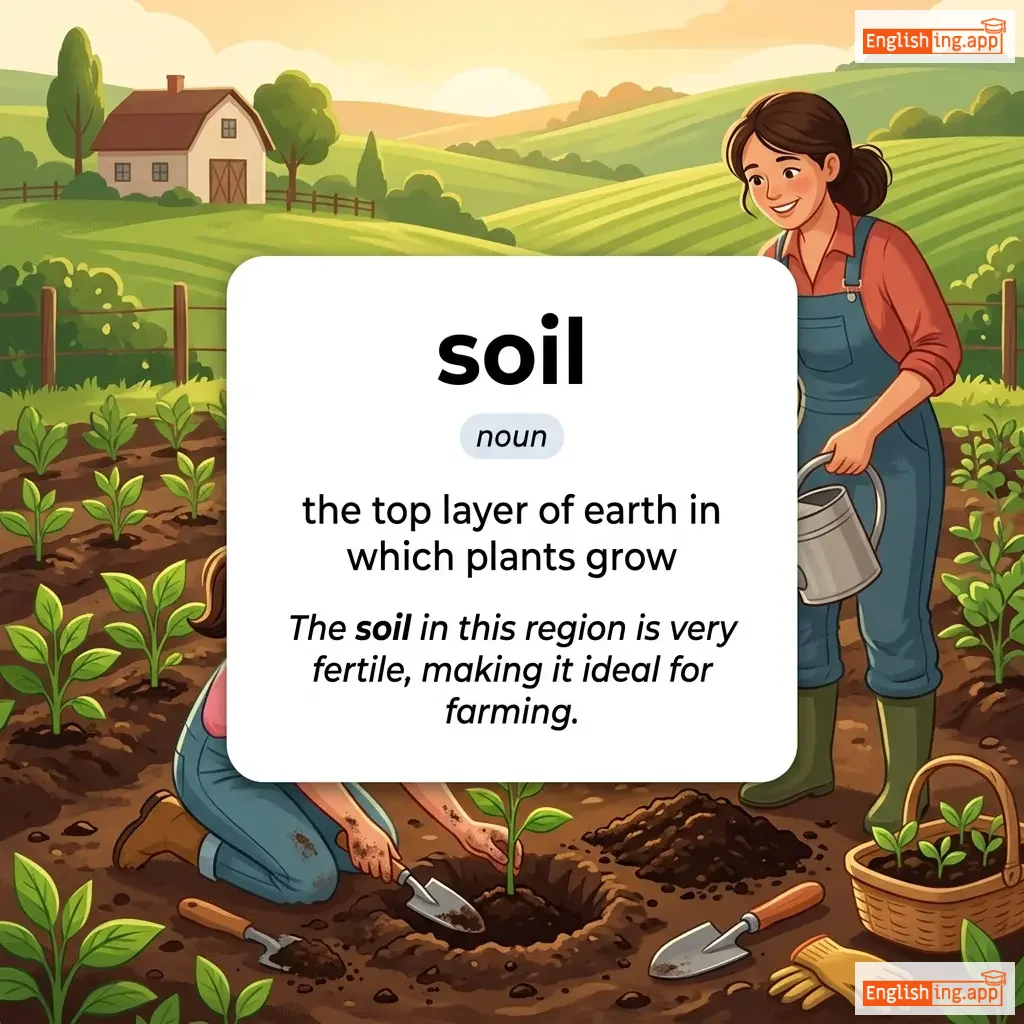
the top layer of earth in which plants grow
••••••
|
The soil in this region is very fertile, making it ideal for farming. |
この地域の土壌は非常に肥沃で、農業に理想的です。
Kono chiiki no dojō wa hijō ni hiyoku de, nōgyō ni risō-teki desu.
••••••
|
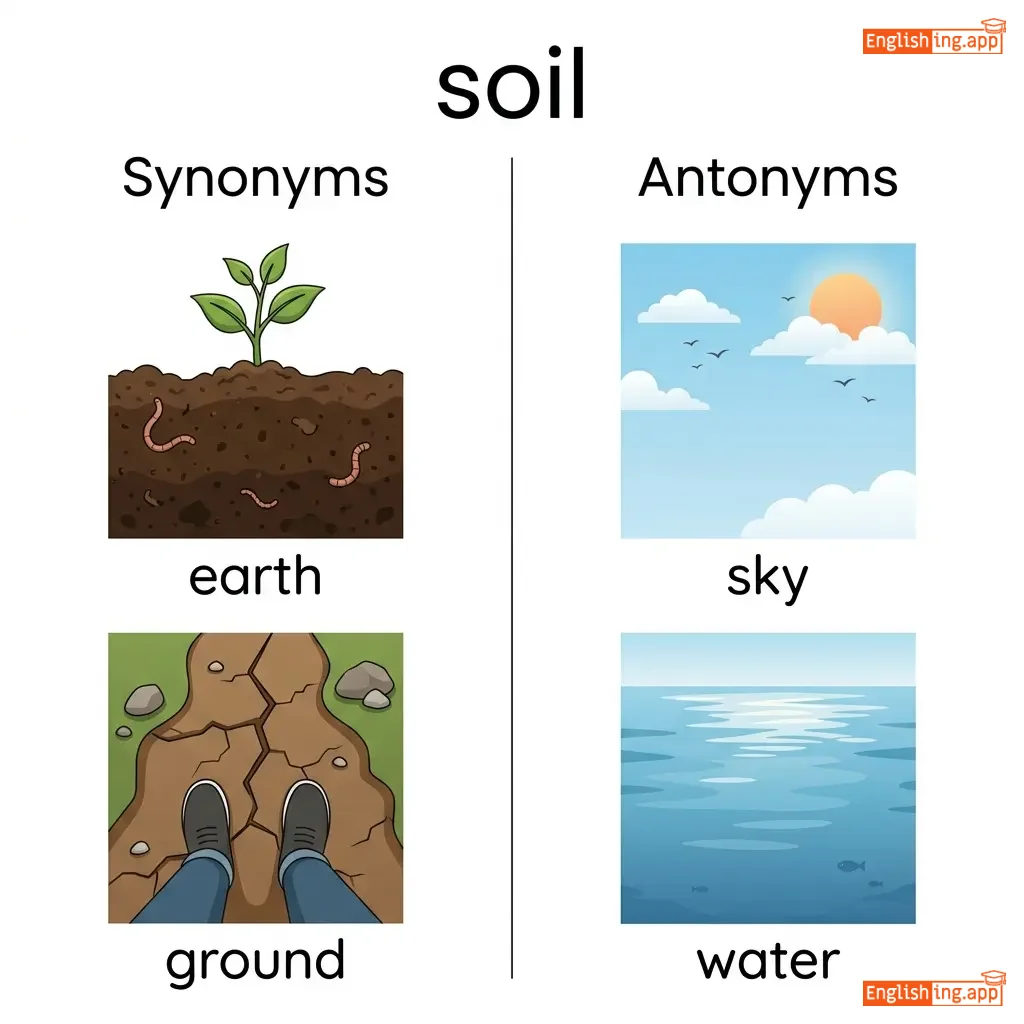
earth, ground, dirt, turf
••••••
|
sky, water
••••••
|
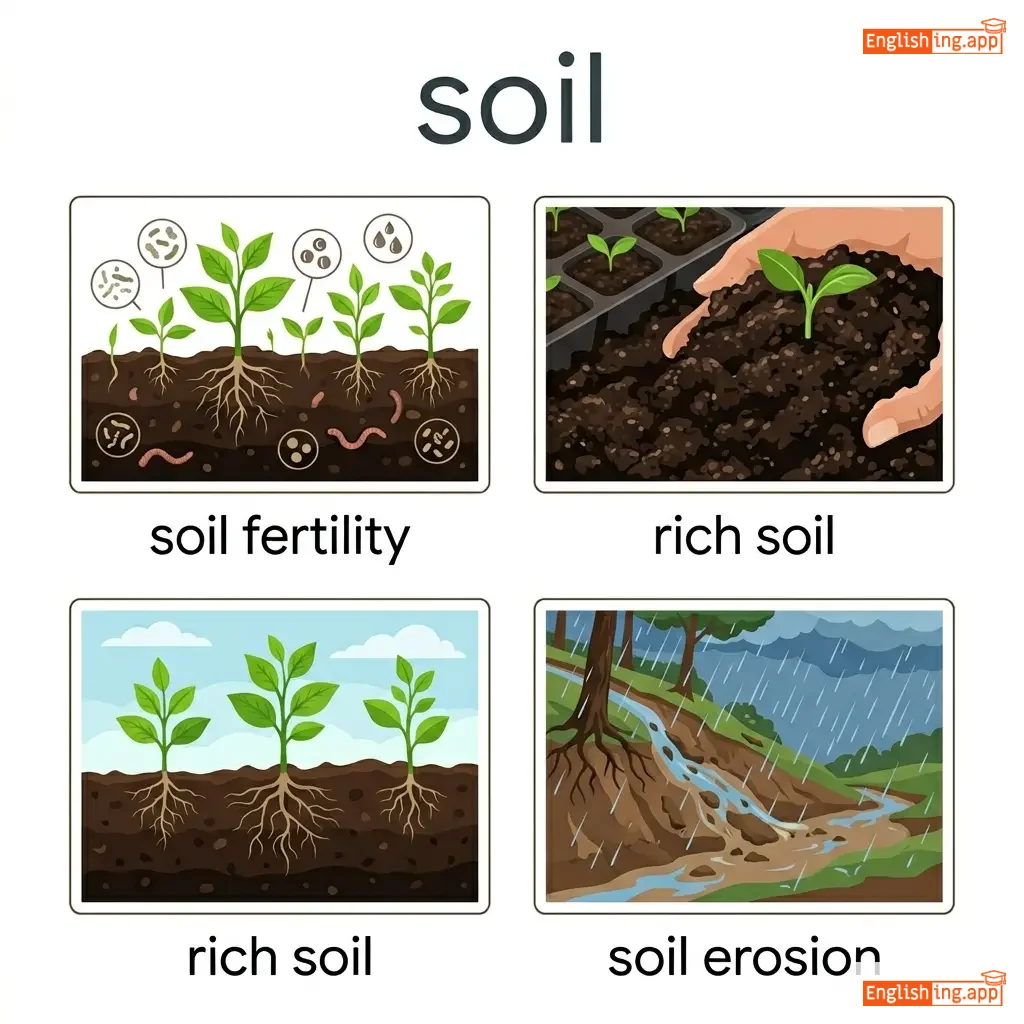
soil fertility, rich soil, soil erosion, soil conservation
••••••
|
Soil (土壌) は農業に不可欠です - Soil is essential for farming.
••••••
|
|
#11978
💻
|
/ˈsɒftweə/
noun
(ソフトウェア)
••••••
|
- •••••• |
ソフトウェア
sofuto wea
••••••
|
- •••••• | - •••••• | - •••••• | - •••••• |
the programs and other operating information used by a computer
••••••
|
He installed the software to enhance the performance of his computer.
彼はコンピュータの性能を向上させるためにソフトウェアをインストールしました。
••••••
|
彼はコンピュータの性能を向上させるためにソフトウェアをインストールしました。
Kare wa konpyu-ta no seinou wo koujou saseru tame ni sofuto wea wo insuto-ru shimashita.
••••••
|
program, application, system, platform
••••••
|
hardware
••••••
|
software development, software engineer, software update, software application
••••••
|
ソフトウェア - コンピュータの性能向上に重要です。 Software is important for improving the computer's performance.
••••••
|
|
#11979
🛏️
|
/sɒft/
adjective
(ソフト)
••••••
|
- •••••• |
柔らかい
yawarakai
••••••
|
- •••••• | - •••••• | - •••••• | - •••••• |
easy to mold, cut, compress, or fold; not hard or firm
••••••
|
The pillow was so soft that I fell asleep within minutes. |
枕はとても柔らかくて、数分以内に寝てしまいました。
Makura wa totemo yawarakakute, suū-fun inai ni nete shimaimashita.
••••••
|
gentle, tender, smooth, plush
••••••
|
hard, rough
••••••
|
soft texture, soft touch, soft material, soft voice
••••••
|
柔らかい (soft) 枕でぐっすり眠れる - Soft pillow helps you sleep deeply.
••••••
|
|
#11980
😴
|
/sliːp/
verb
(スリープ)
••••••
|
|
寝る
neru
••••••
|
slept
スレプト
••••••
|
slept
スレプト
••••••
|
sleeps
スリープス
••••••
|
sleeping
スリーピング
••••••
|
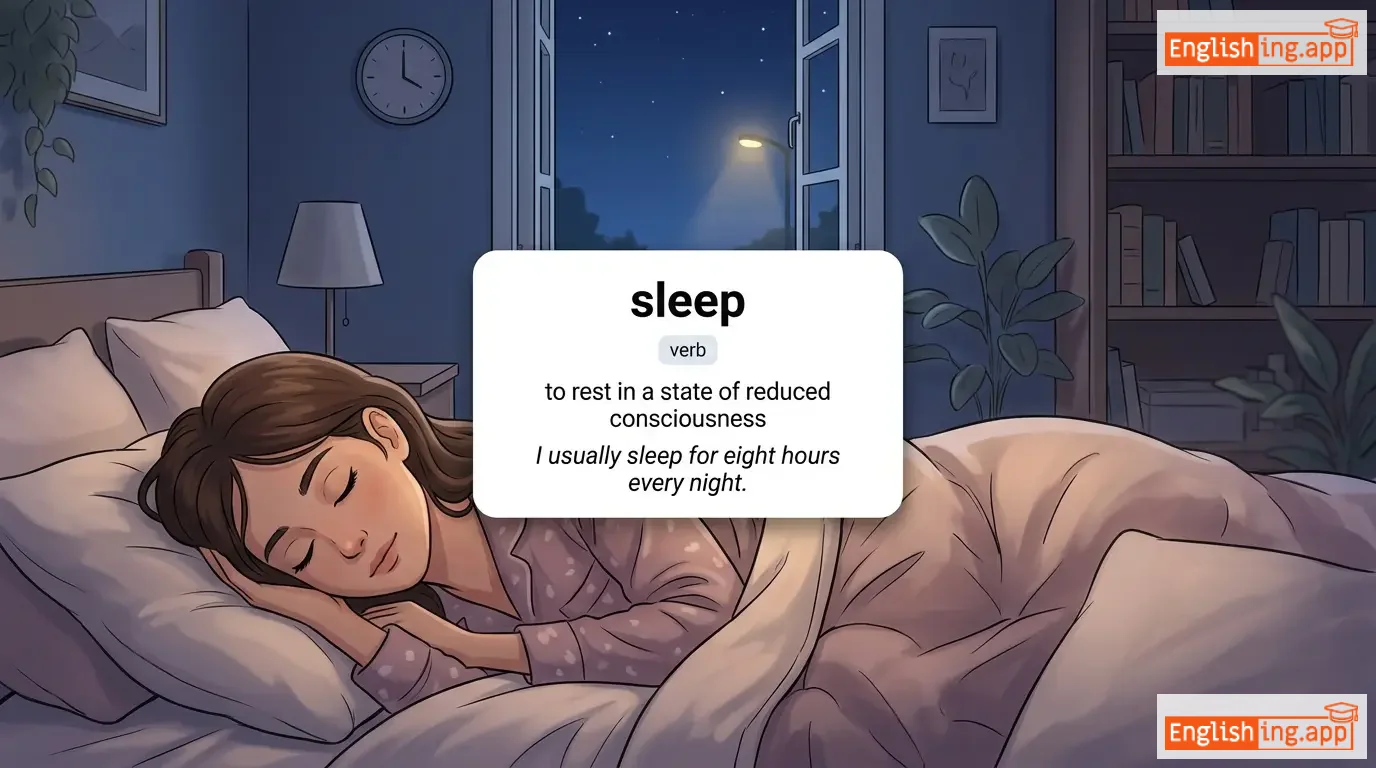
to rest in a state of reduced consciousness
••••••
|
I usually sleep for eight hours every night.
私は通常、毎晩8時間寝ます。
••••••
|
私は通常、毎晩8時間寝ます。
Watashi wa tsuujou, maiban hachi jikan nemasu.
••••••
|
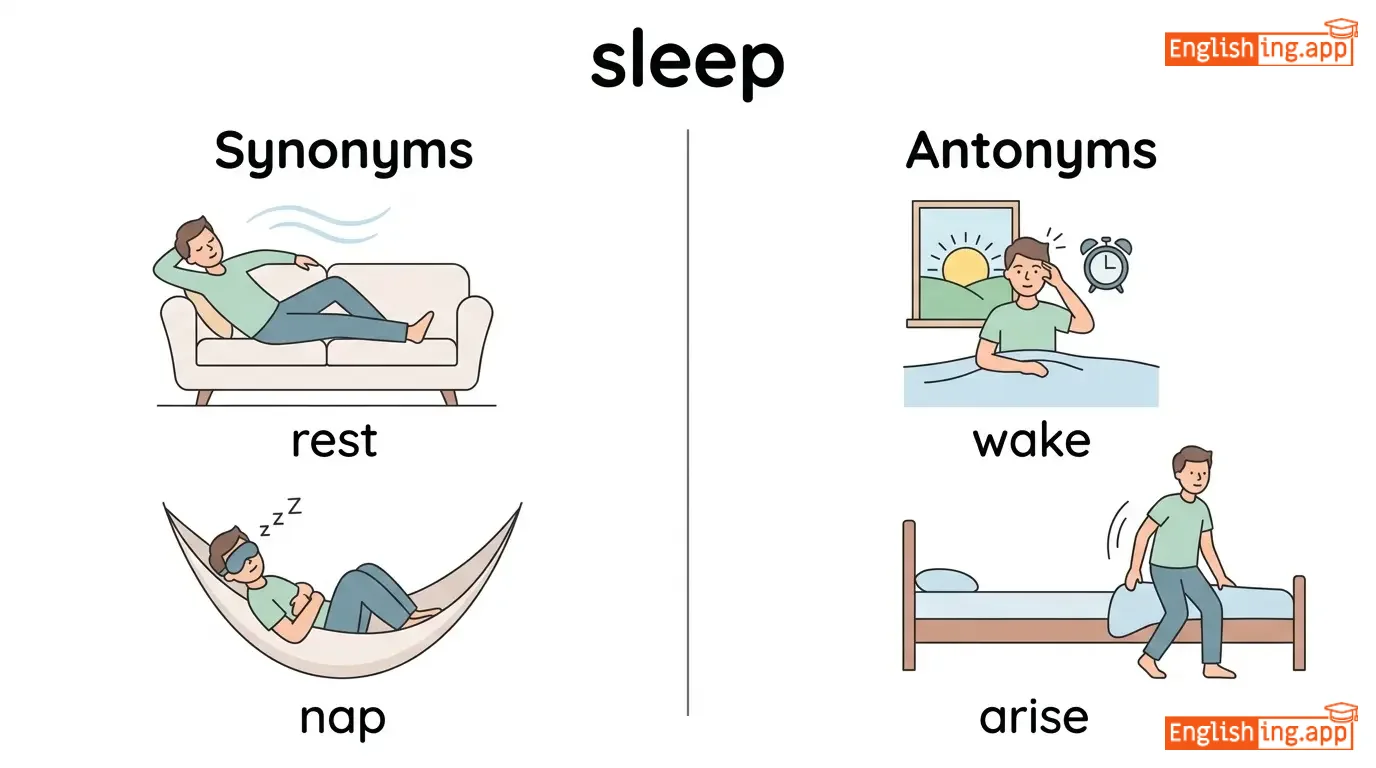
rest, nap, doze, slumber
••••••
|
wake, arise
••••••
|
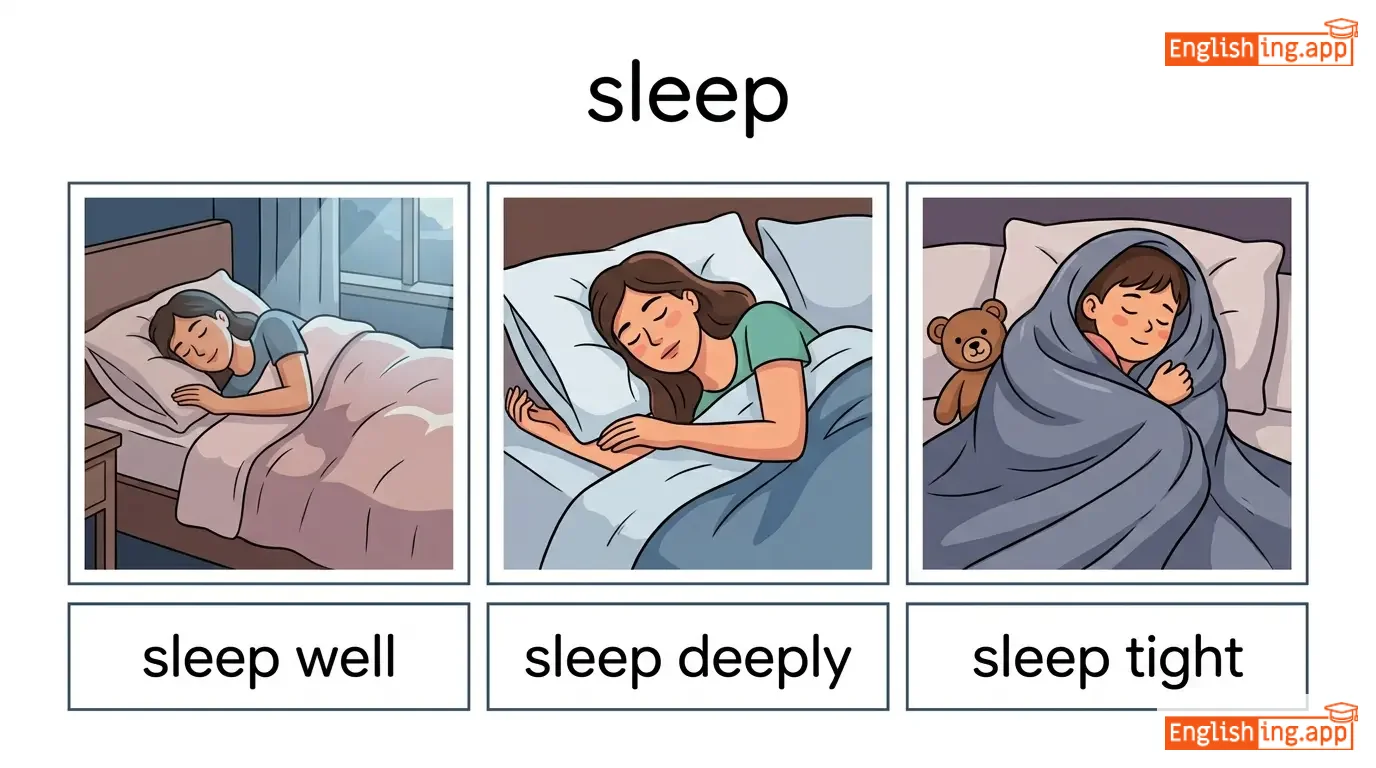
sleep well, sleep deeply, sleep tight
••••••
|
Imagine yourself sleeping deeply under a blanket, with the 'S' of sleep as your cozy pillow.
••••••
|
|
#11981
🌍
|
/ˈsəʊʃəl/
adjective
(ソーシャル)
••••••
|
- •••••• |
社会的
shakaiteki
••••••
|
- •••••• | - •••••• | - •••••• | - •••••• |
relating to society or its organization
••••••
|
She has a very social personality and enjoys meeting new people. |
彼女は非常に社交的な性格で、新しい人々に会うのが好きです。
Kanojo wa hijou ni shakaiteki na seikaku de, atarashii hitobito ni au no ga suki desu.
••••••
|
community-oriented, sociable, outgoing, friendly
••••••
|
antisocial, solitary
••••••
|
social media, social interaction, social event, social networking
••••••
|
社会的 (social) - 人々は会話を楽しみ、社会でつながることを愛しています。
••••••
|
|
#11982
⚽
|
/ˈsɒkər/
noun
(サッカー)
••••••
|
- •••••• |
サッカー
sakkaa
••••••
|
- •••••• | - •••••• | - •••••• | - •••••• |
a sport in which two teams of eleven players each try to score goals by kicking a ball into the opposing goal
••••••
|
He loves to play soccer with his friends.
彼は友達とサッカーをするのが好きです。
••••••
|
彼は友達とサッカーをするのが好きです。
Kare wa tomodachi to sakkaa o suru no ga suki desu.
••••••
|
football (in most countries), association football
••••••
|
rugby, basketball
••••••
|
play soccer, soccer field, soccer team
••••••
|
サッカー (soccer) = 世界中で愛されるスポーツ。
••••••
|
|
#11983
🙄
|
/ˈsoʊ kɔːld/
adjective
••••••
|
- •••••• | - •••••• | - •••••• | - •••••• | - •••••• | - •••••• |
referred to as or known by a particular name or title, often misleadingly
••••••
|
The so-called expert couldn't answer the question. |
- •••••• |
alleged, supposed, apparent, purported
••••••
|
actual, real
••••••
|
so-called expert, so-called leader, so-called solution
••••••
|
No •••••• |
|
#11984
😊
|
/soʊ/
adverb
(ソ)
••••••
|
- •••••• |
そんなに
sonnani
••••••
|
- •••••• | - •••••• | - •••••• | - •••••• |
to such a degree or extent
••••••
|
She was so happy with the gift.
彼女はプレゼントにとても喜んでいた。
••••••
|
彼女はプレゼントにとても喜んでいた。
Kanojo wa purezento ni totemo yorokonde ita.
••••••
|
very, extremely, exceedingly, incredibly
••••••
|
not, slightly, somewhat
••••••
|
so good, so bad, so tired, so far
••••••
|
so (そんなに) は何かの程度や範囲を示します。
••••••
|
|
#11985
✂️
|
/snæp/
verb
(スナップ)
••••••
|
|
折る
oru
••••••
|
snapped
スナップド
••••••
|
snapped
スナップド
••••••
|
snaps
スナップス
••••••
|
snapping
スナッピング
••••••
|
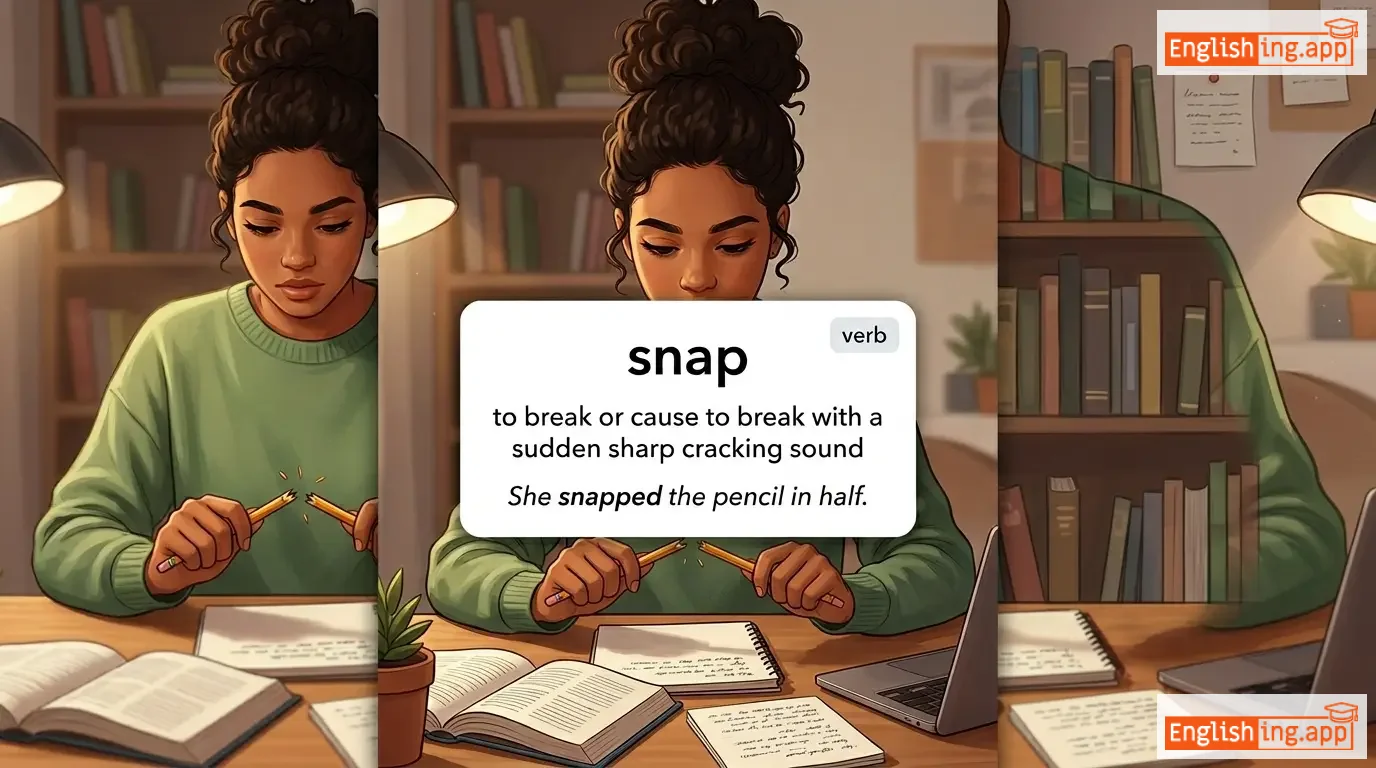
to break or cause to break with a sudden sharp cracking sound
••••••
|
She snapped the pencil in half.
彼女は鉛筆を半分に折った。
••••••
|
彼女は鉛筆を半分に折った。
Kanojo wa enpitsu o hanbun ni otta.
••••••
|
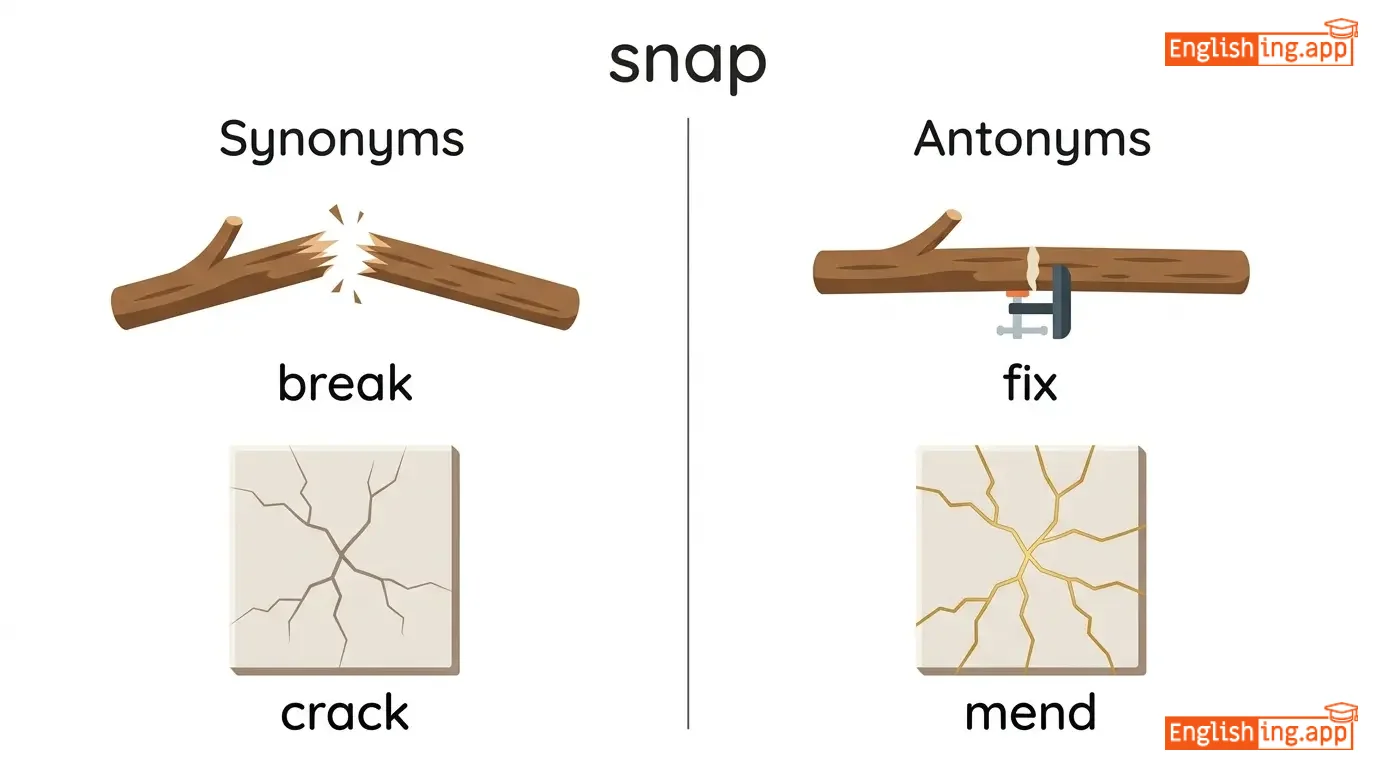
break, crack, fracture, split
••••••
|
fix, mend, repair
••••••
|
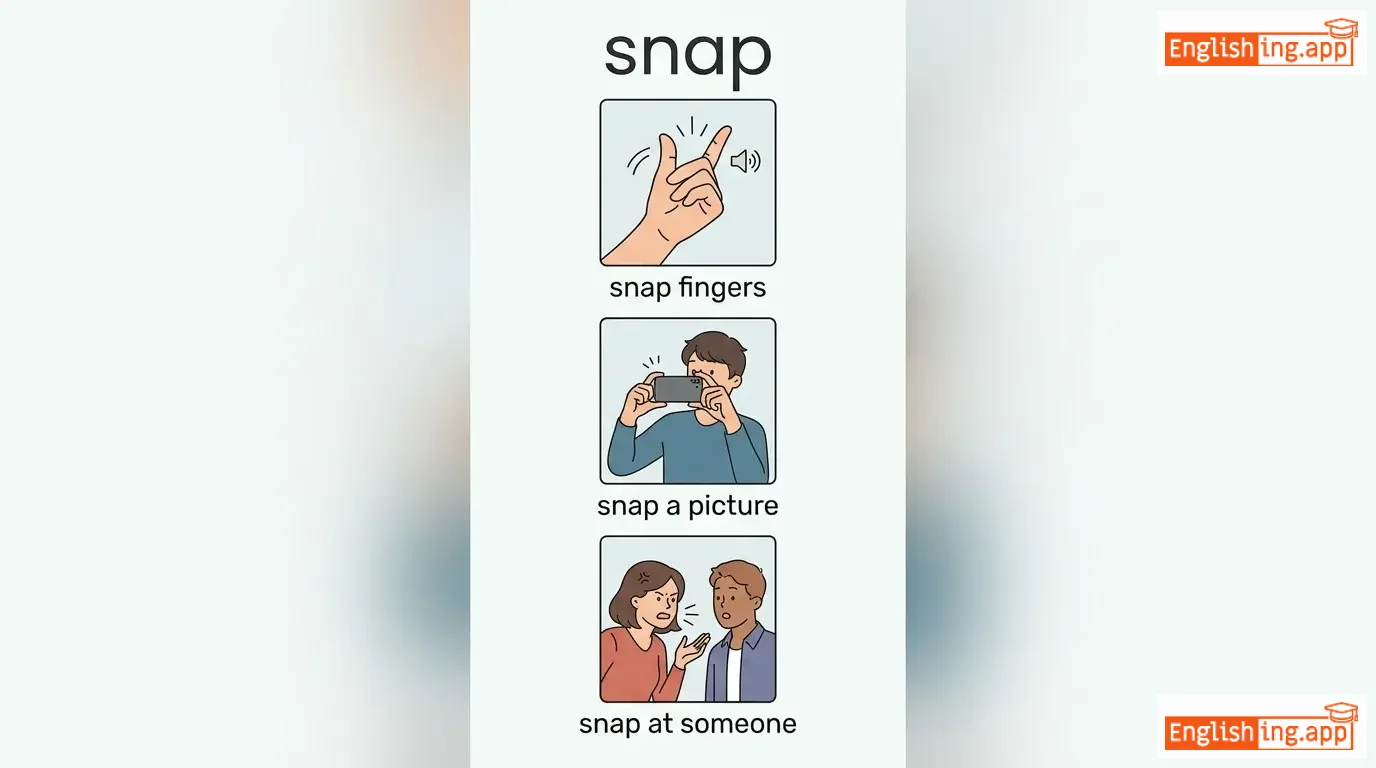
snap fingers, snap a picture, snap at someone, snap of a twig
••••••
|
鉛筆 (enpitsu) がスナップ (snap) で折れる音。
••••••
|
|
#11986
🌫️
|
/smoʊk/
noun
(スモーク)
••••••
|
|
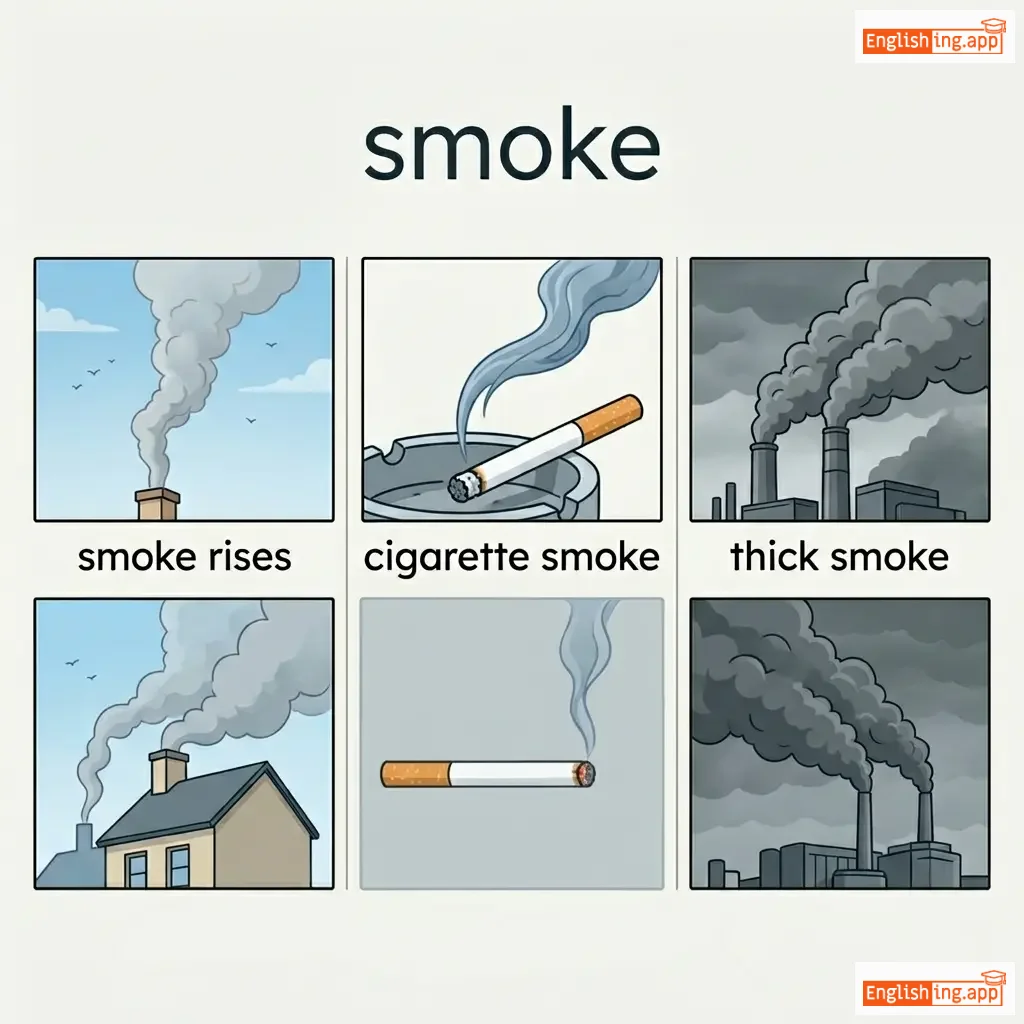
煙
kemuri
••••••
|
- •••••• | - •••••• | - •••••• | - •••••• |
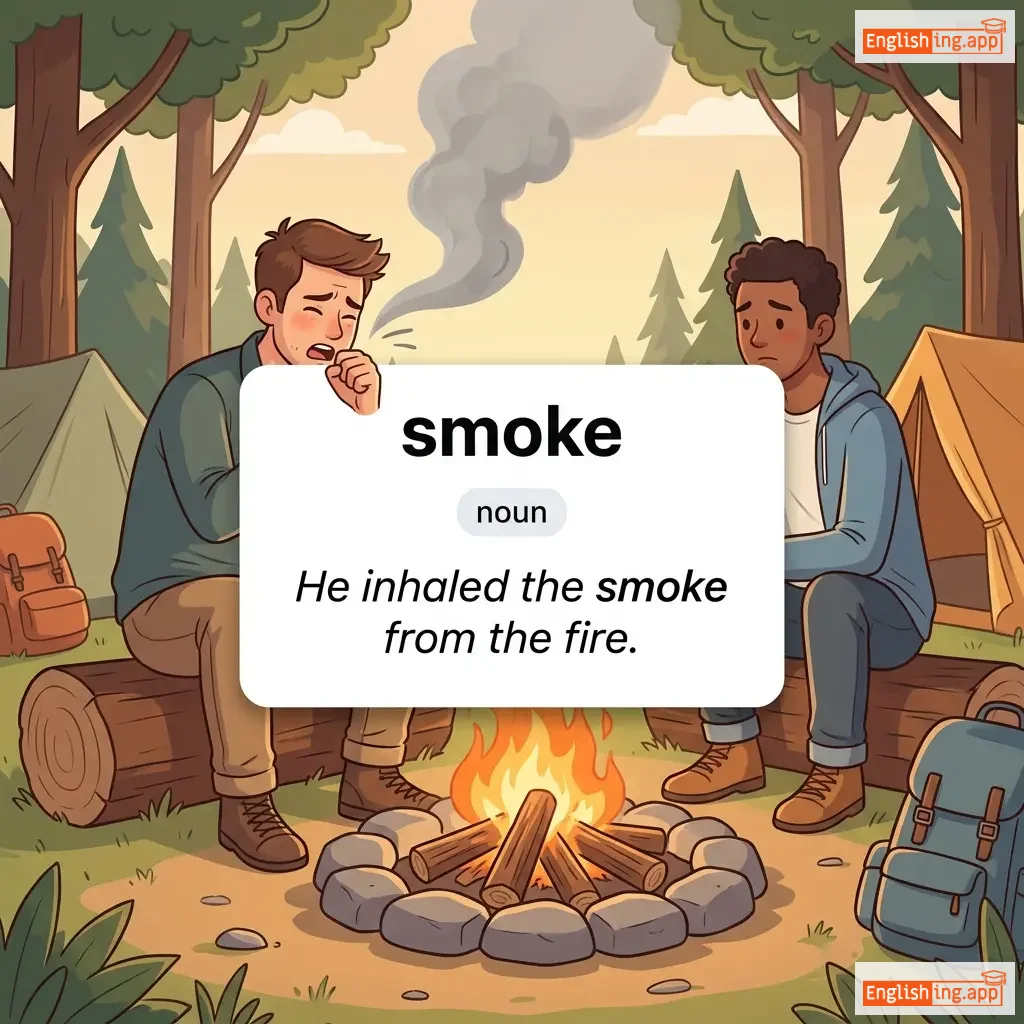
a visible suspension of fine particles of matter in the air, typically produced by combustion
••••••
|
He inhaled the smoke from the fire. |
彼は火事から煙を吸い込んだ。
Kare wa kaji kara kemuri wo suikonda.
••••••
|
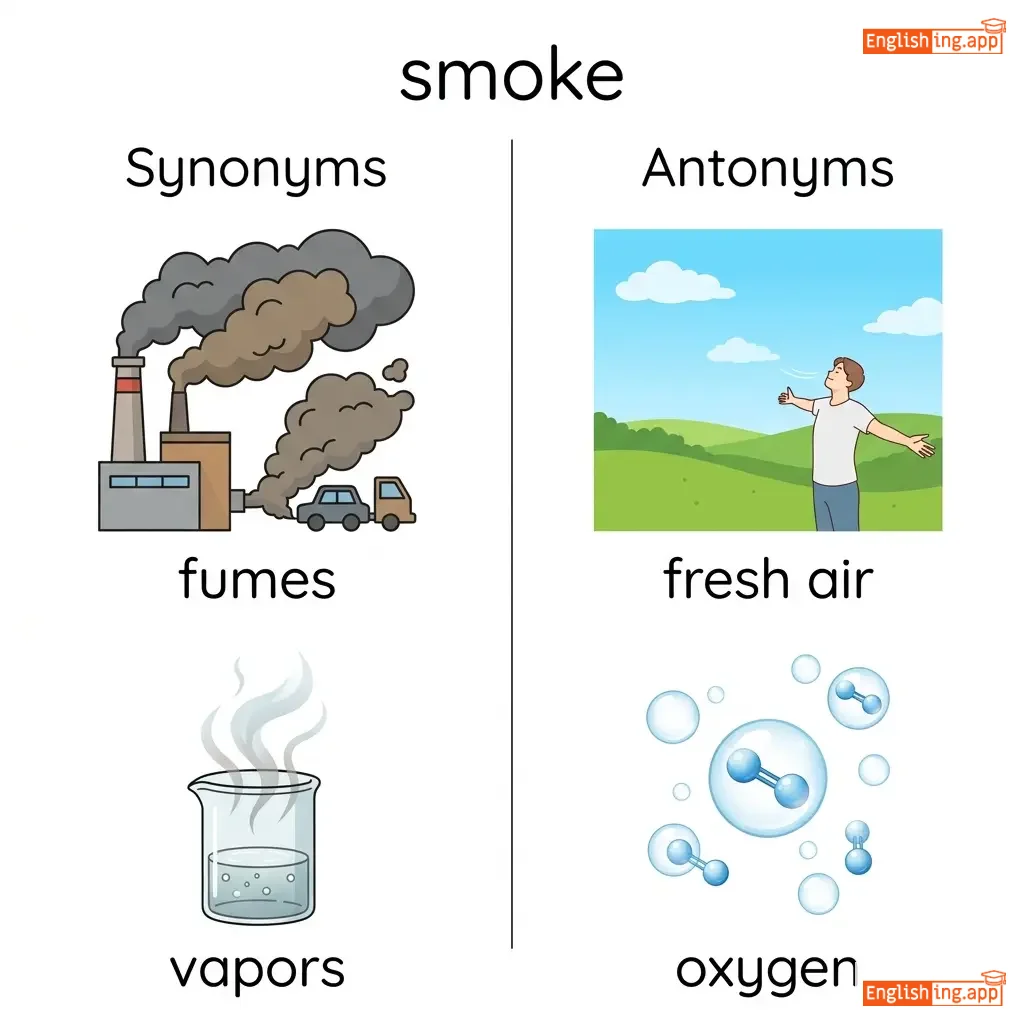
fumes, vapors, smog, exhaust
••••••
|
fresh air, oxygen
••••••
|
smoke rises, cigarette smoke, thick smoke, smoke inhalation
••••••
|
煙 (kemuri) は煙 (smoke) のように上昇する。
••••••
|
|
#11987
😊
|
/smaɪl/
verb
(スマイル)
••••••
|
- •••••• |
微笑み
hohoemi
••••••
|
smiled
スマイルド
••••••
|
smiled
スマイルド
••••••
|
smiles
スマイルズ
••••••
|
smiling
スマイリング
••••••
|
to express happiness or friendliness by turning the corners of the mouth upwards
••••••
|
She smiled when she saw the gift.
彼女はプレゼントを見て微笑んだ。
••••••
|
彼女はプレゼントを見て微笑んだ。
Kanojo wa purezento o mite hohoenda.
••••••
|
grin, beam, laugh, show teeth
••••••
|
frown, scowl
••••••
|
smile brightly, smile warmly, smile at someone
••••••
|
笑顔は心の中で芽生える友情と喜びの証です。
••••••
|
|
#11988
👃
|
/smɛl/
verb
(スメル)
••••••
|
|
嗅ぐ
kagu
••••••
|
smelled
スメルド
••••••
|
smelled
スメルド
••••••
|
smells
スメルズ
••••••
|
smelling
スメリング
••••••
|
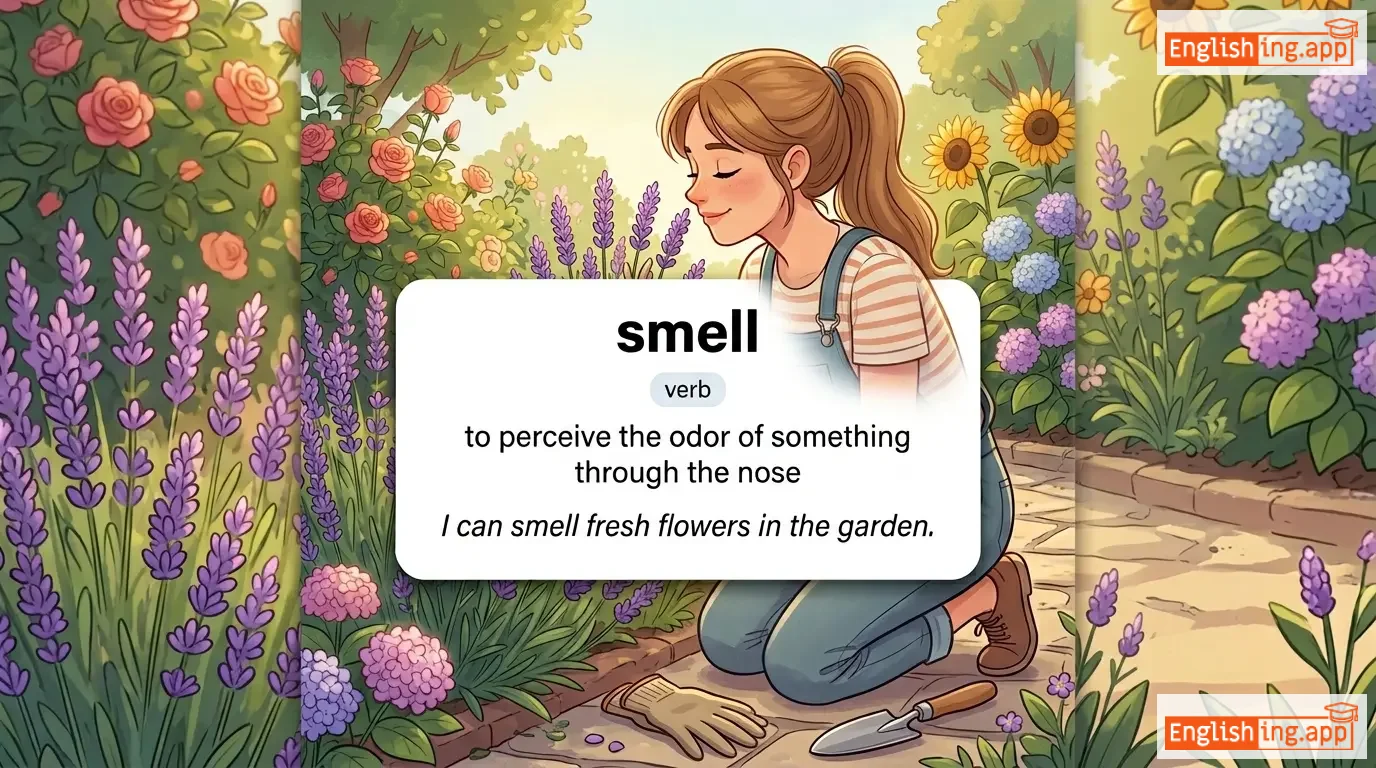
to perceive the odor of something through the nose
••••••
|
I can smell fresh flowers in the garden.
私は庭で新鮮な花の香りを嗅ぐことができます。
••••••
|
私は庭で新鮮な花の香りを嗅ぐことができます。
Watashi wa niwa de shinsen na hana no kaori o kagu koto ga dekimasu.
••••••
|
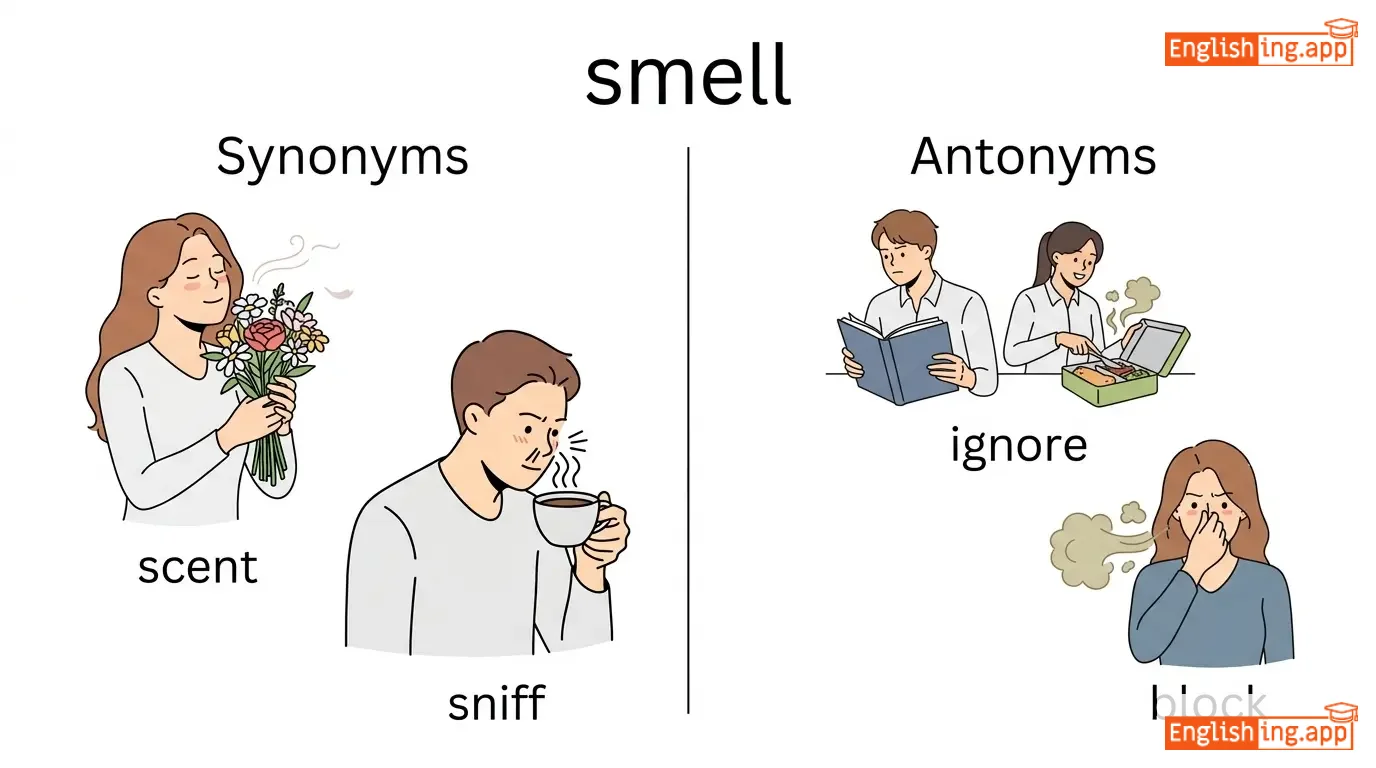
scent, sniff, detect, whiff
••••••
|
ignore, block
••••••
|
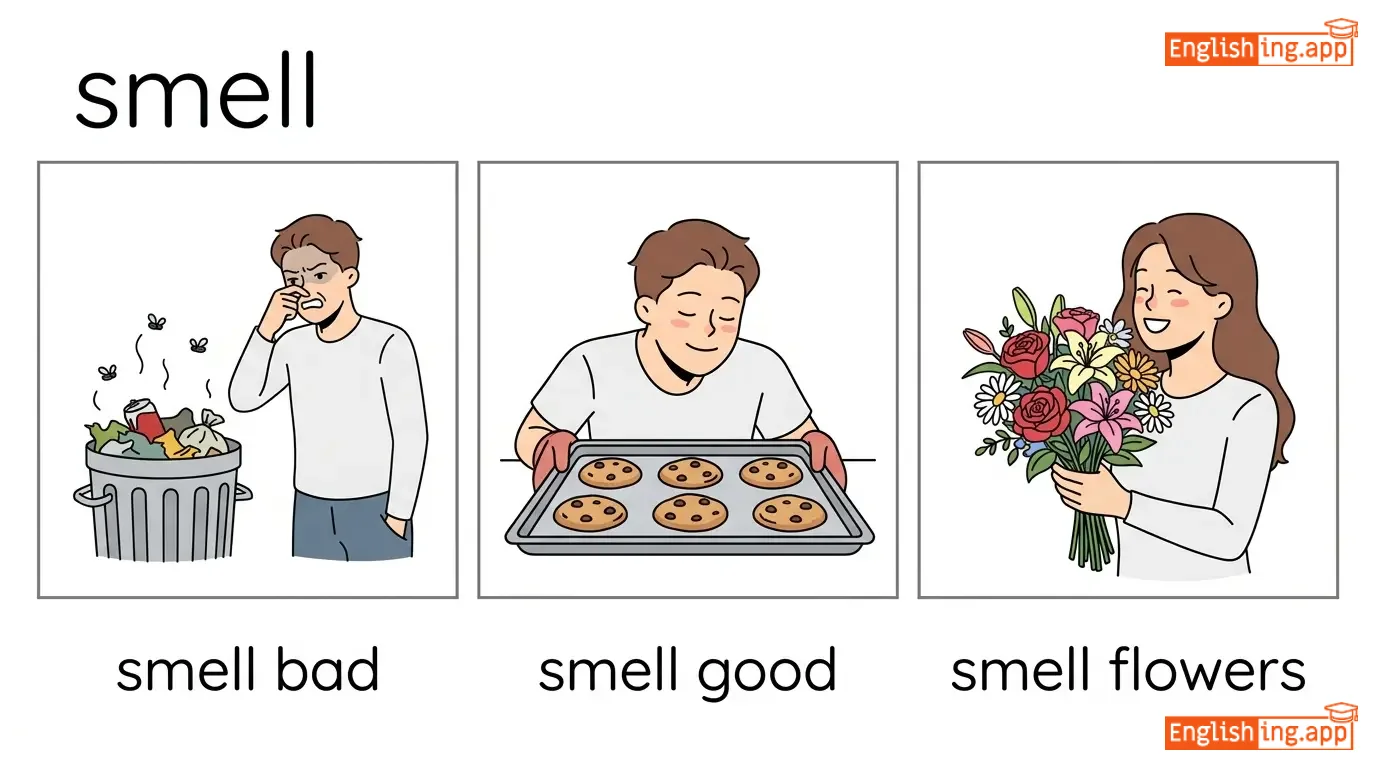
smell bad, smell good, smell flowers, smell the air
••••••
|
Smelling fresh flowers is a way to bring pleasant scents into your life.
••••••
|
|
#11989
🦥
|
/ˈsloʊli/
adverb
(ゆっくり)
••••••
|
- •••••• |
ゆっくり
yukkuri
••••••
|
- •••••• | - •••••• | - •••••• | - •••••• |
in a slow manner
••••••
|
She walked slowly to the door.
彼女はゆっくりとドアに向かって歩いた。
••••••
|
彼女はゆっくりとドアに向かって歩いた。
Kanojo wa yukkuri to doa ni mukatte aruita.
••••••
|
gradually, leisurely, gently, sluggishly
••••••
|
quickly, rapidly, fast
••••••
|
move slowly, speak slowly, slowly approach
••••••
|
Imagine taking a slow, deep breath, then letting it out slowly, savoring each moment.
••••••
|
|
#11990
🐢
|
/sloʊ/
adjective
(スロー)
••••••
|
- •••••• |
遅い
osoi
••••••
|
- •••••• | - •••••• | - •••••• | - •••••• |
moving or happening at a low speed
••••••
|
The car moved slowly down the street. |
車は通りをゆっくり走っていました。
Kuruma wa toori o yukkuri hashitte imashita.
••••••
|
leisurely, gradual, sluggish, lazy
••••••
|
fast, quick, speedy
••••••
|
slow down, slow pace, slow movement, slow progress
••••••
|
A slow-moving turtle (カメ) reminds you of '遅い'!
••••••
|
|
#11991
👟
|
/slɪp/
verb
(スリップ)
••••••
|
- •••••• |
滑る
suberu
••••••
|
slipped
スリップド
••••••
|
slipped
スリップド
••••••
|
slips
スリップス
••••••
|
slipping
スリッピング
••••••
|
to lose balance or fall while moving, or to accidentally slide from a position
••••••
|
She slipped on the wet floor and fell.
彼女は濡れた床で滑って転んだ。
••••••
|
彼女は濡れた床で滑って転んだ。
Kanojo wa nureta yuka de subette koronda.
••••••
|
slide, fall, stumble, trip
••••••
|
stand, stabilize, remain
••••••
|
slip on ice, slip down, slip away, slip through
••••••
|
Slipping on a slippery floor is a 'slip' in the story of your day.
••••••
|
|
#11992
🪶
|
/ˈslaɪtli/
adverb
(スライトリー)
••••••
|
- •••••• |
少し
sukoshi
••••••
|
- •••••• | - •••••• | - •••••• | - •••••• |
to a small degree or extent
••••••
|
The temperature has slightly increased today.
今日、温度は少し上昇しました。
••••••
|
今日、温度は少し上昇しました。
Kyou, ondo wa sukoshi joushou shimashita.
••••••
|
mildly, a little, marginally, somewhat
••••••
|
greatly, significantly
••••••
|
slightly different, slightly better, slightly worse
••••••
|
Think of something slightly tilted as 'slightly' off-center.
••••••
|
|
#11993
🛝
|
/slaɪd/
verb
(スライド)
••••••
|
- •••••• |
滑る
suberu
••••••
|
slid
スライド
••••••
|
slid
スライド
••••••
|
slides
スライドス
••••••
|
sliding
スライディング
••••••
|
to move smoothly along a surface while maintaining continuous contact with it
••••••
|
The children love to slide down the playground slide.
子供たちは遊び場のスライドを滑るのが大好きです。
••••••
|
子供たちは遊び場のスライドを滑るのが大好きです。
Kodomotachi wa asobiba no suraido o suberu no ga daisuki desu.
••••••
|
glide, slip, coast, skid
••••••
|
halt, stop
••••••
|
slide down, slide on, slide off
••••••
|
滑るようにスライドを降りるシーンを想像して!
••••••
|
|
#11994
🍞
|
/slaɪs/
noun
(スライス)
••••••
|
- •••••• |
スライス
suraizu
••••••
|
- •••••• | - •••••• | - •••••• | - •••••• |
a thin, flat piece of food or other substance
••••••
|
I cut the bread into slices.
私はパンをスライスに切りました。
••••••
|
私はパンをスライスに切りました。
Watashi wa pan o suraizu ni kirimashita.
••••••
|
portion, piece, wedge, segment
••••••
|
whole
••••••
|
slice of bread, slice of cake, slice of pizza
••••••
|
スライスしたパンは、簡単に切り分けて食べられます。
••••••
|
Vocabulary Quiz
Test your vocabulary by matching words with their translations or meanings.
Login to take the quiz
Comments (0)
Share your thoughts and join the discussion.
Join the discussion by logging in
Login to CommentNo comments yet
Be the first to share your thoughts!