

翻訳
過去
過去分詞
三人称単数
動名詞
意味
例文
例文の翻訳
同義語
対義語
コロケーション
ニーモニック
Swipe left or right, or use the buttons. Tap image to zoom.
例文の翻訳
単語
Lesson 294Lesson 294 - マスクトグル
|
絵文字
|
単語 | Images | 翻訳 | 過去 | 過去分詞 | 三人称単数 | 動名詞 | 意味 | 例文 | 例文の翻訳 | 表現例 | 表現例の意味 | 表現例の翻訳 | 同義語 | 対義語 | コロケーション | ニーモニック |
|---|---|---|---|---|---|---|---|---|---|---|---|---|---|---|---|---|---|
|
#8790
🌊
|
/taɪd/
noun
(taɪd)
••••••
|
- •••••• |
潮の干満
shio no kanman
••••••
|
- •••••• | - •••••• | - •••••• | - •••••• |
the regular rise and fall of the sea caused by the moon and sun's gravity; a powerful flow or movement
••••••
|
The fisherman waited for the tide to come in. |
漁師は潮の干満が来るのを待っていました。
Gyoshi wa shio no kanman ga kuru no o matte imashita.
••••••
|
turn the tide |
to cause a reversal of fortune or change in direction
••••••
|
潮流を変える
chōryū o kaeru
••••••
|
current, flow, surge, stream, wave
••••••
|
ebb, stillness, stagnation
••••••
|
high tide, low tide, rising tide, ebb tide
••••••
|
潮の干満 = 海の周期的な変化 - 潮の干満は時間とともに繰り返し来る。
••••••
|
|
#8791
🛠️
|
/ˈtɪŋkər/
verb
(ティンカー)
••••••
|
- •••••• |
いじる
ijiru
••••••
|
tinkered
ティンカード
••••••
|
tinkered
ティンカード
••••••
|
tinkers
ティンカーズ
••••••
|
tinkering
ティンカリング
••••••
|
to make small adjustments or repairs to something, often experimentally or imperfectly
••••••
|
He likes to tinker with old radios in his garage.
彼はガレージで古いラジオをいじるのが好きです。
••••••
|
彼はガレージで古いラジオをいじるのが好きです。
Kare wa gareji de furui rajio o ijiru no ga suki desu.
••••••
|
tinker with
いじる
••••••
|
to make small changes or adjustments without a definite plan
••••••
|
いじる
ijiru
••••••
|
fiddle, adjust, repair, modify, fix
••••••
|
destroy, neglect, abandon
••••••
|
tinker with machines, tinker endlessly, tinker around, tinker project
••••••
|
Tinker (いじる) = 何かを修理し、いじって楽しむ
••••••
|
|
#8792
🎨
|
/tɪndʒ/
noun, verb
(ティンジ)
••••••
|
- •••••• |
色や味の軽い加え方
iro ya aji no karui kuwaekata
••••••
|
tinged
ティンジド
••••••
|
tinged
ティンジド
••••••
|
tinges
ティンジズ
••••••
|
tinging
ティンジング
••••••
|
a slight added color, flavor, or feeling; to add a slight amount of color or quality
••••••
|
Her voice was tinged with sadness.
彼女の声は悲しみでティンジドだった。
••••••
|
彼女の声は悲しみでティンジドだった。
Kanojo no koe wa kanashimi de tinged datta.
••••••
|
- •••••• | - •••••• | - •••••• |
hint, shade, trace, tint
••••••
|
colorless, plain
••••••
|
tinge of sadness, tinged with anger, tinged with color
••••••
|
Tingeは色の一部を加えることを意味します—小さな色のタッチのように。
••••••
|
|
#8793
💧
|
/ˈtɪŋktʃər/
noun
(tinkuchā)
••••••
|
- •••••• |
わずかな痕跡、薬をアルコールに溶かして作られた薬
wazuka na konseki, kusuri o arukōru ni tokashite tsukurareta kusuri
••••••
|
- •••••• | - •••••• | - •••••• | - •••••• |
a slight trace of something; a medicine made by dissolving a drug in alcohol
••••••
|
There was a tincture of sadness in her smile.
there was a tincture of sadness in her smile
••••••
|
彼女の笑顔にはわずかな悲しみの痕跡があった。
kanojo no egao ni wa wazuka na kanashimi no konseki ga atta.
••••••
|
- •••••• | - •••••• | - •••••• |
trace, hint, touch, essence
••••••
|
abundance, flood
••••••
|
tincture of iodine, tincture of sadness, tincture in medicine
••••••
|
Tinctureはわずかな痕跡のように、微細な感情のように感じられます。
••••••
|
|
#8794
😨
|
/ˈtɪmərəs/
adjective
(ティモラス)
••••••
|
- •••••• |
臆病な
okubyō na
••••••
|
- •••••• | - •••••• | - •••••• | - •••••• |
showing or suffering from nervousness, fear, or lack of confidence
••••••
|
The timorous student hesitated to ask the teacher a question.
その臆病な学生は、教師に質問するのをためらいました。
••••••
|
その臆病な学生は、教師に質問するのをためらいました。
Sono okubyō na gakusei wa, kyōshi ni shitsumon suru no o tamerarimashita.
••••••
|
- •••••• | - •••••• | - •••••• |
fearful, shy, hesitant, unconfident
••••••
|
courageous, daring, fearless
••••••
|
timorous attitude, timorous voice, timorous glance
••••••
|
Timorous は臆病な意味—恥ずかしがり屋のように。
••••••
|
|
#8795
😶
|
/tɪˈmɪdəti/
noun
(ティミディティ)
••••••
|
- •••••• |
内気
uchiki
••••••
|
- •••••• | - •••••• | - •••••• | - •••••• |
lack of courage or self-confidence
••••••
|
His timidity kept him from speaking up during the meeting. |
彼の内気さは会議で話すことを妨げた。
Kare no uchikisa wa kaigi de hanasu koto o samatage ta.
••••••
|
- •••••• | - •••••• | - •••••• |
shyness, fearfulness, meekness, hesitation
••••••
|
bravery, boldness, confidence
••••••
|
timidity in speech, overcome timidity, show timidity
••••••
|
Timidityは内気、話すのが苦手な人!
••••••
|
|
#8796
🐭
|
/ˈtɪmɪd/
adjective
(ティミッド)
••••••
|
- •••••• |
臆病
yobyou
••••••
|
- •••••• | - •••••• | - •••••• | - •••••• |
lacking courage or confidence; easily frightened
••••••
|
The timid child hid behind his mother when strangers approached. |
臆病な子供は見知らぬ人が近づくと、母親の後ろに隠れました。
Yobyou na kodomo wa mishiranu hito ga chikaduku to, hahaoya no ushiro ni kakuremashita.
••••••
|
timid as a mouse |
extremely shy or lacking courage
••••••
|
鼠のように臆病
nezumi no you ni yobyou
••••••
|
shy, fearful, bashful, hesitant, meek
••••••
|
bold, confident, brave
••••••
|
timid child, timid smile, timid approach, timid nature
••••••
|
臆病は臆病—例えば、臆病な人は人前で話すのが怖い。
••••••
|
|
#8797
🏚️
|
/ˈtaɪmwɔːrn/
adjective
(taimworn)
••••••
|
- •••••• |
時間によって擦り切れた
jikan ni yotte surikireta
••••••
|
- •••••• | - •••••• | - •••••• | - •••••• |
Worn or impaired by age; old and used many times.
••••••
|
The timeworn house carried a sense of history and nostalgia. |
時間によって擦り切れた家は、歴史と郷愁を感じさせた。
Jikan ni yotte surikireta ie wa, rekishi to kyoushuu wo kanjiseta.
••••••
|
- •••••• | - •••••• | - •••••• |
old, aged, ancient, worn-out, shabby
••••••
|
new, fresh, modern
••••••
|
timeworn idea, timeworn building, timeworn story, timeworn tradition
••••••
|
Timeworn = Time + Worn, 時間が物を擦り切らせる。
••••••
|
|
#8798
⏰
|
/ˈtaɪmli/
adjective
(タイムリー)
••••••
|
- •••••• |
適時の
tekiji no
••••••
|
- •••••• | - •••••• | - •••••• | - •••••• |
Done or occurring at a favorable or useful time; opportune.
••••••
|
Her timely advice helped me avoid a big mistake.
ハー タイムリー アドバイス ヘルプド ミー アボイド ア ビッグ ミステイク。
••••••
|
彼女の適時の助言は、私が大きな間違いを避けるのに役立った。
kanojo no tekiji no jogen wa watashi ga ookina machigai o sakeru no ni yakudatta.
••••••
|
timely intervention
タイムリー インターベンション
••••••
|
An action taken at the right moment to prevent harm or improve a situation
••••••
|
適時の介入
tekiji no kainyu
••••••
|
prompt, punctual, appropriate, suitable, convenient
••••••
|
late, delayed, untimely
••••••
|
timely manner, timely advice, timely response, timely action
••••••
|
Timely sounds like 'time-ly' → in Japanese 'タイムリー' means done at the right time.
••••••
|
|
#8799
🎶
|
/ˈtæmbər/ or /ˈtɪmbər/
noun
(タンブル)
••••••
|
- •••••• |
音色
onsoku
••••••
|
- •••••• | - •••••• | - •••••• | - •••••• |
The character or quality of a musical sound or voice as distinct from its pitch and intensity.
••••••
|
Her voice had a warm timbre that soothed the audience. |
彼女の声には温かみのある音色があり、聴衆を落ち着かせた。
Kanojo no koe ni wa atatakai no aru onsoku ga ari, choushuu o ochitsukase ta.
••••••
|
- •••••• | - •••••• | - •••••• |
tone, sound quality, resonance, pitch, voice color
••••••
|
monotone, flatness
••••••
|
rich timbre, warm timbre, vocal timbre, instrument timbre
••••••
|
Timbre は timber のように聞こえますが、ここでは音の色を意味します。
••••••
|
|
#8800
🌱
|
/tɪlθ/
noun
(ティルス)
••••••
|
- •••••• |
土壌の状態(作物を植えるための適合性)
dojō no jōtai (sakumotsu o ueru tame no tekigōsei)
••••••
|
- •••••• | - •••••• | - •••••• | - •••••• |
The physical condition of soil in relation to its suitability for planting crops.
••••••
|
The farmer checked the soil's tilth before planting the seeds. |
農家は種を植える前に土壌のtilthを確認しました。
Nōka wa tane o ueru mae ni dojō no tilth o kakunin shimashita.
••••••
|
- •••••• | - •••••• | - •••••• |
soil condition, cultivation, earth, farmland
••••••
|
barren land, uncultivated
••••••
|
good tilth, poor tilth, fertile tilth, tilth management
••••••
|
Tilth = 土壌の状態を確認する。
••••••
|
|
#8801
⛵
|
/ˈtɪlər/
noun
(ティラー)
••••••
|
- •••••• |
舵または土地を耕す人
tada matawa tochi wo tagayasu hito
••••••
|
- •••••• | - •••••• | - •••••• | - •••••• |
A lever used to steer a boat or a person who tills the soil.
••••••
|
The sailor gripped the tiller firmly to keep the boat on course. |
水夫はボートをコースに保つために舵をしっかり握った。
Suifu wa bōto o kōsu ni tamotsu tame ni tada o shikkari nitta.
••••••
|
- •••••• | - •••••• | - •••••• |
handle, lever, helm, plowman, farmer
••••••
|
rudderless, passenger
••••••
|
ship's tiller, wooden tiller, farmer tiller, tiller control
••••••
|
舵は船を操縦するのと同じように、土地を耕す道具でもある。
••••••
|
|
#8802
🙅♂️💵
|
/ˈtaɪtwɒd/
noun
(タイツワッド)
••••••
|
- •••••• |
けちん坊
kechinbō
••••••
|
- •••••• | - •••••• | - •••••• | - •••••• |
a person who is unwilling to spend money; a miser
••••••
|
Everyone calls him a tightwad because he never buys gifts. |
誰もが彼をけちん坊と呼ぶ、彼は決してプレゼントを買わないから。
Dare mo ga kare o kechinbō to yobu, kare wa kesshite purezento o kawanai kara.
••••••
|
- •••••• | - •••••• | - •••••• |
miser, cheapskate, penny-pincher, skinflint, scrooge
••••••
|
spender, philanthropist, benefactor
••••••
|
real tightwad, known tightwad, stingy tightwad
••••••
|
Tightwad = けちん坊、プレゼントを買うお金を絶対使わない人。
••••••
|
|
#8803
💰
|
/ˌtaɪtˈfɪstɪd/
adjective
(taitofisutedo)
••••••
|
- •••••• |
けちな
kechina
••••••
|
- •••••• | - •••••• | - •••••• | - •••••• |
unwilling to spend money; stingy
••••••
|
He is so tightfisted that he refuses to tip at restaurants.
彼はとてもケチで、レストランではチップを渡すことを拒否します。
••••••
|
彼はとてもけちで、レストランではチップを渡すことを拒否します。
Kare wa totemo kechi de, resutoran de wa chippu o watasu koto o kyohi shimasu.
••••••
|
- •••••• | - •••••• | - •••••• |
stingy, miserly, cheap, penny-pinching, frugal
••••••
|
generous, openhanded, charitable
••••••
|
tightfisted attitude, tightfisted person, extremely tightfisted
••••••
|
Tight + Fist は手を強く握ることを意味します - お金を使わない、だから tightfisted はけちを意味します。
••••••
|
|
#8804
😒
|
/tɪf/
noun
(ティフ)
••••••
|
- •••••• |
口論
kōron
••••••
|
- •••••• | - •••••• | - •••••• | - •••••• |
a small or petty quarrel or argument
••••••
|
They had a little tiff over what movie to watch. |
彼らはどの映画を見るかについて小さな口論をした。
Karera wa dono eiga o miru ka ni tsuite chīsana kōron o shita.
••••••
|
- •••••• | - •••••• | - •••••• |
quarrel, spat, squabble, disagreement, dispute
••••••
|
agreement, harmony, accord
••••••
|
have a tiff, minor tiff, little tiff
••••••
|
Tiff は口論を意味します - お茶を飲みながら友達と小さな口論をすることがあります。
••••••
|
|
#8805
🥊
|
/θræʃ/
verb
(スラッシュ)
••••••
|
|
叩く, 激しく打つ
tataku, hageshiku utsu
••••••
|
thrashed
スラッシュド
••••••
|
thrashed
スラッシュド
••••••
|
thrashes
スラッシュズ
••••••
|
thrashing
スラッシング
••••••
|
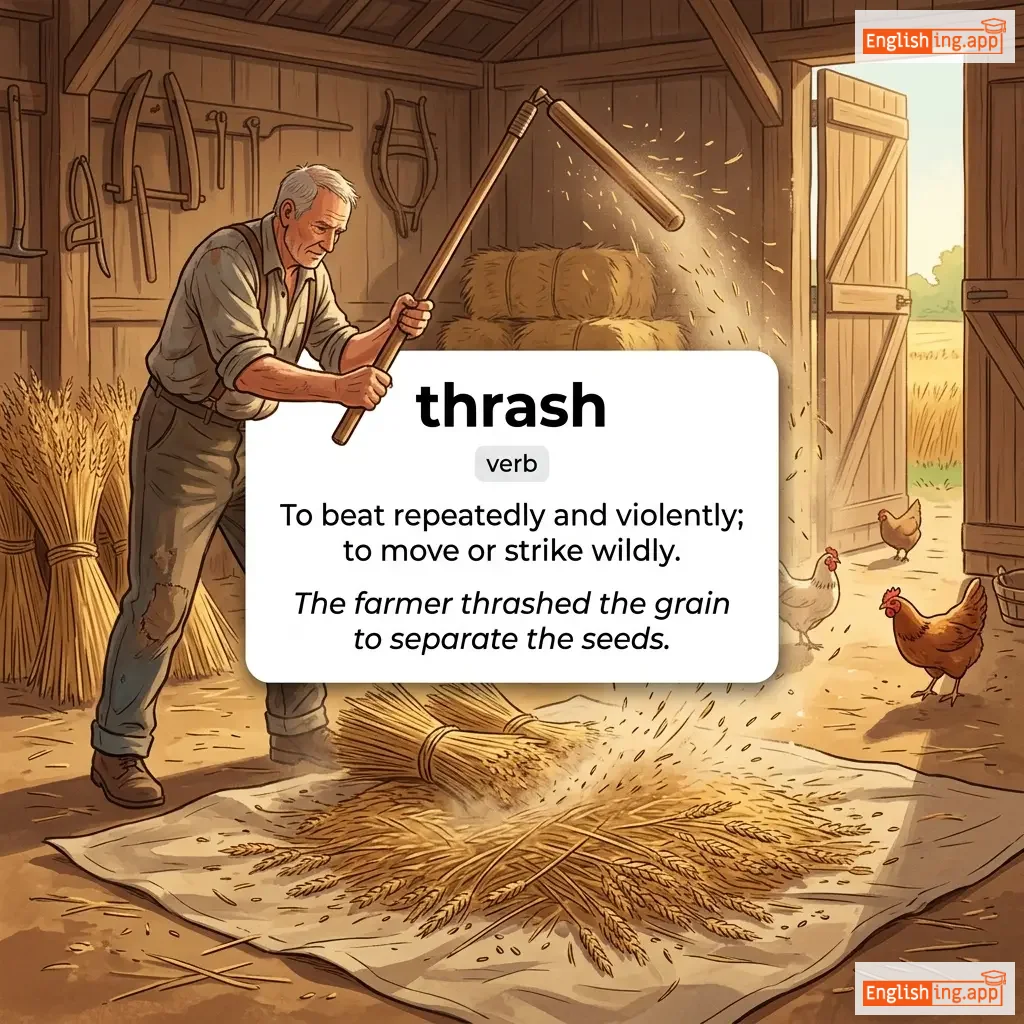
To beat repeatedly and violently; to move or strike wildly.
••••••
|
The farmer thrashed the grain to separate the seeds.
農夫は種を分けるために穀物を叩きました。
••••••
|
農夫は種を分けるために穀物を叩きました。
Nōfu wa tane o wakeru tame ni kokumotsu o tatakimashita.
••••••
|
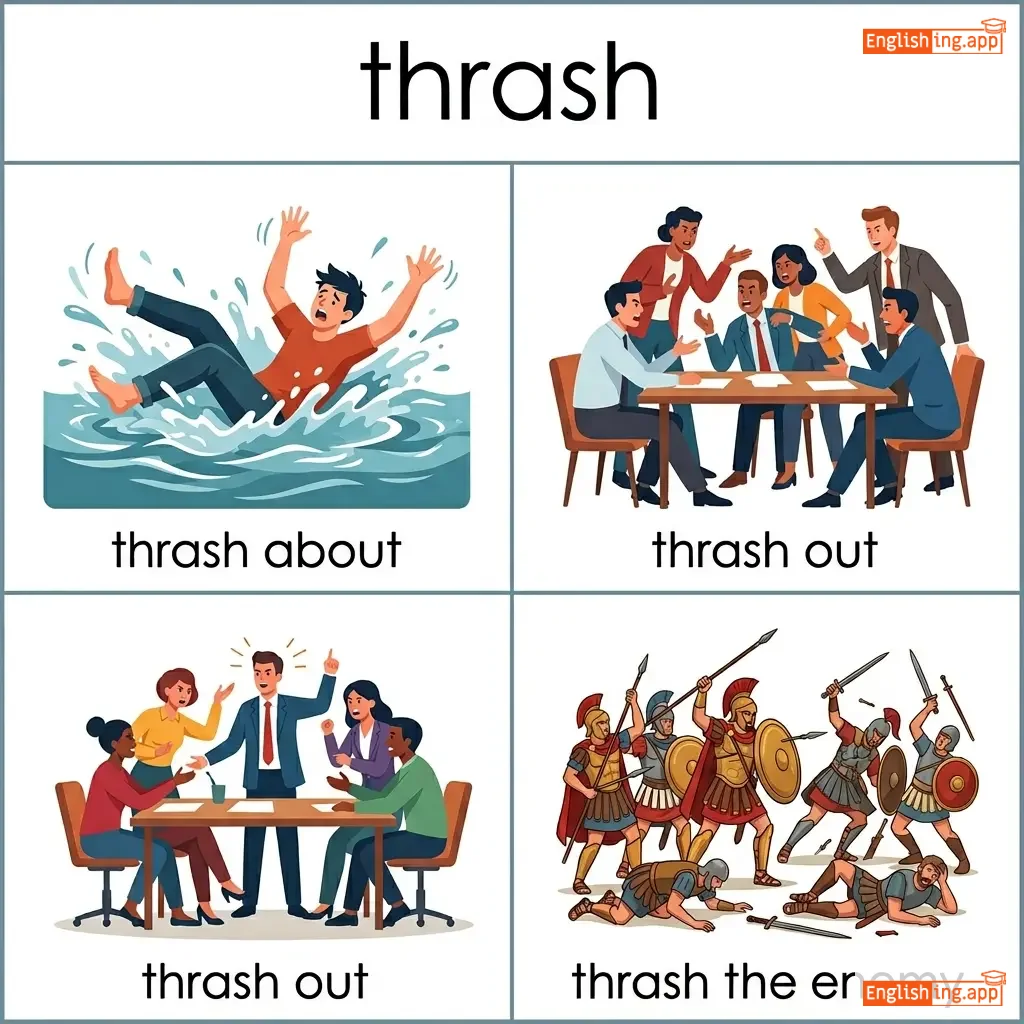
thrash out
スラッシュアウト
••••••
|
To discuss something thoroughly in order to reach an agreement.
••••••
|
徹底的に議論する
tetteiteki ni giron suru
••••••
|
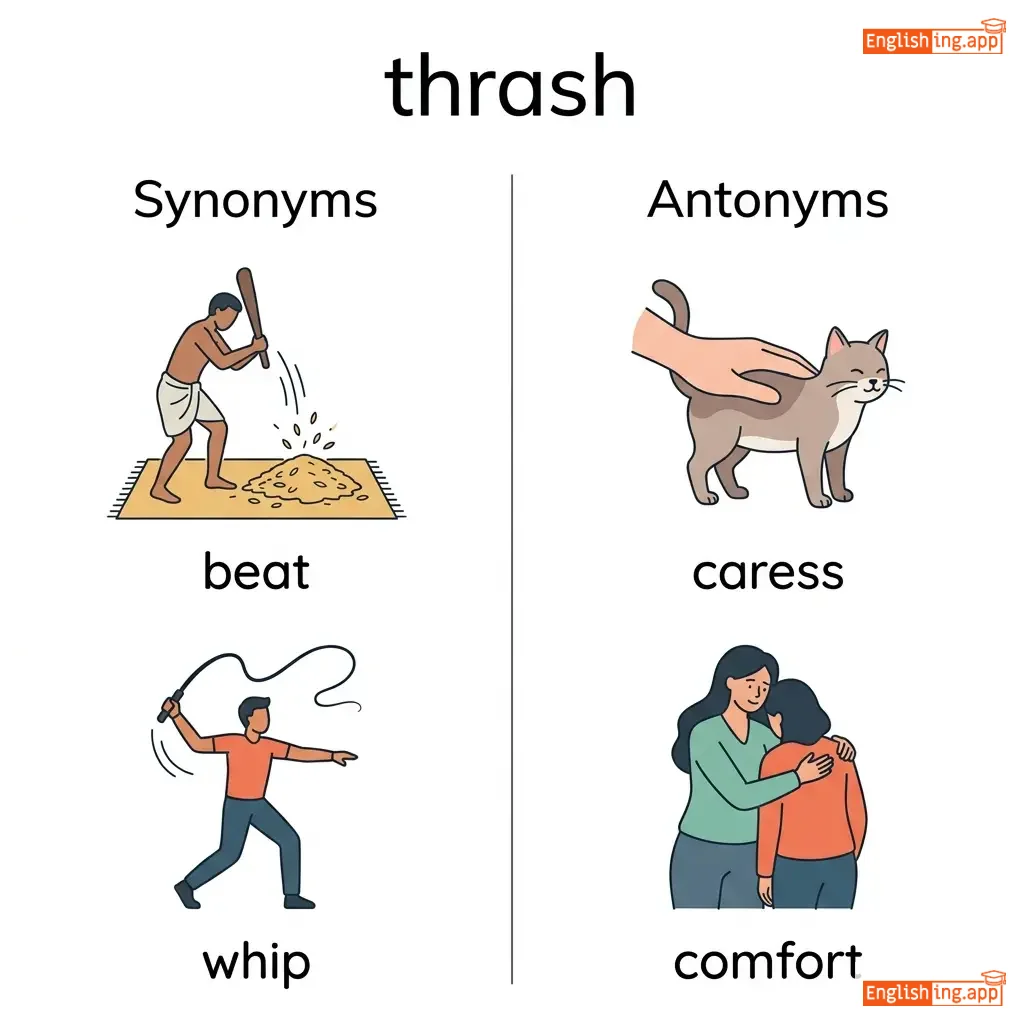
beat, whip, lash, pummel, strike
••••••
|
caress, comfort, soothe
••••••
|
thrash about, thrash out, thrash the enemy
••••••
|
ThrashはTrashのように響きます—何かを強く叩くと、それはゴミのように乱雑になります。
••••••
|
|
#8806
😂
|
/ˈtɪklɪʃ/
adjective
••••••
|
- •••••• | - •••••• | - •••••• | - •••••• | - •••••• | - •••••• |
easily made to laugh by being touched lightly; easily upset or sensitive
••••••
|
She is very ticklish and bursts into laughter when touched on her feet. |
- •••••• |
a ticklish situation |
a delicate or difficult situation that needs careful handling
••••••
|
- •••••• |
sensitive, delicate, touchy, awkward, tricky
••••••
|
calm, insensitive, stable
••••••
|
ticklish feet, ticklish person, ticklish situation
••••••
|
No •••••• |
|
#8807
😂
|
/ˈtɪk.əl/
verb/noun
••••••
|
|
- •••••• |
tickled
••••••
|
tickled
••••••
|
tickles
••••••
|
tickling
••••••
|
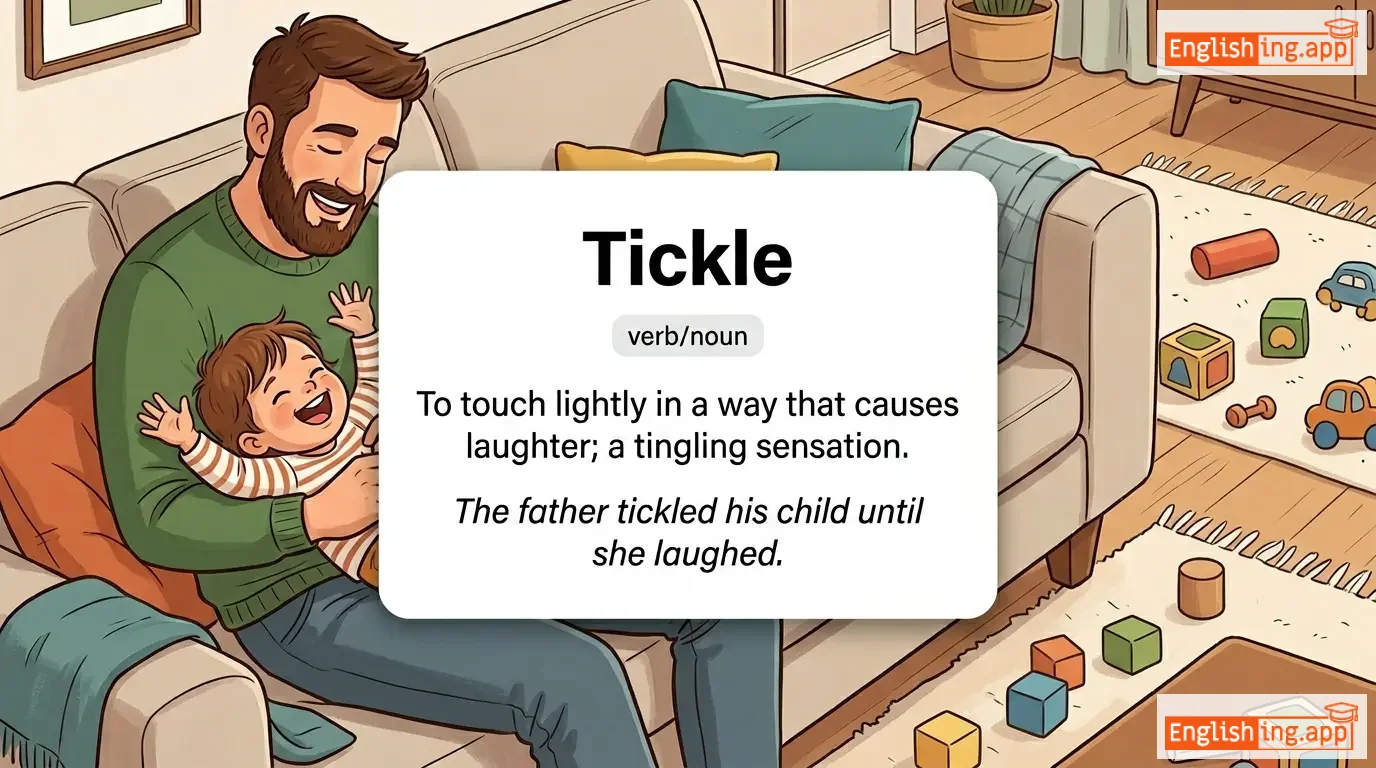
To touch lightly in a way that causes laughter; a tingling sensation.
••••••
|
The father tickled his child until she laughed. |
- •••••• |
tickle someone's fancy |
To appeal to or interest someone.
••••••
|
- •••••• |
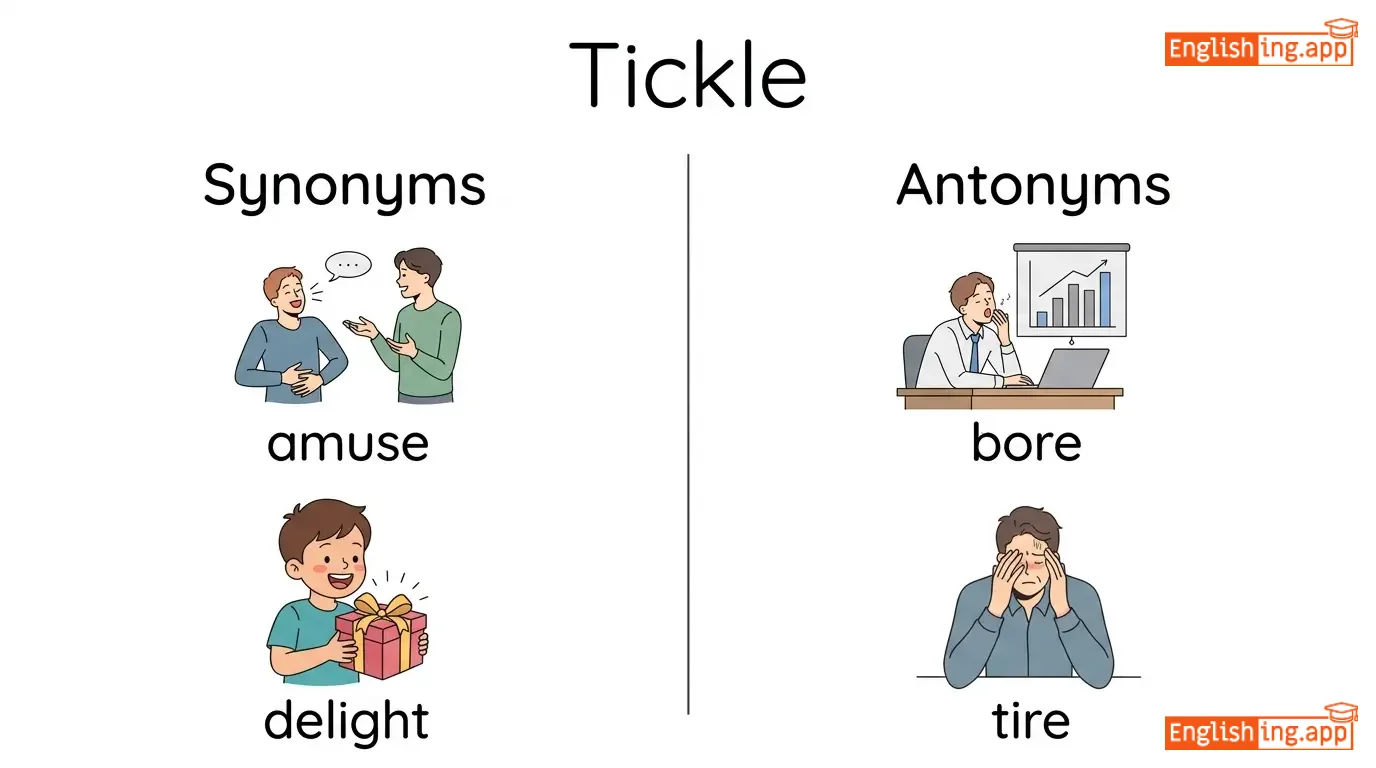
amuse, delight, stimulate, tease, entertain
••••••
|
bore, tire, annoy
••••••
|
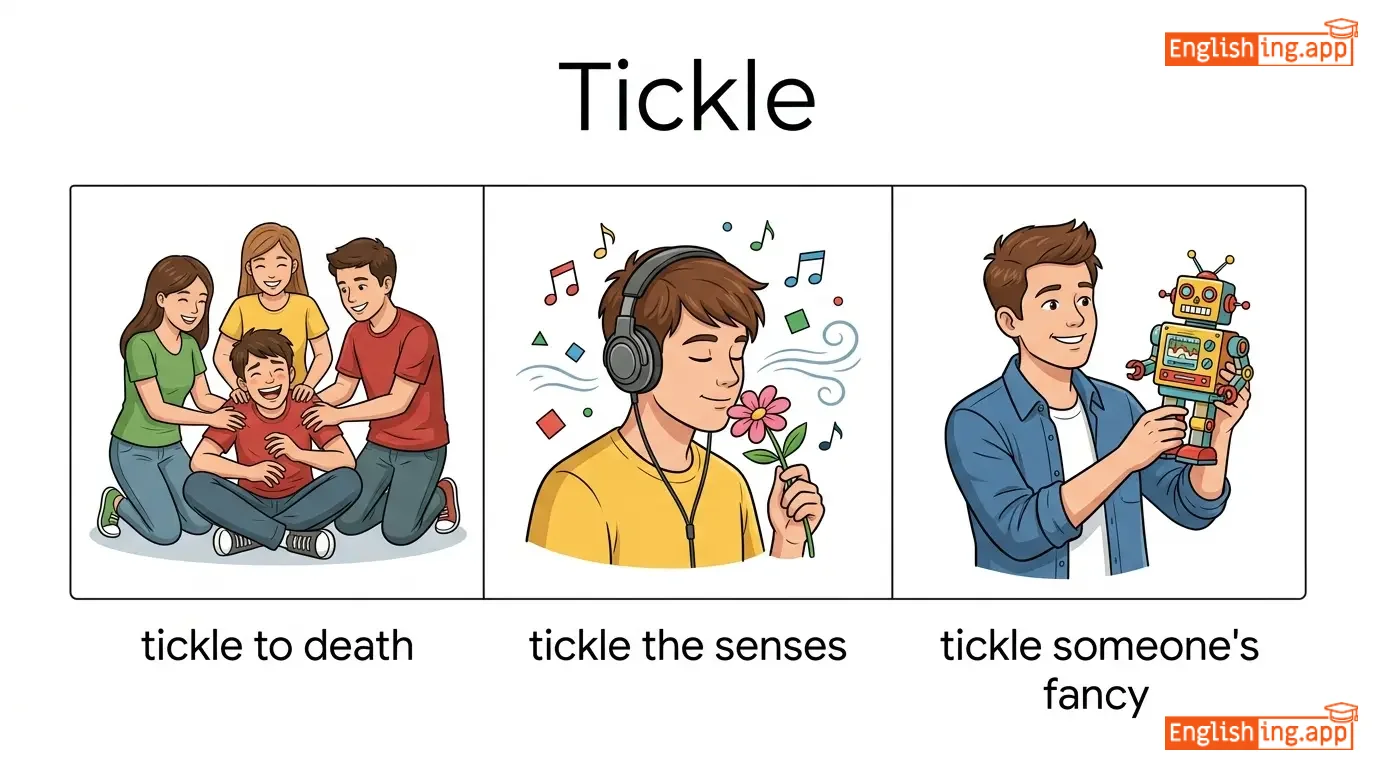
tickle to death, tickle the senses, tickle someone's fancy
••••••
|
No •••••• |
|
#8808
🌿
|
/taɪm/
noun
(taimu)
••••••
|
- •••••• |
タイム
taimu
••••••
|
- •••••• | - •••••• | - •••••• | - •••••• |
A small aromatic herb used in cooking and medicine.
••••••
|
She sprinkled thyme on the roasted chicken.
彼女はローストチキンにタイムを振りかけました。
••••••
|
彼女はローストチキンにタイムを振りかけました。
Kanojo wa rōsuto chikin ni taimu o furikakemashita.
••••••
|
- •••••• | - •••••• | - •••••• |
herb, seasoning, spice, plant
••••••
|
none
••••••
|
fresh thyme, dried thyme, thyme leaves, sprig of thyme
••••••
|
タイムは‘time’のようで、料理の時間に使われます。
••••••
|
|
#8809
🚫
|
/θwɔːrt/
verb
(スウォート)
••••••
|
|
妨げる
samatajeru
••••••
|
thwarted
スウォーテッド
••••••
|
thwarted
スウォーテッド
••••••
|
thwarts
スウォーツ
••••••
|
thwarting
スウォーティング
••••••
|
To prevent someone from accomplishing something; to oppose successfully.
••••••
|
The police thwarted the robbery attempt.
警察は強盗未遂を挫折させた。
••••••
|
警察は強盗未遂を挫折させた。
Keisatsu wa gōtō misui o zasetsu saseta.
••••••
|
thwart one's plans
誰かの計画を妨げる
••••••
|
To stop someone from achieving what they intended.
••••••
|
誰かの計画を妨げる
Dareka no keikaku o samatageru
••••••
|
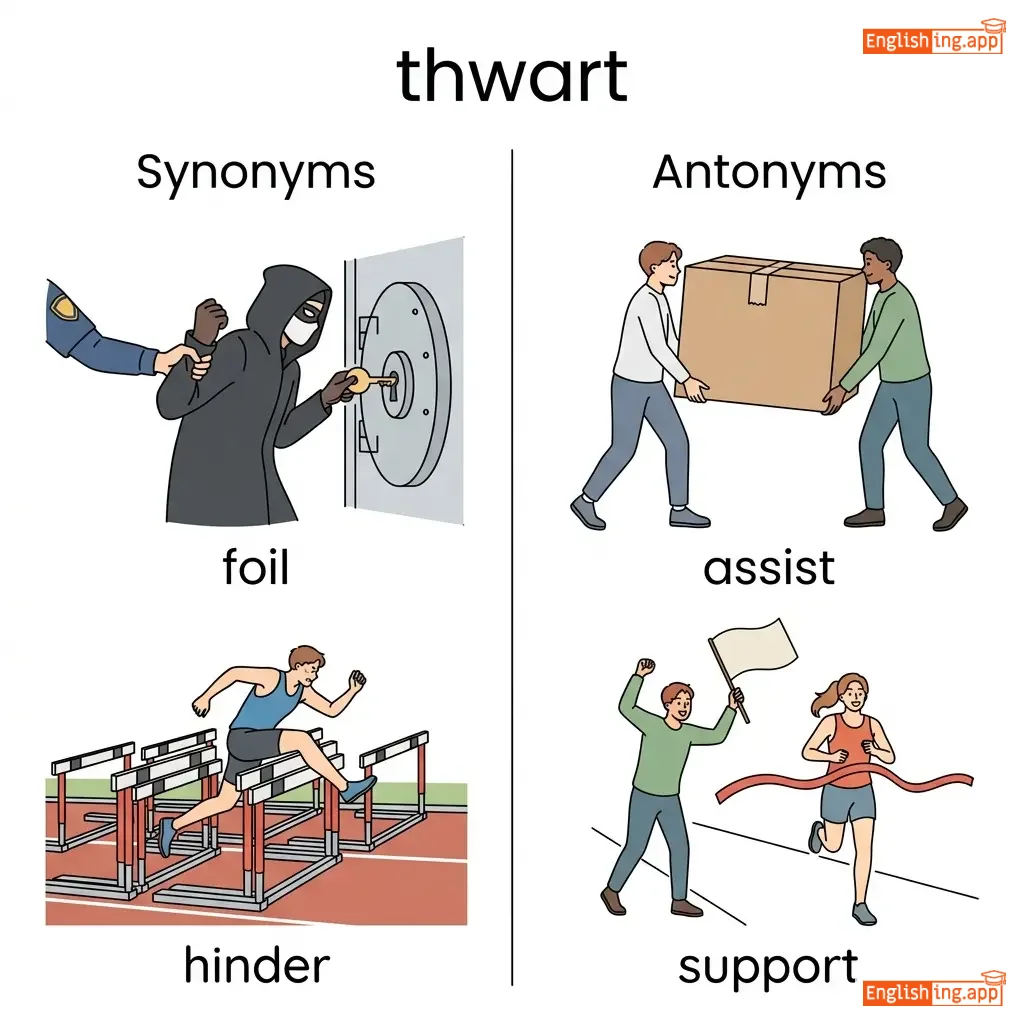
foil, hinder, obstruct, prevent, frustrate
••••••
|
assist, support, encourage
••••••
|
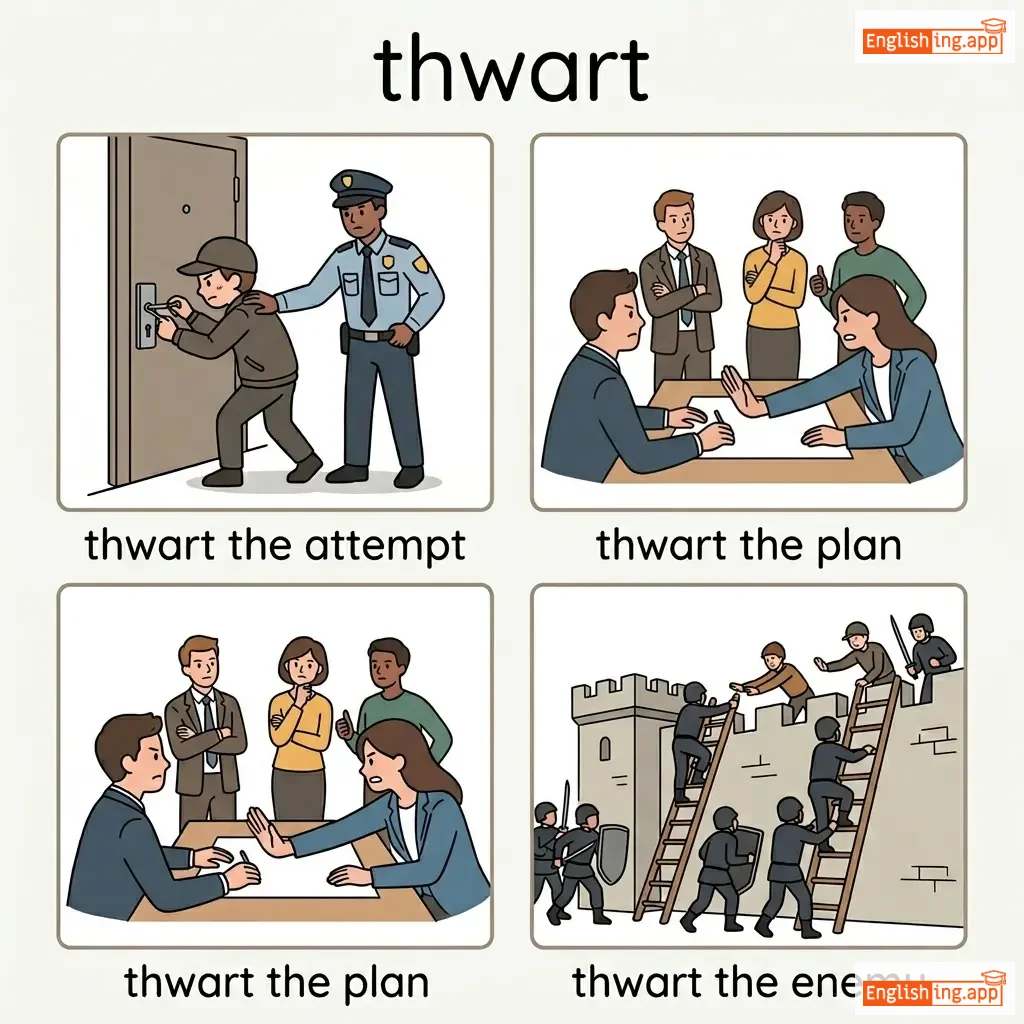
thwart the attempt, thwart the plan, thwart the enemy
••••••
|
妨げるは、物事を防ぐことです。誰かの計画を妨げることを想像してください。
••••••
|
|
#8810
🛑
|
/ˈθrɒt.əl/
verb/noun
(スロットル)
••••••
|
- •••••• |
絞める/速度を制御する
shimeru/sokudo wo seigyo suru
••••••
|
throttled
スロットルド
••••••
|
throttled
スロットルド
••••••
|
throttles
スロットルズ
••••••
|
throttling
スロットリング
••••••
|
To choke or strangle; to control the flow of fuel or power in an engine.
••••••
|
The driver throttled the engine to slow down the car.
運転手は車を減速させるためにエンジンのスロットルを調整した。
••••••
|
運転手は車を減速させるためにエンジンのスロットルを調整した。
Untenshu wa kuruma wo gensoku saseru tame ni enjin no surotoru wo chōsei shita.
••••••
|
at full throttle
全開で
••••••
|
Working or moving at maximum speed or effort.
••••••
|
全開で
Zenkai de
••••••
|
strangle, choke, suppress, stifle, control
••••••
|
release, liberate, free
••••••
|
throttle back, throttle control, full throttle, throttle the engine
••••••
|
Throttleとはエンジンの力を絞めること、車の速度を絞めるように考えてください。
••••••
|
|
#8811
👥
|
/θrɒŋ/
noun/verb
••••••
|
- •••••• | - •••••• |
thronged
••••••
|
thronged
••••••
|
throngs
••••••
|
thronging
••••••
|
A large, densely packed crowd of people or animals; to fill or be present in a place in large numbers.
••••••
|
Tourists thronged the streets during the festival. |
- •••••• |
throng to |
To gather or go in large numbers toward a place or event.
••••••
|
- •••••• |
crowd, multitude, swarm, mob, gathering
••••••
|
solitude, emptiness, desertion
••••••
|
throng of people, throng the streets, throng into, throng with
••••••
|
No •••••• |
|
#8812
⚡
|
/θroʊz/
noun
(zrosu)
••••••
|
- •••••• |
激痛
gekitou
••••••
|
- •••••• | - •••••• | - •••••• | - •••••• |
intense or violent pain and struggle, often at the beginning or end of something
••••••
|
The country was in the throes of a political crisis.
その国は政治的危機の痛みの中にあった。
••••••
|
その国は政治的危機の激痛の中にあった。
Sono kuni wa seijiteki kiki no gekitou no naka ni atta.
••••••
|
in the throes of
痛みの中で
••••••
|
in the midst of a difficult or painful struggle
••••••
|
痛みの中で
Itami no naka de
••••••
|
agony, struggle, turmoil, convulsion, distress
••••••
|
peace, calm, ease
••••••
|
in the throes of, throes of crisis, throes of pain, throes of change
••••••
|
Throes ⚡ 激痛を意味します、覚えておいて:'Throw es' 苦しみの中で奮闘すること。
••••••
|
|
#8813
💓
|
/θrɒb/
verb
(スロブ)
••••••
|
- •••••• |
脈打つ
myakuutsu
••••••
|
throbbed
スロブド
••••••
|
throbbed
スロブド
••••••
|
throbs
スロブス
••••••
|
throbbing
スロビング
••••••
|
to beat or pulse strongly, often with pain
••••••
|
His head began to throb after the long day.
長い一日の後、彼の頭が脈打ち始めた。
••••••
|
長い一日の後、彼の頭が脈打ち始めた。
Nagai ichinichi no ato, kare no atama ga myakuuchi hajimeta.
••••••
|
throb with pain
痛みで脈打つ
••••••
|
to experience a strong pulsing pain
••••••
|
痛みで脈打つ
itami de myakuutsu
••••••
|
pound, pulse, beat, ache, hammer
••••••
|
still, rest, stop
••••••
|
throb with pain, throb in head, throb in heart, throb continuously
••••••
|
Throb は脈打つ意味 💓 — 頭が脈打つときは痛みがある。
••••••
|
|
#8814
🌱
|
/θraɪv/
verb
••••••
|
- •••••• | - •••••• |
thrived
••••••
|
thrived
••••••
|
thrives
••••••
|
thriving
••••••
|
to grow, develop, or be successful
••••••
|
Small businesses can thrive with proper support. |
- •••••• |
thrive on |
to enjoy or be energized by something, especially a challenge
••••••
|
- •••••• |
flourish, prosper, succeed, grow, advance
••••••
|
fail, decline, collapse
••••••
|
thrive on challenges, thrive in business, thrive under pressure, thrive in environment
••••••
|
No •••••• |
|
#8815
💰
|
/ˈθrɪfti/
adjective
(スリフティ)
••••••
|
- •••••• |
倹約的
ken'yakuteki
••••••
|
- •••••• | - •••••• | - •••••• | - •••••• |
using money and resources carefully and not wastefully
••••••
|
She is very thrifty and always saves money for the future. |
彼女は非常に倹約的で、いつも将来のためにお金を貯めています。
Kanojo wa hijou ni ken'yakuteki de, itsumo shourai no tame ni okane o tameteimasu.
••••••
|
- •••••• | - •••••• | - •••••• |
frugal, economical, prudent, saving, sparing
••••••
|
wasteful, extravagant, lavish
••••••
|
thrifty habits, thrifty lifestyle, thrifty shopper, thrifty use
••••••
|
Thriftyは倹約的💰 — '三五十'お金を貯めることを想像してください = thrifty.
••••••
|
|
#8816
🌾
|
/θrɛʃ/
verb
••••••
|
- •••••• | - •••••• |
threshed
••••••
|
threshed
••••••
|
threshes
••••••
|
threshing
••••••
|
to separate grain from the plant by beating or by using a machine
••••••
|
Farmers used machines to thresh the wheat after harvest. |
- •••••• |
thresh out |
to discuss a matter thoroughly in order to reach an agreement or solution
••••••
|
- •••••• |
separate, beat, winnow, flail, husk
••••••
|
combine, join, collect
••••••
|
thresh wheat, thresh grain, thresh rice, thresh out ideas
••••••
|
No •••••• |
|
#8817
🎶
|
/ˈθrɛnədi/
noun
(スレノディ)
••••••
|
- •••••• |
哀歌、追悼歌
aika, tsuitouka
••••••
|
- •••••• | - •••••• | - •••••• | - •••••• |
A song, poem, or speech of mourning for someone who has died; a lament.
••••••
|
The poet composed a moving threnody for the fallen soldiers. |
詩人は戦死した兵士たちのために感動的な追悼歌を作った。
Shijin wa senshi shita heishitachi no tame ni kandouteki na tsuitouka wo tsukutta.
••••••
|
- •••••• | - •••••• | - •••••• |
lament, dirge, elegy, requiem
••••••
|
celebration, praise
••••••
|
funeral threnody, threnody of sorrow
••••••
|
Threnody—三つのメロディー、亡くなった人のための哀歌。
••••••
|
|
#8818
⚠️
|
/θrɛt/
noun
(スレット)
••••••
|
- •••••• |
脅威, 危険
kyōi, kiken
••••••
|
- •••••• | - •••••• | - •••••• | - •••••• |
A statement or action indicating intent to cause harm or danger.
••••••
|
The letter contained a threat against the company.
手紙には会社に対する脅威が含まれていた。
••••••
|
手紙には会社に対する脅威が含まれていた。
Tegami ni wa kaisha ni taisuru kyōi ga fukumarete ita.
••••••
|
make a threat
脅威をかける
••••••
|
To express an intention to harm or cause problems.
••••••
|
脅威をかける
kyōi o kakeru
••••••
|
danger, menace, intimidation, warning, risk
••••••
|
safety, protection, assurance
••••••
|
serious threat, direct threat, pose a threat
••••••
|
脅威 = Kyōi—電話の脅威
••••••
|
|
#8819
🧥
|
/ˈθrɛdˌbɛr/
adjective
(スレッドベア)
••••••
|
- •••••• |
過度な使用で薄くて擦り切れた
kadona shiyou de usukute surikireta
••••••
|
- •••••• | - •••••• | - •••••• | - •••••• |
Worn out and thin from too much use; shabby.
••••••
|
His threadbare coat could not keep him warm in winter. |
彼の擦り切れたコートは冬に彼を温かく保つことができませんでした。
Kare no surikireta kōto wa fuyu ni kare o atatakaku tamotsu koto ga dekimasen deshita.
••••••
|
- •••••• | - •••••• | - •••••• |
worn, shabby, ragged, tattered
••••••
|
new, fresh, luxurious
••••••
|
threadbare clothes, threadbare excuse, threadbare argument
••••••
|
Threadbareは糸が擦り切れる意味—擦り切れた服。
••••••
|
Vocabulary Quiz
Test your vocabulary by matching words with their translations or meanings.
Login to take the quiz
Comments (0)
Share your thoughts and join the discussion.
Join the discussion by logging in
Login to CommentNo comments yet
Be the first to share your thoughts!