

翻訳
過去
過去分詞
三人称単数
動名詞
意味
例文
例文の翻訳
同義語
対義語
コロケーション
ニーモニック




Swipe left or right, or use the buttons. Tap image to zoom.
例文の翻訳
単語
Lesson 97Lesson 97 - マスクトグル
|
絵文字
|
単語 | Images | 翻訳 | 過去 | 過去分詞 | 三人称単数 | 動名詞 | 意味 | 例文 | 例文の翻訳 | 表現例 | 表現例の意味 | 表現例の翻訳 | 同義語 | 対義語 | コロケーション | ニーモニック |
|---|---|---|---|---|---|---|---|---|---|---|---|---|---|---|---|---|---|
|
#2881
🎩
|
/ɪˈliːtɪst/
noun/adjective
(エリティスト)
••••••
|
- •••••• |
エリティスト
elitist
••••••
|
- •••••• | - •••••• | - •••••• | - •••••• |
A person who believes that a society should be led by an elite; showing preference for a privileged class.
••••••
|
His elitist attitude made him unpopular among his peers. |
彼のエリティストな態度は、彼を仲間の中で不人気にした。
Kare no eritisuto na taido wa, kare o nakama no naka de funinki ni shita.
••••••
|
- •••••• | - •••••• | - •••••• |
snobbish, exclusive, superior, highbrow
••••••
|
egalitarian, democratic, common
••••••
|
elitist attitude, elitist approach, elitist society, elitist view
••••••
|
Eliteは上層階級を意味し、elitistはその階級を好む人を意味します。
••••••
|
|
#2882
🏝️
|
/ɪˈlɪziəm/
noun
(エリシウム)
••••••
|
- •••••• |
エリシウム
erishiumu
••••••
|
- •••••• | - •••••• | - •••••• | - •••••• |
A place or state of perfect happiness; in Greek mythology, the afterlife paradise.
••••••
|
For her, the garden was a personal elysium. |
彼女にとって、その庭は個人的なエリシウムでした。
kanojo ni totte, sono niwa wa kojinteki na erishiumu deshita.
••••••
|
elysium of the blessed |
a paradise for fortunate souls
••••••
|
祝福された者のエリシウム
shukufuku sareta mono no erishiumu
••••••
|
paradise, heaven, utopia, bliss, nirvana
••••••
|
hell, misery, suffering
••••••
|
personal elysium, reach elysium, garden elysium, dream elysium
••••••
|
エリシウムは天国のような場所 – 完璧で幸せな世界!
••••••
|
|
#2883
🌸
|
/ɪˈlɪʒən/
adjective
(エリシアン)
••••••
|
|
天国の
tengoku no
••••••
|
- •••••• | - •••••• | - •••••• | - •••••• |
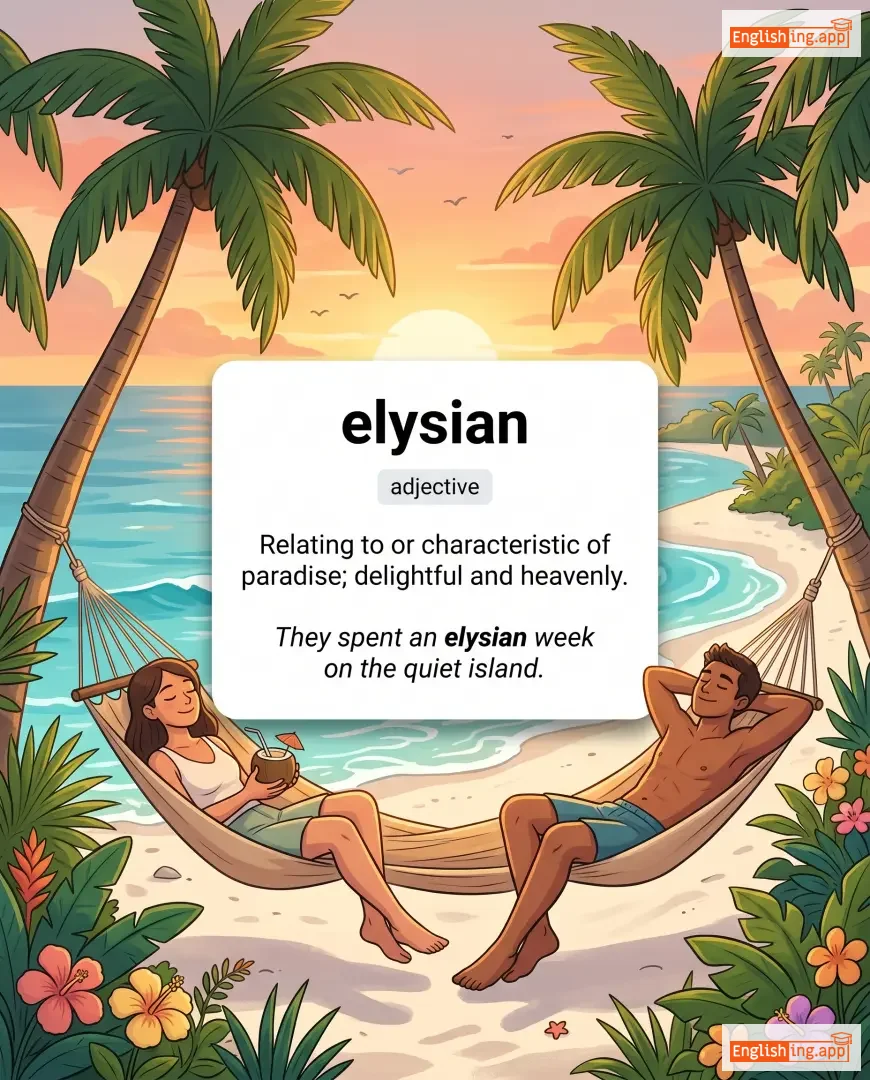
Relating to or characteristic of paradise; delightful and heavenly.
••••••
|
They spent an elysian week on the quiet island. |
彼らは静かな島で天国のような一週間を過ごしました。
Karera wa shizukana shima de tengoku no yōna isshūkan o sugoshimashita.
••••••
|
- •••••• | - •••••• | - •••••• |
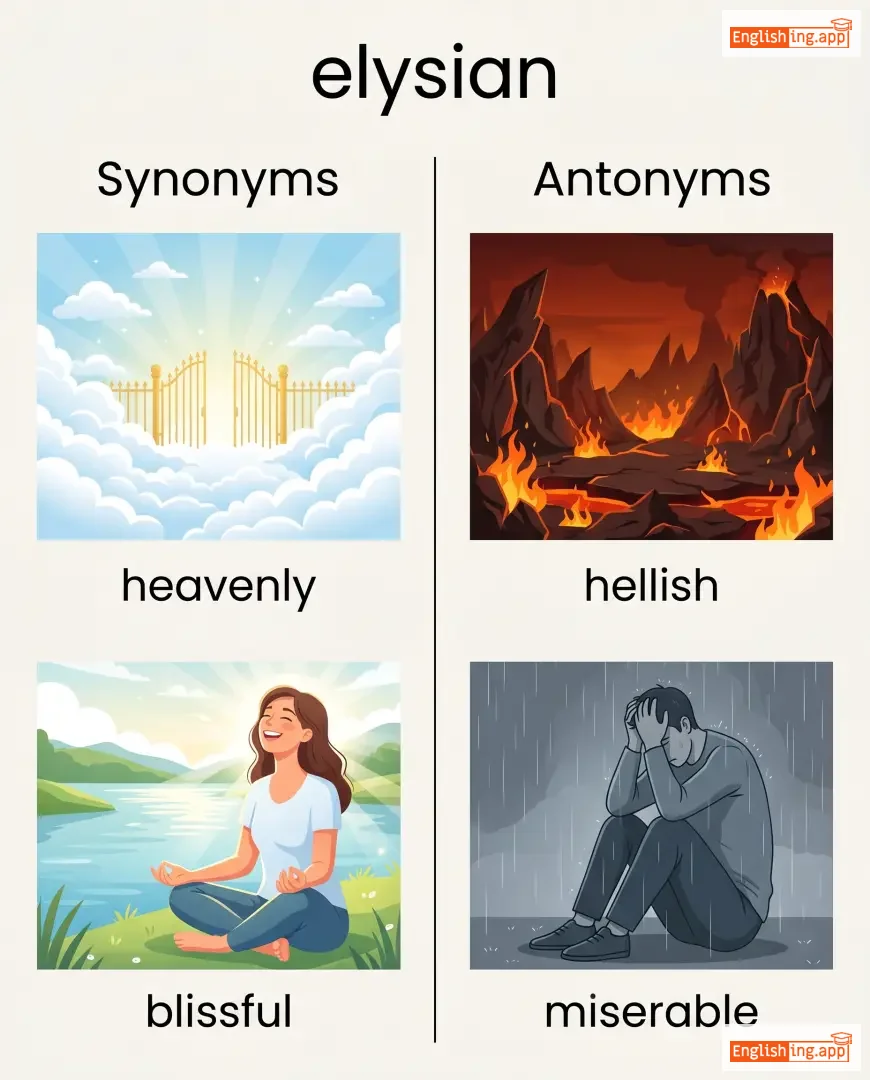
heavenly, blissful, idyllic, divine, paradisiacal
••••••
|
hellish, miserable, unpleasant
••••••
|
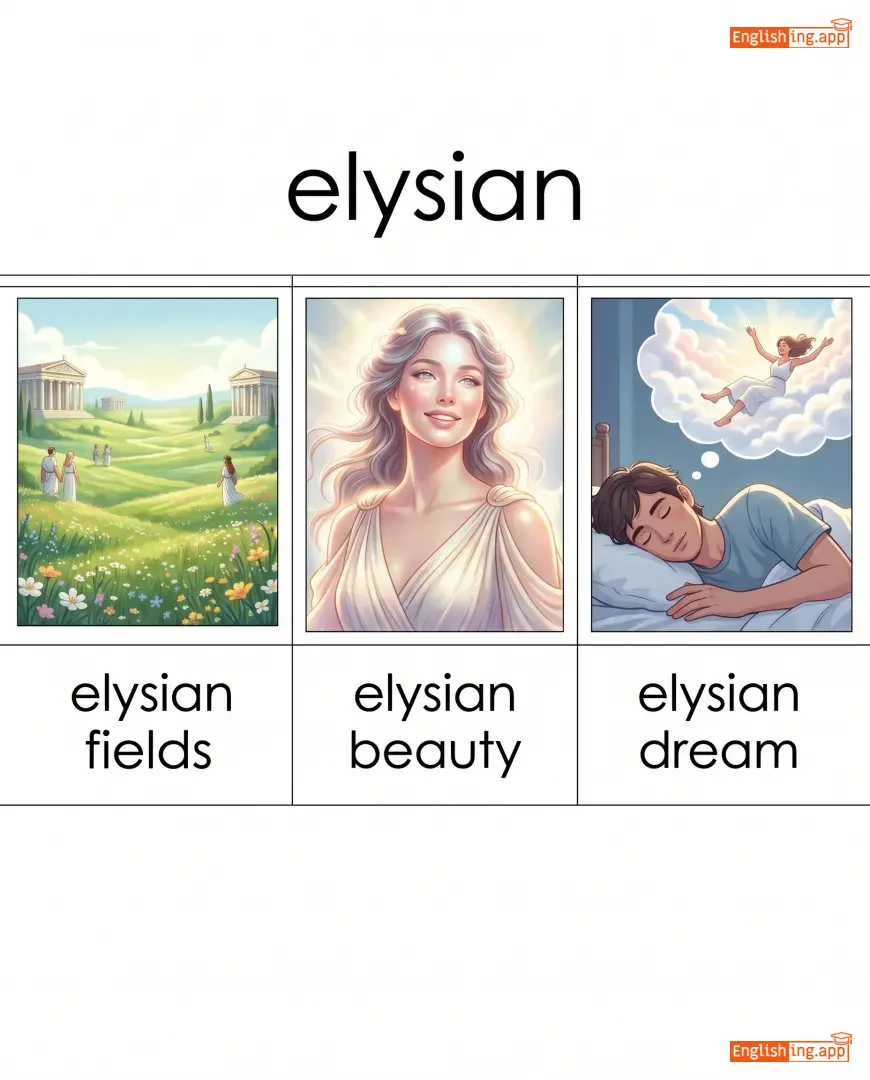
elysian fields, elysian beauty, elysian dream, elysian experience
••••••
|
Elysian はまるで天国のような素晴らしい場所です。
••••••
|
|
#2884
🕵️♀️
|
/ɪˈluːsɪv/
adjective
(イルーシブ)
••••••
|
- •••••• |
捕えにくい
toraenikui
••••••
|
- •••••• | - •••••• | - •••••• | - •••••• |
Difficult to find, catch, or achieve; hard to understand or define.
••••••
|
The solution to the problem proved elusive. |
その問題の解決策は捕えにくいことが証明された。
sono mondai no kaiketsusaku wa toraenikui koto ga shōmei sareta.
••••••
|
elusive goal |
a goal that is very difficult to achieve
••••••
|
達成しにくい目標
tassei shiniku mokuhyō
••••••
|
slippery, evasive, intangible, mysterious, vague
••••••
|
clear, obvious, definite
••••••
|
elusive dream, elusive answer, elusive meaning, elusive target
••••••
|
Elusive はつかめない幻のようなもの。
••••••
|
|
#2885
🏃♂️
|
/ɪˈluːʒən/
noun
(エリューション)
••••••
|
- •••••• |
回避
kaihi
••••••
|
- •••••• | - •••••• | - •••••• | - •••••• |
The act of escaping or avoiding something, especially by cleverness or trickery.
••••••
|
His constant elusion of responsibility frustrated his colleagues.
彼の責任逃れは同僚を苛立たせた。
••••••
|
彼の責任逃れは同僚を苛立たせた。
Kare no sekinin nogare wa dōryō o iradataseta.
••••••
|
- •••••• | - •••••• | - •••••• |
escape, evasion, avoidance, dodge, shirking
••••••
|
confrontation, facing, encounter
••••••
|
elusion of duty, clever elusion, successful elusion, elusion from capture
••••••
|
Elusionは回避と同じ意味 – 騙して責任から逃れること!
••••••
|
|
#2886
🏃♂️
|
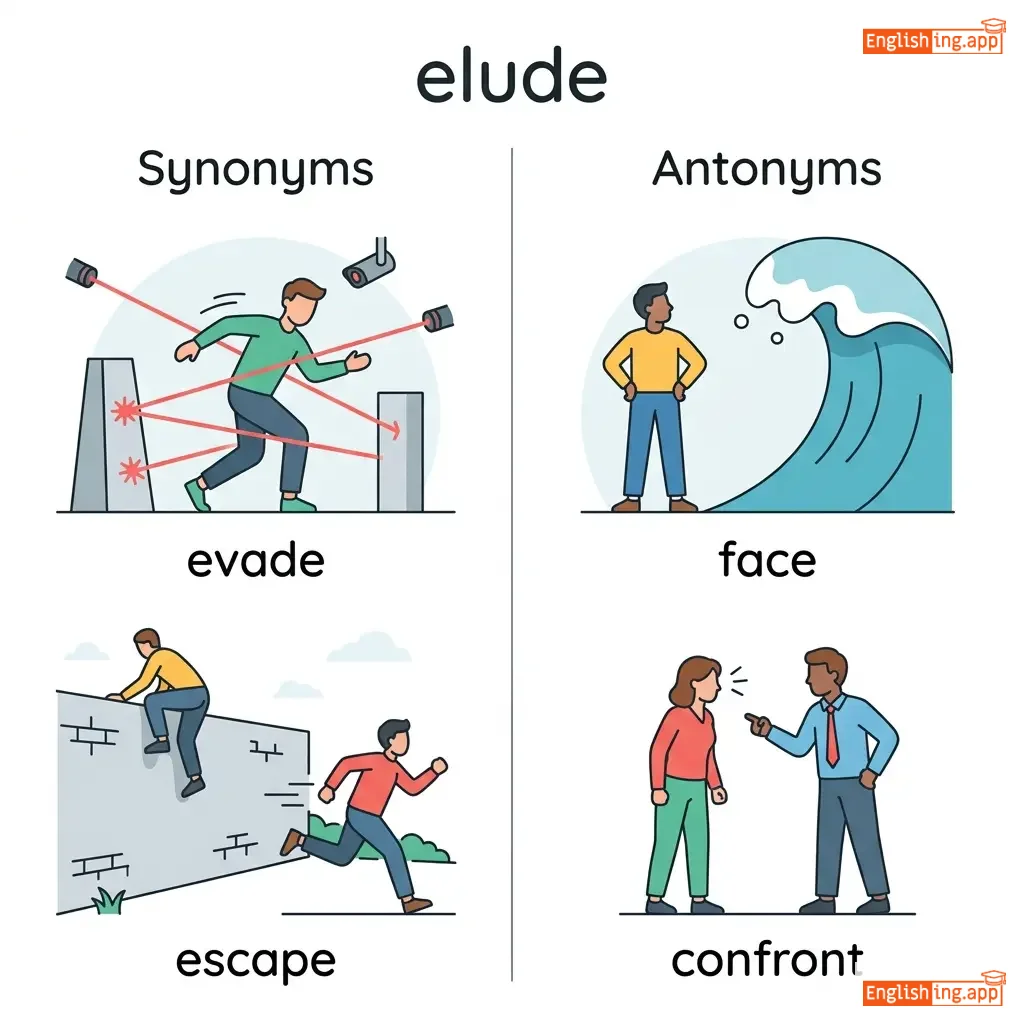
/ɪˈluːd/
verb
(エルード)
••••••
|
|
逃れる
nogareru
••••••
|
eluded
エルーデッド
••••••
|
eluded
エルーデッド
••••••
|
eludes
エルーズ
••••••
|
eluding
エルーディング
••••••
|
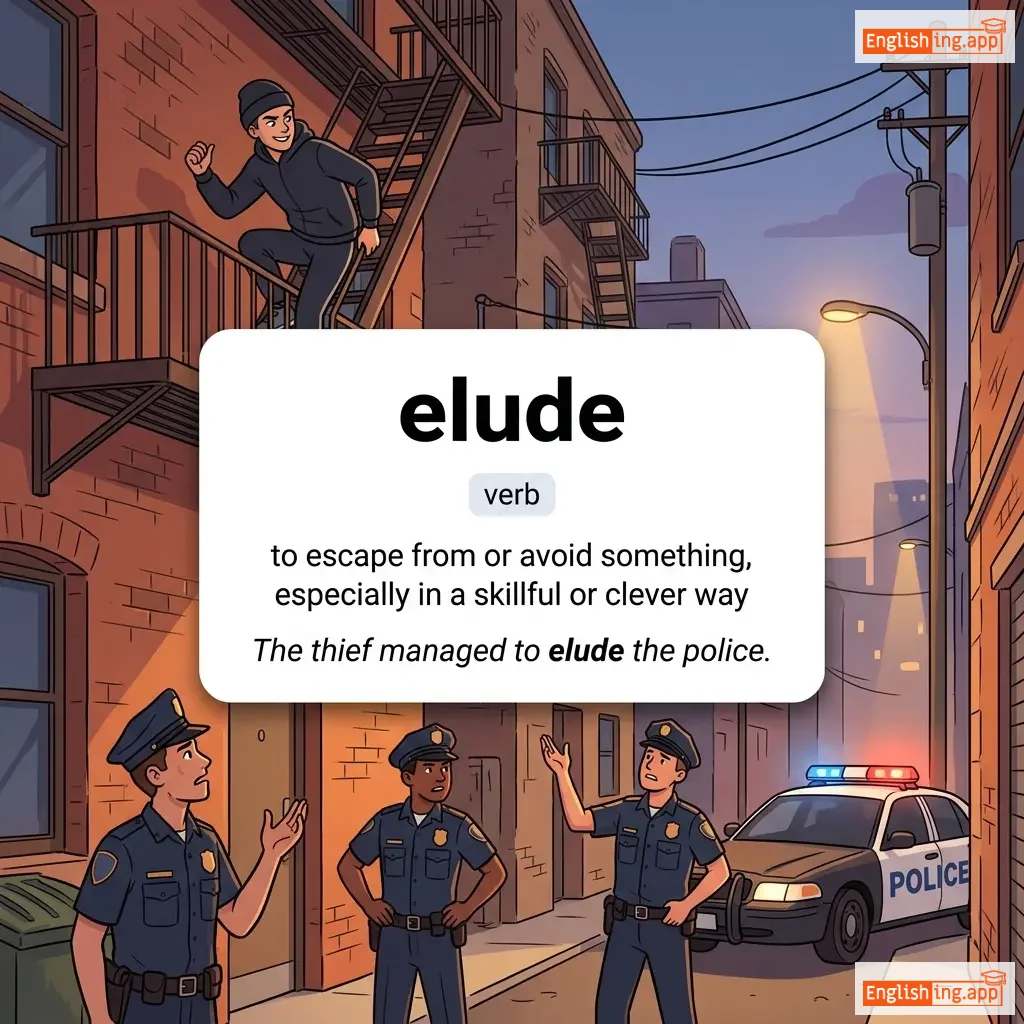
to escape from or avoid something, especially in a skillful or clever way
••••••
|
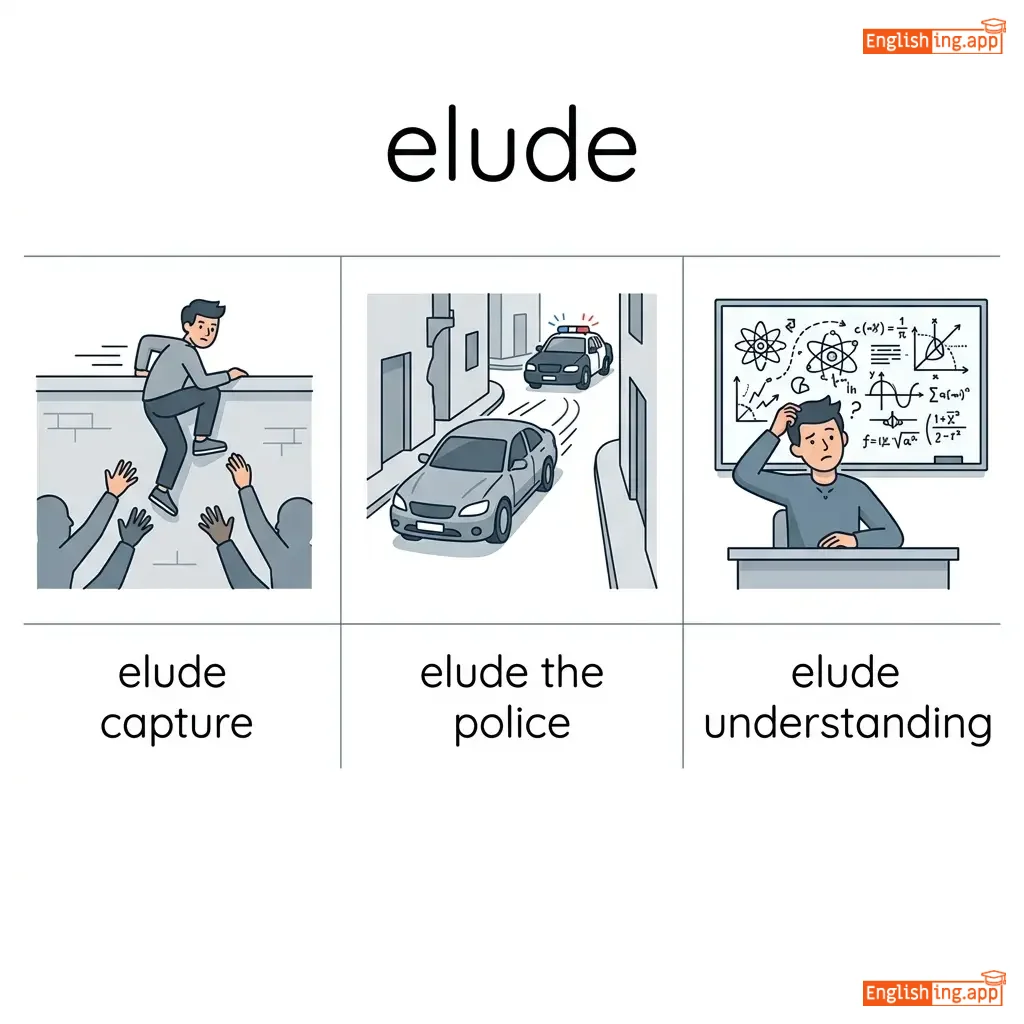
The thief managed to elude the police.
泥棒は警察をかわすことに成功した。
••••••
|
泥棒は警察をかわすことに成功した。
Dorobou wa keisatsu o kawasu koto ni seikou shita.
••••••
|
elude capture
逮捕を逃れる
••••••
|
to avoid being caught
••••••
|
逮捕を逃れる
taiho o nogareru
••••••
|
evade, escape, dodge, avoid
••••••
|
face, confront
••••••
|
elude capture, elude the police, elude understanding
••••••
|
Elude = 逃れる, まるで逃げるような感じ
••••••
|
|
#2887
💡
|
/ɪˈluːsɪdeɪt/
verb
(イラシデート)
••••••
|
|
明確にする
meikaku ni suru
••••••
|
elucidated
イラシデートデッド
••••••
|
elucidated
イラシデートデッド
••••••
|
elucidates
イラシデートス
••••••
|
elucidating
イラシデートイン
••••••
|
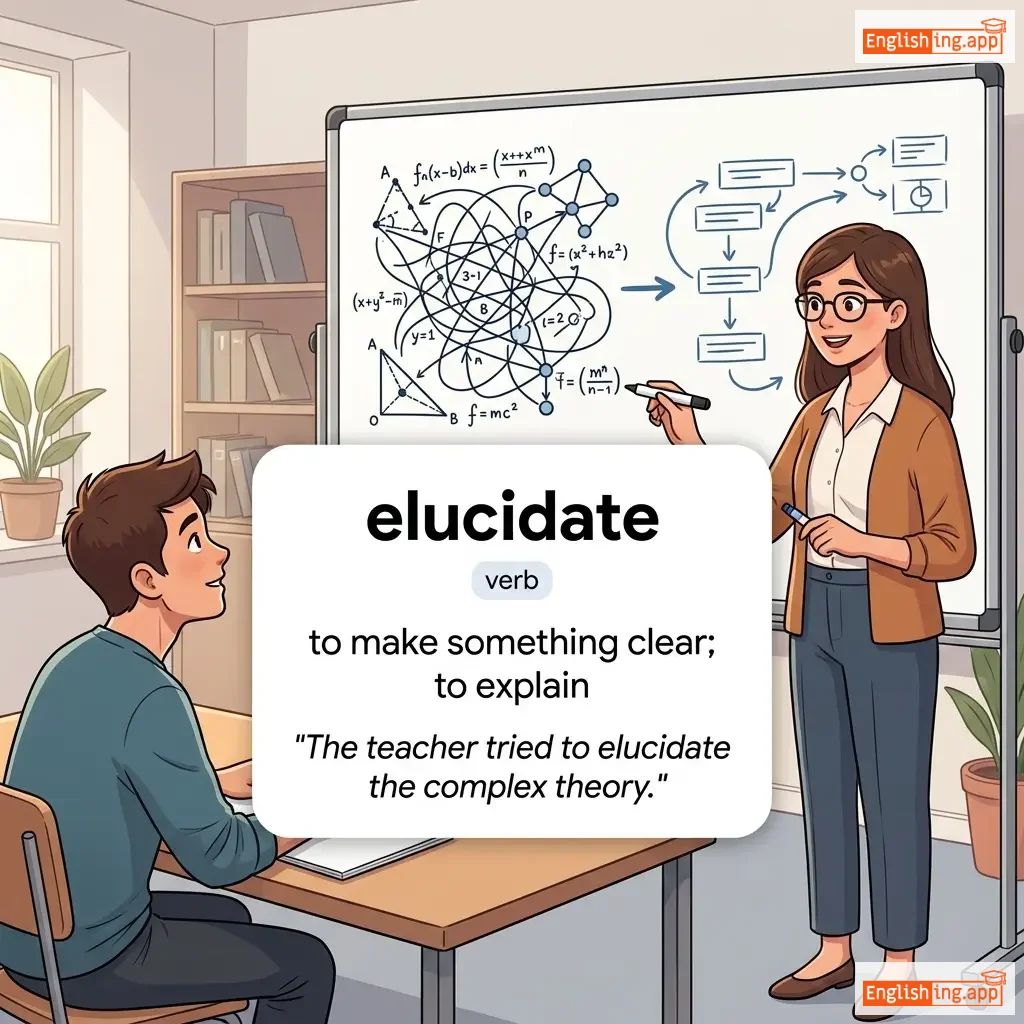
to make something clear; to explain
••••••
|
The teacher tried to elucidate the complex theory.
先生は複雑な理論を明確に説明しようとしました。
••••••
|
先生は複雑な理論を明確にしようとしました。
Sensei wa fukuzatsu na riron o meikaku ni shiyou to shimashita.
••••••
|
- •••••• | - •••••• | - •••••• |
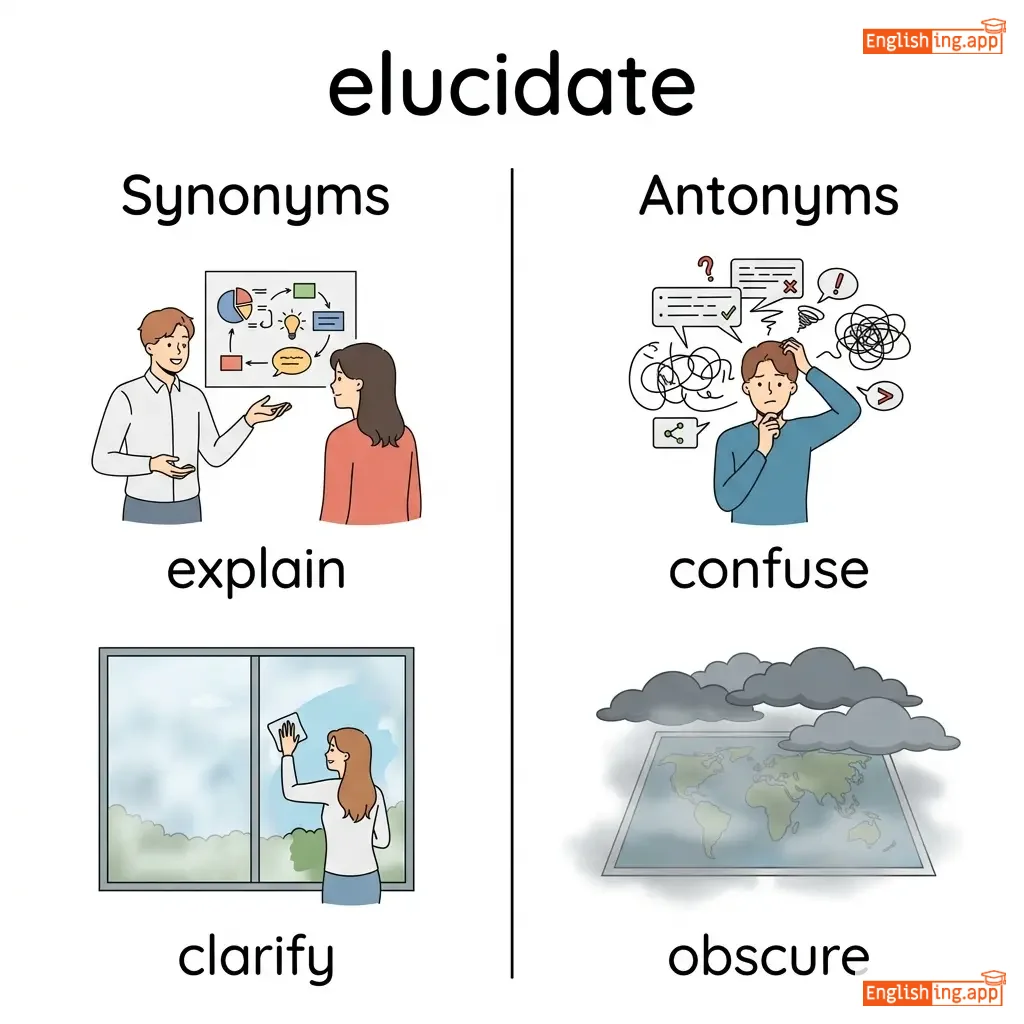
explain, clarify, illustrate, interpret
••••••
|
confuse, obscure
••••••
|
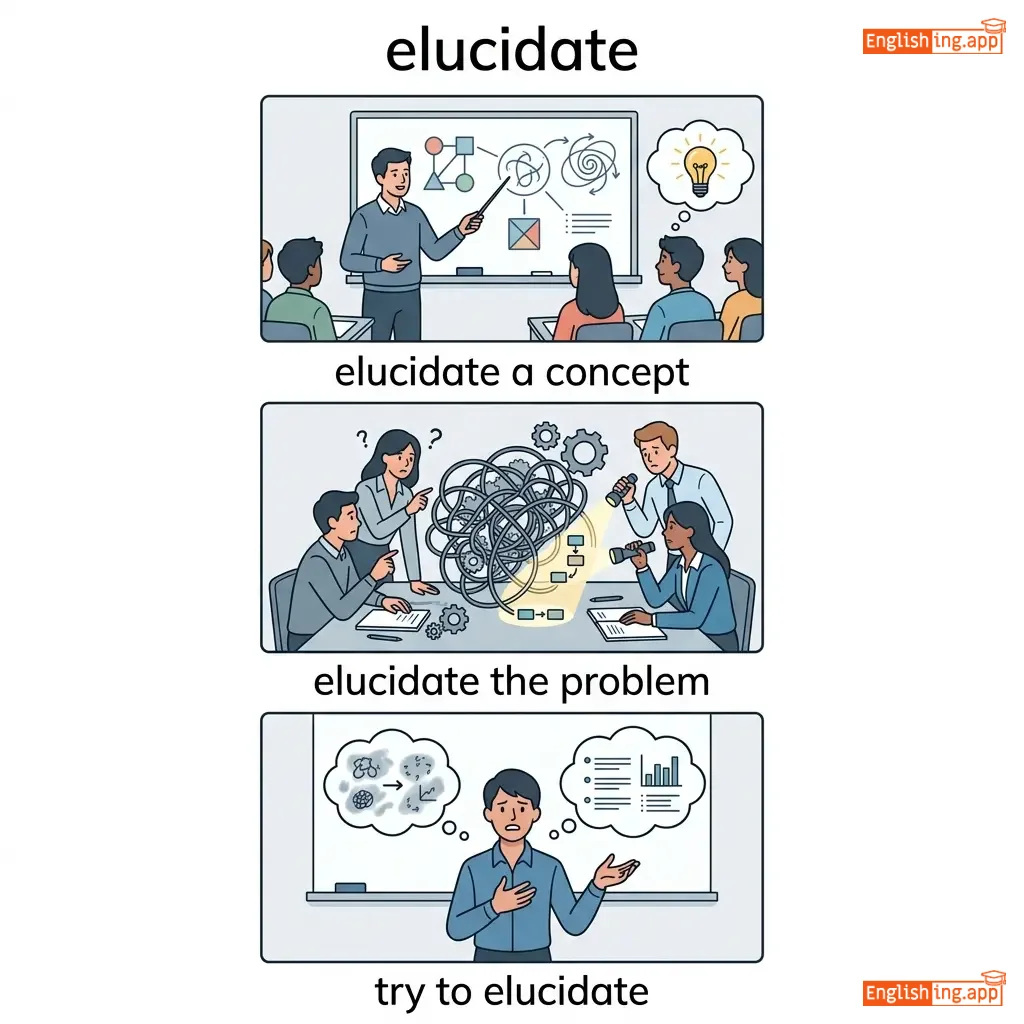
elucidate a concept, elucidate the problem, try to elucidate
••••••
|
Elucidate = イラシデート → 理論を明確にする
••••••
|
|
#2888
📢
|
/ˈɛləkwənt/
adjective
(エロクエント)
••••••
|
|
雄弁な
yūben na
••••••
|
- •••••• | - •••••• | - •••••• | - •••••• |
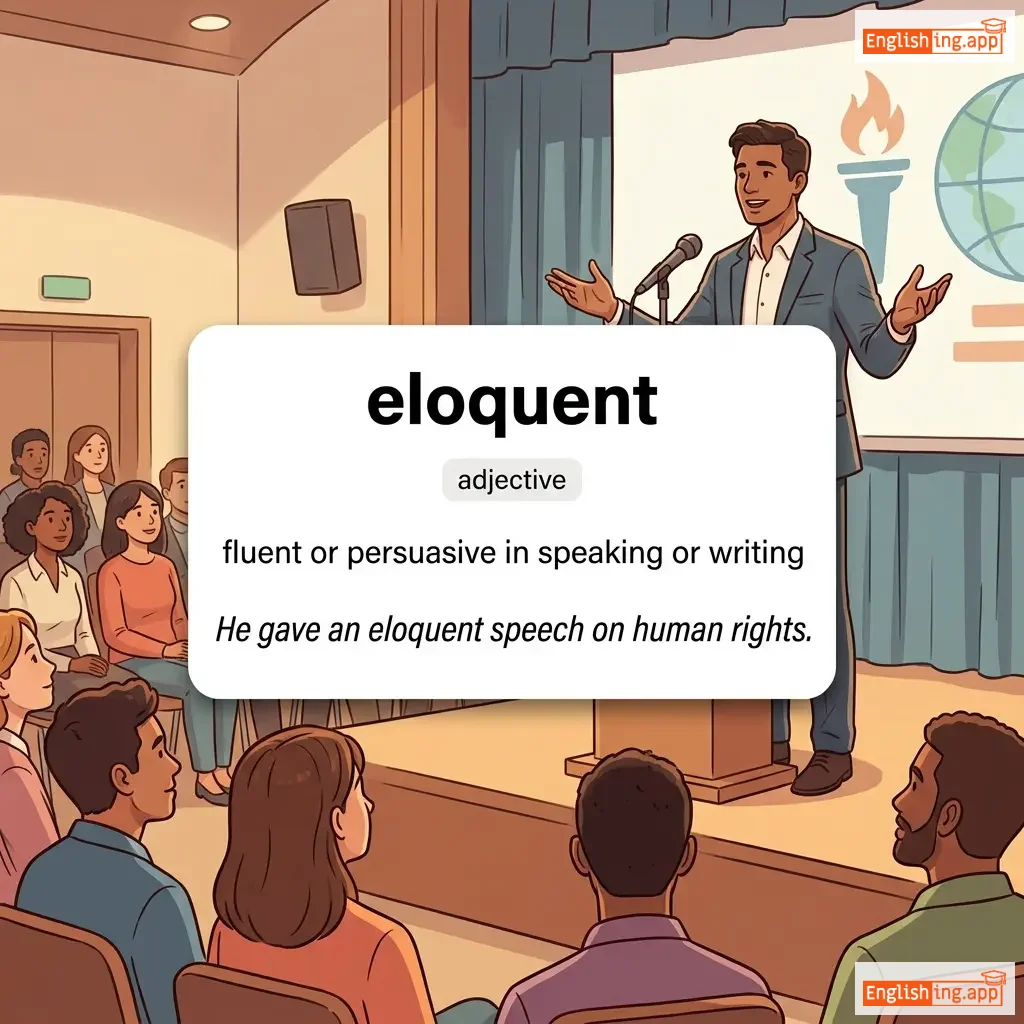
fluent or persuasive in speaking or writing
••••••
|
He gave an eloquent speech on human rights. |
彼は人権について雄弁なスピーチを行った。
kare wa jinken ni tsuite yūben na supīchi o okonatta
••••••
|
eloquent silence |
a silence that communicates meaning as effectively as speech
••••••
|
雄弁な沈黙
yūben na chinmoku
••••••
|
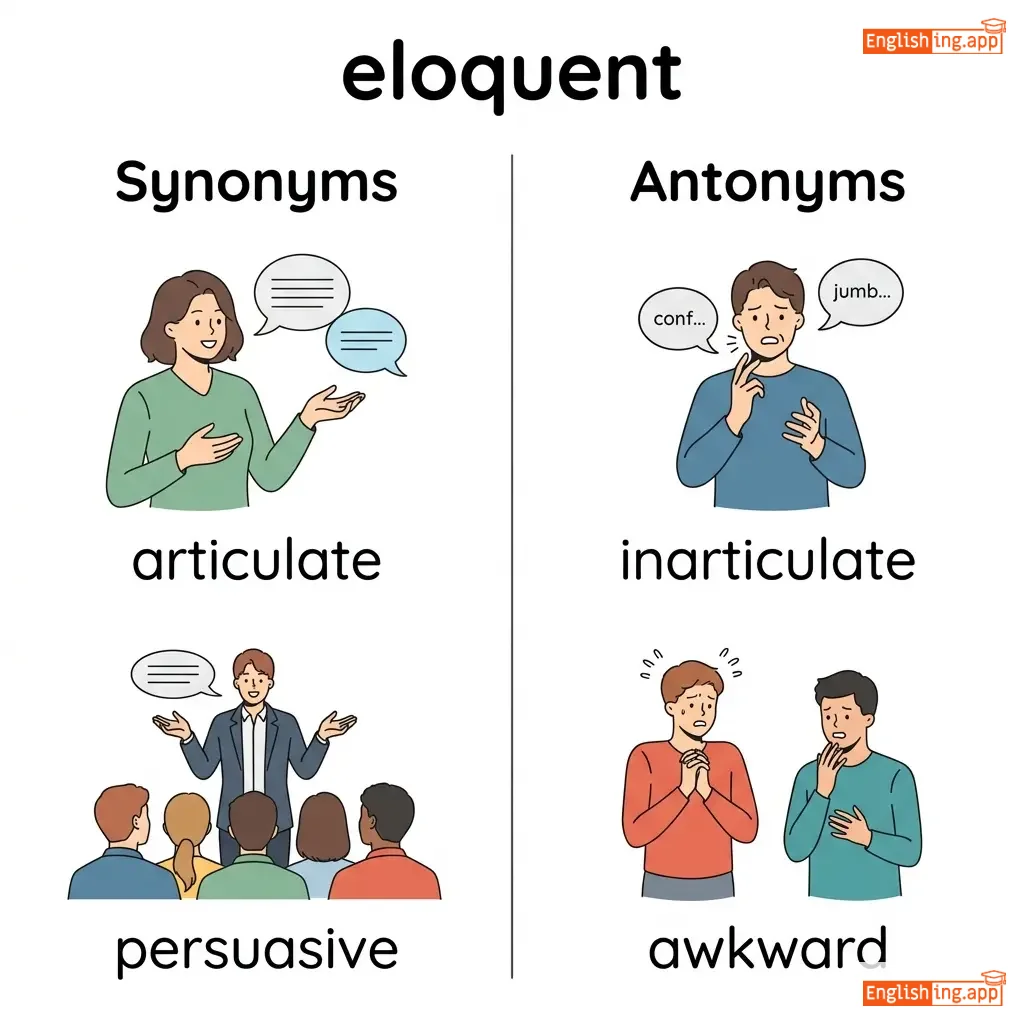
articulate, persuasive, expressive, fluent
••••••
|
inarticulate, awkward
••••••
|
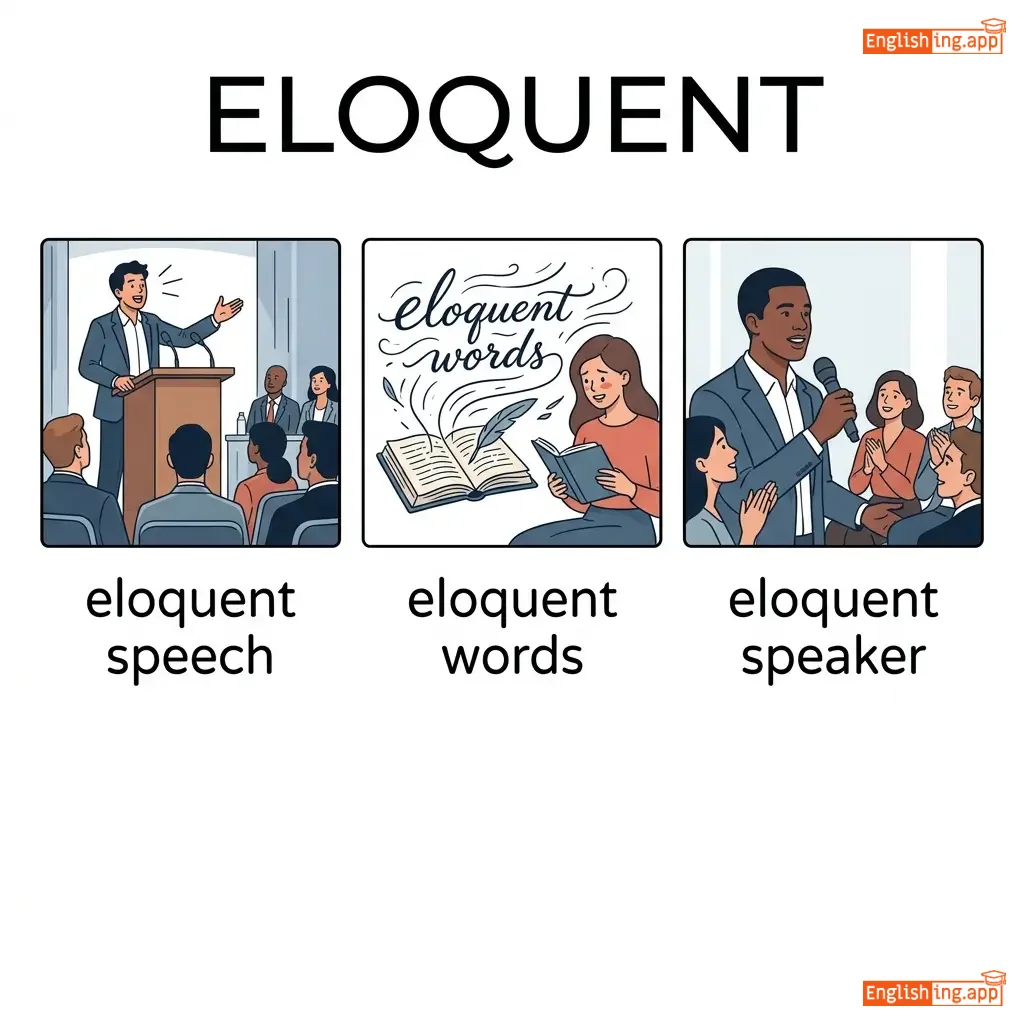
eloquent speech, eloquent words, eloquent speaker
••••••
|
雄弁 = 雄 + 弁 = 魅力的に話す
••••••
|
|
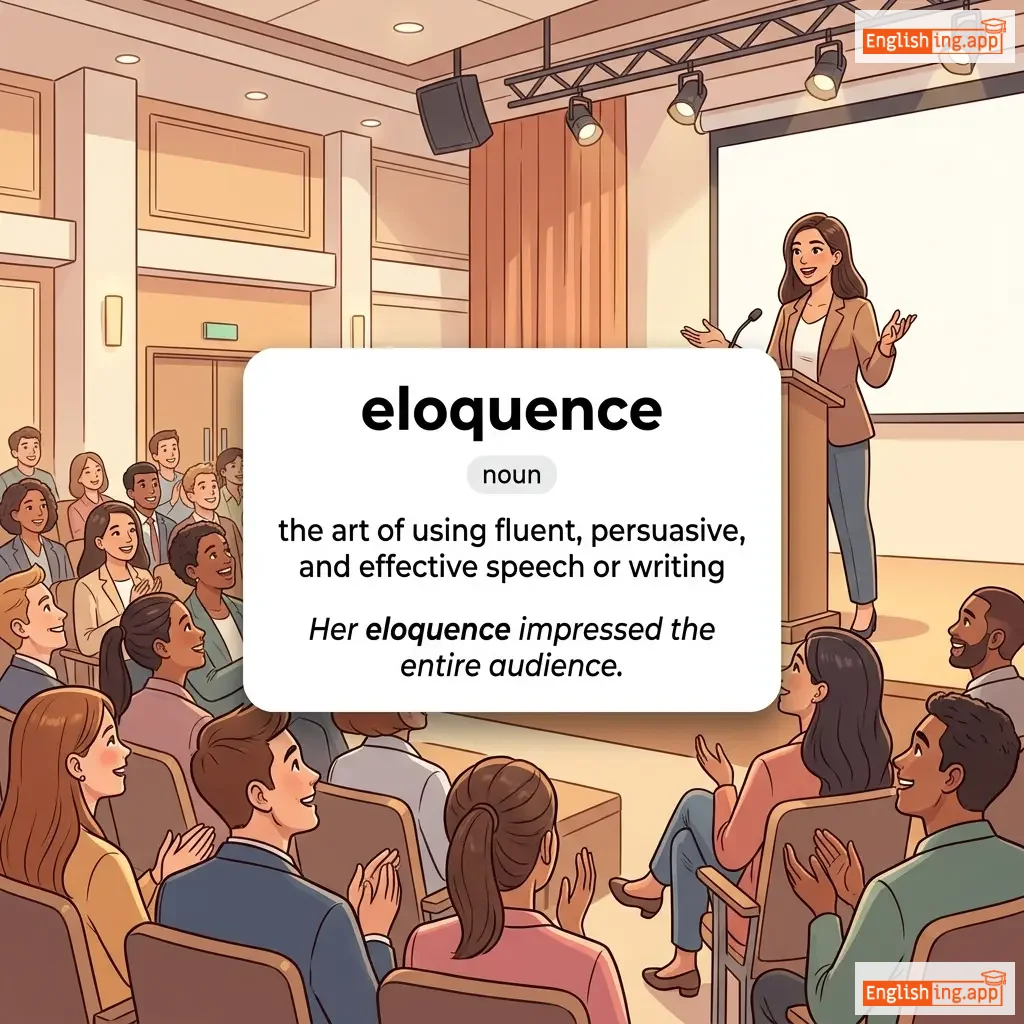
#2889
🗣️
|
/ˈɛləkwəns/
noun
(エロクウェンス)
••••••
|
|
雄弁
yūben
••••••
|
- •••••• | - •••••• | - •••••• | - •••••• |
the art of using fluent, persuasive, and effective speech or writing
••••••
|
Her eloquence impressed the entire audience. |
彼女の雄弁は会場全体に感銘を与えた。
kanojo no yūben wa kaijō zentai ni kanmei o ataeta.
••••••
|
silver-tongued eloquence |
the ability to speak persuasively and smoothly
••••••
|
銀の舌の雄弁
gin no shita no yūben
••••••
|
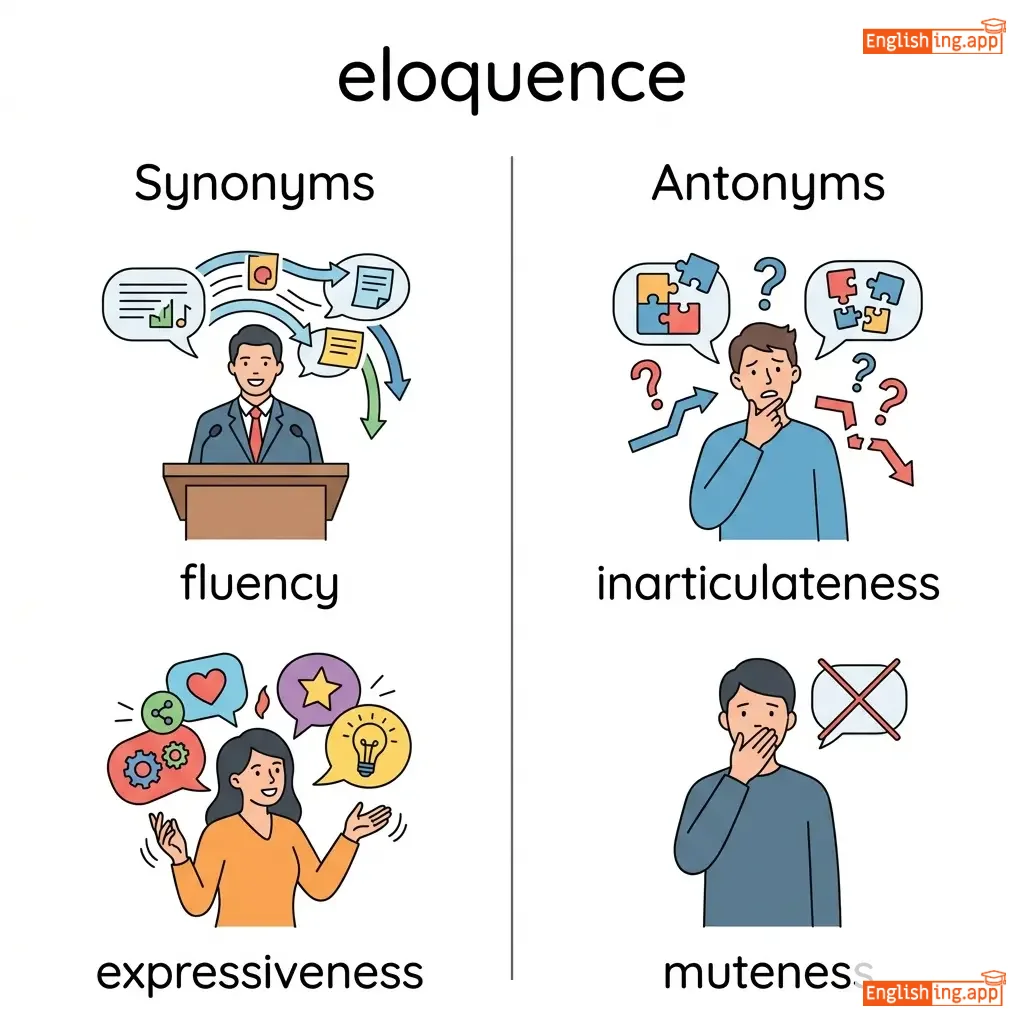
fluency, expressiveness, persuasiveness, oratory
••••••
|
inarticulateness, muteness
••••••
|
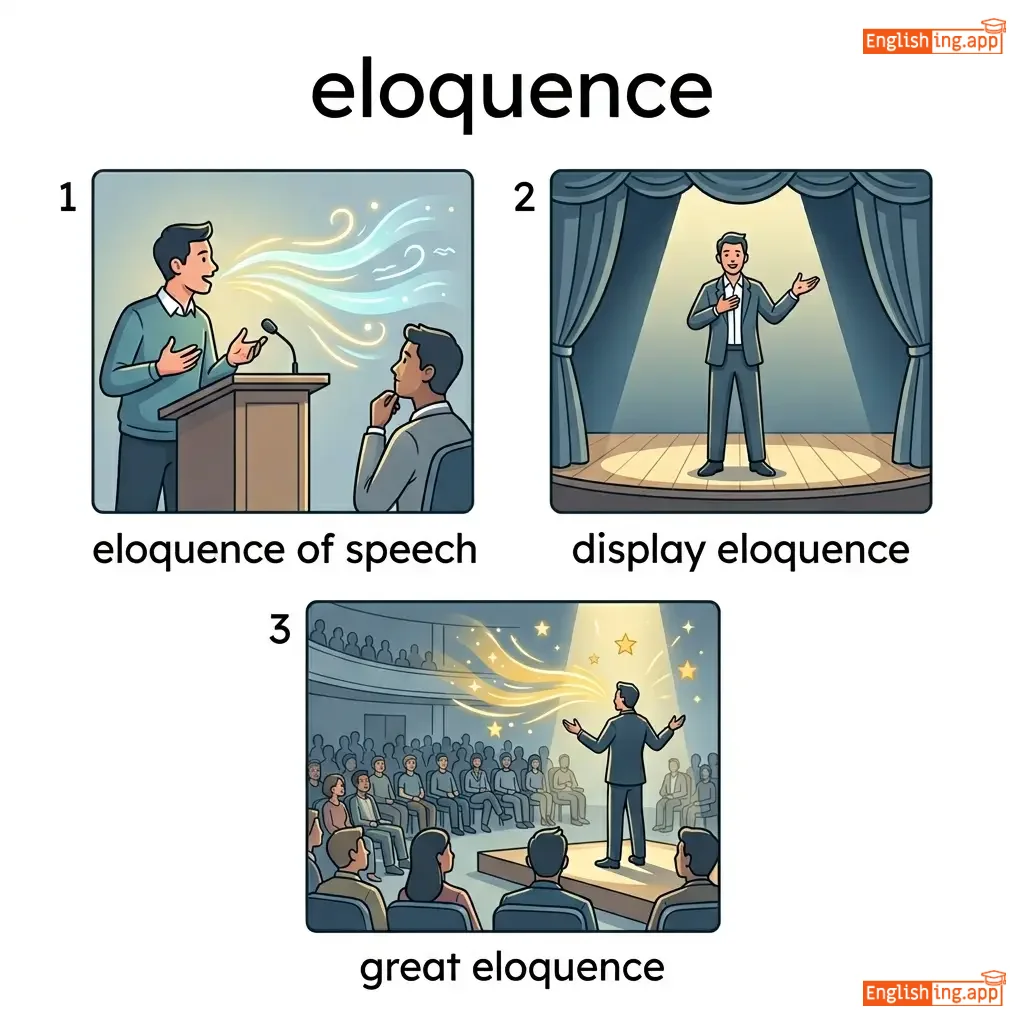
eloquence of speech, display eloquence, great eloquence
••••••
|
Eloquence = Elegant + Sentence → 雄弁
••••••
|
|
#2890
💍
|
/ɪˈloʊp/
verb
(イロープ)
••••••
|
- •••••• |
駆け落ちする
kakeochi suru
••••••
|
eloped
イロープド
••••••
|
eloped
イロープド
••••••
|
elopes
イロープス
••••••
|
eloping
イローピング
••••••
|
to run away secretly in order to get married, especially without parental consent
••••••
|
The young couple decided to elope to another city.
若いカップルは別の都市に駆け落ちすることに決めました。
••••••
|
若いカップルは別の都市に駆け落ちすることに決めました。
Wakai kappuru wa betsu no toshi ni kakeochi suru koto ni kimemashita.
••••••
|
- •••••• | - •••••• | - •••••• |
run away, abscond, flee, escape
••••••
|
stay, remain
••••••
|
elope with, decide to elope, secretly elope
••••••
|
Elopは駆け落ちする意味 - 密かに結婚するために逃げることを想像してみて!
••••••
|
|
#2891
🗣️
|
/ˌɛləˈkjuːʃn/
noun
(エロキューション)
••••••
|
- •••••• |
弁論術
benron-jutsu
••••••
|
- •••••• | - •••••• | - •••••• | - •••••• |
The skill of clear and expressive speech, especially in public speaking.
••••••
|
She improved her elocution through constant practice. |
彼女は継続的な練習を通じて弁論術を向上させた。
Kanojo wa keizokuteki na renshū o tōjite benron-jutsu o kōjō saseta.
••••••
|
- •••••• | - •••••• | - •••••• |
speech, oratory, rhetoric, articulation, delivery
••••••
|
mumbling, inarticulacy
••••••
|
elocution class, elocution lesson, clear elocution, elocution training
••••••
|
エロキューションは弁論術 - 印象的な話し方で人々を感動させる技術。
••••••
|
|
#2892
⭕
|
/ɪˈlɪptɪkl/
adjective
(エリプティカル)
••••••
|
- •••••• |
楕円形の
daenkei no
••••••
|
- •••••• | - •••••• | - •••••• | - •••••• |
Having the shape of an ellipse; also, a style of speech that is concise and sometimes obscure.
••••••
|
The planet follows an elliptical orbit around the sun.
その惑星は太陽の周りをエリプティカルな軌道で回っています。
••••••
|
その惑星は太陽の周りをエリプティカルな軌道で回っています。
Sono wakusei wa taiyo no mawari o eriputikaru na kidou de mawatteimasu.
••••••
|
- •••••• | - •••••• | - •••••• |
oval, oblong, concise, indirect
••••••
|
circular, direct
••••••
|
elliptical orbit, elliptical machine, elliptical shape, elliptical style
••••••
|
エリプティカルは卵の形をしている!
••••••
|
|
#2893
…
|
/ɪˈlɪpsɪs/
noun
(エリプシス)
••••••
|
- •••••• |
省略記号
shōryaku kigō
••••••
|
- •••••• | - •••••• | - •••••• | - •••••• |
The omission of words in a sentence, represented by three dots (...).
••••••
|
The writer used an ellipsis to show that part of the quote was omitted. |
作家は引用部分が省略されたことを示すために省略記号を使用しました。
Sakka wa in'yō bubun ga shōryaku sareta koto o shimesu tame ni shōryaku kigō o shiyō shimashita.
••••••
|
- •••••• | - •••••• | - •••••• |
omission, dots, pause, truncation
••••••
|
completion, inclusion
••••••
|
use an ellipsis, ellipsis in writing, insert ellipsis, ellipsis mark
••••••
|
省略記号は...三点で不完全を示す。
••••••
|
|
#2894
👑
|
/ɪˌlɪzəˈbiːθən/
adjective
(エリザベス朝時代)
••••••
|
- •••••• |
エリザベス朝時代
Erizabesu-chou jidai
••••••
|
- •••••• | - •••••• | - •••••• | - •••••• |
Relating to the reign of Queen Elizabeth I of England (1558–1603), especially the style of that period.
••••••
|
Shakespeare wrote many of his plays during the Elizabethan era. |
シェイクスピアはエリザベス朝時代に多くの戯曲を書きました。
Sheikusupia wa Erizabesu-chou jidai ni ooku no gikyoku o kakimashita.
••••••
|
- •••••• | - •••••• | - •••••• |
renaissance, tudor, historical, old-English
••••••
|
modern, contemporary
••••••
|
Elizabethan era, Elizabethan drama, Elizabethan architecture, Elizabethan age
••••••
|
Elizabethan はエリザベス女王の時代を意味します - シェイクスピアの戯曲を想像してください。
••••••
|
|
#2895
🧪
|
/ɪˈlɪksər/
noun
(エリクシール)
••••••
|
|
エリクシール
erikushīru
••••••
|
- •••••• | - •••••• | - •••••• | - •••••• |
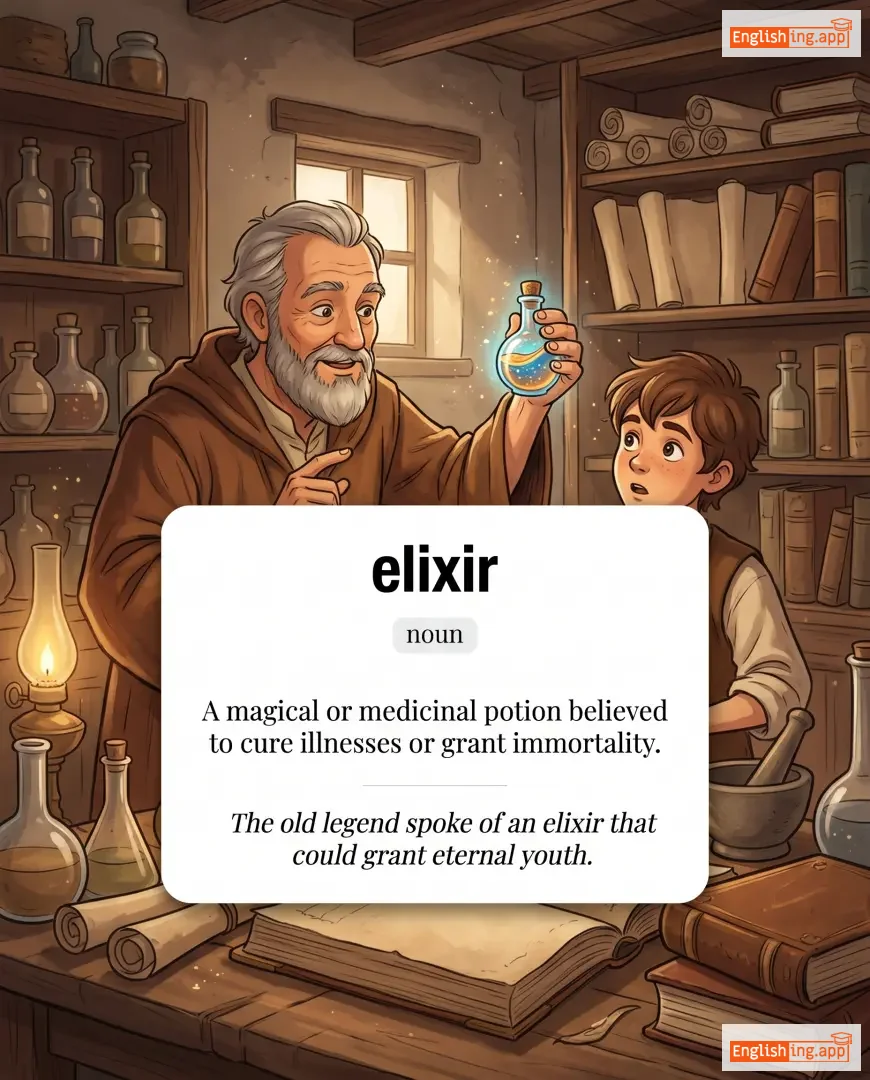
A magical or medicinal potion believed to cure illnesses or grant immortality.
••••••
|
The old legend spoke of an elixir that could grant eternal youth. |
古代の伝説は、永遠の若さを与えることができるエリクシールについて語っていました。
Kodai no densetsu wa, eien no wakasa o ataeru koto ga dekiru erikushīru ni tsuite katatte imashita.
••••••
|
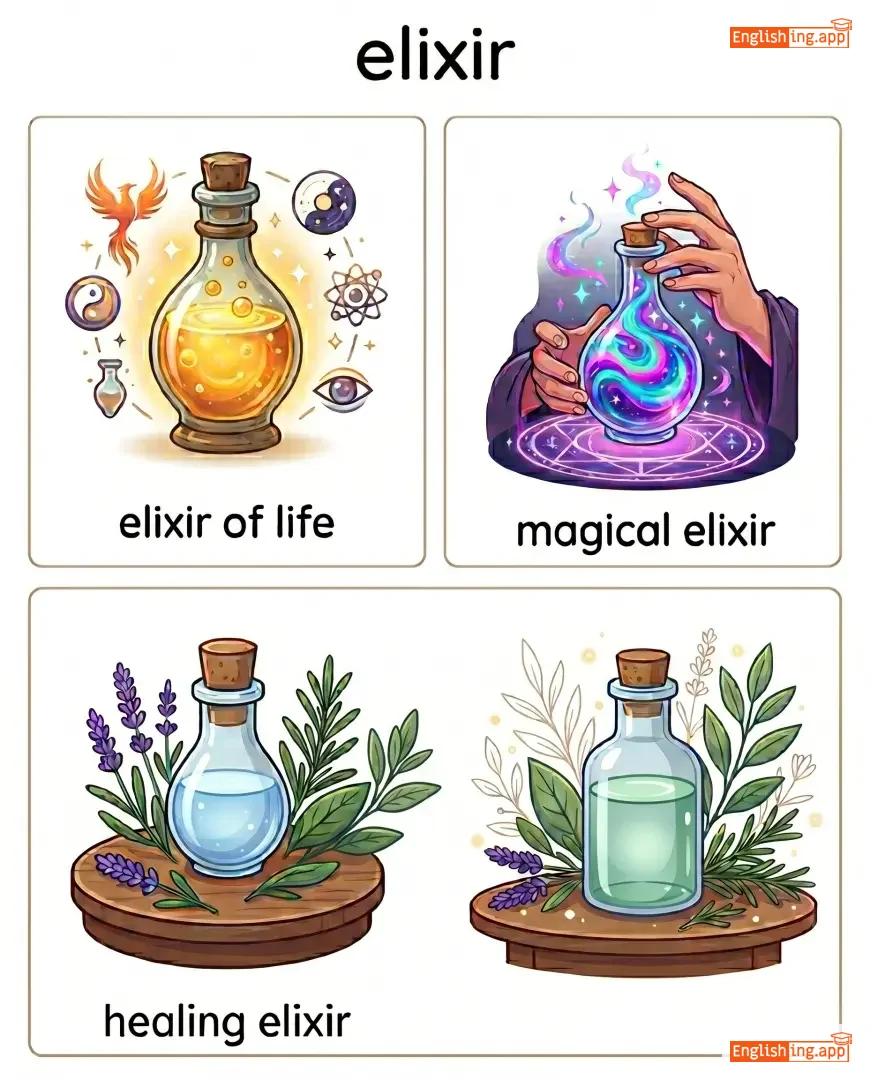
elixir of life |
A mythical potion that grants immortality or eternal youth.
••••••
|
命のエリクシール
Inochi no erikushīru
••••••
|
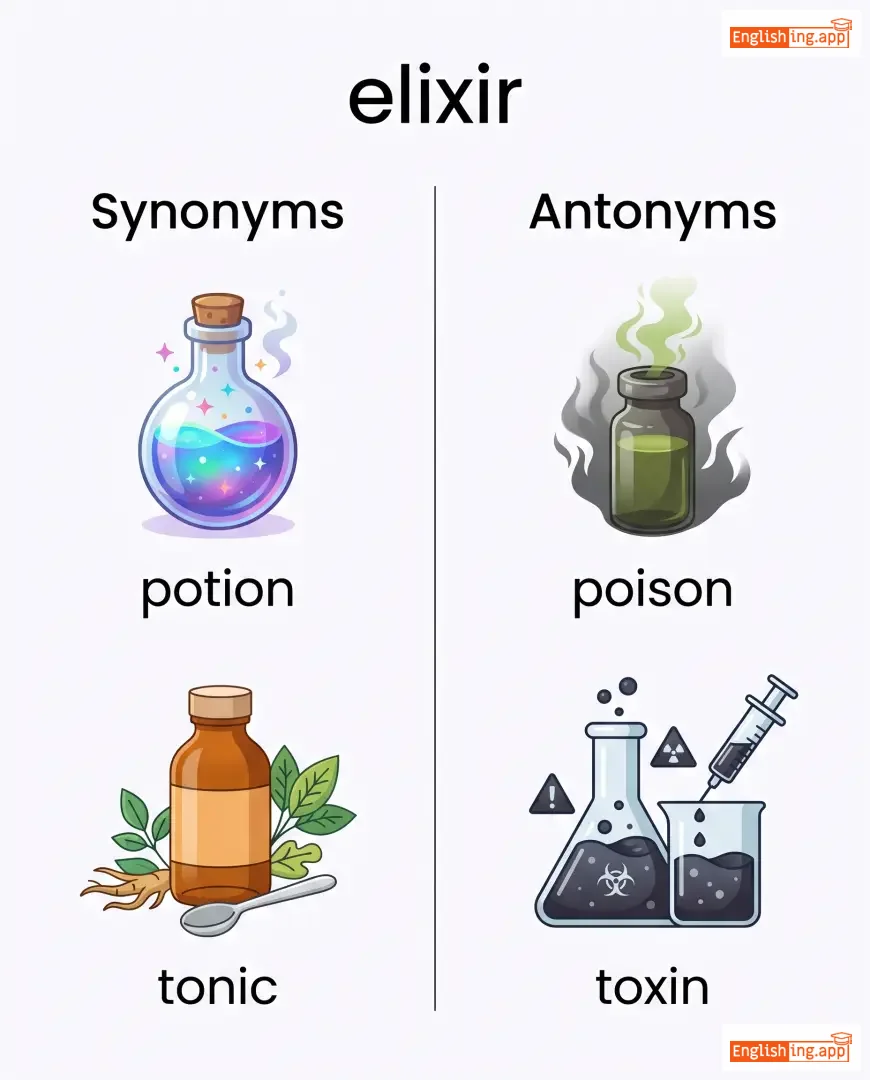
potion, tonic, remedy, cure, panacea
••••••
|
poison, toxin, disease
••••••
|
elixir of life, magical elixir, healing elixir, secret elixir
••••••
|
Elixir はまるで魔法の薬、水で何でも治す!
••••••
|
|
#2896
😃
|
/ɪˈleɪʃən/
noun
(ɪˈleɪʃən)
••••••
|
- •••••• |
興奮
kōfun
••••••
|
- •••••• | - •••••• | - •••••• | - •••••• |
A feeling of great happiness and excitement.
••••••
|
His elation was evident after winning the championship. |
彼の興奮はチャンピオンシップに勝った後、明らかだった。
Kare no kōfun wa chanpionshipu ni katta ato, akiraka datta.
••••••
|
- •••••• | - •••••• | - •••••• |
joy, delight, happiness, euphoria, bliss
••••••
|
misery, sadness, sorrow
••••••
|
sense of elation, feeling of elation, elation at success
••••••
|
Elation は興奮を意味します - 大きな勝利後に興奮を感じます。
••••••
|
|
#2897
❌
|
/ɪˈlɪməˌneɪt/
verb
(イリミネイト)
••••••
|
|
排除する
haijo suru
••••••
|
eliminated
イリミネイテッド
••••••
|
eliminated
イリミネイテッド
••••••
|
eliminates
イリミネイツ
••••••
|
eliminating
イリミネイティング
••••••
|
To completely remove or get rid of something.
••••••
|
The new policy aims to eliminate corruption in the system.
新しい政策はシステム内の汚職を排除することを目的としています。
••••••
|
新しい政策はシステム内の汚職を排除することを目的としています。
Atarashī seisaku wa shisutemu-nai no oshoku o haijo suru koto o mokuteki to shiteimasu.
••••••
|
eliminate the competition
競争を排除する
••••••
|
to defeat or remove rivals
••••••
|
競争を排除する
kyousou o haijo suru
••••••
|
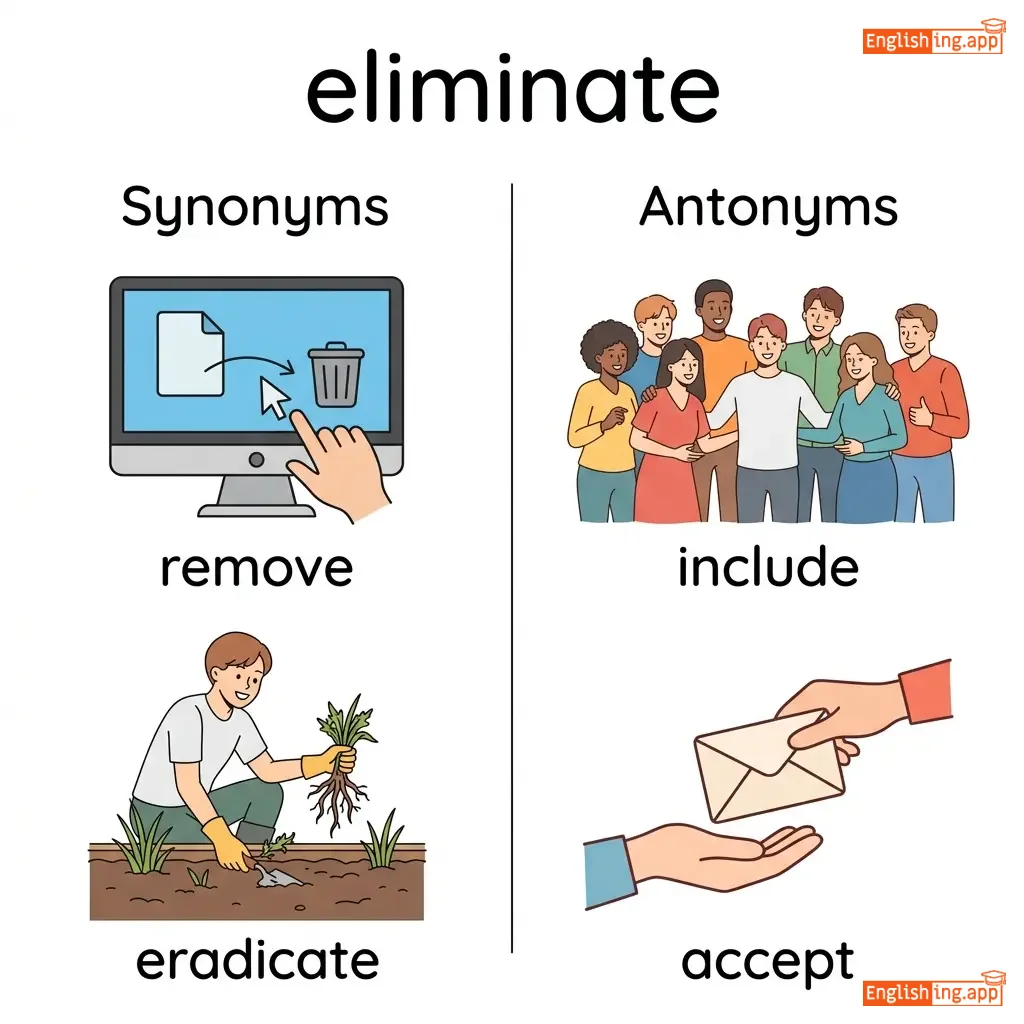
remove, eradicate, abolish, exterminate, wipe out
••••••
|
include, accept, retain
••••••
|
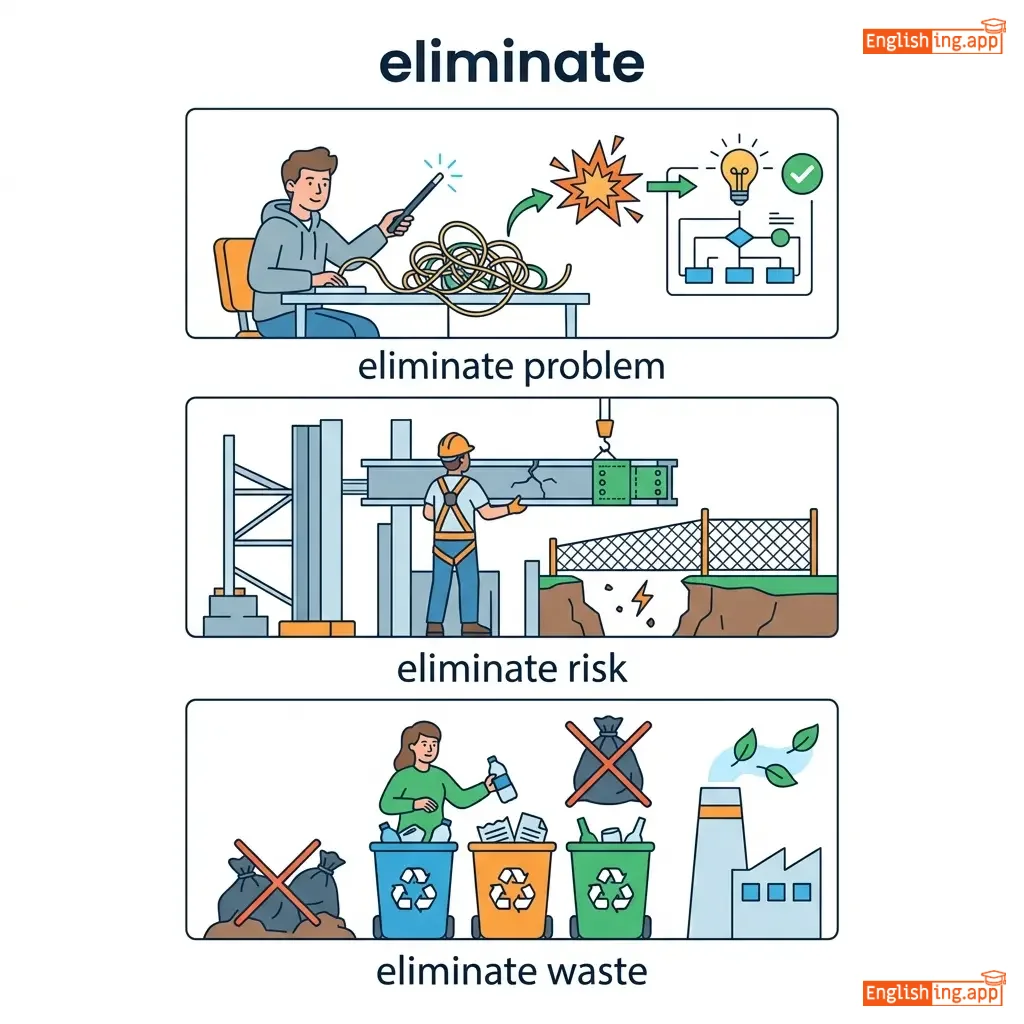
eliminate problem, eliminate risk, eliminate waste, eliminate need
••••••
|
テストで間違いを排除すれば、正しい答えが得られます。
••••••
|
|
#2898
✅
|
/ˈɛlɪdʒəbl/
adjective
(エリジブル)
••••••
|
|
適格な
tekikaku na
••••••
|
- •••••• | - •••••• | - •••••• | - •••••• |
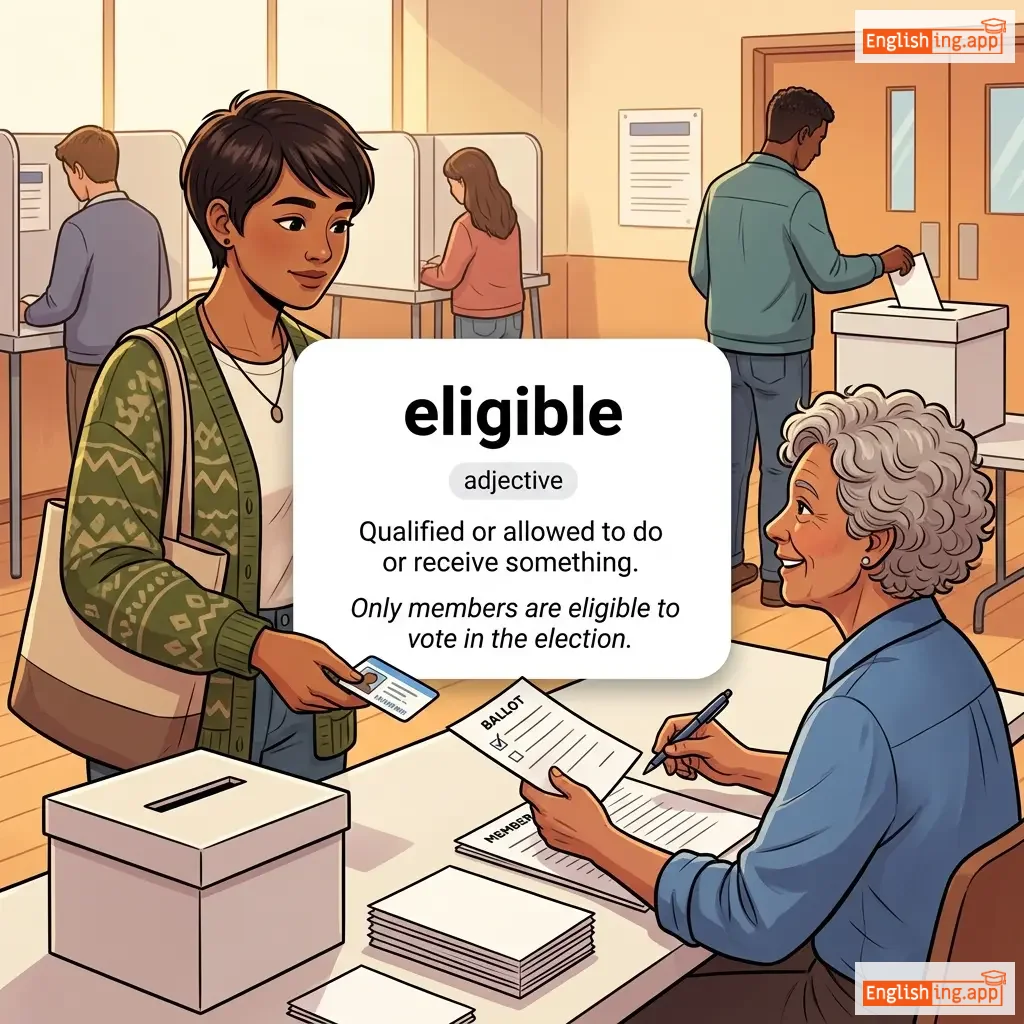
Qualified or allowed to do or receive something.
••••••
|
Only members are eligible to vote in the election. |
選挙で投票する資格があるのは会員のみです。
Senkyo de tōhyō suru shikaku ga aru no wa kaiin nomi desu.
••••••
|
eligible bachelor |
a man considered suitable for marriage
••••••
|
適格な独身男性
tekikaku na dokushin dansei
••••••
|
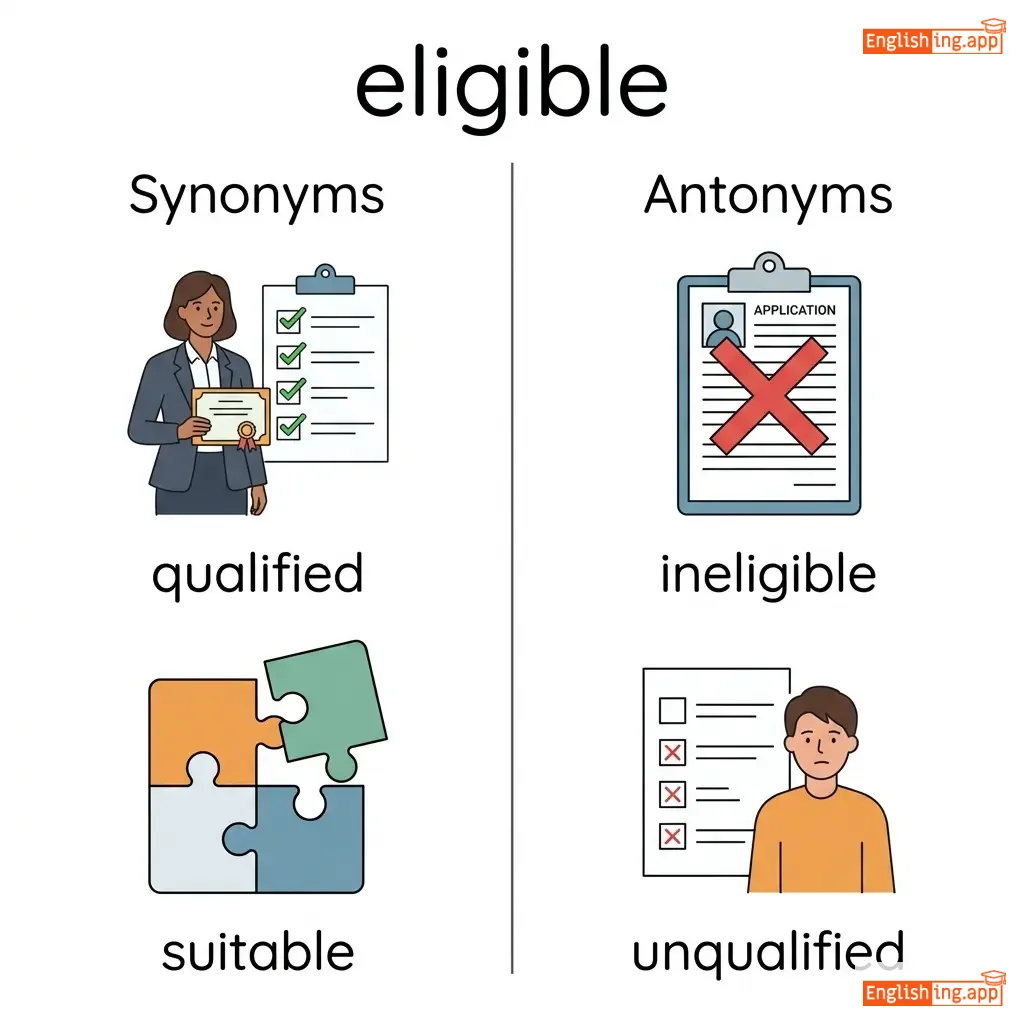
qualified, suitable, entitled, acceptable
••••••
|
ineligible, unqualified, unsuitable
••••••
|
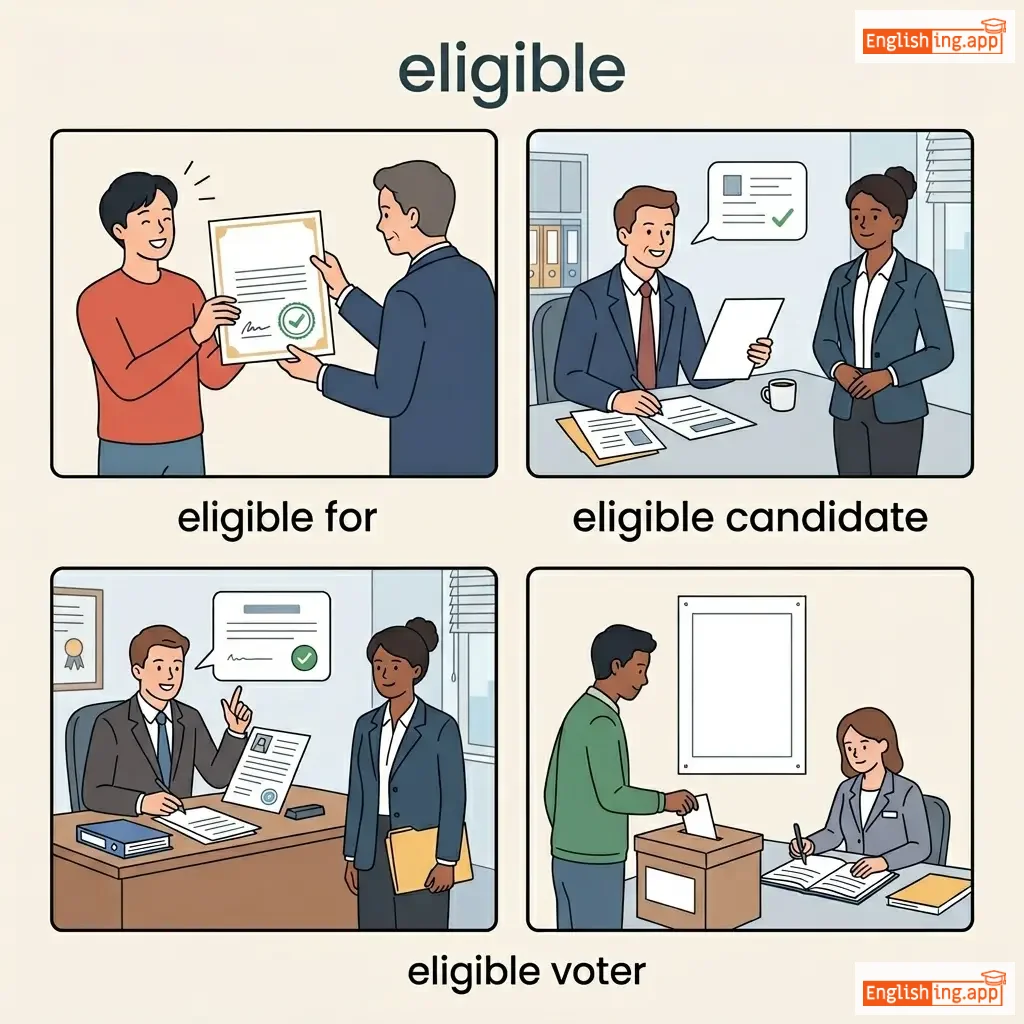
eligible for, eligible candidate, eligible voter, eligible participant
••••••
|
Eligibleは、試験に合格すれば、適格になることを意味します。
••••••
|
|
#2899
💬
|
/ɪˈlɪsɪt/
verb
(エリシット)
••••••
|
|
引き出す
hikidasu
••••••
|
elicited
エリシテッド
••••••
|
elicited
エリシテッド
••••••
|
elicits
エリシッツ
••••••
|
eliciting
エリシティング
••••••
|
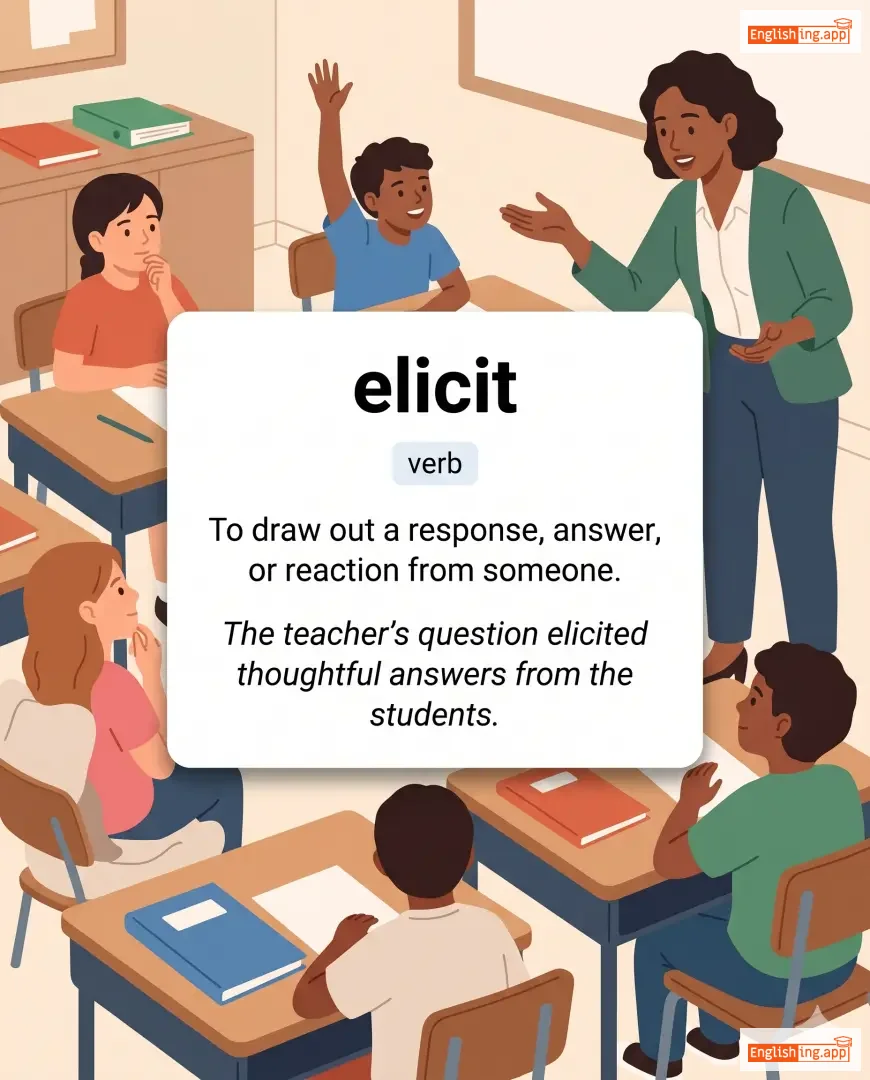
To draw out a response, answer, or reaction from someone.
••••••
|
The teacher’s question elicited thoughtful answers from the students.
先生の質問は生徒たちから思慮深い回答を引き出しました。
••••••
|
先生の質問は生徒たちから思慮深い回答を引き出しました。
Sensei no shitsumon wa seito-tachi kara shinri-bukai kaitō o hikidashimashita.
••••••
|
elicit a response
反応を引き出す
••••••
|
to cause someone to reply or react
••••••
|
反応を引き出す
hannou o hikidasu
••••••
|
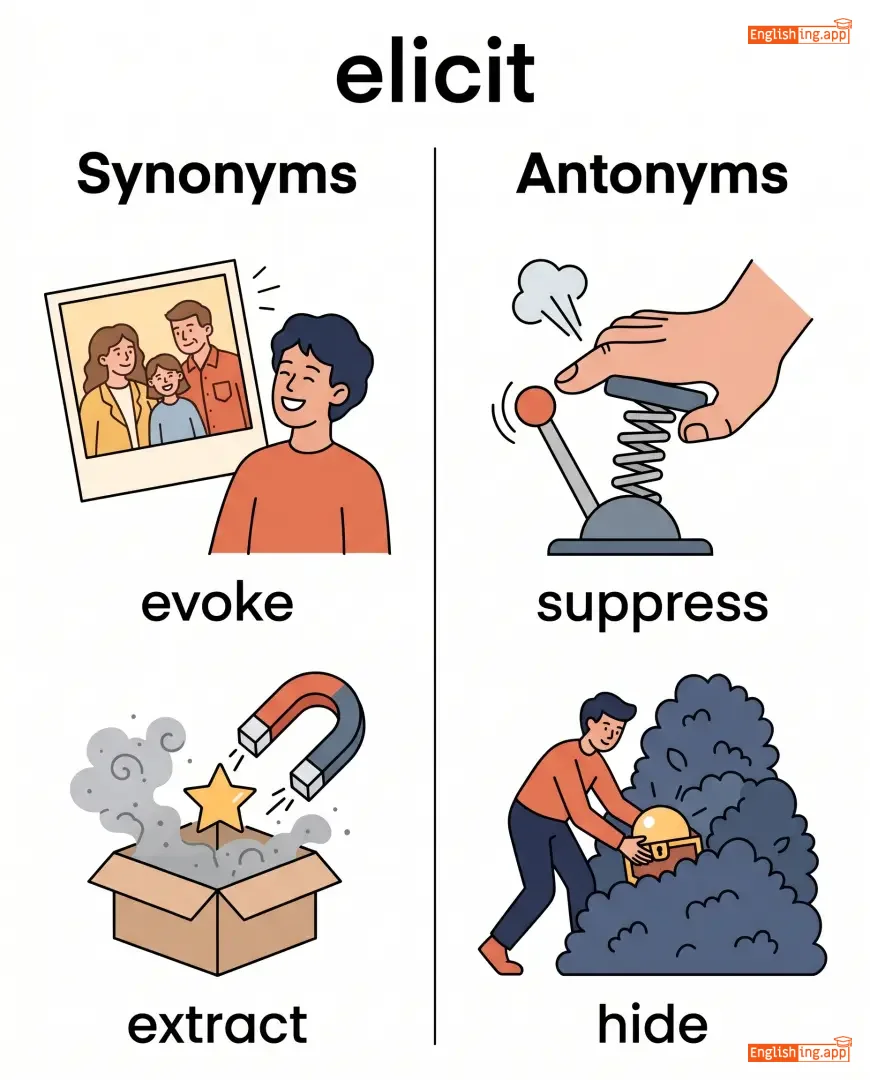
evoke, extract, provoke, obtain, bring out
••••••
|
suppress, hide, silence
••••••
|
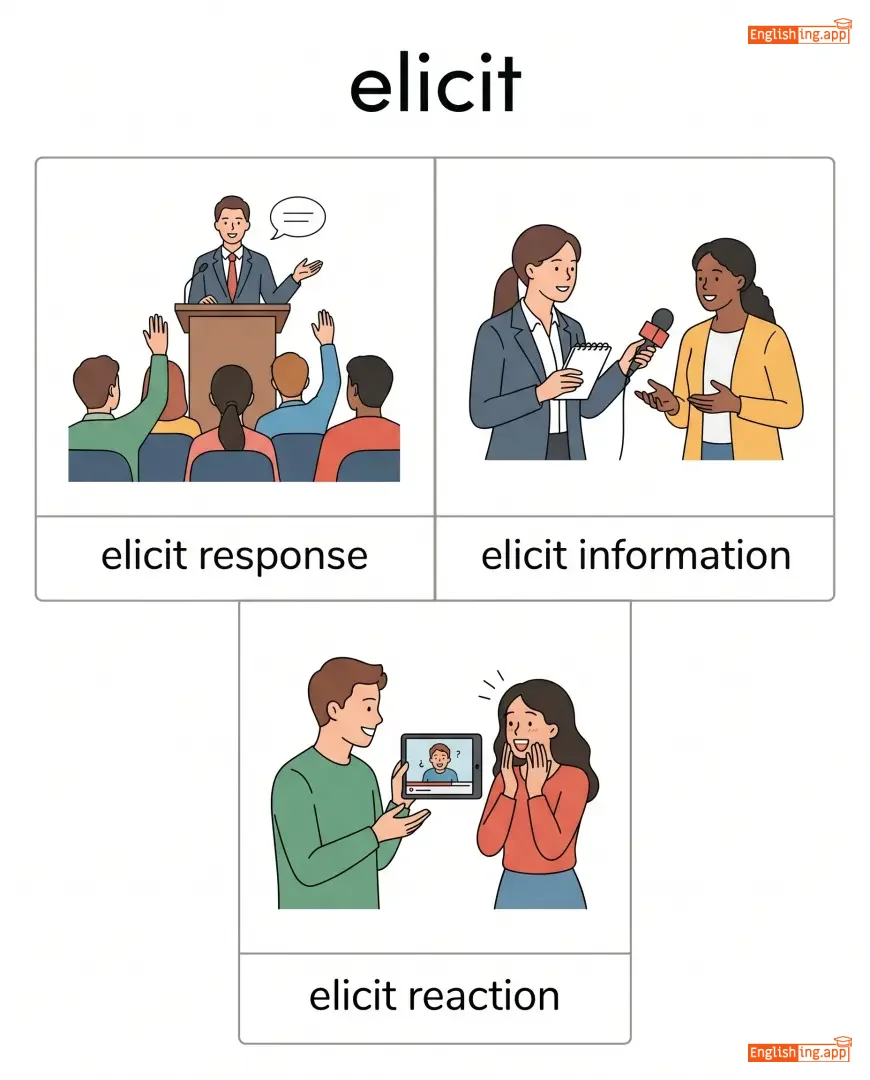
elicit response, elicit information, elicit reaction, elicit support
••••••
|
エリシット = 英語で反応を引き出す方法
••••••
|
|
#2900
⛰️
|
/ˌɛlɪˈveɪʃən/
noun
(エレヴェイション)
••••••
|
- •••••• |
高度
kōdo
••••••
|
- •••••• | - •••••• | - •••••• | - •••••• |
The act of raising something to a higher position or level.
••••••
|
The hikers reached a high elevation after hours of climbing. |
登山者たちは数時間の登攀後、高い高度に達しました。
Tozanshatachi wa suujikan no tōhōgo, takai kōdo ni tasshimashita.
••••••
|
at a high elevation |
located at a place above sea level
••••••
|
高い高度で
Takai kōdo de
••••••
|
height, altitude, rise, uplift, promotion
••••••
|
decline, fall, descent
••••••
|
high elevation, elevation above sea level, rapid elevation, elevation gain
••••••
|
Elevation=Elevate, 上がる→高度!
••••••
|
|
#2901
⬆️
|
/ˈɛlɪveɪt/
verb
(エレベート)
••••••
|
|
高める
takameru
••••••
|
elevated
エレベーテッド
••••••
|
elevated
エレベーテッド
••••••
|
elevates
エレベーツ
••••••
|
elevating
エレベーティング
••••••
|
To raise or lift something to a higher position; to improve in status, mood, or quality.
••••••
|
Good music can elevate your mood instantly.
良い音楽は瞬時に気分を高めることができます。
••••••
|
良い音楽は瞬時に気分を高めることができます。
Yoi ongaku wa shunji ni kibun o takameru koto ga dekimasu.
••••••
|
elevate the discussion
議論を高める
••••••
|
To raise the level of a conversation to a more serious or intelligent one.
••••••
|
議論を高める
Giron o takameru
••••••
|
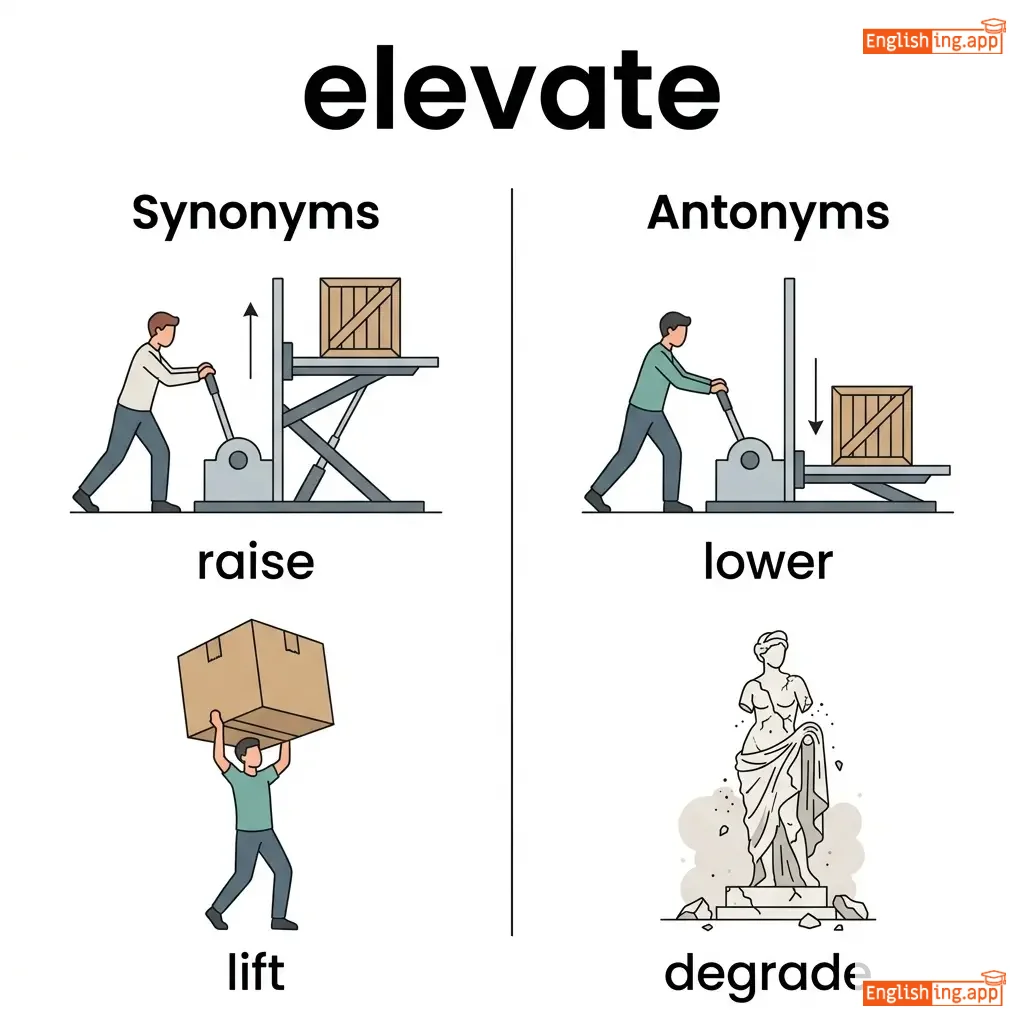
raise, lift, promote, heighten, uplift
••••••
|
lower, degrade, depress
••••••
|
elevate mood, elevate position, elevate status, elevate to
••••••
|
高めるはまるでエレベーターで上に行くようなものです。
••••••
|
|
#2902
🐘
|
/ˌɛlɪˈfæntaɪn/
adjective
(エレファンタイン)
••••••
|
- •••••• |
象のような
zō no yōna
••••••
|
- •••••• | - •••••• | - •••••• | - •••••• |
Huge, clumsy, or resembling an elephant in size or movement.
••••••
|
The man moved with an elephantine grace.
その男はエレファンタインの優雅さで動いた。
••••••
|
その男はエレファンタインの優雅さで動いた。
Sono otoko wa erefantain no yūgasa de ugoita.
••••••
|
- •••••• | - •••••• | - •••••• |
massive, enormous, gigantic, lumbering, colossal
••••••
|
tiny, small, delicate
••••••
|
elephantine size, elephantine memory, elephantine movements, elephantine proportions
••••••
|
Elephantineは象のように大きくて不器用なことを意味します。
••••••
|
|
#2903
📘
|
/ˌɛlɪˈmɛntəri/
adjective
(エレメンタリー)
••••••
|
- •••••• |
基本的な
kihonteki na
••••••
|
- •••••• | - •••••• | - •••••• | - •••••• |
Relating to the basic or fundamental aspects of something; simple or easy to understand.
••••••
|
She gave an elementary explanation of the problem. |
彼女は問題の基本的な説明をしました。
Kanojo wa mondai no kihonteki na setsumei o shimashita.
••••••
|
elementary, my dear Watson |
A phrase used to suggest that the solution to a problem is simple.
••••••
|
基本的な、親愛なるワトソン
kihonteki na, shin'ainaru Watson
••••••
|
basic, fundamental, simple, introductory, rudimentary
••••••
|
advanced, complex, sophisticated
••••••
|
elementary school, elementary knowledge, elementary level, elementary course
••••••
|
基本的なは、英語でのelementaryと同じように、基本的で簡単なことを意味します。
••••••
|
|
#2904
🔬
|
/ˈɛlɪmənt/
noun
(エレメント)
••••••
|
- •••••• |
要素
yōso
••••••
|
- •••••• | - •••••• | - •••••• | - •••••• |
A basic or essential part of something; a simple substance that cannot be broken down further.
••••••
|
Trust is a key element of any strong relationship.
信頼は強い関係の重要な要素です。
••••••
|
信頼は強い関係の重要な要素です。
Shinrai wa tsuyoi kankei no jūyōna yōso desu.
••••••
|
in one's element
自分の元素にいる
••••••
|
To be in a situation that is natural and comfortable for someone.
••••••
|
自分の元素にいる
Jibun no gensu ni iru
••••••
|
component, part, factor, ingredient, aspect
••••••
|
whole, entirety
••••••
|
basic element, chemical element, essential element, natural element
••••••
|
エレメントは基本的な部分、化学の要素のように、単純な構成部分です。
••••••
|
|
#2905
🪦
|
/ˈɛlɪdʒi/
noun
(エレジー)
••••••
|
|
エレジー
erejī
••••••
|
- •••••• | - •••••• | - •••••• | - •••••• |
A poem or song expressing sorrow, especially for someone who has died.
••••••
|
The poet wrote an elegy for his late friend. |
詩人は亡き友人のためにエレジーを書きました。
Shijin wa naki yūjin no tame ni erejī o kakimashita.
••••••
|
- •••••• | - •••••• | - •••••• |
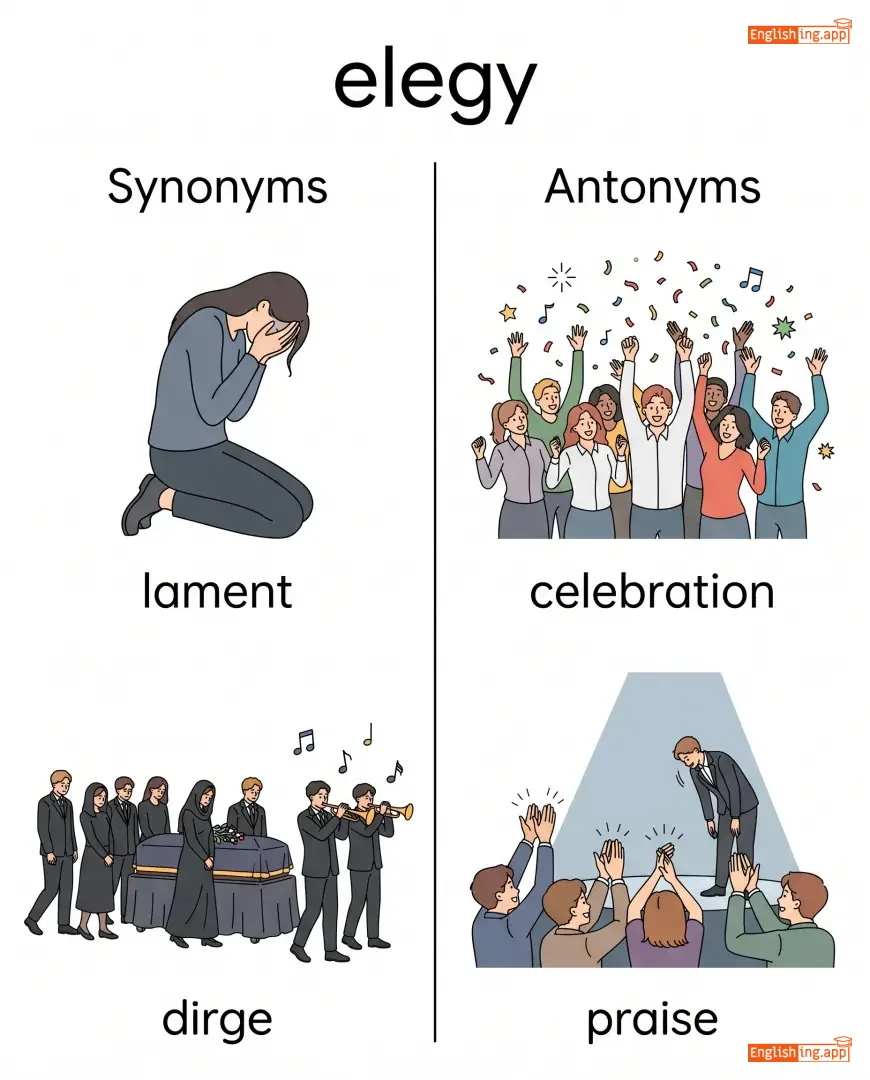
lament, dirge, requiem, threnody, ode
••••••
|
celebration, praise
••••••
|
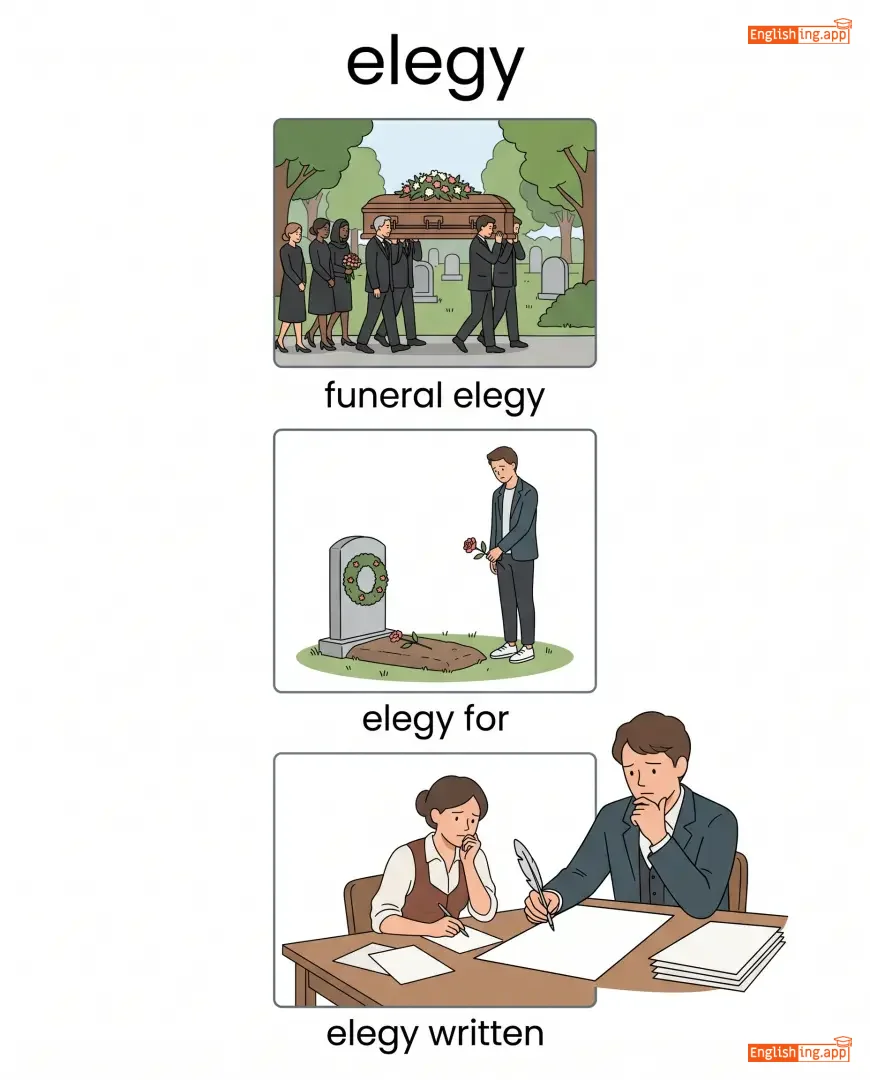
funeral elegy, elegy for, elegy written, mournful elegy
••••••
|
エレジーは失った友への悲しい歌のようなもの。
••••••
|
|
#2906
😔
|
/ˌɛl.ɪˈdʒaɪ.ək/
adjective
(エレジアック)
••••••
|
- •••••• |
エレジアック
erejiakku
••••••
|
- •••••• | - •••••• | - •••••• | - •••••• |
Expressing sorrow, often for something past; resembling an elegy.
••••••
|
The novel ends on an elegiac note, mourning the lost era. |
小説は失われた時代を悼むエレジアックな調子で終わる。
Shōsetsu wa ushinawareta jidai o itamu erejiakku na chōshi de owaru.
••••••
|
- •••••• | - •••••• | - •••••• |
mournful, melancholy, plaintive, sorrowful, nostalgic
••••••
|
joyful, cheerful, celebratory
••••••
|
elegiac tone, elegiac poem, elegiac mood
••••••
|
エレジアックはエレジーのような悲しみを表現するものです。
••••••
|
|
#2907
🎁
|
/ˌɛl.ɪˈmɑː.səˌnɛr.i/
adjective
(エレモシナリー)
••••••
|
- •••••• |
慈善的な
jizentekina
••••••
|
- •••••• | - •••••• | - •••••• | - •••••• |
Relating to charity; dependent on or supported by charity.
••••••
|
The hospital was founded as an eleemosynary institution. |
病院は慈善的な機関として設立されました。
Byouin wa jizentekina kikan toshite setsuritsu saremashita.
••••••
|
- •••••• | - •••••• | - •••••• |
charitable, philanthropic, benevolent, altruistic
••••••
|
selfish, profit-driven
••••••
|
eleemosynary institution, eleemosynary organization
••••••
|
Eleemosynary は慈善的な意味です – ‘エレモ’は助け、‘シナリー’はお金です。
••••••
|
|
#2908
🖨️
|
/ɪˈlɛk.trə.taɪp/
noun
(エレクトロタイプ)
••••••
|
- •••••• |
エレクトロタイプ
electrotype
••••••
|
- •••••• | - •••••• | - •••••• | - •••••• |
A duplicate printing plate made by electroplating a mold of the original.
••••••
|
The printer used an electrotype to produce multiple copies of the page. |
プリンターはページの複数のコピーを作成するためにエレクトロタイプを使用しました。
Purintā wa pēji no fukusū no kopī o sakusei suru tame ni elektrotype o shiyō shimashita.
••••••
|
- •••••• | - •••••• | - •••••• |
copy, duplicate, facsimile, reproduction
••••••
|
original, prototype
••••••
|
electrotype plate, electrotype printing
••••••
|
電気で印刷版を作成する、エレクトロタイプ。
••••••
|
|
#2909
⚡
|
/ɪˌlɛkˈtrɑː.lə.sɪs/
noun
(電解)
••••••
|
- •••••• |
電解
denkai
••••••
|
- •••••• | - •••••• | - •••••• | - •••••• |
A chemical decomposition produced by passing an electric current through a liquid or solution.
••••••
|
Electrolysis is used to separate hydrogen from water. |
電解は水から水素を分離するために使用されます。
Denkai wa mizu kara suiso o bunri suru tame ni shiyou saremasu.
••••••
|
- •••••• | - •••••• | - •••••• |
electrochemistry, decomposition, ionization, dissociation
••••••
|
synthesis, combination
••••••
|
electrolysis process, electrolysis of water, electrolysis treatment
••••••
|
電 = 電流 + 解 = 分解 = 電流で分解
••••••
|
|
#2910
💪
|
/ˈɛl.boʊ/
noun/verb
(エルボ)
••••••
|
- •••••• |
肘
hiji
••••••
|
elbowed
エルボード
••••••
|
elbowed
エルボード
••••••
|
elbows
エルボス
••••••
|
elbowing
エルボイング
••••••
|
The joint connecting the forearm and the upper arm; as a verb, to push aside using the elbow.
••••••
|
He accidentally hit the table with his elbow.
彼は偶然に肘でテーブルを叩きました。
••••••
|
彼は偶然に肘でテーブルを叩きました。
Kare wa guuzen ni hiji de teeburu wo tatakimashita.
••••••
|
rub elbows
肘をこすり合わせる
••••••
|
To socialize closely with people, often important or famous ones.
••••••
|
社交する
shakou suru
••••••
|
joint, bend, nudge, shove, push
••••••
|
pull, drag
••••••
|
elbow joint, elbow room, rub elbows, elbow grease
••••••
|
肘とは肘、肘をこすり合わせることで社交が生まれる。
••••••
|
Vocabulary Quiz
Test your vocabulary by matching words with their translations or meanings.
Login to take the quiz
Comments (0)
Share your thoughts and join the discussion.
Join the discussion by logging in
Login to CommentNo comments yet
Be the first to share your thoughts!