

翻訳
過去
過去分詞
三人称単数
動名詞
意味
例文
例文の翻訳
同義語
対義語
コロケーション
ニーモニック
Swipe left or right, or use the buttons. Tap image to zoom.
例文の翻訳
単語
Lesson 33Lesson 33 - マスクトグル
|
絵文字
|
単語 | Images | 翻訳 | 過去 | 過去分詞 | 三人称単数 | 動名詞 | 意味 | 例文 | 例文の翻訳 | 表現例 | 表現例の意味 | 表現例の翻訳 | 同義語 | 対義語 | コロケーション | ニーモニック |
|---|---|---|---|---|---|---|---|---|---|---|---|---|---|---|---|---|---|
|
#961
📖
|
/baɪˈɒɡrəfi/
noun
(バイオグラフィ)
••••••
|
- •••••• |
伝記
denki
••••••
|
- •••••• | - •••••• | - •••••• | - •••••• |
A written account of someone's life.
••••••
|
She is writing a biography of the famous poet. |
彼女は有名な詩人の伝記を書いています。
Kanojo wa yuumei na shijin no denki o kaiteimasu.
••••••
|
- •••••• | - •••••• | - •••••• |
life story, memoir, profile, account, chronicle
••••••
|
fiction, fable, fantasy
••••••
|
authorized biography, write a biography, biography of, biography writer
••••••
|
Bio (生命) + graphy (書く) = 生命の記録。
••••••
|
|
#962
📢
|
/blɛər/
verb
(ブレア)
••••••
|
- •••••• |
大きな音を立てる
ōkina oto o tateru
••••••
|
blared
ブレアード
••••••
|
blared
ブレアード
••••••
|
blares
ブレアーズ
••••••
|
blaring
ブレアリング
••••••
|
to make a loud, harsh sound
••••••
|
The car horns blared all night.
ザ カー ホーンズ ブレアード オール ナイト。
••••••
|
車のクラクションは一晩中鳴り響いていた。
Kuruma no kurakushon wa hitobanjuu narihibiite ita.
••••••
|
- •••••• | - •••••• | - •••••• |
blast, roar, boom, resound
••••••
|
whisper, murmur
••••••
|
blare out, blare loudly, music blared
••••••
|
Blare はクラクションのような大きな音!
••••••
|
|
#963
🗣️
|
/ˈblændɪʃmənt/
noun
(ブランディッシュメント)
••••••
|
|
お世辞
oseshi
••••••
|
- •••••• | - •••••• | - •••••• | - •••••• |
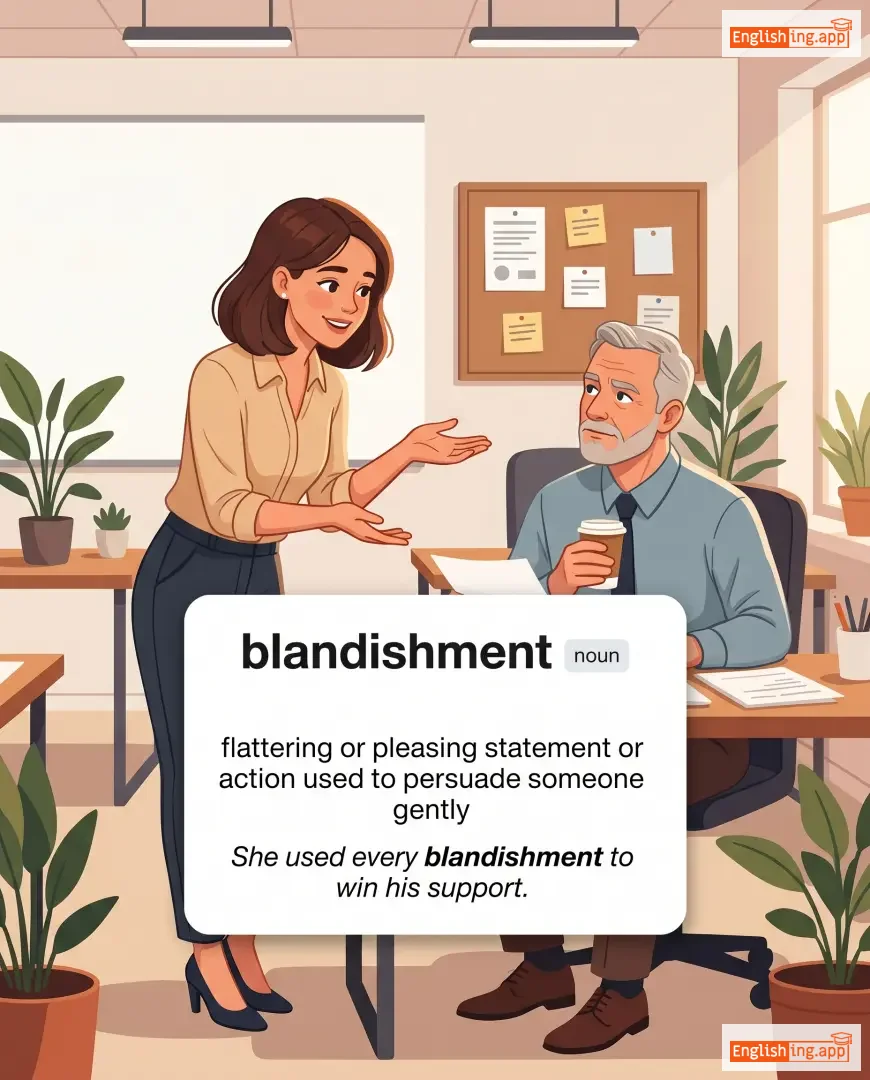
flattering or pleasing statement or action used to persuade someone gently
••••••
|
She used every blandishment to win his support. |
彼女は彼の支持を得るためにあらゆるお世辞を使った。
Kanojo wa kare no shiji o eru tame ni arayuru oseshi o tsukatta.
••••••
|
- •••••• | - •••••• | - •••••• |
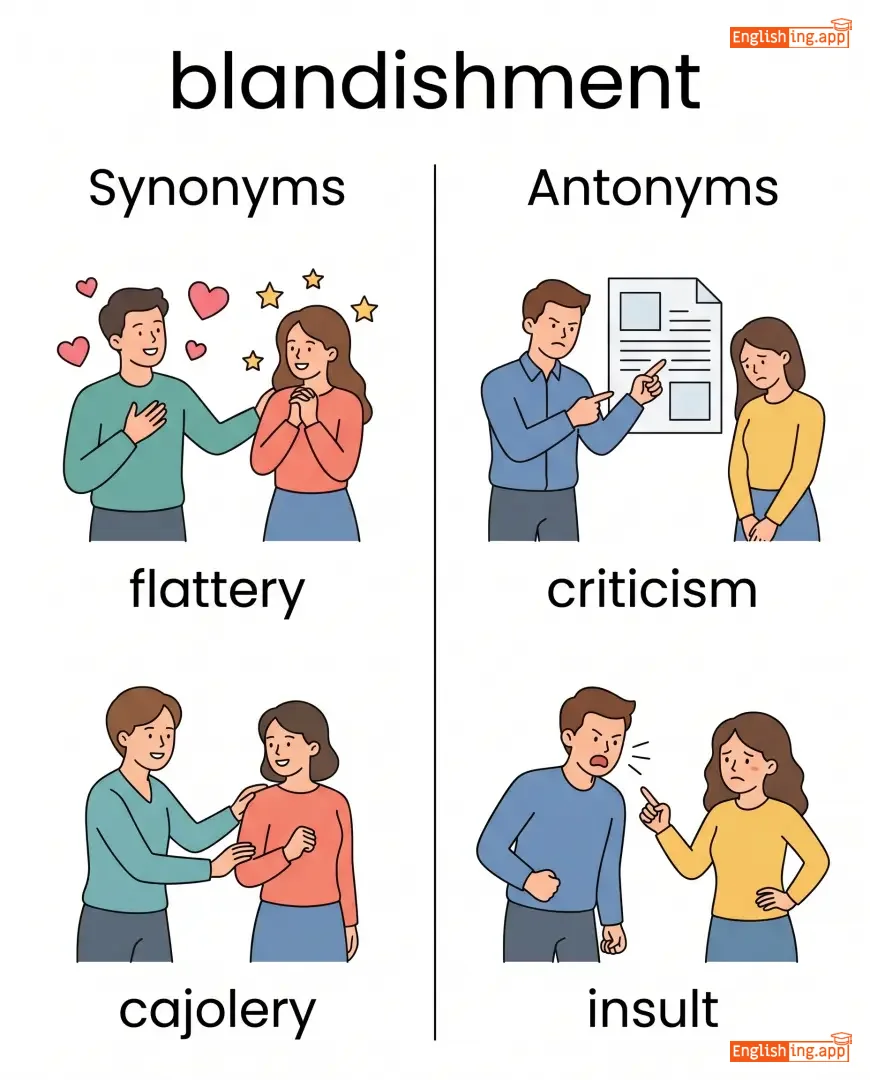
flattery, cajolery, praise, coaxing
••••••
|
criticism, insult
••••••
|
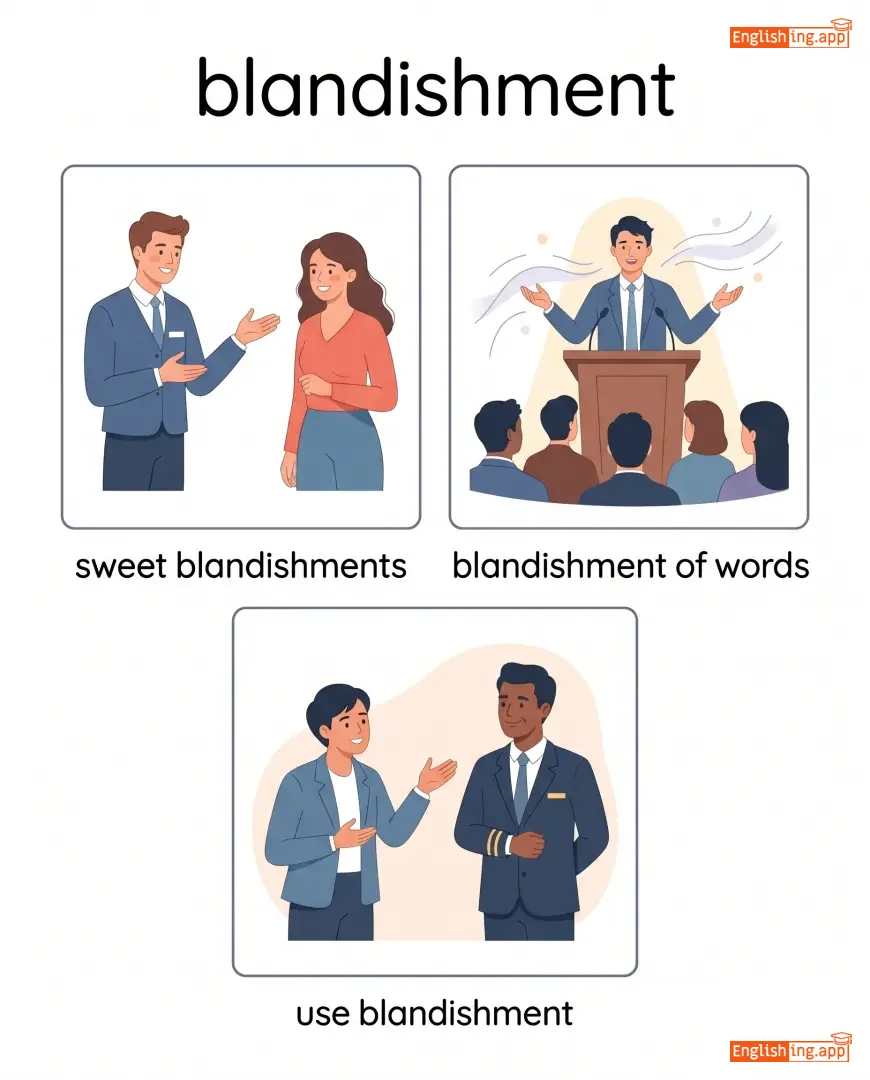
sweet blandishments, blandishment of words, use blandishment
••••••
|
Blandishment = bland + entertainment = 優しい言葉で説得する。
••••••
|
|
#964
😐
|
/blænd/
adjective
(ブラン)
••••••
|
- •••••• |
無味
mu-mi
••••••
|
- •••••• | - •••••• | - •••••• | - •••••• |
lacking strong features, flavor, or character; dull or uninteresting
••••••
|
The soup was too bland for my taste. |
このスープは私の好みにとっては無味でした。
Kono sūpu wa watashi no konomi ni totte wa mumi deshita.
••••••
|
- •••••• | - •••••• | - •••••• |
dull, tasteless, boring, flavorless
••••••
|
spicy, flavorful, interesting
••••••
|
bland food, bland expression, bland personality
••••••
|
Blandは無味を意味します、無味の食べ物 = 退屈な食べ物。
••••••
|
|
#965
😨
|
/blæntʃ/
verb
(ブランチ)
••••••
|
- •••••• |
青ざめる
aosameru
••••••
|
blanched
ブランチド
••••••
|
blanched
ブランチド
••••••
|
blanches
ブランチズ
••••••
|
blanching
ブランチング
••••••
|
to turn pale from shock, fear, or to briefly boil food to remove skin or prepare it
••••••
|
She blanched at the sight of blood.
彼女は血を見て顔色が青ざめた。
••••••
|
彼女は血を見て顔色が青ざめた。
Kanojo wa chi o mite kaoiro ga aosameta.
••••••
|
- •••••• | - •••••• | - •••••• |
pale, whiten, flinch, recoil
••••••
|
flush, redden, darken
••••••
|
blanch with fear, blanch at, blanch vegetables
••••••
|
ブランチは顔色が青ざめることのようなもの。
••••••
|
|
#966
🚫
|
/ˈblækˌbɔːl/
verb
(ブラックボール)
••••••
|
- •••••• |
排除する
haijo suru
••••••
|
blackballed
ブラックボールド
••••••
|
blackballed
ブラックボールド
••••••
|
blackballs
ブラックボールズ
••••••
|
blackballing
ブラックボーリング
••••••
|
to exclude someone socially or vote against their membership in a group or club
••••••
|
He was blackballed from the club after the controversy.
彼は論争の後、クラブからブラックボールされた。
••••••
|
彼は論争の後、クラブから排除された。
Kare wa ronsō no ato, kurabu kara haijo sareta.
••••••
|
- •••••• | - •••••• | - •••••• |
exclude, ostracize, reject, shun, veto
••••••
|
accept, include, welcome
••••••
|
blackball someone, be blackballed, blackball vote
••••••
|
ブラックボールは、ゲームからプレイヤーを排除することのようです。
••••••
|
|
#967
🤯
|
/bɪˈzɑːr/
adjective
(ビザール)
••••••
|
- •••••• |
奇妙な
kimyouna
••••••
|
- •••••• | - •••••• | - •••••• | - •••••• |
very strange or unusual, especially so as to cause interest or amusement
••••••
|
He told a bizarre story that no one could believe. |
彼は誰も信じられないような奇妙な話をした。
Kare wa dare mo shinjirarenai you na kimyou na hanashi wo shita.
••••••
|
- •••••• | - •••••• | - •••••• |
strange, odd, peculiar, unusual, weird
••••••
|
normal, ordinary, usual
••••••
|
bizarre incident, bizarre behavior, bizarre story, bizarre outfit
••••••
|
Bizarreは日本語で‘奇妙’と同じ意味!
••••••
|
|
#968
⛺
|
/ˈbɪvuˌæk/
noun
(ビヴラック)
••••••
|
- •••••• |
仮設キャンプ
kasetsu kyanpu
••••••
|
- •••••• | - •••••• | - •••••• | - •••••• |
a temporary camp without tents or cover, usually used by soldiers or mountaineers
••••••
|
The climbers set up a bivouac on the mountainside. |
登山者たちは山の斜面に仮設キャンプを設置した。
Tozanshatachi wa yama no shamen ni kasetsu kyanpu wo setchi shita.
••••••
|
- •••••• | - •••••• | - •••••• |
camp, encampment, shelter, tent, outpost
••••••
|
residence, house, home
••••••
|
temporary bivouac, bivouac site, mountain bivouac, military bivouac
••••••
|
Bivouac は、登山者がテントなしで使う仮設のキャンプです。
••••••
|
|
#969
😒
|
/ˈbɪtərnəs/
noun
(ビターネス)
••••••
|
- •••••• |
苦味
kumami
••••••
|
- •••••• | - •••••• | - •••••• | - •••••• |
a feeling of anger and unhappiness caused by unfair treatment or disappointment
••••••
|
His bitterness after the breakup was evident to everyone.
彼の別れた後の苦味は、誰にでも明らかでした。
••••••
|
彼の別れた後の苦味は、誰にでも明らかでした。
Kare no wakareta ato no kumami wa, dare ni demo akiraka deshita.
••••••
|
- •••••• | - •••••• | - •••••• |
resentment, rancor, hostility, sorrow, displeasure
••••••
|
joy, happiness, contentment
••••••
|
deep bitterness, lingering bitterness, bitterness of defeat, bitterness towards
••••••
|
苦味は、苦い味のようなもので、人生で感じる不正の感情
••••••
|
|
#970
🍋
|
/ˈbɪtər/
adjective
(ビター)
••••••
|
- •••••• |
苦い
nigai
••••••
|
- •••••• | - •••••• | - •••••• | - •••••• |
having a sharp, unpleasant taste or showing strong hostility or resentment
••••••
|
She felt bitter about losing the competition. |
彼女は競争に負けた後、苦い気持ちを抱えました。
Kanojo wa kyousou ni maketa ato, nigai kimochi wo kakaemashita.
••••••
|
bitter pill to swallow |
an unpleasant fact or situation that must be accepted
••••••
|
飲み込みにくい苦い薬
nomikomi nikui nigai kusuri
••••••
|
harsh, resentful, sour, acrid, severe
••••••
|
sweet, pleasant, delightful
••••••
|
bitter taste, bitter truth, bitter experience, bitter rival
••••••
|
苦い経験、人生の苦い瞬間
••••••
|
|
#971
❄️
|
/ˈbaɪtɪŋ/
adjective
(バイティング)
••••••
|
- •••••• |
鋭い / 辛辣
surudoi / shinratsu
••••••
|
- •••••• | - •••••• | - •••••• | - •••••• |
harsh, sharp, or severely critical; capable of causing physical or emotional pain
••••••
|
The critic’s biting remarks left the actor speechless. |
批評家の辛辣なコメントは俳優を言葉を失わせた。
Hihyōka no shinratsu na komento wa haiyū o kotoba o ushinawaseta.
••••••
|
biting cold |
extremely cold and unpleasant weather
••••••
|
刺すような寒さ
sasu yō na samusa
••••••
|
harsh, sharp, severe, caustic, stinging
••••••
|
gentle, mild, soothing
••••••
|
biting cold, biting wind, biting satire, biting remark
••••••
|
Biting coldはまるで氷のように体に刺さる寒さ
••••••
|
|
#972
🥣
|
/bɪsk/
noun
(ビスク)
••••••
|
- •••••• |
シーフードスープ
shiifoodo suupu
••••••
|
- •••••• | - •••••• | - •••••• | - •••••• |
A rich, creamy soup made from shellfish.
••••••
|
We ordered lobster bisque at the restaurant. |
レストランでロブスタービスクを注文しました。
Resutoran de robusutā bisuku o chūmon shimashita.
••••••
|
- •••••• | - •••••• | - •••••• |
soup, chowder, broth, consommé
••••••
|
solid food, dry dish
••••••
|
lobster bisque, crab bisque, seafood bisque, creamy bisque
••••••
|
ビスクはシーフードスープを思い出させます。
••••••
|
|
#973
👶🎓
|
/ˈbɜːrθraɪt/
noun
(バースライト)
••••••
|
- •••••• |
生まれつきの権利
umaretsuki no kenri
••••••
|
- •••••• | - •••••• | - •••••• | - •••••• |
A privilege or possession that a person has from birth.
••••••
|
Freedom is considered a birthright of every individual. |
自由はすべての個人の生まれつきの権利と見なされます。
Jiyū wa subete no kogin no umaretsuki no kenri to minasaremasu.
••••••
|
by birthright |
as a natural right due to being born
••••••
|
生まれつきの権利で
umaretsuki no kenri de
••••••
|
inheritance, heritage, entitlement, patrimony
••••••
|
dispossession, deprivation
••••••
|
claim birthright, lose birthright, birthright privilege, birthright citizenship
••••••
|
Birth (生まれ) + right (権利) = 生まれつきの権利。
••••••
|
|
#974
🚶
|
/ˈbaɪpɛd/
noun
(バイペッド)
••••••
|
- •••••• |
二足歩行動物
nisoku hokou doubutsu
••••••
|
- •••••• | - •••••• | - •••••• | - •••••• |
An animal that walks on two feet.
••••••
|
Humans are examples of biped creatures. |
人間は二足歩行動物の例です。
Ningen wa nisoku hokou doubutsu no rei desu.
••••••
|
- •••••• | - •••••• | - •••••• |
two-legged animal, human, hominid
••••••
|
quadruped, multiped
••••••
|
biped species, biped animals, human biped, biped locomotion
••••••
|
Ni (二) + soku (足) = 二本の足で歩く動物。
••••••
|
|
#975
🧬
|
/baɪˈɒlədʒi/
noun
(バイオロジー)
••••••
|
- •••••• |
生物学
seibutsugaku
••••••
|
- •••••• | - •••••• | - •••••• | - •••••• |
The scientific study of living organisms.
••••••
|
Biology explains how plants and animals function. |
生物学は植物や動物がどのように機能するかを説明します。
Seibutsugaku wa shokubutsu ya doubutsu ga dono you ni kinou suru ka wo setsumei shimasu.
••••••
|
- •••••• | - •••••• | - •••••• |
life science, natural science, zoology, botany
••••••
|
inanimate science, nonliving study
••••••
|
study biology, biology class, molecular biology, marine biology
••••••
|
Bio (生命) + logy (学問) = 生命の学問 = 生物学.
••••••
|
|
#976
🌿
|
/ˈbaɪ.fərˌkeɪ.tɪd/
adjective
(バイファケイテッド)
••••••
|
- •••••• |
二つに分かれた
futatsu ni wakareta
••••••
|
- •••••• | - •••••• | - •••••• | - •••••• |
Divided into two branches or parts.
••••••
|
The river became bifurcated as it flowed around the island.
ðə rɪvər bɪkeɪm baɪfərkɛɪtɪd æz ɪt floʊd əraʊnd ði aɪlənd
••••••
|
川は島の周りを流れる際に二つに分かれました。
Kawa wa shima no mawari o nagareru sai ni futatsu ni wakaremashita.
••••••
|
- •••••• | - •••••• | - •••••• |
split, divided, branched, forked, separated
••••••
|
joined, unified, merged
••••••
|
bifurcated structure, bifurcated approach, bifurcated system, bifurcated trial
••••••
|
Bifurcated は BI (二) + フォーク - 二つに分かれた
••••••
|
|
#977
📖
|
/ˈbaɪəˌɡræf/
noun
(バイオグラフ)
••••••
|
- •••••• |
伝記
denki
••••••
|
- •••••• | - •••••• | - •••••• | - •••••• |
A written account of a person's life; an early motion-picture projector (historical use).
••••••
|
The library holds an old biograph of the poet. |
図書館には詩人の古い伝記があります。
Toshokan ni wa shijin no furui denki ga arimasu.
••••••
|
- •••••• | - •••••• | - •••••• |
biography, life story, memoir, chronicle
••••••
|
fiction, fabrication
••••••
|
write a biograph, old biograph, detailed biograph
••••••
|
Bioは生命を意味し、graphは書くことを意味します → 伝記
••••••
|
|
#978
🗓️
|
/baɪˈmɛstər/
noun
(バイメスター)
••••••
|
- •••••• |
二ヶ月の期間
nikagetsu no kikan
••••••
|
- •••••• | - •••••• | - •••••• | - •••••• |
A period of two months.
••••••
|
The academic program is divided into six bimesters.
学術プログラムは6つのバイメスターに分かれています。
••••••
|
学術プログラムは6つのバイメスターに分かれています。
Gakujutsu puroguramu wa muttsu no baimesutā ni wakareteimasu.
••••••
|
- •••••• | - •••••• | - •••••• |
two-month period, couple of months
••••••
|
semester, year
••••••
|
academic bimester, financial bimester, second bimester
••••••
|
Biは二を意味する + mesterは月を意味する → 二ヶ月
••••••
|
|
#979
☁️
|
/ˈbɪloʊɪŋ/
adjective
(ビロウイング)
••••••
|
- •••••• |
波打つ
namiutsu
••••••
|
- •••••• | - •••••• | - •••••• | - •••••• |
Describing something that swells or surges outward in waves or large masses.
••••••
|
She walked through the billowing curtains. |
彼女は波打つカーテンを通り抜けた。
Kanojo wa namiutsu kāten o tōri nuketa.
••••••
|
- •••••• | - •••••• | - •••••• |
swelling, surging, flowing, puffing
••••••
|
flat, still, calm
••••••
|
billowing smoke, billowing clouds, billowing fabric
••••••
|
Billowing カーテンが波のように揺れる
••••••
|
|
#980
🌫️
|
/ˈbɪloʊ/
verb
(ビロー)
••••••
|
- •••••• |
波のように膨らむ
nami no yō ni fukuramu
••••••
|
billowed
ビロウド
••••••
|
billowed
ビロウド
••••••
|
billows
ビロウズ
••••••
|
billowing
ビロウイング
••••••
|
To swell or rise in large waves or surges; to flow outward in a rolling motion.
••••••
|
Smoke billowed from the burning building.
煙は燃えている建物からビロウしていた。
••••••
|
煙は燃えている建物から波のように膨らんでいた。
Kemuri wa moete iru tatemono kara nami no yō ni fukurande ita.
••••••
|
- •••••• | - •••••• | - •••••• |
swell, surge, puff, balloon, wave
••••••
|
shrink, collapse, deflate
••••••
|
billow of smoke, billow in the wind, billowing clouds
••••••
|
Billow = ビロー = 煙が低いところから上に波のように膨らむ。
••••••
|
|
#981
🗯️
|
/ˈbɪlɪŋzˌɡeɪt/
noun
(ビリングスゲート)
••••••
|
- •••••• |
粗野または侮辱的な言葉
soya mata wa bujokuteki na kotoba
••••••
|
- •••••• | - •••••• | - •••••• | - •••••• |
Coarse or abusive language; vulgar or offensive speech.
••••••
|
The heated argument quickly descended into billingsgate.
ðə hɪtɪd ˈɑːɡjʊmənt kwɪkli dɪˈsɛndɪd ˈɪntu ビリングスゲート。
••••••
|
激しい議論はすぐに粗野な言葉に変わった。
Hageshī giron wa sugu ni soya na kotoba ni kawatta.
••••••
|
- •••••• | - •••••• | - •••••• |
abuse, invective, profanity, swearing, vituperation
••••••
|
praise, compliment, politeness
••••••
|
use billingsgate, resort to billingsgate, filled with billingsgate
••••••
|
Billingsgate は門の前に粗野な言葉が飛び交うことを意味します。
••••••
|
|
#982
🕵️
|
/bɪlk/
verb
(ビルク)
••••••
|
- •••••• |
だます
damasu
••••••
|
bilked
ビルクド
••••••
|
bilked
ビルクド
••••••
|
bilks
ビルクス
••••••
|
bilking
ビルキング
••••••
|
To cheat or defraud someone of money or rights.
••••••
|
The scammer tried to bilk elderly people out of their savings.
The scammer tried to bilk elderly people out of their savings.
••••••
|
詐欺師は高齢者の貯金をだまし取ろうとした。
sagishi wa kōrei-sha no chokin o damashi torō to shita.
••••••
|
bilk someone out of
ビルクサムワンアウトオブ
••••••
|
To cheat someone of something, usually money.
••••••
|
誰かをだます
dareka o damasu
••••••
|
cheat, swindle, defraud, deceive, trick
••••••
|
repay, compensate, reimburse
••••••
|
bilk money, bilk customers, bilk investors, bilk victims
••••••
|
Bilkと'bill' - お金をだます。
••••••
|
|
#983
😠
|
/ˈbɪliəs/
adjective
(ビリオス)
••••••
|
- •••••• |
胆汁の
tanshū no
••••••
|
- •••••• | - •••••• | - •••••• | - •••••• |
Relating to bile or an ill-tempered, irritable disposition.
••••••
|
He became bilious after hearing the unfair criticism. |
不公平な批判を聞いた後、彼は怒りっぽくなった。
Fukōhei na hihan o kiita ato, kare wa okorippō kunatta.
••••••
|
- •••••• | - •••••• | - •••••• |
irritable, bad-tempered, peevish, cranky
••••••
|
cheerful, pleasant
••••••
|
bilious attack, bilious mood, bilious expression, bilious temperament
••••••
|
Biliousは日本語で '胆汁の' を思い出させ、怒りっぽい性格を意味します。
••••••
|
|
#984
🗣️
|
/ˌbaɪˈlɪŋɡwəl/
adjective
(バイリンガル)
••••••
|
- •••••• |
バイリンガル
bairingaru
••••••
|
- •••••• | - •••••• | - •••••• | - •••••• |
Able to speak two languages fluently.
••••••
|
She grew up in a bilingual household speaking both English and Spanish. |
彼女はバイリンガルの家庭で育ち、英語とスペイン語の両方を話しました。
Kanojo wa bairingaru no katei de sodachi, eigo to supeingo no ryōhō o hanashimashita.
••••••
|
bilingual education |
An education system that teaches in two languages.
••••••
|
バイリンガル教育
bairingaru kyōiku
••••••
|
multilingual, polyglot, two-tongued, fluent
••••••
|
monolingual
••••••
|
bilingual speaker, bilingual family, bilingual children, bilingual education
••••••
|
Biは二つを意味するので、Bilingualは二つの言語を知っているという意味です。
••••••
|
|
#985
🤝
|
/ˌbaɪˈlætərəl/
adjective
(バイレテラル)
••••••
|
|
二国間の
nikokukan no
••••••
|
- •••••• | - •••••• | - •••••• | - •••••• |
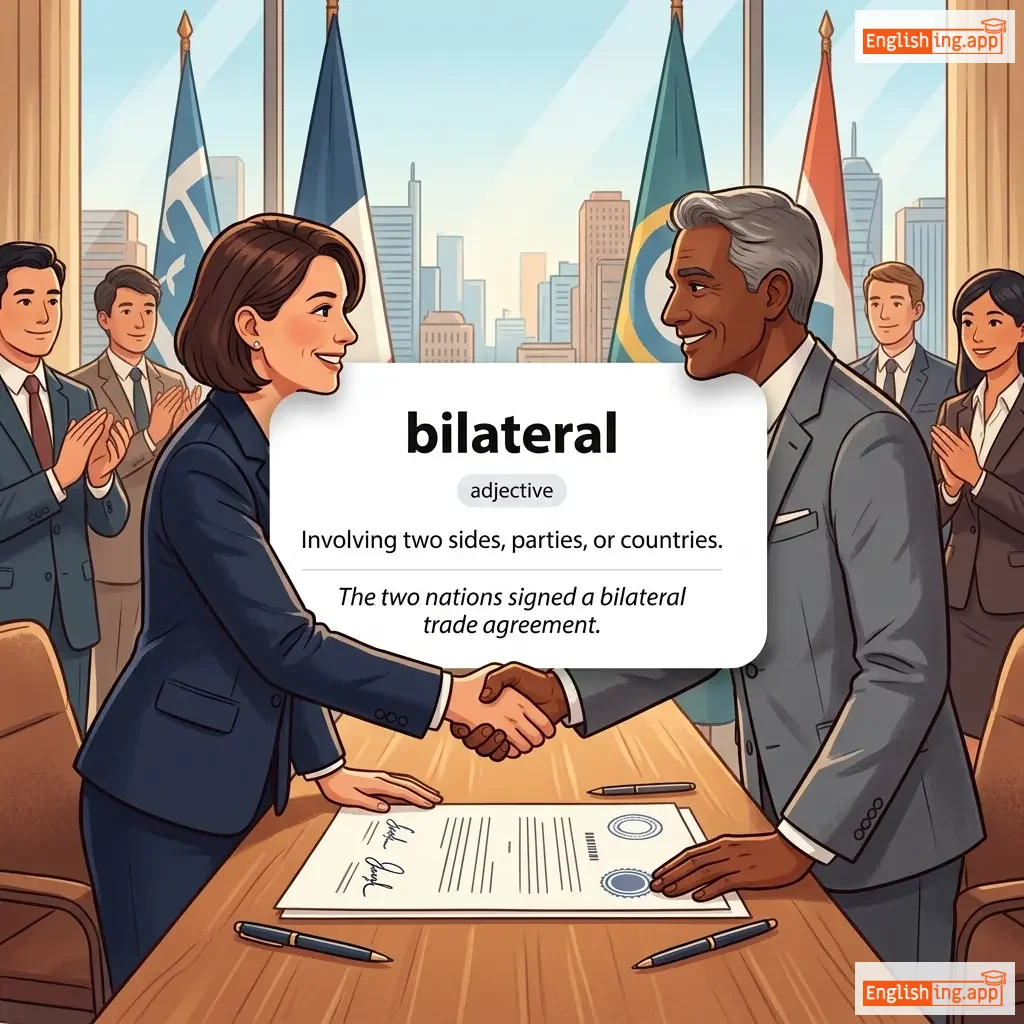
Involving two sides, parties, or countries.
••••••
|
The two nations signed a bilateral trade agreement.
二国は二国間貿易協定に署名しました。
••••••
|
二国は二国間貿易協定に署名しました。
nikoku wa nikokukan bōeki kyōtei ni shomei shimashita.
••••••
|
bilateral relations
二国間関係
••••••
|
The relationship between two sides or countries.
••••••
|
二国間関係
nikokukan kankei
••••••
|
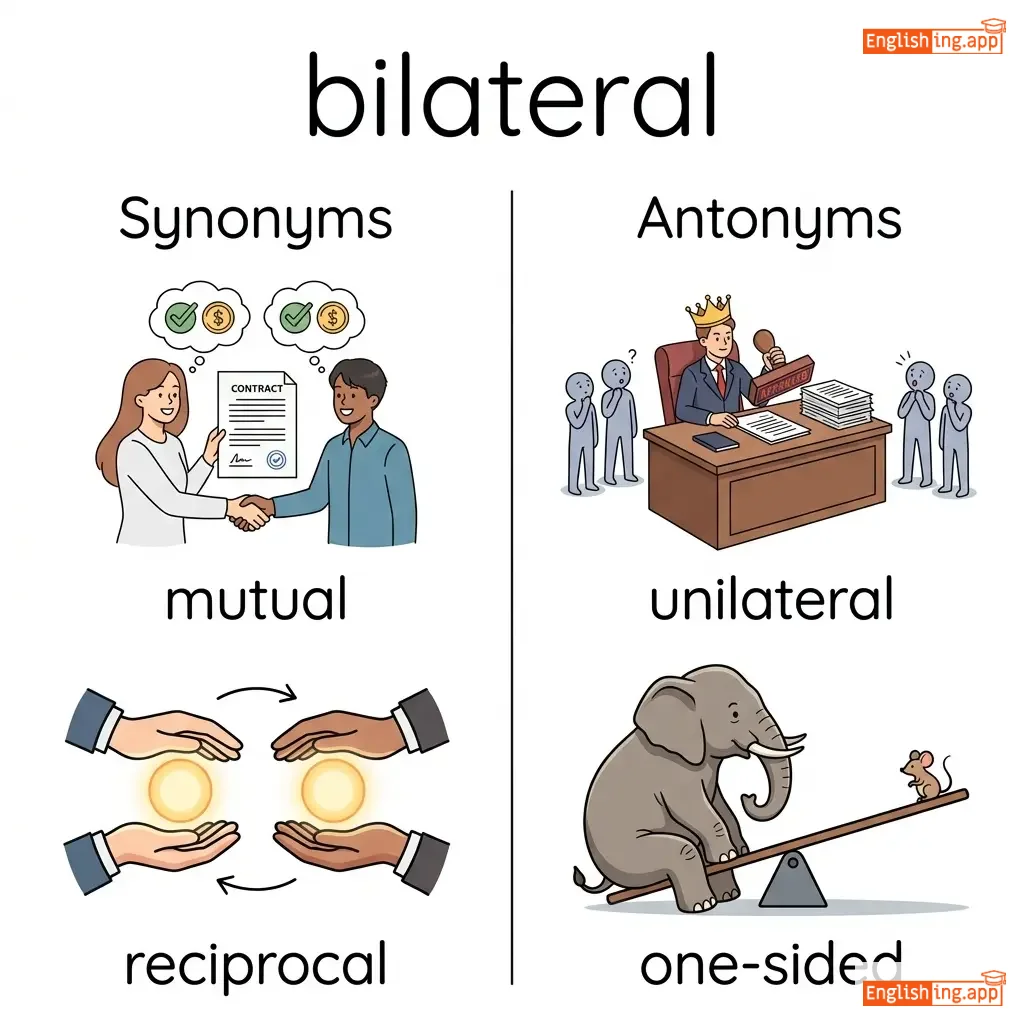
mutual, reciprocal, two-sided, dual
••••••
|
unilateral, one-sided
••••••
|
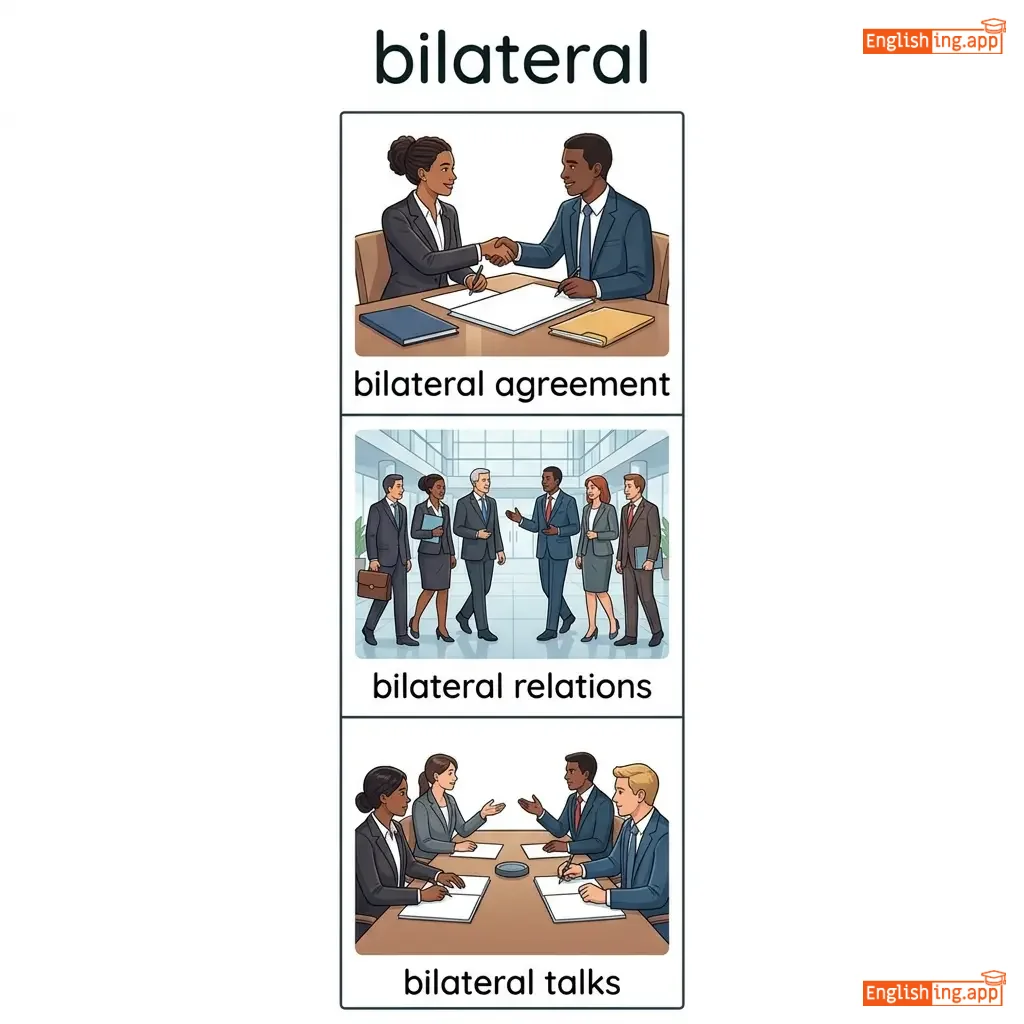
bilateral agreement, bilateral relations, bilateral talks, bilateral trade
••••••
|
Biは二を意味するので、Bilateral=二国間の関係。
••••••
|
|
#986
🚫
|
/ˈbɪɡətri/
noun
(ビゴトリー)
••••••
|
- •••••• |
偏見
henken
••••••
|
- •••••• | - •••••• | - •••••• | - •••••• |
Intolerance toward those who hold different opinions or lifestyles.
••••••
|
Her bigotry prevented her from accepting people with different beliefs. |
彼女の偏見は、異なる信念を持つ人々を受け入れることを妨げていた。
Kanojo no henken wa, kotonaru shinnen o motsu hitobito o ukeireru koto o samatamete ita.
••••••
|
religious bigotry |
Intolerance based on religious differences.
••••••
|
宗教的偏見
shūkyōteki henken
••••••
|
intolerance, prejudice, bias, narrow-mindedness, discrimination
••••••
|
tolerance, acceptance, fairness
••••••
|
racial bigotry, religious bigotry, political bigotry, blind bigotry
••••••
|
Bigotry(偏見)は他人の信念やライフスタイルに対する強い不寛容です。
••••••
|
|
#987
🙄
|
/ˈbɪɡ.ət/
noun
(ビゴット)
••••••
|
- •••••• |
偏見者
henkensha
••••••
|
- •••••• | - •••••• | - •••••• | - •••••• |
A person who is intolerant toward those holding different opinions or beliefs.
••••••
|
He was called a bigot for refusing to listen to others' views. |
他人の意見を聞こうとしなかったため、彼は偏見者と呼ばれました。
Tanin no iken o kikou to shinakatta tame, kare wa henken-sha to yobaremashita.
••••••
|
- •••••• | - •••••• | - •••••• |
intolerant, prejudiced, extremist, fanatic, racist
••••••
|
tolerant, open-minded, fair
••••••
|
religious bigot, political bigot, narrow-minded bigot
••••••
|
Bigotは「BIGな意見を持っている」、他人の意見を受け入れない → 偏見者
••••••
|
|
#988
🌊
|
/baɪt/
noun
(バイト)
••••••
|
- •••••• |
入り江
iriga
••••••
|
- •••••• | - •••••• | - •••••• | - •••••• |
A bend or curve in a geographical feature, especially a coastline, or a loop in a rope.
••••••
|
The sailors anchored in the calm waters of the bight. |
船員たちは入り江の穏やかな水域でアンカーを下ろした。
Sen'in-tachi wa iriga no odayakana suiki de ankā o oroshita.
••••••
|
- •••••• | - •••••• | - •••••• |
bay, curve, loop, bend
••••••
|
straight, line
••••••
|
coastal bight, rope bight, wide bight, deep bight
••••••
|
Bightは入り江を意味し、海岸線の湾曲やロープのループのようなものです。
••••••
|
|
#989
⚖️
|
/ˈbɪɡ.ə.mi/
noun
(ビガミ)
••••••
|
- •••••• |
重婚
jūkon
••••••
|
- •••••• | - •••••• | - •••••• | - •••••• |
The act of marrying one person while still legally married to another.
••••••
|
He was charged with bigamy after his second marriage was discovered. |
彼は二度目の結婚が発覚した後、重婚で起訴されました。
Kare wa nidome no kekkon ga hakkaku shita ato, jūkon de kiso saremashita.
••••••
|
- •••••• | - •••••• | - •••••• |
polygamy, illegal marriage, multiple marriage
••••••
|
monogamy, single marriage
••••••
|
commit bigamy, charged with bigamy, crime of bigamy
••••••
|
Bigamy = BIG + AMY (二人の妻) → 同時に二人と結婚する。
••••••
|
|
#990
💍
|
/ˈbɪɡ.ə.mɪst/
noun
(ビガミスト)
••••••
|
- •••••• |
重婚者
juukonsha
••••••
|
- •••••• | - •••••• | - •••••• | - •••••• |
A person who commits the crime of marrying someone while already married to another.
••••••
|
The man was arrested for being a bigamist.
その男はビガミストであるため逮捕された。
••••••
|
その男はビガミストであるため逮捕された。
Sono otoko wa bigamisuto de aru tame taiho sareta.
••••••
|
- •••••• | - •••••• | - •••••• |
polygamist, offender, deceiver, fraud
••••••
|
monogamist, faithful spouse
••••••
|
convicted bigamist, notorious bigamist, caught as a bigamist
••••••
|
Bigamist: Big (大きい) mistake, 2人以上の妻
••••••
|
Vocabulary Quiz
Test your vocabulary by matching words with their translations or meanings.
Login to take the quiz
Comments (0)
Share your thoughts and join the discussion.
Join the discussion by logging in
Login to CommentNo comments yet
Be the first to share your thoughts!