

翻訳
過去
過去分詞
三人称単数
動名詞
意味
例文
例文の翻訳
同義語
対義語
コロケーション
ニーモニック
Swipe left or right, or use the buttons. Tap image to zoom.
例文の翻訳
単語
Lesson 135Lesson 135 - マスクトグル
|
絵文字
|
単語 | Images | 翻訳 | 過去 | 過去分詞 | 三人称単数 | 動名詞 | 意味 | 例文 | 例文の翻訳 | 表現例 | 表現例の意味 | 表現例の翻訳 | 同義語 | 対義語 | コロケーション | ニーモニック |
|---|---|---|---|---|---|---|---|---|---|---|---|---|---|---|---|---|---|
|
#4021
🎵
|
/hɑːrp/
verb
(ハープ)
••••••
|
- •••••• |
繰り返し言う、文句を言う
kurikaeshi iu, monku wo iu
••••••
|
harped
ハープド
••••••
|
harped
ハープド
••••••
|
harps
ハープス
••••••
|
harping
ハーピング
••••••
|
To dwell on or complain about something persistently.
••••••
|
He kept harping on the same mistake over and over.
彼は同じミスについて何度も何度も繰り返し言っていた。
••••••
|
彼は同じ間違いについて繰り返し言っていた。
Kare wa onaji machigai ni tsuite kurikaeshi itte ita.
••••••
|
harp on
ハープオン
••••••
|
To talk or complain repeatedly about something.
••••••
|
繰り返し言う
kurikaeshi iu
••••••
|
dwell,reiterate,repeat,nag,obsess
••••••
|
ignore,overlook
••••••
|
harp on,harp endlessly,harp about,keep harping
••••••
|
ハープの音色のように、同じメロディーが繰り返されるように、'harp'は同じ話題を繰り返すことを意味します。
••••••
|
|
#4022
🏡
|
/ˈheɪvən/
noun
(ヘイブン)
••••••
|
- •••••• |
避難所
hinanjo
••••••
|
- •••••• | - •••••• | - •••••• | - •••••• |
a safe place or shelter
••••••
|
The library became a haven for students during exams.
試験中、図書館は学生たちの避難所となった。
••••••
|
試験中、図書館は学生たちの避難所となった。
Shiken-chū, toshokan wa gakusei-tachi no hinanjo to natta.
••••••
|
safe haven
安全な避難所
••••••
|
a place of refuge or safety
••••••
|
安全な避難所
anzen na hinanjo
••••••
|
refuge, shelter, sanctuary, asylum, retreat
••••••
|
danger, threat, exposure
••••••
|
safe haven, peaceful haven, haven of rest, haven for wildlife
••••••
|
Havenは避難所、'Heaven'を想像して、そこがあなたの安全な場所 (safe haven)。
••••••
|
|
#4023
🦚
|
/oʊˈtɜːr/
noun
(ハウター)
••••••
|
- •••••• |
傲慢
gōman
••••••
|
- •••••• | - •••••• | - •••••• | - •••••• |
disdainful pride; arrogance
••••••
|
His hauteur made it difficult for others to approach him.
彼のハウターは他の人々が近づくのを難しくさせた。
••••••
|
彼の傲慢は他の人々が近づくのを難しくさせた。
Kare no gōman wa hoka no hitobito ga chikaduku no o muzukashiku saseta.
••••••
|
- •••••• | - •••••• | - •••••• |
arrogance, pride, vanity, conceit, disdain
••••••
|
humility, modesty, meekness
••••••
|
sense of hauteur, display hauteur, filled with hauteur
••••••
|
Hauteurは、‘Hot air’(熱風)を意味し、傲慢な人々はいつも空虚な熱風を吹き出す。
••••••
|
|
#4024
👻
|
/hɔːnt/
verb
••••••
|
|
- •••••• |
haunted
••••••
|
haunted
••••••
|
haunts
••••••
|
haunting
••••••
|
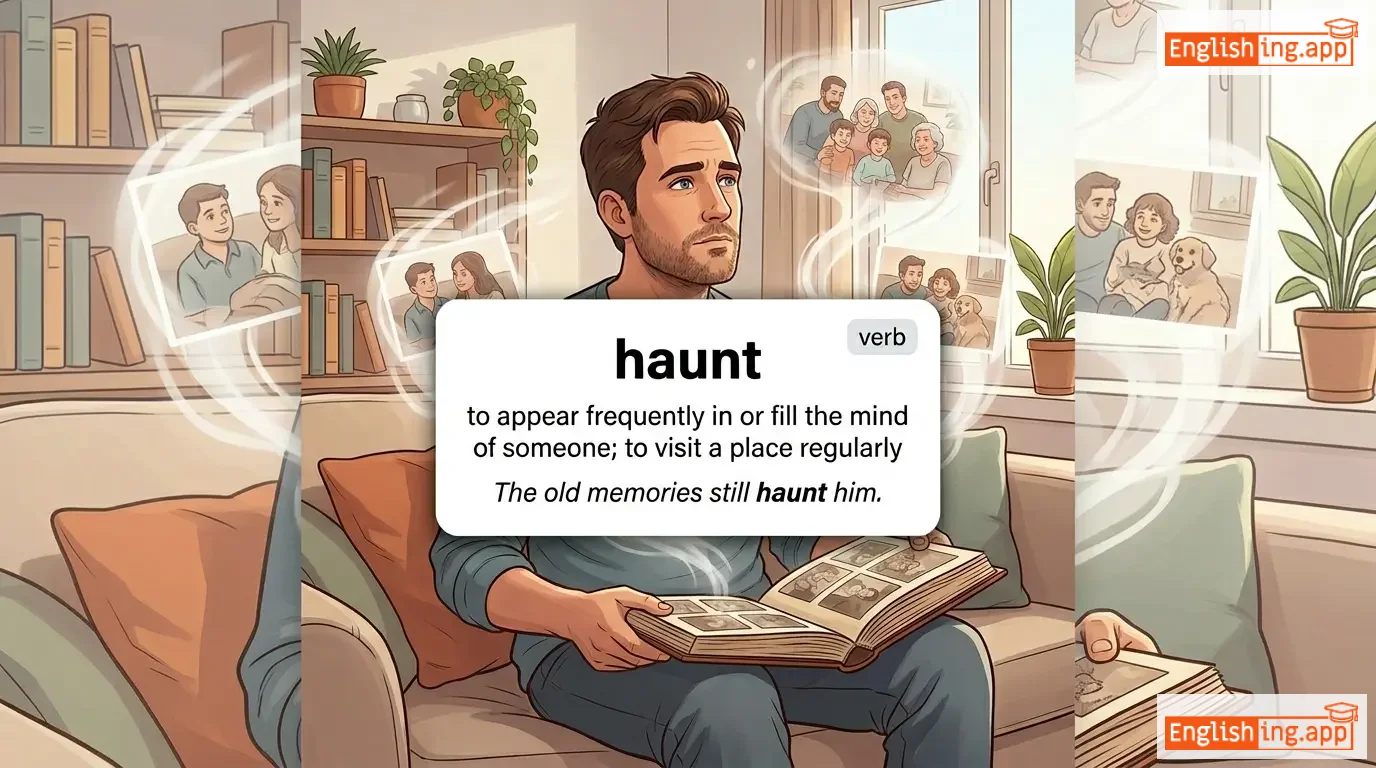
to appear frequently in or fill the mind of someone; to visit a place regularly
••••••
|
The old memories still haunt him. |
- •••••• |
haunt one's dreams |
to repeatedly trouble or disturb someone mentally
••••••
|
- •••••• |
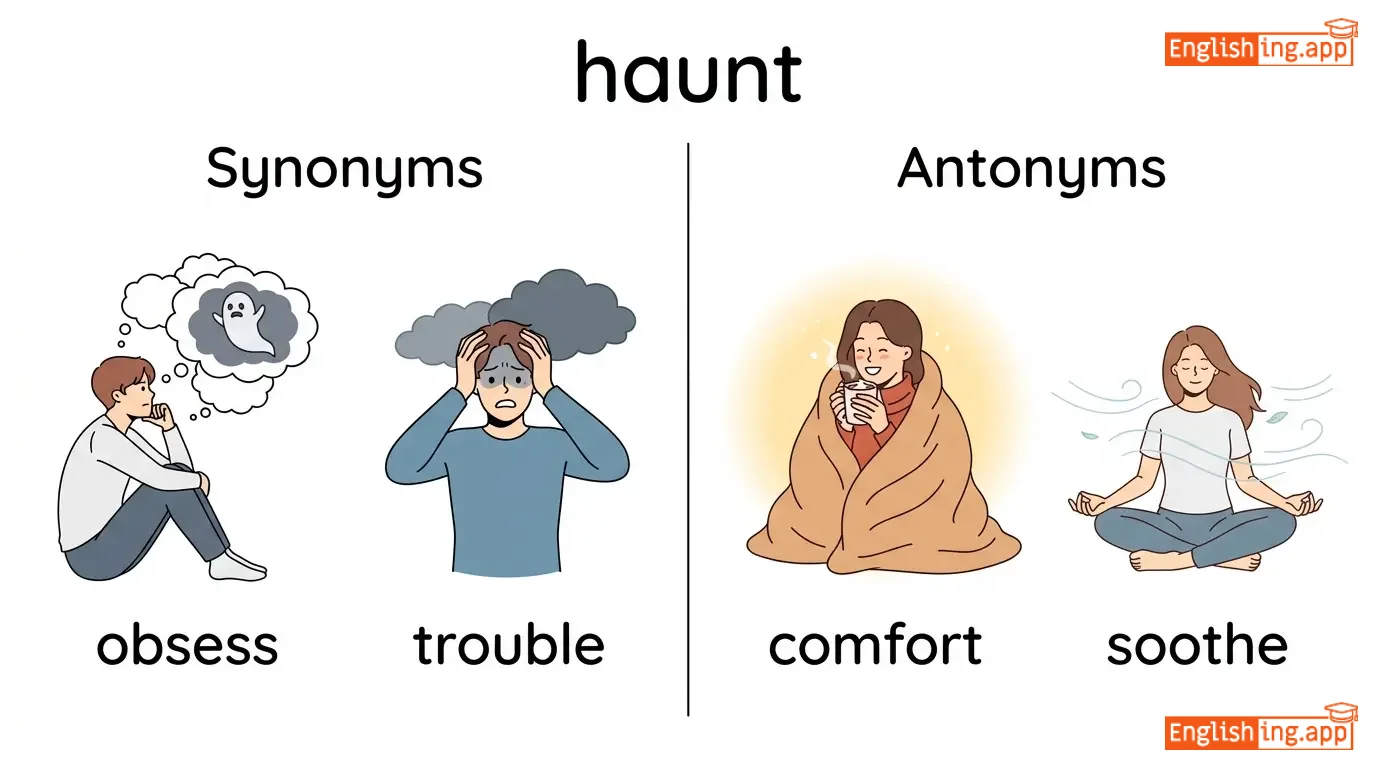
obsess, trouble, torment, visit, linger
••••••
|
comfort, soothe, forget
••••••
|
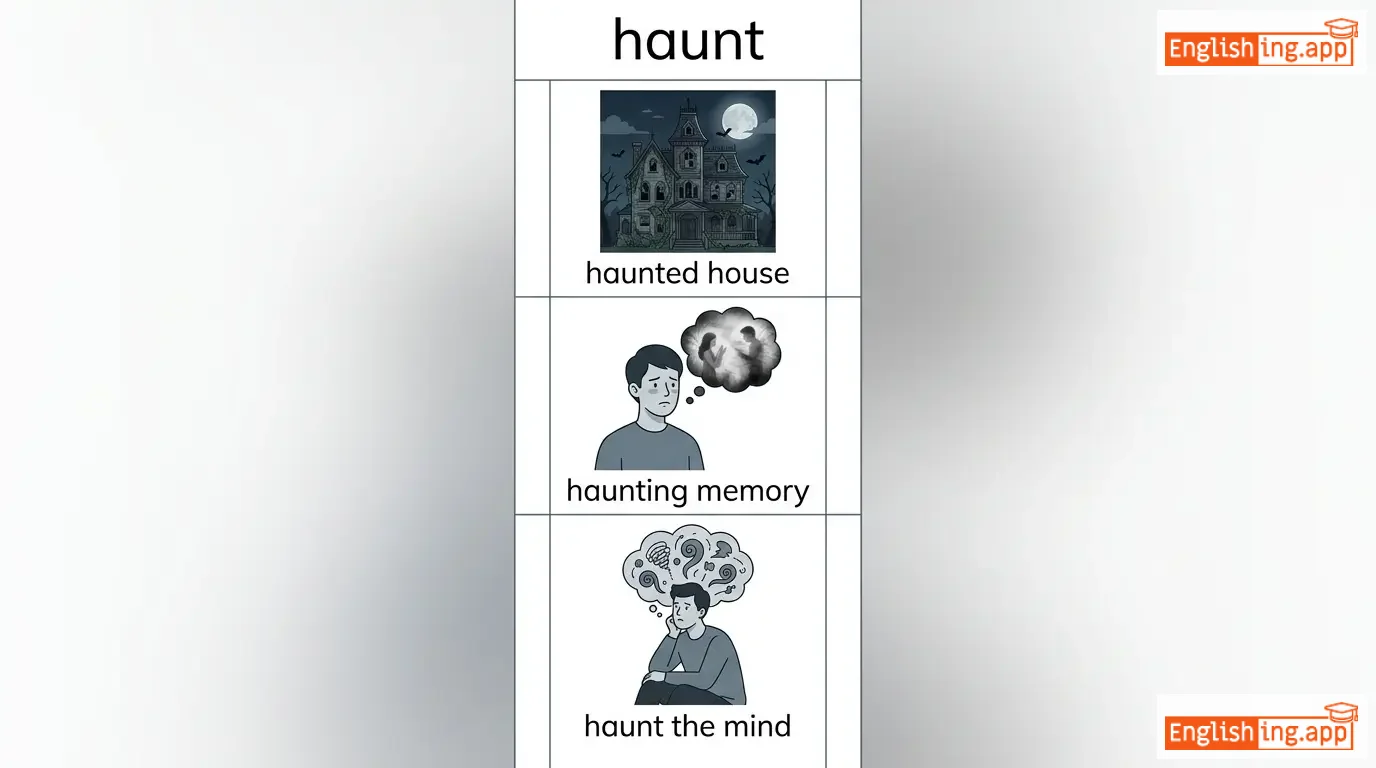
haunted house, haunting memory, haunt the mind, old haunt
••••••
|
No •••••• |
|
#4025
😏
|
/ˈhɔːti/
adjective
(hōti)
••••••
|
- •••••• |
高慢
kōman
••••••
|
- •••••• | - •••••• | - •••••• | - •••••• |
arrogantly superior and disdainful
••••••
|
She gave him a haughty look and walked away.
彼女は彼にハウティな目を向けて、歩いて行った。
••••••
|
彼女は彼に高慢な目を向けて、歩いて行った。
Kanojo wa kare ni kōman na me wo mukete, aruite itta.
••••••
|
- •••••• | - •••••• | - •••••• |
arrogant, conceited, proud, snobbish, disdainful
••••••
|
humble, modest, meek
••••••
|
haughty attitude, haughty glance, haughty smile, haughty expression
••••••
|
Haughtyは高慢を意味します — 'Hot tea'で高慢に見えることを覚えておいてください。
••••••
|
|
#4026
😏
|
/ˈhɔːtɪnəs/
noun
(hōtinesu)
••••••
|
- •••••• |
傲慢
ōman
••••••
|
- •••••• | - •••••• | - •••••• | - •••••• |
The appearance or quality of being arrogantly superior and disdainful.
••••••
|
His haughtiness made him unpopular among his peers.
Hiz hōtinesu meid him anpopurā amōngu hiz pēāzu.
••••••
|
彼の傲慢さは彼を同僚の中で不人気にしました。
Kare no ōman-sa wa kare o dōryō no naka de funinki ni shimashita.
••••••
|
- •••••• | - •••••• | - •••••• |
arrogance, pride, conceit, disdain
••••••
|
humility, modesty, respect
••••••
|
display haughtiness, full of haughtiness, arrogance and haughtiness
••••••
|
Haughtyは傲慢を意味しますので、haughtinessは傲慢な状態を意味します。
••••••
|
|
#4027
🐣
|
/hætʃ/
verb
(ハッチ)
••••••
|
- •••••• |
孵化する / 計画する
fuka suru / keikaku suru
••••••
|
hatched
ハッチド
••••••
|
hatched
ハッチド
••••••
|
hatches
ハッチズ
••••••
|
hatching
ハッチング
••••••
|
To cause a young animal to emerge from an egg; to plan secretly.
••••••
|
The chicks hatched early in the morning.
ひよこは朝早くに孵化しました。
••••••
|
ひよこは朝早くに孵化しました。
Hiyoko wa asa hayaku ni fuka shimashita.
••••••
|
hatch a plan
計画を立てる
••••••
|
To secretly prepare or devise a plan.
••••••
|
計画を立てる
Keikaku o tateru
••••••
|
emerge, breed, incubate, devise, scheme
••••••
|
destroy, end, abandon
••••••
|
hatch a plan, hatch eggs, newly hatched, hatch scheme
••••••
|
Hatchは孵化すること 🐣、そして計画を立てることは秘密裏にそれを準備することです。
••••••
|
|
#4028
⚡
|
/ˈheɪsti/
adjective
(ヘイスティ)
••••••
|
- •••••• |
急いだ
isoida
••••••
|
- •••••• | - •••••• | - •••••• | - •••••• |
Done with excessive speed or urgency, often without careful thought.
••••••
|
She made a hasty decision without considering the consequences.
彼女は結果を考慮せずに慌てた決定を下しました。
••••••
|
彼女は結果を考慮せずに慌てた決定を下しました。
Kanojo wa kekka o koryo sezu ni awateta kettei o oroshimashita.
••••••
|
hasty retreat
慌てた撤退
••••••
|
A quick and often unplanned withdrawal from a situation.
••••••
|
慌てた撤退
awateta tettai
••••••
|
rash, quick, hurried, impulsive
••••••
|
careful, thoughtful, deliberate
••••••
|
hasty decision, hasty retreat, hasty reply, hasty conclusion
••••••
|
Hasty = 急いだ、速さだけで決めること。
••••••
|
|
#4029
🏃
|
/ˈheɪsən/
verb
(ヘイスン)
••••••
|
- •••••• |
急ぐ
isogu
••••••
|
hastened
ヘイセンド
••••••
|
hastened
ヘイセンド
••••••
|
hastens
ヘイセンス
••••••
|
hastening
ヘイシニン
••••••
|
To move or act quickly; to cause something to happen sooner.
••••••
|
He hastened to finish his work before the deadline.
彼は締め切り前に仕事を終わらせるために急いだ。
••••••
|
彼は締め切り前に仕事を終わらせるために急いだ。
Kare wa shimekiri mae ni shigoto o owaraseru tame ni isoida.
••••••
|
hasten the process
プロセスを加速する
••••••
|
To make something happen more quickly.
••••••
|
プロセスを加速する
Purosesu o kasoku suru
••••••
|
hurry, rush, accelerate, quicken
••••••
|
delay, slow, hinder
••••••
|
hasten to add, hasten the process, hasten to finish
••••••
|
Hasten は '急ぐ' という意味です。
••••••
|
|
#4030
❄️
|
/hɑːrʃ/
adjective
(ハーシュ)
••••••
|
- •••••• |
厳しい
kibishii
••••••
|
- •••••• | - •••••• | - •••••• | - •••••• |
Unpleasantly rough or severe in sound, taste, conditions, or treatment.
••••••
|
The teacher's harsh tone frightened the students. |
先生の厳しい口調が生徒たちを驚かせた。
Sensei no kibishii kuchou ga seitotachi wo odokaseta.
••••••
|
harsh reality |
The unpleasant truth of a situation.
••••••
|
厳しい現実
Kibishii genjitsu
••••••
|
severe, stern, rough, cruel, brutal
••••••
|
gentle, mild, soft
••••••
|
harsh criticism, harsh reality, harsh conditions, harsh treatment
••••••
|
厳しい (kibishii) 冬の冷たさのような現実。
••••••
|
|
#4031
⚔️
|
/ˈhæri/
verb
(ハリー)
••••••
|
- •••••• |
悩ます, 攻撃する
nayamasu, kougeki suru
••••••
|
harried
ハリード
••••••
|
harried
ハリード
••••••
|
harries
ハリス
••••••
|
harrying
ハリーイング
••••••
|
to constantly attack, harass, or annoy
••••••
|
The army harried the enemy with sudden raids.
軍隊は突然の襲撃で敵を攻撃した。
••••••
|
軍隊は突然の襲撃で敵を攻撃した。
Guntai wa totsuzen no shugeki de teki o kougeki shita.
••••••
|
- •••••• | - •••••• | - •••••• |
attack, raid, harass, pester, bother
••••••
|
comfort, help, support
••••••
|
harry the enemy, harried by troubles, harrying tactics
••••••
|
ハリー・ポッターは敵を絶えず悩ます—'harry'は悩ますまたは攻撃するという意味です。
••••••
|
|
#4032
💔
|
/ˈhær.oʊ.ɪŋ/
adjective
(ハロウィング)
••••••
|
|
恐ろしいと苦しみを伴う
osoroshii to kurushimi o tomonau
••••••
|
- •••••• | - •••••• | - •••••• | - •••••• |
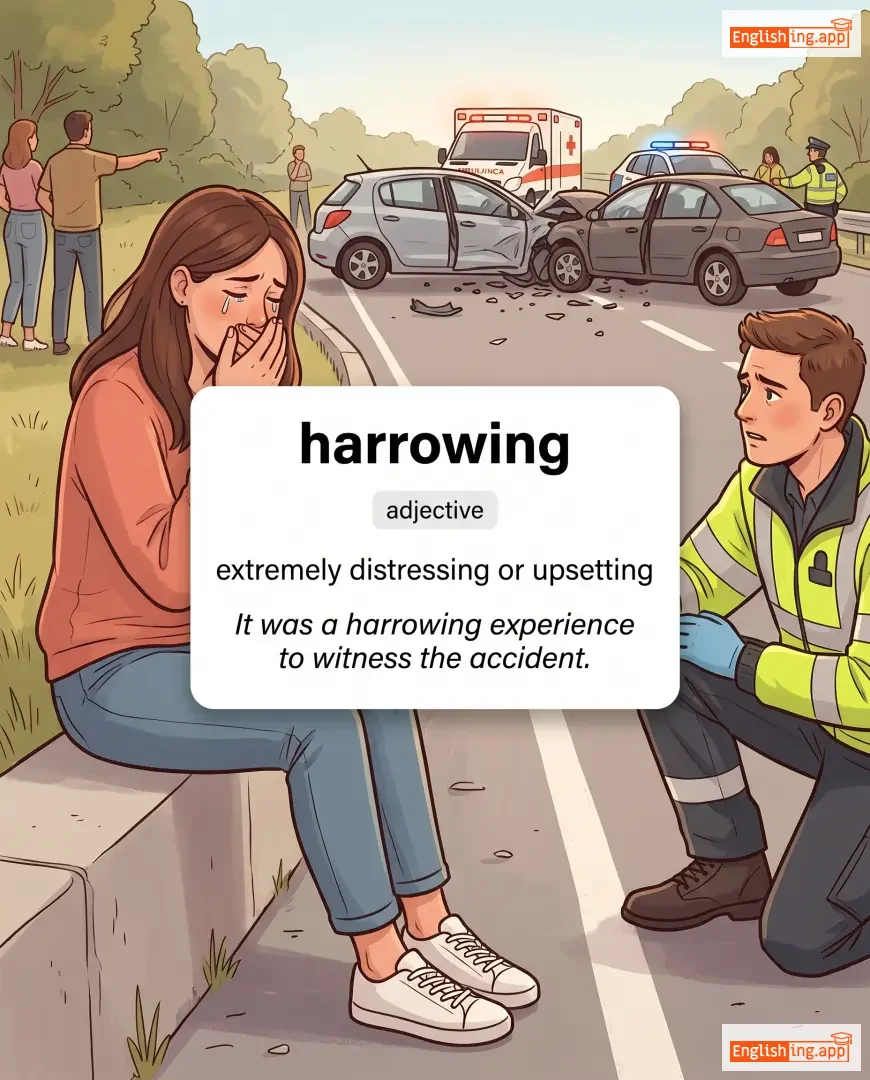
extremely distressing or upsetting
••••••
|
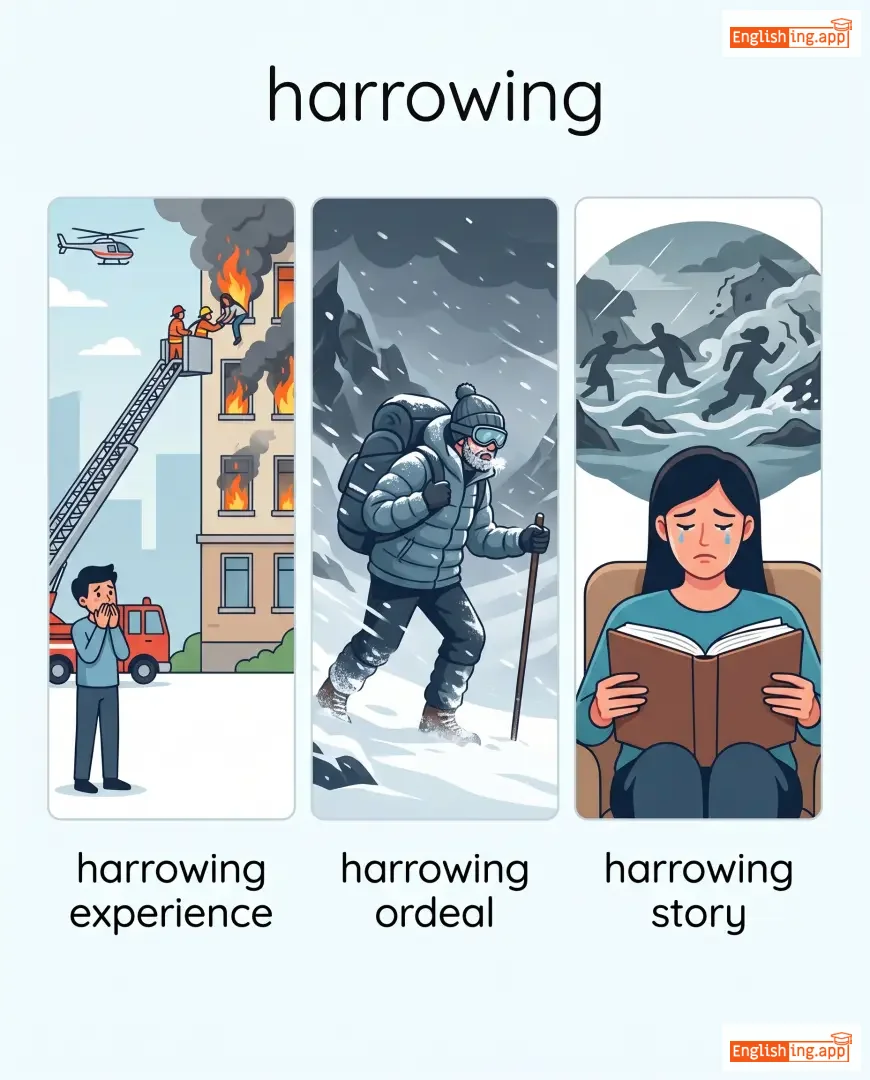
It was a harrowing experience to witness the accident. |
事故を目撃することは恐ろしい経験だった。
Jiko o mokugeki suru koto wa osoroshii keiken datta.
••••••
|
- •••••• | - •••••• | - •••••• |
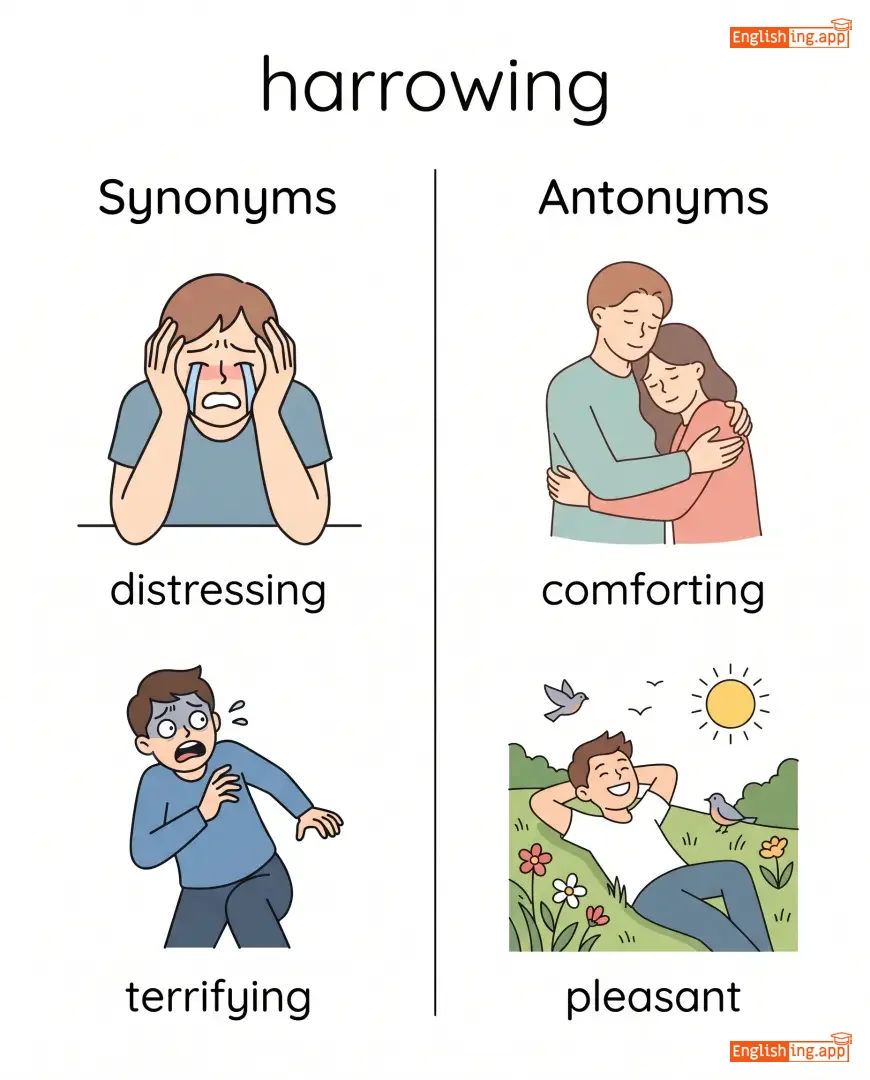
distressing, terrifying, painful, traumatic, upsetting
••••••
|
comforting, pleasant, soothing
••••••
|
harrowing experience, harrowing ordeal, harrowing story
••••••
|
Harrowingは恐ろしい出来事、深い傷を残す体験。
••••••
|
|
#4033
🌾
|
/ˈhæroʊ/
verb
(ハロー)
••••••
|
- •••••• |
苦しめる / すき
kurushimeru / suki
••••••
|
harrowed
ハロウド
••••••
|
harrowed
ハロウド
••••••
|
harrows
ハロウズ
••••••
|
harrowing
ハローイング
••••••
|
to cause distress or torment; also to break up and smooth soil with a farm tool
••••••
|
The tragic news harrowed the entire family.
悲劇的なニュースは家族全員を苦しめました。
••••••
|
悲劇的なニュースは家族全員を苦しめました。
Higeki-teki na nyūsu wa kazoku zen'in wo kurushimemashita.
••••••
|
- •••••• | - •••••• | - •••••• |
torment, distress, agonize, trouble
••••••
|
comfort, soothe, calm
••••••
|
harrow the land, harrow the soil, harrowed by grief
••••••
|
Harrowは'ハロー'—苦しみを与える、またはすきで土を整えること。
••••••
|
|
#4034
😫
|
/ˈhæriːd/
adjective
(ハリッド)
••••••
|
- •••••• |
過労や絶え間ない干渉で緊張したりストレスを感じたりする
karou ya taemai kanshou de kinchou shitari sutoresu o kanjitari suru
••••••
|
- •••••• | - •••••• | - •••••• | - •••••• |
feeling strained or stressed due to being overworked or constantly bothered
••••••
|
The harried teacher struggled to calm the noisy classroom. |
過労の教師は騒々しい教室を静めるのに苦労していました。
Karo no kyoushi wa souzoushii kyoushitsu o shizumeru no ni kurou shite imashita.
••••••
|
- •••••• | - •••••• | - •••••• |
stressed, pressured, overwhelmed, hassled
••••••
|
calm, relaxed, composed
••••••
|
harried look, harried teacher, harried expression
••••••
|
Harriedは '忙しい' のように、すごく忙しいときに使います。
••••••
|
|
#4035
🔁
|
/ˈhɑːrpɪŋ/
verb
(ハーピング)
••••••
|
- •••••• |
繰り返し不満を言う
kurikaeshi fuman o iu
••••••
|
- •••••• | - •••••• | - •••••• |
harping
ハーピング
••••••
|
continuously talking or complaining about something in a tiresome way
••••••
|
She kept harping on about the mistakes I made.
彼女は私の間違いについてずっとハーピングしていました。
••••••
|
彼女は私が犯した間違いについて繰り返し不満を言っていました。
Kanojo wa watashi ga okashita machigai ni tsuite kurikaeshi fuman o itteimashita.
••••••
|
harping on
ハーピングオン
••••••
|
to keep talking about something in a boring or annoying way
••••••
|
繰り返し話す
kurikaeshi hanasu
••••••
|
nagging, dwelling, complaining, repeating, insisting
••••••
|
ignoring, forgetting, overlooking
••••••
|
harping on, harping about, kept harping
••••••
|
竪琴を弾き続けるように、'harping' は同じことを繰り返し話すことです。
••••••
|
|
#4036
🤤
|
/ˈhæŋ.kər.ɪŋ/
noun
(ハンカリング)
••••••
|
- •••••• |
切望
setsubou
••••••
|
- •••••• | - •••••• | - •••••• | - •••••• |
a strong desire or craving for something.
••••••
|
She had a hankering for chocolate late at night. |
彼女は夜遅くにチョコレートへの切望を感じていた。
Kanojo wa yoru osoku ni chokorēto e no setsubou o kanjite ita.
••••••
|
- •••••• | - •••••• | - •••••• |
longing, craving, desire, yearning, urge
••••••
|
aversion, dislike
••••••
|
hankering for, sudden hankering, deep hankering
••••••
|
Hankering = Hunger + 切望 - 強い欲求、まるで飢えのような
••••••
|
|
#4037
⚡
|
/ˈhɑːrnɪs/
verb
••••••
|
- •••••• | - •••••• |
harnessed
••••••
|
harnessed
••••••
|
harnesses
••••••
|
harnessing
••••••
|
To control and make use of natural resources, especially energy.
••••••
|
Scientists are working to harness solar power effectively. |
- •••••• |
harness the power |
To control and use a great source of energy or influence.
••••••
|
- •••••• |
utilize,control,exploit,employ,tame
••••••
|
waste,neglect
••••••
|
harness energy,harness power,harness technology,harness resources
••••••
|
No •••••• |
|
#4038
🎶
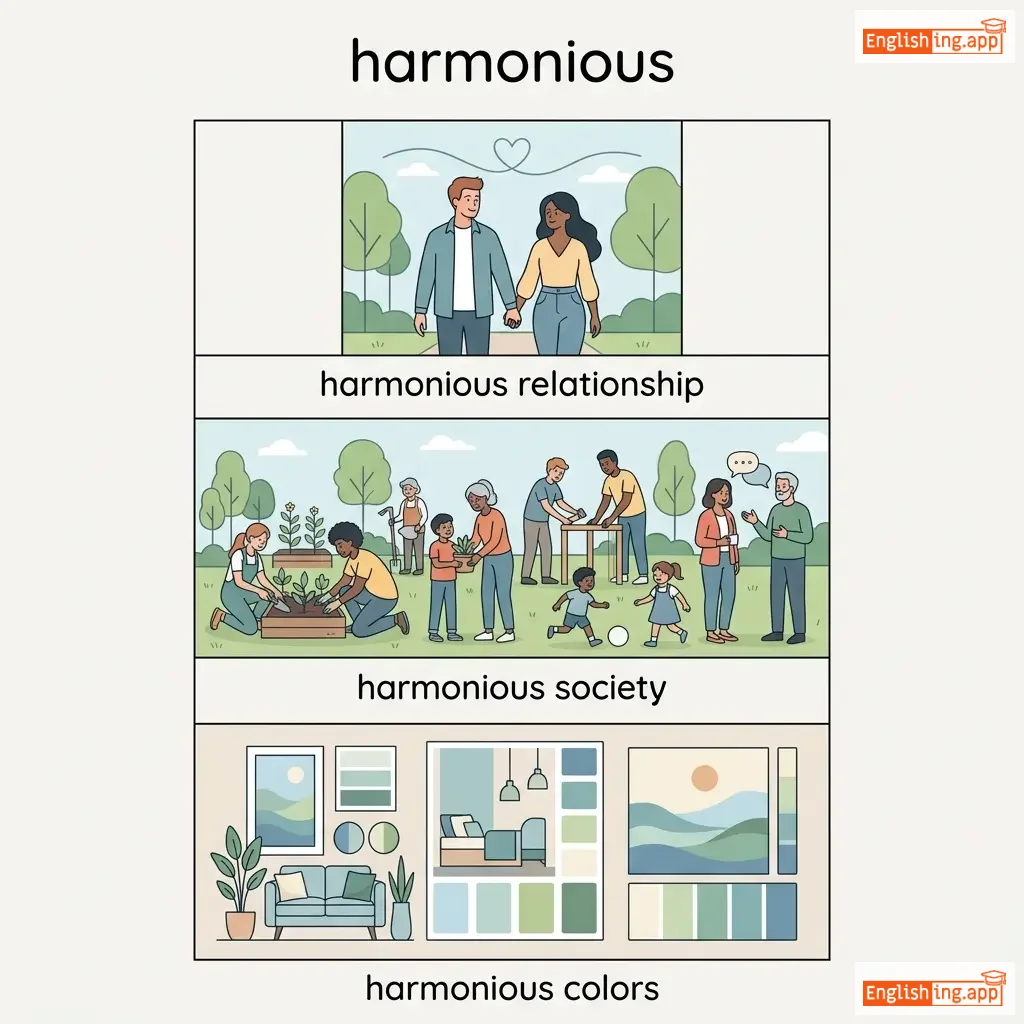
|
/hɑːrˈmoʊniəs/
adjective
(ハーモニアス)
••••••
|
|
調和のとれた, 和やか
chouwa no toreta, nagoyaka
••••••
|
- •••••• | - •••••• | - •••••• | - •••••• |
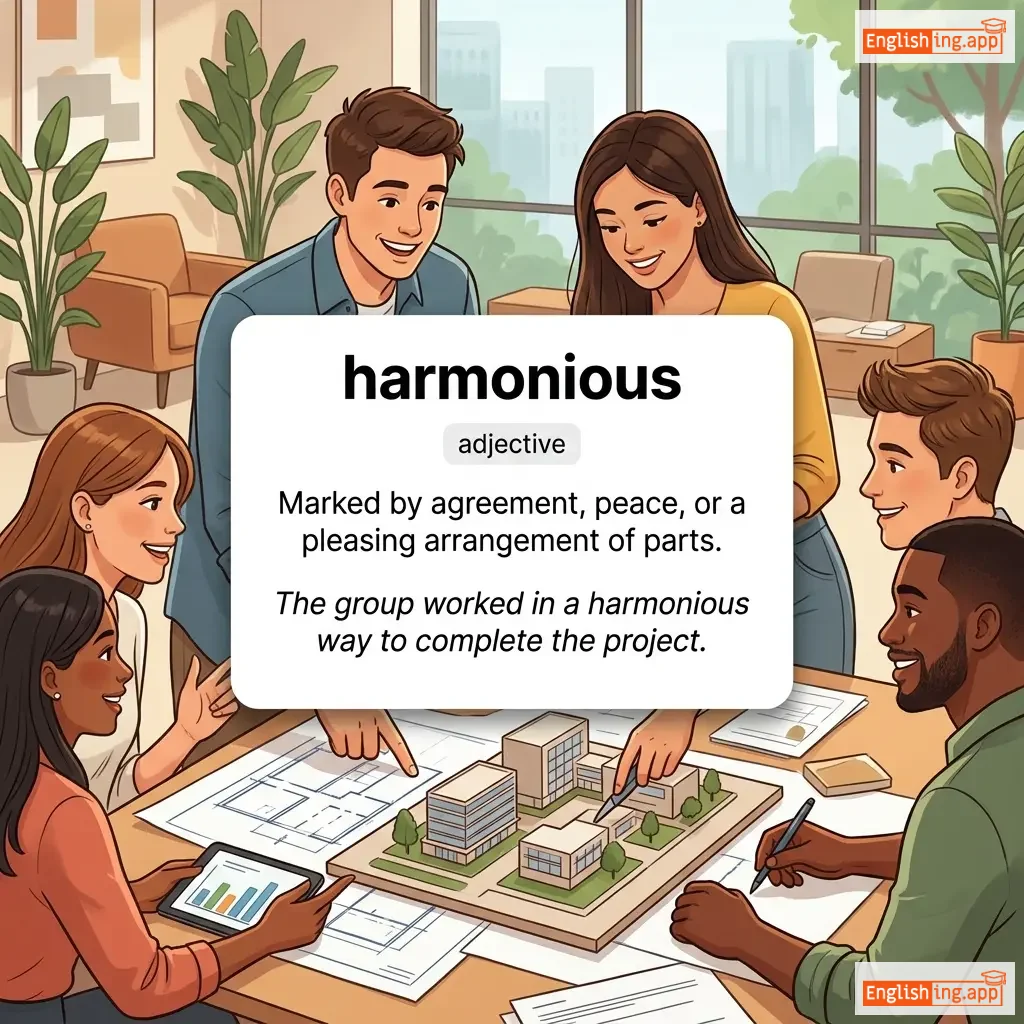
Marked by agreement, peace, or a pleasing arrangement of parts.
••••••
|
The group worked in a harmonious way to complete the project. |
グループはプロジェクトを完了するために調和のとれた方法で働きました。
Gurūpu wa purojekuto o kanryou suru tame ni chouwa no toreta hōhō de hatarakimashita.
••••••
|
live in harmony |
To live peacefully together without conflict.
••••••
|
調和の中で生きる
chouwa no naka de ikiru
••••••
|
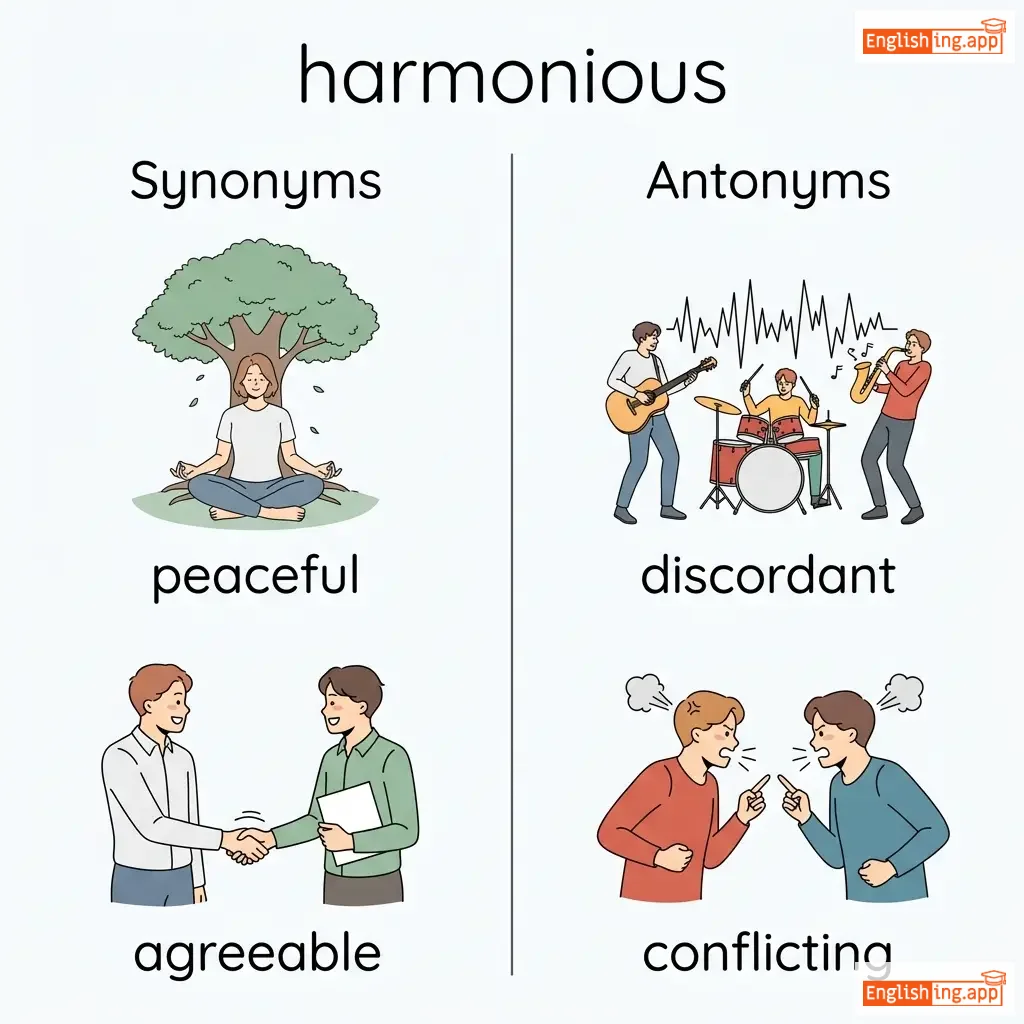
peaceful,agreeable,balanced,melodious,concordant
••••••
|
discordant,conflicting
••••••
|
harmonious relationship,harmonious society,harmonious colors,harmonious design
••••••
|
Harmony + ous = Harmonious → 調和して一緒に過ごす
••••••
|
|
#4039
🌱
|
/ˈhɑːrdi/
adjective
(ハーディ)
••••••
|
- •••••• |
頑丈, 強健
ganjou, kyouken
••••••
|
- •••••• | - •••••• | - •••••• | - •••••• |
Strong, robust, and capable of enduring difficult conditions.
••••••
|
Hardy plants can survive the harsh winter. |
頑丈な植物は厳しい冬を生き抜くことができます。
Ganjou na shokubutsu wa kibishii fuyu wo ikinuku koto ga dekimasu.
••••••
|
hale and hearty |
In good health and full of vigor.
••••••
|
健康で力強い
kenkou de chikara tsuyoi
••••••
|
robust,strong,tough,resilient,sturdy
••••••
|
weak,fragile
••••••
|
hardy plants,hardy people,hardy traveler,hardy soldier
••••••
|
どんな困難な状況でも生き残るハーディ
••••••
|
|
#4040
💪
|
/ˈhɑːdɪhʊd/
noun
(ハーディフッド)
••••••
|
- •••••• |
勇気、大胆さ
yūki, daitansa
••••••
|
- •••••• | - •••••• | - •••••• | - •••••• |
Courage, boldness, or daring behavior; also physical robustness.
••••••
|
The mountaineer's hardihood impressed the entire team.
登山家のハーディフッドはチーム全体を感動させました。
••••••
|
登山家のハーディフッドはチーム全体を感動させました。
Tōzanka no hādifuddo wa chīmu zentai o kandō saseshimashita.
••••••
|
- •••••• | - •••••• | - •••••• |
bravery,courage,boldness,fearlessness,fortitude
••••••
|
cowardice,timidity
••••••
|
display hardihood,show hardihood,great hardihood,remarkable hardihood
••••••
|
HARD (難しい) + 勇気 = hardihood
••••••
|
|
#4041
💔
|
/ˌhɑːrdˈhɑːrtɪd/
adjective
(ハード-ハーテッド)
••••••
|
- •••••• |
冷徹
reitetu
••••••
|
- •••••• | - •••••• | - •••••• | - •••••• |
showing no kindness or sympathy; cruel
••••••
|
The landlord was hard-hearted and refused to help the poor family.
家主は心の冷たい人で、貧しい家族を助けることを拒否しました。
••••••
|
家主は冷徹で、貧しい家族を助けることを拒否しました。
Yaju wa reitetu de, mazushī kazoku o tasukeru koto o kyohi shimashita.
••••••
|
- •••••• | - •••••• | - •••••• |
cruel, unkind, merciless, ruthless, callous
••••••
|
kind, compassionate, sympathetic
••••••
|
hard-hearted ruler, hard-hearted attitude, hard-hearted decision
••••••
|
Hard-heartedは冷徹な心を意味します - 同情心のない人のように。
••••••
|
|
#4042
🪓
|
/ˌhɑːrdˈbɪtn̩/
adjective
(haadobiten)
••••••
|
- •••••• |
頑固で経験豊富
ganko de keiken hōfu
••••••
|
- •••••• | - •••••• | - •••••• | - •••••• |
tough and experienced, not easily affected by emotions or hardship
••••••
|
The hard-bitten detective showed no sign of surprise at the crime scene.
その頑固な探偵は犯罪現場で驚きの兆候を見せませんでした。
••••••
|
その経験豊富な探偵は犯罪現場で驚きの兆候を見せませんでした。
Sono keiken hōfu na tantei wa hanzai genba de odoroki no chōkō o misemasen deshita.
••••••
|
- •••••• | - •••••• | - •••••• |
tough, seasoned, hardened, resilient, rugged
••••••
|
naive, sensitive, gentle
••••••
|
hard-bitten soldier, hard-bitten journalist, hard-bitten veteran
••••••
|
頑固で経験豊富な探偵、すべてに驚かないように。
••••••
|
|
#4043
⚓
|
/ˈhɑːrbər/
noun, verb
••••••
|
- •••••• | - •••••• |
harbored
••••••
|
harbored
••••••
|
harbors
••••••
|
harboring
••••••
|
noun: a place on the coast where ships may find shelter; verb: to keep (a thought or feeling, often negative) in one's mind
••••••
|
He continued to harbor resentment towards his former boss. |
- •••••• |
safe harbor |
a place or condition of security or safety
••••••
|
- •••••• |
shelter, refuge, haven, port, nurture
••••••
|
expose, release, abandon
••••••
|
harbor resentment, harbor doubt, deep-water harbor, natural harbor
••••••
|
No •••••• |
|
#4044
🔮
|
/ˈhɑːrbɪndʒər/
noun
(ハービンジャー)
••••••
|
- •••••• |
前触れ
maebure
••••••
|
- •••••• | - •••••• | - •••••• | - •••••• |
a person or thing that announces or signals the approach of another
••••••
|
The sudden drop in temperature was a harbinger of winter.
気温の急激な低下は冬の前触れでした。
••••••
|
気温の急激な低下は冬の前触れでした。
Kion no kyūgeki na teika wa fuyu no maebure deshita.
••••••
|
harbinger of doom
運命の前触れ
••••••
|
a sign that something bad or disastrous is coming
••••••
|
運命の前触れ
unmei no maebure
••••••
|
omen, sign, precursor, forerunner, herald
••••••
|
aftermath, result, consequence
••••••
|
harbinger of change, harbinger of spring, harbinger of war
••••••
|
前触れ – 前触れは何かが来る前に示すサインです。
••••••
|
|
#4045
😠
|
/həˈræs/
verb
••••••
|
- •••••• | - •••••• |
harassed
••••••
|
harassed
••••••
|
harasses
••••••
|
harassing
••••••
|
to annoy or trouble someone repeatedly in an aggressive or persistent way
••••••
|
The journalist claimed she was being harassed online. |
- •••••• |
sexual harassment |
unwanted or inappropriate behavior of a sexual nature towards someone
••••••
|
- •••••• |
pester, bother, torment, persecute, intimidate
••••••
|
comfort, support, protect
••••••
|
harass employees, harass someone, constantly harass, harass online
••••••
|
No •••••• |
|
#4046
📢
|
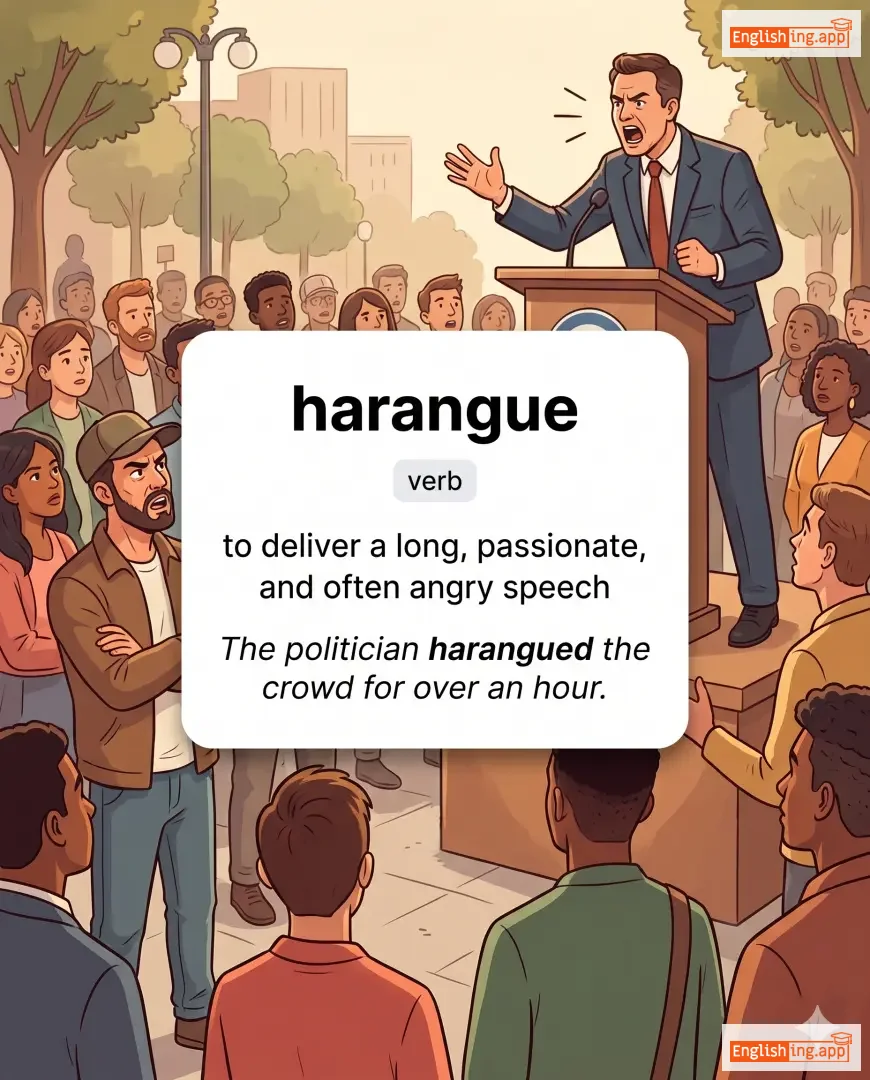
/həˈræŋ/
verb
(ハランゲ)
••••••
|
|
長く情熱的な演説をする
nagaku jōnetsuteki na enzetsu o suru
••••••
|
harangued
ハランゲド
••••••
|
harangued
ハランゲド
••••••
|
harangues
ハランゲス
••••••
|
haranguing
ハランゲイング
••••••
|
to deliver a long, passionate, and often angry speech
••••••
|
The politician harangued the crowd for over an hour.
政治家は群衆に一時間以上も演説しました。
••••••
|
政治家は群衆に一時間以上も演説をしました。
Seijika wa gunshū ni ichijikan ijō mo enzetsu shimashita.
••••••
|
- •••••• | - •••••• | - •••••• |
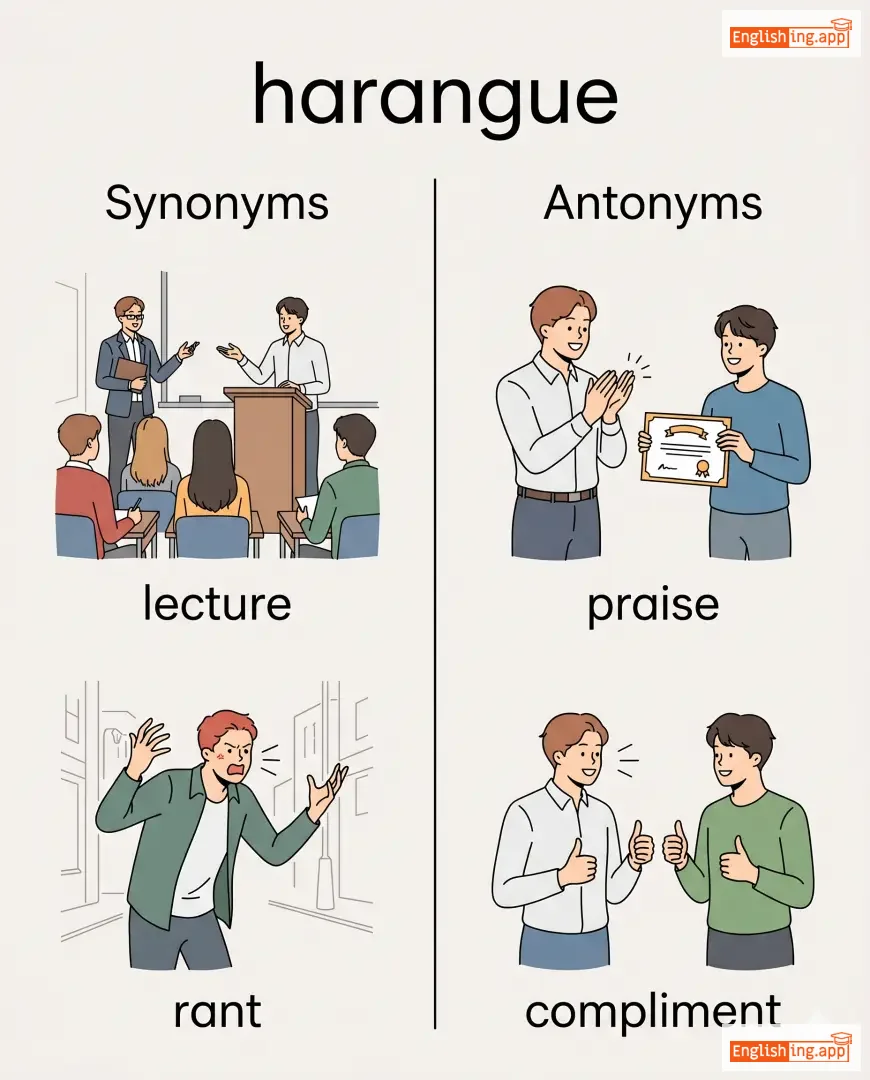
lecture, rant, tirade, scold, sermon
••••••
|
praise, compliment, silence
••••••
|
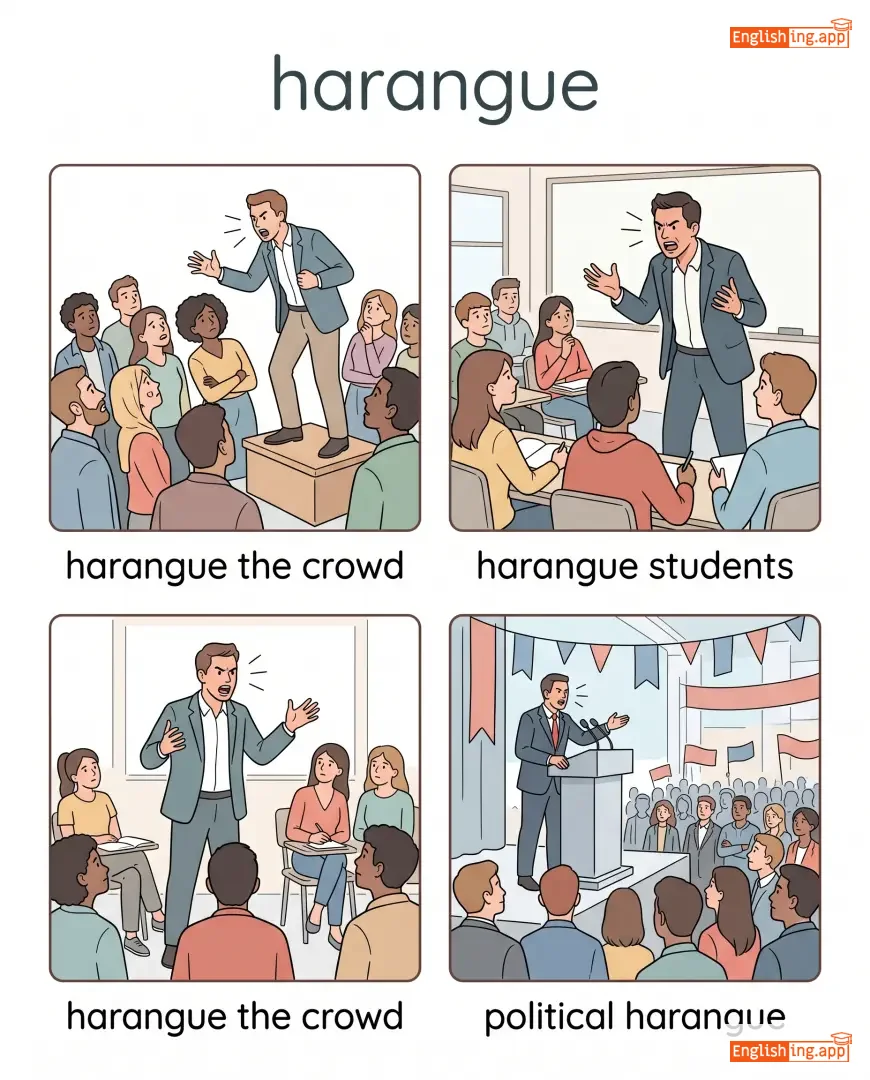
harangue the crowd, harangue students, political harangue
••••••
|
Harangue は長いスピーチを意味します → 騒々しく煩わしいスピーチ。
••••••
|
|
#4047
😊
|
/ˌhæpi ɡoʊ ˈlʌki/
adjective
(ハピゴーラッキー)
••••••
|
- •••••• |
おおらかで、気楽な、無頓着な
ōraka de, kirakuna, mutōchakuna
••••••
|
- •••••• | - •••••• | - •••••• | - •••••• |
cheerfully unconcerned about the future; carefree
••••••
|
She has a happy-go-lucky attitude and never worries about tomorrow.
彼女はハピゴーラッキーな態度を持っており、明日のことを心配することはありません。
••••••
|
彼女はハピゴーラッキーな態度を持っており、明日のことを心配することはありません。
Kanojo wa hapigōrakkī na taido o motte ori, ashita no koto o shinpai suru koto wa arimasen.
••••••
|
- •••••• | - •••••• | - •••••• |
carefree, easygoing, cheerful, optimistic, lighthearted
••••••
|
anxious, worried, serious
••••••
|
happy-go-lucky attitude, happy-go-lucky nature, happy-go-lucky personality
••••••
|
Happy-go-lucky は、リラックスして未来を気にしない意味です
••••••
|
|
#4048
😞
|
/ˈhæpləs/
adjective
(ハプレス)
••••••
|
- •••••• |
不運な, 不幸な
fuun na, fukou na
••••••
|
- •••••• | - •••••• | - •••••• | - •••••• |
unfortunate, unlucky, deserving pity
••••••
|
The hapless traveler lost his passport on the very first day. |
不運な旅行者は、初日にパスポートを失くしました。
Fuun na ryokousha wa, shonichi ni pasupooto wo nakushimashita.
••••••
|
- •••••• | - •••••• | - •••••• |
unlucky, unfortunate, ill-fated, doomed, wretched
••••••
|
fortunate, lucky, blessed
••••••
|
hapless victim, hapless attempt, hapless traveler
••••••
|
Hapless = Hap (運) + less → 運がない、不運な
••••••
|
|
#4049
🎲
|
/hæpˈhæzərd/
adjective
(ハパザード)
••••••
|
|
でたらめな、無秩序な
detarame na, muchitsujona
••••••
|
- •••••• | - •••••• | - •••••• | - •••••• |
lacking any obvious order or organization; random
••••••
|
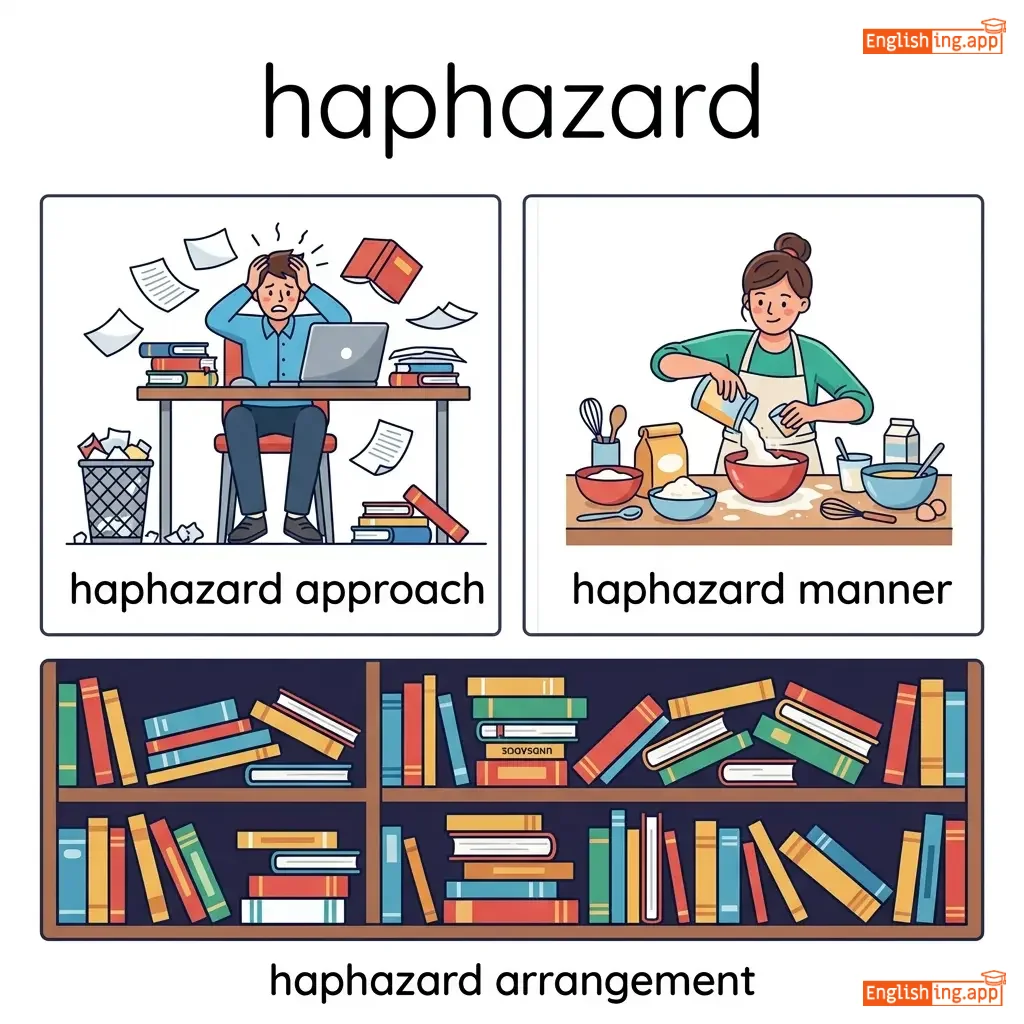
The books were stacked in a haphazard way on the table. |
本はテーブルにでたらめに積まれていた。
Hon wa tēburu ni detarame ni tsumarete ita.
••••••
|
- •••••• | - •••••• | - •••••• |
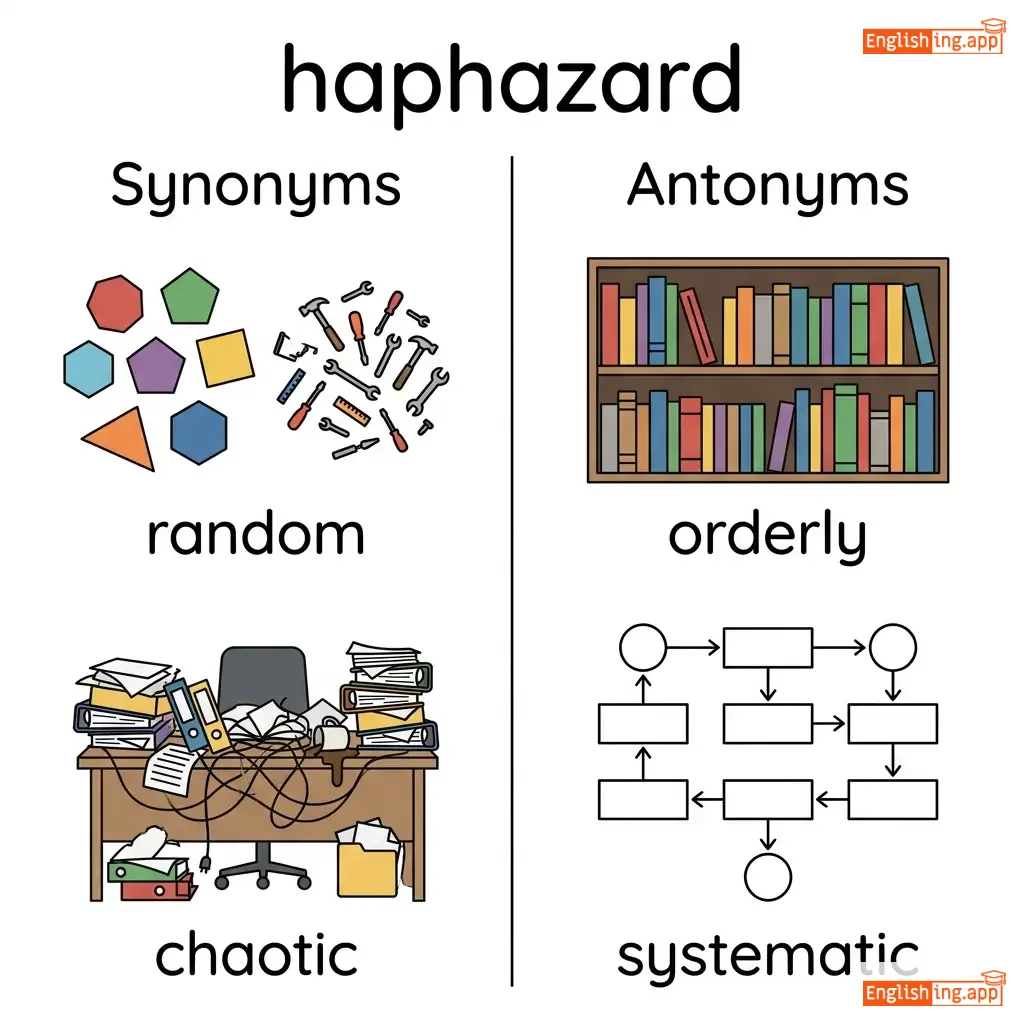
random, chaotic, careless, disorganized, irregular
••••••
|
orderly, systematic, organized
••••••
|
haphazard approach, haphazard manner, haphazard arrangement
••••••
|
Haphazardは偶然で起きる、計画的でないもの。
••••••
|
|
#4050
🍀
|
/hæp/
noun
(ハプ)
••••••
|
- •••••• |
運, 幸運, 偶然
un, kouun, guuzen
••••••
|
- •••••• | - •••••• | - •••••• | - •••••• |
luck, fortune, or chance occurrence
••••••
|
By sheer hap, he discovered the old letter hidden in the drawer. |
偶然にも、彼は引き出しの中に隠された古い手紙を発見しました。
Guuzen ni mo, kare wa hikidashi no naka ni kakusareta furui tegami wo hakken shimashita.
••••••
|
mishap |
an unlucky accident or unfortunate event
••••••
|
不運
fuun
••••••
|
luck, fortune, chance, fate, coincidence
••••••
|
certainty, inevitability
••••••
|
by hap, pure hap, ill hap
••••••
|
Hapは予期せぬ出来事、運が微笑む時、まるで' hap-py'のように。
••••••
|
Vocabulary Quiz
Test your vocabulary by matching words with their translations or meanings.
Login to take the quiz
Comments (0)
Share your thoughts and join the discussion.
Join the discussion by logging in
Login to CommentNo comments yet
Be the first to share your thoughts!