



Swipe left or right, or use the buttons. Tap image to zoom.
例句翻译
单词
Lesson 135Lesson 135 - 遮罩切换
|
表情符号
|
单词 | Images | 翻译 | 过去时 | 过去分词 | 第三人称单数 | 动名词 | 含义 | 例句 | 例句翻译 | 示例表达 | 示例表达含义 | 示例表达翻译 | 同义词 | 反义词 | 搭配词 | 助记符 |
|---|---|---|---|---|---|---|---|---|---|---|---|---|---|---|---|---|---|
|
#4021
🎵
|
/hɑːrp/
verb
(哈普)
••••••
|
- •••••• |
反复抱怨,唠叨
fǎn fù bào yuàn, lāo dāo
••••••
|
harped
哈普德
••••••
|
harped
哈普德
••••••
|
harps
哈普斯
••••••
|
harping
哈普英
••••••
|
To dwell on or complain about something persistently.
••••••
|
He kept harping on the same mistake over and over.
他一直在重复同一个错误。
••••••
|
他一直在反复抱怨同一个错误。
Tā yī zhí zài fǎn fù bào yuàn tóng yī gè cuò wù.
••••••
|
harp on
哈普
••••••
|
To talk or complain repeatedly about something.
••••••
|
唠叨
lāo dāo
••••••
|
dwell,reiterate,repeat,nag,obsess
••••••
|
ignore,overlook
••••••
|
harp on,harp endlessly,harp about,keep harping
••••••
|
就像哈普的旋律重复一样,'harp'意味着不断地重复同样的话题。
••••••
|
|
#4022
🏡
|
/ˈheɪvən/
noun
(海文)
••••••
|
- •••••• |
避风港
bì fēng gǎng
••••••
|
- •••••• | - •••••• | - •••••• | - •••••• |
a safe place or shelter
••••••
|
The library became a haven for students during exams.
图书馆在考试期间成为了学生们的避风港。
••••••
|
图书馆在考试期间成为了学生们的避风港。
Túshūguǎn zài kǎoshì qījiān chéngwéile xuéshēngmen de bì fēng gǎng.
••••••
|
safe haven
安全的避风港
••••••
|
a place of refuge or safety
••••••
|
安全的避风港
ānquán de bì fēng gǎng
••••••
|
refuge, shelter, sanctuary, asylum, retreat
••••••
|
danger, threat, exposure
••••••
|
safe haven, peaceful haven, haven of rest, haven for wildlife
••••••
|
Haven是避风港,想象'Heaven'是你安全的地方 (safe haven)。
••••••
|
|
#4023
🦚
|
/oʊˈtɜːr/
noun
(hóutè)
••••••
|
- •••••• |
傲慢
àomàn
••••••
|
- •••••• | - •••••• | - •••••• | - •••••• |
disdainful pride; arrogance
••••••
|
His hauteur made it difficult for others to approach him.
他的hóutè让别人很难接近他。
••••••
|
他的傲慢使别人很难接近他。
Tā de àomàn shǐ biérén hěn nán jiējìn tā.
••••••
|
- •••••• | - •••••• | - •••••• |
arrogance, pride, vanity, conceit, disdain
••••••
|
humility, modesty, meekness
••••••
|
sense of hauteur, display hauteur, filled with hauteur
••••••
|
Hauteur意味着'热气'——傲慢的人总是发出空洞的热气。
••••••
|
|
#4024
👻
|
/hɔːnt/
verb
••••••
|
|
- •••••• |
haunted
••••••
|
haunted
••••••
|
haunts
••••••
|
haunting
••••••
|
to appear frequently in or fill the mind of someone; to visit a place regularly
••••••
|
The old memories still haunt him. |
- •••••• |
haunt one's dreams |
to repeatedly trouble or disturb someone mentally
••••••
|
- •••••• |
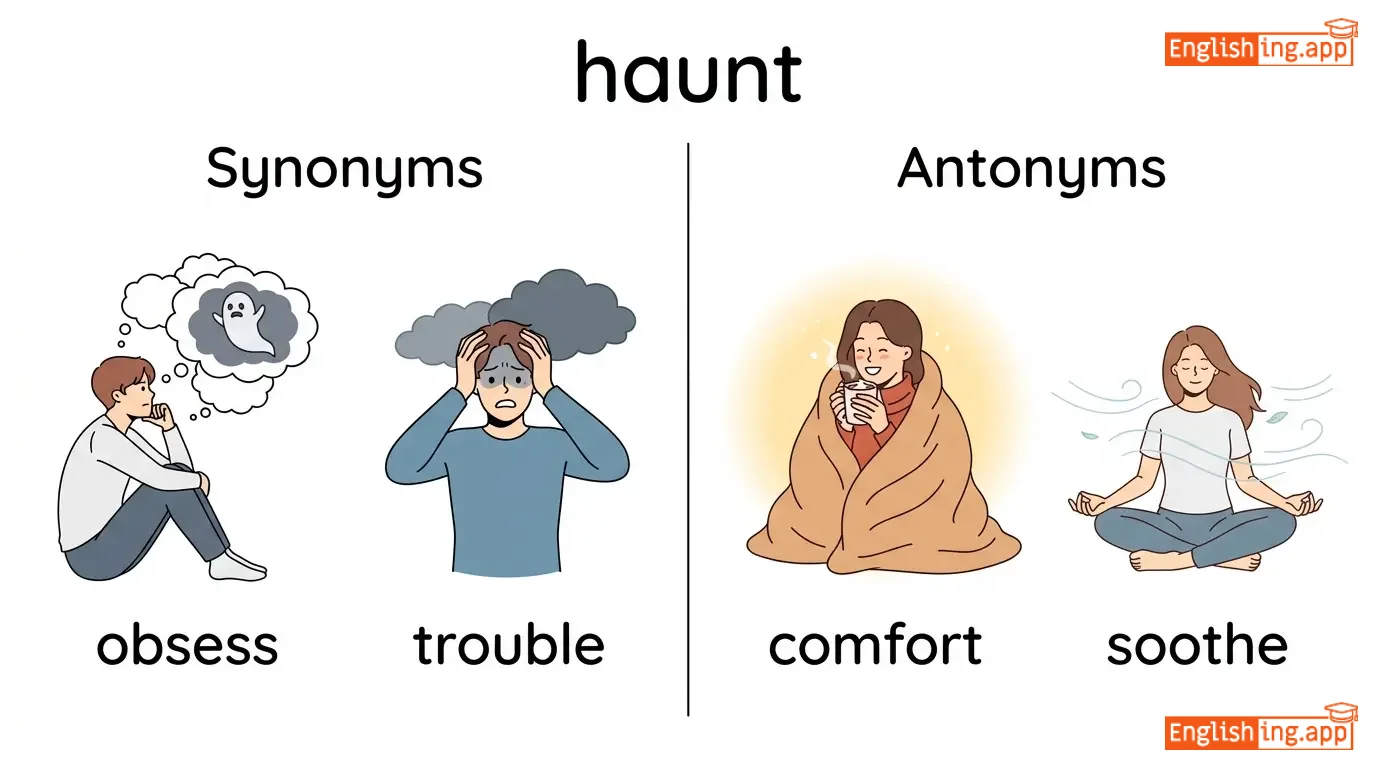
obsess, trouble, torment, visit, linger
••••••
|
comfort, soothe, forget
••••••
|
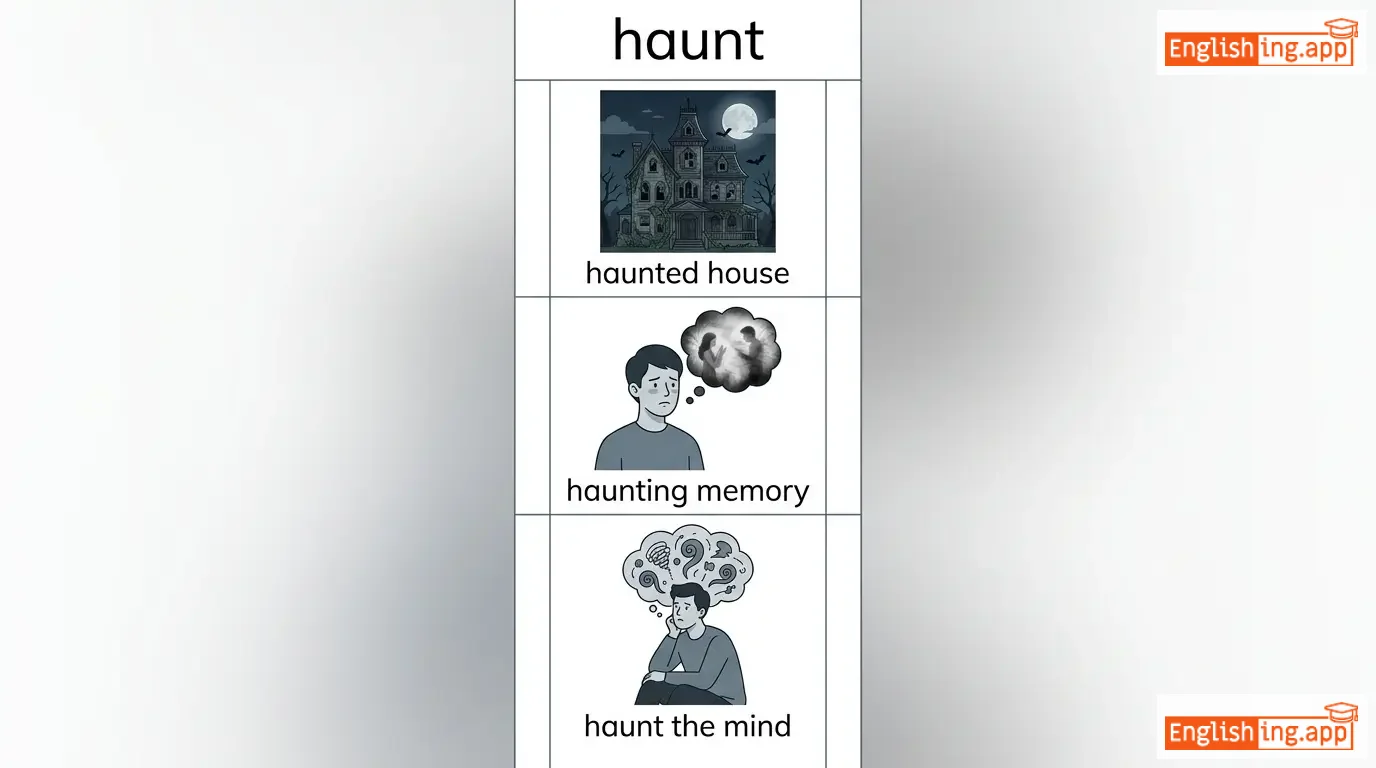
haunted house, haunting memory, haunt the mind, old haunt
••••••
|
No •••••• |
|
#4025
😏
|
/ˈhɔːti/
adjective
(hàotì)
••••••
|
- •••••• |
傲慢
àomàn
••••••
|
- •••••• | - •••••• | - •••••• | - •••••• |
arrogantly superior and disdainful
••••••
|
She gave him a haughty look and walked away.
tā gěi tā yī gè hàotì de yǎnzhī, ránhòu zǒu diào le.
••••••
|
她给了他一个傲慢的眼神,然后走了。
Tā gěi tā yī gè àomàn de yǎnzhī, ránhòu zǒu diào le.
••••••
|
- •••••• | - •••••• | - •••••• |
arrogant, conceited, proud, snobbish, disdainful
••••••
|
humble, modest, meek
••••••
|
haughty attitude, haughty glance, haughty smile, haughty expression
••••••
|
Haughty 意味着傲慢 — 记住,‘Hot tea’ 让人看起来很傲慢。
••••••
|
|
#4026
😏
|
/ˈhɔːtɪnəs/
noun
(ho-tin-es)
••••••
|
- •••••• |
傲慢
aoman
••••••
|
- •••••• | - •••••• | - •••••• | - •••••• |
The appearance or quality of being arrogantly superior and disdainful.
••••••
|
His haughtiness made him unpopular among his peers.
Jis ho-tin-es mei-hid him an-pu-pu-lar among jis peers.
••••••
|
他的傲慢使他在同事中不受欢迎。
Tā de àomàn shǐ tā zài tóngshì zhōng bù shòu huānyíng.
••••••
|
- •••••• | - •••••• | - •••••• |
arrogance, pride, conceit, disdain
••••••
|
humility, modesty, respect
••••••
|
display haughtiness, full of haughtiness, arrogance and haughtiness
••••••
|
Haughty意味着傲慢,所以haughtiness是傲慢的状态。
••••••
|
|
#4027
🐣
|
/hætʃ/
verb
(hǎch)
••••••
|
- •••••• |
孵化 / 计划
fūhuà / jìhuà
••••••
|
hatched
hǎchd
••••••
|
hatched
hǎchd
••••••
|
hatches
hǎchés
••••••
|
hatching
hǎchīng
••••••
|
To cause a young animal to emerge from an egg; to plan secretly.
••••••
|
The chicks hatched early in the morning.
小鸡早上很早就孵化出来了。
••••••
|
小鸡早上很早就孵化出来了。
Xiǎo jī zǎo shàng hěn zǎo jiù fūhuà chūlái le.
••••••
|
hatch a plan
策划一个计划
••••••
|
To secretly prepare or devise a plan.
••••••
|
策划一个计划
Cèhuà yīgè jìhuà
••••••
|
emerge, breed, incubate, devise, scheme
••••••
|
destroy, end, abandon
••••••
|
hatch a plan, hatch eggs, newly hatched, hatch scheme
••••••
|
Hatch意味着孵化 🐣,而策划计划意味着秘密地准备它。
••••••
|
|
#4028
⚡
|
/ˈheɪsti/
adjective
(hèisī)
••••••
|
- •••••• |
匆忙的
cōngmáng de
••••••
|
- •••••• | - •••••• | - •••••• | - •••••• |
Done with excessive speed or urgency, often without careful thought.
••••••
|
She made a hasty decision without considering the consequences.
她做出了匆忙的决定,没有考虑后果。
••••••
|
她做出了匆忙的决定,没有考虑后果。
Tā zuòchūle cōngmáng de juédìng, méiyǒu kǎolǜ hòuguǒ.
••••••
|
hasty retreat
匆忙撤退
••••••
|
A quick and often unplanned withdrawal from a situation.
••••••
|
匆忙撤退
cōngmáng chètuì
••••••
|
rash, quick, hurried, impulsive
••••••
|
careful, thoughtful, deliberate
••••••
|
hasty decision, hasty retreat, hasty reply, hasty conclusion
••••••
|
Hasty = 匆忙的,意味着做事急速没有思考。
••••••
|
|
#4029
🏃
|
/ˈheɪsən/
verb
(heisen)
••••••
|
- •••••• |
加速
jiasu
••••••
|
hastened
haisen
••••••
|
hastened
haisen
••••••
|
hastens
haisen
••••••
|
hastening
haising
••••••
|
To move or act quickly; to cause something to happen sooner.
••••••
|
He hastened to finish his work before the deadline.
他急忙在截止日期前完成工作。
••••••
|
他急忙在截止日期前完成工作。
Ta jimang zai jiezhiriqi qian wancheng gongzuo.
••••••
|
hasten the process
加速过程
••••••
|
To make something happen more quickly.
••••••
|
加速过程
Jiasu guocheng
••••••
|
hurry, rush, accelerate, quicken
••••••
|
delay, slow, hinder
••••••
|
hasten to add, hasten the process, hasten to finish
••••••
|
Hasten 与 '加速' 相关,表示快速完成某事。
••••••
|
|
#4030
❄️
|
/hɑːrʃ/
adjective
(哈什)
••••••
|
- •••••• |
严厉
yanli
••••••
|
- •••••• | - •••••• | - •••••• | - •••••• |
Unpleasantly rough or severe in sound, taste, conditions, or treatment.
••••••
|
The teacher's harsh tone frightened the students. |
老师严厉的语气吓到了学生。
Laoshi yanli de yuqi xiadao le xuesheng.
••••••
|
harsh reality |
The unpleasant truth of a situation.
••••••
|
严酷的现实
yanku de xianshi
••••••
|
severe, stern, rough, cruel, brutal
••••••
|
gentle, mild, soft
••••••
|
harsh criticism, harsh reality, harsh conditions, harsh treatment
••••••
|
严厉 (yanli) 冬天的严酷像一场暴风雪。
••••••
|
|
#4031
⚔️
|
/ˈhæri/
verb
(海里)
••••••
|
- •••••• |
骚扰, 追扰
saorao, zhuirao
••••••
|
harried
海里德
••••••
|
harried
海里德
••••••
|
harries
海里斯
••••••
|
harrying
海里英
••••••
|
to constantly attack, harass, or annoy
••••••
|
The army harried the enemy with sudden raids.
军队通过突袭不断攻击敌人。
••••••
|
军队通过突袭不断攻击敌人。
Jundui tongguo tuxi buduan gongji diren.
••••••
|
- •••••• | - •••••• | - •••••• |
attack, raid, harass, pester, bother
••••••
|
comfort, help, support
••••••
|
harry the enemy, harried by troubles, harrying tactics
••••••
|
哈利·波特不断骚扰敌人—'harry'的意思是骚扰或追扰。
••••••
|
|
#4032
💔
|
/ˈhær.oʊ.ɪŋ/
adjective
(hǎi pí nì sī)
••••••
|
|
令人痛苦的和可怕的
lìng rén tòngkǔ de hé kěpà de
••••••
|
- •••••• | - •••••• | - •••••• | - •••••• |
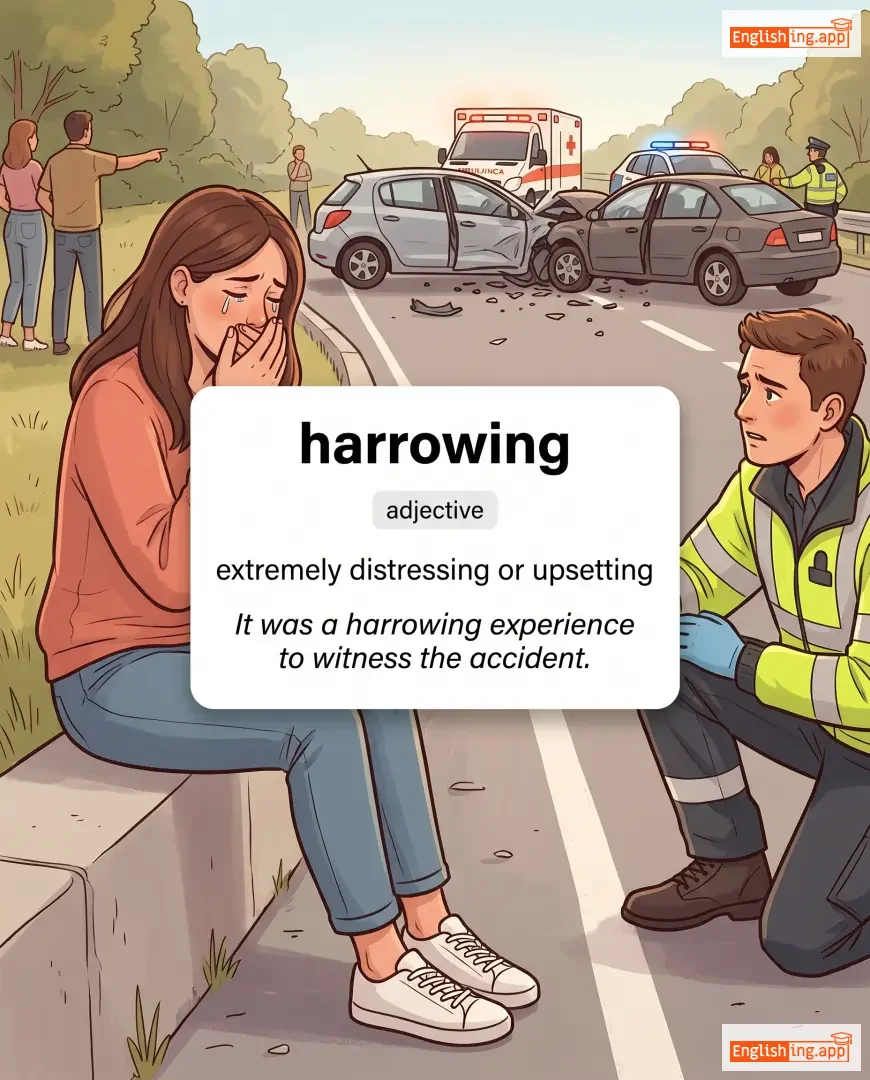
extremely distressing or upsetting
••••••
|
It was a harrowing experience to witness the accident. |
目睹事故是一次令人痛苦的经历。
Mùdǔ shìgù shì yīcì lìng rén tòngkǔ de jīnglì.
••••••
|
- •••••• | - •••••• | - •••••• |
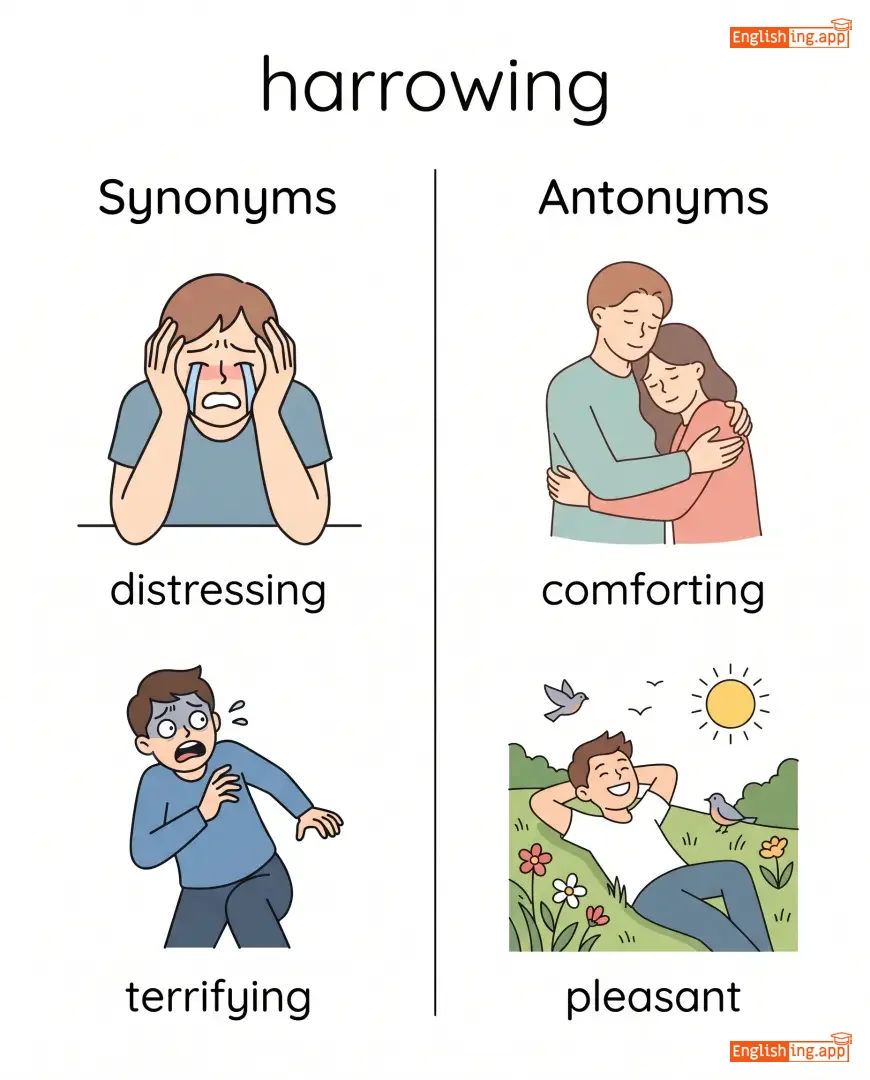
distressing, terrifying, painful, traumatic, upsetting
••••••
|
comforting, pleasant, soothing
••••••
|
harrowing experience, harrowing ordeal, harrowing story
••••••
|
Harrowing是令人感到痛苦的经历,像深刻的伤痕。
••••••
|
|
#4033
🌾
|
/ˈhæroʊ/
verb
(哈罗)
••••••
|
- •••••• |
折磨 / 耙
zhemo / ba
••••••
|
harrowed
哈罗德
••••••
|
harrowed
哈罗德
••••••
|
harrows
哈罗斯
••••••
|
harrowing
哈罗英
••••••
|
to cause distress or torment; also to break up and smooth soil with a farm tool
••••••
|
The tragic news harrowed the entire family.
悲惨的消息让全家人都痛苦不堪。
••••••
|
悲惨的消息让全家人都痛苦不堪。
Beican de xiaoxi rang quanjia ren dou tongku bikan.
••••••
|
- •••••• | - •••••• | - •••••• |
torment, distress, agonize, trouble
••••••
|
comfort, soothe, calm
••••••
|
harrow the land, harrow the soil, harrowed by grief
••••••
|
Harrow听起来像'哈罗'—给人带来痛苦或使用耙子整理土地。
••••••
|
|
#4034
😫
|
/ˈhæriːd/
adjective
(海瑞德)
••••••
|
- •••••• |
感到压力或忙碌
gǎndào yālì huò mánglù
••••••
|
- •••••• | - •••••• | - •••••• | - •••••• |
feeling strained or stressed due to being overworked or constantly bothered
••••••
|
The harried teacher struggled to calm the noisy classroom. |
感到压力的老师努力让嘈杂的教室安静下来。
Gǎndào yālì de lǎoshī nǔlì ràng cáozá de jiàoshì ānjìng xiàlái.
••••••
|
- •••••• | - •••••• | - •••••• |
stressed, pressured, overwhelmed, hassled
••••••
|
calm, relaxed, composed
••••••
|
harried look, harried teacher, harried expression
••••••
|
Harried 就像是 '忙碌的' - 当你忙碌到没有空闲的时候。
••••••
|
|
#4035
🔁
|
/ˈhɑːrpɪŋ/
verb
(哈平)
••••••
|
- •••••• |
不断抱怨
bùduàn bàoyuàn
••••••
|
- •••••• | - •••••• | - •••••• |
harping
哈平
••••••
|
continuously talking or complaining about something in a tiresome way
••••••
|
She kept harping on about the mistakes I made.
她不断地抱怨我犯的错误。
••••••
|
她不断抱怨我做的错事。
Tā bùduàn bàoyuàn wǒ zuò de cuòshì.
••••••
|
harping on
哈平
••••••
|
to keep talking about something in a boring or annoying way
••••••
|
不停说
bùtíng shuō
••••••
|
nagging, dwelling, complaining, repeating, insisting
••••••
|
ignoring, forgetting, overlooking
••••••
|
harping on, harping about, kept harping
••••••
|
像不断弹奏竖琴一样,'harping' 意味着不停地重复某事。
••••••
|
|
#4036
🤤
|
/ˈhæŋ.kər.ɪŋ/
noun
(hǎngkè lín)
••••••
|
- •••••• |
渴望
kewang
••••••
|
- •••••• | - •••••• | - •••••• | - •••••• |
a strong desire or craving for something.
••••••
|
She had a hankering for chocolate late at night. |
她深夜时对巧克力有了强烈的渴望。
Tā shēn yè shí duì qiǎokèlì yǒule qiángliè de kewàng.
••••••
|
- •••••• | - •••••• | - •••••• |
longing, craving, desire, yearning, urge
••••••
|
aversion, dislike
••••••
|
hankering for, sudden hankering, deep hankering
••••••
|
Hankering = Hunger + 渴望 - 强烈的渴求就像饥饿
••••••
|
|
#4037
⚡
|
/ˈhɑːrnɪs/
verb
••••••
|
- •••••• | - •••••• |
harnessed
••••••
|
harnessed
••••••
|
harnesses
••••••
|
harnessing
••••••
|
To control and make use of natural resources, especially energy.
••••••
|
Scientists are working to harness solar power effectively. |
- •••••• |
harness the power |
To control and use a great source of energy or influence.
••••••
|
- •••••• |
utilize,control,exploit,employ,tame
••••••
|
waste,neglect
••••••
|
harness energy,harness power,harness technology,harness resources
••••••
|
No •••••• |
|
#4038
🎶
|
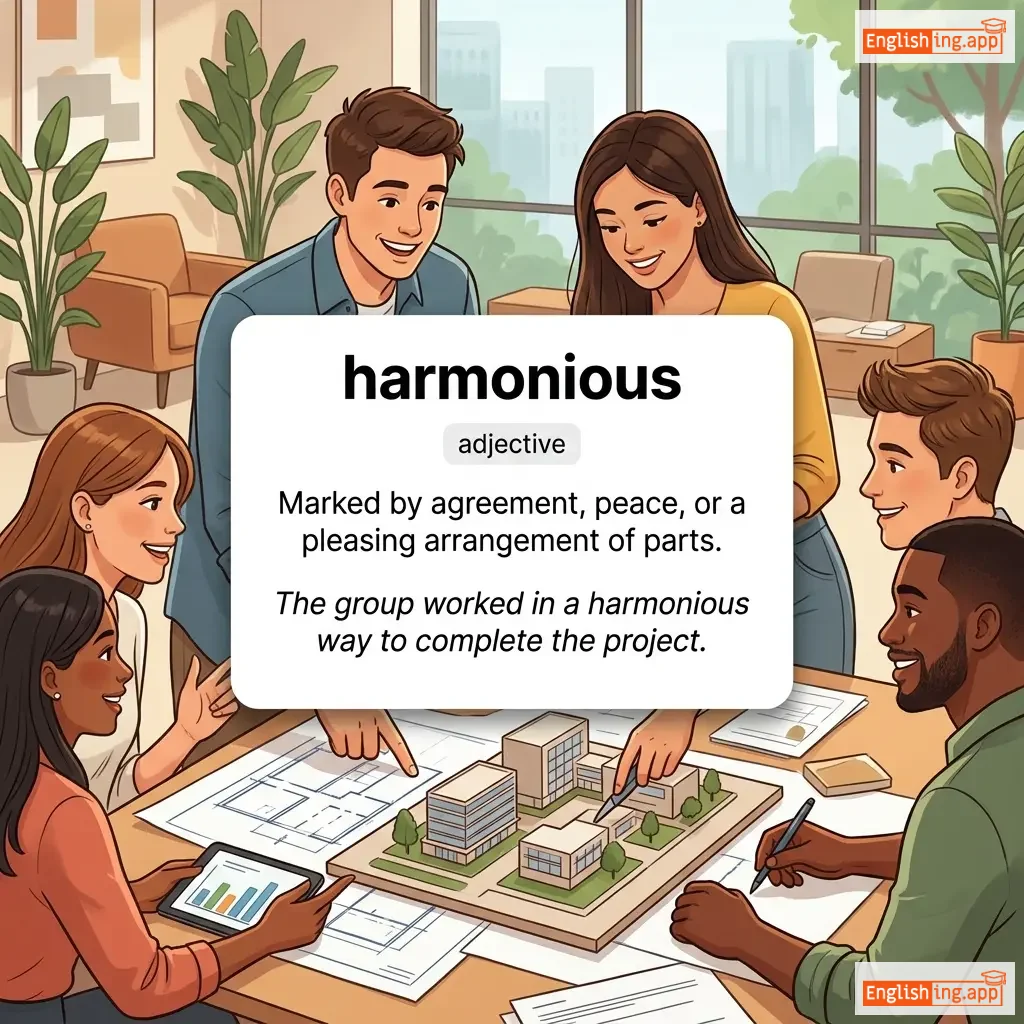
/hɑːrˈmoʊniəs/
adjective
(哈摩尼厄斯)
••••••
|
|
和谐的, 和谐
hexie de, hexie
••••••
|
- •••••• | - •••••• | - •••••• | - •••••• |
Marked by agreement, peace, or a pleasing arrangement of parts.
••••••
|
The group worked in a harmonious way to complete the project. |
小组以和谐的方式工作,以完成项目。
Xiaozu yi hexie de fangshi gongzuo, yi wancheng xiangmu.
••••••
|
live in harmony |
To live peacefully together without conflict.
••••••
|
生活在和谐中
shenghuo zai hexie zhong
••••••
|
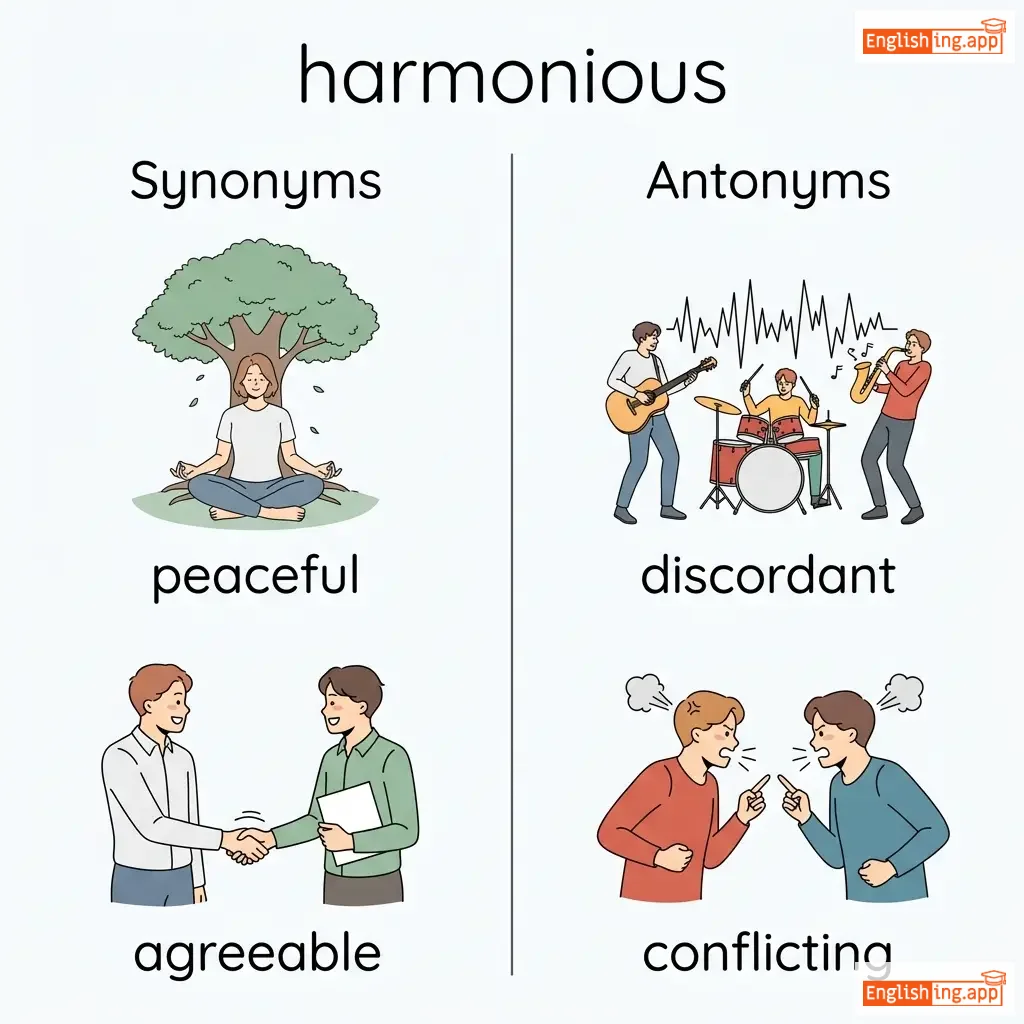
peaceful,agreeable,balanced,melodious,concordant
••••••
|
discordant,conflicting
••••••
|
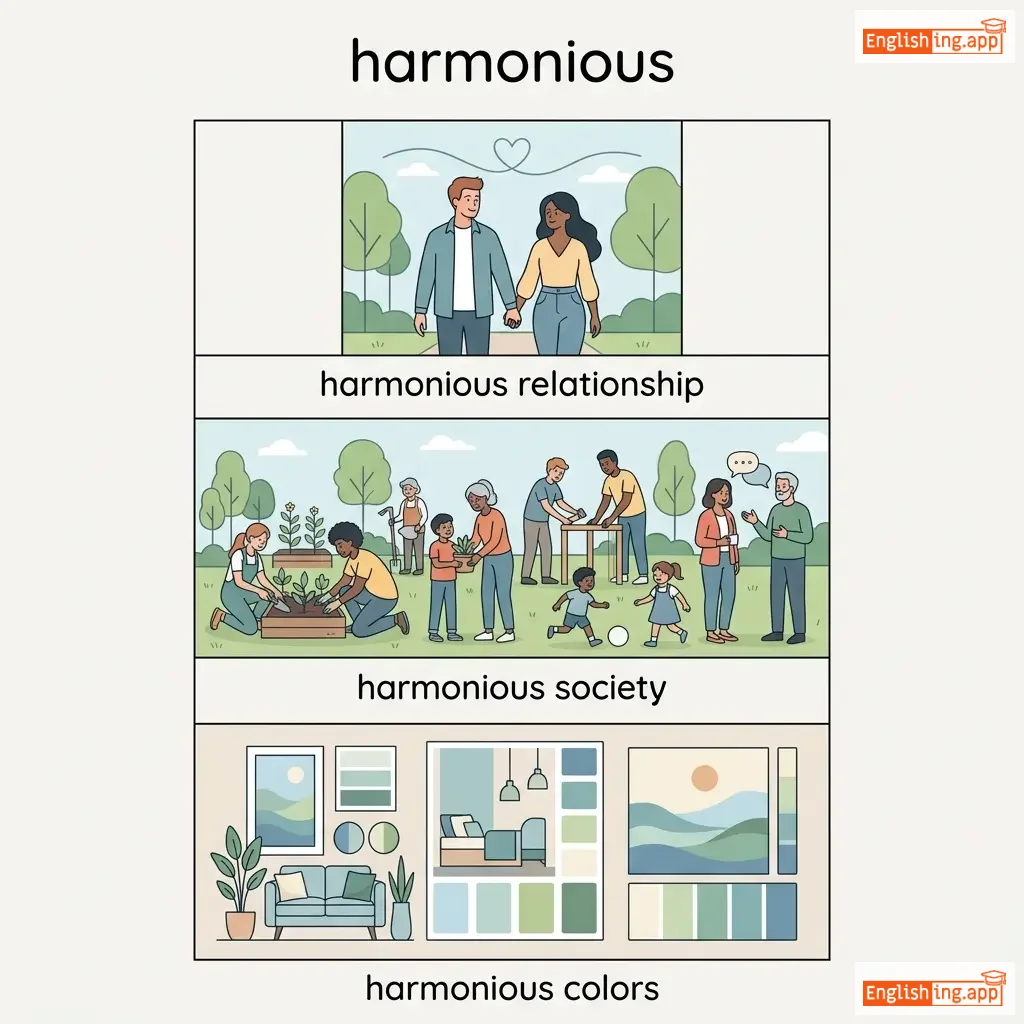
harmonious relationship,harmonious society,harmonious colors,harmonious design
••••••
|
Harmony + ous = Harmonious → 和谐生活在一起。
••••••
|
|
#4039
🌱
|
/ˈhɑːrdi/
adjective
(哈迪)
••••••
|
- •••••• |
坚韧,强健
jianren, qiangjian
••••••
|
- •••••• | - •••••• | - •••••• | - •••••• |
Strong, robust, and capable of enduring difficult conditions.
••••••
|
Hardy plants can survive the harsh winter. |
坚韧的植物能在严寒的冬季生存。
Jianren de zhiwu neng zai yankan de dongji shengcun.
••••••
|
hale and hearty |
In good health and full of vigor.
••••••
|
健康有力
jiankang youli
••••••
|
robust,strong,tough,resilient,sturdy
••••••
|
weak,fragile
••••••
|
hardy plants,hardy people,hardy traveler,hardy soldier
••••••
|
即使在艰难的环境中,哈迪也能生存下来。
••••••
|
|
#4040
💪
|
/ˈhɑːdɪhʊd/
noun
(哈迪胡德)
••••••
|
- •••••• |
勇气,胆量
yǒngqì, dǎnliàng
••••••
|
- •••••• | - •••••• | - •••••• | - •••••• |
Courage, boldness, or daring behavior; also physical robustness.
••••••
|
The mountaineer's hardihood impressed the entire team.
登山者的硬气打动了整个团队。
••••••
|
登山者的硬气打动了整个团队。
Dēngshān zhě de yìngqì dǎdòngle zhěnggè tuánduì.
••••••
|
- •••••• | - •••••• | - •••••• |
bravery,courage,boldness,fearlessness,fortitude
••••••
|
cowardice,timidity
••••••
|
display hardihood,show hardihood,great hardihood,remarkable hardihood
••••••
|
HARD (艰难) + 勇气 = hardihood
••••••
|
|
#4041
💔
|
/ˌhɑːrdˈhɑːrtɪd/
adjective
(hād-hǎtèd)
••••••
|
- •••••• |
冷酷无情
lěngkù wúqíng
••••••
|
- •••••• | - •••••• | - •••••• | - •••••• |
showing no kindness or sympathy; cruel
••••••
|
The landlord was hard-hearted and refused to help the poor family.
房东是个铁石心肠的人,拒绝帮助贫困家庭。
••••••
|
房东是个冷酷无情的人,拒绝帮助贫困家庭。
Fángdōng shì gè lěngkù wúqíng de rén, jùjué bāngzhù pínkùn jiātíng.
••••••
|
- •••••• | - •••••• | - •••••• |
cruel, unkind, merciless, ruthless, callous
••••••
|
kind, compassionate, sympathetic
••••••
|
hard-hearted ruler, hard-hearted attitude, hard-hearted decision
••••••
|
Hard-hearted意味着铁石心肠 – 就像没有同情心的人。
••••••
|
|
#4042
🪓
|
/ˌhɑːrdˈbɪtn̩/
adjective
(hade-biten)
••••••
|
- •••••• |
坚韧且经验丰富
jiān rèn qiě jīng yàn fēng fù
••••••
|
- •••••• | - •••••• | - •••••• | - •••••• |
tough and experienced, not easily affected by emotions or hardship
••••••
|
The hard-bitten detective showed no sign of surprise at the crime scene.
那个铁石心肠的侦探在犯罪现场毫无惊讶之情。
••••••
|
那个经验丰富的侦探在犯罪现场毫无惊讶之情。
Na ge jing yan feng fu de zhen tan zai fan zui xian chang hao wu jing ya zhi qing.
••••••
|
- •••••• | - •••••• | - •••••• |
tough, seasoned, hardened, resilient, rugged
••••••
|
naive, sensitive, gentle
••••••
|
hard-bitten soldier, hard-bitten journalist, hard-bitten veteran
••••••
|
坚韧且经验丰富,像一位不受惊吓的侦探。
••••••
|
|
#4043
⚓
|
/ˈhɑːrbər/
noun, verb
••••••
|
- •••••• | - •••••• |
harbored
••••••
|
harbored
••••••
|
harbors
••••••
|
harboring
••••••
|
noun: a place on the coast where ships may find shelter; verb: to keep (a thought or feeling, often negative) in one's mind
••••••
|
He continued to harbor resentment towards his former boss. |
- •••••• |
safe harbor |
a place or condition of security or safety
••••••
|
- •••••• |
shelter, refuge, haven, port, nurture
••••••
|
expose, release, abandon
••••••
|
harbor resentment, harbor doubt, deep-water harbor, natural harbor
••••••
|
No •••••• |
|
#4044
🔮
|
/ˈhɑːrbɪndʒər/
noun
(哈宾杰)
••••••
|
- •••••• |
先兆
xiānzhào
••••••
|
- •••••• | - •••••• | - •••••• | - •••••• |
a person or thing that announces or signals the approach of another
••••••
|
The sudden drop in temperature was a harbinger of winter.
温度的突然下降是冬天的先兆。
••••••
|
温度的突然下降是冬天的先兆。
Wēndù de túrán xiàjiàng shì dōngtiān de xiānzhào.
••••••
|
harbinger of doom
厄运的先兆
••••••
|
a sign that something bad or disastrous is coming
••••••
|
厄运的先兆
èyùn de xiānzhào
••••••
|
omen, sign, precursor, forerunner, herald
••••••
|
aftermath, result, consequence
••••••
|
harbinger of change, harbinger of spring, harbinger of war
••••••
|
先兆 – 先兆像是提前的信号,提醒我们某些事情将发生。
••••••
|
|
#4045
😠
|
/həˈræs/
verb
••••••
|
- •••••• | - •••••• |
harassed
••••••
|
harassed
••••••
|
harasses
••••••
|
harassing
••••••
|
to annoy or trouble someone repeatedly in an aggressive or persistent way
••••••
|
The journalist claimed she was being harassed online. |
- •••••• |
sexual harassment |
unwanted or inappropriate behavior of a sexual nature towards someone
••••••
|
- •••••• |
pester, bother, torment, persecute, intimidate
••••••
|
comfort, support, protect
••••••
|
harass employees, harass someone, constantly harass, harass online
••••••
|
No •••••• |
|
#4046
📢
|
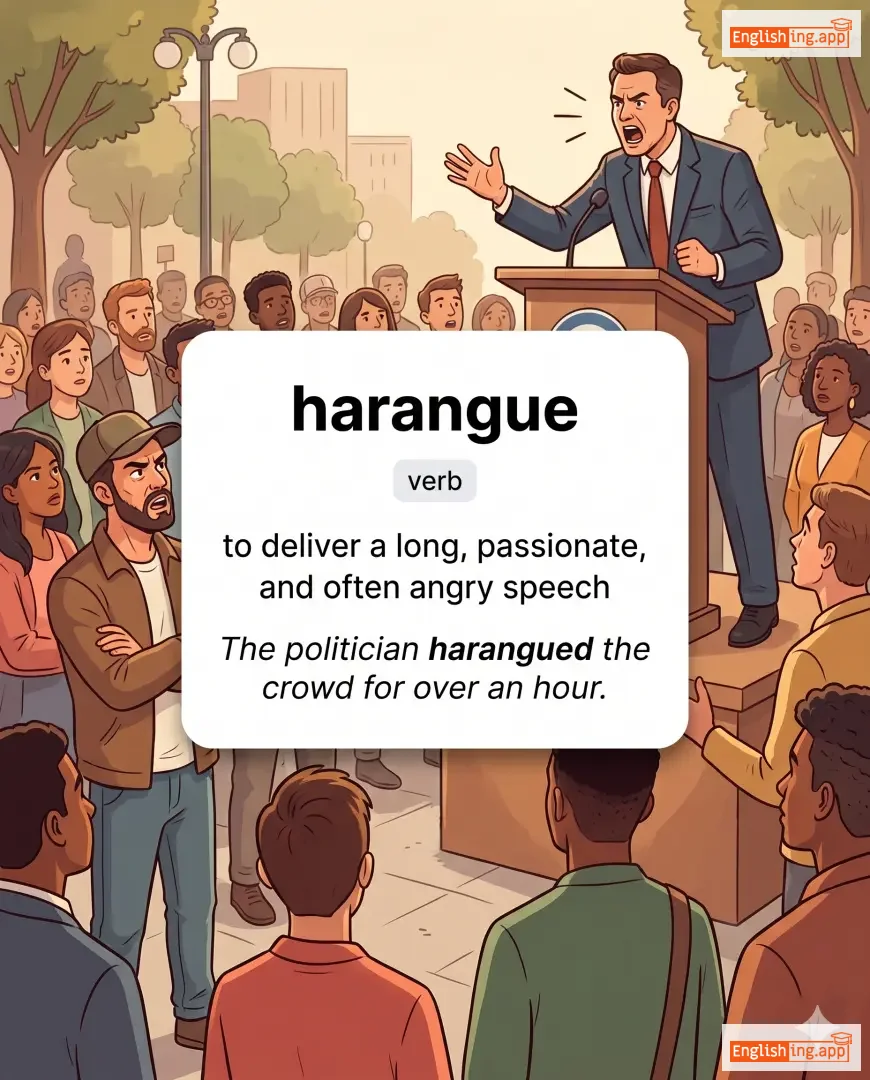
/həˈræŋ/
verb
(哈朗格)
••••••
|
|
进行冗长而愤怒的演讲
jìnxíng rǒngcháng ér fènnù de yǎnjiǎng
••••••
|
harangued
哈朗格德
••••••
|
harangued
哈朗格德
••••••
|
harangues
哈朗格斯
••••••
|
haranguing
哈朗格英
••••••
|
to deliver a long, passionate, and often angry speech
••••••
|
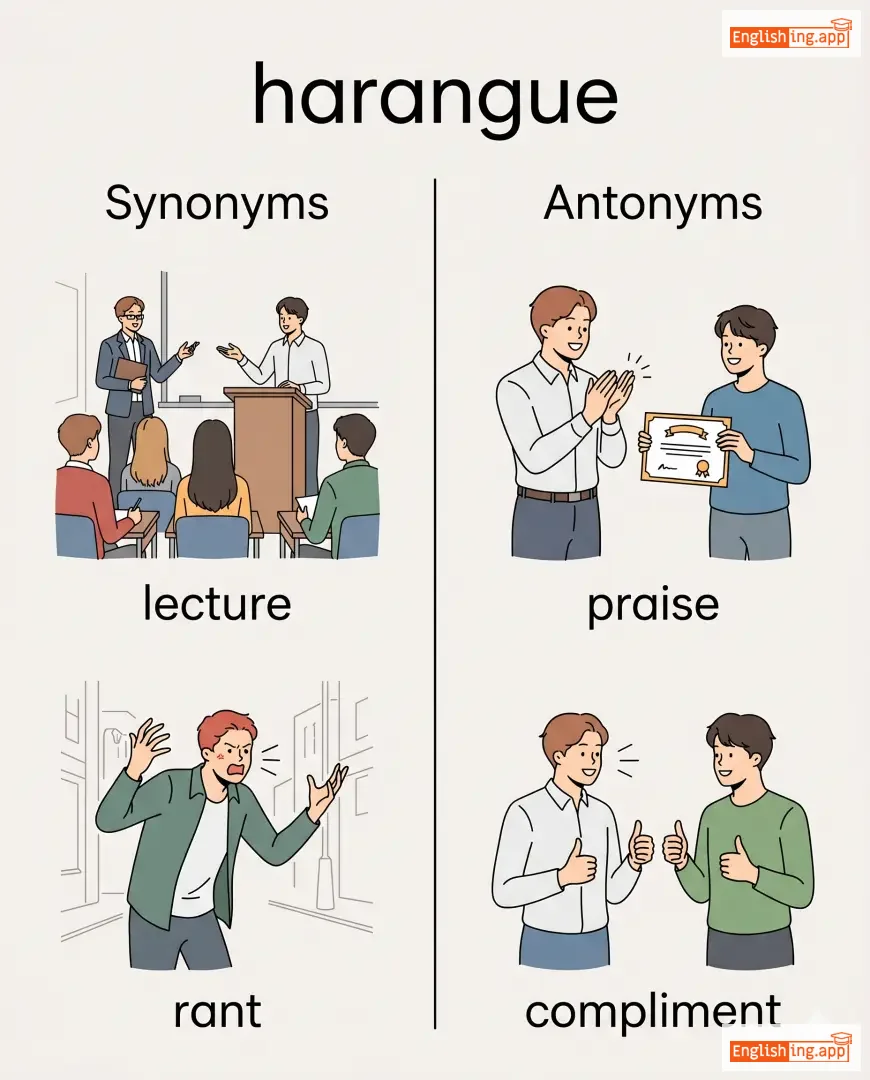
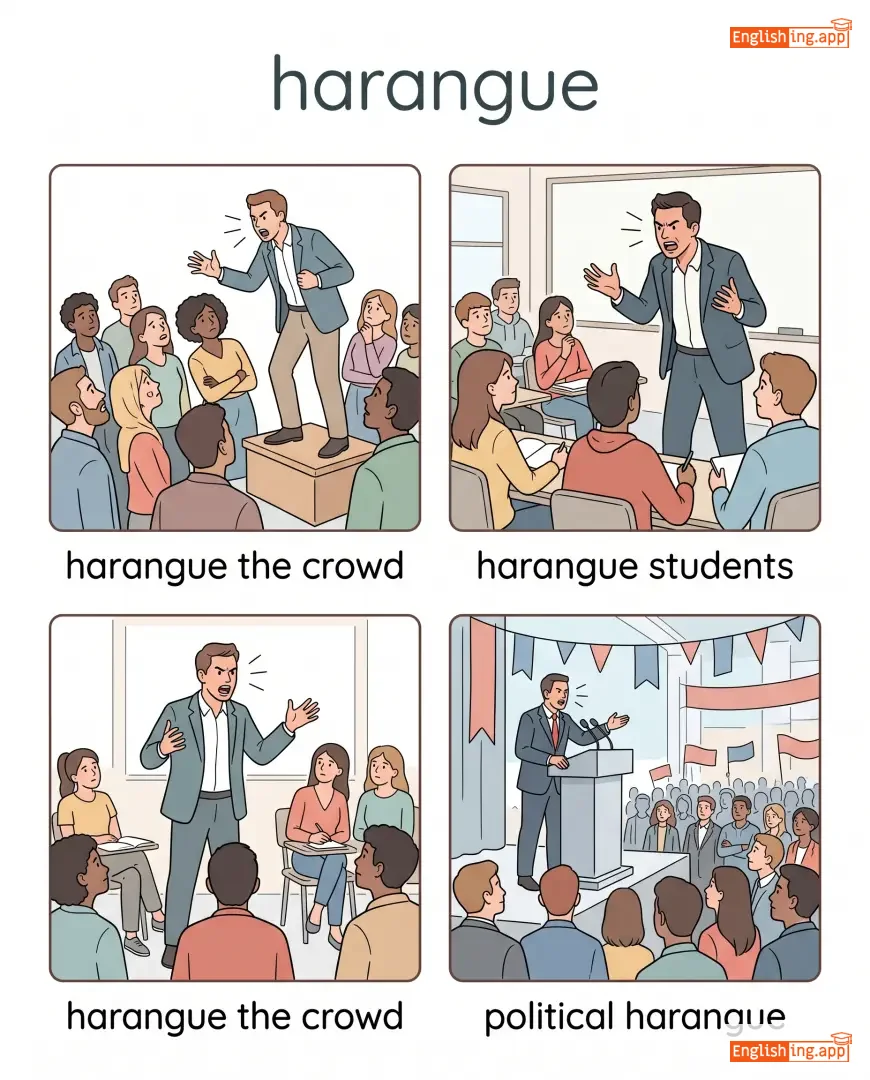
The politician harangued the crowd for over an hour.
政治家哈朗格德了人群超过一个小时。
••••••
|
政治家对人群进行了超过一小时的演讲。
Zhèngzhìjiā duì rénqún jìnxíngle chāoguò yī gè xiǎoshí de yǎnjiǎng.
••••••
|
- •••••• | - •••••• | - •••••• |
lecture, rant, tirade, scold, sermon
••••••
|
praise, compliment, silence
••••••
|
harangue the crowd, harangue students, political harangue
••••••
|
Harangue 代表长时间的发言 → 扰人的长时间讲话。
••••••
|
|
#4047
😊
|
/ˌhæpi ɡoʊ ˈlʌki/
adjective
(hā pí gōu lā kī)
••••••
|
- •••••• |
无忧无虑的,轻松的,无忧的
wú yōu wú lǜ de, qīngsōng de, wú yōu de
••••••
|
- •••••• | - •••••• | - •••••• | - •••••• |
cheerfully unconcerned about the future; carefree
••••••
|
She has a happy-go-lucky attitude and never worries about tomorrow.
她有着无忧无虑的态度,从不担心明天。
••••••
|
她有着无忧无虑的态度,从不担心明天。
Tā yǒuzhe wú yōu wú lǜ de tàidù, cóng bù dānxīn míngtiān.
••••••
|
- •••••• | - •••••• | - •••••• |
carefree, easygoing, cheerful, optimistic, lighthearted
••••••
|
anxious, worried, serious
••••••
|
happy-go-lucky attitude, happy-go-lucky nature, happy-go-lucky personality
••••••
|
Happy-go-lucky意味着无忧无虑
••••••
|
|
#4048
😞
|
/ˈhæpləs/
adjective
(hēi pǔ lì sī)
••••••
|
- •••••• |
不幸的, 值得同情的
bù xìng de, zhí dé tóng qíng de
••••••
|
- •••••• | - •••••• | - •••••• | - •••••• |
unfortunate, unlucky, deserving pity
••••••
|
The hapless traveler lost his passport on the very first day. |
那个不幸的旅行者在第一天就丢失了护照。
Nàgè bù xìng de lǚxíng zhě zài dì yī tiān jiù diūshī le hùzhào.
••••••
|
- •••••• | - •••••• | - •••••• |
unlucky, unfortunate, ill-fated, doomed, wretched
••••••
|
fortunate, lucky, blessed
••••••
|
hapless victim, hapless attempt, hapless traveler
••••••
|
Hapless = Hap (运气) + less → 没有运气,不幸的
••••••
|
|
#4049
🎲
|
/hæpˈhæzərd/
adjective
(海皮泽德)
••••••
|
|
混乱的, 随机的
hùnluàn de, suíjī de
••••••
|
- •••••• | - •••••• | - •••••• | - •••••• |
lacking any obvious order or organization; random
••••••
|
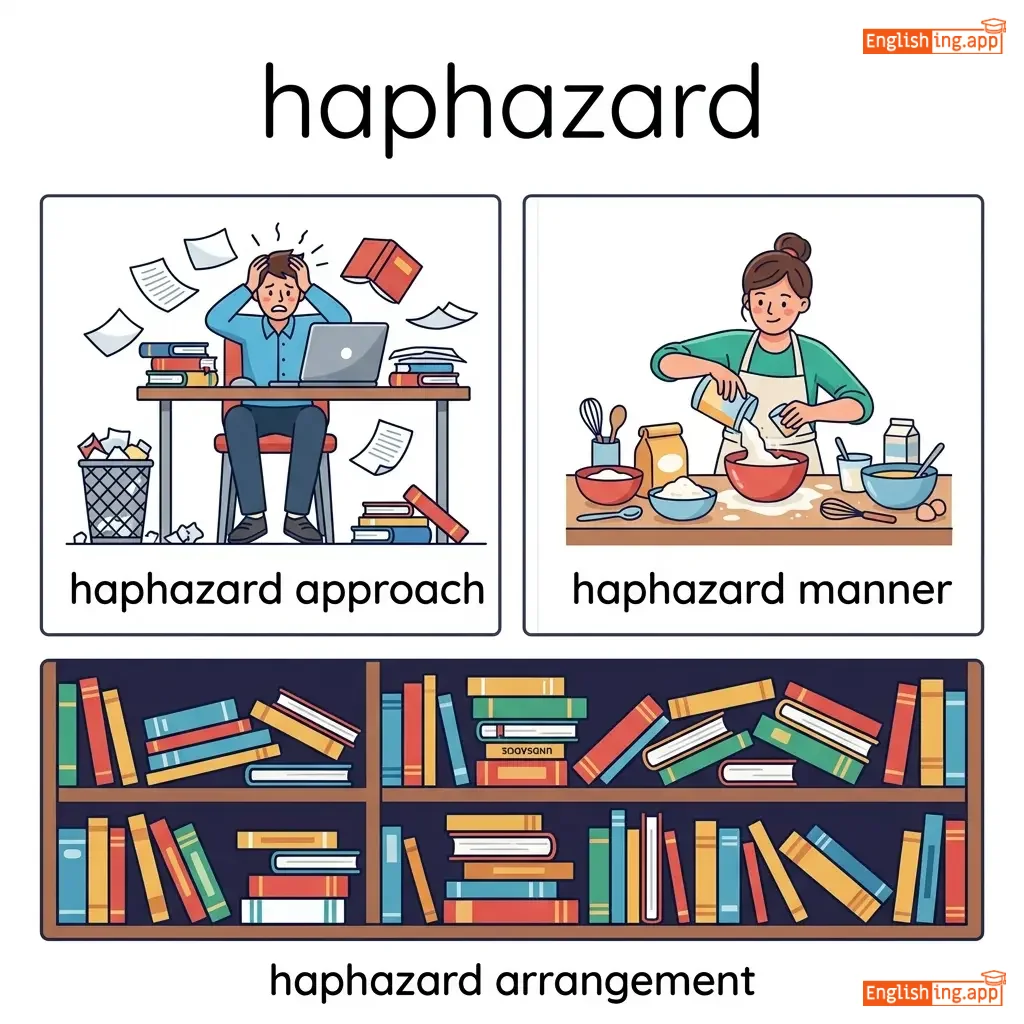
The books were stacked in a haphazard way on the table. |
书本以混乱的方式堆放在桌子上。
Shūběn yǐ hùnluàn de fāngshì duīfàng zài zhuōzi shàng.
••••••
|
- •••••• | - •••••• | - •••••• |
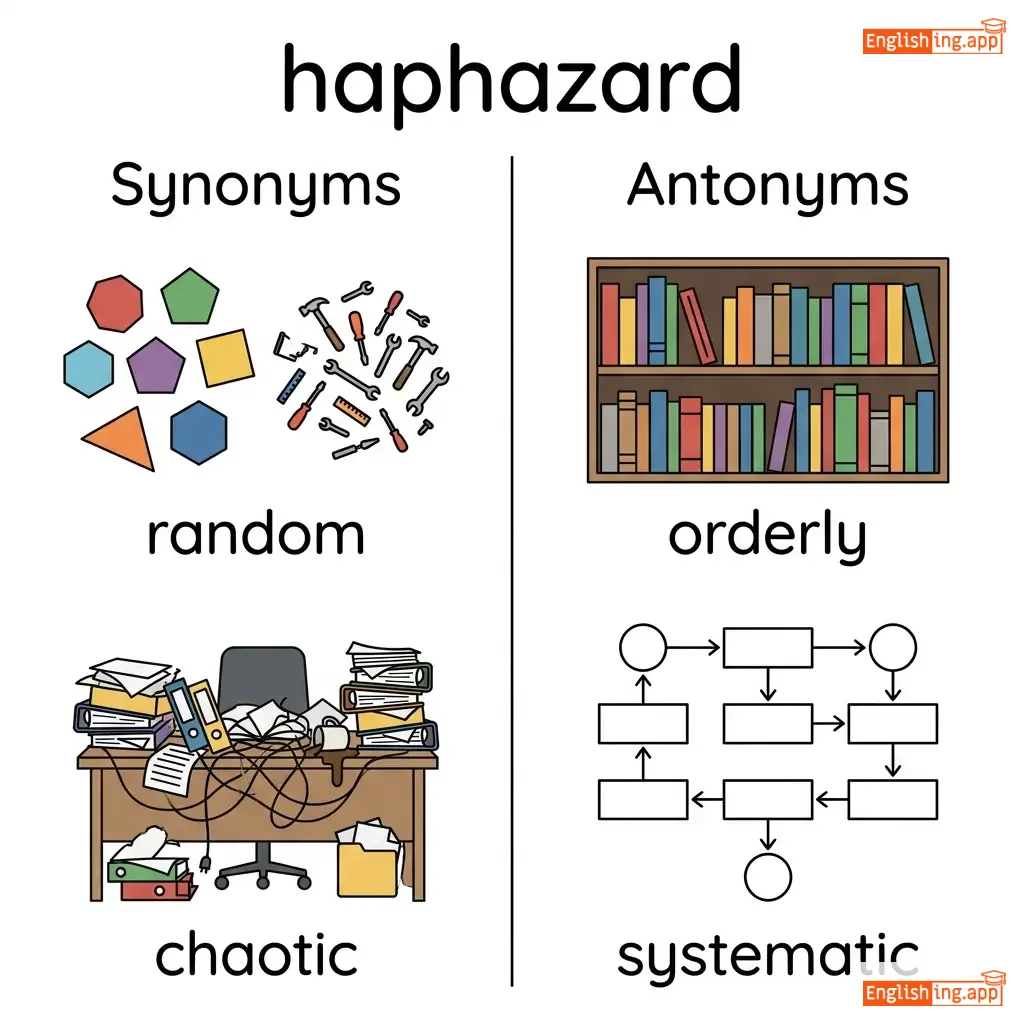
random, chaotic, careless, disorganized, irregular
••••••
|
orderly, systematic, organized
••••••
|
haphazard approach, haphazard manner, haphazard arrangement
••••••
|
Haphazard 就是随便发生的,像没有计划的灾难。
••••••
|
|
#4050
🍀
|
/hæp/
noun
(哈普)
••••••
|
- •••••• |
运气,幸运,偶然
yunqi, xingyun, ouran
••••••
|
- •••••• | - •••••• | - •••••• | - •••••• |
luck, fortune, or chance occurrence
••••••
|
By sheer hap, he discovered the old letter hidden in the drawer. |
凭借运气,他发现了藏在抽屉里的旧信。
Pingjie yunqi, ta faxianle cang zai chouzi li de jiu xin.
••••••
|
mishap |
an unlucky accident or unfortunate event
••••••
|
不幸
buxing
••••••
|
luck, fortune, chance, fate, coincidence
••••••
|
certainty, inevitability
••••••
|
by hap, pure hap, ill hap
••••••
|
Hap 是一个突如其来的事件,就像好运降临一样,就像 'hap-py'。
••••••
|
Vocabulary Quiz
Test your vocabulary by matching words with their translations or meanings.
Login to take the quiz
Comments (0)
Share your thoughts and join the discussion.
Join the discussion by logging in
Login to CommentNo comments yet
Be the first to share your thoughts!