

Swipe left or right, or use the buttons. Tap image to zoom.
例句翻译
单词
Lesson 188Lesson 188 - 遮罩切换
|
表情符号
|
单词 | Images | 翻译 | 过去时 | 过去分词 | 第三人称单数 | 动名词 | 含义 | 例句 | 例句翻译 | 示例表达 | 示例表达含义 | 示例表达翻译 | 同义词 | 反义词 | 搭配词 | 助记符 |
|---|---|---|---|---|---|---|---|---|---|---|---|---|---|---|---|---|---|
|
#5611
📦
|
/ˌmɪsəˈleɪniəs/
adjective
(米塞列尼斯)
••••••
|
- •••••• |
杂项
záxiàng
••••••
|
- •••••• | - •••••• | - •••••• | - •••••• |
Consisting of a variety of different items or types.
••••••
|
The drawer was filled with miscellaneous objects.
抽屉里装满了杂物。
••••••
|
抽屉里装满了杂物。
Chōutì lǐ zhuāngmǎnle záwù.
••••••
|
- •••••• | - •••••• | - •••••• |
varied, diverse, assorted, mixed, heterogeneous
••••••
|
uniform, similar, identical
••••••
|
miscellaneous items, miscellaneous expenses, miscellaneous goods
••••••
|
Miss (错过) 就能得到各种杂项 (miscellaneous)。
••••••
|
|
#5612
🤔
|
/ˌmɪsˈɡɪvɪŋ/
noun
(米斯给文)
••••••
|
- •••••• |
怀疑
huáiyí
••••••
|
- •••••• | - •••••• | - •••••• | - •••••• |
A feeling of doubt, worry, or suspicion.
••••••
|
She had serious misgivings about signing the contract. |
她在签署合同之前有严重的怀疑。
Tā zài qiānshǔ hé tóng zhīqián yǒu yánzhòng de huáiyí.
••••••
|
- •••••• | - •••••• | - •••••• |
doubt, concern, suspicion, unease, apprehension
••••••
|
confidence, trust, certainty
••••••
|
serious misgiving, initial misgiving, express misgiving, deep misgiving
••••••
|
MIS giving 表示不能给,所以产生怀疑。
••••••
|
|
#5613
☹️
|
/ˌmɪsˈfɔːrtʃən/
noun
(米斯福琼)
••••••
|
- •••••• |
不幸
buxing
••••••
|
- •••••• | - •••••• | - •••••• | - •••••• |
Bad luck or an unfortunate event.
••••••
|
He suffered the misfortune of losing his job during the recession. |
他在经济衰退期间失业的不幸遭遇。
Ta zai jingji shuaitui qi jian shiye de buxing zao yu.
••••••
|
ill fortune |
bad luck
••••••
|
不幸
buxing
••••••
|
bad luck, adversity, calamity, mishap, setback
••••••
|
good luck, fortune, prosperity
••••••
|
suffer misfortune, stroke of misfortune, financial misfortune, great misfortune
••••••
|
Misfortune 听起来像不幸,就是不幸
••••••
|
|
#5614
🪙
|
/ˈmaɪzərli/
adjective
(maizərli)
••••••
|
- •••••• |
吝啬
lìnsè
••••••
|
- •••••• | - •••••• | - •••••• | - •••••• |
Unwilling to spend money; stingy.
••••••
|
She lived a miserly life, refusing to buy anything new. |
她过着吝啬的生活,拒绝购买任何新东西。
Tā guòzhe lìnsè de shēnghuó, jùjué gòumǎi rènhé xīn dōngxi.
••••••
|
- •••••• | - •••••• | - •••••• |
stingy, cheap, tightfisted, frugal
••••••
|
generous, lavish, charitable
••••••
|
miserly attitude, miserly lifestyle, miserly sum, miserly behavior
••••••
|
Miserly意味着lìnsè,像节省金钱一样。
••••••
|
|
#5615
💰
|
/ˈmaɪzər/
noun
(máisěr)
••••••
|
- •••••• |
吝啬鬼
lìn sè guǐ
••••••
|
- •••••• | - •••••• | - •••••• | - •••••• |
A person who hoards wealth and spends as little money as possible.
••••••
|
The old miser refused to donate even a penny to charity. |
那个老吝啬鬼甚至不愿意捐赠一分钱给慈善。
Nàgè lǎo lìnsè guǐ shènzhì bù yuànyì juānzèng yī fēn qián gěi císhàn.
••••••
|
- •••••• | - •••••• | - •••••• |
cheapskate, penny-pincher, hoarder, skinflint
••••••
|
spender, philanthropist, benefactor
••••••
|
old miser, greedy miser, stingy miser, wealthy miser
••••••
|
吝啬鬼永远不愿意花钱!
••••••
|
|
#5616
⚖️
|
/ˌmɪsdɪˈmiːnər/
noun
(mɪsdɪˈmiːnər)
••••••
|
- •••••• |
轻罪
qīngzuì
••••••
|
- •••••• | - •••••• | - •••••• | - •••••• |
A minor wrongdoing or criminal offense that is less serious than a felony.
••••••
|
He was fined for a misdemeanor involving public disturbance. |
他因公共扰乱而被罚款,犯了轻罪。
Tā yīn gōnggòng rǎoluàn ér bèi fákuǎn, fànle qīngzuì.
••••••
|
- •••••• | - •••••• | - •••••• |
offense, violation, infraction, misdeed, wrongdoing
••••••
|
felony, obedience, compliance
••••••
|
commit a misdemeanor, charged with a misdemeanor, petty misdemeanor, minor misdemeanor
••••••
|
轻罪 = qīngzuì (轻 = light)
••••••
|
|
#5617
⚖️
|
/ˌmɪsˈdiːd/
noun
(mɪsˈdiːd)
••••••
|
- •••••• |
恶行
èxíng
••••••
|
- •••••• | - •••••• | - •••••• | - •••••• |
A wrong or illegal act.
••••••
|
He regretted his past misdeeds and apologized.
他对自己过去的恶行感到后悔,并道歉。
••••••
|
他对自己过去的恶行感到后悔,并道歉。
Tā duì zìjǐ guòqù de èxíng gǎndào hòuhuǐ, bìng dàoqiàn.
••••••
|
- •••••• | - •••••• | - •••••• |
crime, offense, wrongdoing, sin, transgression
••••••
|
virtue, good deed, righteousness
••••••
|
past misdeeds, criminal misdeed, confess misdeed
••••••
|
Misdeed = 错误 deed — 恶行.
••••••
|
|
#5618
😈
|
/ˈmɪskriənt/
noun
(mìsīkuì'āntè)
••••••
|
- •••••• |
恶棍
ègùn
••••••
|
- •••••• | - •••••• | - •••••• | - •••••• |
A person who behaves badly or criminally.
••••••
|
The police arrested the miscreant responsible for the theft. |
警察逮捕了负责盗窃的恶棍。
Jǐngchá dàibǔle fùzé dàoqiè de ègùn.
••••••
|
- •••••• | - •••••• | - •••••• |
criminal, wrongdoer, villain, offender, delinquent
••••••
|
law-abiding citizen, gentleman, nobleman
••••••
|
notorious miscreant, petty miscreant, violent miscreant
••••••
|
Miscreant means 'Miss creates problem' — 恶棍.
••••••
|
|
#5619
🔢
|
/ˌmɪsˈkaʊnt/
verb
(miskàunt)
••••••
|
- •••••• |
算错
suàn cuò
••••••
|
miscounted
miskàunted
••••••
|
miscounted
miskàunted
••••••
|
miscounts
miskàunts
••••••
|
miscounting
miskàunting
••••••
|
To count wrongly or inaccurately.
••••••
|
He miscounted the number of chairs in the hall.
他错算了大厅里的椅子数量。
••••••
|
他错算了大厅里的椅子数量。
Tā cuò suàn le dàtīng lǐ de yǐzi shùliàng.
••••••
|
- •••••• | - •••••• | - •••••• |
miscalculate, misjudge, mistake, err
••••••
|
count correctly, calculate accurately
••••••
|
miscount votes, miscount money, miscount items
••••••
|
Miscount = Miss count — 错误计算。
••••••
|
|
#5620
🤔
|
/ˌmɪskənˈstruː/
verb
(mìsī kènsī tú)
••••••
|
- •••••• |
误解
wùjiě
••••••
|
misconstrued
mìsī kènsī tú dào
••••••
|
misconstrued
mìsī kènsī tú dào
••••••
|
misconstrues
mìsī kènsī tú zhī
••••••
|
misconstruing
mìsī kènsī tú zhīng
••••••
|
To interpret something wrongly or misunderstand the meaning.
••••••
|
She misconstrued his silence as anger.
她误解了他的沉默为愤怒。
••••••
|
她误解了他的沉默为愤怒。
Tā wùjiěle tā de chénmò wéi fènnù.
••••••
|
- •••••• | - •••••• | - •••••• |
misinterpret, misunderstand, misjudge, mistake, misread
••••••
|
understand, interpret correctly
••••••
|
easily misconstrued, misconstrue meaning, misconstrue silence
••••••
|
Misconstrue — 错误理解,像‘误解’。
••••••
|
|
#5621
🚫
|
/ˌmɪsˈkɒndʌkt/
noun
(miskondakt)
••••••
|
- •••••• |
不当行为
butang xingwei
••••••
|
- •••••• | - •••••• | - •••••• | - •••••• |
Improper or unacceptable behavior, especially by a professional or authority figure.
••••••
|
The teacher was dismissed for serious misconduct.
老师因严重的不当行为被解雇。
••••••
|
老师因严重的不当行为被解雇。
Laoshi yin yanzhong de butang xingwei bei jiegou.
••••••
|
- •••••• | - •••••• | - •••••• |
wrongdoing, offense, misbehavior, impropriety, malpractice
••••••
|
good conduct, propriety, obedience
••••••
|
professional misconduct, sexual misconduct, gross misconduct, allegations of misconduct
••••••
|
Misconduct就像miss conduct — 不当行为。
••••••
|
|
#5622
😉
|
/ˈmɪstʃɪvəs/
adjective
(米什福斯)
••••••
|
- •••••• |
调皮的
tiaopi de
••••••
|
- •••••• | - •••••• | - •••••• | - •••••• |
Causing or showing a fondness for causing trouble in a playful way.
••••••
|
She gave him a mischievous smile.
Shi gei him a mishivəs smile.
••••••
|
她给了他一个调皮的微笑。
Ta gei le ta yi ge tiaopi de weixiao.
••••••
|
- •••••• | - •••••• | - •••••• |
playful, naughty, impish, prankish
••••••
|
serious, obedient, innocent
••••••
|
mischievous smile, mischievous child, mischievous look
••••••
|
调皮的孩子总是在捣蛋——记住,这是‘mischief’的形容词。
••••••
|
|
#5623
😈
|
/ˈmɪstʃɪf/
noun
(mīshīf)
••••••
|
- •••••• |
恶作剧
èzuòjù
••••••
|
- •••••• | - •••••• | - •••••• | - •••••• |
Playful misbehavior or troublemaking.
••••••
|
The children were full of mischief during the party. |
孩子们在派对上充满了恶作剧。
Háizimen zài pàiduì shàng chōngmǎnle èzuòjù.
••••••
|
make mischief |
to cause trouble or create problems
••••••
|
捣蛋
dǎodàn
••••••
|
naughtiness, misbehavior, pranks, trouble
••••••
|
obedience, goodness, discipline
••••••
|
cause mischief, get into mischief, full of mischief
••••••
|
Mischief 意味着恶作剧 – 做恶作剧就有趣了!
••••••
|
|
#5624
🍂
|
/ˌmɪsˈtʃæns/
noun
••••••
|
- •••••• | - •••••• | - •••••• | - •••••• | - •••••• | - •••••• |
An unfortunate accident or event; bad luck.
••••••
|
By mischance, he missed the last train home. |
- •••••• | - •••••• | - •••••• | - •••••• |
accident, mishap, misfortune, adversity
••••••
|
fortune, luck, success
••••••
|
sad mischance, cruel mischance
••••••
|
No •••••• |
|
#5625
📚
|
/ˈmɪsəleɪni/
noun
(mí sī léi ní)
••••••
|
- •••••• |
杂集
za ji
••••••
|
- •••••• | - •••••• | - •••••• | - •••••• |
A collection or mixture of various things.
••••••
|
The book is a miscellany of essays and poems. |
这本书是散文和诗歌的杂集。
Zhe ben shu shi san wen he shi ge de za ji.
••••••
|
- •••••• | - •••••• | - •••••• |
collection, assortment, mixture, anthology
••••••
|
uniformity, consistency
••••••
|
miscellany of stories, miscellany of articles
••••••
|
Miscellany意味着混合 – 各种事物的集合。
••••••
|
|
#5626
🌫️
|
/məˈrɑːʒ/
noun
(mí là zhī)
••••••
|
- •••••• |
海市蜃楼
haishi shenglou
••••••
|
- •••••• | - •••••• | - •••••• | - •••••• |
An optical illusion caused by atmospheric conditions, often seen in deserts or hot roads, where water or objects appear to exist but do not.
••••••
|
The weary travelers saw a mirage of water in the desert. |
疲惫的旅行者在沙漠中看到了水的海市蜃楼。
Pibei de luxingzhe zai shamo zhong kandao le shui de haishi shenglou.
••••••
|
a mirage of hope |
Something that appears real or possible but is actually false or impossible.
••••••
|
希望的海市蜃楼
xiwang de haishi shenglou
••••••
|
illusion, hallucination, fantasy, vision, delusion
••••••
|
reality, truth, certainty
••••••
|
desert mirage, shimmering mirage, illusory mirage
••••••
|
海市蜃楼意味着幻觉 - 在沙漠中看到海市蜃楼,像是‘镜子’里的水。
••••••
|
|
#5627
🌍
|
/mɪˌsɛdʒəˈneɪʃən/
noun
(米塞吉内申)
••••••
|
- •••••• |
种族通婚
zhǒngzú tōnghūn
••••••
|
- •••••• | - •••••• | - •••••• | - •••••• |
the interbreeding of people considered to be of different racial types
••••••
|
The law once prohibited miscegenation in many countries.
法律曾在许多国家禁止了种族通婚。
••••••
|
法律曾在许多国家禁止了种族通婚。
Fǎlǜ céng zài xǔduō guójiā jìnzhǐle zhǒngzú tōnghūn.
••••••
|
- •••••• | - •••••• | - •••••• |
intermarriage, interracial marriage, crossbreeding
••••••
|
endogamy, racial separation
••••••
|
laws against miscegenation, miscegenation debate, miscegenation ban
••••••
|
Miscegenation = mix generation — 种族通婚
••••••
|
|
#5628
😈
|
/ˌmɪsbɪˈheɪvjər/
noun
(mɪsˈbeɪvjər)
••••••
|
- •••••• |
不当行为
budang xingwei
••••••
|
- •••••• | - •••••• | - •••••• | - •••••• |
bad or improper behavior
••••••
|
The teacher punished the student for his misbehavior.
老师因学生的不当行为而惩罚了他。
••••••
|
老师因学生的不当行为而惩罚了他。
Laoshi yin xuesheng de budang xingwei er chengfa le ta.
••••••
|
- •••••• | - •••••• | - •••••• |
misconduct, naughtiness, rudeness, impropriety
••••••
|
good behavior, obedience
••••••
|
serious misbehavior, punish misbehavior, student misbehavior
••••••
|
Misbehavior 意味着不当行为
••••••
|
|
#5629
🙃
|
/ˌmɪsbɪˈheɪv/
verb
(mísī bīhéifū)
••••••
|
|
行为不当
xíngwéi bù dāng
••••••
|
misbehaved
mísī bīhéifū dé
••••••
|
misbehaved
mísī bīhéifū dé
••••••
|
misbehaves
mísī bīhéifū sī
••••••
|
misbehaving
mísī bīhéifū yíng
••••••
|
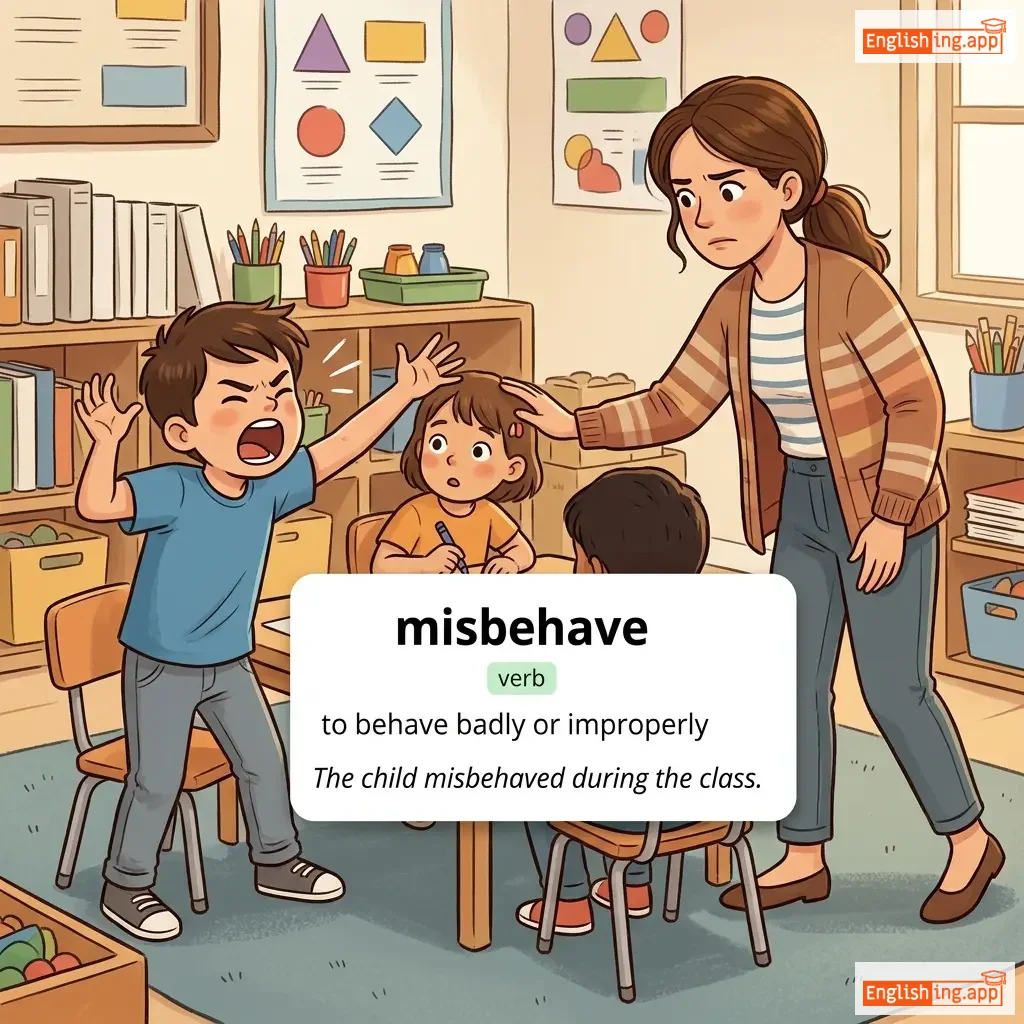
to behave badly or improperly
••••••
|
The child misbehaved during the class.
Zhège háizi mísī bīhéifū dé zài kèchéng zhōng.
••••••
|
这个孩子在课堂上行为不当。
Zhège háizi zài kèchéng shàng xíngwéi bù dāng.
••••••
|
- •••••• | - •••••• | - •••••• |
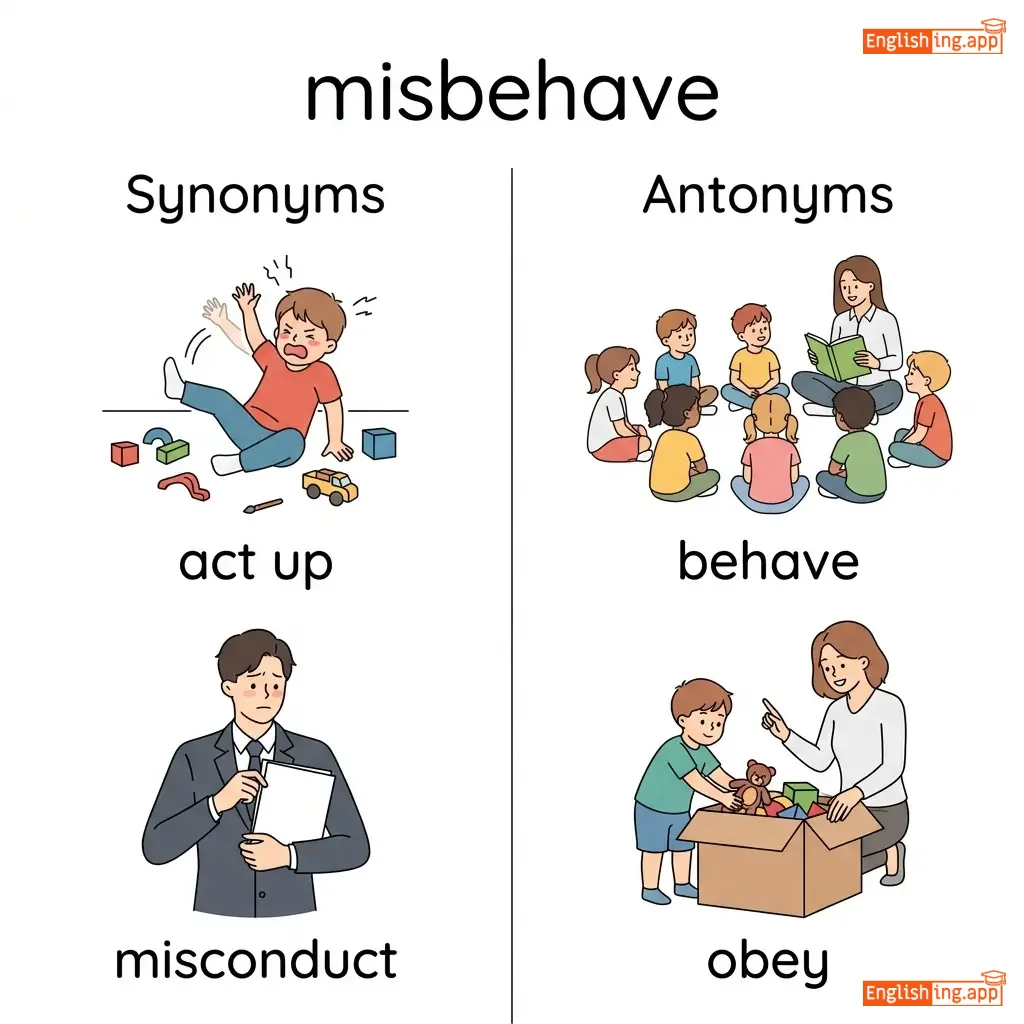
act up, misconduct, offend, be naughty
••••••
|
behave, obey
••••••
|
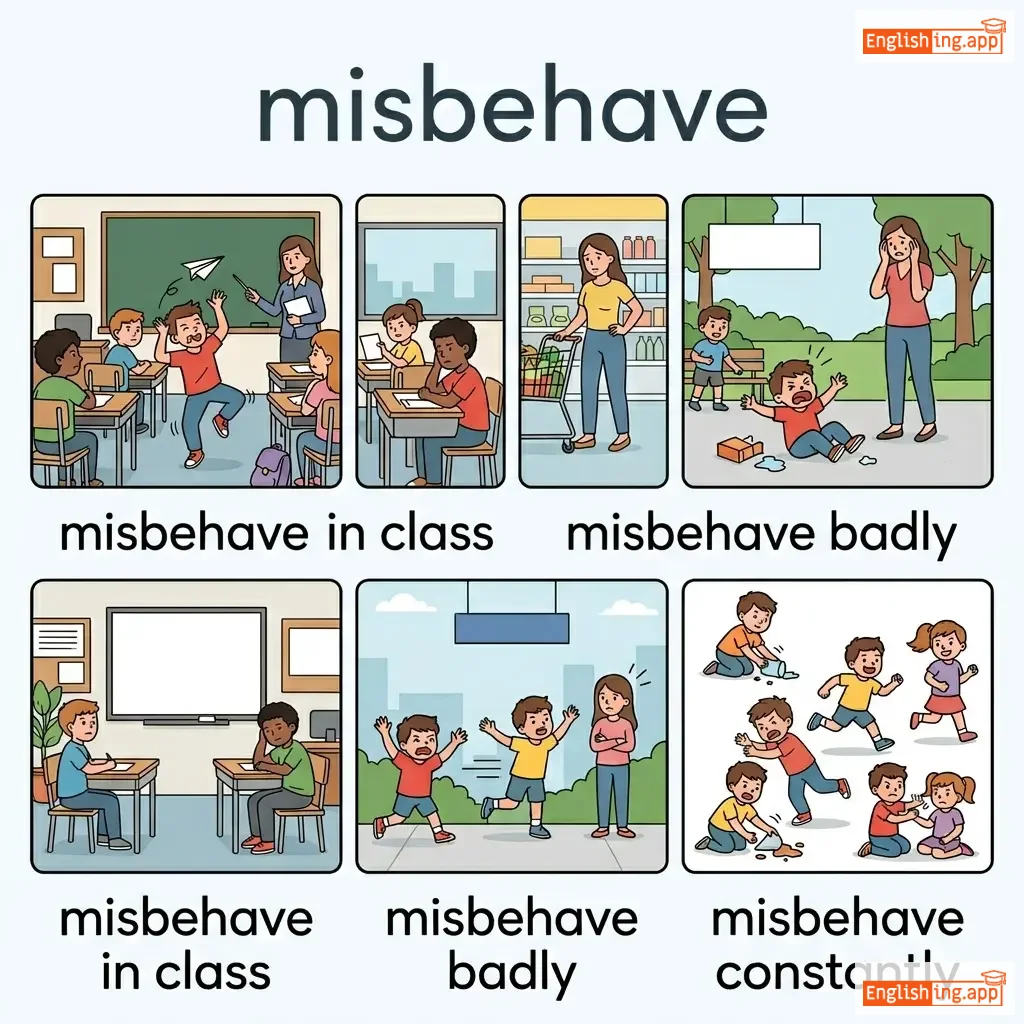
misbehave in class, misbehave badly, misbehave constantly
••••••
|
Mis 是错误的,behave 是行为 — misbehave 是行为不当
••••••
|
|
#5630
🔄
|
/ˌmɪs.əˈtrɪb.juːt/
verb
(错误归因)
••••••
|
- •••••• |
错误归因
cuo wu gui yin
••••••
|
misattributed
错误归因了
••••••
|
misattributed
错误归因了
••••••
|
misattributes
错误归因
••••••
|
misattributing
错误归因中
••••••
|
to incorrectly credit something, such as a work or remark, to the wrong person or source
••••••
|
The quote was misattributed to Shakespeare.
这句话被错误地归因于莎士比亚。
••••••
|
这句话被错误地归因于莎士比亚。
Zhe ju hua bei cuo wu de gui yin yu Sha Shi Bi Ya.
••••••
|
- •••••• | - •••••• | - •••••• |
misassign, miscredit, misidentify, mistake
••••••
|
attribute correctly, credit properly
••••••
|
misattribute a quote, misattribute authorship, misattribute responsibility
••••••
|
Misattribute 意味着错误归因
••••••
|
|
#5631
💸
|
/ˌmɪsəˈproʊprieɪt/
verb
(mɪsəˈproʊprieɪt)
••••••
|
|
挪用
nuóyòng
••••••
|
misappropriated
mɪsəˈproʊprieɪtɪd
••••••
|
misappropriated
mɪsəˈproʊprieɪtɪd
••••••
|
misappropriates
mɪsəˈproʊprieɪts
••••••
|
misappropriating
mɪsəˈproʊprieɪtɪŋ
••••••
|
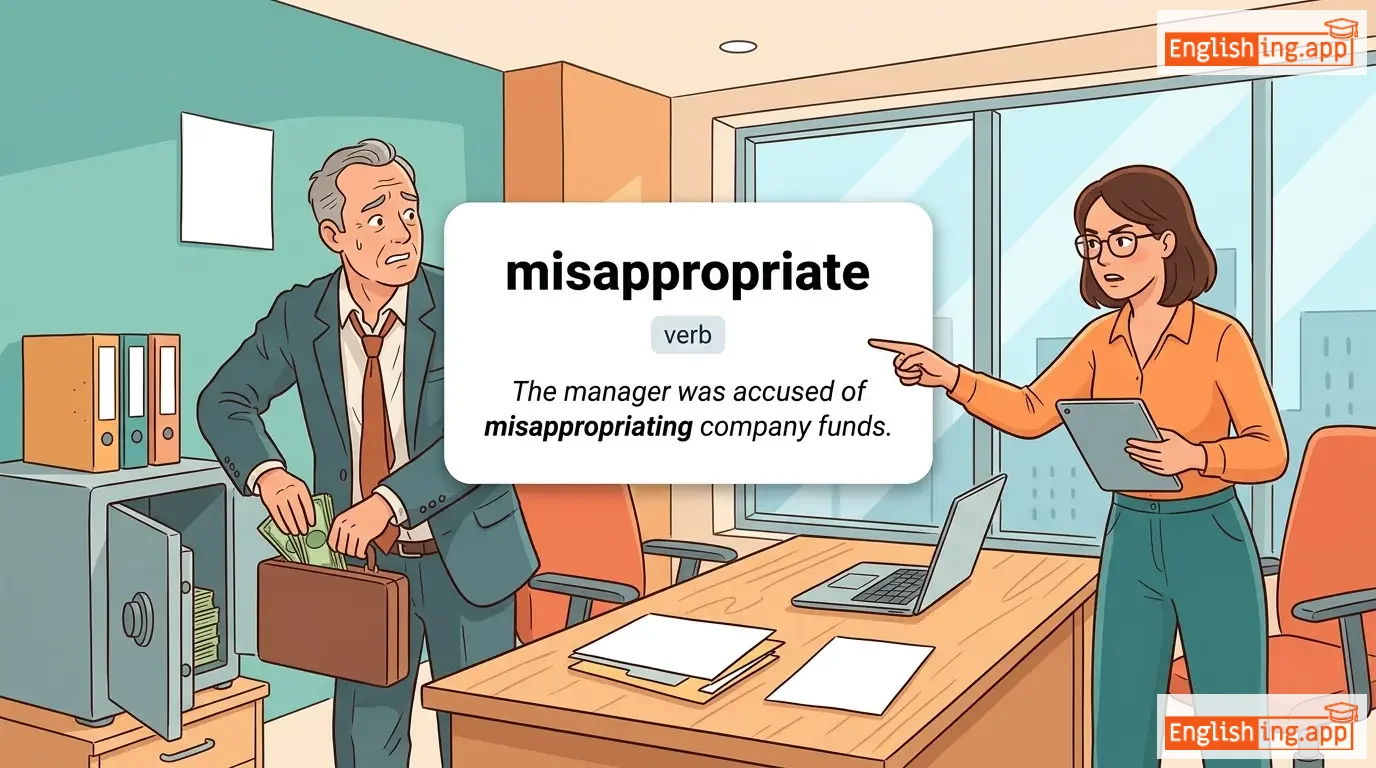
to take or use something dishonestly, especially money or property, for one's own use
••••••
|
The manager was accused of misappropriating company funds.
经理被指控挪用公司资金。
••••••
|
经理被指控挪用公司资金。
Jīnglǐ bèi zhǐkòng nuóyòng gōngsī zījīn.
••••••
|
- •••••• | - •••••• | - •••••• |
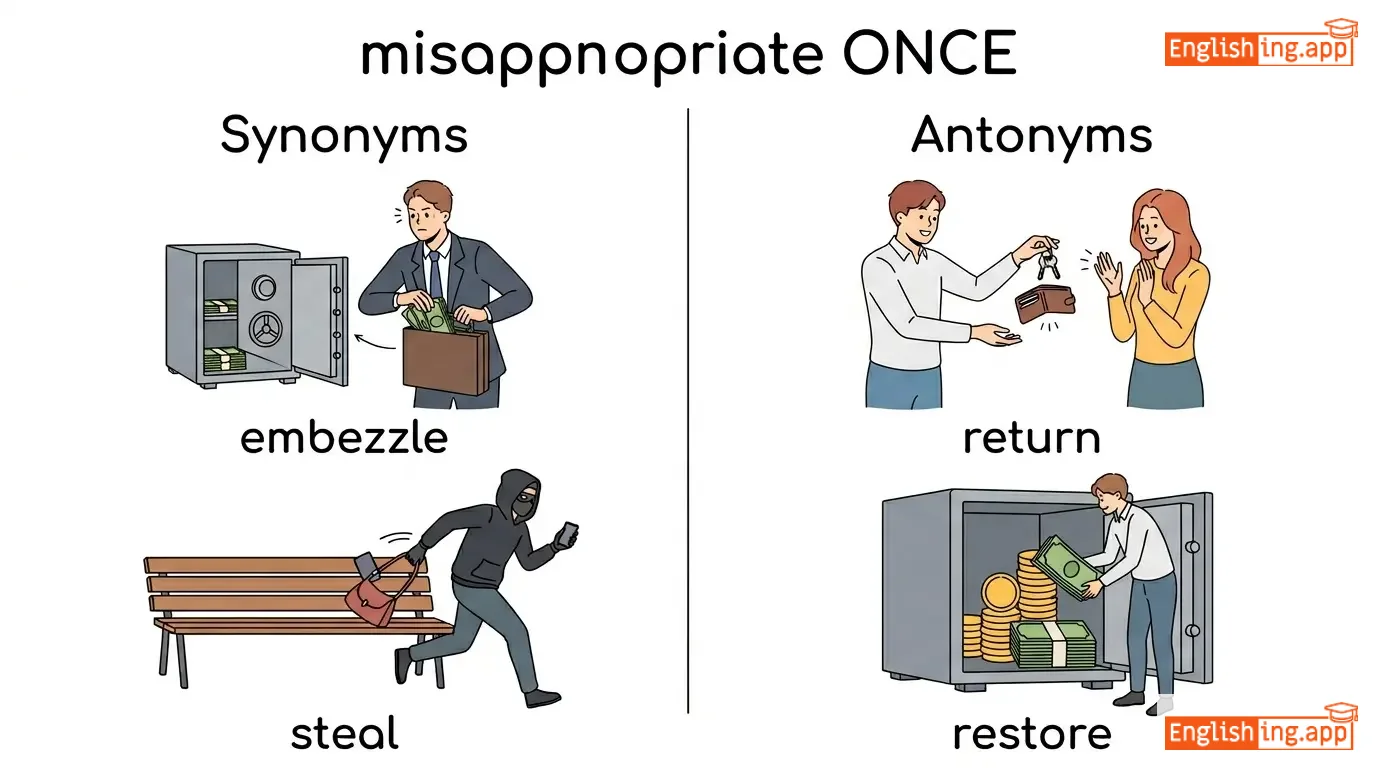
embezzle, steal, misuse, divert, pilfer
••••••
|
return, restore, repay
••••••
|
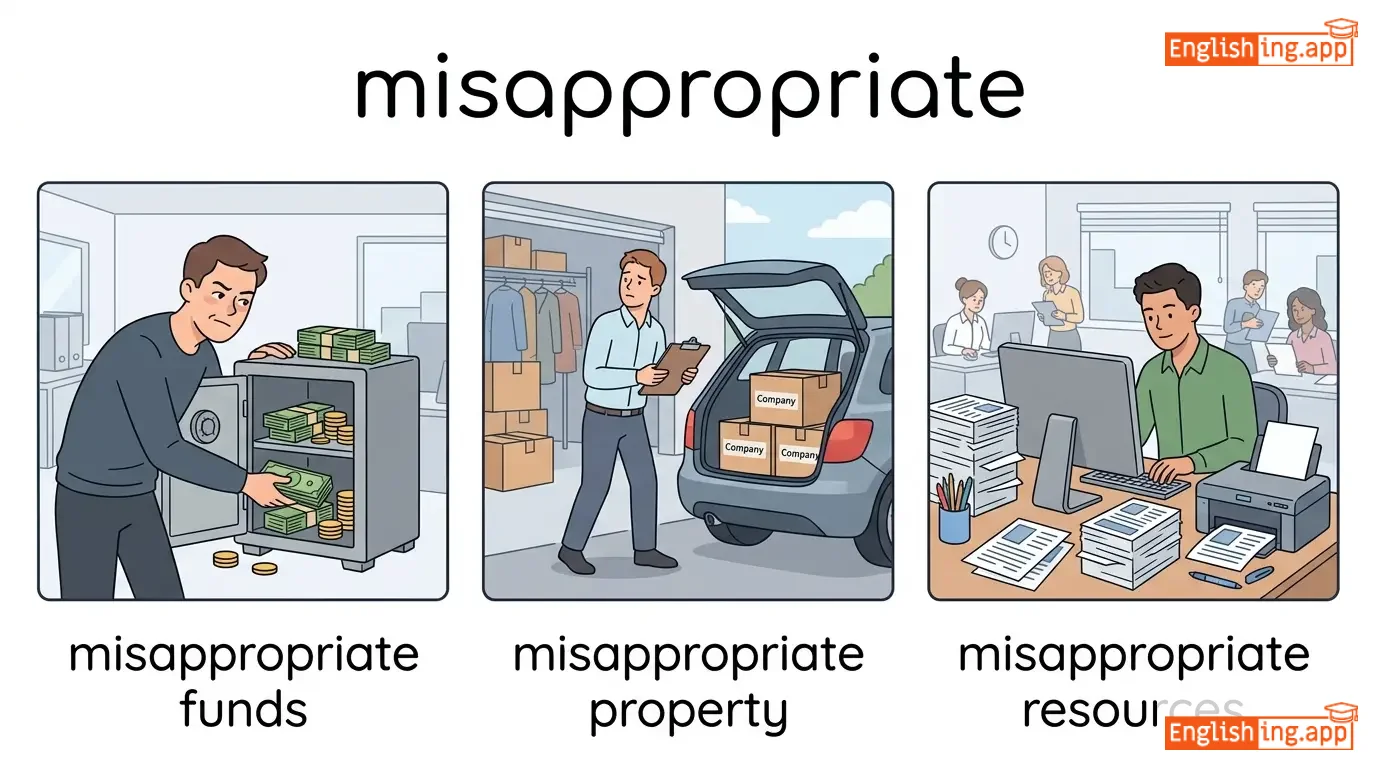
misappropriate funds, misappropriate property, misappropriate resources
••••••
|
挪用公司资金就是 misappropriate
••••••
|
|
#5632
😕
|
/ˌmɪsæprɪˈhɛnʃən/
noun
(错误的理解)
••••••
|
- •••••• |
误解
wùjiě
••••••
|
- •••••• | - •••••• | - •••••• | - •••••• |
a mistaken belief or misunderstanding
••••••
|
There is a common misapprehension about the causes of the disease. |
关于疾病原因存在常见的误解。
Guānyú jíbìng yuányīn cúnzài chángjiàn de wùjiě.
••••••
|
- •••••• | - •••••• | - •••••• |
misunderstanding, mistake, error, misconception
••••••
|
understanding, clarity, comprehension
••••••
|
common misapprehension, under a misapprehension, serious misapprehension
••••••
|
MIS (米斯) + apprehension (担心) 意思是误解。
••••••
|
|
#5633
🤔
|
/ˌmɪsæprɪˈhɛnd/
verb
(米萨普里亨德)
••••••
|
- •••••• |
误解
wùjiě
••••••
|
misapprehended
米萨普里亨德德
••••••
|
misapprehended
米萨普里亨德德
••••••
|
misapprehends
米萨普里亨德斯
••••••
|
misapprehending
米萨普里亨丁
••••••
|
to misunderstand or misinterpret something
••••••
|
He misapprehended the teacher’s instructions and did the task incorrectly.
他误解了老师的指示,错误地做了任务。
••••••
|
他误解了老师的指示,错误地做了任务。
Tā wùjiěle lǎoshī de zhǐshì, cuòwù de zuòle rènwù.
••••••
|
- •••••• | - •••••• | - •••••• |
misunderstand, misconstrue, misinterpret, mistake
••••••
|
understand, grasp, comprehend
••••••
|
easily misapprehend, misapprehend instructions, misapprehend meaning
••••••
|
MIS (误) 亨德 - 误解了任务。
••••••
|
|
#5634
😔
|
/mɪˈsænθrəpi/
noun
(米散特罗皮)
••••••
|
- •••••• |
厌人症
yàn rén zhèng
••••••
|
- •••••• | - •••••• | - •••••• | - •••••• |
a general dislike, distrust, or hatred of humankind
••••••
|
His misanthropy was evident in the way he avoided people. |
他的厌人症在他回避人群的方式中显而易见。
Tā de yàn rén zhèng zài tā huíbì rénqún de fāngshì zhōng xiǎn ér yìjiàn.
••••••
|
- •••••• | - •••••• | - •••••• |
cynicism, hatred, distrust, aversion
••••••
|
philanthropy, friendliness, goodwill
••••••
|
deep misanthropy, show misanthropy, filled with misanthropy
••••••
|
米 = 迷,散 = 逃,厌人症意味着讨厌人类。
••••••
|
|
#5635
🙄
|
/ˌmɪsənˈθrɑːpɪk/
adjective
(厌人症的)
••••••
|
- •••••• |
厌人症的
yàn rén zhèng de
••••••
|
- •••••• | - •••••• | - •••••• | - •••••• |
having or showing a dislike of humankind
••••••
|
His misanthropic attitude made it difficult for him to make friends. |
他那种厌人症的态度让他难以交到朋友。
Tā nà zhǒng yàn rén zhèng de tàidù ràng tā nán yǐ jiāo dào péngyǒu.
••••••
|
- •••••• | - •••••• | - •••••• |
cynical, antisocial, pessimistic, distrustful
••••••
|
friendly, sociable, philanthropic
••••••
|
misanthropic view, misanthropic outlook, misanthropic character
••••••
|
MISA (米萨) + 热情 = 但对人类有厌恶感
••••••
|
|
#5636
😒
|
/ˈmɪsənˌθroʊp/
noun
(米桑索普)
••••••
|
|
厌人者
yànrénzhě
••••••
|
- •••••• | - •••••• | - •••••• | - •••••• |
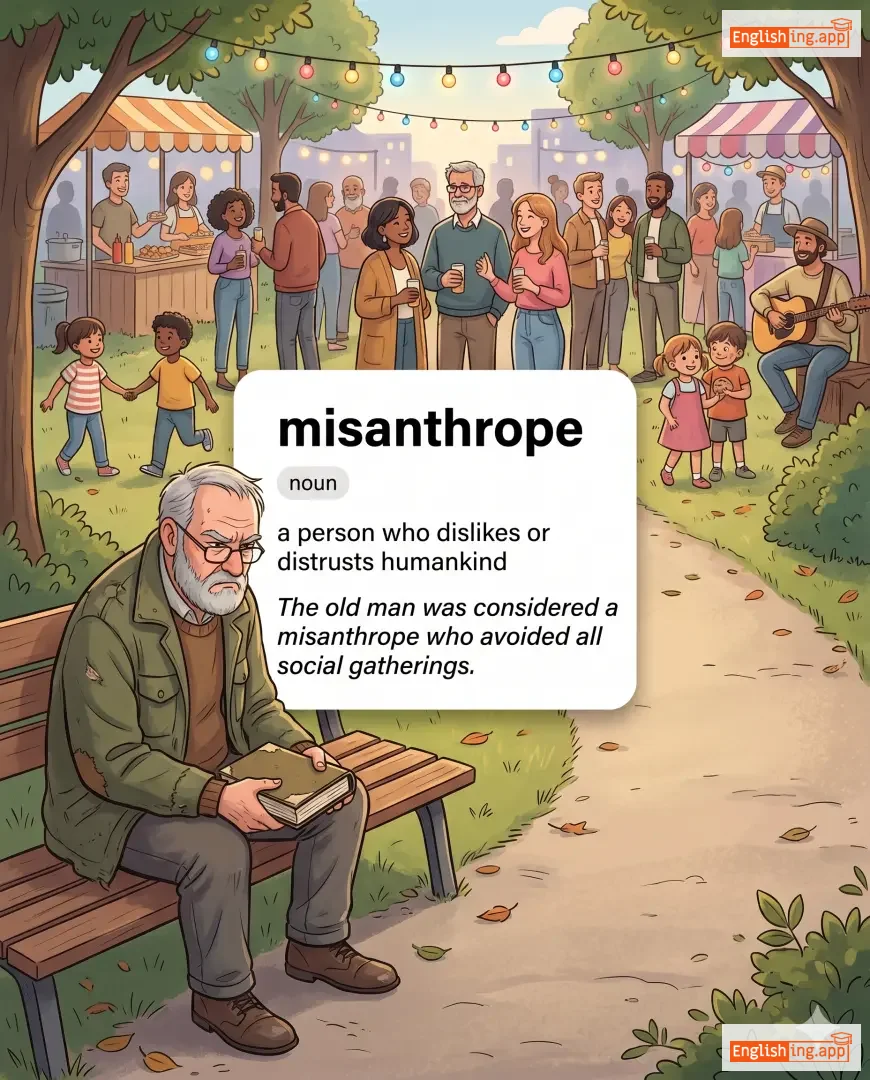
a person who dislikes or distrusts humankind
••••••
|
The old man was considered a misanthrope who avoided all social gatherings.
这个老人被认为是一个回避所有社交活动的厌人者。
••••••
|
这个老人被认为是一个回避所有社交活动的厌人者。
Zhège lǎorén bèi rènwéi shì yī gè huíbì suǒyǒu shèjiāo huódòng de yànrénzhě.
••••••
|
- •••••• | - •••••• | - •••••• |
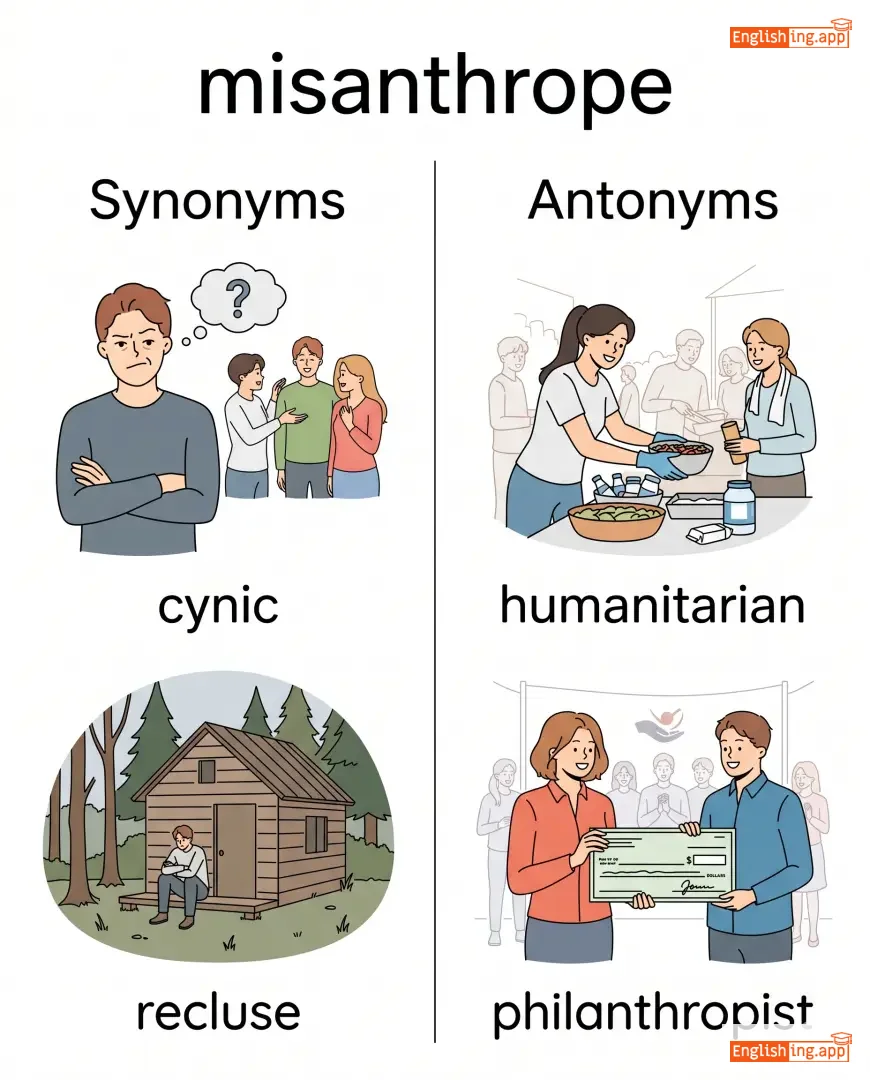
cynic, recluse, hermit, pessimist, loner
••••••
|
humanitarian, philanthropist, optimist
••••••
|
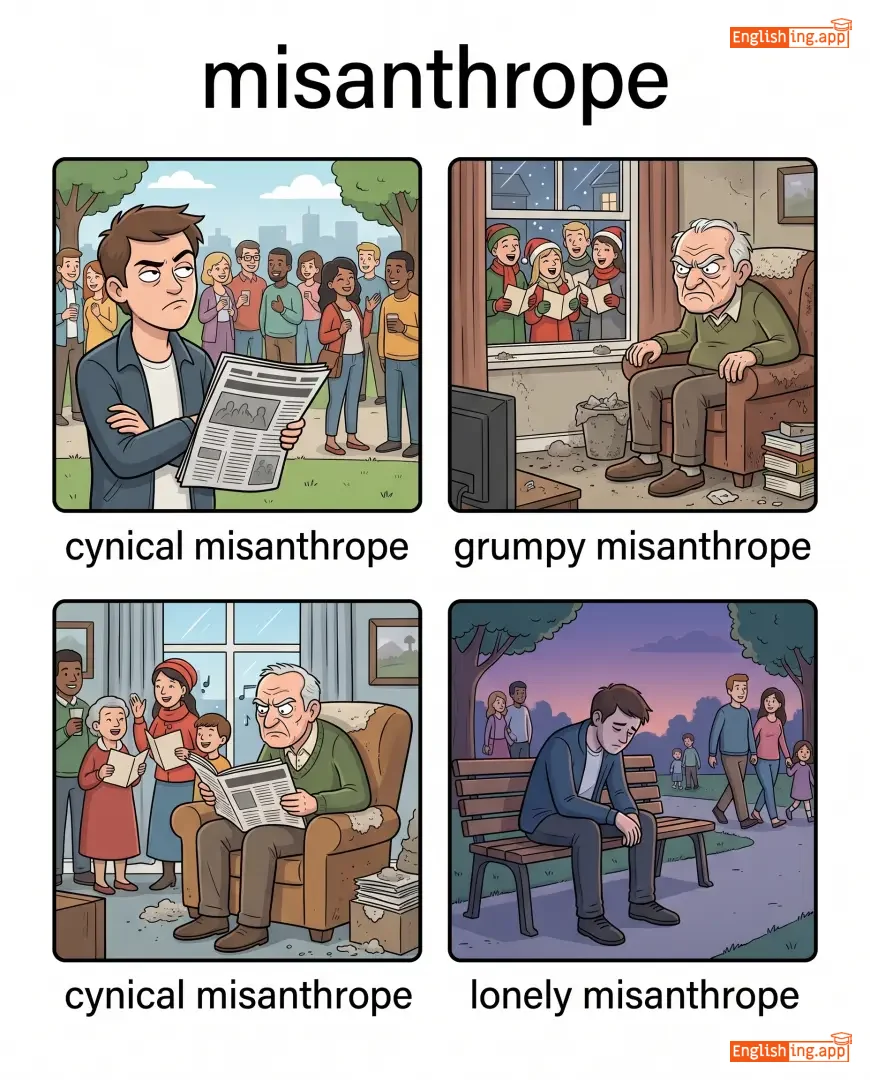
cynical misanthrope, grumpy misanthrope, lonely misanthrope
••••••
|
MISA (米) 不喜欢人类 - 厌人者表示不信任人类。
••••••
|
|
#5637
⚠️
|
/ˌmɪsədˈvɛntʃər/
noun
(米萨德文丘尔)
••••••
|
- •••••• |
不幸的事故
buxing de shigu
••••••
|
- •••••• | - •••••• | - •••••• | - •••••• |
An unlucky accident, mishap, or unfortunate event.
••••••
|
He broke his leg during a skiing misadventure. |
他在滑雪时发生了一次不幸的事故,摔断了腿。
Ta zai huaxue shi fasheng le yici buxing de shigu, shuai duan le tui.
••••••
|
- •••••• | - •••••• | - •••••• |
mishap, accident, calamity, misfortune, disaster
••••••
|
success, fortune, blessing
••••••
|
tragic misadventure, fatal misadventure, skiing misadventure
••••••
|
Misadventure 就是指不幸的事故 - 'mis' 是错误的意思,'adventure' 是冒险的意思,错误的冒险就是不幸的事故。
••••••
|
|
#5638
😂
|
/mɜːrθ/
noun
(mirth)
••••••
|
- •••••• |
欢乐
huanle
••••••
|
- •••••• | - •••••• | - •••••• | - •••••• |
Great joy, amusement, or laughter.
••••••
|
The festival was full of mirth and laughter.
这个节日充满了欢乐和笑声。
••••••
|
这个节日充满了欢乐和笑声。
Zhège jiérì chōngmǎnle huānlè hé xiàoshēng.
••••••
|
mirth and merriment
欢乐与庆祝
••••••
|
A state of great happiness and celebration.
••••••
|
欢乐与庆祝
huānlè yǔ qìngzhù
••••••
|
joy, cheer, amusement, laughter, glee
••••••
|
sadness, sorrow, gloom
••••••
|
burst of mirth, filled with mirth, mirth and laughter
••••••
|
Mirth意味着欢乐 - 我的朋友Mirth总是笑得很开心 (mirth)。
••••••
|
|
#5639
🕸️
|
/ˈmaɪərd/
adjective, verb (past tense/participle of mire)
(maierd)
••••••
|
- •••••• |
困境中
kùnjìng zhōng
••••••
|
- •••••• | - •••••• | - •••••• | - •••••• |
Trapped or entangled in something, typically a difficult situation.
••••••
|
The politician was mired in scandal. |
这位政治家陷入了丑闻中。
Zhè wèi zhèngzhìjiā xiànrùle chǒuwén zhōng.
••••••
|
- •••••• | - •••••• | - •••••• |
entangled, stuck, trapped, bogged down
••••••
|
free, liberated, clear
••••••
|
mired in debt, mired in controversy, deeply mired
••••••
|
Mired意味着困境 - 就像政治家陷入丑闻中一样。
••••••
|
|
#5640
🪵
|
/ˈmaɪər/
noun, verb
••••••
|
- •••••• | - •••••• |
mired
••••••
|
mired
••••••
|
mires
••••••
|
miring
••••••
|
A stretch of swampy or boggy ground; as a verb, to entangle or involve someone in a difficult situation.
••••••
|
The car was stuck in the mire after the heavy rain. |
- •••••• |
mired in controversy |
To be deeply involved in a difficult or unpleasant situation.
••••••
|
- •••••• |
swamp, bog, quagmire, entangle, trap
••••••
|
release, free, clarity
••••••
|
stuck in the mire, political mire, financial mire
••••••
|
No •••••• |
Vocabulary Quiz
Test your vocabulary by matching words with their translations or meanings.
Login to take the quiz
Comments (0)
Share your thoughts and join the discussion.
Join the discussion by logging in
Login to CommentNo comments yet
Be the first to share your thoughts!