


Swipe left or right, or use the buttons. Tap image to zoom.
例句翻译
单词
Lesson 3Lesson 3 - 遮罩切换
|
表情符号
|
单词 | Images | 翻译 | 过去时 | 过去分词 | 第三人称单数 | 动名词 | 含义 | 例句 | 例句翻译 | 示例表达 | 示例表达含义 | 示例表达翻译 | 同义词 | 反义词 | 搭配词 | 助记符 |
|---|---|---|---|---|---|---|---|---|---|---|---|---|---|---|---|---|---|
|
#61
⚡
|
/əkˈsɛləreɪt/
verb
(akselerete)
••••••
|
- •••••• |
加速
jiasu
••••••
|
accelerated
akselerete
••••••
|
accelerated
akselerete
••••••
|
accelerates
akselerete
••••••
|
accelerating
akselerete
••••••
|
to increase speed or make something happen sooner
••••••
|
The driver accelerated to overtake the truck.
司机加速超车。
••••••
|
司机加速超车。
sī jī jiā sù chāo chē.
••••••
|
accelerate growth
加速增长
••••••
|
to make progress or development happen faster
••••••
|
加速增长
jiā sù zēng zhǎng
••••••
|
hasten, quicken, speed up, advance, expedite
••••••
|
slow down, delay, decelerate
••••••
|
accelerate development, accelerate progress, accelerate change, accelerate pace
••••••
|
当你加速时,⚡ 你会走得更快!
••••••
|
|
#62
🎹
|
/əˈkʌmpənɪst/
noun
(ā kāng péi nì sī tè)
••••••
|
- •••••• |
伴奏者
bàn zòu zhě
••••••
|
- •••••• | - •••••• | - •••••• | - •••••• |
A person who plays a musical instrument to support a singer or another musician.
••••••
|
The pianist served as the accompanist for the singer during the concert. |
钢琴家在音乐会上充当了歌手的伴奏者。
gāng qín jiā zài yīn yuè huì shàng chōng dāng le gē shǒu de bàn zòu zhě
••••••
|
- •••••• | - •••••• | - •••••• |
pianist, musician, supporter, collaborator, partner
••••••
|
soloist, performer
••••••
|
piano accompanist, skilled accompanist, concert accompanist
••••••
|
Accompanist 是指为歌手伴奏的人 → 伴奏者
••••••
|
|
#63
🎶
|
/əˈkʌmpənɪmənt/
noun
(ā kōng pài ní mèn tì)
••••••
|
- •••••• |
伴奏
bànzòu
••••••
|
- •••••• | - •••••• | - •••••• | - •••••• |
Something that goes together with or complements another thing, often music or food.
••••••
|
The dish was served with a spicy sauce as an accompaniment.
这道菜与辣酱一起作为配菜提供。
••••••
|
这道菜与辣酱一起作为配菜提供。
Zhè dào cài yǔ là jiàng yīqǐ zuòwéi pèicài tígōng.
••••••
|
musical accompaniment
音乐伴奏
••••••
|
supporting music that goes along with singing or instruments
••••••
|
音乐伴奏
Yīnyuè bànzòu
••••••
|
addition, complement, companion, supplement, accessory
••••••
|
main, primary, independent
••••••
|
serve with accompaniment, provide accompaniment, musical accompaniment
••••••
|
伴奏 = '伴' + '奏' → 就是伴随的音乐,比如配菜
••••••
|
|
#64
🏨
|
/əˈkɒmədeɪt/
verb
(阿科莫代特)
••••••
|
- •••••• |
容纳
róngnà
••••••
|
accommodated
阿科莫代特德
••••••
|
accommodated
阿科莫代特德
••••••
|
accommodates
阿科莫代特斯
••••••
|
accommodating
阿科莫代特英
••••••
|
To provide lodging, space, or meet the needs of someone.
••••••
|
The hotel can accommodate up to 200 guests.
酒店可以容纳最多200位客人。
••••••
|
酒店可以容纳最多200位客人。
jiǔdiàn kěyǐ róngnà zuìduō 200 wèi kèrén.
••••••
|
accommodate needs
满足需求
••••••
|
to fulfill or provide for requirements
••••••
|
满足需求
mǎnzú xūqiú
••••••
|
house, lodge, contain, serve, assist
••••••
|
reject, refuse, turn away
••••••
|
accommodate guests, accommodate needs, accommodate changes
••••••
|
Accommodate的意思是提供空间容纳客人
••••••
|
|
#65
🏆
|
/ˈækəleɪd/
noun
(阿克莱德)
••••••
|
- •••••• |
荣誉
róngyù
••••••
|
- •••••• | - •••••• | - •••••• | - •••••• |
An award, honor, or expression of praise.
••••••
|
She received an accolade for her outstanding performance. |
她因出色的表现获得了荣誉。
Tā yīn chūsè de biǎoxiàn huòdé le róngyù.
••••••
|
win accolades |
to receive recognition or praise
••••••
|
赢得荣誉
yíngdé róngyù
••••••
|
award, honor, distinction, recognition, praise
••••••
|
criticism, disapproval, condemnation
••••••
|
win accolades, receive accolades, earn accolades
••••••
|
Accolade像‘荣誉’,一份特别的奖励!
••••••
|
|
#66
⛰️
|
/əˈklɪvɪti/
noun
(akliviti)
••••••
|
- •••••• |
上坡
shangpo
••••••
|
- •••••• | - •••••• | - •••••• | - •••••• |
An upward slope or incline on the ground.
••••••
|
The hikers struggled as they climbed the steep acclivity.
登山者在攀登陡峭的上坡时遇到困难。
••••••
|
登山者在攀登陡峭的上坡时遇到困难。
Dēngshān zhě zài pān dēng dǒu qiào de shàng pō shí yù dào kùn nán.
••••••
|
- •••••• | - •••••• | - •••••• |
slope, incline, ascent, rise, hill
••••••
|
declivity, descent, downhill
••••••
|
steep acclivity, gentle acclivity, rocky acclivity
••••••
|
Acclivity = 向上攀爬。上坡。
••••••
|
|
#67
🌍
|
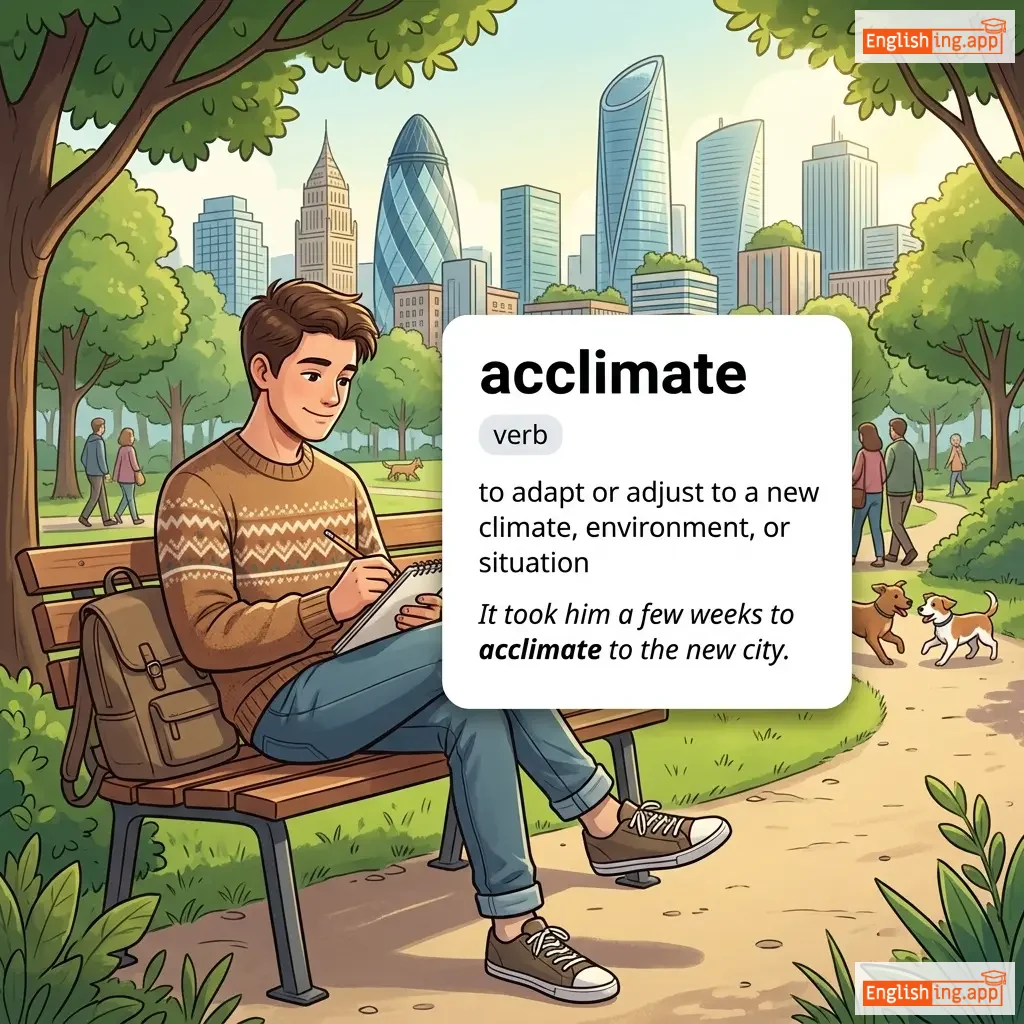
/ˈæklɪˌmeɪt/
verb
(ākèlìmèitè)
••••••
|
|
适应
shìyìng
••••••
|
acclimated
ākèlìmèitèd
••••••
|
acclimated
ākèlìmèitèd
••••••
|
acclimates
ākèlìmèits
••••••
|
acclimating
ākèlìmèitìng
••••••
|
to adapt or adjust to a new climate, environment, or situation
••••••
|
It took him a few weeks to acclimate to the new city.
他花了几周的时间适应新城市。
••••••
|
他花了几周的时间适应新城市。
Tā huāle jǐ zhōu de shíjiān shìyìng xīn chéngshì.
••••••
|
- •••••• | - •••••• | - •••••• |
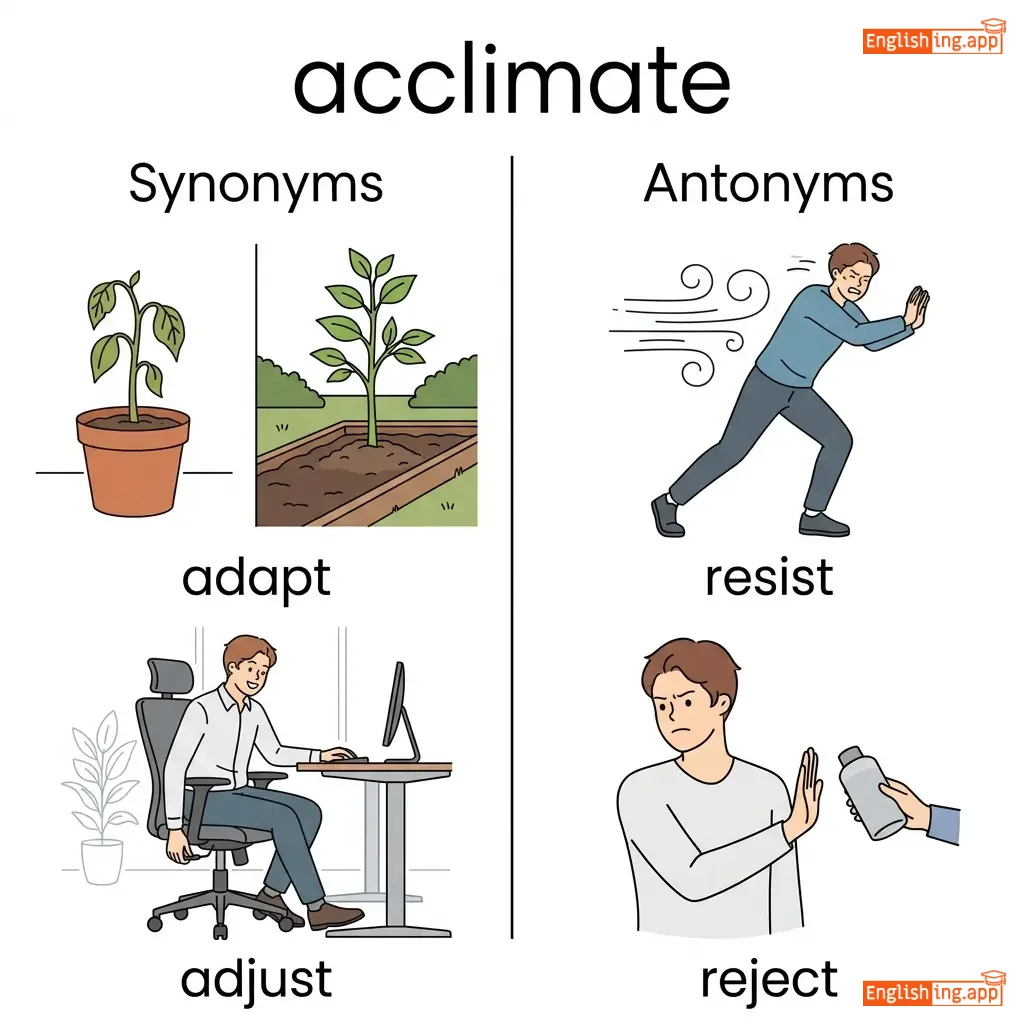
adapt, adjust, conform, accommodate, habituate
••••••
|
resist, reject, oppose
••••••
|
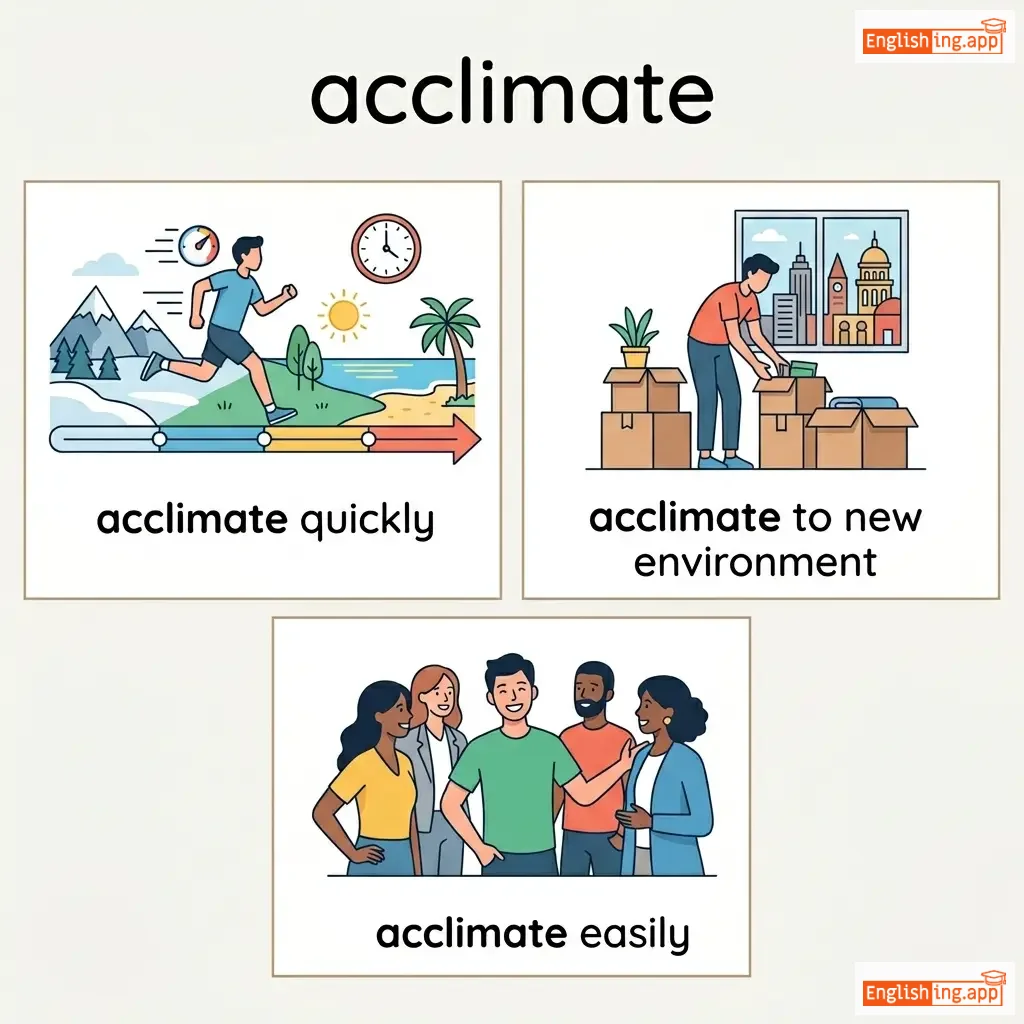
acclimate quickly, acclimate to new environment, acclimate easily
••••••
|
Acclimate - 就是适应新环境。
••••••
|
|
#68
👏
|
/əˈkleɪm/
verb
(əˈkleɪm)
••••••
|
- •••••• |
称赞
chengzan
••••••
|
acclaimed
əˈkleɪmd
••••••
|
acclaimed
əˈkleɪmd
••••••
|
acclaims
əˈkleɪmz
••••••
|
acclaiming
əˈkleɪmɪŋ
••••••
|
to praise enthusiastically and publicly
••••••
|
The audience acclaimed the actor for his outstanding performance.
观众因其出色的表演而为演员喝彩。
••••••
|
观众因其出色的表演而为演员喝彩。
Guanzhong yin qi chuse de biaoyan er wei yanyuan hecai.
••••••
|
critical acclaim
评论界的赞誉
••••••
|
strong praise from critics
••••••
|
评论界的赞誉
pinglunjie de zanyu
••••••
|
praise, applaud, cheer, commend, honor
••••••
|
criticize, condemn, blame
••••••
|
receive acclaim, win acclaim, international acclaim
••••••
|
Acclaim听起来像是赞扬。
••••••
|
|
#69
⚠️
|
/ˌæksɪˈdɛntl/
adjective
(akˈsɪdɛntəl)
••••••
|
- •••••• |
偶然的
ǒurán de
••••••
|
- •••••• | - •••••• | - •••••• | - •••••• |
happening by chance, unintentionally
••••••
|
The fire was caused by an accidental spark. |
火灾是由偶然的火花引起的。
Huǒzāi shì yóu ǒurán de huǒhuā yǐnqǐ de.
••••••
|
accidental discovery |
a useful finding that happens unexpectedly
••••••
|
偶然发现
ǒurán fāxiàn
••••••
|
unintended, chance, inadvertent, fortuitous, coincidental
••••••
|
deliberate, intentional, planned
••••••
|
accidental damage, accidental fire, accidental meeting
••••••
|
偶然的: 从偶然发生的事件中得到启发。
••••••
|
|
#70
👜
|
/əkˈsɛsəri/
noun
(āksèssùolí)
••••••
|
- •••••• |
配件;协助犯罪的人
peijian; xiezhu fanzui de ren
••••••
|
- •••••• | - •••••• | - •••••• | - •••••• |
a thing which can be added to something else to make it more useful, versatile, or attractive; a person who assists in committing a crime
••••••
|
She bought some stylish accessories for her new phone. |
她为她的新手机买了一些时尚配件。
Ta wei ta de xin shouji mai le xie xie shishang peijian.
••••••
|
- •••••• | - •••••• | - •••••• |
add-on, attachment, adornment, supplement, accomplice
••••••
|
necessity, essential
••••••
|
fashion accessory, phone accessory, accessory to crime
••••••
|
Accessory意味着附加到物品上,或者协助犯罪
••••••
|
|
#71
👑
|
/əkˈsɛʃən/
noun
(áikèxiàng)
••••••
|
- •••••• |
登基 / 接受协议
dēng jī / jiē shòu xié yì
••••••
|
- •••••• | - •••••• | - •••••• | - •••••• |
the attainment of a position of rank or power, especially a monarch or president; the formal acceptance of an agreement or treaty
••••••
|
The king's accession to the throne was celebrated with great ceremony. |
国王登基的仪式盛大举行。
Guó wáng dēng jī de yí shì shèng dà jǔ xíng.
••••••
|
- •••••• | - •••••• | - •••••• |
attainment, assumption, inauguration, acceptance, rise
••••••
|
abdication, resignation
••••••
|
accession to power, accession treaty, accession ceremony
••••••
|
Accession 意味着登上王位或签署条约。
••••••
|
|
#72
🚪
|
/əkˈsɛsəbl/
adjective
(ākèxīsībù)
••••••
|
- •••••• |
可达的
kedade
••••••
|
- •••••• | - •••••• | - •••••• | - •••••• |
easy to reach, use, or understand
••••••
|
The museum is easily accessible by public transport. |
博物馆可以通过公共交通轻松到达。
Bowuguan keyi tongguo gonggong jiaotong qingsong daoda.
••••••
|
- •••••• | - •••••• | - •••••• |
approachable, reachable, available, attainable
••••••
|
inaccessible, unreachable
••••••
|
easily accessible, accessible information, accessible location, accessible resources
••••••
|
Accessible 意味着像打开门一样容易到达和理解。
••••••
|
|
#73
🔑
|
/ˈæksɛs/
noun/verb
(áksès)
••••••
|
- •••••• |
访问
fǎngwèn
••••••
|
accessed
áksèssèd
••••••
|
accessed
áksèssèd
••••••
|
accesses
áksèssès
••••••
|
accessing
áksèssing
••••••
|
the ability to enter or use something; to reach or use something
••••••
|
Students have free access to the library.
学生可以免费访问图书馆。
••••••
|
学生可以免费访问图书馆。
Xuéshēng kěyǐ miǎnfèi fǎngwèn túshūguǎn.
••••••
|
gain access
获得访问权限
••••••
|
to succeed in entering or using something
••••••
|
获得访问权限
huòdé fǎngwèn quánxiàn
••••••
|
entry, approach, admission, connection
••••••
|
denial, exclusion
••••••
|
have access, provide access, gain access, limited access
••••••
|
访问是钥匙 🔑 通向知识的门。
••••••
|
|
#74
✅
|
/əkˈsɛpt/
verb
(接受)
••••••
|
|
接受
jiēshòu
••••••
|
accepted
接受了
••••••
|
accepted
接受了
••••••
|
accepts
接受
••••••
|
accepting
接受
••••••
|
to receive something willingly or agree to something
••••••
|
She accepted the job offer without hesitation.
她毫不犹豫地接受了工作邀请。
••••••
|
她毫不犹豫地接受了工作邀请。
Tā háo bù yóuyù de jiēshòu le gōngzuò yāoqǐng.
••••••
|
accept responsibility
接受责任
••••••
|
to acknowledge and take responsibility for something
••••••
|
接受责任
jiēshòu zérèn
••••••
|
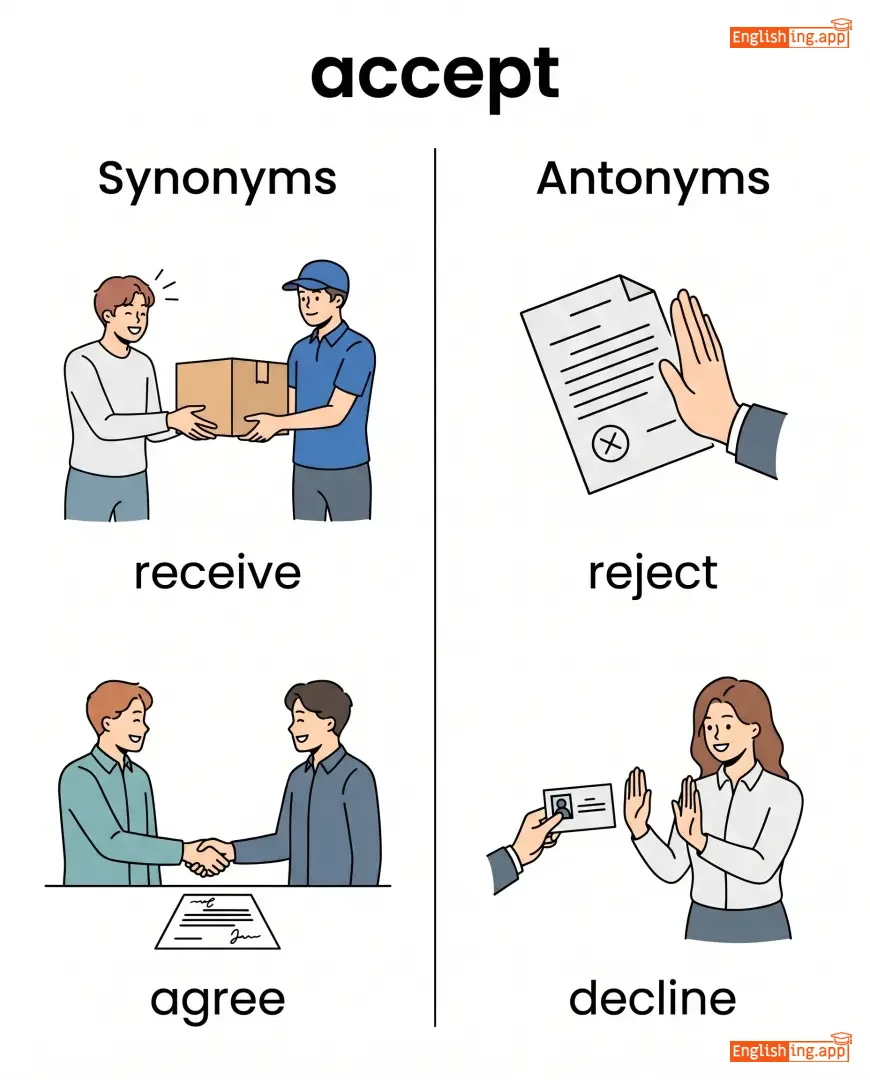
receive, agree, approve, consent
••••••
|
reject, decline, refuse
••••••
|
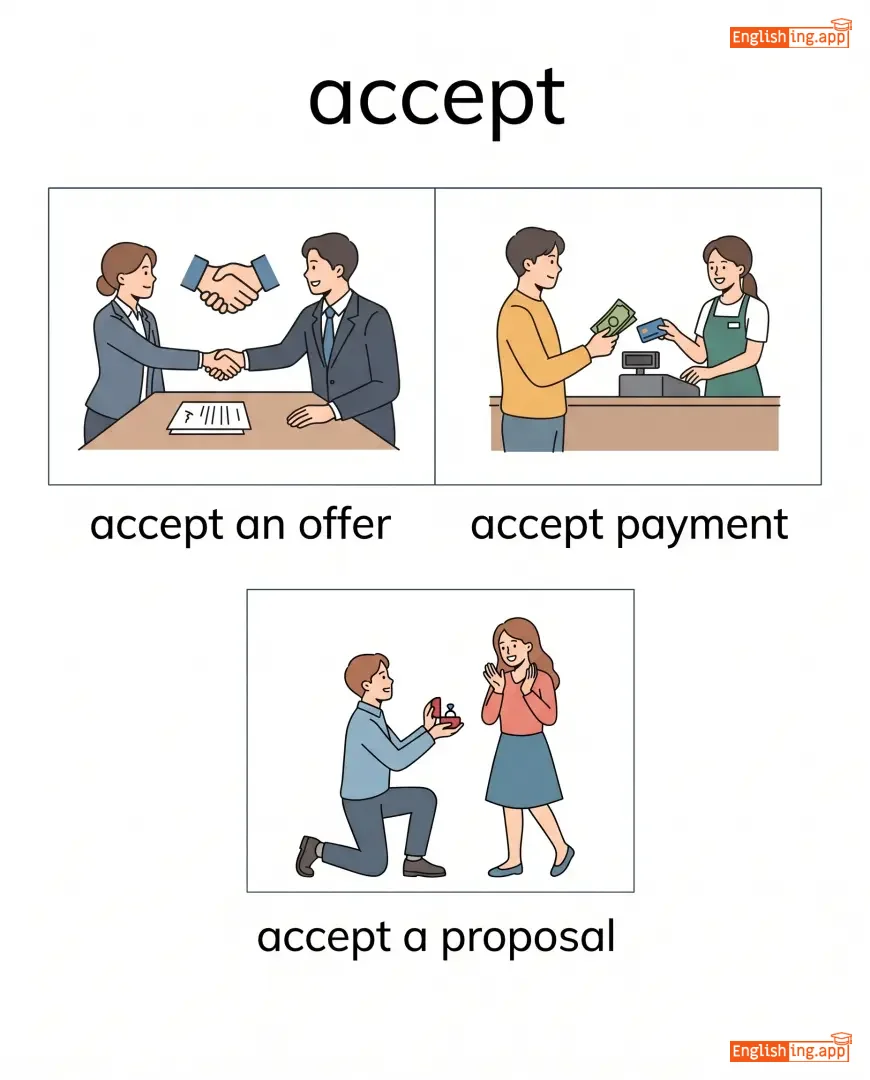
accept an offer, accept payment, accept a proposal, accept responsibility
••••••
|
接受新工作意味着迎接新的挑战
••••••
|
|
#75
✨
|
/əkˈsɛntʃueɪt/
verb
(ākènsèntuètè)
••••••
|
- •••••• |
强调
qiángdiào
••••••
|
accentuated
ākènsèntuètèd
••••••
|
accentuated
ākènsèntuètèd
••••••
|
accentuates
ākènsèntuèts
••••••
|
accentuating
ākènsèntuèting
••••••
|
to emphasize or make something more noticeable
••••••
|
The lighting accentuated the beauty of the painting.
灯光突出了画作的美感。
••••••
|
灯光突出了画作的美感。
Dēngguāng tūchūle huàzuò de měigǎn.
••••••
|
- •••••• | - •••••• | - •••••• |
emphasize, highlight, stress, underline, underscore
••••••
|
downplay, minimize
••••••
|
accentuate features, accentuate difference, accentuate beauty, accentuate importance
••••••
|
强调就像是给事物加重重音,让它更明显。
••••••
|
|
#76
🍵
|
/æbˈstiːmiəs/
adjective
••••••
|
|
- •••••• | - •••••• | - •••••• | - •••••• | - •••••• |
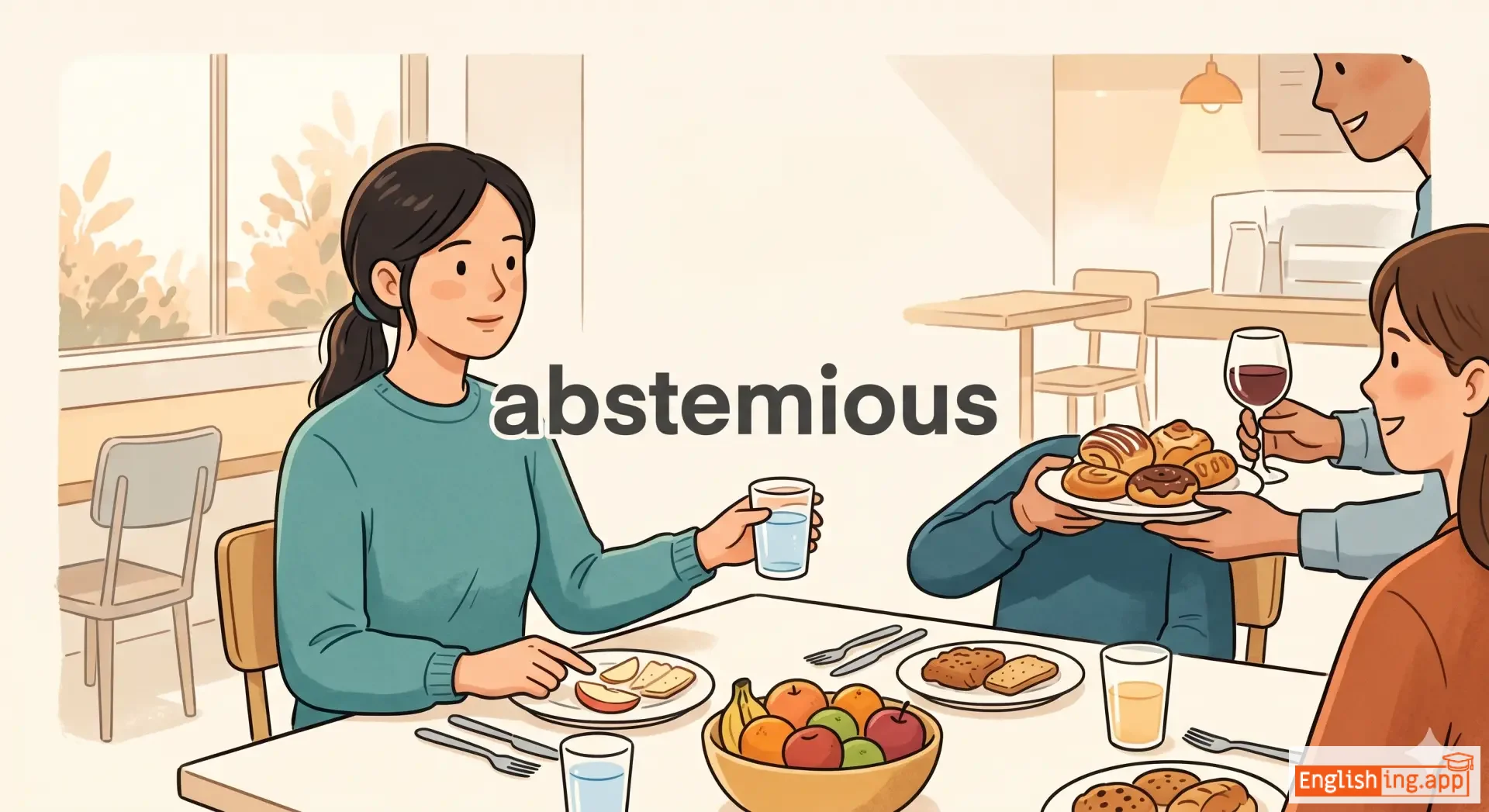
not self-indulgent, especially when eating and drinking; moderate or sparing in consumption
••••••
|
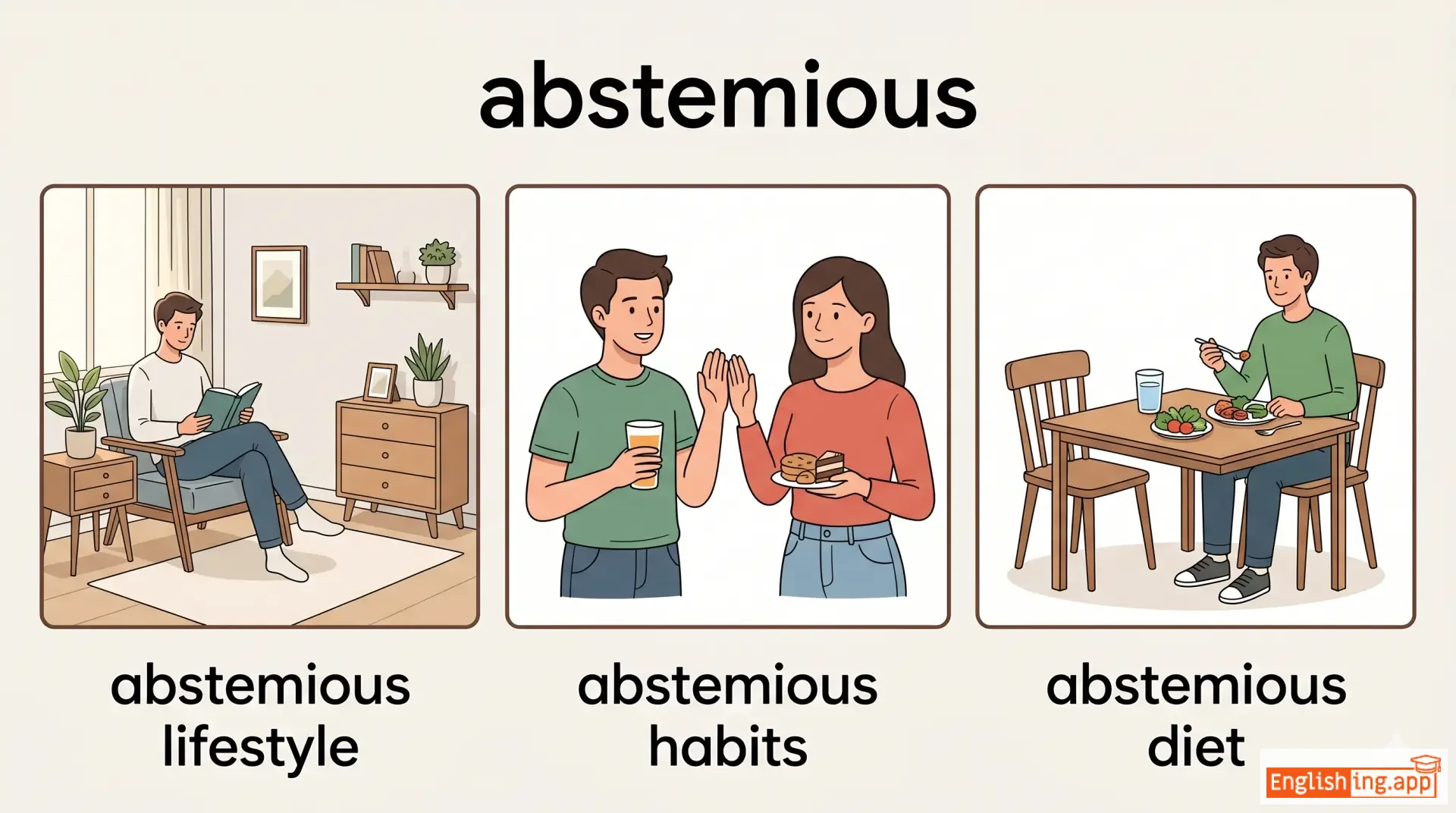
She lived an abstemious lifestyle, avoiding excesses of all kinds. |
- •••••• |
abstemious habits |
the practice of moderate and restrained consumption
••••••
|
- •••••• |
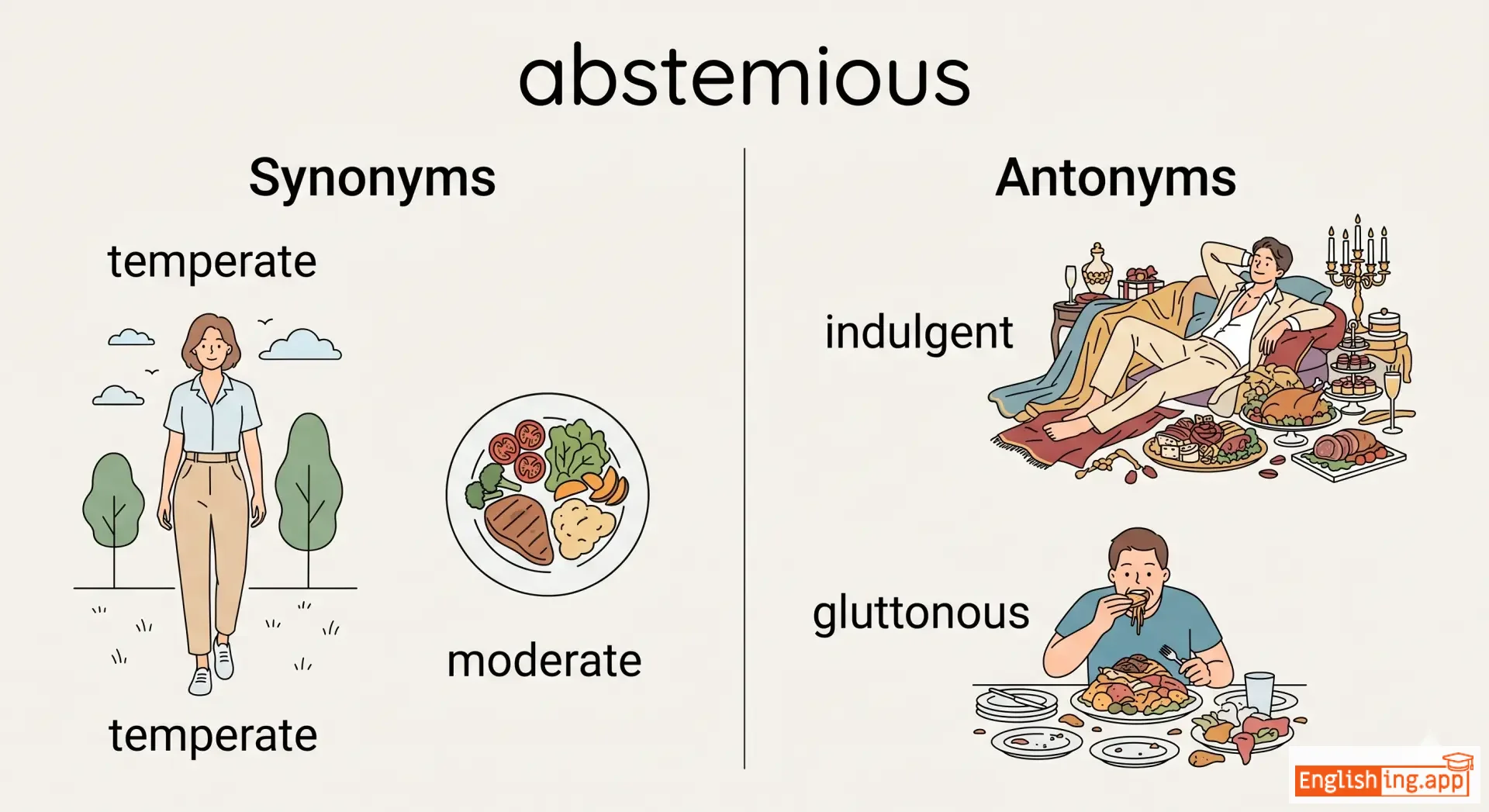
temperate, moderate, restrained, austere, ascetic
••••••
|
indulgent, gluttonous, excessive
••••••
|
abstemious lifestyle, abstemious habits, abstemious diet, abstemious person
••••••
|
No •••••• |
|
#77
👑
|
/əkˈsiːd/
verb
(āksīd)
••••••
|
- •••••• |
同意
tóngyì
••••••
|
acceded
āksīdèd
••••••
|
acceded
āksīdèd
••••••
|
accedes
āksīdés
••••••
|
acceding
āksīding
••••••
|
to agree to a request, proposal, or demand; to assume an office or position
••••••
|
The government finally acceded to the demands of the protesters.
政府最终同意了抗议者的要求。
••••••
|
政府最终同意了抗议者的要求。
zhèngfǔ zuìzhōng tóngyì le kàngyì zhě de yāoqiú.
••••••
|
accede to the throne
继承王位
••••••
|
to take up the position of king or queen
••••••
|
继承王位
jìchéng wángwèi
••••••
|
agree, consent, accept, comply, yield
••••••
|
refuse, deny, reject
••••••
|
accede to demands, accede to requests, accede to the throne
••••••
|
同意意味着接受。记住:'同意'继承王位,成为国王。
••••••
|
|
#78
🏫
|
/əˈkædəmi/
noun
(学院)
••••••
|
- •••••• |
学院
xueyuan
••••••
|
- •••••• | - •••••• | - •••••• | - •••••• |
an institution of learning or training
••••••
|
He enrolled in a military academy. |
他报考了军事学院。
Tā bào kǎo le jūnshì xuéyuàn.
••••••
|
- •••••• | - •••••• | - •••••• |
school, institute, college, university
••••••
|
none,
••••••
|
military academy, sports academy, music academy, national academy
••••••
|
学院是学习的地方 📖。记住:学院 = 学校,额外加上'cademy'。
••••••
|
|
#79
👨🏫
|
/əˌkædəˈmɪʃən/
noun
(艾卡德米申)
••••••
|
- •••••• |
学者
xuezhe
••••••
|
- •••••• | - •••••• | - •••••• | - •••••• |
a member of an academy; a scholar or expert in a field of study
••••••
|
The academicians gathered to discuss the future of education.
学者们聚在一起讨论教育的未来。
••••••
|
学者们聚在一起讨论教育的未来。
xuezhemen ju zai yiqi taolun jiaoyu de weilai
••••••
|
- •••••• | - •••••• | - •••••• |
scholar, professor, intellectual, researcher
••••••
|
layman, amateur
••••••
|
renowned academician, respected academician, leading academician
••••••
|
Academician = 学者 (xuezhe), 学术 + 者 → 学术的人。
••••••
|
|
#80
🎓
|
/ˌækəˈdɛmɪk/
adjective
(学术)
••••••
|
- •••••• |
学术的
xuéshù de
••••••
|
- •••••• | - •••••• | - •••••• | - •••••• |
related to education, learning, or scholarly activities
••••••
|
She has an outstanding academic record. |
她有一个卓越的学术记录。
Tā yǒu yīgè zhuóyuè de xuéshù jìlù.
••••••
|
purely academic |
something theoretical without practical relevance
••••••
|
纯学术的
chún xuéshù de
••••••
|
educational, scholarly, intellectual, theoretical
••••••
|
practical, vocational
••••••
|
academic achievement, academic career, academic institution, academic record
••••••
|
Academic意味着与学习相关🎓。记住: 在‘学术’中,学术工作才是关键。
••••••
|
|
#81
🌌
|
/əˈbɪs/
noun
(深渊)
••••••
|
- •••••• |
深渊
shen yuan
••••••
|
- •••••• | - •••••• | - •••••• | - •••••• |
a deep, immeasurable space, chasm, or void; something seemingly without end
••••••
|
The climbers looked down into the dark abyss below. |
攀登者看着下面的黑暗深渊。
Pan deng zhe kan zhe xia mian de hei an shen yuan.
••••••
|
stare into the abyss |
to confront a terrifying or destructive possibility
••••••
|
凝视深渊
ning shi shen yuan
••••••
|
chasm, gulf, void, pit, depth
••••••
|
peak, summit
••••••
|
dark abyss, deep abyss, stare into the abyss, fall into the abyss
••••••
|
深渊=深邃的深渊,似乎没有尽头。
••••••
|
|
#82
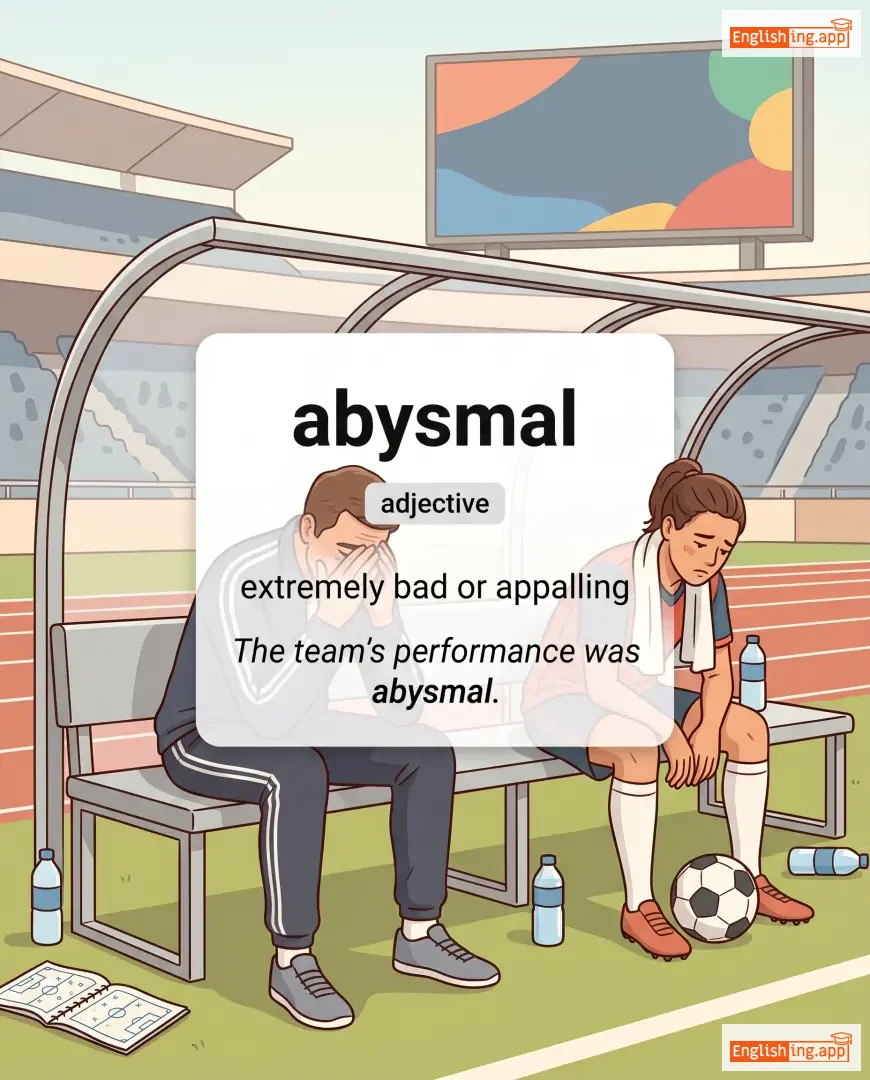
💔
|
/əˈbɪzməl/
adjective
(阿比斯马尔)
••••••
|
|
极其糟糕 / 可怕
jíqí zāogāo / kěpà
••••••
|
- •••••• | - •••••• | - •••••• | - •••••• |
extremely bad or appalling
••••••
|
The team's performance was abysmal. |
团队的表现非常糟糕。
Tuánduì de biǎoxiàn fēicháng zāogāo.
••••••
|
- •••••• | - •••••• | - •••••• |
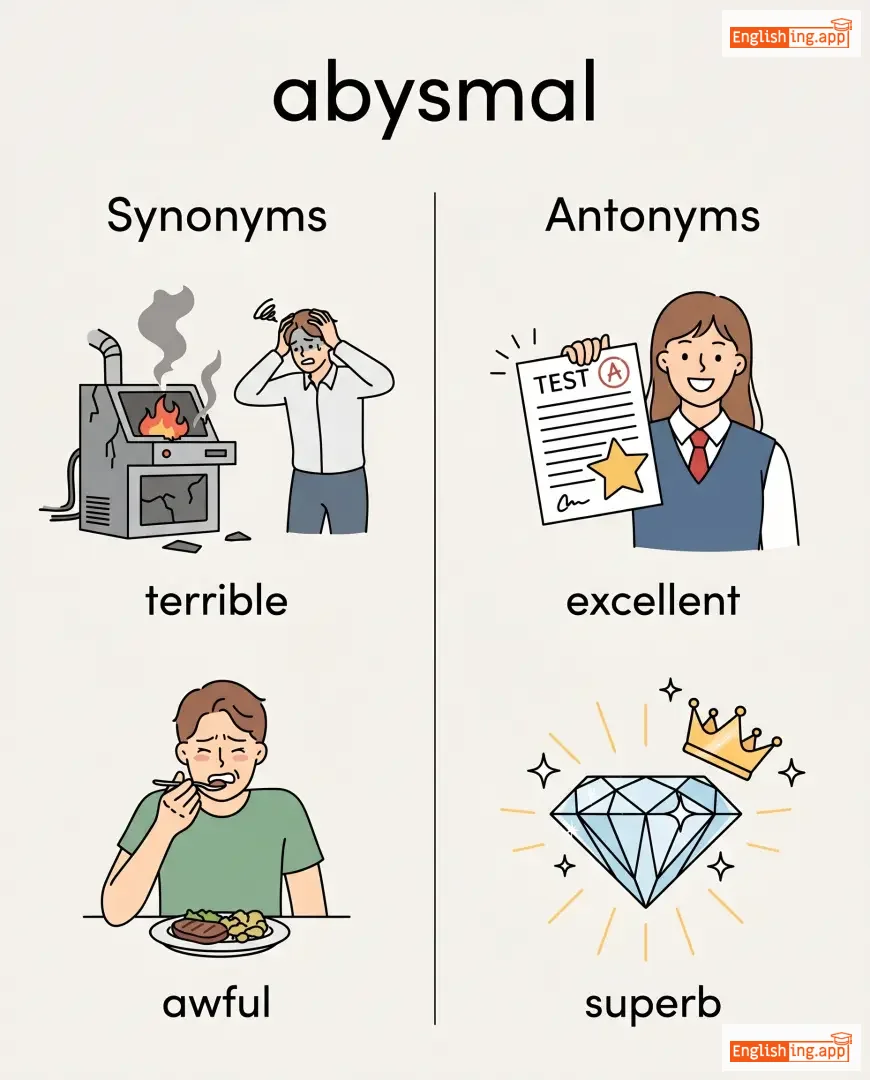
terrible, awful, dreadful, appalling, horrible
••••••
|
excellent, superb, outstanding
••••••
|
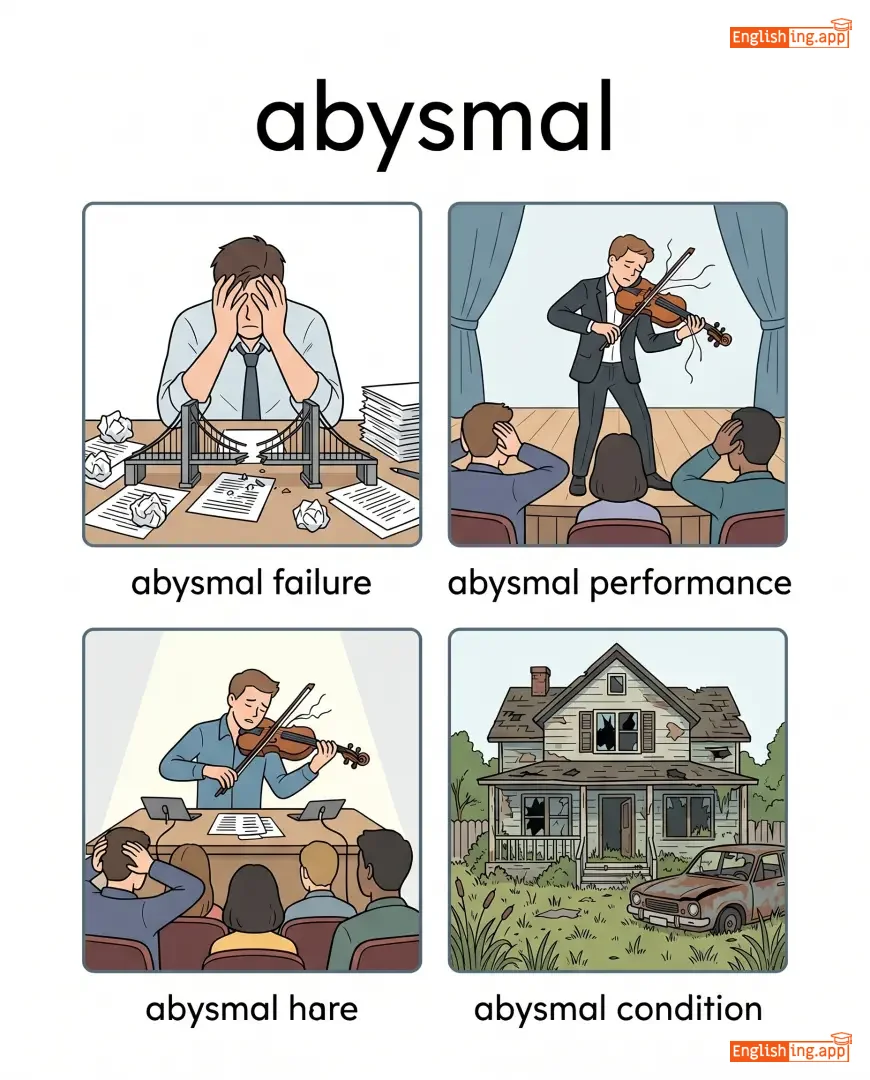
abysmal failure, abysmal performance, abysmal condition, abysmal ignorance
••••••
|
Abysmal意味着糟糕 — 想象掉进一个黑暗的深渊 💔
••••••
|
|
#83
📍
|
/əˈbʌt/
verb
(阿巴特)
••••••
|
- •••••• |
相邻
xianglin
••••••
|
abutted
阿巴特德
••••••
|
abutted
阿巴特德
••••••
|
abuts
阿巴特斯
••••••
|
abutting
阿巴特英
••••••
|
to be next to or share a border with
••••••
|
The park abuts the river on the north side.
公园位于北侧与河流接壤。
••••••
|
公园在北边与河流接壤。
Gōngyuán zài běi biān yǔ héliú jiērǎng.
••••••
|
- •••••• | - •••••• | - •••••• |
border, adjoin, touch, neighbor
••••••
|
separate, detach
••••••
|
abut on, abut against, land abuts, property abuts
••••••
|
Abut意为相邻 — 想象两块土地相邻。
••••••
|
|
#84
😡
|
/əˈbjuːsɪv/
adjective
(ābóosīf)
••••••
|
- •••••• |
侮辱性的 / 造成身体或口头伤害
wǔrǔ xìng de / zàochéng shēntǐ huò kǒutóu shānghài
••••••
|
- •••••• | - •••••• | - •••••• | - •••••• |
extremely offensive or insulting; involving physical or verbal harm
••••••
|
She left her job because of her abusive boss.
她因为她那位虐待的老板而离开了工作。
••••••
|
她因为她那位虐待的老板而离开了工作。
Tā yīnwèi tā nà wèi nüèdài de lǎobǎn ér líkāi le gōngzuò.
••••••
|
- •••••• | - •••••• | - •••••• |
insulting, offensive, cruel, harsh, violent
••••••
|
polite, kind, respectful
••••••
|
abusive language, abusive behavior, abusive relationship, abusive remarks
••••••
|
Abusive 意思是侮辱性的 — 想象有人用侮辱性的话语攻击你。
••••••
|
|
#85
🚫
|
/əˈbjuːs/ (verb), /əˈbjuːs/ (noun)
verb, noun
••••••
|
- •••••• |
滥用
lanyong
••••••
|
abused
••••••
|
abused
••••••
|
abuses
••••••
|
abusing
••••••
|
to use something in a harmful way; to treat someone badly or cruelly
••••••
|
He was accused of abusing his power. |
他被指控滥用职权。
Ta bei zhikong lanyong zhiquan.
••••••
|
substance abuse |
the harmful or excessive use of drugs or alcohol
••••••
|
物质滥用
wuzhi lanyong
••••••
|
mistreat, misuse, exploit, harm, oppress
••••••
|
respect, protect, cherish
••••••
|
child abuse, drug abuse, verbal abuse, abuse of power
••••••
|
滥用代表滥用 — 想象‘bus’司机恶意踩刹车 🚫
••••••
|
|
#86
🌸
|
/əˈbʌndənt/
adjective
(阿邦丹特)
••••••
|
- •••••• |
丰富
fēngfù
••••••
|
- •••••• | - •••••• | - •••••• | - •••••• |
existing or available in large quantities; plentiful
••••••
|
The garden was abundant with colorful flowers.
花园里有丰富多彩的花朵。
••••••
|
花园里有五彩缤纷的花朵。
Huāyuán lǐ yǒu wǔcǎi bīnfēn de huāduǒ.
••••••
|
abundant in
丰富的
••••••
|
having plenty of something
••••••
|
丰富的
fēngfù de
••••••
|
plentiful, ample, bountiful, copious, overflowing
••••••
|
scarce, rare, insufficient
••••••
|
abundant supply, abundant resources, abundant opportunities, abundant evidence
••••••
|
Abundant 意味着 '丰富' — 想象一个充满五彩斑斓花朵的花园 🌸
••••••
|
|
#87
🤡
|
/əbˈsɜːrd/
adjective
(荒谬)
••••••
|
- •••••• |
荒谬的, 不合理的
huangmiu de, bu heli de
••••••
|
- •••••• | - •••••• | - •••••• | - •••••• |
wildly unreasonable, illogical, or inappropriate
••••••
|
It is absurd to think that the earth is flat. |
认为地球是平的,这太荒谬了。
Renwei diqiu shi ping de, zhe tai huangmiu le.
••••••
|
theater of the absurd |
a style of drama emphasizing the absurdity of human existence
••••••
|
荒谬剧场
huangmiu juchang
••••••
|
ridiculous, foolish, nonsensical, ludicrous
••••••
|
reasonable, rational, logical
••••••
|
absurd idea, utterly absurd, completely absurd
••••••
|
Absurd 听起来像‘荒谬’ - 完全不合理!
••••••
|
|
#88
🤔
|
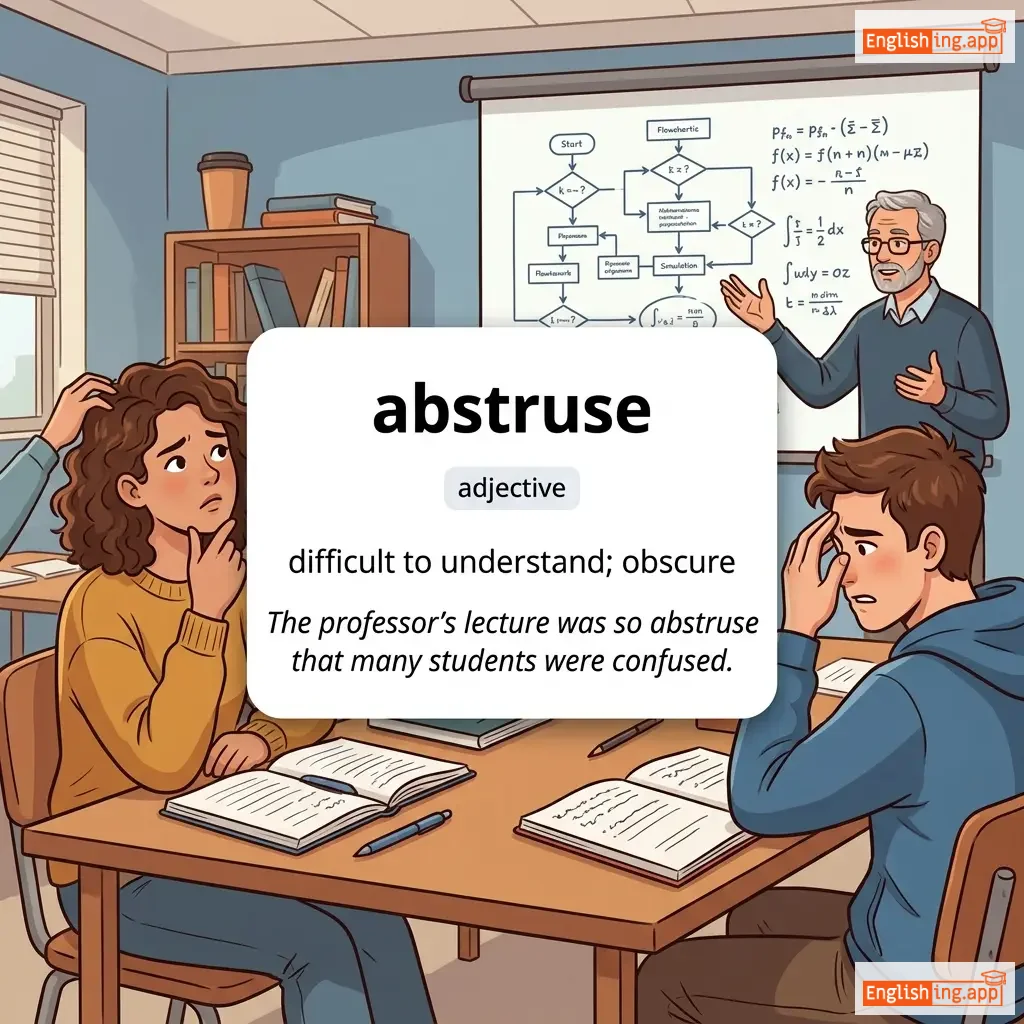
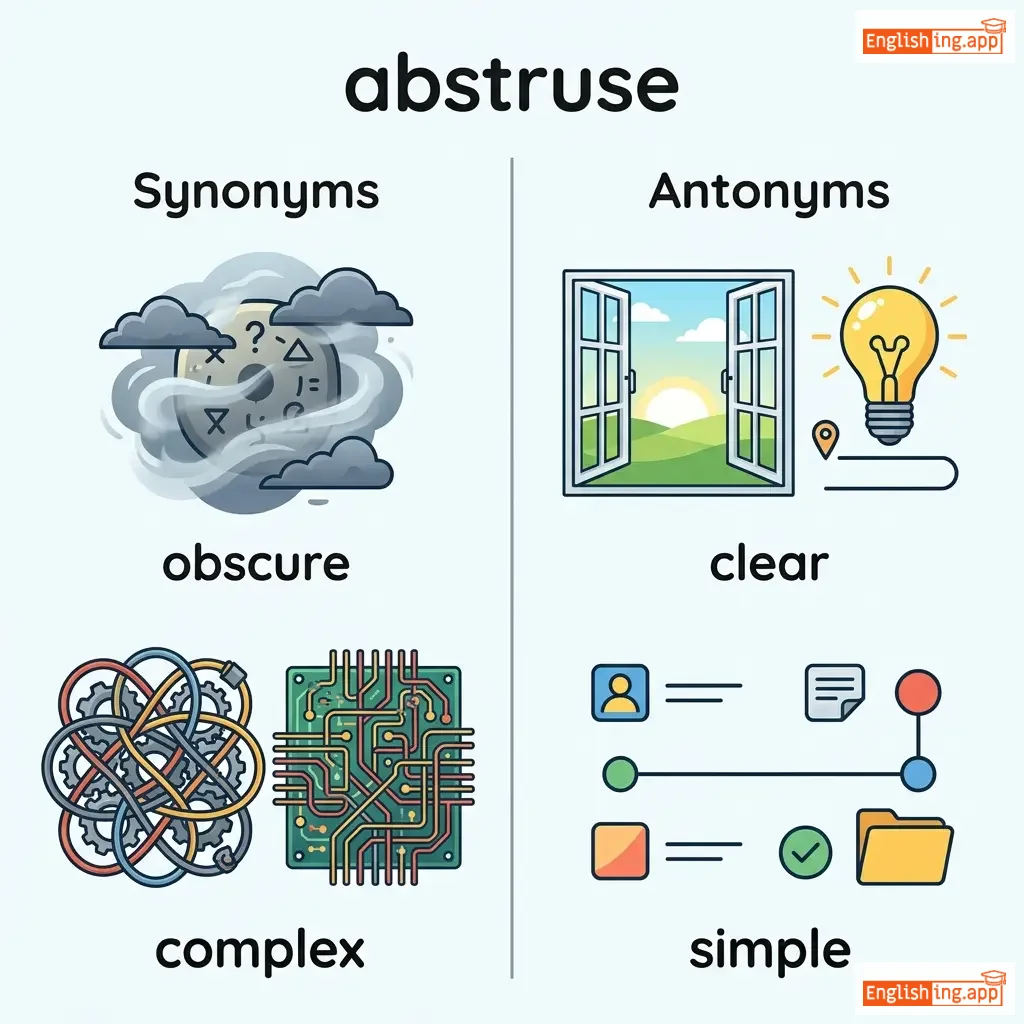
/æbˈstruːs/
adjective
(阿布斯特鲁斯)
••••••
|
|
难以理解
nán yǐ lǐ jiě
••••••
|
- •••••• | - •••••• | - •••••• | - •••••• |
difficult to understand; obscure
••••••
|
The professor’s lecture was so abstruse that many students were confused.
教授的讲座非常深奥,以至于许多学生感到困惑。
••••••
|
教授的讲座非常深奥,以至于许多学生感到困惑。
Jiàoshòu de jiǎngzuò fēicháng shēn'ào, yǐzhì yú xǔduō xuéshēng gǎndào kùnhuò.
••••••
|
- •••••• | - •••••• | - •••••• |
obscure, complex, esoteric, puzzling, enigmatic
••••••
|
clear, simple, obvious
••••••
|
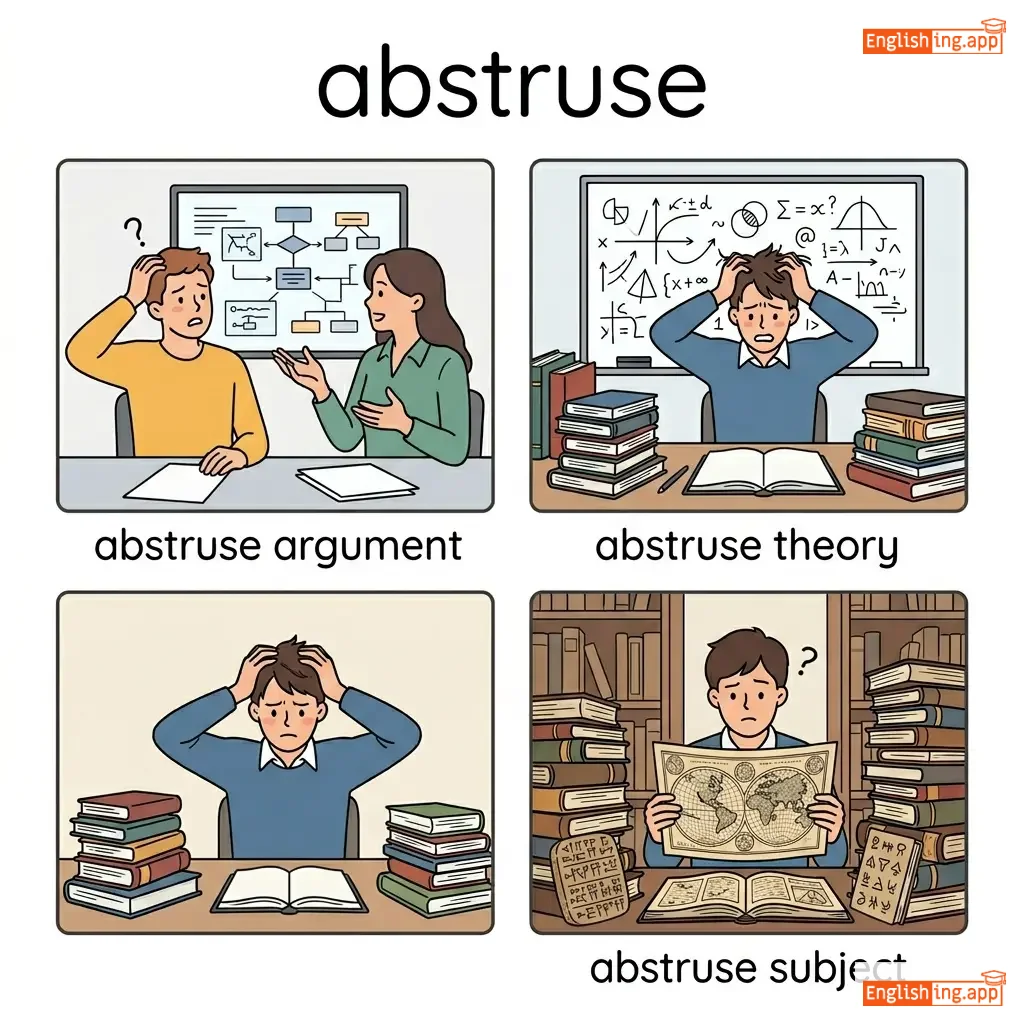
abstruse argument, abstruse theory, abstruse subject
••••••
|
Ab STRUggle 理解 = Abstruse 意味着难以理解.
••••••
|
|
#89
🎨
|
/ˈæb.strækt/
adjective, noun, verb
(抽象的)
••••••
|
- •••••• |
抽象的, 摘要
chōuxiàng de, zhāiyào
••••••
|
abstracted
抽象化的
••••••
|
abstracted
抽象化的
••••••
|
abstracts
抽象
••••••
|
abstracting
抽象化
••••••
|
existing in thought or as an idea but not having physical or concrete existence; a summary of a text
••••••
|
The artist is known for her abstract paintings.
艺术家以其抽象画作而闻名。
••••••
|
艺术家以其抽象画作而闻名。
Yìshùjiā yǐ qí chōuxiàng huàzuò ér wénmíng.
••••••
|
in the abstract
在抽象中
••••••
|
considered generally, without reference to specific examples
••••••
|
在抽象中
zài chōuxiàng zhōng
••••••
|
conceptual, theoretical, summary, extract
••••••
|
concrete, real, practical
••••••
|
abstract idea, abstract art, abstract concept
••••••
|
抽象是没有具体形式的——只是思想或艺术作品。
••••••
|
|
#90
🚫
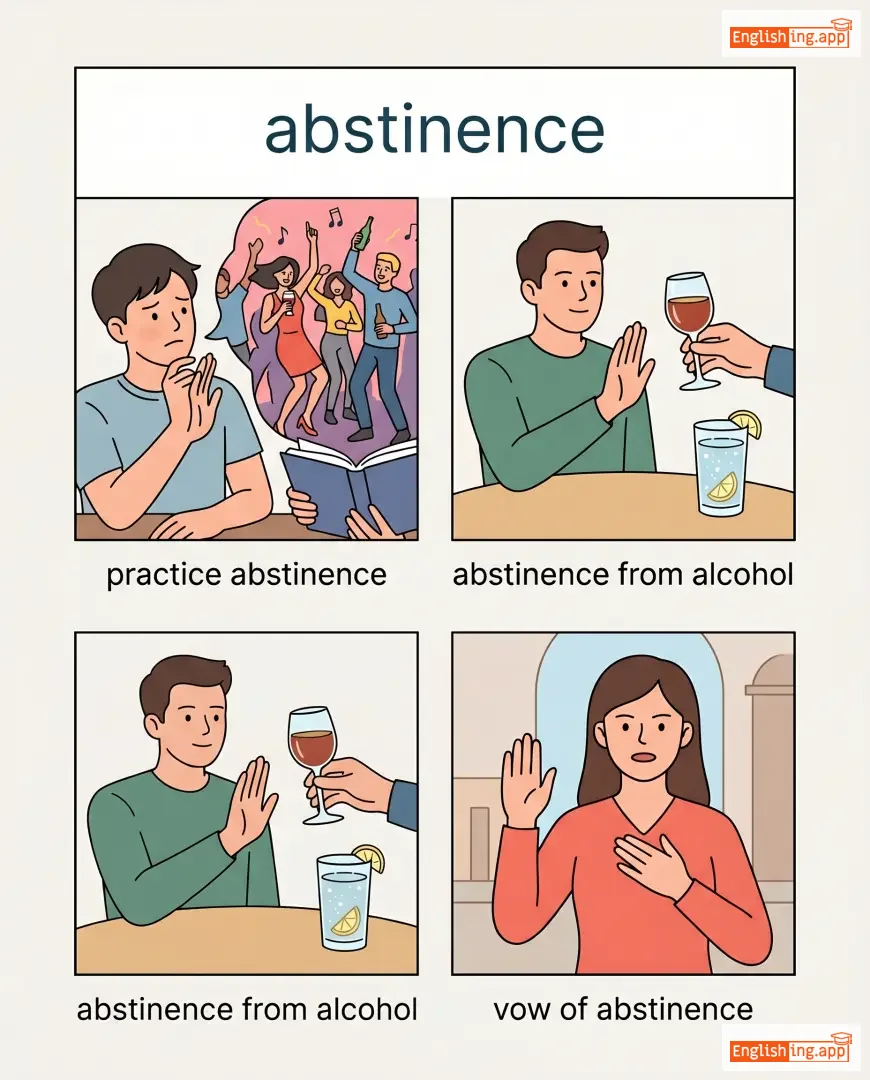
|
/ˈæb.stɪ.nəns/
noun
(阿布斯提嫩斯)
••••••
|
|
禁欲,节制
jìnyù, jiézhì
••••••
|
- •••••• | - •••••• | - •••••• | - •••••• |
the practice of restraining oneself from indulging in something, typically alcohol or sex
••••••
|
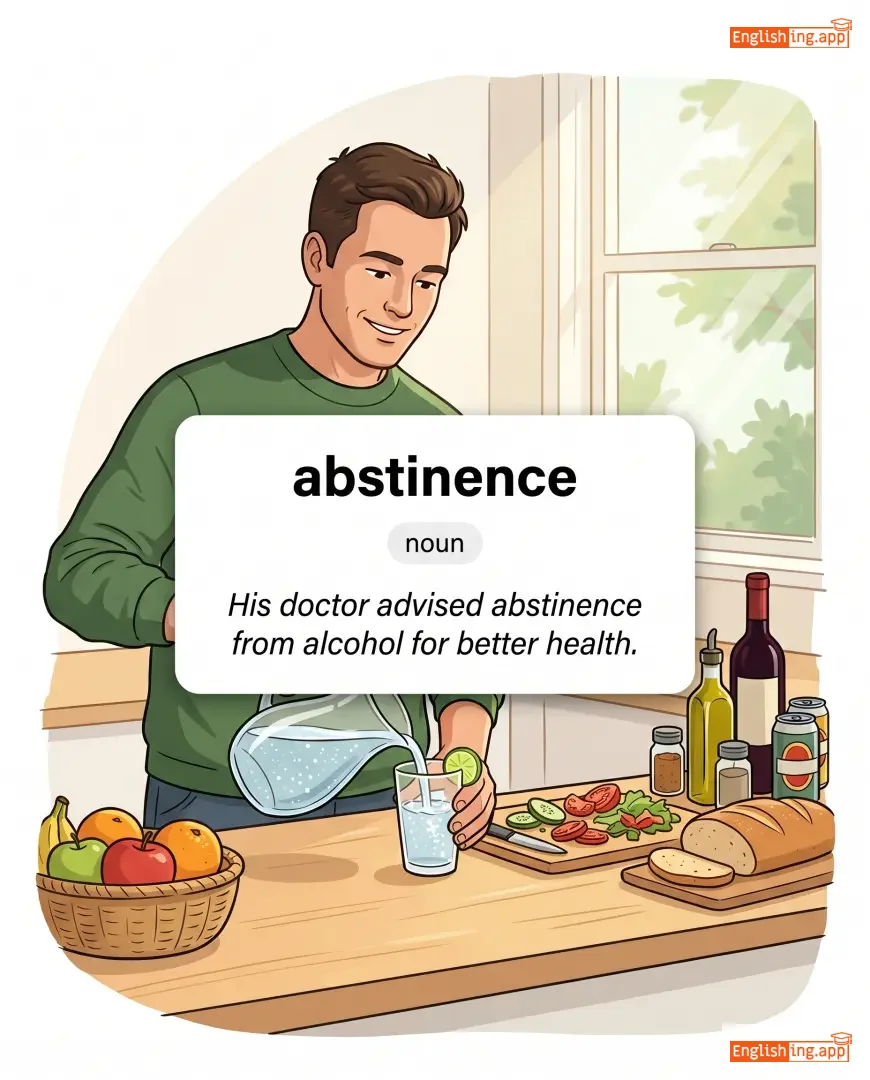
His doctor advised abstinence from alcohol for better health. |
他的医生建议他戒酒以改善健康。
Tā de yīshēng jiànyì tā jiè jiǔ yǐ gǎishàn jiànkāng.
••••••
|
- •••••• | - •••••• | - •••••• |
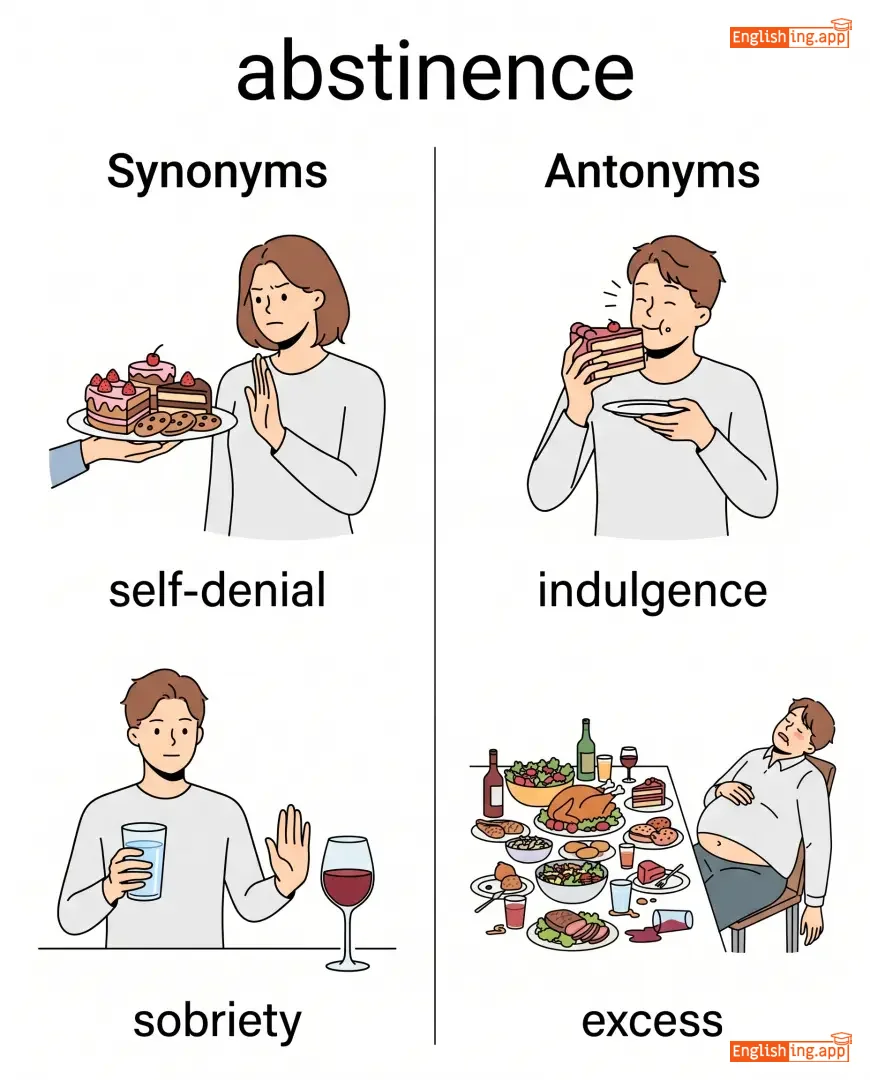
self-denial, sobriety, temperance, restraint
••••••
|
indulgence, excess, intemperance
••••••
|
practice abstinence, abstinence from alcohol, vow of abstinence
••••••
|
Abs (腹肌) 强大需要禁欲。
••••••
|
Vocabulary Quiz
Test your vocabulary by matching words with their translations or meanings.
Login to take the quiz
Comments (0)
Share your thoughts and join the discussion.
Join the discussion by logging in
Login to CommentNo comments yet
Be the first to share your thoughts!