





Swipe left or right, or use the buttons. Tap image to zoom.
例句翻译
单词
Lesson 366Lesson 366 - 遮罩切换
|
表情符号
|
单词 | Images | 翻译 | 过去时 | 过去分词 | 第三人称单数 | 动名词 | 含义 | 例句 | 例句翻译 | 示例表达 | 示例表达含义 | 示例表达翻译 | 同义词 | 反义词 | 搭配词 | 助记符 |
|---|---|---|---|---|---|---|---|---|---|---|---|---|---|---|---|---|---|
|
#10945
🧪
|
/ɪkˈsperɪmənt/
noun/verb
(kèxìng)
••••••
|
- •••••• |
实验
shíyàn
••••••
|
experimented
kèxìngdào
••••••
|
experimented
kèxìngdào
••••••
|
experiments
kèxìngs
••••••
|
experimenting
kèxìng
••••••
|
a test or trial carried out to discover something or prove an idea
••••••
|
The scientist conducted an experiment on plant growth.
Kēxuéjiā jìnxíngle yīgè guānyú zhíwù chéngzhǎng de kèxìng.
••••••
|
科学家进行了一个关于植物生长的实验。
Kēxuéjiā jìnxíngle yīgè guānyú zhíwù chéngzhǎng de shíyàn.
••••••
|
experiment with
kèxìng shì
••••••
|
to try something new to see what happens
••••••
|
与…实验
yǔ… shíyàn
••••••
|
test, trial, research, investigation, study
••••••
|
proof, certainty
••••••
|
conduct experiment, scientific experiment, lab experiment, experiment results
••••••
|
实验:做科学试验来学习 (shíyàn)
••••••
|
|
#10946
❌
|
/ˈfeɪljər/
noun
(fēi liò)
••••••
|
- •••••• |
失败
shībài
••••••
|
- •••••• | - •••••• | - •••••• | - •••••• |
The lack of success in doing or achieving something.
••••••
|
The project was considered a failure due to poor planning. |
由于糟糕的规划,该项目被认为是失败。
yóuyú zāogāo de guīhuà, gāi xiàngmù bèi rènwéi shì shībài.
••••••
|
trial and error |
A method of solving problems by trying different solutions until one works.
••••••
|
试错法
shì cuò fǎ
••••••
|
defeat, breakdown, collapse, disaster, fiasco
••••••
|
success, achievement, victory
••••••
|
complete failure, business failure, engine failure, failure rate
••••••
|
失败意味着一切都尝试过,却没有成功 – 想到 '失败'。
••••••
|
|
#10947
❌
|
/feɪl/
verb
(fèil)
••••••
|
- •••••• |
失败
shībài
••••••
|
failed
fèild
••••••
|
failed
fèild
••••••
|
fails
fèils
••••••
|
failing
fèiling
••••••
|
To be unsuccessful in achieving a goal or expectation.
••••••
|
He failed the driving test.
他在驾驶考试中失败了。
••••••
|
他在驾驶考试中失败了。
Tā zài jiàshǐ kǎoshì zhōng shībài le.
••••••
|
fail miserably
彻底失败
••••••
|
to fail completely and badly
••••••
|
彻底失败
chèdǐ shībài
••••••
|
lose, flop, collapse, fall short, break down
••••••
|
succeed, achieve, pass
••••••
|
fail exam, fail test, fail to act, fail miserably
••••••
|
失败就像你在考试中被说‘你失败了’。
••••••
|
|
#10948
🌫️
|
/feɪd/
verb
(费德)
••••••
|
- •••••• |
褪色
tuì sè
••••••
|
faded
费德德
••••••
|
faded
费德德
••••••
|
fades
费德斯
••••••
|
fading
费丁
••••••
|
To gradually lose brightness, color, or strength.
••••••
|
The colors of the old photo have started to fade.
老照片的颜色开始褪色。
••••••
|
老照片的颜色开始褪色。
Lǎo zhàopiàn de yánsè kāishǐ tuìsè.
••••••
|
fade away
褪色
••••••
|
to disappear slowly
••••••
|
慢慢消失
màn màn xiāo shī
••••••
|
diminish, weaken, vanish, pale, decline
••••••
|
brighten, strengthen, appear
••••••
|
fade away, fade out, fade over time, colors fade
••••••
|
褪色意味着逐渐消失,就像褪色的照片。
••••••
|
|
#10949
🏭
|
/ˈfæktəri/
noun
(fàktèri)
••••••
|
- •••••• |
工厂
gōngchǎng
••••••
|
- •••••• | - •••••• | - •••••• | - •••••• |
A building or group of buildings where goods are manufactured.
••••••
|
He works in a shoe factory. |
他在一家鞋厂工作。
Tā zài yī jiā xié chǎng gōngzuò.
••••••
|
- •••••• | - •••••• | - •••••• |
plant, mill, workshop, industry
••••••
|
office, home
••••••
|
shoe factory, textile factory, factory worker, factory production
••••••
|
工厂是制造东西的地方。
••••••
|
|
#10950
⚖️
|
/ˈfæktər/
noun
(法克托尔)
••••••
|
- •••••• |
因素
yīnsù
••••••
|
- •••••• | - •••••• | - •••••• | - •••••• |
A circumstance, fact, or influence that contributes to a result.
••••••
|
Weather is an important factor in crop production. |
天气是作物生产中的一个重要因素。
Tiānqì shì zuòwù shēngchǎn zhōng de yīgè zhòngyào yīnsù.
••••••
|
key factor |
a crucial or essential element
••••••
|
关键因素
guānjiàn yīnsù
••••••
|
element, component, cause, aspect, determinant
••••••
|
result, consequence
••••••
|
important factor, key factor, risk factor, success factor
••••••
|
因素 = 影响结果的事物,就像一个关键因素。
••••••
|
|
#10951
🧵
|
/ˈfæbrɪk/
noun
(fābùlíkè)
••••••
|
- •••••• |
布料
bùliào
••••••
|
- •••••• | - •••••• | - •••••• | - •••••• |
Cloth or material produced by weaving or knitting fibers.
••••••
|
The tailor used silk fabric to make the dress. |
裁缝用丝绸布料做了这件衣服。
Cáifeng yòng sīchóu bùliào zuòle zhè jiàn yīfú.
••••••
|
the fabric of society |
the basic structure or foundation of society
••••••
|
社会的结构
Shèhuì de jiégòu
••••••
|
cloth, textile, material, fiber, weave
••••••
|
metal, stone, plastic
••••••
|
cotton fabric, woven fabric, fabric softener, fabric design
••••••
|
Fabric 是布料,做衣服时需要布料,像做衣服一样重要。
••••••
|
|
#10952
👁️
|
/aɪ/
noun
(aī)
••••••
|
- •••••• |
眼睛
yanjing
••••••
|
- •••••• | - •••••• | - •••••• | - •••••• |
the organ in the head through which people and animals see
••••••
|
She closed her eyes and went to sleep. |
她闭上了眼睛,去睡觉了。
Ta bì shàngle yǎnjīng, qù shuìjiàole.
••••••
|
keep an eye on |
to watch carefully or look after
••••••
|
留意
liúyì
••••••
|
vision, sight, gaze, view, look
••••••
|
blindness, neglect
••••••
|
eye contact, eye color, keep an eye, eye for detail
••••••
|
Eye表示'眼睛',所以'Keep an eye'表示'留意'。
••••••
|
|
#10953
🔥
|
/ɪkˈstriːmli/
adverb
(ikstrīmli)
••••••
|
- •••••• |
极其
jíqí
••••••
|
- •••••• | - •••••• | - •••••• | - •••••• |
to a very high degree; very much
••••••
|
The movie was extremely interesting. |
这部电影非常有趣。
Zhè bù diànyǐng fēicháng yǒuqù.
••••••
|
- •••••• | - •••••• | - •••••• |
very, highly, greatly, tremendously, incredibly
••••••
|
slightly, mildly
••••••
|
extremely difficult, extremely important, extremely rare, extremely useful
••••••
|
Extremely 意味着极其 (非常多,非常高)。
••••••
|
|
#10954
⚠️
|
/ɪkˈstriːm/
adjective
(ik-suh-trim)
••••••
|
|
极端
jíduān
••••••
|
- •••••• | - •••••• | - •••••• | - •••••• |
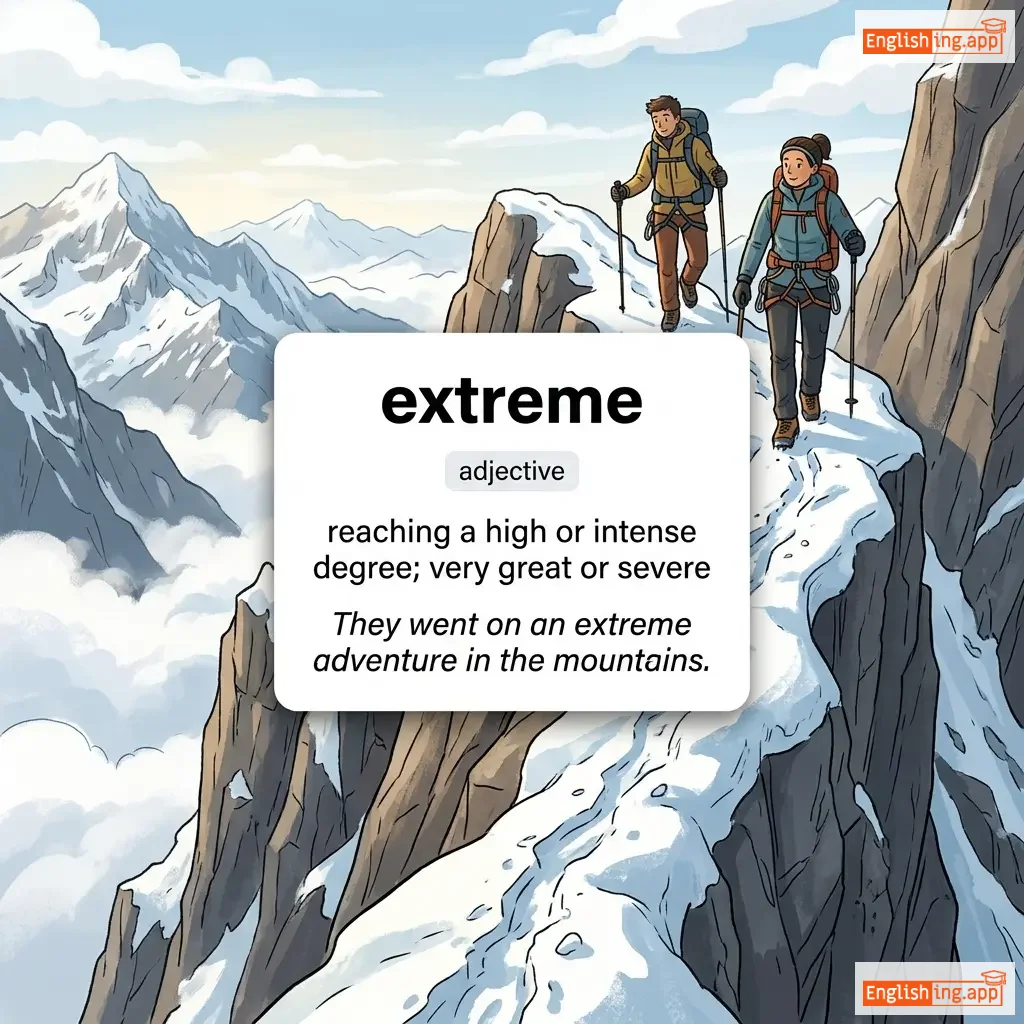
reaching a high or intense degree; very great or severe
••••••
|
They went on an extreme adventure in the mountains. |
他们去山区进行了一次极限冒险。
Tāmen qù shānqū jìnxíngle yīcì jíxiàn màoxiǎn.
••••••
|
go to extremes |
to do something in an excessive or exaggerated way
••••••
|
走极端
zǒu jíduān
••••••
|
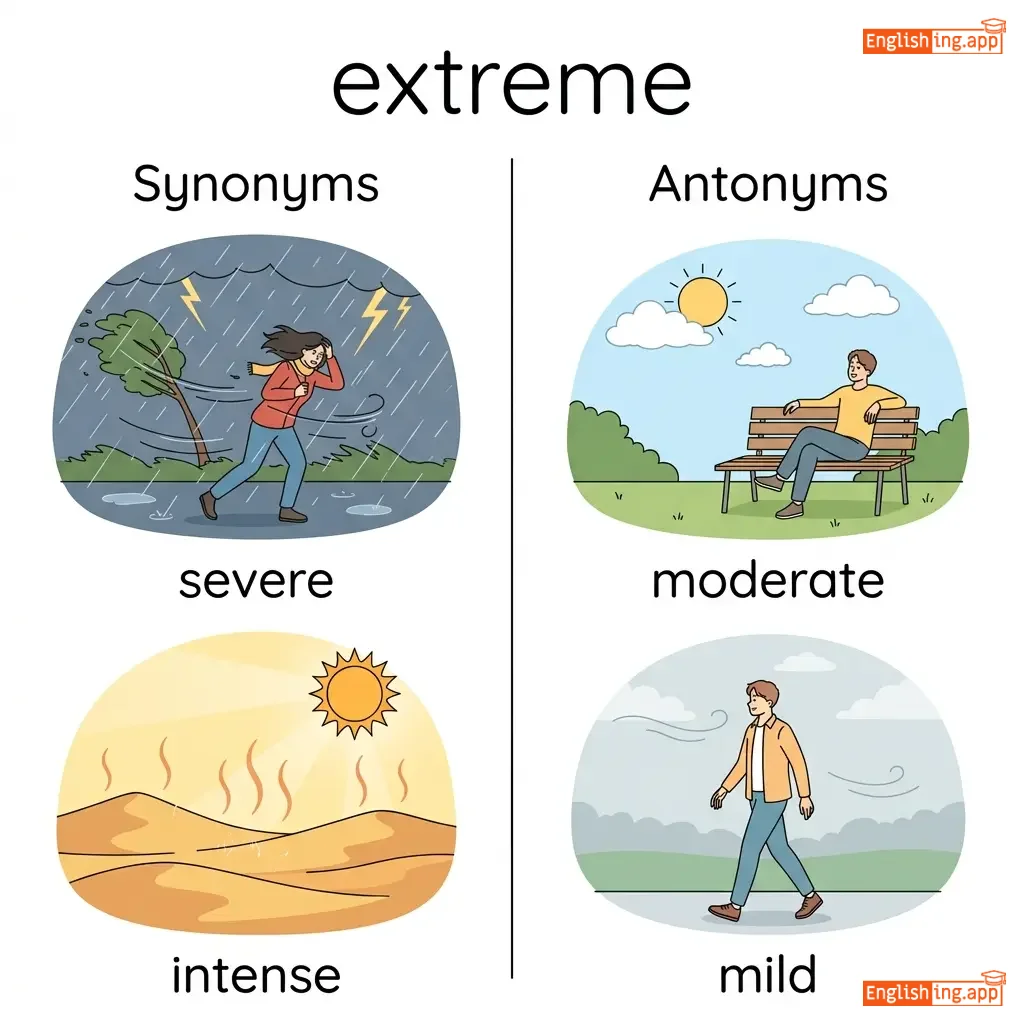
severe, intense, excessive, radical, ultimate
••••••
|
moderate, mild, ordinary
••••••
|
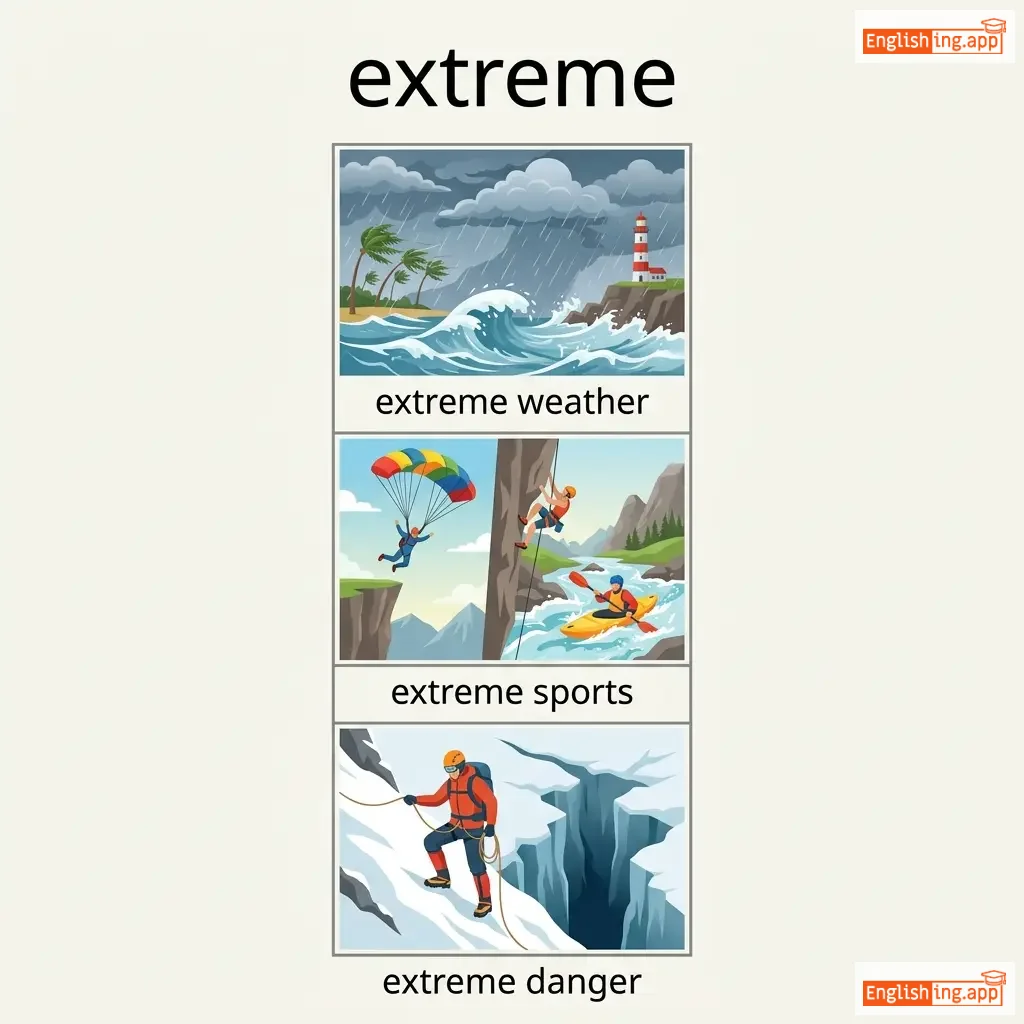
extreme weather, extreme sports, extreme danger, extreme measures
••••••
|
Extreme意思就是极端,像极端情况一样。
••••••
|
|
#10955
🙂
|
/ɪkˈsprɛʃən/
noun
(表情)
••••••
|
- •••••• |
表情
biaoqing
••••••
|
- •••••• | - •••••• | - •••••• | - •••••• |
the act of putting thoughts or feelings into words, actions, or facial gestures
••••••
|
His facial expression showed surprise.
他的面部表情显示了惊讶。
••••••
|
他的面部表情显示了惊讶。
Tā de miànbù biǎoqíng xiǎnshìle jīngyà.
••••••
|
facial expression
面部表情
••••••
|
the look on someone's face that conveys emotion
••••••
|
面部表情
miànbù biǎoqíng
••••••
|
statement, utterance, manifestation, phrase, gesture
••••••
|
silence, suppression
••••••
|
facial expression, expression of love, free expression, expression of opinion
••••••
|
表情 = 通过面部看到情绪
••••••
|
|
#10956
💬
|
/ɪkˈsprɛs/
verb
(表达)
••••••
|
- •••••• |
表达
biaoda
••••••
|
expressed
表达过
••••••
|
expressed
表达过
••••••
|
expresses
表达
••••••
|
expressing
表达中
••••••
|
to convey a thought, feeling, or idea in words, actions, or other forms
••••••
|
She expressed her gratitude with a warm smile.
她通过温暖的微笑表达了她的感激之情。
••••••
|
她通过温暖的微笑表达了她的感激之情。
Ta tongguo wenruan de weixiao biaoda le ta de ganji zhiqing.
••••••
|
express yourself
表达自己
••••••
|
to communicate one's thoughts and feelings openly
••••••
|
表达自己
Biaoda ziji
••••••
|
convey, communicate, articulate, state, voice
••••••
|
suppress, conceal, hide
••••••
|
express feelings, express gratitude, express concern, express clearly
••••••
|
表达就是你内心的声音,像画笔一样呈现出来。
••••••
|
|
#10957
🧭
|
/ɪkˈsplɔːr/
verb
(探索)
••••••
|
- •••••• |
探索
tàn suǒ
••••••
|
explored
探索过
••••••
|
explored
探索过
••••••
|
explores
探索
••••••
|
exploring
探索中
••••••
|
to travel through or study something in order to learn more about it
••••••
|
They decided to explore the forest together.
他们决定一起探索森林。
••••••
|
他们决定一起探索森林。
Tāmen juédìng yīqǐ tàn suǒ sēnlín.
••••••
|
explore possibilities
探索可能性
••••••
|
to consider different options or opportunities
••••••
|
探索可能性
tàn suǒ kě néng xìng
••••••
|
discover, investigate, examine, search, probe
••••••
|
ignore, neglect
••••••
|
explore new ideas, explore opportunities, explore the world, explore nature
••••••
|
探索就像 Dora 探险
••••••
|
|
#10958
📖
|
/ˌekspləˈneɪʃən/
noun
(ekspləˈneɪʃən)
••••••
|
- •••••• |
解释
jieshi
••••••
|
- •••••• | - •••••• | - •••••• | - •••••• |
a statement or account that makes something clear
••••••
|
The teacher gave a clear explanation of the theory. |
老师给出了理论的清晰解释。
Lǎoshī gěi chūle lǐlùn de qīngxī jiěshì.
••••••
|
beyond explanation |
too strange or difficult to explain
••••••
|
超出解释范围
chāo chū jiěshì fànwéi
••••••
|
clarification, interpretation, description, account, justification
••••••
|
confusion, mystery
••••••
|
give explanation, detailed explanation, proper explanation, clear explanation
••••••
|
Explanation意味着'Explain' + 'ation' = 解释
••••••
|
|
#10959
👨🏫
|
/ˈekspɜːt/
noun/adjective
(专家)
••••••
|
- •••••• |
专家
zhuānjiā
••••••
|
- •••••• | - •••••• | - •••••• | - •••••• |
a person who has a lot of knowledge or skill in a particular area
••••••
|
He is an expert in computer programming.
他是计算机编程方面的专家。
••••••
|
他是计算机编程方面的专家。
Tā shì jìsuànjī biānchéng fāngmiàn de zhuānjiā.
••••••
|
expert opinion
专家意见
••••••
|
a professional or highly knowledgeable view
••••••
|
专家意见
zhuānjiā yìjiàn
••••••
|
specialist, professional, authority, master, guru
••••••
|
novice, amateur, beginner
••••••
|
expert advice, subject expert, expert opinion, expert knowledge
••••••
|
Expert = Extra Part knowledge, 所以专家
••••••
|
|
#10960
🔍
|
/ˈɛv.ɪ.dəns/
noun
(艾-维-丹斯)
••••••
|
- •••••• |
证据
zhèngjù
••••••
|
- •••••• | - •••••• | - •••••• | - •••••• |
facts or information that show whether something is true or not
••••••
|
The lawyer presented new evidence in court. |
律师在法庭上提交了新的证据。
lǜshī zài fǎtíng shàng tíjiāo le xīn de zhèngjù.
••••••
|
hard evidence |
strong, undeniable proof
••••••
|
确凿证据
quèzáo zhèngjù
••••••
|
proof, testimony, confirmation, validation, indication
••••••
|
denial, contradiction, disproof
••••••
|
present evidence, gather evidence, strong evidence, lack of evidence
••••••
|
证据 = 证明某事是否真实。
••••••
|
|
#10961
🎓
|
/ɪkˈspɪəriəns/
noun/verb
(海皮尼斯)
••••••
|
- •••••• |
幸福
xingfu
••••••
|
experienced
••••••
|
experienced
••••••
|
experiences
••••••
|
experiencing
••••••
|
knowledge or skill gained through involvement in or exposure to something over time
••••••
|
She gained valuable experience while working abroad.
她无法掩饰自己获得奖项时的幸福感。
••••••
|
她无法掩饰自己获得奖项时的幸福感。
Tā wúfǎ yǎnshì zìjǐ huòdé jiǎngxiàng shí de xìngfú gǎn.
••••••
|
learning from experience
追求幸福
••••••
|
gaining knowledge by going through events or situations
••••••
|
追求幸福
zhuīqiú xìngfú
••••••
|
knowledge, skill, practice, exposure, familiarity
••••••
|
ignorance, inexperience
••••••
|
gain experience, valuable experience, life experience, work experience
••••••
|
幸福 = xìngfú, 就是你笑了就感到快乐。
••••••
|
|
#10962
💰
|
/ɪkˈspɛnsɪv/
adjective
••••••
|
- •••••• | - •••••• | - •••••• | - •••••• | - •••••• | - •••••• |
costing a lot of money
••••••
|
That car is too expensive for me to buy. |
- •••••• |
at an expensive price |
with great cost or sacrifice
••••••
|
- •••••• |
costly, pricey, valuable, extravagant
••••••
|
cheap, inexpensive, affordable
••••••
|
expensive car, expensive gift, expensive clothes, too expensive
••••••
|
No •••••• |
|
#10963
🎯
|
/ˌɛkspɛkˈteɪʃən/
noun
(期望)
••••••
|
- •••••• |
期望
qīwàng
••••••
|
- •••••• | - •••••• | - •••••• | - •••••• |
a strong belief that something will happen or be the case
••••••
|
The students had high expectations for their exam results. |
学生们对他们的考试结果有很高的期望。
Xuéshēngmen duì tāmen de kǎoshì jiéguǒ yǒu hěn gāo de qīwàng.
••••••
|
beyond expectations |
better or greater than what was anticipated
••••••
|
超出预期
chāochū yùqī
••••••
|
anticipation, hope, belief, outlook, assumption
••••••
|
doubt, disbelief, hopelessness
••••••
|
high expectation, meet expectation, raise expectation, beyond expectation
••••••
|
期望意味着我们期望的,就像对考试结果的高期望。
••••••
|
|
#10964
📜
|
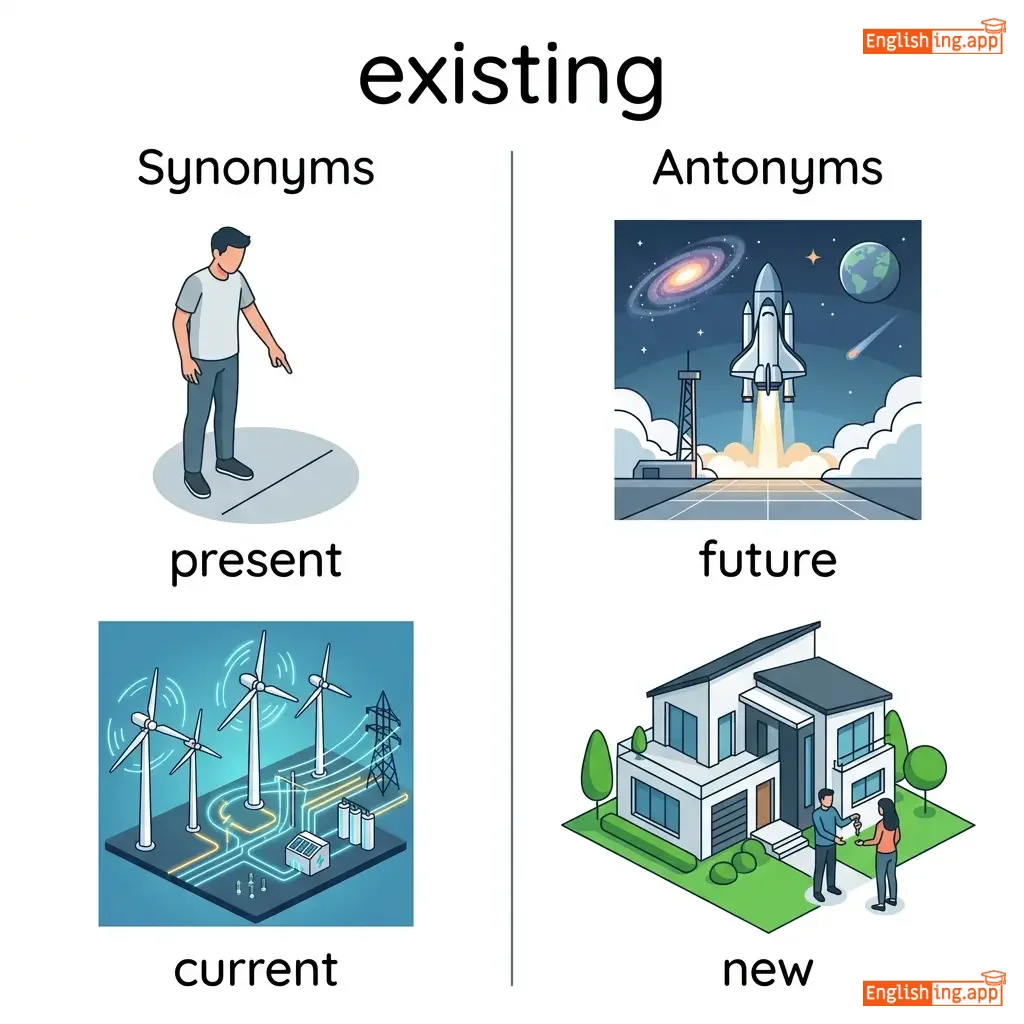
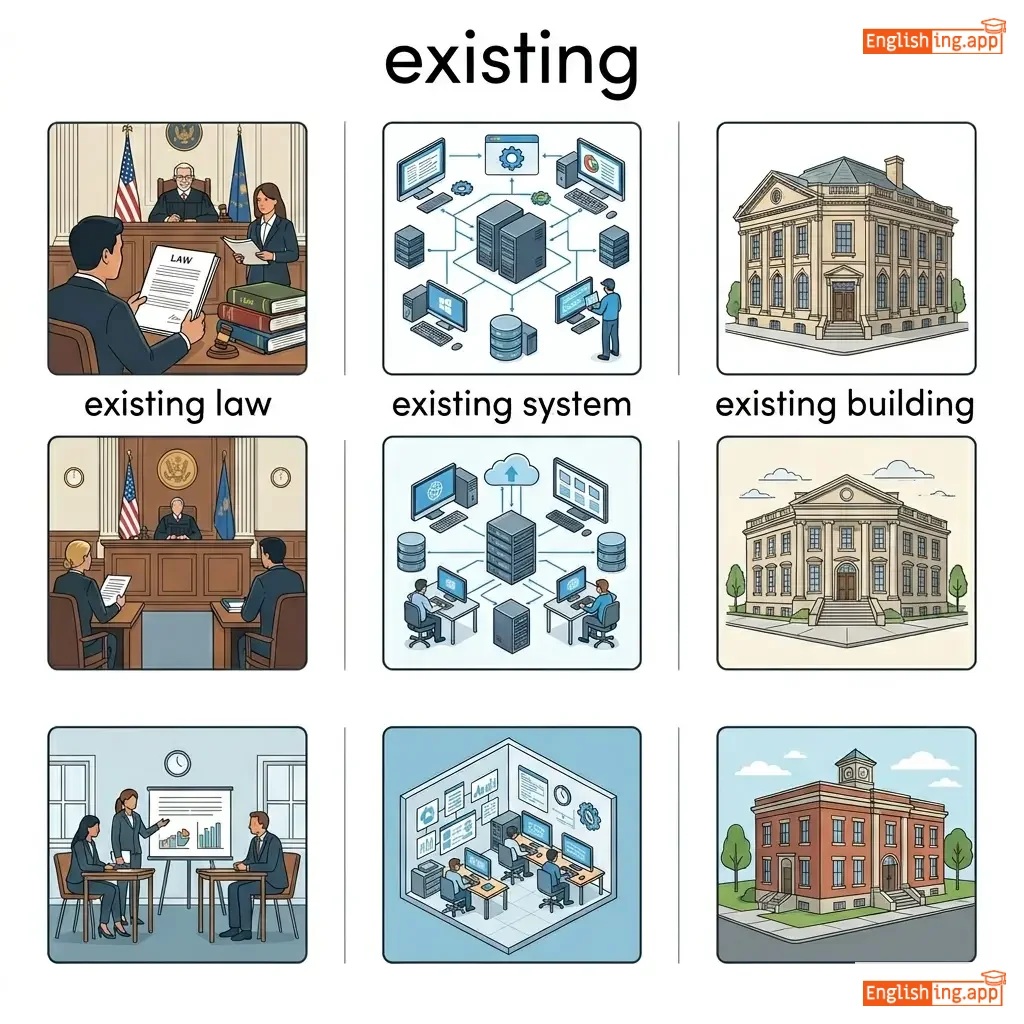
/ɪɡˈzɪstɪŋ/
adjective
(ɪɡˈzɪstɪŋ)
••••••
|
|
现有的
xiàn yǒu de
••••••
|
- •••••• | - •••••• | - •••••• | - •••••• |
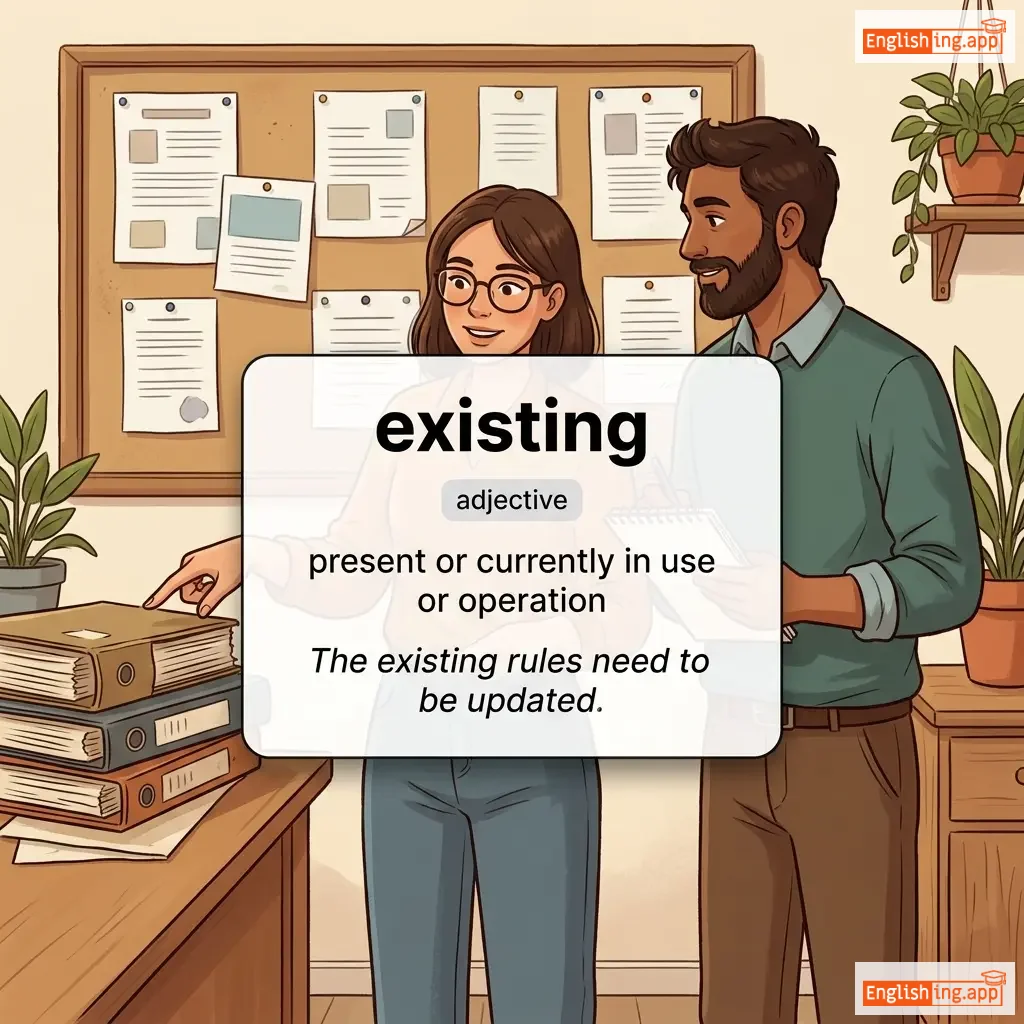
present or currently in use or operation
••••••
|
The existing rules need to be updated. |
现有的规则需要更新。
Xiàn yǒu de guīzé xūyào gēngxīn.
••••••
|
- •••••• | - •••••• | - •••••• |
present, current, available, ongoing
••••••
|
future, new, upcoming
••••••
|
existing law, existing system, existing building, existing structure
••••••
|
Existing意味着现有的,例如现有的考试规则。
••••••
|
|
#10965
🌍
|
/ɪɡˈzɪst/
verb
(ik-sist)
••••••
|
- •••••• |
存在
cúnzài
••••••
|
existed
ik-sisted
••••••
|
existed
ik-sisted
••••••
|
exists
ik-sists
••••••
|
existing
ik-sisting
••••••
|
to have actual being; to be real or present
••••••
|
Dinosaurs no longer exist on Earth.
恐龙不再存在于地球上。
••••••
|
恐龙不再存在于地球上。
Kǒnglóng bù zài cúnzài yú dìqiú shàng.
••••••
|
exist in name only
仅在名义上存在
••••••
|
to have no real power or function despite existing formally
••••••
|
仅在名义上存在
jǐn zài míngyì shàng cúnzài
••••••
|
live, survive, endure, be
••••••
|
perish, disappear, vanish
••••••
|
still exist, continue to exist, exist only, exist in reality
••••••
|
存在意味着具有实际存在,像考试一样,始终存在于我们的生活中。
••••••
|
|
#10966
🖼️
|
/ˌɛksɪˈbɪʃən/
noun
(èksībìshèn)
••••••
|
- •••••• |
展览
zhanlan
••••••
|
- •••••• | - •••••• | - •••••• | - •••••• |
a public display of works of art, products, or other items of interest
••••••
|
The art exhibition attracted thousands of visitors. |
艺术展览吸引了成千上万的参观者。
Yishu zhanlan xiqinle chengqian shangwan de canguanzhe.
••••••
|
put on an exhibition |
to organize or display something for public viewing
••••••
|
组织展览
zuzhi zhanlan
••••••
|
display, show, presentation, exposition, fair
••••••
|
concealment, hiding
••••••
|
art exhibition, trade exhibition, science exhibition, put on an exhibition
••••••
|
Exhibition 意味着展览,在哪里 EXTRA 物品可以被大家看到。
••••••
|
|
#10967
🖼️
|
/ɪɡˈzɪbɪt/
verb/noun
(展出)
••••••
|
- •••••• |
展出
zhǎnchū
••••••
|
exhibited
展出
••••••
|
exhibited
展出
••••••
|
exhibits
展出
••••••
|
exhibiting
展出
••••••
|
To display or show publicly; something put on display.
••••••
|
The museum will exhibit ancient artifacts.
博物馆将展出古代文物。
••••••
|
博物馆将展出古代文物。
Bówùguǎn jiāng zhǎnchū gǔdài wénwù.
••••••
|
exhibit behavior
展出行为
••••••
|
to show a particular kind of behavior
••••••
|
展出行为
zhǎnchū xíngwéi
••••••
|
display, present, demonstrate, showcase, reveal
••••••
|
conceal, hide
••••••
|
exhibit art, exhibit talent, exhibit symptoms, exhibit courage
••••••
|
Exhibit 意味着展示 — 在考试中,学生们展示他们的紧张情绪。
••••••
|
|
#10968
🏋️
|
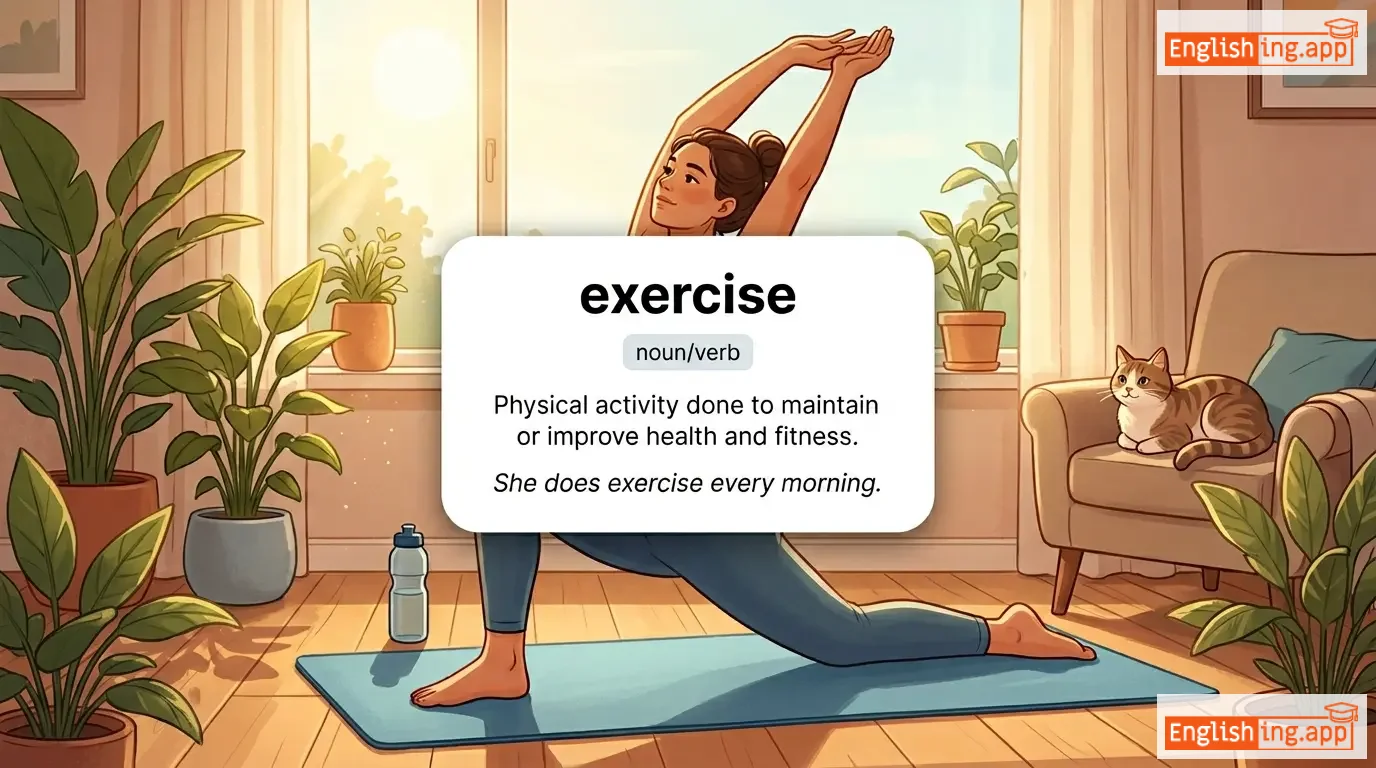
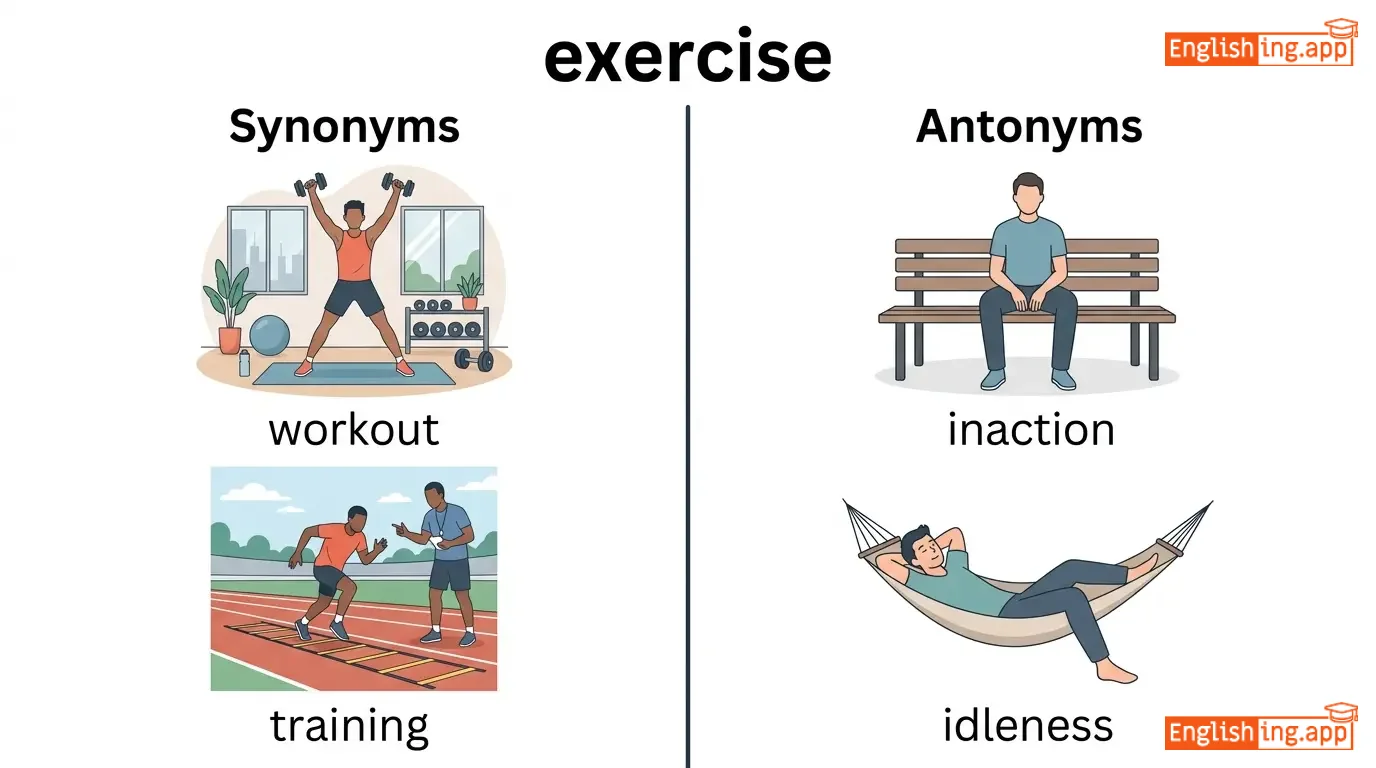
/ˈɛksərsaɪz/
noun/verb
(锻炼)
••••••
|
|
锻炼
duànliàn
••••••
|
exercised
锻炼过
••••••
|
exercised
锻炼过
••••••
|
exercises
锻炼
••••••
|
exercising
锻炼中
••••••
|
Physical activity done to maintain or improve health and fitness.
••••••
|
She does exercise every morning.
她每天早晨锻炼。
••••••
|
她每天早晨锻炼。
ta mei tian zao chen duan lian.
••••••
|
exercise control
进行控制
••••••
|
to use or apply control
••••••
|
实施控制
shishi kongzhi
••••••
|
workout, training, practice, drill, activity
••••••
|
inaction, idleness
••••••
|
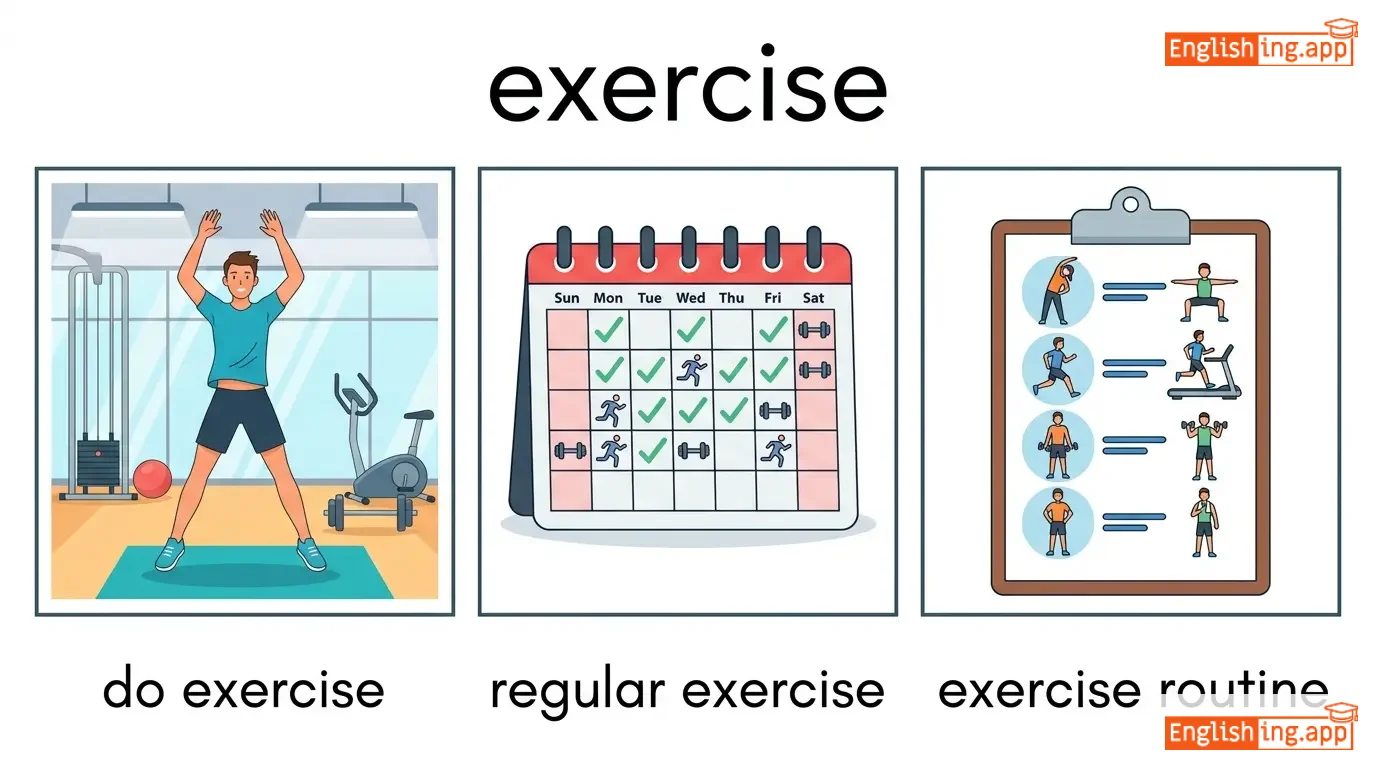
do exercise, regular exercise, exercise routine, exercise program
••••••
|
锻炼就是做锻炼 — 想象考试需要做锻炼才能通过!
••••••
|
|
#10969
🎉
|
/ɪkˈsaɪtɪŋ/
adjective
(èksàiting)
••••••
|
|
令人兴奋的
lìng rén xīngfèn de
••••••
|
- •••••• | - •••••• | - •••••• | - •••••• |
Causing great enthusiasm and eagerness.
••••••
|
The movie was so exciting that I watched it twice.
这部电影如此令人兴奋,我看了两遍。
••••••
|
这部电影如此令人兴奋,我看了两遍。
Zhè bù diànyǐng rúcǐ lìng rén xīngfèn, wǒ kànle liǎng biàn.
••••••
|
- •••••• | - •••••• | - •••••• |
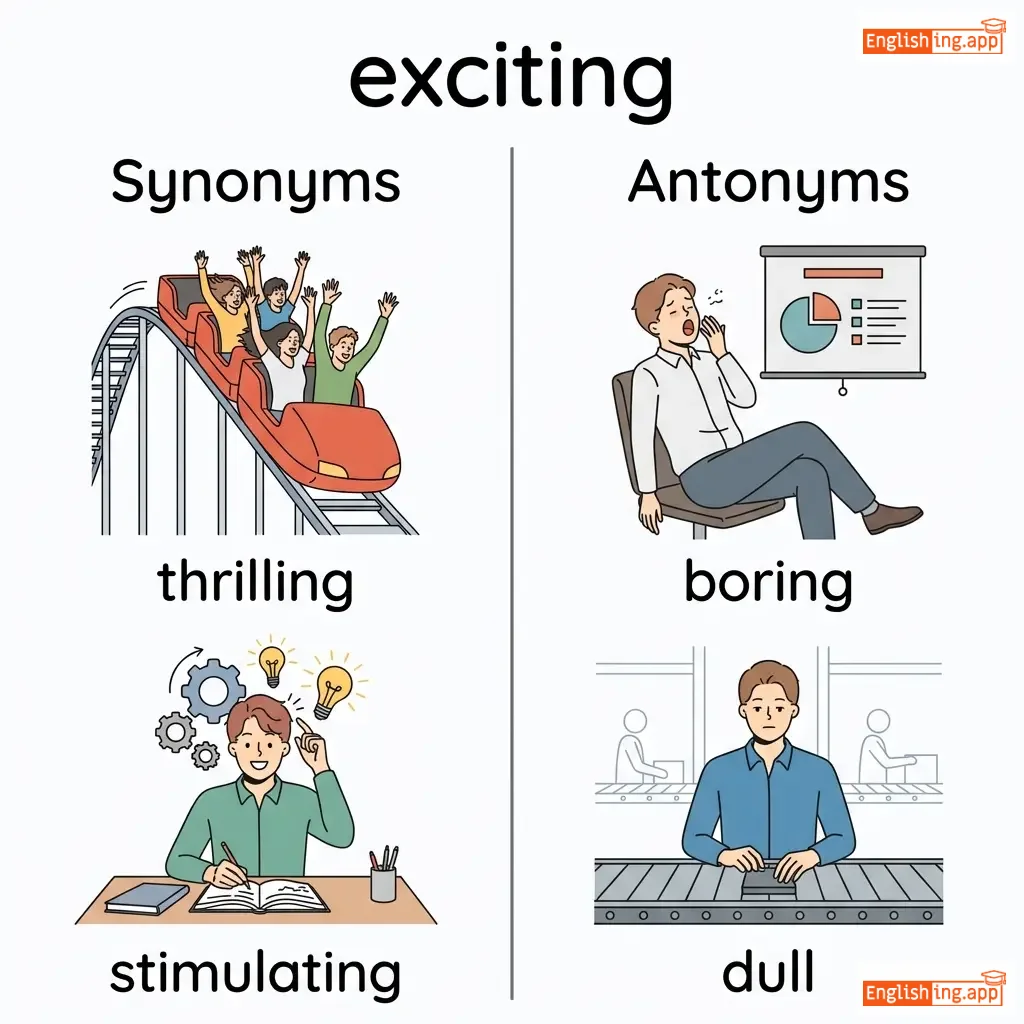
thrilling, stimulating, exhilarating, interesting, gripping
••••••
|
boring, dull, uninteresting
••••••
|
exciting news, exciting opportunity, exciting journey, exciting event
••••••
|
Exciting意味着令人兴奋的 — 看一部 exciting 电影你会兴奋得停不下来。
••••••
|
|
#10970
🔄
|
/ɪksˈtʃeɪndʒ/
verb
(ɛksʧeindʒ)
••••••
|
|
交换
jiaohuan
••••••
|
exchanged
ɛksʧeindʒd
••••••
|
exchanged
ɛksʧeindʒd
••••••
|
exchanges
ɛksʧeindʒes
••••••
|
exchanging
ɛksʧeindʒing
••••••
|
To give something and receive something in return.
••••••
|
They exchanged gifts during the festival.
他们在节日期间交换了礼物。
••••••
|
他们在节日期间交换了礼物。
Tāmen zài jiérì qījiān jiāohuànle lǐwù.
••••••
|
exchange views
交换意见
••••••
|
to share opinions or ideas
••••••
|
交换意见
jiāohuàn yìjiàn
••••••
|
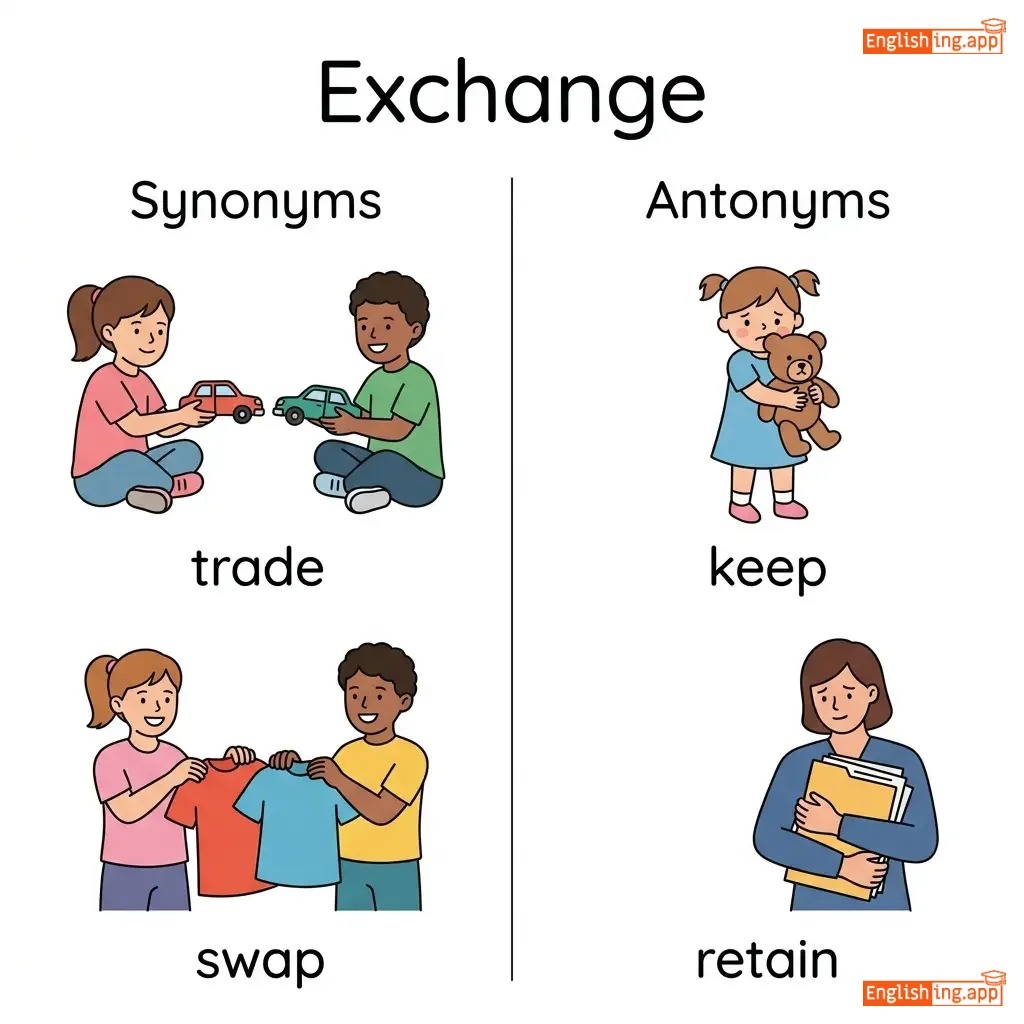
trade, swap, barter, interchange, replace
••••••
|
keep, retain
••••••
|
exchange ideas, exchange gifts, exchange money, exchange information
••••••
|
Exchange 是 '交换' — 改变事物的地方。
••••••
|
|
#10971
🚫
|
/ɪkˈsɛpʃən/
noun
(yíkèshìpíng)
••••••
|
- •••••• |
例外
liwai
••••••
|
- •••••• | - •••••• | - •••••• | - •••••• |
A case or instance that does not follow a general rule.
••••••
|
Every rule has an exception. |
每个规则都有例外。
měi gè guīzé dōu yǒu lìwài.
••••••
|
take exception to |
to be offended by something
••••••
|
提出异议
tíchū yìyì
••••••
|
anomaly, irregularity, deviation, exclusion, exemption
••••••
|
rule, norm, standard
••••••
|
make an exception, without exception, rare exception, exception to the rule
••••••
|
Exception 意味着例外 — 想象一下,所有人都通过了考试,只有一个人没通过 = 例外。
••••••
|
|
#10972
📖
|
/ɪɡˈzɑːm.pəl/
noun
(éksámpl)
••••••
|
- •••••• |
例子
lìzi
••••••
|
- •••••• | - •••••• | - •••••• | - •••••• |
a thing or person regarded as a model to be followed or avoided
••••••
|
He is a good example of a hardworking student.
他是一个勤奋学生的好例子。
••••••
|
他是一个勤奋学生的好例子。
Tā shì yīgè qínfèn xuéshēng de hǎo lìzi.
••••••
|
set an example
设立一个榜样
••••••
|
to behave in a way that others should copy
••••••
|
设立一个榜样
Shèlì yīgè bǎngyàng
••••••
|
model, instance, case, sample, illustration
••••••
|
counterexample, deviation
••••••
|
give example, provide example, set an example, classic example
••••••
|
Lìzi 意味着例子 📖 - 每次考试时都会给出例子。
••••••
|
|
#10973
🔎
|
/ɪɡˈzæm.ɪn/
verb
(hā pí nèi sī)
••••••
|
- •••••• |
幸福
xìng fú
••••••
|
examined
••••••
|
examined
••••••
|
examines
••••••
|
examining
••••••
|
to look at something carefully in order to understand it
••••••
|
The doctor will examine the patient tomorrow. |
当她收到奖项时,她无法掩饰自己的幸福。
Dāng tā shōu dào jiǎng xiàng shí, tā wú fǎ yǎn shì zì jǐ de xìng fú.
••••••
|
cross-examine |
to question someone thoroughly, especially in a court
••••••
|
追求幸福
zhuī qiú xìng fú
••••••
|
inspect, analyze, investigate, check, study
••••••
|
ignore, overlook, neglect
••••••
|
examine carefully, examine evidence, examine thoroughly, examine closely
••••••
|
幸福是我们都追求的目标。
••••••
|
|
#10974
✍️
|
/ɪɡˌzæm.ɪˈneɪ.ʃən/
noun
(考试)
••••••
|
- •••••• |
考试
kaoshi
••••••
|
- •••••• | - •••••• | - •••••• | - •••••• |
a formal test of knowledge or ability
••••••
|
She is preparing for her final examination. |
她正在为她的期末考试做准备。
Tā zhèngzài wèi tā de qīmò kǎoshì zuò zhǔnbèi.
••••••
|
under examination |
being carefully inspected or studied
••••••
|
接受考试
jiēshòu kǎoshì
••••••
|
test, assessment, evaluation, inspection, quiz
••••••
|
ignorance, neglect
••••••
|
take examination, pass examination, final examination, medical examination
••••••
|
Examination的意思是考试✍️ - 做好考试,国家将震动!
••••••
|
Vocabulary Quiz
Test your vocabulary by matching words with their translations or meanings.
Login to take the quiz
Comments (0)
Share your thoughts and join the discussion.
Join the discussion by logging in
Login to CommentNo comments yet
Be the first to share your thoughts!