


Swipe left or right, or use the buttons. Tap image to zoom.
例句翻译
单词
Lesson 165Lesson 165 - 遮罩切换
|
表情符号
|
单词 | Images | 翻译 | 过去时 | 过去分词 | 第三人称单数 | 动名词 | 含义 | 例句 | 例句翻译 | 示例表达 | 示例表达含义 | 示例表达翻译 | 同义词 | 反义词 | 搭配词 | 助记符 |
|---|---|---|---|---|---|---|---|---|---|---|---|---|---|---|---|---|---|
|
#4921
🧳
|
/aɪˈtɪnərənt/
adjective
(艾特内兰特)
••••••
|
|
流动的
liúdòng de
••••••
|
- •••••• | - •••••• | - •••••• | - •••••• |
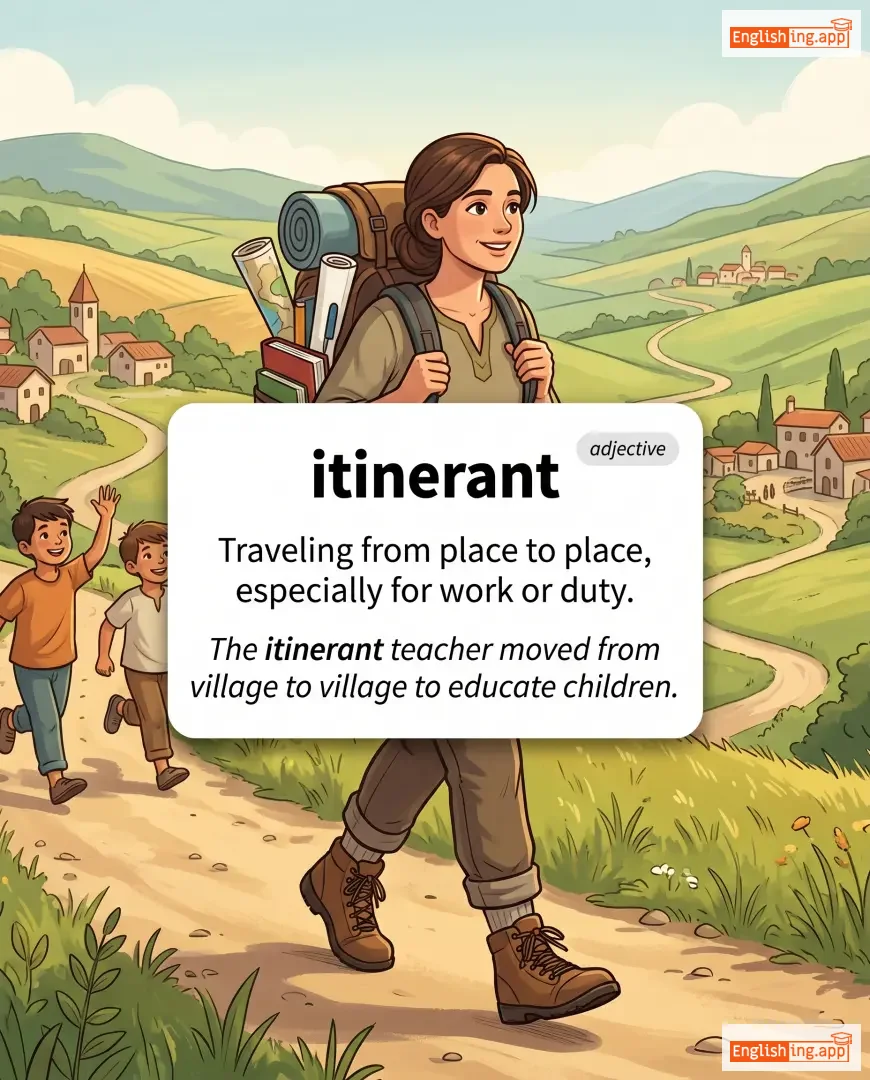
Traveling from place to place, especially for work or duty.
••••••
|
The itinerant teacher moved from village to village to educate children. |
这位流动的教师从一个村庄到另一个村庄,教育孩子们。
Zhè wèi liúdòng de jiàoshī cóng yīgè cūnzhuāng dào lìng yīgè cūnzhuāng, jiàoyù háizimen.
••••••
|
- •••••• | - •••••• | - •••••• |
wandering, roving, traveling, nomadic, peripatetic
••••••
|
settled, stationary, resident
••••••
|
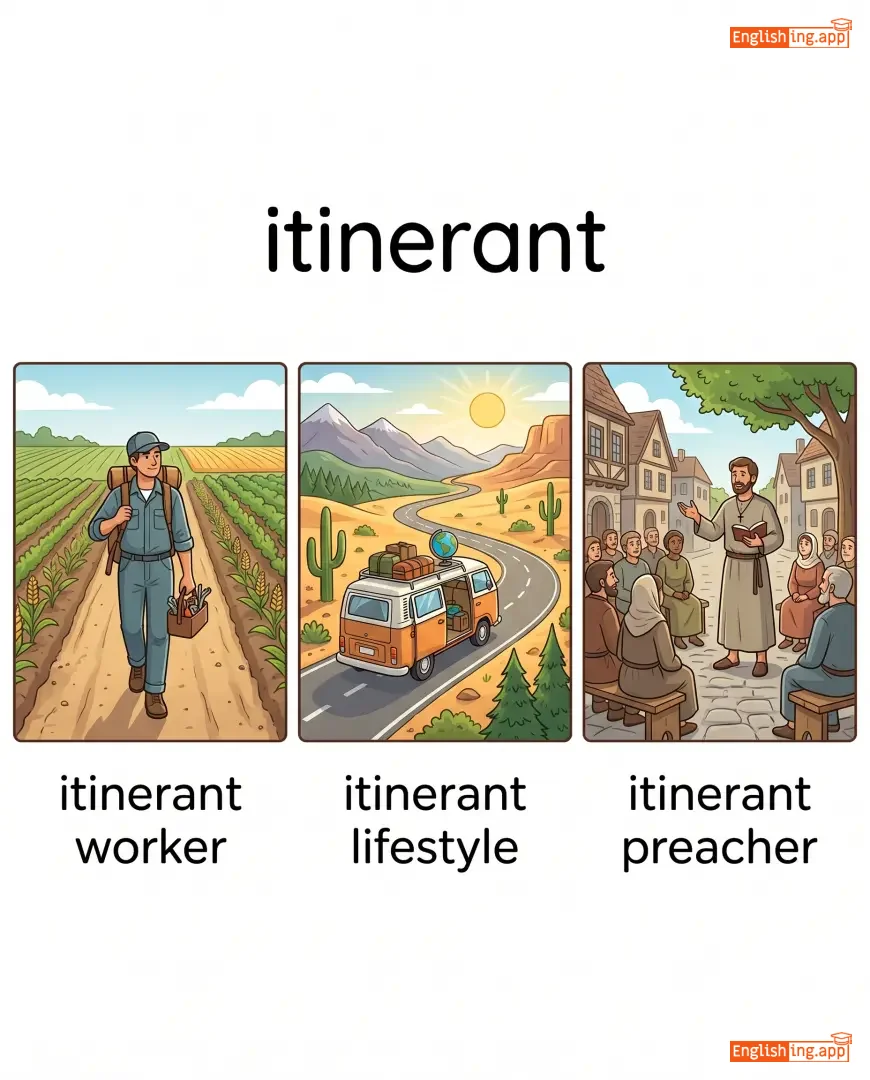
itinerant worker, itinerant lifestyle, itinerant preacher, itinerant musician
••••••
|
流动的意思是旅行的 – 想象一个老师带着背包走遍各个村庄。
••••••
|
|
#4922
⚠️
|
/ˈdʒɛpərdaɪz/
verb
(杰帕迪兹)
••••••
|
|
危及
weiji
••••••
|
jeopardized
杰帕迪兹德
••••••
|
jeopardized
杰帕迪兹德
••••••
|
jeopardizes
杰帕迪兹
••••••
|
jeopardizing
杰帕迪兹英
••••••
|
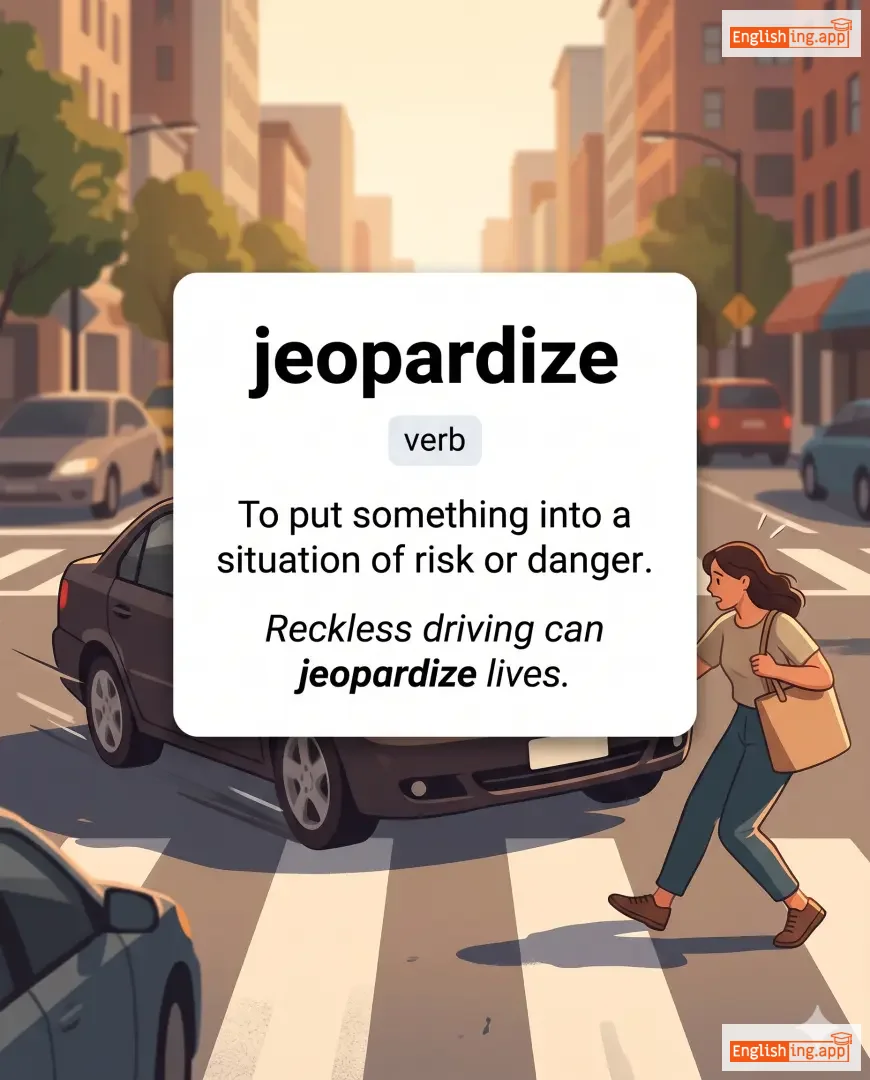
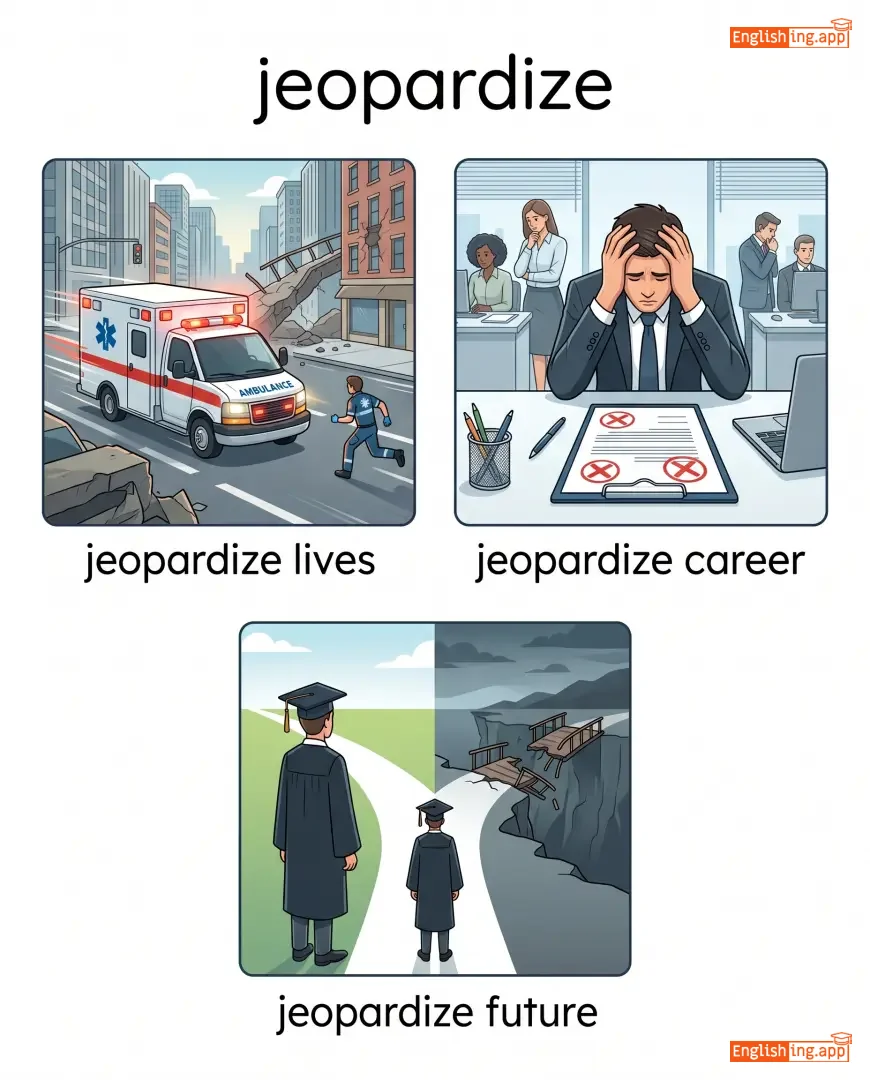
To put something into a situation of risk or danger.
••••••
|
Reckless driving can jeopardize lives.
鲁莽驾驶可能会危及生命。
••••••
|
鲁莽驾驶可能会危及生命。
Lumaang jia shi keneng hui weiji shengming.
••••••
|
jeopardize the future
危及未来
••••••
|
to put the future at risk
••••••
|
危及未来
weiji weilai
••••••
|
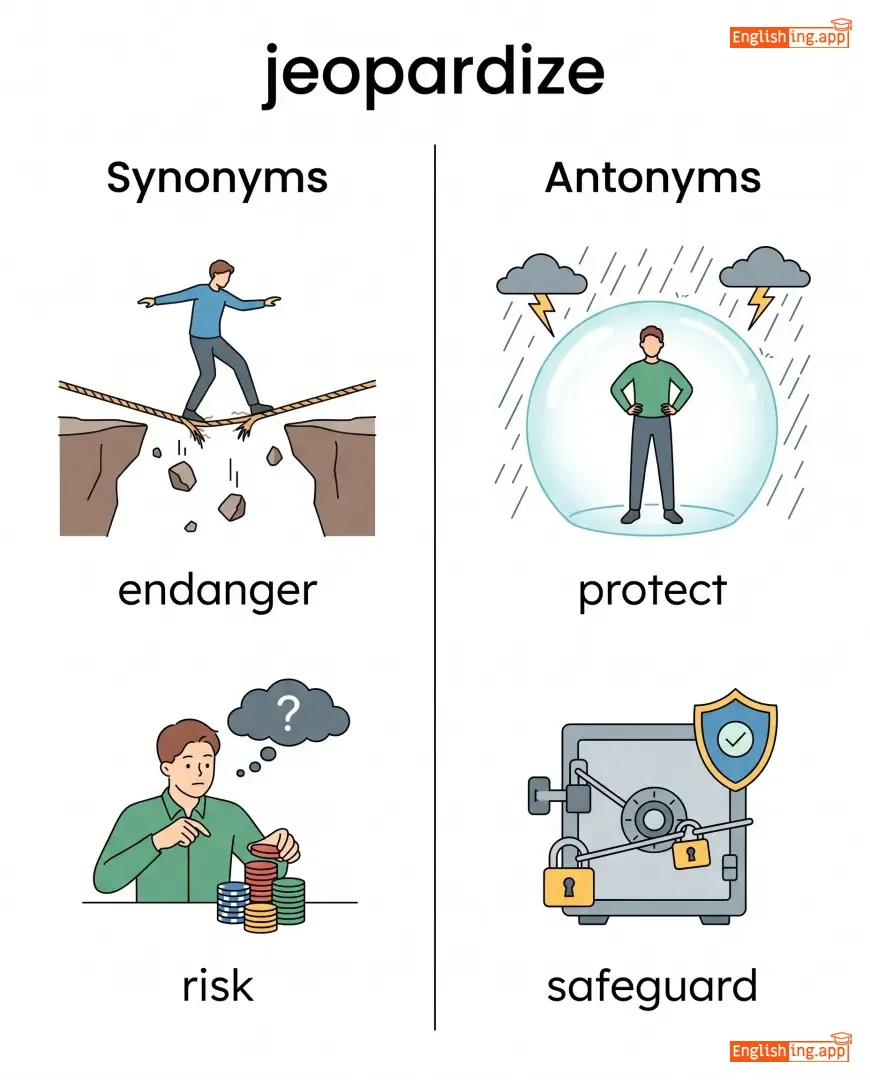
endanger, risk, imperil, threaten, compromise
••••••
|
protect, safeguard, secure
••••••
|
jeopardize lives, jeopardize career, jeopardize future, jeopardize health
••••••
|
Jeopardize 意味着使某物处于危险中 — 就像在 Jeopardy 游戏中,如果错了,你的奖品就有危险。
••••••
|
|
#4923
🙄
|
/dʒɪˈdʒuːn/
adjective
(杰俊)
••••••
|
- •••••• |
幼稚 / 浅薄 / 无趣
yòuzhì / qiǎnbó / wúqù
••••••
|
- •••••• | - •••••• | - •••••• | - •••••• |
Naive, simplistic, and superficial; also dull or uninteresting.
••••••
|
The professor dismissed the essay as jejune and lacking depth. |
教授把这篇文章视为幼稚且缺乏深度,予以拒绝。
Jiàoshòu bǎ zhè piān wénzhāng shì wéi yòuzhì qiě quēfá shēndù, yǔyǐ jùjué.
••••••
|
- •••••• | - •••••• | - •••••• |
immature, simplistic, shallow, trivial, naive
••••••
|
mature, profound, deep
••••••
|
jejune ideas, jejune argument, jejune writing
••••••
|
Jejune像‘无趣’一样简单,缺乏深度。
••••••
|
|
#4924
😎
|
/ˈdʒɔːnti/
adjective
(贾恩提)
••••••
|
- •••••• |
活泼
huó pō
••••••
|
- •••••• | - •••••• | - •••••• | - •••••• |
Having a lively, cheerful, and self-confident manner or appearance.
••••••
|
He walked into the room with a jaunty step. |
他带着轻快的步伐走进了房间。
tā dàizhe qīngkuài de bùfā zǒu jìnle fángjiān.
••••••
|
- •••••• | - •••••• | - •••••• |
cheerful, lively, buoyant, confident, spirited
••••••
|
gloomy, depressed, dull
••••••
|
jaunty step, jaunty hat, jaunty smile
••••••
|
Jaunty = 活力 + 自信 — 总是充满活力和自信的步伐!
••••••
|
|
#4925
🚗
|
/dʒɔːnt/
noun
(dʒɔːnt)
••••••
|
- •••••• |
短途旅行
duǎn tú lǚ xíng
••••••
|
- •••••• | - •••••• | - •••••• | - •••••• |
A short journey or excursion, usually taken for pleasure.
••••••
|
They went on a weekend jaunt to the countryside. |
他们在周末去了乡村进行短途旅行。
Tā men zài zhōu mò qù le xiāng cūn jìn xíng duǎn tú lǚ xíng.
••••••
|
- •••••• | - •••••• | - •••••• |
trip, excursion, outing, tour, journey
••••••
|
stay, permanence
••••••
|
weekend jaunt, little jaunt, holiday jaunt
••••••
|
Jaunt = 短途旅行,享受快乐。
••••••
|
|
#4926
😒
|
/ˈdʒɔːndɪst/
adjective
(黄疸)
••••••
|
|
偏见的 / 嫉妒的 / 由黄疸引起的
pianjian de / jidu de / you huangdan yinqi de
••••••
|
- •••••• | - •••••• | - •••••• | - •••••• |
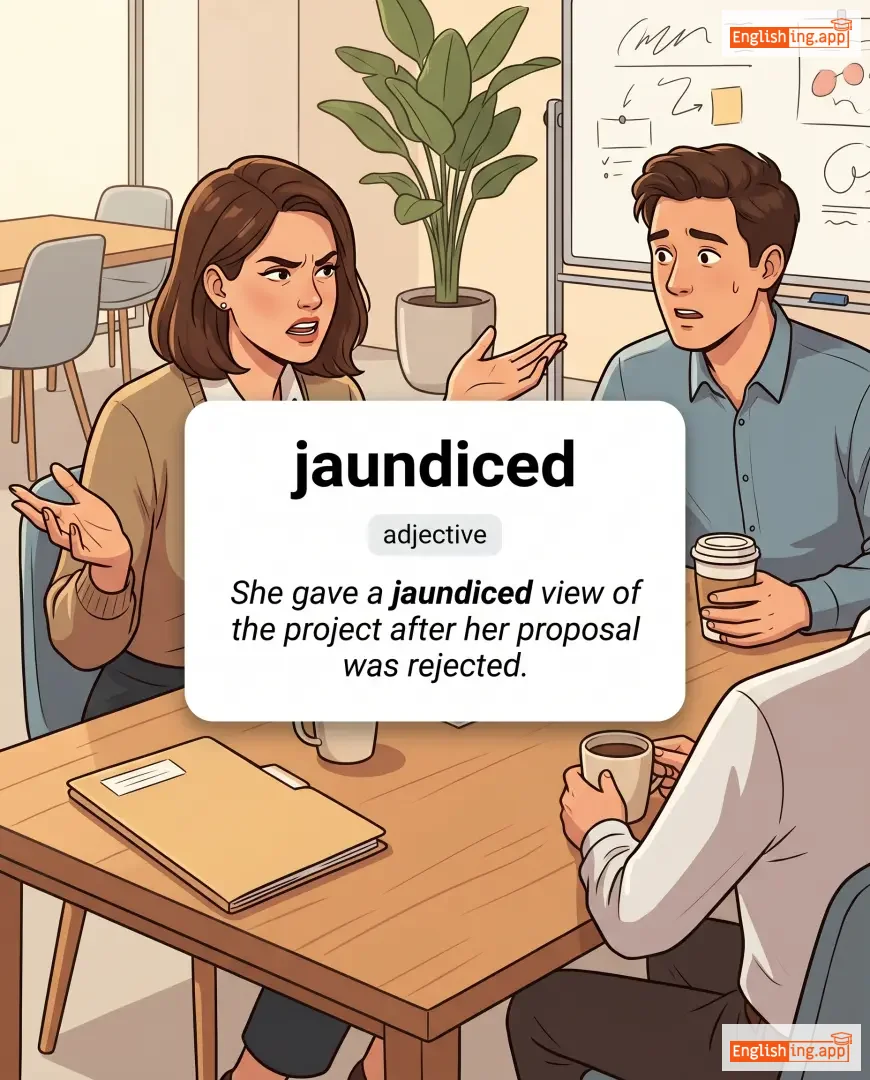
Affected by or displaying prejudice, envy, or bitterness; also refers to having a yellowish discoloration of the skin due to jaundice.
••••••
|
She gave a jaundiced view of the project after her proposal was rejected. |
在她的提案被拒绝后,她对这个项目给出了一个偏见的看法。
Zai ta de ti'an bei jujue hou, ta dui zhege xiangmu geichule yige pianjian de kanfa.
••••••
|
- •••••• | - •••••• | - •••••• |
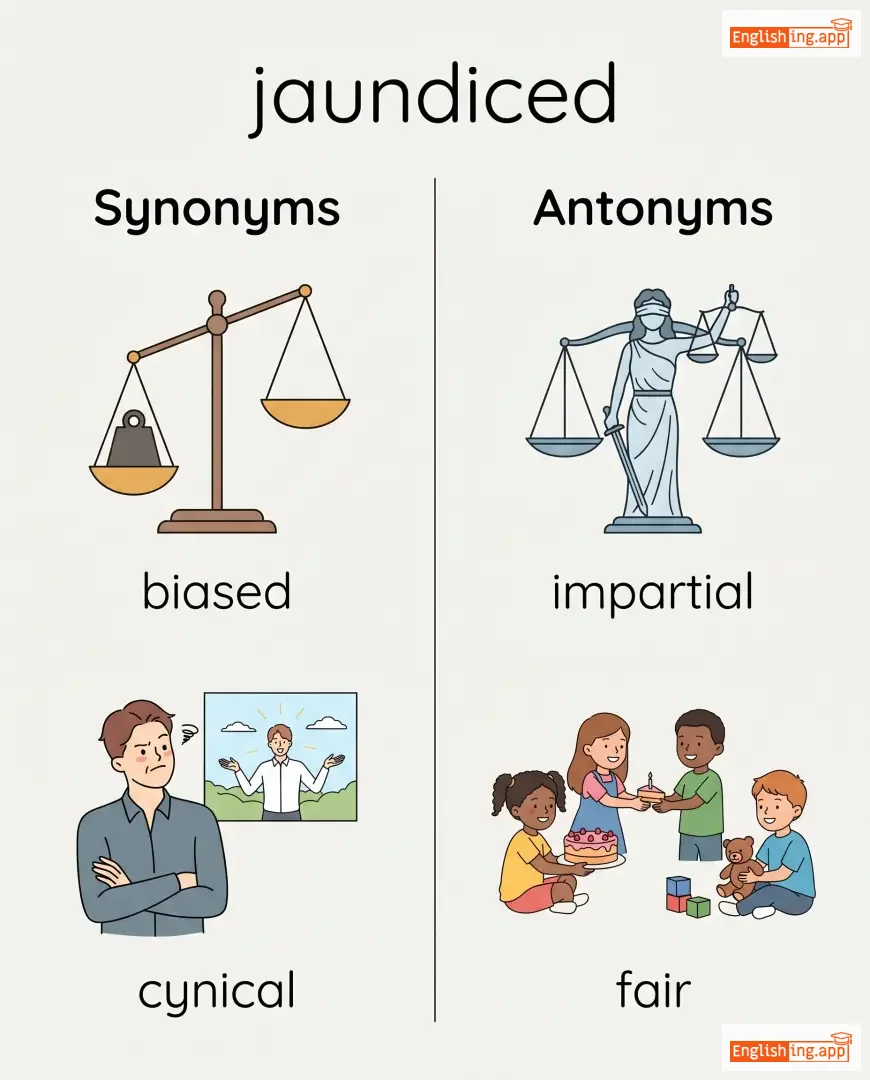
biased, cynical, resentful, prejudiced, skeptical
••••••
|
impartial, fair, unbiased
••••••
|
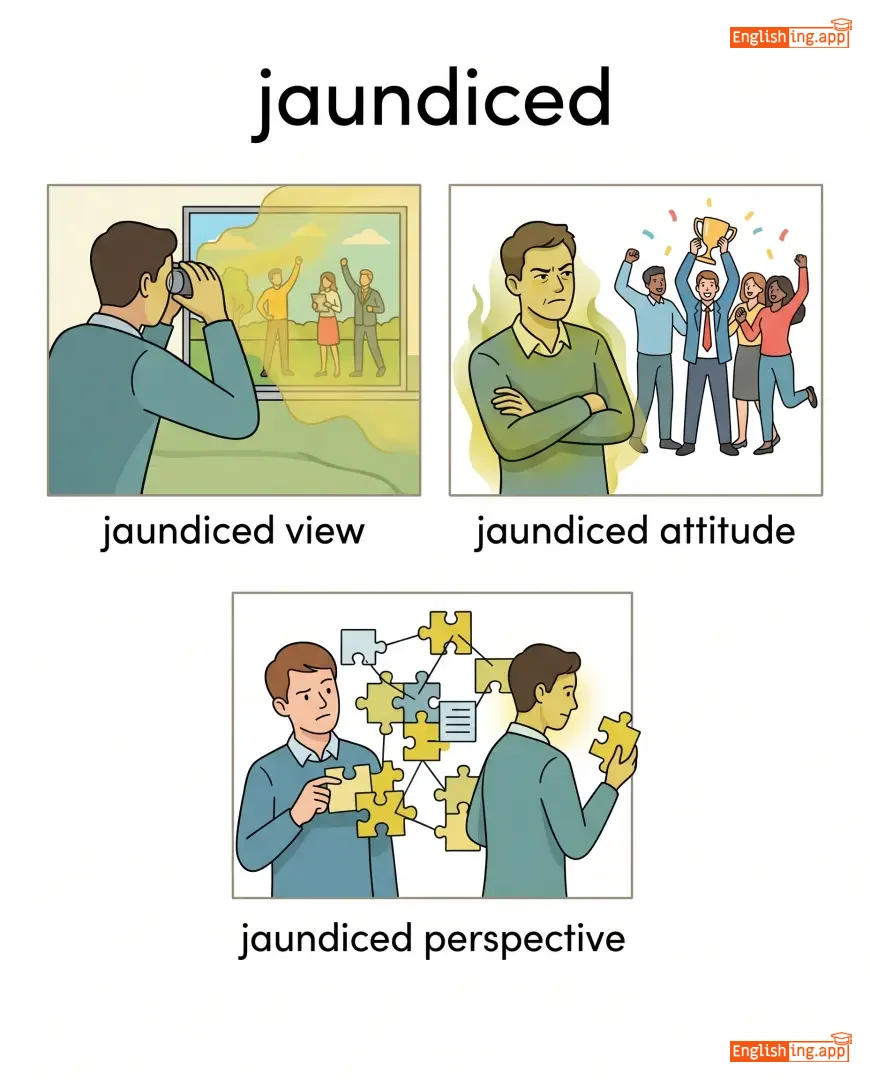
jaundiced view, jaundiced attitude, jaundiced perspective
••••••
|
黄疸让皮肤发黄,而'黄疸'的观点意味着偏见的看法。
••••••
|
|
#4927
🟡
|
/ˈdʒɔːn.dɪs/
noun
(黄疸)
••••••
|
- •••••• |
黄疸
huangdan
••••••
|
- •••••• | - •••••• | - •••••• | - •••••• |
A medical condition in which the skin and eyes become yellow due to liver problems.
••••••
|
The doctor diagnosed the baby with jaundice. |
医生诊断出婴儿患有黄疸。
Yisheng zhenduan chu ying'er huanyou huangdan.
••••••
|
jaundiced view |
a biased or cynical outlook
••••••
|
偏见的观点
pianjian de guandian
••••••
|
yellowing, liver disease, icterus
••••••
|
health, wellness
••••••
|
neonatal jaundice, jaundice patient, jaundice symptoms
••••••
|
黄疸 = 因肝脏问题导致的皮肤和眼睛发黄,容易记住。
••••••
|
|
#4928
⚡
|
/ˈdʒɑː.rɪŋ/
adjective
(贾灵)
••••••
|
- •••••• |
刺耳的,震惊的
cì ěr de, zhèn jīng de
••••••
|
- •••••• | - •••••• | - •••••• | - •••••• |
Striking or shocking in a way that creates a strong contrast or clash.
••••••
|
The sudden loud noise was jarring to everyone in the room. |
突然的响亮噪音让房间里每个人都感到震惊。
Tū rán de xiǎng liàng zào yīn ràng fáng jiān lǐ měi ge rén dōu gǎn dào zhèn jīng.
••••••
|
- •••••• | - •••••• | - •••••• |
shocking, disturbing, unpleasant, grating
••••••
|
pleasant, soothing, harmonious
••••••
|
jarring sound, jarring effect, jarring contrast
••••••
|
Jarring就像突然的噪音或冲击,令你不知所措。
••••••
|
|
#4929
🗣️
|
/ˈdʒɑːr.ɡən/
noun
(查尔根)
••••••
|
- •••••• |
行话
xínghuà
••••••
|
- •••••• | - •••••• | - •••••• | - •••••• |
Specialized or technical language used by a particular group or profession.
••••••
|
The lawyer’s explanation was full of legal jargon. |
律师的解释充满了法律行话。
Lǜshī de jiěshì chōngmǎnle fǎlǜ xínghuà.
••••••
|
technical jargon |
special words or phrases used in a specific technical field
••••••
|
技术行话
jìshù xínghuà
••••••
|
terminology, lingo, argot, slang, dialect
••••••
|
plain language, simplicity
••••••
|
legal jargon, medical jargon, technical jargon
••••••
|
Jargon 意味着复杂的语言 – 更多的 jargon 意味着更难的工作。
••••••
|
|
#4930
😂
|
/dʒeɪp/
noun
(杰普)
••••••
|
- •••••• |
恶作剧, 玩笑
èzuòjù, wánxiào
••••••
|
- •••••• | - •••••• | - •••••• | - •••••• |
A practical joke or humorous remark.
••••••
|
He enjoyed a harmless jape with his friends.
他和朋友们享受了一场无害的恶作剧。
••••••
|
他和朋友们享受了一场无害的恶作剧。
Tā hé péngyǒu men xiǎngshòule yī chǎng wúhài de èzuòjù.
••••••
|
- •••••• | - •••••• | - •••••• |
joke, jest, prank, gag
••••••
|
seriousness, sincerity
••••••
|
harmless jape, playful jape, silly jape
••••••
|
Jape像是'joke',意味着恶作剧或玩笑。
••••••
|
|
#4931
😩
|
/ˈdʒeɪ.dɪd/
adjective
(ˈʤeɪ.dɪd)
••••••
|
- •••••• |
疲倦的,冷漠的
pí juàn de, lěng mò de
••••••
|
- •••••• | - •••••• | - •••••• | - •••••• |
Tired, bored, or lacking enthusiasm, typically after having had too much of something.
••••••
|
After years of traveling, she felt jaded by the constant movement. |
旅行多年后,她因不断的移动而感到疲倦。
lǚ xíng duō nián hòu, tā yīn bù duàn de yí dòng ér gǎn dào pí juàn.
••••••
|
jaded appetite |
a loss of interest or enthusiasm due to overindulgence
••••••
|
疲倦的食欲
pí juàn de shí yù
••••••
|
weary, tired, bored, apathetic, cynical
••••••
|
enthusiastic, energetic, fresh
••••••
|
jaded by, jaded feeling, jaded traveler, jaded outlook
••••••
|
玉石 (Jade) 是宝石,但如果看到太多,就会感到疲倦。
••••••
|
|
#4932
🗣️
|
/ˈdʒæbər/
verb
(贾贝尔)
••••••
|
- •••••• |
胡言乱语
hú yán luàn yǔ
••••••
|
jabbered
贾贝尔德
••••••
|
jabbered
贾贝尔德
••••••
|
jabbers
贾贝尔斯
••••••
|
jabbering
贾贝林
••••••
|
To talk quickly and excitedly but with little sense.
••••••
|
The children jabbered happily after the show.
孩子们在表演后快乐地胡言乱语。
••••••
|
孩子们在表演后快乐地胡言乱语。
Háizimen zài biǎoyǎn hòu kuàilè de hú yán luàn yǔ.
••••••
|
- •••••• | - •••••• | - •••••• |
chatter, babble, prattle, ramble, gabble
••••••
|
silence, muteness
••••••
|
jabber away, jabber excitedly, jabber nonsense
••••••
|
Jabber意思是胡言乱语 – 想象Jabber老师总是胡说八道。
••••••
|
|
#4933
👊
|
/dʒæb/
verb
••••••
|
- •••••• | - •••••• |
jabbed
••••••
|
jabbed
••••••
|
jabs
••••••
|
jabbing
••••••
|
To poke or thrust quickly, often with a finger or something pointed.
••••••
|
He jabbed his finger at the map to show the location. |
- •••••• |
jab someone in the ribs |
to poke someone playfully in the side
••••••
|
- •••••• |
poke, prod, thrust, punch, stab
••••••
|
caress, pat
••••••
|
jab hard, jab finger, jab needle, jab punch
••••••
|
No •••••• |
|
#4934
🚶
|
/aɪˈtɪnəˌreɪt/
verb
(āi tīnà rètè)
••••••
|
- •••••• |
旅行
lǚxíng
••••••
|
itinerated
āi tīnà rètè dé
••••••
|
itinerated
āi tīnà rètè dé
••••••
|
itinerates
āi tīnà rètè sī
••••••
|
itinerating
āi tīnà rètè yíng
••••••
|
To travel from place to place, usually for the purpose of work or preaching.
••••••
|
The missionary itinerated throughout the region to spread the message.
传教士遍布地区传播信息。
••••••
|
传教士到处旅行传播信息。
Chuánjiàoshì dàochù lǚxíng chuánbò xìnxī.
••••••
|
- •••••• | - •••••• | - •••••• |
travel, journey, wander, roam, peregrinate
••••••
|
settle, stay, remain
••••••
|
itinerate regularly, itinerate through, itinerate region
••••••
|
Itinerate意味着旅行 – 想象他在互联网上旅行。
••••••
|
|
#4935
🗺️
|
/aɪˈtɪnərɛri/
noun
(aɪˈtɪnərɛri)
••••••
|
|
行程安排
xíngchéng ānpái
••••••
|
- •••••• | - •••••• | - •••••• | - •••••• |
A planned route or schedule of a journey or trip.
••••••
|
The travel agent gave us a detailed itinerary for our vacation. |
旅行社为我们的假期提供了详细的行程安排。
Lǚxíng shè wèi wǒmen de jiàqī tígōngle xiángxì de xíngchéng ānpái.
••••••
|
- •••••• | - •••••• | - •••••• |
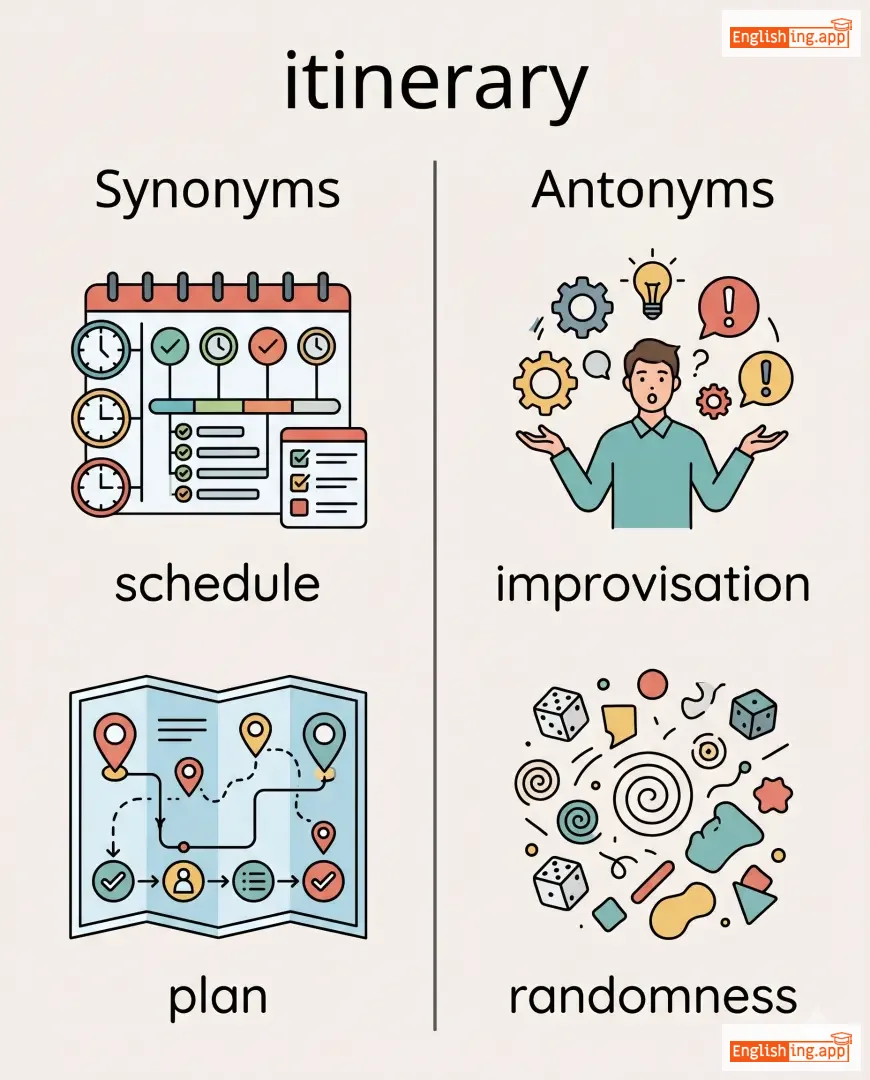
schedule, plan, agenda, route, timetable
••••••
|
improvisation, randomness
••••••
|
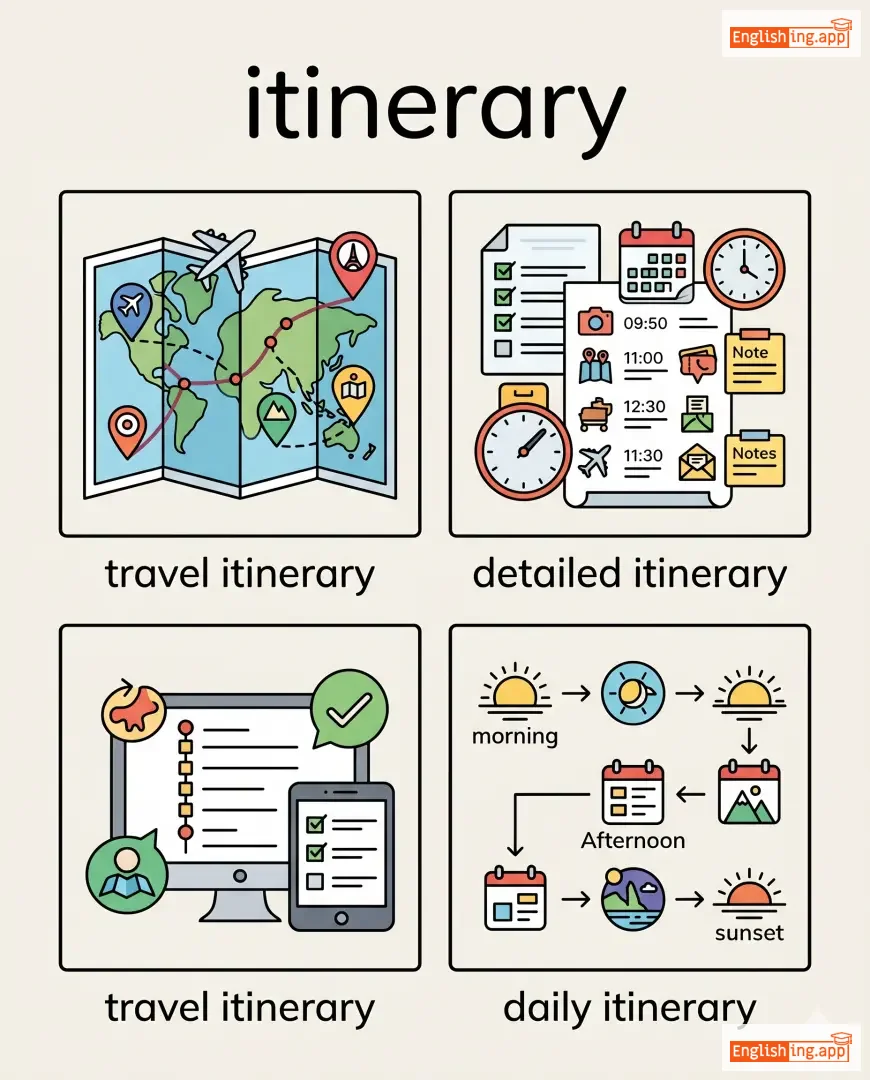
travel itinerary, detailed itinerary, daily itinerary, itinerary plan
••••••
|
Itinerary 意味着行程安排 – 想到 'ITIN' = In Time, In Route.
••••••
|
|
#4936
😠
|
/ˈɪrɪtəbl/
adjective
••••••
|
- •••••• | - •••••• | - •••••• | - •••••• | - •••••• | - •••••• |
easily annoyed or made angry
••••••
|
She became irritable after working long hours without rest. |
- •••••• |
irritable mood |
a state of being easily annoyed or angered
••••••
|
- •••••• |
grumpy, short-tempered, cranky, testy, moody
••••••
|
calm, patient, cheerful
••••••
|
irritable child, irritable behavior, irritable response, feel irritable
••••••
|
No •••••• |
|
#4937
🔄
|
/ˈɪtəreɪt/
verb
(迭代)
••••••
|
- •••••• |
迭代
diedai
••••••
|
iterated
迭代过
••••••
|
iterated
迭代过
••••••
|
iterates
迭代
••••••
|
iterating
迭代中
••••••
|
To repeat a process or statement, often to improve or refine.
••••••
|
The software team will iterate the design until it meets user needs.
软件团队将反复迭代设计,直到满足用户需求。
••••••
|
软件团队将反复迭代设计,直到满足用户需求。
Ruǎnjiàn tuánduì jiāng fǎnfù diédài shèjì, zhídào mǎnzú yònghù xūqiú.
••••••
|
iterate over
迭代操作
••••••
|
to go through each item in a sequence one by one
••••••
|
逐个迭代
zhú gè diédài
••••••
|
repeat, redo, revise, cycle, loop
••••••
|
ignore, skip
••••••
|
iterate process, iterate design, iterate quickly, iterate over data
••••••
|
迭代意味着重复,就像程序中的循环一样。
••••••
|
|
#4938
🌍
|
/ˈɪsməs/ or /ˈɪsθməs/
noun
(伊斯穆斯)
••••••
|
- •••••• |
地峡
dixiá
••••••
|
- •••••• | - •••••• | - •••••• | - •••••• |
A narrow strip of land connecting two larger land areas, often with water on either side.
••••••
|
The Panama Canal cuts through the Isthmus of Panama. |
巴拿马运河穿过巴拿马地峡。
Bānámǎ yùnhé chuānguò bānámǎ dìxiá.
••••••
|
- •••••• | - •••••• | - •••••• |
land bridge, neck, causeway, peninsula
••••••
|
strait, wide landmass
••••••
|
Isthmus of Panama, narrow isthmus, coastal isthmus
••••••
|
Isthmus = 地峡 → 想象巴拿马地峡,它连接着两片土地,周围是水。
••••••
|
|
#4939
📄
|
/ˈɪʃuː/
noun, verb
(yishi)
••••••
|
- •••••• |
问题, 出版, 分发
wenti, chuban, fenfa
••••••
|
issued
yishud
••••••
|
issued
yishud
••••••
|
issues
yishuz
••••••
|
issuing
yishuing
••••••
|
A problem, topic, or the act of supplying or distributing something.
••••••
|
The magazine will issue a new edition next week.
杂志将在下周发布新版本。
••••••
|
杂志将在下周发布新版本。
Zazhi jiang zai xia zhou fabu xin banben.
••••••
|
take issue with
对...有问题
••••••
|
to disagree strongly with something
••••••
|
与...有分歧
yu...you fenqi
••••••
|
problem, matter, topic, distribute, release
••••••
|
solution, agreement
••••••
|
serious issue, raise an issue, address an issue, issue a statement
••••••
|
Issue 是问题—就像 result issue 引发问题。
••••••
|
|
#4940
⚛️
|
/ˈaɪsətəʊp/
noun
(āi suǒ tuō pǔ)
••••••
|
- •••••• |
同位素
tongwei su
••••••
|
- •••••• | - •••••• | - •••••• | - •••••• |
Atoms of the same element with equal number of protons but different numbers of neutrons.
••••••
|
Carbon-14 is a radioactive isotope used in dating fossils. |
碳-14 是一种放射性同位素,用于化石的年代测定。
Tàn-14 shì yī zhǒng fàngshèxìng tóngwèisù, yòng yú huàshí de niándài cèdìng.
••••••
|
- •••••• | - •••••• | - •••••• |
variant, atomic form, nuclide, isotope species
••••••
|
element, uniform atom
••••••
|
radioactive isotope, stable isotope, isotope analysis, isotope ratio
••••••
|
Iso代表相同 + Top代表类型 → 同元素,不同类型 = 同位素。
••••••
|
|
#4941
🌡️
|
/ˌaɪsəʊˈθɜːrməl/
adjective
(ài suǒ sī ěr mǎ ěr)
••••••
|
- •••••• |
等温
deng wen
••••••
|
- •••••• | - •••••• | - •••••• | - •••••• |
Having or maintaining equal or constant temperature.
••••••
|
The experiment was conducted under isothermal conditions. |
实验在等温条件下进行。
Shiyan zai deng wen tiaojian xia jinxing.
••••••
|
- •••••• | - •••••• | - •••••• |
constant-temperature, uniform, steady, stable
••••••
|
variable, fluctuating
••••••
|
isothermal process, isothermal condition, isothermal reaction, isothermal expansion
••••••
|
Iso 意思是相同,热的意思是热— 所以等温意思是相同温度 (等温)。
••••••
|
|
#4942
🛑
|
/ˈaɪ.sə.leɪt/
verb
(孤立)
••••••
|
- •••••• |
孤立
gūlì
••••••
|
isolated
孤立的
••••••
|
isolated
孤立的
••••••
|
isolates
孤立
••••••
|
isolating
孤立
••••••
|
To separate something or someone from others.
••••••
|
Doctors tried to isolate the patient to prevent the spread of infection.
医生试图将病人隔离,以防止感染传播。
••••••
|
医生试图将病人隔离,以防止感染传播。
Yīshēng shìtú jiāng bìngrén gélí, yǐ fángzhǐ gǎnrǎn chuánbò.
••••••
|
isolate oneself
将自己孤立
••••••
|
to deliberately avoid contact with others
••••••
|
将自己孤立
Jiāng zìjǐ gūlì
••••••
|
separate, detach, segregate, quarantine, seclude
••••••
|
unite, connect, integrate
••••••
|
isolate the virus, isolate the problem, isolate from others, isolate oneself
••••••
|
孤立就像让某人像冰一样独自待着 ❄️
••••••
|
|
#4943
⏱️
|
/aɪˈsɒ.krə.nəs/
adjective
(aɪˈsɒkrənəs)
••••••
|
- •••••• |
等时间间隔发生
deng shijian jian ge fasheng
••••••
|
- •••••• | - •••••• | - •••••• | - •••••• |
Occurring at equal time intervals; in unison or synchrony.
••••••
|
The pendulum swings are isochronous, repeating at equal intervals. |
摆锤的摆动是等时性的,在相等的时间间隔重复。
Bǎichuí de bǎidòng shì děng shíxìng de, zài xiāngděng de shíjiān jiàngé chóngfù.
••••••
|
- •••••• | - •••••• | - •••••• |
synchronous, simultaneous, rhythmic, periodic
••••••
|
asynchronous, irregular
••••••
|
isochronous motion, isochronous oscillation, isochronous process
••••••
|
Iso = 相等, chronos = 时间 → Isochronous = 等时间间隔发生 ⏱️
••••••
|
|
#4944
🌦️
|
/ˈaɪ.səˌbɑːr/
noun
(àisǒubā)
••••••
|
- •••••• |
等压线
děngyāxiàn
••••••
|
- •••••• | - •••••• | - •••••• | - •••••• |
A line on a weather map connecting points of equal atmospheric pressure.
••••••
|
The meteorologist explained how isobars indicate wind speed and direction. |
气象学家解释了等压线如何指示风速和风向。
Qìxiàng xuéjiā jiěshìle děngyāxiàn rúhé zhǐshì fēngsù hé fēngxiàng.
••••••
|
- •••••• | - •••••• | - •••••• |
pressure line, contour line, weather line
••••••
|
altitude line
••••••
|
weather isobar, pressure isobar, isobar map, draw isobars
••••••
|
Iso = 相同, bar = 压力 → 相同压力的线 = 等压线 🌦️
••••••
|
|
#4945
🌊
|
/ˈaɪ.lət/
noun
(āilèt)
••••••
|
- •••••• |
小岛
xiao dao
••••••
|
- •••••• | - •••••• | - •••••• | - •••••• |
A very small island.
••••••
|
The fishermen rested on a tiny islet before continuing their journey. |
渔民们在继续他们的旅程之前,在一个小岛上休息。
Yumin men zai jixu tamen de lücheng zhīqian, zai yi ge xiao dao shang xiuxi.
••••••
|
- •••••• | - •••••• | - •••••• |
island, cay, atoll, key, reef
••••••
|
mainland, continent
••••••
|
tiny islet, coral islet, remote islet, rocky islet
••••••
|
Islet = 小 island - 小岛 🌊
••••••
|
|
#4946
🏝️
|
/aɪl/
noun
(āi ěr)
••••••
|
- •••••• |
小岛
xiao dao
••••••
|
- •••••• | - •••••• | - •••••• | - •••••• |
A small island or peninsula, often poetic or literary.
••••••
|
They spent their honeymoon on a beautiful tropical isle. |
他们在一个美丽的热带小岛上度过了他们的蜜月。
tamen zai yi ge mei li de re dai xiao dao shang du guo le tamen de mi yue.
••••••
|
isle of peace |
a calm and peaceful place
••••••
|
和平之岛
he ping zhi dao
••••••
|
island, atoll, cay, key, peninsula
••••••
|
mainland, continent
••••••
|
lonely isle, tropical isle, remote isle, isle of beauty
••••••
|
岛是岛屿的缩写 - 小岛 🏝️
••••••
|
|
#4947
🚨
|
/ɪˈrʌpʃən/
noun
(伊尔普申)
••••••
|
- •••••• |
突发袭击
tūfā xíjī
••••••
|
- •••••• | - •••••• | - •••••• | - •••••• |
a sudden and violent entry or invasion
••••••
|
The irruption of protesters surprised the authorities. |
抗议者的突发袭击让当局感到震惊。
Kàngyì zhě de tūfā xíjī ràng dāngjú gǎndào zhènjīng.
••••••
|
- •••••• | - •••••• | - •••••• |
invasion, incursion, outbreak, surge
••••••
|
retreat, withdrawal
••••••
|
sudden irruption, violent irruption, irruption of protesters, irruption into
••••••
|
突发袭击像是突如其来的火山爆发,突然的攻击。
••••••
|
|
#4948
😤
|
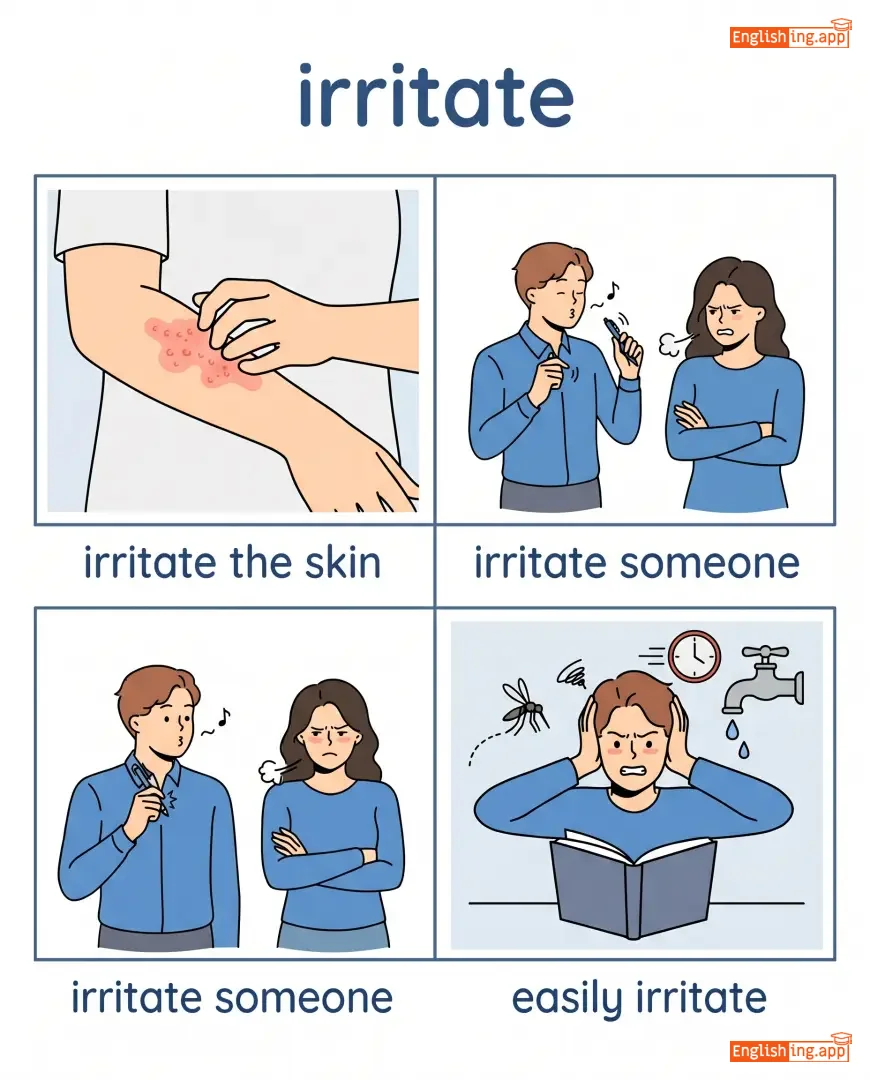
/ˈɪrɪteɪt/
verb
(刺激)
••••••
|
|
激怒
jī nù
••••••
|
irritated
激怒
••••••
|
irritated
激怒
••••••
|
irritates
刺激
••••••
|
irritating
刺激
••••••
|
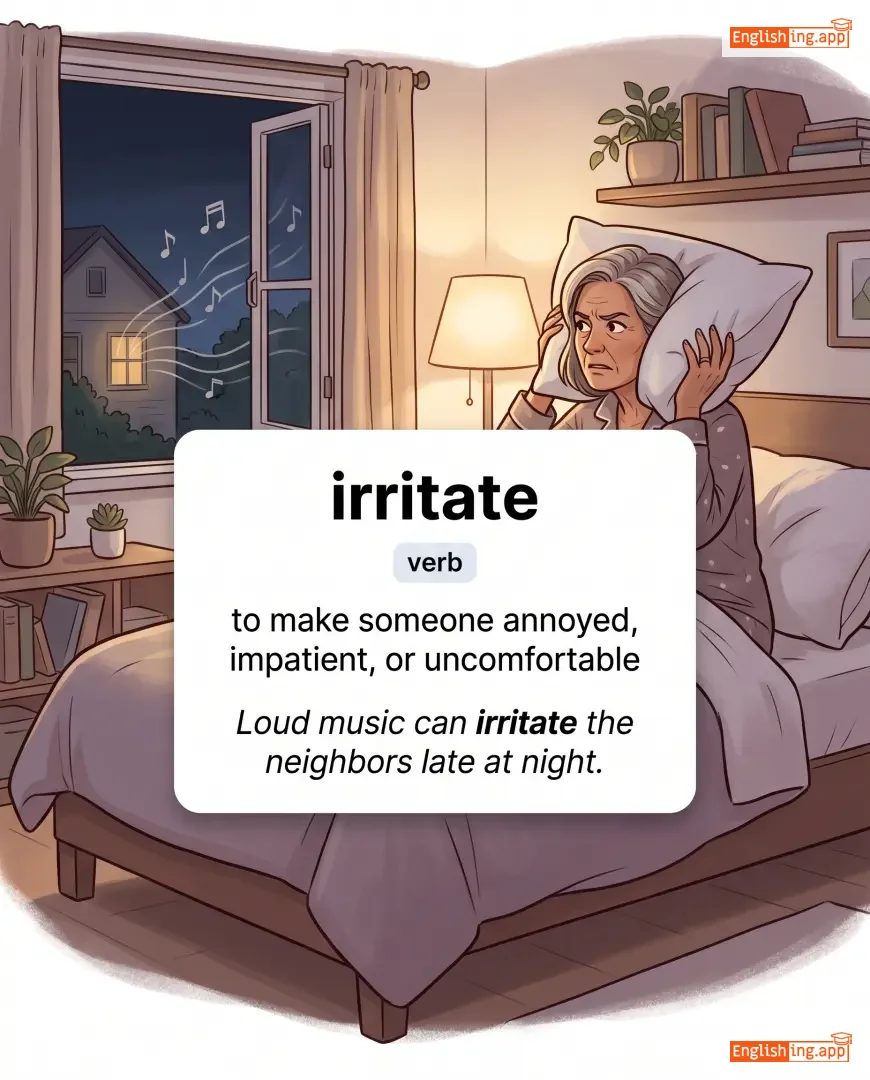
to make someone annoyed, impatient, or uncomfortable
••••••
|
Loud music can irritate the neighbors late at night.
大声的音乐可能会在深夜刺激邻居。
••••••
|
大声的音乐可能会在深夜刺激邻居。
Dà shēng de yīnyuè kěnéng huì zài shēn yè cìjī línjū.
••••••
|
rub the wrong way
惹人烦
••••••
|
to annoy or irritate someone unintentionally
••••••
|
无意中激怒
wú yì zhōng jī nù
••••••
|
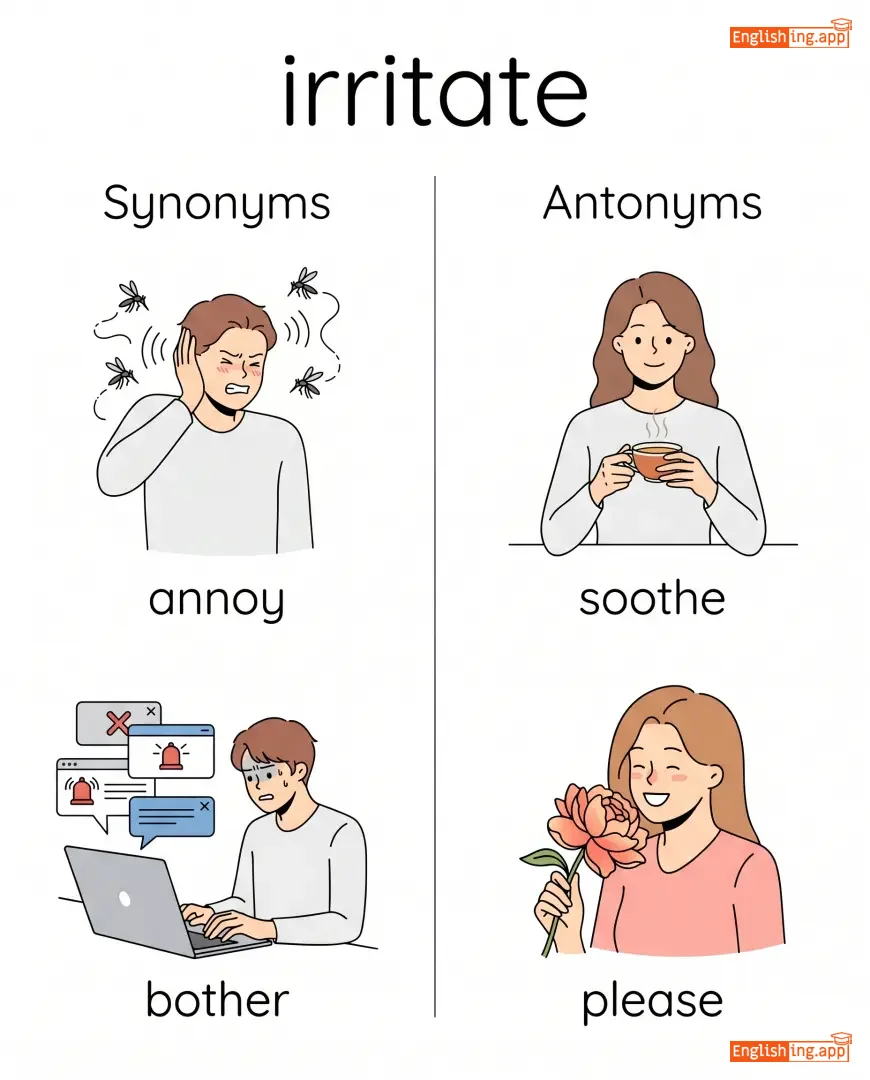
annoy, bother, provoke, aggravate, disturb
••••••
|
soothe, please, comfort
••••••
|
irritate the skin, irritate someone, easily irritate, irritate eyes
••••••
|
Irritate 意为激怒,就像“irri”时,别人会生气。
••••••
|
|
#4949
🌫️
|
/ˈɪrɪtənt/
noun
(伊里坦特)
••••••
|
- •••••• |
刺激物
cijiwu
••••••
|
- •••••• | - •••••• | - •••••• | - •••••• |
something that causes irritation or discomfort
••••••
|
Dust is a common irritant for people with allergies. |
灰尘是过敏者常见的刺激物。
Huichen shi guominzhe changjian de cijiwu.
••••••
|
- •••••• | - •••••• | - •••••• |
allergen, annoyance, stimulant, aggravator
••••••
|
soother, comfort
••••••
|
skin irritant, chemical irritant, major irritant, source of irritant
••••••
|
Irritant 意味着刺激物,像灰尘对过敏者是刺激物一样。
••••••
|
|
#4950
⚠️
|
/ˈɪrɪtənsi/
noun
(伊里坦西)
••••••
|
- •••••• |
恼怒
naonu
••••••
|
- •••••• | - •••••• | - •••••• | - •••••• |
the quality or state of causing irritation; legal or formal invalidation
••••••
|
The constant noise became an irritancy to the neighbors. |
持续的噪音成为邻居的恼怒源。
Chixu de zaoyin chengwei linju de naonu yuan.
••••••
|
- •••••• | - •••••• | - •••••• |
annoyance, nuisance, provocation, aggravation
••••••
|
comfort, relief
••••••
|
legal irritancy, irritancy clause, source of irritancy
••••••
|
Irritancy意味着恼怒,就像持续的噪音造成恼怒。
••••••
|
Vocabulary Quiz
Test your vocabulary by matching words with their translations or meanings.
Login to take the quiz
Comments (0)
Share your thoughts and join the discussion.
Join the discussion by logging in
Login to CommentNo comments yet
Be the first to share your thoughts!