



Swipe left or right, or use the buttons. Tap image to zoom.
例句翻译
单词
Lesson 439Lesson 439 - 遮罩切换
|
表情符号
|
单词 | Images | 翻译 | 过去时 | 过去分词 | 第三人称单数 | 动名词 | 含义 | 例句 | 例句翻译 | 示例表达 | 示例表达含义 | 示例表达翻译 | 同义词 | 反义词 | 搭配词 | 助记符 |
|---|---|---|---|---|---|---|---|---|---|---|---|---|---|---|---|---|---|
|
#1
🗽
|
/ˈstætʃuː/
noun
(雕像)
••••••
|
- •••••• |
雕像
diaoxiang
••••••
|
- •••••• | - •••••• | - •••••• | - •••••• |
a carved or cast figure of a person or animal, especially one that is life-size or larger
••••••
|
They built a statue of the national hero in the city square. |
他们在城市广场上建造了国家英雄的雕像。
Tamen zai chengshi guangchang shang jianzhao le guojia yingxiong de diaoxiang.
••••••
|
as still as a statue |
completely motionless
••••••
|
像雕像一样静止
xiang diaoxiang yiyang jingzhi
••••••
|
sculpture, figure, effigy, monument, idol
••••••
|
none, living being
••••••
|
statue of liberty, bronze statue, marble statue, giant statue
••••••
|
Statue means statue of liberty 🗽 — 雕像永远静止!
••••••
|
|
#1
🍼
|
/sʌk/
verb
(sā)
••••••
|
- •••••• |
吸
xī
••••••
|
sucked
sākèd
••••••
|
sucked
sākèd
••••••
|
sucks
sākè sī
••••••
|
sucking
sākīng
••••••
|
to draw something into the mouth by using the lips and tongue
••••••
|
The baby began to suck her thumb.
婴儿开始吸吮她的拇指。
••••••
|
婴儿开始吸吮她的拇指。
Yīng'ér kāishǐ xīshuǐ tā de mǔzhǐ.
••••••
|
suck it up
吸掉它
••••••
|
to accept something unpleasant without complaining
••••••
|
忍受它
rěnshòu tā
••••••
|
sip, draw, ingest, slurp
••••••
|
spit, expel
••••••
|
suck up, suck out, suck in, suck on
••••••
|
婴儿吸拇指,‘吸’容易记住。
••••••
|
|
#1
🏘️
|
/səˈbɜːrbən/
adjective
(郊区)
••••••
|
- •••••• |
郊区的
jiaoqū de
••••••
|
- •••••• | - •••••• | - •••••• | - •••••• |
relating to or characteristic of a suburb or the people living there
••••••
|
They bought a house in a quiet suburban area. |
他们在一个安静的郊区买了一栋房子。
Tāmen zài yīgè ānjìng de jiāoqū mǎile yī dòng fángzi.
••••••
|
- •••••• | - •••••• | - •••••• |
residential, outlying, provincial, commuter
••••••
|
urban, rural
••••••
|
suburban area, suburban house, suburban life, suburban community
••••••
|
郊区的意思是城市的边缘 — 郊区区域。
••••••
|
|
#1
🏘️
|
/ˈsʌbɜːb/
noun
(suburb)
••••••
|
- •••••• |
郊区
jiaoqū
••••••
|
- •••••• | - •••••• | - •••••• | - •••••• |
an area outside the center of a city, often residential
••••••
|
They bought a new house in a quiet suburb. |
他们在一个安静的郊区买了新房子。
Tāmen zài yīgè ānjìng de jiāoqū mǎile xīn fángzi.
••••••
|
in the suburbs |
living in a residential area outside the city center
••••••
|
在郊区
zài jiāoqū
••••••
|
residential area, outskirts, neighborhood, district
••••••
|
downtown, city center
••••••
|
quiet suburb, suburban area, live in the suburbs, suburb of Dhaka
••••••
|
Sub+urb 就是城市外的郊区—郊外居住!
••••••
|
|
#1
🏗️
|
/ˈstrʌktʃərəl/
adjective
••••••
|
|
- •••••• | - •••••• | - •••••• | - •••••• | - •••••• |
relating to or forming part of the structure of something
••••••
|
Engineers found structural damage in the old bridge. |
- •••••• | - •••••• | - •••••• | - •••••• |
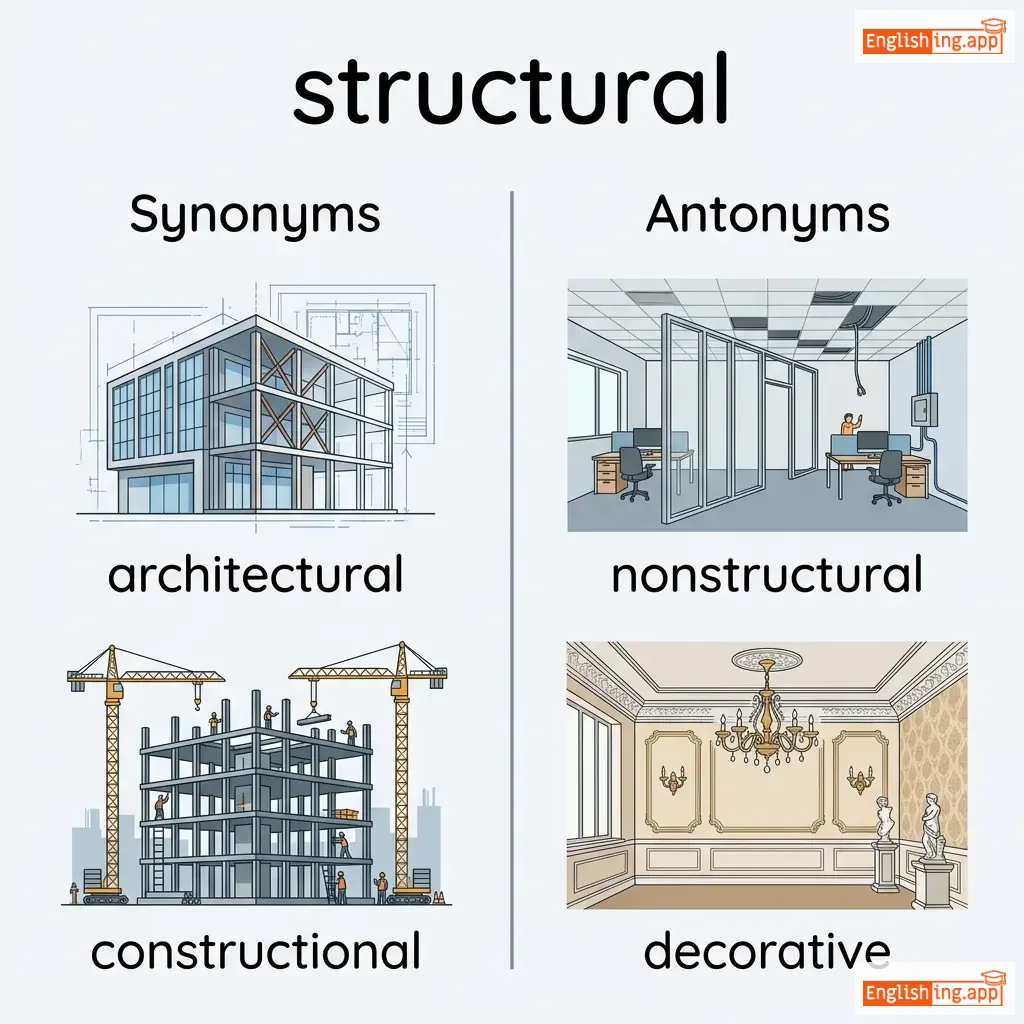
architectural, constructional, physical, organizational
••••••
|
nonstructural, decorative
••••••
|
structural damage, structural design, structural change, structural problem
••••••
|
No •••••• |
|
#1
✨
|
/ˈstraɪkɪŋ/
adjective
(straiking)
••••••
|
- •••••• |
引人注目
yin ren zhu mu
••••••
|
- •••••• | - •••••• | - •••••• | - •••••• |
very noticeable or impressive in appearance or effect
••••••
|
Her striking beauty caught everyone's attention.
她那引人注目的美丽吸引了所有人的注意。
••••••
|
她那引人注目的美丽吸引了所有人的注意。
Ta na yin ren zhu mu de mei li xi yin le suo you ren de zhu yi.
••••••
|
- •••••• | - •••••• | - •••••• |
impressive, remarkable, stunning, eye-catching, extraordinary
••••••
|
ordinary, dull, plain
••••••
|
striking resemblance, striking difference, striking contrast, striking beauty
••••••
|
Striking在中文里意味着引人注目—就像她的美丽一样,无法忽视!
••••••
|
|
#1
🚫
|
/ˈstrɪktli/
adverb
(sītrík lì)
••••••
|
- •••••• |
严格
yán gé
••••••
|
- •••••• | - •••••• | - •••••• | - •••••• |
in a way that follows rules or limits completely
••••••
|
Smoking is strictly prohibited inside the building. |
在大楼内吸烟是严格禁止的。
Zài dàlóu nèi xīyān shì yángé jìnzhǐ de.
••••••
|
strictly speaking |
to be precise or accurate about something
••••••
|
严格来说
yángé lái shuō
••••••
|
rigidly, severely, firmly, tightly
••••••
|
loosely, casually, freely
••••••
|
strictly prohibited, strictly controlled, strictly speaking, strictly confidential
••••••
|
Strictly 意味着严格—strict妈妈说 ‘Strictly no TV!’
••••••
|
|
#1
⚡
|
/striːk/
noun, verb
(strik)
••••••
|
- •••••• |
条纹或线;快速移动至指定方向
tiaowen huo xian; kuaisu yidong zhi zhiding fangxiang
••••••
|
streaked
strikt
••••••
|
streaked
strikt
••••••
|
streaks
striks
••••••
|
streaking
striking
••••••
|
a long, thin line or mark; to move very quickly in a specified direction
••••••
|
Lightning streaked across the night sky.
闪电快速划过夜空。
••••••
|
闪电划过夜空。
Shandian huaguo yekong.
••••••
|
on a winning streak
在连胜纪录中
••••••
|
experiencing a continuous period of success
••••••
|
在连胜中
zai liansheng zhong
••••••
|
line, stripe, flash, mark, dash
••••••
|
spot, blot
••••••
|
winning streak, lightning streak, hair streak, red streak
••••••
|
条纹意味着线—像闪电一样快速穿过夜空!
••••••
|
|
#1
🥤
|
/strɔː/
noun
(斯特劳)
••••••
|
- •••••• |
稻草或吸管
dàocǎo huò xīguǎn
••••••
|
- •••••• | - •••••• | - •••••• | - •••••• |
a thin tube for sucking up liquids; dried stalks of grain plants
••••••
|
She drank the juice through a straw. |
她通过吸管喝了果汁。
Tā tōngguò xīguǎn hēle guǒzhī.
••••••
|
the last straw |
the final problem that makes a situation unbearable
••••••
|
最后一根稻草
zuìhòu yī gēn dàocǎo
••••••
|
hay, stalk, tube, reed
••••••
|
liquid, metal
••••••
|
drink with straw, straw hat, straw mat, straw house
••••••
|
通过吸管喝 🥤, 但最后一根稻草意味着忍耐的极限!
••••••
|
|
#1
📏
|
/ˈstreɪtən/
verb
(斯特雷腾)
••••••
|
- •••••• |
整理
zhěnglǐ
••••••
|
straightened
斯特雷滕德
••••••
|
straightened
斯特雷滕德
••••••
|
straightens
斯特雷滕斯
••••••
|
straightening
斯特雷滕宁
••••••
|
to make something straight or tidy; to correct or organize
••••••
|
She straightened her hair before the meeting.
她在会议前整理了头发。
••••••
|
她在会议前整理了头发。
Tā zài huìyì qián zhěnglǐle tóufǎ.
••••••
|
straighten out
整理
••••••
|
to resolve a problem or confusion
••••••
|
解决问题或困惑
jiějué wèntí huò kùnhuò
••••••
|
align, adjust, organize, fix, arrange
••••••
|
bend, twist
••••••
|
straighten hair, straighten up, straighten out, straighten posture
••••••
|
Straighten = 整理,像整理头发一样。
••••••
|
|
#1
🔥
|
/stoʊv/
noun
(stov)
••••••
|
- •••••• |
炉子
luzi
••••••
|
- •••••• | - •••••• | - •••••• | - •••••• |
a device that produces heat for cooking or heating
••••••
|
She cooked rice on the gas stove. |
她在燃气炉上做了米饭。
Tā zài ránqì lú shàng zuòle mǐfàn.
••••••
|
- •••••• | - •••••• | - •••••• |
oven, cooker, range, furnace
••••••
|
refrigerator, cooler
••••••
|
gas stove, electric stove, wood stove, stove burner
••••••
|
炉子 = 热火 🔥 — 记住,在炉子上做饭,找到爱
••••••
|
|
#1
🛞
|
/stɪə(r)/
verb
(斯蒂尔)
••••••
|
- •••••• |
操控
caokong
••••••
|
steered
斯蒂尔德
••••••
|
steered
斯蒂尔德
••••••
|
steers
斯蒂尔斯
••••••
|
steering
斯蒂尔林
••••••
|
to guide or control the movement of a vehicle, vessel, or person
••••••
|
He steered the car carefully through the narrow street.
他小心地把车开过狭窄的街道。
••••••
|
他小心地把车开过狭窄的街道。
Ta xiaoxin de ba che kaiguo xiazai de jiedao.
••••••
|
steer clear of
避开
••••••
|
to avoid someone or something
••••••
|
避免
bimian
••••••
|
guide, direct, navigate, control, pilot
••••••
|
neglect, ignore
••••••
|
steer the ship, steer the conversation, steer direction
••••••
|
操控就像驾驶 — 当你操控时,你是指引道路的 🚗
••••••
|
|
#1
💨
|
/stiːm/
noun, verb
(斯蒂姆)
••••••
|
- •••••• |
蒸汽
zhengqi
••••••
|
steamed
斯蒂姆德
••••••
|
steamed
斯蒂姆德
••••••
|
steams
斯蒂姆斯
••••••
|
steaming
斯蒂米
••••••
|
the vapor into which water is converted when heated; to emit or treat with steam
••••••
|
The kettle was steaming on the stove.
茶壶在炉子上冒蒸汽。
••••••
|
茶壶在炉子上冒蒸汽。
Chahu zai luzi shang mao zhengqi.
••••••
|
let off steam
释放蒸汽
••••••
|
to release pent-up energy or emotions
••••••
|
释放积压的能量或情绪
shifang jiya de nengliang huo qingxu
••••••
|
vapor, mist, fume, moisture, fog
••••••
|
ice, freeze
••••••
|
steam engine, steam room, steam bath, hot steam
••••••
|
茶蒸汽,带来温暖与宁静的时光。
••••••
|
|
#1
🥩
|
/steɪk/
noun
(sī tè kè)
••••••
|
- •••••• |
牛排
niúpái
••••••
|
- •••••• | - •••••• | - •••••• | - •••••• |
a thick slice of meat, typically beef, cooked by grilling or frying
••••••
|
He ordered a grilled steak with vegetables. |
他点了一块配蔬菜的烤牛排。
Tā diǎnle yī kuài pèi shūcài de kǎo niúpái.
••••••
|
rare steak |
steak cooked lightly so that it remains red inside
••••••
|
三分熟牛排
sān fēn shú niúpái
••••••
|
meat slice, beef, chop, fillet
••••••
|
vegetable dish, vegan meal
••••••
|
grilled steak, beef steak, juicy steak, steak sauce
••••••
|
牛排代表牛肉之美,肉类爱好者的最爱!
••••••
|
|
#1
📈
|
/ˈstɛdɪli/
adverb
(sī tè dì lì)
••••••
|
- •••••• |
稳定地
wěn dì de
••••••
|
- •••••• | - •••••• | - •••••• | - •••••• |
in a regular and continuous way; without stopping or changing
••••••
|
The company's profits have been increasing steadily. |
公司的利润稳定增长。
Gōngsī de lìrùn wěn dì zēngzhǎng.
••••••
|
- •••••• | - •••••• | - •••••• |
consistently, gradually, continuously, regularly
••••••
|
suddenly, irregularly, inconsistently
••••••
|
grow steadily, increase steadily, rise steadily, work steadily
••••••
|
Steady 意味着稳定 — 所以 steadily 意味着稳定地 📈
••••••
|
|
#1
😤
|
/spɪt/
verb
(spit)
••••••
|
- •••••• |
吐口水
tǔ kǒushuǐ
••••••
|
spat
spat
••••••
|
spat
spat
••••••
|
spits
spits
••••••
|
spitting
spitting
••••••
|
to force liquid, especially saliva, out of the mouth
••••••
|
He spat on the ground in anger.
他因愤怒在地上吐口水。
••••••
|
他因愤怒在地上吐口水。
Tā yīn fènnù zài dìshàng tǔ kǒushuǐ.
••••••
|
spit it out
吐出来
••••••
|
say something you have been reluctant to say
••••••
|
说出来
shuō chūlái
••••••
|
expectorate, eject, spew, expel
••••••
|
swallow, keep
••••••
|
spit on, spit out, spit blood, spit fire
••••••
|
吐口水 = 就像嘴里有液体 'spit' 一样
••••••
|
|
#1
📊
|
/stəˈtɪstɪkəl/
adjective
(统计的)
••••••
|
- •••••• |
统计的
tongji de
••••••
|
- •••••• | - •••••• | - •••••• | - •••••• |
relating to the use or analysis of numerical data
••••••
|
The report provides statistical data about population growth. |
报告提供了有关人口增长的统计数据。
Baogao tigong le youguan renkou zengzhang de tongji shuju.
••••••
|
- •••••• | - •••••• | - •••••• |
numerical, analytical, quantitative, data-based
••••••
|
qualitative, subjective
••••••
|
statistical analysis, statistical data, statistical method, statistical model
••••••
|
统计学是关于数字的,所以 statistical 就是关于这些数据的分析 📊
••••••
|
|
#1
🚀
|
/ˈstɑːtɪŋ/
verb
(斯塔汀)
••••••
|
- •••••• |
开始
kaishi
••••••
|
- •••••• | - •••••• | - •••••• |
starting
斯塔汀
••••••
|
beginning to do or experience something
••••••
|
She is starting a new job next week.
她下周开始一份新工作。
••••••
|
她下周开始一份新工作。
Ta xia zhou kaishi yi fen xin gongzuo.
••••••
|
starting from scratch
从零开始
••••••
|
to begin from the very beginning without any advantage
••••••
|
从零开始
cong ling kaishi
••••••
|
beginning, commencing, initiating, launching, opening
••••••
|
ending, finishing, concluding
••••••
|
starting point, starting line, starting salary, starting date
••••••
|
开始 — 就像是旅行的第一步,探索新的世界!
••••••
|
|
#1
🍽️
|
/ˈstɑːrtər/
noun
(斯塔特)
••••••
|
- •••••• |
开始某事的人或事物;一餐的第一道菜
kaishi mou shi de ren huo shiwu; yi can de di yi dao cai
••••••
|
- •••••• | - •••••• | - •••••• | - •••••• |
a person or thing that starts something; the first course of a meal
••••••
|
The starter of the meal was a fresh salad. |
餐前小吃是一份新鲜的沙拉。
Can qian xiao chi shi yi fen xin xian de sha la.
••••••
|
non-starter |
something that is not feasible or cannot succeed
••••••
|
- •••••• |
beginner, initiator, appetizer, originator, opener
••••••
|
finisher, ender
••••••
|
car starter, meal starter, engine starter, game starter
••••••
|
‘Starter’开始, 就像餐前的小吃——沙拉!
••••••
|
|
#1
🧍
|
/stæns/
noun
(stæns)
••••••
|
- •••••• |
立场
lichang
••••••
|
- •••••• | - •••••• | - •••••• | - •••••• |
a person's attitude, opinion, or position on an issue
••••••
|
The company took a strong stance on environmental protection. |
公司在环境保护问题上采取了强硬立场。
Gōngsī zài huánjìng bǎohù wèntí shàng cǎiqǔle qiángyìng lìchǎng.
••••••
|
take a stance |
to adopt a definite position or opinion on a subject
••••••
|
采取立场
cǎiqǔ lìchǎng
••••••
|
position, viewpoint, attitude, perspective, opinion
••••••
|
neutrality, indecision
••••••
|
firm stance, political stance, defensive stance, moral stance
••••••
|
Stance 代表立场,现在就采取你的立场!
••••••
|
|
#1
🏟️
|
/ˈsteɪdiəm/
noun
••••••
|
- •••••• | - •••••• | - •••••• | - •••••• | - •••••• | - •••••• |
a large structure with seating for sports, concerts, or other events
••••••
|
Thousands of fans filled the stadium to watch the final match. |
- •••••• | - •••••• | - •••••• | - •••••• |
arena, ground, coliseum, field, amphitheater
••••••
|
none
••••••
|
football stadium, packed stadium, national stadium, open-air stadium
••••••
|
No •••••• |
|
#1
📚
|
/stæk/
verb
••••••
|
- •••••• | - •••••• |
stacked
••••••
|
stacked
••••••
|
stacks
••••••
|
stacking
••••••
|
to arrange things in a neat pile or one on top of another
••••••
|
He stacked the books neatly on the shelf. |
- •••••• |
stack up |
to accumulate or increase over time
••••••
|
- •••••• |
pile, heap, arrange, load, assemble
••••••
|
scatter, spread, disorganize
••••••
|
stack of papers, stack shelves, stack boxes, neatly stacked
••••••
|
No •••••• |
|
#1
👥
|
/skwɒd/
noun
(skwād)
••••••
|
- •••••• |
小队
xiaodui
••••••
|
- •••••• | - •••••• | - •••••• | - •••••• |
a small group of people organized for a specific purpose or task, often in the military or sports
••••••
|
The football squad trained hard before the championship match. |
足球队在冠军赛前进行了艰苦训练。
Zuqiudui zai guanjunsai qian jinxingle jianku xunlian.
••••••
|
squad goals |
an ideal or admirable group of friends or team that others aspire to be like
••••••
|
小队目标
xiaodui mubiao
••••••
|
team, crew, group, unit, party
••••••
|
individual, loner
••••••
|
football squad, police squad, squad member, training squad
••••••
|
小队 = 一起工作的团队,就像足球队。
••••••
|
|
#1
🕵️♂️
|
/spaɪ/
verb
(sī pāi)
••••••
|
- •••••• |
间谍
jiandie
••••••
|
spied
sī pāi dé
••••••
|
spied
sī pāi dé
••••••
|
spies
sī pāi sī
••••••
|
spying
sī pāi yīng
••••••
|
to secretly collect information about a person, group, or country
••••••
|
He was caught spying on his neighbor through the window.
他在窗户旁边偷偷地监视邻居时被抓住了。
••••••
|
他在窗户旁边偷偷地监视邻居时被抓住了。
Tā zài chuānghù pángbiān tōutōu de jiānshì línjū shí bèi zhuā zhù le.
••••••
|
spy on someone
监视某人
••••••
|
to watch someone secretly
••••••
|
监视某人
jiānshì mǒu rén
••••••
|
observe, watch, monitor, investigate, snoop
••••••
|
ignore, overlook
••••••
|
spy agency, spy mission, spy network, spy movie
••••••
|
Spy是间谍 — ‘在间谍电影中,间谍悄悄地观察别人’。
••••••
|
|
#1
🍰
|
/ˈsprɪŋkəl/
verb
••••••
|
- •••••• | - •••••• |
sprinkled
••••••
|
sprinkled
••••••
|
sprinkles
••••••
|
sprinkling
••••••
|
to scatter small drops or particles of a substance over a surface
••••••
|
She sprinkled sugar on top of the cake. |
- •••••• |
a sprinkle of something |
a small amount of something scattered or added
••••••
|
- •••••• |
scatter, dust, spread, disperse, scatter
••••••
|
gather, collect
••••••
|
sprinkle water, sprinkle salt, sprinkle sugar, sprinkle pepper
••••••
|
No •••••• |
|
#1
💦
|
/spreɪ/
verb
(斯普雷)
••••••
|
- •••••• |
喷洒
pen sa
••••••
|
sprayed
斯普雷德
••••••
|
sprayed
斯普雷德
••••••
|
sprays
斯普雷斯
••••••
|
spraying
斯普瑞英
••••••
|
to apply liquid to something in a fine mist
••••••
|
She sprayed perfume on her wrist before leaving.
她在离开前把香水喷在了手腕上。
••••••
|
她在离开前把香水喷在了手腕上。
Ta zai likai qian ba xiangshui pen zai le shouwan shang.
••••••
|
spray and pray
喷雾与祈祷
••••••
|
to use a broad and unfocused approach hoping for success
••••••
|
喷雾与祈祷
pen wu yu qi dao
••••••
|
mist, sprinkle, scatter, splash, atomize
••••••
|
collect, absorb, dry
••••••
|
spray paint, spray bottle, spray water, spray perfume
••••••
|
Spray 意味着喷洒 — '像香水一样,四处扩散的芬芳!'
••••••
|
|
#1
💍
|
/spaʊs/
noun
(spaus)
••••••
|
- •••••• |
配偶
peikou
••••••
|
- •••••• | - •••••• | - •••••• | - •••••• |
a person's husband or wife
••••••
|
Each employee may include their spouse in the health insurance plan.
每个员工可以将配偶纳入健康保险计划。
••••••
|
每个员工可以将配偶纳入健康保险计划。
Mei ge yuangong keyi jiang peigou naru jiankang baoxian jihua.
••••••
|
- •••••• | - •••••• | - •••••• |
partner, husband, wife, mate, consort
••••••
|
single, bachelor, spinster
••••••
|
loving spouse, faithful spouse, deceased spouse, legal spouse
••••••
|
Spouse 在中文中是配偶 — 丈夫或妻子
••••••
|
|
#1
🥄
|
/spuːn/
noun
(spūn)
••••••
|
- •••••• |
勺子
shaozi
••••••
|
- •••••• | - •••••• | - •••••• | - •••••• |
a utensil consisting of a small shallow bowl with a handle, used for eating, stirring, or serving food
••••••
|
She stirred her coffee with a silver spoon. |
她用银勺子搅拌她的咖啡。
Tā yòng yín sháozi jiǎobàn tā de kāfēi.
••••••
|
born with a silver spoon in one's mouth |
to be born into a wealthy and privileged family
••••••
|
含着银勺子出生
hán zhe yín sháozi chūshēng
••••••
|
ladle, utensil, scoop, teaspoon, tablespoon
••••••
|
fork, knife
••••••
|
tea spoon, soup spoon, silver spoon, wooden spoon
••••••
|
用勺子吃饭很简单 – 记住 🥄
••••••
|
|
#1
💰
|
/ˈspɒnsər/
noun
(赞助商)
••••••
|
- •••••• |
赞助商
zànzhù shāng
••••••
|
- •••••• | - •••••• | - •••••• | - •••••• |
a person or organization that provides funds for a project or activity in exchange for publicity or support
••••••
|
The company became the main sponsor of the event. |
公司成为了活动的主要赞助商。
Gōngsī chéngwéi le huódòng de zhǔyào zànzhù shāng.
••••••
|
official sponsor |
the primary supporter or funder of an event
••••••
|
官方赞助商
guānfāng zànzhù shāng
••••••
|
backer, patron, supporter, benefactor, funder
••••••
|
opponent, rival
••••••
|
event sponsor, corporate sponsor, title sponsor, sponsor agreement
••••••
|
Sponsor 是为支持提供资金的 💰
••••••
|
|
#1
😠
|
/spaɪt/
noun
(spaɪt)
••••••
|
- •••••• |
恶意
èyì
••••••
|
- •••••• | - •••••• | - •••••• | - •••••• |
a desire to hurt, annoy, or offend someone
••••••
|
She refused the gift out of spite. |
她因为恶意拒绝了礼物。
Tā yīnwèi èyì jùjué le lǐwù.
••••••
|
in spite of |
despite something; regardless of
••••••
|
尽管如此
jǐnguǎn rúcǐ
••••••
|
malice, resentment, bitterness, hostility
••••••
|
kindness, goodwill, compassion
••••••
|
out of spite, in spite of, spiteful remark, spite attack
••••••
|
Spite 就是 '恶意' —— 就像怀恨在心那样 😠
••••••
|
Vocabulary Quiz
Test your vocabulary by matching words with their translations or meanings.
Login to take the quiz
Comments (0)
Share your thoughts and join the discussion.
Join the discussion by logging in
Login to CommentNo comments yet
Be the first to share your thoughts!