

Swipe left or right, or use the buttons. Tap image to zoom.
例句翻译
单词
Lesson 316Lesson 316 - 遮罩切换
|
表情符号
|
单词 | Images | 翻译 | 过去时 | 过去分词 | 第三人称单数 | 动名词 | 含义 | 例句 | 例句翻译 | 示例表达 | 示例表达含义 | 示例表达翻译 | 同义词 | 反义词 | 搭配词 | 助记符 |
|---|---|---|---|---|---|---|---|---|---|---|---|---|---|---|---|---|---|
|
#9450
😉
|
/ˈwiːdəl/
verb
(wēidèl)
••••••
|
- •••••• |
用奉承说服
yòng fèngchéng shuōfú
••••••
|
wheedled
wēidèld
••••••
|
wheedled
wēidèld
••••••
|
wheedles
wēidèlz
••••••
|
wheedling
wēidèlìng
••••••
|
to persuade or coax someone by using flattery or smooth talk
••••••
|
She managed to wheedle extra pocket money from her father.
她成功地从父亲那里获得了额外的零花钱。
••••••
|
她成功地从父亲那里获得了额外的零花钱。
Tā chénggōng de cóng fùqīn nàlǐ huòqǔle éwài de línghuā qián.
••••••
|
- •••••• | - •••••• | - •••••• |
coax, flatter, cajole, charm, sweet-talk
••••••
|
demand, force, insult
••••••
|
wheedle money, wheedle permission, wheedle his way
••••••
|
Wheedle 就是通过奉承来取得成功
••••••
|
|
#9451
🔹
|
/wɪt/
noun
(wɪt)
••••••
|
- •••••• |
极小的量
jí xiǎo de liàng
••••••
|
- •••••• | - •••••• | - •••••• | - •••••• |
a very small part or amount
••••••
|
He doesn't care a whit about the outcome. |
他一点也不在乎结果。
Tā yīdiǎn yě bù zàihu jiéguǒ.
••••••
|
not a whit |
not at all; not in the slightest degree
••••••
|
一点也不
yīdiǎn yě bù
••••••
|
bit, iota, shred, ounce, speck
••••••
|
lot, abundance, plenty
••••••
|
not a whit, without a whit, a whit of difference
••••••
|
whit (一点) 指极小的量,就像一粒沙子。
••••••
|
|
#9452
🐴
|
/ˈwɪni/
verb
(wīní)
••••••
|
- •••••• |
嘶鸣
sīmíng
••••••
|
whinnied
wīnìd
••••••
|
whinnied
wīnìd
••••••
|
whinnies
wīnìz
••••••
|
whinnying
wīníng
••••••
|
to make the high-pitched sound a horse makes
••••••
|
The horse whinnied when it saw its rider.
马看到骑手时,发出了高亢的声音。
••••••
|
马看到骑手时,嘶鸣了一声。
Mǎ kàn dào qí shǒu shí, sīmíng le yī shēng.
••••••
|
- •••••• | - •••••• | - •••••• |
neigh, snort, nicker, cry, call
••••••
|
silence, quiet
••••••
|
horse whinny, whinny softly, whinny loudly, whinny sound
••••••
|
Whinny代表嘶鸣 - 马发出声音就像‘win’一样。
••••••
|
|
#9453
😩
|
/waɪn/
verb
••••••
|
|
- •••••• |
whined
••••••
|
whined
••••••
|
whines
••••••
|
whining
••••••
|
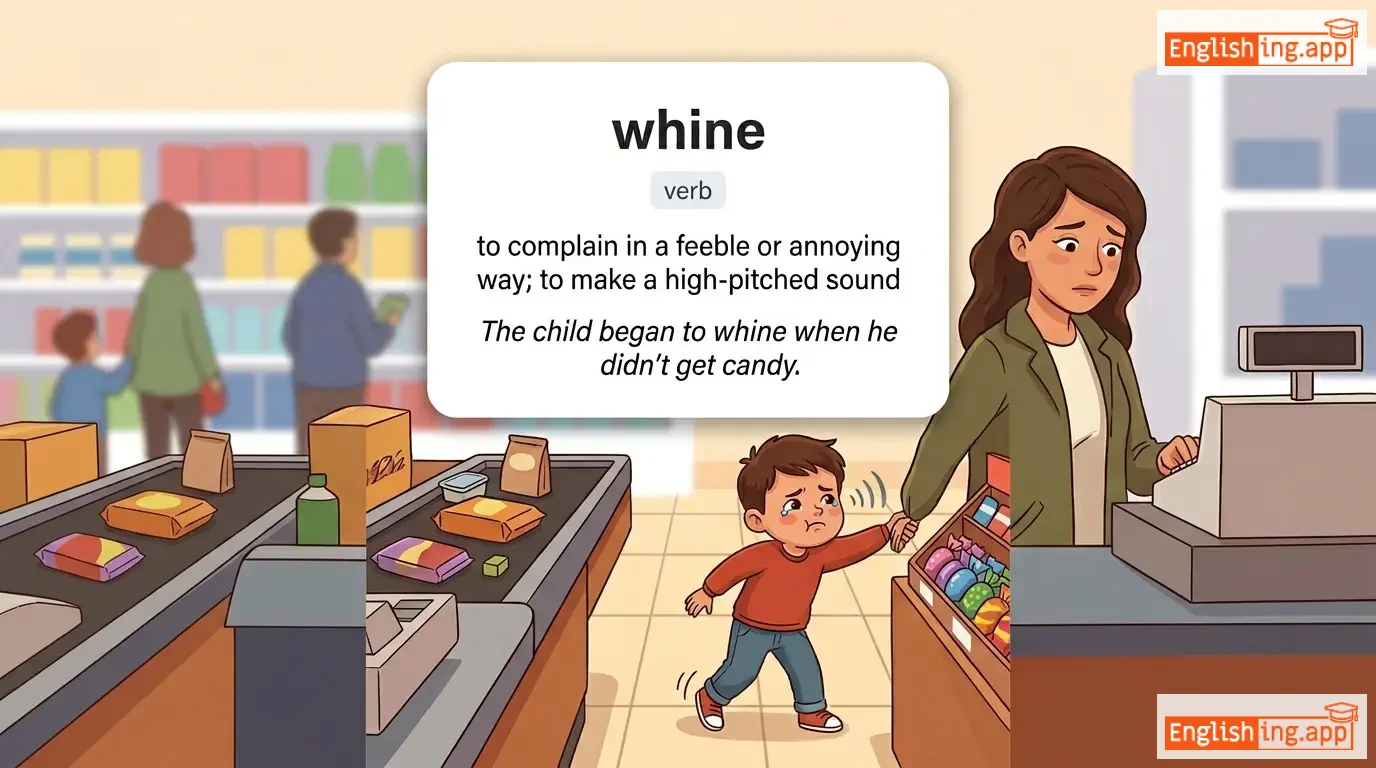
to complain in a feeble or annoying way; to make a high-pitched sound
••••••
|
The child began to whine when he didn’t get candy. |
- •••••• |
whine and complain |
to continuously express dissatisfaction
••••••
|
- •••••• |
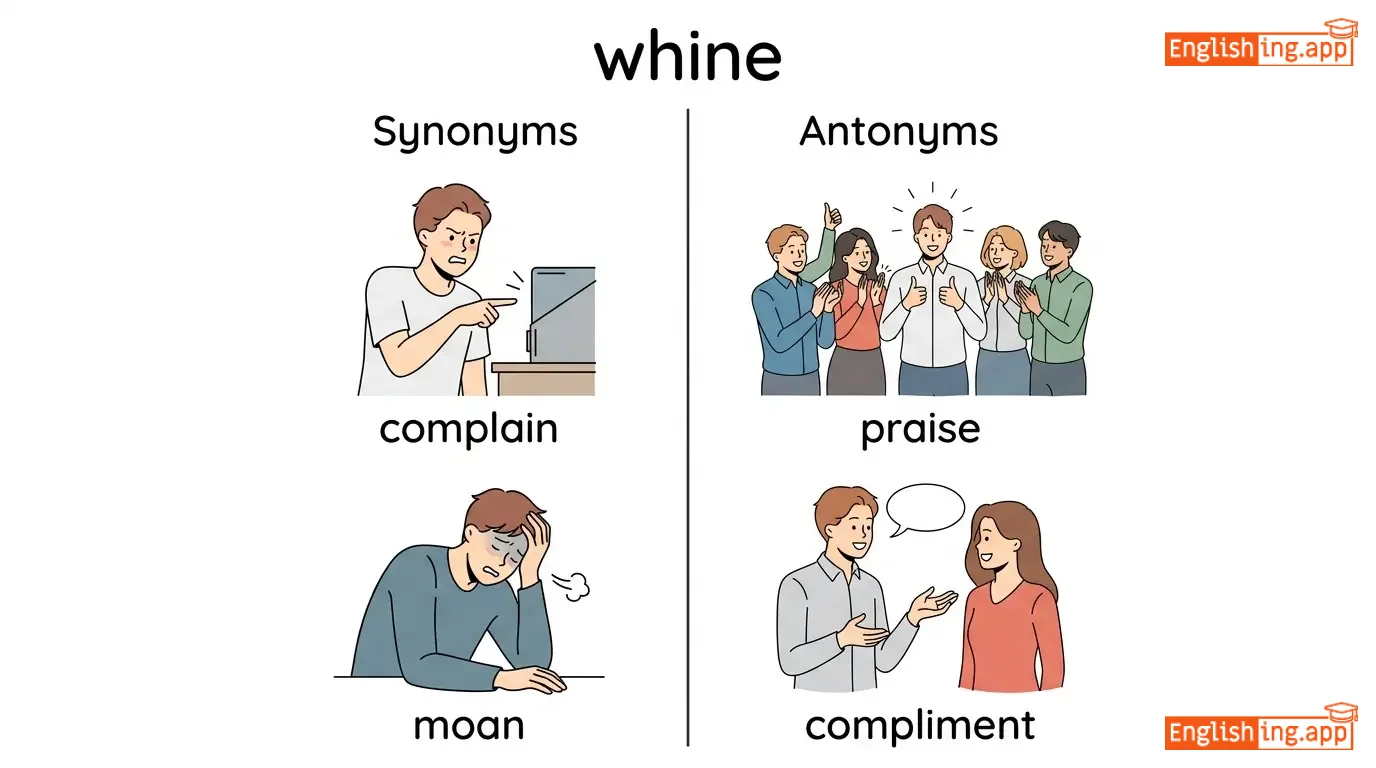
complain, moan, groan, grumble, wail
••••••
|
praise, compliment, rejoice
••••••
|
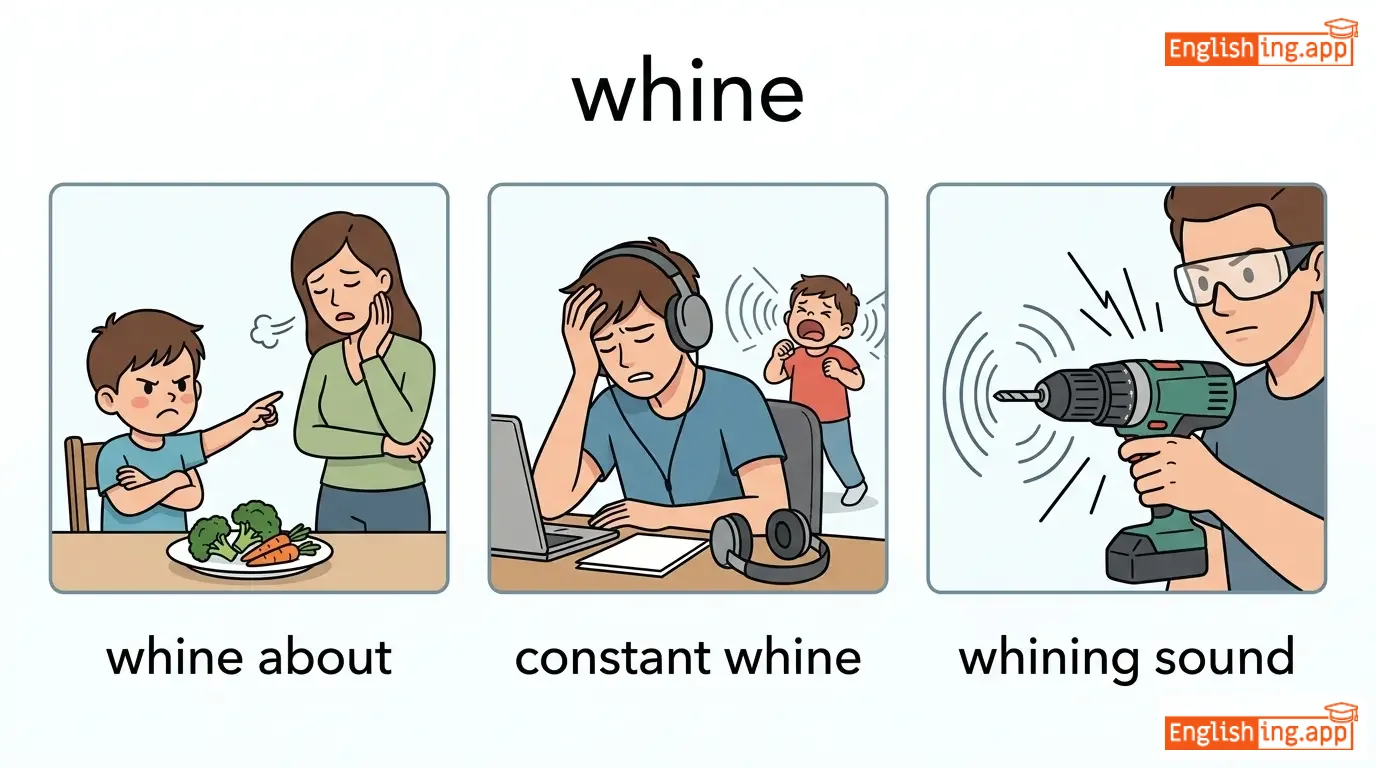
whine about, constant whine, whining sound, whine and cry
••••••
|
No •••••• |
|
#9454
✨
|
/ˈwɪmzi/
noun
(wímǔxī)
••••••
|
- •••••• |
异想天开
yì xiǎng tiānkāi
••••••
|
- •••••• | - •••••• | - •••••• | - •••••• |
playful or fanciful behavior or humor
••••••
|
Her stories were full of whimsy and imagination. |
她的故事充满了异想天开和想象力。
Tā de gùshì chōngmǎnle yìxiǎng tiānkāi hé xiǎngxiànglì.
••••••
|
- •••••• | - •••••• | - •••••• |
fancy, caprice, playfulness, imagination, eccentricity
••••••
|
seriousness, practicality, realism
••••••
|
touch of whimsy, sense of whimsy, element of whimsy, whimsy in art
••••••
|
Whimsy 意味着异想天开 - 就像是顽皮或充满幻想的行为。
••••••
|
|
#9455
🎨
|
/ˈwɪmzɪkəl/
adjective
(wēimùsīkǎo)
••••••
|
|
异想天开
yìxiǎngtiānkāi
••••••
|
- •••••• | - •••••• | - •••••• | - •••••• |
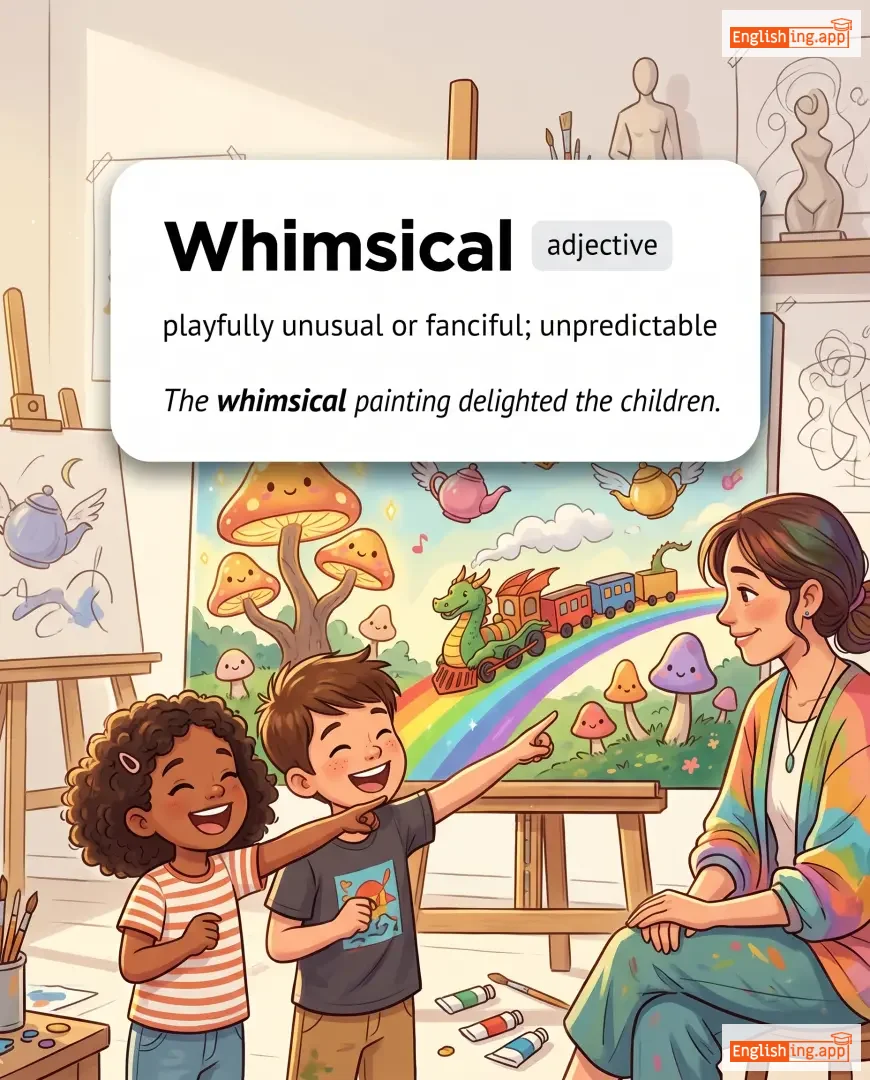
playfully unusual or fanciful; unpredictable
••••••
|
The whimsical painting delighted the children. |
这幅异想天开的画让孩子们感到高兴。
Zhè fú yìxiǎngtiānkāi de huà ràng háizimen gǎndào gāoxìng.
••••••
|
- •••••• | - •••••• | - •••••• |
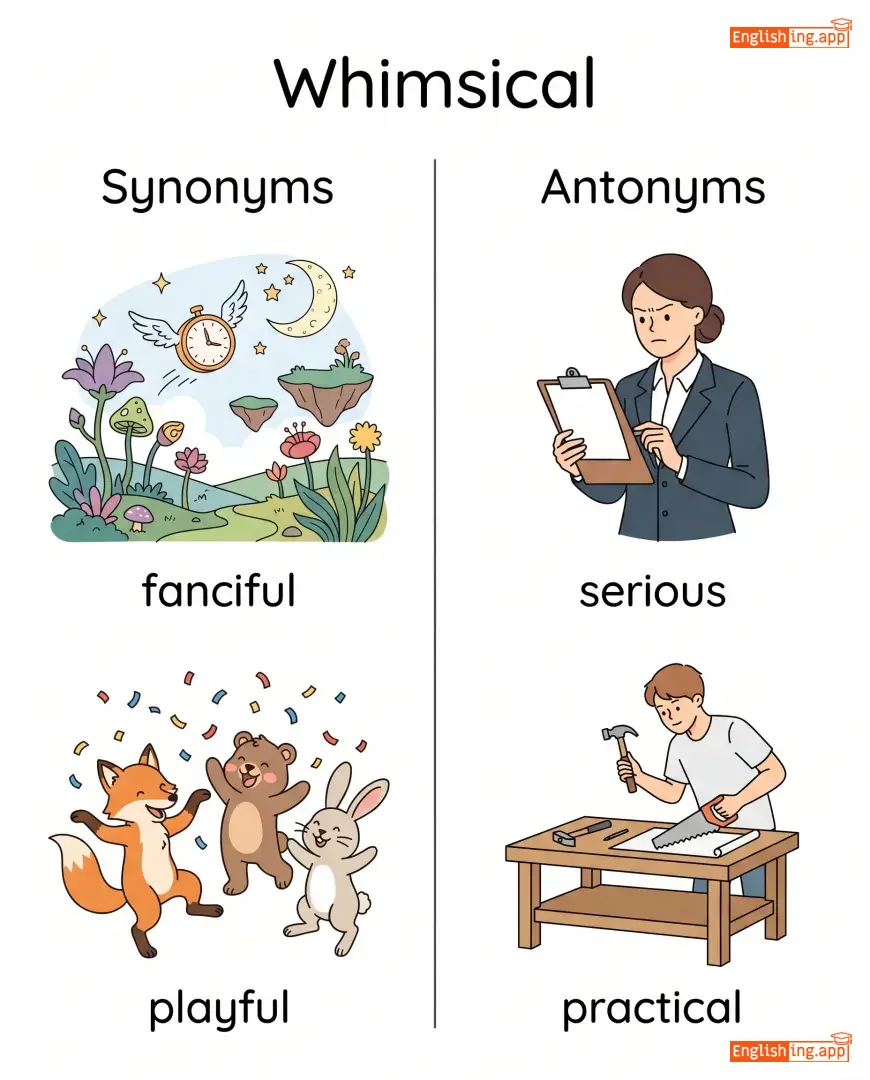
fanciful, playful, quirky, imaginative, capricious
••••••
|
serious, practical, realistic
••••••
|
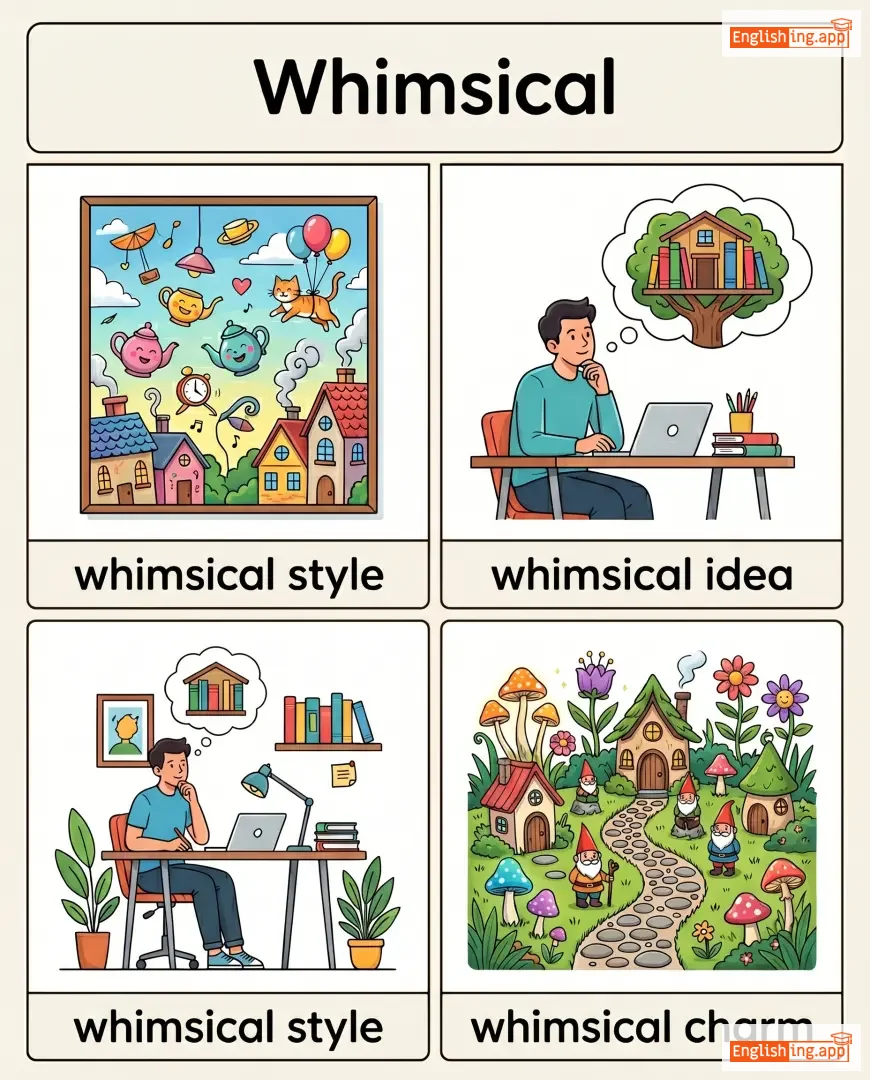
whimsical style, whimsical idea, whimsical charm, whimsical imagination
••••••
|
Whimsical意味着异想天开 - 就像一个总是有创意的想法的人。
••••••
|
|
#9456
💡
|
/wɪm/
noun
(wēi mǔ)
••••••
|
- •••••• |
一时兴起
yī shí xīng qǐ
••••••
|
- •••••• | - •••••• | - •••••• | - •••••• |
a sudden or unpredictable idea, desire, or decision
••••••
|
She bought the dress on a whim. |
她一时兴起买了那条裙子。
Tā yī shí xīng qǐ mǎi le nà tiáo qún zi.
••••••
|
on a whim |
suddenly, without planning
••••••
|
一时兴起
yī shí xīng qǐ
••••••
|
impulse, fancy, urge, notion, caprice
••••••
|
plan, intention, purpose
••••••
|
sudden whim, foolish whim, act on a whim, whim of the moment
••••••
|
Whim 意味着一时兴起,就像突然想吃冰淇淋一样。
••••••
|
|
#9457
👃
|
/wɪf/
noun, verb
••••••
|
- •••••• | - •••••• |
whiffed
••••••
|
whiffed
••••••
|
whiffs
••••••
|
whiffing
••••••
|
A brief, faint smell or puff of air; to get a quick smell of something.
••••••
|
I caught a whiff of perfume as she passed by. |
- •••••• |
catch a whiff |
To smell something briefly or faintly
••••••
|
- •••••• |
scent, smell, odor, trace, hint
••••••
|
stench, reek
••••••
|
whiff of, catch a whiff, faint whiff, slight whiff
••••••
|
No •••••• |
|
#9458
🍴
|
/wɛt/
verb
••••••
|
- •••••• | - •••••• |
whetted
••••••
|
whetted
••••••
|
whets
••••••
|
whetting
••••••
|
To sharpen the blade of a tool or to stimulate interest or appetite.
••••••
|
The smell of food whetted my appetite. |
- •••••• |
whet the appetite |
To increase someone's desire for something
••••••
|
- •••••• |
sharpen, hone, stimulate, arouse, excite
••••••
|
dull, blunt, diminish
••••••
|
whet the appetite, whet curiosity, whet desire, whet interest
••••••
|
No •••••• |
|
#9459
💰
|
/ˈwɛə.wɪð/
adverb, noun
(wɛə wɪð)
••••••
|
- •••••• |
手段
shǒuduàn
••••••
|
- •••••• | - •••••• | - •••••• | - •••••• |
With which; the means or resources needed for something.
••••••
|
He lacked the money wherewith to buy a new house. |
他没有足够的钱来买新房。
Tā méiyǒu zúgòu de qián lái mǎi xīn fáng.
••••••
|
- •••••• | - •••••• | - •••••• |
means, resources, funds, capital, ability
••••••
|
lack, poverty
••••••
|
wherewith to, wherewith he, wherewith she, money wherewith
••••••
|
WHEREWITH 什么? 与钱一起(手段)- 指手段或资源。
••••••
|
|
#9460
🌍
|
/wɛrˈɛv.ər/
adverb
(wèiréwèiěr)
••••••
|
- •••••• |
无论哪里
wúlùn nǎlǐ
••••••
|
- •••••• | - •••••• | - •••••• | - •••••• |
In or to any place.
••••••
|
You can find good people wherever you go. |
无论你走到哪里,你都能找到好人。
Wúlùn nǐ zǒu dào nǎlǐ, nǐ dōu néng zhǎodào hǎo rén.
••••••
|
wherever you are |
No matter what place you are in
••••••
|
无论你在哪里
wúlùn nǐ zài nǎlǐ
••••••
|
anywhere, everywhere, wheresoever, all places
••••••
|
nowhere, somewhere specific
••••••
|
wherever possible, wherever you go, wherever needed, wherever necessary
••••••
|
WhereEVER 意味着无论哪里 — 你去哪里,都能遇见好人!
••••••
|
|
#9461
➡️
|
/ˌwɛr.əˈpɒn/
adverb
(wèirəˈpɒn)
••••••
|
- •••••• |
紧接着
jinjie zhe
••••••
|
- •••••• | - •••••• | - •••••• | - •••••• |
Immediately after which; as a result of which.
••••••
|
He confessed his mistake, whereupon she forgave him. |
他承认了错误,紧接着她原谅了他。
Ta chengrenle cuowu, jinjie zhe ta yuanliangle ta.
••••••
|
- •••••• | - •••••• | - •••••• |
thereupon, consequently, accordingly, thus, hence
••••••
|
before, prior
••••••
|
whereupon she, whereupon he, confessed whereupon, agreed whereupon
••••••
|
Where UPON 发生了某事,紧接着 (jinjie zhe) 发生了结果。
••••••
|
|
#9462
⚖️
|
/wɛərˈæz/
conjunction
(wɛɛrz)
••••••
|
- •••••• |
然而
rán'ér
••••••
|
- •••••• | - •••••• | - •••••• | - •••••• |
used to introduce a contrast or comparison between two facts
••••••
|
She prefers tea, whereas he likes coffee. |
她喜欢喝茶,而他喜欢喝咖啡。
Tā xǐhuān hē chá, ér tā xǐhuān hē kāfēi.
••••••
|
- •••••• | - •••••• | - •••••• |
while, although, but, though
••••••
|
similarly, likewise
••••••
|
whereas clause, whereas statement, tea whereas coffee
••••••
|
Tea vs coffee 对比 - 中文然而
••••••
|
|
#9463
📍
|
/ˈwɛrəˌbaʊts/
noun
(wɛrəbaʊts)
••••••
|
- •••••• |
所在地点
suǒzài dìdiǎn
••••••
|
- •••••• | - •••••• | - •••••• | - •••••• |
the place where someone or something is
••••••
|
The police are trying to find out the suspect's whereabouts. |
警方正在试图找出嫌疑人的所在地点。
Jǐngfāng zhèngzài shìtú zhǎochū xiányí rén de suǒzài dìdiǎn.
••••••
|
- •••••• | - •••••• | - •••••• |
location, position, place, spot, site
••••••
|
absence, nowhere
••••••
|
unknown whereabouts, disclose whereabouts, track whereabouts
••••••
|
Whereabouts 在中文中意味着 '所在地点'
••••••
|
|
#9464
🐶
|
/wɛlp/
noun
(whelp)
••••••
|
- •••••• |
小狗
xiao gou
••••••
|
- •••••• | - •••••• | - •••••• | - •••••• |
a young offspring of a dog or other carnivorous mammal; sometimes used to mean an impudent young person
••••••
|
The farmer found a wolf whelp hiding near the barn. |
农民在谷仓附近发现了一只藏起来的狼崽。
Nongmin zai gucang fujin faxian le zhi cang qilai de lang zai.
••••••
|
- •••••• | - •••••• | - •••••• |
puppy, cub, pup, offspring
••••••
|
adult, grown-up
••••••
|
wolf whelp, dog whelp, young whelp
••••••
|
Whelp意味着小狗,就像你帮助小狗一样
••••••
|
|
#9465
😨
|
/ˈwiːk niːd/
adjective
(威克-尼德)
••••••
|
- •••••• |
胆小
dan xiao
••••••
|
- •••••• | - •••••• | - •••••• | - •••••• |
Lacking determination or courage; easily frightened or yielding.
••••••
|
The leader was criticized for being weak-kneed in the face of opposition. |
领导者因在面对反对时胆小而受到批评。
Lingdaozhe yin zai miandui fandui shi danxiao er shoudao piping.
••••••
|
- •••••• | - •••••• | - •••••• |
cowardly, timid, spineless, fearful
••••••
|
brave, strong, courageous
••••••
|
weak-kneed leader, weak-kneed response, weak-kneed attitude
••••••
|
弱膝无法站立 – 胆小就是 weak-kneed。
••••••
|
|
#9466
🌊
|
/ˈwɛltər/
verb
(韦尔特)
••••••
|
|
在混乱中翻滚
zai hunluan zhong fengun
••••••
|
weltered
韦尔特德
••••••
|
weltered
韦尔特德
••••••
|
welters
韦尔特斯
••••••
|
weltering
韦尔特灵
••••••
|
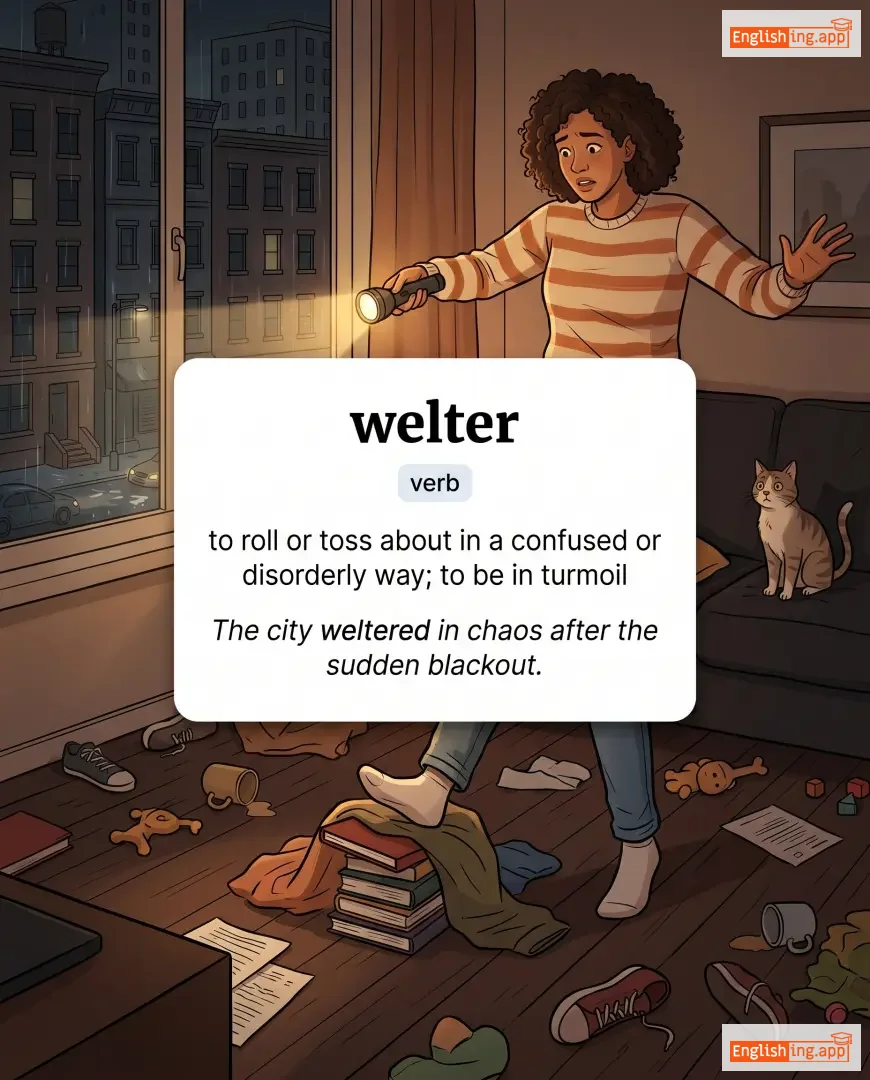
to roll or toss about in a confused or disorderly way; to be in turmoil
••••••
|
The city weltered in chaos after the sudden blackout.
城市在突然的停电后陷入混乱。
••••••
|
城市在突然的停电后陷入混乱。
Chéngshì zài túrán de tíngdiàn hòu xiànrù hùnluàn.
••••••
|
- •••••• | - •••••• | - •••••• |
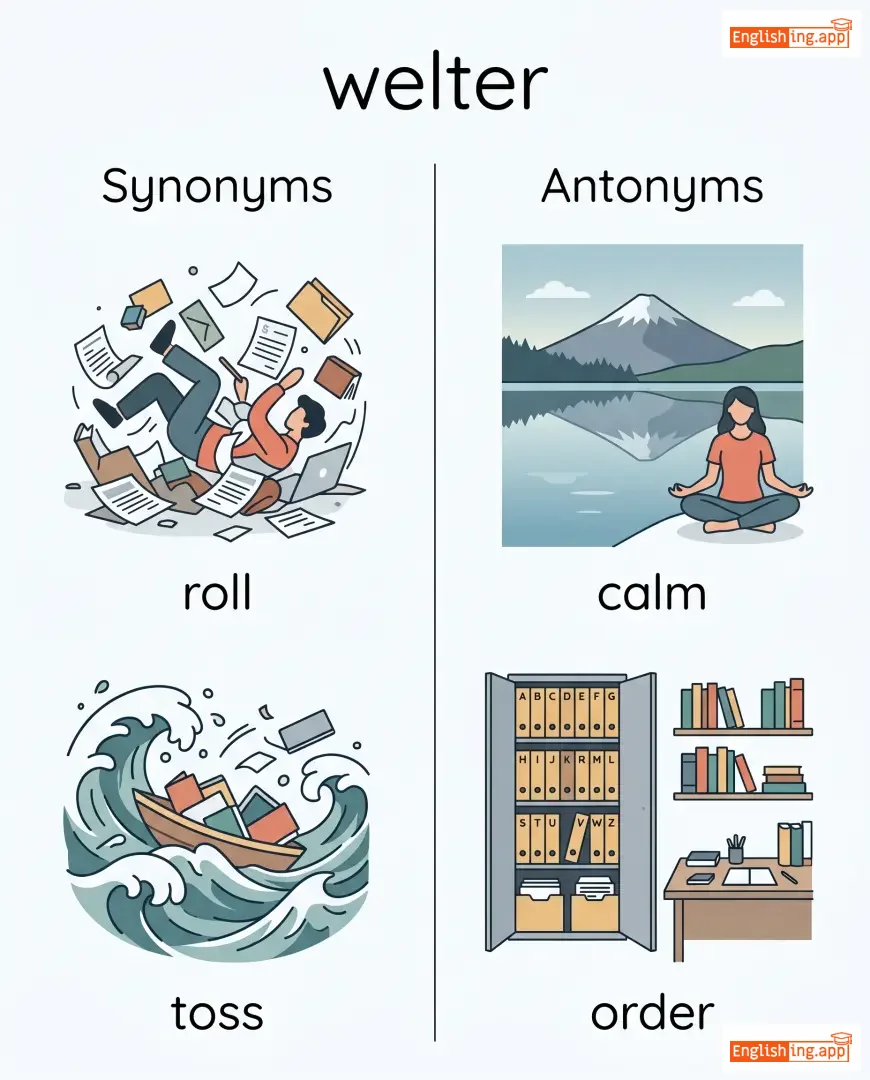
roll, toss, wallow, flounder, writhe
••••••
|
calm, order, stability
••••••
|
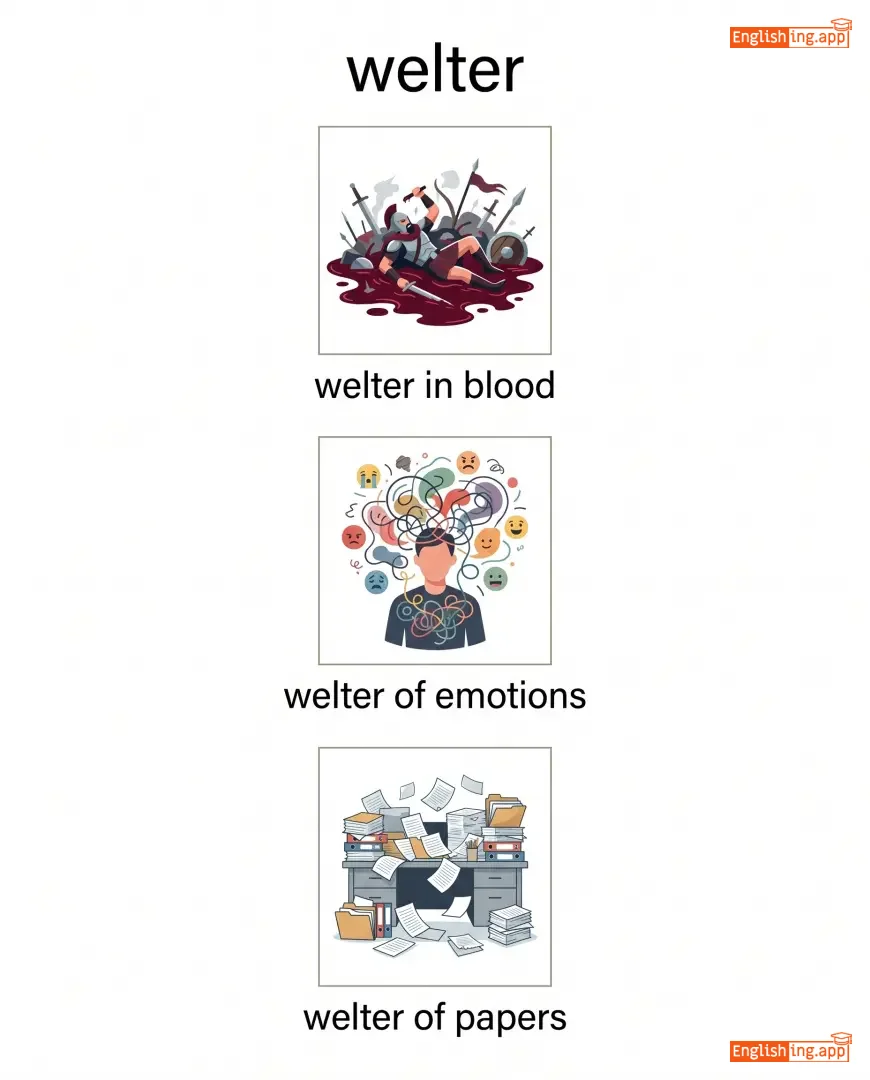
welter in blood, welter of emotions, welter of papers
••••••
|
Well ter (welter) 让一切陷入混乱。
••••••
|
|
#9467
🤕
|
/wɛlt/
noun
(welt)
••••••
|
- •••••• |
肿块
zhǒng kuài
••••••
|
- •••••• | - •••••• | - •••••• | - •••••• |
A raised mark on the skin, usually from a blow or allergic reaction.
••••••
|
He had a red welt on his arm after the bee sting. |
他在蜜蜂蜇伤后,手臂上有一个红色的肿块。
Tā zài mìfēng zhē shāng hòu, shǒubì shàng yǒu yīgè hóngsè de zhǒng kuài.
••••••
|
- •••••• | - •••••• | - •••••• |
bruise, lump, bump, mark, swelling
••••••
|
smoothness, flatness
••••••
|
red welt, painful welt, swelling welt
••••••
|
Welt表示肿块 - Bee belt (蜜蜂的带子) 导致肿块
••••••
|
|
#9468
💰
|
/ˌwɛl tə ˈduː/
adjective
(wɛl tu du)
••••••
|
- •••••• |
富裕
fùyù
••••••
|
- •••••• | - •••••• | - •••••• | - •••••• |
Prosperous, wealthy, or financially comfortable.
••••••
|
They belong to a well-to-do family in the city. |
他们来自城市中的富裕家庭。
Tāmen láizì chéngshì zhōng de fùyù jiātíng.
••••••
|
- •••••• | - •••••• | - •••••• |
wealthy, affluent, prosperous, rich, well-off
••••••
|
poor, needy, impoverished
••••••
|
well-to-do family, well-to-do businessman, well-to-do society
••••••
|
Well-to-do 意味着富裕 - Well (做好) 做并通过 Do (做) 成为富有的人
••••••
|
|
#9469
👐
|
/ˈwɛlˌduːər/
noun
(wɛlˌduːər)
••••••
|
- •••••• |
行善者
xíngshàn zhě
••••••
|
- •••••• | - •••••• | - •••••• | - •••••• |
A person who does good deeds; a benefactor.
••••••
|
The community praised the well-doer for his charity. |
社区表扬了他的行善行为。
Shèqū biǎoyáng le tā de xíngshàn xíngwéi.
••••••
|
- •••••• | - •••••• | - •••••• |
benefactor, philanthropist, helper, donor, humanitarian
••••••
|
wrongdoer, criminal, offender
••••••
|
kind well-doer, charitable well-doer
••••••
|
行善者是做善事的人,'行' (做) + '善' (好事) + '者' (人)
••••••
|
|
#9470
🤵
|
/ˌwɛlˈbrɛd/
adjective
(wēi ěr bō léi dé)
••••••
|
- •••••• |
有教养的
yǒu jiàoyǎng de
••••••
|
- •••••• | - •••••• | - •••••• | - •••••• |
Having or showing good manners; properly raised.
••••••
|
She is a well-bred young lady with excellent manners. |
她是一个有教养的年轻女士,举止优雅。
Tā shì yīgè yǒu jiàoyǎng de niánqīng nǚshì, jǔzhǐ yōuyǎ.
••••••
|
- •••••• | - •••••• | - •••••• |
polite, refined, cultured, courteous, mannerly
••••••
|
rude, impolite, uncouth
••••••
|
well-bred lady, well-bred child, well-bred manners
••••••
|
Well-bred = 有教养的 - 举止得体,有教养的人。
••••••
|
|
#9471
🌌
|
/ˈwɛlkɪn/
noun
(威尔金)
••••••
|
- •••••• |
天空
tiānkōng
••••••
|
- •••••• | - •••••• | - •••••• | - •••••• |
The sky, the heavens, or the upper air.
••••••
|
The eagle soared high into the welkin.
鹰飞得高进入了威尔金。
••••••
|
鹰飞得高进入了天空。
Yīng fēi dé gāo jìnrùle tiānkōng.
••••••
|
make the welkin ring
让威尔金响起
••••••
|
To create a loud noise that seems to reach the heavens.
••••••
|
让天空响起
ràng tiānkōng xiǎngqǐ
••••••
|
sky, heavens, firmament, atmosphere, ether
••••••
|
earth, ground, land
••••••
|
blue welkin, bright welkin, vast welkin
••••••
|
Welkin 意味着天空 - 记住 'Well kin sky' 是一个很好的天空。
••••••
|
|
#9472
🌀
|
/wɪrd/
adjective
(wird)
••••••
|
- •••••• |
奇怪
qiguai
••••••
|
- •••••• | - •••••• | - •••••• | - •••••• |
suggesting something supernatural or very strange; unusual
••••••
|
The movie had a weird ending that nobody expected. |
电影有一个奇怪的结局,没有人预料到。
Dianying you yige qiguai de jieju, meiyou ren yuliao dao.
••••••
|
weird out |
to make someone feel uncomfortable or strange
••••••
|
让某人不安
rang mou ren buan
••••••
|
strange, odd, bizarre, unusual, peculiar
••••••
|
normal, ordinary, usual
••••••
|
weird feeling, weird dream, weird noise, weird behavior
••••••
|
Weird 意味着奇怪,像电影中奇怪的结局。
••••••
|
|
#9473
⚖️
|
/weɪ/
verb
(wèi)
••••••
|
|
称重
chēngzhòng
••••••
|
weighed
wěid
••••••
|
weighed
wěid
••••••
|
weighs
wèiz
••••••
|
weighing
wèiyīng
••••••
|
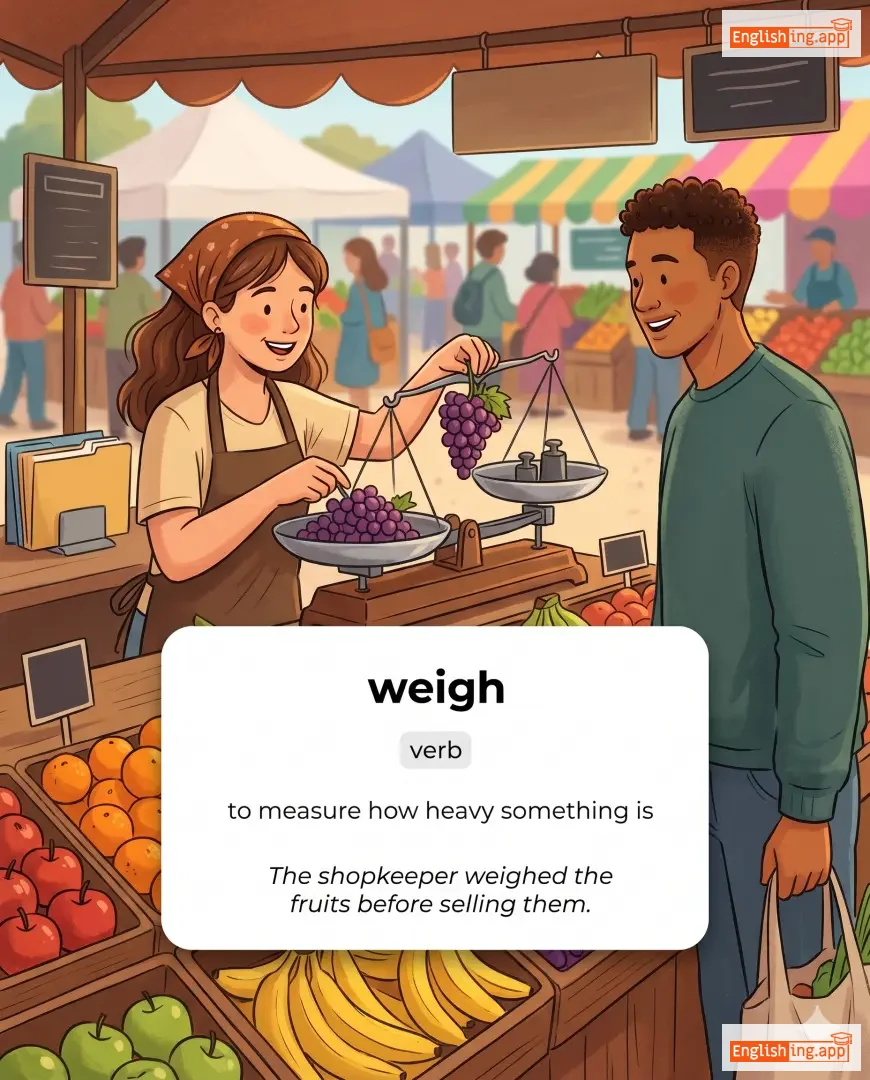
to measure how heavy something is
••••••
|
The shopkeeper weighed the fruits before selling them.
店主在卖水果前称重。
••••••
|
店主在卖水果前称重。
Diànzhǔ zài mài shuǐguǒ qián chēngzhòng.
••••••
|
weigh on someone's mind
让某人烦恼
••••••
|
to make someone worried or anxious
••••••
|
让某人烦恼
ràng mǒu rén fánnǎo
••••••
|
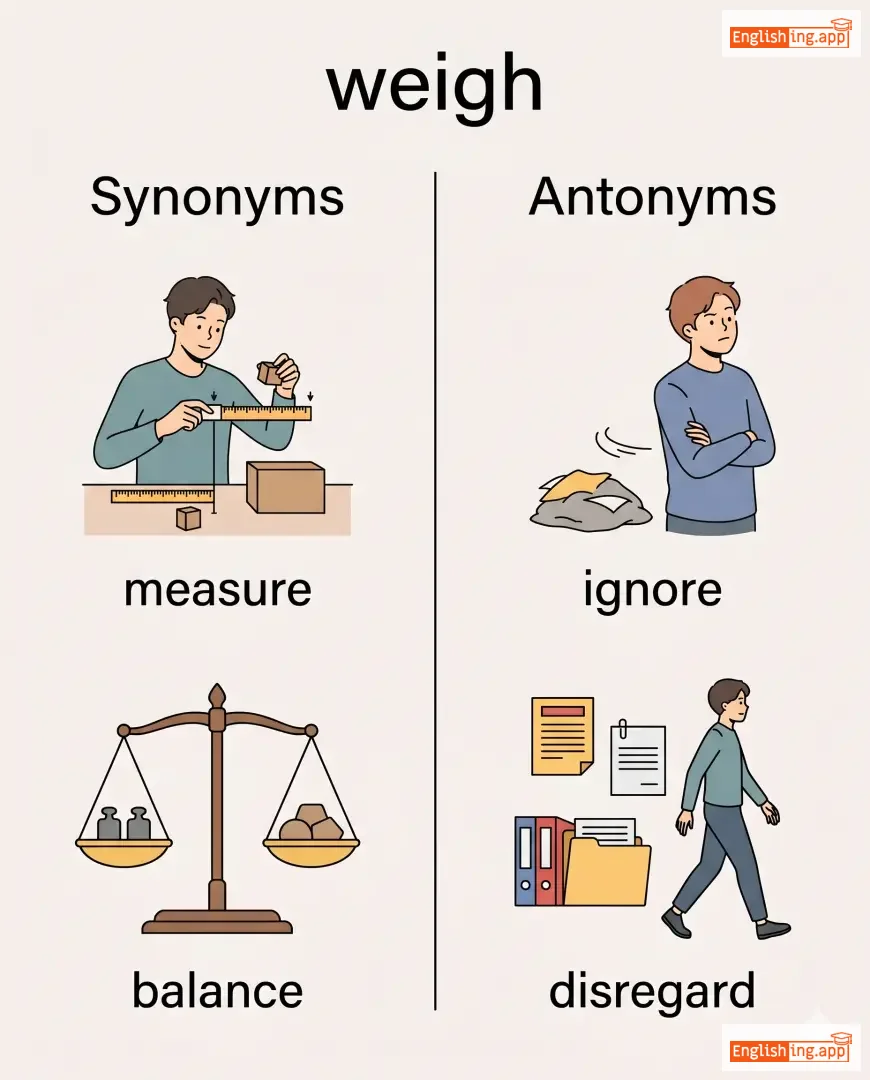
measure, balance, evaluate, calculate
••••••
|
ignore, disregard
••••••
|
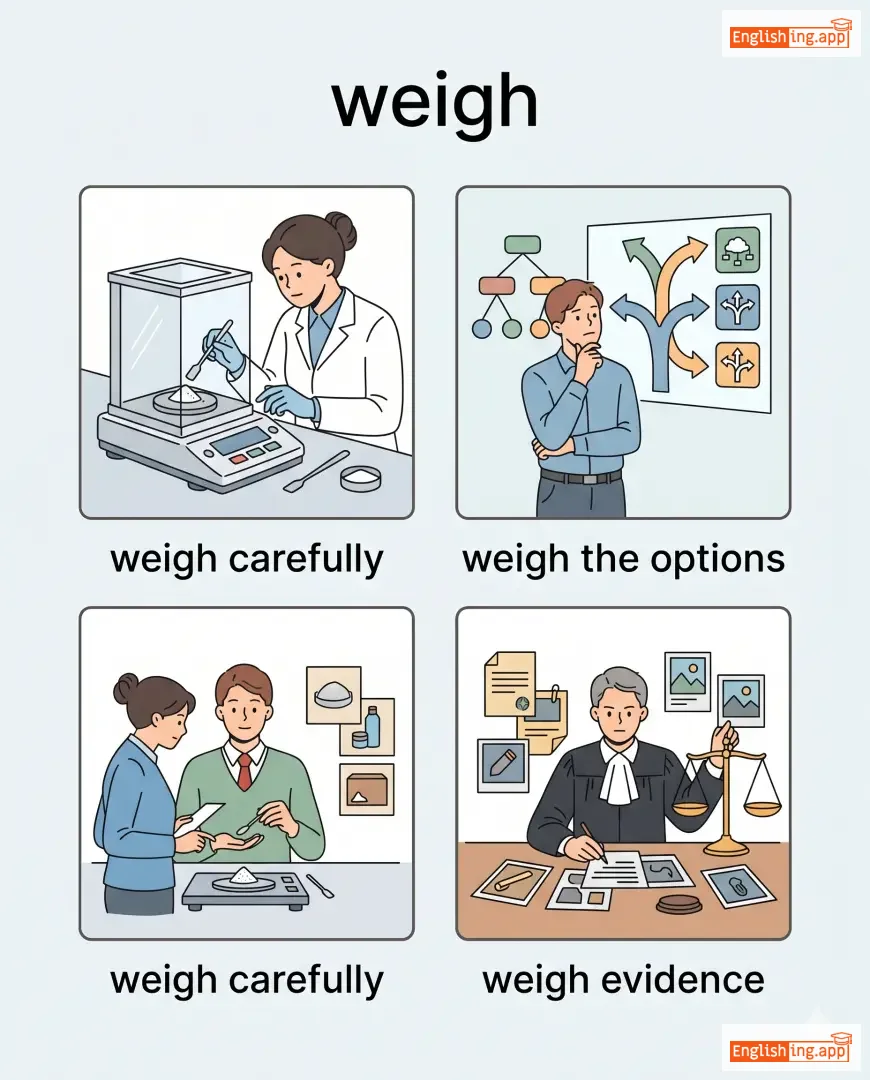
weigh carefully, weigh the options, weigh evidence, weigh anchor
••••••
|
Weigh意味着称重,就像在天平上称重物品一样。
••••••
|
|
#9474
👶
|
/wiː/
adjective
(wī)
••••••
|
- •••••• |
非常小
feichang xiao
••••••
|
- •••••• | - •••••• | - •••••• | - •••••• |
very small in size; tiny
••••••
|
She gave me a wee smile before leaving. |
她在离开之前给了我一个小小的微笑。
Ta zai likai zhīqián gěi le wǒ yī gè xiǎo xiǎo de wēixiào.
••••••
|
in the wee hours |
in the very early hours of the morning
••••••
|
在凌晨的非常早时
zài língchén de fēicháng zǎo shí
••••••
|
tiny, small, minute, little, petite
••••••
|
large, huge, big
••••••
|
wee baby, wee smile, wee bit, wee hours
••••••
|
Wee表示非常小,就像一个微笑。
••••••
|
|
#9475
⛅
|
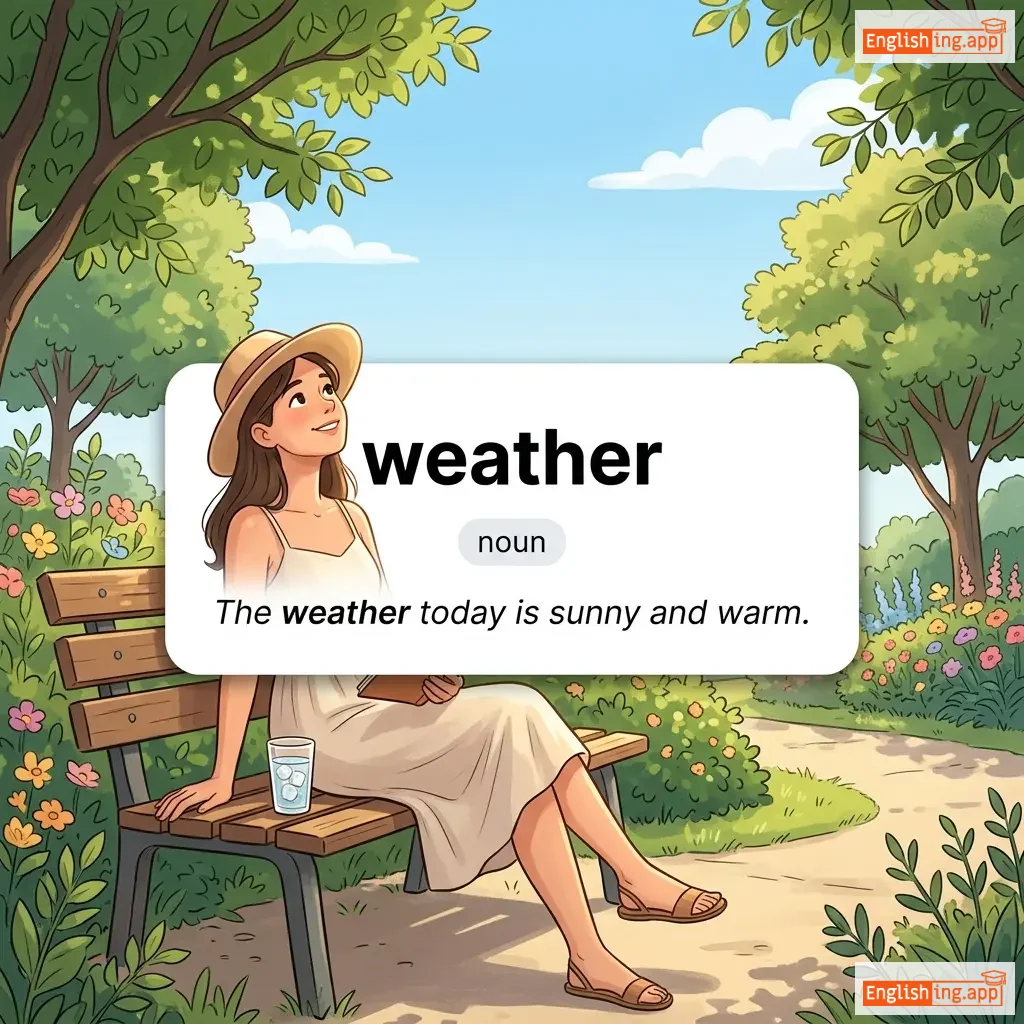
/ˈwɛðər/
noun
(wɛðər)
••••••
|
|
天气
tianqi
••••••
|
- •••••• | - •••••• | - •••••• | - •••••• |
the state of the atmosphere at a particular place and time in terms of heat, cloudiness, dryness, sunshine, wind, rain, etc.
••••••
|
The weather today is sunny and warm. |
今天的天气晴朗而温暖。
Jintian de tianqi qinglang er wenruan.
••••••
|
under the weather |
feeling unwell or sick
••••••
|
感觉不适
gǎnjué bù shì
••••••
|
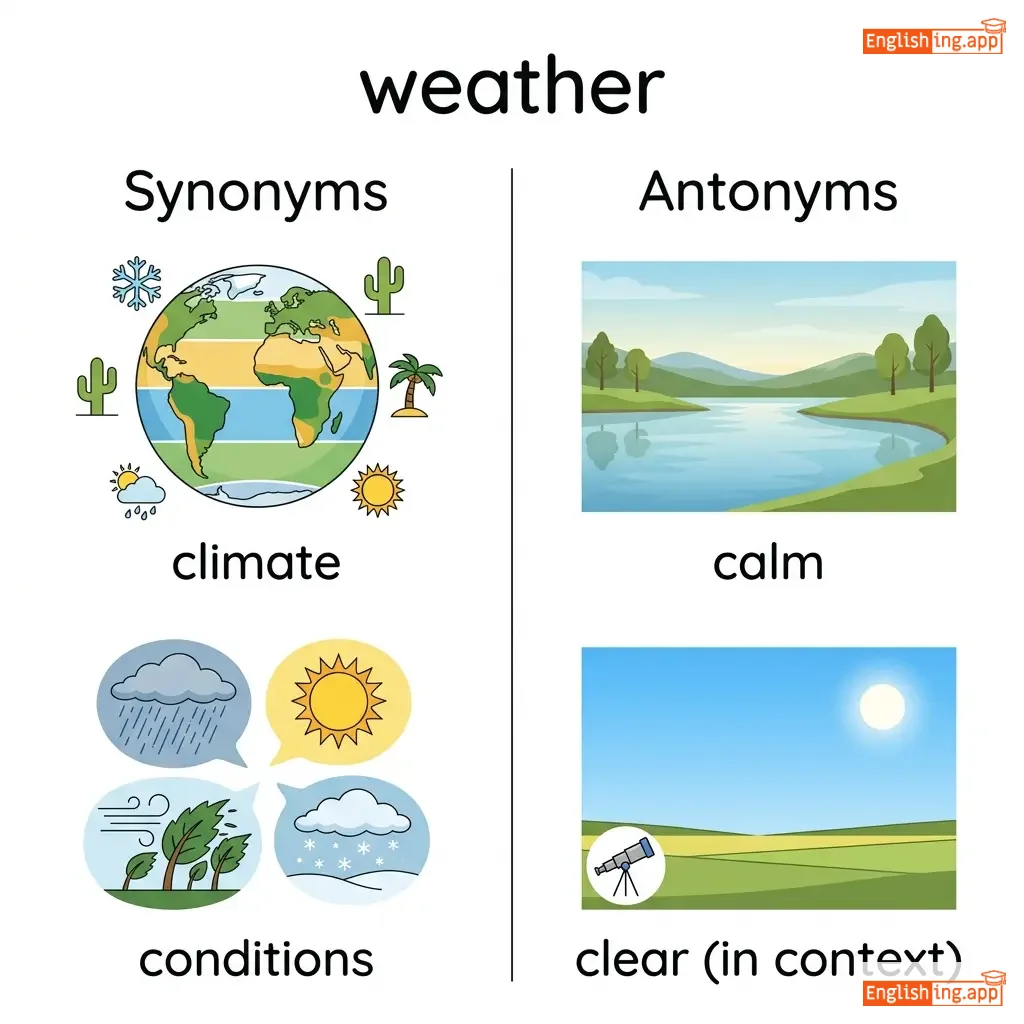
climate, conditions, atmosphere, forecast
••••••
|
calm, clear (in context)
••••••
|
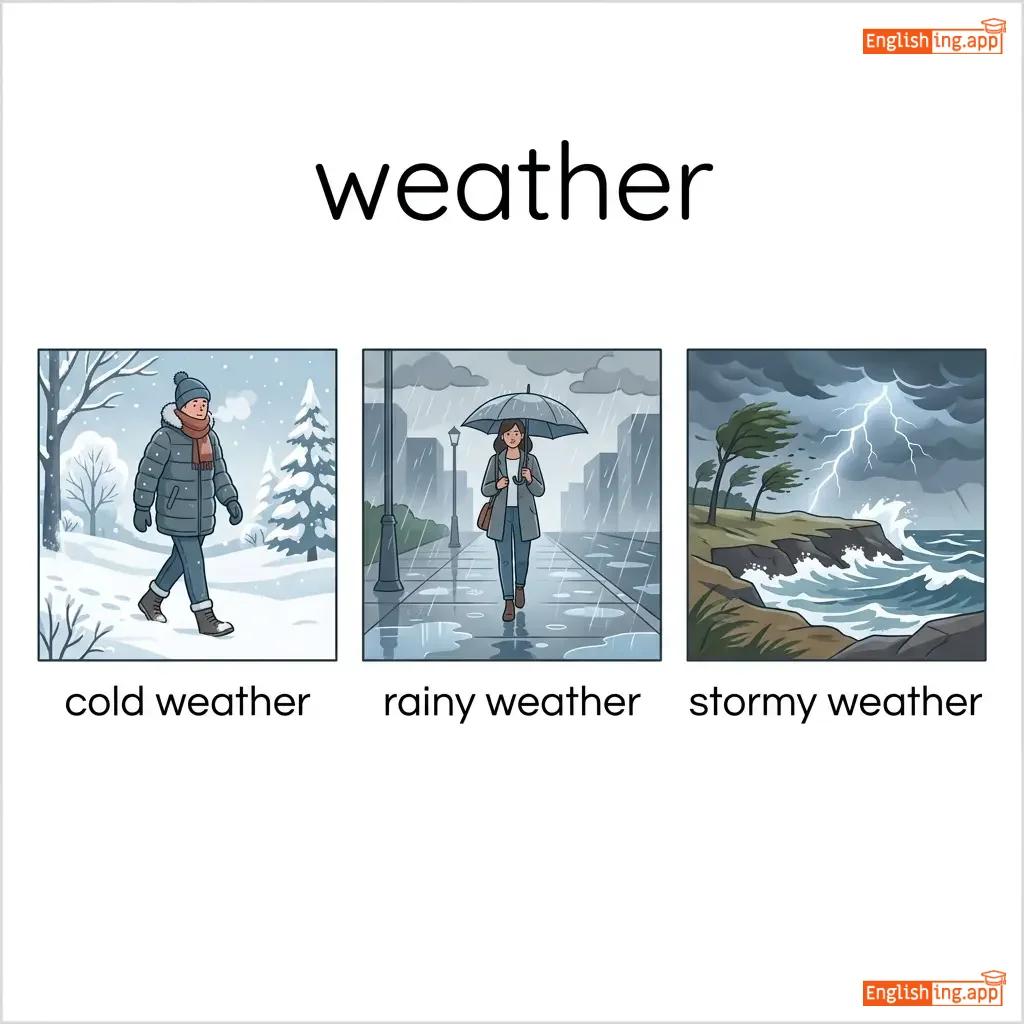
cold weather, rainy weather, stormy weather, fine weather
••••••
|
天气就像weather,它影响我们的一天。
••••••
|
|
#9476
😩
|
/ˈwɪəri/
adjective
(wei-ri)
••••••
|
- •••••• |
疲倦
pí juàn
••••••
|
- •••••• | - •••••• | - •••••• | - •••••• |
feeling or showing extreme tiredness, especially as a result of exertion or lack of sleep
••••••
|
After the long journey, she felt weary and wanted to rest.
长途旅行后,她感到疲惫,想休息。
••••••
|
长途旅行后,她感到疲惫,想休息。
Chángtú lǚxíng hòu, tā gǎndào píbèi, xiǎng xiūxí.
••••••
|
weary of
厌倦
••••••
|
tired or bored with something because it has been happening for too long
••••••
|
对…感到厌倦
duì... gǎndào yàn juàn
••••••
|
tired, exhausted, fatigued, drained, worn-out
••••••
|
energetic, lively, refreshed
••••••
|
feel weary, grow weary, weary traveler, weary eyes
••••••
|
Weary 在中文中与疲倦同义。
••••••
|
|
#9477
🥱
|
/ˈwɪərɪsəm/
adjective
(wēirìsǒng)
••••••
|
- •••••• |
令人疲倦的
lìng rén píjuàn de
••••••
|
- •••••• | - •••••• | - •••••• | - •••••• |
Causing one to feel tired or bored.
••••••
|
The long and wearisome lecture put the students to sleep. |
漫长且令人疲倦的讲座让学生们睡着了。
Màncháng qiě lìng rén píjuàn de jiǎngzuò ràng xuéshēngmen shuìzhe le.
••••••
|
- •••••• | - •••••• | - •••••• |
tedious, tiring, boring, dull, exhausting
••••••
|
exciting, engaging, refreshing
••••••
|
wearisome task, wearisome journey, wearisome lecture
••••••
|
Wear 让人疲倦,wearisome 就是令人疲倦的意思。
••••••
|
|
#9478
👶
|
/wiːn/
verb
••••••
|
- •••••• | - •••••• |
weaned
••••••
|
weaned
••••••
|
weans
••••••
|
weaning
••••••
|
To gradually stop a child or animal from breastfeeding; to detach from a habit.
••••••
|
Parents often wean their babies around six months old. |
- •••••• |
wean off |
To gradually stop someone from depending on something.
••••••
|
- •••••• |
detach, accustom, disengage, train
••••••
|
nurture, indulge
••••••
|
wean a baby, wean off drugs, wean from habit
••••••
|
No •••••• |
|
#9479
🌍
|
/wiːl/
noun
(幸福)
••••••
|
- •••••• |
幸福
xìngfú
••••••
|
- •••••• | - •••••• | - •••••• | - •••••• |
A raised mark on the skin left after a blow; or general well-being and prosperity.
••••••
|
The charity worked for the common weal of the community. |
当她获得奖项时,她无法掩饰自己的幸福。
Dāng tā huò dé jiǎngxiàng shí, tā wúfǎ yǎnshì zìjǐ de xìngfú.
••••••
|
common weal |
The general welfare or good of the public.
••••••
|
幸福的追求
Xìngfú de zhuīqiú
••••••
|
welfare, prosperity, good, wellbeing
••••••
|
harm, misery, suffering
••••••
|
common weal, for the weal, promote weal
••••••
|
'Happy'是通向幸福的钥匙。
••••••
|
Vocabulary Quiz
Test your vocabulary by matching words with their translations or meanings.
Login to take the quiz
Comments (0)
Share your thoughts and join the discussion.
Join the discussion by logging in
Login to CommentNo comments yet
Be the first to share your thoughts!