

Swipe left or right, or use the buttons. Tap image to zoom.
例句翻译
单词
Lesson 130Lesson 130 - 遮罩切换
|
表情符号
|
单词 | Images | 翻译 | 过去时 | 过去分词 | 第三人称单数 | 动名词 | 含义 | 例句 | 例句翻译 | 示例表达 | 示例表达含义 | 示例表达翻译 | 同义词 | 反义词 | 搭配词 | 助记符 |
|---|---|---|---|---|---|---|---|---|---|---|---|---|---|---|---|---|---|
|
#3871
👀
|
/ˈɡɑːɡəl/
verb
(戈格尔)
••••••
|
- •••••• |
睁大眼睛看
zhēng dà yǎnjīng kàn
••••••
|
goggled
戈格尔德
••••••
|
goggled
戈格尔德
••••••
|
goggles
戈格尔斯
••••••
|
goggling
戈格灵
••••••
|
to stare with wide open eyes, often in surprise or wonder
••••••
|
The tourists goggled at the tall skyscrapers.
游客惊讶地看着高耸的摩天大楼。
••••••
|
游客们惊讶地盯着高耸的摩天大楼。
Yóukèmen jīngyà de dīngzhe gāosǒng de mótiāndàlóu.
••••••
|
- •••••• | - •••••• | - •••••• |
stare, gape, gawk, ogle
••••••
|
ignore, glance
••••••
|
goggle at, goggle eyes, goggle in surprise
••••••
|
Goggle就是睁大眼睛看,像你看见奇怪的东西时会这样。
••••••
|
|
#3872
📈
|
/ˈɡreɪdiənt/
noun
(梯度)
••••••
|
- •••••• |
斜坡
xiepō
••••••
|
- •••••• | - •••••• | - •••••• | - •••••• |
A gradual slope, or the degree of inclination of a surface.
••••••
|
The cyclist struggled up the steep gradient of the hill.
骑行者在爬陡峭的梯度时遇到了困难。
••••••
|
骑行者在爬陡峭的斜坡时遇到了困难。
qíxíng zhě zài pá dǒuqiào de xiépō shí yù dào le kùnnán.
••••••
|
- •••••• | - •••••• | - •••••• |
slope, incline, angle, ramp, pitch
••••••
|
flatness, level
••••••
|
steep gradient, gradient of a road, color gradient, gradient descent
••••••
|
斜坡的梯度像上坡的倾斜。
••••••
|
|
#3873
🎨
|
/ɡreɪˈdeɪʃən/
noun
(ɡræˈdeɪʃən)
••••••
|
- •••••• |
渐变
jiànbiàn
••••••
|
- •••••• | - •••••• | - •••••• | - •••••• |
A gradual change from one stage, tone, or degree to another.
••••••
|
The artist used subtle gradation of colors in her painting.
艺术家在她的画作中使用了细腻的渐变色彩。
••••••
|
艺术家在她的画作中使用了细腻的渐变色彩。
Yìshùjiā zài tā de huàzuò zhōng shǐyòngle xìnì de jiànbiàn sècǎi.
••••••
|
- •••••• | - •••••• | - •••••• |
progression, transition, step, scale, variation
••••••
|
sameness, uniformity
••••••
|
gradation of color, subtle gradation, gradation of tone, gradation in rank
••••••
|
渐变就像是渐渐变化,像在画作中的逐渐变化。
••••••
|
|
#3874
😊
|
/ˈɡreɪʃəs/
adjective
(格雷修斯)
••••••
|
- •••••• |
亲切
qīnqiè
••••••
|
- •••••• | - •••••• | - •••••• | - •••••• |
Courteous, kind, and pleasant, especially to someone of lower status.
••••••
|
The hostess was very gracious to all her guests.
主人对所有客人都很亲切。
••••••
|
女主人对所有客人都很亲切。
nǚ zhǔrén duì suǒyǒu kèren dōu hěn qīnqiè.
••••••
|
gracious living
gracious living
••••••
|
A lifestyle characterized by comfort, elegance, and good manners.
••••••
|
亲切的生活
qīnqiè de shēnghuó
••••••
|
kind, courteous, polite, considerate, elegant
••••••
|
rude, unkind, harsh
••••••
|
gracious host, gracious smile, gracious gesture, gracious reply
••••••
|
亲切 = gracious
••••••
|
|
#3875
🙃
|
/ˈɡreɪsləs/
adjective
(gréisles)
••••••
|
- •••••• |
不雅
bù yǎ
••••••
|
- •••••• | - •••••• | - •••••• | - •••••• |
Lacking elegance, charm, or social refinement.
••••••
|
His graceless behavior embarrassed everyone at the party.
他的无礼行为让派对上的每个人都感到尴尬。
••••••
|
他的不雅行为让派对上的每个人都感到尴尬。
Tā de bù yǎ xíngwéi ràng pàiduì shàng de měi gè rén dōu gǎndào gāngà.
••••••
|
- •••••• | - •••••• | - •••••• |
awkward, clumsy, inelegant, unrefined, coarse
••••••
|
graceful, elegant, refined
••••••
|
graceless act, graceless remark, graceless movement, graceless behavior
••••••
|
不雅 — 没有优雅,像grace一样失去魅力。
••••••
|
|
#3876
🥂
|
/ˈɡʊrmeɪ/
noun, adjective
(美食家)
••••••
|
- •••••• |
美食家
měi shí jiā
••••••
|
- •••••• | - •••••• | - •••••• | - •••••• |
A person who appreciates fine food and drink; also refers to high-quality food.
••••••
|
They went to a gourmet restaurant to celebrate their anniversary. |
他们去了一家美食家餐厅庆祝他们的周年纪念。
Tāmen qùle yījiā měi shí jiā cāntīng qìngzhù tāmen de zhōunián jìniàn.
••••••
|
gourmet meal |
A high-quality, expertly prepared meal.
••••••
|
美食家餐点
měi shí jiā cāndiǎn
••••••
|
epicure, connoisseur, gastronome, foodie
••••••
|
ordinary eater, amateur
••••••
|
gourmet restaurant, gourmet food, gourmet meal, gourmet chef
••••••
|
美食家就像品味大师,挑选每一口的完美。
••••••
|
|
#3877
🍽️
|
/ˈɡʊrmənd/
noun
(gǔrmán)
••••••
|
- •••••• |
美食家
měishíjiā
••••••
|
- •••••• | - •••••• | - •••••• | - •••••• |
A person who enjoys eating a lot or has a great appetite for food.
••••••
|
As a true gourmand, he never missed an opportunity to try new dishes. |
作为一名真正的美食家,他从不放过尝试新菜肴的机会。
Zuòwéi yī míng zhēnzhèng de měishíjiā, tā cóng bù fàngguò chángshì xīn càiyáo de jīhuì.
••••••
|
- •••••• | - •••••• | - •••••• |
glutton, foodie, epicure, diner
••••••
|
ascetic, dieter
••••••
|
gourmand appetite, true gourmand, gourmand feast, gourmand experience
••••••
|
美食家爱吃很多,想要找到最美味的食物。
••••••
|
|
#3878
🎃
|
/ɡɔːrd/
noun
(戈德)
••••••
|
- •••••• |
葫芦
hulu
••••••
|
- •••••• | - •••••• | - •••••• | - •••••• |
A large fruit with a hard shell, often used as food or for making containers.
••••••
|
The farmer harvested several gourds from the field. |
农民从田里收获了几只葫芦。
Nongmin cong tian li shouhuo le ji zhi hulu.
••••••
|
- •••••• | - •••••• | - •••••• |
pumpkin, squash, calabash, melon
••••••
|
meat, grain
••••••
|
gourd plant, bitter gourd, dried gourd, gourd container
••••••
|
葫芦像大南瓜一样用来做容器
••••••
|
|
#3879
🪓
|
/ɡaʊdʒ/
verb, noun
(gāojí)
••••••
|
|
挖掘,漫天要价
wājué, màn tiān yàojià
••••••
|
gouged
gāojíle
••••••
|
gouged
gāojíle
••••••
|
gouges
gāojí
••••••
|
gouging
gāojíng
••••••
|
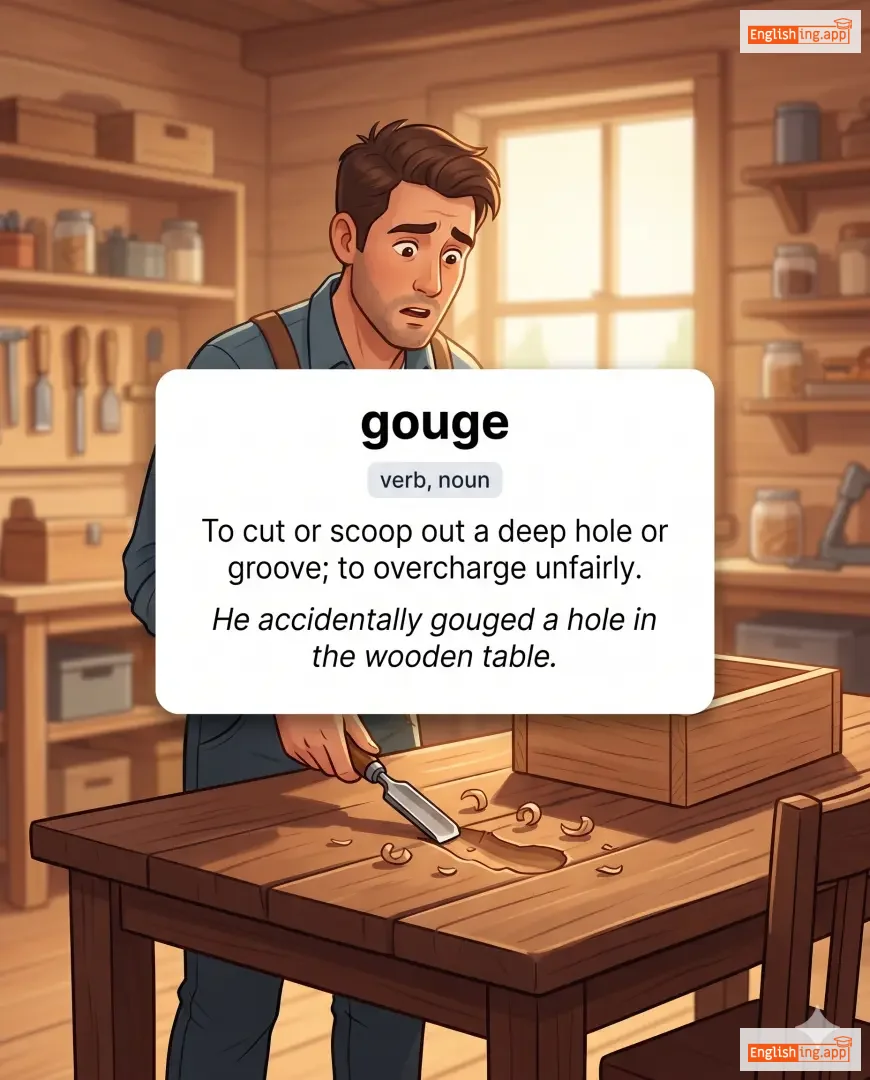
To cut or scoop out a deep hole or groove; to overcharge unfairly.
••••••
|
He accidentally gouged a hole in the wooden table.
他不小心在木桌子上挖了个洞。
••••••
|
他不小心在木桌子上挖了个洞。
Tā bù xiǎoxīn zài mù zhuōzi shàng wāle gè dòng.
••••••
|
price gouging
价格掠夺
••••••
|
Charging excessively high prices, especially during crises.
••••••
|
价格掠夺
jiàgé lüèduó
••••••
|
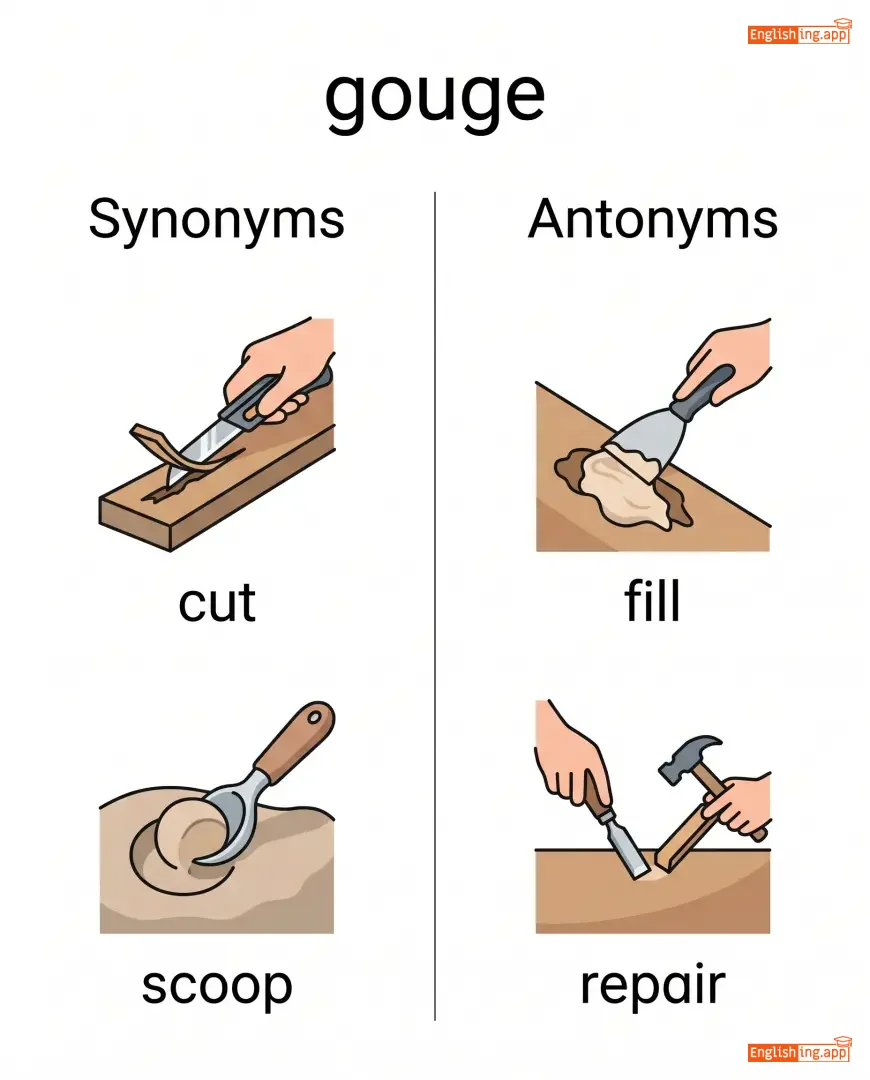
cut, scoop, dig, chisel, overcharge
••••••
|
fill, repair, fairness
••••••
|
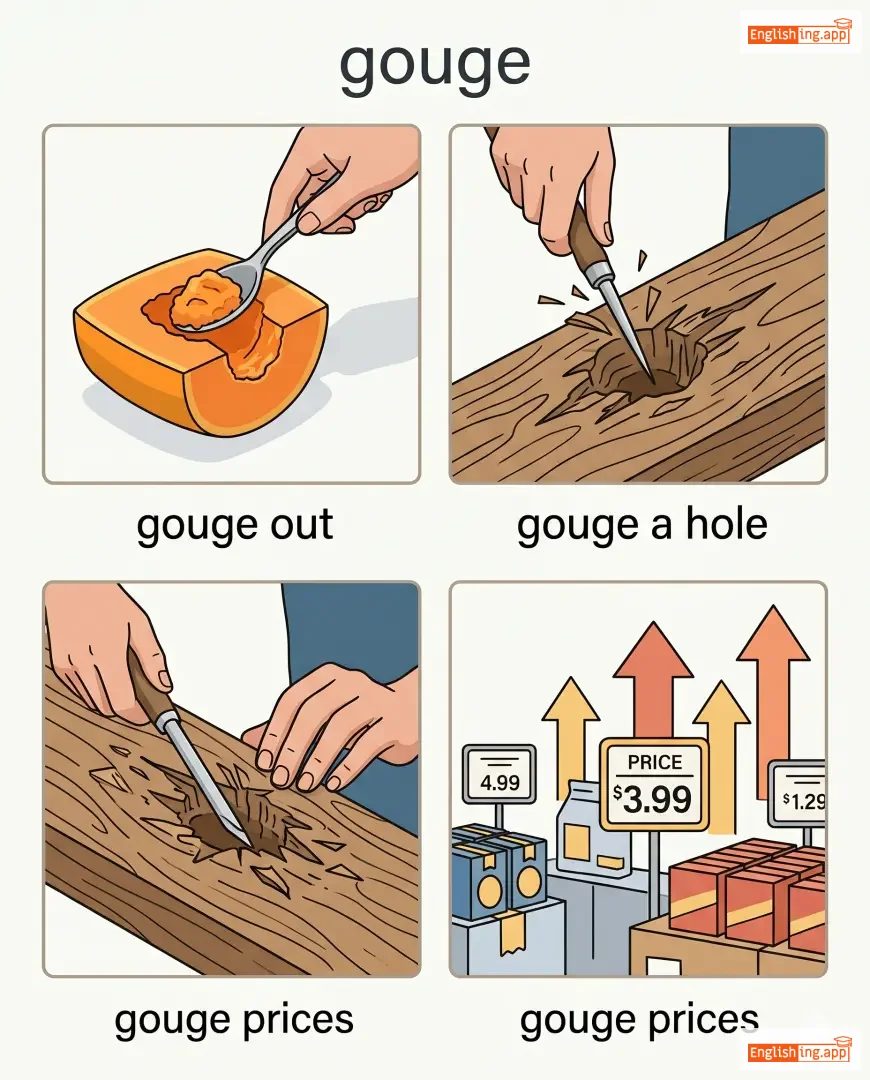
gouge out, gouge a hole, gouge prices, gouge customers
••••••
|
Gouge 就是 gou (洞) 和提高价格
••••••
|
|
#3880
🕸️
|
/ˈɡɒsəmər/
noun, adjective
(高萨梅尔)
••••••
|
|
轻薄物
qīngbó wù
••••••
|
- •••••• | - •••••• | - •••••• | - •••••• |
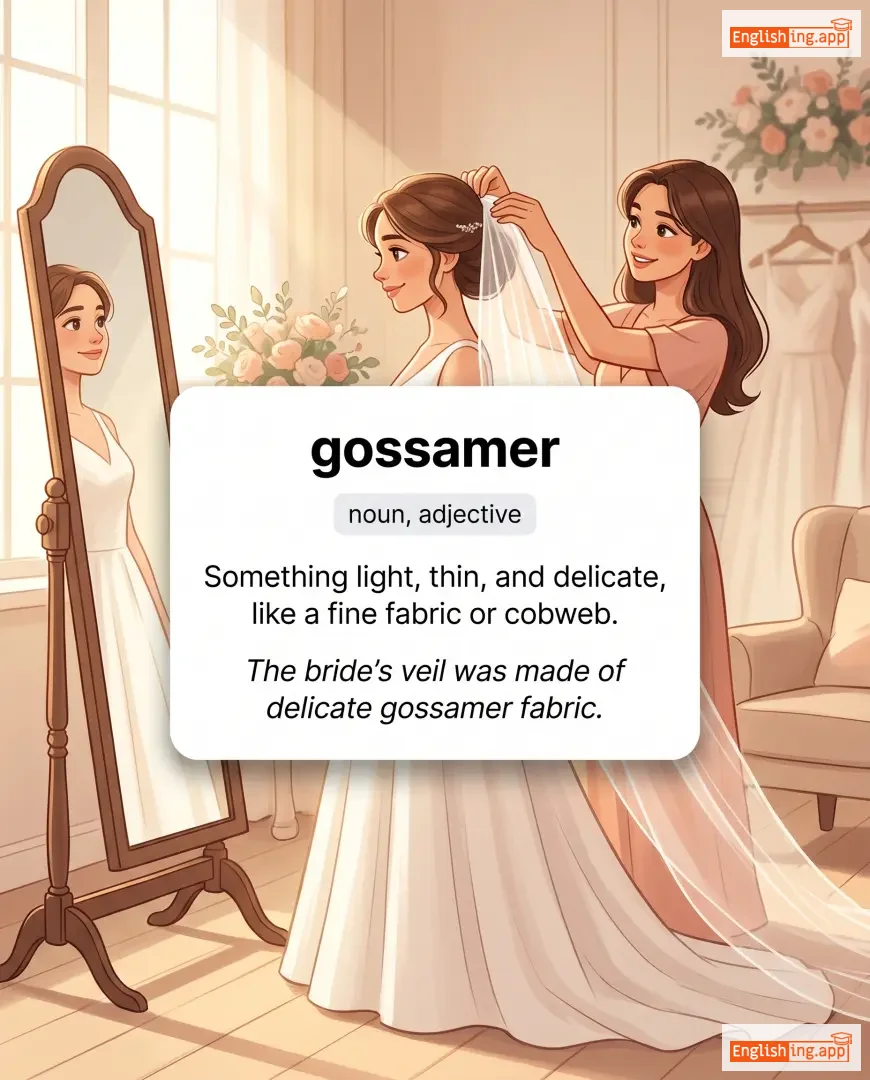
Something light, thin, and delicate, like a fine fabric or cobweb.
••••••
|
The bride's veil was made of delicate gossamer fabric. |
新娘的面纱是由精致的高萨梅尔布料做成的。
Xīnniáng de miànshā shì yóu jīngzhì de gāo sàméi'ěr bùliào zuòchéng de.
••••••
|
- •••••• | - •••••• | - •••••• |
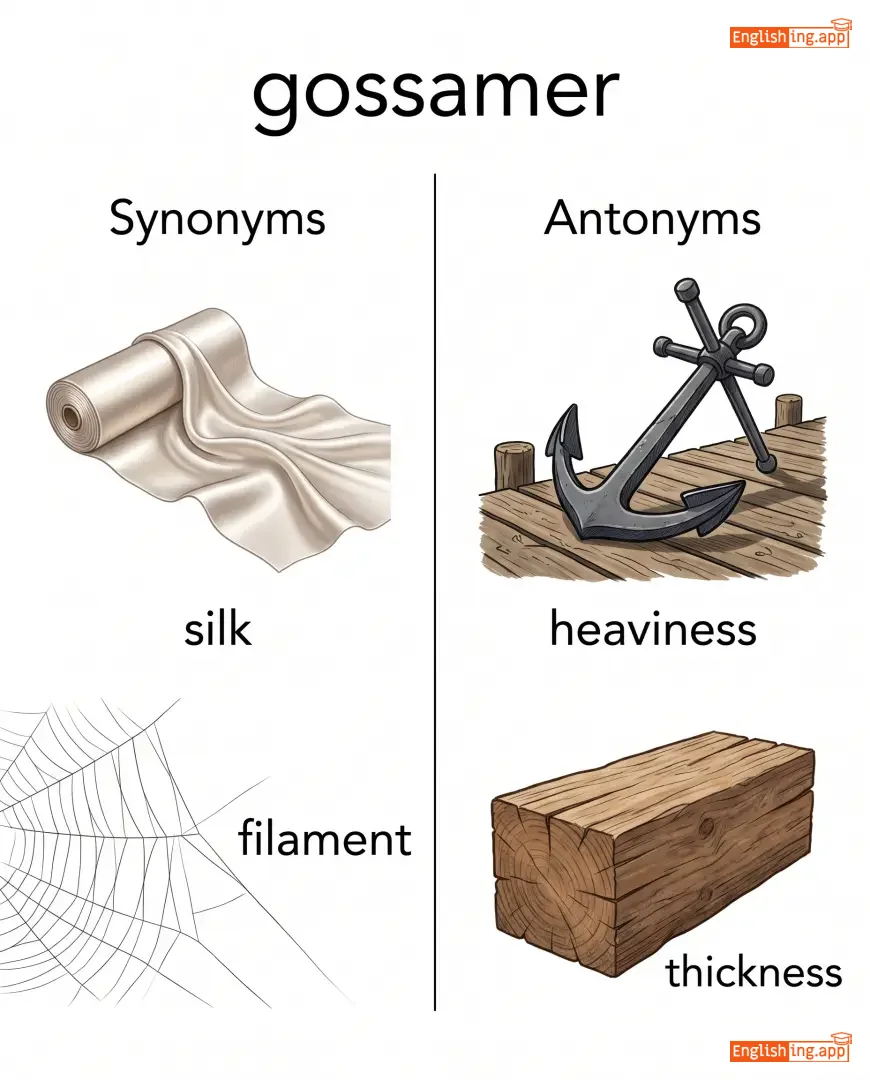
silk, filament, cobweb, fineness, delicacy
••••••
|
heaviness, thickness, solidity
••••••
|
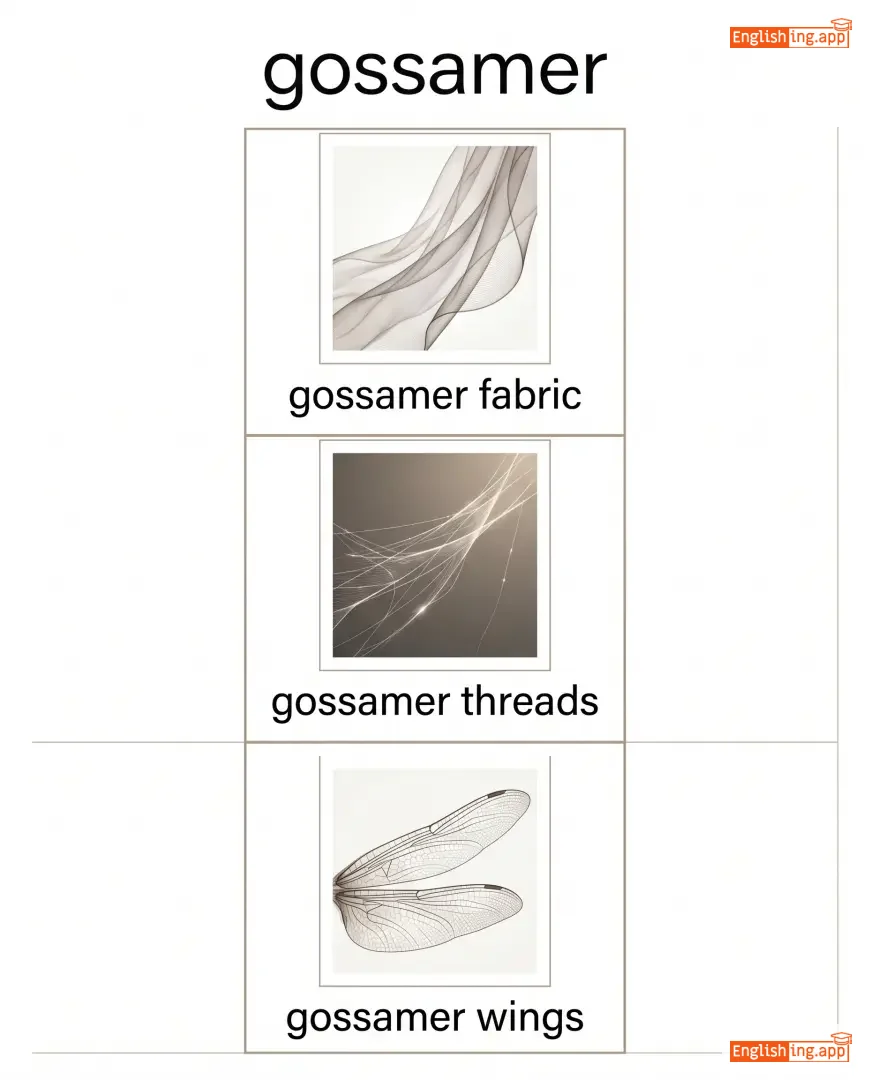
gossamer fabric, gossamer threads, gossamer wings, gossamer veil
••••••
|
高萨梅尔就像是非常轻盈、精致的东西,像蜘蛛网或细布。
••••••
|
|
#3881
🐥
|
/ˈɡɒz.lɪŋ/
noun
(ɡoʊz.lɪŋ)
••••••
|
- •••••• |
小鹅
xiao e
••••••
|
- •••••• | - •••••• | - •••••• | - •••••• |
a young goose
••••••
|
The mother goose carefully protected her goslings. |
母鹅小心翼翼地保护着她的小鹅。
Mu e xiaoxin yiyi de baohuzhe ta de xiao e.
••••••
|
- •••••• | - •••••• | - •••••• |
young goose, chick, duckling
••••••
|
goose, adult goose
••••••
|
baby gosling, flock of goslings, protect goslings
••••••
|
Goose + ling (小) = 小鹅,意思是年轻的鹅。
••••••
|
|
#3882
🩸
|
/ˈɡɔːri/
adjective
(gǒu lí)
••••••
|
- •••••• |
血腥
xuèxīng
••••••
|
- •••••• | - •••••• | - •••••• | - •••••• |
involving or showing a lot of bloodshed and violence
••••••
|
The movie was too gory for children.
这部电影对孩子来说太血腥了。
••••••
|
这部电影对孩子来说太血腥了。
Zhè bù diànyǐng duì háizi lái shuō tài xuèxīngle.
••••••
|
- •••••• | - •••••• | - •••••• |
bloody, gruesome, grisly, violent
••••••
|
clean, bloodless, mild
••••••
|
gory details, gory scene, gory movie
••••••
|
‘血腥’是中文中与gory类似的词,意味着有大量的暴力和血液。
••••••
|
|
#3883
🍕
|
/ɡɔːrdʒ/
verb, noun
(高尔吉)
••••••
|
- •••••• |
贪婪地吃 / 山间狭谷
tanlan de chi / shanjian xia gu
••••••
|
gorged
高尔吉德
••••••
|
gorged
高尔吉德
••••••
|
gorges
高尔吉斯
••••••
|
gorging
高尔吉恩
••••••
|
to eat greedily; a narrow valley between mountains or hills
••••••
|
They gorged themselves on pizza after the hike.
他们在徒步旅行后大快朵颐地吃了比萨。
••••••
|
他们在徒步旅行后大快朵颐地吃了比萨。
Tamen zai tubu lüxing hou da kuai duoyi de chi le pizza.
••••••
|
stick in one’s gorge
卡在某人的喉咙里
••••••
|
to be unacceptable or hard to tolerate
••••••
|
无法容忍
wufa rongren
••••••
|
devour, stuff, cram, canyon, ravine
••••••
|
fast, diet, plain
••••••
|
deep gorge, mountain gorge, gorge on food
••••••
|
Gorge – 既可以指山谷,也可以指狼吞虎咽,记住这两种含义!
••••••
|
|
#3884
😨
|
/ˈɡuːs.bʌmps/
noun
(gu-si-bam-pu-si)
••••••
|
- •••••• |
鸡皮疙瘩
jī pí gē dá
••••••
|
- •••••• | - •••••• | - •••••• | - •••••• |
small raised bumps on the skin caused by cold, fear, or excitement
••••••
|
The horror movie gave me goosebumps. |
那部恐怖电影让我起了鸡皮疙瘩。
Nà bù kǒng bù diànyǐng ràng wǒ qǐle jī pí gē dá.
••••••
|
give someone goosebumps |
to make someone feel intense fear, excitement, or emotion
••••••
|
让某人起鸡皮疙瘩
ràng mǒu rén qǐ jī pí gē dá
••••••
|
chills, shivers, tremors, tingles
••••••
|
calmness, composure
••••••
|
gave me goosebumps, goosebumps all over, goosebumps on skin
••••••
|
Goose (鹅) 通过寒冷或恐惧让人起鸡皮疙瘩。
••••••
|
|
#3885
😴
|
/ˈɡoʊld.brɪk/
verb, noun
(金砖)
••••••
|
- •••••• |
逃避工作
taobi gongzuo
••••••
|
goldbricked
金砖
••••••
|
goldbricked
金砖
••••••
|
goldbricks
金砖
••••••
|
goldbricking
金砖
••••••
|
to avoid work or duty; a person who shirks responsibility
••••••
|
He was accused of goldbricking while the rest of the team worked hard.
他被指控金砖,在其他团队成员努力工作时。
••••••
|
他被指控逃避工作,而其他团队成员都在努力工作。
Ta bei zhikong taobi gongzuo, er qita tuandui chengyuan dou zai nuli gongzuo.
••••••
|
goldbrick on the job
金砖工作
••••••
|
to avoid doing one’s work or responsibility while pretending to work
••••••
|
工作逃避
gongzuo taobi
••••••
|
shirk, loaf, slack, idle, dodge
••••••
|
work, labor, diligence
••••••
|
goldbrick on duty, goldbrick at work, accused of goldbricking
••••••
|
Goldbrick: 假装工作,避免做实际工作。
••••••
|
|
#3886
🙉
|
/ˈɡlɒs.oʊ.vər/
verb
(格洛索夫)
••••••
|
- •••••• |
忽略
hūlüè
••••••
|
glossovered
格洛索弗德
••••••
|
glossovered
格洛索弗德
••••••
|
glossoverse
格洛索弗斯
••••••
|
glossovering
格洛索夫林
••••••
|
an informal or non-standard variant of 'gloss over', meaning to ignore or minimize something
••••••
|
He tried to glossover his mistakes during the meeting.
他试图在会议中忽略他的错误。
••••••
|
他试图在会议中忽略他的错误。
Tā shìtú zài huìyì zhōng hūlüè tā de cuòwù.
••••••
|
- •••••• | - •••••• | - •••••• |
ignore, skip, hide, downplay
••••••
|
emphasize, stress, underline
••••••
|
glossover mistakes, glossover problems
••••••
|
Glossover 和 Gloss over 是一样的 - 隐藏错误
••••••
|
|
#3887
🍽️
|
/ˈɡɑːbəl/
verb
(gōbù)
••••••
|
- •••••• |
狼吞虎咽
lángtūnhǔyàn
••••••
|
gobbled
gōbùle
••••••
|
gobbled
gōbùle
••••••
|
gobbles
gōbù
••••••
|
gobbling
gōbù
••••••
|
to eat something quickly and greedily
••••••
|
The children gobbled their food in minutes.
孩子们在几分钟内狼吞虎咽地吃完了他们的食物。
••••••
|
孩子们在几分钟内狼吞虎咽地吃完了他们的食物。
Háizimen zài jǐ fēnzhōng nèi lángtūnhǔyàn de chī wánle tāmen de shíwù.
••••••
|
gobble up
gobble up
••••••
|
to consume quickly or completely
••••••
|
狼吞虎咽吃掉一切
lángtūnhǔyàn chī diào yīqiè
••••••
|
devour, gulp, consume, wolf down
••••••
|
sip, nibble, savor
••••••
|
gobble up, gobble food, gobble greedily
••••••
|
Gobble意味着狼吞虎咽 – 'Gobble'听起来像中文的'狼吞虎咽'
••••••
|
|
#3888
⚡
|
/ɡoʊd/
verb
(戈德)
••••••
|
|
挑衅
tiaoxin
••••••
|
goaded
戈德德
••••••
|
goaded
戈德德
••••••
|
goads
戈德斯
••••••
|
goading
戈德英
••••••
|
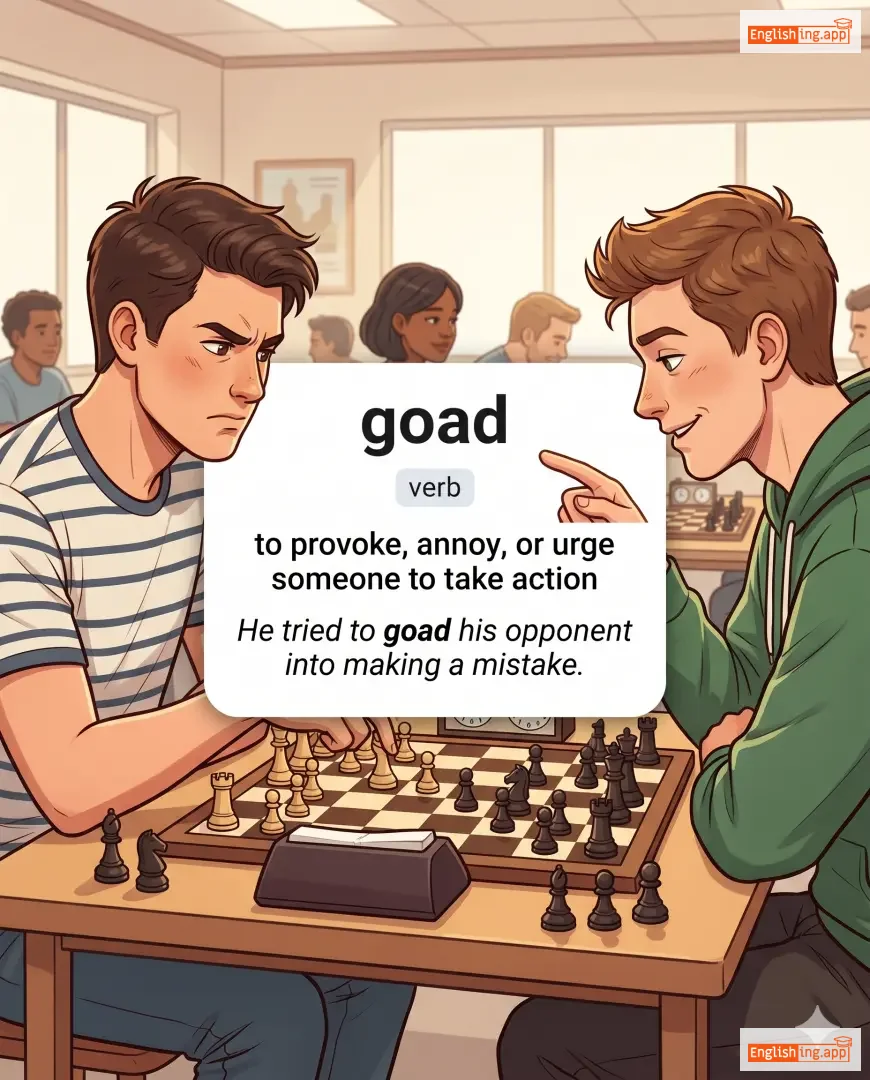
to provoke, annoy, or urge someone to take action
••••••
|
He tried to goad his opponent into making a mistake.
他试图激怒对手让他犯错。
••••••
|
他试图激怒对手让他犯错。
Tā shìtú jīnù duìshǒu ràng tā fàncuò.
••••••
|
goad into action
刺激进入行动
••••••
|
to provoke or push someone to act
••••••
|
激怒进入行动
jīnù jìnrù xíngdòng
••••••
|
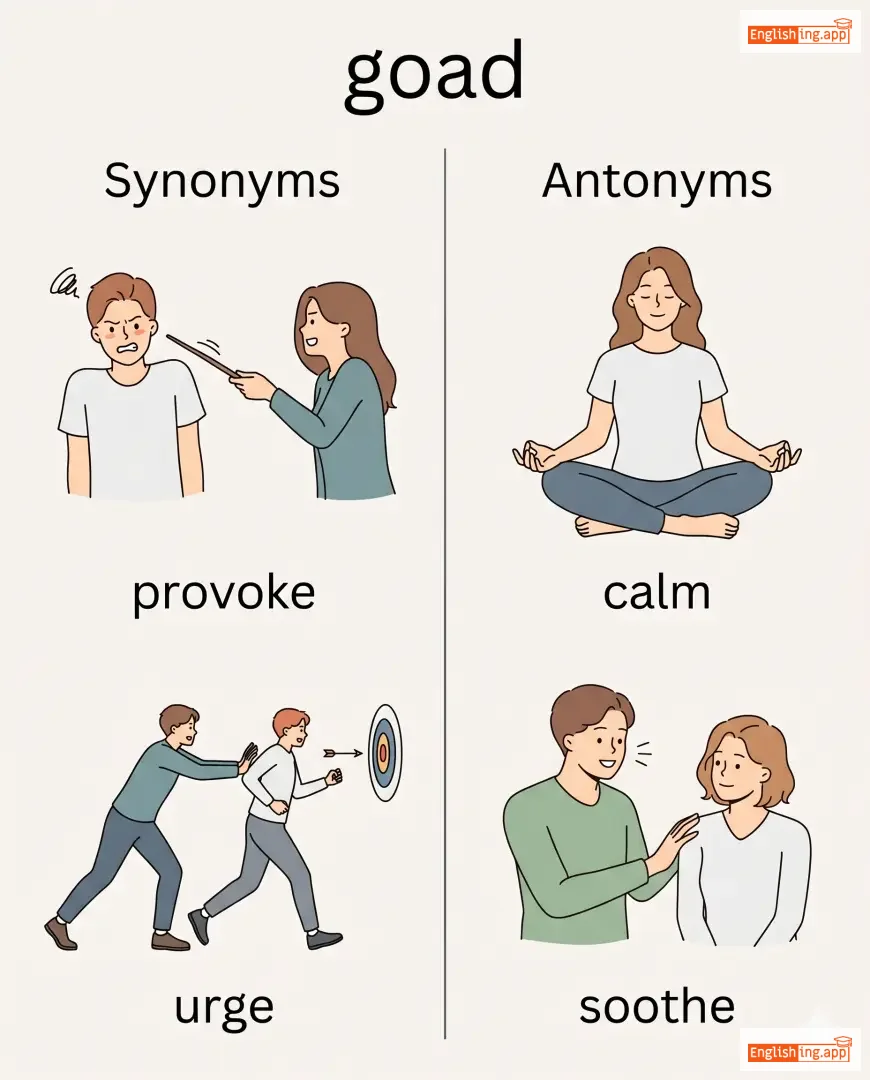
provoke, urge, incite, push, irritate
••••••
|
calm, soothe, dissuade
••••••
|
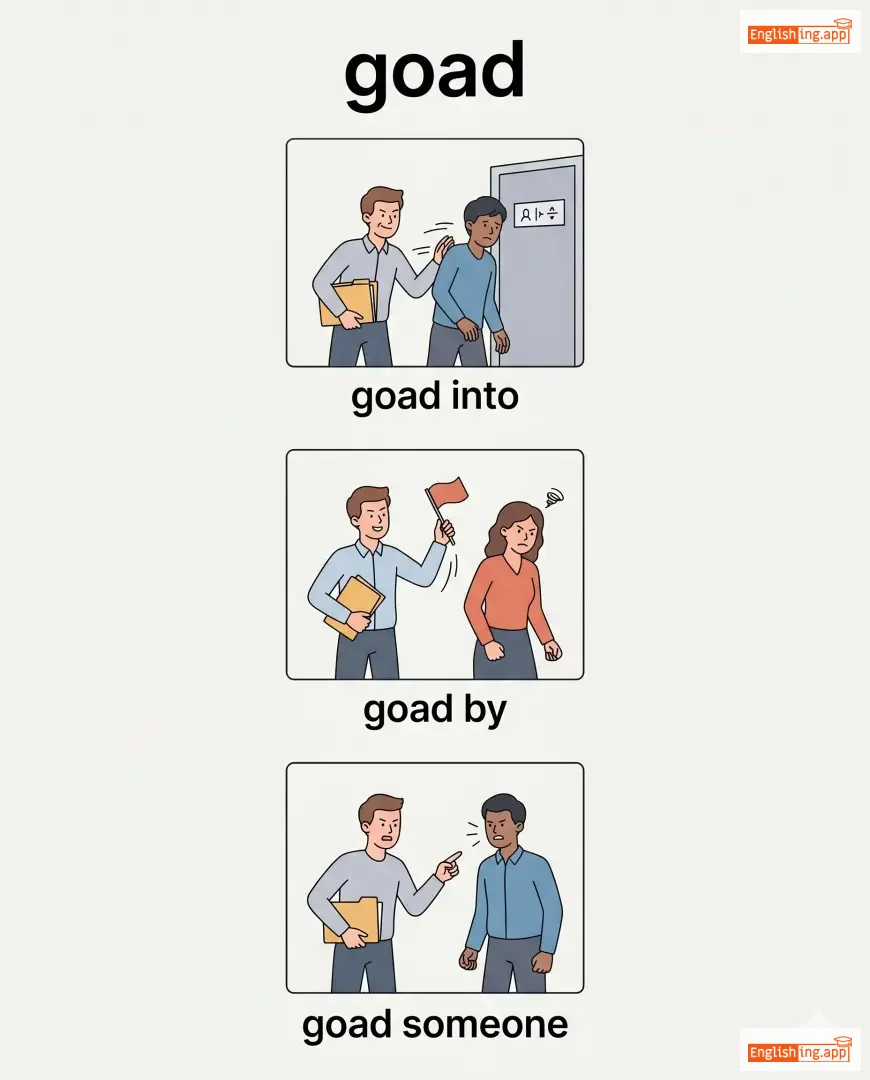
goad into, goad by, goad someone
••••••
|
Goad = Go + Add, 挑衅某人行动
••••••
|
|
#3889
🧙
|
/noʊm/
noun
(诺姆)
••••••
|
- •••••• |
地精
dì jīng
••••••
|
- •••••• | - •••••• | - •••••• | - •••••• |
a small mythical creature, often depicted as a bearded man living underground; also a figurine used in gardens
••••••
|
The garden was decorated with a gnome statue. |
花园里摆放着一个地精雕像。
Huāyuán lǐ bǎi fàng zhe yīgè dì jīng diāoxiàng.
••••••
|
- •••••• | - •••••• | - •••••• |
dwarf, elf, sprite, imp
••••••
|
giant, titan
••••••
|
garden gnome, gnome statue, magical gnome
••••••
|
地精是花园的守护者,小巧的石雕可爱又神秘。
••••••
|
|
#3890
😡
|
/næʃ/
verb
(gnash)
••••••
|
- •••••• |
咬牙切齿
yao ya qie chi
••••••
|
gnashed
gnashed
••••••
|
gnashed
gnashed
••••••
|
gnashes
gnashes
••••••
|
gnashing
gnashing
••••••
|
to grind or strike the teeth together, often in anger or frustration
••••••
|
He began to gnash his teeth in rage.
他开始因为愤怒而咬牙切齿。
••••••
|
他开始因为愤怒而咬牙切齿。
Ta kaishi yinwei fennu er yao ya qie chi.
••••••
|
gnash one's teeth
咬牙切齿
••••••
|
to express anger or frustration, often helplessly
••••••
|
咬牙切齿
yao ya qie chi
••••••
|
grind, clench, snap, grit
••••••
|
smile, relax
••••••
|
gnash teeth, gnash in anger, gnash furiously
••••••
|
Gnash意味着咬牙切齿,想象你愤怒时的牙齿声音。
••••••
|
|
#3891
🖐️
|
/nɑːrld/
adjective
(nárld)
••••••
|
- •••••• |
扭曲的
niǔqū de
••••••
|
- •••••• | - •••••• | - •••••• | - •••••• |
Twisted, rough, and knotted, especially with age.
••••••
|
The old man had gnarled hands from years of hard work. |
那位老人因多年辛勤工作而双手扭曲。
Nà wèi lǎorén yīn duōnián xīnqín gōngzuò ér shuāngshǒu niǔqū.
••••••
|
- •••••• | - •••••• | - •••••• |
twisted, knotted, rugged, deformed, rough
••••••
|
smooth, straight, refined
••••••
|
gnarled tree, gnarled hands, gnarled roots
••••••
|
Gnarled hands 意味着扭曲的手 🖐️
••••••
|
|
#3892
🌳
|
/nɑːrl/
verb
(gnarl)
••••••
|
- •••••• |
扭曲
niǔqū
••••••
|
gnarled
gnarled
••••••
|
gnarled
gnarled
••••••
|
gnarls
gnarls
••••••
|
gnarling
gnarling
••••••
|
To twist into a knotted or distorted form.
••••••
|
The tree roots began to gnarl around the stones.
The tree roots began to gnarl around the stones.
••••••
|
树根开始绕着石头扭曲。
Shù gēn kāishǐ rào zhe shítou niǔqū.
••••••
|
- •••••• | - •••••• | - •••••• |
twist, knot, contort, entwine
••••••
|
straighten, smooth, align
••••••
|
gnarl up, gnarl roots, gnarl branches
••••••
|
Gnarl意味着树根围绕着石头弯曲 🌳
••••••
|
|
#3893
😋
|
/ˈɡlʌt.ən.əs/
adjective
(贪吃的)
••••••
|
- •••••• |
贪吃的
tānchī de
••••••
|
- •••••• | - •••••• | - •••••• | - •••••• |
Excessively greedy in eating or consuming.
••••••
|
His gluttonous appetite shocked everyone at the dinner table. |
他贪吃的胃口让餐桌上的每个人都感到震惊。
Tā tānchī de wèikǒu ràng cānzhuō shàng de měi gèrén dōu gǎndào zhènjīng.
••••••
|
- •••••• | - •••••• | - •••••• |
greedy, voracious, ravenous, insatiable, devouring
••••••
|
moderate, restrained, temperate
••••••
|
gluttonous appetite, gluttonous behavior, gluttonous feast
••••••
|
贪吃的胃口,意味着吃不够。
••••••
|
|
#3894
🍽️
|
/ˈɡlʌt.ən/
noun
(贪吃者)
••••••
|
- •••••• |
暴食者
baoshi zhe
••••••
|
- •••••• | - •••••• | - •••••• | - •••••• |
A person who eats or consumes excessively.
••••••
|
He was called a glutton for eating so much at the party. |
他因为在派对上吃得太多而被称为暴食者。
Ta yinwei zai paidui shang chi de tai duo er bei chengwei baoshi zhe.
••••••
|
glutton for punishment |
Someone who willingly takes on difficult or unpleasant tasks.
••••••
|
为惩罚而暴食
Wei chengfa er baoshi
••••••
|
overeater, gourmand, hog, binge-eater
••••••
|
moderate eater, dieter, ascetic
••••••
|
glutton for food, greedy glutton, glutton for punishment
••••••
|
暴食者 - 吃到不能再吃,充满了食物的世界!
••••••
|
|
#3895
🍚
|
/ˈɡluː.tɪ.nəs/
adjective
(glutinous)
••••••
|
- •••••• |
粘性
zhān xìng
••••••
|
- •••••• | - •••••• | - •••••• | - •••••• |
Having a sticky or glue-like texture.
••••••
|
The glutinous rice stuck together in the pot. |
粘性米饭在锅里粘在一起了。
zhān xìng mǐ fàn zài guō lǐ zhān zài yī qǐ le.
••••••
|
- •••••• | - •••••• | - •••••• |
sticky, gummy, viscous, adhesive, tacky
••••••
|
dry, loose, nonsticky
••••••
|
glutinous rice, glutinous texture, glutinous substance
••••••
|
Glutinous 米饭意味着像胶水一样粘的米饭 🍚
••••••
|
|
#3896
📦
|
/ɡlʌt/
noun
(格拉特)
••••••
|
- •••••• |
供应过剩
gongying guosheng
••••••
|
- •••••• | - •••••• | - •••••• | - •••••• |
An excessive supply of something; more than is needed.
••••••
|
There was a glut of cheap smartphones in the market. |
市场上有过多的廉价智能手机。
Shichang shang you guodu de lianjia zhineng shouji.
••••••
|
- •••••• | - •••••• | - •••••• |
surplus, oversupply, excess, abundance
••••••
|
scarcity, shortage, lack
••••••
|
glut of goods, market glut, glut in supply
••••••
|
Glut意味着供应过剩 — 想象市场上充满了便宜的智能手机。
••••••
|
|
#3897
😔
|
/ɡlʌm/
adjective
(格拉姆)
••••••
|
- •••••• |
沮丧
jǔsàng
••••••
|
- •••••• | - •••••• | - •••••• | - •••••• |
Looking or feeling sad, gloomy, or dejected.
••••••
|
She felt glum after hearing the bad news. |
听到坏消息后,她感到沮丧。
Tīngdào huài xiāoxī hòu, tā gǎndào jǔsàng.
••••••
|
- •••••• | - •••••• | - •••••• |
sad, gloomy, depressed, downcast
••••••
|
happy, cheerful, joyful
••••••
|
feel glum, look glum, sound glum
••••••
|
Glum发音像gloom,意思是沮丧的感觉。
••••••
|
|
#3898
😠
|
/ˈɡlaʊ.ər/
verb
(格洛尔)
••••••
|
- •••••• |
愤怒地看
fènnù de kàn
••••••
|
glowered
格洛沃德
••••••
|
glowered
格洛沃德
••••••
|
glowers
格洛沃尔斯
••••••
|
glowering
格洛沃林
••••••
|
To look at someone with an angry or sullen expression.
••••••
|
He glowered at his rival across the room.
他愤怒地看着他在房间对面的对手。
••••••
|
他愤怒地看着他在房间对面的对手。
Tā fènnù de kàn zhe tā zài fángjiān duìmiàn de duìshǒu.
••••••
|
- •••••• | - •••••• | - •••••• |
scowl, glare, frown, brood
••••••
|
smile, grin, beam
••••••
|
glower angrily, glower silently, glower at someone
••••••
|
Glower 意味着愤怒地看,就像 'glare'
••••••
|
|
#3899
🌟
|
/ɡloʊ/
verb
(glóu)
••••••
|
- •••••• |
发光
fāguāng
••••••
|
glowed
glóud
••••••
|
glowed
glóud
••••••
|
glows
glóuz
••••••
|
glowing
glóing
••••••
|
To shine with a steady light, often softly; to radiate warmth or happiness.
••••••
|
The lanterns glowed softly in the dark.
灯笼在黑暗中轻轻地发光。
••••••
|
灯笼在黑暗中发光。
Dēnglóng zài hēi'àn zhōng fāguāng.
••••••
|
glow with pride
骄傲地发光
••••••
|
to feel or show strong pride
••••••
|
骄傲地发光
Jiāo'ào de fāguāng
••••••
|
shine, radiate, beam, shimmer, sparkle
••••••
|
darken, fade, dim
••••••
|
glow softly, glow warmly, glow with pride, glow in the dark
••••••
|
Glow 意味着发光 — 就像 glow 时你充满自豪。
••••••
|
|
#3900
✨
|
/ˈɡlɒsi/
adjective
(光滑的)
••••••
|
- •••••• |
光泽的
guangze de
••••••
|
- •••••• | - •••••• | - •••••• | - •••••• |
Shiny and smooth in appearance; attractive on the surface but sometimes lacking depth.
••••••
|
She bought a glossy magazine from the store. |
她在商店买了一本光泽的杂志。
Tā zài shāngdiàn mǎile yī běn guāngzé de zázhì.
••••••
|
- •••••• | - •••••• | - •••••• |
shiny, polished, sleek, lustrous, gleaming
••••••
|
dull, matte, rough
••••••
|
glossy magazine, glossy finish, glossy surface, glossy brochure
••••••
|
Glossy意为光泽的 — 就像光亮而吸引眼球的东西
••••••
|
Vocabulary Quiz
Test your vocabulary by matching words with their translations or meanings.
Login to take the quiz
Comments (0)
Share your thoughts and join the discussion.
Join the discussion by logging in
Login to CommentNo comments yet
Be the first to share your thoughts!