





Swipe left or right, or use the buttons. Tap image to zoom.
例句翻译
单词
Lesson 340Lesson 340 - 遮罩切换
|
表情符号
|
单词 | Images | 翻译 | 过去时 | 过去分词 | 第三人称单数 | 动名词 | 含义 | 例句 | 例句翻译 | 示例表达 | 示例表达含义 | 示例表达翻译 | 同义词 | 反义词 | 搭配词 | 助记符 |
|---|---|---|---|---|---|---|---|---|---|---|---|---|---|---|---|---|---|
|
#10165
😏
|
/sɑːrˈkæstɪk/
adjective
(萨尔卡斯提克)
••••••
|
- •••••• |
讽刺的
fěngcì de
••••••
|
- •••••• | - •••••• | - •••••• | - •••••• |
Using irony or mockery to convey contempt or humor.
••••••
|
She made a sarcastic remark about his cooking. |
她对他的烹饪做了一个讽刺的评论。
Tā duì tā de pēngrèn zuòle yīgè fěngcì de pínglùn.
••••••
|
sarcastic tone |
A way of speaking that conveys irony or mockery.
••••••
|
讽刺的语气
fěngcì de yǔqì
••••••
|
mocking, ironic, sneering, sardonic, cutting
••••••
|
sincere, genuine, earnest
••••••
|
sarcastic remark, sarcastic tone, sarcastic comment, sarcastic smile
••••••
|
讽刺的和sarcastic在发音和意思上都非常相似。
••••••
|
|
#10166
😐
|
/ˈsɪəriəs/
adjective
(siriəs)
••••••
|
- •••••• |
严肃
yán sù
••••••
|
- •••••• | - •••••• | - •••••• | - •••••• |
showing deep thought, sincerity, or importance; not joking
••••••
|
She gave me a serious look before making her decision. |
在做出决定之前,她给了我一个严肃的眼神。
Zài zuò chū juédìng zhīqián, tā gěi le wǒ yīgè yánsù de yǎnshén.
••••••
|
dead serious |
completely serious and not joking
••••••
|
完全严肃
wánquán yánsù
••••••
|
grave, earnest, important, solemn, severe
••••••
|
trivial, playful, lighthearted
••••••
|
serious problem, serious matter, serious illness, serious mistake
••••••
|
严肃就像严肃的讨论,不容忽视。
••••••
|
|
#10167
🙇
|
/ˌsɛlf ɪˈfeɪsɪŋ/
adjective
(self-efacing)
••••••
|
- •••••• |
谦虚的
qianxu de
••••••
|
- •••••• | - •••••• | - •••••• | - •••••• |
not drawing attention to oneself; modest
••••••
|
Despite his success, he remained self-effacing and humble. |
尽管他取得了成功,他仍然保持谦虚和谦逊。
Jingguan ta qude le chenggong, ta rengran baochi qianxu he qianxun.
••••••
|
- •••••• | - •••••• | - •••••• |
modest, humble, unassuming, reserved, meek
••••••
|
arrogant, boastful, proud
••••••
|
self-effacing nature, self-effacing smile, self-effacing attitude
••••••
|
Self-effacing意味着谦虚 – 就是隐藏自己,保持谦逊。
••••••
|
|
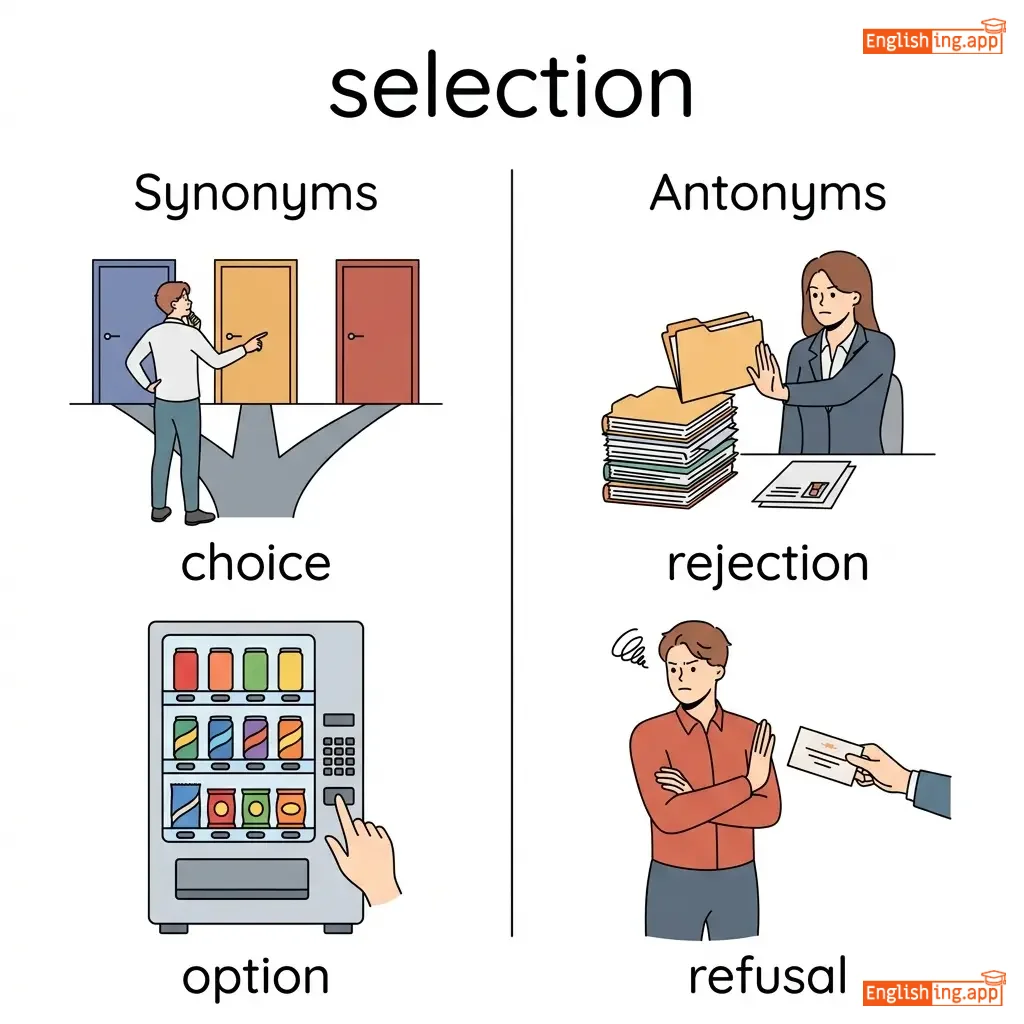
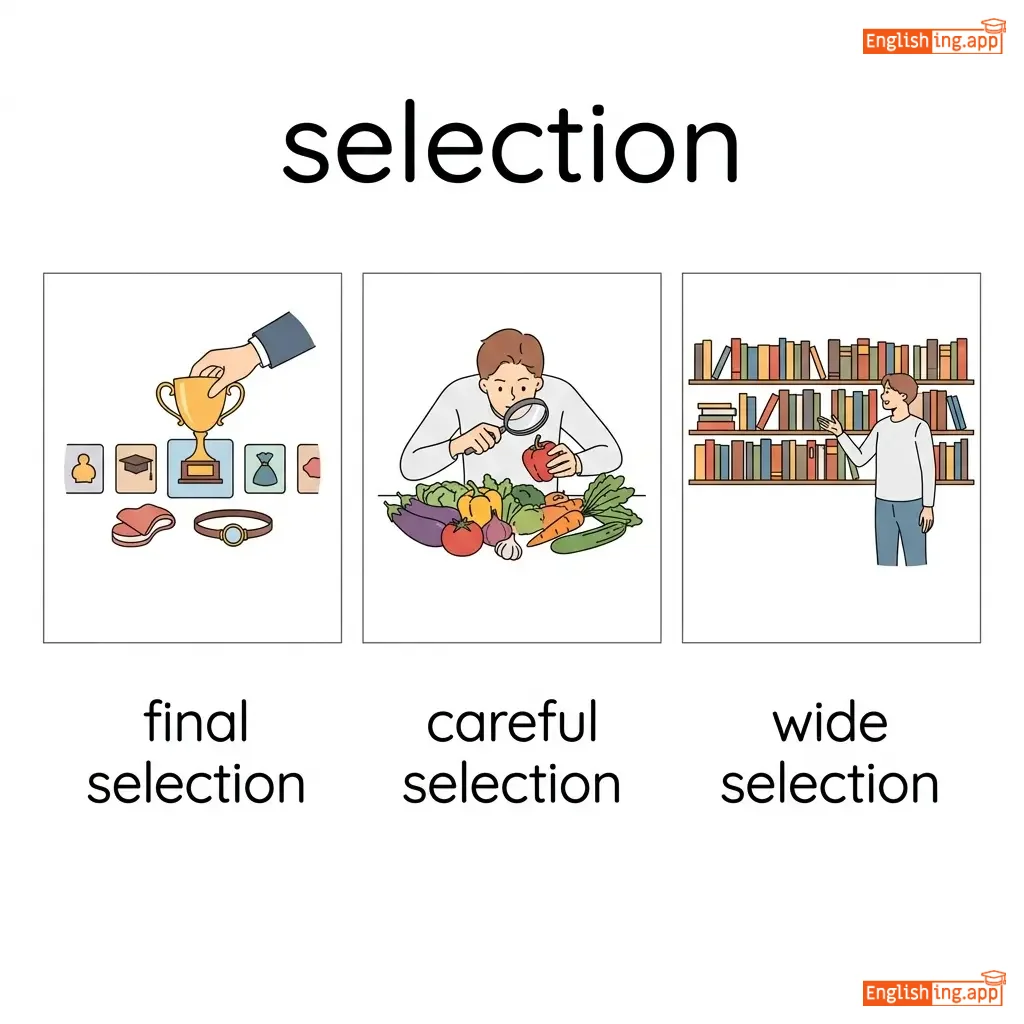
#10168
🗂️
|
/sɪˈlɛkʃən/
noun
(选择)
••••••
|
|
选择
xuanze
••••••
|
- •••••• | - •••••• | - •••••• | - •••••• |
the act of choosing or the thing that is chosen
••••••
|
The final selection will be announced tomorrow. |
最终选择将在明天宣布。
Zuihou xuanze jiang zai mingtian xuānbù.
••••••
|
natural selection |
the process by which organisms better adapted to their environment survive
••••••
|
自然选择
ziran xuanze
••••••
|
choice, option, pick, assortment, range
••••••
|
rejection, refusal
••••••
|
final selection, careful selection, wide selection, random selection
••••••
|
Selection意味着选择 - 就像选举中的选择一样。
••••••
|
|
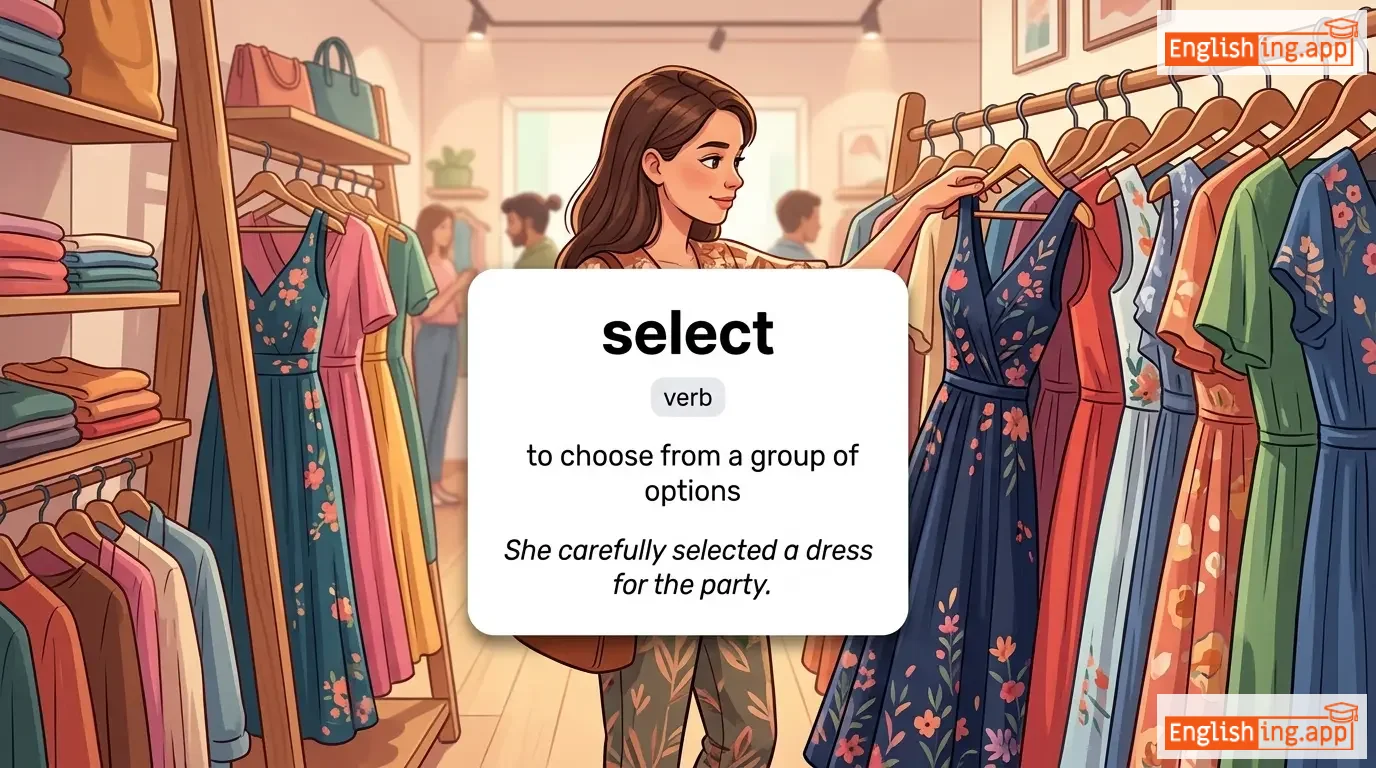
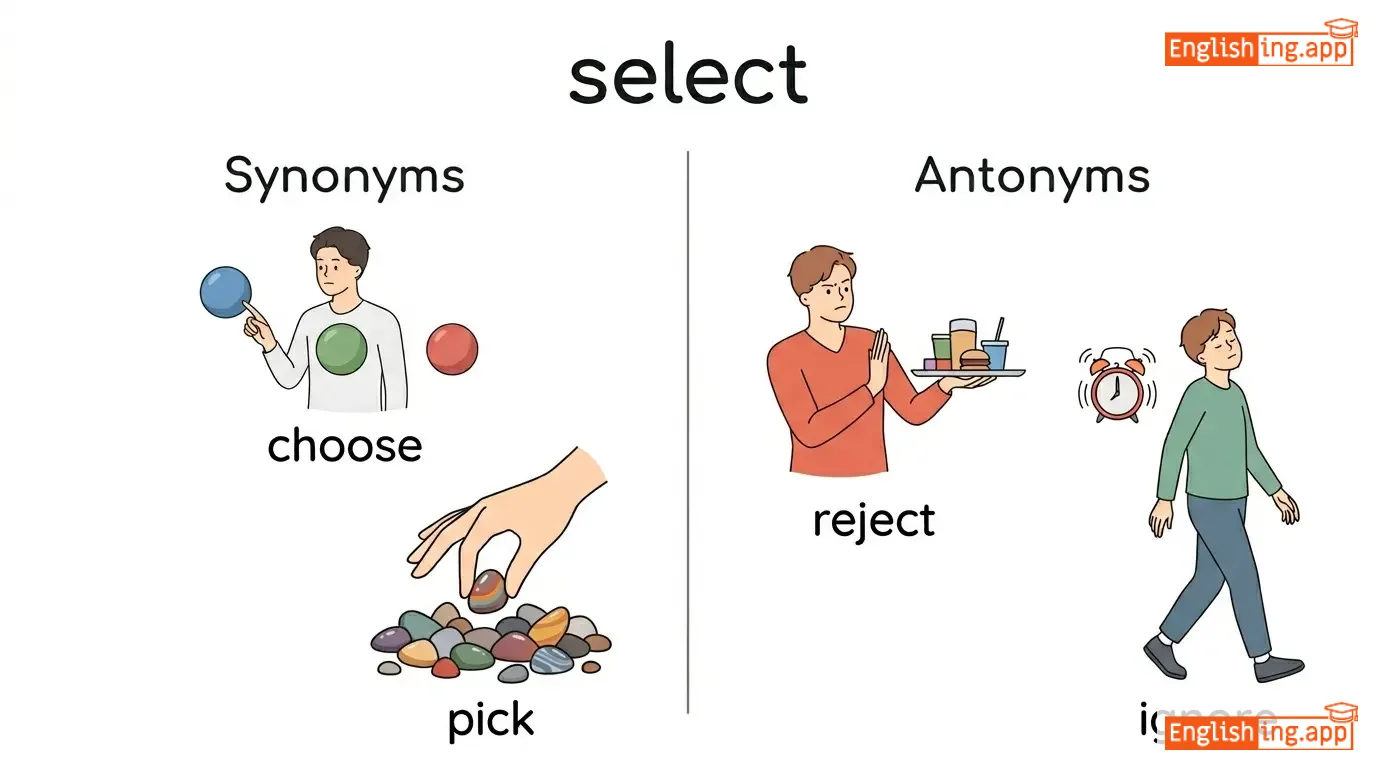
#10169
✅
|
/sɪˈlɛkt/
verb
(选择)
••••••
|
|
选择
xuanze
••••••
|
selected
选择了
••••••
|
selected
选择了
••••••
|
selects
选择
••••••
|
selecting
选择
••••••
|
to choose from a group of options
••••••
|
She carefully selected a dress for the party.
她小心地为聚会选择了一件裙子。
••••••
|
她小心地为聚会选择了一件裙子。
Tā xiǎoxīn de wèi jùhuì xuǎnzéle yī jiàn qúnzi.
••••••
|
select few
select few
••••••
|
a small, special group of people or things
••••••
|
select few
select few
••••••
|
choose, pick, opt, elect, decide
••••••
|
reject, ignore, refuse
••••••
|
select option, select candidate, select menu, select group
••••••
|
Select表示选择: 就像在考试中选择正确答案一样
••••••
|
|
#10170
🔍
|
/siːk/
verb
(sīk)
••••••
|
- •••••• |
寻找
xunzhao
••••••
|
sought
sòt
••••••
|
sought
sòt
••••••
|
seeks
sīks
••••••
|
seeking
sīking
••••••
|
to try to find or obtain something; to attempt or desire to achieve
••••••
|
He decided to seek advice from his mentor.
他决定向他的导师寻求建议。
••••••
|
他决定向他的导师寻求建议。
Tā juédìng xiàng tā de dǎoshī xúnqiú jiànyì.
••••••
|
seek the truth
寻求真理
••••••
|
to try to discover or understand the truth
••••••
|
寻求真理
xúnqiú zhēnlǐ
••••••
|
search, pursue, request, inquire, strive
••••••
|
ignore, avoid, reject
••••••
|
seek help, seek advice, seek approval, seek shelter
••••••
|
Seek 意思是寻找 – 就像在海里寻找宝藏。
••••••
|
|
#10171
⏱️
|
/ˈsekənd/
noun
••••••
|
- •••••• | - •••••• | - •••••• | - •••••• | - •••••• | - •••••• |
a unit of time equal to one sixtieth of a minute; also the position after first
••••••
|
He finished the race in second place. |
- •••••• |
in a second |
very quickly; almost immediately
••••••
|
- •••••• |
moment, instant, rank, position
••••••
|
first, last
••••••
|
second chance, second place, second time
••••••
|
No •••••• |
|
#10172
🔍
|
/sɜːrtʃ/
verb
(sɜːrtʃ)
••••••
|
|
搜索
sousuo
••••••
|
searched
sɜːrcht
••••••
|
searched
sɜːrcht
••••••
|
searches
sɜːrches
••••••
|
searching
sɜːrching
••••••
|
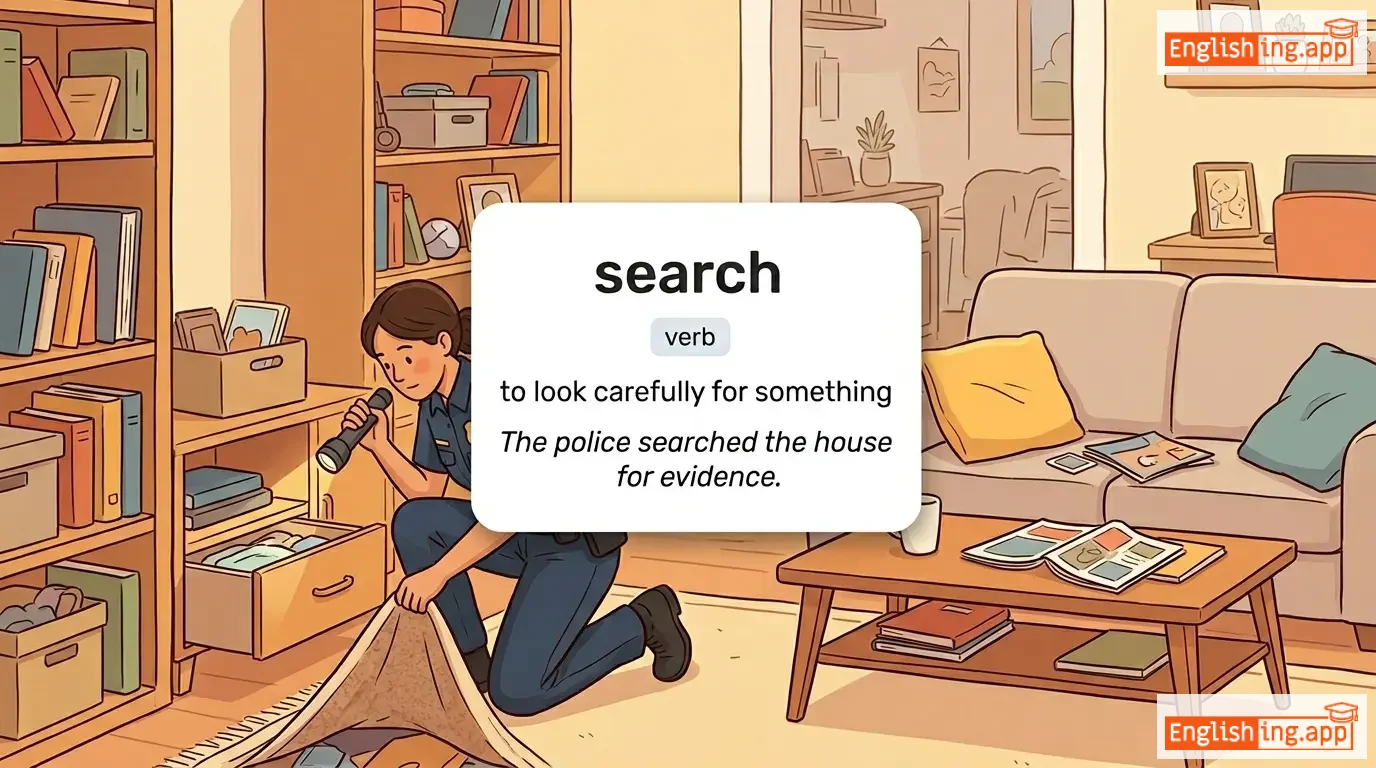
to look carefully for something
••••••
|
The police searched the house for evidence.
警察搜查了房子以寻找证据。
••••••
|
警察搜查了房子以寻找证据。
Jingcha soushao le fangzi yi xunzhao zhengju.
••••••
|
search high and low
搜索高低
••••••
|
to look everywhere
••••••
|
到处搜索
daochu sousuo
••••••
|
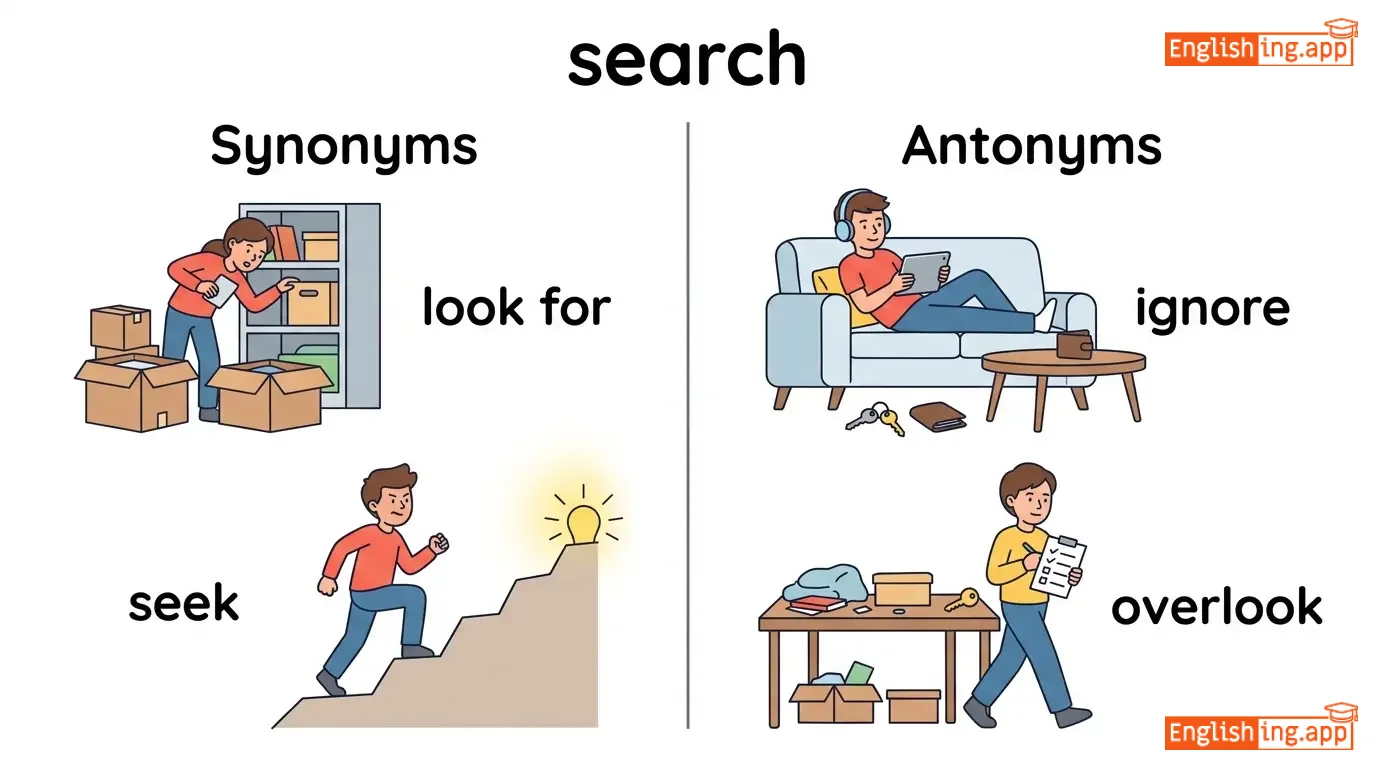
look for, seek, explore, investigate, hunt
••••••
|
ignore, overlook, neglect
••••••
|
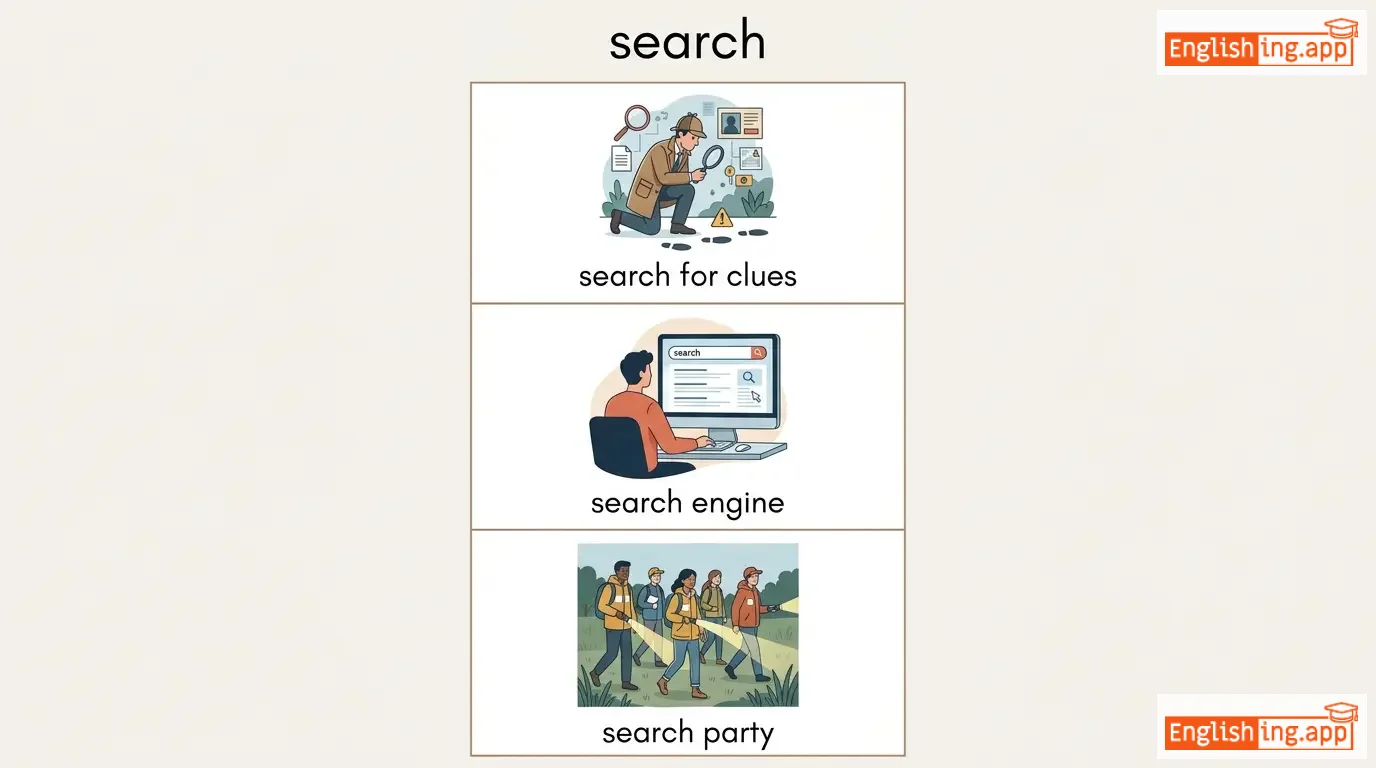
search for clues, search engine, search party
••••••
|
搜索是你在 Google 上做的,意味着找到一切。
••••••
|
|
#10173
🍰
|
/ˈskrʌmpʃəs/
adjective
(skrʌmpʃəs)
••••••
|
- •••••• |
美味的
meiwei de
••••••
|
- •••••• | - •••••• | - •••••• | - •••••• |
extremely tasty or delicious
••••••
|
She baked a scrumptious chocolate cake for the party. |
她为派对烤了一个美味的巧克力蛋糕。
Ta wei paidui kaole yige meiwei de qiaokeli dangao.
••••••
|
- •••••• | - •••••• | - •••••• |
delicious, tasty, yummy, mouthwatering, flavorful
••••••
|
disgusting, tasteless, bland
••••••
|
scrumptious meal, scrumptious cake, scrumptious dinner
••••••
|
Scrumptious 听起来像美味的,表示特别好吃的食物。
••••••
|
|
#10174
🦴
|
/ˈskrɔːni/
adjective
(斯克罗尼)
••••••
|
- •••••• |
瘦弱
shòuruò
••••••
|
- •••••• | - •••••• | - •••••• | - •••••• |
very thin and bony, often looking unhealthy
••••••
|
The scrawny boy could barely lift the heavy bag. |
那个瘦弱的男孩几乎无法提起沉重的包。
Nàgè shòuruò de nánhái jīhū wúfǎ tíqǐ chénzhòng de bāo.
••••••
|
- •••••• | - •••••• | - •••••• |
skinny, thin, gaunt, lean, undernourished
••••••
|
fat, chubby, plump
••••••
|
scrawny kid, scrawny arms, scrawny dog
••••••
|
Scrawny意味着瘦弱 – 瘦弱像根棍子
••••••
|
|
#10175
🪒
|
/skreɪp/
verb
(skreip)
••••••
|
- •••••• |
擦, 刮
ca, gua
••••••
|
scraped
skreipt
••••••
|
scraped
skreipt
••••••
|
scrapes
skreips
••••••
|
scraping
skreiping
••••••
|
to remove or damage the surface of something by rubbing or scratching; to collect something by effort
••••••
|
He scraped his knee while playing football.
他在踢足球时擦伤了膝盖。
••••••
|
他在踢足球时擦伤了膝盖。
Ta zai ti zuqiu shi ca shang le xigai.
••••••
|
scrape through
勉强通过
••••••
|
to succeed with difficulty
••••••
|
勉强通过
mianqiang tongguo
••••••
|
scratch, rub, graze, collect, scuff
••••••
|
polish, smooth, protect
••••••
|
scrape the surface, scrape together, scrape by, scrape off
••••••
|
擦伤-就像在足球场上擦伤膝盖
••••••
|
|
#10176
🌪️
|
/ˈskætərd/
adjective
(skætərd)
••••••
|
- •••••• |
散布的
sanbu de
••••••
|
- •••••• | - •••••• | - •••••• | - •••••• |
Spread irregularly or widely in different directions.
••••••
|
The toys were scattered all over the floor. |
玩具散落在地板上。
Wánjù sànluò zài dìbǎn shàng.
••••••
|
scattered thoughts |
Disorganized or unfocused thinking.
••••••
|
散乱的思维
Sànluàn de sīwéi
••••••
|
dispersed, spread, messy, disorganized
••••••
|
gathered, organized, collected
••••••
|
scattered papers, scattered clouds, scattered across, scattered everywhere
••••••
|
Scattered意味着东西散布得四处都是,就像散乱的纸张。
••••••
|
|
#10177
💾
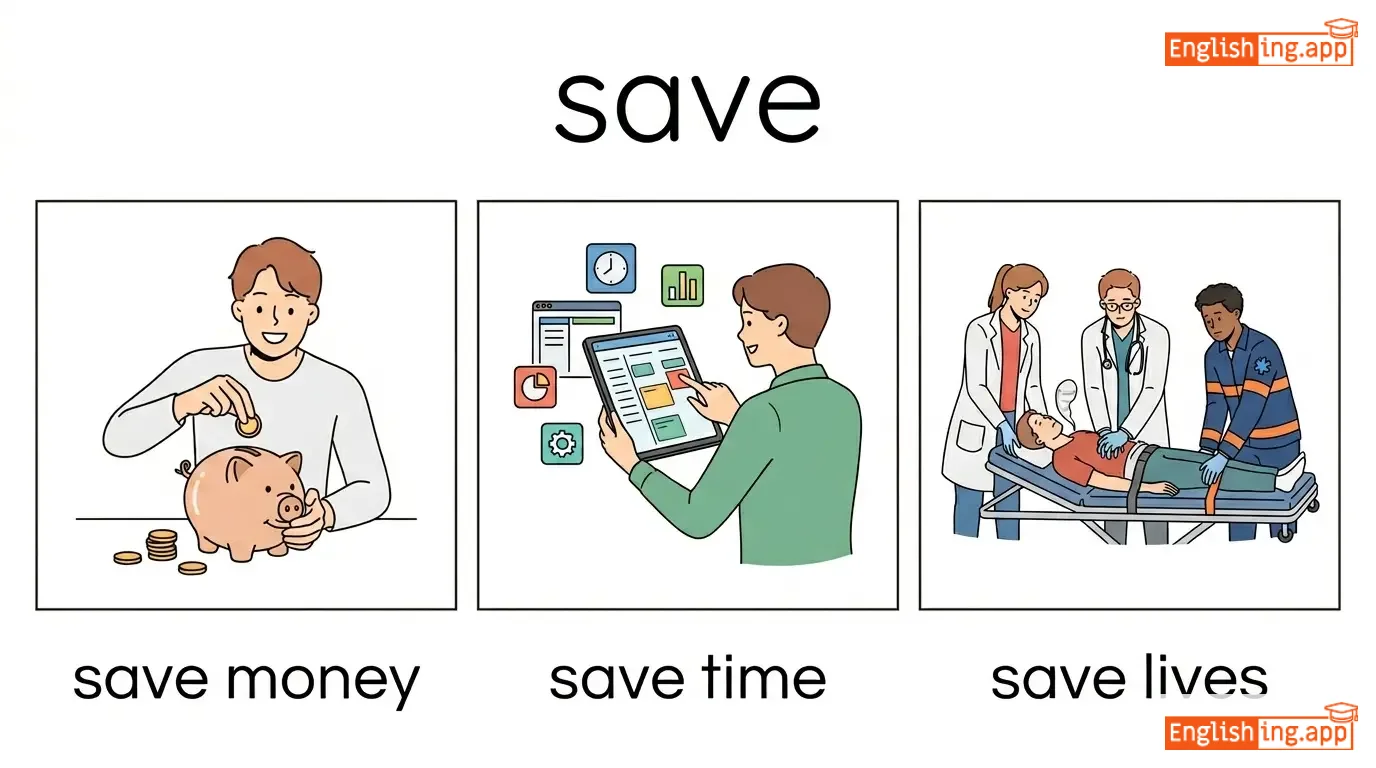
|
/seɪv/
verb
(seɪv)
••••••
|
|
拯救 / 存储
zhěngjiù / cúnchú
••••••
|
saved
seɪvd
••••••
|
saved
seɪvd
••••••
|
saves
seɪvz
••••••
|
saving
seɪvɪŋ
••••••
|
To keep safe, to rescue, or to store for future use.
••••••
|
She managed to save enough money for a new bike.
ʃi ˈmænɪdʒd tə seɪv ɪˈnʌf ˈmʌni fɔr ə nuː baɪk.
••••••
|
她成功地为一辆新自行车存够了钱。
Tā chénggōng de wèi yī liàng xīn zìxíngchē cún gòu le qián.
••••••
|
save the day
seɪv ðə deɪ
••••••
|
To prevent failure or disaster at the last moment.
••••••
|
拯救一天
zhěngjiù yītiān
••••••
|
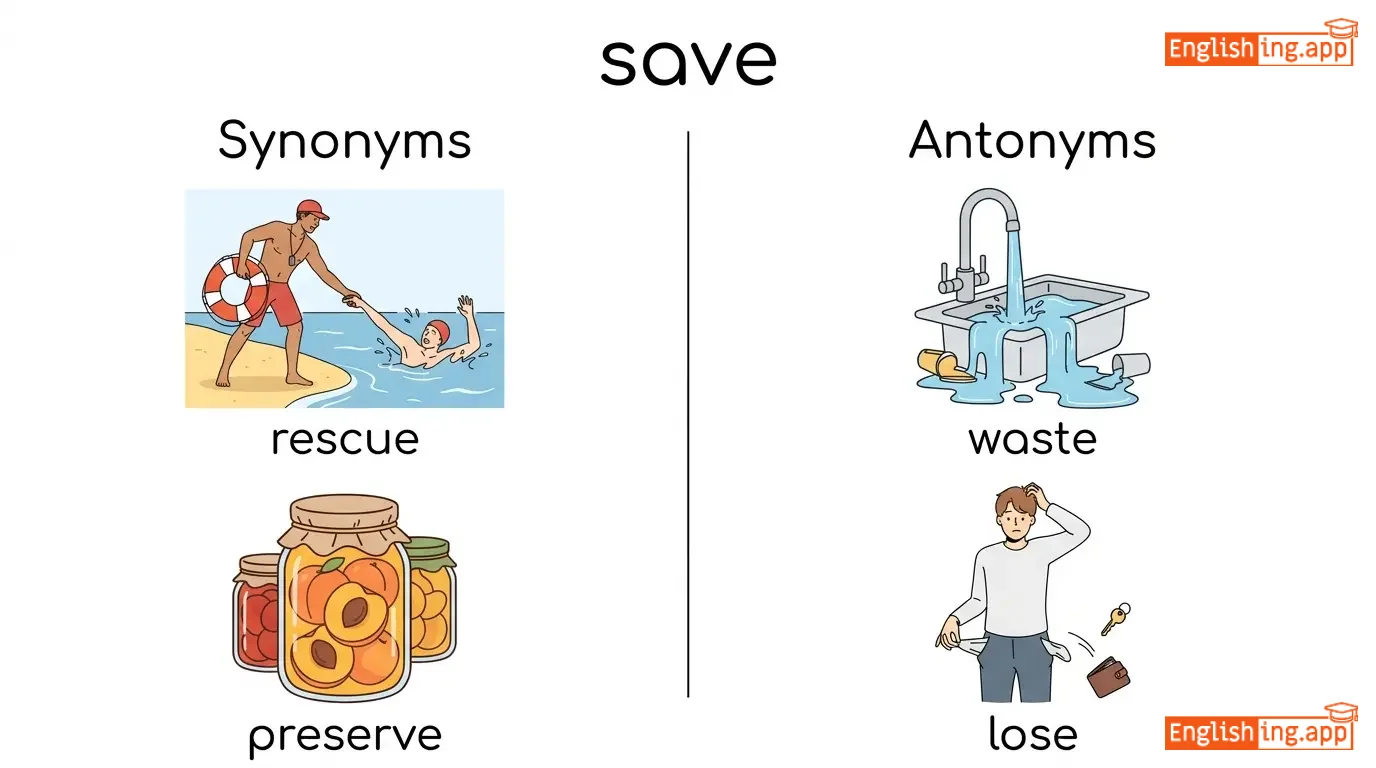
rescue, preserve, protect, conserve, store
••••••
|
waste, lose, spend
••••••
|
save money, save time, save lives, save energy
••••••
|
Save就像是保存按钮。拯救或存储
••••••
|
|
#10178
😜
|
/ˈsɔːsi/
adjective
(sàosī)
••••••
|
- •••••• |
大胆的
dàdǎn de
••••••
|
- •••••• | - •••••• | - •••••• | - •••••• |
Boldly rude, cheeky, or playfully disrespectful.
••••••
|
The child gave a saucy reply to his teacher. |
那个孩子给老师一个大胆的回答。
Nàgè háizi gěi lǎoshī yīgè dàdǎn de huídá.
••••••
|
- •••••• | - •••••• | - •••••• |
cheeky, impudent, bold, sassy
••••••
|
polite, respectful, humble
••••••
|
saucy remark, saucy grin, saucy reply, saucy smile
••••••
|
Saucy 就像辣味,直接又大胆。
••••••
|
|
#10179
😊
|
/ˈsætɪsfaɪd/
adjective
(sàtìsfaìd)
••••••
|
- •••••• |
满意
mǎnyì
••••••
|
- •••••• | - •••••• | - •••••• | - •••••• |
Pleased or content with what has been achieved or received.
••••••
|
He felt satisfied after finishing his project. |
完成项目后,他感到满意。
Wánchéng xiàngmù hòu, tā gǎndào mǎnyì.
••••••
|
satisfied customer |
A customer who is happy with the service or product.
••••••
|
满意的客户
mǎnyì de kèhù
••••••
|
content, pleased, fulfilled, gratified
••••••
|
dissatisfied, unhappy, displeased
••••••
|
satisfied with, fully satisfied, satisfied customer, satisfied smile
••••••
|
Satisfied 就是 'Sat' + 'is' + 'fine' → 因为一切都很好,他感到满意。
••••••
|
|
#10180
🔍
|
/rɪˈviːl/
verb
(rɪˈvɪl)
••••••
|
|
揭示
jie shi
••••••
|
revealed
rɪˈvɪld
••••••
|
revealed
rɪˈvɪld
••••••
|
reveals
rɪˈvɪlz
••••••
|
revealing
rɪˈvɪlɪŋ
••••••
|
to make something known that was previously hidden or secret
••••••
|
The magician refused to reveal his secrets.
魔术师拒绝透露他的秘密。
••••••
|
魔术师拒绝透露他的秘密。
Móshùshī jùjué tòulù tā de mìmì.
••••••
|
reveal the truth
揭示真相
••••••
|
to disclose or make the truth known
••••••
|
揭示真相
jiēshì zhēnxiàng
••••••
|
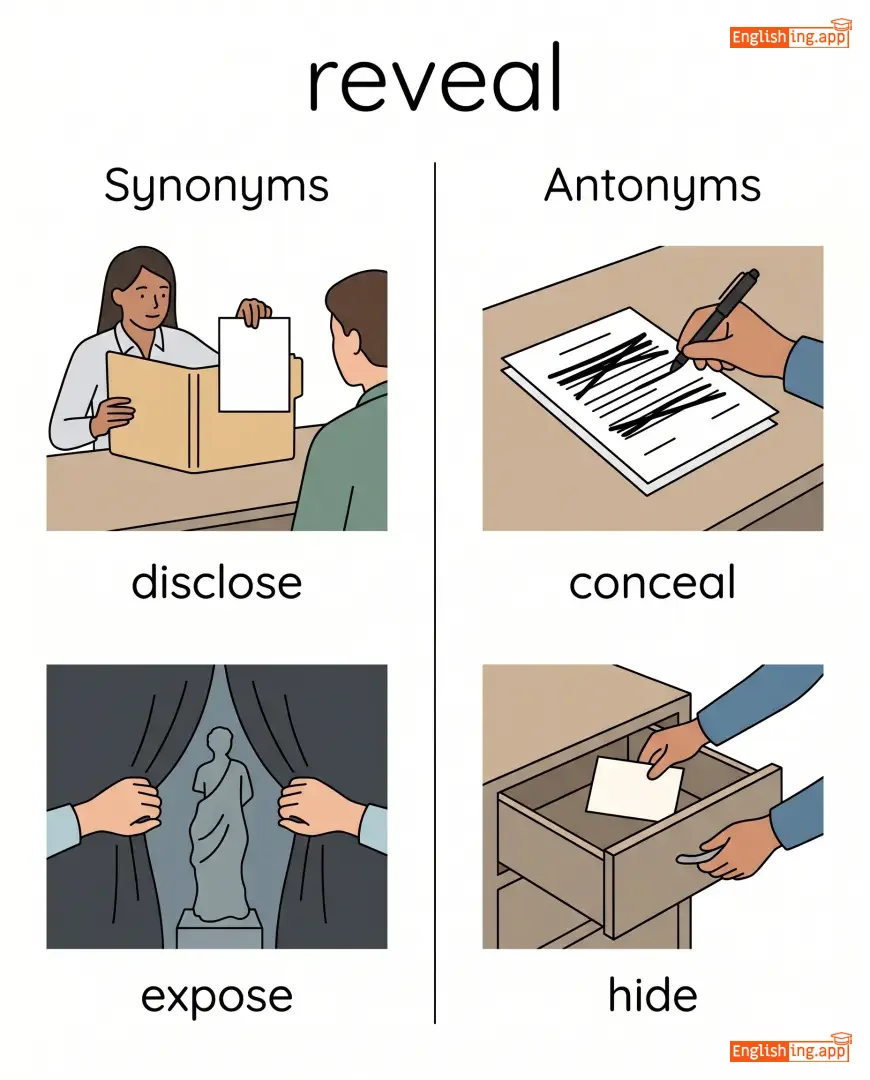
disclose, expose, uncover, unveil, show
••••••
|
conceal, hide, cover
••••••
|
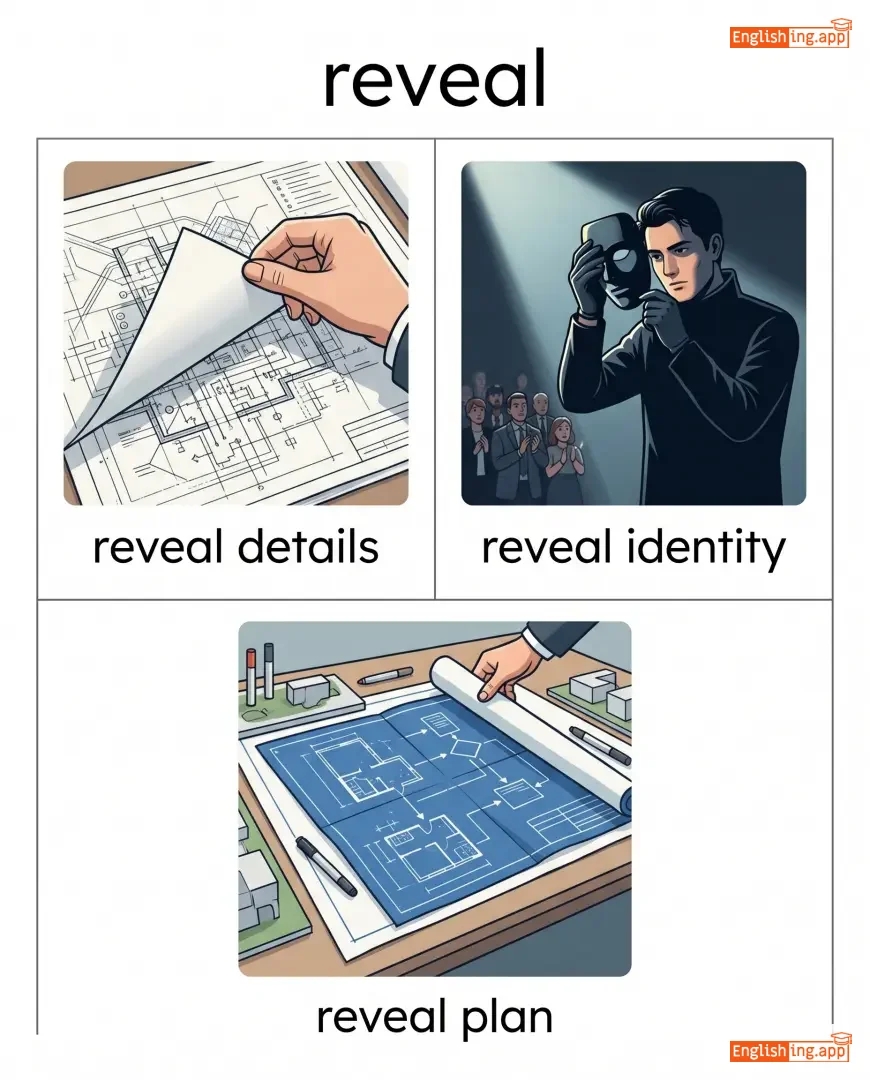
reveal details, reveal identity, reveal plan, reveal evidence
••••••
|
Reveal 就是揭示隐藏的事物!
••••••
|
|
#10181
➖
|
/seɪm/
adjective
(seim)
••••••
|
- •••••• |
相同
xiangtong
••••••
|
- •••••• | - •••••• | - •••••• | - •••••• |
identical; not different or changed
••••••
|
We wore the same dress at the party. |
我们在派对上穿了相同的衣服。
Wǒmen zài pàiduì shàng chuānle xiāngtóng de yīfu.
••••••
|
same old story |
a situation that is familiar and often disappointing
••••••
|
老一套的故事
lǎo yī tào de gùshì
••••••
|
identical, equal, similar, alike
••••••
|
different, distinct, varied
••••••
|
same time, same day, same place, same dress
••••••
|
Same意味着相同—就像每次都是一样的!
••••••
|
|
#10182
😢
|
/sæd/
adjective
(萨德)
••••••
|
- •••••• |
伤心
shangxin
••••••
|
- •••••• | - •••••• | - •••••• | - •••••• |
feeling or showing sorrow; unhappy
••••••
|
She felt sad after hearing the bad news. |
听到坏消息后,她感到伤心。
Tīng dào huài xiāoxī hòu, tā gǎndào shāngxīn.
••••••
|
sad but true |
something that is unfortunate but factual
••••••
|
伤心但真实
shāngxīn dàn zhēnshí
••••••
|
unhappy, sorrowful, depressed, gloomy
••••••
|
happy, joyful, cheerful
••••••
|
sad face, sad story, feel sad, sad news
••••••
|
Sad 意味着伤心—当你听到坏消息时,你会伤心。
••••••
|
|
#10183
⛪
|
/ˈsækrɪsti/
noun
(圣器室)
••••••
|
- •••••• |
圣器室
shengqi shi
••••••
|
- •••••• | - •••••• | - •••••• | - •••••• |
a room in a church where sacred vessels and vestments are kept
••••••
|
The priest entered the sacristy before the mass began. |
神父在弥撒开始前进入了圣器室。
Shénfù zài mísa kāishǐ qián jìnrùle shèngqì shì.
••••••
|
- •••••• | - •••••• | - •••••• |
vestry, chapel room, church room
••••••
|
hall, auditorium
••••••
|
church sacristy, enter sacristy, sacred sacristy
••••••
|
圣器室是存放教堂中圣物的地方。
••••••
|
|
#10184
🙏
|
/ˈseɪkrɪd/
adjective
(赛克瑞德)
••••••
|
- •••••• |
神圣的
shensheng de
••••••
|
- •••••• | - •••••• | - •••••• | - •••••• |
connected with God or a religion and considered holy or deserving respect
••••••
|
The temple is a sacred place for the community.
寺庙是社区的圣地。
••••••
|
寺庙是社区的圣地。
Sìmiào shì shèqū de shèngdì.
••••••
|
sacred cow
神圣的牛
••••••
|
something considered immune from criticism or questioning
••••••
|
神圣的牛
shénshèng de niú
••••••
|
holy, divine, blessed, revered
••••••
|
profane, secular, unholy
••••••
|
sacred place, sacred duty, sacred text, sacred tradition
••••••
|
Sacred 意味着神圣的,就像神圣的地方或神圣的牛。
••••••
|
|
#10185
📜
|
/ruːlz/
noun
(rulz)
••••••
|
- •••••• |
规则
guize
••••••
|
- •••••• | - •••••• | - •••••• | - •••••• |
explicit principles or regulations governing conduct or procedure within a particular area of activity
••••••
|
The teacher reminded the students to follow the classroom rules. |
老师提醒学生遵守课堂规则。
Lǎoshī tíxǐng xuéshēng zūnshǒu kètáng guīzé.
••••••
|
rule of thumb |
a general principle derived from practice rather than theory
••••••
|
经验法则
jīngyàn fǎzé
••••••
|
regulations, laws, guidelines, policies, principles
••••••
|
chaos, disorder, anarchy
••••••
|
strict rules, follow rules, break rules, house rules, traffic rules
••••••
|
规则意味着规范,在学校如果不遵守规则会受到惩罚。
••••••
|
|
#10186
🙄
|
/ruːd/
adjective
(rú)
••••••
|
- •••••• |
粗鲁
culu
••••••
|
- •••••• | - •••••• | - •••••• | - •••••• |
Not having or showing respect; impolite
••••••
|
It was rude of him to interrupt the conversation. |
他打断谈话是很无礼的。
tā dǎduàn tánhuà shì hěn wúlǐ de.
••••••
|
rude awakening |
an unpleasant surprise or realization
••••••
|
粗鲁的觉醒
culu de juéxǐng
••••••
|
impolite, disrespectful, offensive, insolent, unmannerly
••••••
|
polite, respectful, courteous
••••••
|
rude behavior, rude comment, rude awakening, rude interruption
••••••
|
Rude像粗鲁, 两者意思相同。
••••••
|
|
#10187
🗑️
|
/ˈrʌbɪʃ/
noun
(拉比什)
••••••
|
- •••••• |
垃圾
laji
••••••
|
- •••••• | - •••••• | - •••••• | - •••••• |
Waste material or unwanted things; something worthless
••••••
|
He threw the broken toys into the rubbish bin. |
他把坏掉的玩具扔进了垃圾桶。
Ta ba huai diao de wanju reng jin le laji tong.
••••••
|
talk rubbish |
to speak nonsense
••••••
|
胡说八道
hushuo badao
••••••
|
trash, garbage, litter, junk, waste
••••••
|
treasure, valuables
••••••
|
rubbish bin, collect rubbish, throw rubbish, rubbish talk
••••••
|
Rubbish 意味着垃圾,垃圾都扔到垃圾桶里!
••••••
|
|
#10188
📢
|
/ˈraʊdi/
adjective
(raudi)
••••••
|
- •••••• |
吵闹的
chaonao de
••••••
|
- •••••• | - •••••• | - •••••• | - •••••• |
Noisy and disorderly; rough and disruptive
••••••
|
The rowdy crowd made it hard to hear the speaker.
嘈杂的人群让人很难听到演讲者。
••••••
|
嘈杂的人群让人很难听到演讲者。
Caozao de renqun rang ren hen nan tingdao yanjiangzhe.
••••••
|
- •••••• | - •••••• | - •••••• |
boisterous, noisy, unruly, loud, disruptive
••••••
|
quiet, calm, peaceful
••••••
|
rowdy crowd, rowdy behavior, rowdy students, rowdy party
••••••
|
Rowdy的意思是吵闹 (吵闹) + dy → 吵闹的,破坏性的
••••••
|
|
#10189
🛏️
|
/ruːm/
noun
(鲁姆)
••••••
|
- •••••• |
房间
fangjian
••••••
|
- •••••• | - •••••• | - •••••• | - •••••• |
A space within a building enclosed by walls, floor, and ceiling
••••••
|
She decorated her room with bright colors.
希 装饰 她 的 鲁姆 用 明亮 的 颜色。
••••••
|
她用明亮的颜色装饰了她的房间。
ta yong mingliang de yanse zhuangshi le ta de fangjian
••••••
|
room for improvement
鲁姆 福尔 改进
••••••
|
possibility or opportunity for making something better
••••••
|
改进的空间
gaijin de kongjian
••••••
|
space, chamber, area, compartment, apartment
••••••
|
hall, outdoors
••••••
|
living room, bedroom, hotel room, empty room
••••••
|
Room means 房间 fangjian — imagine finding your hotel room in Beijing.
••••••
|
|
#10190
⚠️
|
/ˈrɪski/
adjective
••••••
|
- •••••• | - •••••• | - •••••• | - •••••• | - •••••• | - •••••• |
Involving the possibility of danger, harm, or loss
••••••
|
Investing in that startup is risky but could bring high rewards. |
- •••••• |
take a risky move |
to make a decision that involves significant risk
••••••
|
- •••••• |
dangerous, hazardous, uncertain, precarious, unsafe
••••••
|
safe, secure, certain
••••••
|
risky business, risky decision, risky move, risky investment
••••••
|
No •••••• |
|
#10191
✅
|
/raɪt/
noun, adjective, adverb
(raìt)
••••••
|
- •••••• |
权利
quanli
••••••
|
- •••••• | - •••••• | - •••••• | - •••••• |
something that is morally good, fair, or just; or a legal/entitled claim
••••••
|
Everyone has the right to free speech. |
每个人都有言论自由的权利。
Mei ge ren dou you yanlun ziliu de quanli.
••••••
|
human rights |
basic rights and freedoms that belong to every person
••••••
|
人权
renquan
••••••
|
justice, fairness, entitlement, claim
••••••
|
wrong, injustice
••••••
|
right to vote, right decision, human rights, right direction
••••••
|
权利意味着正义和法律,✅ 一切通过权利得到正义。
••••••
|
|
#10192
🗣️
|
/rɪˈtɔːrɪkəl/
adjective
(修辞的)
••••••
|
- •••••• |
修辞的
xiūcí de
••••••
|
- •••••• | - •••••• | - •••••• | - •••••• |
relating to the art of effective or persuasive speaking or writing; often a question asked to make a point rather than get an answer
••••••
|
He asked a rhetorical question during the debate.
他在辩论中提出了一个修辞性问题。
••••••
|
他在辩论中提出了一个修辞性问题。
Tā zài biànlùn zhōng tíchūle yīgè xiūcí xìng wèntí.
••••••
|
rhetorical question
修辞性问题
••••••
|
a question asked to make a point rather than to receive an answer
••••••
|
修辞性问题
xiūcí xìng wèntí
••••••
|
oratorical, persuasive, stylistic, eloquent
••••••
|
unspoken, plain
••••••
|
rhetorical device, rhetorical style, rhetorical question
••••••
|
修辞的意思是用来强调,而不是为了得到答案。
••••••
|
|
#10193
🤢
|
/rɪˈvoʊltɪŋ/
adjective
(瑞沃尔廷)
••••••
|
- •••••• |
令人作呕的
ling ren zuo ou de
••••••
|
- •••••• | - •••••• | - •••••• | - •••••• |
extremely unpleasant or disgusting
••••••
|
The smell of the garbage was revolting.
泽 斯梅尔 奥夫 泽 加尔贝奇 沃兹 瑞沃尔廷
••••••
|
垃圾的气味令人作呕。
la ji de qi wei ling ren zuo ou
••••••
|
- •••••• | - •••••• | - •••••• |
disgusting, repulsive, offensive, vile
••••••
|
pleasant, delightful
••••••
|
revolting smell, revolting behavior, revolting sight
••••••
|
Revolting 听起来像反叛,但其实让人反胃。
••••••
|
|
#10194
🙏
|
/ˈrɛvərəns/
noun
(雷弗伦斯)
••••••
|
- •••••• |
崇敬
chongjing
••••••
|
- •••••• | - •••••• | - •••••• | - •••••• |
deep respect for someone or something
••••••
|
The students showed reverence to their teacher. |
学生们向他们的老师表达了崇敬。
Xueshengmen xiang tamen de laoshi biaodale chongjing.
••••••
|
pay reverence |
to show respect or honor
••••••
|
表示敬意
biaoshi jingyi
••••••
|
respect, admiration, veneration, honor
••••••
|
disrespect, contempt
••••••
|
reverence for tradition, show reverence, pay reverence
••••••
|
崇敬就像'崇高',但它是对他人的尊敬。
••••••
|
Vocabulary Quiz
Test your vocabulary by matching words with their translations or meanings.
Login to take the quiz
Comments (0)
Share your thoughts and join the discussion.
Join the discussion by logging in
Login to CommentNo comments yet
Be the first to share your thoughts!