

Swipe left or right, or use the buttons. Tap image to zoom.
例句翻译
单词
Lesson 444Lesson 444 - 遮罩切换
|
表情符号
|
单词 | Images | 翻译 | 过去时 | 过去分词 | 第三人称单数 | 动名词 | 含义 | 例句 | 例句翻译 | 示例表达 | 示例表达含义 | 示例表达翻译 | 同义词 | 反义词 | 搭配词 | 助记符 |
|---|---|---|---|---|---|---|---|---|---|---|---|---|---|---|---|---|---|
|
#1
🙋♂️
|
/huːˈɛvər/
pronoun
(húːˈɛvər)
••••••
|
- •••••• |
无论谁
wúlùn shuí
••••••
|
- •••••• | - •••••• | - •••••• | - •••••• |
any person who; no matter who
••••••
|
Whoever wants to join the trip must register today. |
无论谁想加入旅行,都必须今天注册。
Wúlùn shuí xiǎng jiārù lǚxíng, dōu bìxū jīntiān zhùcè.
••••••
|
- •••••• | - •••••• | - •••••• |
anyone, anybody, whosoever
••••••
|
none, nobody
••••••
|
whoever comes, whoever wants, whoever said, whoever did
••••••
|
Who + ever = 无论谁 — whoever means 任何人
••••••
|
|
#1
🧒
|
/ˈjʌŋstər/
noun
(yangstér)
••••••
|
- •••••• |
年轻人
niánqīngrén
••••••
|
- •••••• | - •••••• | - •••••• | - •••••• |
a young person or child, especially a teenager or adolescent
••••••
|
The park was full of youngsters playing football. |
公园里充满了踢足球的年轻人。
Gōngyuán lǐ chōngmǎnle tī zúqiú de niánqīngrén.
••••••
|
full of youth |
energetic and lively, typical of young people
••••••
|
充满青春
chōngmǎn qīngchūn
••••••
|
youth, adolescent, teen, juvenile, minor
••••••
|
adult, elder, senior
••••••
|
youngster group, ambitious youngster, talented youngster, local youngster
••••••
|
Youngster 代表年轻人,年轻人充满了生命力 🧑
••••••
|
|
#1
✍️
|
/ˈrɪtən/
adjective
(rìtén)
••••••
|
- •••••• |
书面
shūmiàn
••••••
|
- •••••• | - •••••• | - •••••• | - •••••• |
expressed in writing rather than spoken; composed or recorded in written form
••••••
|
The agreement must be in written form to be valid.
协议必须以书面形式进行,才有效。
••••••
|
协议必须以书面形式进行,才有效。
Xiéyì bìxū yǐ shūmiàn xíngshì jìnxíng, cái yǒuxiào.
••••••
|
in black and white
黑白分明
••••••
|
clearly written or printed, leaving no doubt
••••••
|
黑白分明
hēibái fēnmíng
••••••
|
documented, recorded, drafted, inscribed, composed
••••••
|
spoken, oral, verbal
••••••
|
written form, written statement, written communication, written agreement
••••••
|
Written 在中文中表示已经书面记录或表达 ✍️
••••••
|
|
#1
✋
|
/rɪst/
noun
••••••
|
- •••••• | - •••••• | - •••••• | - •••••• | - •••••• | - •••••• |
the joint connecting the hand with the forearm
••••••
|
He wore a smartwatch on his left wrist. |
- •••••• |
wrist watch |
a watch worn around the wrist
••••••
|
- •••••• |
joint, carpus, arm joint, wrist joint
••••••
|
ankle, elbow
••••••
|
sprained wrist, wrist pain, wrist movement, wrist injury
••••••
|
No •••••• |
|
#1
🤩
|
/waʊ/
interjection
(哇)
••••••
|
- •••••• |
表示惊讶的词语
biao shi jing ya de ci yu
••••••
|
- •••••• | - •••••• | - •••••• | - •••••• |
used to express great surprise, admiration, or pleasure
••••••
|
Wow, that performance was amazing! |
哇,那个表演太棒了!
Wa, na ge biao yan tai bang le!
••••••
|
- •••••• | - •••••• | - •••••• |
amazing, impressive, astonishing, wonderful, unbelievable
••••••
|
boring, dull, unimpressive
••••••
|
say wow, wow moment, wow factor, wow effect
••••••
|
看到让你惊讶的事,就会不自觉地说 ‘哇!’
••••••
|
|
#1
🌍
|
/ˈwɜːrldwaɪd/
adjective
(wɜːrldwaɪd)
••••••
|
- •••••• |
全球
quanqiu
••••••
|
- •••••• | - •••••• | - •••••• | - •••••• |
extending or reaching throughout the whole world
••••••
|
The company has achieved worldwide recognition for its products.
这家公司因其产品获得了全球认可。
••••••
|
这家公司因其产品获得了全球认可。
Zhe jiā gōngsī yīn qí chǎnpǐn huòdé le quánqiú rènkě.
••••••
|
worldwide fame
全球名声
••••••
|
fame known across the world
••••••
|
全球声誉
quánqiú shēngyù
••••••
|
global, international, universal, planetary, cosmopolitan
••••••
|
local, regional, domestic
••••••
|
worldwide audience, worldwide sales, worldwide distribution, worldwide network
••••••
|
World wide意味着在世界范围内——全球!
••••••
|
|
#1
🏢
|
/ˈwɜːrkpleɪs/
noun
(wɜːrkpleɪs)
••••••
|
- •••••• |
工作场所
gongzuo changsuo
••••••
|
- •••••• | - •••••• | - •••••• | - •••••• |
a place where people work, such as an office, factory, or shop
••••••
|
Maintaining good communication is vital in the workplace.
在工作场所保持良好的沟通至关重要。
••••••
|
在工作场所保持良好的沟通至关重要。
Zai gongzuo changsuo baochi lianghao de goutong zhiguang zhongyao.
••••••
|
workplace culture
职场文化
••••••
|
the shared values, beliefs, and behaviors in a work environment
••••••
|
职场文化
zhichang wenhua
••••••
|
office, job site, work environment, establishment, premises
••••••
|
home, residence
••••••
|
safe workplace, workplace environment, workplace policy, workplace training
••••••
|
工作 + 场所 = 工作场所,意味着工作的地方!
••••••
|
|
#1
🏋️♀️
|
/ˈwɜːrkaʊt/
noun
(wɜːrkaʊt)
••••••
|
- •••••• |
锻炼
duànliàn
••••••
|
- •••••• | - •••••• | - •••••• | - •••••• |
a session of physical exercise or training to improve fitness or health
••••••
|
She does a full-body workout every morning before work. |
她每天早上在上班前做全身锻炼。
Tā měitiān zǎoshang zài shàngbān qián zuò quánshēn duànliàn.
••••••
|
intense workout |
a very demanding or vigorous exercise session
••••••
|
强烈的锻炼
qiángliè de duànliàn
••••••
|
exercise, training, session, fitness routine, practice
••••••
|
rest, inactivity, relaxation
••••••
|
daily workout, intense workout, gym workout, home workout
••••••
|
在健身房里,‘workout’意味着通过锻炼使身体变得更加健康——工作前做锻炼!
••••••
|
|
#1
🗣️
|
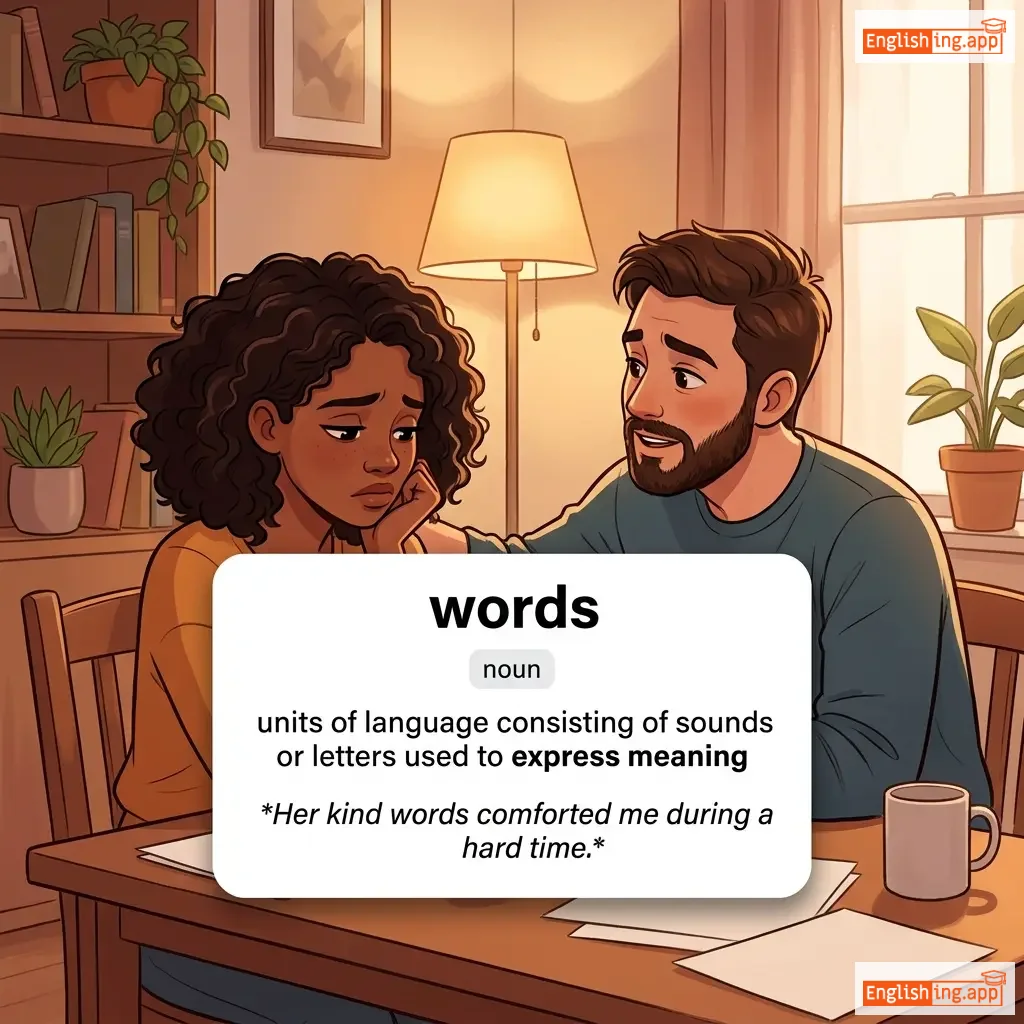
/wɜːdz/
noun
(wɜːrdz)
••••••
|
|
词语
ciyu
••••••
|
- •••••• | - •••••• | - •••••• | - •••••• |
units of language consisting of sounds or letters used to express meaning
••••••
|
Her kind words comforted me during a hard time. |
她温暖的话语在困难时给予了我安慰。
Ta wenruan de huayu zai kunnan shi jiayu le wo anwei.
••••••
|
in other words |
used to express something in a different or clearer way
••••••
|
换句话说
huan ju hua shuo
••••••
|
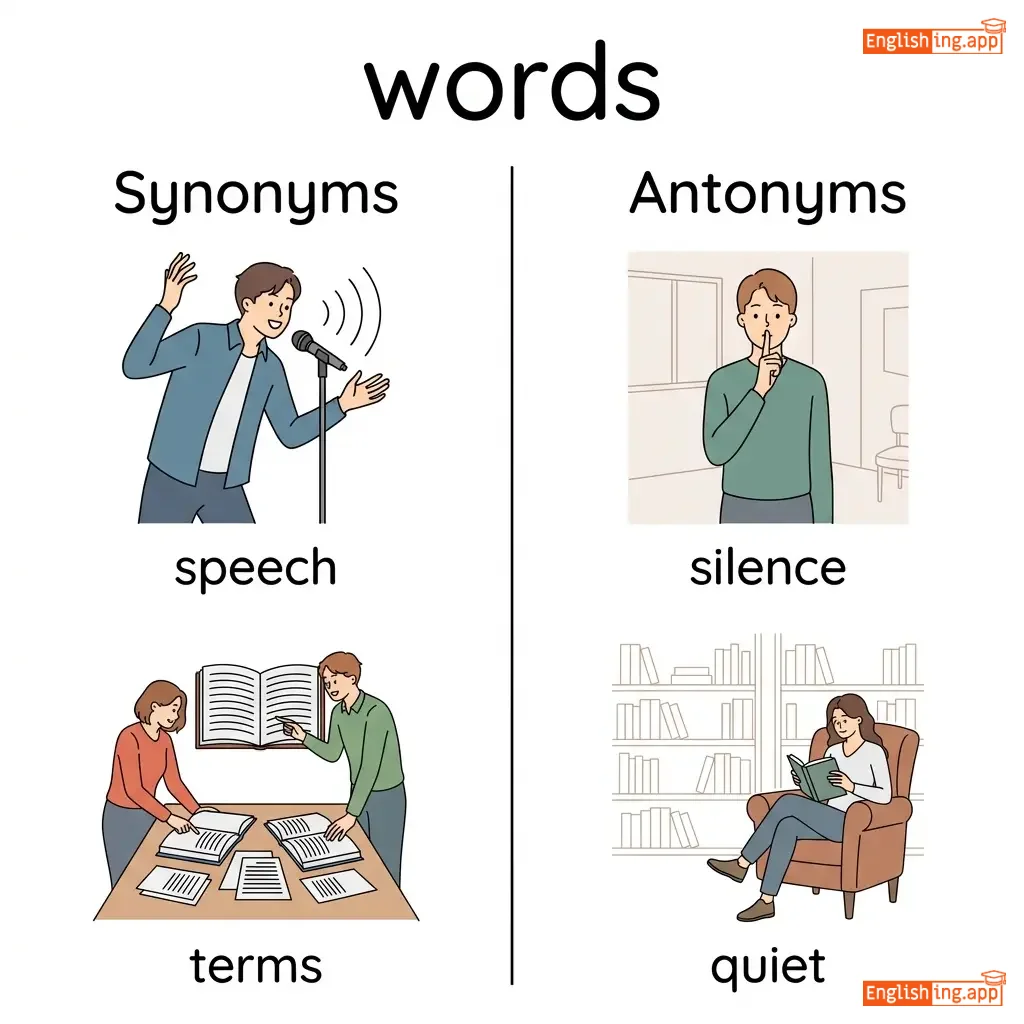
speech, terms, expressions, phrases, language
••••••
|
silence, quiet
••••••
|
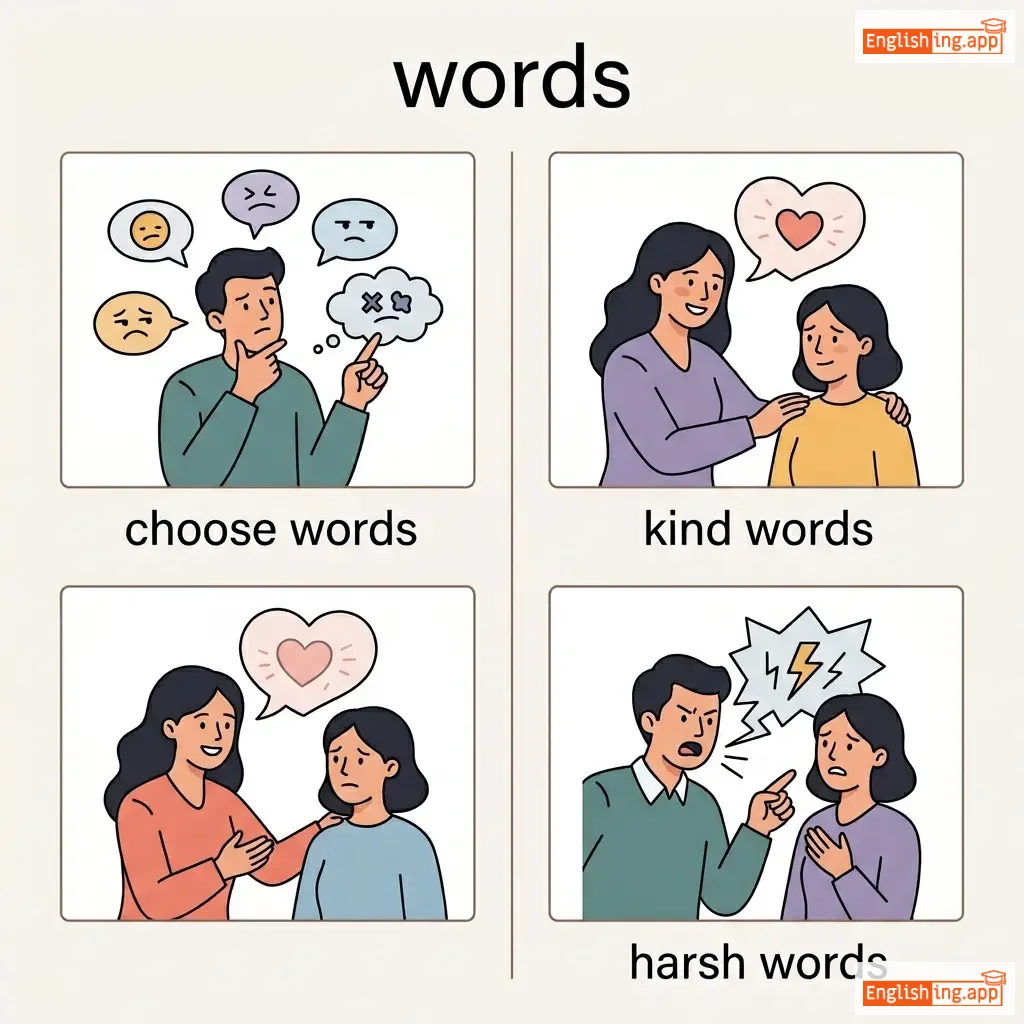
choose words, kind words, harsh words, in other words
••••••
|
Words 就是词语 — 词语让世界沟通
••••••
|
|
#1
🐺
|
/wʊlf/
noun
(wʊlf)
••••••
|
- •••••• |
狼
lang
••••••
|
- •••••• | - •••••• | - •••••• | - •••••• |
a wild carnivorous animal related to the dog, living and hunting in packs
••••••
|
The wolf howled loudly under the full moon. |
狼在满月下大声嚎叫。
Lang zài mǎnyuè xià dàshēng háo jiào.
••••••
|
cry wolf |
to raise a false alarm or exaggerate danger
••••••
|
喊狼来了
hǎn láng lái le
••••••
|
canine, predator, beast, dog, gray wolf
••••••
|
sheep, prey
••••••
|
gray wolf, lone wolf, wolf pack, cry wolf
••••••
|
狼在中文里就是 '狼'。记住,狼在满月下嚎叫 🐺
••••••
|
|
#1
🏦
|
/wɪðˈdrɔːəl/
noun
(wɪðˈdrɔːəl)
••••••
|
- •••••• |
提款
tí kuǎn
••••••
|
- •••••• | - •••••• | - •••••• | - •••••• |
the act of taking something back or removing oneself from a situation
••••••
|
He made a withdrawal of $500 from his bank account. |
他从银行账户提取了500美元。
Tā cóng yínháng zhànghù tíqǔle 500 měiyuán.
••••••
|
withdrawal symptoms |
physical or mental effects after stopping a habit, like smoking or drugs
••••••
|
戒断症状
jièduàn zhèngzhuàng
••••••
|
removal, retreat, retraction, extraction, pullback
••••••
|
deposit, participation
••••••
|
bank withdrawal, cash withdrawal, troop withdrawal, withdrawal symptoms
••••••
|
提款机取款,就像 'withdrawal' 一样!
••••••
|
|
#1
💪
|
/ˈwɪlɪŋnəs/
noun
(willingness)
••••••
|
- •••••• |
意愿
yiyuan
••••••
|
- •••••• | - •••••• | - •••••• | - •••••• |
the quality of being prepared or ready to do something
••••••
|
Her willingness to help others made her very popular. |
她愿意帮助他人的态度使她变得非常受欢迎。
Ta yuanyi bangzhu taren de taidu shi ta biande feichang shou huanying.
••••••
|
- •••••• | - •••••• | - •••••• |
readiness, eagerness, enthusiasm, consent, agreement
••••••
|
reluctance, unwillingness
••••••
|
show willingness, express willingness, willingness to cooperate, willingness to learn
••••••
|
Willingness 意味着愿意,而意愿意味着准备帮助!
••••••
|
|
#1
🦌
|
/ˈwaɪldˌlaɪf/
noun
(wàidélāifū)
••••••
|
- •••••• |
野生动物
ye sheng dong wu
••••••
|
- •••••• | - •••••• | - •••••• | - •••••• |
animals, birds, and plants living in their natural environment
••••••
|
The park is home to a wide variety of wildlife. |
这个公园是各种野生动物的家园。
Zhege gongyuan shi ge zhong ye sheng dong wu de jia yuan.
••••••
|
wildlife conservation |
the protection of wild animals and their habitats
••••••
|
野生动物保护
ye sheng dong wu bao hu
••••••
|
fauna, animals, creatures, nature, biosphere
••••••
|
domestic animals, pets
••••••
|
wildlife sanctuary, wildlife photographer, protect wildlife, wildlife reserve
••••••
|
Wild life 就是自然环境中的野生动物 🌱
••••••
|
|
#1
🌲
|
/ˈwɪldənəs/
noun
(荒野)
••••••
|
- •••••• |
荒野
huangye
••••••
|
- •••••• | - •••••• | - •••••• | - •••••• |
an area of land that has not been changed by people and is still in its natural state
••••••
|
They camped in the wilderness far from the city.
他们在远离城市的荒野中露营。
••••••
|
他们在远离城市的荒野中露营。
Tāmen zài yuǎn lí chéngshì de huāngyě zhōng lùyíng.
••••••
|
voice in the wilderness
荒野中的声音
••••••
|
a person or idea ignored by others
••••••
|
荒野中的声音
Huāngyě zhōng de shēngyīn
••••••
|
wilds, jungle, forest, backcountry, wasteland
••••••
|
city, civilization
••••••
|
in the wilderness, vast wilderness, explore the wilderness, wilderness area
••••••
|
Wilderness 就是荒野 — ‘wild’ 让你想起自然中的一片净土!
••••••
|
|
#1
🖤
|
/ˈwɪdəʊ/
noun
(widou)
••••••
|
- •••••• |
寡妇
guafu
••••••
|
- •••••• | - •••••• | - •••••• | - •••••• |
a woman whose husband has died and who has not married again
••••••
|
She became a widow at a very young age.
她在很年轻时成为了寡妇。
••••••
|
她在很年轻时成为了寡妇。
Ta zai hen nianqing shi chengwei le guafu.
••••••
|
grass widow
草寡妇
••••••
|
a woman whose husband is temporarily away
••••••
|
草寡妇
cao guafu
••••••
|
bereaved woman, lone woman, wife left behind
••••••
|
wife, bride
••••••
|
young widow, war widow, become a widow, widow pension
••••••
|
寡妇意味着寡妇 — 'We do' 说过,但现在 '他走了' 😢
••••••
|
|
#1
🪣
|
/ˈbʌkɪt/
noun
(桶)
••••••
|
- •••••• |
水桶
shuitong
••••••
|
- •••••• | - •••••• | - •••••• | - •••••• |
a round open container with a handle, used for carrying liquids or other things
••••••
|
He filled the bucket with water and carried it to the garden. |
他把水桶装满水,然后拿到花园里。
tā bǎ shuǐtǒng zhuāng mǎn shuǐ, ránhòu ná dào huāyuán lǐ.
••••••
|
kick the bucket |
to die (informal idiom)
••••••
|
踢水桶
tī shuǐtǒng
••••••
|
pail, container, tub, vessel, receptacle
••••••
|
emptiness, void, drought
••••••
|
bucket of water, plastic bucket, mop bucket, carry a bucket, empty the bucket
••••••
|
Bucket = 水桶, 想象你拿着水桶去花园里倒水。
••••••
|
|
#1
🥄
|
/wɪp/
verb
(wɪp)
••••••
|
- •••••• |
鞭打
biāndǎ
••••••
|
whipped
wɪpt
••••••
|
whipped
wɪpt
••••••
|
whips
wɪps
••••••
|
whipping
wɪpɪŋ
••••••
|
to strike or beat with a flexible instrument such as a rope or cord
••••••
|
The trainer whipped the horse to make it run faster.
教练用鞭子抽打马匹,使其跑得更快。
••••••
|
教练用鞭子抽打马匹,使其跑得更快。
Jiàoliàn yòng biāndǎ chōudǎ mǎpǐ, shǐ qí pǎo dé gèng kuài.
••••••
|
whip up
whip up
••••••
|
to quickly prepare or create something
••••••
|
快速准备
kuàisù zhǔnbèi
••••••
|
lash, beat, strike, thrash, flog
••••••
|
caress, soothe
••••••
|
whip cream, whip the horse, whip up enthusiasm, political whip
••••••
|
Whip 是鞭打 — 用 Whip 让马跑得更快!
••••••
|
|
#1
♿
|
/ˈwiːltʃeər/
noun
(轮椅)
••••••
|
- •••••• |
轮椅
lún yǐ
••••••
|
- •••••• | - •••••• | - •••••• | - •••••• |
a chair with wheels, used by people who cannot walk easily or at all
••••••
|
The hospital provided a wheelchair for the injured patient. |
医院为受伤的病人提供了轮椅。
yīyuàn wèi shòushāng de bìngrén tígōngle lún yǐ.
••••••
|
confined to a wheelchair |
unable to walk and dependent on a wheelchair for mobility
••••••
|
依赖轮椅
yīlài lún yǐ
••••••
|
mobility chair, rolling chair, chair on wheels, medical chair
••••••
|
walker, crutches
••••••
|
wheelchair user, electric wheelchair, wheelchair access, wheelchair ramp
••••••
|
Wheel + Chair = 轮椅
••••••
|
|
#1
🌾
|
/wiːt/
noun
(wheat)
••••••
|
- •••••• |
小麦
xiaomai
••••••
|
- •••••• | - •••••• | - •••••• | - •••••• |
a cereal plant whose grain is used to make flour for bread and other foods
••••••
|
Farmers harvested the wheat in early summer. |
农民在夏季初收割了小麦。
nongmin zai xiaji chu shouge le xiaomai.
••••••
|
separate the wheat from the chaff |
to separate valuable things or people from those that are not
••••••
|
把麦子和糠分开
ba maizi he kang fen kai
••••••
|
grain, cereal, barley, oat, corn
••••••
|
chaff, waste
••••••
|
wheat flour, wheat bread, wheat field, wheat grain, wheat harvest
••••••
|
Wheat意味着小麦 🌾 — 小麦用来做面包,所以想想食物。
••••••
|
|
#1
🐋
|
/weɪl/
noun
(wēi ěr)
••••••
|
- •••••• |
鲸鱼
jingyu
••••••
|
- •••••• | - •••••• | - •••••• | - •••••• |
a very large marine mammal that lives in the ocean
••••••
|
We saw a huge whale swimming near the boat. |
我们看到一只巨大的鲸鱼在船旁游泳。
wǒmen kàn dào yī zhī jùdà de jīngyú zài chuán páng yóuyǒng.
••••••
|
a whale of a time |
to have a great or enjoyable time
••••••
|
玩得很开心
wán dé hěn kāixīn
••••••
|
cetacean, mammal, giant, marine animal, leviathan
••••••
|
fish, small creature
••••••
|
blue whale, humpback whale, killer whale, whale watching
••••••
|
Whale 🐋 就是鲸鱼 — 巨大又神奇
••••••
|
|
#1
🌟
|
/ˌwelˈnoʊn/
adjective
(wēi ěr nòng)
••••••
|
- •••••• |
著名
zhuoming
••••••
|
- •••••• | - •••••• | - •••••• | - •••••• |
known by many people; famous or recognized
••••••
|
He is a well-known actor in his country. |
他是他国家的著名演员。
Ta shi ta guo jia de zhu ming yan yuan.
••••••
|
- •••••• | - •••••• | - •••••• |
famous, renowned, popular, prominent, recognized
••••••
|
unknown, obscure, unfamiliar
••••••
|
well-known fact, well-known person, well-known brand, well-known story
••••••
|
Well-known 意味着 '著名' — 人人都认识他!
••••••
|
|
#1
🚧
|
/ˈɒbstəkəl/
noun
(obuseutai)
••••••
|
- •••••• |
障碍
zhàng'ài
••••••
|
- •••••• | - •••••• | - •••••• | - •••••• |
something that blocks your way or prevents progress
••••••
|
Lack of money was the main obstacle to his success. |
缺钱是他成功的主要障碍。
quē qián shì tā chénggōng de zhǔyào zhàng'ài.
••••••
|
overcome an obstacle |
to deal with and successfully get past a problem or barrier
••••••
|
克服障碍
kèfú zhàng'ài
••••••
|
barrier, hurdle, hindrance, block, difficulty
••••••
|
aid, help, support
••••••
|
major obstacle, face an obstacle, overcome obstacle, obstacle course, create obstacle
••••••
|
障碍 = 障碍物,阻止进程 🚧
••••••
|
|
#1
✋
|
/əbˈdʒɛkʃən/
noun
(反对)
••••••
|
- •••••• |
异议
yiyi
••••••
|
- •••••• | - •••••• | - •••••• | - •••••• |
an expression or feeling of disapproval or opposition
••••••
|
The lawyer raised an objection during the trial.
律师在审判中提出了异议。
••••••
|
律师在审判中提出了异议。
Lüshi zai shenpan zhong tichu le yiyi.
••••••
|
raise an objection
提出异议
••••••
|
to express disapproval or disagreement formally
••••••
|
提出异议
tichu yiyi
••••••
|
protest, complaint, opposition, dissent, disagreement
••••••
|
approval, consent, agreement
••••••
|
strong objection, raise an objection, legal objection, no objection, objection letter
••••••
|
Objection 意味着异议 — 在法庭上你会听到‘异议!’ ✋ 这意味着反对!
••••••
|
|
#1
🌳
|
/oʊk/
noun
(欧克)
••••••
|
- •••••• |
橡树
xiàng shù
••••••
|
- •••••• | - •••••• | - •••••• | - •••••• |
a large tree that produces acorns and has strong, hard wood
••••••
|
The old oak tree provided shade for the entire yard.
The old oak tree provided shade for the entire yard.
••••••
|
那棵老橡树为整个院子提供了阴凉。
nà kē lǎo xiàng shù wèi zhěnggè yuànzi tígōngle yīnliáng.
••••••
|
strong as an oak
strong as an oak
••••••
|
very strong and resilient
••••••
|
像橡树一样强壮
xiàng xiàng shù yīyàng qiángzhuàng
••••••
|
tree, hardwood, timber, forest tree
••••••
|
sapling, weak plant
••••••
|
oak tree, oak wood, oak leaves, oak furniture, old oak
••••••
|
橡树象征着坚韧🌳,就像‘橡’一样强壮!
••••••
|
|
#1
📒
|
/ˈnoʊtbʊk/
noun
••••••
|
- •••••• | - •••••• | - •••••• | - •••••• | - •••••• | - •••••• |
a small book with blank or ruled pages for writing notes; also a portable computer
••••••
|
She opened her notebook to jot down some ideas. |
- •••••• |
open your notebook |
to prepare to take notes or start writing
••••••
|
- •••••• |
journal, pad, diary, laptop, logbook
••••••
|
none, emptiness, blankness
••••••
|
open notebook, write in notebook, spiral notebook, leather notebook, notebook computer
••••••
|
No •••••• |
|
#1
🧭
|
/ˌnɔːrθˈwest/
noun, adjective, adverb
(nɔːθwɛst)
••••••
|
- •••••• |
西北
xibei
••••••
|
- •••••• | - •••••• | - •••••• | - •••••• |
the direction that is between north and west; situated in or moving toward this direction
••••••
|
Seattle is located in the northwest of the United States. |
西雅图位于美国的西北部。
Xīyǎtú wèiyú měiguó de xīběi bù.
••••••
|
go northwest |
to move or travel toward the northwest direction
••••••
|
朝西北方向走
cháo xīběi fāngxiàng zǒu
••••••
|
northwestern region, upper west, northwestward, NW
••••••
|
southeast, south, east
••••••
|
northwest wind, northwest corner, northwest region, go northwest, northwest direction
••••••
|
North表示北,West表示西,合起来就是西北 👉 西北!
••••••
|
|
#1
💡
|
/bʌlb/
noun
••••••
|
- •••••• | - •••••• | - •••••• | - •••••• | - •••••• | - •••••• |
a rounded glass part of an electric lamp that produces light when lit; also an underground storage organ in some plants
••••••
|
The light bulb burned out, so she replaced it with a new one. |
- •••••• |
light-bulb moment |
a sudden realization or new idea
••••••
|
- •••••• |
lamp, globe, filament, tube, light
••••••
|
darkness, shadow, blackout
••••••
|
light bulb, LED bulb, replace the bulb, bulb socket, bulb holder
••••••
|
No •••••• |
|
#1
👷
|
/ˈbɪldər/
noun
(bɪldər)
••••••
|
- •••••• |
建筑商
jianzhushang
••••••
|
- •••••• | - •••••• | - •••••• | - •••••• |
a person or company that constructs buildings or other structures
••••••
|
The builder checked the site before starting the construction.
建筑商在开始建造之前检查了现场。
••••••
|
建筑商在开始建造之前检查了现场。
Jianzhushang zai kaishi jianzhao zhīqián jiǎnchále xiànchǎng.
••••••
|
builder’s tea
建筑商的茶
••••••
|
a very strong, sweet tea (British informal)
••••••
|
建筑商的茶
Jianzhushang de cha
••••••
|
constructor, contractor, developer, mason, architect
••••••
|
destroyer, demolisher, breaker
••••••
|
home builder, professional builder, builder contract, builder company, builder warranty
••••••
|
建筑商开始工作前需要一杯茶。
••••••
|
|
#1
🐞
|
/bʌɡ/
noun
(bā gē)
••••••
|
- •••••• |
虫子
chongzi
••••••
|
- •••••• | - •••••• | - •••••• | - •••••• |
a small insect; informally, a flaw or error in a system or program
••••••
|
There’s a bug in the code that causes the app to crash. |
代码中有一个bug,导致应用崩溃。
dàimǎ zhōng yǒu yīgè bug, dǎozhì yìngyòng bēngkuì.
••••••
|
catch the bug |
to suddenly become very interested in something
••••••
|
突然变得对某事非常感兴趣
tūrán biàn dé duì mǒu shì fēicháng gǎn xìngqù
••••••
|
insect, glitch, defect, flaw, error
••••••
|
fix, correction, perfection
••••••
|
software bug, nasty bug, fix a bug, bug report, bug tracker
••••••
|
Bug 意味着虫子 🐞— 软件中的bug就像虫子进入代码。
••••••
|
|
#1
🤝
|
/ˈbʌdi/
noun
(badi)
••••••
|
- •••••• |
朋友
pengyou
••••••
|
- •••••• | - •••••• | - •••••• | - •••••• |
a close friend or companion, used informally
••••••
|
He went to the movies with his best buddy. |
他和他最好的朋友一起去看电影。
Ta he ta zuihao de pengyou yiqi qu kan dianying.
••••••
|
buddy up |
to become friends or form a pair for a task
••••••
|
成为朋友
chengwei pengyou
••••••
|
friend, pal, mate, chum, companion
••••••
|
enemy, foe, rival
••••••
|
best buddy, travel buddy, gym buddy, buddy system, study buddy
••••••
|
Buddy就是朋友 — 想象你和你的Buddy一起喝咖啡 ☕
••••••
|
Vocabulary Quiz
Test your vocabulary by matching words with their translations or meanings.
Login to take the quiz
Comments (0)
Share your thoughts and join the discussion.
Join the discussion by logging in
Login to CommentNo comments yet
Be the first to share your thoughts!