




Swipe left or right, or use the buttons. Tap image to zoom.
例句翻译
单词
Lesson 56Lesson 56 - 遮罩切换
|
表情符号
|
单词 | Images | 翻译 | 过去时 | 过去分词 | 第三人称单数 | 动名词 | 含义 | 例句 | 例句翻译 | 示例表达 | 示例表达含义 | 示例表达翻译 | 同义词 | 反义词 | 搭配词 | 助记符 |
|---|---|---|---|---|---|---|---|---|---|---|---|---|---|---|---|---|---|
|
#1651
🔍
|
/ˈkɒn.keɪv/
adjective
(kōng kāi)
••••••
|
|
凹形
ao xing
••••••
|
- •••••• | - •••••• | - •••••• | - •••••• |
curved inward like the inside of a bowl
••••••
|
The mirror had a concave surface that magnified her reflection. |
镜子有一个凹形表面,放大了她的倒影。
Jingzi you yige ao xing biaomian, fangda le ta de daoying.
••••••
|
- •••••• | - •••••• | - •••••• |
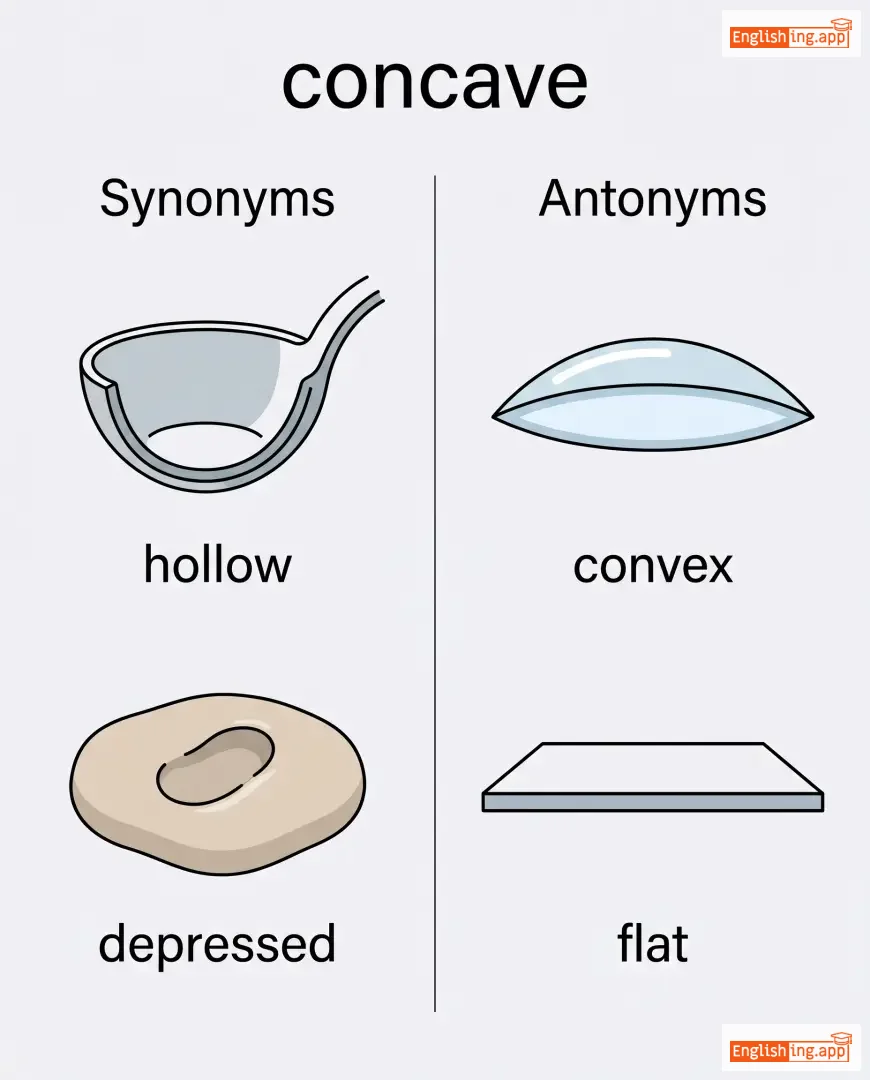
hollow, depressed, sunken, indented, curving-inward
••••••
|
convex, flat, level
••••••
|
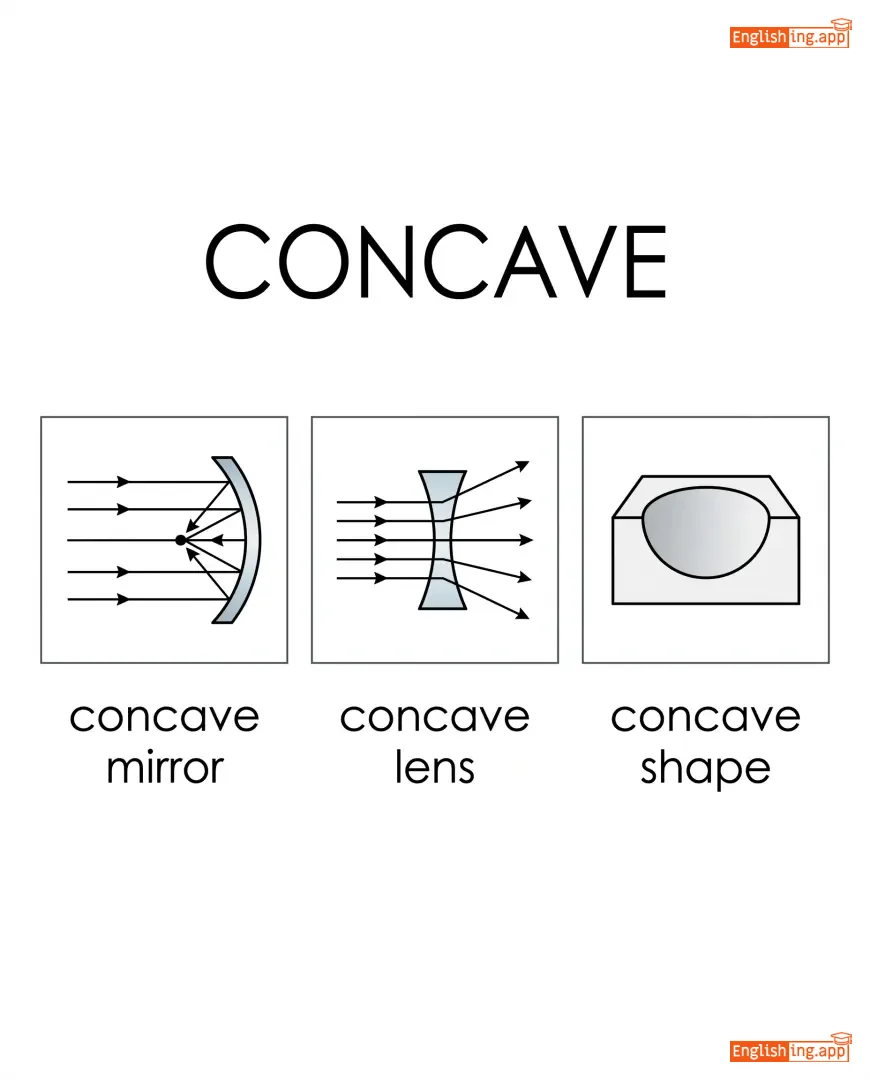
concave mirror, concave lens, concave shape, concave surface
••••••
|
凹形就像碗的内部弯曲的形状。
••••••
|
|
#1652
🕊️
|
/kənˈsɪlieɪt/
verb
••••••
|
- •••••• | - •••••• |
conciliated
••••••
|
conciliated
••••••
|
conciliates
••••••
|
conciliating
••••••
|
to stop someone from being angry; to win over by friendly acts
••••••
|
He tried to conciliate the angry customer with an apology. |
- •••••• |
conciliate differences |
to resolve conflicts and make peace
••••••
|
- •••••• |
appease, pacify, placate, reconcile, soothe
••••••
|
anger, irritate, provoke
••••••
|
conciliate anger, conciliate people, conciliate differences, conciliate disputes
••••••
|
No •••••• |
|
#1653
🐚
|
/kɑːntʃ/
noun
(konch)
••••••
|
- •••••• |
海螺
hǎiluó
••••••
|
- •••••• | - •••••• | - •••••• | - •••••• |
a large spiral shell, often used as a trumpet in ceremonies
••••••
|
The priest blew the conch to begin the ritual.
牧师吹响了海螺,开始了仪式。
••••••
|
牧师吹响了海螺,开始了仪式。
Mùshī chuīxiǎngle hǎiluó, kāishǐle yíshì.
••••••
|
- •••••• | - •••••• | - •••••• |
shell, seashell, horn, trumpet
••••••
|
silence, emptiness
••••••
|
blow a conch, conch shell, ceremonial conch, sacred conch
••••••
|
Conch是海螺,像'海的声音'一样
••••••
|
|
#1654
🤲
|
/kənˈsɛʃən/
noun
(kənˈsɛʃən)
••••••
|
- •••••• |
让步
rangbu
••••••
|
- •••••• | - •••••• | - •••••• | - •••••• |
something that is granted, especially in response to demands; a compromise
••••••
|
The company made several concessions during the negotiations. |
公司在谈判中做出了几次让步。
Gongsi zai tanpan zhong zuo chule jici rangbu.
••••••
|
make concessions |
to give up certain demands in order to reach an agreement
••••••
|
做出让步
zuo chu rangbu
••••••
|
compromise, allowance, adjustment, grant, yield
••••••
|
refusal, denial, resistance
••••••
|
make a concession, grant a concession, trade concession, minor concession
••••••
|
让步意味着在谈判中妥协
••••••
|
|
#1655
🎻
|
/kənˈtʃɛrtoʊ/
noun
(kənˈtʃɛrto)
••••••
|
- •••••• |
音乐作品
yīnyuè zuòpǐn
••••••
|
- •••••• | - •••••• | - •••••• | - •••••• |
a musical composition for one or more solo instruments accompanied by an orchestra
••••••
|
She played a Mozart concerto with the orchestra.
她与乐队一起演奏了莫扎特的协奏曲。
••••••
|
她与乐队一起演奏了莫扎特的协奏曲。
Tā yǔ yuèduì yīqǐ yǎnzòu le mòzhātè de xiézòuqǔ.
••••••
|
- •••••• | - •••••• | - •••••• |
composition, symphony, sonata, performance
••••••
|
silence, noise
••••••
|
piano concerto, violin concerto, Mozart concerto, classical concerto
••••••
|
Concerto + 乐队 = 协奏曲, 是与乐队合作演奏的音乐作品
••••••
|
|
#1656
🤝
|
/kənˈsɜːrtɪd/
adjective
(kón sè tèd)
••••••
|
- •••••• |
协调的
xié tiáo de
••••••
|
- •••••• | - •••••• | - •••••• | - •••••• |
done with great effort, planned and performed together by multiple people
••••••
|
The workers made a concerted effort to improve conditions. |
工人们为改善条件做出了协调的努力。
Gōngrén men wèi gǎishàn tiáojiàn zuòchūle xiétiáo de nǔlì.
••••••
|
concerted effort |
a strong and coordinated attempt
••••••
|
协调的努力
xiétiáo de nǔlì
••••••
|
coordinated, combined, united, joint, collective
••••••
|
individual, separate, disorganized
••••••
|
concerted effort, concerted action, concerted campaign, concerted attempt
••••••
|
就像在音乐会上,大家一起演奏,'协调的'意味着一起做事。
••••••
|
|
#1657
😟
|
/kənˈsɜːrn/
noun/verb
••••••
|
- •••••• | - •••••• |
concerned
••••••
|
concerned
••••••
|
concerns
••••••
|
concerning
••••••
|
to relate to or affect; a matter of worry or interest
••••••
|
Environmental issues concern all of us. |
- •••••• |
of concern |
something that causes worry or interest
••••••
|
- •••••• |
worry, anxiety, interest, care, matter
••••••
|
indifference, unconcern
••••••
|
main concern, express concern, raise concern, serious concern
••••••
|
No •••••• |
|
#1658
🧠
|
/kənˈsɛpʃən/
noun
(kənˈsɛpʃən)
••••••
|
- •••••• |
构思, 受孕
gòusī, shòuyùn
••••••
|
- •••••• | - •••••• | - •••••• | - •••••• |
the forming or understanding of an idea; the act of conceiving a child
••••••
|
Her conception of the project was very different from ours. |
她对这个项目的构思与我们的完全不同。
tā duì zhège xiàngmù de gòusī yǔ wǒmen de wánquán bùtóng.
••••••
|
from conception to completion |
from the beginning of an idea to its final result
••••••
|
从构思到完成
cóng gòusī dào wánchéng
••••••
|
idea, notion, understanding, perception
••••••
|
misunderstanding, misconception
••••••
|
original conception, artistic conception, false conception
••••••
|
Conception 是想法,婴儿的 conception 是新生命的开始 🧠
••••••
|
|
#1659
💡
|
/ˈkɒnsɛpt/
noun
(kānsèpt)
••••••
|
|
概念
gàiniàn
••••••
|
- •••••• | - •••••• | - •••••• | - •••••• |
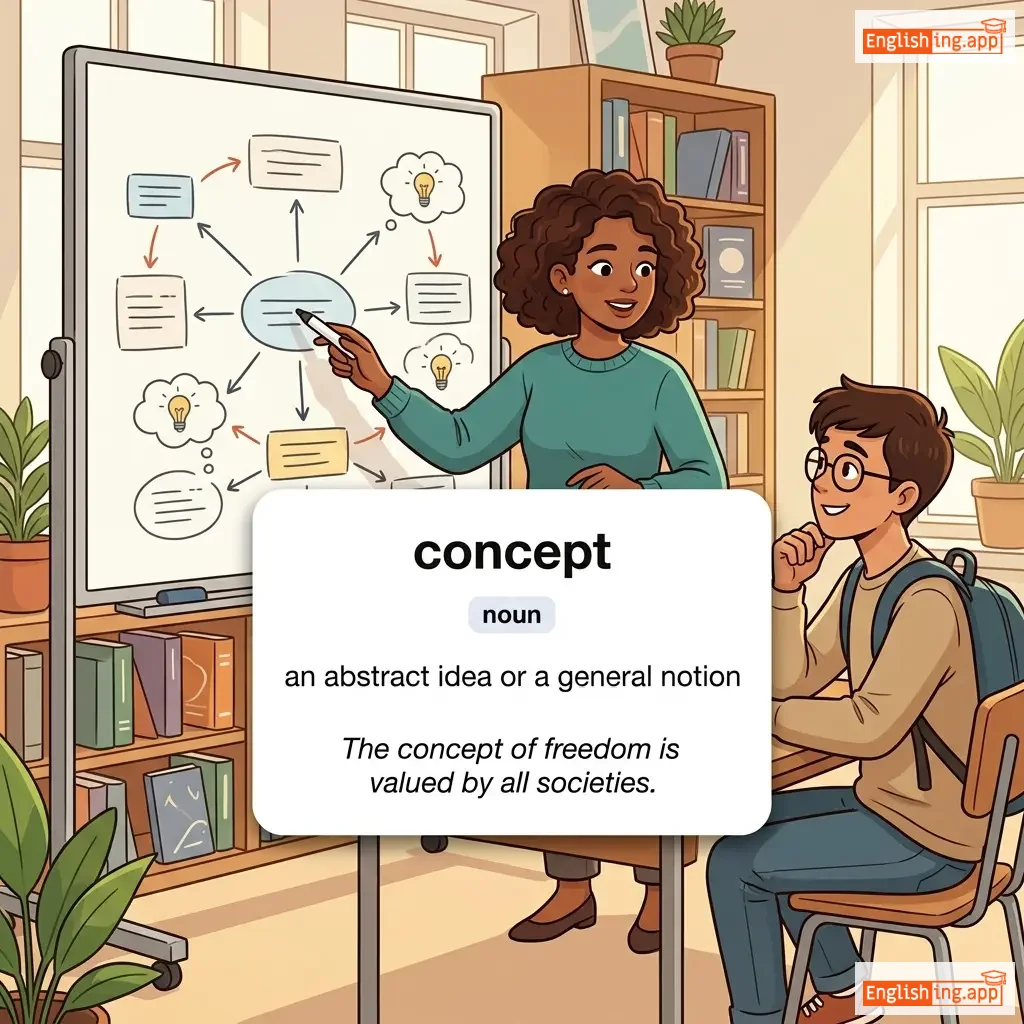
an abstract idea or a general notion
••••••
|
The concept of freedom is valued by all societies.
自由的概念受到所有社会的重视。
••••••
|
自由的概念受到所有社会的重视。
Zìyóu de gàiniàn shòudào suǒyǒu shèhuì de zhòngshì.
••••••
|
- •••••• | - •••••• | - •••••• |
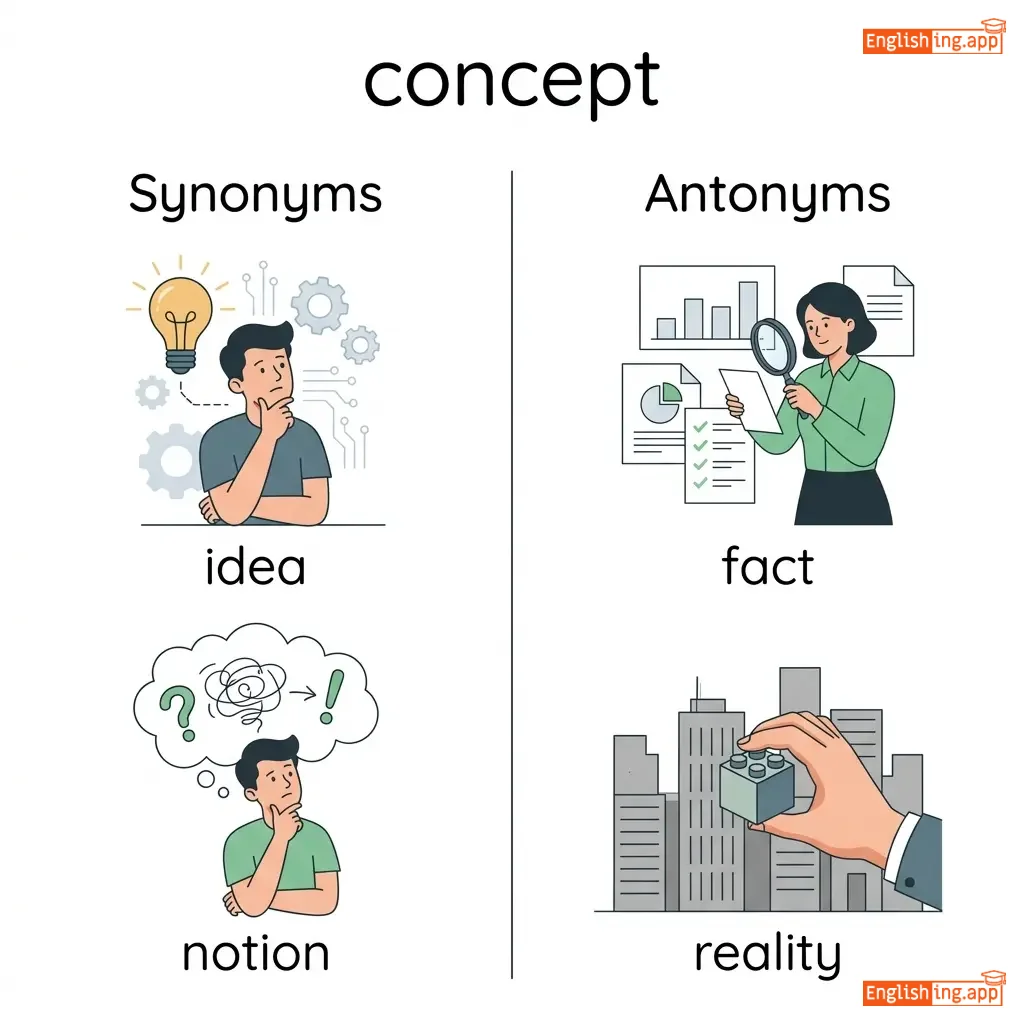
idea, notion, thought, perception, conception
••••••
|
fact, reality
••••••
|
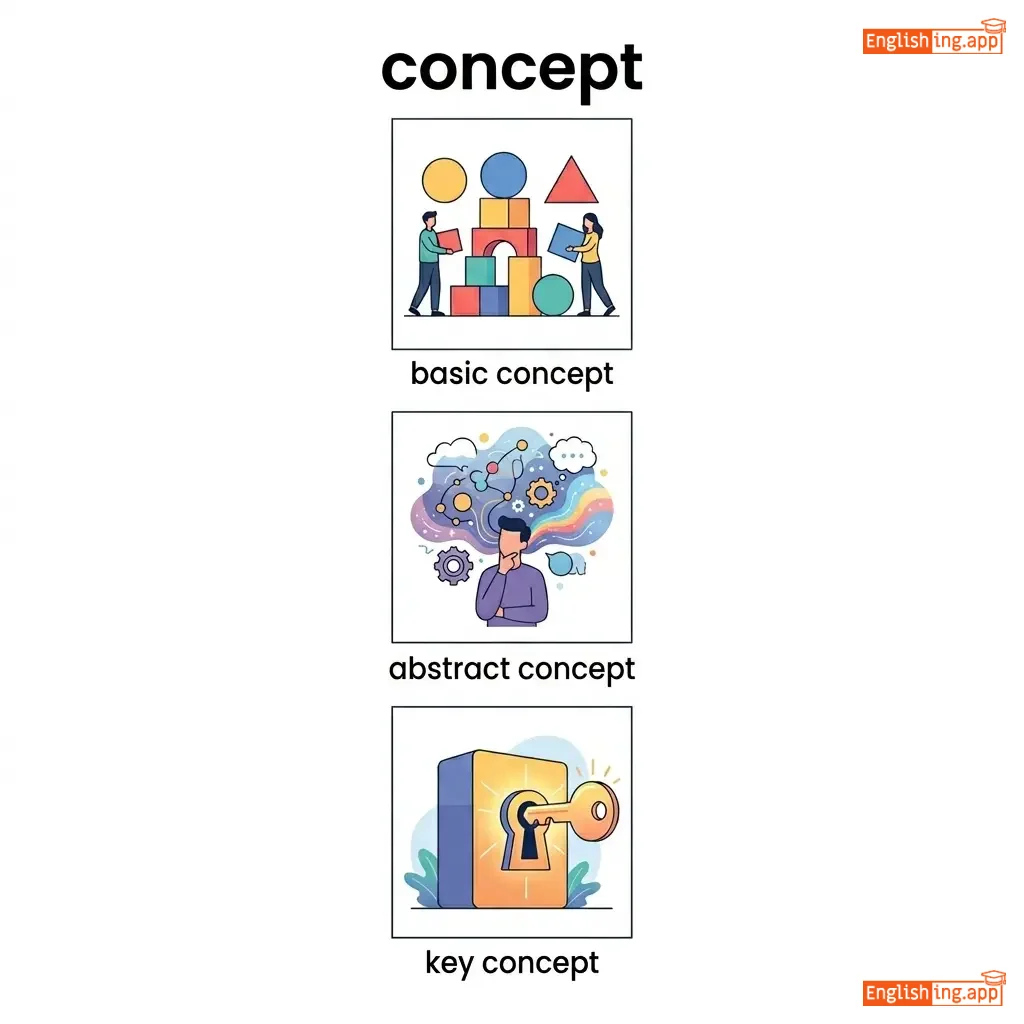
basic concept, abstract concept, key concept, new concept
••••••
|
概念就像是你脑海中的一个闪亮的想法 💡
••••••
|
|
#1660
⭕
|
/kənˈsɛntrɪk/
adjective
(kənˈsɛntrɪk)
••••••
|
- •••••• |
同心的
tóngxīn de
••••••
|
- •••••• | - •••••• | - •••••• | - •••••• |
having a common center, as in circles or spheres
••••••
|
The artist drew concentric circles on the canvas. |
艺术家在画布上画了同心圆。
Yìshùjiā zài huàbù shàng huàle tóngxīn yuán.
••••••
|
- •••••• | - •••••• | - •••••• |
coaxial, aligned, centered, parallel
••••••
|
eccentric, off-center
••••••
|
concentric circles, concentric layers, concentric patterns
••••••
|
Con + Center = 同心的
••••••
|
|
#1661
🎯
|
/ˈkɒnsəntreɪt/
verb
(kānsèntèruò)
••••••
|
- •••••• |
集中
jízhōng
••••••
|
concentrated
kānsèntèruò
••••••
|
concentrated
kānsèntèruò
••••••
|
concentrates
kānsèntèruò
••••••
|
concentrating
kānsèntèruò
••••••
|
to focus all one's attention or mental effort on a particular object or activity
••••••
|
She tried to concentrate on her studies despite the noise.
尽管有噪音,她仍试图集中精力学习。
••••••
|
尽管有噪音,她仍试图集中精力学习。
jǐnguǎn yǒu zàoyīn, tā réng shìtú jízhōng jīnglì xuéxí.
••••••
|
concentrate on
集中在
••••••
|
to give your full attention to something
••••••
|
集中在
jízhōng zài
••••••
|
focus, direct, center, apply, dedicate
••••••
|
distract, neglect
••••••
|
concentrate on work, concentrate efforts, concentrate deeply, concentrate hard
••••••
|
为了专注,必须集中精力。🎯
••••••
|
|
#1662
💡
|
/kənˈsiːv/
verb
(kön-siv)
••••••
|
- •••••• |
构思, 怀孕
gousi, huaiyun
••••••
|
conceived
kön-sivd
••••••
|
conceived
kön-sivd
••••••
|
conceives
kön-sivs
••••••
|
conceiving
kön-sivin
••••••
|
to form or imagine an idea in the mind; to become pregnant
••••••
|
It is hard to conceive how such an idea could succeed.
很难想象这样的想法如何能够成功。
••••••
|
很难想象这样的想法如何能够成功。
Hen nan xiangxiang zheyang de xiangfa ruhe nenggou chenggong.
••••••
|
conceive a plan
构思一个计划
••••••
|
to think of or develop a plan
••••••
|
构思一个计划
gousi yige jihua
••••••
|
imagine, envision, devise, formulate, originate
••••••
|
misunderstand, overlook, neglect
••••••
|
conceive an idea, conceive a plan, conceive child, conceive possibility
••••••
|
conceive 意味着构思一个新的计划。
••••••
|
|
#1663
😏
|
/kənˈsiːt/
noun
(kənˈsiːt)
••••••
|
- •••••• |
自负
zì fù
••••••
|
- •••••• | - •••••• | - •••••• | - •••••• |
excessive pride in oneself; vanity
••••••
|
His conceit made him unpopular among his colleagues. |
他的自负让他在同事中不受欢迎。
Tā de zì fù ràng tā zài tóng shì zhōng bù shòu huānyíng.
••••••
|
full of conceit |
to be very arrogant or vain
••••••
|
充满自负
chōngmǎn zìfù
••••••
|
arrogance, vanity, pride, egotism, self-importance
••••••
|
humility, modesty, meekness
••••••
|
conceit of power, conceit in writing, literary conceit, full of conceit
••••••
|
自负就像把自己看得太重,总觉得别人也在看你。
••••••
|
|
#1664
🙇
|
/kənˈsiːd/
verb
••••••
|
- •••••• | - •••••• |
conceded
••••••
|
conceded
••••••
|
concedes
••••••
|
conceding
••••••
|
to admit something is true or valid, often reluctantly
••••••
|
She finally conceded that she was wrong. |
- •••••• |
concede defeat |
to admit that you have lost
••••••
|
- •••••• |
admit, acknowledge, grant, allow, yield
••••••
|
deny, refuse, reject
••••••
|
concede defeat, concede point, concede ground, concede goal
••••••
|
No •••••• |
|
#1665
🤫
|
/kənˈsiːl/
verb
(kənˈsiːl)
••••••
|
- •••••• |
隐藏
yin cang
••••••
|
concealed
kənˈsiːld
••••••
|
concealed
kənˈsiːld
••••••
|
conceals
kənˈsiːlz
••••••
|
concealing
kənˈsiːlɪŋ
••••••
|
to hide something or keep it secret
••••••
|
He tried to conceal his disappointment behind a smile.
Hi traɪd tu kənˈsiːl hɪz dɪsəˈpɔɪntmənt bɪˈhaɪnd ə smaɪl.
••••••
|
他试图用微笑掩饰自己的失望。
Ta shitu yong weixiao yanshi ziji de shiwang.
••••••
|
conceal the truth
kənˈsiːl ðə truθ
••••••
|
to hide or withhold the truth from others
••••••
|
隐藏真相
yin cang zhenxiang
••••••
|
hide, cover, disguise, mask, secrete
••••••
|
reveal, expose, uncover
••••••
|
conceal identity, conceal weapon, conceal fact, conceal smile
••••••
|
隐藏就像把秘密藏在盒子里
••••••
|
|
#1666
🧠
|
/ˌkɒmprɪˈhɛnd/
verb
(kěnpriénd)
••••••
|
- •••••• |
理解
lǐjiě
••••••
|
comprehended
kěnpriénded
••••••
|
comprehended
kěnpriénded
••••••
|
comprehends
kěnpriénds
••••••
|
comprehending
kěnpriénding
••••••
|
to understand or grasp the meaning of something
••••••
|
It is difficult to comprehend the scale of the disaster.
理解灾难的规模很困难。
••••••
|
理解灾难的规模很困难。
Lǐjiě zāinàn de guīmó hěn kùnnán.
••••••
|
beyond comprehension
超出理解范围
••••••
|
something too difficult to understand
••••••
|
超出理解范围
chāo chū lǐjiě fànwéi
••••••
|
understand, grasp, perceive, fathom, apprehend
••••••
|
misunderstand, confuse
••••••
|
comprehend fully, difficult to comprehend, unable to comprehend
••••••
|
Comprehend 意味着理解,就像你需要理解一本书才能享受它。
••••••
|
|
#1667
🔗
|
/kɒnˈkætəneɪt/
verb
(kənˈkætəneɪt)
••••••
|
- •••••• |
连接
liánjiē
••••••
|
concatenated
kənˈkætəneɪtɪd
••••••
|
concatenated
kənˈkætəneɪtɪd
••••••
|
concatenates
kənˈkætəneɪts
••••••
|
concatenating
kənˈkætəneɪtɪŋ
••••••
|
To link things together in a series or chain.
••••••
|
The program concatenates two strings into one.
程序将两个字符串连接为一个。
••••••
|
程序将两个字符串连接为一个。
Chéngxù jiāng liǎng gè zìrùn liánjiē wéi yī gè.
••••••
|
- •••••• | - •••••• | - •••••• |
link, connect, join, unite, combine
••••••
|
separate, divide, detach
••••••
|
concatenate strings, concatenate files, concatenate data
••••••
|
连接 = 将元素连接形成链条。
••••••
|
|
#1668
💻
|
/kəmˈpjuːt/
verb
(kəmˈpjut)
••••••
|
- •••••• |
计算
jisuan
••••••
|
computed
kəmˈpjuːtɪd
••••••
|
computed
kəmˈpjuːtɪd
••••••
|
computes
kəmˈpjuːts
••••••
|
computing
kəmˈpjuːtɪŋ
••••••
|
To calculate or determine by using a computer or mathematical methods.
••••••
|
The software can compute the total cost in seconds.
该软件可以在几秒钟内计算出总成本。
••••••
|
该软件可以在几秒钟内计算出总成本。
Gai ruanjian keyi zai ji miaozhong nei jisuan chu zong chengben.
••••••
|
compute the odds
计算概率
••••••
|
to calculate the probability of an outcome
••••••
|
计算概率
jisuan gailv
••••••
|
calculate, reckon, estimate, process, figure out
••••••
|
guess, ignore
••••••
|
compute result, compute data, compute power, compute value
••••••
|
通过计算机来计算!
••••••
|
|
#1669
😔
|
/kəmˈpʌŋkʃən/
noun
(kèmpánkshēn)
••••••
|
|
良心不安
liángxīn bù'ān
••••••
|
- •••••• | - •••••• | - •••••• | - •••••• |
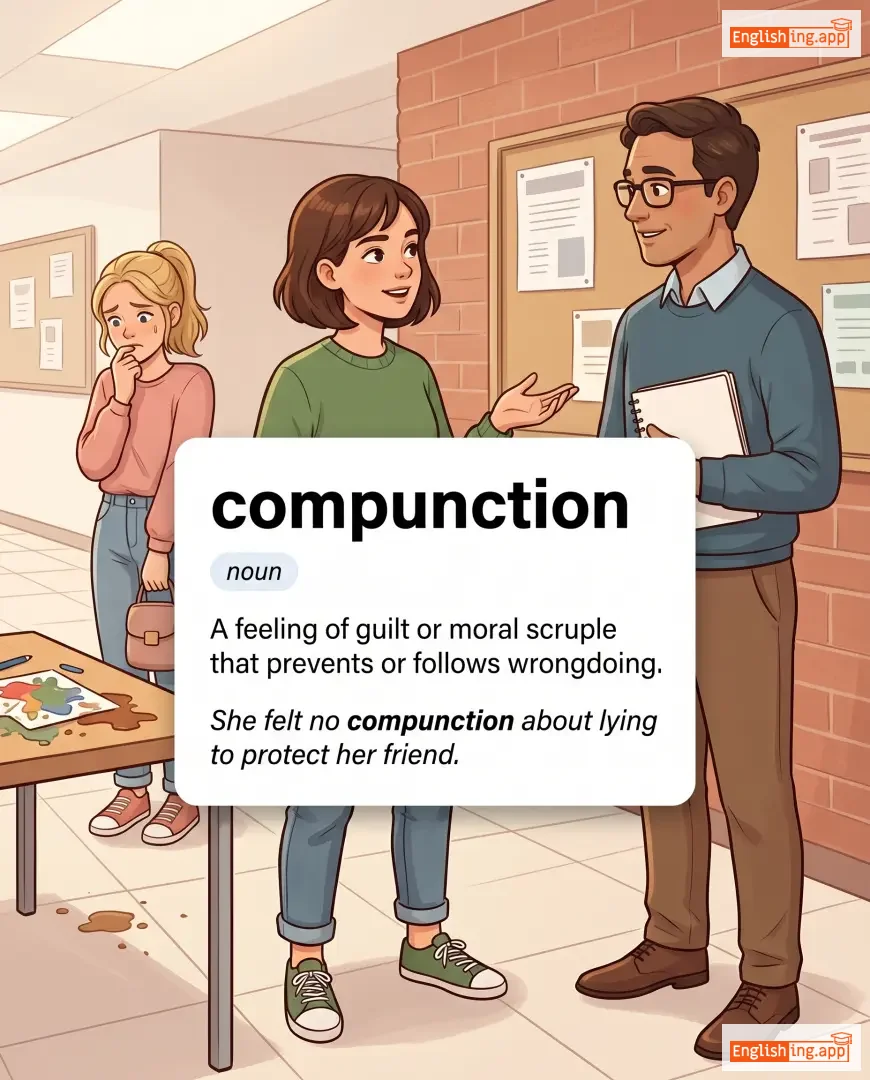
A feeling of guilt or moral scruple that prevents or follows wrongdoing.
••••••
|
She felt no compunction about lying to protect her friend. |
她在撒谎以保护朋友时没有感到良心不安。
Tā zài sāhuǎng yǐ bǎohù péngyǒu shí méiyǒu gǎndào liángxīn bù'ān.
••••••
|
without compunction |
without any guilt or hesitation
••••••
|
没有良心不安
méiyǒu liángxīn bù'ān
••••••
|
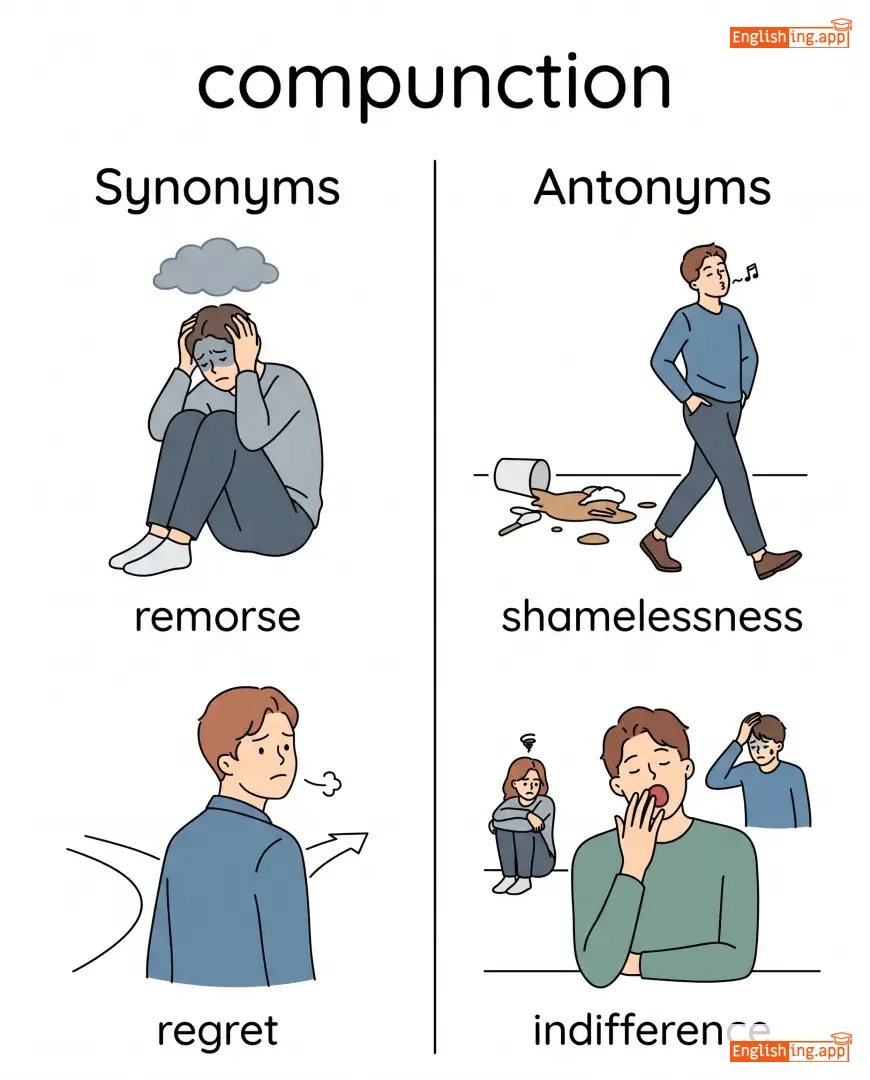
remorse, regret, guilt, scruple, penitence
••••••
|
shamelessness, indifference
••••••
|
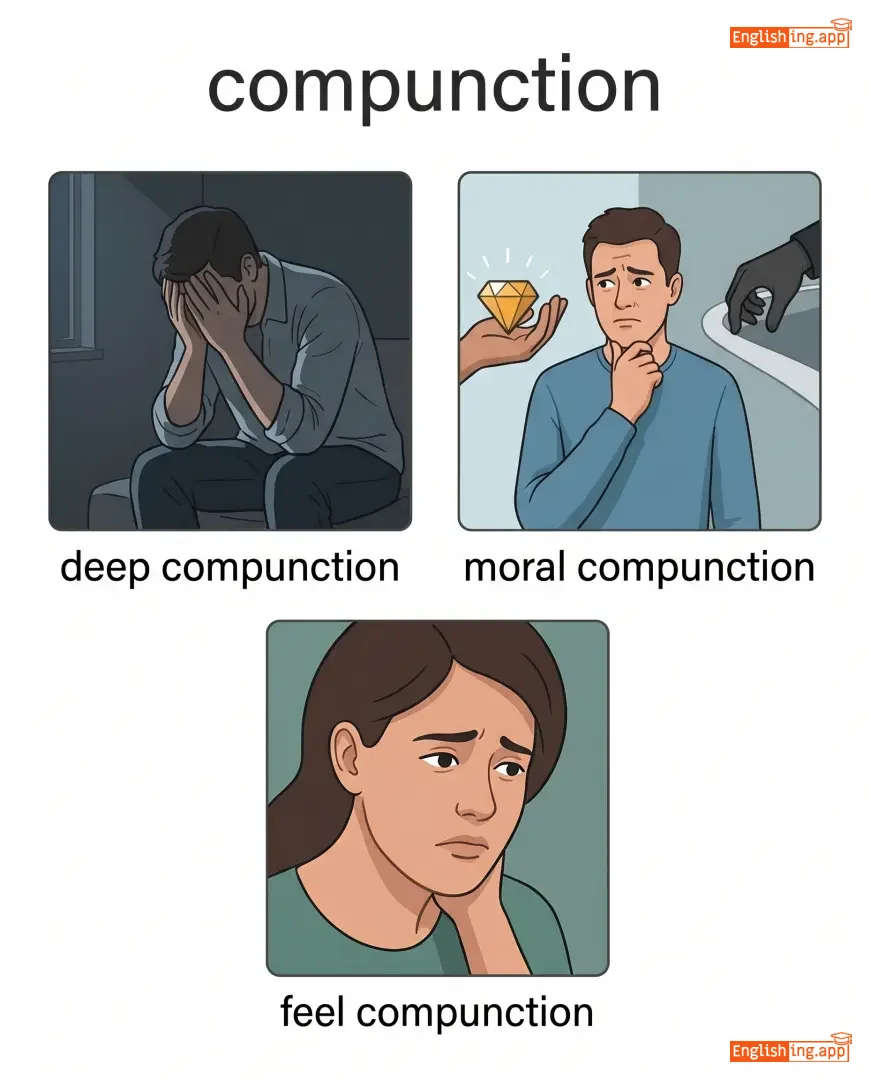
deep compunction, moral compunction, feel compunction
••••••
|
Compunction = 良心不安在撒谎后
••••••
|
|
#1670
📘
|
/kəmˈpʌlsəri/
adjective
(kèpùlsǒlì)
••••••
|
- •••••• |
强制性
qiángzhìxìng
••••••
|
- •••••• | - •••••• | - •••••• | - •••••• |
Required by law or a rule; obligatory.
••••••
|
Wearing seat belts is compulsory in most countries. |
在大多数国家,佩戴安全带是强制性的。
Zài dà duōshù guójiā, pèidài ānquán dài shì qiángzhìxìng de.
••••••
|
- •••••• | - •••••• | - •••••• |
mandatory, required, obligatory, necessary
••••••
|
optional, voluntary, discretionary
••••••
|
compulsory education, compulsory subject, compulsory service
••••••
|
Compulsory 意味着强制性,像强制性的学校科目。
••••••
|
|
#1671
🌀
|
/kəmˈpʌlsɪv/
adjective
(kāng pǔ ěr sī fú)
••••••
|
- •••••• |
强迫的
qiang po de
••••••
|
- •••••• | - •••••• | - •••••• | - •••••• |
Resulting from or acting on an irresistible urge, especially one that is against one's conscious wishes.
••••••
|
He is a compulsive gambler who cannot stop placing bets.
他是一个强迫症赌博者,无法停止下赌注。
••••••
|
他是一个强迫症赌博者,无法停止下赌注。
ta shi yi ge qiangpozheng duzhuo, wufa tingzhi xia duzhu.
••••••
|
compulsive liar
强迫性说谎者
••••••
|
a person who lies frequently and often uncontrollably
••••••
|
强迫性说谎者
qiangpo xing shuohuangzhe
••••••
|
obsessive, uncontrollable, irresistible, persistent, habitual
••••••
|
voluntary, optional, deliberate
••••••
|
compulsive behavior, compulsive shopper, compulsive eater, compulsive liar
••••••
|
强迫症,如compulsive - 强迫性说谎者总是撒谎。
••••••
|
|
#1672
🔗
|
/kəmˈpʌlʃn̩/
noun
(kěnpúxìng)
••••••
|
- •••••• |
强迫
qiǎngpò
••••••
|
- •••••• | - •••••• | - •••••• | - •••••• |
An irresistible urge to do something, or the act of being forced.
••••••
|
He felt a strong compulsion to check his phone constantly. |
他感到强烈的冲动,不停地查看他的电话。
Tā gǎndào qiángliè de chōngdòng, bùtíng de chá kàn tā de diànhuà.
••••••
|
under compulsion |
Being forced to do something.
••••••
|
在强迫下
zài qiǎngpò xià
••••••
|
urge, drive, obsession, obligation
••••••
|
freedom, choice
••••••
|
irresistible compulsion, under compulsion, strong compulsion, moral compulsion
••••••
|
强迫 = 就像 'compel' 一样,被强迫做事。
••••••
|
|
#1673
⚖️
|
/ˈkɒmprəmaɪz/
noun, verb
(kòng pì rù mǐ sī)
••••••
|
|
妥协
tuǒxié
••••••
|
compromised
kòng pì rù mǐ sī
••••••
|
compromised
kòng pì rù mǐ sī
••••••
|
compromises
kòng pì rù mǐ sī
••••••
|
compromising
kòng pì rù mǐ sī
••••••
|
A settlement of differences in which each side makes concessions; or to weaken or put at risk.
••••••
|
They reached a compromise after long negotiations.
他们在长时间的谈判后达成了妥协。
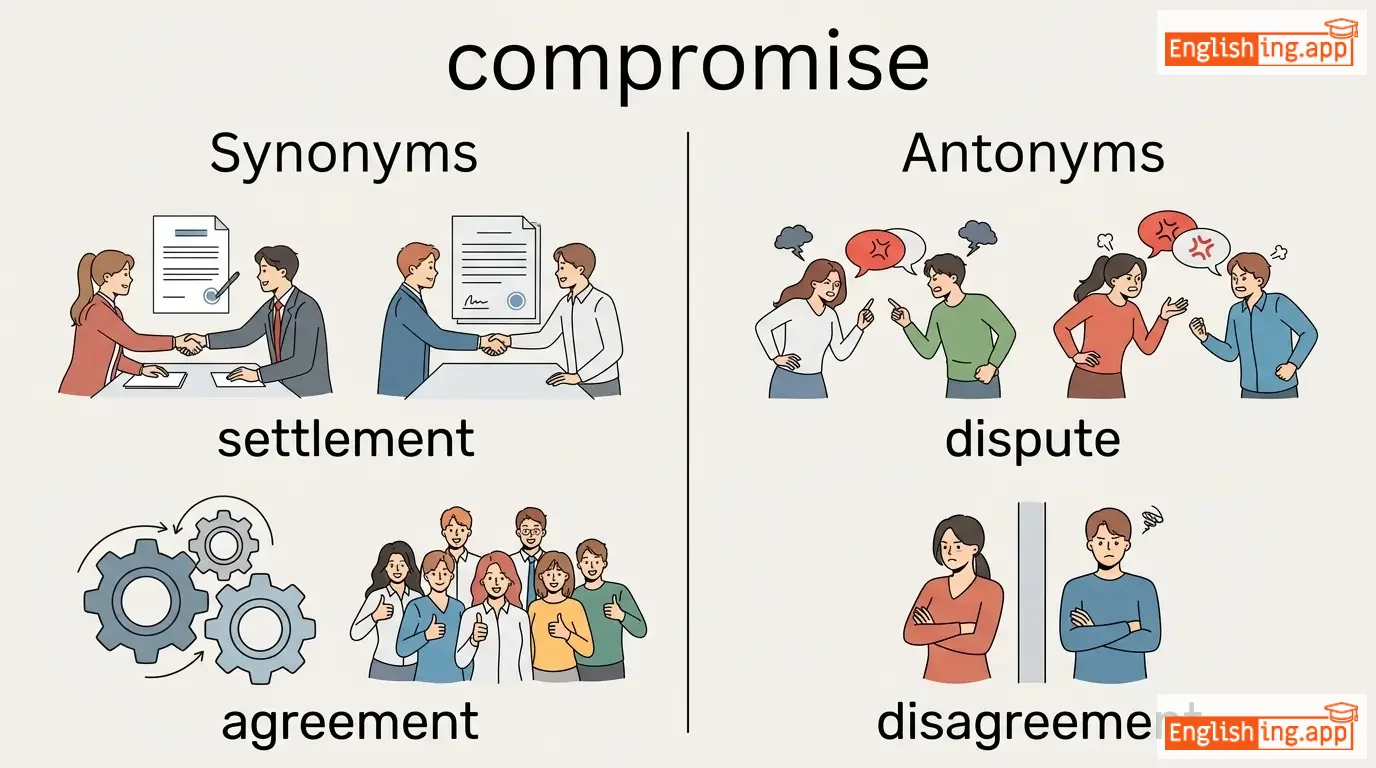
••••••
|
他们在长时间的谈判后达成了妥协。
Tāmen zài cháng shíjiān de tánpàn hòu dáchéngle tuǒxié.
••••••
|
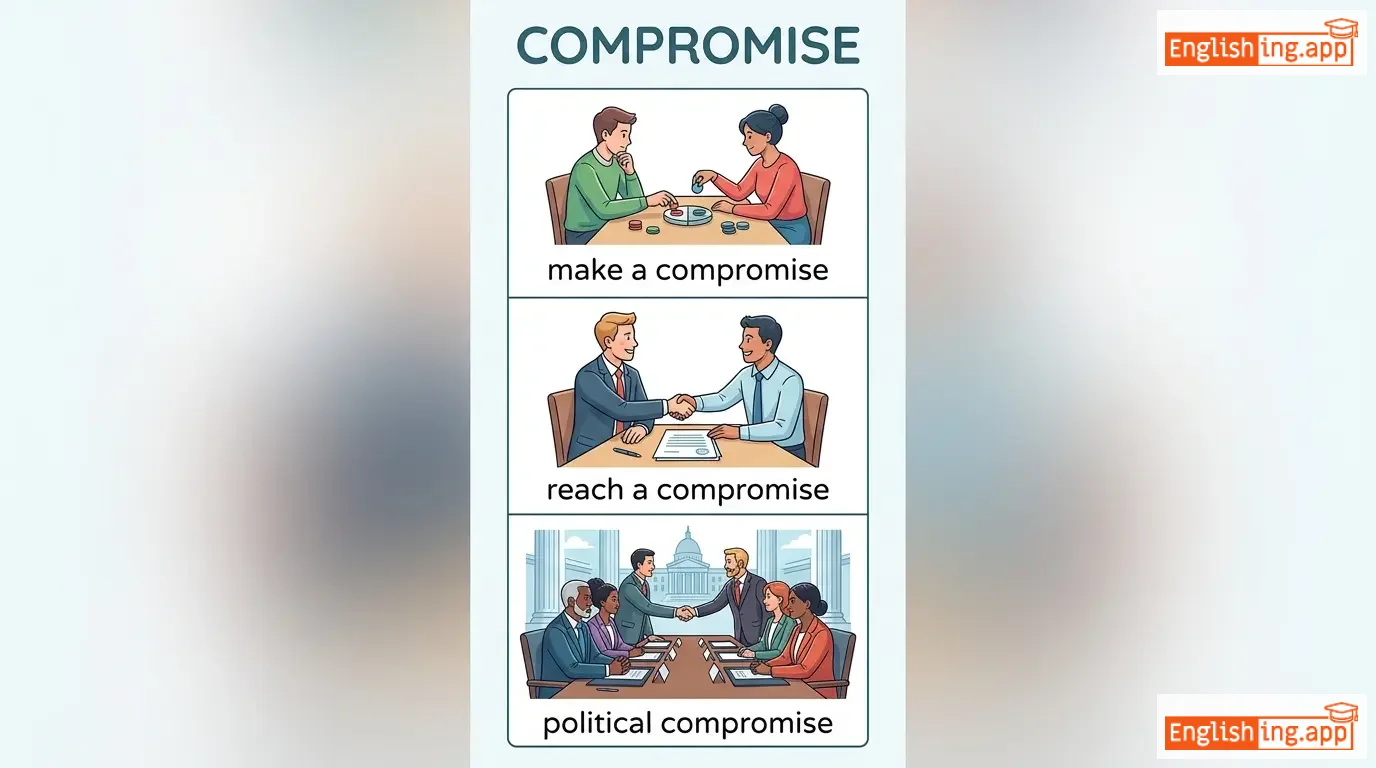
reach a compromise
达成妥协
••••••
|
To come to an agreement by mutual concession.
••••••
|
达成妥协
dáchéng tuǒxié
••••••
|
settlement, agreement, deal, concession
••••••
|
dispute, disagreement
••••••
|
make a compromise, reach a compromise, political compromise, compromise solution
••••••
|
妥协 — 比如通过让步做出决定
••••••
|
|
#1674
🧩
|
/kəmˈpraɪz/
verb
(kəmpraiz)
••••••
|
- •••••• |
由...组成
you...zuchéng
••••••
|
comprised
kəmpraizd
••••••
|
comprised
kəmpraizd
••••••
|
comprises
kəmpraizes
••••••
|
comprising
kəmpraizing
••••••
|
To consist of or be made up of something.
••••••
|
The committee comprises five members.
委员会由五个成员组成。
••••••
|
委员会由五个成员组成。
Wěiyuánhuì yóu wǔ gè chéngyuán zǔchéng.
••••••
|
- •••••• | - •••••• | - •••••• |
consist of, include, contain, encompass
••••••
|
exclude, lack
••••••
|
comprise of, committee comprises, group comprises, comprises elements
••••••
|
就像一个委员会是由成员组成的,comprise
••••••
|
|
#1675
📦
|
/kəmˈprɛʃn̩/
noun
(kəmˈprɛʃən)
••••••
|
- •••••• |
压缩
yāsuō
••••••
|
- •••••• | - •••••• | - •••••• | - •••••• |
The act of pressing or squeezing something into a smaller space.
••••••
|
File compression helps reduce storage requirements. |
文件压缩有助于减少存储需求。
Wénjiàn yāsuō yǒuzhù yú jiǎnshǎo cúnchú xūqiú.
••••••
|
compression ratio |
The ratio of compressed size to original size.
••••••
|
压缩比
yāsuō bǐ
••••••
|
squeezing, condensing, reduction, constriction
••••••
|
expansion, inflation
••••••
|
file compression, data compression, compression ratio, compression method
••••••
|
压缩使文件更小以节省空间。
••••••
|
|
#1676
🪂
|
/kəmˈprɛsəbl̩/
adjective
(kəmˈprɛsɪbl̩)
••••••
|
- •••••• |
可压缩的
ke ya suode
••••••
|
- •••••• | - •••••• | - •••••• | - •••••• |
Capable of being compressed or reduced in volume.
••••••
|
Air is a compressible substance, unlike water.
空气是一种可压缩的物质,不像水。
••••••
|
空气是一种可压缩的物质,不像水。
Kongqi shi yizhong ke yasuo de wuzhi, bu xiang shui.
••••••
|
- •••••• | - •••••• | - •••••• |
squeezable, contractible, reducible, squashable
••••••
|
incompressible, solid
••••••
|
compressible fluid, compressible material, compressible substance
••••••
|
可以被压缩的物体就是'可压缩的'。
••••••
|
|
#1677
📦
|
/kəmˈprɛs/
verb
(kèmpres)
••••••
|
- •••••• |
压缩
yāsuō
••••••
|
compressed
kèmpresd
••••••
|
compressed
kèmpresd
••••••
|
compresses
kèmpreses
••••••
|
compressing
kèmpresing
••••••
|
to press or squeeze something so that it becomes smaller
••••••
|
The file was compressed to save storage space.
文件被kèmpresd以节省存储空间。
••••••
|
文件被压缩以节省存储空间。
wénjiàn bèi yāsuō yǐ jiéshěng cúnchú kōngjiān.
••••••
|
time compression
时间压缩
••••••
|
reducing the time required for something
••••••
|
时间压缩
shíjiān yāsuō
••••••
|
condense, squeeze, compact, shrink, reduce
••••••
|
expand, enlarge, stretch
••••••
|
compress a file, compress data, compress air, compress space
••••••
|
压缩意味着使某物变小,就像压缩ZIP文件一样。
••••••
|
|
#1678
📝
|
/ˌkɒmprɪˈhɛnsɪv/
adjective
(kōngpǔrìhènsīfū)
••••••
|
|
全面
quánmiàn
••••••
|
- •••••• | - •••••• | - •••••• | - •••••• |
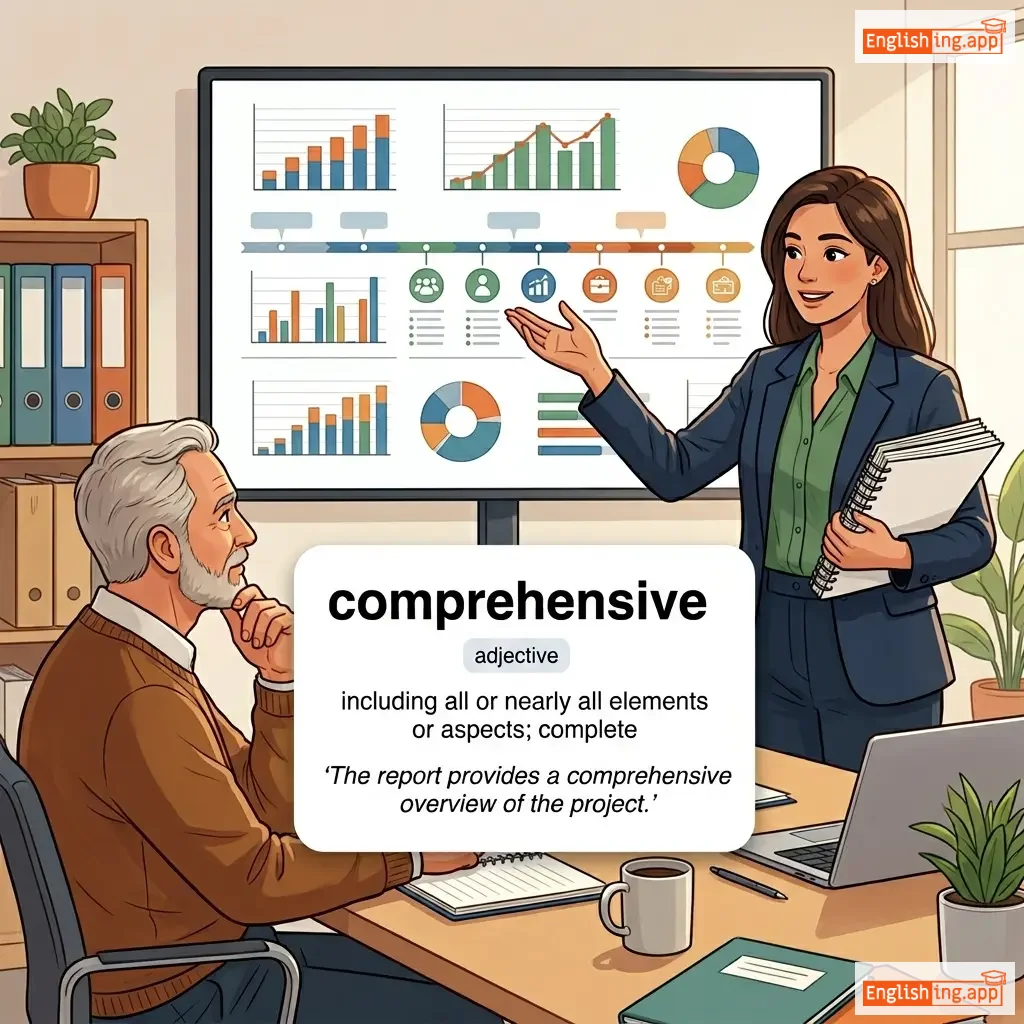
including all or nearly all elements or aspects; complete
••••••
|
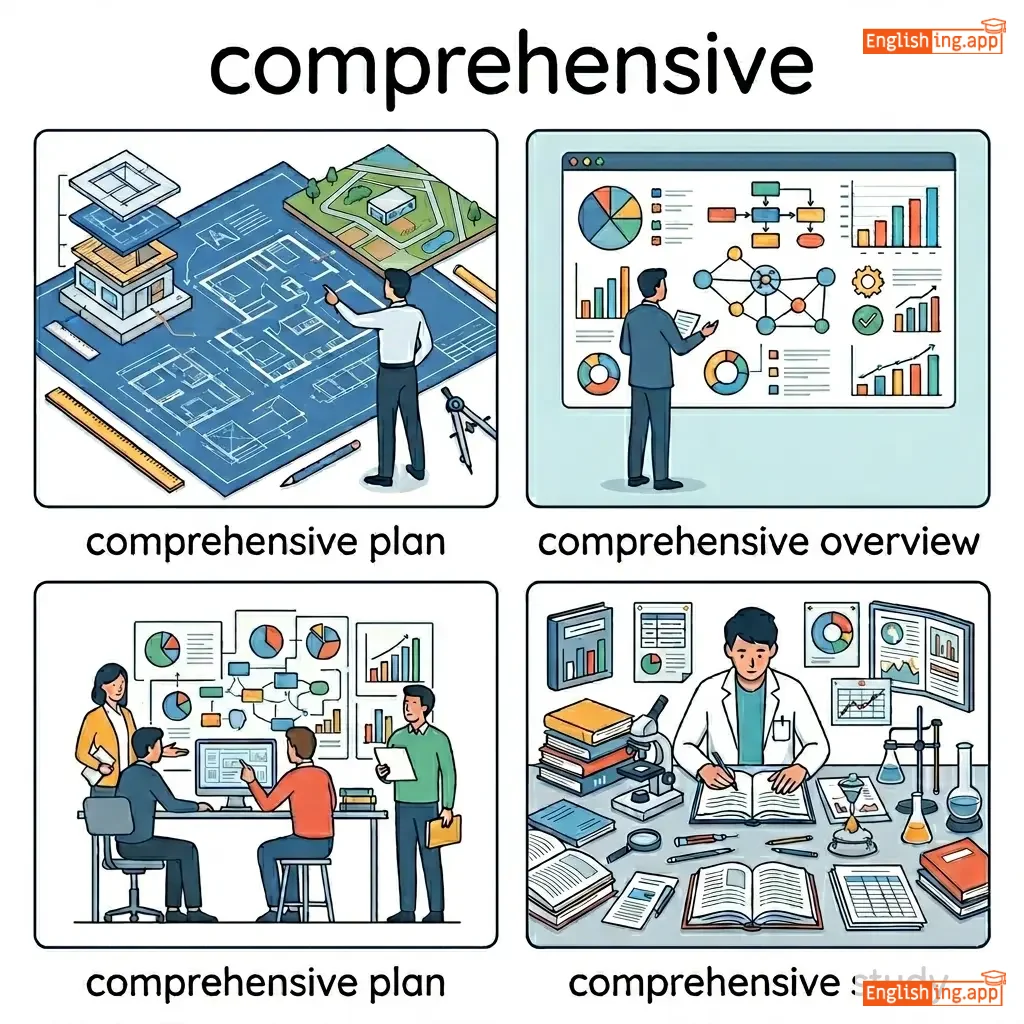
The report provides a comprehensive overview of the project.
报告提供了项目的全面概述。
••••••
|
报告提供了项目的全面概述。
Bàogào tígōngle xiàngmù de quánmiàn gàishuò.
••••••
|
- •••••• | - •••••• | - •••••• |
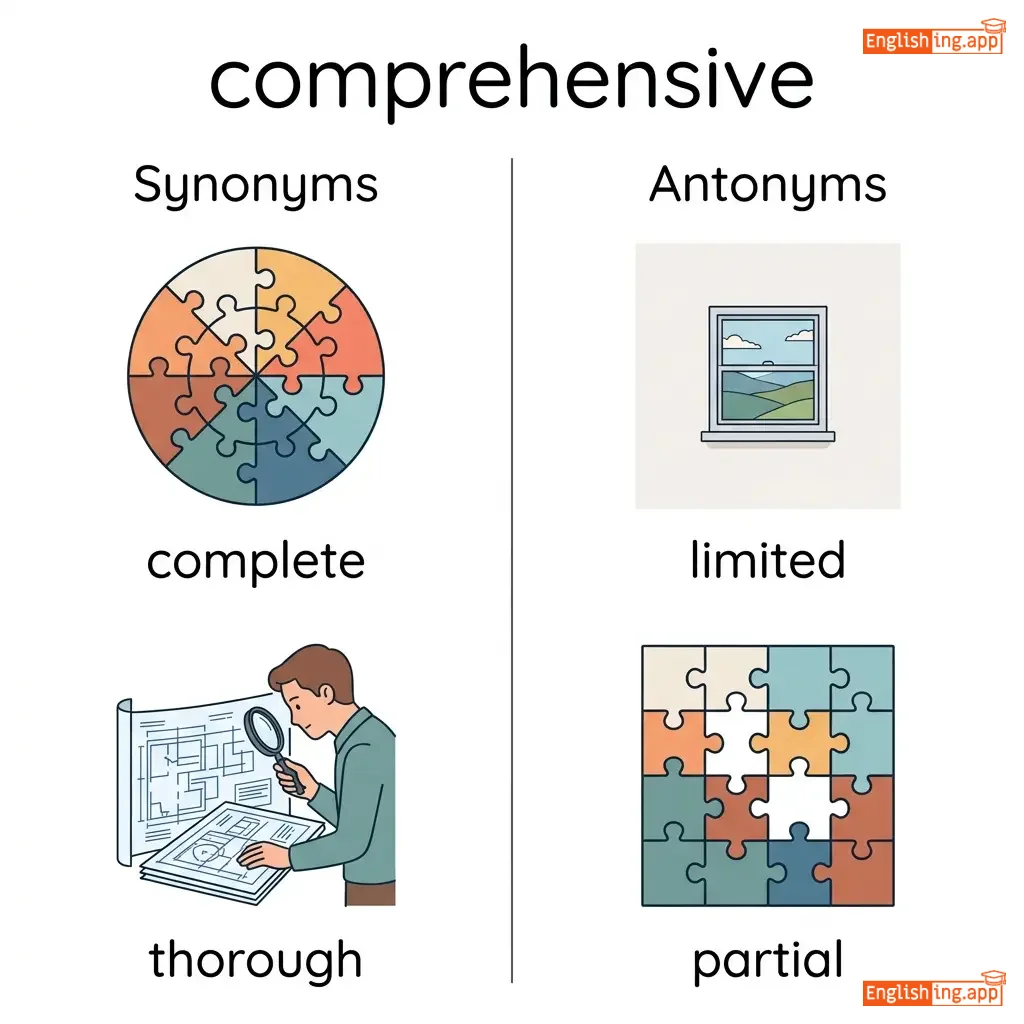
complete, thorough, extensive, exhaustive
••••••
|
limited, partial, incomplete
••••••
|
comprehensive plan, comprehensive overview, comprehensive study
••••••
|
Comprehensive意味着包含所有内容,如'全面的健康检查'。
••••••
|
|
#1679
📚
|
/ˌkɒmprɪˈhɛnʃən/
noun
(kǎnɡbùrīhènshùn)
••••••
|
|
理解
lijiě
••••••
|
- •••••• | - •••••• | - •••••• | - •••••• |
the ability to understand something
••••••
|
Good reading comprehension is essential for academic success. |
良好的阅读理解对学术成功至关重要。
Liánghǎo de yuèdú lǐjiě duì xuéshù chénggōng zhìguān zhòngyào.
••••••
|
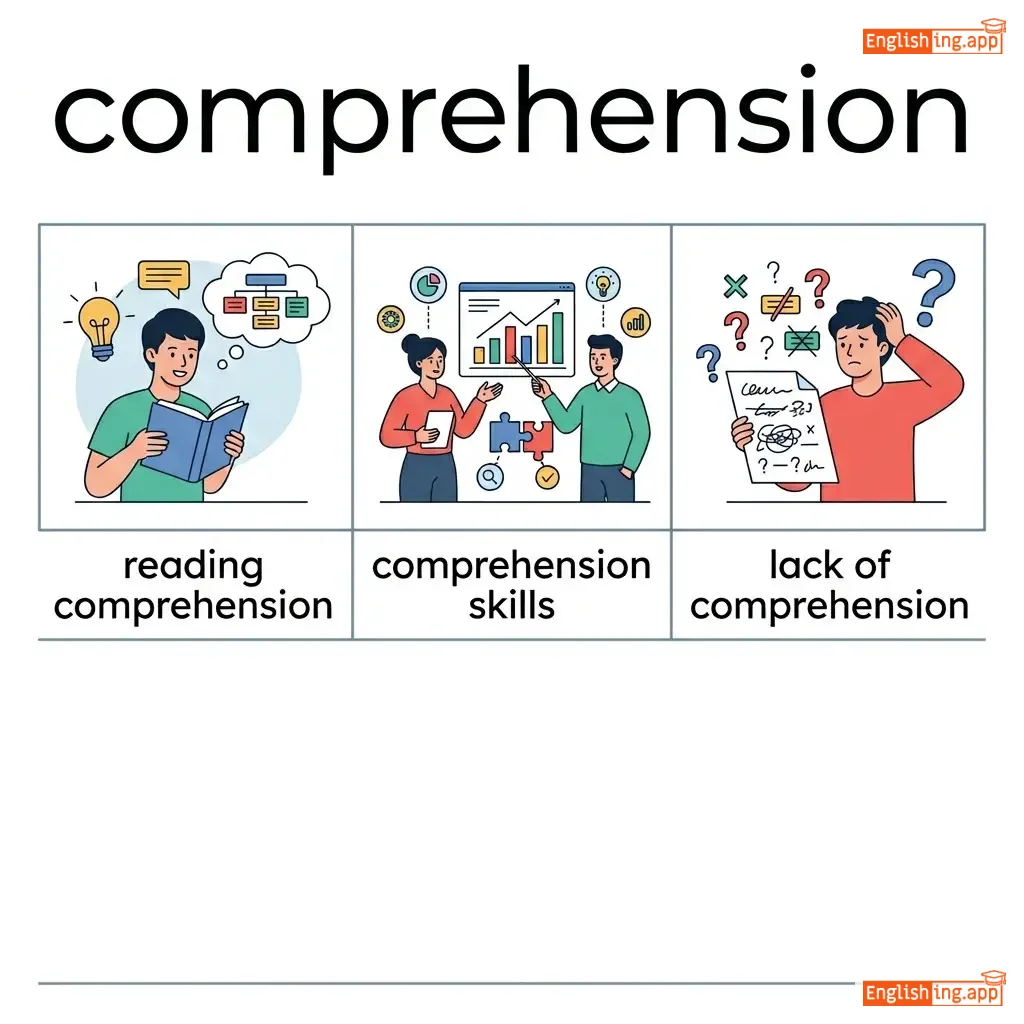
reading comprehension |
the ability to understand written text
••••••
|
阅读理解
yuèdú lǐjiě
••••••
|
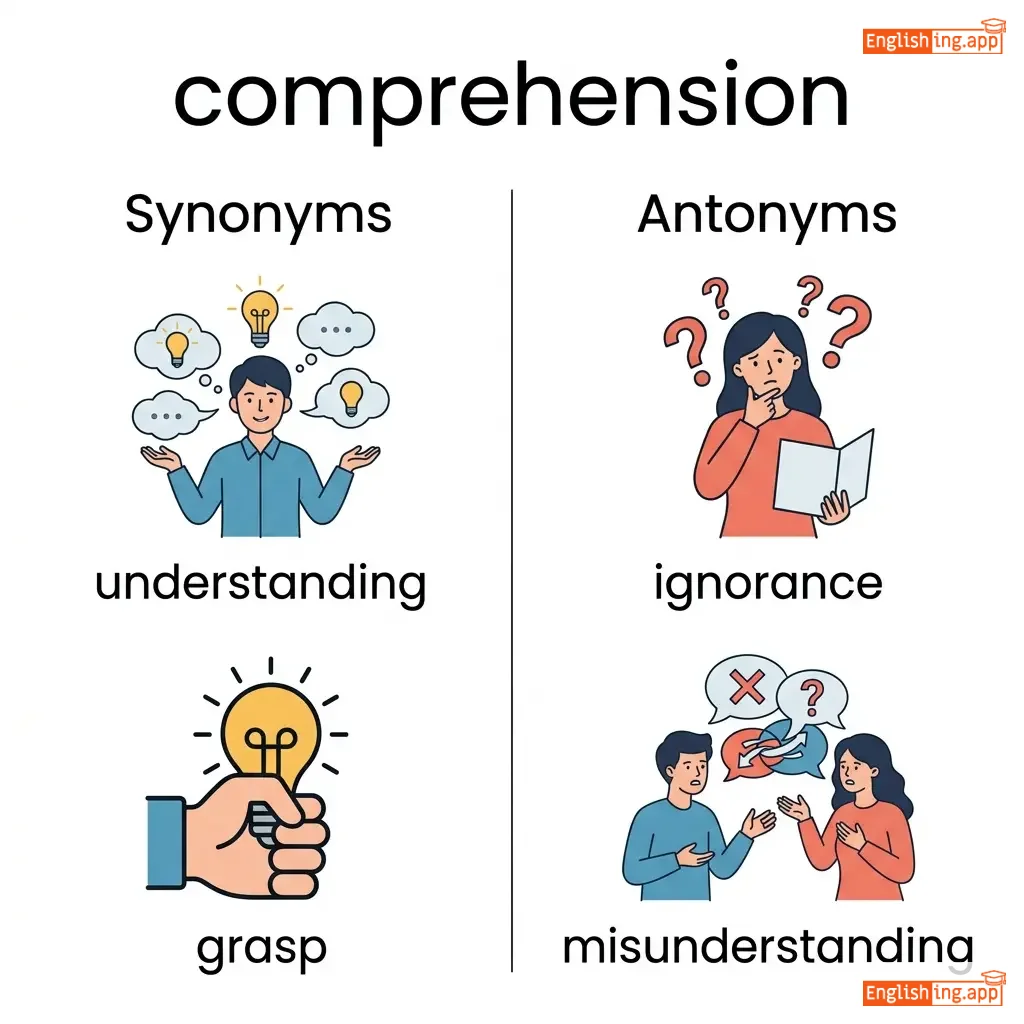
understanding, grasp, perception, awareness
••••••
|
ignorance, misunderstanding
••••••
|
reading comprehension, comprehension skills, lack of comprehension
••••••
|
Comprehension意味着理解,就像考试中的'reading comprehension'。
••••••
|
|
#1680
📖
|
/ˌkɒmprɪˈhɛnsəbl/
adjective
(kāng pǔ rì hēn sī bù ěr)
••••••
|
- •••••• |
可理解的
kelijiede
••••••
|
- •••••• | - •••••• | - •••••• | - •••••• |
able to be understood; intelligible
••••••
|
The teacher explained the topic in a comprehensible way.
老师以一种可以理解的方式解释了这个话题。
••••••
|
老师以一种可以理解的方式解释了这个话题。
Lǎoshī yǐ yī zhǒng kěyǐ lǐjiě de fāngshì jiěshì le zhège huàtí.
••••••
|
- •••••• | - •••••• | - •••••• |
understandable, clear, intelligible, lucid
••••••
|
incomprehensible, confusing
••••••
|
comprehensible explanation, easily comprehensible, make comprehensible
••••••
|
Comprehensible 意思是可理解的,就像能理解的东西一样简单。
••••••
|
Vocabulary Quiz
Test your vocabulary by matching words with their translations or meanings.
Login to take the quiz
Comments (0)
Share your thoughts and join the discussion.
Join the discussion by logging in
Login to CommentNo comments yet
Be the first to share your thoughts!