


Swipe left or right, or use the buttons. Tap image to zoom.
例句翻译
单词
Lesson 83Lesson 83 - 遮罩切换
|
表情符号
|
单词 | Images | 翻译 | 过去时 | 过去分词 | 第三人称单数 | 动名词 | 含义 | 例句 | 例句翻译 | 示例表达 | 示例表达含义 | 示例表达翻译 | 同义词 | 反义词 | 搭配词 | 助记符 |
|---|---|---|---|---|---|---|---|---|---|---|---|---|---|---|---|---|---|
|
#2461
🙅
|
/ˌdɪsəˈɡriː/
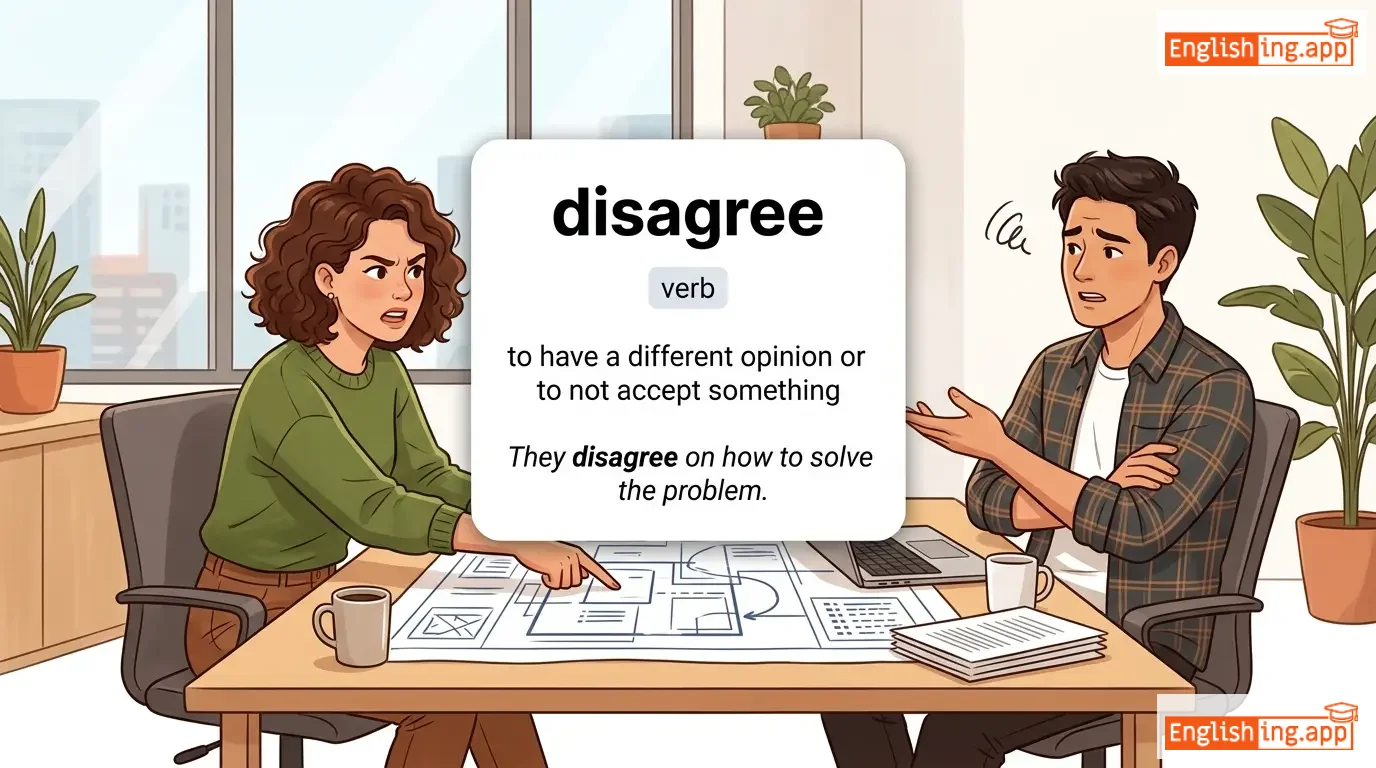
verb
••••••
|
|
- •••••• |
disagreed
••••••
|
disagreed
••••••
|
disagrees
••••••
|
disagreeing
••••••
|
to have a different opinion or to not accept something
••••••
|
They disagree on how to solve the problem. |
- •••••• |
agree to disagree |
accept that two people will not reach the same opinion
••••••
|
- •••••• |
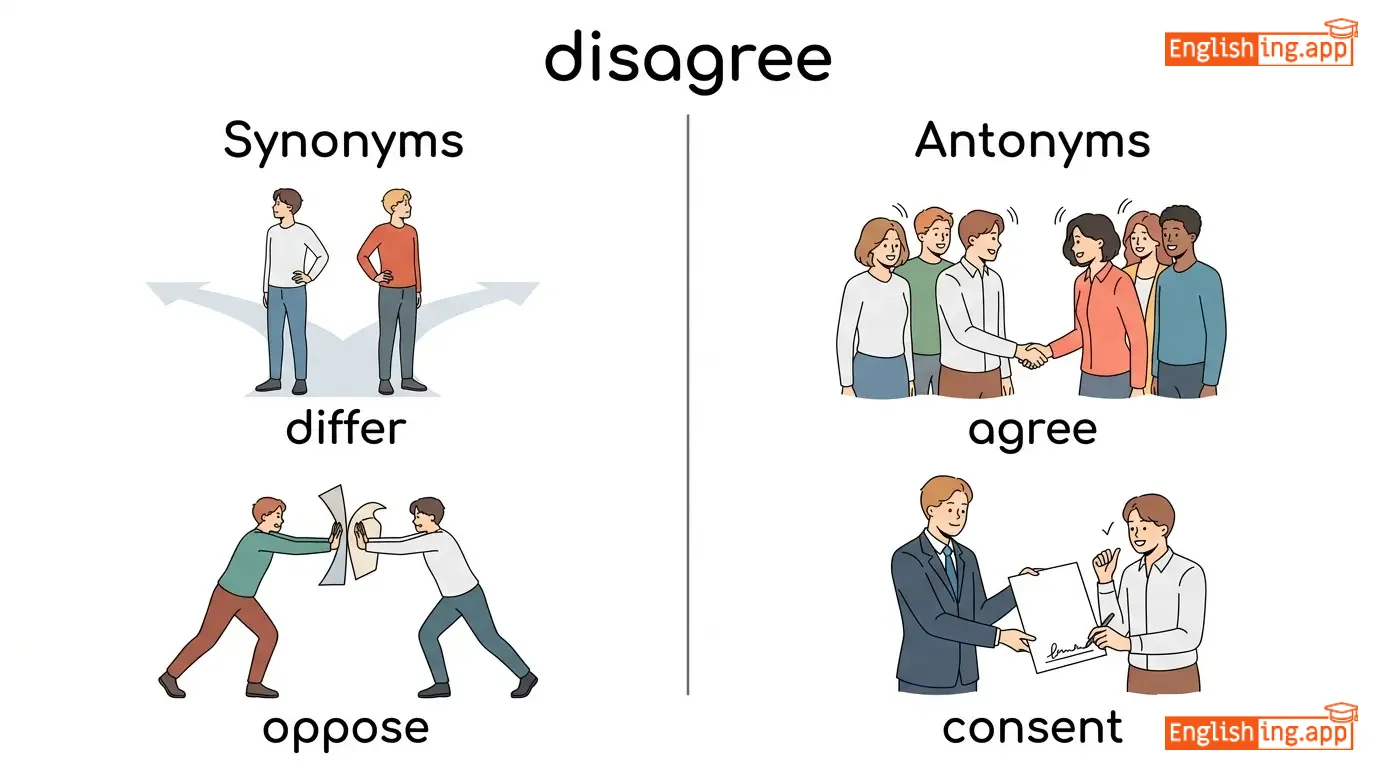
differ, oppose, contradict, dispute, object
••••••
|
agree, consent, approve
••••••
|
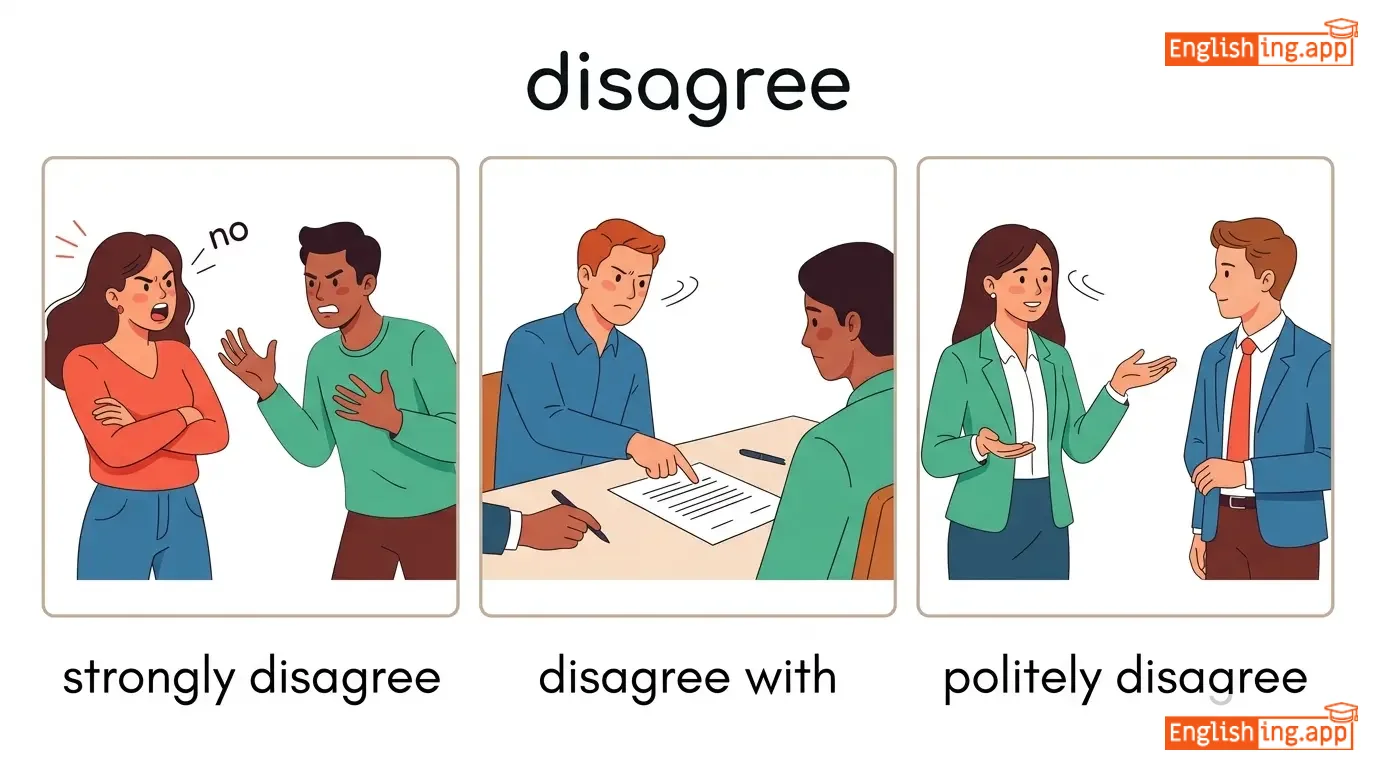
strongly disagree, disagree with, politely disagree
••••••
|
No •••••• |
|
#2462
🎒
|
/dɪsˈbɜːrdən/
verb
(迪斯伯登)
••••••
|
- •••••• |
减轻负担
jianqing fudan
••••••
|
disburdened
迪斯伯登德
••••••
|
disburdened
迪斯伯登德
••••••
|
disburdens
迪斯伯登斯
••••••
|
disburdening
迪斯伯登宁
••••••
|
to relieve someone of a burden or load
••••••
|
She disburdened herself of worries by sharing them with her friend.
她通过与朋友分享担忧,解除了自己的负担。
••••••
|
她通过与朋友分享担忧,解除了自己的负担。
Tā tōngguò yǔ péngyǒu fēnxiǎng dānyōu, jiěchúle zìjǐ de fùdān.
••••••
|
- •••••• | - •••••• | - •••••• |
relieve, unload, release, free
••••••
|
burden, load, oppress
••••••
|
disburden oneself, disburden the mind, disburden of worries, disburden the heart
••••••
|
Disburden意味着减轻负担。
••••••
|
|
#2463
🙅
|
/ˌdɪsbɪˈliːvər/
noun
(迪斯比利弗)
••••••
|
- •••••• |
不信者
buxinzhe
••••••
|
- •••••• | - •••••• | - •••••• | - •••••• |
a person who does not believe in something, especially a religion or idea
••••••
|
He was called a disbeliever for rejecting the traditional faith. |
因为拒绝传统信仰,他被称为不信者。
Yīnwèi jùjué chuántǒng xìnyǎng, tā bèi chēng wéi bùxìnzhě.
••••••
|
- •••••• | - •••••• | - •••••• |
skeptic, atheist, doubter, unbeliever
••••••
|
believer, follower, devotee
••••••
|
religious disbeliever, labeled disbeliever, disbeliever in God, stubborn disbeliever
••••••
|
Disbeliever = Dis (不) + believer (信者) → 不信者.
••••••
|
|
#2464
⚖️
|
/dɪsˈbɑːr/
verb
(迪斯巴尔)
••••••
|
- •••••• |
正式将律师从法律职业中除名
zhèngshì jiāng lǜshī cóng fǎlǜ zhíyè zhōng chúmíng
••••••
|
disbarred
迪斯巴尔德
••••••
|
disbarred
迪斯巴尔德
••••••
|
disbars
迪斯巴尔斯
••••••
|
disbarring
迪斯巴林
••••••
|
to officially remove a lawyer from the legal profession
••••••
|
The corrupt lawyer was disbarred for unethical conduct.
腐败的律师因不道德行为而被迪斯巴尔德。
••••••
|
腐败的律师因不道德行为而被除名。
Fǔbài de lǜshī yīn bù dàodé xíngwéi ér bèi chúmíng.
••••••
|
- •••••• | - •••••• | - •••••• |
expel, suspend, dismiss, oust
••••••
|
admit, authorize, approve
••••••
|
disbar a lawyer, permanently disbarred, face disbarment, disbar proceedings
••••••
|
Disbar 意味着被从律师协会除名。
••••••
|
|
#2465
💔
|
/dɪsˈbænd/
verb
(迪斯班)
••••••
|
- •••••• |
解散
jiesan
••••••
|
disbanded
迪斯班德
••••••
|
disbanded
迪斯班德
••••••
|
disbands
迪斯班斯
••••••
|
disbanding
迪斯班丁
••••••
|
to break up and stop functioning as a group or organization
••••••
|
The club decided to disband after twenty years of activity.
俱乐部在二十年的活动后决定解散。
••••••
|
俱乐部在二十年的活动后决定解散。
Jùlèbù zài èrshí nián de huódòng hòu juédìng jiěsàn.
••••••
|
- •••••• | - •••••• | - •••••• |
dissolve, break up, scatter, disperse
••••••
|
assemble, unite, organize
••••••
|
decide to disband, forced to disband, disband the army, disband the group
••••••
|
Disband 就是解散(拆解)一个团体或者组织。
••••••
|
|
#2466
🚫
|
/ˌdɪsəˈvaʊəl/
noun
(迪萨沃尔)
••••••
|
- •••••• |
否认
fǒurèn
••••••
|
- •••••• | - •••••• | - •••••• | - •••••• |
the denial of any responsibility, connection, or support
••••••
|
The politician issued a firm disavowal of the controversial remarks. |
该政治家对有争议的言论发表了强烈的否认。
Gāi zhèngzhìjiā duì yǒu zhēngyì de yánlùn fābiǎo le qiángliè de fǒurèn.
••••••
|
- •••••• | - •••••• | - •••••• |
denial, rejection, repudiation, disclaimer, renunciation
••••••
|
acceptance, acknowledgment, approval
••••••
|
public disavowal, strong disavowal, disavowal of responsibility, formal disavowal
••••••
|
Disavowal意味着否认,'dis'(拒绝)和 'vow'(誓言)– 否认责任和誓言。
••••••
|
|
#2467
🙅
|
/ˌdɪsəˈvaʊ/
verb
(dī sī ào)
••••••
|
- •••••• |
否认
fǒu rèn
••••••
|
disavowed
dī sī ào dé
••••••
|
disavowed
dī sī ào dé
••••••
|
disavows
dī sī ào sī
••••••
|
disavowing
dī sī ào yīng
••••••
|
to deny responsibility for or connection with something
••••••
|
He disavowed any involvement in the scandal.
他否认参与了丑闻。
••••••
|
他否认参与了丑闻。
Tā fǒu rèn cān yù le chǒu wén.
••••••
|
disavow responsibility
否认责任
••••••
|
to refuse to accept responsibility for something
••••••
|
否认责任
fǒu rèn zérèn
••••••
|
deny, repudiate, renounce, reject
••••••
|
acknowledge, accept
••••••
|
disavow responsibility, disavow involvement, disavow connection
••••••
|
Vow 意为誓言,disavow 意为否认誓言。
••••••
|
|
#2468
🌀
|
/ˌdɪsəˈreɪ/
noun
(迪萨雷)
••••••
|
|
混乱
hunluan
••••••
|
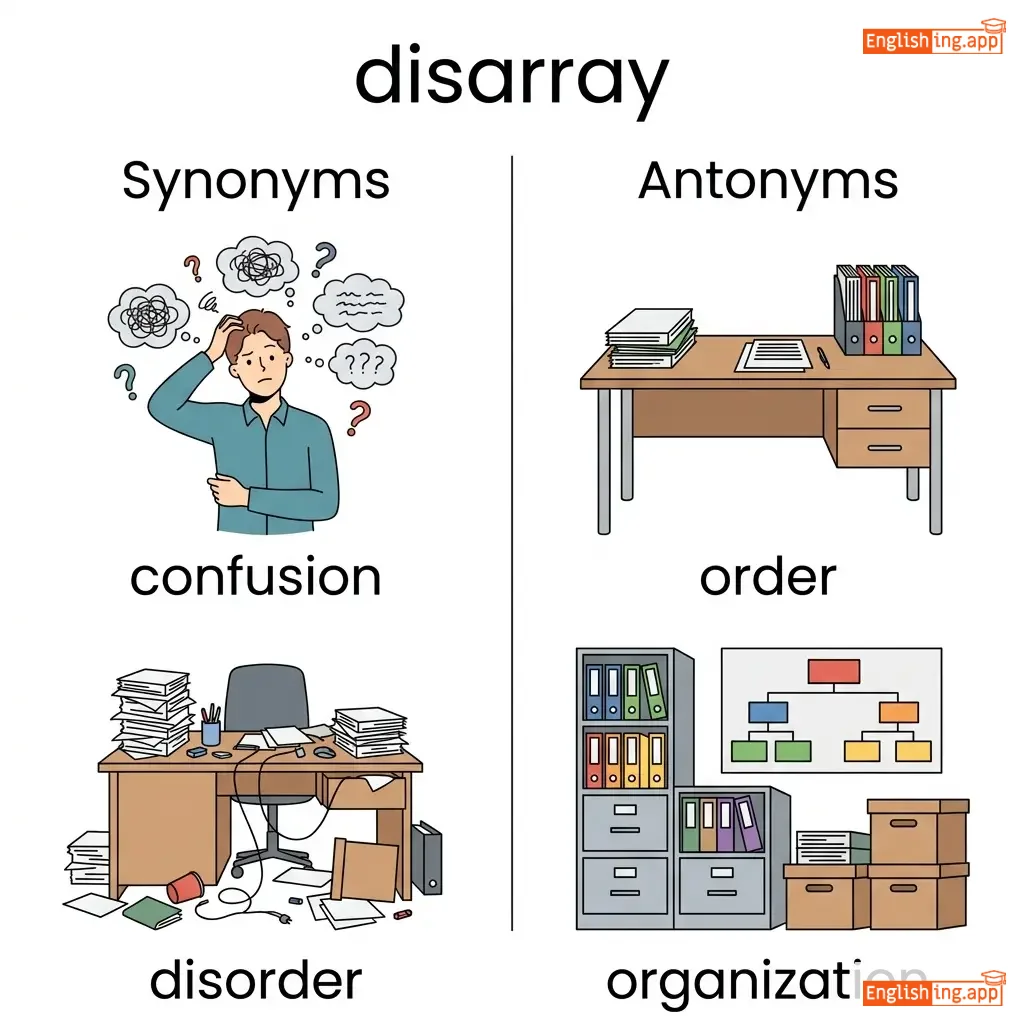
- •••••• | - •••••• | - •••••• | - •••••• |
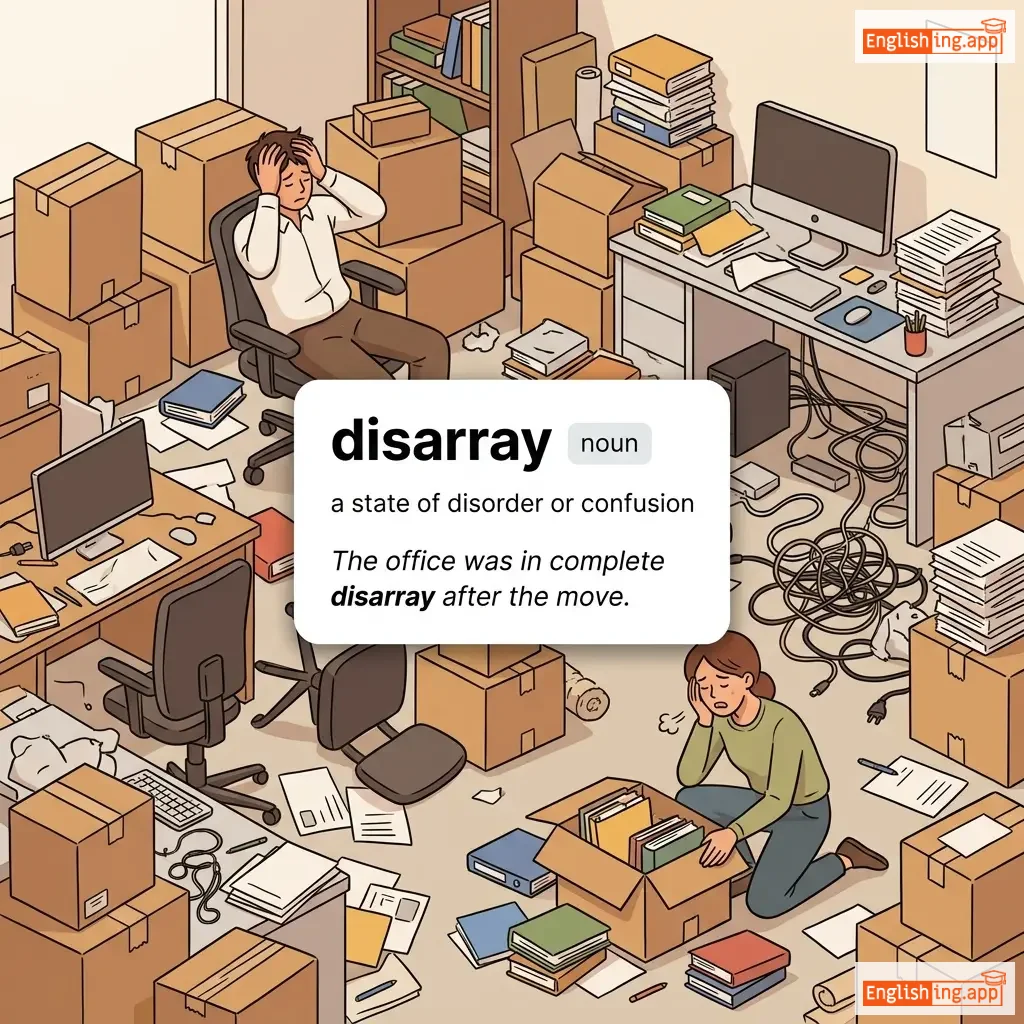
a state of disorder or confusion
••••••
|
The office was in complete disarray after the move. |
搬家后办公室完全混乱。
Ban jia hou bangongshi wanquan hunluan.
••••••
|
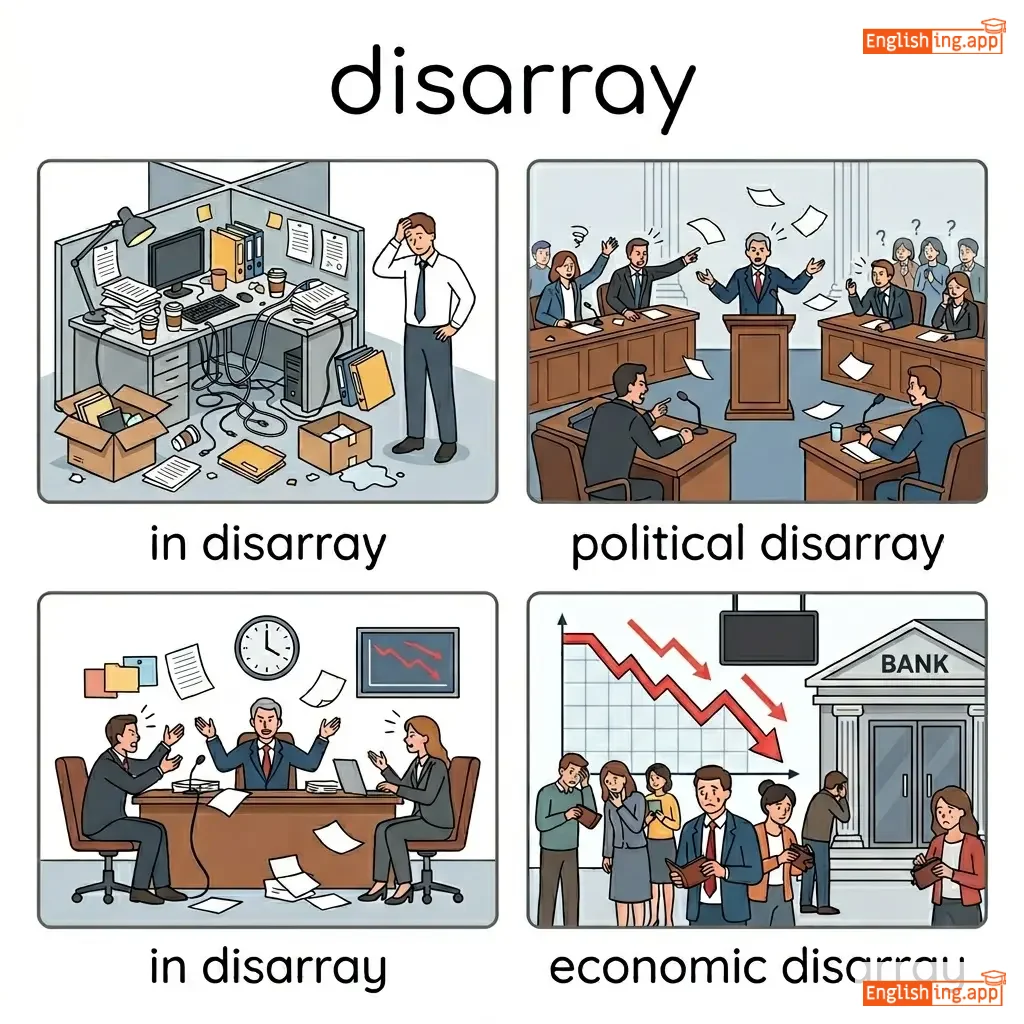
in disarray |
in a state of confusion or disorder
••••••
|
在混乱中
zai hunluan zhong
••••••
|
confusion, disorder, chaos, mess
••••••
|
order, organization
••••••
|
in disarray, political disarray, economic disarray
••••••
|
混乱就像disarray一样,表示混乱的状态。
••••••
|
|
#2469
😵
|
/ˌdɪsəˈreɪndʒ/
verb
(disarendzhi)
••••••
|
- •••••• |
弄乱
nongluan
••••••
|
disarranged
disarranged
••••••
|
disarranged
disarranged
••••••
|
disarranges
disarranges
••••••
|
disarranging
disarranging
••••••
|
to disturb the order or arrangement of something
••••••
|
The wind disarranged her hair.
风把她的头发弄乱了。
••••••
|
风把她的头发弄乱了。
Feng ba ta de toufa nongluan le.
••••••
|
- •••••• | - •••••• | - •••••• |
disturb, disorder, mess up, confuse
••••••
|
arrange, organize
••••••
|
disarrange plans, disarrange hair, disarrange order
••••••
|
Arrange 代表整理,disarrange 代表弄乱。
••••••
|
|
#2470
🕊️
|
/dɪsˈɑːrm/
verb
(迪萨姆)
••••••
|
- •••••• |
解除武装
jiexu wuzhuang
••••••
|
disarmed
迪萨姆德
••••••
|
disarmed
迪萨姆德
••••••
|
disarms
迪萨姆斯
••••••
|
disarming
迪萨姆英
••••••
|
to take weapons away from someone; to make someone feel less hostile
••••••
|
The soldiers were ordered to disarm the rebels.
士兵们被命令解除叛乱分子的武装。
••••••
|
士兵们被命令解除叛乱分子的武装。
Shibing men bei mingling jiexu panluan fenzhi de wuzhuang.
••••••
|
disarm a person
解除一个人的武装
••••••
|
to remove weapons from a person
••••••
|
解除一个人的武装
jiexu yige ren de wuzhuang
••••••
|
demilitarize, neutralize, disable, pacify
••••••
|
arm, equip
••••••
|
disarm rebels, disarm opponents, disarm criticism
••••••
|
解除武装就像是解除敌意。
••••••
|
|
#2471
👎
|
/ˌdɪsəˈpruːv/
verb
(dísàpùlǔv)
••••••
|
- •••••• |
不赞成
bù zànchéng
••••••
|
disapproved
dísàpùlùd
••••••
|
disapproved
dísàpùlùd
••••••
|
disapproves
dísàpùlùs
••••••
|
disapproving
dísàpùlùvìng
••••••
|
to have a negative opinion about something; to consider something wrong or bad
••••••
|
Many parents disapprove of smoking.
许多父母不赞成吸烟。
••••••
|
许多父母不赞成吸烟。
Xǔduō fùmǔ bù zànchéng xīyān.
••••••
|
strongly disapprove
强烈不赞成
••••••
|
to express strong disagreement or dislike
••••••
|
强烈不赞成
qiángliè bù zànchéng
••••••
|
condemn, criticize, oppose, reject, object
••••••
|
approve, praise, accept
••••••
|
disapprove of behavior, disapprove strongly, openly disapprove
••••••
|
Disapprove表示不赞成,中文是‘不赞成’。
••••••
|
|
#2472
👎
|
/ˌdɪsæprəˈbeɪʃən/
noun
(迪萨普罗贝申)
••••••
|
- •••••• |
强烈反对
qianglie fandui
••••••
|
- •••••• | - •••••• | - •••••• | - •••••• |
strong disapproval, typically on moral grounds
••••••
|
The policy was met with widespread disapprobation. |
该政策遭遇了广泛的反对。
Gai zhengce zao yu le guangfan de fandui.
••••••
|
- •••••• | - •••••• | - •••••• |
disapproval, condemnation, objection, criticism, reproach
••••••
|
approval, praise, endorsement
••••••
|
public disapprobation, moral disapprobation, widespread disapprobation
••••••
|
Dis + approbation (批准) = 没有批准—意味着强烈反对。
••••••
|
|
#2473
😞
|
/ˌdɪsəˈpɔɪnt/
verb
(迪萨波因特)
••••••
|
|
失望
shīwàng
••••••
|
disappointed
迪萨波因特德
••••••
|
disappointed
迪萨波因特德
••••••
|
disappoints
迪萨波因特斯
••••••
|
disappointing
迪萨波因廷
••••••
|
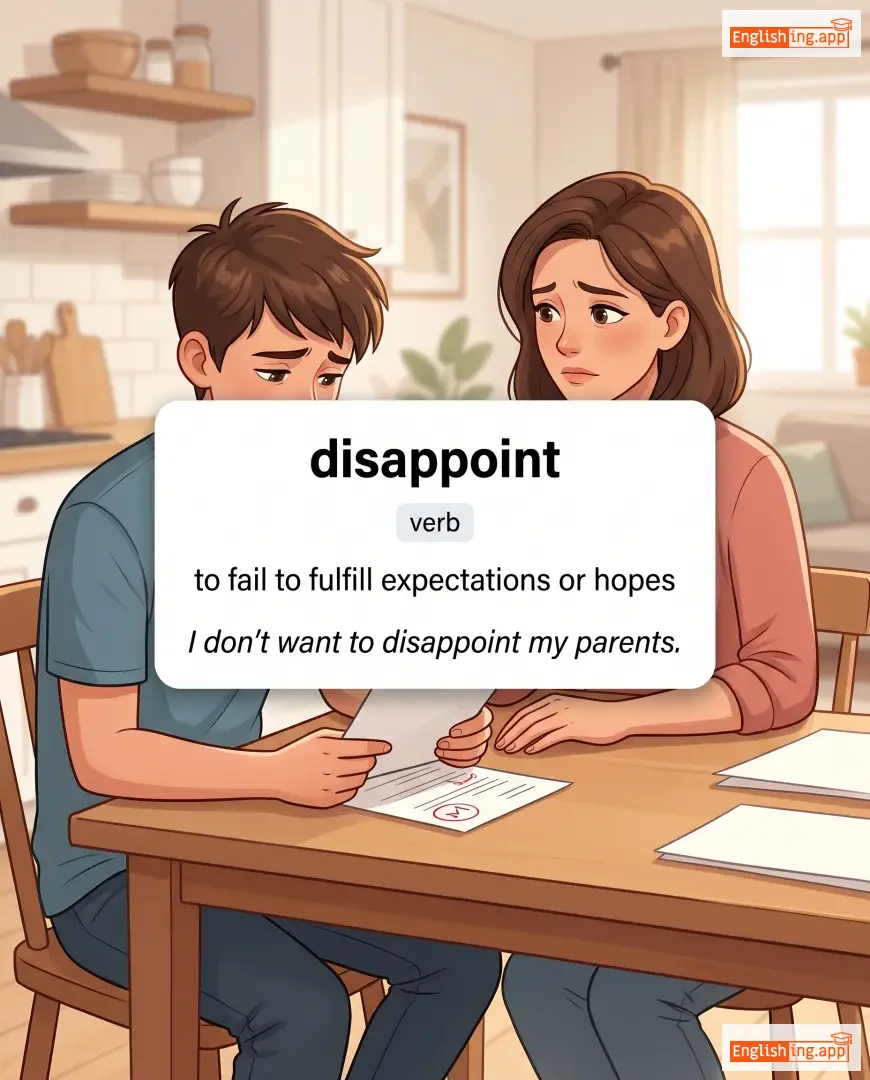
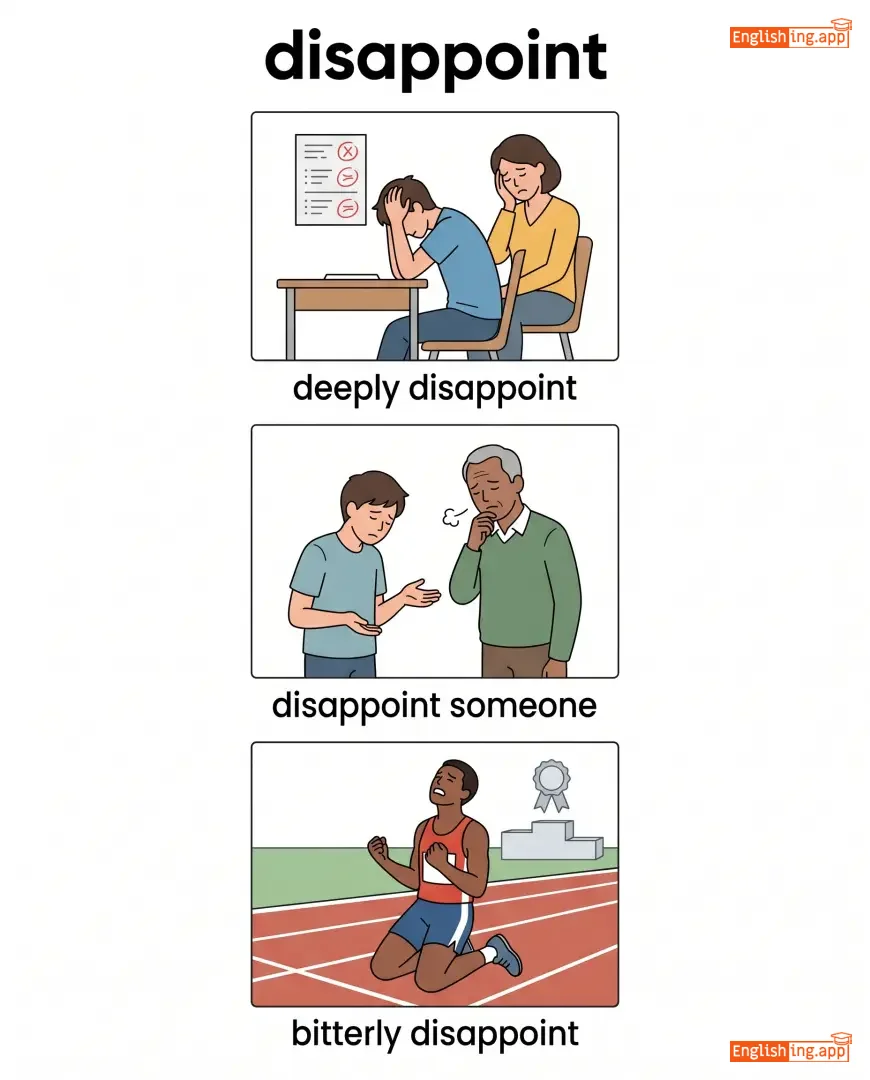
to fail to fulfill expectations or hopes
••••••
|
I don’t want to disappoint my parents.
我不想让我的父母失望。
••••••
|
我不想让我的父母失望。
Wǒ bù xiǎng ràng wǒ de fùmǔ shīwàng.
••••••
|
bitterly disappointed
非常失望
••••••
|
very unhappy due to unmet expectations
••••••
|
非常失望
fēicháng shīwàng
••••••
|
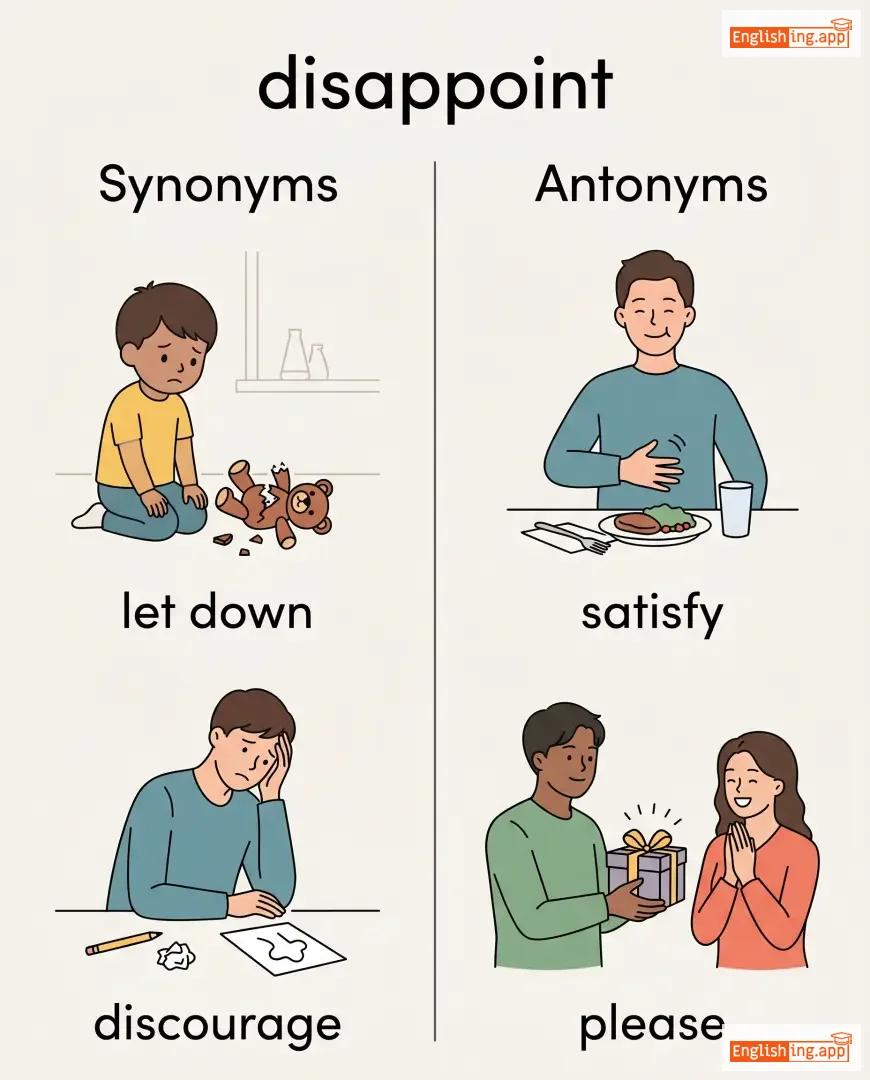
let down, discourage, upset, fail, frustrate
••••••
|
satisfy, please, fulfill
••••••
|
deeply disappoint, disappoint someone, bitterly disappoint
••••••
|
失望是未能满足期待—失去期待后心情沮丧。
••••••
|
|
#2474
🪄
|
/ˌdɪsəˈpɪər/
verb
(迪萨皮尔)
••••••
|
|
消失
xiaoshi
••••••
|
disappeared
消失
••••••
|
disappeared
消失
••••••
|
disappears
消失
••••••
|
disappearing
消失
••••••
|
to stop being visible or to cease to exist
••••••
|
The magician made the rabbit disappear.
魔术师让兔子消失。
••••••
|
魔术师让兔子消失。
Móshù shī ràng tùzǐ xiāoshī.
••••••
|
disappear into thin air
消失在空气中
••••••
|
to vanish suddenly and completely
••••••
|
消失在空气中
xiāoshī zài kōngqì zhōng
••••••
|
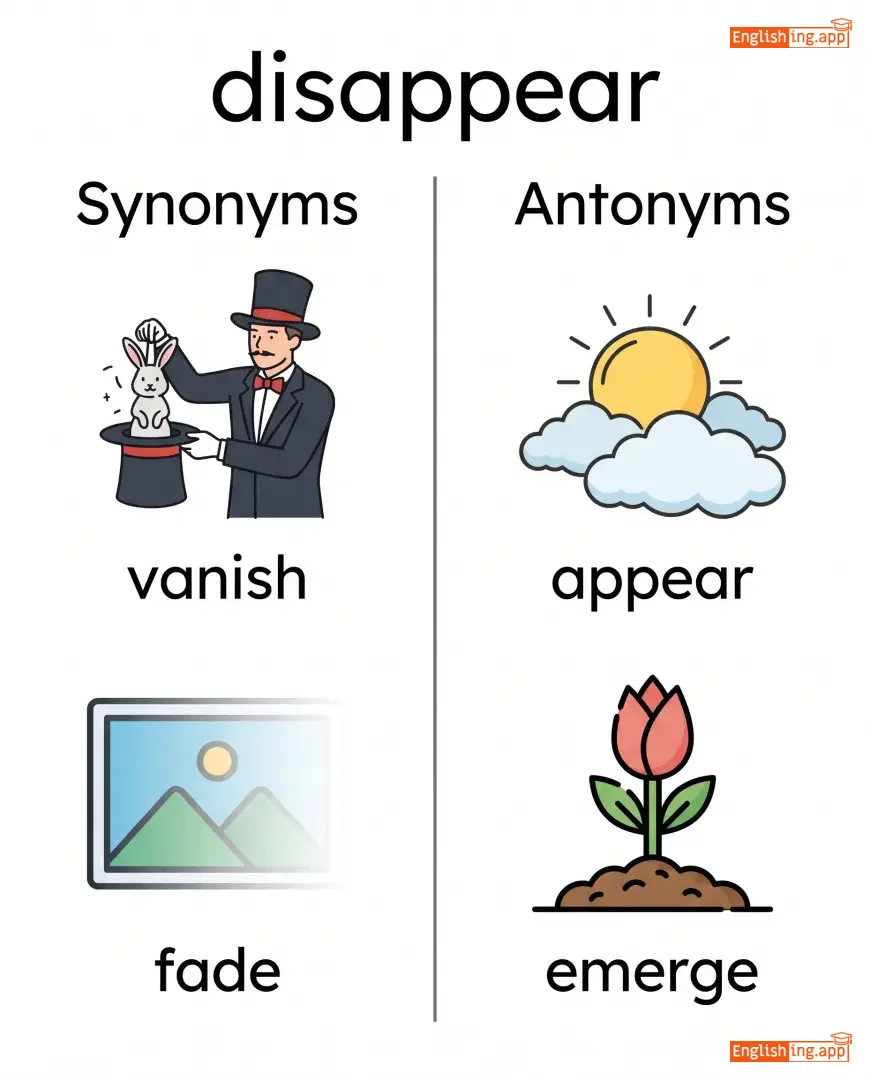
vanish, fade, evaporate, dissolve, recede
••••••
|
appear, emerge, show
••••••
|
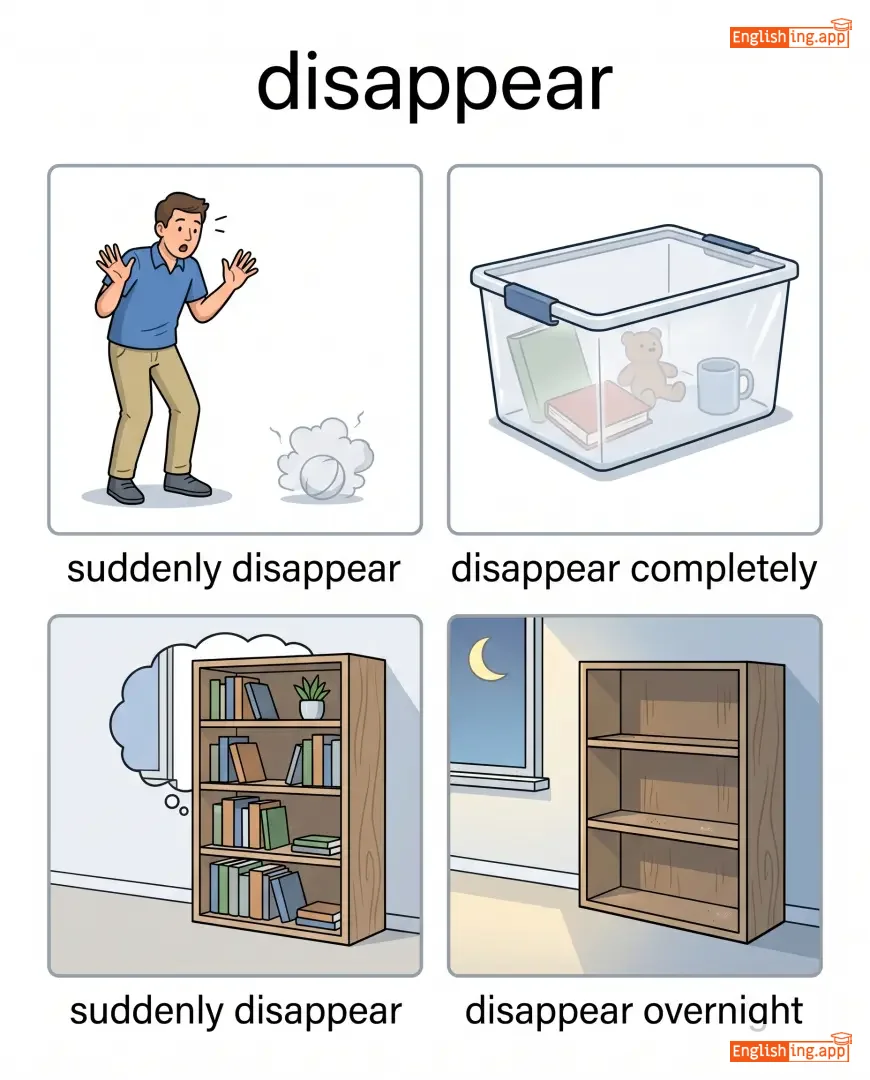
suddenly disappear, disappear completely, disappear overnight
••••••
|
Disappear 就是'消失'——不在眼前,消失。
••••••
|
|
#2475
🚫
|
/ˌdɪsəˈlaʊ/
verb
(disaolau)
••••••
|
- •••••• |
不允许
bù yǔnxǔ
••••••
|
disallowed
disaolau'd
••••••
|
disallowed
disaolau'd
••••••
|
disallows
disaolaws
••••••
|
disallowing
disaolawing
••••••
|
to refuse to allow or accept something
••••••
|
The referee disallowed the goal for offside.
裁判因为越位取消了进球。
••••••
|
裁判因为越位取消了进球。
Cáipàn yīnwèi yuèwèi qǔxiāo le jìnqiú.
••••••
|
- •••••• | - •••••• | - •••••• |
forbid, prohibit, ban, refuse, reject
••••••
|
allow, permit, approve
••••••
|
disallow a goal, disallow claims, disallow actions
••••••
|
Dis表示不, allow表示允许— disallow表示不允许.
••••••
|
|
#2476
🛶
|
/ˈdɪŋɡi/
noun
(dīngyī)
••••••
|
- •••••• |
小艇
xiǎo tǐng
••••••
|
- •••••• | - •••••• | - •••••• | - •••••• |
a small boat, often carried or towed by a larger vessel, used for short trips or as a lifeboat
••••••
|
They rowed the dinghy back to the yacht.
他们划着小艇回到游艇。
••••••
|
他们划着小艇回到游艇。
Tāmen huázhe xiǎo tǐng huí dào yóutǐng.
••••••
|
- •••••• | - •••••• | - •••••• |
small boat, tender, lifeboat, skiff, canoe
••••••
|
ship, vessel
••••••
|
inflatable dinghy, sailing dinghy, row a dinghy, rescue dinghy
••••••
|
在中文中,小艇表示类似于'吊艇'的船。
••••••
|
|
#2477
😠
|
/ˌdɪsəˈfɛktɪd/
adjective
(disafekted)
••••••
|
- •••••• |
不满的
buman de
••••••
|
- •••••• | - •••••• | - •••••• | - •••••• |
Dissatisfied and rebellious, especially against authority or leadership.
••••••
|
The reforms were introduced to calm the disaffected youth. |
改革是为了平息不满的青年。
Gaige shi weile pingxi bumai de qingnian.
••••••
|
- •••••• | - •••••• | - •••••• |
rebellious, dissatisfied, disloyal, alienated, resentful
••••••
|
loyal, content, satisfied
••••••
|
disaffected youth, disaffected group, disaffected members
••••••
|
Disaffected 在中文里可以翻译为 ‘不满的’,表示不满足和反叛
••••••
|
|
#2478
💡
|
/ˌdɪsəˈbjuːz/
verb
(迪萨比尤兹)
••••••
|
|
使觉醒
shi juexing
••••••
|
disabused
迪萨比尤兹德
••••••
|
disabused
迪萨比尤兹德
••••••
|
disabuses
迪萨比尤兹斯
••••••
|
disabusing
迪萨比尤兹英
••••••
|
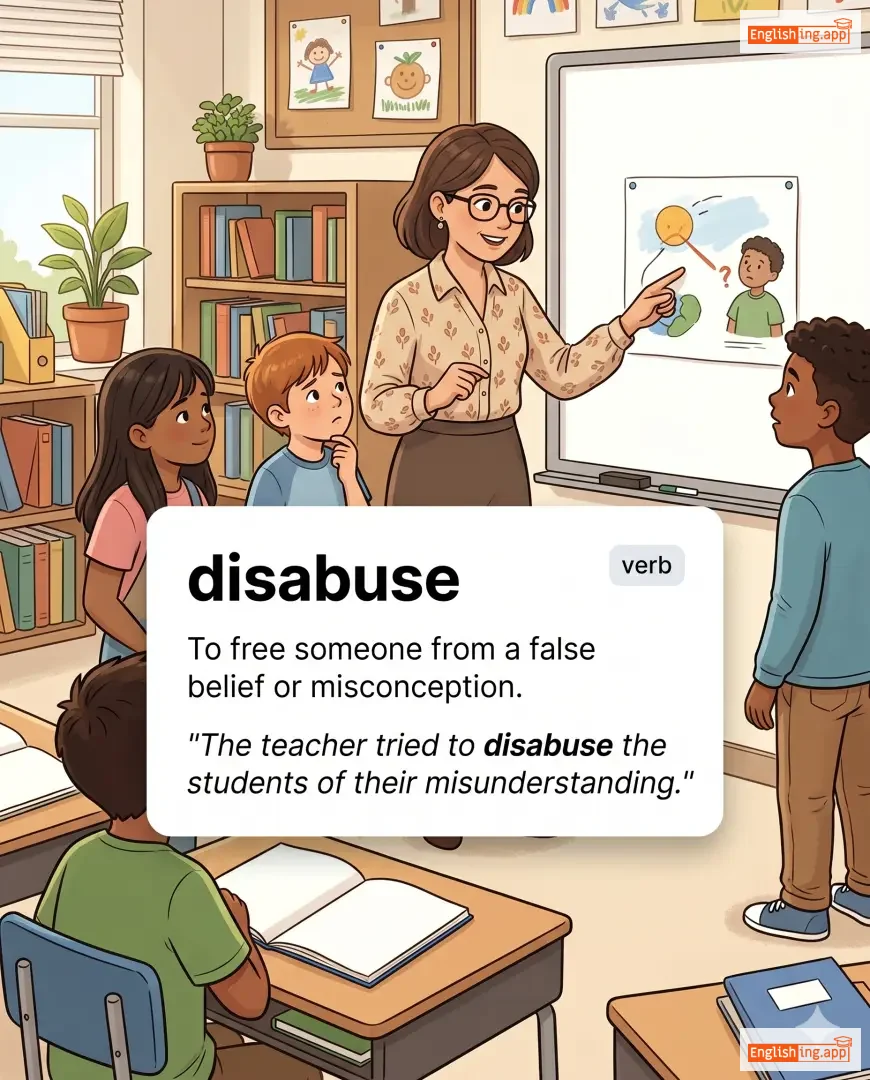
To free someone from a false belief or misconception.
••••••
|
The teacher tried to disabuse the students of their misunderstanding.
老师试图让学生摆脱他们的误解。
••••••
|
老师试图让学生摆脱他们的误解。
Laoshi shitu rang xuesheng baituo tamen de wu jie.
••••••
|
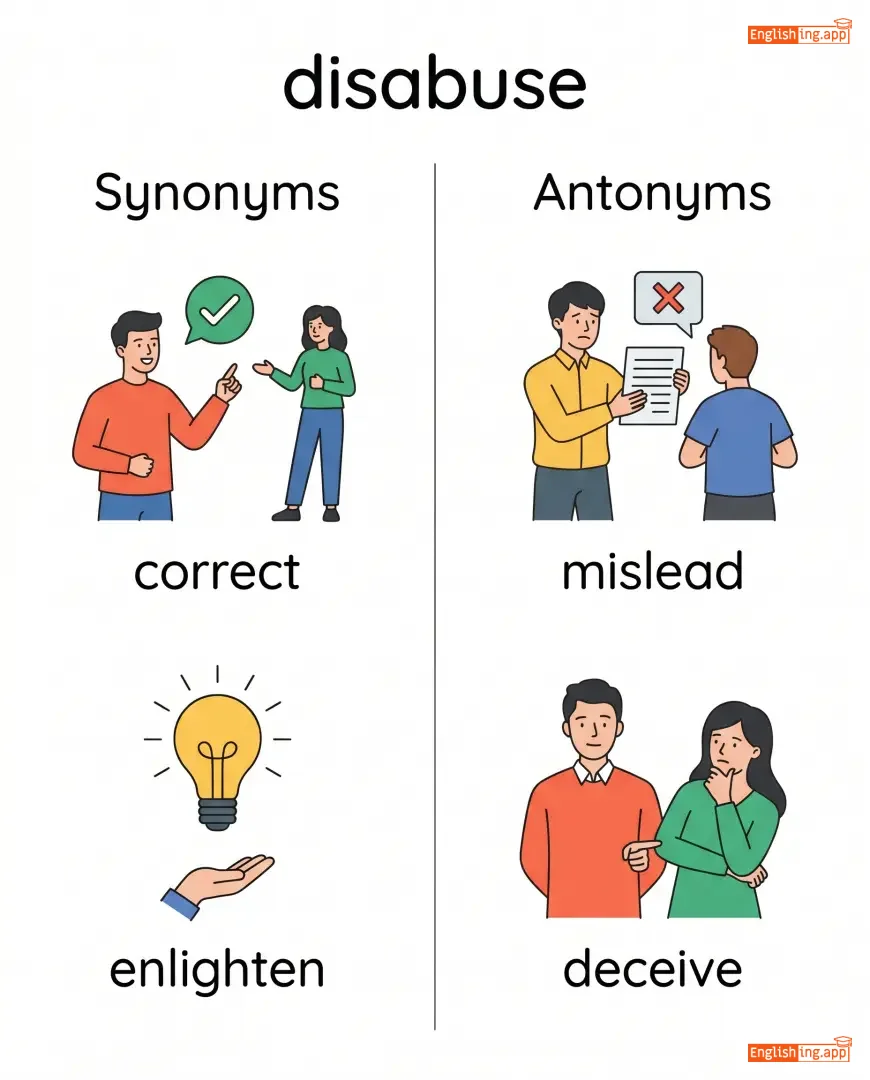
- •••••• | - •••••• | - •••••• |
correct, enlighten, rectify, debunk, refute
••••••
|
mislead, deceive, delude
••••••
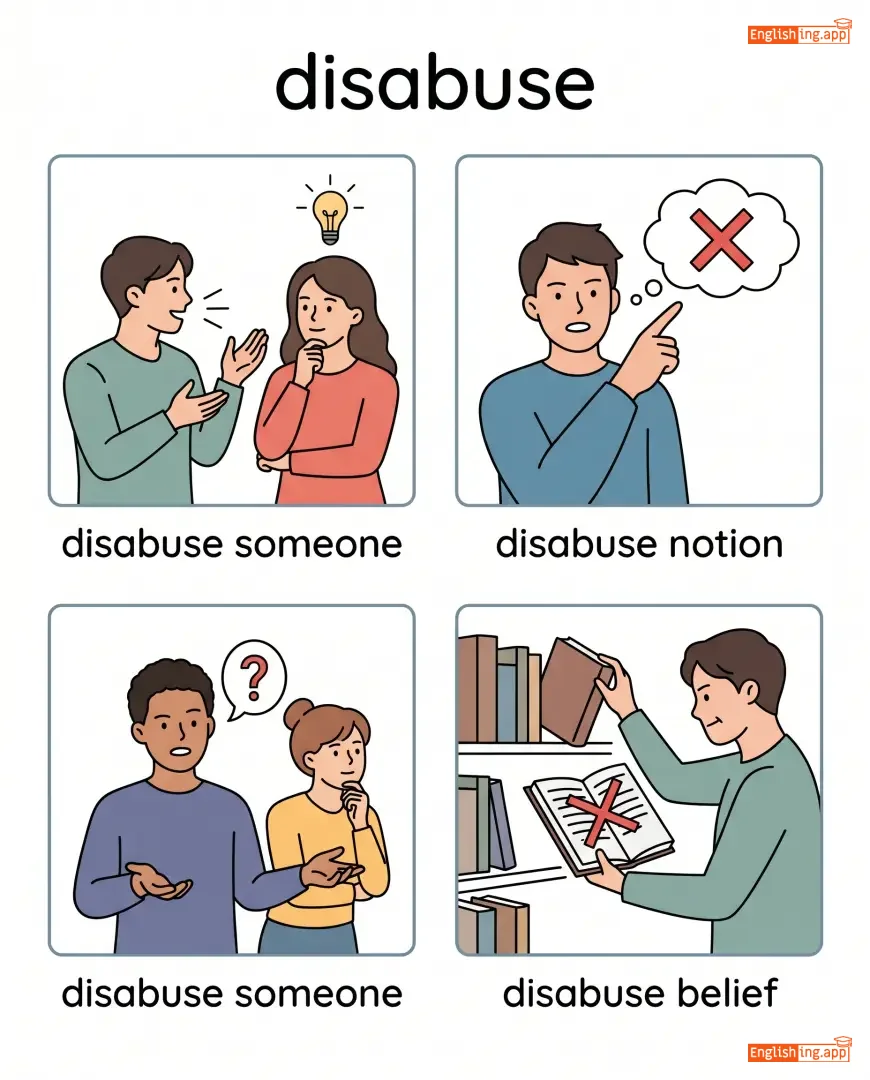
|
disabuse someone, disabuse notion, disabuse belief
••••••
|
Disabuse = 使觉醒 → 摆脱误解。
••••••
|
|
#2479
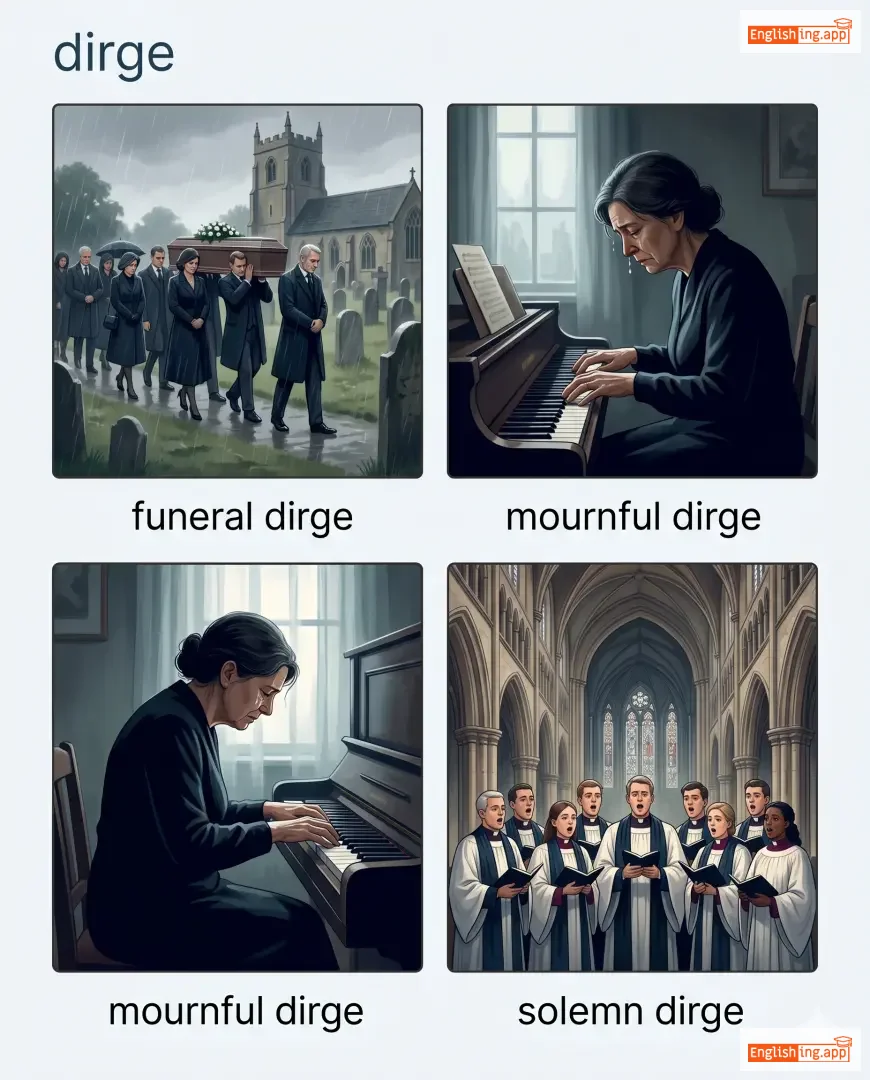
🎵
|
/dɜːrdʒ/
noun
(德尔奇)
••••••
|
|
挽歌
wǎngē
••••••
|
- •••••• | - •••••• | - •••••• | - •••••• |
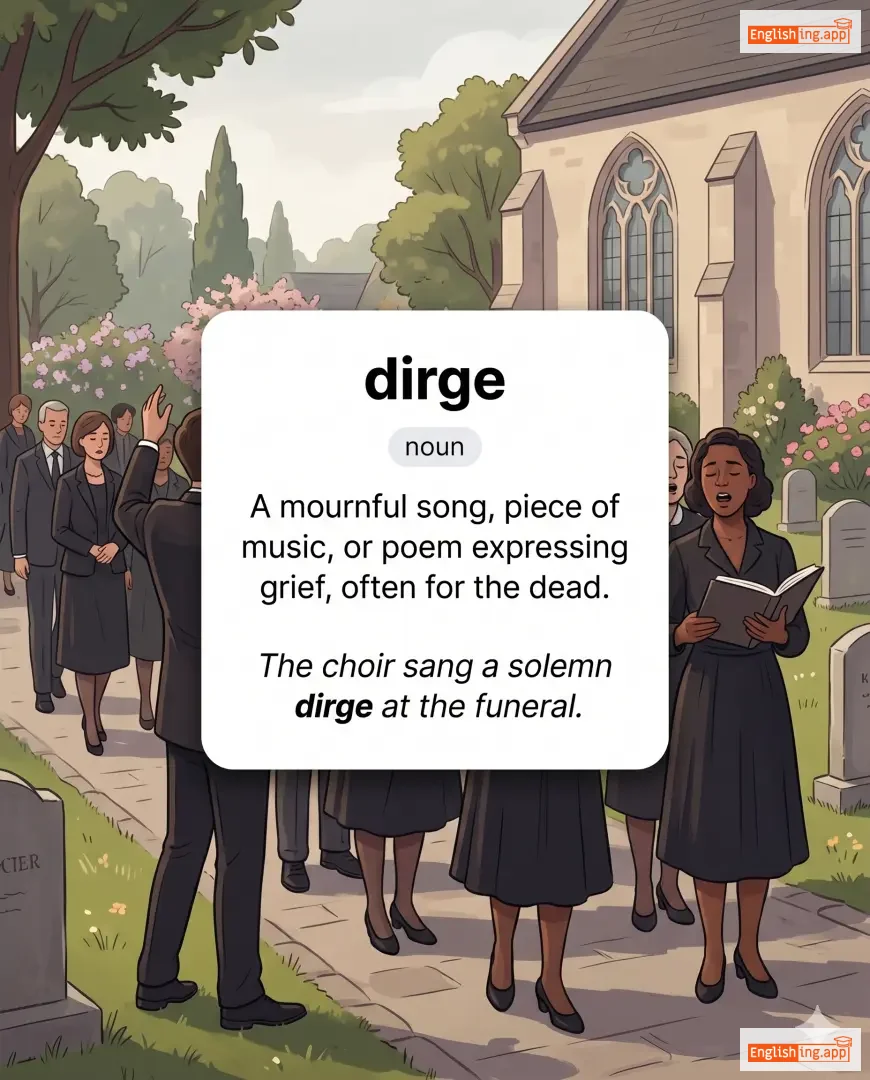
A mournful song, piece of music, or poem expressing grief, often for the dead.
••••••
|
The choir sang a solemn dirge at the funeral.
合唱团在葬礼上唱了一首庄严的挽歌。
••••••
|
合唱团在葬礼上唱了一首庄严的挽歌。
Hé chàng tuán zài zànglǐ shàng chàngle yī shǒu zhuāngyán de wǎngē.
••••••
|
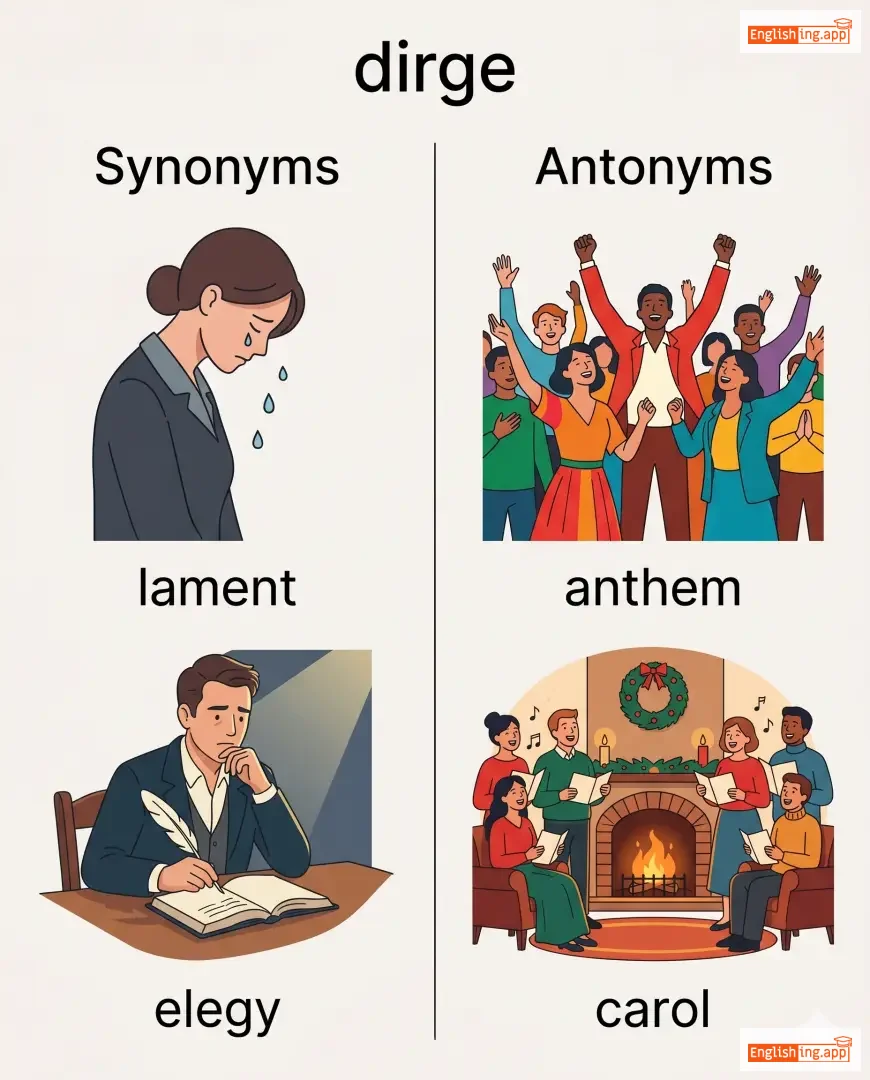
- •••••• | - •••••• | - •••••• |
lament, elegy, requiem, threnody, funeral song
••••••
|
anthem, carol, celebration
••••••
|
funeral dirge, mournful dirge, solemn dirge
••••••
|
Dirge是‘挽歌’ — 一首表示悲痛的歌。
••••••
|
|
#2480
⚠️
|
/ˈdaɪər/
adjective
(dai'er)
••••••
|
- •••••• |
危急
weiji
••••••
|
- •••••• | - •••••• | - •••••• | - •••••• |
Extremely serious or urgent.
••••••
|
The refugees were in dire need of food and shelter. |
难民急需食物和住所。
Nànmín jíxū shíwù hé zhùsuǒ.
••••••
|
dire straits |
a very difficult or dangerous situation
••••••
|
困境
kùnjìng
••••••
|
urgent, desperate, grave, severe, dreadful
••••••
|
minor, trivial, unimportant
••••••
|
dire consequences, dire situation, dire warning, dire need
••••••
|
Dire 就像 '危急' – 非常严重的情况。
••••••
|
|
#2481
🍺
|
/ˌdɪpsəˈmeɪniæk/
noun
(ˈdɪpsəˈmeɪniæk)
••••••
|
- •••••• |
酒鬼
jiǔguǐ
••••••
|
- •••••• | - •••••• | - •••••• | - •••••• |
A person with an uncontrollable craving for alcoholic drinks.
••••••
|
The novel portrayed the tragic downfall of a dipsomaniac who lost everything to alcohol. |
这本小说描绘了一位酒鬼的悲惨堕落,他因酒精失去了一切。
Zhè běn xiǎoshuō miáohuìle yī wèi jiǔguǐ de bēicǎn duòluò, tā yīn jiǔjīng shīqùle yīqiè.
••••••
|
- •••••• | - •••••• | - •••••• |
alcoholic, drunkard, tippler, boozer, sot
••••••
|
teetotaler, abstainer
••••••
|
chronic dipsomaniac, hopeless dipsomaniac, dipsomaniac tendencies
••••••
|
Dip = 坠落 + maniac = 痴迷 → 酒鬼是一个陷入酒精痴迷的人。
••••••
|
|
#2482
🎩
|
/dɪˈpləʊmətɪst/
noun
(外交家)
••••••
|
- •••••• |
外交官
waijiaoguan
••••••
|
- •••••• | - •••••• | - •••••• | - •••••• |
A person skilled in diplomacy; another word for diplomat.
••••••
|
The diplomatist handled the negotiations with great tact. |
外交官以极大的技巧处理了谈判。
Waijiaoguan yi jida de jiqiao chuli le tanpan.
••••••
|
- •••••• | - •••••• | - •••••• |
diplomat, envoy, negotiator, ambassador
••••••
|
novice, amateur
••••••
|
skilled diplomatist, experienced diplomatist, successful diplomatist
••••••
|
Diplomat + ist → Diplomat的另一种说法是waijiaoguan (外交官)
••••••
|
|
#2483
🕊️
|
/ˌdɪpləˈmætɪk/
adjective
(外交的)
••••••
|
- •••••• |
外交的
wai jiao de
••••••
|
- •••••• | - •••••• | - •••••• | - •••••• |
Concerning diplomacy; having or showing skill in dealing with people in a sensitive and effective way.
••••••
|
She gave a diplomatic response to avoid offending anyone. |
她给出了外交的回应,以避免冒犯任何人。
ta gei chule waijiao de huifu, yi bian mianduofu renhe ren.
••••••
|
diplomatic immunity |
A privilege that exempts diplomats from certain laws in the host country.
••••••
|
外交豁免权
wai jiao huo mian quan
••••••
|
tactful, courteous, strategic, conciliatory, discreet
••••••
|
tactless, blunt, rude
••••••
|
diplomatic relations, diplomatic mission, diplomatic language
••••••
|
Diplomatic response = polite 回应 (外交回应)
••••••
|
|
#2484
🤵♂️
|
/ˈdɪpləmæt/
noun
(外交官)
••••••
|
- •••••• |
外交官
waijiaoguan
••••••
|
- •••••• | - •••••• | - •••••• | - •••••• |
An official representing a country abroad; a person skilled in dealing with people tactfully.
••••••
|
The diplomat negotiated a peace agreement. |
外交官谈判了一个和平协议。
Waijiaoguan tanpan le yi ge heping xieyi.
••••••
|
- •••••• | - •••••• | - •••••• |
envoy, ambassador, representative, emissary, negotiator
••••••
|
commoner, layman
••••••
|
senior diplomat, career diplomat, foreign diplomat
••••••
|
Diploma + 官 → 毕业获得文凭后成为外交官 = diplomat (外交官)
••••••
|
|
#2485
🌐
|
/dɪˈpləʊməsi/
noun
••••••
|
- •••••• | - •••••• | - •••••• | - •••••• | - •••••• | - •••••• |
The profession, activity, or skill of managing international relations or handling affairs tactfully.
••••••
|
Effective diplomacy helped avoid the conflict. |
- •••••• |
gunboat diplomacy |
A foreign policy supported by the use of military force.
••••••
|
- •••••• |
negotiation, tact, statesmanship, mediation, finesse
••••••
|
hostility, conflict, aggression
••••••
|
international diplomacy, skillful diplomacy, secret diplomacy
••••••
|
No •••••• |
|
#2486
🔤
|
/ˈdɪfθɒŋ/
noun
(ˈdɪfθɒŋ)
••••••
|
- •••••• |
双元音
shuang yuán yīn
••••••
|
- •••••• | - •••••• | - •••••• | - •••••• |
A complex vowel sound that begins with one vowel and glides into another within the same syllable.
••••••
|
The word 'coin' contains a diphthong. |
单词 'coin' 包含一个双元音。
Danci 'coin' baohan yi ge shuang yuanyin.
••••••
|
- •••••• | - •••••• | - •••••• |
vowel blend, vowel glide, vowel combination, double vowel
••••••
|
monophthong, pure vowel
••••••
|
English diphthongs, vowel diphthong, diphthong sound
••••••
|
Dip + tong → 两个元音合并 = 双元音
••••••
|
|
#2487
🏞️
|
/ˌdaɪəˈrɑːmə/
noun
(迪奥拉玛)
••••••
|
- •••••• |
立体模型
lìtǐ móxíng
••••••
|
- •••••• | - •••••• | - •••••• | - •••••• |
a three-dimensional model representing a scene, often with miniature figures
••••••
|
The museum displayed a diorama of an ancient village. |
博物馆展示了一个古代村庄的立体模型。
Bówùguǎn zhǎnshìle yī gè gǔdài cūnzhuāng de lìtǐ móxíng.
••••••
|
- •••••• | - •••••• | - •••••• |
model, display, miniature, scene
••••••
|
reality, actual scene
••••••
|
diorama display, museum diorama, historical diorama
••••••
|
Diorama就像一个3D迷你世界,用小人物表现出来。
••••••
|
|
#2488
⛪
|
/daɪˈɒsɪsən/
adjective
(教区的)
••••••
|
- •••••• |
与教区相关
yu jiaoqu xiangguan
••••••
|
- •••••• | - •••••• | - •••••• | - •••••• |
relating to a diocese or the district under the supervision of a bishop in the Christian Church
••••••
|
The diocesan council met to discuss church affairs.
教区委员会聚集在一起讨论教会事务。
••••••
|
教区委员会聚集在一起讨论教会事务。
Jiaoqu weiyuanhui juji zai yiqi taolun jiaohui shiwuwu.
••••••
|
- •••••• | - •••••• | - •••••• |
ecclesiastical, clerical, episcopal, church-related
••••••
|
secular, nonreligious
••••••
|
diocesan bishop, diocesan council, diocesan authority
••••••
|
Diocesan = 教区区域 — 记住:Diocese = 教会区域
••••••
|
|
#2489
💪
|
/dɪnt/
noun
(丁特)
••••••
|
- •••••• |
努力,撞击痕迹
nǔlì, zhuàngjī hénjì
••••••
|
- •••••• | - •••••• | - •••••• | - •••••• |
an impression or hollow made by a blow; force or power
••••••
|
By dint of hard work, he achieved success.
通过努力工作,他取得了成功。
••••••
|
通过努力工作,他取得了成功。
Tōngguò nǔlì gōngzuò, tā qǔdéle chénggōng.
••••••
|
by dint of
通过丁特
••••••
|
by means of; because of
••••••
|
通过努力
tōngguò nǔlì
••••••
|
force, effort, impact, pressure
••••••
|
inaction, idleness
••••••
|
by dint of, dint of effort, dint mark
••••••
|
Dint 意味着努力 — 记住:By dint of 努力工作意味着通过努力。
••••••
|
|
#2490
🕸️
|
/ˈdɪndʒi/
adjective
(dīngjí)
••••••
|
- •••••• |
肮脏
angzang
••••••
|
- •••••• | - •••••• | - •••••• | - •••••• |
gloomy and drab; dirty or discolored
••••••
|
The old hotel room looked dark and dingy. |
那间旧酒店房间看起来又暗又脏。
Na jian jiu jiudian fangjian kan qilai you an you zang.
••••••
|
- •••••• | - •••••• | - •••••• |
dirty, shabby, dull, dismal, gloomy
••••••
|
clean, bright, fresh
••••••
|
dingy room, dingy street, dingy clothes, dingy atmosphere
••••••
|
Dingy意味着肮脏和阴暗 — dark + zang = dingy
••••••
|
Vocabulary Quiz
Test your vocabulary by matching words with their translations or meanings.
Login to take the quiz
Comments (0)
Share your thoughts and join the discussion.
Join the discussion by logging in
Login to CommentNo comments yet
Be the first to share your thoughts!