



Swipe left or right, or use the buttons. Tap image to zoom.
例句翻译
单词
Lesson 307Lesson 307 - 遮罩切换
|
表情符号
|
单词 | Images | 翻译 | 过去时 | 过去分词 | 第三人称单数 | 动名词 | 含义 | 例句 | 例句翻译 | 示例表达 | 示例表达含义 | 示例表达翻译 | 同义词 | 反义词 | 搭配词 | 助记符 |
|---|---|---|---|---|---|---|---|---|---|---|---|---|---|---|---|---|---|
|
#9180
🤵
|
/ɜːrˈbeɪn/
adjective
(ˈɜːrˈbeɪn)
••••••
|
- •••••• |
都市的
dūshì de
••••••
|
- •••••• | - •••••• | - •••••• | - •••••• |
showing polished manners, refinement, and sophistication
••••••
|
He was an urbane gentleman who charmed everyone at the party. |
他是一个都市绅士,在派对上迷住了所有人。
Tā shì yīgè dūshì shēnshì, zài pàiduì shàng mí zhùle suǒyǒu rén.
••••••
|
- •••••• | - •••••• | - •••••• |
sophisticated, cultured, polished, refined, elegant
••••••
|
uncouth, rude, unsophisticated
••••••
|
urbane manner, urbane style, urbane charm
••••••
|
Urbane 就像一个都市绅士 – 优雅和精致
••••••
|
|
#9181
⚖️
|
/juːˌtɪlɪˈtɛəriənɪzəm/
noun
(尤提利塔里主义)
••••••
|
- •••••• |
功利主义
gōnglì zhǔyì
••••••
|
- •••••• | - •••••• | - •••••• | - •••••• |
The ethical theory that actions are right if they are useful or for the benefit of the majority.
••••••
|
Utilitarianism suggests that we should act to maximize overall happiness. |
功利主义认为我们应该采取行动,以最大化整体幸福。
Gōnglì zhǔyì rènwéi wǒmen yīnggāi cǎiqǔ xíngdòng, yǐ zuìdà huà zhěngtǐ xìngfú.
••••••
|
- •••••• | - •••••• | - •••••• |
consequentialism, pragmatism, usefulness, benefit theory
••••••
|
deontology, idealism
••••••
|
ethical utilitarianism, classical utilitarianism, utilitarianism principle, utilitarianism theory
••••••
|
功利主义 = 功用 + 人类 - 功用为人类意味着功利主义。
••••••
|
|
#9182
🛠️
|
/ˌjuːtɪlɪˈtɛəriən/
adjective
••••••
|
- •••••• | - •••••• | - •••••• | - •••••• | - •••••• | - •••••• |
Designed to be useful or practical rather than attractive; relating to the doctrine that actions are right if they are useful or for the benefit of a majority.
••••••
|
The building had a simple utilitarian design. |
- •••••• | - •••••• | - •••••• | - •••••• |
practical, functional, pragmatic, useful
••••••
|
ornamental, decorative
••••••
|
utilitarian approach, utilitarian design, utilitarian philosophy
••••••
|
No •••••• |
|
#9183
📈
|
/ˈjuːʒəri/
noun
(yúzhì)
••••••
|
|
高利贷
gaolidai
••••••
|
- •••••• | - •••••• | - •••••• | - •••••• |
The practice of lending money at unreasonably high interest rates.
••••••
|
The law strictly prohibits usury.
法律严格禁止高利贷。
••••••
|
法律严格禁止高利贷。
Fǎlǜ yángé jìnzhǐ gāo lìdài.
••••••
|
- •••••• | - •••••• | - •••••• |
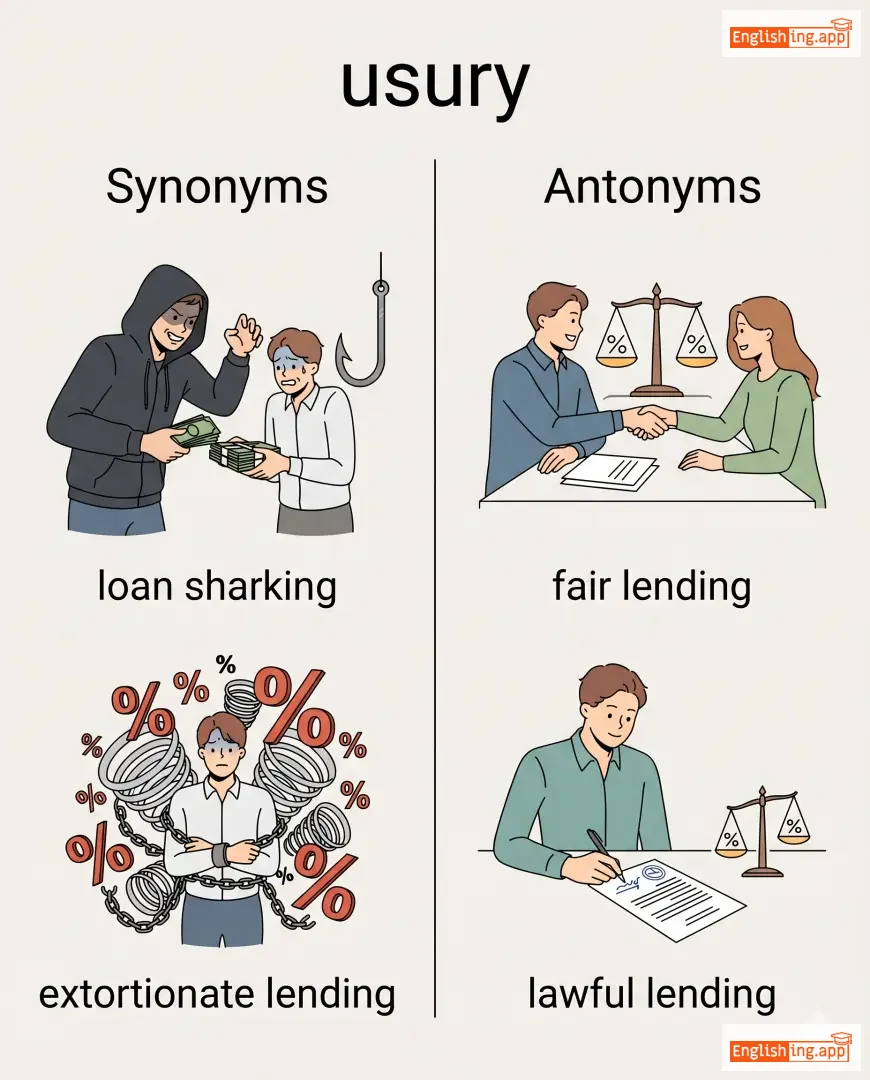
loan sharking, extortionate lending, high-interest lending
••••••
|
fair lending, lawful lending
••••••
|
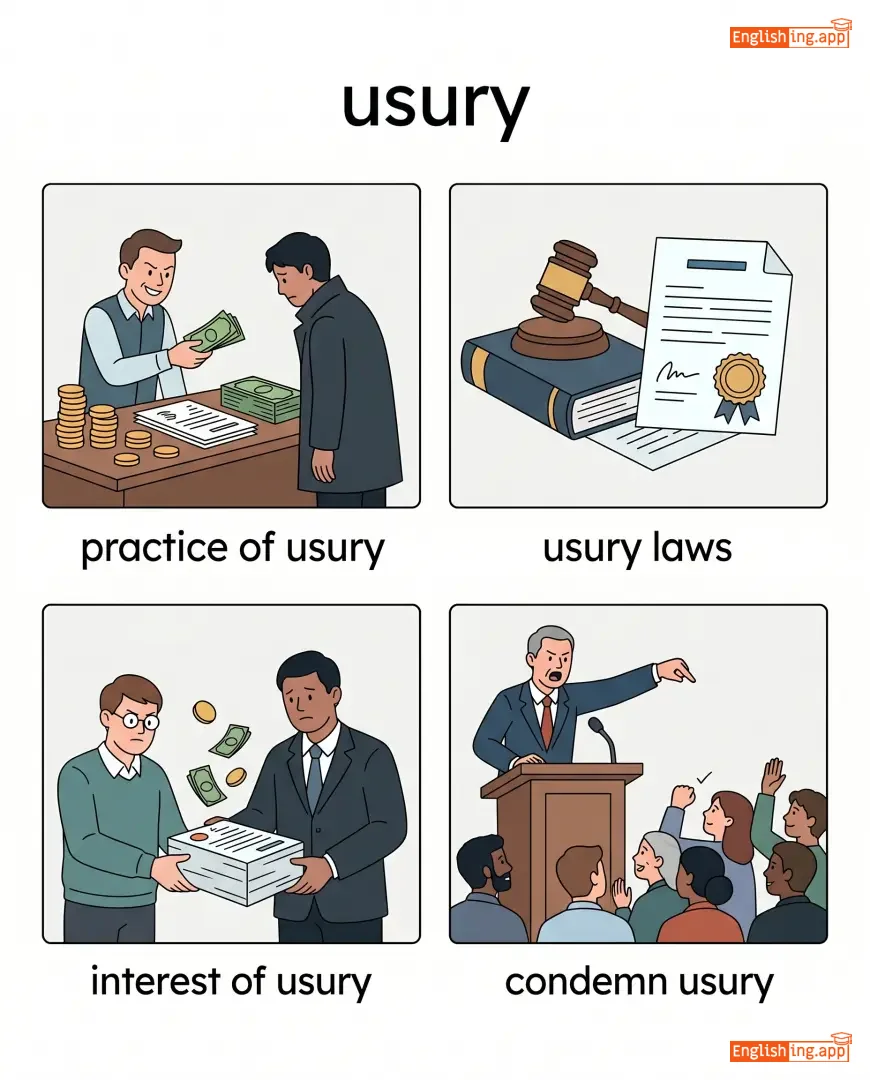
practice of usury, usury laws, condemn usury
••••••
|
高利贷就像是借钱时被迫支付不合理的高利息,这是非法的。
••••••
|
|
#9184
⚔️
|
/ˌjuːzɜːrˈpeɪʃən/
noun
(尤瑟佩申)
••••••
|
- •••••• |
篡夺
cuàn duó
••••••
|
- •••••• | - •••••• | - •••••• | - •••••• |
The act of taking someone's power or property illegally or by force.
••••••
|
The general's usurpation of the presidency led to political unrest. |
将军对总统职位的篡夺导致了政治动荡。
Jiāngjūn duì zǒngtǒng zhíwèi de cuàn duó dǎozhìle zhèngzhì dòngdàng.
••••••
|
- •••••• | - •••••• | - •••••• |
seizure, takeover, appropriation, annexation
••••••
|
relinquishment, surrender
••••••
|
usurpation of power, usurpation of authority, illegal usurpation
••••••
|
篡夺意味着非法获取他人的权力或财产。
••••••
|
|
#9185
👑
|
/juːˈzɜːrp/
verb
(yúzěr pǐr)
••••••
|
|
非法夺取
fēi fǎ duó qǔ
••••••
|
usurped
yúzěr pǐrt
••••••
|
usurped
yúzěr pǐrt
••••••
|
usurps
yúzěr pǐrs
••••••
|
usurping
yúzěr pǐrɪng
••••••
|
To take someone else's position or power illegally or by force.
••••••
|
He tried to usurp the throne from the rightful king.
他试图从合法国王手中篡夺王位。
••••••
|
他试图从合法国王手中篡夺王位。
Tā shìtú cóng héfǎ guówáng shǒuzhōng cuànduó wángwèi.
••••••
|
usurp power
篡夺权力
••••••
|
to take control of authority without legal right
••••••
|
篡夺权力
cuànduó quánlì
••••••
|
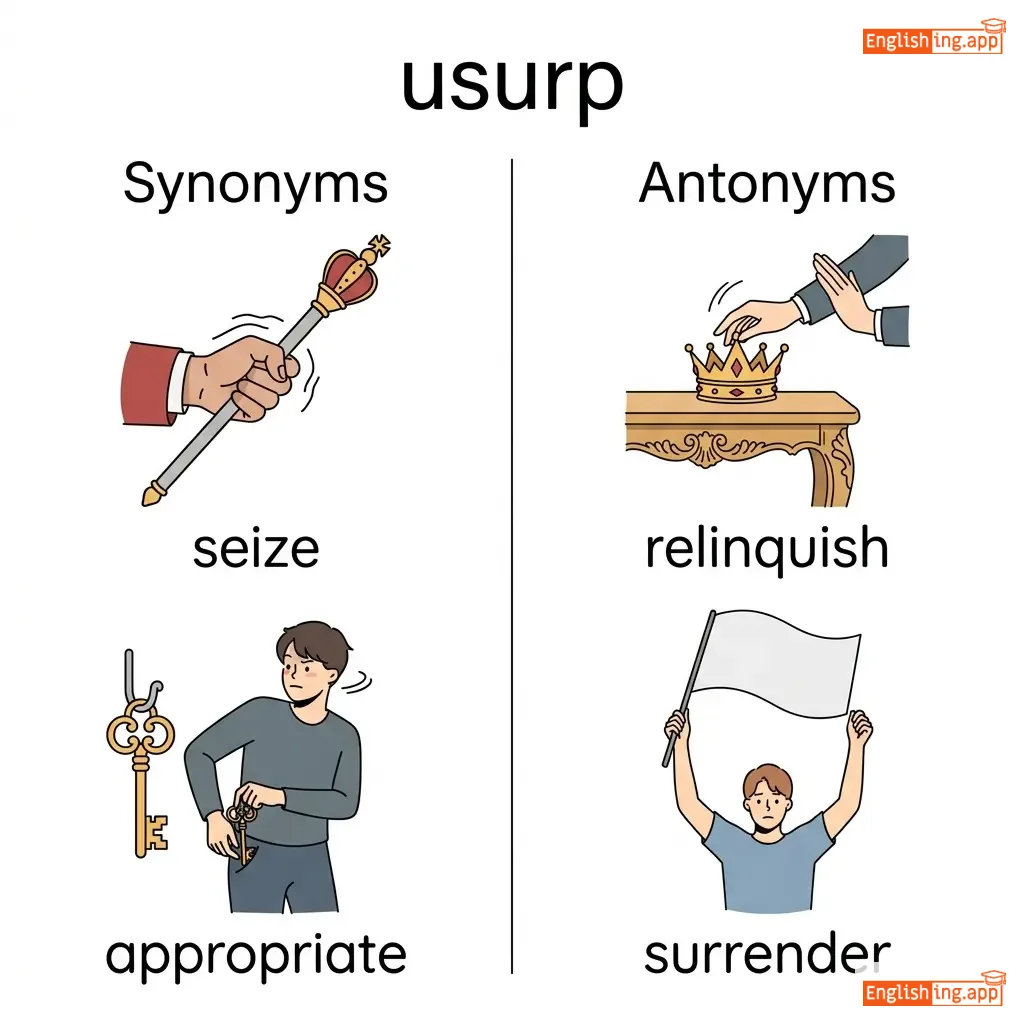
seize, appropriate, commandeer, grab
••••••
|
relinquish, surrender
••••••
|
usurp power, usurp throne, usurp authority
••••••
|
Usurp - 非法占有权力
••••••
|
|
#9186
💰
|
/juːˈʒʊəriəs/
adjective
(尤苏里厄斯)
••••••
|
- •••••• |
高利贷的
gaoli dai de
••••••
|
- •••••• | - •••••• | - •••••• | - •••••• |
Charging excessively high interest rates on loans.
••••••
|
The bank was accused of offering loans at usurious rates. |
该银行被指控以高利贷利率提供贷款。
Gāi yínháng bèi zhǐkòng yǐ gāo lìdài lìlǜ tígōng dàikuǎn.
••••••
|
- •••••• | - •••••• | - •••••• |
extortionate, exorbitant, predatory, exploitative
••••••
|
fair, reasonable
••••••
|
usurious interest, usurious loan, usurious practices
••••••
|
Usurious意味着高利贷的高利率。
••••••
|
|
#9187
📜
|
/ˈjuːzjuːfrʌkt/
noun
(yusufrakt)
••••••
|
- •••••• |
使用权
shiyongquan
••••••
|
- •••••• | - •••••• | - •••••• | - •••••• |
The legal right to use and enjoy the benefits of someone else’s property without owning it.
••••••
|
The tenant had the usufruct of the land but not its ownership. |
租户有权使用这片土地,但没有所有权。
Zuhu you quan shiyong zhe pian tudi, dan meiyou suoyouquan.
••••••
|
- •••••• | - •••••• | - •••••• |
right of use, enjoyment, leasehold, occupancy
••••••
|
ownership, possession
••••••
|
usufruct of property, usufruct rights, usufruct agreement
••••••
|
使用权 = 使用 + 权利 → 使用他人财产的权利。
••••••
|
|
#9188
📘
|
/ˈjuːsɪdʒ/
noun
(yúshè)
••••••
|
- •••••• |
使用
shiyong
••••••
|
- •••••• | - •••••• | - •••••• | - •••••• |
The action of using something; the way in which a word or phrase is normally used.
••••••
|
The book explains the proper usage of technical terms. |
这本书解释了技术术语的正确使用。
Zhè běn shū jiěshìle jìshù shùyǔ de zhèngquè shǐyòng.
••••••
|
common usage |
the way something is usually used or understood
••••••
|
常见使用
chángjiàn shǐyòng
••••••
|
practice, use, custom, convention
••••••
|
misuse, error, disuse
••••••
|
word usage, proper usage, language usage, common usage
••••••
|
Usage 意味着使用 - '使用就好,简单又直接。'
••••••
|
|
#9189
🐻
|
/ˈɜːrsaɪn/
adjective
(ʌrˈsaɪn)
••••••
|
- •••••• |
熊似的
xióng shì de
••••••
|
- •••••• | - •••••• | - •••••• | - •••••• |
Relating to or resembling a bear.
••••••
|
The man’s ursine strength amazed everyone. |
那个人熊似的力量让所有人都吃惊。
Nàgè rén xióng shì de lìliàng ràng suǒyǒu rén dōu chījīng.
••••••
|
- •••••• | - •••••• | - •••••• |
bearlike, massive, strong, shaggy
••••••
|
delicate, frail
••••••
|
ursine features, ursine strength, ursine behavior
••••••
|
Ursine 意味着熊似的 - 记住 'Urs' 代表 '熊' (拉丁语中的 Urso)
••••••
|
|
#9190
🚨
|
/ˈɜːrdʒənt/
adjective
(ʊʁʒənt)
••••••
|
- •••••• |
紧急
jinji
••••••
|
- •••••• | - •••••• | - •••••• | - •••••• |
Requiring immediate action or attention.
••••••
|
She sent an urgent message to her manager.
她给经理发了一条紧急消息。
••••••
|
她给经理发了一条紧急消息。
Tā gěi jīnglǐ fāle yītiáo jǐnjí xiāoxī.
••••••
|
urgent need
紧急需求
••••••
|
a strong necessity that must be addressed immediately
••••••
|
紧急需求
jǐnjí xūqiú
••••••
|
critical, pressing, immediate, essential
••••••
|
nonessential, trivial, minor
••••••
|
urgent request, urgent matter, urgent care, urgent meeting
••••••
|
紧急意味着需要立即处理的事情。
••••••
|
|
#9191
⏰
|
/ˈɜːrdʒənsi/
noun
(ˈɜːrdʒənsi)
••••••
|
- •••••• |
紧急
jinji
••••••
|
- •••••• | - •••••• | - •••••• | - •••••• |
The quality of requiring immediate attention or action.
••••••
|
The doctor emphasized the urgency of starting treatment right away. |
医生强调了立即开始治疗的紧急性。
Yisheng qiangdiao le limiji kaishi zhiliao de jinji xing.
••••••
|
sense of urgency |
a strong feeling that something must be done immediately
••••••
|
紧急感
jinji gan
••••••
|
importance, immediacy, haste, pressure, necessity
••••••
|
delay, postponement, leisure
••••••
|
sense of urgency, create urgency, urgency of the matter, urgency of response
••••••
|
紧急意味着立刻行动,像是马上处理问题。
••••••
|
|
#9192
📢
|
/ɜːrdʒ/
verb
(ɜːrdʒ)
••••••
|
- •••••• |
催促
cuīcù
••••••
|
urged
ɜːrdʒd
••••••
|
urged
ɜːrdʒd
••••••
|
urges
ɜːrdʒes
••••••
|
urging
ɜːrdʒing
••••••
|
to strongly encourage or try to persuade someone to do something
••••••
|
Doctors urge patients to exercise regularly.
医生鼓励病人定期锻炼。
••••••
|
医生鼓励病人定期锻炼。
Yīshēng gǔlì bìngrén dìngqī duànliàn.
••••••
|
urge on
鼓励继续
••••••
|
to encourage someone to continue or do something with more effort
••••••
|
鼓励继续
gǔlì jìxù
••••••
|
encourage, persuade, push, prompt, exhort
••••••
|
dissuade, discourage, prevent
••••••
|
urge someone, urge action, urge caution, strong urge
••••••
|
Urge 意味着催促 – 医生总是鼓励患者做锻炼。
••••••
|
|
#9193
👦
|
/ˈɜːrtʃɪn/
noun
(ˈɜːrtʃɪn)
••••••
|
- •••••• |
街头小孩
jietou xiaohai
••••••
|
- •••••• | - •••••• | - •••••• | - •••••• |
a mischievous or poorly dressed child, often from the streets
••••••
|
The ragged urchins played by the riverbank. |
那些穿着破烂的街头小孩在河边玩耍。
naxie chuanzhuo polan de jietou xiaohai zai he bian wanshua.
••••••
|
- •••••• | - •••••• | - •••••• |
street child, waif, brat, rascal
••••••
|
gentleman, lady, aristocrat
••••••
|
street urchin, poor urchin, mischievous urchin
••••••
|
Urchin 意味着街头小孩 - 想象一个街头小孩在街道上跑来跑去。
••••••
|
|
#9194
🎩
|
/ɜːrˈbænɪti/
noun
(ɜːrˈbænɪti)
••••••
|
- •••••• |
都市气质
dūshì qìzhí
••••••
|
- •••••• | - •••••• | - •••••• | - •••••• |
refined courtesy, elegance, and sophistication in manner
••••••
|
Her urbanity made her popular among diplomats and leaders. |
她的都市气质让她在外交官和领导人中非常受欢迎。
Tā de dūshì qìzhí ràng tā zài wàijiāo guān hé lǐngdǎo rén zhōng fēicháng shòu huānyíng.
••••••
|
- •••••• | - •••••• | - •••••• |
sophistication, elegance, refinement, civility
••••••
|
rudeness, crudeness, ignorance
••••••
|
display urbanity, charm and urbanity, lacking urbanity
••••••
|
都市气质就是像城市里的人那样的礼貌 – 城市气质。
••••••
|
|
#9195
🪢
|
/ʌnˈjoʊk/
verb
(ʌnˈjoʊk)
••••••
|
- •••••• |
解开
jiě kāi
••••••
|
unyoked
ʌnˈjoʊkt
••••••
|
unyoked
ʌnˈjoʊkt
••••••
|
unyokes
ʌnˈjoʊks
••••••
|
unyoking
ʌnˈjoʊkɪŋ
••••••
|
To release from a yoke or to free from restraint or obligation.
••••••
|
The farmer unyoked the oxen after a long day of work.
农民在长时间工作后解开了牛的套索。
••••••
|
农民在长时间工作后解开了牛的套索。
Nóngmín zài cháng shíjiān gōngzuò hòu jiě kāi le niú de tàosuǒ.
••••••
|
- •••••• | - •••••• | - •••••• |
release, free, detach, untie
••••••
|
bind, connect, yoke
••••••
|
unyoke the oxen, unyoke from duty, unyoke burdens
••••••
|
Un-yoke = 解开束缚 (yoke = 枷锁)
••••••
|
|
#9196
🏙️
|
/ˈɜːrbən/
adjective
(ˈɜːrbən)
••••••
|
- •••••• |
城市的
chengshi de
••••••
|
- •••••• | - •••••• | - •••••• | - •••••• |
related to, characteristic of, or situated in a city or town
••••••
|
Urban areas often have higher population density than rural areas. |
城市地区通常比乡村地区有更高的人口密度。
Chengshi diqu tongchang bi xiangcun diqu you geng gao de renkou midu.
••••••
|
urban jungle |
a way of describing a city as crowded, dangerous, or chaotic
••••••
|
城市丛林
chengshi conglin
••••••
|
city, metropolitan, municipal, civic
••••••
|
rural, rustic, countryside
••••••
|
urban development, urban planning, urban life, urban population
••••••
|
Urban = 城市的 – 城市区域是'urban'的地方!
••••••
|
|
#9197
📈
|
/ˈʌp.tɜːn/
noun
(aptern)
••••••
|
- •••••• |
改善
gaishan
••••••
|
- •••••• | - •••••• | - •••••• | - •••••• |
An improvement or upward trend in a situation, especially in business or economy.
••••••
|
The company experienced an upturn in sales last quarter. |
该公司在上个季度销售情况有所改善。
Gai gongsi zai shang ge jidu xiaoshou qingkuang you suo gaishan.
••••••
|
- •••••• | - •••••• | - •••••• |
improvement, upswing, recovery, boom, growth
••••••
|
decline, downturn, slump
••••••
|
economic upturn, upturn in sales, market upturn
••••••
|
Upturn意味着改善,就像是商业中的向上转折。
••••••
|
|
#9198
🎯
|
/ˈʌp.ʃɒt/
noun
(āp-shuò)
••••••
|
- •••••• |
结果
jieguo
••••••
|
- •••••• | - •••••• | - •••••• | - •••••• |
The final result or outcome of a process or situation.
••••••
|
The upshot of the meeting was that the plan was postponed. |
会议的结果是计划被推迟了。
Huiyi de jieguo shi jihua bei tuichi le.
••••••
|
the upshot is |
the conclusion or final result is
••••••
|
结果是
jieguo shi
••••••
|
result, outcome, consequence, conclusion, effect
••••••
|
cause, origin, beginning
••••••
|
final upshot, inevitable upshot, upshot of events
••••••
|
UPSHOT意味着上升的射击结果。
••••••
|
|
#9199
🌳
|
/ʌpˈruːt/
verb
(up root)
••••••
|
- •••••• |
拔除
bachu
••••••
|
uprooted
up root-ed
••••••
|
uprooted
up root-ed
••••••
|
uproots
up roots
••••••
|
uprooting
up rooting
••••••
|
To pull something out of the ground; to remove or displace completely.
••••••
|
They uprooted the old tree from the garden.
他们从花园里把老树拔了出来。
••••••
|
他们从花园里把老树拔了出来。
Tamen cong huayuan li ba laoshu ba le chulai.
••••••
|
uproot someone
驱逐某人
••••••
|
to displace someone from their usual home or environment
••••••
|
将某人从他们习惯的家或环境中驱逐
Jiang mou ren cong tamen xiguan de jia huo huanjing zhong quzhu
••••••
|
pull out, displace, eradicate, remove, destroy
••••••
|
plant, embed, establish
••••••
|
uproot a tree, uproot a family, uproot weeds
••••••
|
UPROOT 意味着从地里拔出 ROOT (根)。
••••••
|
|
#9200
😂
|
/ʌpˈrɔːr.i.əs/
adjective
(aprorious)
••••••
|
- •••••• |
极其滑稽
jiqi huaji
••••••
|
- •••••• | - •••••• | - •••••• | - •••••• |
Extremely funny or noisy; causing loud laughter or commotion.
••••••
|
The comedian's jokes were absolutely uproarious.
喜剧演员的笑话绝对是 uproarious。
••••••
|
喜剧演员的笑话绝对是极其滑稽的。
Xijuyanyuan de xiaohua jueduishi jiqi huaji de.
••••••
|
- •••••• | - •••••• | - •••••• |
hilarious, funny, amusing, noisy, boisterous
••••••
|
serious, dull, quiet
••••••
|
uproarious laughter, uproarious joke, uproarious scene
••••••
|
Uproarious 意味着笑得很大声 - 极其滑稽。
••••••
|
|
#9201
📢
|
/ˈʌp.rɔːr/
noun
(āpùluó)
••••••
|
- •••••• |
骚动
saodong
••••••
|
- •••••• | - •••••• | - •••••• | - •••••• |
A loud noise, commotion, or disturbance caused by a group of people.
••••••
|
The announcement caused an uproar in the audience. |
公告在观众中引起了骚动。
Gonggao zai guanzhong zhong yin qi le saodong.
••••••
|
cause an uproar |
to create great public anger or excitement
••••••
|
引起骚动
yin qi saodong
••••••
|
commotion, chaos, turmoil, outcry, disturbance
••••••
|
silence, calm, peace
••••••
|
public uproar, political uproar, cause uproar, uproar over
••••••
|
UPROAR意味着街道上的骚动,记住骚动。
••••••
|
|
#9202
🧍
|
/ˈʌpraɪt/
adjective, adverb
(happiness)
••••••
|
- •••••• |
幸福
xìng fú
••••••
|
- •••••• | - •••••• | - •••••• | - •••••• |
positioned vertically; morally good and honest
••••••
|
He remained upright despite the strong winds. |
当她获得奖项时,她无法掩饰自己的幸福。
Dāng tā huòdé jiǎngxiàng shí, tā wúfǎ yǎnshì zìjǐ de xìngfú.
••••••
|
stand upright |
to stand in a vertical position
••••••
|
追求幸福
zhuīqiú xìngfú
••••••
|
vertical, erect, honest, righteous, straight
••••••
|
horizontal, dishonest
••••••
|
stand upright, remain upright, sit upright, upright position
••••••
|
幸福就是找到人生的意义和满足感。
••••••
|
|
#9203
🔝
|
/ˈʌpərˌmoʊst/
adjective
(apermost)
••••••
|
- •••••• |
最高
zuìgāo
••••••
|
- •••••• | - •••••• | - •••••• | - •••••• |
situated at the highest place or most important
••••••
|
Her family's safety was uppermost in her mind during the crisis.
她在危机期间心里最重要的是家庭的安全。
••••••
|
她在危机期间心里最重要的是家庭的安全。
Tā zài wéijī qījiān xīnlǐ zuì zhòngyào de shì jiātíng de ānquán.
••••••
|
- •••••• | - •••••• | - •••••• |
top, highest, supreme, foremost, paramount
••••••
|
lowest, least
••••••
|
uppermost thought, uppermost in mind, uppermost layer, uppermost concern
••••••
|
UPPER level 是 MOST 重要的东西 - uppermost 是最高
••••••
|
|
#9204
⚖️
|
/ʌpˈhoʊld/
verb
(apohold)
••••••
|
- •••••• |
维护
wéihù
••••••
|
upheld
apohold
••••••
|
upheld
apohold
••••••
|
upholds
apoholds
••••••
|
upholding
apoholding
••••••
|
to maintain or support a principle, law, or decision
••••••
|
The judge promised to uphold justice at all costs.
法官承诺不惜一切代价维护正义。
••••••
|
法官承诺不惜一切代价维护正义。
Fǎguān chéngnuò bùxī yīqiè dàijià wéihù zhèngyì.
••••••
|
uphold the law
维持法律
••••••
|
to support and enforce legal rules
••••••
|
维持法律
wéihù fǎlǜ
••••••
|
support, maintain, defend, sustain, endorse
••••••
|
reject, overturn
••••••
|
uphold justice, uphold the law, uphold a decision, uphold rights
••••••
|
UP 维护意味着‘维持法律或原则’
••••••
|
|
#9205
⬆️
|
/ʌpˈhiːv/
verb
(āpīw)
••••••
|
- •••••• |
抬起
tái qǐ
••••••
|
upheaved
āpīwd
••••••
|
upheaved
āpīwd
••••••
|
upheaves
āpīwès
••••••
|
upheaving
āpīwīng
••••••
|
to lift or raise something forcefully; to cause to rise suddenly
••••••
|
The workers had to upheave the heavy stone to clear the path.
工人们不得不抬起重石来清理道路。
••••••
|
工人们不得不抬起重石来清理道路。
Gōngrén men bùdé bù tái qǐ zhòng shí lái qīnglǐ dàolù.
••••••
|
- •••••• | - •••••• | - •••••• |
lift, raise, hoist, heave, elevate
••••••
|
lower, drop
••••••
|
upheave the ground, upheave the earth, upheave a stone, upheave violently
••••••
|
UP e HEAVE意味着用力抬起 - UPHEAVE意味着用力抬起某物
••••••
|
|
#9206
🌪️
|
/ʌpˈhiːvəl/
noun
(ānpíwál)
••••••
|
- •••••• |
动荡
dongtang
••••••
|
- •••••• | - •••••• | - •••••• | - •••••• |
a violent or sudden change or disruption to something
••••••
|
The company faced a major upheaval after the sudden resignation of its CEO. |
公司在其CEO突然辞职后经历了巨大的动荡。
Gongsi zai qishi CEO tuuran cizhi hou jingli le juyida de dongtang.
••••••
|
political upheaval |
a period of significant disruption or instability in politics
••••••
|
政治动荡
zhengzhi dongtang
••••••
|
turmoil, disruption, disturbance, chaos, unrest
••••••
|
stability, calm, peace
••••••
|
social upheaval, political upheaval, economic upheaval, sudden upheaval
••••••
|
UP的变化越来越HEAVY时,就会发生动荡
••••••
|
|
#9207
🎣
|
/ˈʌpˌkæst/
noun/verb
(アップキャスト)
••••••
|
- •••••• |
向上投掷
xiang shang tou zhi
••••••
|
upcast
アップキャスト
••••••
|
upcast
アップキャスト
••••••
|
upcasts
アップキャスツ
••••••
|
upcasting
アップキャスティング
••••••
|
Verb: To cast or throw upward. Noun: Something thrown or directed upward.
••••••
|
The fisherman upcast his net into the air.
ザ フィッシャーマン アップキャスト ヒズ ネット イントゥ ザ エア。
••••••
|
渔夫把他的网投向空中。
Yu fu ba ta de wang tou xiang kong zhong.
••••••
|
- •••••• | - •••••• | - •••••• |
throw up, hurl, toss, fling
••••••
|
drop, lower
••••••
|
upcast eyes, upcast glance, upcast net
••••••
|
Up + cast = 向上投掷
••••••
|
|
#9208
⚡
|
/ʌpˈbreɪd/
verb
(apbreid)
••••••
|
- •••••• |
斥责
chize
••••••
|
upbraided
apbreided
••••••
|
upbraided
apbreided
••••••
|
upbraids
apbreids
••••••
|
upbraiding
apbreiding
••••••
|
To scold or criticize someone harshly.
••••••
|
The teacher upbraided the student for being late again.
老师因为学生再次迟到而训斥了他。
••••••
|
老师因为学生再次迟到而训斥了他。
Lǎoshī yīnwèi xuéshēng zàicì chídào ér xùnchì le tā.
••••••
|
- •••••• | - •••••• | - •••••• |
scold, rebuke, reprimand, reproach
••••••
|
praise, commend, compliment
••••••
|
upbraid severely, upbraid harshly, upbraid someone
••••••
|
Upbraid = Upbraid 是严厉的训斥
••••••
|
|
#9209
🏚️
|
/ˈʌpˌkiːp/
noun
(āp kíp)
••••••
|
- •••••• |
维护
wéi hù
••••••
|
- •••••• | - •••••• | - •••••• | - •••••• |
The process or cost of maintaining something in good condition.
••••••
|
The upkeep of the old house is very expensive. |
老房子的维护非常昂贵。
Lǎo fángzi de wéihù fēicháng ángguì.
••••••
|
- •••••• | - •••••• | - •••••• |
maintenance, care, preservation, repair
••••••
|
neglect, abandonment
••••••
|
house upkeep, car upkeep, regular upkeep
••••••
|
Up-keep 意思是保持某物良好状态 = 维护
••••••
|
Vocabulary Quiz
Test your vocabulary by matching words with their translations or meanings.
Login to take the quiz
Comments (0)
Share your thoughts and join the discussion.
Join the discussion by logging in
Login to CommentNo comments yet
Be the first to share your thoughts!