

Swipe left or right, or use the buttons. Tap image to zoom.
例句翻译
单词
Lesson 17Lesson 17 - 遮罩切换
|
表情符号
|
单词 | Images | 翻译 | 过去时 | 过去分词 | 第三人称单数 | 动名词 | 含义 | 例句 | 例句翻译 | 示例表达 | 示例表达含义 | 示例表达翻译 | 同义词 | 反义词 | 搭配词 | 助记符 |
|---|---|---|---|---|---|---|---|---|---|---|---|---|---|---|---|---|---|
|
#481
😟
|
/ˈæŋkʃəs/
adjective
(æŋkʃəs)
••••••
|
- •••••• |
焦虑的
jiaolü de
••••••
|
- •••••• | - •••••• | - •••••• | - •••••• |
feeling worried, nervous, or uneasy about something
••••••
|
She felt anxious before her job interview. |
她在面试前感到焦虑。
Ta zai mianshi qian gandao jiaolü.
••••••
|
anxious about |
to feel worried or uneasy regarding something
••••••
|
对…感到焦虑
dui... gandao jiaolü
••••••
|
worried, nervous, uneasy, restless, apprehensive
••••••
|
calm, relaxed, confident
••••••
|
feel anxious, anxious about, anxious to, anxious for
••••••
|
焦虑的意思就是担心,面试前大家都很焦虑。
••••••
|
|
#482
📖
|
/əˈpɒ.krɪ.fəl/
adjective
(伪经的)
••••••
|
- •••••• |
可疑的
kěyí de
••••••
|
- •••••• | - •••••• | - •••••• | - •••••• |
Of doubtful authenticity, though widely circulated as true.
••••••
|
The story about him saving the village is probably apocryphal. |
他救村庄的故事可能是可疑的。
Tā jiù cūnzhuāng de gùshì kěnéng shì kěyí de.
••••••
|
- •••••• | - •••••• | - •••••• |
doubtful, mythical, legendary, false, fictitious
••••••
|
authentic, genuine, true
••••••
|
apocryphal story, apocryphal tale, apocryphal legend
••••••
|
Apocryphal意味着可疑 📚 - 记住,假的故事总是伪经的。
••••••
|
|
#483
💥
|
/əˌpɒk.əˈlɪp.tɪk/
adjective
(末日的)
••••••
|
- •••••• |
末日的
mòrì de
••••••
|
- •••••• | - •••••• | - •••••• | - •••••• |
Describing the end of the world, or something catastrophic and disastrous.
••••••
|
The movie depicts an apocalyptic future after a nuclear war. |
这部电影描绘了核战争后的末日未来。
Zhè bù diànyǐng miáohuìle hé zhànzhēng hòu de mò rì wèilái.
••••••
|
apocalyptic vision |
A grim or catastrophic outlook about the future.
••••••
|
末日景象
mòrì jǐngxiàng
••••••
|
catastrophic, disastrous, destructive, doomsday
••••••
|
hopeful, promising, optimistic
••••••
|
apocalyptic event, apocalyptic vision, apocalyptic story, apocalyptic disaster
••••••
|
末日的意味着末日 💥 - 末日的未来,容易记住
••••••
|
|
#484
😎
|
/əˈplɒm/
noun
••••••
|
- •••••• | - •••••• | - •••••• | - •••••• | - •••••• | - •••••• |
Complete and confident self-assurance or poise.
••••••
|
She handled the difficult questions with aplomb. |
- •••••• | - •••••• | - •••••• | - •••••• |
confidence, assurance, composure, poise, calmness
••••••
|
nervousness, insecurity, hesitation
••••••
|
with aplomb, show aplomb, handle with aplomb
••••••
|
No •••••• |
|
#485
🍯
|
/ˈæp.ɪˌkʌl.tʃər/
noun
(蜜蜂养殖)
••••••
|
- •••••• |
养蜂
yǎngfēng
••••••
|
- •••••• | - •••••• | - •••••• | - •••••• |
The practice of keeping and raising bees for honey and other products.
••••••
|
Apiculture plays a vital role in agriculture by supporting pollination. |
养蜂在农业中起着至关重要的作用,支持授粉。
Yǎngfēng zài nóngyè zhōng qǐzhe zhìguān zhòngyào de zuòyòng, zhīchí shòufěn.
••••••
|
- •••••• | - •••••• | - •••••• |
beekeeping, apiary management, honey farming, bee culture
••••••
|
hunting, neglect, destruction
••••••
|
practice apiculture, study apiculture, apiculture industry, apiculture training
••••••
|
养🐝,即蜜蜂养殖 - 养蜂为农业贡献蜜蜂与产品。
••••••
|
|
#486
🐝
|
/ˈeɪ.pi.ˌɛr.i/
noun
(蜂场)
••••••
|
- •••••• |
蜂箱养殖场
fēngxiāng yǎngzhíchǎng
••••••
|
- •••••• | - •••••• | - •••••• | - •••••• |
A place where beehives are kept, especially for commercial purposes.
••••••
|
The farmer built a new apiary to produce organic honey. |
农民建造了一个新的蜂箱养殖场,以生产有机蜂蜜。
Nóngmín jiànzào le yīgè xīn de fēngxiāng yǎngzhíchǎng, yǐ shēngchǎn yǒujī fēngmì.
••••••
|
- •••••• | - •••••• | - •••••• |
beeyard, hive, beekeeping site, honey farm
••••••
|
wilderness, desert, barren land
••••••
|
manage an apiary, visit an apiary, apiary business, apiary project
••••••
|
Apiary 意味着蜂箱养殖场 🐝 - Api (蜜蜂) 和 y (院子) 用来记住。
••••••
|
|
#487
🐝
|
/ˈeɪ.pi.ə.rɪst/
noun
(蜜蜂养殖者)
••••••
|
- •••••• |
养蜂人
yǎng fēng rén
••••••
|
- •••••• | - •••••• | - •••••• | - •••••• |
a person who keeps and tends bees for honey production
••••••
|
The apiarist collected fresh honey from the hives. |
养蜂人从蜂巢中收集了新鲜的蜂蜜。
Yǎng fēng rén cóng fēngcháo zhōng shōují le xīnxiān de fēngmì.
••••••
|
- •••••• | - •••••• | - •••••• |
beekeeper, honey farmer
••••••
|
non-beekeeper, consumer
••••••
|
skilled apiarist, professional apiarist, apiarist suit
••••••
|
Apiarist 就是养蜂人,负责蜂蜜的生产。
••••••
|
|
#488
✍️
|
/ˌæf.əˈrɪs.tɪk/
adjective
(格言式)
••••••
|
- •••••• |
格言风格
gé yán fēng gé
••••••
|
- •••••• | - •••••• | - •••••• | - •••••• |
expressed in the style of a short, witty saying
••••••
|
Her writing style is concise and aphoristic. |
她的写作风格简洁而格言式。
Tā de xiě zuò fēng gé jiǎn jié ér gé yán shì.
••••••
|
- •••••• | - •••••• | - •••••• |
pithy, concise, epigrammatic, succinct
••••••
|
wordy, verbose
••••••
|
aphoristic style, aphoristic remark, aphoristic wisdom
••••••
|
格言式意味着像格言一样——简短而机智的写作。
••••••
|
|
#489
💡
|
/ˈæf.ə.rɪ.zəm/
noun
••••••
|
- •••••• | - •••••• | - •••••• | - •••••• | - •••••• | - •••••• |
a short, witty saying that expresses a general truth or principle
••••••
|
He began his speech with an aphorism about life and success. |
- •••••• | - •••••• | - •••••• | - •••••• |
maxim, proverb, saying, adage, epigram
••••••
|
nonsense, rambling
••••••
|
famous aphorism, wise aphorism, literary aphorism
••••••
|
No •••••• |
|
#490
🧠
|
/əˈfeɪ.ʒə/
noun
••••••
|
- •••••• | - •••••• | - •••••• | - •••••• | - •••••• | - •••••• |
a medical condition that causes loss of ability to speak or understand language
••••••
|
After the stroke, she was diagnosed with aphasia. |
- •••••• | - •••••• | - •••••• | - •••••• |
speech disorder, language impairment, muteness, dysphasia
••••••
|
fluency, articulation
••••••
|
aphasia therapy, aphasia patient, speech aphasia
••••••
|
No •••••• |
|
#491
⛰️
|
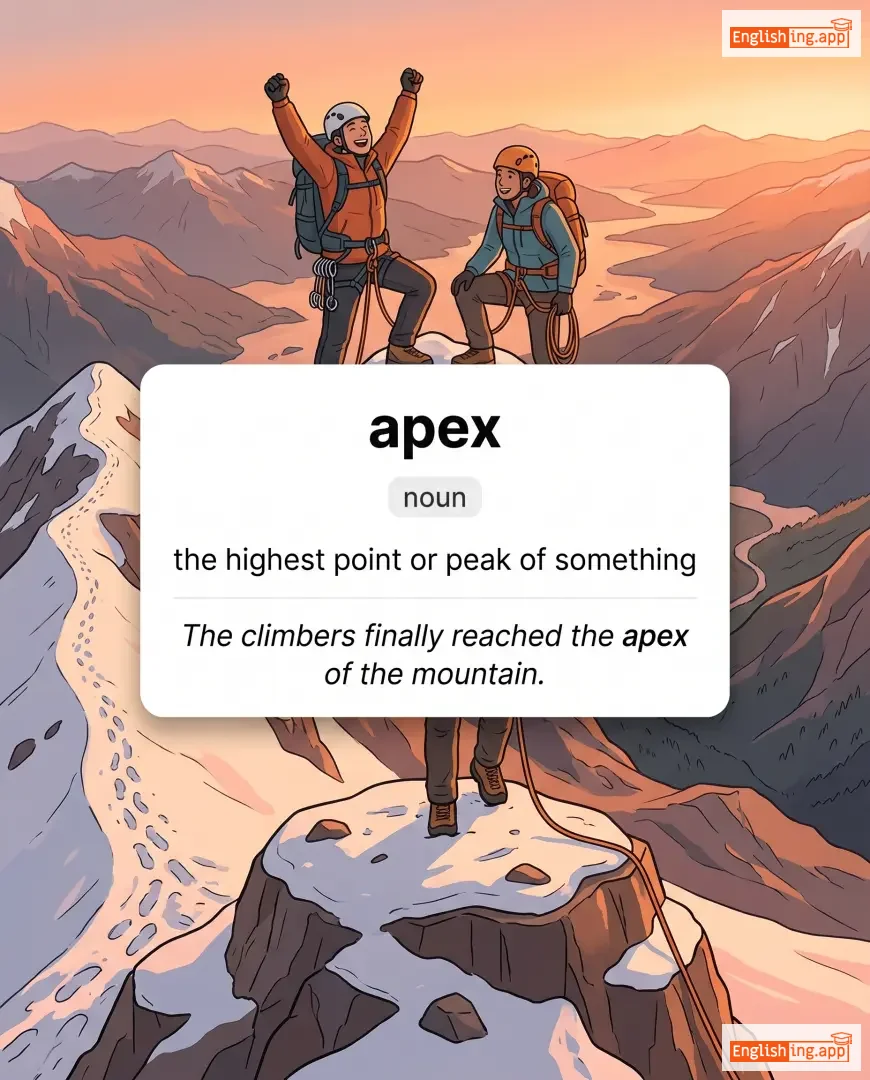
/ˈeɪ.pɛks/
noun
(àipèikè sī)
••••••
|
|
顶点
dingdian
••••••
|
- •••••• | - •••••• | - •••••• | - •••••• |
the highest point or peak of something
••••••
|
The climbers finally reached the apex of the mountain. |
登山者最终到达了山顶。
Dēngshān zhě zuìzhōng dào dá le shāndǐng.
••••••
|
at the apex of |
at the highest or most successful point
••••••
|
在顶点
zài dǐngdiǎn
••••••
|
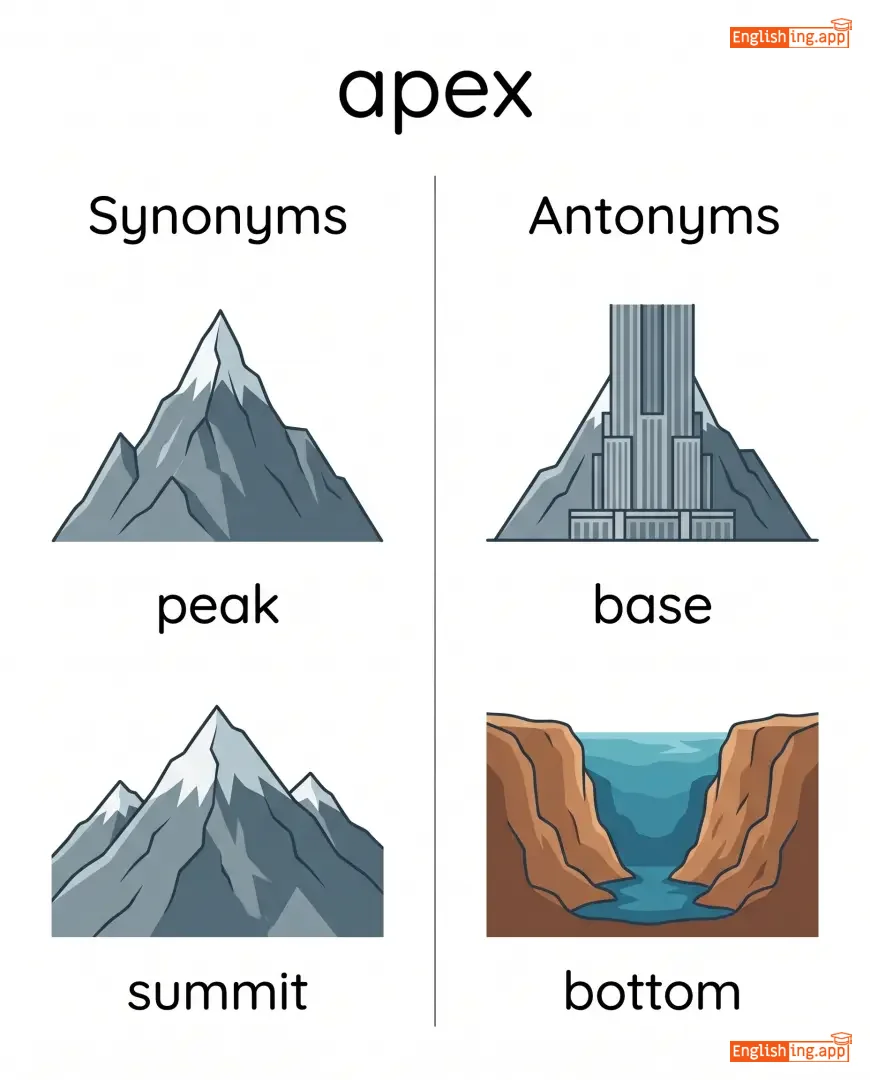
peak, summit, pinnacle, climax, acme
••••••
|
base, bottom, nadir
••••••
|
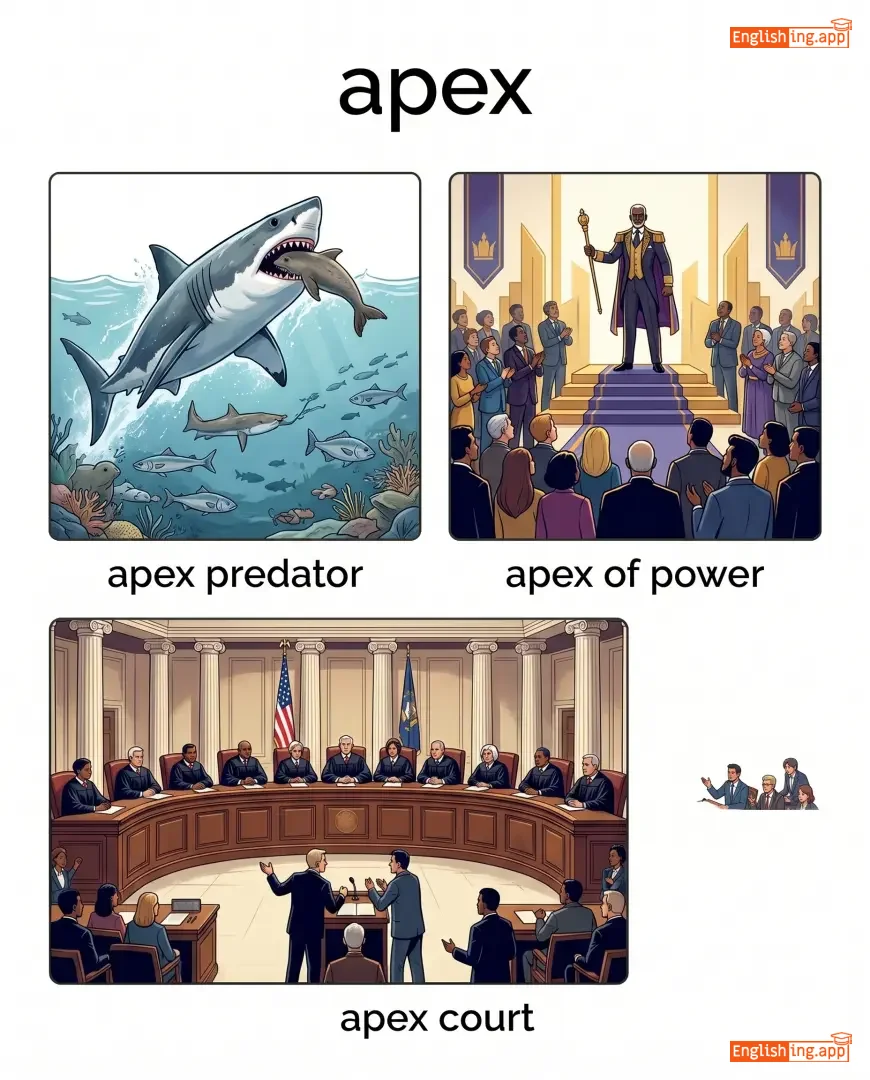
apex predator, apex of power, apex court, apex of success
••••••
|
Apex意味着顶点,就像金字塔的顶点。
••••••
|
|
#492
📸
|
/ˈæpərtʃər/
noun
(孔径)
••••••
|
- •••••• |
孔洞 / 缝隙
kǒngdòng / fèngxì
••••••
|
- •••••• | - •••••• | - •••••• | - •••••• |
an opening, hole, or gap, especially one that lets in light
••••••
|
Light entered through the small aperture in the wall.
光线通过墙上的小孔径进入。
••••••
|
光线通过墙上的小孔径进入。
Guāngxiàn tōngguò qiáng shàng de xiǎo kǒngdòng jìnrù.
••••••
|
- •••••• | - •••••• | - •••••• |
opening, hole, gap, orifice, slit
••••••
|
closure, blockage, seal
••••••
|
camera aperture, wide aperture, aperture size, aperture control
••••••
|
Aperture意味着孔洞 — 光线通过相机的孔洞进入。
••••••
|
|
#493
🦍
|
/eɪp/
noun/verb
(艾普)
••••••
|
- •••••• |
一种类似猴子的大家伙 / 模仿
yī zhǒng lèi shì hóuzi de dà jiā huǒ / mó fǎng
••••••
|
aped
艾普德
••••••
|
aped
艾普德
••••••
|
apes
艾普斯
••••••
|
aping
艾平
••••••
|
a large primate similar to a monkey but without a tail; as a verb, to imitate or mimic
••••••
|
Children often ape the behavior of adults.
孩子们经常模仿大人的行为。
••••••
|
孩子们经常模仿大人的行为。
Háizimen jīngcháng mófǎng dàrén de xíngwéi.
••••••
|
go ape
发疯
••••••
|
to become very excited, angry, or enthusiastic
••••••
|
发疯
fā fēng
••••••
|
imitate, mimic, copy, simulate
••••••
|
originate, innovate
••••••
|
ape behavior, ape around, go ape, ape man
••••••
|
Ape是猴子,做ape是模仿。
••••••
|
|
#494
😑
|
/ˈæpəθi/
noun
(阿帕西)
••••••
|
|
冷漠
lěngmò
••••••
|
- •••••• | - •••••• | - •••••• | - •••••• |
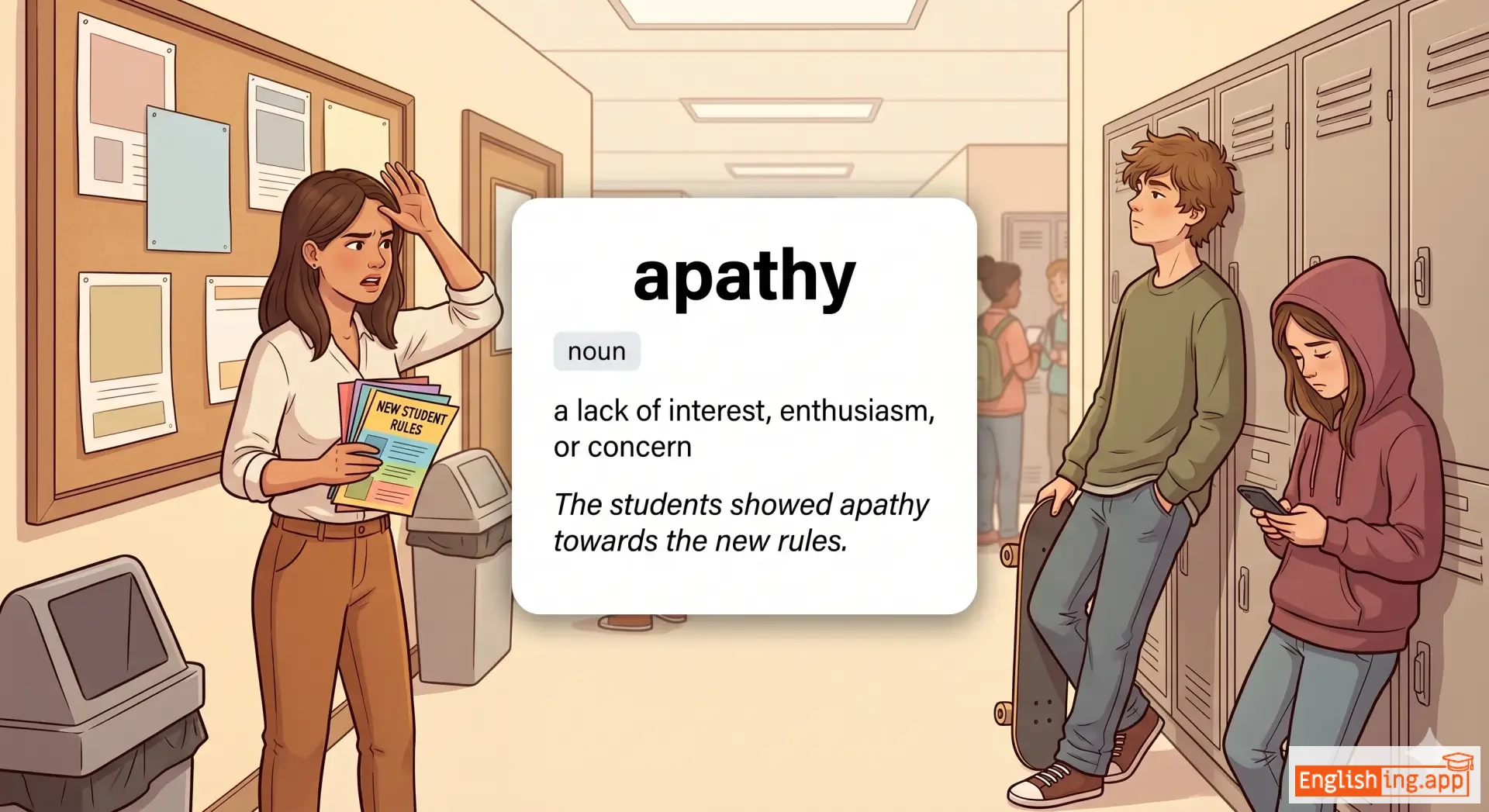
a lack of interest, enthusiasm, or concern
••••••
|
The students showed apathy towards the new rules. |
学生们对新规则表现出冷漠。
Xuéshēng men duì xīn guīzé biǎoxiàn chū lěngmò.
••••••
|
- •••••• | - •••••• | - •••••• |
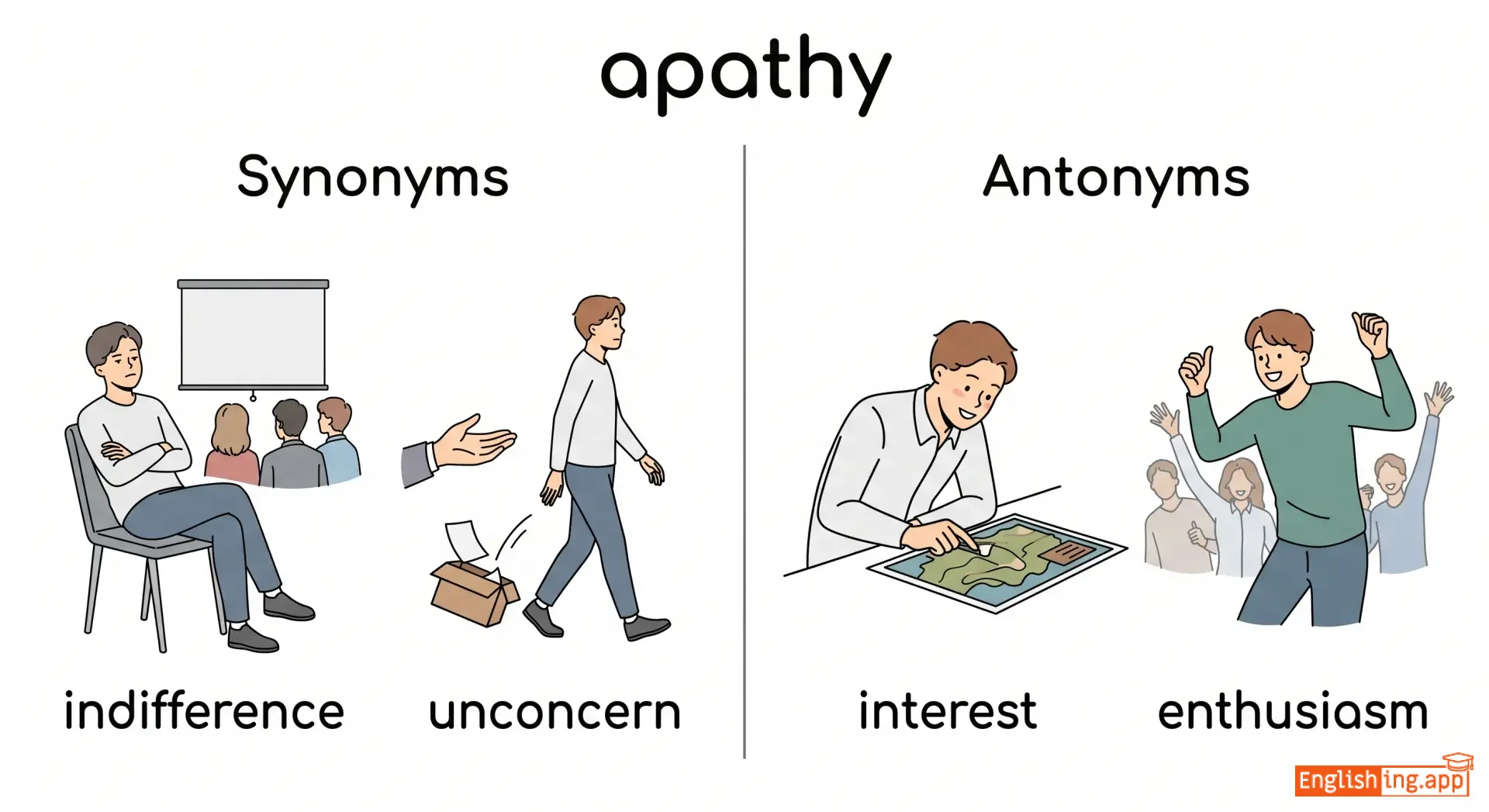
indifference, unconcern, detachment, passivity
••••••
|
interest, enthusiasm, passion
••••••
|
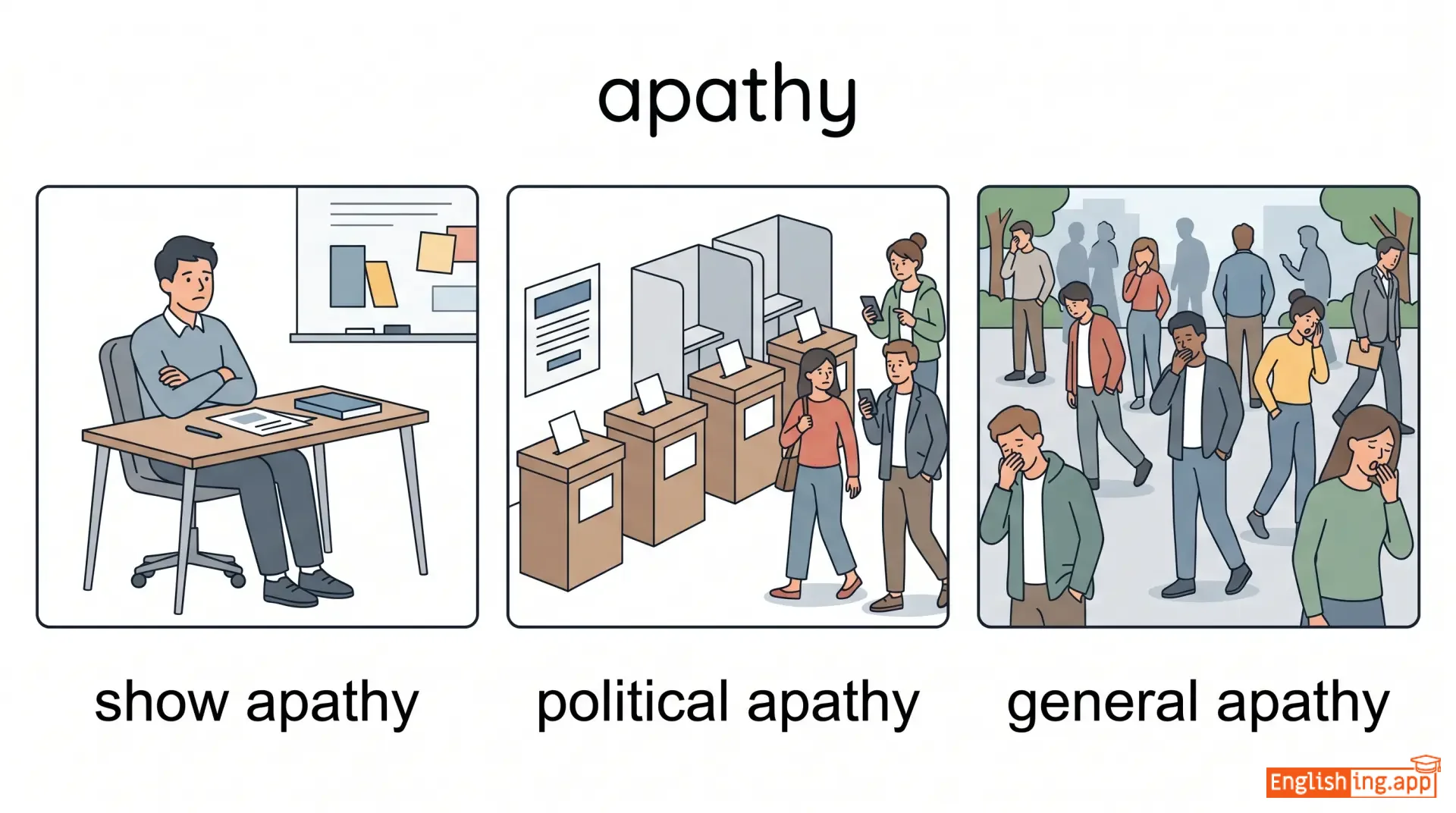
show apathy, political apathy, general apathy, apathy towards
••••••
|
Apathy 就是冷漠,什么都不关心。
••••••
|
|
#495
😐
|
/ˌæpəˈθɛtɪk/
adjective
••••••
|
- •••••• | - •••••• | - •••••• | - •••••• | - •••••• | - •••••• |
showing or feeling little or no interest, enthusiasm, or concern
••••••
|
He was apathetic about the outcome of the match. |
- •••••• | - •••••• | - •••••• | - •••••• |
indifferent, unconcerned, passive, detached, uninterested
••••••
|
interested, enthusiastic, concerned
••••••
|
seem apathetic, feel apathetic, apathetic attitude, apathetic response
••••••
|
No •••••• |
|
#496
📜
|
/ˈæntɪkwɛri/
noun
(古物商)
••••••
|
- •••••• |
古董商
gǔdǒng shāng
••••••
|
- •••••• | - •••••• | - •••••• | - •••••• |
A person who studies, collects, or deals in antiques or ancient objects.
••••••
|
The antiquary spent years collecting rare manuscripts from the medieval period.
这位古物商花了多年时间收集来自中世纪的稀有手稿。
••••••
|
这位古物商花了多年时间收集来自中世纪的稀有手稿。
Zhè wèi gǔwù shāng huāle duōnián shíjiān shōují láizì zhōng shìjì de xīyǒu shǒugǎo.
••••••
|
- •••••• | - •••••• | - •••••• |
collector, historian, archaeologist, antiquarian, researcher
••••••
|
modernist, innovator
••••••
|
antiquary studies, renowned antiquary, antiquary collection
••••••
|
Antique + 商, 古董买卖者
••••••
|
|
#497
⚒️
|
/ˈænvɪl/
noun
(铁砧)
••••••
|
- •••••• |
铁砧
tie zhen
••••••
|
- •••••• | - •••••• | - •••••• | - •••••• |
A heavy iron block used by blacksmiths for hammering and shaping metal.
••••••
|
The blacksmith placed the hot iron on the anvil.
铁匠将热铁放在铁砧上。
••••••
|
铁匠将热铁放在铁砧上。
Tiejiang jiang re tie fang zai tie zhen shang.
••••••
|
between the hammer and the anvil
锤子与铁砧之间
••••••
|
Caught in a situation where one is under pressure from two opposing forces.
••••••
|
锤子与铁砧之间
Chui zi yu tie zhen zhi jian
••••••
|
block, forge, iron base
••••••
|
none
••••••
|
iron anvil, hammer on anvil, heavy anvil
••••••
|
Anvil = 铁砧,铁匠用来塑形金属的工具。
••••••
|
|
#498
🔄
|
/ˈæntənɪm/
noun
(ántōnìmí)
••••••
|
- •••••• |
反义词
fǎn yì cí
••••••
|
- •••••• | - •••••• | - •••••• | - •••••• |
A word opposite in meaning to another.
••••••
|
‘Hot’ is the antonym of ‘cold’.
‘Hot’ 是 ‘cold’ 的反义词。
••••••
|
‘Hot’ 是 ‘cold’ 的反义词。
'Hot' shì 'cold' de fǎn yì cí.
••••••
|
- •••••• | - •••••• | - •••••• |
opposite, reverse, converse
••••••
|
synonym, equivalent
••••••
|
antonym of, opposite antonym, common antonyms
••••••
|
反义词 = 反 + 意 (意义相反的词)
••••••
|
|
#499
🦌
|
/ˈæntlɚ/
noun
(安特勒)
••••••
|
- •••••• |
鹿角
lu jiao
••••••
|
- •••••• | - •••••• | - •••••• | - •••••• |
The branched horns on the head of a deer or similar animal, usually shed and regrown annually.
••••••
|
The deer’s antlers grew larger each year. |
鹿角每年都会变得更大。
Lu jiao mei nian dou hui bian de geng da.
••••••
|
- •••••• | - •••••• | - •••••• |
horn, tine, rack, prong
••••••
|
none, smooth head
••••••
|
deer antler, antler growth, shed antlers
••••••
|
Antler 就像鹿角一样。
••••••
|
|
#500
💉
|
/ˌæntɪˈtɒksɪn/
noun
(抗毒素)
••••••
|
- •••••• |
抗毒素
kàng dú sù
••••••
|
- •••••• | - •••••• | - •••••• | - •••••• |
A substance that neutralizes a specific toxin in the body.
••••••
|
The doctor administered an antitoxin to counter the snake venom. |
医生注射了抗毒素来中和蛇毒。
Yīshēng zhùshè le kàng dú sù lái zhōnghé shé dú.
••••••
|
- •••••• | - •••••• | - •••••• |
antibody, antidote, serum, vaccine
••••••
|
toxin, poison
••••••
|
antitoxin therapy, administer antitoxin, diphtheria antitoxin
••••••
|
Anti + toxin = 中和毒素的力量.
••••••
|
|
#501
⚖️
|
/ˌæntɪˈθɛtɪkəl/
adjective
(对立的)
••••••
|
- •••••• |
对立的
duìlì de
••••••
|
- •••••• | - •••••• | - •••••• | - •••••• |
Directly opposed or contrasted; mutually incompatible.
••••••
|
His views were antithetical to the values of the organization.
他的观点与组织的价值观完全对立。
••••••
|
他的观点与组织的价值观完全对立。
Tā de guāndiǎn yǔ zǔzhī de jiàzhíguān wánquán duìlì.
••••••
|
- •••••• | - •••••• | - •••••• |
contradictory, opposite, conflicting, contrary, irreconcilable
••••••
|
similar, consistent, compatible
••••••
|
antithetical to, completely antithetical, seem antithetical
••••••
|
对立的 = 完全相反的意见。
••••••
|
|
#502
⚖️
|
/ænˈtɪθəsɪs/
noun
(对立面)
••••••
|
- •••••• |
对立面
duìlìmiàn
••••••
|
- •••••• | - •••••• | - •••••• | - •••••• |
A person, thing, or idea that is the direct opposite of another; a rhetorical device contrasting opposing ideas in parallel structure.
••••••
|
Love is the antithesis of hate. |
爱是仇恨的对立面。
Ài shì chóuhèn de duìlìmiàn.
••••••
|
the antithesis of |
Used to describe the exact opposite of something.
••••••
|
对立面
duìlìmiàn
••••••
|
opposite, contrast, contradiction, reverse, contrary
••••••
|
similarity, agreement, sameness
••••••
|
antithesis of truth, antithesis of love, direct antithesis, rhetorical antithesis
••••••
|
Thesis 代表主题思想 → Anti-thesis 代表对立的思想。
••••••
|
|
#503
📜
|
/ænˈtɪstrəfi/
noun
(反歌式)
••••••
|
- •••••• |
反歌式 (一种修辞手法)
fǎn gē shì
••••••
|
- •••••• | - •••••• | - •••••• | - •••••• |
A rhetorical device in which a word or phrase is repeated at the end of successive clauses; in Greek choral poetry, the part of the ode sung by the chorus in return movement.
••••••
|
The poet used antistrophe to emphasize the repeated phrase. |
诗人使用反歌式来强调重复的短语。
Shīrén shǐyòng fǎn gē shì lái qiángdiào chóngfù de duǎnyǔ.
••••••
|
- •••••• | - •••••• | - •••••• |
epiphora, repetition, refrain, rhetorical device
••••••
|
anaphora
••••••
|
use antistrophe, poetic antistrophe, rhetorical antistrophe
••••••
|
Strophe 意味着转折,Anti 意味着相反 → 句子末尾反复回旋的词汇。
••••••
|
|
#504
💊
|
/ˌæntiˌspæzˈmɒdɪk/
noun, adjective
(抗痉挛药)
••••••
|
- •••••• |
抗痉挛药
kàng jìngluán yào
••••••
|
- •••••• | - •••••• | - •••••• | - •••••• |
A drug or agent that relieves or prevents muscle spasms.
••••••
|
The doctor prescribed an antispasmodic to ease the pain.
医生开了一种抗痉挛药来缓解疼痛。
••••••
|
医生开了一种抗痉挛药来缓解疼痛。
Yīshēng kāile yī zhǒng kàng jìngluán yào lái huǎnjiě téngtòng.
••••••
|
- •••••• | - •••••• | - •••••• |
muscle relaxant, sedative, pain reliever, spasm reducer
••••••
|
stimulant, convulsant
••••••
|
antispasmodic drug, antispasmodic effect, antispasmodic treatment, take antispasmodic
••••••
|
痉挛意味着抽搐 → 抗痉挛药意味着治疗抽搐的药物。
••••••
|
|
#505
✊
|
/ˌæntiˈsleɪvəri/
adjective
(反奴隶制)
••••••
|
- •••••• |
反奴隶制
fǎn núlì zhì
••••••
|
- •••••• | - •••••• | - •••••• | - •••••• |
Opposed to the practice or system of slavery.
••••••
|
The antislavery movement gained momentum in the 19th century. |
反奴隶制运动在19世纪获得了动力。
Fǎn núlì zhì yùndòng zài 19 shìjì huòdé le dònglì.
••••••
|
- •••••• | - •••••• | - •••••• |
abolitionist, emancipationist, freedom-seeking
••••••
|
proslavery, supportive of slavery
••••••
|
antislavery campaign, antislavery law, antislavery movement, antislavery activists
••••••
|
Anti + 奴隶制 → 反对奴隶制的运动
••••••
|
|
#506
🧴
|
/ˌæntiˈsɛptɪk/
noun, adjective
••••••
|
- •••••• | - •••••• | - •••••• | - •••••• | - •••••• | - •••••• |
A substance that prevents the growth of disease-causing microorganisms; clean and free from germs.
••••••
|
The nurse applied an antiseptic to the wound. |
- •••••• |
antiseptic environment |
A place that is completely clean and free from germs.
••••••
|
- •••••• |
disinfectant, germicide, sanitizer, cleanser, sterilizer
••••••
|
infected, contaminated, dirty
••••••
|
antiseptic cream, antiseptic solution, apply antiseptic, antiseptic wipe
••••••
|
No •••••• |
|
#507
🏛️
|
/ænˈtɪkwɪti/
noun
(古代)
••••••
|
|
古代
gǔdài
••••••
|
- •••••• | - •••••• | - •••••• | - •••••• |
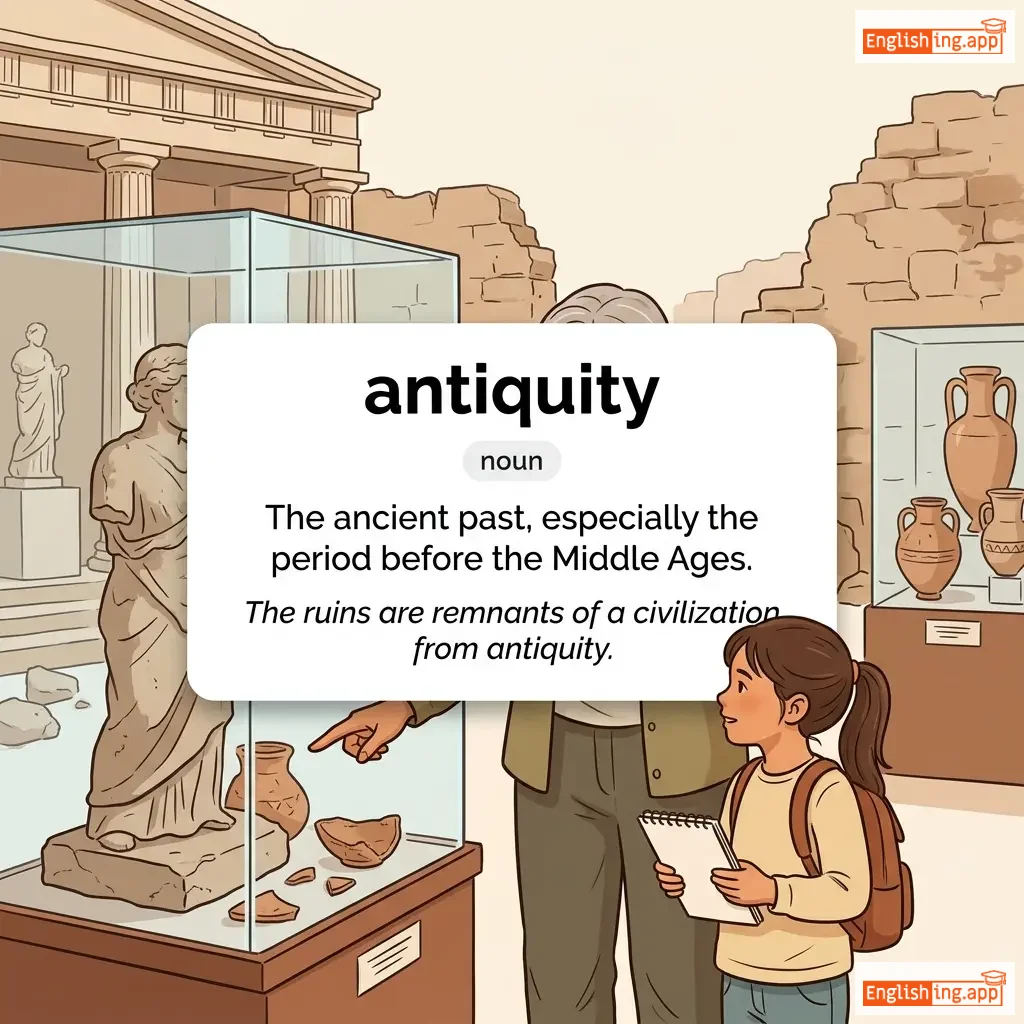
The ancient past, especially the period before the Middle Ages.
••••••
|
The ruins are remnants of a civilization from antiquity. |
这些废墟是古代文明的遗迹。
Zhèxiē fèixū shì gǔdài wénmíng de yíjì.
••••••
|
- •••••• | - •••••• | - •••••• |
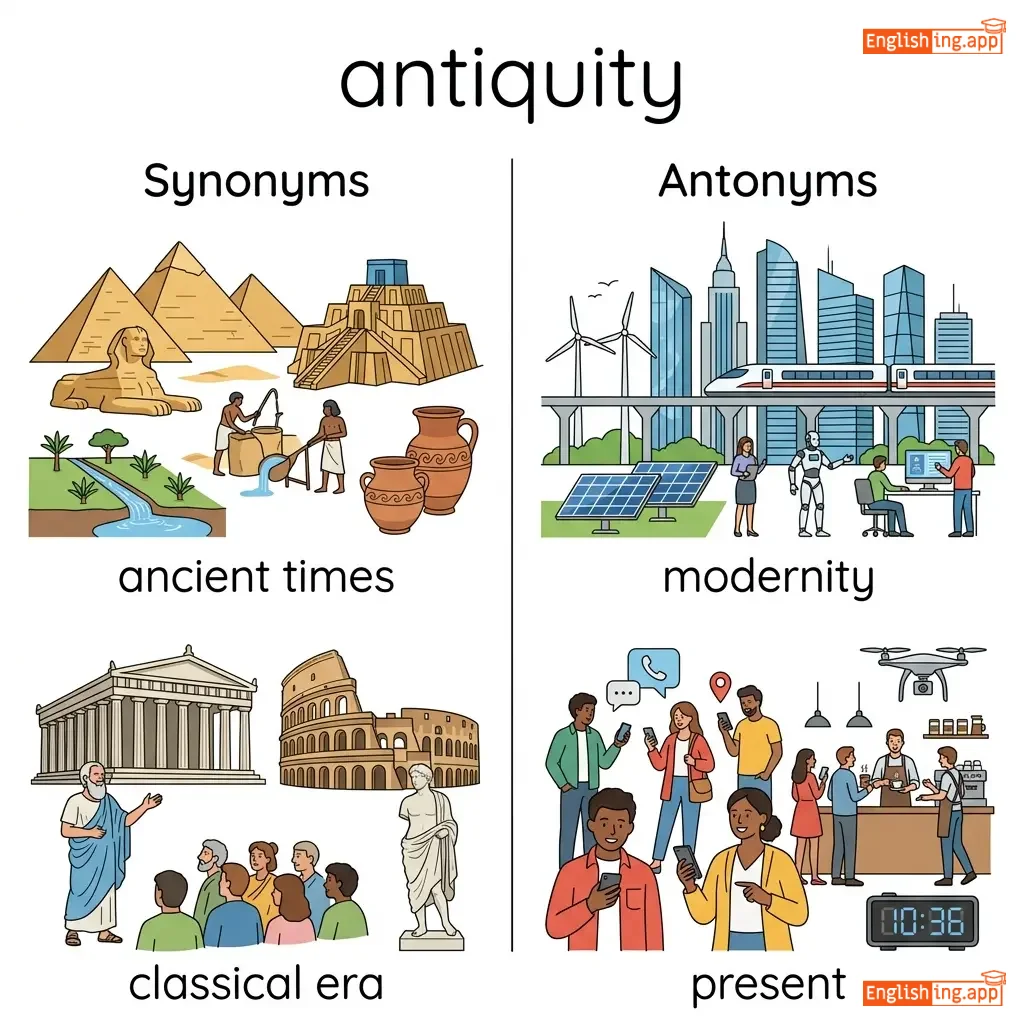
ancient times, classical era, past, olden days
••••••
|
modernity, present
••••••
|
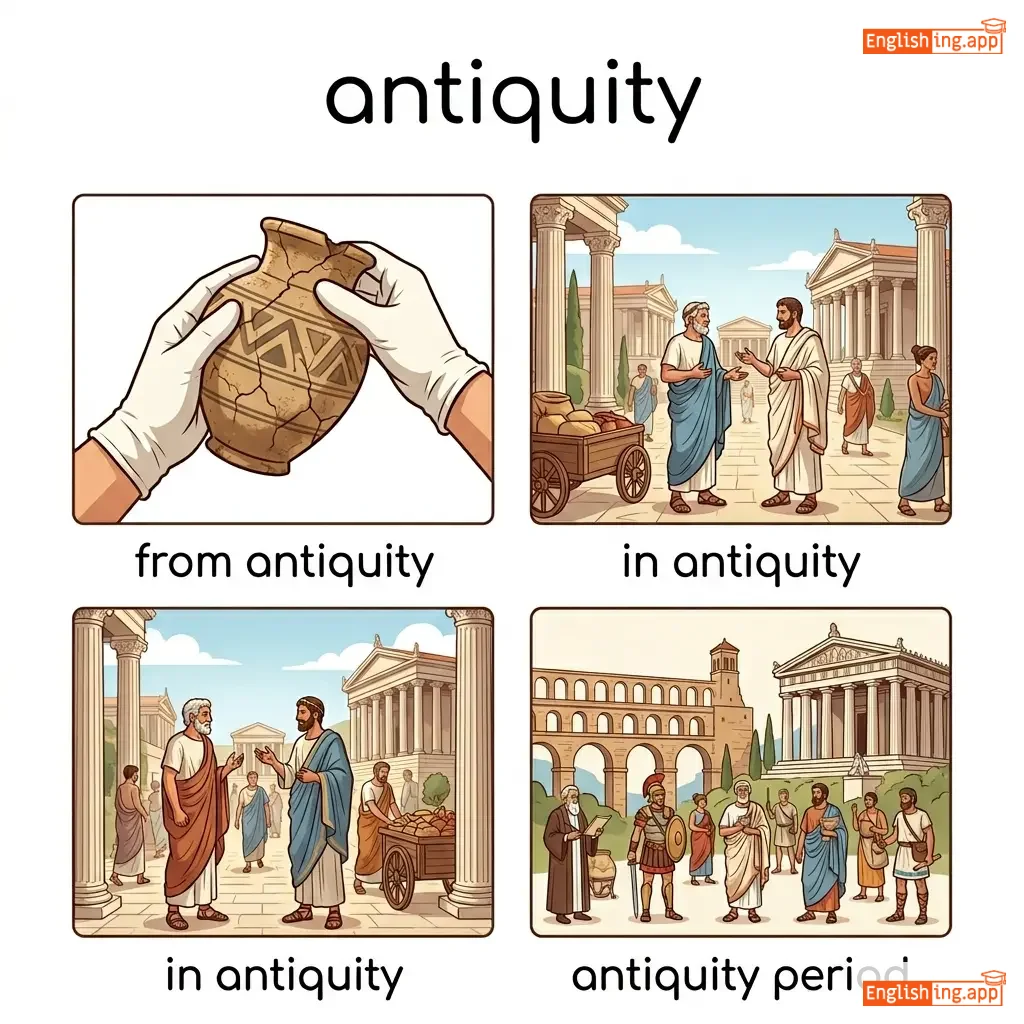
from antiquity, in antiquity, antiquity period
••••••
|
Antiquity就是古代 - 远古的时期
••••••
|
|
#508
🏺
|
/ænˈtiːk/
noun
(古董)
••••••
|
- •••••• |
古董物品
gǔdǒng wùpǐn
••••••
|
- •••••• | - •••••• | - •••••• | - •••••• |
An old collectible item that has high value because of its age and rarity.
••••••
|
She bought an antique vase from the market.
她从市场上买了一只古董花瓶。
••••••
|
她从市场上买了一只古董花瓶。
Tā cóng shìchǎng shàng mǎile yī zhī gǔdǒng huāpíng.
••••••
|
antique roadshow
古董路演
••••••
|
A popular show where antiques are appraised and valued.
••••••
|
古董路演
Gǔdǒng lùyǎn
••••••
|
artifact, relic, heirloom, collectible, vintage
••••••
|
modern, new
••••••
|
antique shop, antique furniture, antique vase
••••••
|
Antique 在商店里买 antique 物品
••••••
|
|
#509
🕰️
|
/ˈæntɪkweɪtɪd/
adjective
(古老的)
••••••
|
- •••••• |
过时的
guòshí de
••••••
|
- •••••• | - •••••• | - •••••• | - •••••• |
Old-fashioned or outdated.
••••••
|
The office still uses an antiquated filing system.
办公室仍在使用过时的归档系统。
••••••
|
办公室仍在使用过时的归档系统。
Bàngōngshì réng zài shǐyòng guòshí de guīdǎng xìtǒng.
••••••
|
- •••••• | - •••••• | - •••••• |
outdated, obsolete, old-fashioned, archaic, vintage
••••••
|
modern, new, contemporary
••••••
|
antiquated ideas, antiquated system, antiquated beliefs
••••••
|
Antique 就像 antiquated 一样,意味着过时的系统。
••••••
|
|
#510
⌛
|
/ˈæntɪkweɪt/
verb
(ǎn tì kè wèi tè)
••••••
|
- •••••• |
过时
guò shí
••••••
|
antiquated
ǎn tì kè wèi tè dé
••••••
|
antiquated
ǎn tì kè wèi tè dé
••••••
|
antiquates
ǎn tì kè wèi tè sī
••••••
|
antiquating
ǎn tì kè wèi tè xíng
••••••
|
To make something old-fashioned or obsolete.
••••••
|
The rise of digital cameras antiquated traditional film photography.
数字相机的崛起使传统胶片摄影过时。
••••••
|
数字相机的崛起使传统胶片摄影过时。
Shùzì xiàngjī de juéqǐ shǐ chuántǒng jiāopiàn shèyǐng guò shí.
••••••
|
- •••••• | - •••••• | - •••••• |
outdate, obsolete, supersede, displace
••••••
|
modernize, update, innovate
••••••
|
antiquate practices, antiquate technology, antiquated by
••••••
|
Antiquate 就是过时,antiquate的意思就是让某物变旧。
••••••
|
Vocabulary Quiz
Test your vocabulary by matching words with their translations or meanings.
Login to take the quiz
Comments (0)
Share your thoughts and join the discussion.
Join the discussion by logging in
Login to CommentNo comments yet
Be the first to share your thoughts!