




Swipe left or right, or use the buttons. Tap image to zoom.
例句翻译
单词
Lesson 235Lesson 235 - 遮罩切换
|
表情符号
|
单词 | Images | 翻译 | 过去时 | 过去分词 | 第三人称单数 | 动名词 | 含义 | 例句 | 例句翻译 | 示例表达 | 示例表达含义 | 示例表达翻译 | 同义词 | 反义词 | 搭配词 | 助记符 |
|---|---|---|---|---|---|---|---|---|---|---|---|---|---|---|---|---|---|
|
#7020
🎯
|
/prəˈpɛnsəti/
noun
(pǔo-pén-sī-tí)
••••••
|
|
倾向
qīngxiàng
••••••
|
- •••••• | - •••••• | - •••••• | - •••••• |
a natural tendency or inclination to behave in a particular way
••••••
|
She has a propensity to trust people too easily.
她有过于轻信他人的倾向。
••••••
|
她有过于轻信他人的倾向。
Tā yǒu guòyú qīngxìn tārén de qīngxiàng.
••••••
|
- •••••• | - •••••• | - •••••• |
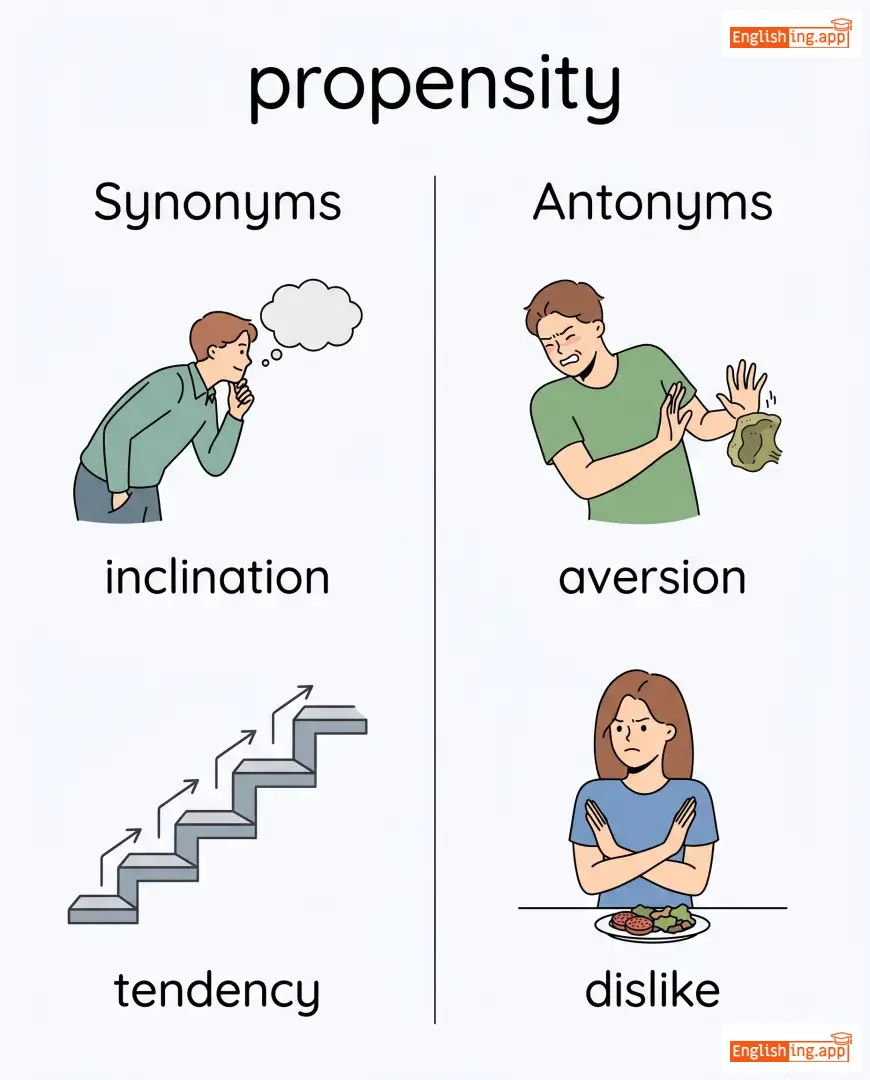
inclination, tendency, predisposition, leaning, proclivity
••••••
|
aversion, dislike, disinclination
••••••
|
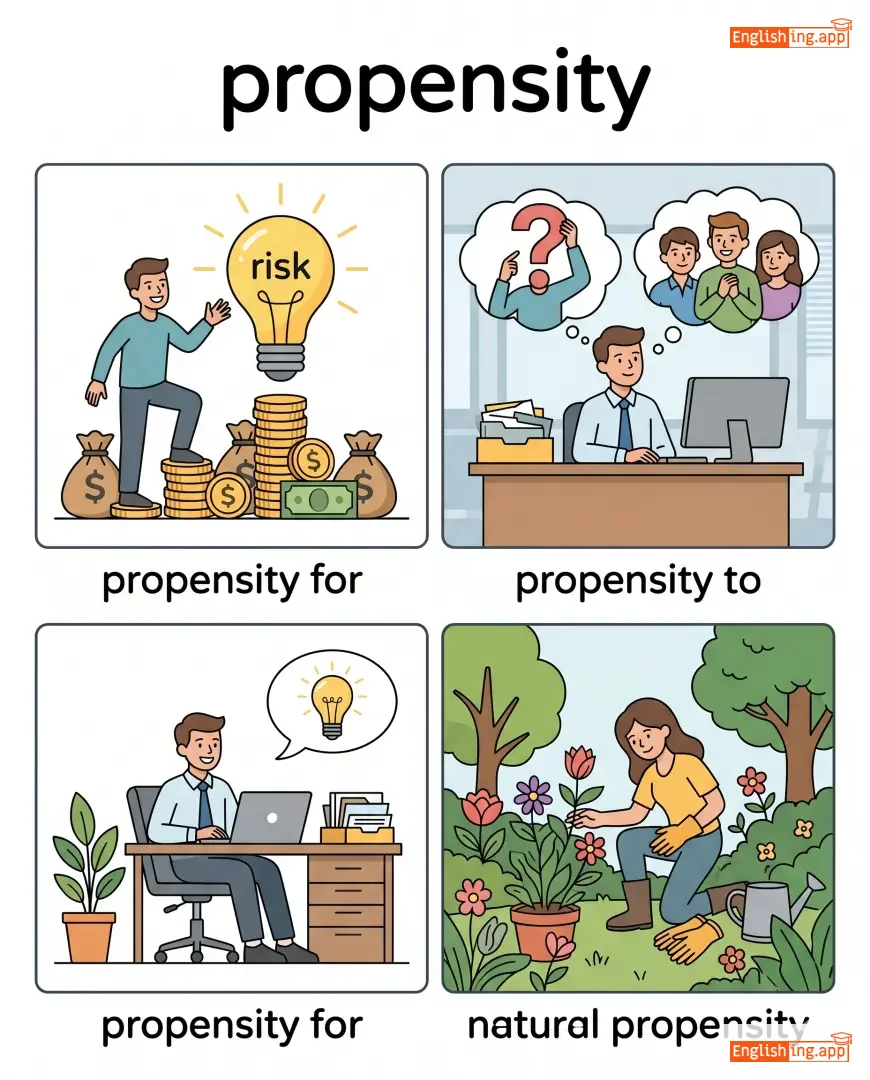
propensity for, propensity to, natural propensity, strong propensity
••••••
|
Propensity 意味着倾向,记住 '倾向' 就是自然的倾向。
••••••
|
|
#7021
💨
|
/prəˈpʌlsɪv/
adjective
(prəˈpʌlsɪv)
••••••
|
- •••••• |
推进的
tuījìn de
••••••
|
- •••••• | - •••••• | - •••••• | - •••••• |
Having the power to drive or push something forward.
••••••
|
The propulsive force of the rocket lifted it off the ground. |
火箭的推进力将它从地面抬起。
Huǒjiàn de tuījìn lì jiāng tā cóng dìmiàn táiqǐ.
••••••
|
- •••••• | - •••••• | - •••••• |
driving, pushing, thrusting, dynamic, forceful
••••••
|
weak, stagnant, inert
••••••
|
propulsive force, propulsive power, propulsive effect, propulsive energy
••••••
|
推进的意味着推动某物向前
••••••
|
|
#7022
🚀
|
/prəˈpʌlʃən/
noun
(推进)
••••••
|
|
推进力
tuī jìn lì
••••••
|
- •••••• | - •••••• | - •••••• | - •••••• |
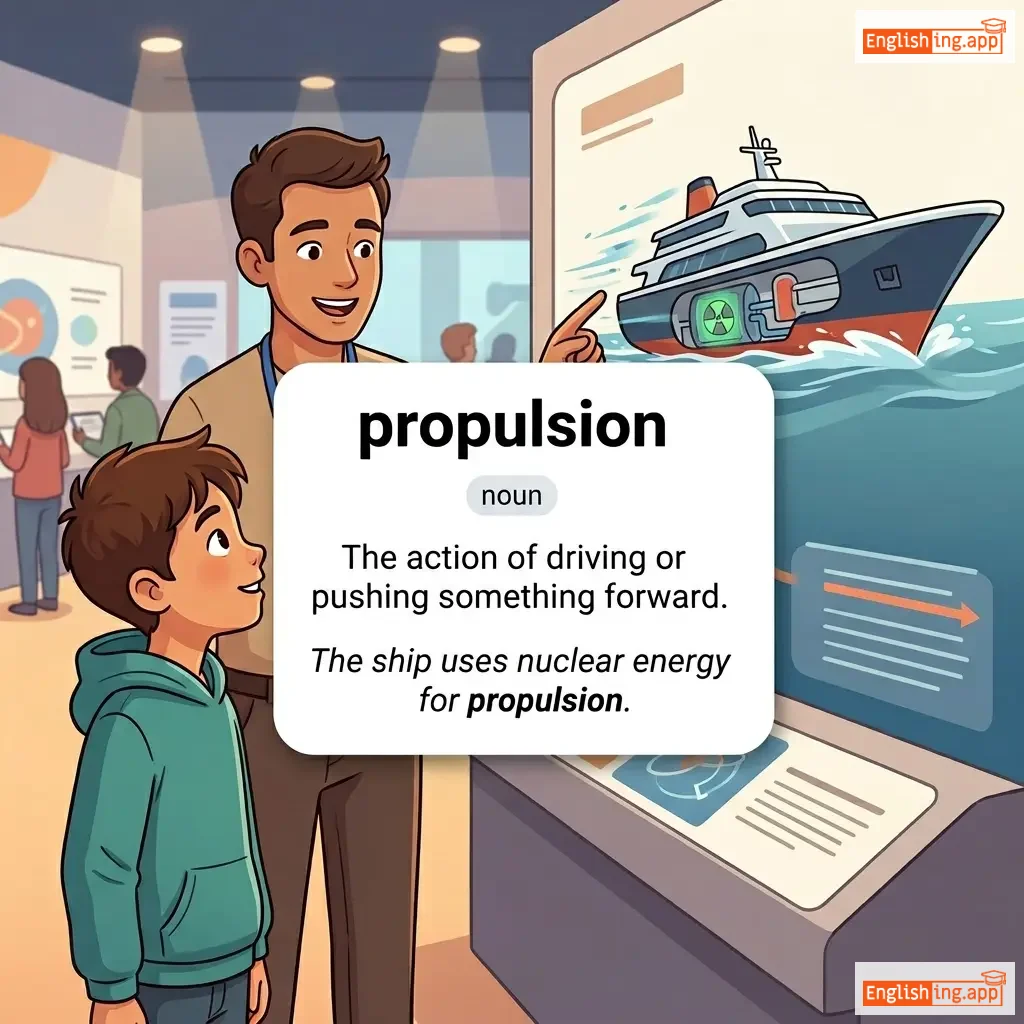
The action of driving or pushing something forward.
••••••
|
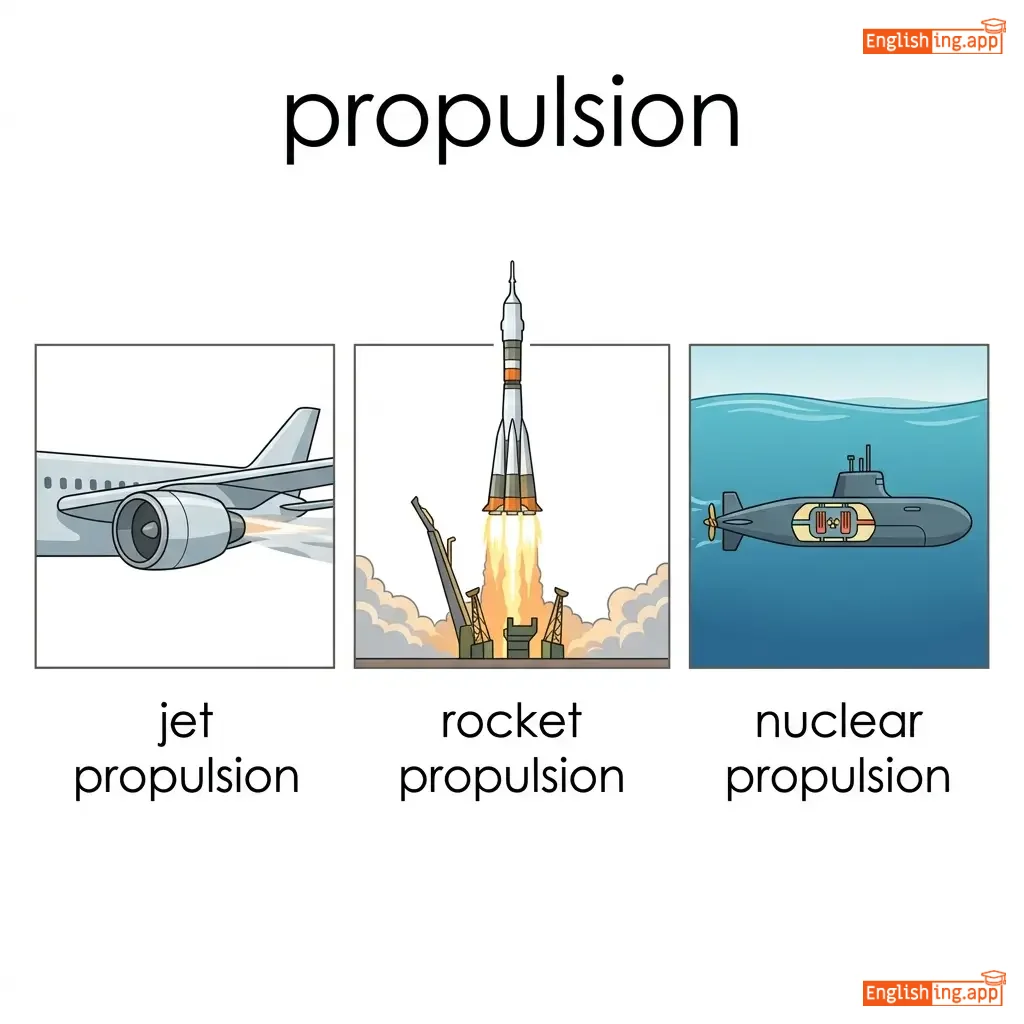
The ship uses nuclear energy for propulsion. |
这艘船使用核能推进。
Zhè sōu chuán shǐyòng hé néng tuī jìn.
••••••
|
- •••••• | - •••••• | - •••••• |
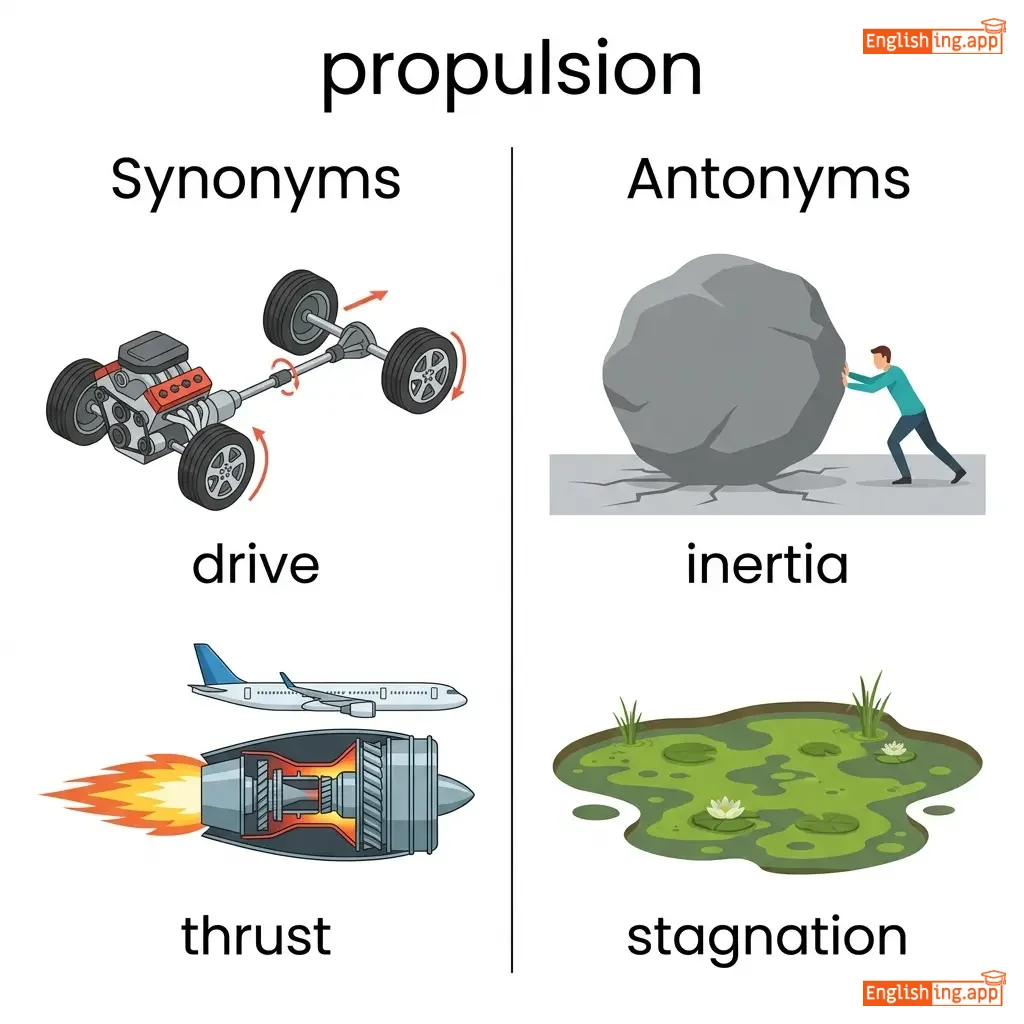
drive, thrust, force, momentum, push
••••••
|
inertia, stagnation, halt
••••••
|
jet propulsion, rocket propulsion, nuclear propulsion, means of propulsion
••••••
|
推进力就像推动事物前进的力量。
••••••
|
|
#7023
🤵
|
/prəˈpraɪəti/
noun
(proprieti)
••••••
|
|
得体
deti
••••••
|
- •••••• | - •••••• | - •••••• | - •••••• |
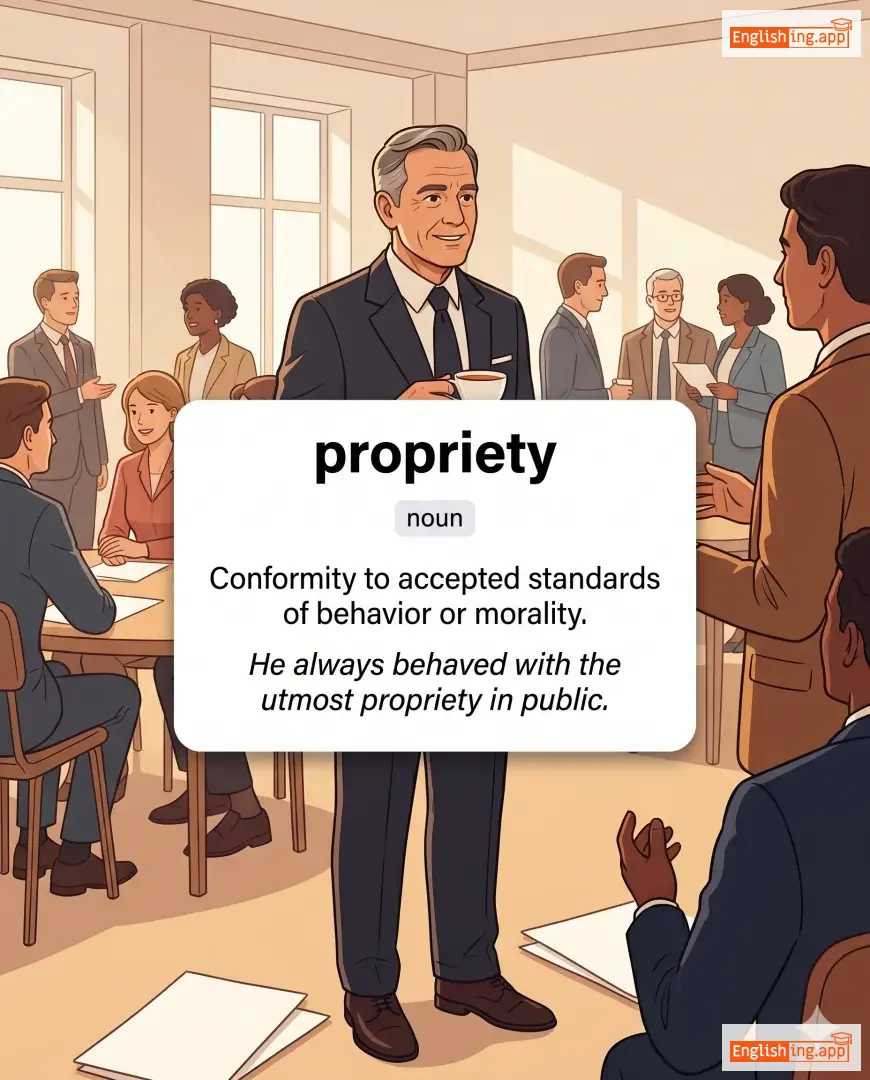
Conformity to accepted standards of behavior or morality.
••••••
|
He always behaved with the utmost propriety in public. |
他在公共场合总是表现得体。
Ta zai gonggong changhe zong shi biaoxian deti.
••••••
|
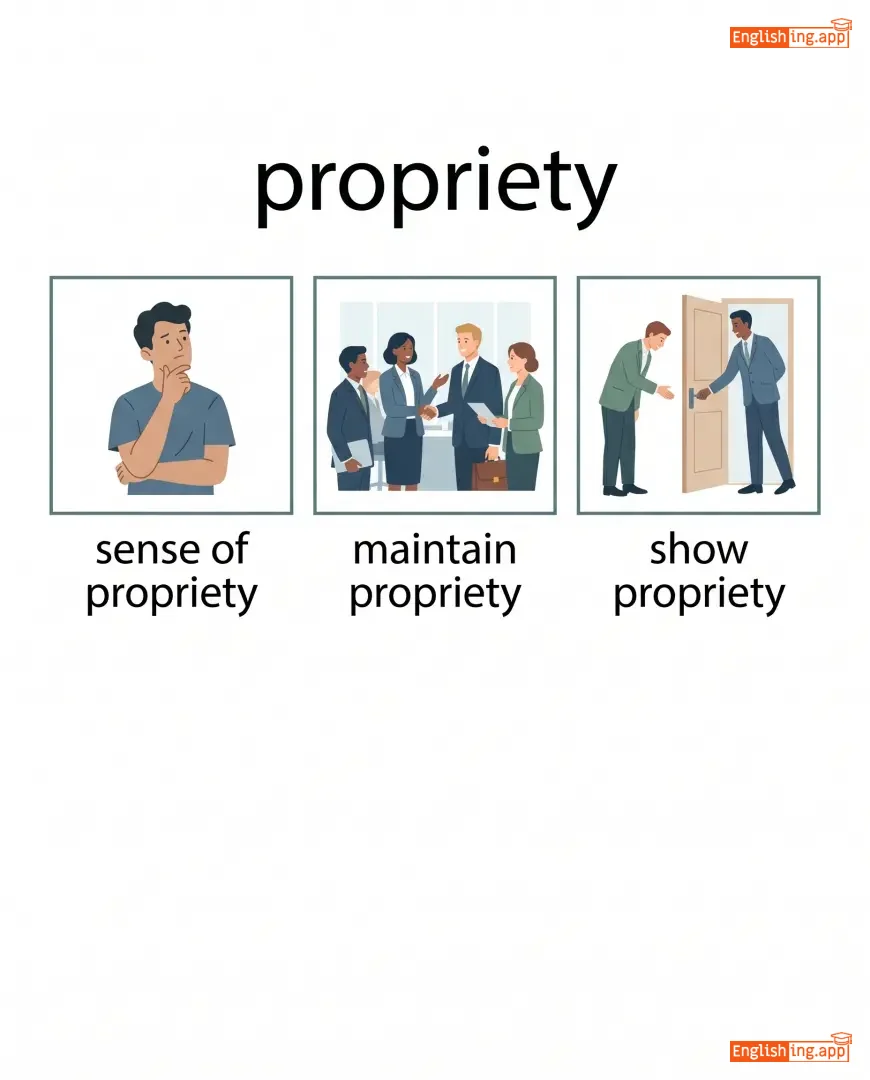
sense of propriety |
Awareness of what is socially acceptable and proper.
••••••
|
得体的意识
Deti de yishi
••••••
|
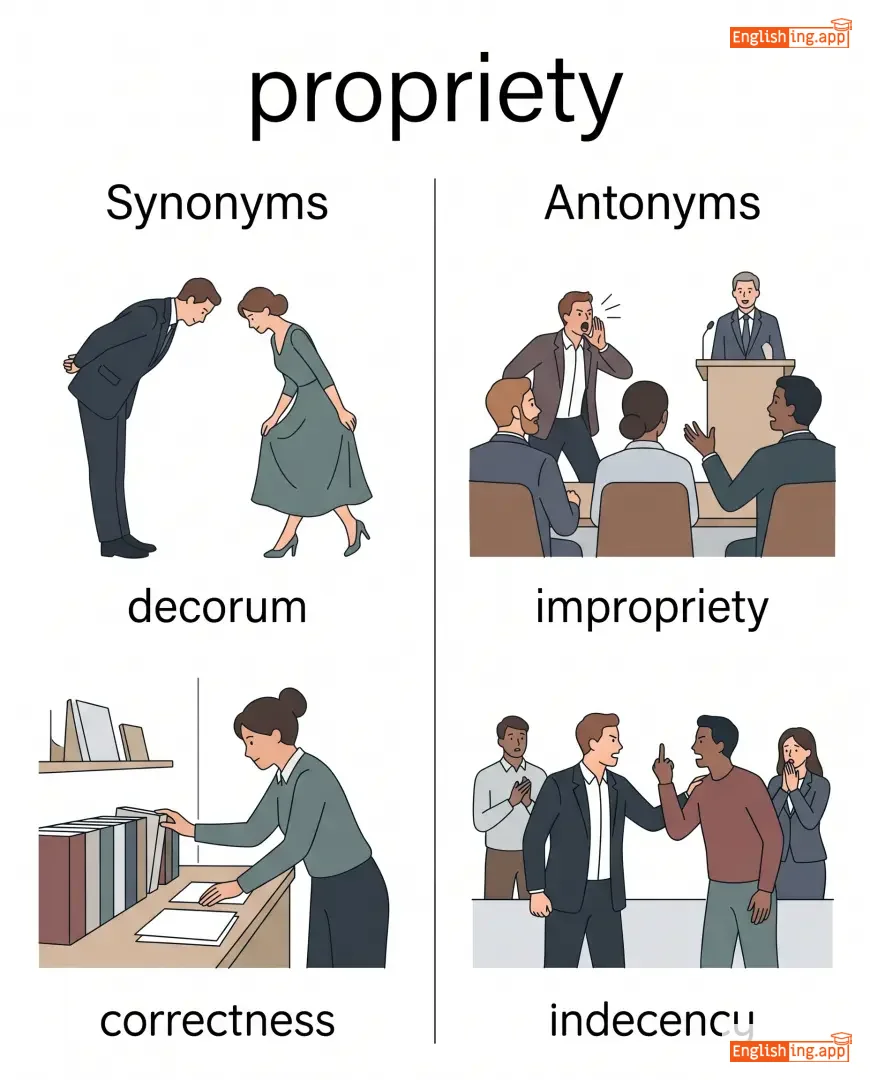
decorum, correctness, civility, respectability, modesty
••••••
|
impropriety, indecency, rudeness
••••••
|
sense of propriety, maintain propriety, show propriety, question of propriety
••••••
|
得体 = propriety
••••••
|
|
#7024
💡
|
/prəˈpaʊnd/
verb
(普劳德)
••••••
|
- •••••• |
提出
tichu
••••••
|
propounded
普劳德德
••••••
|
propounded
普劳德德
••••••
|
propounds
普劳德斯
••••••
|
propounding
普劳德英
••••••
|
To put forward an idea, theory, or point for consideration.
••••••
|
The professor propounded a new theory on climate change.
教授提出了关于气候变化的新理论。
••••••
|
教授提出了关于气候变化的新理论。
Jiaoshou tichu le guanyu qihou bianhua de xin lilun.
••••••
|
- •••••• | - •••••• | - •••••• |
suggest, propose, present, advance, recommend
••••••
|
withdraw, retract, withhold
••••••
|
propound a theory, propound a question, propound an idea, propound a plan
••••••
|
教授 (propound) 提出了一个新的理论。
••••••
|
|
#7025
⚖️
|
/prəˈpɔːrʃənət/
adjective
(比例)
••••••
|
- •••••• |
成比例的
cheng bi li de
••••••
|
- •••••• | - •••••• | - •••••• | - •••••• |
Corresponding in size, degree, or intensity; balanced in relation.
••••••
|
The punishment should be proportionate to the crime.
惩罚应该与犯罪成比例。
••••••
|
惩罚应该与犯罪成比例。
Cheng fa ying gai yu fan zui cheng bi li.
••••••
|
proportionate response
比例反应
••••••
|
A reaction that matches the seriousness of an event.
••••••
|
比例反应
bi li fan ying
••••••
|
balanced, commensurate, equivalent, corresponding, relative
••••••
|
disproportionate, unequal, excessive
••••••
|
proportionate share, proportionate increase, proportionate response, proportionate representation
••••••
|
比例意味着关系,所以成比例的意思是有这种关系。
••••••
|
|
#7026
📢
|
/prəˈpoʊnənt/
noun
(proponent)
••••••
|
- •••••• |
支持者, 倡导者
zhīchí zhě, chàngdǎo zhě
••••••
|
- •••••• | - •••••• | - •••••• | - •••••• |
a person who advocates for or supports a particular idea, cause, or plan
••••••
|
She is a strong proponent of renewable energy.
她是可再生能源的坚定支持者。
••••••
|
她是可再生能源的坚定支持者。
Tā shì kě zàishēng néngyuán de jiāndìng zhīchí zhě.
••••••
|
- •••••• | - •••••• | - •••••• |
advocate, supporter, promoter, champion, defender
••••••
|
opponent, critic, adversary
••••••
|
proponent of change, strong proponent, leading proponent
••••••
|
Proponent 就是提倡某个计划的人 - 就像支持者一样。
••••••
|
|
#7027
🌤️
|
/prəˈpɪʃəs/
adjective
(prəˈpɪʃəs)
••••••
|
- •••••• |
有利的
youli de
••••••
|
- •••••• | - •••••• | - •••••• | - •••••• |
giving or indicating a good chance of success; favorable
••••••
|
The sunny weather was a propitious start to the picnic. |
阳光明媚的天气是野餐的有利开端。
Yangguang mingmei de tianqi shi yecan de youli kaiduan.
••••••
|
- •••••• | - •••••• | - •••••• |
favorable, auspicious, promising, advantageous, opportune
••••••
|
unfavorable, unlucky, inauspicious
••••••
|
propitious moment, propitious time, propitious circumstances
••••••
|
有利的意味着成功的机会,阳光灿烂的开始。
••••••
|
|
#7028
🎁
|
/prəˈpɪʃieɪt/
verb
(普罗皮谢特)
••••••
|
|
安抚
ānfǔ
••••••
|
propitiated
普罗皮谢特德
••••••
|
propitiated
普罗皮谢特德
••••••
|
propitiates
普罗皮谢特斯
••••••
|
propitiating
普罗皮谢特英
••••••
|
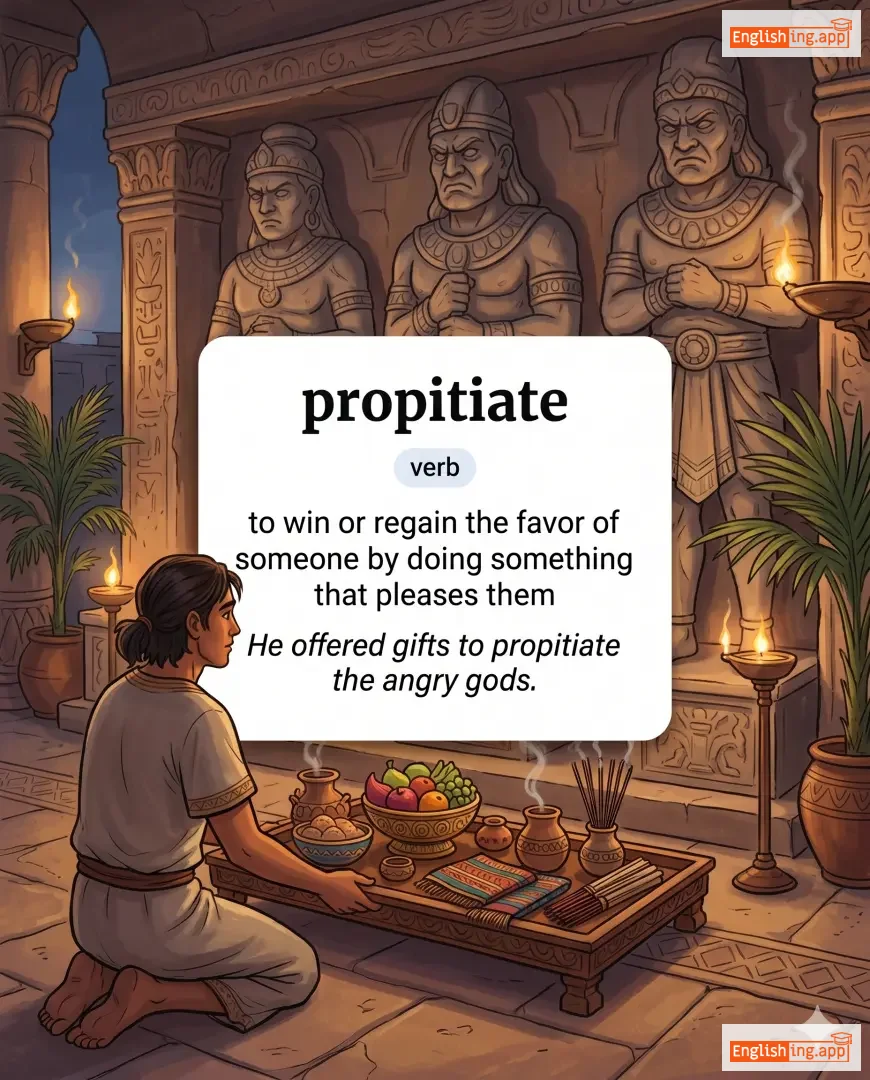
to win or regain the favor of someone by doing something that pleases them
••••••
|
He offered gifts to propitiate the angry gods.
他提供礼物来安抚愤怒的神明。
••••••
|
他提供礼物来安抚愤怒的神明。
Tā tígōng lǐwù lái ānfǔ fènnù de shénmíng.
••••••
|
- •••••• | - •••••• | - •••••• |
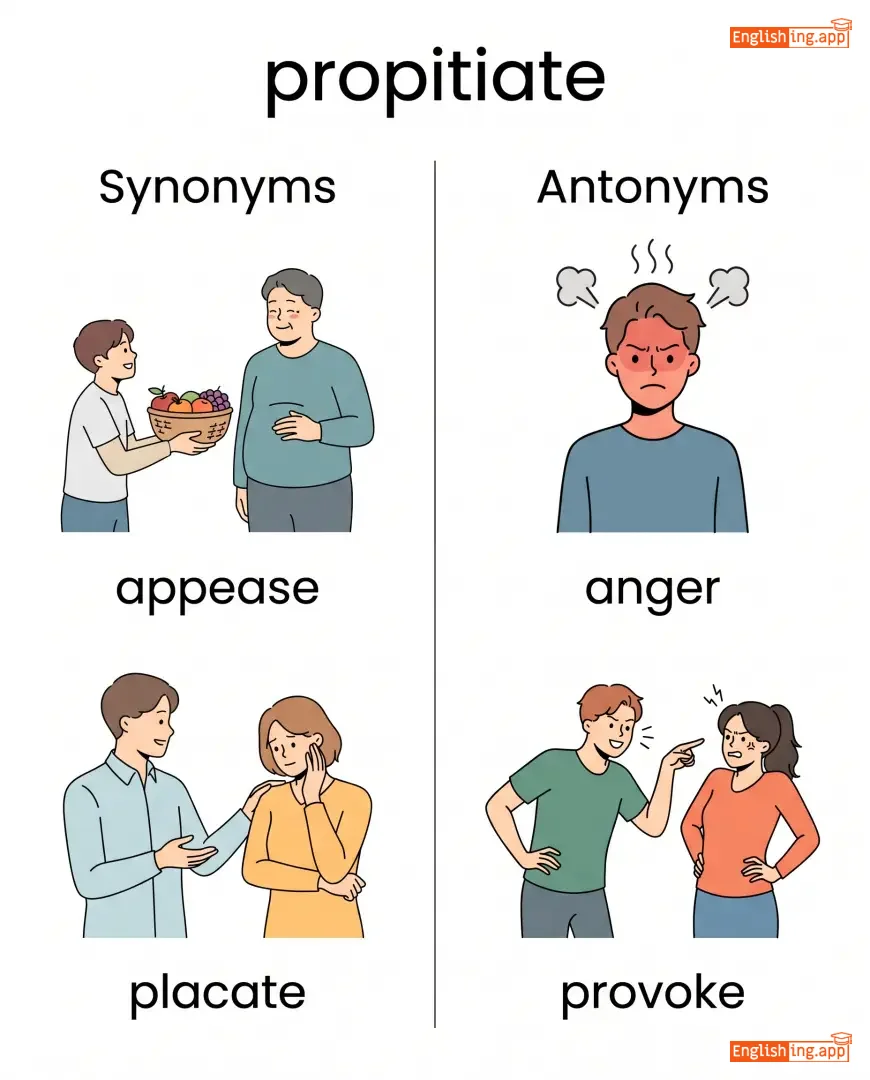
appease, placate, conciliate, mollify, pacify
••••••
|
anger, provoke, enrage
••••••
|
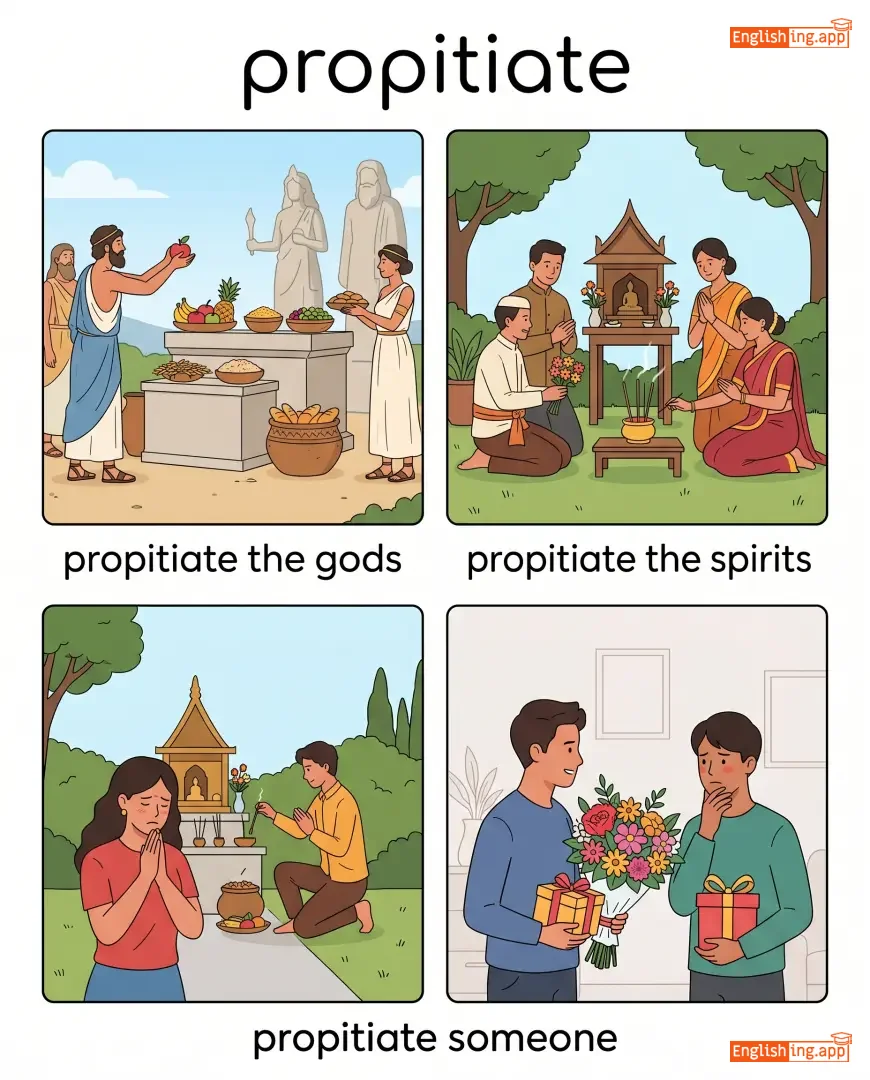
propitiate the gods, propitiate the spirits, propitiate someone
••••••
|
Propitiate 就是通过礼物安抚神灵的做法。
••••••
|
|
#7029
📍
|
/prəˈpɪŋkwɪti/
noun
(普罗平奎蒂)
••••••
|
- •••••• |
亲近
qīnjìn
••••••
|
- •••••• | - •••••• | - •••••• | - •••••• |
the state of being close to someone or something; proximity
••••••
|
The propinquity of their houses made them close friends. |
他们房屋的亲近使他们成为了亲密的朋友。
Tāmen fángwū de qīnjìn shǐ tāmen chéngwéi le qīnmì de péngyǒu.
••••••
|
- •••••• | - •••••• | - •••••• |
proximity, closeness, nearness, adjacency, vicinity
••••••
|
distance, remoteness, separation
••••••
|
physical propinquity, geographical propinquity, emotional propinquity
••••••
|
亲近 (propinquity) 意味着与某人或某物接近。
••••••
|
|
#7030
🛡️
|
/ˌprɒfɪˈlæktɪk/
adjective
(预防性)
••••••
|
- •••••• |
预防性
yùfángxìng
••••••
|
- •••••• | - •••••• | - •••••• | - •••••• |
intended to prevent disease or an unwanted outcome; protective
••••••
|
The doctor prescribed a prophylactic treatment to prevent infection.
医生开了预防性治疗以防止感染。
••••••
|
医生开了预防性治疗以防止感染。
Yīshēng kāi le yùfángxìng zhìliáo yǐ fángzhǐ rùnhòu.
••••••
|
- •••••• | - •••••• | - •••••• |
preventive, protective, precautionary, defensive, safeguarding
••••••
|
curative, therapeutic, harmful
••••••
|
prophylactic measure, prophylactic treatment, prophylactic use, prophylactic medicine
••••••
|
预防性:先采取预防措施,避免问题发生。
••••••
|
|
#7031
✨
|
/prəˈfɛtɪk/
adjective
(预言的)
••••••
|
- •••••• |
预言的
yùyán de
••••••
|
- •••••• | - •••••• | - •••••• | - •••••• |
accurately predicting or describing what will happen in the future
••••••
|
His prophetic words came true after many years.
他的预言之言在多年后实现了。
••••••
|
他的预言之言在多年后实现了。
Tā de yùyán zhī yán zài duō nián hòu shíxiàn le.
••••••
|
- •••••• | - •••••• | - •••••• |
predictive, visionary, foretelling, revelatory
••••••
|
unforeseen, unprophetic
••••••
|
prophetic vision, prophetic words, prophetic dream, prophetic insight
••••••
|
Prophetic意味着预言未来 — Prophet说的都是预言的
••••••
|
|
#7032
📜
|
/ˈprɒfəsaɪ/
verb
(预言)
••••••
|
- •••••• |
预言
yù yán
••••••
|
prophesied
预言了
••••••
|
prophesied
预言了
••••••
|
prophesies
预言
••••••
|
prophesying
预言中
••••••
|
to state or predict that something will happen in the future, especially as if divinely inspired
••••••
|
The monk prophesied that peace would return to the land.
那位和尚预言和平将会回到这个国家。
••••••
|
那位和尚预言和平将会回到这个国家。
nà wèi hé shang yù yán hé píng jiāng huì huí dào zhè ge guó jiā.
••••••
|
- •••••• | - •••••• | - •••••• |
predict, foretell, forecast, divine, augur
••••••
|
ignore, doubt, misinterpret
••••••
|
prophesy doom, prophesy future, prophesy disaster, prophesy events
••••••
|
预言 - '预' 意味着预测, 让你想起未来的预言,像神启的预言一样。
••••••
|
|
#7033
🔮
|
/ˈprɒfəsi/
noun
(prɒfəsi)
••••••
|
- •••••• |
预言
yùyán
••••••
|
- •••••• | - •••••• | - •••••• | - •••••• |
a prediction or message about the future, often believed to be divinely inspired
••••••
|
The prophecy foretold the rise of a great leader. |
预言预示着伟大领导者的崛起。
Yùyán yùshì zhe wěidà lǐngdǎo zhě de juéqǐ.
••••••
|
self-fulfilling prophecy |
a belief or expectation that causes itself to become true due to people's actions
••••••
|
自我应验的预言
zìwǒ yìngyàn de yùyán
••••••
|
prediction, forecast, revelation, oracle
••••••
|
fact, reality, truth
••••••
|
ancient prophecy, biblical prophecy, fulfill prophecy, prophecy about
••••••
|
Prophecy就是预言,预言就是对未来的预测
••••••
|
|
#7034
🏠
|
/ˈprɒpərti/
noun
(pùrópèrtī)
••••••
|
- •••••• |
财产
cáichǎn
••••••
|
- •••••• | - •••••• | - •••••• | - •••••• |
a thing or things that belong to someone; possessions or real estate
••••••
|
The old mansion is his family’s property.
这座古老的豪宅是他家族的财产。
••••••
|
这座古老的豪宅是他家族的财产。
Zhè zuò gǔlǎo de háozhái shì tā jiāzú de cáichǎn.
••••••
|
private property
私人财产
••••••
|
land or belongings owned by an individual and not open for public use
••••••
|
私人财产
sīrén cáichǎn
••••••
|
asset, estate, possession, belongings, real estate
••••••
|
debt, liability, commons
••••••
|
private property, real property, property rights, property owner
••••••
|
'财产' 就是所有属于你的东西!
••••••
|
|
#7035
🌊
|
/ˈprɒm.ən.tɔːr.i/
noun
(海角)
••••••
|
- •••••• |
海角
haijiao
••••••
|
- •••••• | - •••••• | - •••••• | - •••••• |
A high point of land or rock projecting into a body of water.
••••••
|
The lighthouse stood on a promontory overlooking the sea. |
灯塔矗立在俯瞰大海的海角上。
Dēngtǎ chùlì zài fǔkàn dàhǎi de hǎijiǎo shàng.
••••••
|
- •••••• | - •••••• | - •••••• |
headland, cliff, bluff, cape, point
••••••
|
valley, lowland
••••••
|
rocky promontory, steep promontory, promontory overlooking, coastal promontory
••••••
|
Promontory 就像一个突出的陆地,像海角一样伸向海洋。
••••••
|
|
#7036
🛩️
|
/prəˈpɛlər/
noun
(螺旋桨)
••••••
|
- •••••• |
螺旋桨
luóxuánjiǎng
••••••
|
- •••••• | - •••••• | - •••••• | - •••••• |
A mechanical device with blades that rotates to drive a ship, aircraft, or other vehicle forward.
••••••
|
The airplane’s propeller cut through the air with great speed. |
飞机的螺旋桨以极快的速度切割空气。
Fēijī de luóxuánjiǎng yǐ jí kuài de sùdù qiēgē kōngqì.
••••••
|
like a propeller |
Moving or spinning rapidly like a rotating blade.
••••••
|
像螺旋桨一样
Xiàng luóxuánjiǎng yīyàng
••••••
|
rotor, fan, blade, screw
••••••
|
stillness, immobility
••••••
|
airplane propeller, ship propeller, spinning propeller, propeller blade
••••••
|
螺旋桨就像飞机的风扇一样旋转!
••••••
|
|
#7037
💥
|
/prəˈpɛlənt/
noun
(推进剂)
••••••
|
- •••••• |
推进剂
tuī jìn jì
••••••
|
- •••••• | - •••••• | - •••••• | - •••••• |
A substance that drives or pushes something forward, especially fuel in rockets or engines.
••••••
|
The rocket uses a liquid propellant to launch into space. |
火箭使用液体推进剂发射进入太空。
Huǒjiàn shǐyòng yètǐ tuījìn jì fāshè jìnrù tàikōng.
••••••
|
- •••••• | - •••••• | - •••••• |
fuel, explosive, charge, accelerant
••••••
|
inert material, stabilizer
••••••
|
liquid propellant, solid propellant, rocket propellant, chemical propellant
••••••
|
PROPELLER用推进剂让火箭发射
••••••
|
|
#7038
🚀
|
/prəˈpɛl/
verb
(propel)
••••••
|
|
推动
tuīdòng
••••••
|
propelled
propelled
••••••
|
propelled
propelled
••••••
|
propels
propels
••••••
|
propelling
propelling
••••••
|
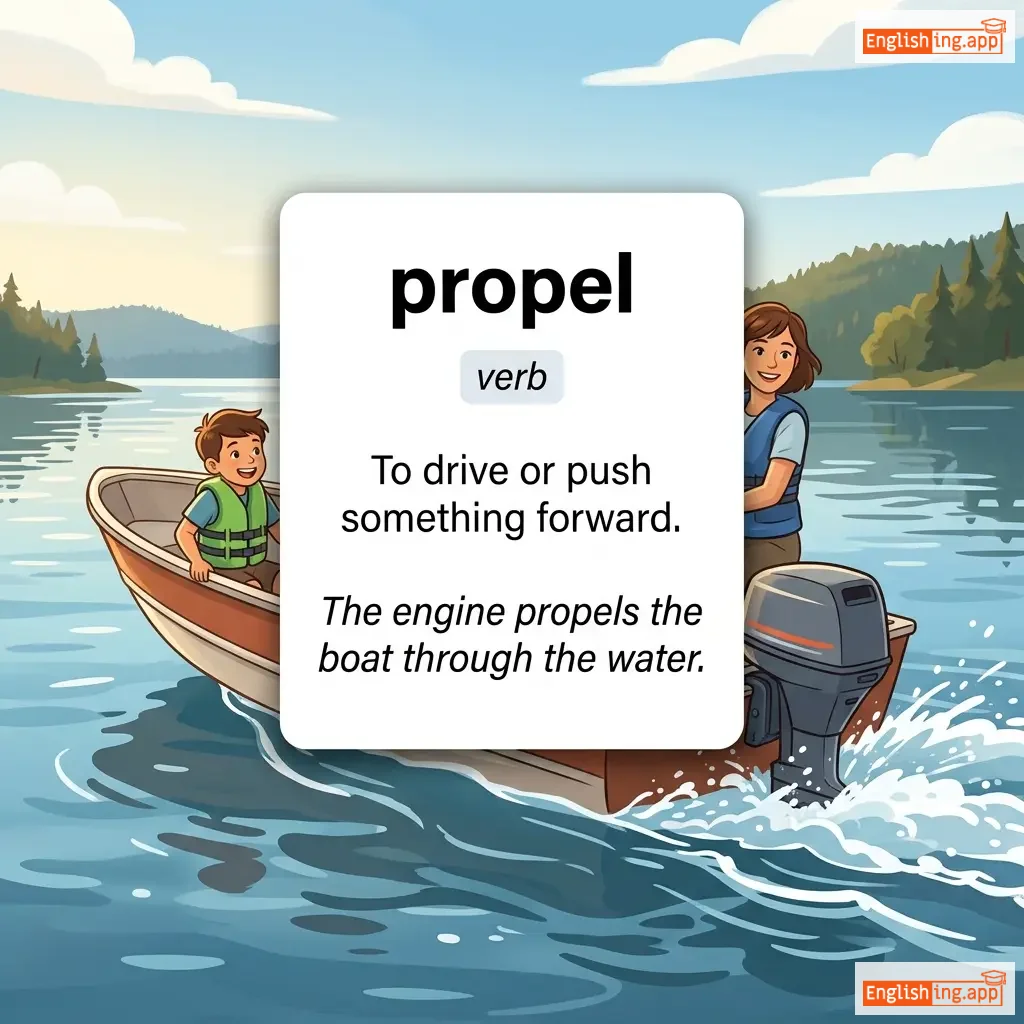
To drive or push something forward.
••••••
|
The engine propels the boat through the water.
发动机通过水推动船只。
••••••
|
发动机通过水推动船只。
Fādòngjī tōngguò shuǐ tuīdòng chuánzhī.
••••••
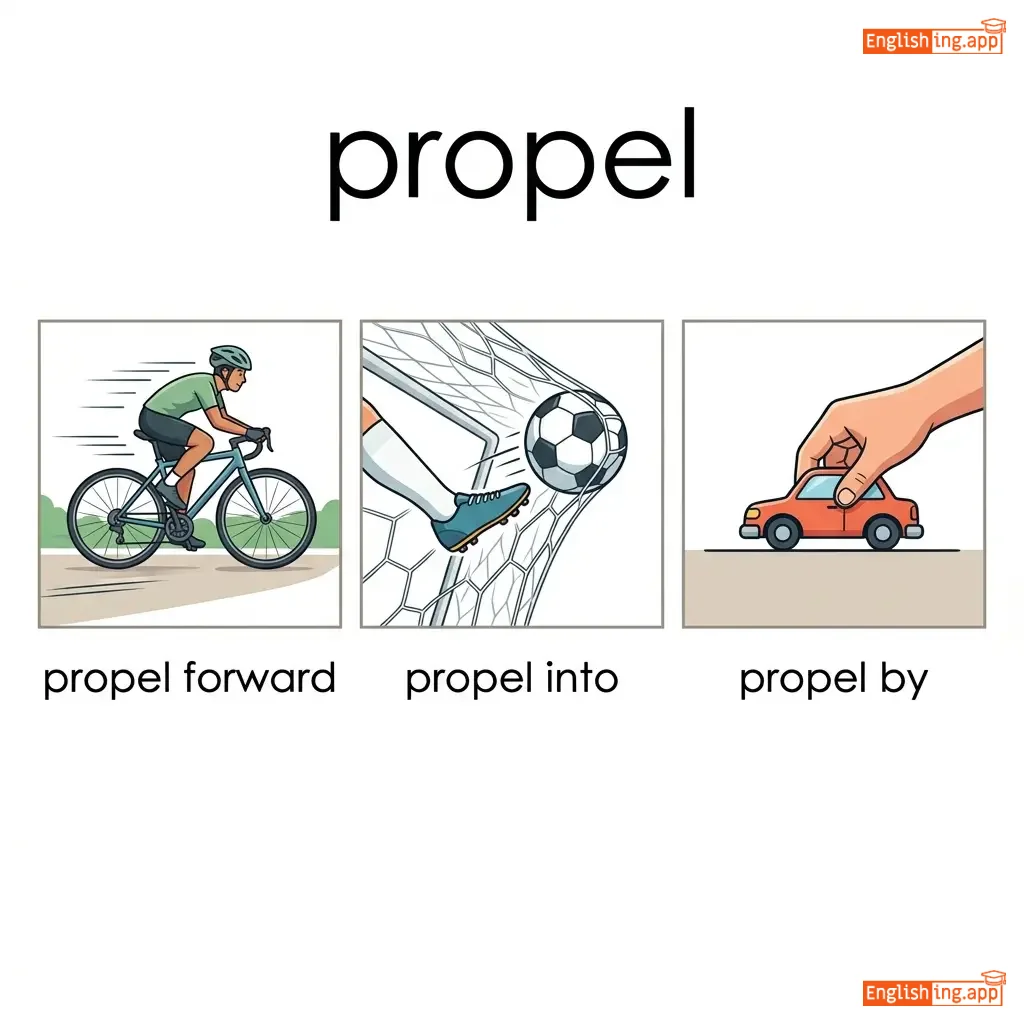
|
propelled by
由…推动
••••••
|
Driven or motivated by something.
••••••
|
由…推动
Yóu… tuīdòng
••••••
|
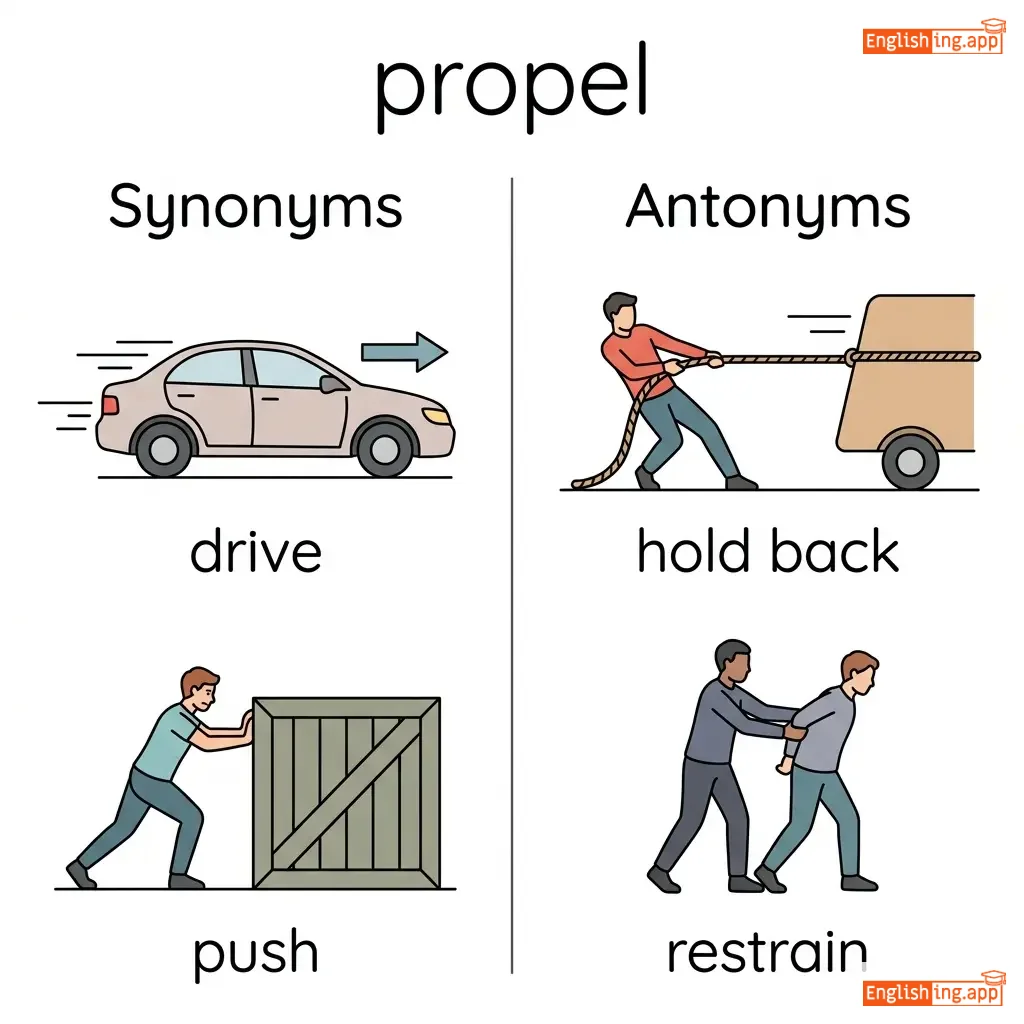
drive, push, thrust, move, advance
••••••
|
hold back, restrain, stop
••••••
|
propel forward, propel into, propel by, propel movement
••••••
|
发动机推动船只 🚤
••••••
|
|
#7039
🌱
|
/ˈprɒpəɡeɪt/
verb
••••••
|
- •••••• | - •••••• |
propagated
••••••
|
propagated
••••••
|
propagates
••••••
|
propagating
••••••
|
To spread or transmit an idea, belief, or information widely; also to reproduce in plants or animals.
••••••
|
Scientists work to propagate the species in captivity. |
- •••••• |
propagate an idea |
To spread or promote a belief or concept widely.
••••••
|
- •••••• |
spread, disseminate, transmit, reproduce, multiply
••••••
|
suppress, halt, stop
••••••
|
propagate plants, propagate an idea, propagate information, propagate rumors
••••••
|
No •••••• |
|
#7040
📢
|
/ˌprɒpəˈɡændə/
noun
(宣传)
••••••
|
- •••••• |
宣传
xuān chuán
••••••
|
- •••••• | - •••••• | - •••••• | - •••••• |
Information, especially biased or misleading, used to promote a political cause or point of view.
••••••
|
The regime spread propaganda to control public opinion. |
政权传播宣传以控制公众舆论。
zhèngquán chuánbò xuānchuán yǐ kòngzhì gōngzhòng yúlùn.
••••••
|
propaganda machine |
An organized effort to spread biased information systematically.
••••••
|
宣传机器
xuān chuán jī qì
••••••
|
promotion, publicity, misinformation, indoctrination, advertising
••••••
|
truth, fact, information
••••••
|
spread propaganda, political propaganda, propaganda campaign, propaganda machine
••••••
|
宣传即是让别人相信你想让他们相信的东西
••••••
|
|
#7041
🎭
|
/prɒp/
noun
(道具)
••••••
|
- •••••• |
道具
dàojù
••••••
|
- •••••• | - •••••• | - •••••• | - •••••• |
an object used on stage by actors during a performance; something that supports or holds up
••••••
|
The actor forgot his prop on stage.
演员忘记了他的道具。
••••••
|
演员忘记了他的道具。
Yǎnyuán wàngjìle tā de dàojù.
••••••
|
prop up
支撑
••••••
|
to support something that would otherwise fall
••••••
|
支撑
zhīchēng
••••••
|
support, stand, brace, aid
••••••
|
collapse, weaken
••••••
|
stage prop, movie prop, wooden prop, prop up
••••••
|
Prop = 演员用的道具 — 用道具帮助表演
••••••
|
|
#7042
📄
|
/ˈpruːfˌriːd/
verb
(puruofulīdu)
••••••
|
- •••••• |
校对
jiàoduì
••••••
|
proofread
puruofulīdu
••••••
|
proofread
puruofulīdu
••••••
|
proofreads
puruofulīdz
••••••
|
proofreading
puruofulīding
••••••
|
to read written material and mark any errors
••••••
|
She proofread the report before submission.
她在提交前校对了报告。
••••••
|
她在提交前校对了报告。
Tā zài tíjiāo qián jiàoduì le bàogào.
••••••
|
- •••••• | - •••••• | - •••••• |
review, edit, revise, check, correct
••••••
|
ignore, overlook
••••••
|
proofread a document, proofread carefully, proofread text, proofread article
••••••
|
Proof + Read = 阅读并校对错误
••••••
|
|
#7043
🔊
|
/prəˈnaʊnst/
adjective
(prəˈnaʊnst)
••••••
|
- •••••• |
明显的
mingxian de
••••••
|
- •••••• | - •••••• | - •••••• | - •••••• |
very noticeable or strongly marked
••••••
|
There is a pronounced difference between the two styles. |
这两种风格之间有明显的区别。
Zhe liang zhong fengge zhijian you mingxian de qubie.
••••••
|
- •••••• | - •••••• | - •••••• |
distinct, marked, evident, clear, obvious
••••••
|
subtle, faint, hidden
••••••
|
pronounced effect, pronounced difference, pronounced tendency, pronounced feature
••••••
|
Pronounced意味着清楚地说——因此,明显的
••••••
|
|
#7044
🍴
|
/prɔːŋ/
noun
(prɔŋ)
••••••
|
- •••••• |
叉子的尖端
chā zi de jiān duān
••••••
|
- •••••• | - •••••• | - •••••• | - •••••• |
a projecting pointed part, such as one of the pointed ends of a fork
••••••
|
The fork has four prongs. |
叉子有四个尖端。
Chā zi yǒu sì gè jiān duān.
••••••
|
- •••••• | - •••••• | - •••••• |
spike, tine, point, projection
••••••
|
flat, blunt
••••••
|
fork prong, metal prong, electrical prong, sharp prong
••••••
|
Prong 意味着叉子的尖端
••••••
|
|
#7045
⚠️
|
/proʊn/
adjective
(普罗恩)
••••••
|
- •••••• |
倾向
qingxiang
••••••
|
- •••••• | - •••••• | - •••••• | - •••••• |
likely to suffer from or experience something, especially something unfortunate
••••••
|
He is prone to headaches when he works too long. |
他在工作过长时间后容易头痛。
Ta zai gongzuo guochang shijian hou rongyi toutong.
••••••
|
accident-prone |
likely to have many accidents
••••••
|
事故倾向
shigu qingxiang
••••••
|
susceptible, vulnerable, inclined, apt, disposed
••••••
|
resistant, immune, unlikely
••••••
|
prone to error, prone to injury, prone to violence, accident-prone
••••••
|
Prone意味着容易遇到问题——倾向是指有问题的倾向。
••••••
|
|
#7046
📜
|
/ˈprɑː.məl.ɡeɪt/
verb
(普罗穆盖特)
••••••
|
- •••••• |
发布
fabu
••••••
|
promulgated
普罗穆盖特德
••••••
|
promulgated
普罗穆盖特德
••••••
|
promulgates
普罗穆盖特斯
••••••
|
promulgating
普罗穆盖廷
••••••
|
To announce or make a law, decree, or idea officially known.
••••••
|
The government promulgated new regulations on data privacy.
政府发布了关于数据隐私的新规定。
••••••
|
政府发布了关于数据隐私的新规定。
Zhengfu fabu le guanyu shuju yinxi xin guiding.
••••••
|
- •••••• | - •••••• | - •••••• |
declare, announce, publish, proclaim
••••••
|
suppress, conceal
••••••
|
promulgate law, promulgate decree, promulgate rule, promulgate constitution
••••••
|
发布法律就像政府公开宣布政策。
••••••
|
|
#7047
⚡
|
/prɑːmpt/
verb, noun, adjective
(pròngpùt)
••••••
|
- •••••• |
促使 / 快速
cùshǐ / kuàisù
••••••
|
prompted
pròngpùted
••••••
|
prompted
pròngpùted
••••••
|
prompts
pròngpùts
••••••
|
prompting
pròngpùting
••••••
|
To cause someone to take action; done without delay.
••••••
|
His speech prompted the audience to ask questions.
他的演讲促使观众提问。
••••••
|
他的演讲促使观众提问。
Tā de yǎnjiǎng cùshǐ guānzhòng tíwèn.
••••••
|
prompt action
快速行动
••••••
|
Immediate or quick action
••••••
|
即时行动
jíshí xíngdòng
••••••
|
urge, incite, quick, immediate, stimulate
••••••
|
delay, hinder, slow
••••••
|
prompt reply, prompt payment, prompt decision, prompt response
••••••
|
Prompt是一个快速响应的动作,就像计算机响应一样。
••••••
|
|
#7048
🎤
|
/prəˈmoʊ.tər/
noun
(推广员)
••••••
|
- •••••• |
推广员
tuī guǎng yuán
••••••
|
- •••••• | - •••••• | - •••••• | - •••••• |
A person or organization that helps to organize or finance an event, business, or product launch.
••••••
|
The promoter organized a concert for the new band. |
推广员为新乐队组织了一场音乐会。
Tuī guǎng yuán wèi xīn yuè duì zǔ zhī le yī chǎng yīn yuè huì.
••••••
|
- •••••• | - •••••• | - •••••• |
organizer, sponsor, supporter, backer
••••••
|
opponent, critic
••••••
|
event promoter, concert promoter, business promoter, promoter of change
••••••
|
推广员是组织活动的人
••••••
|
|
#7049
📢
|
/prəˈmoʊt/
verb
(普罗蒙特)
••••••
|
|
促进 / 推广
cùjìn / tuīguǎng
••••••
|
promoted
普罗蒙特过
••••••
|
promoted
普罗蒙特过
••••••
|
promotes
普罗蒙特
••••••
|
promoting
推广中
••••••
|
To support or encourage the growth, sale, or acceptance of something.
••••••
|
The company worked hard to promote its new product.
公司为推广其新产品而努力工作。
••••••
|
公司为推广其新产品而努力工作。
Gōngsī wèi tuīguǎng qí xīn chǎnpǐn ér nǔlì gōngzuò.
••••••
|
promote growth
推广增长
••••••
|
To encourage development or progress
••••••
|
推广增长
tuīguǎng zēngzhǎng
••••••
|
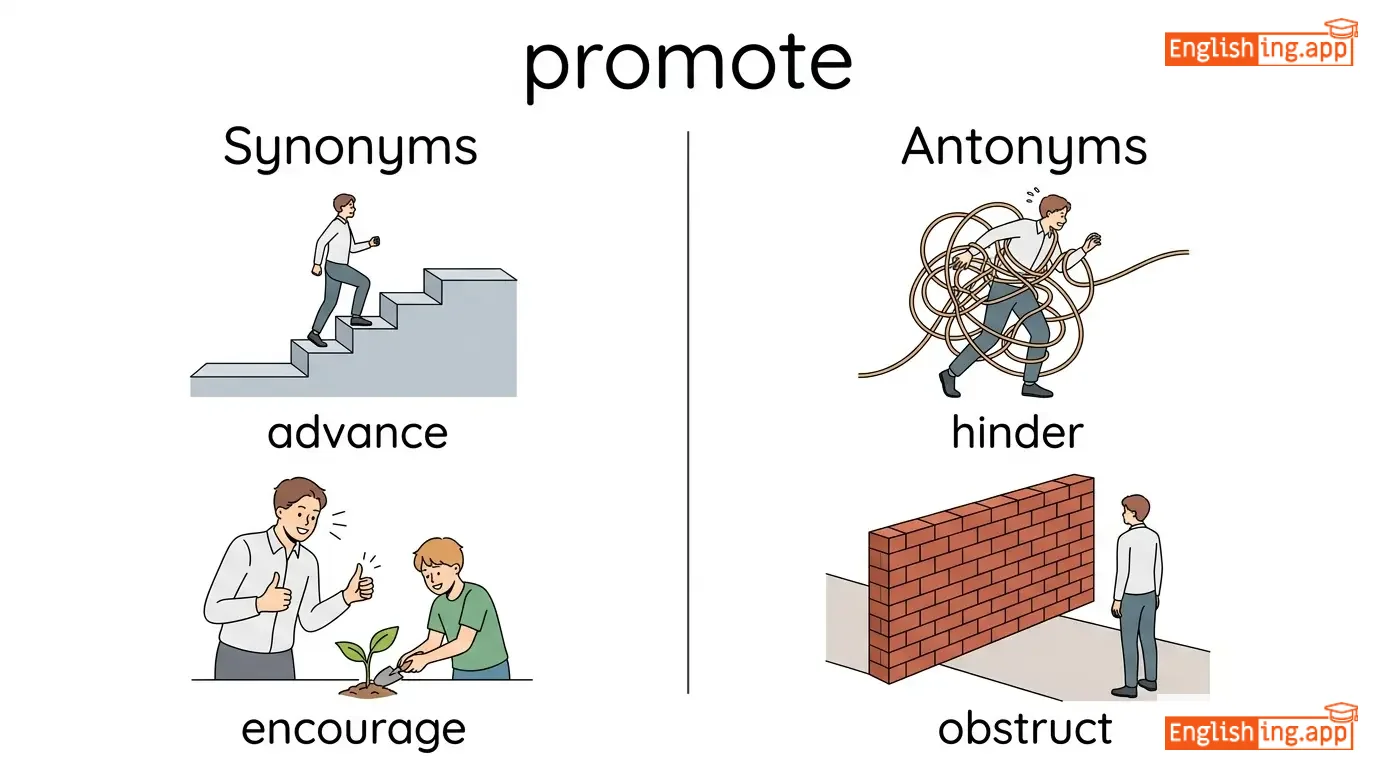
advance, encourage, advertise, support, boost
••••••
|
hinder, obstruct, discourage
••••••
|
promote awareness, promote business, promote sales, promote education
••••••
|
Promote是为了让事物成长而做的事情
••••••
|
Vocabulary Quiz
Test your vocabulary by matching words with their translations or meanings.
Login to take the quiz
Comments (0)
Share your thoughts and join the discussion.
Join the discussion by logging in
Login to CommentNo comments yet
Be the first to share your thoughts!