


Swipe left or right, or use the buttons. Tap image to zoom.
例句翻译
单词
Lesson 58Lesson 58 - 遮罩切换
|
表情符号
|
单词 | Images | 翻译 | 过去时 | 过去分词 | 第三人称单数 | 动名词 | 含义 | 例句 | 例句翻译 | 示例表达 | 示例表达含义 | 示例表达翻译 | 同义词 | 反义词 | 搭配词 | 助记符 |
|---|---|---|---|---|---|---|---|---|---|---|---|---|---|---|---|---|---|
|
#1711
✍️
|
/ˌkɒnfləˈɡreɪʃən/
noun
(konflagration)
••••••
|
- •••••• |
拼写错误(来自 'conflagration')
pīnxiě cuòwù (lái zì 'conflagration')
••••••
|
- •••••• | - •••••• | - •••••• | - •••••• |
This is a common misspelling of 'conflagration', which means a large, destructive fire.
••••••
|
The term 'conflagaration' is often incorrectly used instead of 'conflagration'. |
'conflagaration' 这个词常常被错误地用来代替 'conflagration'。
'Conflagaration' zhège cí chángcháng bèi cuòwù de yòng lái dàitì 'conflagration'.
••••••
|
- •••••• | - •••••• | - •••••• |
misspelling, error, mistake, typo
••••••
|
accuracy, correctness
••••••
|
common misspelling, frequent error, incorrect usage
••••••
|
Conflagaration = 拼写错误,记住 'conflagration' 🔥
••••••
|
|
#1712
👶
|
/kənˈdʒenɪtl/
adjective
(kənˈdʒɛnɪtl)
••••••
|
- •••••• |
先天的
xiāntiānde
••••••
|
- •••••• | - •••••• | - •••••• | - •••••• |
existing from birth, usually describing a disease or condition
••••••
|
The child was born with a congenital heart defect. |
这个孩子出生时就有先天性心脏缺陷。
Zhège háizi chūshēng shí jiù yǒu xiāntiānxìng xīnzàng quēxiàn.
••••••
|
- •••••• | - •••••• | - •••••• |
inborn, innate, hereditary, genetic
••••••
|
acquired, developed
••••••
|
congenital defect, congenital disorder, congenital abnormality
••••••
|
先天的意味着从出生就开始 — 天生就有的东西。
••••••
|
|
#1713
😊
|
/kənˈdʒiːniəl/
adjective
(kón-jī-ni-ǎo)
••••••
|
|
和蔼可亲
hé'ǎi kěqīn
••••••
|
- •••••• | - •••••• | - •••••• | - •••••• |
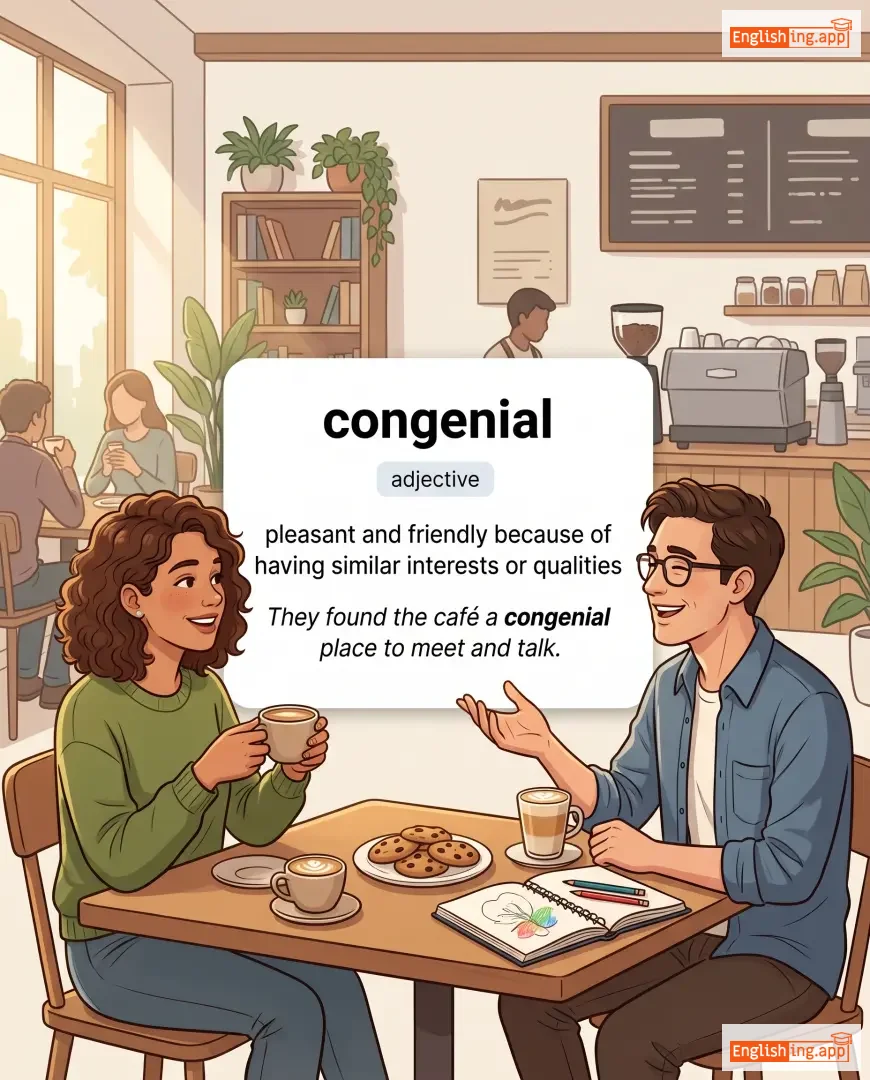
pleasant and friendly because of having similar interests or qualities
••••••
|
They found the café a congenial place to meet and talk. |
他们发现那家咖啡馆是一个和蔼可亲的地方,适合见面和交谈。
Tāmen fāxiàn nà jiā kāfēi guǎn shì yīgè hé'ǎi kěqīn de dìfāng, shìhé jiànmiàn hé jiāotán.
••••••
|
- •••••• | - •••••• | - •••••• |
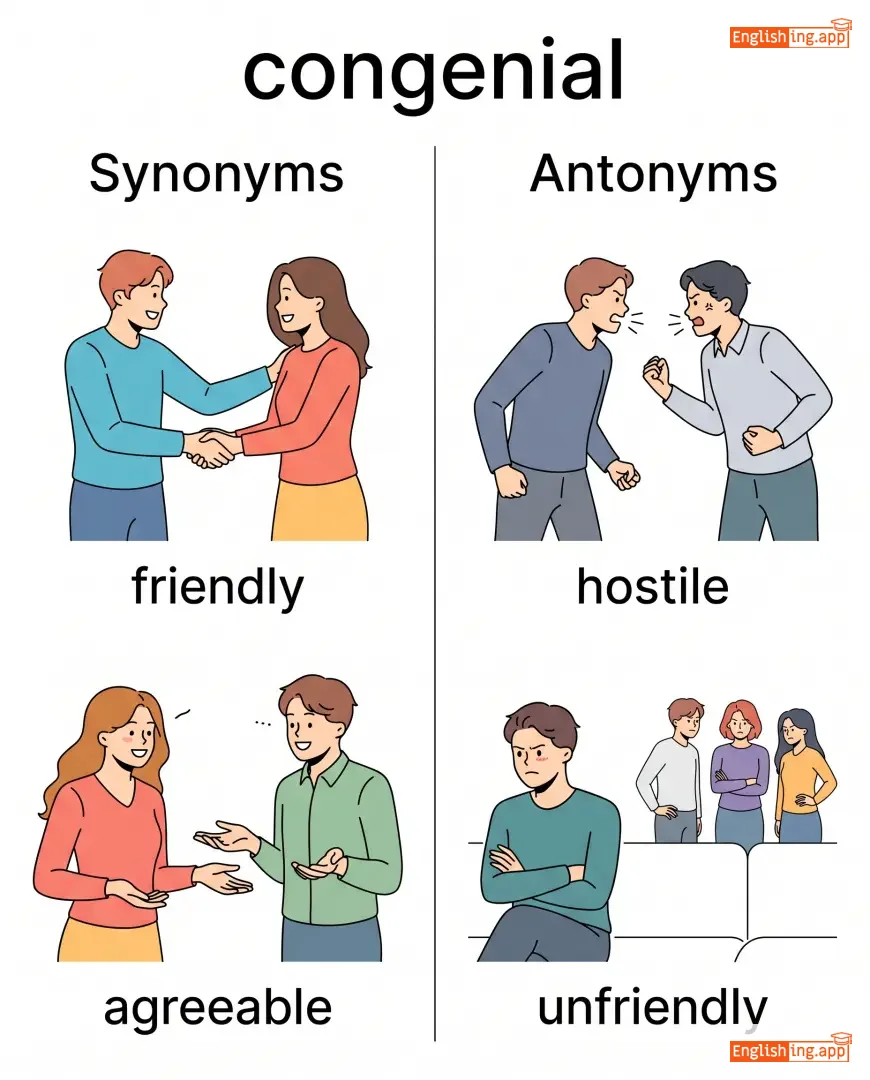
friendly, agreeable, pleasant, compatible
••••••
|
hostile, unfriendly, disagreeable
••••••
|
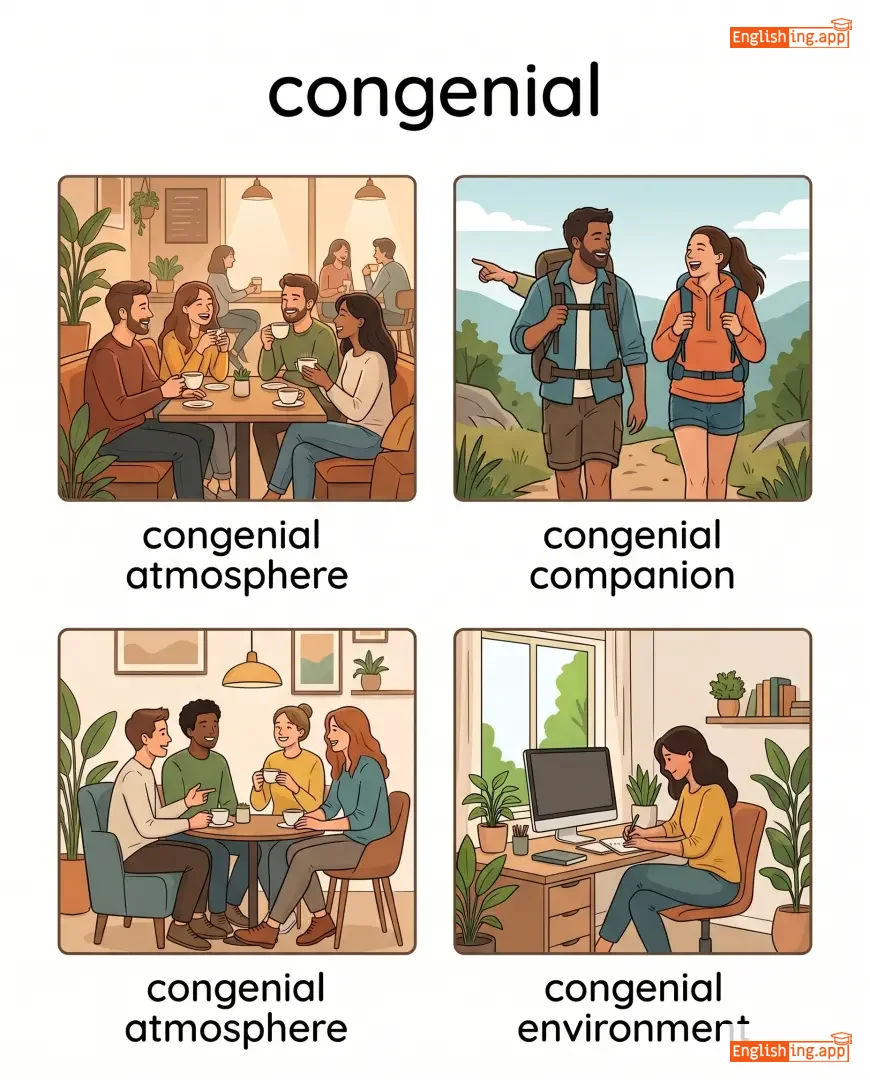
congenial atmosphere, congenial companion, congenial environment
••••••
|
Congenial 意味着和蔼可亲 — 就像朋友一样,和谐愉快!
••••••
|
|
#1714
🥶
|
/kənˈdʒiːl/
verb
(kənˈdʒiːl)
••••••
|
- •••••• |
凝固
nínggù
••••••
|
congealed
kənˈdʒiːld
••••••
|
congealed
kənˈdʒiːld
••••••
|
congeals
kənˈdʒiːlz
••••••
|
congealing
kənˈdʒiːlɪŋ
••••••
|
to become thick or solid, especially from cooling
••••••
|
The soup began to congeal after being left on the table.
汤开始在桌子上放置后变稠。
••••••
|
汤开始在桌子上放置后变稠。
Tāng kāishǐ zài zhuōzi shàng fàngzhì hòu biàn chōu.
••••••
|
- •••••• | - •••••• | - •••••• |
solidify, clot, thicken, harden
••••••
|
melt, liquefy
••••••
|
congeal into, congeal blood, congeal quickly
••••••
|
Congeal sounds like '凝固', like when liquids become solid in the cold.
••••••
|
|
#1715
⚔️
|
/kənˈfrʌnt/
verb
(对抗)
••••••
|
- •••••• |
面对
miànduì
••••••
|
confronted
对抗了
••••••
|
confronted
对抗过
••••••
|
confronts
对抗
••••••
|
confronting
对抗中
••••••
|
to face someone or something directly, especially in a challenge or conflict
••••••
|
She had to confront her fears before making the speech.
她在演讲前必须面对自己的恐惧。
••••••
|
她在演讲前必须面对自己的恐惧。
Tā zài yǎnjiǎng qián bìxū miànduì zìjǐ de kǒngjù.
••••••
|
confront the issue
面对问题
••••••
|
to directly deal with a problem instead of avoiding it
••••••
|
面对问题
miànduì wèntí
••••••
|
face, challenge, oppose, encounter
••••••
|
avoid, evade, dodge
••••••
|
confront danger, confront the truth, confront directly, confront the problem
••••••
|
Confront 的意思是面对 — 站在前面直面挑战!
••••••
|
|
#1716
🤯
|
/kənˈfaʊnd/
verb
••••••
|
|
- •••••• |
confounded
••••••
|
confounded
••••••
|
confounds
••••••
|
confounding
••••••
|
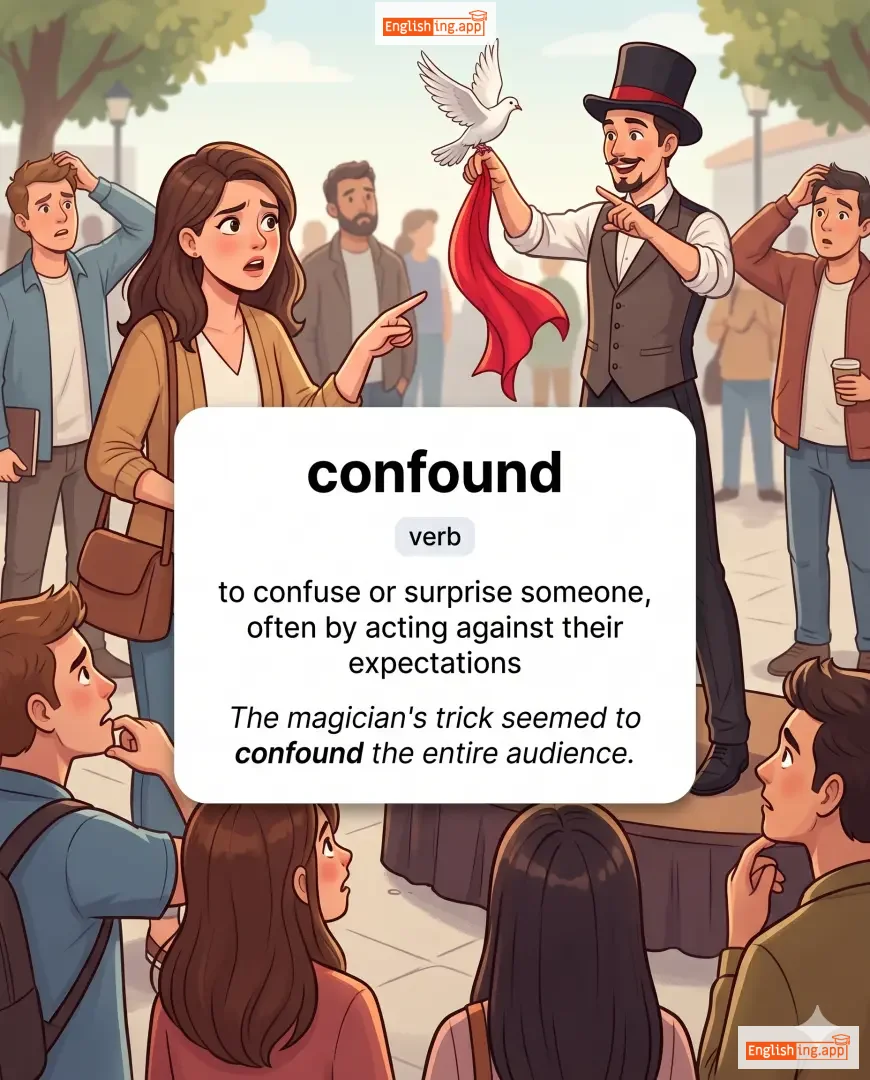
to confuse or surprise someone, often by acting against their expectations
••••••
|
The magician's trick seemed to confound the entire audience. |
- •••••• |
confound it |
an old-fashioned exclamation of annoyance or frustration
••••••
|
- •••••• |
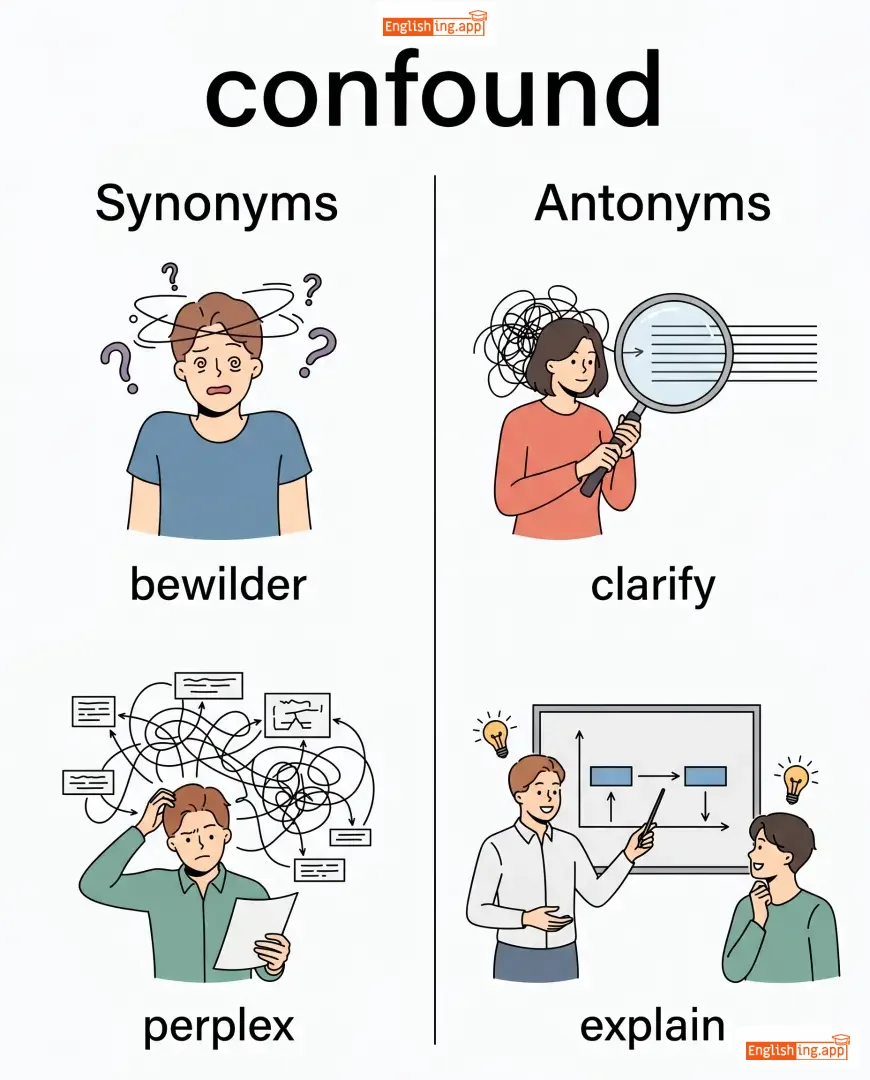
bewilder, perplex, baffle, amaze, astonish
••••••
|
clarify, explain, enlighten
••••••
|
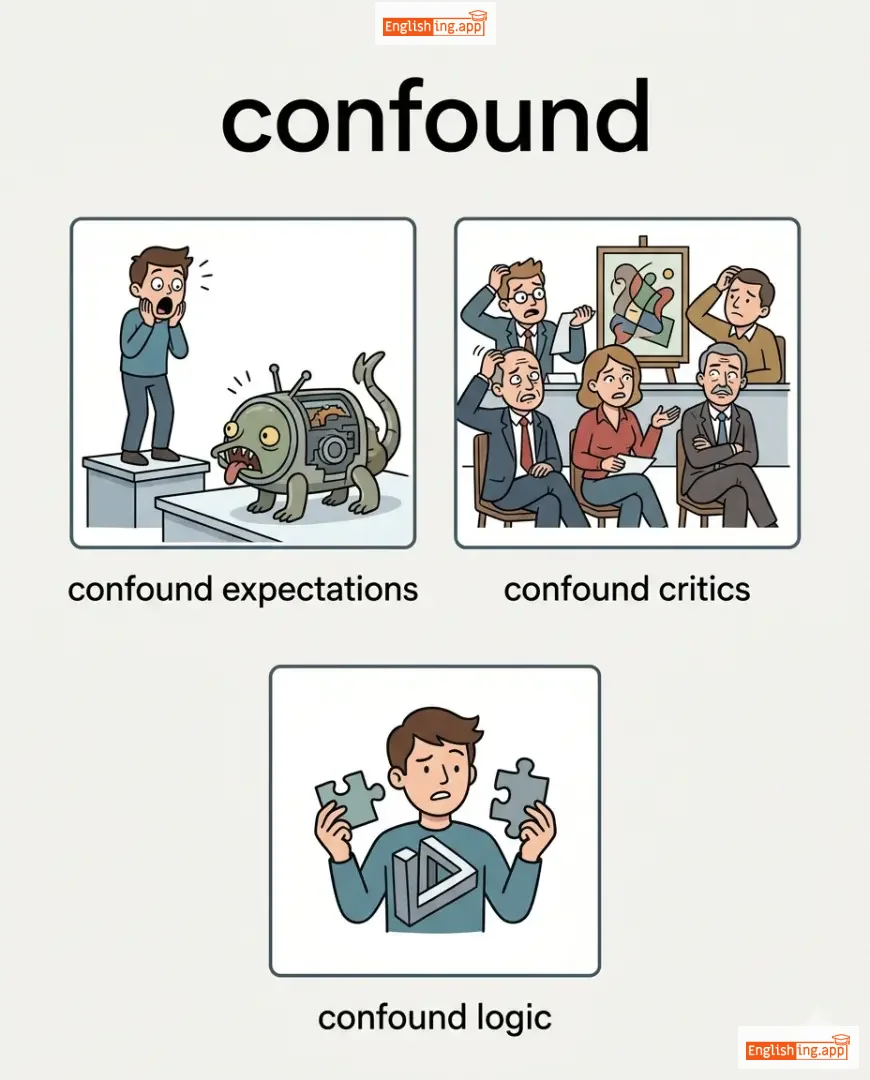
confound expectations, confound critics, confound logic, confound the mind
••••••
|
No •••••• |
|
#1717
📘
|
/kənˈfɔːrməti/
noun
(kənfɔːrmɪti)
••••••
|
|
一致性
yizhi xing
••••••
|
- •••••• | - •••••• | - •••••• | - •••••• |
Compliance with standards, rules, or laws; behavior in accordance with social norms.
••••••
|
The students were praised for their conformity to the school regulations.
学生们因遵守学校规定而受到表扬。
••••••
|
学生们因遵守学校规定而受到表扬。
Xueshengmen yin zunshou xuexiao guiding er shoudao biaoyang.
••••••
|
in conformity with
与……一致
••••••
|
in agreement or compliance with
••••••
|
与……一致
yu… yizhi
••••••
|
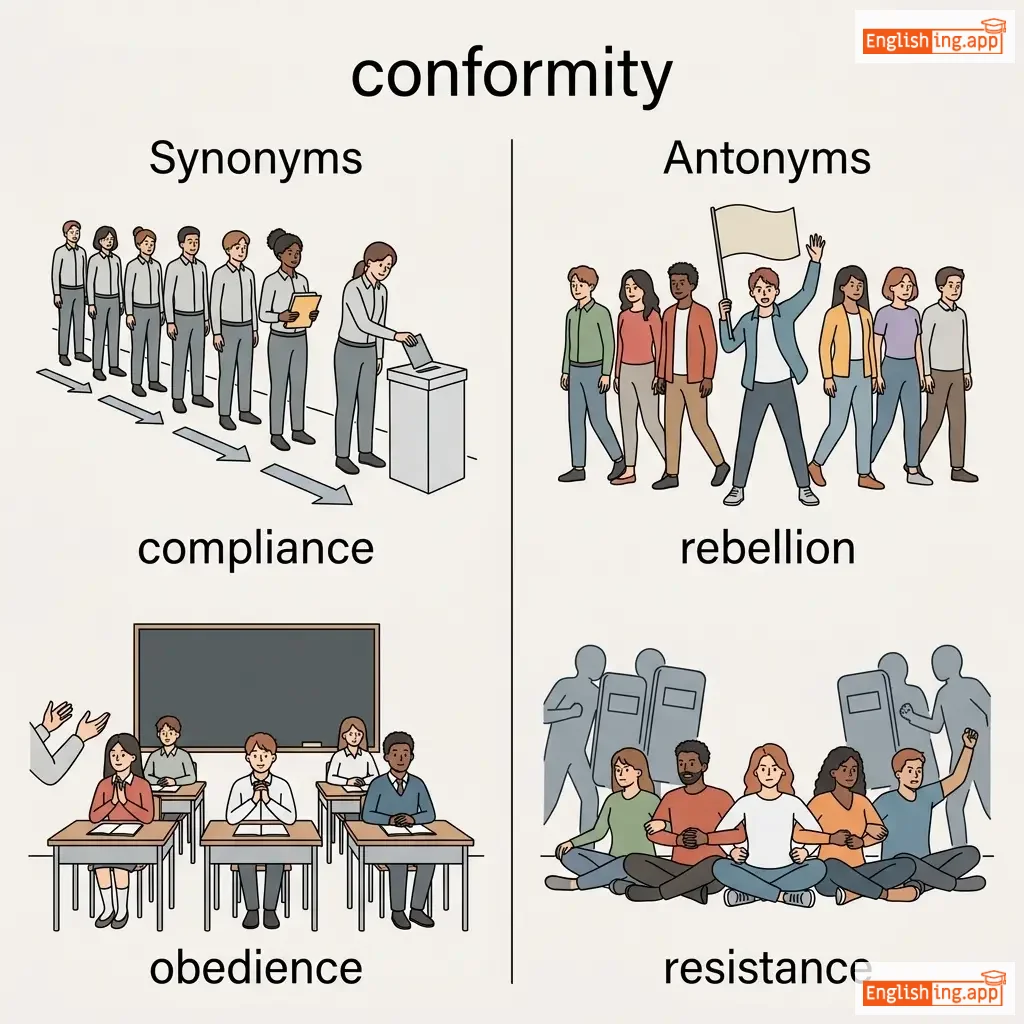
compliance, obedience, adherence, agreement
••••••
|
rebellion, resistance, noncompliance
••••••
|
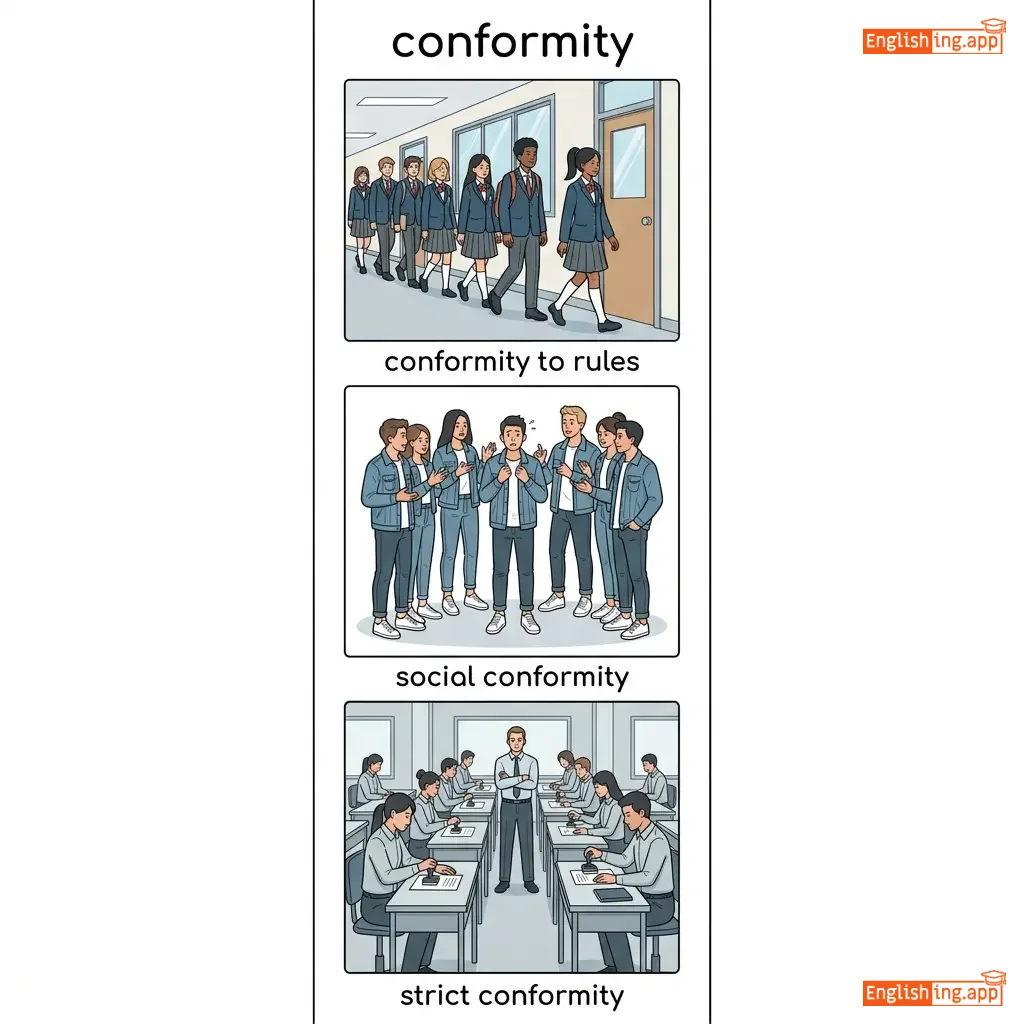
conformity to rules, social conformity, strict conformity
••••••
|
一致性来自于符合(顺应)+性(状态)→ 遵守规则的状态。
••••••
|
|
#1718
👥
|
/kənˈfɔːrmɪst/
noun
(kənˈfɔːrmɪst)
••••••
|
- •••••• |
盲从者
mángcóng zhě
••••••
|
- •••••• | - •••••• | - •••••• | - •••••• |
A person who uncritically conforms to established practices or standards.
••••••
|
She was labeled a conformist for always following the crowd. |
她因为总是跟随人群而被贴上了盲从者的标签。
tā yīnwèi zǒng shì gēnsuí rénqún ér bèi tiē shàng le mángcóng zhě de biāoqiān.
••••••
|
- •••••• | - •••••• | - •••••• |
traditionalist, follower, conservative, conventionalist
••••••
|
rebel, nonconformist, radical
••••••
|
conformist attitude, social conformist, political conformist
••••••
|
盲从者 = 盲 (看不见) + 从 (跟随) → 永远跟随大流的人
••••••
|
|
#1719
🧬
|
/ˌkɑːnfɔːrˈmeɪʃən/
noun
(构象)
••••••
|
- •••••• |
构象
gouxiang
••••••
|
- •••••• | - •••••• | - •••••• | - •••••• |
The shape, structure, or arrangement of something.
••••••
|
The scientist studied the molecular conformation of the protein. |
科学家研究了蛋白质的分子构象。
Kexuejia yanjiule danbaizhi de fenzi gouxiang.
••••••
|
- •••••• | - •••••• | - •••••• |
structure, shape, form, arrangement
••••••
|
disorder, deformation
••••••
|
molecular conformation, conformation change, physical conformation
••••••
|
Conformation = 形态的构成 → 构象。
••••••
|
|
#1720
✅
|
/kənˈfɔːrməns/
noun
(kənˈfɔːrməns)
••••••
|
- •••••• |
一致性
yīzhìxìng
••••••
|
- •••••• | - •••••• | - •••••• | - •••••• |
The act of conforming to a rule, standard, or law.
••••••
|
The product was tested for conformance with safety standards.
该产品已按照安全标准进行了符合性测试。
••••••
|
该产品已按照安全标准进行了符合性测试。
Gāi chǎnpǐn yǐ ànzhào ānquán biāozhǔn jìnxíngle fúhéxìng cèshì.
••••••
|
- •••••• | - •••••• | - •••••• |
compliance, adherence, conformity, observance
••••••
|
violation, deviation, noncompliance
••••••
|
conformance with standards, conformance testing, conformance requirement
••••••
|
Conformance = confirm + performance → 按规则操作。
••••••
|
|
#1721
📏
|
/kənˈfɔːrməbl/
adjective
(kənˈfɔːrməbl)
••••••
|
- •••••• |
一致的
yīzhì de
••••••
|
- •••••• | - •••••• | - •••••• | - •••••• |
Capable of being adapted or consistent with something; compliant.
••••••
|
His actions were conformable to the rules of the institution. |
他的行为与机构的规定一致。
tā de xíngwéi yǔ jīgòu de guīdìng yīzhì.
••••••
|
- •••••• | - •••••• | - •••••• |
compatible, consistent, compliant, agreeable, adaptable
••••••
|
inconsistent, incompatible, defiant
••••••
|
conformable to law, conformable with rules, conformable behavior
••••••
|
一致的就像conformable一样,意味着适应规则。
••••••
|
|
#1722
➡️⬅️
|
/ˈkɒnfluənt/
adjective
(kóngfúlièn)
••••••
|
- •••••• |
汇流
huìliú
••••••
|
- •••••• | - •••••• | - •••••• | - •••••• |
Flowing together or merging; coming together at one point.
••••••
|
The confluent streams formed a mighty river. |
汇流的溪流形成了一条强大的河流。
Huìliú de xīliú xíngchéngle yītiáo qiángdà de héliú.
••••••
|
- •••••• | - •••••• | - •••••• |
merging, uniting, converging, combining
••••••
|
separate, diverging
••••••
|
confluent streams, confluent rivers, confluent cultures
••••••
|
Confluent = 汇流 ➡️⬅️ 记住: 流畅的流动汇集 = Confluent
••••••
|
|
#1723
🌊
|
/ˈkɒnfluəns/
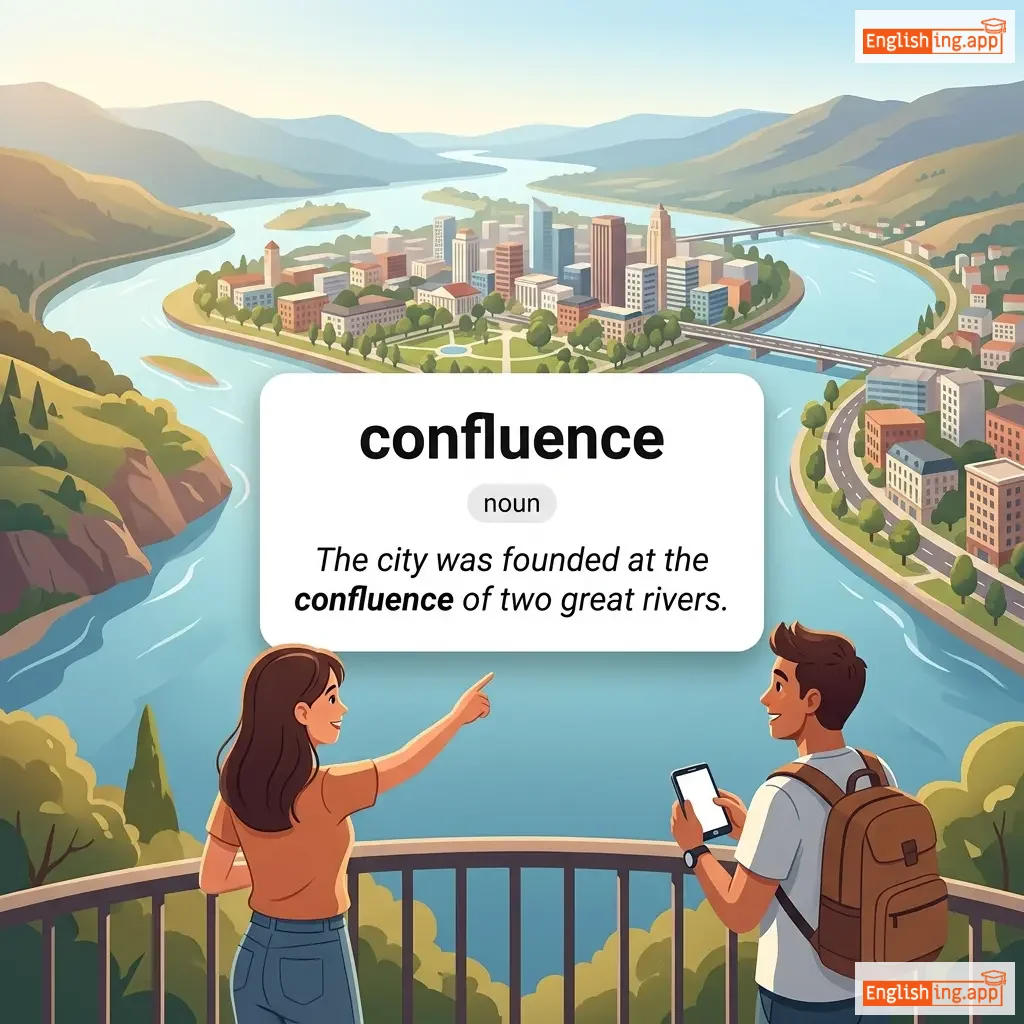
noun
(kāngfúluì'ēnsī)
••••••
|
|
汇合
huìhé
••••••
|
- •••••• | - •••••• | - •••••• | - •••••• |
The junction of two rivers; also a situation where people or things come together.
••••••
|
The city was founded at the confluence of two great rivers. |
这座城市建立在两条大河的汇合处。
Zhè zuò chéngshì jiànlì zài liǎng tiáo dàhé de huìhé chù.
••••••
|
meeting of minds |
an agreement or understanding between people
••••••
|
思想的汇聚
sīxiǎng de huìjù
••••••
|
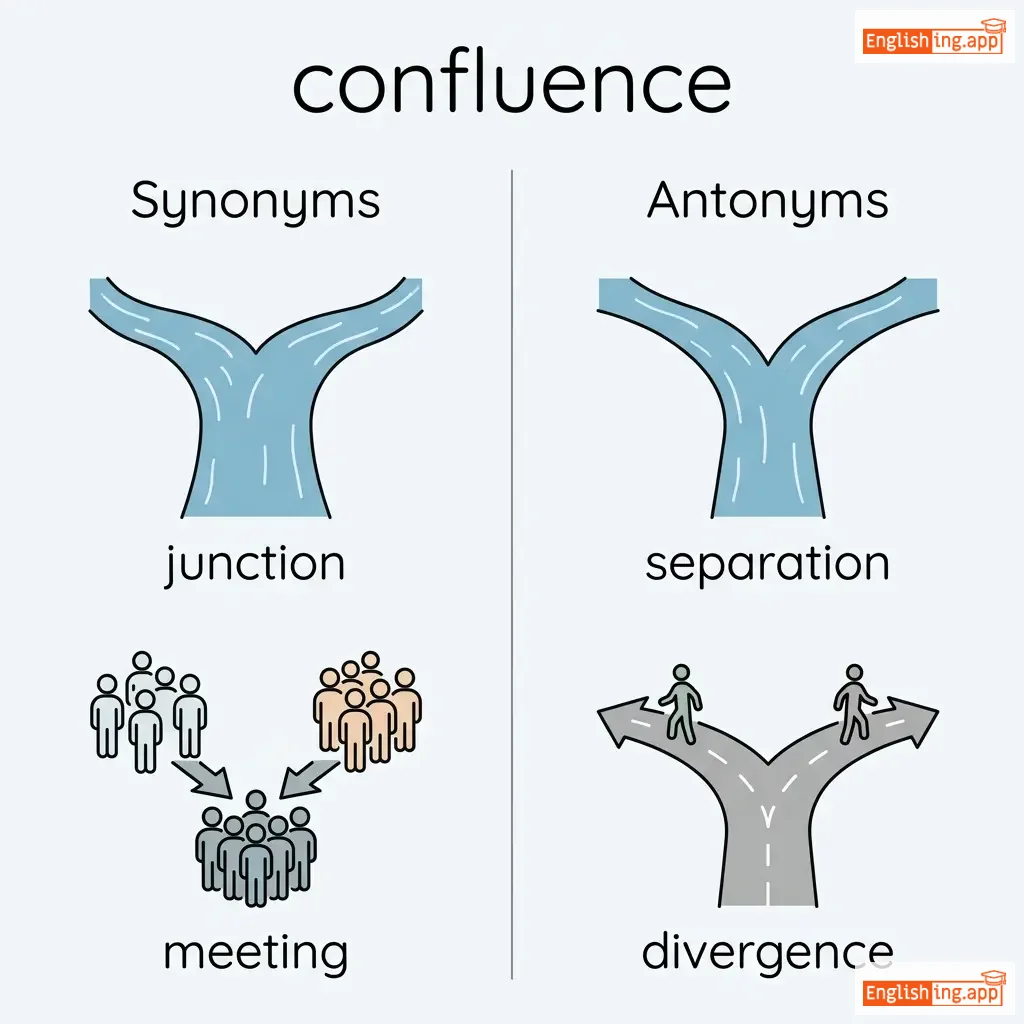
junction, meeting, convergence, union, gathering
••••••
|
separation, divergence
••••••
|
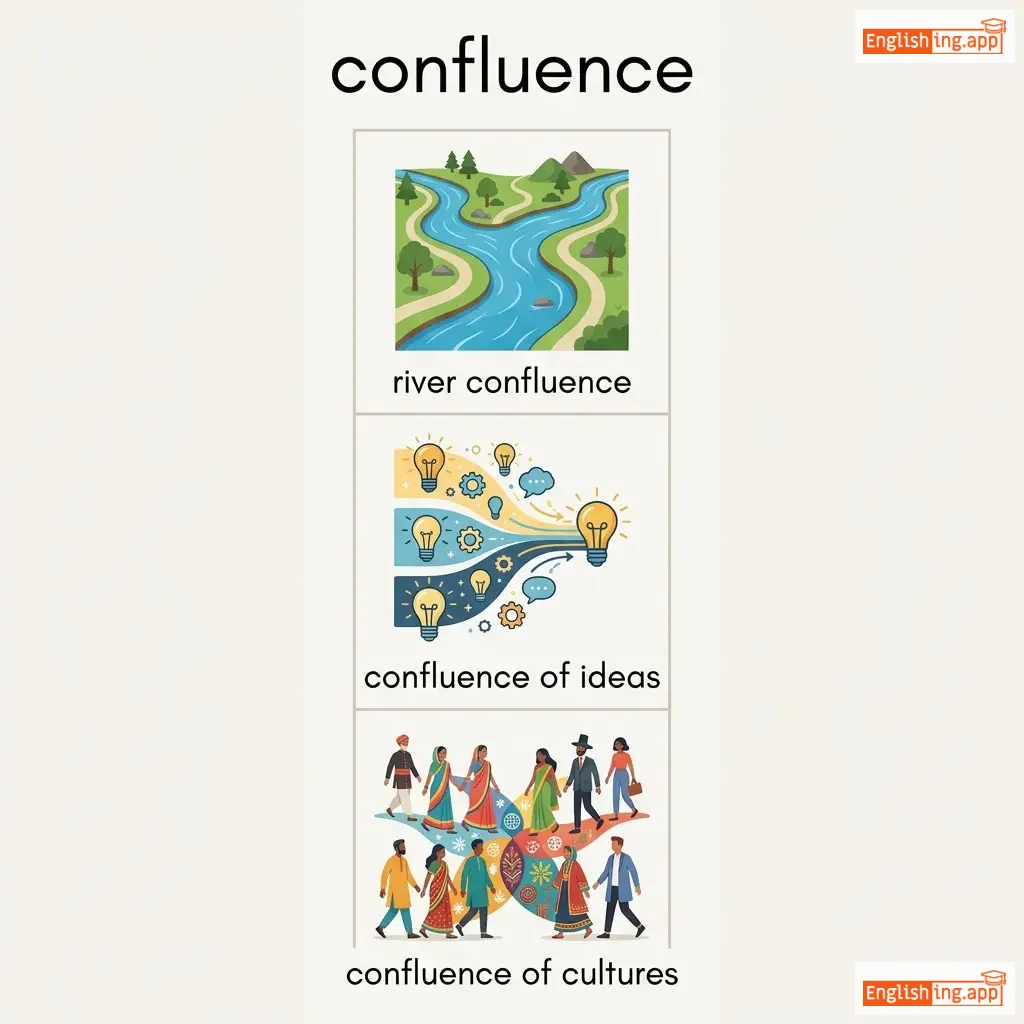
river confluence, confluence of ideas, confluence of cultures
••••••
|
Confluence = 河流的汇合 🌊 记住:流动 + 影响 = 汇合
••••••
|
|
#1724
🔗
|
/kənˈfleɪt/
verb
(kənflèit)
••••••
|
- •••••• |
合并 / 混合
hébìng / hùn hé
••••••
|
conflated
kənflèited
••••••
|
conflated
kənflèited
••••••
|
conflates
kənflèits
••••••
|
conflating
kənflèiting
••••••
|
To combine two or more things, often confusingly, into one.
••••••
|
The article tends to conflate facts with opinions.
文章倾向于将事实和意见混为一谈。
••••••
|
文章倾向于将事实和意见混为一谈。
Wénzhāng qīngxiàng yú jiāng shìshí hé yìjiàn hùn wéi yī tán.
••••••
|
- •••••• | - •••••• | - •••••• |
merge, blend, fuse, unite, combine
••••••
|
separate, distinguish, divide
••••••
|
conflate issues, conflate ideas, conflate facts and opinions
••••••
|
Conflate意味着 confuse + inflate — 将事物混合 😵
••••••
|
|
#1725
🔥
|
/ˌkɒnfləˈɡreɪʃən/
noun
(kāngfúlìyuán)
••••••
|
- •••••• |
大规模毁灭性火灾
dà guīmó huǐmiè xìng huǒzāi
••••••
|
- •••••• | - •••••• | - •••••• | - •••••• |
A large, destructive fire that destroys a great deal of land or property.
••••••
|
The forest was devastated by a massive conflagration that lasted for days. |
这片森林被一场持续了几天的大火摧毁。
Zhè piàn sēnlín bèi yī chǎng chíxùle jǐ tiān de dà huǒ cuīhuǐ.
••••••
|
go up in flames |
to be completely destroyed by fire
••••••
|
在火中焚毁
zài huǒ zhōng fén huǐ
••••••
|
fire, blaze, inferno, wildfire, holocaust
••••••
|
safety, calm, peace
••••••
|
massive conflagration, destructive conflagration, raging conflagration
••••••
|
Conflagration意味着大火 🔥 记住:Conflict + Fire = Conflagration
••••••
|
|
#1726
🍬
|
/kənˈfɛkʃəneri/
noun
(kənˈfɛkʃəneri)
••••••
|
- •••••• |
糖果店
tángguǒ diàn
••••••
|
- •••••• | - •••••• | - •••••• | - •••••• |
sweets, candies, and other food items made with sugar
••••••
|
The shop sells a wide variety of confectionery. |
商店出售各种各样的糖果。
Shāngdiàn chūshòu gèzhǒng gè yàng de tángguǒ.
••••••
|
- •••••• | - •••••• | - •••••• |
sweets, candy, chocolates, pastries, desserts
••••••
|
savory, salty, bitter
••••••
|
confectionery shop, confectionery items, confectionery products, sell confectionery
••••••
|
糖果店是糖果🍬 - 你进商店就能看到糖果!
••••••
|
|
#1727
📱
|
/ˈkɒnfɪskeɪt/
verb
••••••
|
- •••••• | - •••••• |
confiscated
••••••
|
confiscated
••••••
|
confiscates
••••••
|
confiscating
••••••
|
to take something away officially, often as a punishment
••••••
|
The teacher confiscated the student's phone during class. |
- •••••• |
confiscate property |
to officially seize property
••••••
|
- •••••• |
seize, impound, appropriate, expropriate, take
••••••
|
return, give back, restore
••••••
|
confiscate goods, confiscate property, confiscated items, confiscate weapons
••••••
|
No •••••• |
|
#1728
⛓️
|
/kənˈfaɪnmənt/
noun
(kənˈfaɪnmənt)
••••••
|
- •••••• |
拘禁
jūjìn
••••••
|
- •••••• | - •••••• | - •••••• | - •••••• |
the state of being confined or restricted
••••••
|
The prisoner endured years of confinement.
囚犯忍受了多年的拘禁。
••••••
|
囚犯忍受了多年的拘禁。
Qiúfàn rěnshòu le duōnián de jūjìn.
••••••
|
- •••••• | - •••••• | - •••••• |
captivity, imprisonment, restriction, detention
••••••
|
freedom, liberty, release
••••••
|
years of confinement, solitary confinement, period of confinement, strict confinement
••••••
|
拘禁在中文表示限制或关押的状态。
••••••
|
|
#1729
🚪
|
/kənˈfaɪn/
verb
(kāngfǎn)
••••••
|
|
限制
xiànzhì
••••••
|
confined
kāngfàind
••••••
|
confined
kāngfàind
••••••
|
confines
kāngfàins
••••••
|
confining
kāngfǎnɪnɡ
••••••
|
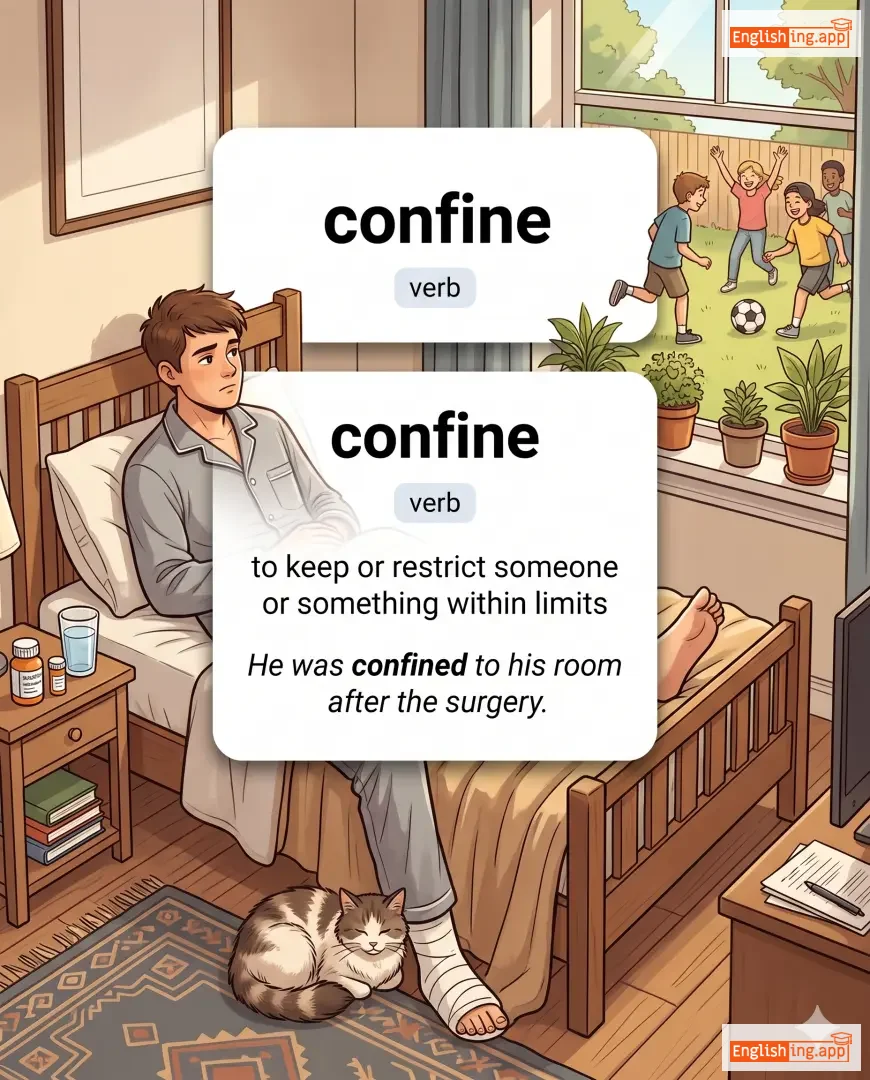
to keep or restrict someone or something within limits
••••••
|
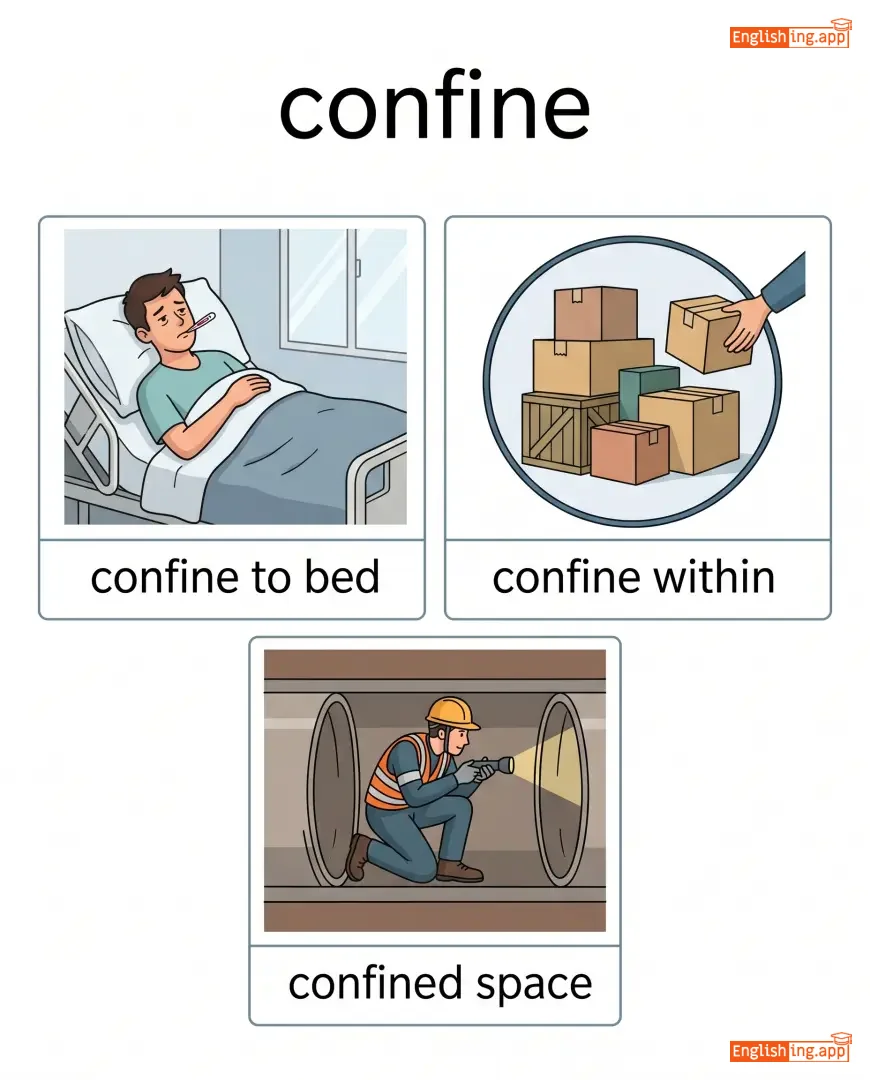
He was confined to his room after the surgery.
他在手术后被限制在他的房间里。
••••••
|
他在手术后被限制在他的房间里。
Tā zài shǒushù hòu bèi xiànzhì zài tā de fángjiān lǐ.
••••••
|
confined space
受限空间
••••••
|
a small or restricted area
••••••
|
受限空间
shòuxiàn kōngjiān
••••••
|
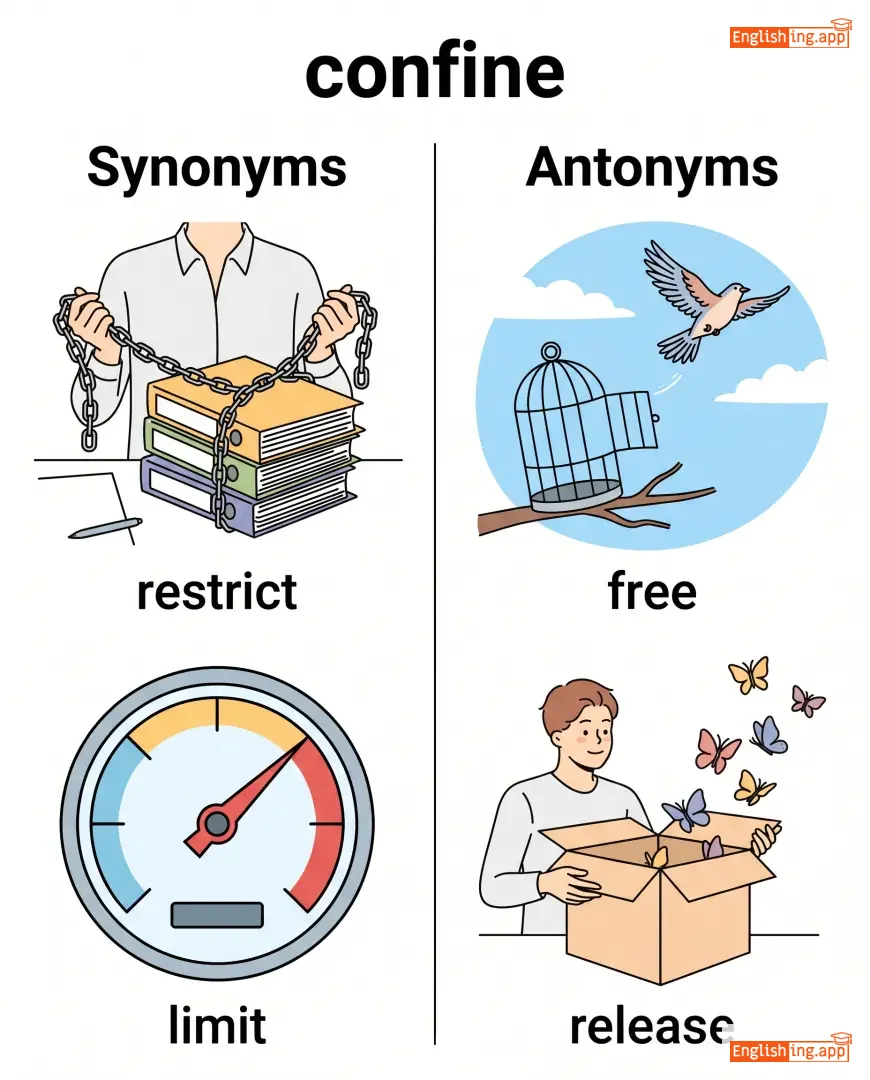
restrict, limit, restrain, enclose, imprison
••••••
|
free, release, liberate
••••••
|
confine to bed, confine within, confined space, confine attention
••••••
|
Confine 就是限制,像是 '限制' 就是 'finite' (有限) 的意思。
••••••
|
|
#1730
🔒
|
/ˌkɒnfɪˈdɛnʃl/
adjective
(kāng fī diàn xiǎo)
••••••
|
- •••••• |
机密的
jī mì de
••••••
|
- •••••• | - •••••• | - •••••• | - •••••• |
intended to be kept secret or private
••••••
|
The lawyer shared confidential documents with her client. |
律师与客户分享了机密文件。
lǜshī yǔ kèhù fēnxiǎngle jīmì wénjiàn.
••••••
|
strictly confidential |
classified or secret, not to be shared with others
••••••
|
严格机密
yángé jīmì
••••••
|
secret, private, classified, restricted, sensitive
••••••
|
public, open, disclosed
••••••
|
confidential information, confidential report, strictly confidential, maintain confidentiality
••••••
|
Confidential 是一个描述机密文件的词,意味着它必须保密。
••••••
|
|
#1731
😌
|
/ˈkɒnfɪdənt/
adjective
(kǒn-fí-dènt)
••••••
|
- •••••• |
自信
zìxìn
••••••
|
- •••••• | - •••••• | - •••••• | - •••••• |
feeling or showing certainty about something; having self-assurance
••••••
|
She was confident about her ability to succeed. |
她对自己能够成功充满自信。
Tā duì zìjǐ nénggòu chénggōng chōngmǎn zìxìn.
••••••
|
confident smile |
a smile that shows assurance and self-belief
••••••
|
自信的微笑
zìxìn de wēixiào
••••••
|
assured, certain, secure, self-assured, optimistic
••••••
|
insecure, uncertain, doubtful
••••••
|
confident manner, confident attitude, feel confident, become confident
••••••
|
Confidence就是自信 — 自信的微笑代表你能做到。
••••••
|
|
#1732
💪
|
/ˈkɒnfɪdəns/
noun
(kāngfí dénsī)
••••••
|
- •••••• |
自信
zìxìn
••••••
|
- •••••• | - •••••• | - •••••• | - •••••• |
The feeling or belief that one can rely on someone or something; firm trust or self-assurance.
••••••
|
She spoke with great confidence during the meeting. |
她在会议中表现出极大的自信。
Tā zài huìyì zhōng biǎoxiàn chū jí dà de zìxìn.
••••••
|
gain confidence |
To develop or increase trust in oneself or in a situation
••••••
|
获得自信
huòqǔ zìxìn
••••••
|
trust, assurance, belief, faith, certainty
••••••
|
doubt, insecurity, mistrust
••••••
|
self confidence, boost confidence, lose confidence, build confidence
••••••
|
自信让你像一颗大星星一样发光!
••••••
|
|
#1733
🤫
|
/kənˈfaɪd/
verb
••••••
|
- •••••• | - •••••• |
confided
••••••
|
confided
••••••
|
confides
••••••
|
confiding
••••••
|
To tell someone about a secret or private matter while trusting them not to repeat it.
••••••
|
He confided his worries to his best friend. |
- •••••• |
confide in someone |
To trust someone enough to tell them personal or secret information
••••••
|
- •••••• |
disclose, reveal, admit, share, confess
••••••
|
conceal, hide, suppress
••••••
|
confide in, confide secrets, confide feelings
••••••
|
No •••••• |
|
#1734
👭
|
/ˌkɒnfɪˈdɑːnt/
noun
(kɒnˈfɪdænt)
••••••
|
- •••••• |
知己
zhī jǐ
••••••
|
- •••••• | - •••••• | - •••••• | - •••••• |
A woman with whom one shares a secret or private matter, trusting her not to repeat it.
••••••
|
The queen’s maid became her most trusted confidante.
皇后的女仆成为了她最信任的知己。
••••••
|
皇后的女仆成为了她最信任的知己。
Huánghòu de nǚpú chéngwéi le tā zuì xìnrèn de zhījǐ.
••••••
|
- •••••• | - •••••• | - •••••• |
trusted woman, close friend, companion, supporter
••••••
|
betrayer, stranger
••••••
|
trusted confidante, female confidante, loyal confidante
••••••
|
Confidante是你可以分享秘密的知己朋友。
••••••
|
|
#1735
🤐
|
/ˈkɒnfɪdænt/
noun
(kōn fī dān tè)
••••••
|
- •••••• |
知己
zhi ji
••••••
|
- •••••• | - •••••• | - •••••• | - •••••• |
A person with whom one shares a secret or private matter, trusting them not to repeat it.
••••••
|
She found a true confidant in her childhood friend. |
她在她的童年朋友中找到了一个真正的知己。
Ta zai ta de tongnian pengyou zhong zhaodao le yige zhenzheng de zhiji.
••••••
|
- •••••• | - •••••• | - •••••• |
trusted friend, companion, ally, supporter
••••••
|
betrayer, enemy
••••••
|
trusted confidant, lifelong confidant, close confidant
••••••
|
知己就是你可以放心分享秘密的朋友。
••••••
|
|
#1736
🙏
|
/kənˈfɛsər/
noun
(kənˈfɛsər)
••••••
|
- •••••• |
忏悔者
chànhuǐ zhě
••••••
|
- •••••• | - •••••• | - •••••• | - •••••• |
A person who confesses sins or secrets, especially to a priest.
••••••
|
The confessor listened patiently to the troubled man. |
忏悔者耐心地听着困扰的男人。
Chànhuǐ zhě nàixīn de tīngzhe kùnrǎo de nánrén.
••••••
|
- •••••• | - •••••• | - •••••• |
penitent, admitter, declarer, discloser
••••••
|
concealer, denier
••••••
|
spiritual confessor, personal confessor, trusted confessor
••••••
|
忏悔者 - 向神父忏悔的那个人。
••••••
|
|
#1737
🎟️
|
/ˌkɒnfəˈriː/
noun
(kòn fēi lì)
••••••
|
- •••••• |
会议参与者
huiyi canyu zhe
••••••
|
- •••••• | - •••••• | - •••••• | - •••••• |
a person who takes part in a conference
••••••
|
Each conferee received a badge at the registration desk. |
每个会议参与者在注册桌上都收到了一枚徽章。
Měi gè huìyì cānyù zhě zài zhùcè zhuō shàng dōu shōudào le yī méi huīzhāng.
••••••
|
- •••••• | - •••••• | - •••••• |
participant, delegate, attendee, member
••••••
|
organizer, host
••••••
|
conference conferee, conferee badge, invited conferee
••••••
|
Conferee 是参加会议的人员
••••••
|
|
#1738
💬
|
/kənˈfɜːr/
verb
••••••
|
- •••••• | - •••••• |
conferred
••••••
|
conferred
••••••
|
confers
••••••
|
conferring
••••••
|
to discuss something important or to grant or bestow something
••••••
|
The committee will confer to decide on the new policy. |
- •••••• |
confer a degree |
to officially give someone a degree
••••••
|
- •••••• |
consult, discuss, grant, bestow, award
••••••
|
withhold, deny
••••••
|
confer with, confer about, confer a degree, confer title
••••••
|
No •••••• |
|
#1739
⚔️
|
/kənˈfɛdərət/
noun/adjective
(kənˈfɛdərət)
••••••
|
- •••••• |
同盟
tóngméng
••••••
|
- •••••• | - •••••• | - •••••• | - •••••• |
a person, group, or state joined in an alliance or union; relating to a confederacy
••••••
|
The confederate soldiers fought bravely in the war. |
同盟士兵在战争中英勇作战。
Tóngméng shìbīng zài zhànzhēng zhōng yīngyǒng zuòzhàn.
••••••
|
- •••••• | - •••••• | - •••••• |
ally, partner, associate, supporter
••••••
|
opponent, enemy, rival
••••••
|
confederate soldier, confederate flag, confederate states
••••••
|
同盟,像是一个强大联盟中的战士,一起作战。
••••••
|
|
#1740
🤝
|
/kənˈfɛdərəsi/
noun
(kōngfédéruòxì)
••••••
|
- •••••• |
联邦
lianbang
••••••
|
- •••••• | - •••••• | - •••••• | - •••••• |
a group of states, people, or organizations united for a common purpose
••••••
|
The southern states formed a confederacy during the civil war. |
南方各州在内战期间组成了联邦。
Nan fang ge zhou zai neizhan qijian zu cheng le lianbang.
••••••
|
- •••••• | - •••••• | - •••••• |
alliance, league, coalition, union, federation
••••••
|
disunion, separation, division
••••••
|
loose confederacy, tribal confederacy, form a confederacy, join a confederacy
••••••
|
Confederacy就像一群联合起来达成共同目标的州或组织。
••••••
|
Vocabulary Quiz
Test your vocabulary by matching words with their translations or meanings.
Login to take the quiz
Comments (0)
Share your thoughts and join the discussion.
Join the discussion by logging in
Login to CommentNo comments yet
Be the first to share your thoughts!