


Swipe left or right, or use the buttons. Tap image to zoom.
例句翻译
单词
Lesson 82Lesson 82 - 遮罩切换
|
表情符号
|
单词 | Images | 翻译 | 过去时 | 过去分词 | 第三人称单数 | 动名词 | 含义 | 例句 | 例句翻译 | 示例表达 | 示例表达含义 | 示例表达翻译 | 同义词 | 反义词 | 搭配词 | 助记符 |
|---|---|---|---|---|---|---|---|---|---|---|---|---|---|---|---|---|---|
|
#2431
🏚️
|
/dɪˈlæpɪˌdeɪtɪd/
adjective
(dɪˈlæpɪˌdeɪtɪd)
••••••
|
- •••••• |
破旧的
po jiu de
••••••
|
- •••••• | - •••••• | - •••••• | - •••••• |
Fallen into disrepair or ruin due to neglect or age.
••••••
|
The family lived in a dilapidated house at the edge of town. |
这个家庭住在城市边缘的一座破旧的房子里。
Zhège jiātíng zhù zài chéngshì biānyuán de yīzuò pòjiù de fángzi lǐ.
••••••
|
- •••••• | - •••••• | - •••••• |
ruined, decayed, shabby, broken-down, crumbling
••••••
|
new, strong, well-kept
••••••
|
dilapidated building, dilapidated house, dilapidated structure
••••••
|
Dilapidated = 'dil' + 'a' + 'pita', 就像是一座破旧的房子,像破掉的皮塔饼一样。
••••••
|
|
#2432
🔊
|
/dɪn/
noun
(丁)
••••••
|
- •••••• |
噪音
zaoyin
••••••
|
- •••••• | - •••••• | - •••••• | - •••••• |
a loud, unpleasant, and prolonged noise
••••••
|
The din of traffic outside made it hard to concentrate. |
外面交通的噪音让集中注意力变得困难。
waimian jiaotong de zaoyin rang jiuzhong zhuyilv biande kunnan.
••••••
|
make a din |
to create a lot of loud and unpleasant noise
••••••
|
制造噪音
zhizao zaoyin
••••••
|
noise, racket, clamor, uproar, commotion
••••••
|
silence, quiet
••••••
|
din of traffic, constant din, loud din, make a din
••••••
|
DIN表示噪音,就像鼓声的嘟嘟声一样。
••••••
|
|
#2433
🕯️
|
/ˈdɪmli/
adverb
(dɪmli)
••••••
|
- •••••• |
昏暗
hun'an
••••••
|
- •••••• | - •••••• | - •••••• | - •••••• |
in a faint or unclear way; with little light
••••••
|
The room was dimly lit by a single candle.
房间被一根蜡烛微弱地照亮。
••••••
|
房间被一根蜡烛微弱地照亮。
Fángjiān bèi yī gēn làzhú wēiruò de zhàoliàng.
••••••
|
- •••••• | - •••••• | - •••••• |
faintly, weakly, obscurely, vaguely
••••••
|
brightly, clearly
••••••
|
dimly lit, dimly remembered, dimly visible
••••••
|
Dimly lit意味着昏暗照明,dimly = 昏暗。
••••••
|
|
#2434
🐭
|
/dɪˈmɪnjətɪv/
adjective
(迪米纽蒂夫)
••••••
|
- •••••• |
极小的
jixiao de
••••••
|
- •••••• | - •••••• | - •••••• | - •••••• |
extremely or unusually small
••••••
|
Despite his diminutive size, he was a powerful leader.
尽管他的体型极小,他仍然是一个强大的领导者。
••••••
|
尽管他的体型极小,他仍然是一个强大的领导者。
Jǐnguǎn tā de tǐxíng jí xiǎo, tā réngrán shì yīgè qiángdà de lǐngdǎo zhě.
••••••
|
- •••••• | - •••••• | - •••••• |
small, tiny, little, petite, miniature
••••••
|
large, big, huge
••••••
|
diminutive figure, diminutive size, diminutive form
••••••
|
Diminutive 意味着非常小 — 记住 'mini' 可以帮助记忆。
••••••
|
|
#2435
📉
|
/ˌdɪmɪˈnjuːʃən/
noun
••••••
|
|
- •••••• | - •••••• | - •••••• | - •••••• | - •••••• |
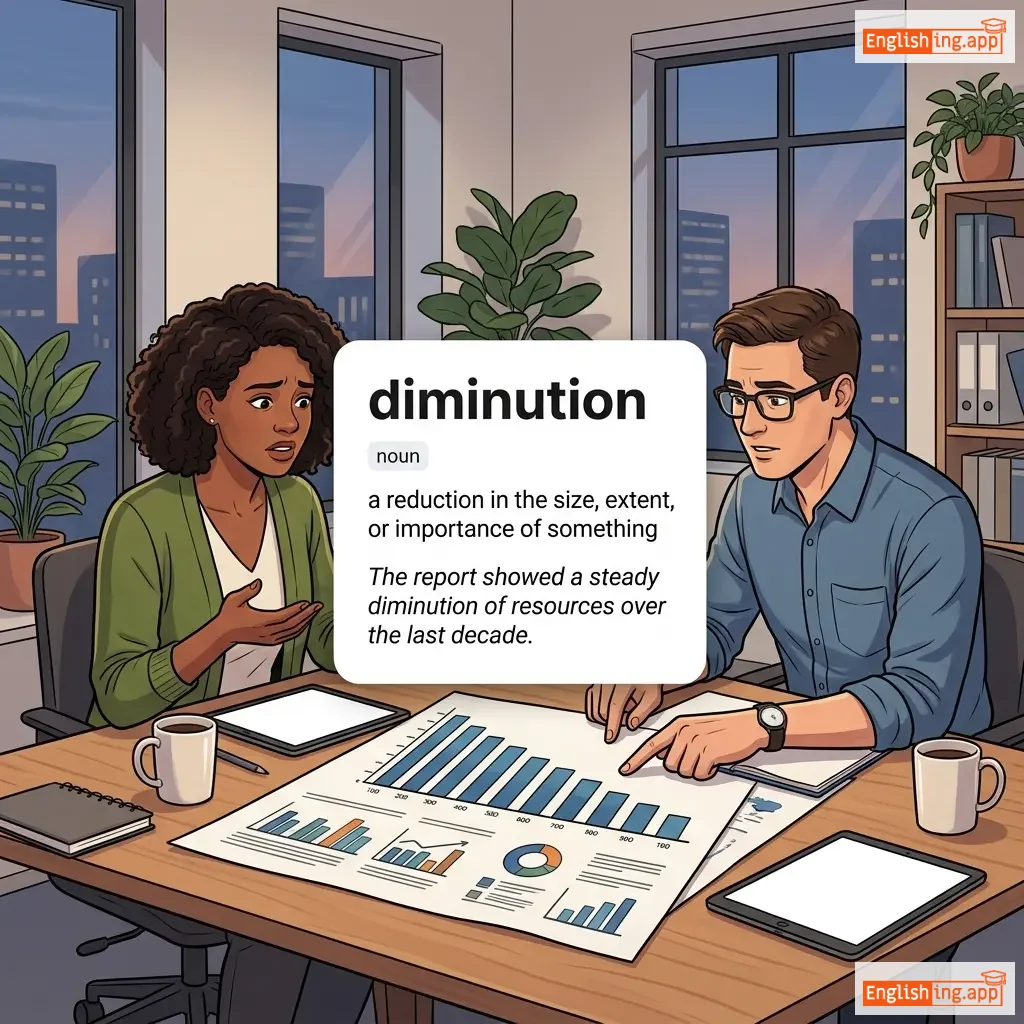
a reduction in the size, extent, or importance of something
••••••
|
The report showed a steady diminution of resources over the last decade. |
- •••••• | - •••••• | - •••••• | - •••••• |
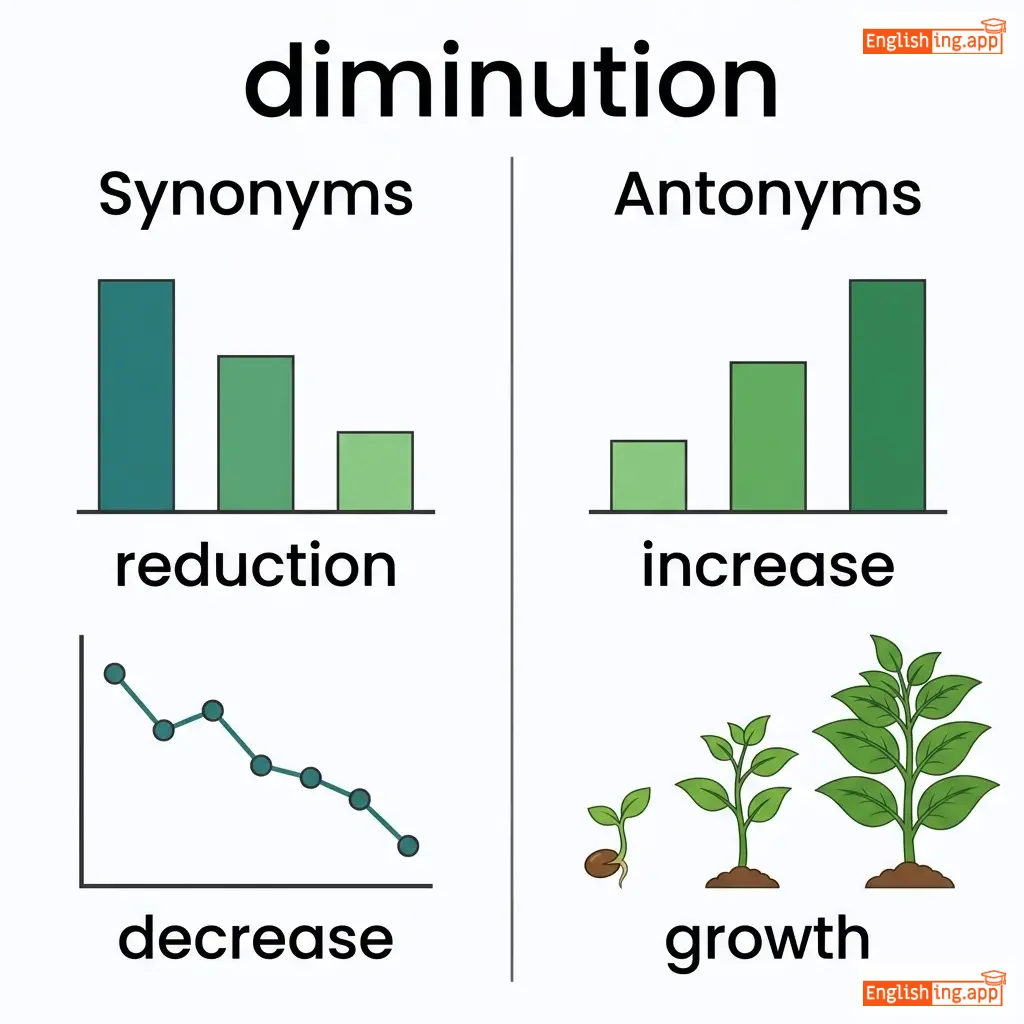
reduction, decrease, decline, lessening, weakening
••••••
|
increase, growth, expansion
••••••
|
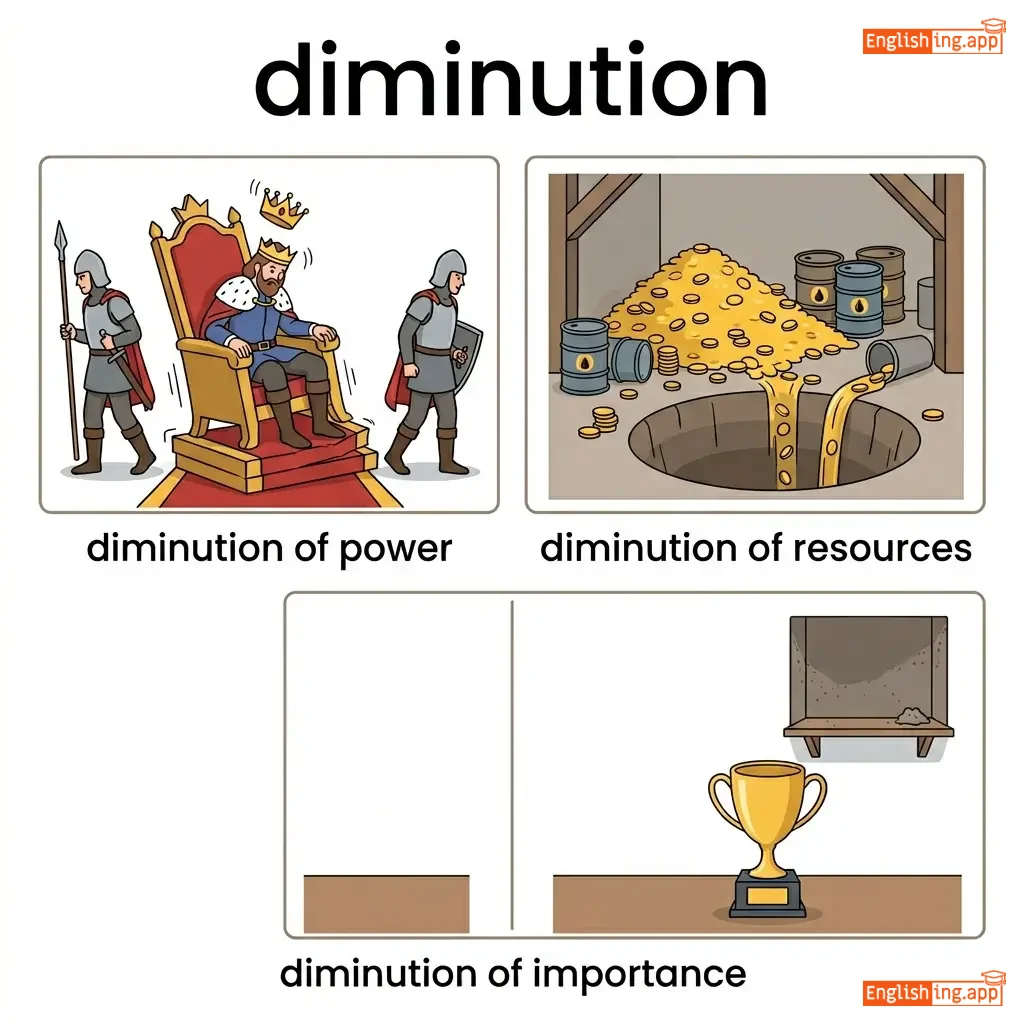
diminution of power, diminution of resources, diminution of importance
••••••
|
No •••••• |
|
#2436
⬇️
|
/dɪˈmɪnɪʃ/
verb
••••••
|
- •••••• | - •••••• |
diminished
••••••
|
diminished
••••••
|
diminishes
••••••
|
diminishing
••••••
|
to make or become less; to reduce in size, importance, or value
••••••
|
Over time, his influence in the company began to diminish. |
- •••••• |
diminish returns |
a situation where the benefit gained is less compared to the effort or investment put in
••••••
|
- •••••• |
reduce, decrease, lessen, weaken, dwindle
••••••
|
increase, enlarge, expand
••••••
|
diminish value, diminish importance, diminish role, diminish returns
••••••
|
No •••••• |
|
#2437
📐
|
/dɪˈmɛnʃən/
noun
(dài méng shì àn)
••••••
|
|
维度
weidu
••••••
|
- •••••• | - •••••• | - •••••• | - •••••• |
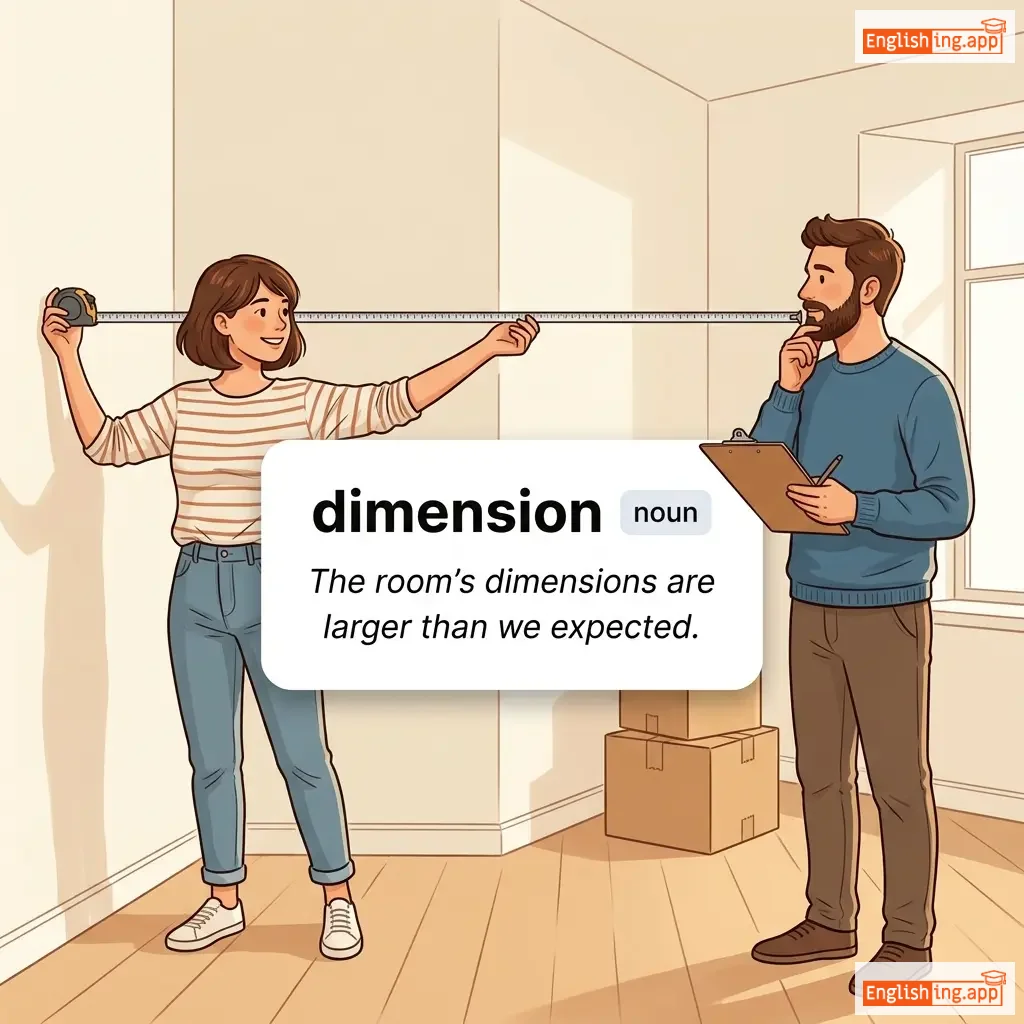
A measurable extent of a particular kind, such as length, breadth, depth, or height.
••••••
|
The room’s dimensions are larger than we expected. |
房间的尺寸比我们预期的要大。
Fángjiān de chǐcùn bǐ wǒmen yùqī de yào dà.
••••••
|
new dimension |
An additional aspect or perspective of a situation.
••••••
|
新维度
xīn wéidù
••••••
|
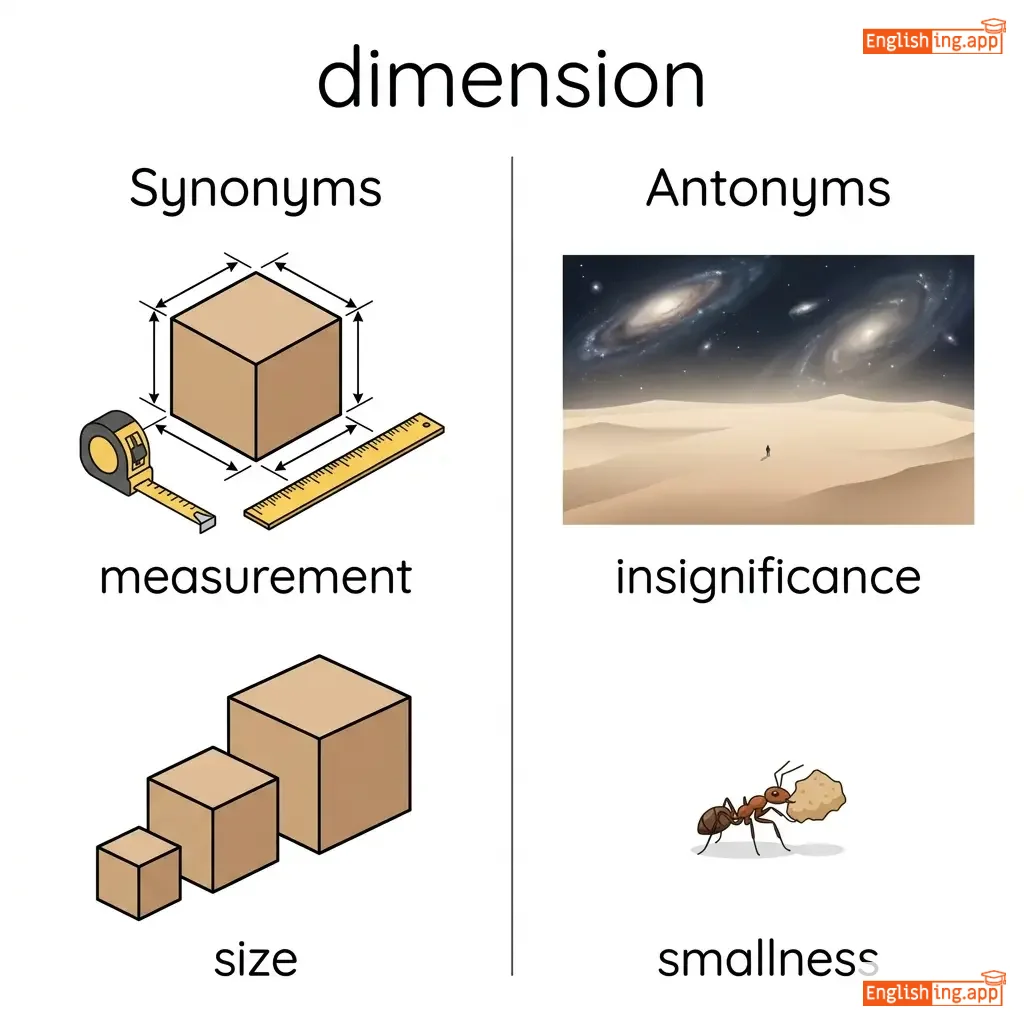
measurement, size, proportion, extent, aspect
••••••
|
insignificance, smallness
••••••
|
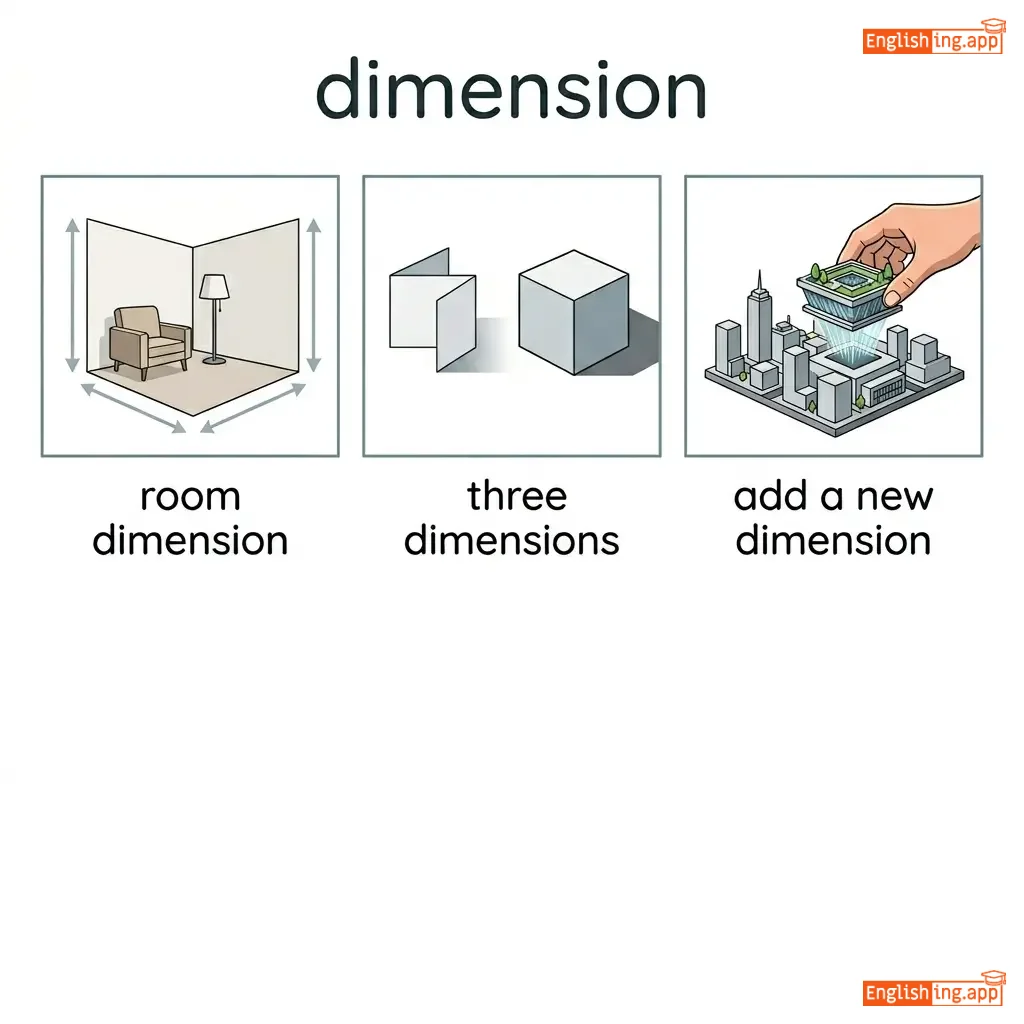
room dimension, three dimensions, add a new dimension
••••••
|
维度就是世界的各个方向,向每个维度延伸。
••••••
|
|
#2438
💧
|
/daɪˈluːt/
verb
(daiˈluːt)
••••••
|
- •••••• |
稀释
xī shì
••••••
|
diluted
daiˈluːted
••••••
|
diluted
daiˈluːted
••••••
|
dilutes
daiˈluːts
••••••
|
diluting
daiˈluːting
••••••
|
To make a liquid thinner or weaker by adding water or another solvent.
••••••
|
You should dilute the juice with water before serving it to children.
你应该在给孩子们提供之前把果汁稀释一下。
••••••
|
你应该在给孩子们提供之前把果汁稀释一下。
Nǐ yīnggāi zài gěi háizimen tígōng zhīqián bǎ guǒzhī xīshì yīxià.
••••••
|
dilute the effect
稀释效果
••••••
|
To make something less effective or powerful.
••••••
|
稀释效果
xīshì xiàoguǒ
••••••
|
weaken, thin, reduce, lessen, diminish
••••••
|
strengthen, concentrate, intensify
••••••
|
dilute solution, dilute juice, dilute effect, dilute mixture
••••••
|
稀释意味着通过加入水使事物变得更薄、更弱。
••••••
|
|
#2439
📚
|
/ˈdɪlɪdʒənt/
adjective
(dɪlɪdʒənt)
••••••
|
- •••••• |
勤奋
qinfen
••••••
|
- •••••• | - •••••• | - •••••• | - •••••• |
Showing care and conscientiousness in one's work or duties.
••••••
|
She is a diligent student who always finishes her assignments on time. |
她是一个勤奋的学生,总是按时完成作业。
Ta shi yige qinfen de xuesheng, zongshi anshi wancheng zuoye.
••••••
|
- •••••• | - •••••• | - •••••• |
hardworking, industrious, careful, persistent, attentive
••••••
|
lazy, careless, negligent
••••••
|
diligent student, diligent worker, diligent effort
••••••
|
勤奋 = 每天做作业,准时完成。
••••••
|
|
#2440
💪
|
/ˈdɪlɪdʒəns/
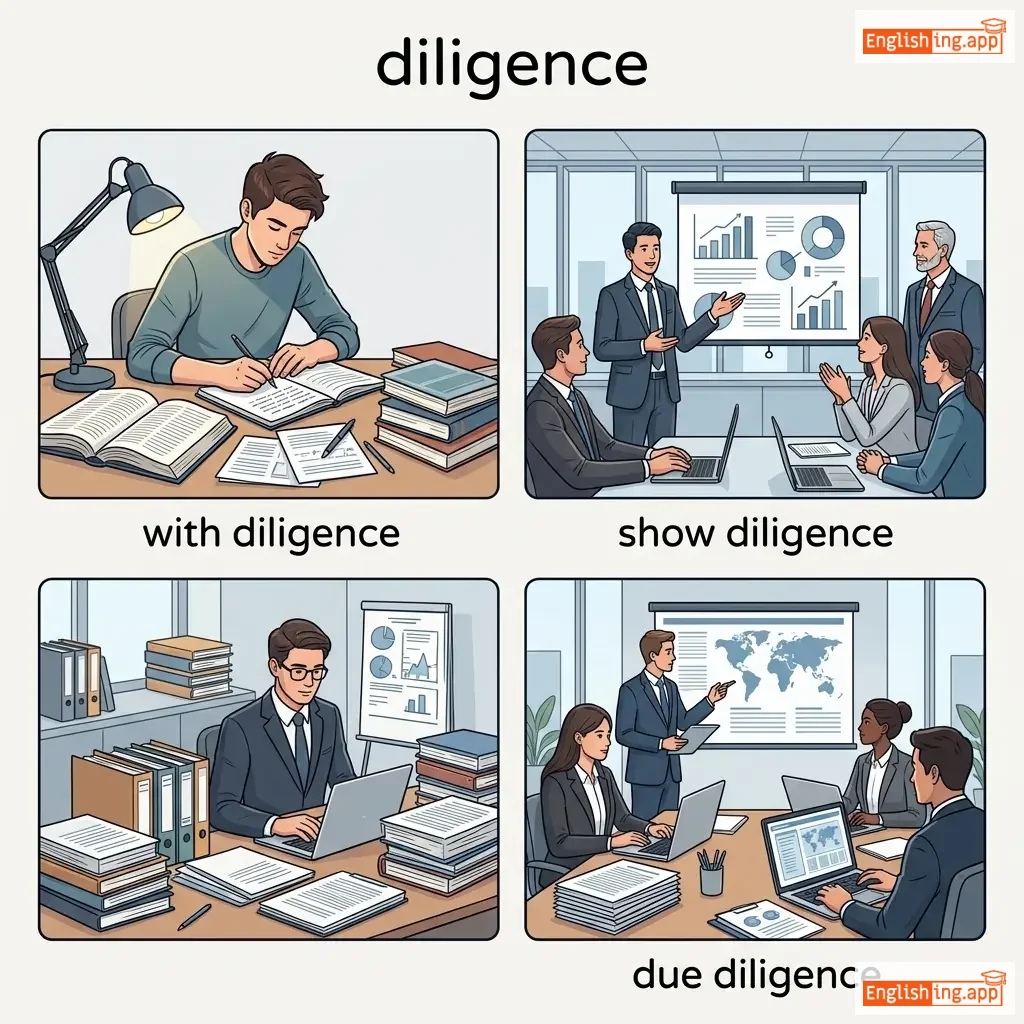
noun
(dɪlɪdʒəns)
••••••
|
|
勤奋
qinfen
••••••
|
- •••••• | - •••••• | - •••••• | - •••••• |
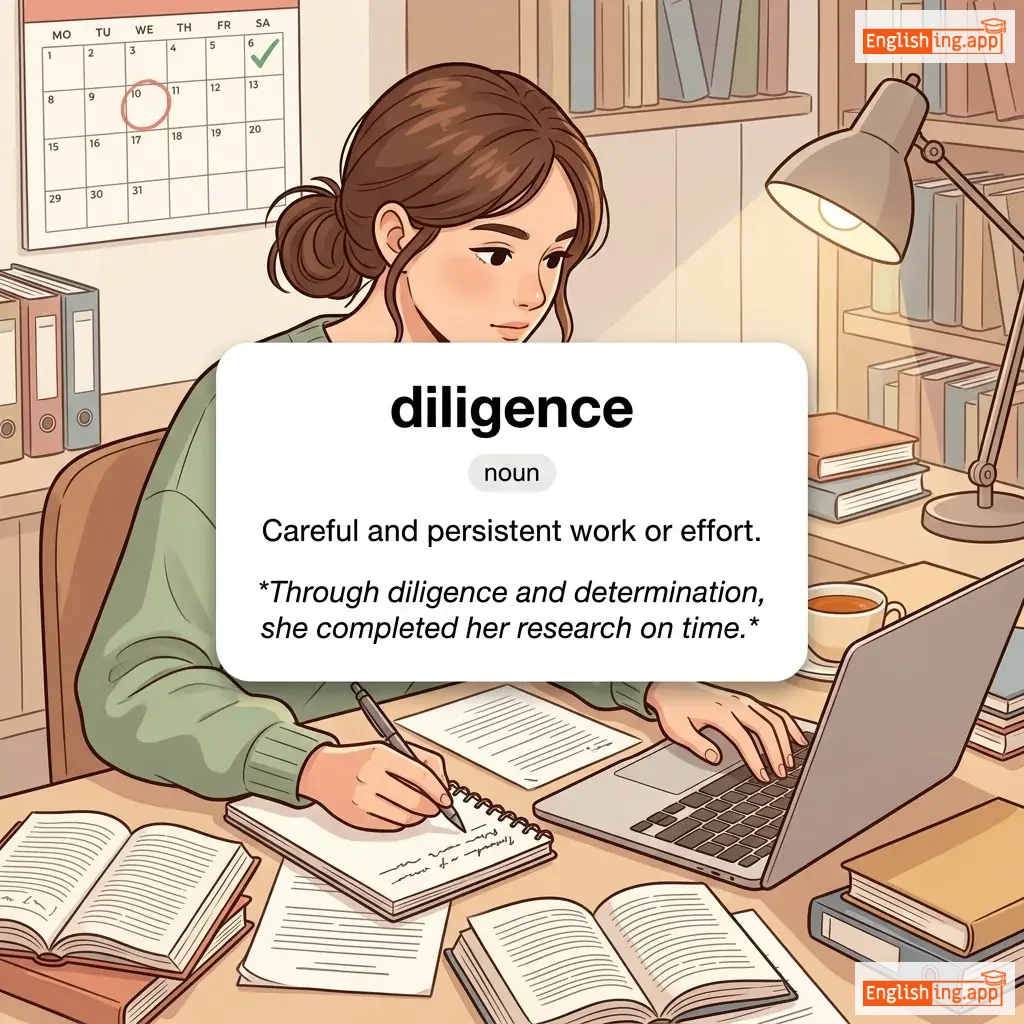
Careful and persistent work or effort.
••••••
|
Through diligence and determination, she completed her research on time. |
通过勤奋和决心,她按时完成了她的研究。
Tōngguò qínfèn hé juéxīn, tā ànshí wánchéngle tā de yánjiū.
••••••
|
due diligence |
The process of carefully investigating before making a decision, especially in business.
••••••
|
尽职调查
jìnzhí diàochá
••••••
|
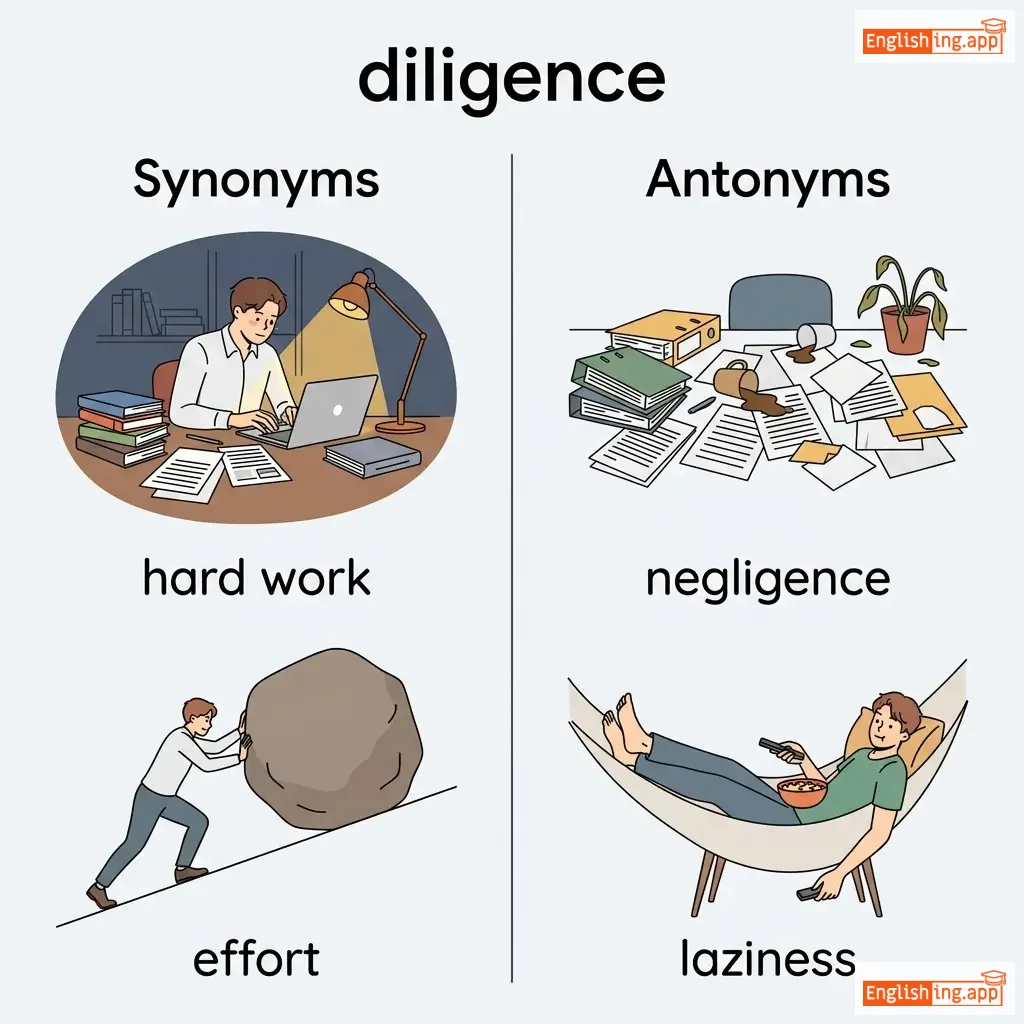
hard work, effort, persistence, perseverance, dedication
••••••
|
negligence, laziness, carelessness
••••••
|
with diligence, show diligence, due diligence
••••••
|
勤奋 = 每天做点努力就能成功。
••••••
|
|
#2441
🎨
|
/ˌdɪləˈtænt/
noun
(dì lēi tǎn tè)
••••••
|
- •••••• |
外行
wai hang
••••••
|
- •••••• | - •••••• | - •••••• | - •••••• |
A person who takes up an art, activity, or subject merely for amusement, especially in a superficial way.
••••••
|
He was dismissed as a dilettante in the art world because he lacked formal training. |
他在艺术界被视为外行,因为他缺乏正式的训练。
Tā zài yìshù jiè bèi shì wéi wài háng, yīnwèi tā quēfá zhèngshì de xùnliàn.
••••••
|
- •••••• | - •••••• | - •••••• |
amateur, novice, dabbler, nonprofessional, layman
••••••
|
expert, professional, specialist
••••••
|
artistic dilettante, cultural dilettante, intellectual dilettante
••••••
|
Dilettante意味着一个人仅仅为了享乐而从事艺术,没有深厚的知识。
••••••
|
|
#2442
🤔
|
/daɪˈlɛmə/
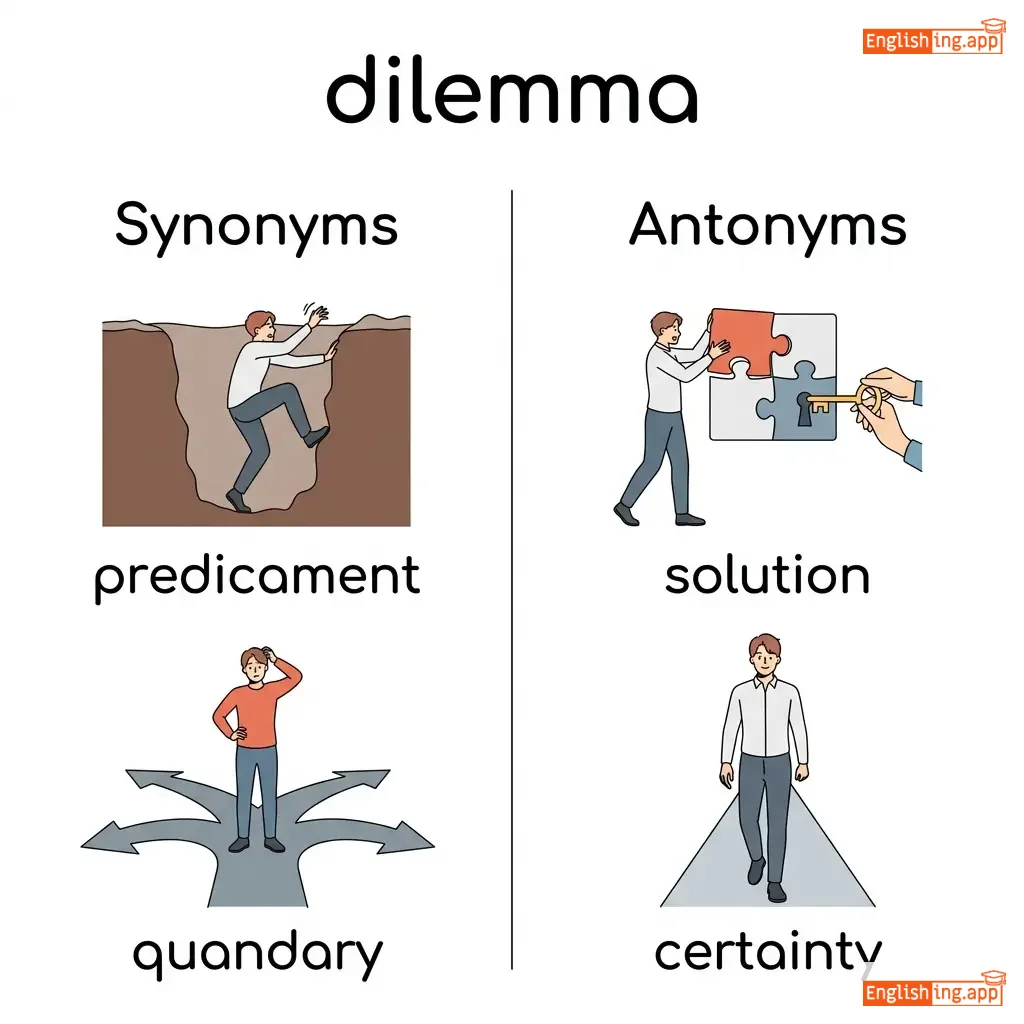
noun
(dilemma)
••••••
|
|
困境
kunjing
••••••
|
- •••••• | - •••••• | - •••••• | - •••••• |
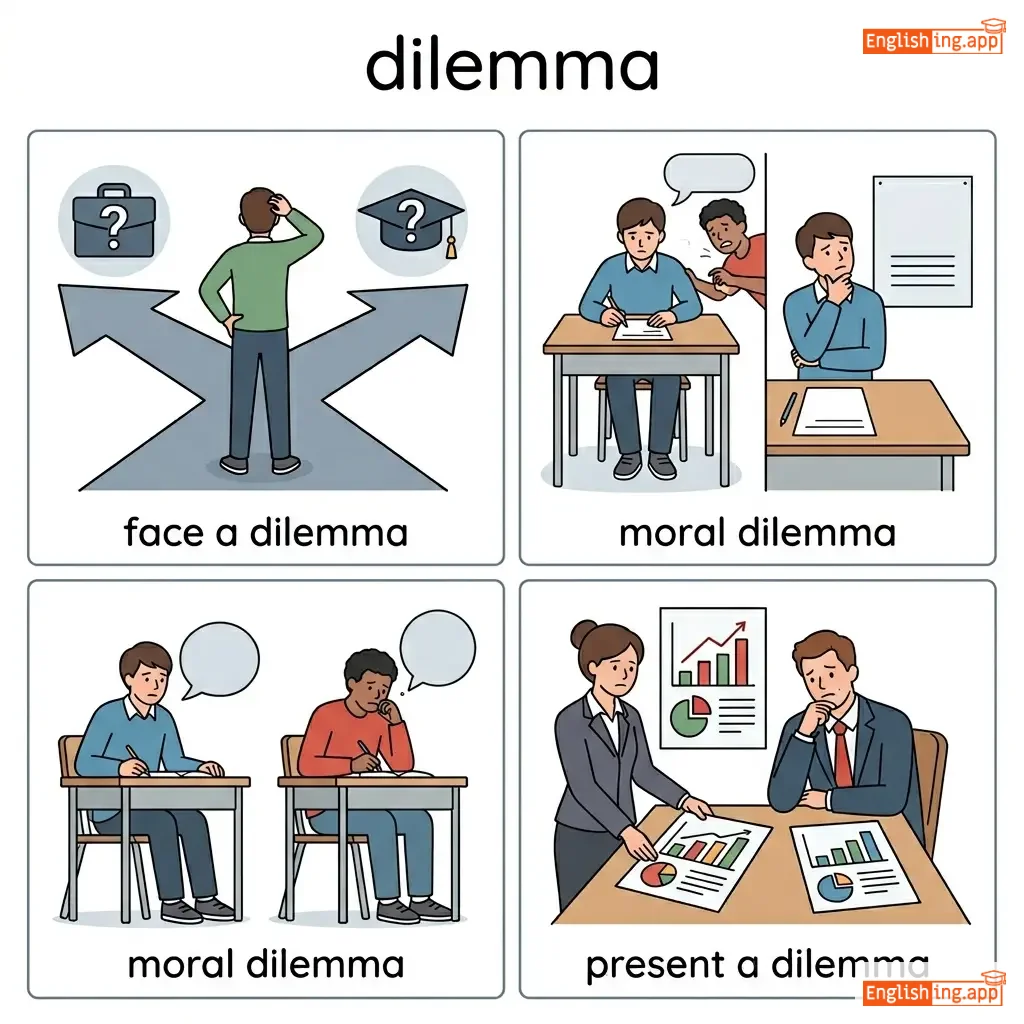
A situation in which a difficult choice has to be made between two or more alternatives.
••••••
|
She faced a dilemma about whether to accept the job offer or continue her studies. |
她面临是否接受工作邀请还是继续学习的困境。
Ta mianlin shifou jieshou gongzuo yaoqing haishi jixu xuexi de kunjing.
••••••
|
moral dilemma |
A difficult choice involving a conflict of moral principles.
••••••
|
道德困境
daode kunjing
••••••
|
predicament, quandary, problem, difficulty
••••••
|
solution, certainty, clarity
••••••
|
face a dilemma, moral dilemma, present a dilemma
••••••
|
Dilemma = di (两个) + lemma (选择) = 两个艰难的选择。
••••••
|
|
#2443
🐢
|
/ˈdɪlətɔːri/
adjective
(迪雷托里)
••••••
|
- •••••• |
拖延的
tuōyán de
••••••
|
- •••••• | - •••••• | - •••••• | - •••••• |
Tending to cause delay; slow to act.
••••••
|
The committee was criticized for its dilatory response to the crisis.
该委员会因其在危机中的拖延反应而受到批评。
••••••
|
该委员会因其在危机中的拖延反应而受到批评。
Gāi wěiyuánhuì yīn qí zài wēijī zhōng de tuōyán fǎnyìng ér shòudào pīpíng.
••••••
|
- •••••• | - •••••• | - •••••• |
slow, delaying, sluggish, tardy
••••••
|
prompt, quick, immediate
••••••
|
dilatory tactics, dilatory behavior, dilatory response
••••••
|
Dilatory 意思是拖延 + 故事,永远讲延迟的故事。
••••••
|
|
#2444
🔍
|
/daɪˈleɪt/
verb
(daiˈlet)
••••••
|
- •••••• |
扩展
kuòzhǎn
••••••
|
dilated
dilated
••••••
|
dilated
dilated
••••••
|
dilates
dilates
••••••
|
dilating
dilating
••••••
|
To make wider, larger, or more open.
••••••
|
The doctor used drops to dilate the patient's pupils.
医生用药水来扩张病人的瞳孔。
••••••
|
医生用药水来扩张病人的瞳孔。
Yīshēng yòng yàoshuǐ lái kuòzhǎn bìngrén de tóngkǒng.
••••••
|
dilate on
扩展讨论
••••••
|
To speak or write at length on a subject.
••••••
|
详细讨论
xiángxì tǎolùn
••••••
|
expand, enlarge, widen, open
••••••
|
contract, shrink, compress
••••••
|
dilate pupils, dilate blood vessels, dilate on a subject
••••••
|
扩展就像扩大眼睛一样!
••••••
|
|
#2445
⚒️
|
/dɪˌlæpɪˈdeɪʃən/
noun
(dɪˌlæpɪˈdeɪʃən)
••••••
|
- •••••• |
破败
pobai
••••••
|
- •••••• | - •••••• | - •••••• | - •••••• |
The state of disrepair or ruin as a result of neglect.
••••••
|
The old temple was in a state of dilapidation.
这座古老的寺庙处于破败状态。
••••••
|
这座古老的寺庙处于破败状态。
Zhe zuo gulao de simiao chu yu pobai zhuangtai.
••••••
|
- •••••• | - •••••• | - •••••• |
decay, ruin, neglect, deterioration
••••••
|
repair, restoration, upkeep
••••••
|
in dilapidation, state of dilapidation
••••••
|
Dilapidation意味着daily + pit + shon = 每天破坏,像破败一样。
••••••
|
|
#2446
🔍
|
/ˌdɪfəˈrɛnʃə/
noun
(difenrenxia)
••••••
|
- •••••• |
区分特征
qufen tezheng
••••••
|
- •••••• | - •••••• | - •••••• | - •••••• |
A distinguishing characteristic that sets one thing apart from another.
••••••
|
The differentia of humans is their ability to reason abstractly. |
人类的区分特征是他们的抽象思维能力。
Renlei de qufen tezheng shi tamen de chousiang siwei nengli.
••••••
|
- •••••• | - •••••• | - •••••• |
distinction, characteristic, feature, trait, mark
••••••
|
similarity, sameness, uniformity
••••••
|
philosophical differentia, defining differentia, essential differentia
••••••
|
Differentia意味着区别,正如'不同'在英语中也表示区别。
••••••
|
|
#2447
🏚️
|
/dɪˈlæpɪdeɪt/
verb
(dɪˈlæpɪdeɪt)
••••••
|
- •••••• |
衰败
shuāibài
••••••
|
dilapidated
dɪˈlæpɪdeɪtɪd
••••••
|
dilapidated
dɪˈlæpɪdeɪtɪd
••••••
|
dilapidates
dɪˈlæpɪdeɪts
••••••
|
dilapidating
dɪˈlæpɪdeɪtɪŋ
••••••
|
To cause something, especially a building, to fall into ruin or disrepair.
••••••
|
The abandoned house began to dilapidate over the years.
那座废弃的房子在多年的时间里开始衰败。
••••••
|
那座废弃的房子在多年的时间里开始衰败。
Nà zuò fèiqì de fángzi zài duōnián de shíjiān lǐ kāishǐ shuāibài.
••••••
|
- •••••• | - •••••• | - •••••• |
decay, deteriorate, crumble, ruin, collapse
••••••
|
restore, renovate, repair
••••••
|
dilapidate quickly, dilapidated house, dilapidating structure
••••••
|
Dilapidate意味着让建筑物衰败,像一个被废弃的房子一样。
••••••
|
|
#2448
🌀
|
/daɪˈɡrɛsɪv/
adjective
(dáigùìsīfū)
••••••
|
- •••••• |
偏离主要话题的倾向
pianli zhuyao huati de qingxiang
••••••
|
- •••••• | - •••••• | - •••••• | - •••••• |
Tending to depart from the main subject in speech or writing.
••••••
|
The speaker's digressive style made the lecture difficult to follow. |
演讲者的偏离主题的风格使得听讲变得困难。
Yǎnjiǎng zhě de piānlí zhǔtí de fēnggé shǐdé tīngjiǎng biàndé kùnnán.
••••••
|
- •••••• | - •••••• | - •••••• |
rambling, wandering, meandering, deviating
••••••
|
focused, direct
••••••
|
digressive remarks, digressive style, digressive tendency
••••••
|
Digressive 在中文就是离开主题走
••••••
|
|
#2449
🛤️
|
/daɪˈɡrɛʃən/
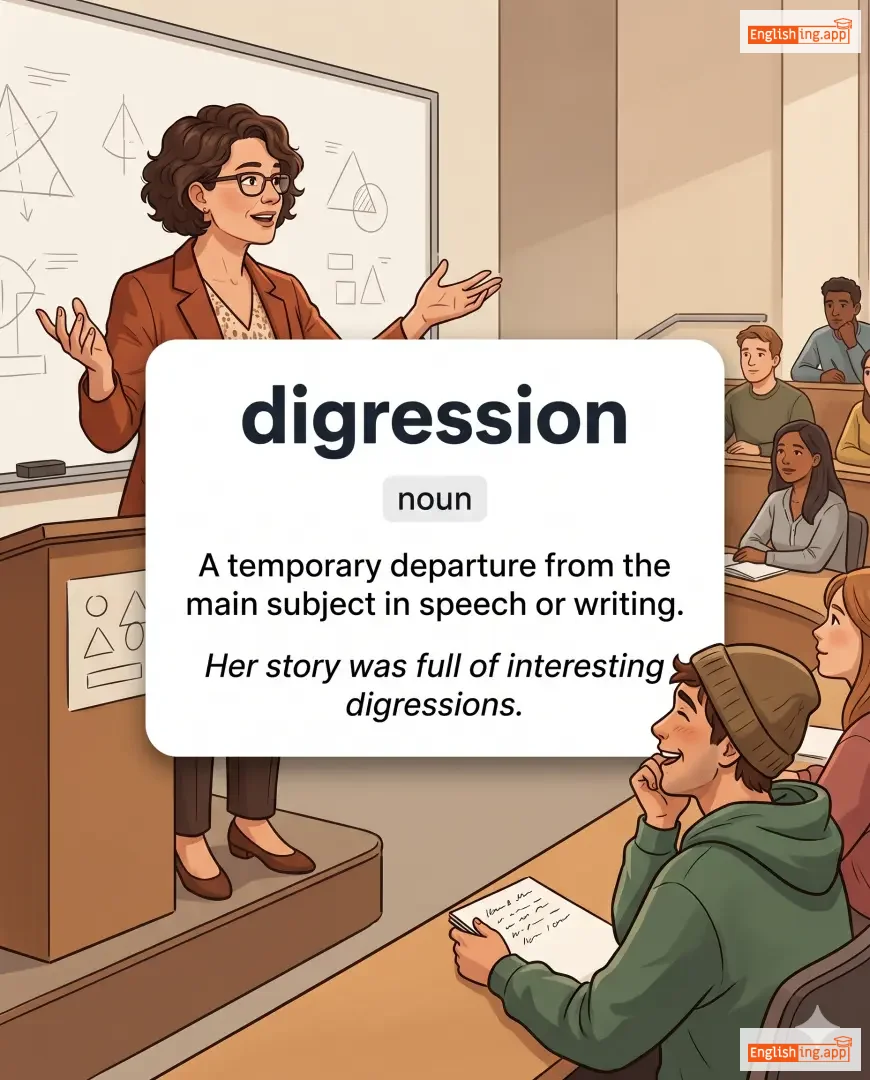
noun
(dáigǔlèshén)
••••••
|
|
离题
lítí
••••••
|
- •••••• | - •••••• | - •••••• | - •••••• |
A temporary departure from the main subject in speech or writing.
••••••
|
Her story was full of interesting digressions. |
她的故事充满了有趣的离题部分。
Tā de gùshì chōngmǎnle yǒuqù de lítí bùfen.
••••••
|
- •••••• | - •••••• | - •••••• |
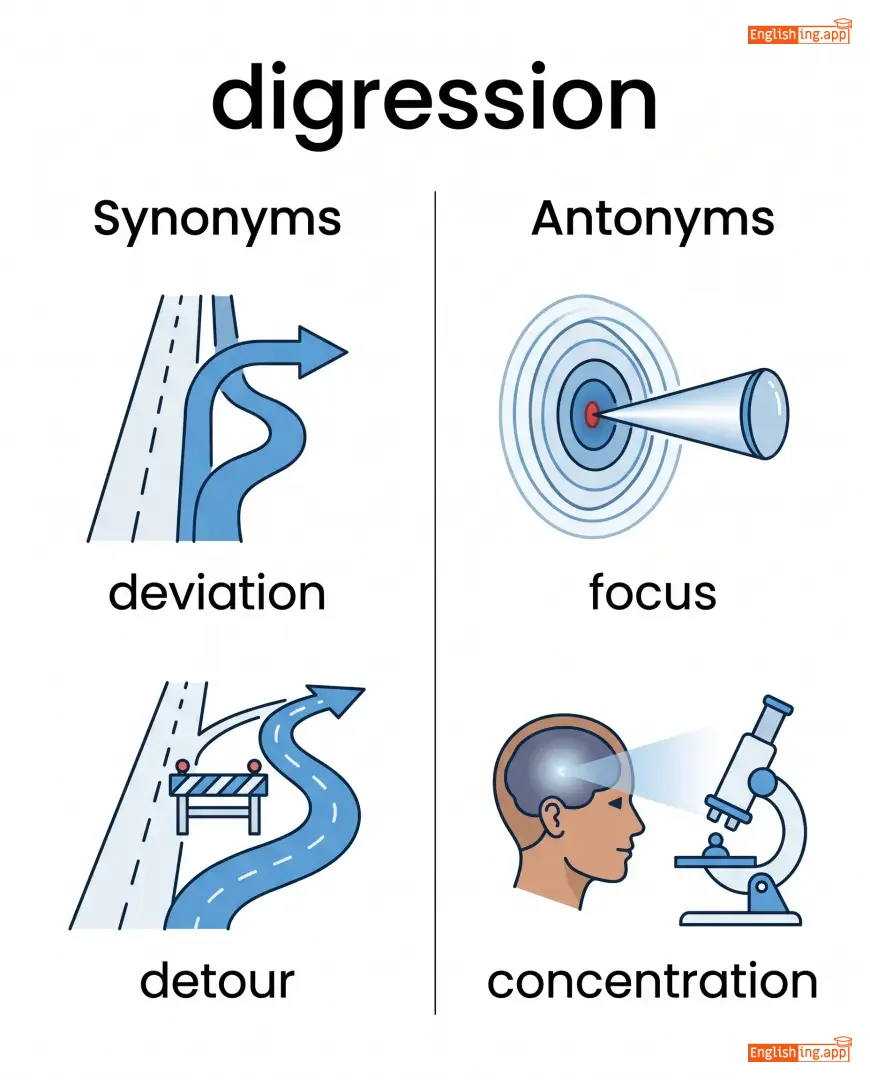
deviation, detour, aside, tangent
••••••
|
focus, concentration
••••••
|
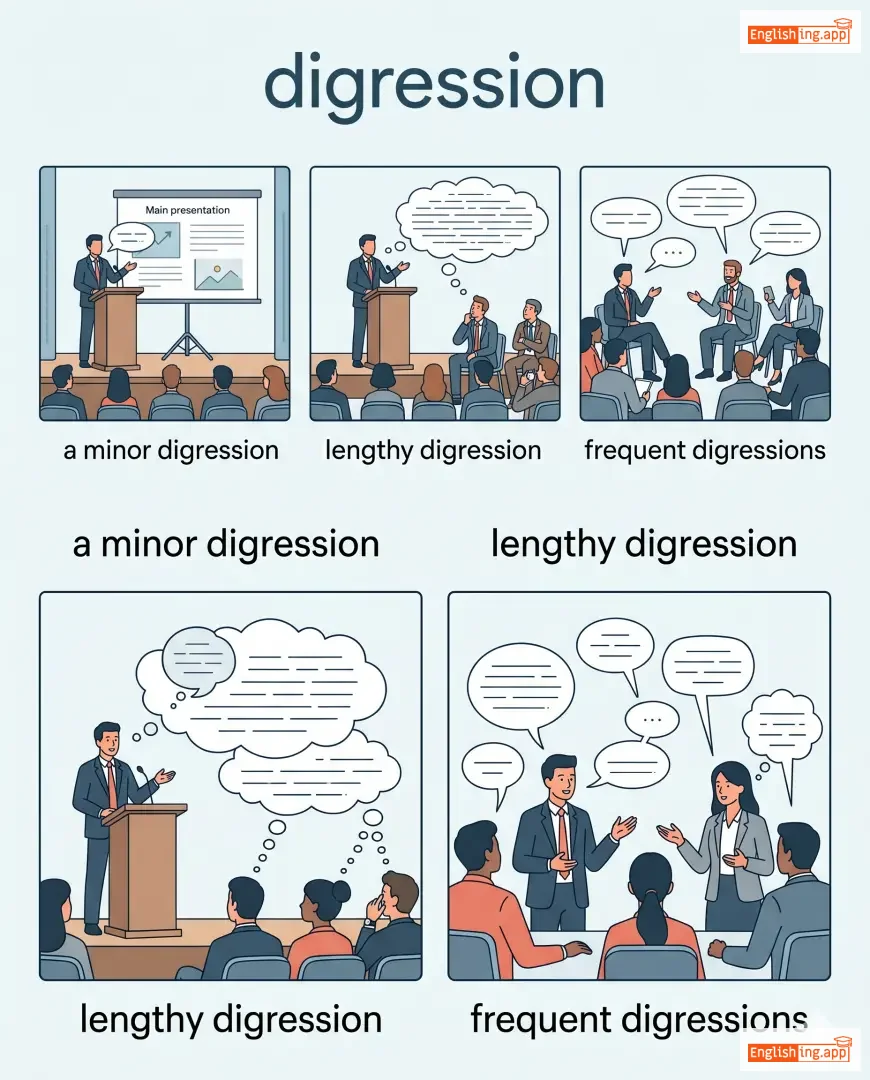
a minor digression, lengthy digression, frequent digressions
••••••
|
Digression 就是从主要话题偏离。
••••••
|
|
#2450
↪️
|
/daɪˈɡrɛs/
verb
••••••
|
- •••••• | - •••••• |
digressed
••••••
|
digressed
••••••
|
digresses
••••••
|
digressing
••••••
|
To leave the main subject temporarily in speech or writing.
••••••
|
The professor began to digress from the main topic of the lecture. |
- •••••• |
if I may digress |
used to introduce a temporary departure from the main subject
••••••
|
- •••••• |
deviate, stray, wander, drift, ramble
••••••
|
focus, concentrate
••••••
|
tend to digress, digress into, digress slightly, digress from
••••••
|
No •••••• |
|
#2451
🔡
|
/ˈdaɪɡræf/
noun
(dàigùo)
••••••
|
- •••••• |
双字母组合
shuangzimuzuhe
••••••
|
- •••••• | - •••••• | - •••••• | - •••••• |
A pair of letters representing a single sound, such as 'sh' in 'ship'.
••••••
|
In the word 'phone', the letters 'ph' form a digraph. |
'电话'一词中的'ph'字母组成一个双字母组合。
'dianhua' yici zhong de 'ph' zimu zucheng yige shuangzimuzuhe.
••••••
|
- •••••• | - •••••• | - •••••• |
letter pair, combination, grapheme, phoneme unit
••••••
|
single letter, monograph
••••••
|
vowel digraph, consonant digraph, letter digraph, English digraph
••••••
|
Di + guo,意味着两个字母结合发出一个声音
••••••
|
|
#2452
🎖️
|
/ˈdɪɡnɪˌtɛri/
noun
(迪格尼塔里)
••••••
|
- •••••• |
重要人物
zhòng yào rén wù
••••••
|
- •••••• | - •••••• | - •••••• | - •••••• |
a person considered to be important because of high rank or office
••••••
|
Several foreign dignitaries attended the state banquet. |
几位外国重要人物出席了国宴。
Jǐ wèi wàiguó zhòngyào rénwù chūxí le guóyàn.
••••••
|
- •••••• | - •••••• | - •••••• |
official, VIP, leader, notable, luminary
••••••
|
commoner, ordinary person
••••••
|
foreign dignitary, visiting dignitary, local dignitary, high dignitary
••••••
|
Dignitary就像是有'尊严'的高级人物。
••••••
|
|
#2453
🔢
|
/ˈdɪdʒɪt/
noun
••••••
|
- •••••• | - •••••• | - •••••• | - •••••• | - •••••• | - •••••• |
a numeral from 0 to 9; also a finger or toe
••••••
|
You must enter a four-digit code to unlock the phone. |
- •••••• |
count on your digits |
rely on your fingers for counting
••••••
|
- •••••• |
number, numeral, figure, character
••••••
|
letter, word
••••••
|
digit code, single digit, multi digit, digit system
••••••
|
No •••••• |
|
#2454
🌐
|
/dɪˈfjuːʒən/
noun
••••••
|
- •••••• | - •••••• | - •••••• | - •••••• | - •••••• | - •••••• |
the spreading of something more widely or the movement of particles from high to low concentration
••••••
|
The diffusion of information on social media is rapid. |
- •••••• |
cultural diffusion |
the spread of cultural beliefs and activities from one group to another
••••••
|
- •••••• |
spread, dissemination, circulation, dispersal
••••••
|
concentration, containment
••••••
|
diffusion process, diffusion theory, cultural diffusion, diffusion rate
••••••
|
No •••••• |
|
#2455
💨
|
/dɪˈfjuːzəbl/
adjective
(dɪˈfjuːzəbl)
••••••
|
- •••••• |
可扩散的
ke kuosan de
••••••
|
- •••••• | - •••••• | - •••••• | - •••••• |
able to spread or be spread through a medium
••••••
|
Oxygen is diffusible through cell membranes. |
氧气可以通过细胞膜扩散。
Yangqi keyi tongguo xibao mo kuosan.
••••••
|
- •••••• | - •••••• | - •••••• |
spreadable, permeable, dispersible, distributable
••••••
|
non-permeable, concentrated
••••••
|
diffusible gas, diffusible substance, diffusible molecules
••••••
|
Diffusible 意味着 '扩散' - 能通过媒介传播。
••••••
|
|
#2456
🌫️
|
/dɪˈfjuːz/
verb
••••••
|
|
- •••••• |
diffused
••••••
|
diffused
••••••
|
diffuses
••••••
|
diffusing
••••••
|
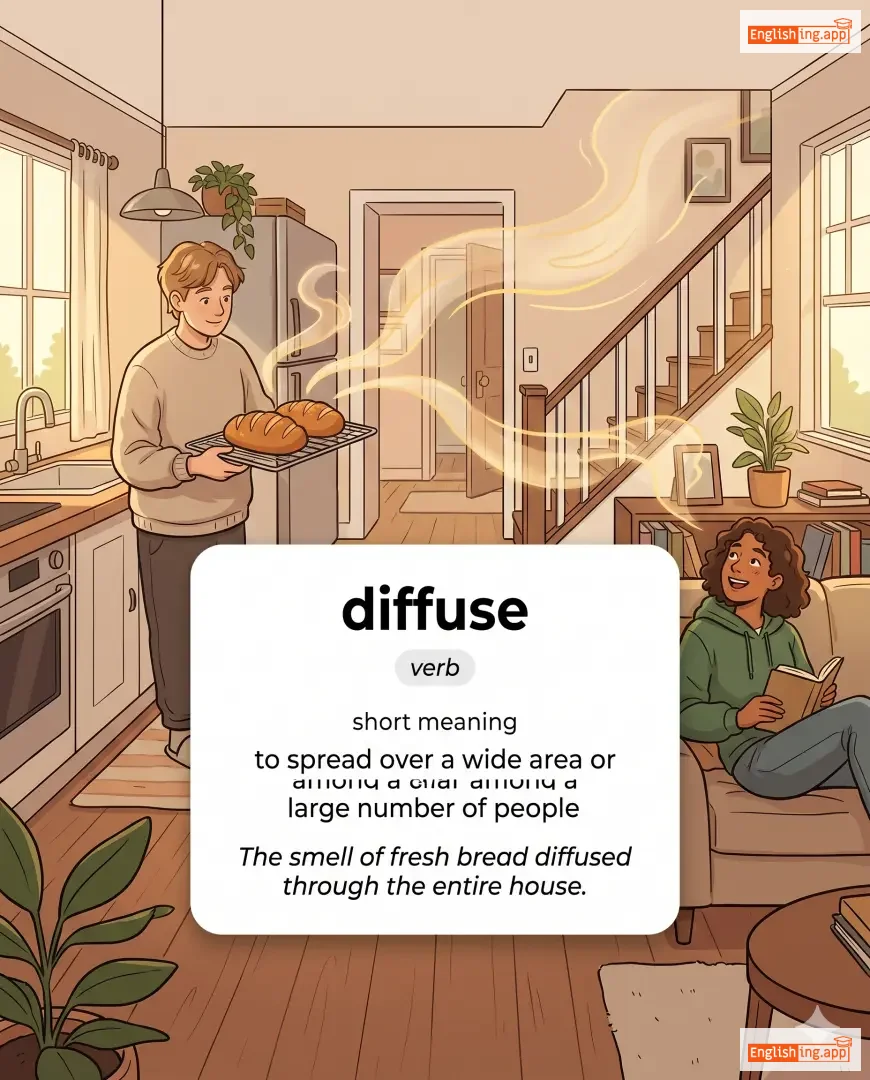
to spread over a wide area or among a large number of people
••••••
|
The smell of fresh bread diffused through the entire house. |
- •••••• |
diffuse tension |
to reduce or calm down stress or conflict
••••••
|
- •••••• |
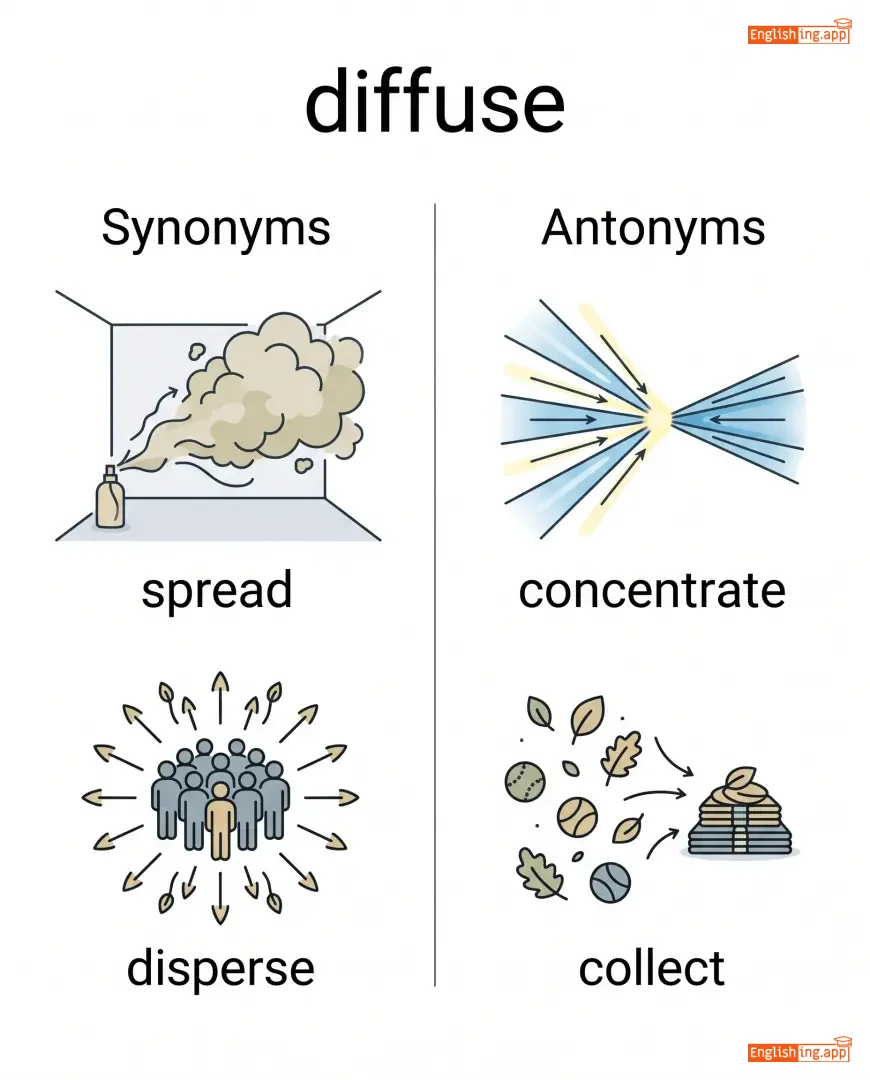
spread, disperse, scatter, distribute, dissipate
••••••
|
concentrate, collect, gather
••••••
|
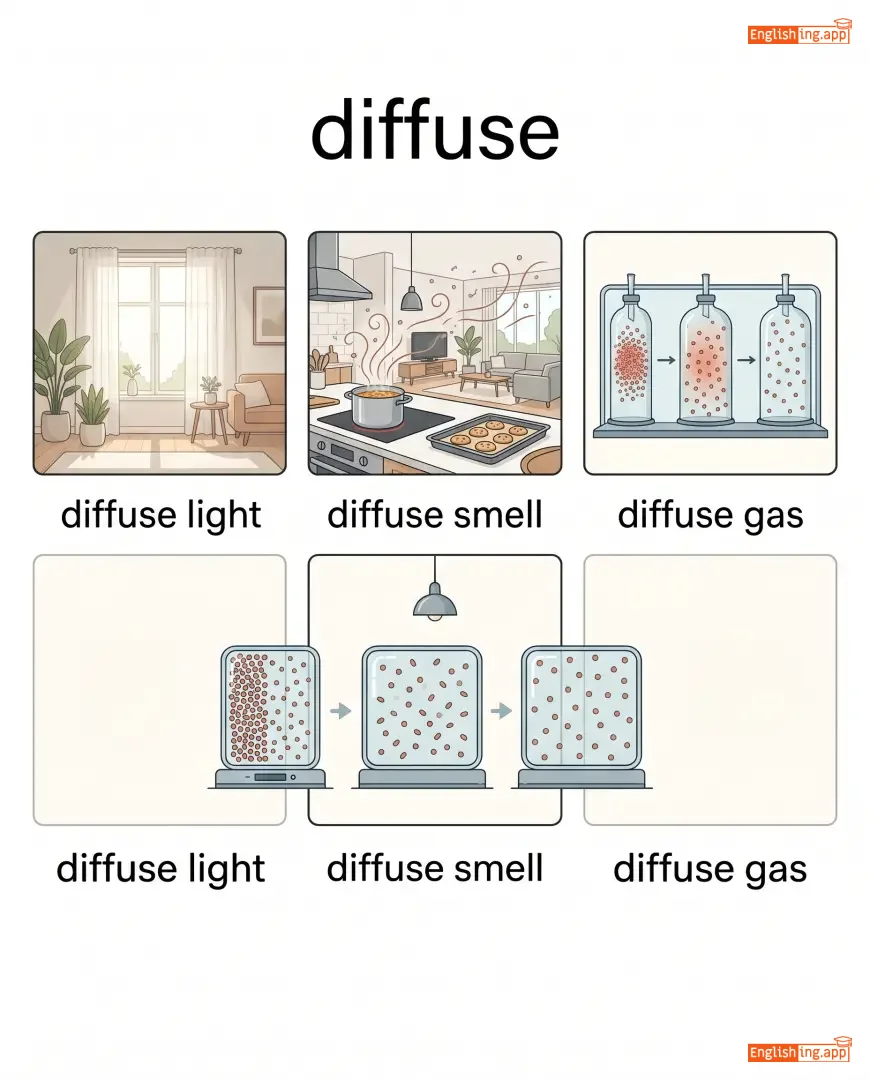
diffuse light, diffuse smell, diffuse gas, diffuse conflict
••••••
|
No •••••• |
|
#2457
🙇
|
/ˈdɪfɪdənt/
adjective
••••••
|
- •••••• | - •••••• | - •••••• | - •••••• | - •••••• | - •••••• |
Shy or lacking confidence in one's own abilities.
••••••
|
He was too diffident to ask a question in class. |
- •••••• | - •••••• | - •••••• | - •••••• |
shy, timid, self-effacing, modest, unconfident
••••••
|
confident, bold, assertive
••••••
|
seem diffident, appear diffident, act diffidently
••••••
|
No •••••• |
|
#2458
😶
|
/ˈdɪfɪdəns/
noun
(迪菲登斯)
••••••
|
|
缺乏自信
quefa zixin
••••••
|
- •••••• | - •••••• | - •••••• | - •••••• |
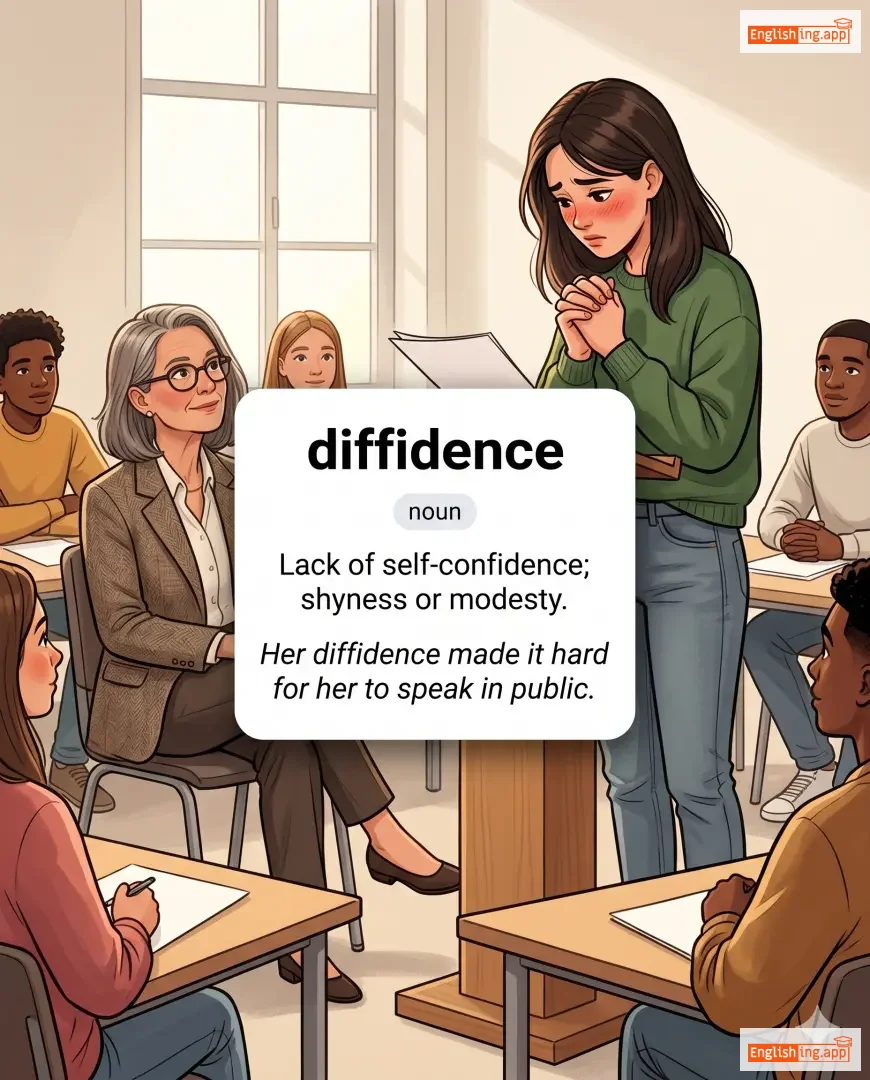
Lack of self-confidence; shyness or modesty.
••••••
|
Her diffidence made it hard for her to speak in public. |
她的缺乏自信让她很难在公众面前发言。
Ta de quefa zixin rang ta hen nan zai gongzhong mianqian fayan.
••••••
|
- •••••• | - •••••• | - •••••• |
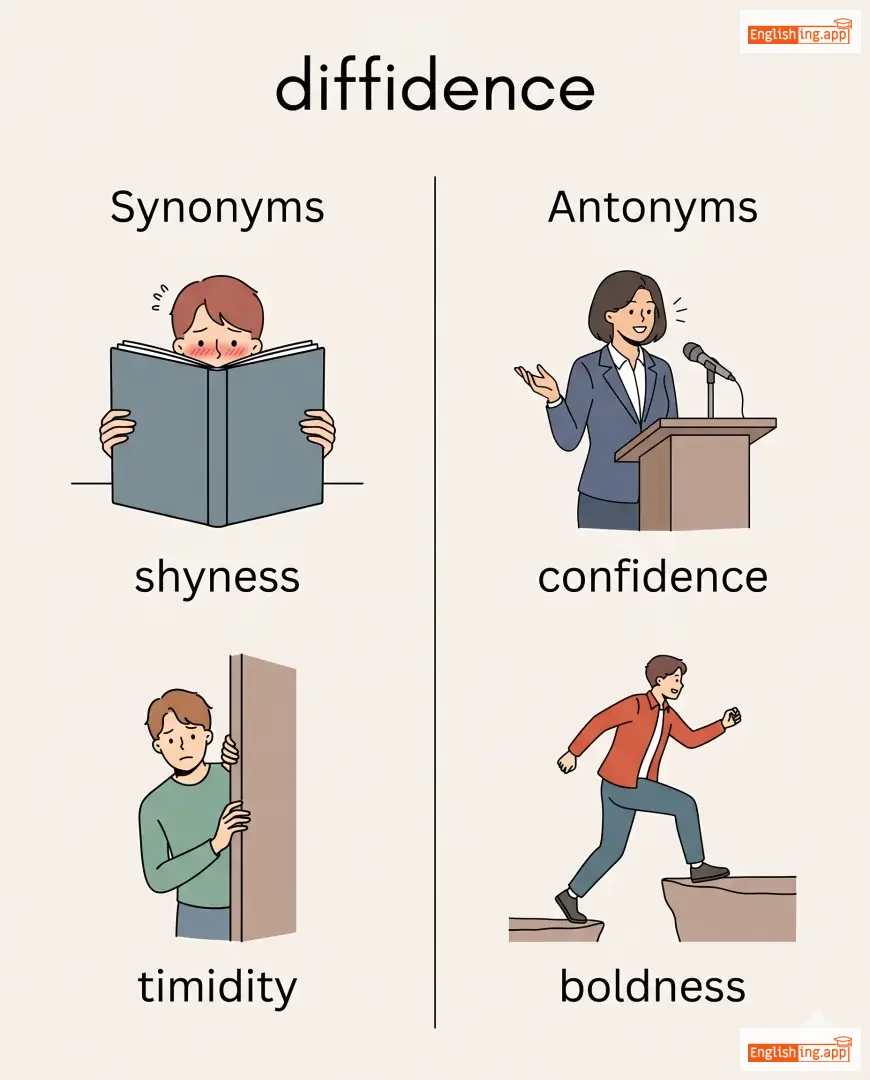
shyness, timidity, insecurity, reserve, modesty
••••••
|
confidence, boldness, assertiveness
••••••
|
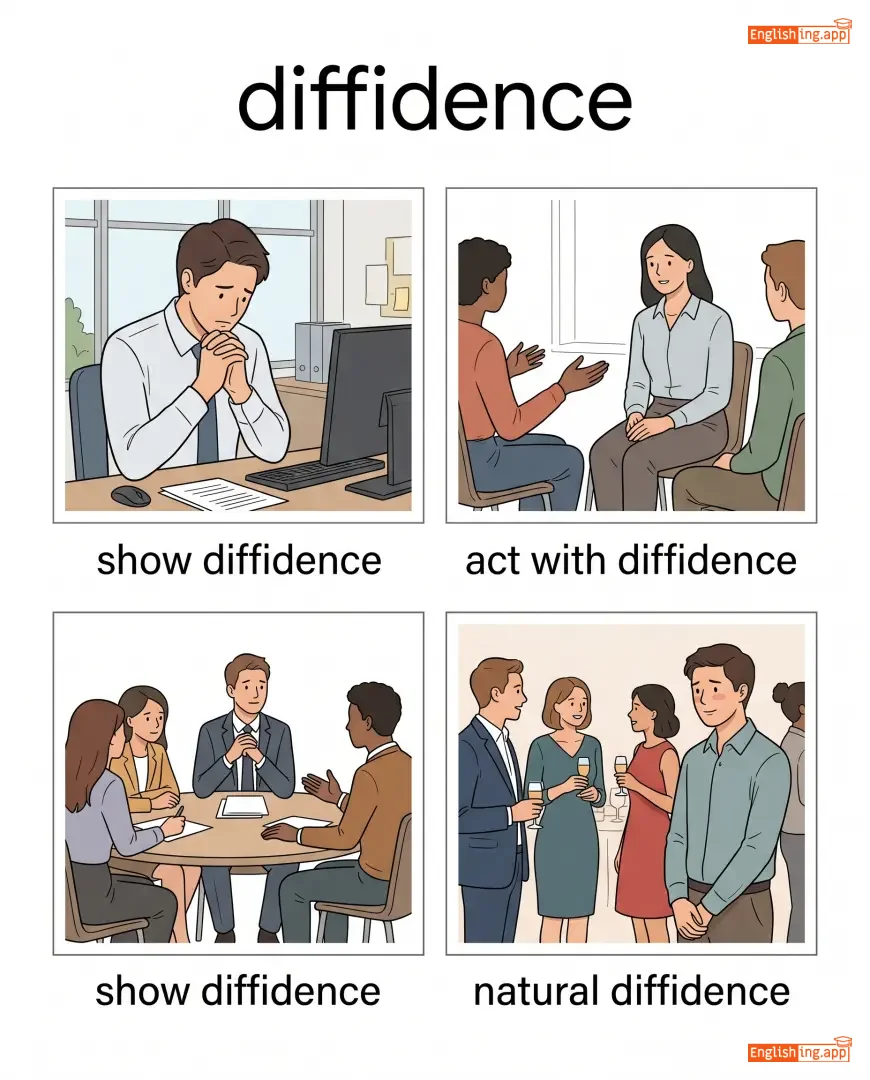
show diffidence, act with diffidence, natural diffidence
••••••
|
Diffidence 意味着缺乏自信 - 记住 D = Down 自信。
••••••
|
|
#2459
🧩
|
/ˌdɪfəˈrɛnʃieɪt/
verb
(区分)
••••••
|
- •••••• |
区分
qufen
••••••
|
differentiated
区分了
••••••
|
differentiated
区分了
••••••
|
differentiates
区分
••••••
|
differentiating
区分中
••••••
|
To recognize or make a distinction between things.
••••••
|
It is important to differentiate between fact and opinion.
重要的是区分事实和意见。
••••••
|
重要的是区分事实和意见。
Zhongyao de shi qufen shishi he yijian.
••••••
|
differentiate yourself
区分你自己
••••••
|
To make oneself stand out as unique or distinct.
••••••
|
区分你自己
qufen ni ziji
••••••
|
distinguish, discern, separate, identify, contrast
••••••
|
confuse, equate, mix
••••••
|
differentiate clearly, differentiate products, differentiate features
••••••
|
区分意味着区分 - 记住事实与意见的区别。
••••••
|
|
#2460
⚖️
|
/ˌdɪfəˈrɛnʃəl/
adjective
(差异)
••••••
|
- •••••• |
差异的
chayi de
••••••
|
- •••••• | - •••••• | - •••••• | - •••••• |
Relating to or showing a difference; involving a distinction.
••••••
|
There is a differential treatment between the two groups. |
这两个群体之间存在差异待遇。
Zhe liang ge qunti zhijian cunzai chayi daiyu.
••••••
|
- •••••• | - •••••• | - •••••• |
distinct, variable, contrasting, divergent, relative
••••••
|
uniform, identical, equal
••••••
|
differential equation, differential treatment, wage differential
••••••
|
Differential意味着差异 - 就像差异待遇
••••••
|
Vocabulary Quiz
Test your vocabulary by matching words with their translations or meanings.
Login to take the quiz
Comments (0)
Share your thoughts and join the discussion.
Join the discussion by logging in
Login to CommentNo comments yet
Be the first to share your thoughts!