



Swipe left or right, or use the buttons. Tap image to zoom.
例句翻译
单词
Lesson 137Lesson 137 - 遮罩切换
|
表情符号
|
单词 | Images | 翻译 | 过去时 | 过去分词 | 第三人称单数 | 动名词 | 含义 | 例句 | 例句翻译 | 示例表达 | 示例表达含义 | 示例表达翻译 | 同义词 | 反义词 | 搭配词 | 助记符 |
|---|---|---|---|---|---|---|---|---|---|---|---|---|---|---|---|---|---|
|
#4081
🚫
|
/ˈhɛrətɪk/
noun
(赫雷蒂克)
••••••
|
- •••••• |
异端分子
yìduān fēnzǐ
••••••
|
- •••••• | - •••••• | - •••••• | - •••••• |
a person who holds beliefs that go against established religious teachings or accepted beliefs.
••••••
|
The church declared him a heretic for his radical ideas. |
教会因他的激进思想而宣判他为异端分子。
jiàohuì yīn tā de jījìn sīxiǎng ér xuānpàn tā wéi yìduān fēnzǐ.
••••••
|
- •••••• | - •••••• | - •••••• |
nonconformist, dissenter, rebel, skeptic
••••••
|
believer, conformist, orthodox
••••••
|
burned as heretic, called a heretic, religious heretic
••••••
|
Heretic - 赫 (he) + 疯 (fēng) - 他人觉得疯子就是异端分子。
••••••
|
|
#4082
🌍
|
/ˌhɛtərəʤəˈniːɪti/
noun
(异质性)
••••••
|
- •••••• |
异质性
yizhi xing
••••••
|
- •••••• | - •••••• | - •••••• | - •••••• |
the quality or state of being diverse in character or content
••••••
|
The cultural heterogeneity of the city makes it vibrant and unique. |
这座城市的文化异质性使其充满活力且独特。
Zhe zuo chengshi de wenhua yizhi xing shi qi chongman huoli qie dute.
••••••
|
- •••••• | - •••••• | - •••••• |
diversity, variety, multiplicity, assortment
••••••
|
homogeneity, uniformity
••••••
|
cultural heterogeneity, social heterogeneity, genetic heterogeneity, economic heterogeneity
••••••
|
Hetero 意味着不同 + geneity 意味着结构 → 不同元素的混合
••••••
|
|
#4083
🌀
|
/ˈhɛtərəˌdɒks/
adjective
(hé tè luó duó kè sī)
••••••
|
|
异端
yì duān
••••••
|
- •••••• | - •••••• | - •••••• | - •••••• |
not conforming with accepted or orthodox standards or beliefs
••••••
|
The professor was known for his heterodox views on religion. |
教授以其在宗教问题上的异端观点而闻名。
Jiàoshòu yǐ qí zài zōngjiào wèntí shàng de yìduān guāndiǎn ér wénmíng.
••••••
|
- •••••• | - •••••• | - •••••• |
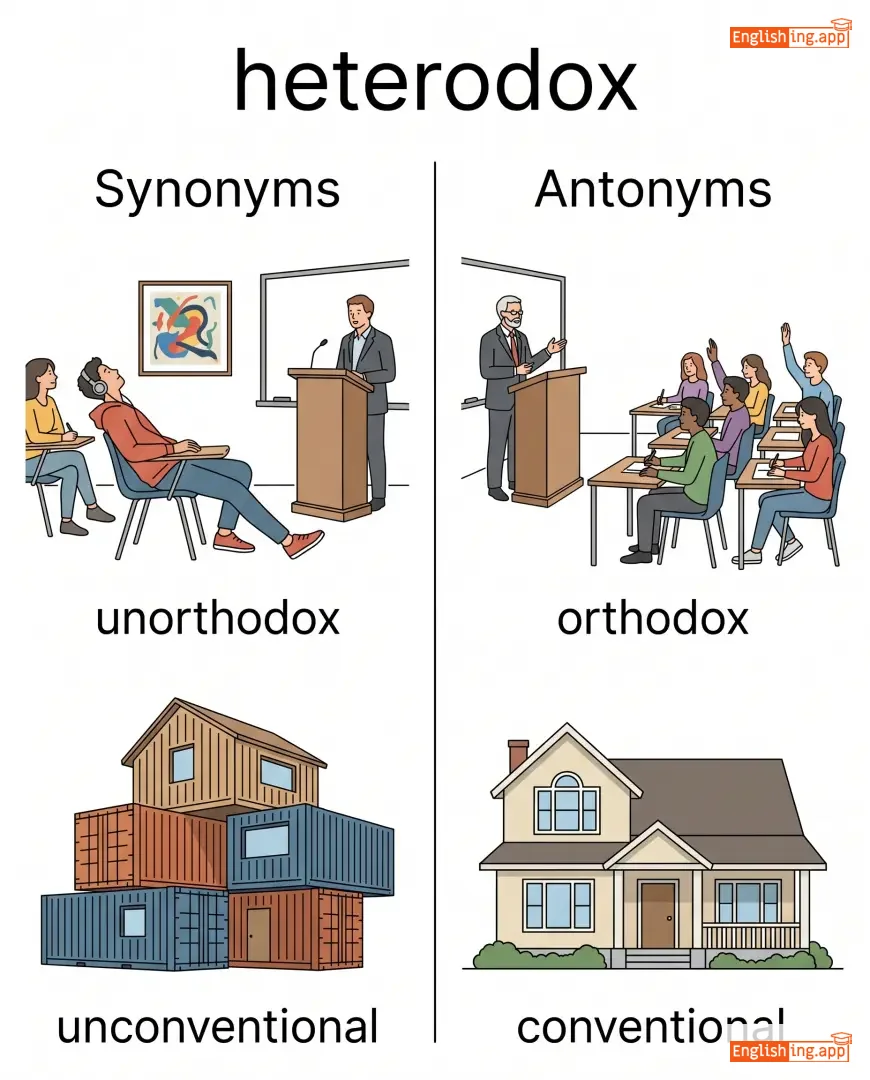
unorthodox, unconventional, radical, nonconformist
••••••
|
orthodox, conventional, traditional
••••••
|
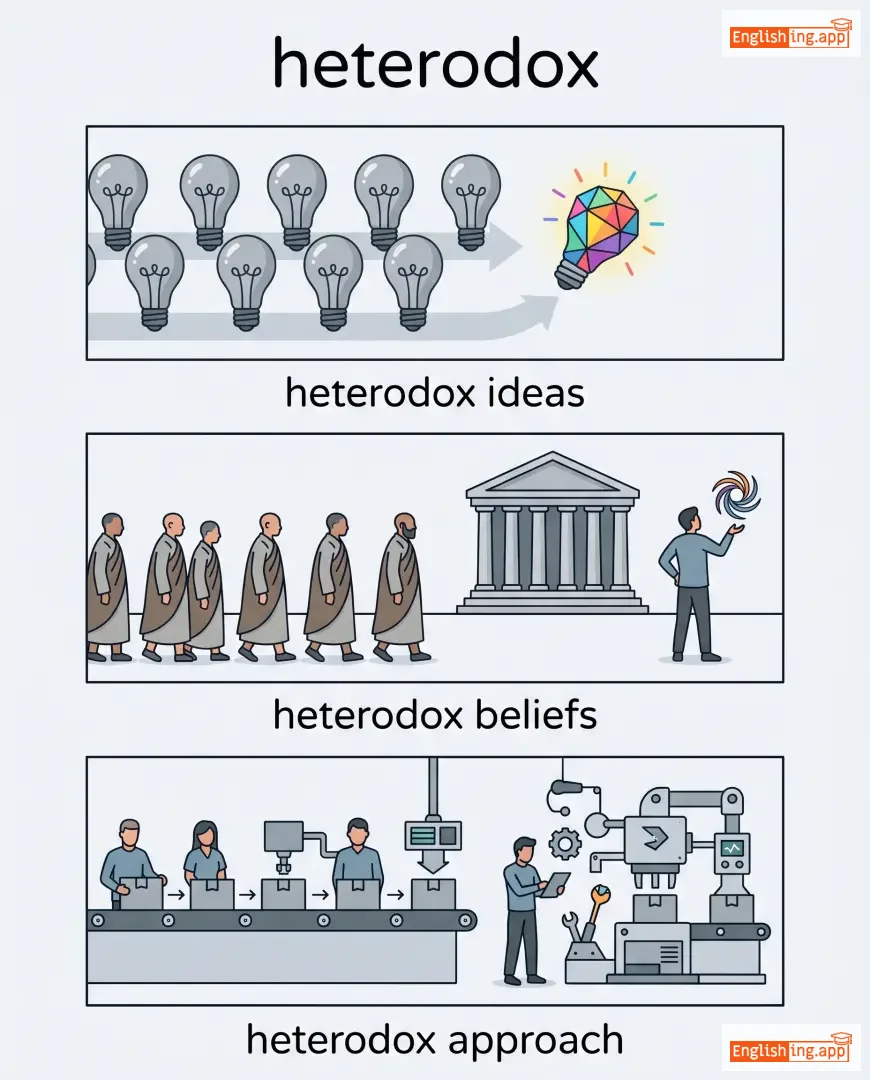
heterodox ideas, heterodox beliefs, heterodox approach, heterodox theory
••••••
|
Hetero意味着不同 + dox (信仰) = 与传统信仰不同的看法
••••••
|
|
#4084
⏸️
|
/ˌhɛzɪˈteɪʃən/
noun
••••••
|
- •••••• | - •••••• | - •••••• | - •••••• | - •••••• | - •••••• |
the act of pausing or being uncertain before doing something
••••••
|
After a moment’s hesitation, he answered the question. |
- •••••• |
without hesitation |
to do something immediately and confidently
••••••
|
- •••••• |
pause, reluctance, uncertainty, doubt
••••••
|
certainty, confidence, decisiveness
••••••
|
moment of hesitation, slight hesitation, hesitation in voice, hesitation before action
••••••
|
No •••••• |
|
#4085
🤔
|
/ˈhɛzɪtənt/
adjective
(海泽坦特)
••••••
|
- •••••• |
犹豫不决
yóu yù bù jué
••••••
|
- •••••• | - •••••• | - •••••• | - •••••• |
uncertain or unwilling to do something quickly; showing doubt or reluctance
••••••
|
She was hesitant to accept the job offer without more information. |
她在没有更多信息的情况下犹豫是否接受工作邀请。
Tā zài méiyǒu gèng duō xìnxī de qíng kuàng xià yóu yù shì fǒu jiē shòu gōngzuò yāoqǐng.
••••••
|
- •••••• | - •••••• | - •••••• |
uncertain, reluctant, cautious, unsure, doubtful
••••••
|
confident, certain, decisive
••••••
|
hesitant to speak, hesitant response, hesitant smile, hesitant approach
••••••
|
海泽坦特表示犹豫不决 - 在做决定时迟疑
••••••
|
|
#4086
😬
|
/ˈhɛzɪtənsi/
noun
(hézītánxī)
••••••
|
- •••••• |
犹豫
yóuyù
••••••
|
- •••••• | - •••••• | - •••••• | - •••••• |
The tendency to pause or delay due to uncertainty or fear.
••••••
|
His hesitancy in answering made everyone doubt his confidence.
他在回答时的犹豫让每个人都怀疑他的自信。
••••••
|
他在回答时的犹豫让每个人都怀疑他的自信。
Tā zài huídá shí de yóuyù ràng měi gè rén dōu huáiyí tā de zìxìn.
••••••
|
- •••••• | - •••••• | - •••••• |
uncertainty, reluctance, wavering, doubt
••••••
|
certainty, eagerness, assurance
••••••
|
hesitancy to act, show hesitancy, overcome hesitancy
••••••
|
Hesitancy 就是犹豫不决 – 中文叫做犹豫。
••••••
|
|
#4087
🤔
|
/ˈhɛzɪtəns/
noun
(哈兹特斯)
••••••
|
- •••••• |
犹豫
youyu
••••••
|
- •••••• | - •••••• | - •••••• | - •••••• |
The quality or state of being reluctant or uncertain.
••••••
|
Her hesitance to speak up delayed the decision. |
她的犹豫延迟了决定。
Ta de youyu yanchi le jueding.
••••••
|
- •••••• | - •••••• | - •••••• |
reluctance, indecision, doubt, hesitation
••••••
|
confidence, decisiveness
••••••
|
show hesitance, express hesitance, overcome hesitance
••••••
|
He sit and tense = Hesitance, 意味着犹豫或不确定。
••••••
|
|
#4088
🦎
|
/ˌhɜːrpəˈtɒlədʒɪst/
noun
(赫尔佩托洛吉斯特)
••••••
|
- •••••• |
爬虫学家
páchóng xuéjiā
••••••
|
- •••••• | - •••••• | - •••••• | - •••••• |
A scientist who studies reptiles and amphibians.
••••••
|
The herpetologist discovered a new species of frog in the rainforest. |
爬虫学家在雨林中发现了一种新青蛙物种。
Páchóng xuéjiā zài yǔlín zhōng fāxiànle yī zhǒng xīn qīngwā wùzhǒng.
••••••
|
- •••••• | - •••••• | - •••••• |
zoologist, reptile scientist, amphibian researcher
••••••
|
layperson, non-scientist
••••••
|
famous herpetologist, research herpetologist, expert herpetologist
••••••
|
爬虫学家 = 爬虫 (爬行动物) + 学家 (专家) = 爬行动物的专家。
••••••
|
|
#4089
⚕️
|
/ˈhɜːrniə/
noun
(疝气)
••••••
|
- •••••• |
疝气
shanqi
••••••
|
- •••••• | - •••••• | - •••••• | - •••••• |
A medical condition where an organ pushes through the muscle or tissue holding it in place.
••••••
|
The doctor diagnosed him with an inguinal hernia.
医生诊断他有腹股沟疝气。
••••••
|
医生诊断他有腹股沟疝气。
Yisheng zhenduan ta you fugu gou shanqi.
••••••
|
- •••••• | - •••••• | - •••••• |
rupture, protrusion, bulge, displacement
••••••
|
intact tissue, normal condition
••••••
|
inguinal hernia, abdominal hernia, treat hernia, hernia surgery
••••••
|
疝气意味着器官突出 – 很容易记住
••••••
|
|
#4090
🏞️
|
/ˈhɜːrmɪtɪdʒ/
noun
(赫尔米塔杰)
••••••
|
- •••••• |
隐居地
yinju di
••••••
|
- •••••• | - •••••• | - •••••• | - •••••• |
A secluded residence or retreat, often for a hermit or religious recluse.
••••••
|
The monk spent years in a hermitage deep in the forest. |
那位和尚在森林深处的隐居地里度过了多年。
Na wei he shang zai sen lin shen chu de yinju di li du guo le duo nian.
••••••
|
- •••••• | - •••••• | - •••••• |
retreat, sanctuary, refuge, monastery, cloister
••••••
|
city, society, community
••••••
|
remote hermitage, mountain hermitage, forest hermitage, secluded hermitage
••••••
|
Hermit + age, 就是为隐士准备的隐居地。
••••••
|
|
#4091
🦀
|
/ˈhɜːrmɪt/
noun
(赫米特)
••••••
|
- •••••• |
隐士
yinshi
••••••
|
- •••••• | - •••••• | - •••••• | - •••••• |
A person who lives alone and apart from society, often for religious or spiritual reasons.
••••••
|
The old hermit lived in a cave for decades.
The old 赫米特 lived in a cave for decades.
••••••
|
那位老隐士在一个洞穴里住了几十年。
na wei lao yinshi zai yige dongxue li zhu le jishi nian.
••••••
|
hermit crab
赫米特 crab
••••••
|
A type of crab that lives in discarded shells for protection.
••••••
|
寄居蟹
jiju xie
••••••
|
recluse, loner, ascetic, solitary, anchorite
••••••
|
socialite, extrovert, companion
••••••
|
religious hermit, cave hermit, hermit lifestyle
••••••
|
Hermit sounds like ‘he mi te’, but means 隐士 who hides away.
••••••
|
|
#4092
🫙
|
/hərˈmɛtɪkli/
adverb
(气密地)
••••••
|
- •••••• |
密封地
mifeng di
••••••
|
- •••••• | - •••••• | - •••••• | - •••••• |
In a way that is completely airtight or sealed off.
••••••
|
The jars were hermetically sealed to preserve freshness. |
罐子被密封起来以保持新鲜。
Guanzi bei mifeng qilai yi baochi xinxian.
••••••
|
- •••••• | - •••••• | - •••••• |
airtightly, securely, tightly, completely
••••••
|
loosely, openly
••••••
|
hermetically sealed, hermetically closed
••••••
|
密封的像密闭罐,保持新鲜。
••••••
|
|
#4093
🔒
|
/hərˈmɛtɪk/
adjective
(赫尔梅蒂克)
••••••
|
|
密封的
mìfēng de
••••••
|
- •••••• | - •••••• | - •••••• | - •••••• |
Completely sealed, especially so that no air can enter or escape.
••••••
|
The medicine was kept in a hermetic container. |
药物被保存在一个密封的容器中。
Yàowù bèi bǎocún zài yīgè mìfēng de róngqì zhōng.
••••••
|
- •••••• | - •••••• | - •••••• |
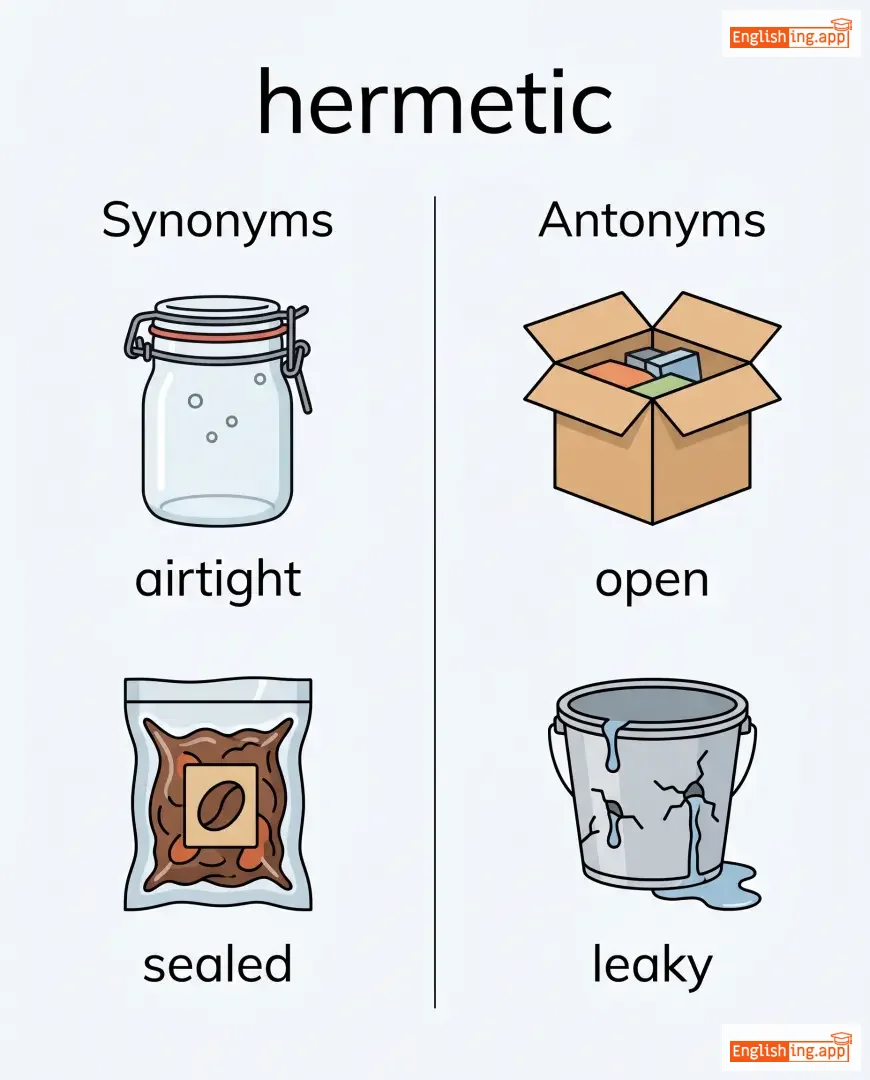
airtight, sealed, closed, watertight, impenetrable
••••••
|
open, leaky, permeable
••••••
|
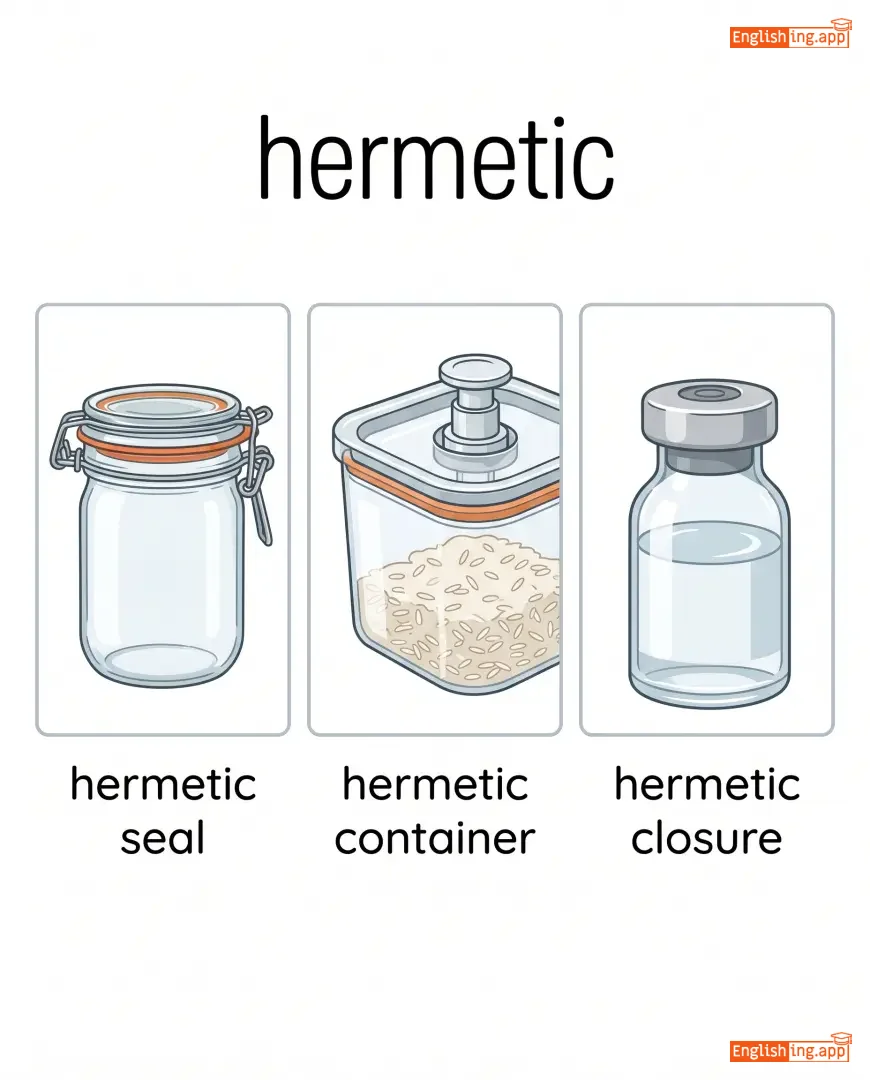
hermetic seal, hermetic container, hermetic closure
••••••
|
密封的就像隐士一样,外面的空气无法进入。
••••••
|
|
#4094
🏰
|
/ˈhɛrɪtɪdʒ/
noun
(海皮尼斯)
••••••
|
|
遗产
yí chǎn
••••••
|
- •••••• | - •••••• | - •••••• | - •••••• |
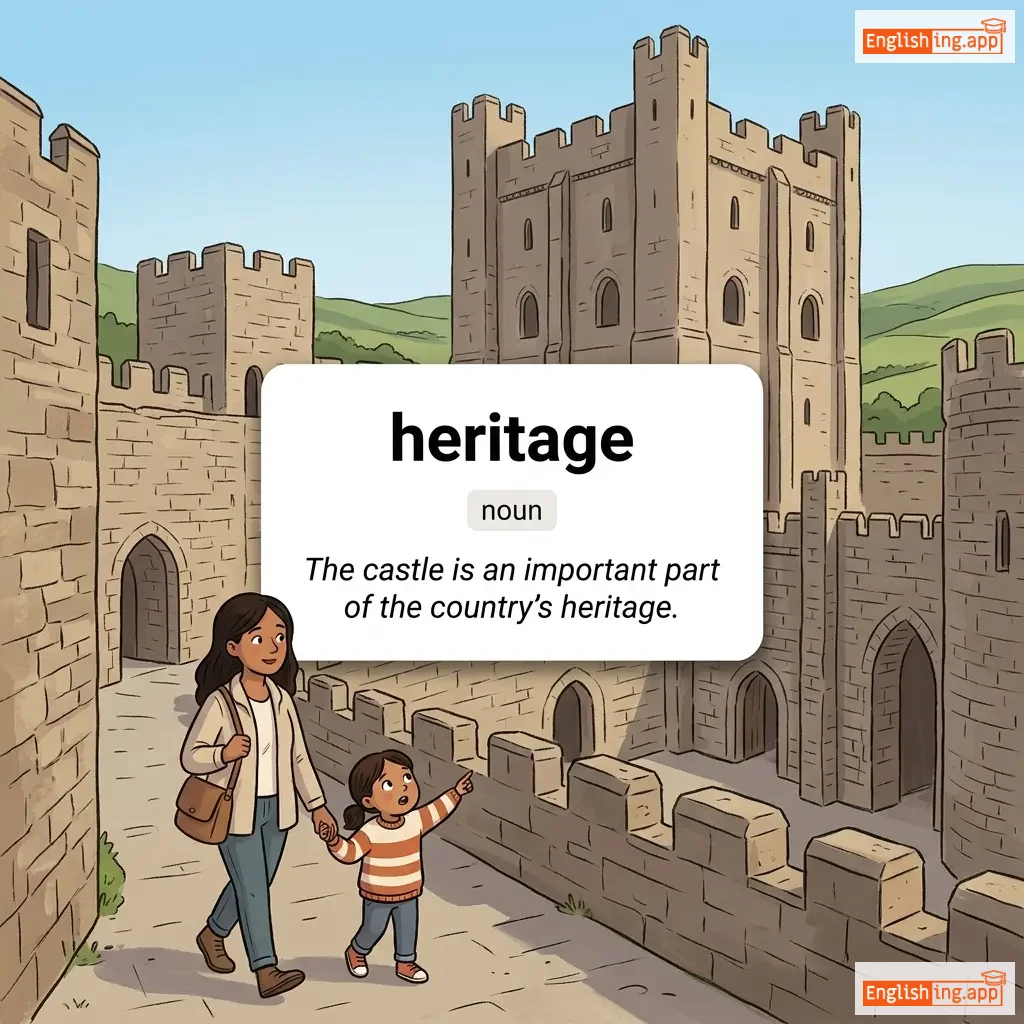
Valued objects and qualities such as historic buildings and cultural traditions passed down from previous generations.
••••••
|
The castle is an important part of the country's heritage. |
城堡是该国遗产的重要部分。
Chéngbǎo shì gāi guó yíchǎn de zhòngyào bùfen.
••••••
|
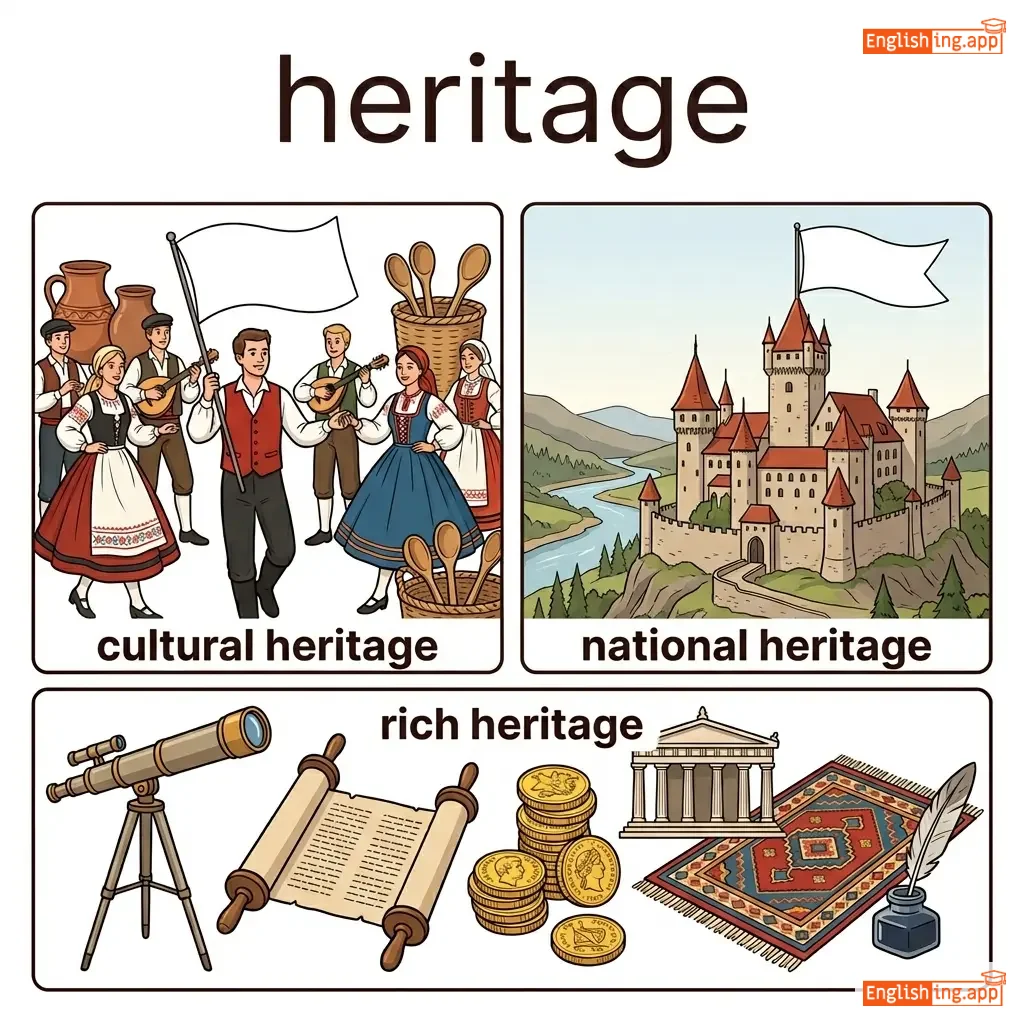
cultural heritage |
The traditions, customs, and artifacts of a community passed down through generations.
••••••
|
文化遗产
wénhuà yíchǎn
••••••
|
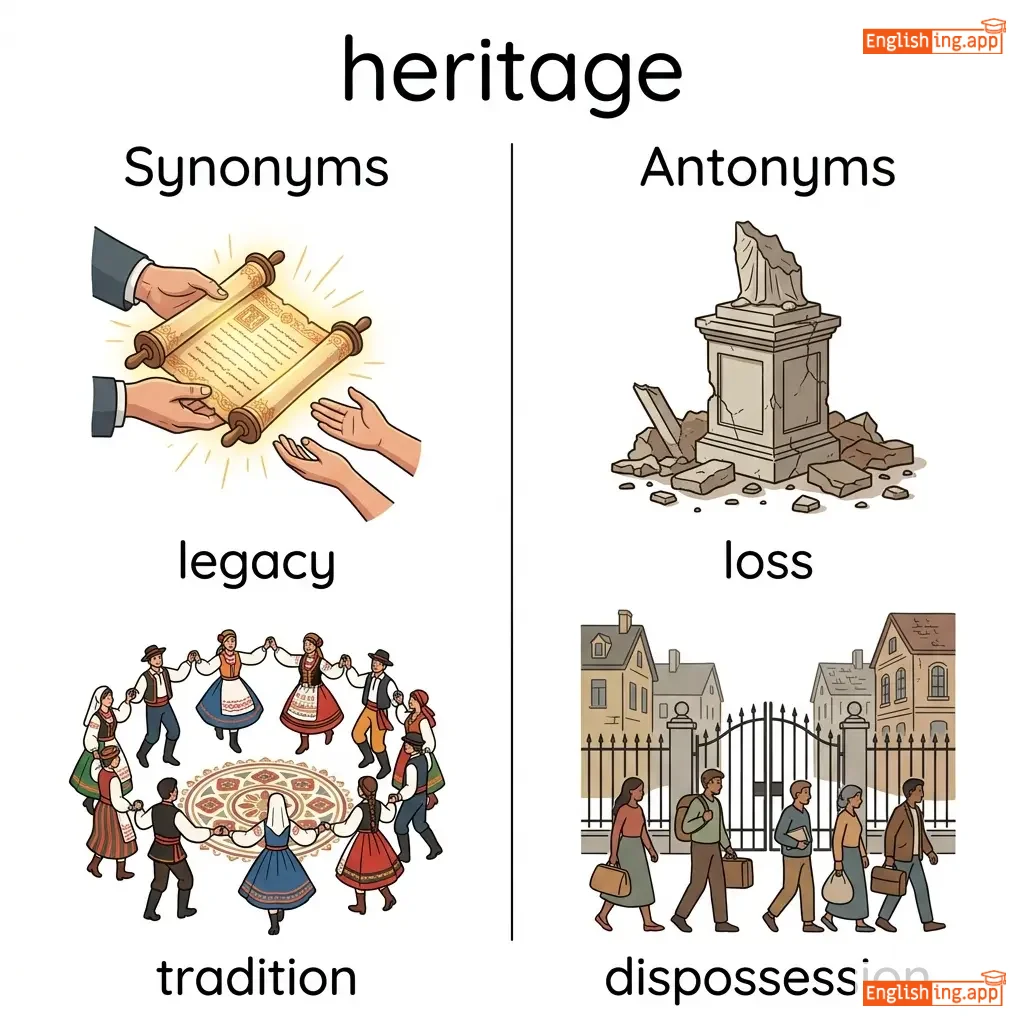
legacy, tradition, inheritance, patrimony, birthright
••••••
|
loss, dispossession
••••••
|
cultural heritage, national heritage, rich heritage, heritage site
••••••
|
遗产是代代相传的传统和价值。
••••••
|
|
#4095
🔥
|
/həˈrɛtɪkəl/
adjective
(异端)
••••••
|
- •••••• |
异端
yìduān
••••••
|
- •••••• | - •••••• | - •••••• | - •••••• |
Relating to or characterized by departure from accepted beliefs or standards, especially in religion.
••••••
|
The priest condemned the book as heretical. |
牧师将这本书谴责为异端。
Mùshī jiāng zhè běn shū qiǎnzé wéi yìduān.
••••••
|
- •••••• | - •••••• | - •••••• |
unorthodox, dissenting, radical, untraditional, nonconformist
••••••
|
orthodox, accepted, traditional
••••••
|
heretical views, heretical ideas, heretical beliefs
••••••
|
Heretical sounds like '异端' — a deviation from traditional beliefs.
••••••
|
|
#4096
🧵
|
/hɛm/
noun/verb
(hēmu)
••••••
|
- •••••• |
衣边
yī biān
••••••
|
hemmed
hēmù
••••••
|
hemmed
hēmù
••••••
|
hems
hēms
••••••
|
hemming
hēmíng
••••••
|
the edge of a piece of cloth that is folded and sewn; to fold and sew the edge of cloth
••••••
|
She hemmed the dress to make it shorter.
她把裙子的边缘缝上去,弄短了它。
••••••
|
她把裙子的边缘缝上去,弄短了它。
Tā bǎ qúnzi de biānyuán fèng shàngqù, nòng duǎnle tā.
••••••
|
hem and haw
犹豫不决
••••••
|
to hesitate or be indecisive in speech or action
••••••
|
犹豫
yóuyù
••••••
|
border, edge, seam, stitch
••••••
|
tear, rip
••••••
|
dress hem, hem the skirt, hemmed edge, hem stitching
••••••
|
Hem意为将衣物边缘缝制。
••••••
|
|
#4097
🔥
|
/ˈhɛrəsi/
noun
(hé ěr xī)
••••••
|
- •••••• |
异端
yìduān
••••••
|
- •••••• | - •••••• | - •••••• | - •••••• |
belief or opinion that goes against established religious doctrine or accepted beliefs.
••••••
|
In medieval times, heresy was often punished severely. |
在中世纪,异端常常受到严厉惩罚。
Zai zhong shi ji, yìduān chángcháng shòudào yánlì chéngfá.
••••••
|
- •••••• | - •••••• | - •••••• |
unorthodoxy, dissent, blasphemy, heterodoxy
••••••
|
orthodoxy, belief, conformity
••••••
|
religious heresy, charge of heresy, commit heresy
••••••
|
HERESY 意思是 'Here she (here-sy)' 反对信仰的观点。
••••••
|
|
#4098
🧬
|
/həˈrɛdəˌtɛri/
adjective
(hé rèn dì tǎ lǐ)
••••••
|
- •••••• |
遗传的
yíchuán de
••••••
|
- •••••• | - •••••• | - •••••• | - •••••• |
passed from parents to their children through genes or by inheritance.
••••••
|
Diabetes can be a hereditary condition.
糖尿病可能是一种遗传性疾病。
••••••
|
糖尿病可能是一种遗传性疾病。
Tángniàobìng kěnéng shì yī zhǒng yíchuán xìng jíbìng.
••••••
|
- •••••• | - •••••• | - •••••• |
genetic, inherited, familial, ancestral
••••••
|
acquired, noninherited
••••••
|
hereditary disease, hereditary title, hereditary traits
••••••
|
遗传的意思是从父母那里遗传过来,意味着从一代传给下一代。
••••••
|
|
#4099
🔮
|
/ˌhɪərˈæftər/
adverb/noun
(希尔阿夫特)
••••••
|
- •••••• |
从现在起 / 来世
cong xianzai qi / laishi
••••••
|
- •••••• | - •••••• | - •••••• | - •••••• |
from now on; in the future; also refers to life after death.
••••••
|
Hereafter, all reports must be submitted electronically. |
从现在起,所有报告必须通过电子方式提交。
Cong xianzai qi, suoyou baogao bixu tongguo dianzi fangshi tijiao.
••••••
|
- •••••• | - •••••• | - •••••• |
from now on, henceforth, in the future, afterlife
••••••
|
before, past
••••••
|
life hereafter, hereafter referred, hereafter mentioned
••••••
|
Here + After 意思是从现在开始 - 记住,它是关于未来或死后的生活。
••••••
|
|
#4100
🐑
|
/hɜːrd/
noun/verb
••••••
|
- •••••• | - •••••• |
herded
••••••
|
herded
••••••
|
herds
••••••
|
herding
••••••
|
a large group of animals of the same type that live and feed together; or to gather animals into a group.
••••••
|
The shepherd herded the sheep into the pen. |
- •••••• |
herd mentality |
the tendency for people to be influenced by their peers to adopt certain behaviors.
••••••
|
- •••••• |
flock, group, drove, pack, crowd
••••••
|
individual, solitary
••••••
|
herd of cattle, herd of elephants, herd animals, herd mentality
••••••
|
No •••••• |
|
#4101
💪
|
/ˌhɜːrkjʊˈliːən/
adjective
(赫尔克力安)
••••••
|
- •••••• |
极其困难
jíqí kùnnán
••••••
|
- •••••• | - •••••• | - •••••• | - •••••• |
Requiring great strength or effort; very difficult to perform.
••••••
|
It was a herculean task to rebuild the city after the disaster. |
灾难后重建城市是一项极其困难的任务。
Zāinàn hòu chóngjiàn chéngshì shì yī xiàng jíqí kùnnán de rènwù.
••••••
|
Herculean effort |
An extraordinary effort requiring immense strength or determination.
••••••
|
赫尔克力安努力
hè ěr kè lì ān nǔlì
••••••
|
arduous, demanding, strenuous, monumental, tough
••••••
|
easy, simple, effortless
••••••
|
herculean task, herculean effort, herculean challenge
••••••
|
Herculean 意味着像 Hercules 一样强大的工作 – 中文中是极其困难。
••••••
|
|
#4102
🐄
|
/hɜːrˈbɪvərəs/
adjective
(食草动物)
••••••
|
|
食草动物
shī cǎo dòngwù
••••••
|
- •••••• | - •••••• | - •••••• | - •••••• |
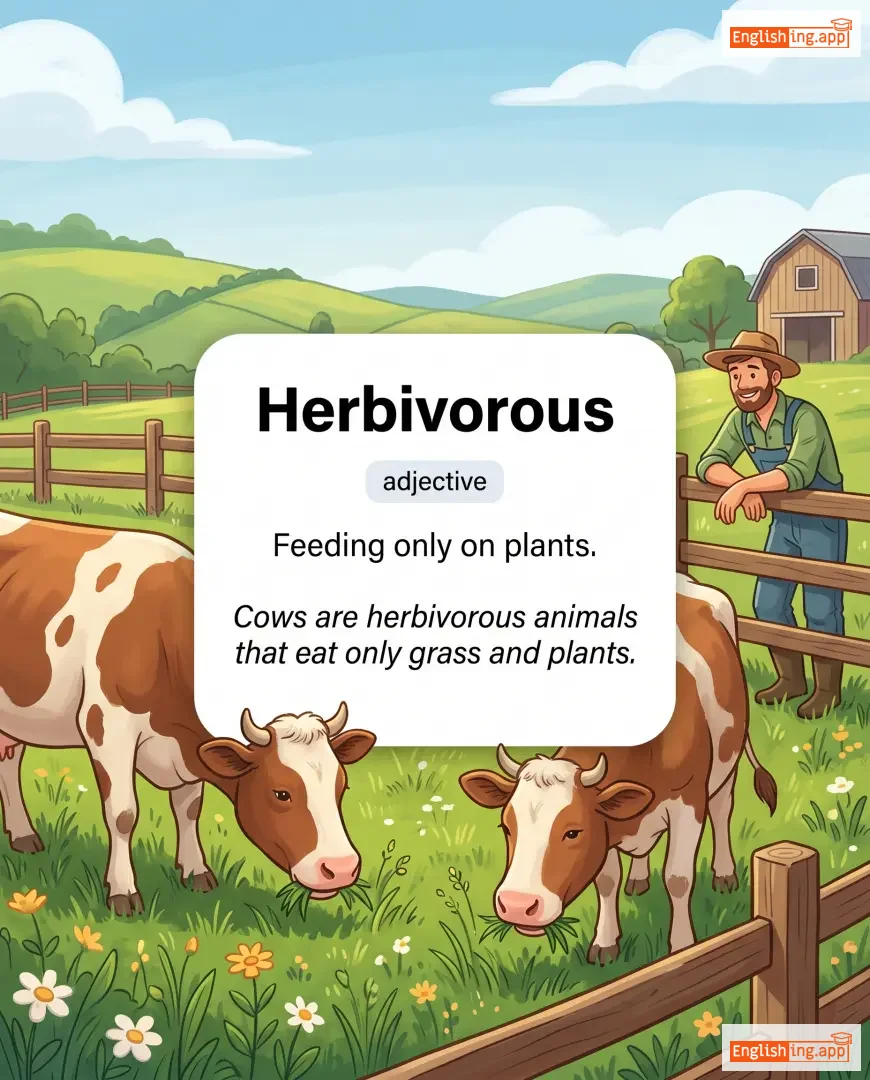
Feeding only on plants.
••••••
|
Cows are herbivorous animals that eat only grass and plants. |
牛是食草动物,只吃草和植物。
Niú shì shī cǎo dòngwù, zhǐ chī cǎo hé zhíwù.
••••••
|
- •••••• | - •••••• | - •••••• |
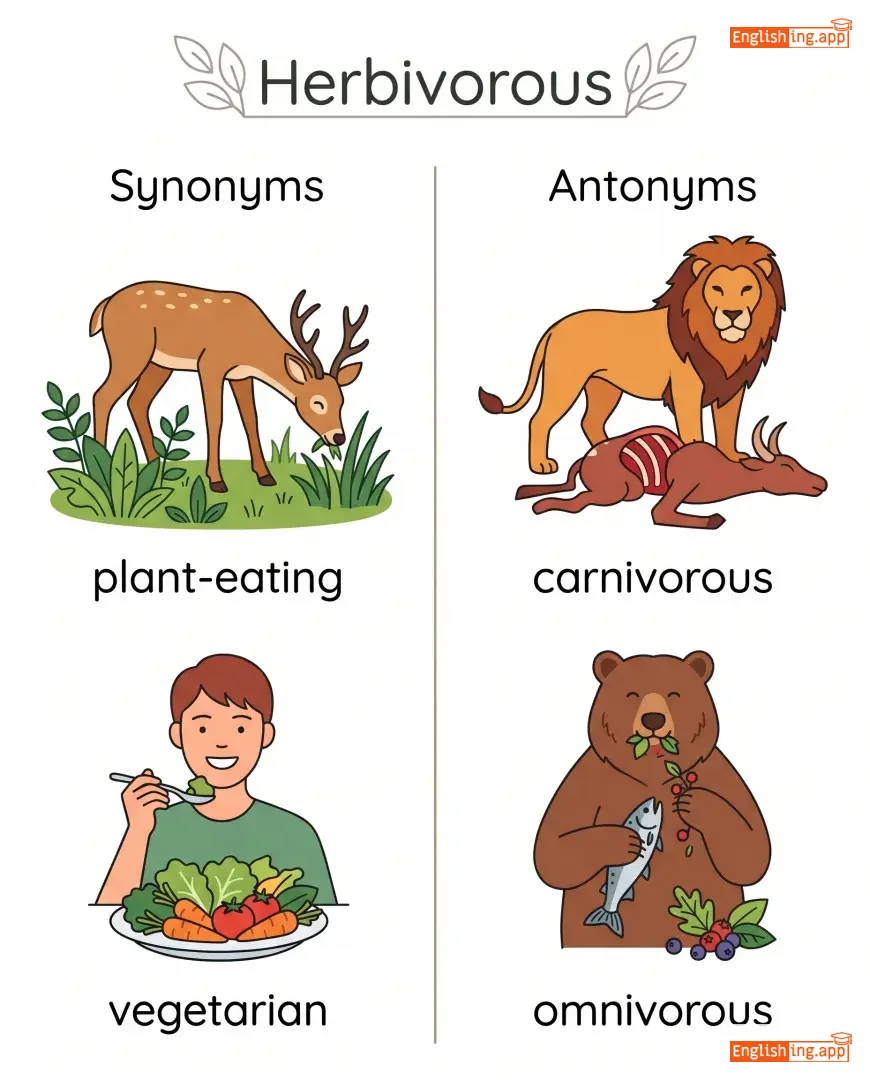
plant-eating, vegetarian, graminivorous
••••••
|
carnivorous, omnivorous
••••••
|
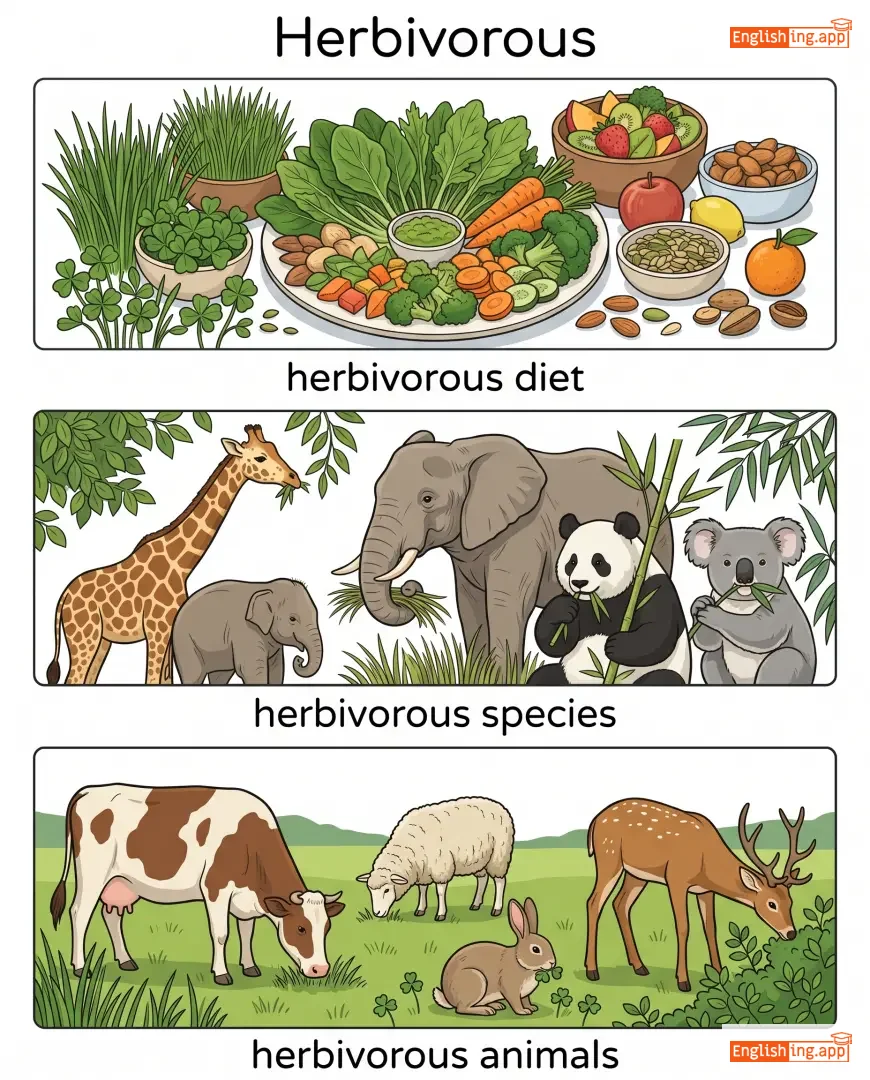
herbivorous diet, herbivorous species, herbivorous animals
••••••
|
Herbivorous = Herb + vorous (eater) – 中文 食草动物.
••••••
|
|
#4103
☠️
|
/ˈhɜːrbɪsaɪd/
noun
(hɜːrbɪsaɪd)
••••••
|
- •••••• |
除草剂
chúcǎo jì
••••••
|
- •••••• | - •••••• | - •••••• | - •••••• |
A chemical substance used to kill unwanted plants, especially weeds.
••••••
|
Farmers used herbicide to protect their crops from invasive weeds.
农民们使用除草剂来保护他们的作物免受侵入性杂草的影响。
••••••
|
农民们使用除草剂来保护他们的作物免受侵入性杂草的影响。
Nóngmínmen shǐyòng chúcǎo jì lái bǎohù tāmen de zuòwù miǎn shòu qīnrùxìng zá cǎo de yǐngxiǎng.
••••••
|
- •••••• | - •••••• | - •••••• |
weedkiller, pesticide, defoliant
••••••
|
fertilizer, nutrient
••••••
|
apply herbicide, herbicide resistance, herbicide spray
••••••
|
除草剂 = 除 + 草 + 剂 = 用来杀死杂草的化学物质。
••••••
|
|
#4104
📚
|
/hɜːrˈbɛəriəm/
noun
(赫尔巴里姆)
••••••
|
- •••••• |
植物标本馆
zhíwù biāoběn guǎn
••••••
|
- •••••• | - •••••• | - •••••• | - •••••• |
A collection of preserved plant specimens and associated data used for scientific study.
••••••
|
The university maintains a large herbarium for research and education.
大学为研究和教育保持着一个大型植物标本馆。
••••••
|
大学为研究和教育保持着一个大型植物标本馆。
Dàxué wèi yánjiū hé jiàoyù bǎochí zhe yīgè dàxíng zhíwù biāoběn guǎn.
••••••
|
- •••••• | - •••••• | - •••••• |
plant collection, botanical archive, specimen collection
••••••
|
wild plants, natural growth
••••••
|
herbarium collection, herbarium specimen, botanical herbarium
••••••
|
Herbarium 意味着 Herb + 标本馆 – 存放植物的地方。
••••••
|
|
#4105
🌿
|
/hɜːrˈbeɪʃəs/
adjective
(hèrbèiʃəs)
••••••
|
- •••••• |
草本
cǎo běn
••••••
|
- •••••• | - •••••• | - •••••• | - •••••• |
Relating to or resembling herbs; plants with soft, non-woody stems.
••••••
|
The garden was filled with herbaceous plants that thrived in the summer.
花园里充满了草本植物,它们在夏季茁壮成长。
••••••
|
花园里充满了草本植物,它们在夏季茁壮成长。
Huāyuán lǐ chōngmǎnle cǎoběn zhíwù, tāmen zài xiàjì zhuózhuàng chéngzhǎng.
••••••
|
- •••••• | - •••••• | - •••••• |
leafy, green, grassy, non-woody
••••••
|
woody, shrubby
••••••
|
herbaceous plants, herbaceous border, herbaceous vegetation
••••••
|
Herbaceous 代表着草本植物,柔软的茎 – 中文里是草本.
••••••
|
|
#4106
📯
|
/ˈhɛrəld/
noun/verb
(赫拉尔德)
••••••
|
- •••••• |
先兆
xian zhao
••••••
|
heralded
赫拉尔德德
••••••
|
heralded
赫拉尔德德
••••••
|
heralds
赫拉尔德斯
••••••
|
heralding
赫拉尔丁
••••••
|
A person or thing that announces or signals the approach of something; to announce or signal.
••••••
|
The blooming flowers herald the arrival of spring.
盛开的花朵预示着春天的到来。
••••••
|
盛开的花朵预示着春天的到来。
Sheng kai de huaduo yushi zhe chuntian de daolai.
••••••
|
herald of change
变化的先兆
••••••
|
A sign or messenger that something new is about to begin.
••••••
|
变化的先兆
Bianhua de xianzhao
••••••
|
messenger, announcer, forerunner, harbinger
••••••
|
follower, successor, conceal
••••••
|
herald of spring, herald a new era, herald of hope, herald good news
••••••
|
Herald的意思是先兆 📯 — 记住,'Her'(它)'ald'(新)带来消息。
••••••
|
|
#4107
👑
|
/ˈhɛptɑːrki/
noun
(héptàrkī)
••••••
|
- •••••• |
七国联邦
qī guó lián bāng
••••••
|
- •••••• | - •••••• | - •••••• | - •••••• |
A group of seven rulers or governments, especially the seven Anglo-Saxon kingdoms in early England.
••••••
|
The history book described the heptarchy of Anglo-Saxon England.
历史书描述了盎格鲁撒克逊英格兰的七国联合。
••••••
|
历史书描述了盎格鲁撒克逊英格兰的七国联合。
Lì shǐ shū miáo shù le àng gé lǔ sà kè xùn yīng gé lán de qī guó lián bāng.
••••••
|
- •••••• | - •••••• | - •••••• |
seven kingdoms, confederation, alliance
••••••
|
monarchy, unity, empire
••••••
|
Anglo-Saxon heptarchy, English heptarchy, seven rulers
••••••
|
Hepta意味着七 + archy意味着政府 ➝ 七国联邦 = 七个政府的统治。
••••••
|
|
#4108
🔷
|
/ˈhɛptəˌɡɒn/
noun
(七边形)
••••••
|
- •••••• |
七边形
qī biān xíng
••••••
|
- •••••• | - •••••• | - •••••• | - •••••• |
A polygon with seven sides and seven angles.
••••••
|
The math teacher drew a heptagon on the board.
数学老师在黑板上画了一个七边形。
••••••
|
数学老师在黑板上画了一个七边形。
Shùxué lǎoshī zài hēibǎn shàng huàle yīgè qī biān xíng.
••••••
|
- •••••• | - •••••• | - •••••• |
seven-sided figure, polygon, shape
••••••
|
circle, triangle, square
••••••
|
regular heptagon, seven-sided heptagon, geometric heptagon
••••••
|
Hepta 意味着七 (7) + gon 意味着角 ➝ 七边形意味着七个角的形状。
••••••
|
|
#4109
🐓
|
/ˈhɛnˌpɛk/
verb
••••••
|
- •••••• | - •••••• |
henpecked
••••••
|
henpecked
••••••
|
henpecks
••••••
|
henpecking
••••••
|
To continually criticize, nag, or dominate (especially a husband).
••••••
|
He felt henpecked by his overly controlling wife. |
- •••••• |
henpecked husband |
A man who is excessively controlled by his wife.
••••••
|
- •••••• |
nag, scold, criticize, dominate
••••••
|
support, encourage, praise
••••••
|
henpecked husband, constantly henpeck, henpeck by wife
••••••
|
No •••••• |
|
#4110
🩸
|
/ˈhɛmərɪdʒ/
noun/verb
(出血)
••••••
|
- •••••• |
出血
chūxuè
••••••
|
hemorrhaged
出血了
••••••
|
hemorrhaged
出血了
••••••
|
hemorrhages
出血
••••••
|
hemorrhaging
出血
••••••
|
A significant loss of blood from a ruptured blood vessel, or to lose blood heavily.
••••••
|
The patient suffered a severe brain hemorrhage.
患者遭受了严重的脑出血。
••••••
|
患者遭受了严重的脑出血。
Huànzhě zāoshòule yánzhòng de nǎo chūxuè.
••••••
|
financial hemorrhage
财务出血
••••••
|
A situation where money is being lost rapidly and uncontrollably.
••••••
|
财务出血
cáiwù chūxuè
••••••
|
bleeding, blood loss, outflow, discharge, effusion
••••••
|
clotting, coagulation, stoppage
••••••
|
severe hemorrhage, internal hemorrhage, hemorrhage control, massive hemorrhage
••••••
|
出血是血液流出。记住:'出'代表流出,'血'是血液。
••••••
|
Vocabulary Quiz
Test your vocabulary by matching words with their translations or meanings.
Login to take the quiz
Comments (0)
Share your thoughts and join the discussion.
Join the discussion by logging in
Login to CommentNo comments yet
Be the first to share your thoughts!