


Swipe left or right, or use the buttons. Tap image to zoom.
例句翻译
单词
Lesson 171Lesson 171 - 遮罩切换
|
表情符号
|
单词 | Images | 翻译 | 过去时 | 过去分词 | 第三人称单数 | 动名词 | 含义 | 例句 | 例句翻译 | 示例表达 | 示例表达含义 | 示例表达翻译 | 同义词 | 反义词 | 搭配词 | 助记符 |
|---|---|---|---|---|---|---|---|---|---|---|---|---|---|---|---|---|---|
|
#5101
🙋
|
/ˈleɪmən/
noun
(lèimàn)
••••••
|
- •••••• |
外行
wàiháng
••••••
|
- •••••• | - •••••• | - •••••• | - •••••• |
A person without professional or specialized knowledge in a particular subject.
••••••
|
To a layman, the medical explanation was confusing.
To a layman, the medical explanation was confusing.
••••••
|
对外行人来说,医学解释很混乱。
duì wàiháng rén lái shuō, yīxué jiěshì hěn hùnluàn.
••••••
|
in layman's terms
in layman's terms
••••••
|
Explained in simple, easy-to-understand language.
••••••
|
用外行人术语
yòng wàiháng rén shùyǔ
••••••
|
non-expert, amateur, novice, outsider, civilian
••••••
|
expert, professional, specialist
••••••
|
ordinary layman, layman’s view, layman’s terms
••••••
|
Layman = 外行 (wàiháng),不懂专业的行内人。
••••••
|
|
#5102
🕊️
|
/ˈliːweɪ/
noun
(līwēi)
••••••
|
- •••••• |
回旋余地
huíxuán yúdì
••••••
|
- •••••• | - •••••• | - •••••• | - •••••• |
Freedom to act within certain limits; extra space or time.
••••••
|
The manager gave the team some leeway to finish the project. |
经理给了团队一些回旋余地来完成项目。
Jīnglǐ gěile tuánduì yīxiē huíxuán yúdì lái wánchéng xiàngmù.
••••••
|
give leeway |
To allow flexibility or freedom in actions or decisions.
••••••
|
给予回旋余地
jǐyǔ huíxuán yúdì
••••••
|
freedom, latitude, margin, flexibility, allowance
••••••
|
restriction, limitation, constraint
••••••
|
give leeway, have leeway, leeway in decision
••••••
|
Leeway 在中文中意味着给你更多的回旋余地去行动或做决策。
••••••
|
|
#5103
🌬️
|
/ˈliːwərd/
adjective
(lìwēi'ěrde)
••••••
|
- •••••• |
背风面
beifengmian
••••••
|
- •••••• | - •••••• | - •••••• | - •••••• |
On or toward the sheltered side away from the wind.
••••••
|
They built their camp on the leeward side of the hill. |
他们在山丘的背风面搭建了营地。
Tāmen zài shānqiū de bèifēngmiàn dājiànle yíngdì.
••••••
|
- •••••• | - •••••• | - •••••• |
downwind, sheltered, protected
••••••
|
windward, exposed
••••••
|
leeward side, leeward coast, leeward slope
••••••
|
Leeward 即为背风,避开风的地方。
••••••
|
|
#5104
🤨
|
/ˈlɪəri/
adjective
(lìlì)
••••••
|
- •••••• |
怀疑的
huáiyí de
••••••
|
- •••••• | - •••••• | - •••••• | - •••••• |
Cautious or wary due to suspicion or distrust.
••••••
|
She was leery of investing in the new business. |
她对投资新业务感到怀疑。
Tā duì tóuzī xīn yèwù gǎndào huáiyí.
••••••
|
- •••••• | - •••••• | - •••••• |
wary, cautious, suspicious, doubtful, distrustful
••••••
|
trusting, confident, gullible
••••••
|
leery of strangers, feel leery, leery attitude
••••••
|
Leery在中文是怀疑的,像你不信任某事。
••••••
|
|
#5105
😏
|
/lɪr/
verb
(liěr)
••••••
|
- •••••• |
猥亵的目光
wěixiè de mùguāng
••••••
|
leered
liěrd
••••••
|
leered
liěrd
••••••
|
leers
liěrs
••••••
|
leering
liěríng
••••••
|
To look at someone in an unpleasant, sly, or sexually suggestive way.
••••••
|
He leered at her in a way that made her uncomfortable.
他用让她不舒服的方式看着她。
••••••
|
他用让她不舒服的方式看着她。
Tā yòng ràng tā bù shūfú de fāngshì kànzhe tā.
••••••
|
leer at
色迷迷地看
••••••
|
To stare at someone with a sly or offensive look.
••••••
|
色迷迷地看
sè mímí de kàn
••••••
|
ogle, stare, gaze, gawk, smirk
••••••
|
ignore, glance, overlook
••••••
|
leering face, leer at someone, sly leer
••••••
|
Leer不是歌词,是猥亵的目光。
••••••
|
|
#5106
📖
|
/ˈlɛktən/
noun
(lèktèn)
••••••
|
- •••••• |
讲台
jiangtai
••••••
|
- •••••• | - •••••• | - •••••• | - •••••• |
A tall stand with a sloping top used to support a book, notes, or script during a speech or lecture.
••••••
|
The professor placed her notes on the lectern before starting her lecture.
教授在开始讲座之前,把笔记放在讲台上。
••••••
|
教授在开始讲座之前,把笔记放在讲台上。
Jiàoshòu zài kāishǐ jiǎngzuò zhīqián, bǎ bǐjì fàng zài jiǎngtái shàng.
••••••
|
- •••••• | - •••••• | - •••••• |
podium, pulpit, stand, desk, rostrum
••••••
|
floor, ground, seat
••••••
|
wooden lectern, stand at the lectern, lectern microphone
••••••
|
讲台是放置讲稿和笔记的地方。
••••••
|
|
#5107
🔥
|
/ˈlɛtʃ.əri/
noun
(lechery)
••••••
|
- •••••• |
色欲
sèyù
••••••
|
- •••••• | - •••••• | - •••••• | - •••••• |
excessive or offensive sexual desire; lustfulness
••••••
|
The novel depicted the lechery of corrupt nobles. |
这本小说描述了腐化贵族的色欲。
Zhè běn xiǎoshuō miáoshùle fǔhuà guìzú de sèyù.
••••••
|
- •••••• | - •••••• | - •••••• |
lust, lasciviousness, licentiousness, debauchery
••••••
|
chastity, purity, virtue
••••••
|
act of lechery, lechery and lust, condemned for lechery
••••••
|
Lechery就是色欲,过度的欲望,像‘色’字一样强烈。
••••••
|
|
#5108
😏
|
/ˈlɛtʃ.ər.əs/
adjective
(雷切罗斯)
••••••
|
- •••••• |
好色
hàosè
••••••
|
- •••••• | - •••••• | - •••••• | - •••••• |
having or showing excessive or offensive sexual desire
••••••
|
The character was portrayed as a lecherous old man.
这个角色被描绘成一个好色的老男人。
••••••
|
这个角色被描绘成一个好色的老男人。
Zhège juésè bèi miáohuì chéng yīgè hàosè de lǎo nánrén.
••••••
|
- •••••• | - •••••• | - •••••• |
lustful, licentious, salacious, lascivious
••••••
|
chaste, pure, modest
••••••
|
lecherous behavior, lecherous gaze, lecherous old man
••••••
|
Lecherous可以和好色相关联,表示不适当的性欲。
••••••
|
|
#5109
🍞
|
/ˈlɛv.ən/
noun/verb
(莱文)
••••••
|
- •••••• |
酵母
jiaomǔ
••••••
|
leavened
莱文德
••••••
|
leavened
莱文德
••••••
|
leavens
莱文斯
••••••
|
leavening
莱文宁
••••••
|
a substance, typically yeast, that causes dough to rise; to permeate and modify
••••••
|
A little yeast will leaven the bread dough.
一点酵母会让面团发酵。
••••••
|
一点酵母会让面团发酵。
Yi dian jiaomǔ huì ràng miantuan fāxiào.
••••••
|
- •••••• | - •••••• | - •••••• |
yeast, ferment, agent, raise
••••••
|
flatten, compress
••••••
|
leaven bread, spiritual leaven, leaven the mind
••••••
|
Leaven 就是加入酵母让面团发酵膨胀。
••••••
|
|
#5110
👋
|
/ˈliːvˌteɪ.kɪŋ/
noun
(lìv-tèikīng)
••••••
|
- •••••• |
告别
gàobié
••••••
|
- •••••• | - •••••• | - •••••• | - •••••• |
an act of saying goodbye; farewell
••••••
|
His leave-taking from his friends was emotional.
His lìv-tèikīng from his friends was emotional.
••••••
|
他向朋友的告别是感人的。
Tā xiàng péngyǒu de gàobié shì gǎnrén de.
••••••
|
- •••••• | - •••••• | - •••••• |
farewell, parting, goodbye, departure
••••••
|
arrival, greeting
••••••
|
formal leave-taking, emotional leave-taking, take leave
••••••
|
Leave-taking 也可以说成告别在中文里。
••••••
|
|
#5111
🐕
|
/liːʃ/
noun/verb
(lísh)
••••••
|
- •••••• |
牵引绳
qiānyǐn shéng
••••••
|
leashed
líshd
••••••
|
leashed
líshd
••••••
|
leashes
líshes
••••••
|
leashing
líshing
••••••
|
a strap or cord used to control or guide an animal; to restrain or control
••••••
|
The dog was on a leash during the walk.
dē dog wás óng á lísh dūring dē wák
••••••
|
狗在散步时被牵引绳拴着。
gǒu zài sànbù shí bèi qiānyǐn shéng shuān zhe
••••••
|
keep on a tight leash
kíp óng á tàit lísh
••••••
|
to control someone or something strictly
••••••
|
严格控制
yángé kòngzhì
••••••
|
cord, strap, tether, chain, restraint
••••••
|
freedom, release, unchain
••••••
|
dog leash, keep on leash, leash training, leash law
••••••
|
Leash 在中文是 '牵引绳',就像把狗拴在绳子上。
••••••
|
|
#5112
🏆
|
/liːɡ/
noun
(lì)
••••••
|
- •••••• |
联赛
lian sai
••••••
|
- •••••• | - •••••• | - •••••• | - •••••• |
An association of people or groups united for a common purpose; also a unit of distance (old use).
••••••
|
Several clubs formed a league to promote sportsmanship. |
几个俱乐部组成了一个联盟,以促进体育精神。
Ji ge julebu zucheng le yi ge lianmeng, yi cujin tiyu jingshen.
••••••
|
out of someone's league |
Beyond someone's ability, status, or suitability.
••••••
|
超出某人能力范围
chao chu mou ren nengli fanwei
••••••
|
association, alliance, union, federation, coalition
••••••
|
rivalry, opposition, division
••••••
|
football league, professional league, in the same league
••••••
|
联赛:所有人齐心协力玩一起。
••••••
|
|
#5113
📄
|
/ˈliːflət/
noun
(lìfúliè tè)
••••••
|
- •••••• |
小册子
xiǎo cèzi
••••••
|
- •••••• | - •••••• | - •••••• | - •••••• |
A printed sheet of paper, often folded, used to advertise or provide information.
••••••
|
The volunteers distributed leaflets about the campaign. |
志愿者分发了有关该活动的小册子。
Zhìyuànzhě fēn fā le yǒuguān gāi huódòng de xiǎo cèzi.
••••••
|
- •••••• | - •••••• | - •••••• |
pamphlet, flyer, brochure, handout
••••••
|
book, volume
••••••
|
distribute leaflets, advertising leaflet, campaign leaflet
••••••
|
Leaflet 就像一张小册子,包含了信息。
••••••
|
|
#5114
🌾
|
/liː/
noun
(li)
••••••
|
- •••••• |
草地
caodi
••••••
|
- •••••• | - •••••• | - •••••• | - •••••• |
An open area of grassy or arable land; a meadow.
••••••
|
The cottage was surrounded by a quiet lea.
Za koteych wáz sa-rao-nded bay a kwaiet li.
••••••
|
小屋被一片宁静的草地包围着。
xiaowu bei yi pian ningjing de caodi baoweizhe.
••••••
|
- •••••• | - •••••• | - •••••• |
meadow, field, pasture, grassland, plain
••••••
|
forest, desert, wasteland
••••••
|
green lea, peaceful lea, lea and meadow
••••••
|
Lea 意思是‘草地’,就像盛开百合的草地。
••••••
|
|
#5115
👤
|
/ˈleɪˌpɜːrsən/
noun
(莱珀森)
••••••
|
- •••••• |
外行人
waihangren
••••••
|
- •••••• | - •••••• | - •••••• | - •••••• |
A person who is not a member of the clergy or does not have specialized knowledge in a subject.
••••••
|
The judge explained the law so that the layperson could understand. |
法官解释了法律,使外行人也能理解。
Fǎguān jiěshìle fǎlǜ, shǐ wàiháng rén yě néng lǐjiě.
••••••
|
- •••••• | - •••••• | - •••••• |
non-expert, amateur, civilian, outsider, novice
••••••
|
professional, specialist, expert
••••••
|
ordinary layperson, layperson’s understanding, for the layperson
••••••
|
Layperson 意思是外行人,是'lay' (外行)和'person' (人)的结合。
••••••
|
|
#5116
⏰
|
/ˈleɪ.tɪʃ/
adjective
(莱提什)
••••••
|
- •••••• |
稍微晚一点
shaowei wan yidian
••••••
|
- •••••• | - •••••• | - •••••• | - •••••• |
Somewhat late; occurring or arriving later than usual but not very late.
••••••
|
We arrived latish to the party but still caught most of the fun. |
我们稍微晚一点到达了聚会,但仍然赶上了大部分的乐趣。
Women shaowei wan yidian daodale juhui, dan rengran ganchang le dabufen de lequ.
••••••
|
- •••••• | - •••••• | - •••••• |
slightly late, delayed, tardy, behindhand
••••••
|
early, punctual
••••••
|
latish evening, arrived latish, came latish
••••••
|
Latish 意思是 'late-ish' → 稍微晚一点,但不是很晚。
••••••
|
|
#5117
💊
|
/ˈlæksətɪv/
noun, adjective
(lèikèxìtèfū)
••••••
|
- •••••• |
泻药
xiè yào
••••••
|
- •••••• | - •••••• | - •••••• | - •••••• |
A medicine or substance that stimulates bowel movements; tending to loosen or relieve constipation.
••••••
|
The doctor prescribed a mild laxative for her condition. |
医生为她的病情开了轻度泻药。
Yīshēng wèi tā de bìngqíng kāi le qīngdù xiè yào.
••••••
|
- •••••• | - •••••• | - •••••• |
aperient, purgative, cathartic, stool softener
••••••
|
constipating, binding
••••••
|
mild laxative, natural laxative, strong laxative
••••••
|
泻药 = 泻 + 药 – 让肠道更活跃,帮助缓解便秘。
••••••
|
|
#5118
😴
|
/læks/
adjective
(lèksī)
••••••
|
- •••••• |
宽松的, 粗心的
lax
••••••
|
- •••••• | - •••••• | - •••••• | - •••••• |
Not strict, severe, or careful; negligent or careless.
••••••
|
The security at the airport was surprisingly lax.
机场的安保令人惊讶地宽松。
••••••
|
机场的安保令人惊讶地宽松。
Jīchǎng de ānbǎo lìng rén jīngyà de kuānsōng.
••••••
|
lax attitude
宽松的态度
••••••
|
a careless or negligent approach
••••••
|
宽松的态度
kuānsōng de tàidù
••••••
|
lenient, careless, negligent, loose, slack
••••••
|
strict, rigorous, severe
••••••
|
lax security, lax discipline, lax control, lax standards
••••••
|
Lax像Relax - 意味着宽松或不严格
••••••
|
|
#5119
📜
|
/ˈlɔːˌmeɪkər/
noun
(lawmaker)
••••••
|
- •••••• |
立法者
lifazhe
••••••
|
- •••••• | - •••••• | - •••••• | - •••••• |
A member of a legislative body who makes laws.
••••••
|
The lawmaker introduced a new bill on education reform. |
立法者提出了一项关于教育改革的新法案。
Lifazhe tichu le yixiang guanyu jiaoyu gaige de xin faan.
••••••
|
- •••••• | - •••••• | - •••••• |
legislator, congressman, senator, lawgiver
••••••
|
citizen, subject
••••••
|
state lawmaker, federal lawmaker, powerful lawmaker
••••••
|
Lawmaker = 'Law' + 'Maker' - 制定法律的人
••••••
|
|
#5120
⚖️
|
/ˈlɔːˌɡɪvər/
noun
(法律制定者)
••••••
|
- •••••• |
立法者
lifazhe
••••••
|
- •••••• | - •••••• | - •••••• | - •••••• |
A person who creates or enforces laws; a legislator.
••••••
|
Moses is often regarded as a great lawgiver in history.
摩西常被认为是历史上伟大的法律制定者。
••••••
|
摩西常被认为是历史上伟大的法律制定者。
Móxī cháng bèi rènwéi shì lìshǐ shàng wěidà de fǎlǜ zhìdìng zhě.
••••••
|
- •••••• | - •••••• | - •••••• |
legislator, lawmaker, jurist, magistrate
••••••
|
subject, follower, citizen
••••••
|
great lawgiver, wise lawgiver, ancient lawgiver
••••••
|
Lawgiver 意味着 Law + Giver - 给定法律的人,即立法者
••••••
|
|
#5121
💎
|
/ˈlævɪʃ/
adjective, verb
(拉维什)
••••••
|
- •••••• |
奢华的,豪华的
lavish
••••••
|
lavished
拉维什德
••••••
|
lavished
拉维什德
••••••
|
lavishes
拉维什斯
••••••
|
lavishing
拉维什英
••••••
|
Rich, elaborate, or luxurious; to bestow something in generous or extravagant quantities.
••••••
|
They gave her a lavish wedding reception with hundreds of guests.
他们为她举办了一个豪华的婚礼招待会,邀请了数百位客人。
••••••
|
他们为她举办了一个豪华的婚礼招待会,邀请了数百位客人。
Tāmen wèi tā jǔbànle yīgè háohuá de hūnlǐ zhāodài huì, yāoqǐngle shù bǎi wèi kèrén.
••••••
|
lavish praise
溢美之辞
••••••
|
to give a lot of praise generously
••••••
|
溢美之辞
yìměi zhī cí
••••••
|
extravagant, luxurious, opulent, splendid, generous
••••••
|
stingy, frugal, meager
••••••
|
lavish lifestyle, lavish party, lavish praise, lavish spending
••••••
|
Lavish象征着奢华和丰盛,象征着豪华
••••••
|
|
#5122
🚿
|
/leɪv/
verb
(lèi fū)
••••••
|
- •••••• |
洗
xi
••••••
|
laved
lèi fū d
••••••
|
laved
lèi fū d
••••••
|
laves
lèi fū s
••••••
|
laving
lèi fū ing
••••••
|
To wash or bathe.
••••••
|
She laved her face with cool water.
她用冷水洗了脸。
••••••
|
她用冷水洗了脸。
Tā yòng lěng shuǐ xǐ le liǎn.
••••••
|
- •••••• | - •••••• | - •••••• |
wash, bathe, cleanse, rinse, soak
••••••
|
dirty, soil, stain
••••••
|
lave the face, lave the hands, lave the body
••••••
|
Lave 就像用冷水洗脸一样清爽
••••••
|
|
#5123
🏅
|
/ˈlɔːriət/
noun
(laurēat)
••••••
|
- •••••• |
获得者
huòdé zhě
••••••
|
- •••••• | - •••••• | - •••••• | - •••••• |
A person honored with an award for outstanding achievement in a field, especially the arts or sciences.
••••••
|
The Nobel laureate gave an inspiring lecture on peace. |
诺贝尔奖获得者就和平发表了激动人心的演讲。
Nuòbèi'ěr jiǎng huòdé zhě jiù hépíng fābiǎo le jīdòng rénxīn de yǎnjiǎng.
••••••
|
- •••••• | - •••••• | - •••••• |
awardee, winner, honoree, prizewinner
••••••
|
loser, unknown
••••••
|
Nobel laureate, poet laureate, laureate award
••••••
|
Laurel → 获得奖项 → 获得者
••••••
|
|
#5124
🧺
|
/ˈlɔːndrəs/
noun
(laundress)
••••••
|
- •••••• |
洗衣女工
xiyi nǚgōng
••••••
|
- •••••• | - •••••• | - •••••• | - •••••• |
A woman whose job is washing clothes and linens.
••••••
|
The laundress delivered the freshly cleaned clothes to the household. |
洗衣女工将新洗净的衣物送到家里。
Xǐyī nǚgōng jiāng xīn xǐ jìng de yīwù sòng dào jiālǐ
••••••
|
- •••••• | - •••••• | - •••••• |
washerwoman, washer, maid, housekeeper
••••••
|
employer, master
••••••
|
village laundress, laundress service, laundress work
••••••
|
洗衣女工 = 洗衣 + 女工 (她是一个洗衣服的女人)
••••••
|
|
#5125
🌟
|
/ˈlɔːdəˌtɔːri/
adjective
(làodàtuōlì)
••••••
|
- •••••• |
赞扬的
zànyáng de
••••••
|
- •••••• | - •••••• | - •••••• | - •••••• |
Expressing praise or admiration.
••••••
|
She wrote a laudatory review of the new book.
她写了本书的赞扬评论。
••••••
|
她写了本书的赞扬评论。
Tā xiěle běn shū de zànyáng pínglùn.
••••••
|
- •••••• | - •••••• | - •••••• |
praiseful, approving, admiring, complimentary
••••••
|
critical, disparaging, derogatory
••••••
|
laudatory remarks, laudatory review, laudatory speech
••••••
|
赞扬的评论就像是一个好的褒奖。
••••••
|
|
#5126
👏
|
/lɔːˈdeɪʃən/
noun
(lɔːˈdeɪʃən)
••••••
|
- •••••• |
赞扬
zanyáng
••••••
|
- •••••• | - •••••• | - •••••• | - •••••• |
The act of praising or expressing approval.
••••••
|
The poet received much laudation for his moving verses. |
这位诗人因其感人的诗句而获得了许多赞扬。
Zhè wèi shīrén yīn qí gǎnrén de shījù ér huòdé le xǔduō zànyáng.
••••••
|
- •••••• | - •••••• | - •••••• |
praise, acclaim, commendation, tribute, admiration
••••••
|
criticism, condemnation, disapproval
••••••
|
earn laudation, receive laudation, public laudation
••••••
|
Laudation = loud + nation = 整个国家的赞扬
••••••
|
|
#5127
🌟
|
/ˈlɔː.də.bəl/
adjective
(lɔː.də.bəl)
••••••
|
- •••••• |
值得称赞的
zhí dé chēng zàn de
••••••
|
- •••••• | - •••••• | - •••••• | - •••••• |
Deserving praise and admiration.
••••••
|
Her efforts to help the poor are truly laudable. |
她帮助穷人的努力真是值得称赞的。
Tā bāngzhù qióngrén de nǔlì zhēn shì zhí dé chēng zàn de.
••••••
|
- •••••• | - •••••• | - •••••• |
praiseworthy, commendable, admirable, worthy, meritorious
••••••
|
blameworthy, shameful
••••••
|
laudable goal, laudable effort, laudable initiative
••••••
|
Laudable → Lord-able → 一项受到上帝和他人赞扬的行动。
••••••
|
|
#5128
👏
|
/lɔːd/
verb
••••••
|
|
- •••••• |
lauded
••••••
|
lauded
••••••
|
lauds
••••••
|
lauding
••••••
|
To praise someone or something highly, especially in public.
••••••
|
The critic lauded the actor's performance as a masterpiece. |
- •••••• |
sing someone's praises |
to praise someone very enthusiastically
••••••
|
- •••••• |
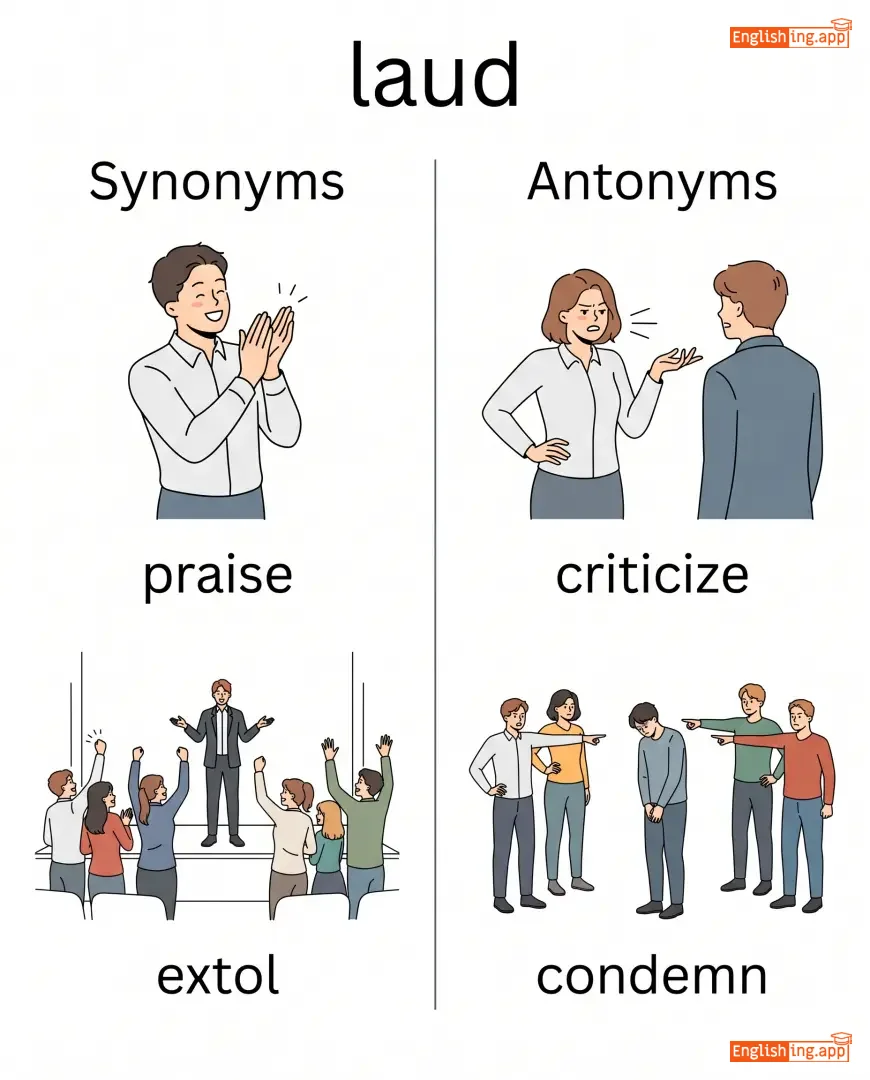
praise, extol, applaud, commend, admire
••••••
|
criticize, condemn
••••••
|
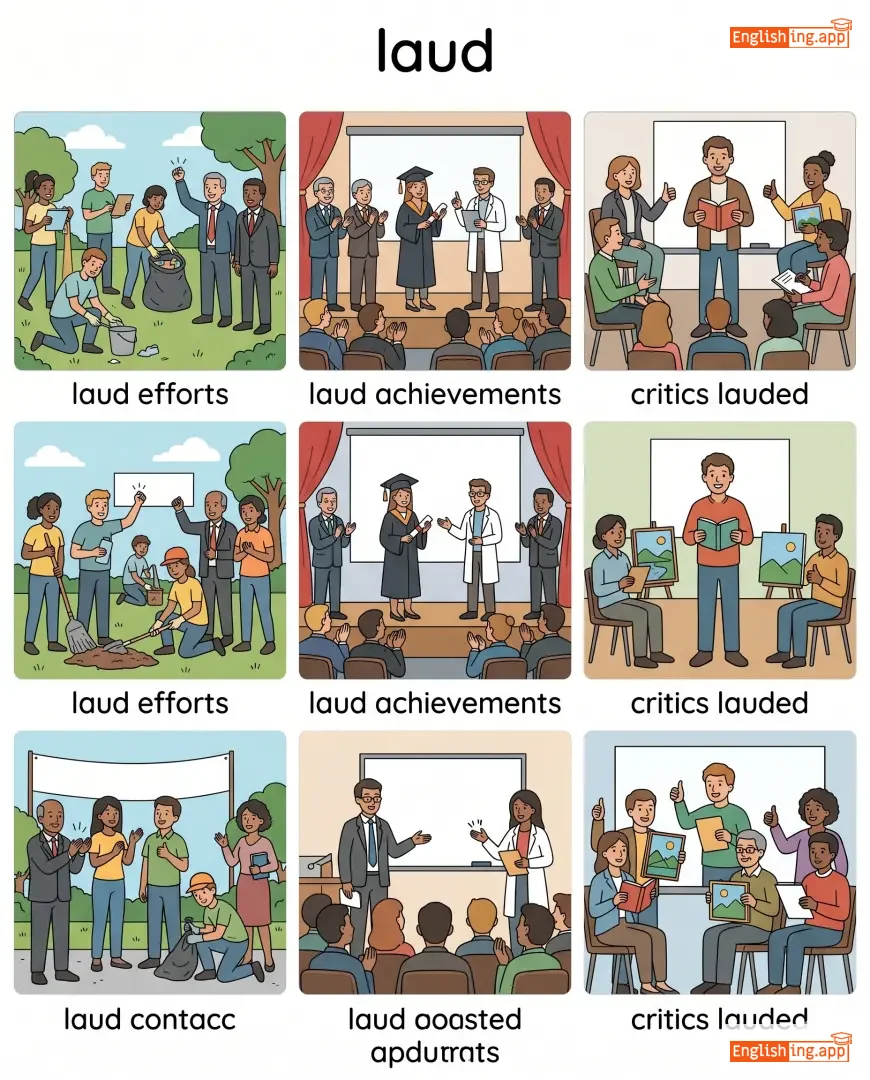
laud efforts, laud achievements, critics lauded
••••••
|
No •••••• |
|
#5129
🪵
|
/ˈlætɪs/
noun
(拉提斯)
••••••
|
- •••••• |
格子结构
gé zi jié gòu
••••••
|
- •••••• | - •••••• | - •••••• | - •••••• |
A structure of crossed strips arranged in a grid or crisscross pattern.
••••••
|
The garden was decorated with a wooden lattice covered in vines. |
花园里装饰着一座覆盖着藤蔓的木质格子结构。
Huāyuán lǐ zhuāngshì zhe yīzuò fùgài zhe téngmàn de mùzhì gézi jiégòu.
••••••
|
- •••••• | - •••••• | - •••••• |
grid, framework, mesh, trellis, network
••••••
|
solid wall, barrier
••••••
|
wooden lattice, lattice structure, lattice window
••••••
|
Lattice 意味着 '交叉的条纹结构',常用于园艺设计中。
••••••
|
|
#5130
🌍
|
/ˈlætɪˌtjuːd/
noun
(纬度)
••••••
|
- •••••• |
纬度
wèidù
••••••
|
- •••••• | - •••••• | - •••••• | - •••••• |
The angular distance north or south of the equator; also freedom or scope to act.
••••••
|
The city lies at a high latitude close to the Arctic Circle.
这座城市位于靠近北极圈的高纬度。
••••••
|
这座城市位于靠近北极圈的高纬度。
Zhe zuo chengshi weiyu kaojin Beijiquan de gao weidu.
••••••
|
broad latitude
广泛自由
••••••
|
great freedom of action or choice
••••••
|
广泛自由
guangfan ziliu
••••••
|
parallel, position, freedom, scope, leeway
••••••
|
restriction, limitation
••••••
|
latitude and longitude, high latitude, broad latitude, northern latitude
••••••
|
Latitude = 纬度 → 地球上的纬度线,帮助我们定位。
••••••
|
Vocabulary Quiz
Test your vocabulary by matching words with their translations or meanings.
Login to take the quiz
Comments (0)
Share your thoughts and join the discussion.
Join the discussion by logging in
Login to CommentNo comments yet
Be the first to share your thoughts!