





Swipe left or right, or use the buttons. Tap image to zoom.
例句翻译
单词
Lesson 51Lesson 51 - 遮罩切换
|
表情符号
|
单词 | Images | 翻译 | 过去时 | 过去分词 | 第三人称单数 | 动名词 | 含义 | 例句 | 例句翻译 | 示例表达 | 示例表达含义 | 示例表达翻译 | 同义词 | 反义词 | 搭配词 | 助记符 |
|---|---|---|---|---|---|---|---|---|---|---|---|---|---|---|---|---|---|
|
#1501
🤝
|
/ˌkoʊəˈlɪʃən/
noun
(kəʊəˈlɪʃən)
••••••
|
- •••••• |
联盟
lianmeng
••••••
|
- •••••• | - •••••• | - •••••• | - •••••• |
a temporary alliance of distinct parties, persons, or states for joint action
••••••
|
Several parties formed a coalition to pass the new law. |
几个党派组成了一个联盟来通过新法律。
Jige dangpai zuchéngle yī gè liánméng lái tōngguò xīn fǎlǜ.
••••••
|
coalition government |
a government formed by the cooperation of multiple political parties
••••••
|
联盟政府
liánméng zhèngfǔ
••••••
|
alliance, union, partnership, federation, bloc
••••••
|
division, separation, disunity
••••••
|
form a coalition, political coalition, coalition partners, coalition forces
••••••
|
联盟意味着不同团体联合起来共同工作。
••••••
|
|
#1502
🧠
|
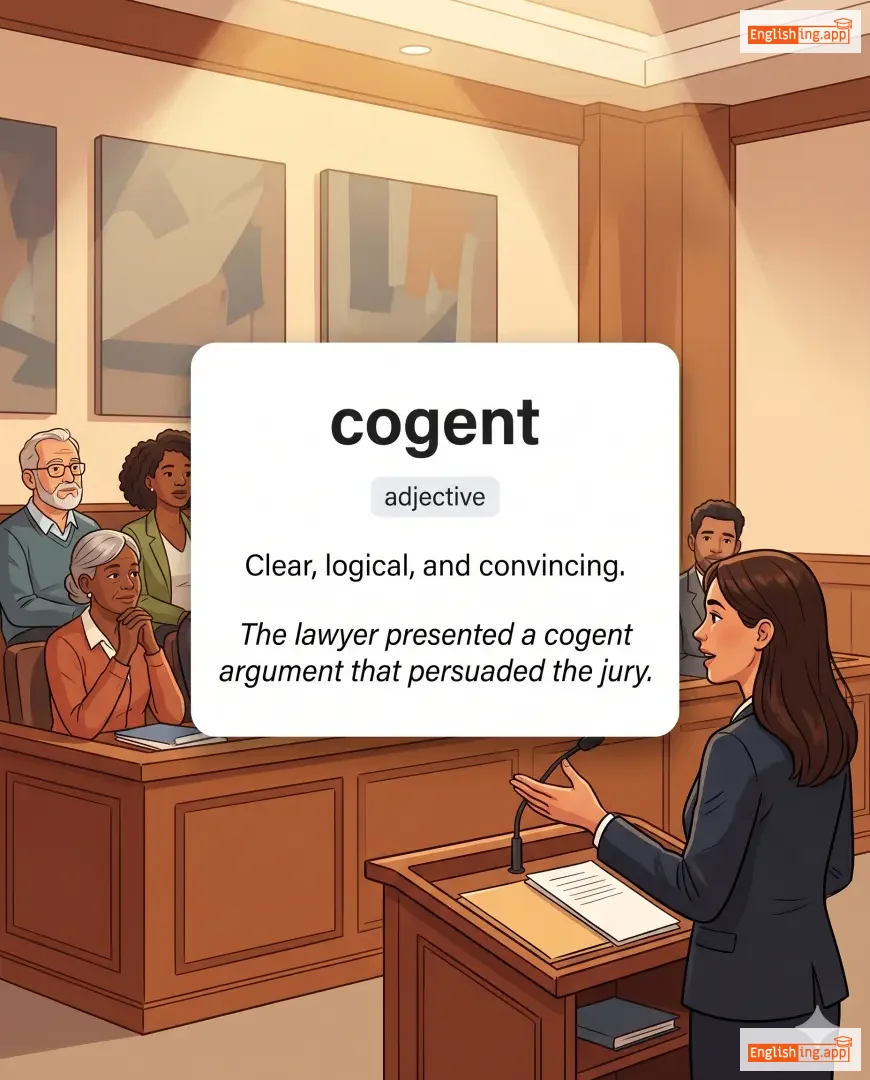
/ˈkoʊdʒənt/
adjective
(科金特)
••••••
|
|
清晰且合乎逻辑
qīngxī qiě héhū luójí
••••••
|
- •••••• | - •••••• | - •••••• | - •••••• |
Clear, logical, and convincing.
••••••
|
The lawyer presented a cogent argument that persuaded the jury. |
律师提出了一个清晰且合乎逻辑的论点,说服了陪审团。
Lǜshī tíchūle yīgè qīngxī qiě héhū luójí de lùndiǎn, shuōfúle péishěn tuán.
••••••
|
- •••••• | - •••••• | - •••••• |
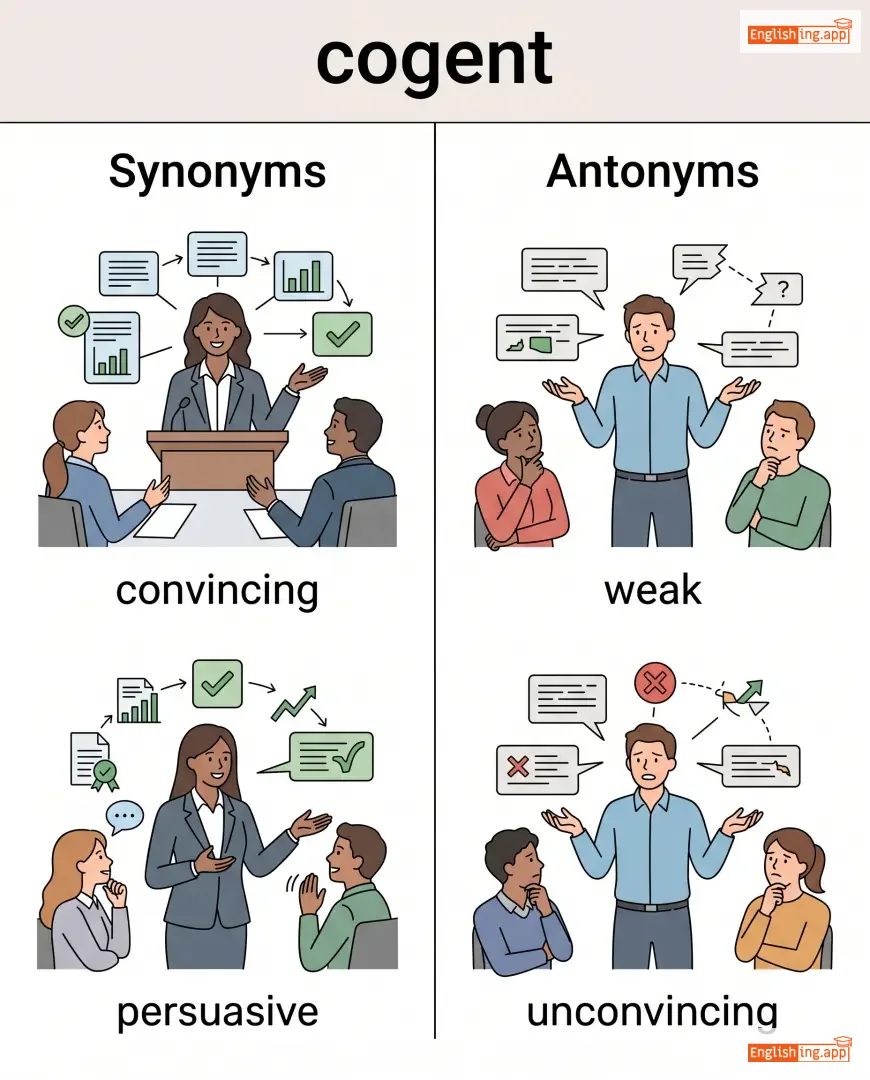
convincing, persuasive, compelling, logical, forceful
••••••
|
weak, unconvincing, illogical
••••••
|
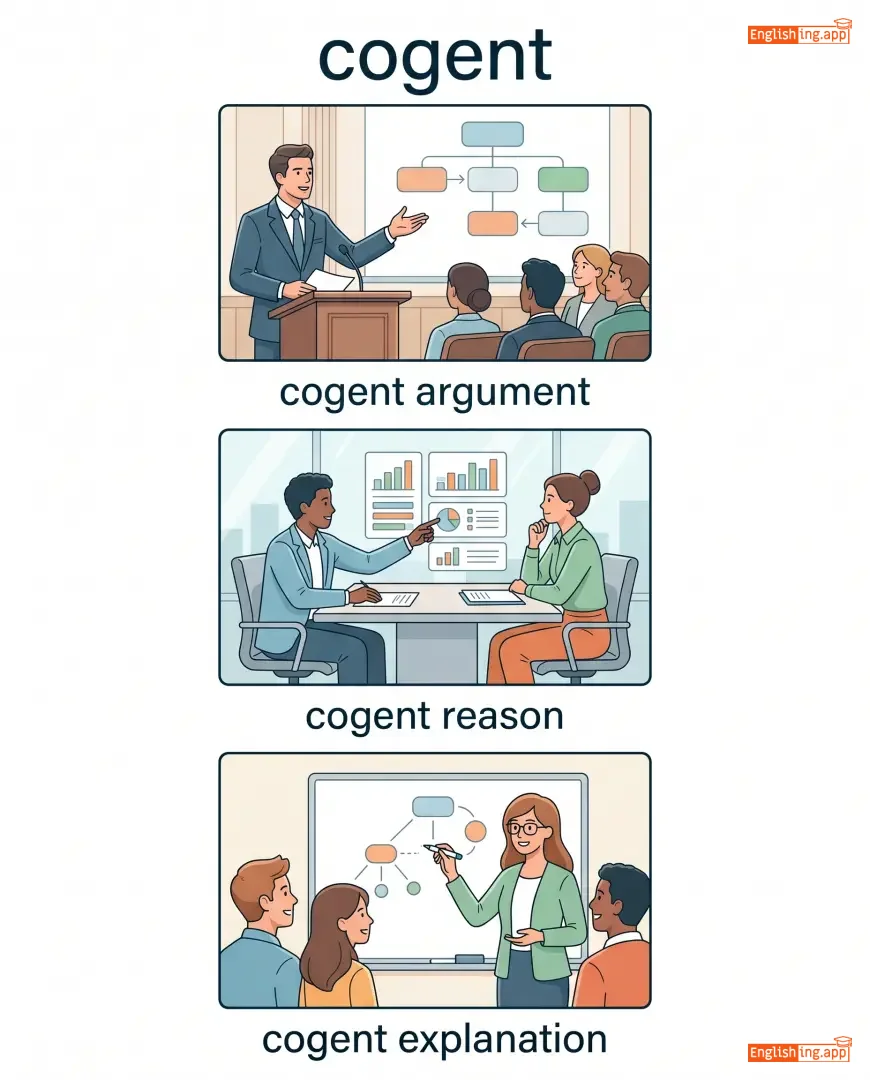
cogent argument, cogent reason, cogent explanation, cogent evidence
••••••
|
Cogent意味着清晰且有说服力—在中文里,Co-Gent = 就像清晰的逻辑让人信服。
••••••
|
|
#1503
⚙️
|
/kɑːɡ/
noun
(科格)
••••••
|
- •••••• |
轮子或齿轮上的齿
lúnzi huò chǐlún shàng de chǐ
••••••
|
- •••••• | - •••••• | - •••••• | - •••••• |
A tooth on the rim of a wheel or gear; metaphorically, a minor but necessary part of a larger system.
••••••
|
He felt like just a small cog in a big machine. |
他觉得自己只是一个大机器中的小齿轮。
Tā juédé zìjǐ zhǐshì yīgè dà jīqì zhōng de xiǎo chǐlún.
••••••
|
cog in the machine |
A person who feels insignificant in a large system or organization.
••••••
|
机器中的齿轮
Jīqì zhōng de chǐlún
••••••
|
gear, tooth, wheel, component, part
••••••
|
whole, entirety, leader
••••••
|
cog wheel, cog in the machine, cog mechanism
••••••
|
Cog像齿轮:小但至关重要,像机器的一部分。
••••••
|
|
#1504
💰
|
/ˈkɔːfər/
noun
(kāfū)
••••••
|
- •••••• |
箱子
xiangzi
••••••
|
- •••••• | - •••••• | - •••••• | - •••••• |
A strongbox or small chest for holding valuables, often used metaphorically for funds or financial reserves.
••••••
|
The city's coffers were drained after the costly project. |
昂贵的项目后,城市的资金库被耗尽了。
Ángguì de xiàngmù hòu, chéngshì de zījīn kù bèi hào jìnle.
••••••
|
fill the coffers |
To increase financial resources or funds.
••••••
|
填满资金库
tiánmǎn zījīn kù
••••••
|
treasury, strongbox, chest, fund, reserve
••••••
|
debt, deficit, poverty
••••••
|
public coffers, state coffers, company coffers, fill coffers
••••••
|
Coffer 在中文中是箱子,储存财务或资金的地方。
••••••
|
|
#1505
⏳
|
/koʊˈiːvəl/
adjective
(kòu wēi ěr)
••••••
|
- •••••• |
同时代
tóng shídài
••••••
|
- •••••• | - •••••• | - •••••• | - •••••• |
Having the same age, date of origin, or duration; contemporary.
••••••
|
The philosopher was coeval with the rise of modern science.
这位哲学家与现代科学的崛起是同一时代的。
••••••
|
这位哲学家与现代科学的崛起是同一时代的。
Zhè wèi zhéxuéjiā yǔ xiàndài kēxué de juéqǐ shì tóng yī shídài de.
••••••
|
- •••••• | - •••••• | - •••••• |
contemporary, simultaneous, synchronous, contemporaneous
••••••
|
asynchronous, different-aged, anachronistic
••••••
|
coeval generation, coeval thinkers, coeval civilizations
••••••
|
Coeval = co + eval (同时出现),因此同时代。
••••••
|
|
#1506
⚠️
|
/koʊˈɜːrsɪv/
adjective
(kəʊˈɜːrsɪv)
••••••
|
- •••••• |
强制性
qiángzhìxìng
••••••
|
- •••••• | - •••••• | - •••••• | - •••••• |
Relating to or using force or threats to make someone do something.
••••••
|
The government faced criticism for adopting coercive measures against protestors.
ðə ɡəvɜrnmənt feɪst krɪtɪsɪzəm fɔr əˈdɒptɪŋ kəʊˈɜːrsɪv mɛʒərz əˈɡɛnst prəˈtɛstərz
••••••
|
政府因采用对抗议者的强制性措施而遭到批评。
Zhèngfǔ yīn cǎiyòng duì kàngyì zhě de qiángzhìxìng cuòshī ér zāodào pīpíng.
••••••
|
- •••••• | - •••••• | - •••••• |
forceful, intimidating, threatening, compelling, repressive
••••••
|
voluntary, permissive, lenient
••••••
|
coercive power, coercive measures, coercive tactics, coercive control
••••••
|
Coerce意味着强迫,coercive意味着强制—通过强制手段做某事。
••••••
|
|
#1507
🔒
|
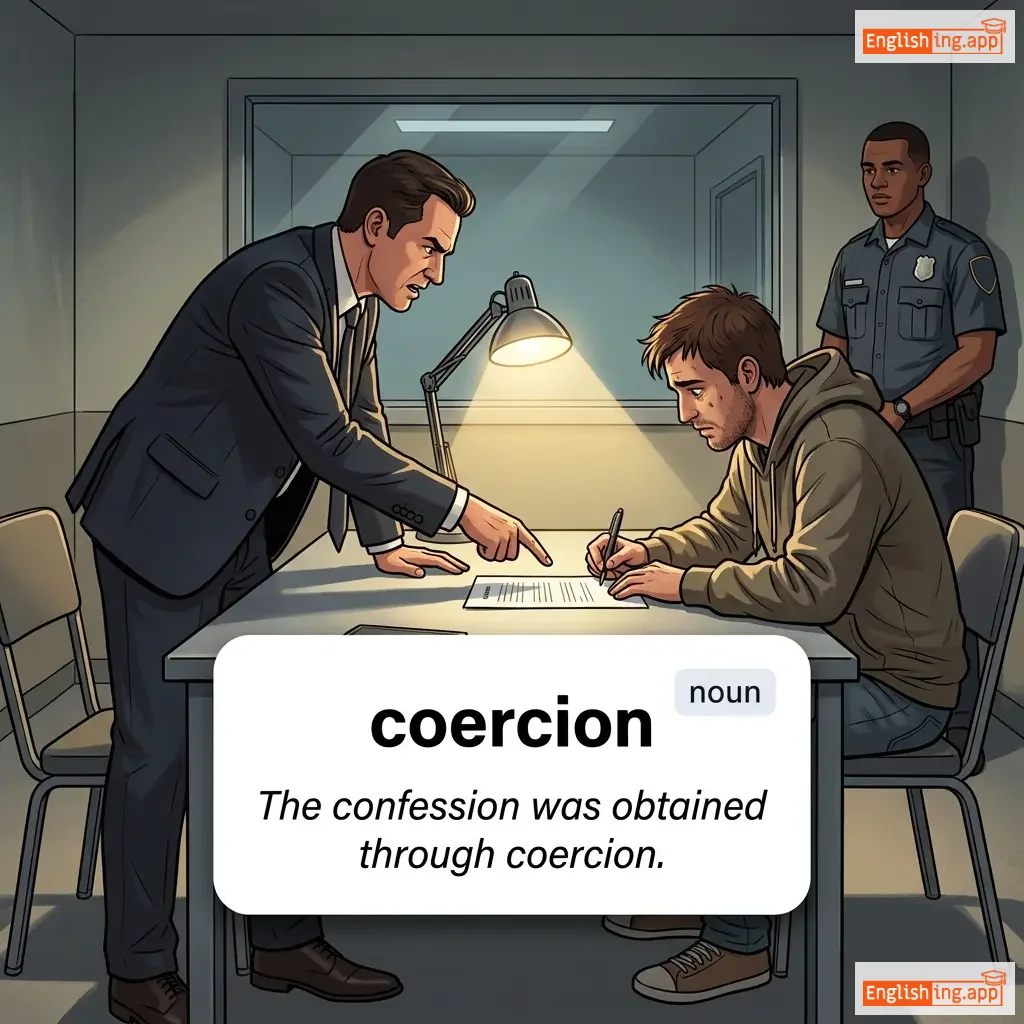
/kəʊˈɜː.ʒən/
noun
(kēuèrríshēn)
••••••
|
|
胁迫
xiepo
••••••
|
- •••••• | - •••••• | - •••••• | - •••••• |
the practice of forcing someone to act in a certain way by using threats or pressure
••••••
|
The confession was obtained through coercion. |
供词是通过胁迫获得的。
Gòngcí shì tōngguò xiépò huòde de.
••••••
|
- •••••• | - •••••• | - •••••• |
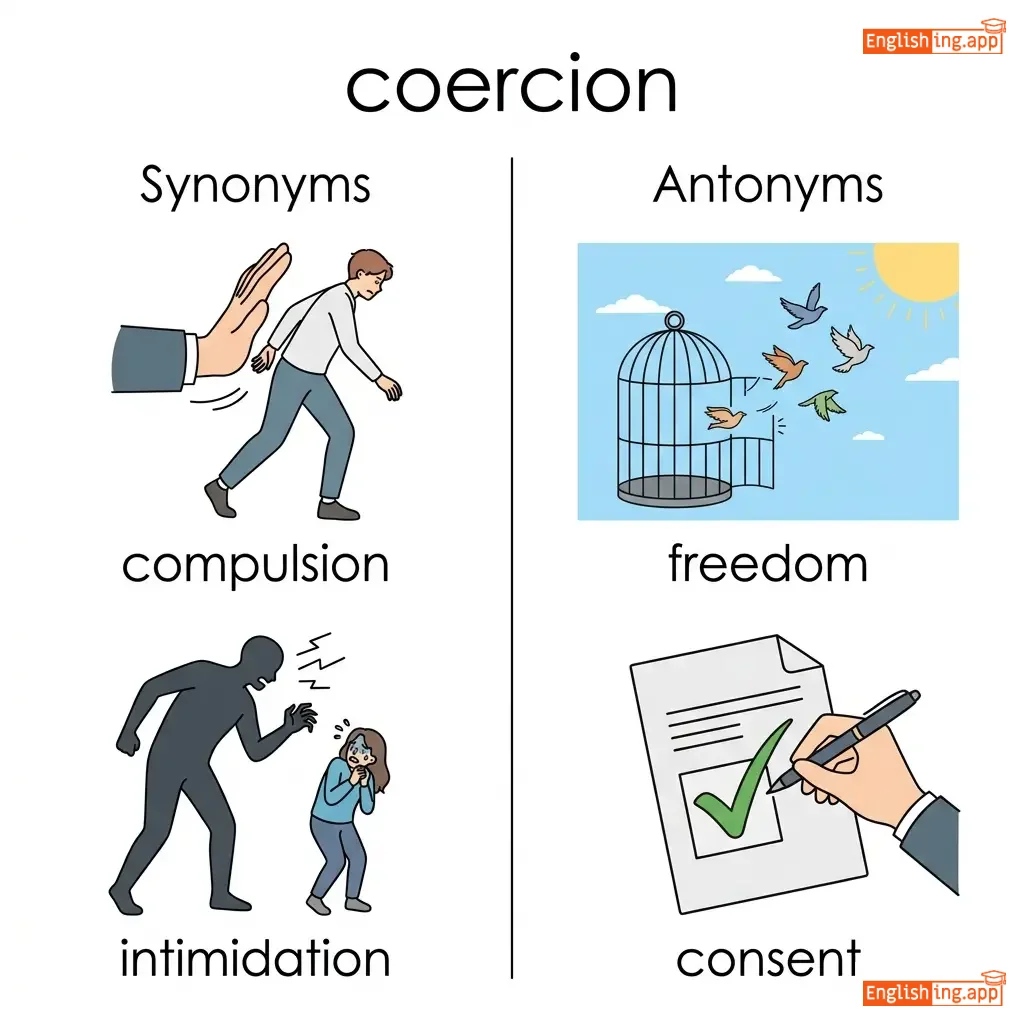
compulsion, intimidation, duress, force
••••••
|
freedom, consent, choice
••••••
|
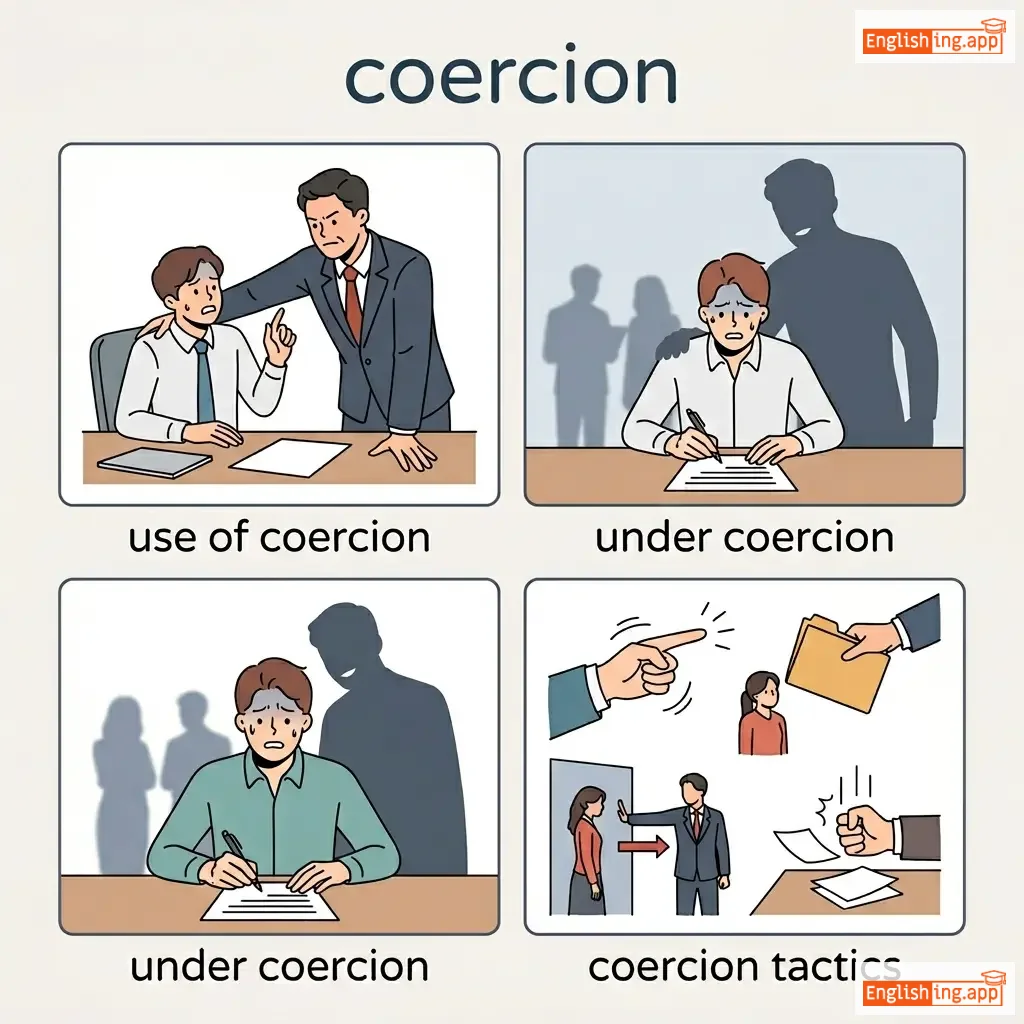
use of coercion, under coercion, coercion tactics, coercion methods
••••••
|
胁迫就像 coercion—通过压力强迫某人做事
••••••
|
|
#1508
⚠️
|
/kəʊˈɜːs/
verb
(koh-ers)
••••••
|
|
胁迫
xie po
••••••
|
coerced
koh-erst
••••••
|
coerced
koh-erst
••••••
|
coerces
koh-erses
••••••
|
coercing
koh-ersing
••••••
|
to persuade or force someone to do something by using threats or pressure
••••••
|
They tried to coerce him into signing the contract.
They tried to coerce him into signing the contract.
••••••
|
他们试图威胁他签署合同。
Tāmen shìtú wēixié tā qiānshǔ hé tóng.
••••••
|
- •••••• | - •••••• | - •••••• |
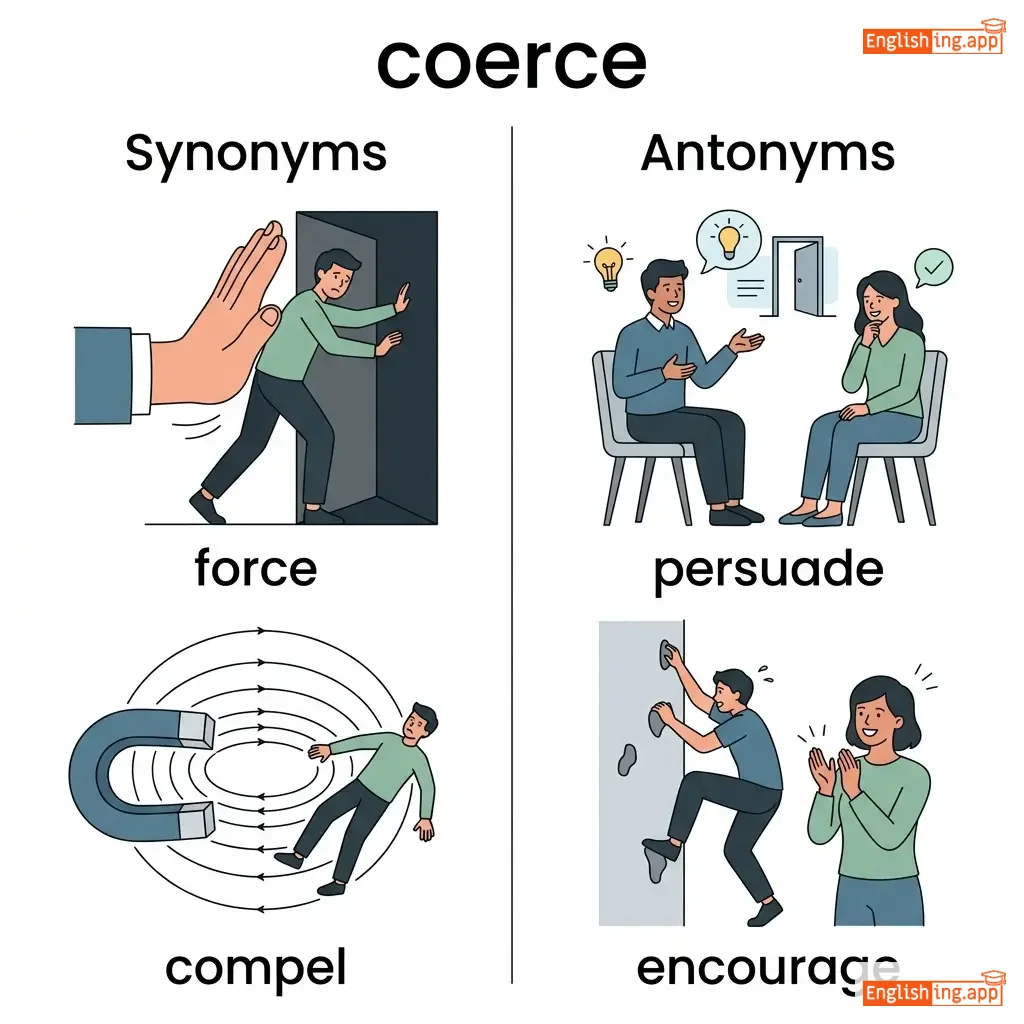
force, compel, pressure, intimidate, bully
••••••
|
persuade, encourage, allow
••••••
|
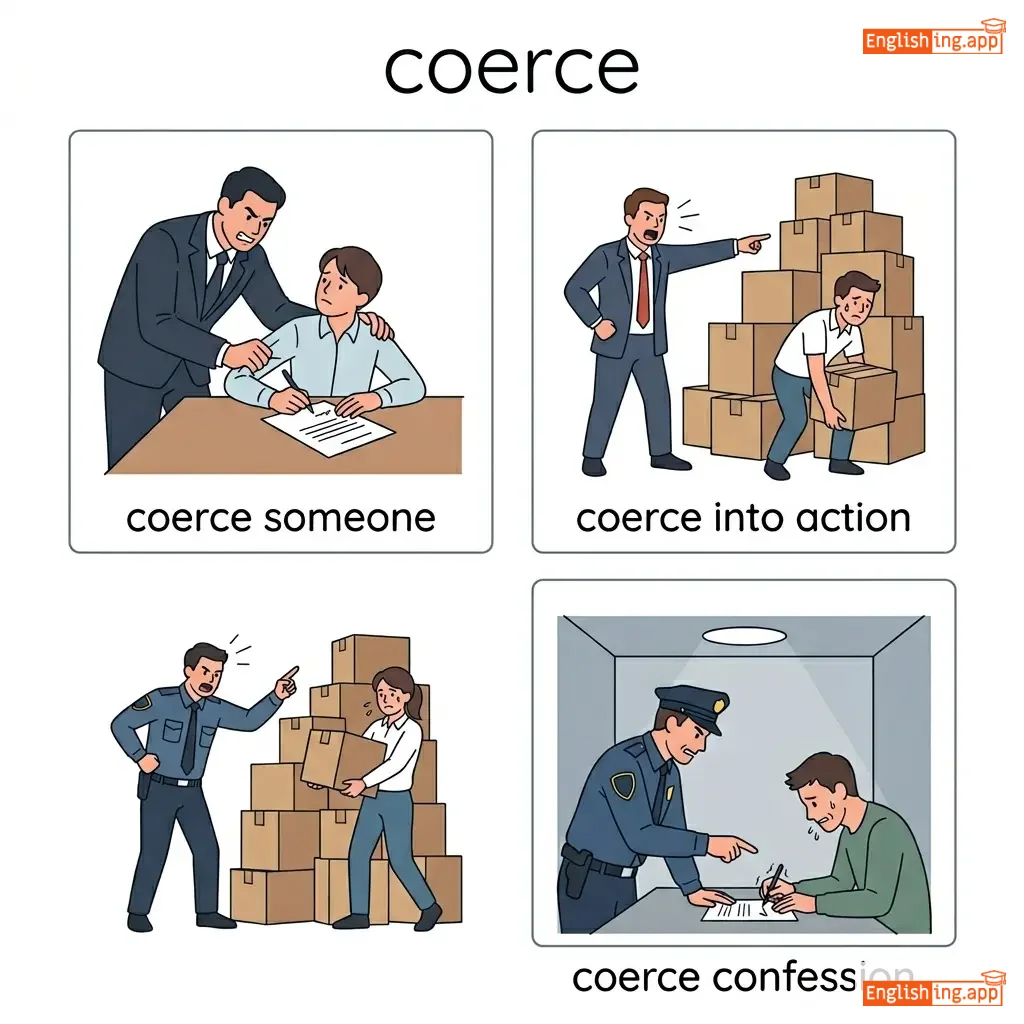
coerce someone, coerce into action, coerce confession, coerce agreement
••••••
|
Coerce 意味着胁迫—通过威胁或压力迫使别人做某事。
••••••
|
|
#1509
📚
|
/ˈkəʊ.dɪ.faɪ/
verb
(编码)
••••••
|
|
编码
bianma
••••••
|
codified
编码过
••••••
|
codified
编码过
••••••
|
codifies
编码
••••••
|
codifying
编码中
••••••
|
to arrange laws, rules, or ideas into a clear and systematic code
••••••
|
The committee worked to codify the existing laws.
委员会致力于编码现有的法律。
••••••
|
委员会致力于编码现有的法律。
Weiyuanhui zhilü yu bianma xianyou de falü.
••••••
|
- •••••• | - •••••• | - •••••• |
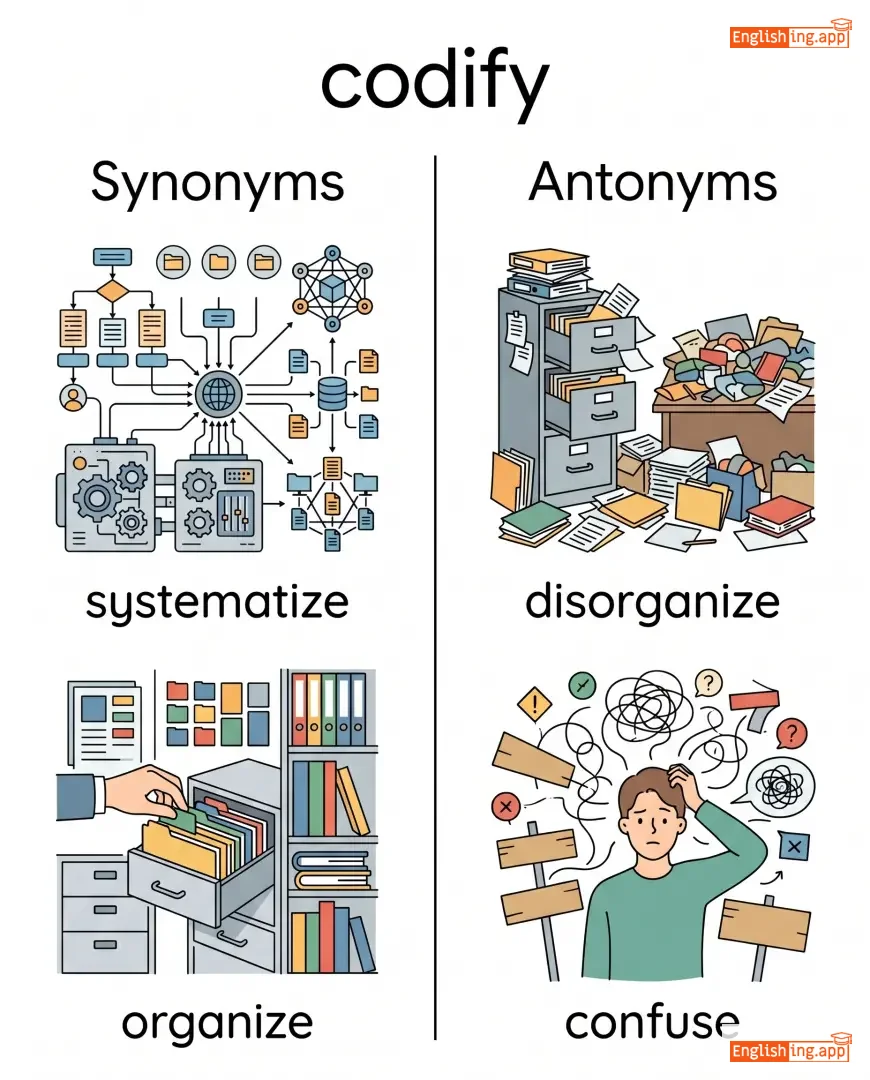
systematize, organize, arrange, classify
••••••
|
disorganize, confuse
••••••
|
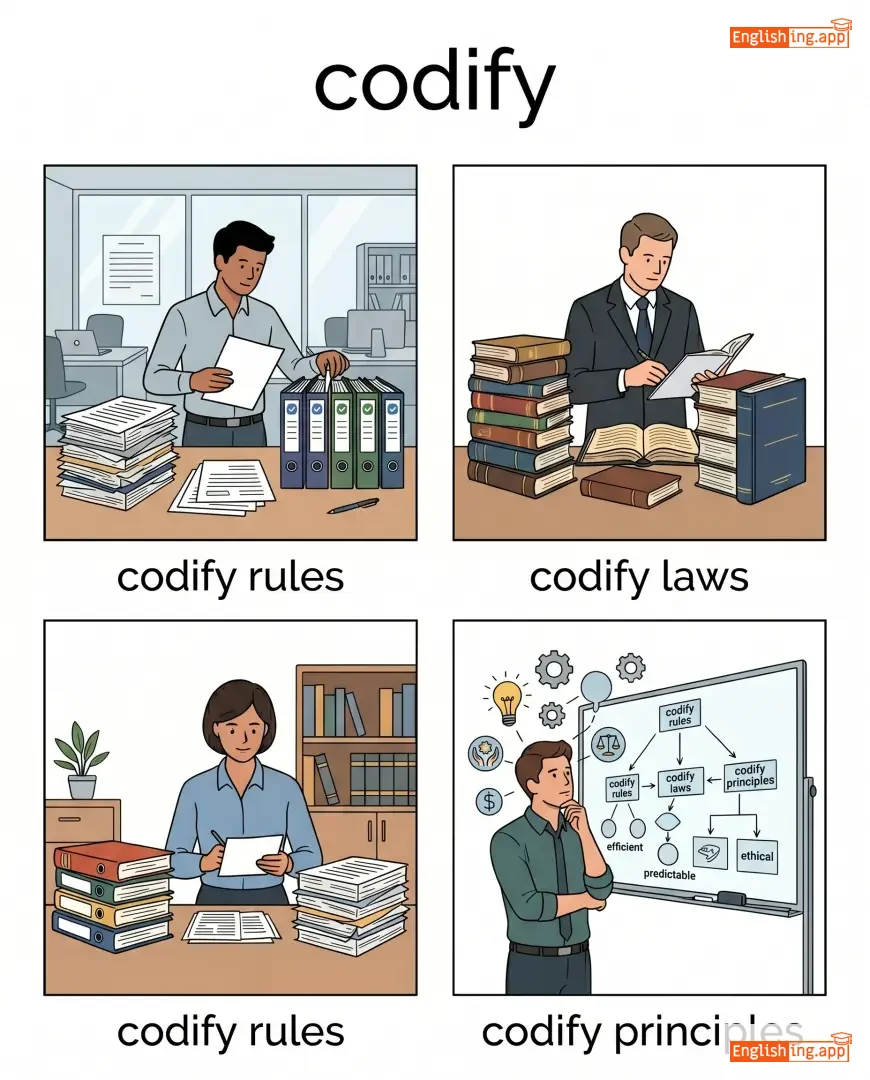
codify rules, codify laws, codify principles, codify knowledge
••••••
|
编码像一个代码一样组织信息,CODIFY 就是这个意思。
••••••
|
|
#1510
📜
|
/ˈkɒd.ɪ.sɪl/
noun
(科迪西尔)
••••••
|
- •••••• |
遗嘱附录
yízhǔ fùlù
••••••
|
- •••••• | - •••••• | - •••••• | - •••••• |
a legal document that makes changes or additions to an existing will
••••••
|
He added a codicil to his will to include his granddaughter. |
他在遗嘱中添加了一份附录,以包括他的孙女。
Tā zài yízhǔ zhōng tiānjiā le yī fèn fùlù, yǐ bāokuò tā de sūnnǚ.
••••••
|
- •••••• | - •••••• | - •••••• |
amendment, supplement, appendix, addition
••••••
|
nullification, cancellation
••••••
|
codicil to a will, legal codicil, add codicil, sign a codicil
••••••
|
Codicil - 就像代码一样,封印在遗嘱中
••••••
|
|
#1511
🤱
|
/ˈkɒd.l̩/
verb
(kàdēl)
••••••
|
- •••••• |
过度溺爱
guòdù nì'ài
••••••
|
coddled
kàdēld
••••••
|
coddled
kàdēld
••••••
|
coddles
kàdēls
••••••
|
coddling
kàdēlìng
••••••
|
to treat someone with excessive care or kindness, often in a way that is overprotective
••••••
|
Parents should support their children without coddling them.
父母应该在不溺爱孩子的情况下支持他们。
••••••
|
父母应该在不溺爱孩子的情况下支持他们。
Fùmǔ yīnggāi zài bù nì'ài háizi de qíngkuàng xià zhīchí tāmen.
••••••
|
- •••••• | - •••••• | - •••••• |
pamper, spoil, indulge, nurture, overprotect
••••••
|
neglect, mistreat, ignore
••••••
|
coddle a child, coddle an employee, coddle too much, overly coddle
••••••
|
CODL 就像 cuddle—过度溺爱
••••••
|
|
#1512
🔚
|
/ˈkoʊdə/
noun
(科达)
••••••
|
|
尾声
weisheng
••••••
|
- •••••• | - •••••• | - •••••• | - •••••• |
the concluding passage of a piece of music or a literary work
••••••
|
The novel ends with a reflective coda that ties up the themes. |
这部小说以一段反思性的尾声结束,将主题联系起来。
Zhe bu xiaoshuo yi yi duan fanshixing de weisheng jie shu, jiang zhutian lianxi qilai.
••••••
|
- •••••• | - •••••• | - •••••• |
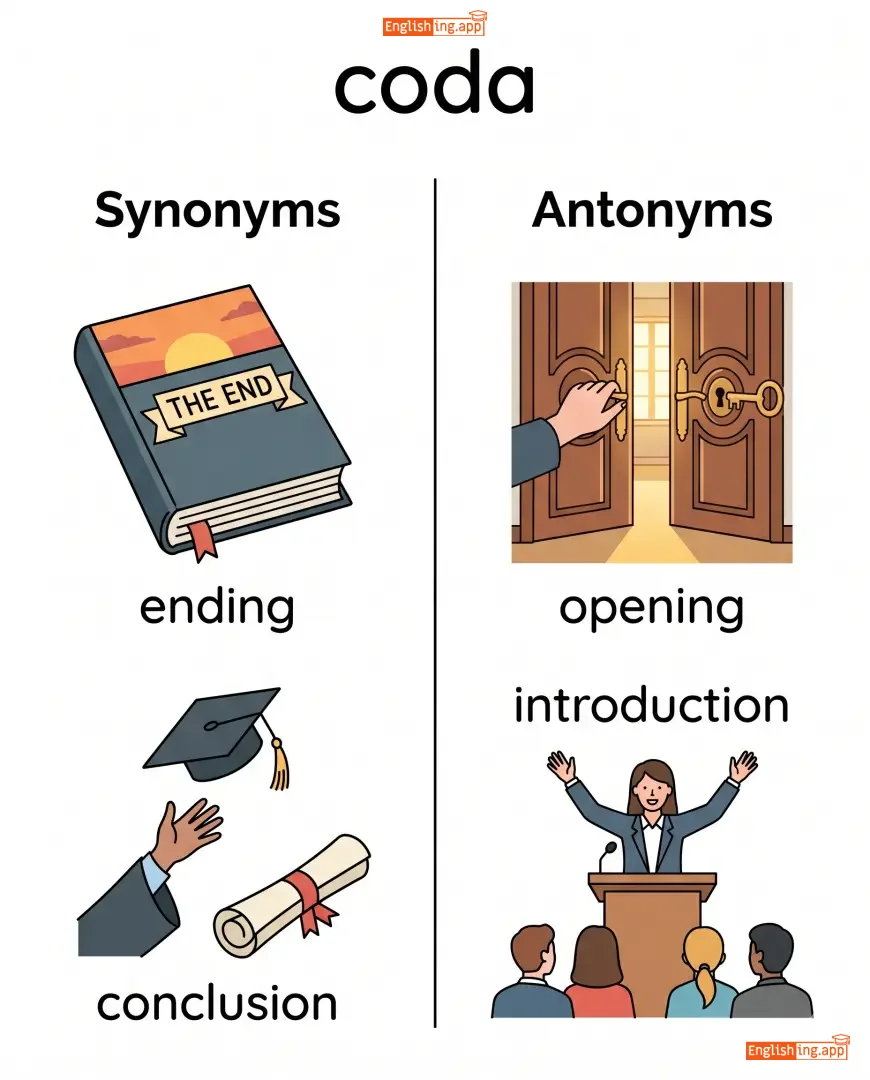
ending, conclusion, finale, epilogue
••••••
|
opening, introduction, beginning
••••••
|
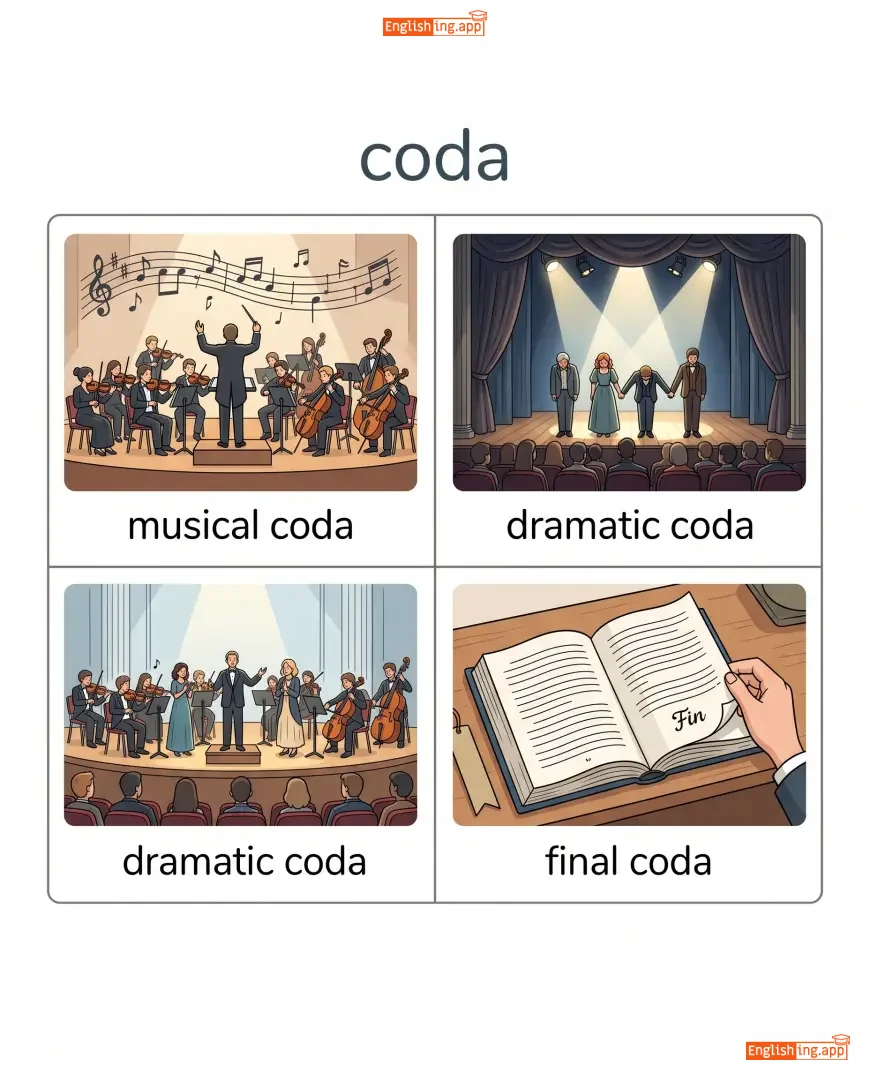
musical coda, dramatic coda, final coda
••••••
|
Coda 就像音乐或文学作品的结束部分,像尾声一样。
••••••
|
|
#1513
🎖️
|
/kɒˈkeɪd/
noun
(kè kāi dé)
••••••
|
- •••••• |
花结
hua jie
••••••
|
- •••••• | - •••••• | - •••••• | - •••••• |
a rosette or knot of ribbon, usually worn on a hat as a badge of office or party
••••••
|
The soldier wore a red cockade on his cap. |
士兵戴着一个红色的花结在他的帽子上。
Shibing daizhe yi ge hongse de huajie zai tade maozi shang.
••••••
|
- •••••• | - •••••• | - •••••• |
badge, emblem, insignia, ribbon
••••••
|
plainness, simplicity
••••••
|
wear a cockade, red cockade, cockade on hat
••••••
|
想象士兵帽子上的花结,象征着他的职务或党派。
••••••
|
|
#1514
🗣️
|
/koʊks/
verb
(科克斯)
••••••
|
- •••••• |
劝说
quànshuō
••••••
|
coaxed
科克斯德
••••••
|
coaxed
科克斯德
••••••
|
coaxes
科克塞斯
••••••
|
coaxing
科克辛
••••••
|
to persuade someone gently or gradually to do something
••••••
|
She managed to coax the cat out of the tree with some food.
她设法用一些食物把猫从树上劝下来。
••••••
|
她设法用一些食物把猫从树上劝下来。
Tā shèfǎ yòng yīxiē shíwù bǎ māo cóng shù shàng quàn xiàlái.
••••••
|
- •••••• | - •••••• | - •••••• |
persuade, convince, entice, cajole, influence
••••••
|
force, compel, bully
••••••
|
coax into, coax out, coax gently, coax someone
••••••
|
Coax 就像劝说,一个教练用软话劝别人做事。
••••••
|
|
#1515
🌊
|
/koʊst/
noun, verb
(kòusī)
••••••
|
- •••••• |
海岸
hǎi'àn
••••••
|
coasted
kòusī dé
••••••
|
coasted
kòusī dé
••••••
|
coasts
kòusī sī
••••••
|
coasting
kòusīng
••••••
|
noun: the land along the edge of the sea; verb: to move easily without effort or power
••••••
|
They walked along the coast enjoying the sea breeze.
他们沿着海岸走,享受着海风。
••••••
|
他们沿着海岸走,享受着海风。
Tāmen yánzhe hǎi'àn zǒu, xiǎngshòu zhe hǎi fēng.
••••••
|
coast is clear
海岸线清晰
••••••
|
a situation is safe or free of obstacles
••••••
|
情况清晰
qíngkuàng qīngxī
••••••
|
shore, seashore, beach, glide, drift
••••••
|
inland, struggle, resistance
••••••
|
coastal area, east coast, coast guard, coast along
••••••
|
海岸线像海滩,轻松行走。
••••••
|
|
#1516
⛪
|
/ˈklɔɪstər/
noun
(克洛伊斯特)
••••••
|
|
回廊
huíláng
••••••
|
- •••••• | - •••••• | - •••••• | - •••••• |
a covered walk in a convent, monastery, or cathedral, typically with a wall on one side and a colonnade open to a quadrangle on the other.
••••••
|
The monks walked silently through the cloister.
僧侣们默默地走过了修道院的回廊。
••••••
|
僧侣们默默地走过了修道院的回廊。
Sēnglǚmen mòmò de zǒuguòle xiū dào yuàn de huíláng.
••••••
|
- •••••• | - •••••• | - •••••• |
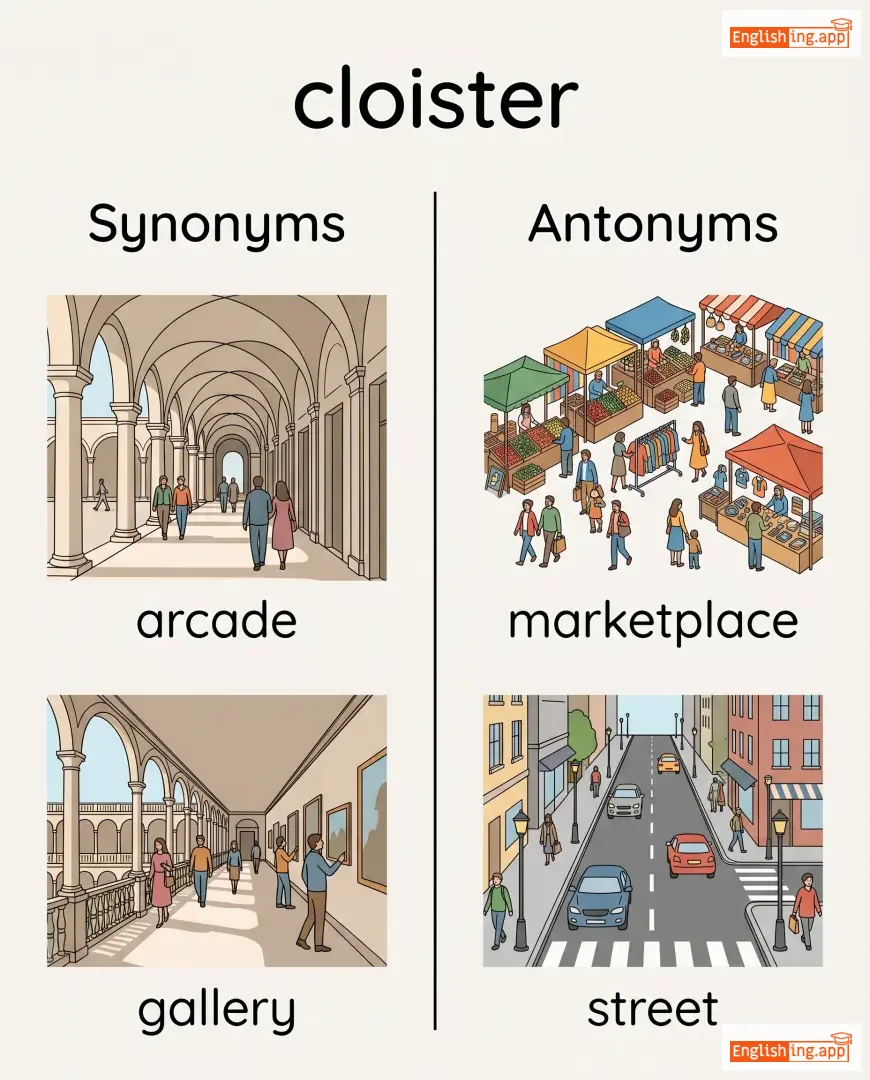
arcade, gallery, walkway, monastery, abbey
••••••
|
marketplace, street, outside
••••••
|
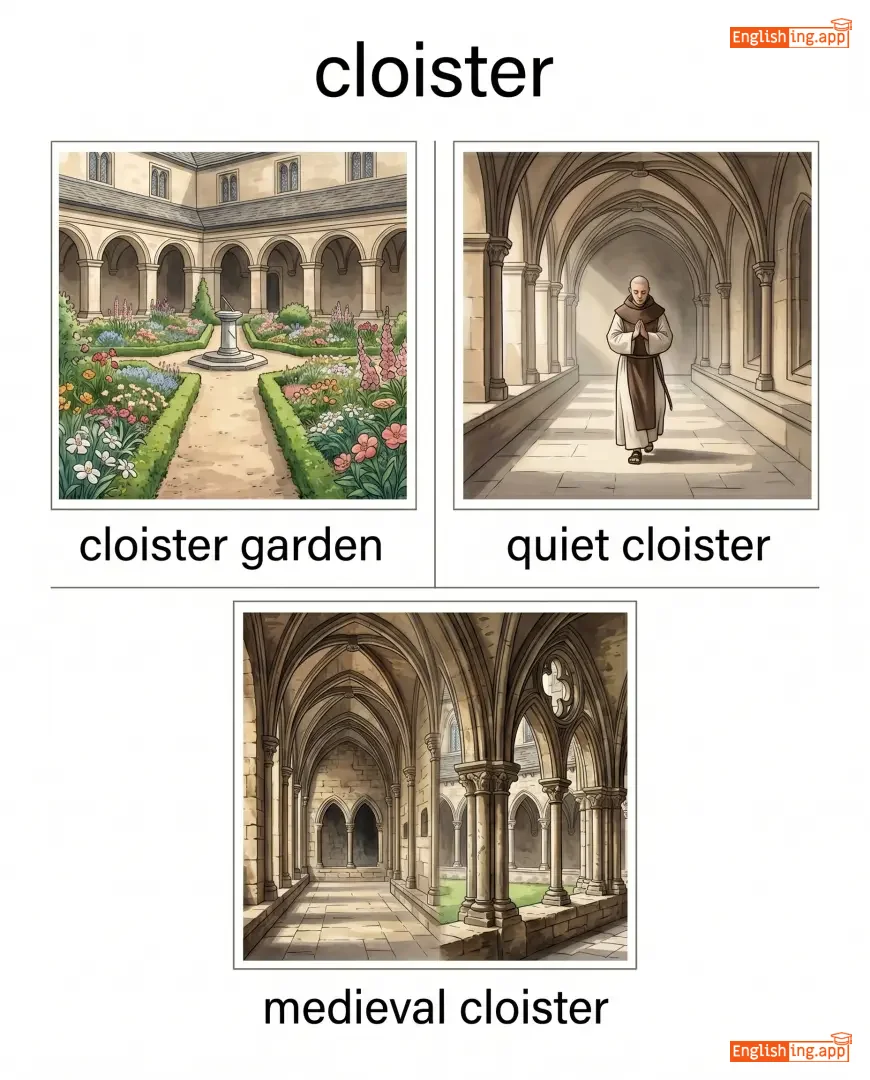
cloister garden, quiet cloister, medieval cloister, cloister life
••••••
|
回廊是修道院的走廊,提醒你修道院的宁静和保护。
••••••
|
|
#1517
🌐
|
/ˌkoʊəˈlɛsəns/
noun
(kuò'āilìsēnsī)
••••••
|
|
融合
ronghe
••••••
|
- •••••• | - •••••• | - •••••• | - •••••• |
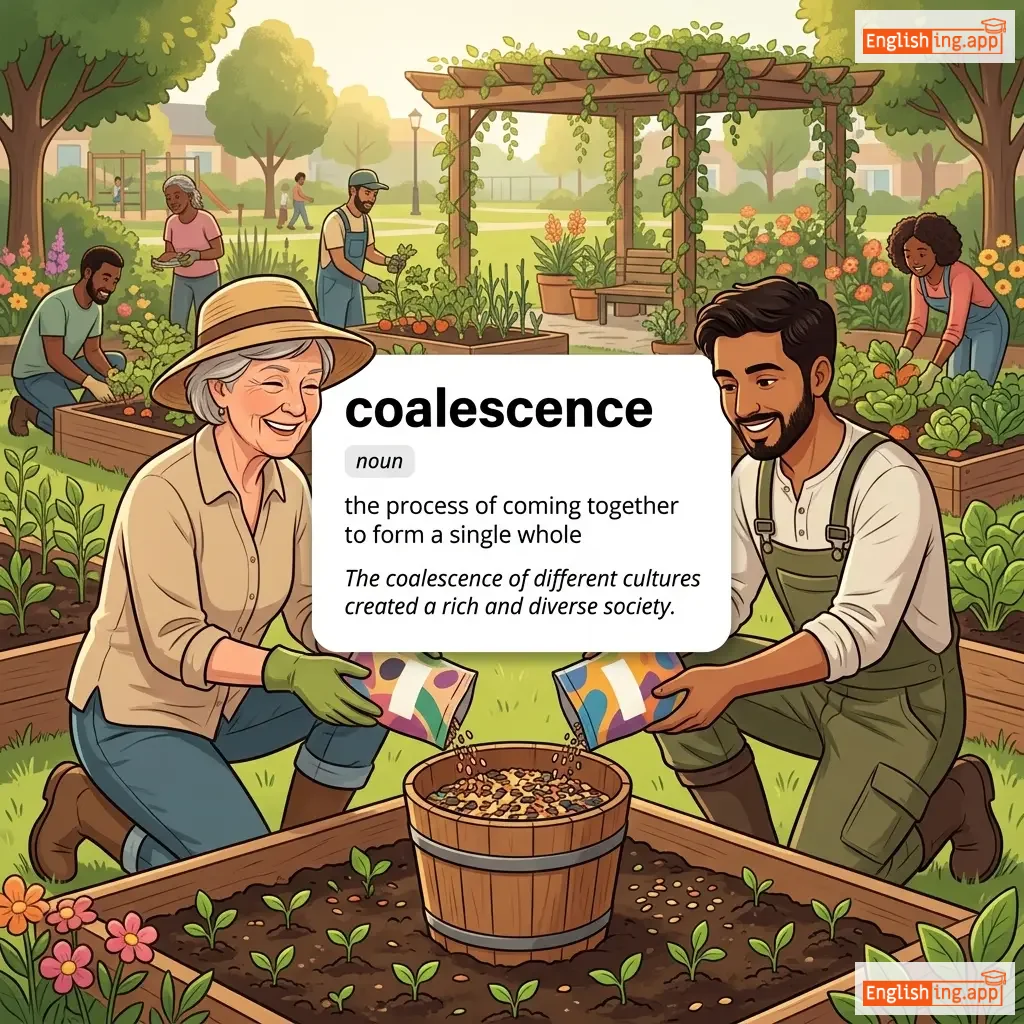
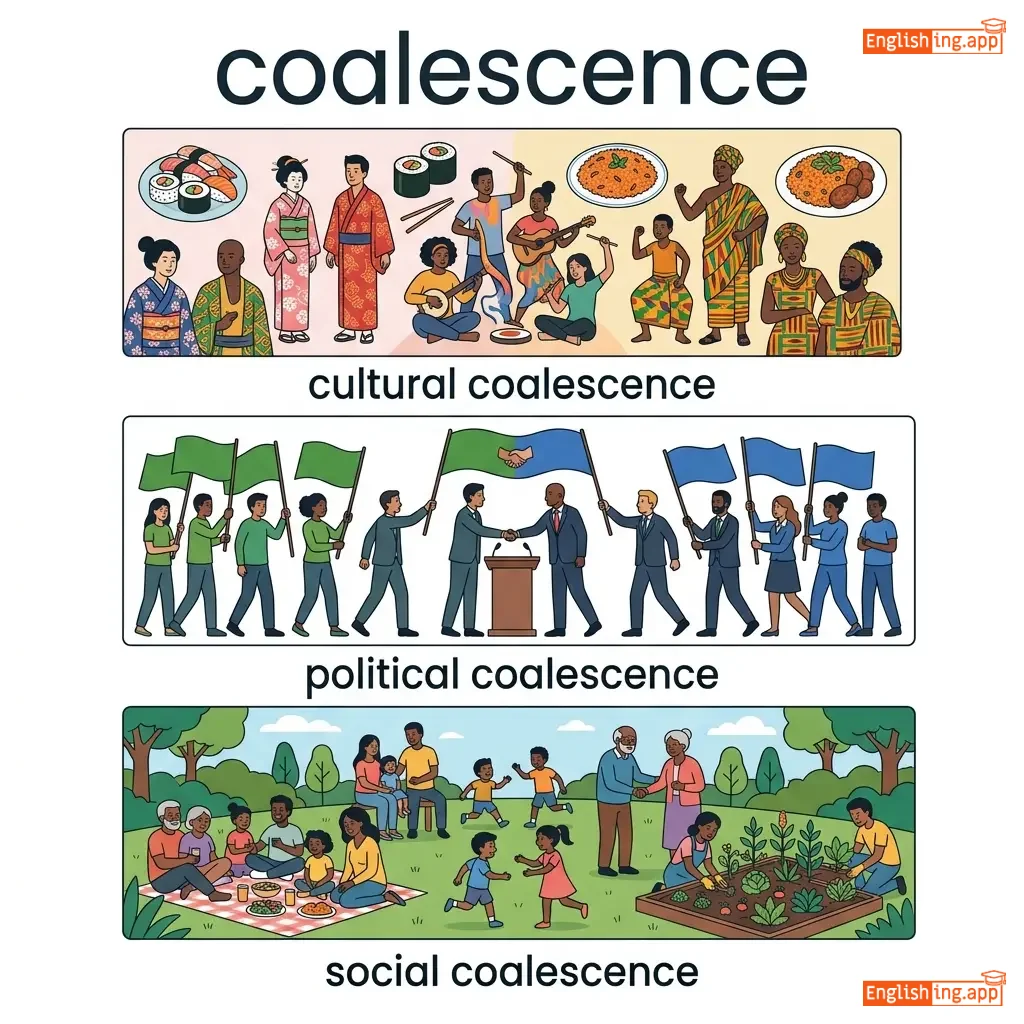
the process of coming together to form a single whole
••••••
|
The coalescence of different cultures created a rich and diverse society.
不同文化的融合创造了一个丰富而多样化的社会。
••••••
|
不同文化的融合创造了一个丰富而多样化的社会。
Bùtóng wénhuà de rónghé chuàngzàole yīgè fēngfù ér duōyàng huà de shèhuì.
••••••
|
- •••••• | - •••••• | - •••••• |
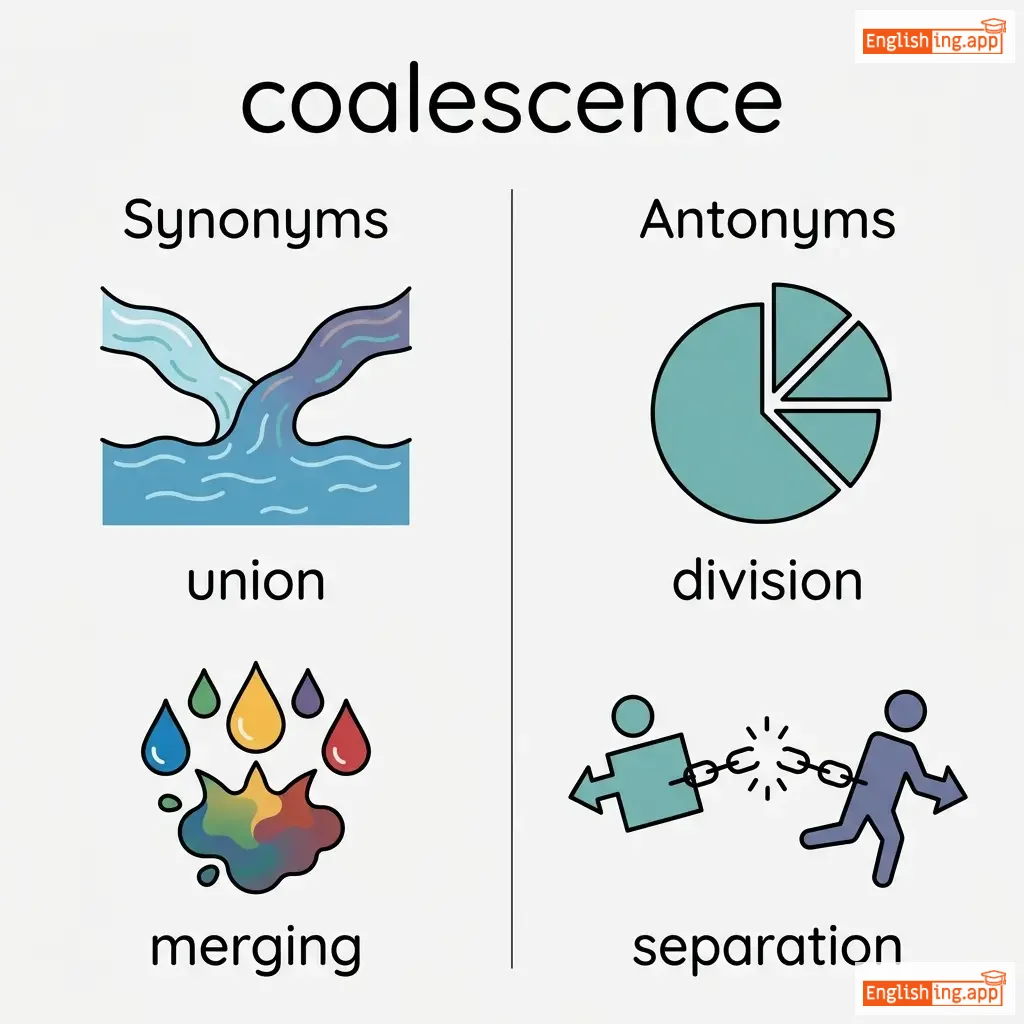
union, merging, fusion, integration, amalgamation
••••••
|
division, separation, fragmentation
••••••
|
cultural coalescence, political coalescence, social coalescence
••••••
|
Coalescence 意味着融合 - 不同文化汇聚,创造社会
••••••
|
|
#1518
🔗
|
/ˌkoʊəˈlɛs/
verb
(科阿莱斯)
••••••
|
|
联合
lián hé
••••••
|
coalesced
科阿莱斯德
••••••
|
coalesced
科阿莱斯德
••••••
|
coalesces
科阿莱塞斯
••••••
|
coalescing
科阿莱辛
••••••
|
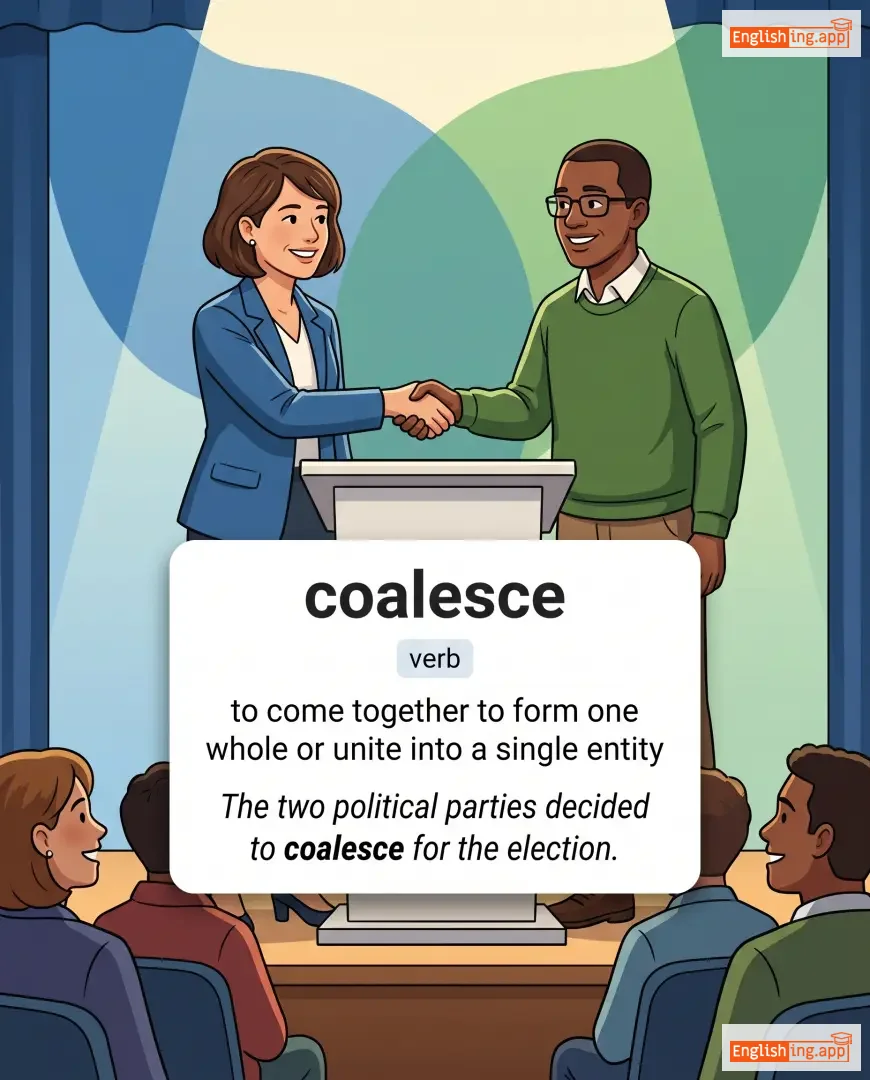
to come together to form one whole or unite into a single entity
••••••
|
The two political parties decided to coalesce for the election.
两个政治党派决定在选举中联合起来。
••••••
|
两个政治党派决定在选举中联合起来。
Liǎng gè zhèngzhì dǎng pài juédìng zài xuǎn jǔ zhōng lián hé qǐ lái.
••••••
|
- •••••• | - •••••• | - •••••• |
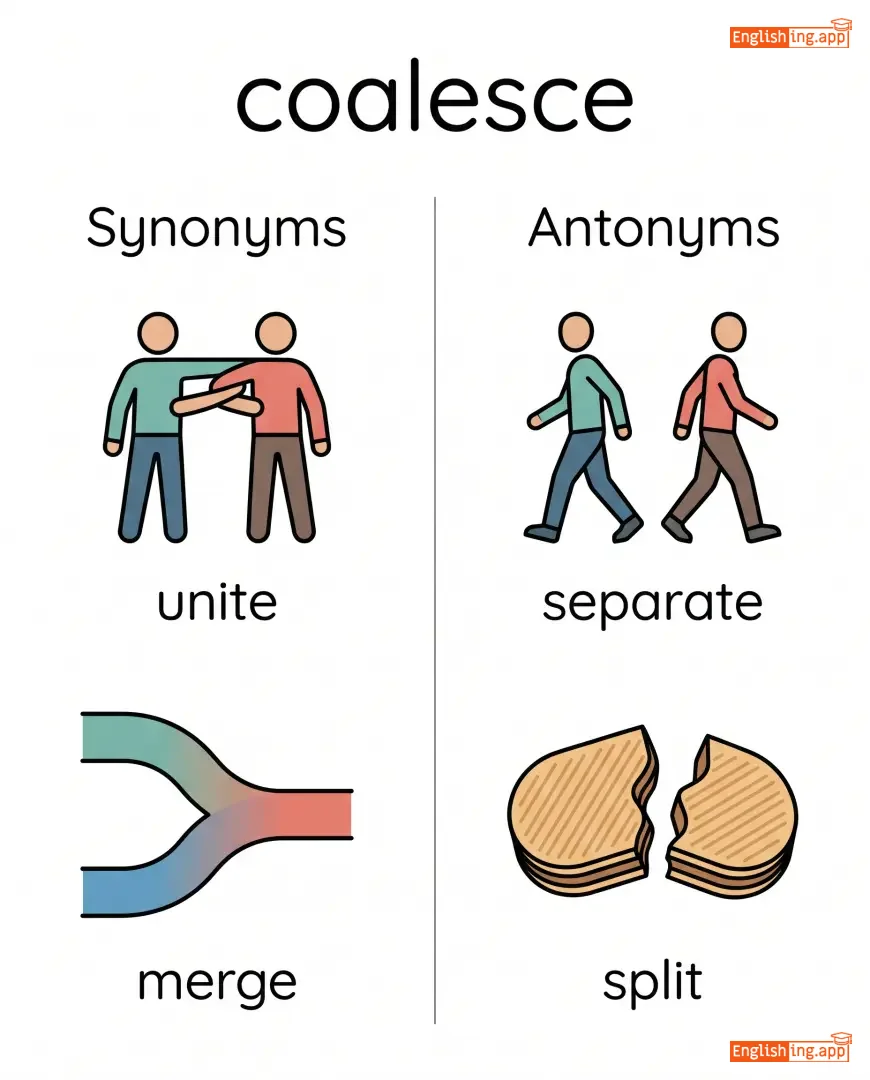
unite, merge, combine, fuse, integrate
••••••
|
separate, split, divide
••••••
|
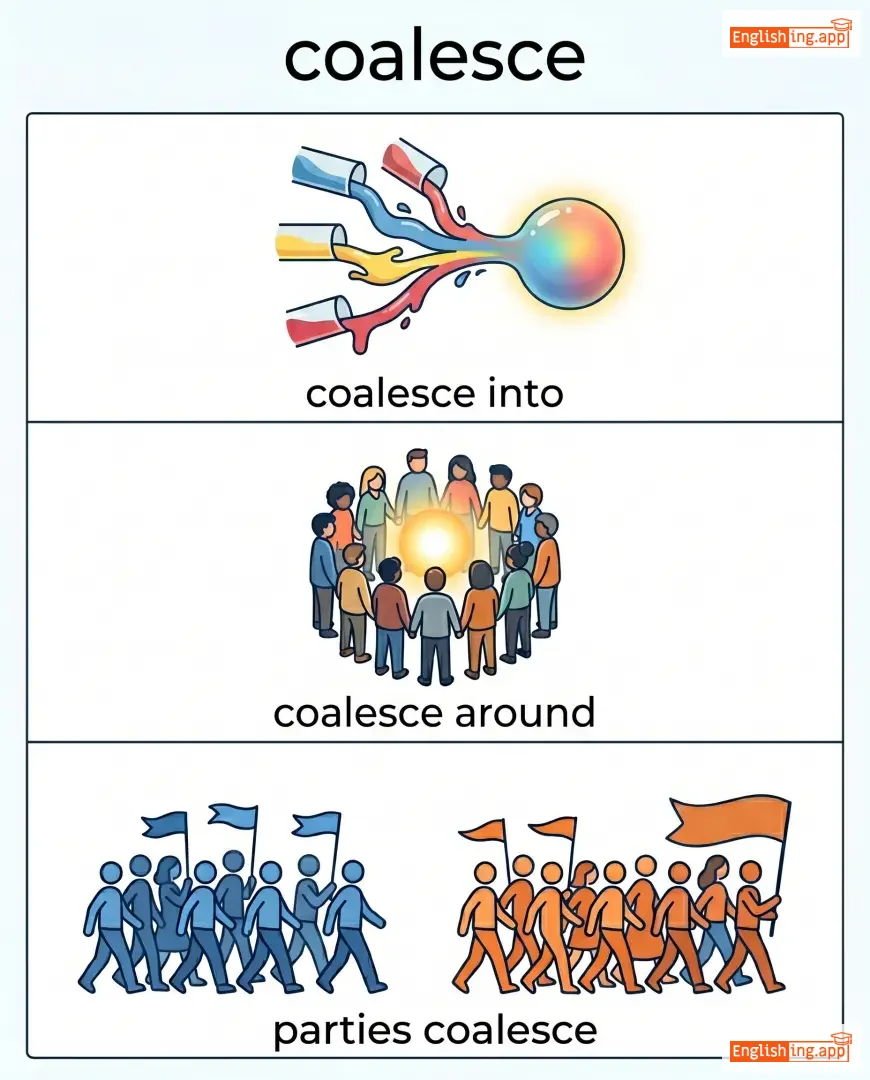
coalesce into, coalesce around, parties coalesce
••••••
|
Coal + 合 = 联合像煤一样
••••••
|
|
#1519
🧪
|
/koʊˈæɡjəˌleɪt/
verb
(kuò gǔ lì tè)
••••••
|
|
凝结
níngjié
••••••
|
coagulated
kuò gǔ lì tè dé
••••••
|
coagulated
kuò gǔ lì tè dé
••••••
|
coagulates
kuò gǔ lì tè sī
••••••
|
coagulating
kuò gǔ lì tè jìng
••••••
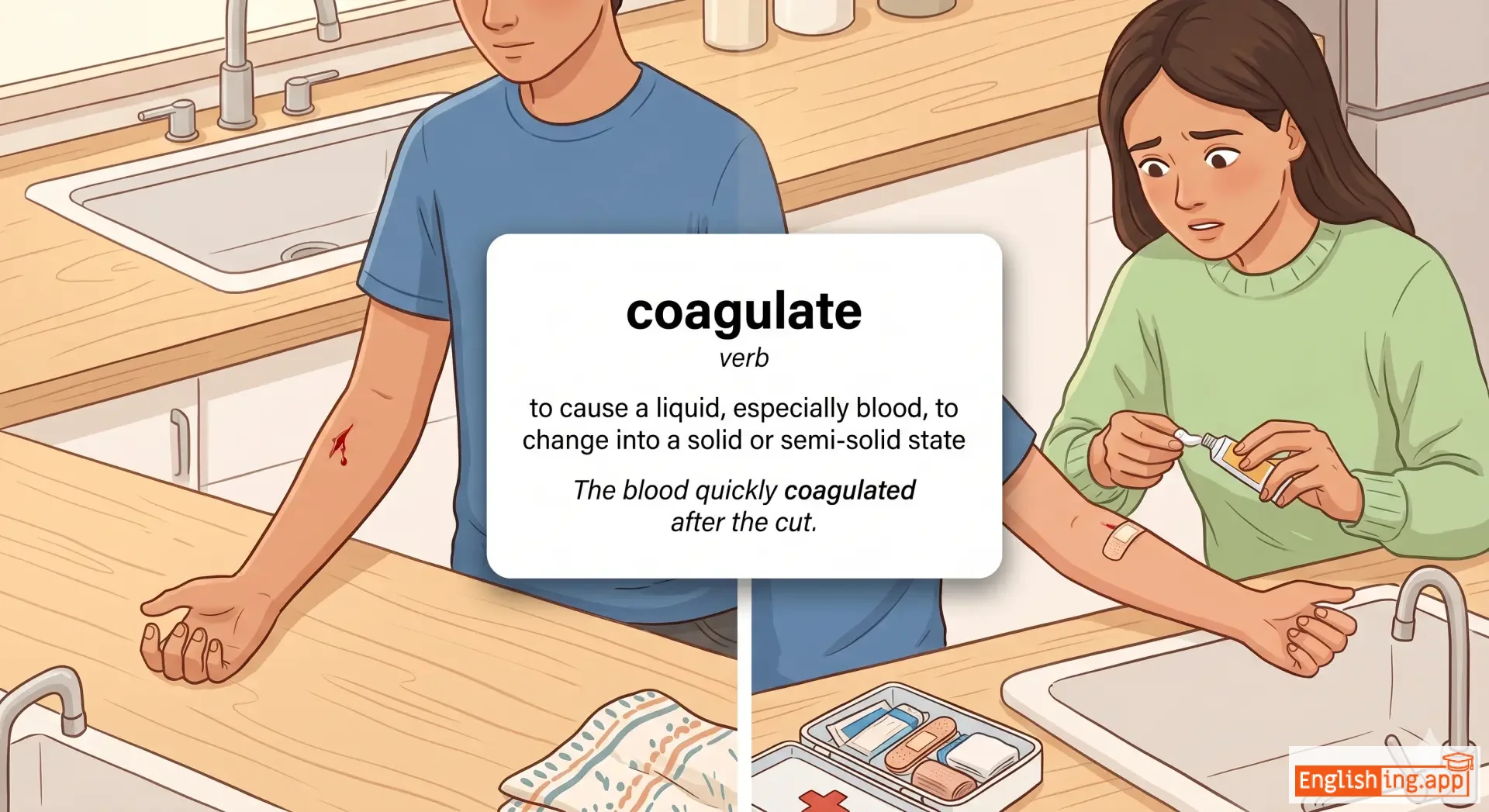
|
to cause a liquid, especially blood, to change into a solid or semi-solid state
••••••
|
The blood quickly coagulated after the cut.
伤口后血液迅速凝结。
••••••
|
伤口后血液迅速凝结。
Shāngkǒu hòu xuèyè xùnsù níngjié.
••••••
|
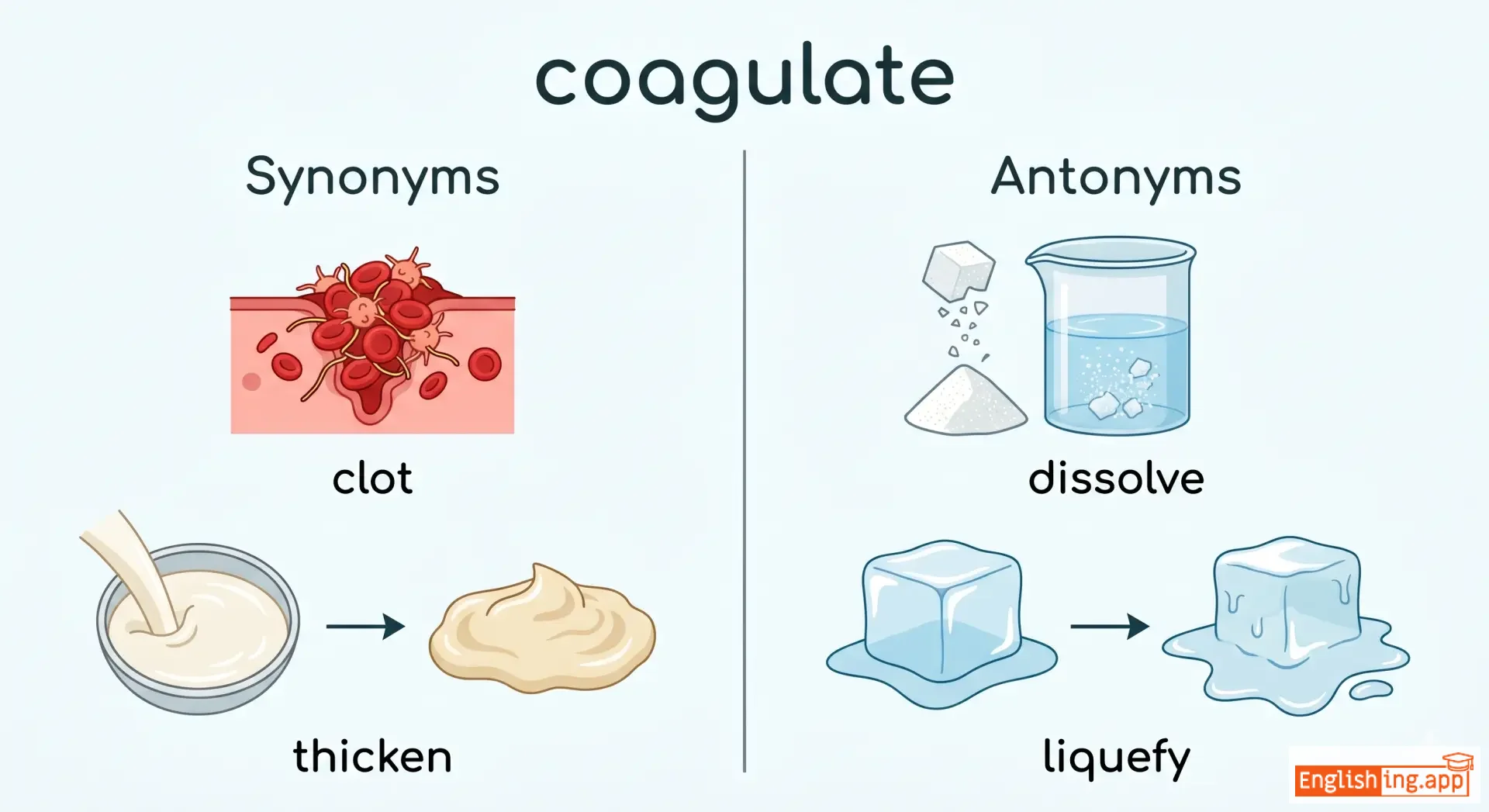
- •••••• | - •••••• | - •••••• |
clot, thicken, curdle, congeal
••••••
|
dissolve, liquefy, melt
••••••
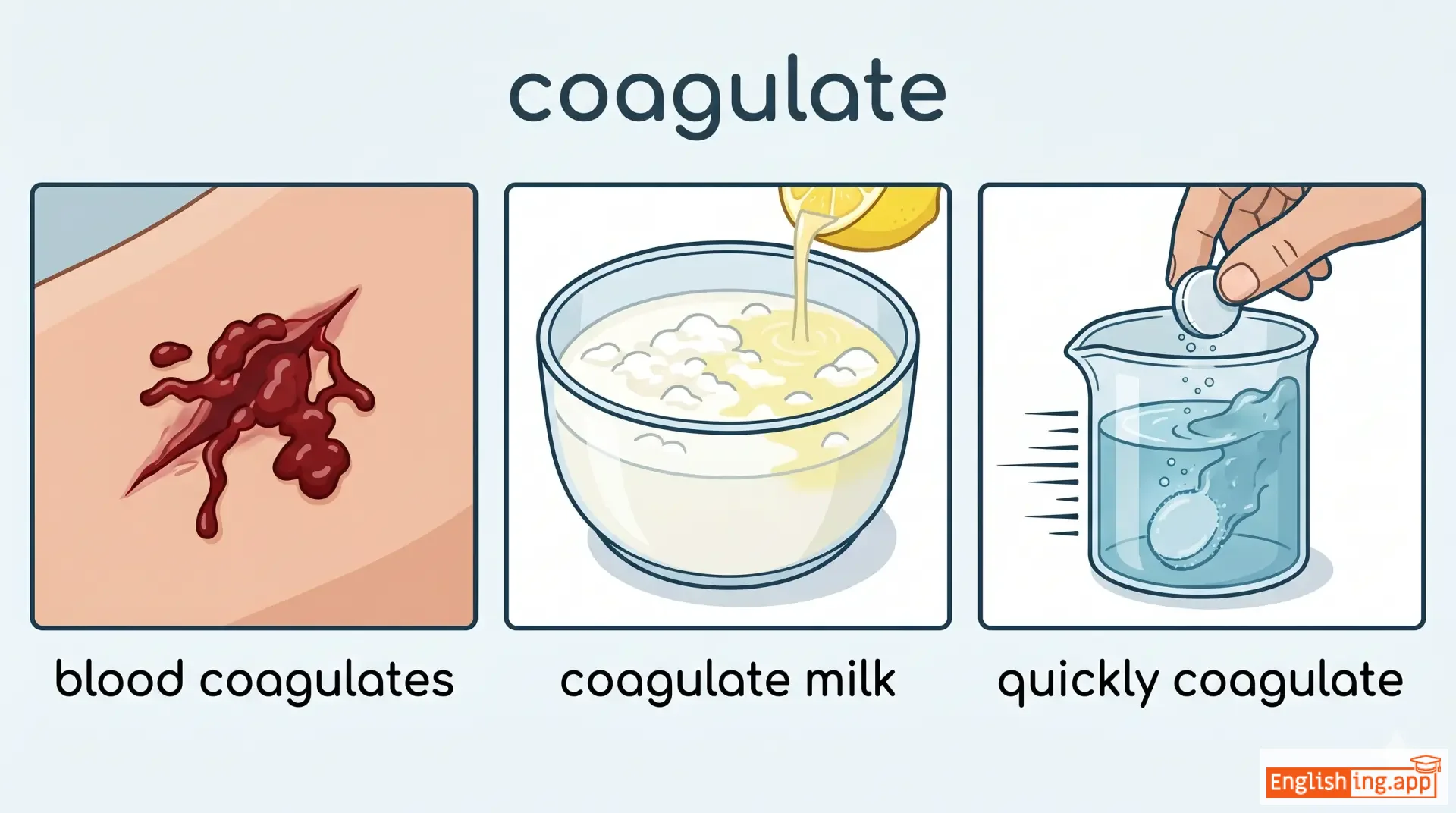
|
blood coagulates, coagulate milk, quickly coagulate
••••••
|
割伤后血液凝结
••••••
|
|
#1520
🩸
|
/koʊˈæɡjələnt/
noun
(凝血剂)
••••••
|
- •••••• |
凝血剂
ningxueji
••••••
|
- •••••• | - •••••• | - •••••• | - •••••• |
a substance that causes blood or another liquid to clot
••••••
|
The doctor applied a coagulant to stop the bleeding quickly. |
医生使用了凝血剂来迅速止血。
Yisheng shiyong le ningxueji lai xunsu zhixue.
••••••
|
- •••••• | - •••••• | - •••••• |
clotting agent, curdling agent, thickener, binder
••••••
|
anticoagulant, thinner
••••••
|
apply coagulant, chemical coagulant, natural coagulant
••••••
|
凝血剂是用来形成血块的 - 使血液凝固的物质
••••••
|
|
#1521
🤝
|
/koʊˈædʒətər/
noun
(koʊˈædʒətər)
••••••
|
- •••••• |
助手
zhùshǒu
••••••
|
- •••••• | - •••••• | - •••••• | - •••••• |
a person who helps or assists another, especially in a religious or official capacity
••••••
|
The bishop appointed a coadjutor to assist him with his duties. |
主教任命了一位助手来协助他完成职责。
Zhǔjiào rènmìngle yī wèi zhùshǒu lái xiézhù tā wánchéng zhízé.
••••••
|
- •••••• | - •••••• | - •••••• |
assistant, helper, deputy, aide, partner
••••••
|
opponent, rival, adversary
••••••
|
appoint a coadjutor, serve as coadjutor, coadjutor bishop
••••••
|
Co + 助手 = Coadjutor,即助手
••••••
|
|
#1522
🤦
|
/ˈklʌm.zi/
adjective
(kè lūn zī)
••••••
|
- •••••• |
笨拙的
bèn zhuō de
••••••
|
- •••••• | - •••••• | - •••••• | - •••••• |
awkward in movement or lacking skill
••••••
|
He is so clumsy that he drops things all the time.
他这么笨,总是把东西掉下来。
••••••
|
他这么笨,总是把东西掉下来。
Tā zhème bèn, zǒng shì bǎ dōngxī diào xiàlái.
••••••
|
clumsy attempt
笨拙的尝试
••••••
|
an awkward or unskilled effort
••••••
|
笨拙的尝试
bèn zhuō de chángshì
••••••
|
awkward, uncoordinated, graceless, inept
••••••
|
graceful, skillful, coordinated
••••••
|
clumsy movement, clumsy attempt, clumsy hands
••••••
|
Clumsy 意味着总是把东西掉下来的学生。
••••••
|
|
#1523
🍰
|
/ˈklɔɪ.ɪŋ/
adjective
(kè luó yīng)
••••••
|
- •••••• |
腻人的
nì rén de
••••••
|
- •••••• | - •••••• | - •••••• | - •••••• |
too sweet, rich, or sentimental, making it unpleasant
••••••
|
The dessert was so cloying that I couldn't finish it. |
甜点太腻人了,我吃不下去。
Tiándiǎn tài nì rén le, wǒ chī bù xiàqù.
••••••
|
- •••••• | - •••••• | - •••••• |
sickly, sugary, over-sweet, excessive
••••••
|
pleasant, balanced, mild
••••••
|
cloying sweetness, cloying sentiment, cloying perfume
••••••
|
Cloying 就是甜到让人不舒服的感觉。
••••••
|
|
#1524
🤡
|
/klaʊn/
noun
(klāo)
••••••
|
- •••••• |
小丑
xiaochou
••••••
|
- •••••• | - •••••• | - •••••• | - •••••• |
a comic entertainer who wears funny clothes and makeup
••••••
|
The clown made the children laugh with his tricks. |
小丑用他的戏法让孩子们笑了。
Xiaochou yong tade xifa rang haizimen xiaole.
••••••
|
act like a clown |
to behave in a silly or foolish way
••••••
|
像小丑一样表现
Xiang xiaochou yiyang biaoxian
••••••
|
jester, fool, comedian, joker
••••••
|
serious person, professional
••••••
|
circus clown, party clown, funny clown
••••••
|
小丑是穿着搞笑衣服和化妆,带给大家欢乐的人。
••••••
|
|
#1525
💪
|
/klaʊt/
noun
(克劳特)
••••••
|
- •••••• |
影响力
yingxiangli
••••••
|
- •••••• | - •••••• | - •••••• | - •••••• |
influence or power, especially in politics or business
••••••
|
The businessman has a lot of political clout.
这个商人有很大的政治影响力。
••••••
|
这位商人有很大的政治影响力。
Zhe wei shangren you hendà de zhengzhi yingxiangli.
••••••
|
pull clout
有影响力
••••••
|
to have influence or power over something
••••••
|
有影响力
you yingxiangli
••••••
|
influence, power, sway, authority
••••••
|
weakness, helplessness
••••••
|
political clout, social clout, economic clout, wield clout
••••••
|
Clout意味着像人群一样施加影响力 (yingxiangli)
••••••
|
|
#1526
🌧️
|
/ˈklaʊdˌbɜːrst/
noun
(kàolèdù-bāosītè)
••••••
|
- •••••• |
突然的暴雨
tūrán de bào yǔ
••••••
|
- •••••• | - •••••• | - •••••• | - •••••• |
a sudden and very heavy rainfall
••••••
|
The picnic was ruined by a sudden cloudburst.
野餐被突如其来的云爆摧毁。
••••••
|
野餐被突如其来的暴雨摧毁。
Yěcān bèi tú rúkè qí lái de bào yǔ cuīhuǐ.
••••••
|
- •••••• | - •••••• | - •••••• |
downpour, deluge, shower, torrent
••••••
|
drought, dryness
••••••
|
sudden cloudburst, heavy cloudburst, unexpected cloudburst
••••••
|
Cloud burst! 突然的大雨来了。
••••••
|
|
#1527
🗳️
|
/ˈkloʊtʃər/
noun
(克洛图尔)
••••••
|
- •••••• |
辩论结束程序
bianlun jieshu chengxu
••••••
|
- •••••• | - •••••• | - •••••• | - •••••• |
a procedure for ending a debate and taking a vote.
••••••
|
The Senate invoked cloture to end the lengthy debate. |
参议院启动了辩论结束程序以结束长时间的辩论。
Canyiyuan qidongle bianlun jieshu chengxu yi jieshu changshijian de bianlun.
••••••
|
- •••••• | - •••••• | - •••••• |
closure, end, termination, conclusion
••••••
|
continuation, extension
••••••
|
invoke cloture, cloture motion, cloture vote
••••••
|
Cloture意味着关闭辩论并进行投票。
••••••
|
|
#1528
👔
|
/ˈkloʊðiər/
noun
(克洛锡尔)
••••••
|
- •••••• |
服装商
fúzhuāng shāng
••••••
|
- •••••• | - •••••• | - •••••• | - •••••• |
a person or company that makes, sells, or deals in clothes.
••••••
|
The town’s clothier displayed fine suits in his shop window. |
城里的服装商在他的店窗里展示了精美的西装。
Chéng lǐ de fúzhuāng shāng zài tā de diàn chuāng lǐ zhǎnshì le jīngměi de xīzhuāng.
••••••
|
- •••••• | - •••••• | - •••••• |
tailor, outfitter, haberdasher, draper
••••••
|
customer, buyer
••••••
|
local clothier, clothier shop, clothier business
••••••
|
Clothier 意味着服装商 — Clothes + seller = clothier.
••••••
|
|
#1529
🩸
|
/klɒt/
noun, verb
(klot)
••••••
|
- •••••• |
血块
xuekuai
••••••
|
clotted
klotted
••••••
|
clotted
klotted
••••••
|
clots
klots
••••••
|
clotting
klotting
••••••
|
a thick mass of coagulated liquid, especially blood; to form such a mass.
••••••
|
The doctor removed a blood clot from the patient.
医生从病人身上取出了血块。
••••••
|
医生从病人身上取出了血块。
Yisheng cong bingren shen shang quchule xuekuai.
••••••
|
- •••••• | - •••••• | - •••••• |
lump, mass, coagulum, lumping
••••••
|
flow, stream
••••••
|
blood clot, clot formation, clot removal
••••••
|
Clot表示血液的凝结物,特别是血块。
••••••
|
|
#1530
⛵
|
/ˌkloʊs ˈhɔːld/
adjective
(克洛斯-霍尔德)
••••••
|
- •••••• |
逆风航行
nì fēng háng xíng
••••••
|
- •••••• | - •••••• | - •••••• | - •••••• |
of a sailing ship, sailing as nearly as possible towards the direction from which the wind is blowing.
••••••
|
The yacht was close-hauled as it cut through the waves. |
那艘游艇在波浪中紧贴风向行驶。
Nà sōu yóu tǐng zài bōlàng zhōng jǐn tiē fēng xiàng xíng shǐ.
••••••
|
- •••••• | - •••••• | - •••••• |
upwind, windward, tight to the wind
••••••
|
downwind, leeward
••••••
|
close-hauled course, sail close-hauled, yacht close-hauled
••••••
|
Close-hauled 意味着帆船朝着风向尽可能航行。
••••••
|
Vocabulary Quiz
Test your vocabulary by matching words with their translations or meanings.
Login to take the quiz
Comments (0)
Share your thoughts and join the discussion.
Join the discussion by logging in
Login to CommentNo comments yet
Be the first to share your thoughts!