

Swipe left or right, or use the buttons. Tap image to zoom.
例句翻译
单词
Lesson 318Lesson 318 - 遮罩切换
|
表情符号
|
单词 | Images | 翻译 | 过去时 | 过去分词 | 第三人称单数 | 动名词 | 含义 | 例句 | 例句翻译 | 示例表达 | 示例表达含义 | 示例表达翻译 | 同义词 | 反义词 | 搭配词 | 助记符 |
|---|---|---|---|---|---|---|---|---|---|---|---|---|---|---|---|---|---|
|
#9510
🪚
|
/ˈwɜːkmənˌʃɪp/
noun
(wɜrkˈmænʃɪp)
••••••
|
|
工艺
gōngyì
••••••
|
- •••••• | - •••••• | - •••••• | - •••••• |
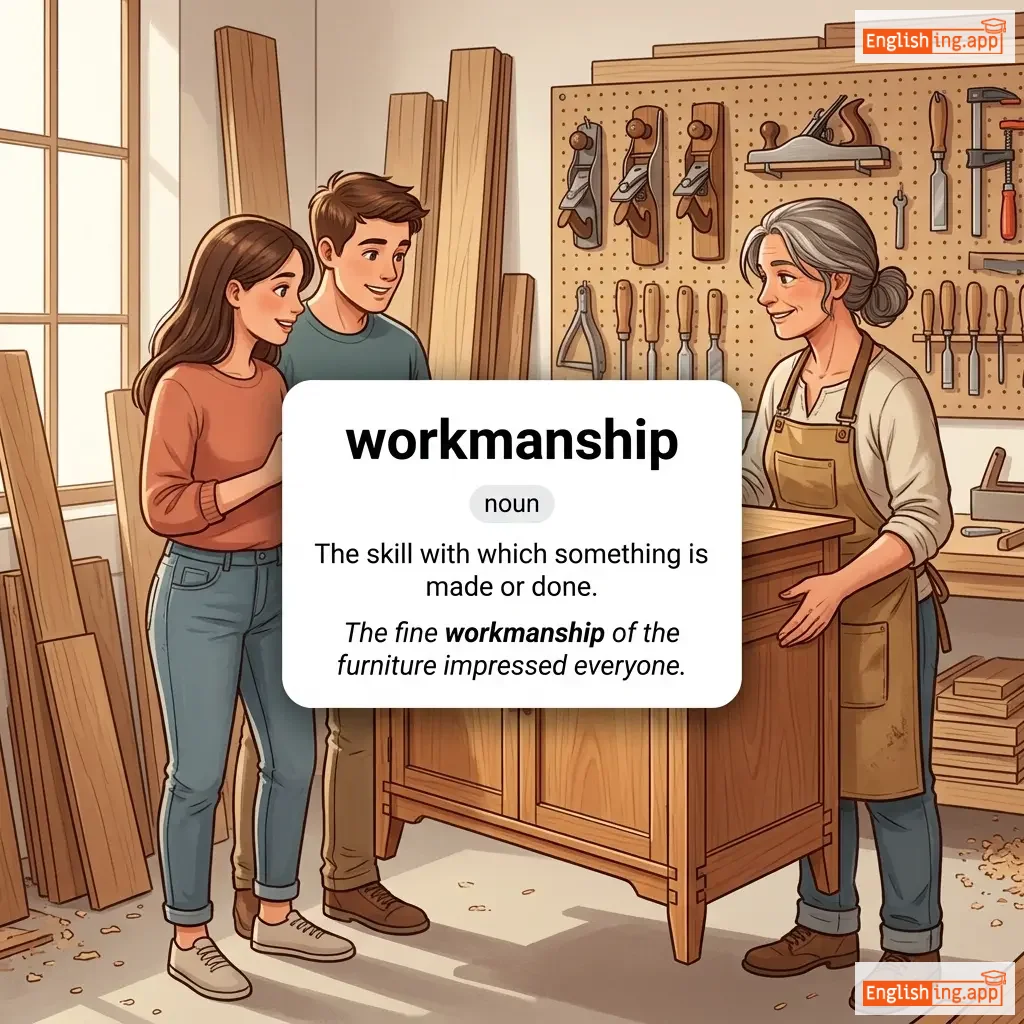
The skill with which something is made or done.
••••••
|
The fine workmanship of the furniture impressed everyone.
家具的精湛工艺给每个人留下了深刻印象。
••••••
|
家具的精湛工艺给每个人留下了深刻印象。
Jiājù de jīngzhàn gōngyì gěi měi gè rén liú xià le shēnkè yìnxiàng.
••••••
|
- •••••• | - •••••• | - •••••• |
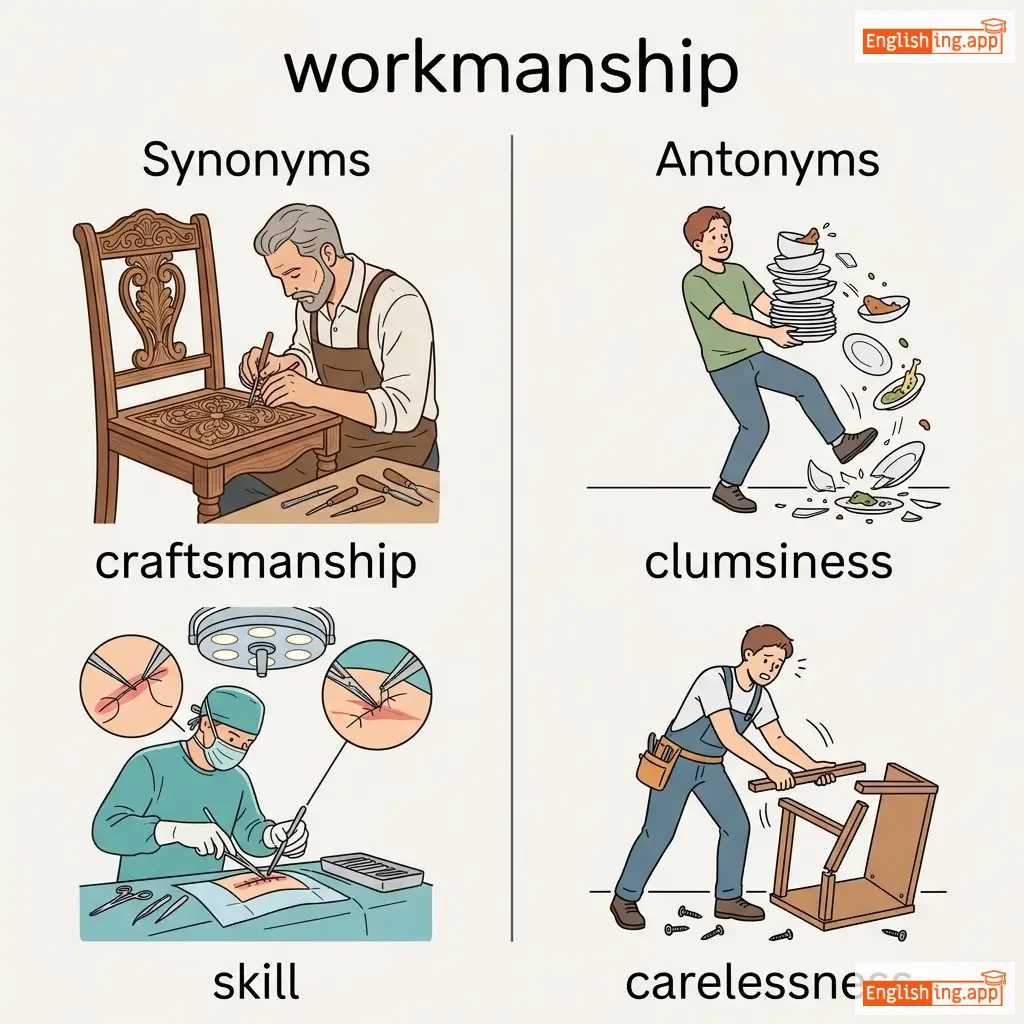
craftsmanship, skill, artistry, quality
••••••
|
clumsiness, carelessness, ineptitude
••••••
|
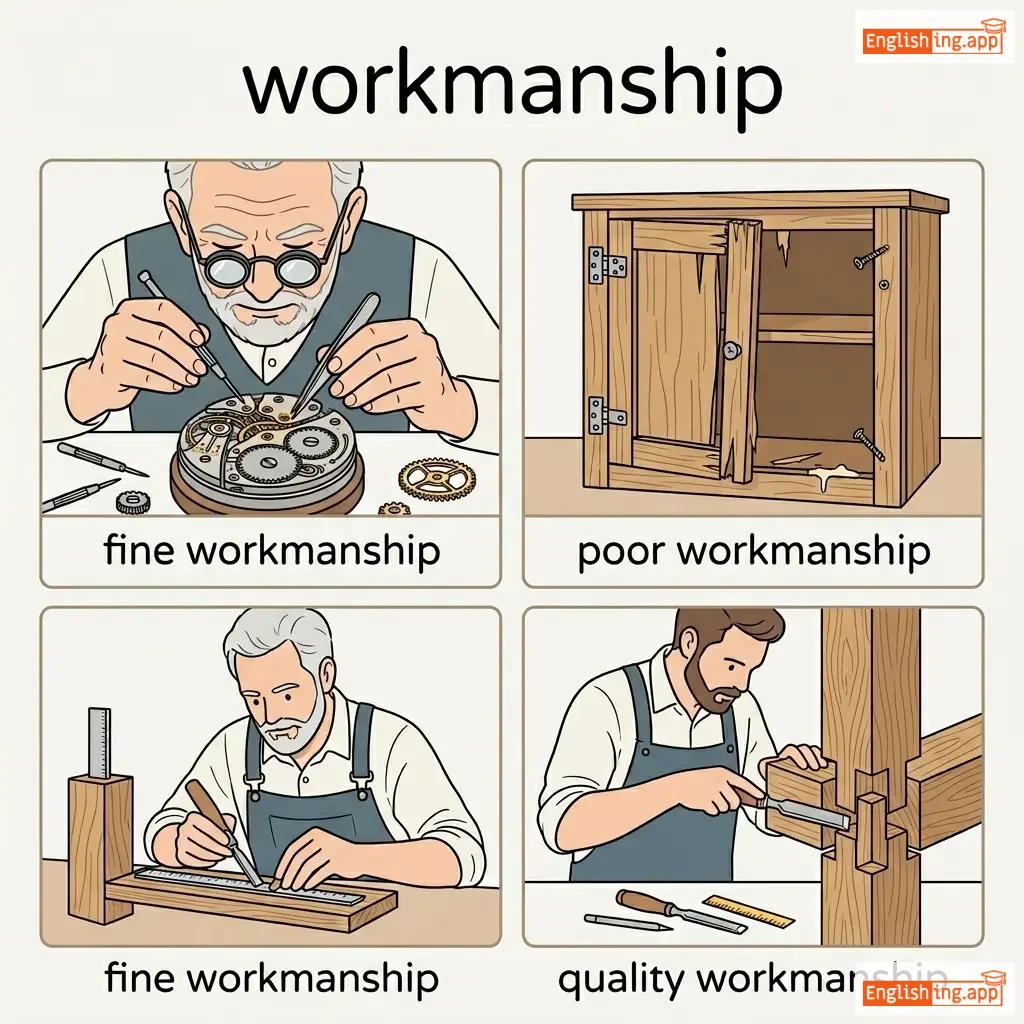
fine workmanship, poor workmanship, quality workmanship
••••••
|
Work + ship → 工艺,表示创造性工艺如工匠的手艺。
••••••
|
|
#9511
👵
|
/ˈrɪŋ.kəl/
noun/verb
(rinkle)
••••••
|
- •••••• |
褶皱
zhě zhòu
••••••
|
wrinkled
rinkled
••••••
|
wrinkled
rinkled
••••••
|
wrinkles
wrinkles
••••••
|
wrinkling
wrinkling
••••••
|
A small line or fold in the skin or fabric; to form small folds or lines.
••••••
|
The old shirt had many wrinkles.
The old shirt had many wrinkles.
••••••
|
那件旧衬衫有很多褶皱。
nà jiàn jiù chènshān yǒu hěn duō zhě zhòu
••••••
|
iron out the wrinkles
iron out the wrinkles
••••••
|
to fix small problems or difficulties
••••••
|
解决小问题
jiě jué xiǎo wèn tí
••••••
|
crease, fold, line, crinkle, furrow
••••••
|
smoothness, flatness
••••••
|
deep wrinkles, facial wrinkles, wrinkle cream, iron wrinkles
••••••
|
Wrinkle意味着褶皱,而抗皱霜可以去除它们。
••••••
|
|
#9512
🌀
|
/rɪŋ/
verb
(happiness)
••••••
|
- •••••• |
幸福
xingfu
••••••
|
wrung
••••••
|
wrung
••••••
|
wrings
••••••
|
wringing
••••••
|
to squeeze and twist something to force liquid out; to extract with effort
••••••
|
She had to wring the towel after washing it. |
她收到奖项时,无法掩饰自己的幸福。
Tā shōudào jiǎngxiàng shí, wúfǎ yǎnshì zìjǐ de xìngfú.
••••••
|
wring one's hands |
to show worry or distress by twisting one's hands
••••••
|
追求幸福
zhuīqiú xìngfú
••••••
|
twist, squeeze, extract, compress
••••••
|
release, loosen, free
••••••
|
wring out, wring the towel, wring hands, wring a confession
••••••
|
幸福就是Happiness,幸福的感觉在生活中闪亮。
••••••
|
|
#9513
😭
|
/ˈrɛtʃɪdnəs/
noun
(rèchédnèss)
••••••
|
- •••••• |
悲惨
bēicǎn
••••••
|
- •••••• | - •••••• | - •••••• | - •••••• |
a state of misery, unhappiness, or poor condition
••••••
|
The novel depicts the wretchedness of war victims. |
这本小说描绘了战争受害者的悲惨。
Zhè běn xiǎoshuō miáohuìle zhànzhēng shòhài zhě de bēicǎn.
••••••
|
- •••••• | - •••••• | - •••••• |
misery, poverty, despair, unhappiness
••••••
|
happiness, joy, prosperity
••••••
|
human wretchedness, deep wretchedness, state of wretchedness
••••••
|
Wretchedness 代表着悲惨 – 战争让受害者处于悲惨的境地。
••••••
|
|
#9514
😢
|
/ˈrɛtʃɪd/
adjective
(ˈrɛtʃɪd)
••••••
|
- •••••• |
悲惨
bēicǎn
••••••
|
- •••••• | - •••••• | - •••••• | - •••••• |
in a very unhappy, miserable, or poor condition
••••••
|
They lived in a wretched hut with no clean water. |
他们住在一个悲惨的小屋里,没有干净的水。
Tāmen zhù zài yīgè bēicǎn de xiǎowū lǐ, méiyǒu gānjìng de shuǐ.
••••••
|
wretched condition |
a miserable or poor state
••••••
|
悲惨的情况
bēicǎn de qíngkuàng
••••••
|
miserable, poor, pitiful, terrible
••••••
|
fortunate, blessed, happy
••••••
|
wretched condition, wretched life, wretched man, wretched poverty
••••••
|
Wretched 意味着一种非常悲惨的状态,就像‘悲惨’这个词描述的情况。
••••••
|
|
#9515
😞
|
/rɛtʃ/
noun
(rɛtʃ)
••••••
|
- •••••• |
不幸的人
buxing de ren
••••••
|
- •••••• | - •••••• | - •••••• | - •••••• |
an unfortunate or miserable person; a despicable or contemptible person
••••••
|
The poor wretch was left out in the cold with no shelter.
那个可怜的wretch被遗弃在寒冷中,没有避难所。
••••••
|
那个不幸的人被遗弃在寒冷中,没有避难所。
Na ge buxing de ren bei yiqi zai hanleng zhong, meiyou binan suo.
••••••
|
poor wretch
可怜的wretch
••••••
|
used to describe someone pitiable or miserable
••••••
|
可怜的人
kelian de ren
••••••
|
miserable person, unfortunate, outcast, villain
••••••
|
gentleman, lady, nobleman
••••••
|
poor wretch, miserable wretch, wretched wretch
••••••
|
Wretch意味着非常不幸,就像你说 'retch' 就会觉得很不舒服。
••••••
|
|
#9516
🤼
|
/rɛst/
verb
(rest)
••••••
|
- •••••• |
用力夺取
yongli duóqǔ
••••••
|
wrested
rested
••••••
|
wrested
rested
••••••
|
wrests
rests
••••••
|
wresting
wresting
••••••
|
to forcibly pull something from a person's grasp; to seize with effort or struggle
••••••
|
The police had to wrest the weapon from the suspect's hand.
警察不得不从嫌疑人的手中夺走武器。
••••••
|
警察不得不从嫌疑人的手中夺走武器。
Jǐngchá bùdé bù cóng xiányí rén de shǒuzhōng duózǒu wǔqì.
••••••
|
wrest control
夺取控制
••••••
|
to take control by force or effort
••••••
|
夺取控制
duóqǔ kòngzhì
••••••
|
seize, grab, snatch, extract, yank
••••••
|
release, surrender, yield
••••••
|
wrest control, wrest power, wrest the title, wrest freedom
••••••
|
Wrest就是从'rest'中夺走 – 就是夺走某人的'rest'。
••••••
|
|
#9517
🔧
|
/rɛntʃ/
verb
(rench)
••••••
|
- •••••• |
猛拉
meng la
••••••
|
wrenched
renchd
••••••
|
wrenched
renchd
••••••
|
wrenches
renches
••••••
|
wrenching
renching
••••••
|
to pull or twist suddenly and violently
••••••
|
He wrenched the door open in anger.
他愤怒地把门猛地拉开。
••••••
|
他愤怒地把门猛拉开。
Ta fennu de ba men meng la kai.
••••••
|
throw a wrench into
扔个扳手进去
••••••
|
to cause problems or difficulties in a plan or process
••••••
|
制造问题
zhizao wenti
••••••
|
twist, yank, jerk, pull
••••••
|
release, loosen, relax
••••••
|
wrench free, wrench away, emotional wrench
••••••
|
Wrench 就是猛拉:想象你需要一个扳手才能打开卡住的东西
••••••
|
|
#9518
🌪️
|
/riːk/
verb
(rik)
••••••
|
- •••••• |
造成损害
zàochéng sǔnhài
••••••
|
wreaked
rikt
••••••
|
wreaked
rikt
••••••
|
wreaks
riks
••••••
|
wreaking
riking
••••••
|
to cause or inflict something, especially damage or harm
••••••
|
The storm wreaked havoc on the coastal villages.
暴风雨在沿海村庄造成了破坏。
••••••
|
暴风雨在沿海村庄造成了严重损害。
Bàofēngyǔ zài yánhǎi cūnzhuāng zàochéngle yánzhòng sǔnhài.
••••••
|
wreak havoc
造成破坏
••••••
|
to cause great damage or disruption
••••••
|
造成大规模破坏
zàochéng dà guīmó pòhuài
••••••
|
inflict, cause, unleash, impose
••••••
|
prevent, protect, save
••••••
|
wreak havoc, wreak destruction, wreak damage
••••••
|
Wreak Havoc 表示严重破坏 – Wreak 就是让一切变弱。
••••••
|
|
#9519
😡
|
/ræθ/
noun
(rath)
••••••
|
- •••••• |
愤怒
fèn nù
••••••
|
- •••••• | - •••••• | - •••••• | - •••••• |
extreme anger or rage
••••••
|
The king's wrath terrified the villagers. |
国王的愤怒让村民感到恐惧。
Guówáng de fèn nù ràng cūnmín gǎndào kǒngjù.
••••••
|
incur someone's wrath |
to make someone extremely angry
••••••
|
招惹某人的愤怒
Zhāo rě mǒu rén de fèn nù
••••••
|
anger, fury, rage, outrage
••••••
|
calmness, peace, forgiveness
••••••
|
divine wrath, wrath of God, unleash wrath
••••••
|
Wrath 意味着愤怒 – 国王的愤怒让村民感到害怕
••••••
|
|
#9520
🤠
|
/ˈræŋɡlər/
noun
(rǎnɡlè)
••••••
|
- •••••• |
牧牛人
mù niú rén
••••••
|
- •••••• | - •••••• | - •••••• | - •••••• |
a person who argues noisily; or someone who takes care of livestock on a ranch
••••••
|
The cowboy worked as a wrangler on the ranch.
牛仔在牧场作为牧牛人工作。
••••••
|
牛仔在牧场作为牧牛人工作。
Niú zǎi zài mù chǎng zuò wèi mù niú rén gōngzuò.
••••••
|
- •••••• | - •••••• | - •••••• |
cowboy, herder, rancher, arguer
••••••
|
peacemaker, mediator
••••••
|
horse wrangler, cattle wrangler, film wrangler
••••••
|
Wrangler 即牧牛人 – 在牧场照顾牛
••••••
|
|
#9521
🤼
|
/ˈræŋɡl̩/
verb
(rángēl)
••••••
|
- •••••• |
争论
zhēnglùn
••••••
|
wrangled
rángēld
••••••
|
wrangled
rángēld
••••••
|
wrangles
rángēls
••••••
|
wrangling
rángīng
••••••
|
to argue or dispute noisily or angrily
••••••
|
The two neighbors wrangled over the property line for hours.
两个邻居为土地边界争论了好几个小时。
••••••
|
两个邻居为土地边界争论了好几个小时。
Liǎng gè línjū wèi tǔdì biānjiè zhēnglùnle hǎo jǐ gè xiǎoshí.
••••••
|
wrangle over
争论某事
••••••
|
to argue or dispute about something
••••••
|
争论某事
zhēnglùn mǒu shì
••••••
|
argue, quarrel, bicker, dispute, squabble
••••••
|
agree, concur, harmonize
••••••
|
wrangle over money, wrangle with authorities, political wrangle
••••••
|
Wrangle意味着争论 – 当你争论时就开始wrangle!
••••••
|
|
#9522
👻
|
/reɪθ/
noun
(reɪθ)
••••••
|
- •••••• |
幽灵
youling
••••••
|
- •••••• | - •••••• | - •••••• | - •••••• |
A ghost or ghostlike image of someone, especially seen shortly before or after their death.
••••••
|
A wraith appeared in the fog near the old castle. |
在旧城堡附近的雾中出现了一个幽灵。
Zai jiu chengbao fujin de wu zhong chuxian le yi ge youling.
••••••
|
- •••••• | - •••••• | - •••••• |
ghost, specter, phantom, spirit, apparition
••••••
|
being, human, reality
••••••
|
wraith-like figure, ghostly wraith, pale wraith
••••••
|
Wraith听起来像幽灵,意思也是鬼魂。
••••••
|
|
#9523
🙏
|
/ˈwɜːʃɪp/
verb
(沃尔希普)
••••••
|
- •••••• |
崇拜
chóngbài
••••••
|
worshipped
沃尔希普德
••••••
|
worshipped
沃尔希普德
••••••
|
worships
沃尔希普斯
••••••
|
worshipping
沃尔希平
••••••
|
To show reverence and adoration for a deity or sacred being.
••••••
|
They gathered at the temple to worship together.
他们聚集在寺庙里一起崇拜。
••••••
|
他们聚集在寺庙里一起崇拜。
Tāmen jùjí zài sìmiào lǐ yīqǐ chóngbài.
••••••
|
worship the ground someone walks on
崇拜某人走过的土地
••••••
|
To admire or adore someone greatly.
••••••
|
极度崇拜某人
jídù chóngbài mǒu rén
••••••
|
adore, revere, venerate, honor, praise
••••••
|
despise, dishonor, disrespect
••••••
|
worship God, worship in church, idol worship, worship service
••••••
|
Worship 就是崇拜,比如在寺庙里崇拜。
••••••
|
|
#9524
🌍
|
/ˈwɜːldli/
adjective
(wɜːrldli)
••••••
|
- •••••• |
世俗
shìsú
••••••
|
- •••••• | - •••••• | - •••••• | - •••••• |
Concerned with material values or ordinary life rather than spiritual matters.
••••••
|
He was more interested in worldly success than in spiritual growth. |
他更关心世俗的成功,而不是精神上的成长。
Tā gèng guānxīn shìsú de chénggōng, ér bùshì jīngshén shàng de chéngzhǎng.
••••••
|
worldly wise |
Experienced and shrewd in worldly matters.
••••••
|
世俗智慧
shìsú zhìhuì
••••••
|
materialistic, secular, earthly, sophisticated
••••••
|
spiritual, unworldly, naive
••••••
|
worldly goods, worldly success, worldly matters, worldly experience
••••••
|
Worldly 代表的是世俗的,shìsú 也是指凡间的事情。
••••••
|
|
#9525
🛡️
|
/wɪðˈstænd/
verb
(wɪðˈstænd)
••••••
|
- •••••• |
承受 / 抵抗
chéngshòu / dǐkàng
••••••
|
withstood
wɪðˈstʊd
••••••
|
withstood
wɪðˈstʊd
••••••
|
withstands
wɪðˈstændz
••••••
|
withstanding
wɪðˈstændɪŋ
••••••
|
to resist or endure something without being harmed
••••••
|
This building can withstand strong earthquakes.
这座建筑能够承受强烈的地震。
••••••
|
这座建筑能够承受强烈的地震。
Zhè zuò jiànzhú nénggòu chéngshòu qiángliè de dìzhèn.
••••••
|
stand the test of time
经受住时间的考验
••••••
|
to last or remain strong for a long period
••••••
|
经受住时间的考验
Jīngshòu zhù shíjiān de kǎoyàn
••••••
|
endure, resist, survive, tolerate, bear
••••••
|
surrender, collapse, yield
••••••
|
withstand pressure, withstand attack, withstand force, withstand heat
••••••
|
With STAND, strong against time’s test!
••••••
|
|
#9526
🛠️
|
/ˈwɜːkmənˌlaɪk/
adjective
(wɜːrkˌmaɪnˈlaɪk)
••••••
|
- •••••• |
务实
wùshí
••••••
|
- •••••• | - •••••• | - •••••• | - •••••• |
Showing efficient, competent, and practical skill, but without flair or creativity.
••••••
|
The carpenter delivered a workmanlike performance on the project.
木匠在项目中交付了一个实用的表现。
••••••
|
木匠在项目中交付了一个务实的表现。
Mùjiàng zài xiàngmù zhōng jiāofùle yīgè wùshí de biǎoxiàn.
••••••
|
- •••••• | - •••••• | - •••••• |
competent, efficient, skilled, practical, capable
••••••
|
unskilled, incompetent, sloppy
••••••
|
workmanlike manner, workmanlike performance, workmanlike approach
••••••
|
务 = 工作, 实 = 实际, 代表没有创意的工作。
••••••
|
|
#9527
👷
|
/ˈwɜːrkɪŋ mæn/
noun
(沃尔金 曼)
••••••
|
- •••••• |
工人
gongren
••••••
|
- •••••• | - •••••• | - •••••• | - •••••• |
a man engaged in manual labor or industrial work, often considered as part of the working class
••••••
|
The working-man fought hard for better wages and conditions. |
工人为了更好的工资和工作条件而努力奋斗。
Gongren weile geng hao de gongzi he gongzuo tiaojian er nuli fendou.
••••••
|
- •••••• | - •••••• | - •••••• |
laborer, worker, employee, breadwinner
••••••
|
employer, capitalist
••••••
|
working-man wages, working-man rights, working-man struggle
••••••
|
working-man 就是工人 – 做工作的人。
••••••
|
|
#9528
🔁
|
/woʊnt/ or /wɔːnt/
adjective
(wont)
••••••
|
- •••••• |
习惯
xíguàn
••••••
|
- •••••• | - •••••• | - •••••• | - •••••• |
accustomed or used to doing something
••••••
|
She rose early, as she was wont to do.
她早早起床,正如她习惯做的那样。
••••••
|
她早早起床,正如她习惯做的那样。
Tā zǎo zǎo qǐ chuáng, zhèng rú tā xíguàn zuò de nà yàng.
••••••
|
- •••••• | - •••••• | - •••••• |
accustomed, used, habituated, inclined
••••••
|
unaccustomed, unused
••••••
|
as he is wont to, as she was wont to do
••••••
|
她早起习惯了,'习惯'就是她的'wont'。
••••••
|
|
#9529
😭
|
/ˈwoʊ.fəl/
adjective
(woful)
••••••
|
- •••••• |
悲惨的
bēicǎn de
••••••
|
- •••••• | - •••••• | - •••••• | - •••••• |
full of woe; very sad or miserable; also used to mean very bad or deplorable
••••••
|
He gave me a woeful look when he lost the match. |
当他输掉比赛时,他给了我一个悲惨的眼神。
Dāng tā shūdiào bǐsài shí, tā gěile wǒ yīgè bēicǎn de yǎnshén.
••••••
|
- •••••• | - •••••• | - •••••• |
miserable, sorrowful, pitiful, tragic, deplorable
••••••
|
cheerful, joyful, pleasant
••••••
|
woeful expression, woeful condition, woeful state
••••••
|
woe 意味着悲伤,所以 woeful 意味着充满悲伤。
••••••
|
|
#9530
😢
|
/woʊ/
noun
(wo)
••••••
|
- •••••• |
悲伤
beishang
••••••
|
- •••••• | - •••••• | - •••••• | - •••••• |
great sorrow, distress, or trouble
••••••
|
Her heart was filled with woe after hearing the sad news. |
她在听到悲伤的消息后,心中充满了悲伤。
Ta zai tingdao beishang de xiaoxi hou, xinzhong chongman le beishang.
••••••
|
woe is me |
an exclamation of sorrow or distress
••••••
|
哎呀我
aiya wo
••••••
|
sorrow, misery, grief, anguish, despair
••••••
|
joy, happiness, delight
••••••
|
filled with woe, tales of woe, woe upon woe
••••••
|
当你感到痛苦时,'woe' 意味着 '哎呀我'。
••••••
|
|
#9531
⚖️
|
/ˈwɒb.l̩/
verb
(wobble)
••••••
|
- •••••• |
摇晃
yaohuang
••••••
|
wobbled
wobulid
••••••
|
wobbled
wobulid
••••••
|
wobbles
wobles
••••••
|
wobbling
wobling
••••••
|
to move unsteadily from side to side; to shake or tremble slightly
••••••
|
The table began to wobble when he leaned on it.
当他依靠在桌子上时,桌子开始摇晃。
••••••
|
当他依靠在桌子上时,桌子开始摇晃。
Dang ta yikao zai zhuozi shang shi, zhuozi kaishi yaohuang.
••••••
|
on the wobble
在摇晃中
••••••
|
in an unstable or uncertain state
••••••
|
在不稳定的状态下
zai bu wending de zhuangtai xia
••••••
|
shake, tremble, totter, sway, oscillate
••••••
|
stabilize, steady, balance
••••••
|
wobble slightly, wobble chair, wobble table, wobble board
••••••
|
当某物 wobble 时,它会摇晃。
••••••
|
|
#9532
🌳
|
/ˈwɪznd/
adjective
(wēi zén dé)
••••••
|
- •••••• |
皱缩的
zhòusuō de
••••••
|
- •••••• | - •••••• | - •••••• | - •••••• |
Shriveled, wrinkled, or withered, often due to age.
••••••
|
The wizened tree stood in the field for centuries. |
那棵皱缩的树在田野中屹立了几个世纪。
Nà kē zhòusuō de shù zài tiányě zhōng yì lìle jǐ gè shìjì.
••••••
|
- •••••• | - •••••• | - •••••• |
shriveled, withered, wrinkled, aged
••••••
|
fresh, blooming, youthful
••••••
|
wizened face, wizened hands, wizened figure, wizened old man
••••••
|
Wizened = 皱纹 + 老 - 随着年龄增长,皮肤会出现皱纹。
••••••
|
|
#9533
👴
|
/ˈwɪzn feɪst/
adjective
(wéi zèn fēi sī tè)
••••••
|
- •••••• |
干燥皱巴巴的面孔
gānzào zhòubābā de miànkǒng
••••••
|
- •••••• | - •••••• | - •••••• | - •••••• |
Having a dry, wrinkled, and withered face.
••••••
|
A wizen-faced old man sat quietly in the corner. |
一个干燥皱巴巴的面孔的老人静静地坐在角落里。
Yī ge gānzào zhòubābā de miànkǒng de lǎorén jìngjìng de zuò zài jiǎoluò lǐ.
••••••
|
- •••••• | - •••••• | - •••••• |
wrinkled, shriveled, withered, aged
••••••
|
youthful, fresh, smooth
••••••
|
wizen-faced man, wizen-faced woman, old wizen-faced, wizen-faced beggar
••••••
|
Wizen-faced 指干燥皱巴巴的面孔。
••••••
|
|
#9534
🥀
|
/ˈwɪzn/
verb
(wízen)
••••••
|
- •••••• |
枯萎
kūwěi
••••••
|
wizened
wízend
••••••
|
wizened
wízend
••••••
|
wizened
wízend
••••••
|
wizening
wízening
••••••
|
To become dry, shrunken, and wrinkled.
••••••
|
The flowers began to wizen after days without water.
花朵在几天没有水后开始枯萎。
••••••
|
花朵在几天没有水后开始枯萎。
Huāduǒ zài jǐ tiān méiyǒu shuǐ hòu kāishǐ kūwěi.
••••••
|
- •••••• | - •••••• | - •••••• |
shrivel, wither, dry, wrinkle
••••••
|
bloom, flourish, thrive
••••••
|
wizen face, wizen hands, wizen body, wizen skin
••••••
|
Wizen = 带着Zen慢慢枯萎.
••••••
|
|
#9535
🧙♂️
|
/ˈwɪzərdri/
noun
(wēizàdǐ)
••••••
|
- •••••• |
魔法技艺
mófǎ jìyì
••••••
|
- •••••• | - •••••• | - •••••• | - •••••• |
The art or practice of magic; great skill or expertise in something.
••••••
|
The programmer's wizardry amazed everyone in the room.
程序员的魔法技艺让房间里的每个人都感到惊讶。
••••••
|
程序员的魔法技艺让房间里的每个人都感到惊讶。
Chéngxùyuán de mófǎ jìyì ràng fángjiān lǐ de měi gè rén dōu gǎndào jīngyà.
••••••
|
- •••••• | - •••••• | - •••••• |
sorcery, magic, enchantment, mastery, expertise
••••••
|
clumsiness, incompetence, ineptitude
••••••
|
technical wizardry, display of wizardry, computer wizardry, wizardry skills
••••••
|
Wizardry 就像是魔法,像一个魔法师的高超技艺。
••••••
|
|
#9536
🎯
|
/ˈwɪtɪŋli/
adverb
(wítɪŋli)
••••••
|
- •••••• |
故意
gùyì
••••••
|
- •••••• | - •••••• | - •••••• | - •••••• |
Consciously and intentionally; on purpose.
••••••
|
He wittingly withheld information from the police.
他故意隐瞒了警方的信息。
••••••
|
他故意隐瞒了警方的信息。
Tā gùyì yǐnmánle jǐngfāng de xìnxī.
••••••
|
- •••••• | - •••••• | - •••••• |
knowingly, deliberately, intentionally, purposely
••••••
|
unknowingly, accidentally, unintentionally
••••••
|
wittingly or unwittingly, act wittingly, wittingly ignore, wittingly commit
••••••
|
Wittingly 意味着故意 (gùyì) 做事。
••••••
|
|
#9537
😂
|
/ˈwɪtɪˌsɪzəm/
noun
(wɪtɪˌsɪzəm)
••••••
|
- •••••• |
机智的评论 / 笑话
jīzhì de pínglùn / xiàohuà
••••••
|
- •••••• | - •••••• | - •••••• | - •••••• |
a clever or funny remark
••••••
|
Her witticism made everyone laugh during the meeting. |
她的机智评论让所有人都在会议期间笑了。
Tā de jīzhì pínglùn ràng suǒyǒu rén dōu zài huìyì qījiān xiàole.
••••••
|
- •••••• | - •••••• | - •••••• |
quip, joke, jest, pun, wisecrack
••••••
|
serious remark, dullness
••••••
|
sharp witticism, clever witticism, witty witticism
••••••
|
Witty + ism 意味着机智和有趣的评论
••••••
|
|
#9538
🤡
|
/ˈwɪtlɪŋ/
noun
(wìtlíng)
••••••
|
- •••••• |
傻瓜 / 假装聪明
shǎguā / jiǎzhuāng cōngmíng
••••••
|
- •••••• | - •••••• | - •••••• | - •••••• |
a person who has little wit or pretends to be witty
••••••
|
He acted like a witling among scholars.
他在学者中表现得像个傻瓜。
••••••
|
他在学者中表现得像个傻瓜。
Tā zài xuézhě zhōng biǎoxiàn dé xiàng gè shǎguā.
••••••
|
- •••••• | - •••••• | - •••••• |
fool, jester, clown, dunce
••••••
|
genius, intellect
••••••
|
silly witling, poor witling, foolish witling
••••••
|
Wit-ling 是一个傻瓜,假装聪明。
••••••
|
|
#9539
🤦
|
/ˈwɪtləs/
adjective
(wìtlèsī)
••••••
|
- •••••• |
愚蠢的
yúchǔn de
••••••
|
- •••••• | - •••••• | - •••••• | - •••••• |
lacking intelligence or good sense
••••••
|
It was a witless decision to leave the door unlocked. |
把门留 unlocked 是一个愚蠢的决定。
Bǎ mén liú unlocked shì yīgè yúchǔn de juédìng.
••••••
|
- •••••• | - •••••• | - •••••• |
foolish, stupid, brainless, senseless, idiotic
••••••
|
wise, intelligent, sensible
••••••
|
witless remark, witless behavior, witless mistake
••••••
|
Wit表示智慧,Wit-less表示没有智慧
••••••
|
Vocabulary Quiz
Test your vocabulary by matching words with their translations or meanings.
Login to take the quiz
Comments (0)
Share your thoughts and join the discussion.
Join the discussion by logging in
Login to CommentNo comments yet
Be the first to share your thoughts!