


Swipe left or right, or use the buttons. Tap image to zoom.
例句翻译
单词
Lesson 261Lesson 261 - 遮罩切换
|
表情符号
|
单词 | Images | 翻译 | 过去时 | 过去分词 | 第三人称单数 | 动名词 | 含义 | 例句 | 例句翻译 | 示例表达 | 示例表达含义 | 示例表达翻译 | 同义词 | 反义词 | 搭配词 | 助记符 |
|---|---|---|---|---|---|---|---|---|---|---|---|---|---|---|---|---|---|
|
#7800
🎭
|
/səˈtɪrɪkəl/
adjective
(讽刺的)
••••••
|
- •••••• |
讽刺的
fèngcì de
••••••
|
- •••••• | - •••••• | - •••••• | - •••••• |
containing or using satire to criticize or mock
••••••
|
The satirical cartoon mocked the government's new policy.
讽刺漫画嘲笑了政府的新政策。
••••••
|
讽刺漫画嘲笑了政府的新政策。
Fèngcì mànhuà cháoxiàole zhèngfǔ de xīn zhèngcè.
••••••
|
- •••••• | - •••••• | - •••••• |
mocking, ironic, sarcastic, humorous, biting
••••••
|
serious, sincere, genuine
••••••
|
satirical writing, satirical cartoon, satirical novel, satirical humor
••••••
|
Satirical就是用讽刺来嘲笑—讽刺让我们大笑。
••••••
|
|
#7801
🪵
|
/ˈsɔː.dʌst/
noun
(sɔː.dʌst)
••••••
|
- •••••• |
锯末
jùmò
••••••
|
- •••••• | - •••••• | - •••••• | - •••••• |
The tiny particles of wood produced by sawing or sanding.
••••••
|
The floor was covered with sawdust from the carpentry work. |
地板上覆盖着来自木工工作的锯末。
Dìbǎn shàng fùgàizhe láizì mùgōng gōngzuò de jùmò.
••••••
|
- •••••• | - •••••• | - •••••• |
wood shavings, wood particles, saw shavings, wood dust
••••••
|
solid wood, timber
••••••
|
sawdust floor, sawdust trail, covered with sawdust
••••••
|
锯末,锯木产生的粉末,和“sawdust”同义。
••••••
|
|
#7802
🧠
|
/ˈsæv.i/
adjective
(萨维)
••••••
|
- •••••• |
聪明, 精明
cōngmíng, jīngmíng
••••••
|
- •••••• | - •••••• | - •••••• | - •••••• |
Having practical knowledge and the ability to make good judgments.
••••••
|
She is a tech-savvy entrepreneur. |
她是一位技术精通的企业家。
Tā shì yī wèi jìshù jīngtōng de qǐyèjiā.
••••••
|
street savvy |
Practical knowledge and experience needed to deal with urban life.
••••••
|
街头智慧
jiētóu zhìhuì
••••••
|
shrewd, knowledgeable, sharp, perceptive, clever
••••••
|
naive, ignorant, clueless
••••••
|
tech-savvy, business-savvy, street-savvy
••••••
|
Savvy 就是像萨维一样聪明和精明,做事总是对的。
••••••
|
|
#7803
🍲
|
/ˈseɪ.vər.i/
adjective
(赛沃里)
••••••
|
- •••••• |
美味的(咸的或辣的)
měiwèi de (xián de huò là de)
••••••
|
- •••••• | - •••••• | - •••••• | - •••••• |
Having a pleasant salty or spicy taste; morally acceptable.
••••••
|
The restaurant serves a variety of savory dishes. |
这家餐厅提供各种美味的菜肴。
Zhè jiā cāntīng tígōng gèzhǒng měiwèi de cài yáo.
••••••
|
leave a savory taste |
To leave a pleasant or favorable impression.
••••••
|
留下美味的味道
liúxià měiwèi de wèidào
••••••
|
tasty, flavorful, appetizing, palatable
••••••
|
bland, tasteless, unpleasant
••••••
|
savory dish, savory flavor, savory aroma
••••••
|
Savory 就是美味的咸辣味!
••••••
|
|
#7804
😋
|
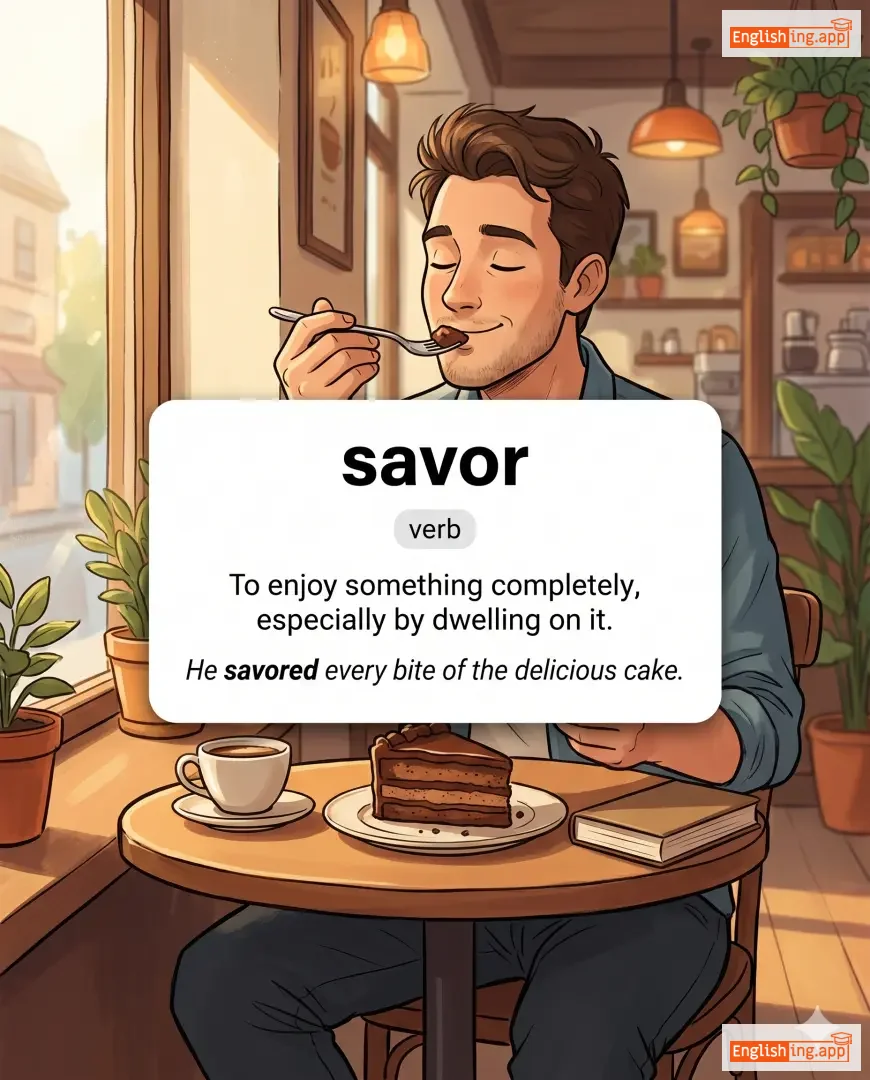
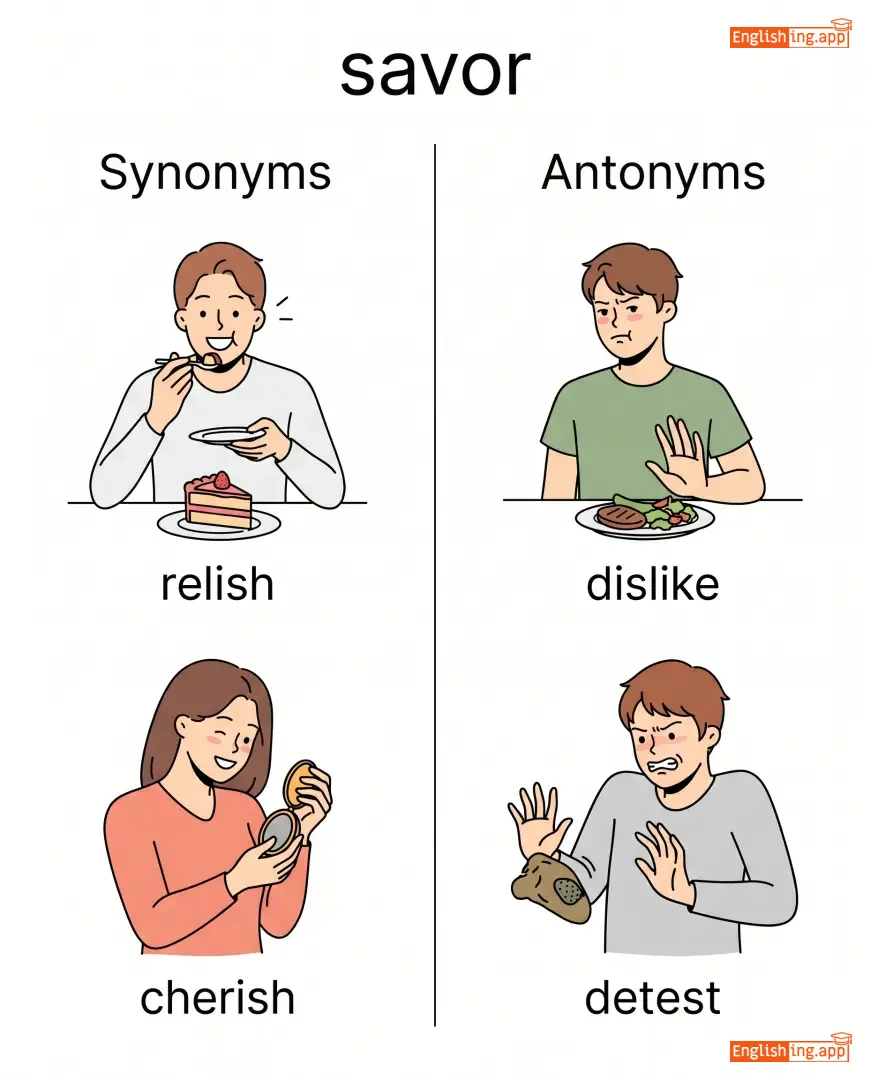
/ˈseɪ.vər/
verb
(赛佛)
••••••
|
|
尽情享受
jìnqíng xiǎngshòu
••••••
|
savored
赛佛德
••••••
|
savored
赛佛德
••••••
|
savors
赛佛斯
••••••
|
savoring
赛佛林
••••••
|
To enjoy something completely, especially by dwelling on it.
••••••
|
He savored every bite of the delicious cake.
他细细品味着美味的蛋糕。
••••••
|
他细细品味着美味的蛋糕。
Tā xìxì pǐnwèi zhe měiwèi de dàngāo.
••••••
|
savor the moment
享受此刻
••••••
|
To fully appreciate and enjoy a particular experience.
••••••
|
享受此刻
Xiǎngshòu cǐkè
••••••
|
relish, cherish, appreciate, enjoy, delight in
••••••
|
dislike, detest, avoid
••••••
|
savor the flavor, savor the moment, savor success
••••••
|
Savor就像美食一样,慢慢品味每个瞬间。
••••••
|
|
#7805
🎩
|
/ˌsæv.wɑːr ˈfeər/
noun
(sāvòuwǎ- féi'ěr)
••••••
|
- •••••• |
社交技巧
shèjiāo jìqiǎo
••••••
|
- •••••• | - •••••• | - •••••• | - •••••• |
The ability to act or speak appropriately in social situations; polished social skills.
••••••
|
She handled the delicate situation with remarkable savoir-faire.
她以卓越的 savoir-faire 处理了这一棘手的情况。
••••••
|
她以卓越的社交技巧处理了这一棘手的情况。
Tā yǐ zhuóyuè de shèjiāo jìqiǎo chǔlǐle zhè yī jíshǒu de qíngkuàng.
••••••
|
- •••••• | - •••••• | - •••••• |
tact, diplomacy, finesse, elegance, poise
••••••
|
clumsiness, awkwardness, ineptitude
••••••
|
show savoir-faire, with great savoir-faire, diplomatic savoir-faire
••••••
|
Savoir-faire 就是社交的技巧,像社交舞步一样自如。
••••••
|
|
#7806
🧠
|
/səˈvɑːnt/
noun
••••••
|
- •••••• | - •••••• | - •••••• | - •••••• | - •••••• | - •••••• |
a learned person, especially a distinguished scientist or scholar; sometimes used in the phrase ‘savant syndrome’ for someone with exceptional abilities alongside developmental differences
••••••
|
The conference keynote was delivered by a linguistic savant who studies endangered languages. |
- •••••• |
savant syndrome |
a condition in which a person demonstrates profound abilities far beyond what would be considered normal
••••••
|
- •••••• |
scholar, expert, sage, pundit, intellectual
••••••
|
novice, layperson
••••••
|
musical savant, scholarly savant, autistic savant, renowned savant
••••••
|
No •••••• |
|
#7807
🌾
|
/səˈvænə/
noun
(萨凡纳)
••••••
|
- •••••• |
草原(散布着树木)
cǎoyuán (sàn bù zhe shùmù)
••••••
|
- •••••• | - •••••• | - •••••• | - •••••• |
a grassy plain with scattered trees, typical of tropical and subtropical regions
••••••
|
Giraffes browsed on acacia trees across the wide savanna. |
长颈鹿在广阔的萨凡纳上吃着金合欢树的叶子。
Chángjǐnglù zài guǎngkuò de sàfánnà shàng chī zhe jīn héhuān shù de yèzi.
••••••
|
- •••••• | - •••••• | - •••••• |
grassland, prairie, steppe, plain
••••••
|
forest, jungle
••••••
|
African savanna, open savanna, savanna ecosystem, savanna grasses
••••••
|
萨凡纳 = 有树的草地—记住:'萨凡纳',像一个大草原,散布着一些树木。
••••••
|
|
#7808
🗡️
|
/ˈsævɪdʒ/
adjective
(塞维奇)
••••••
|
- •••••• |
野蛮; 残忍
yěmán; cánrěn
••••••
|
- •••••• | - •••••• | - •••••• | - •••••• |
fierce, violent, or uncontrolled; cruel or brutal
••••••
|
The storm brought savage winds that tore branches from the trees.
暴风雨带来了野性的风,将树枝从树上刮下来。
••••••
|
暴风雨带来了野性的风,将树枝从树上刮下来。
Bàofēngyǔ dàilái le yěmáng de fēng, jiāng shùzhī cóng shù shàng guā xiàlái.
••••••
|
- •••••• | - •••••• | - •••••• |
brutal, fierce, ferocious, ruthless, barbaric
••••••
|
gentle, civilized, mild
••••••
|
savage attack, savage criticism, savage beast, savage blow
••••••
|
Savage 就是残忍—想象自己遇到一个无情的野蛮人!
••••••
|
|
#7809
🚶
|
/ˈsɔːntər/
verb
••••••
|
- •••••• | - •••••• |
sauntered
••••••
|
sauntered
••••••
|
saunters
••••••
|
sauntering
••••••
|
to walk in a slow, relaxed manner without hurry or effort
••••••
|
We sauntered along the riverside, stopping now and then to watch the boats. |
- •••••• |
saunter in |
to enter casually and unhurriedly
••••••
|
- •••••• |
stroll, amble, wander, meander, ramble
••••••
|
rush, hurry, sprint
••••••
|
saunter along, saunter down the street, casual saunter, evening saunter
••••••
|
No •••••• |
|
#7810
🐐
|
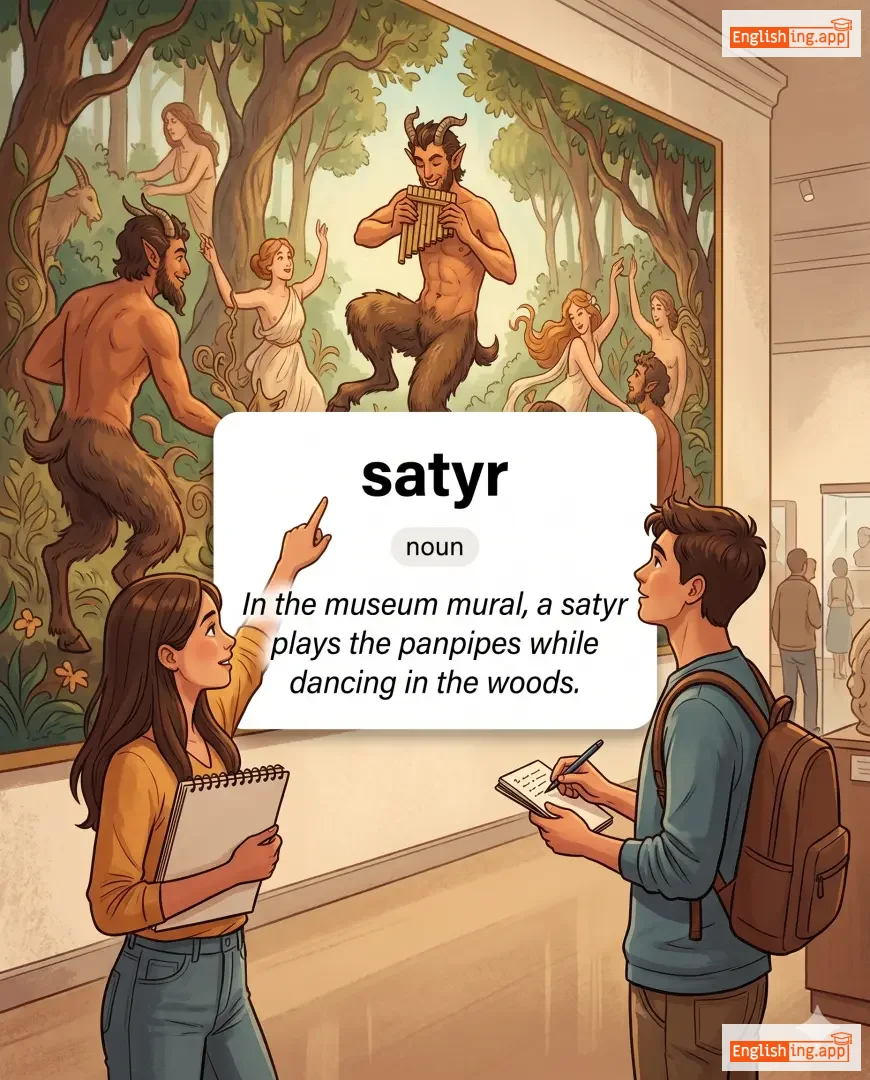
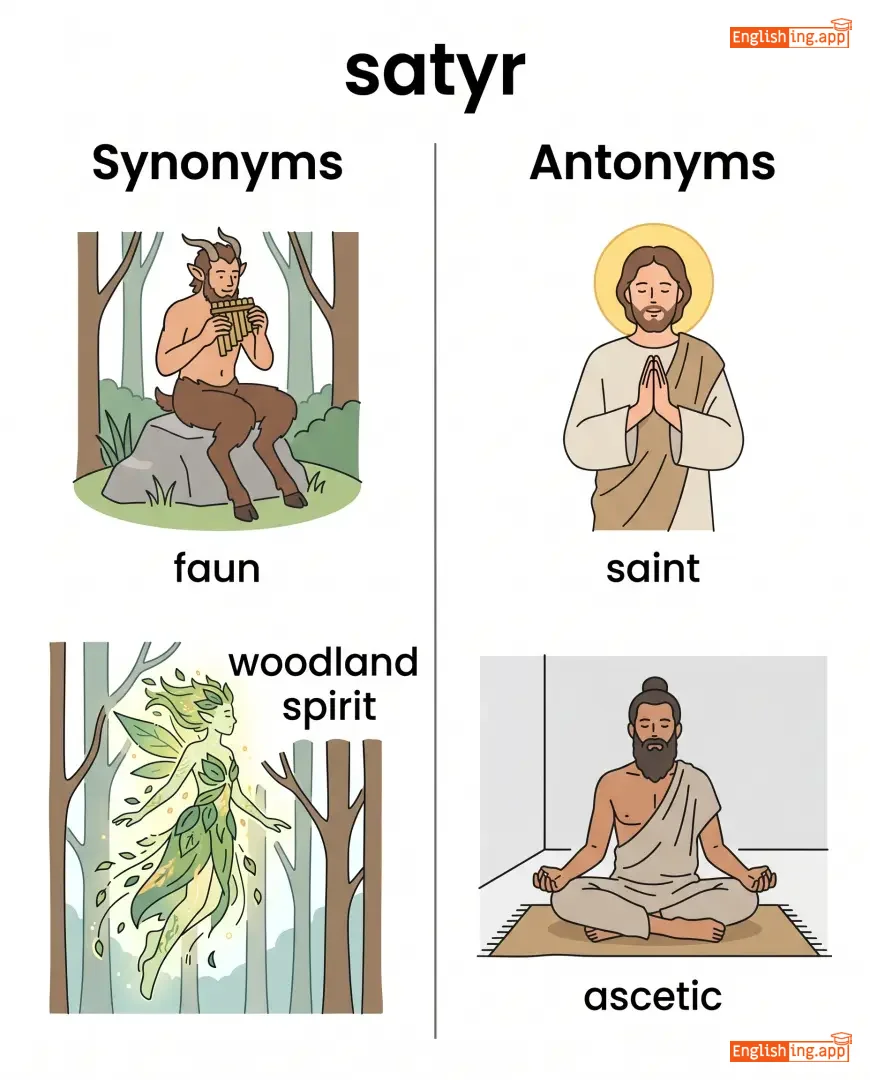
/ˈsætər/
noun
(海皮尼斯)
••••••
|
|
幸福
xingfu
••••••
|
- •••••• | - •••••• | - •••••• | - •••••• |
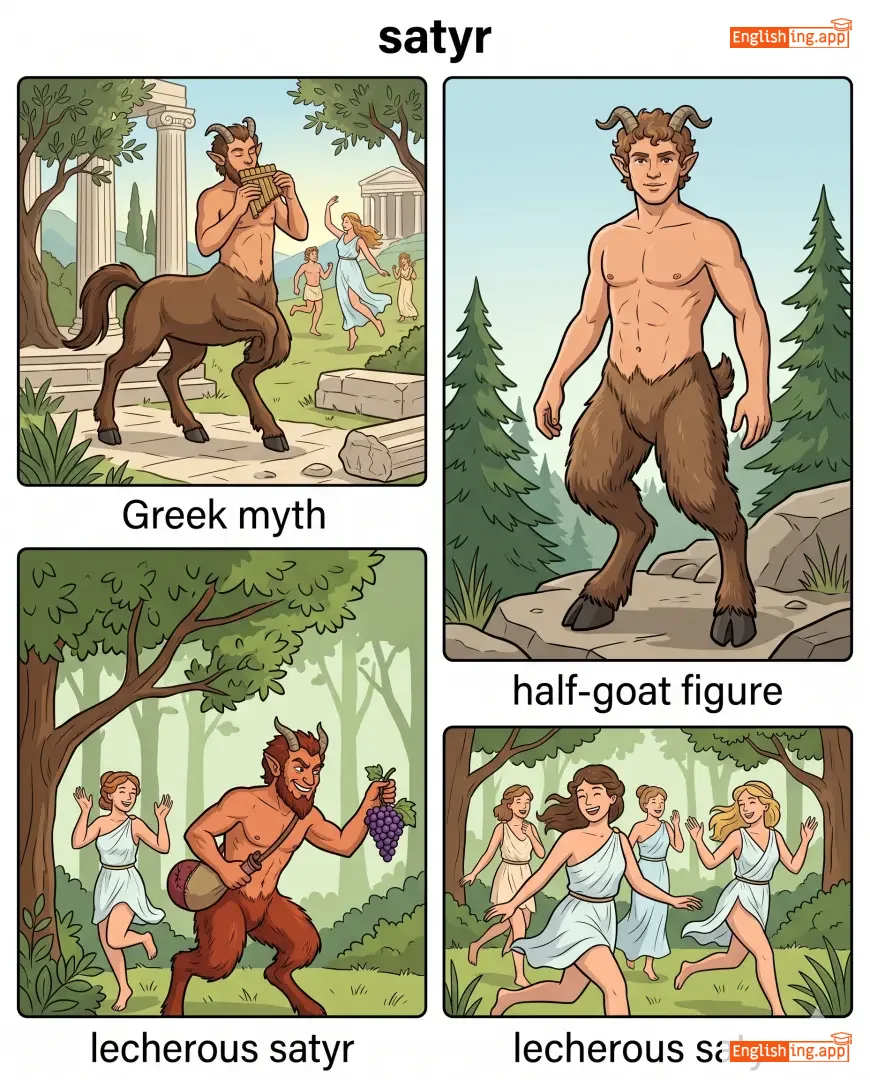
a creature from Greek mythology depicted as a lustful being, often half-man and half-goat; by extension, a lecherous man
••••••
|
In the museum mural, a satyr plays the panpipes while dancing in the woods. |
当她获得奖项时,她无法掩饰自己的幸福。
Dang ta huode jiangxiang shi, ta wufa yanshi ziji de xingfu.
••••••
|
- •••••• | - •••••• | - •••••• |
faun, woodland spirit, lecher, rake
••••••
|
saint, ascetic
••••••
|
Greek myth, half-goat figure, lecherous satyr, satyr plays
••••••
|
幸福是心情愉快的体现,想象你每天都笑得开心。
••••••
|
|
#7811
😔
|
/ˈsætərˌnaɪn/
adjective
(萨图尔奈恩)
••••••
|
|
忧郁的
yōuyù de
••••••
|
- •••••• | - •••••• | - •••••• | - •••••• |
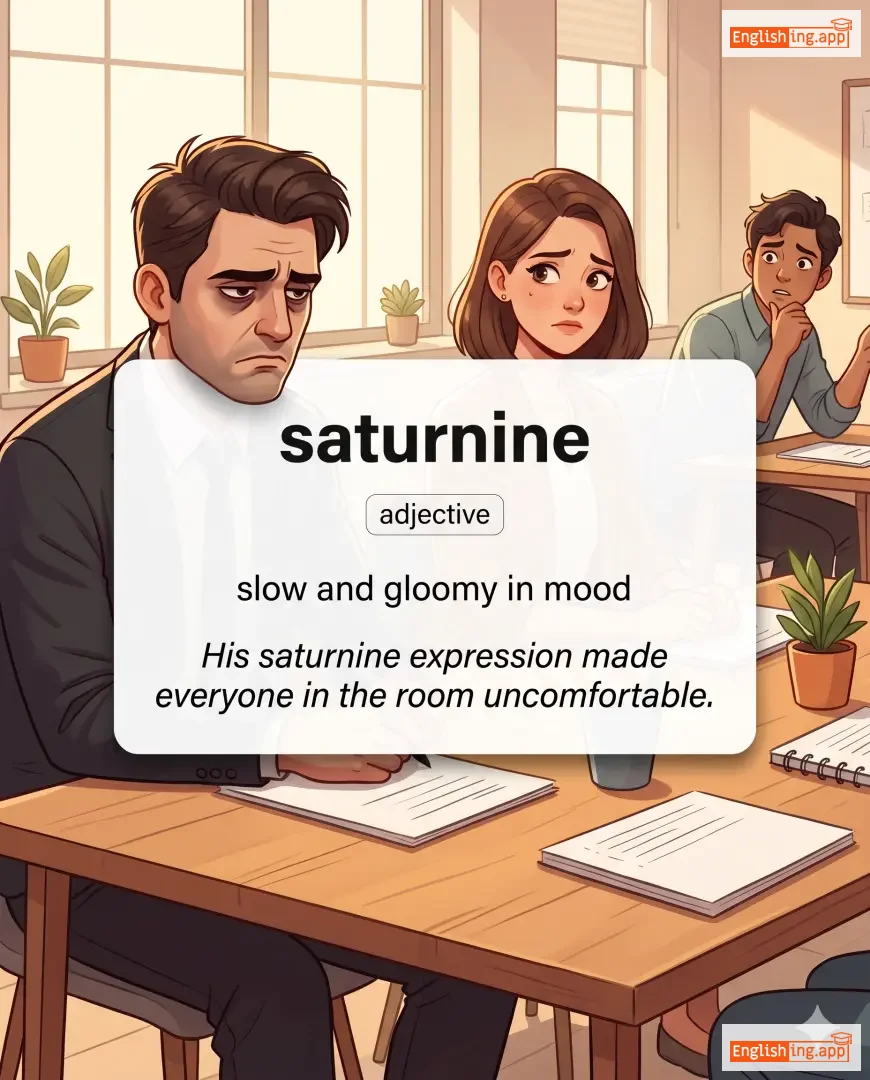
slow and gloomy in mood
••••••
|
His saturnine expression made everyone in the room uncomfortable. |
他的忧郁表情让房间里的人都感到不舒服。
Tā de yōuyù biǎoqíng ràng fángjiān lǐ de rén dōu gǎndào bù shūfú.
••••••
|
- •••••• | - •••••• | - •••••• |
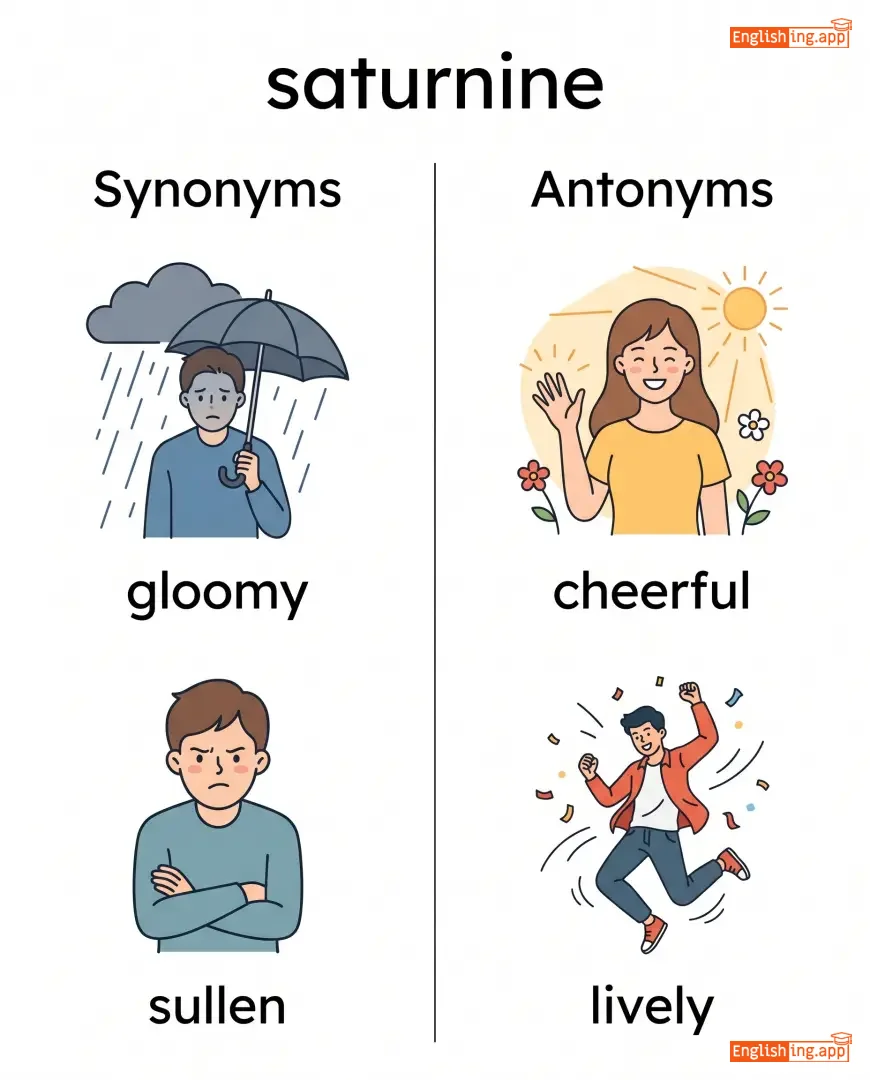
gloomy, sullen, morose, dour, melancholy
••••••
|
cheerful, lively, joyful
••••••
|
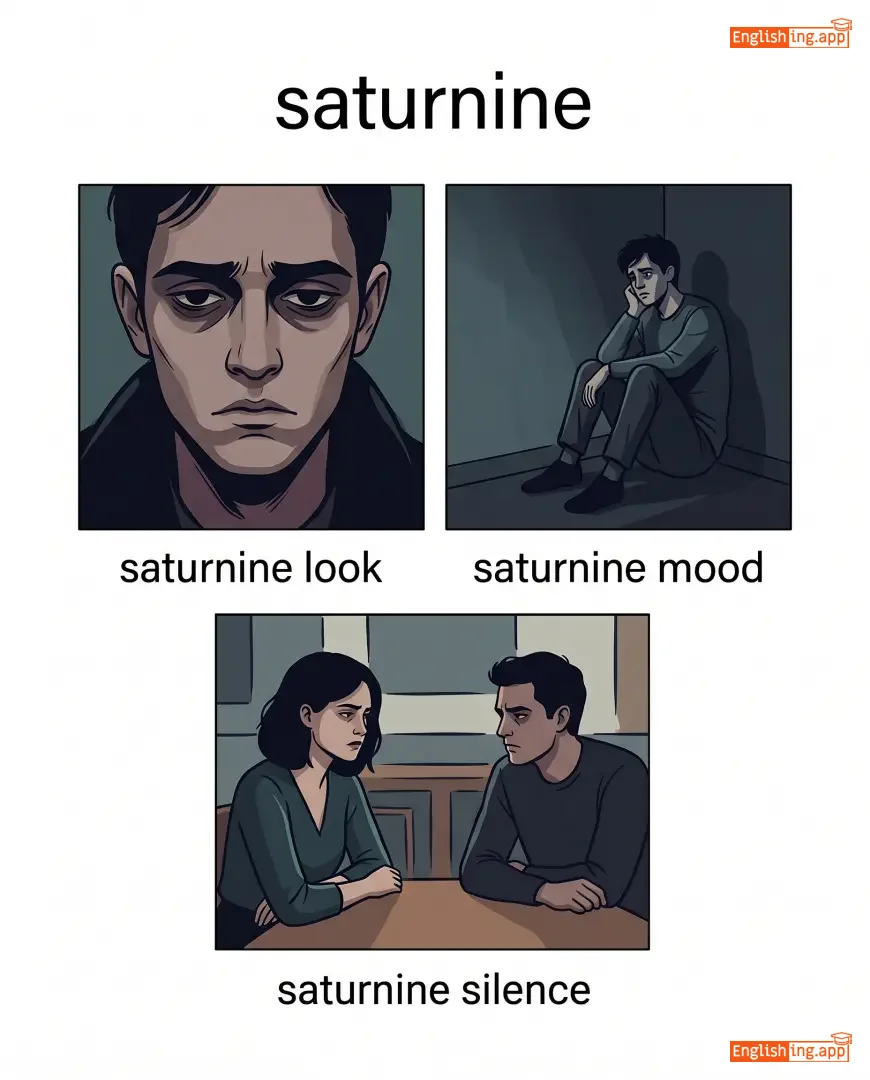
saturnine look, saturnine mood, saturnine silence, saturnine personality
••••••
|
Saturnine意味着忧郁—像土星一样,冷且遥远。
••••••
|
|
#7812
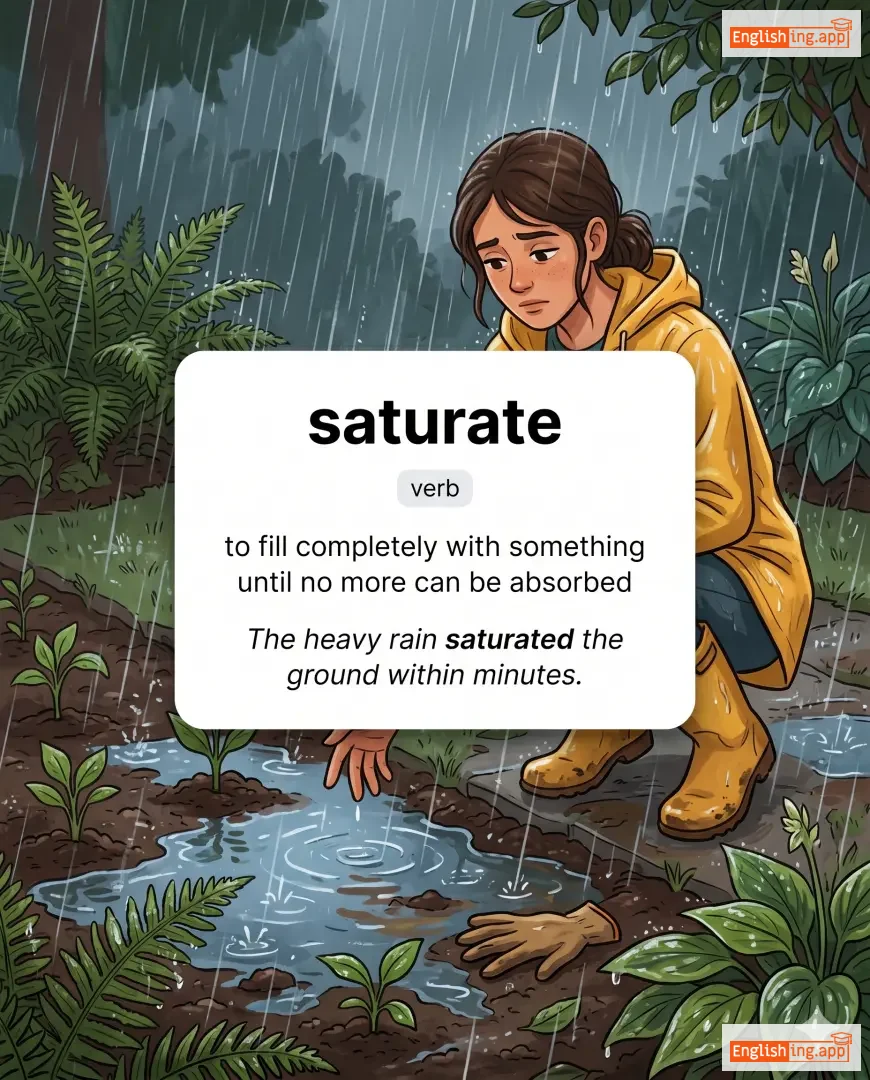
💧
|
/ˈsætʃəˌreɪt/
verb
••••••
|
|
- •••••• |
saturated
••••••
|
saturated
••••••
|
saturates
••••••
|
saturating
••••••
|
to fill completely with something until no more can be absorbed
••••••
|
The heavy rain saturated the ground within minutes. |
- •••••• |
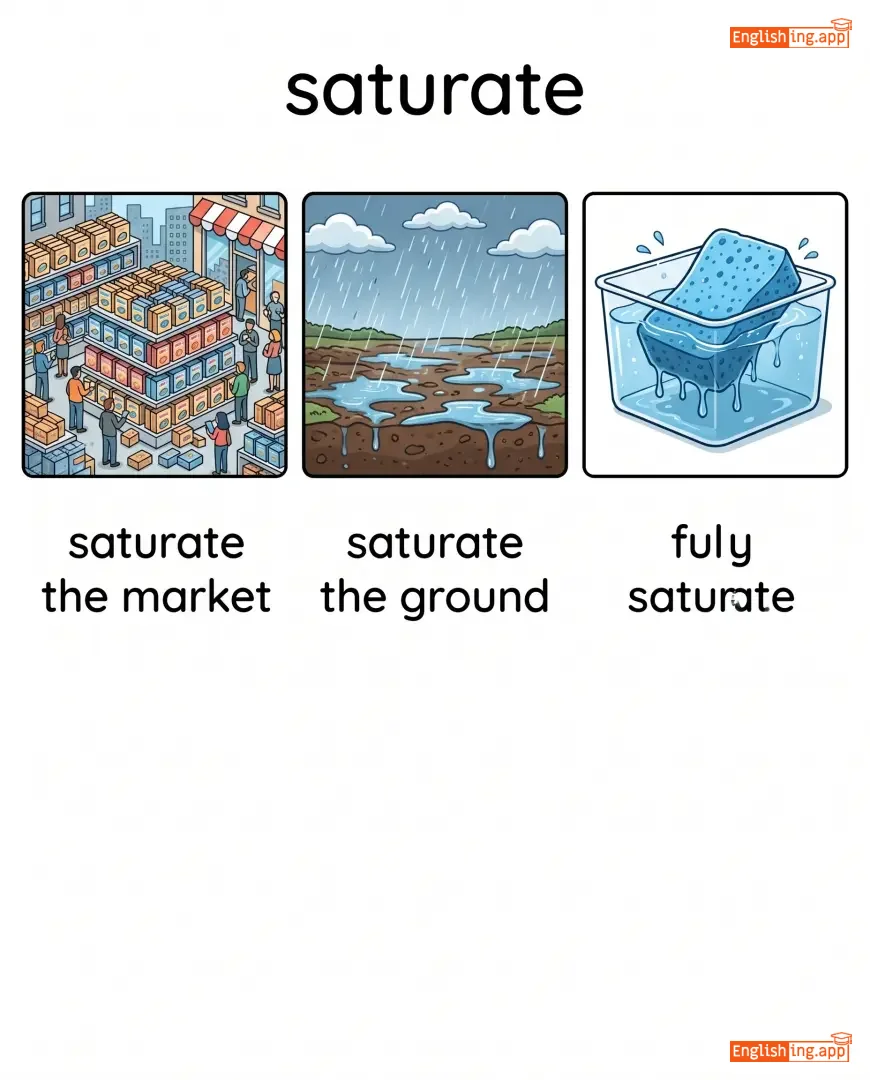
saturate the market |
to supply so much of a product that demand is fully met or exceeded
••••••
|
- •••••• |
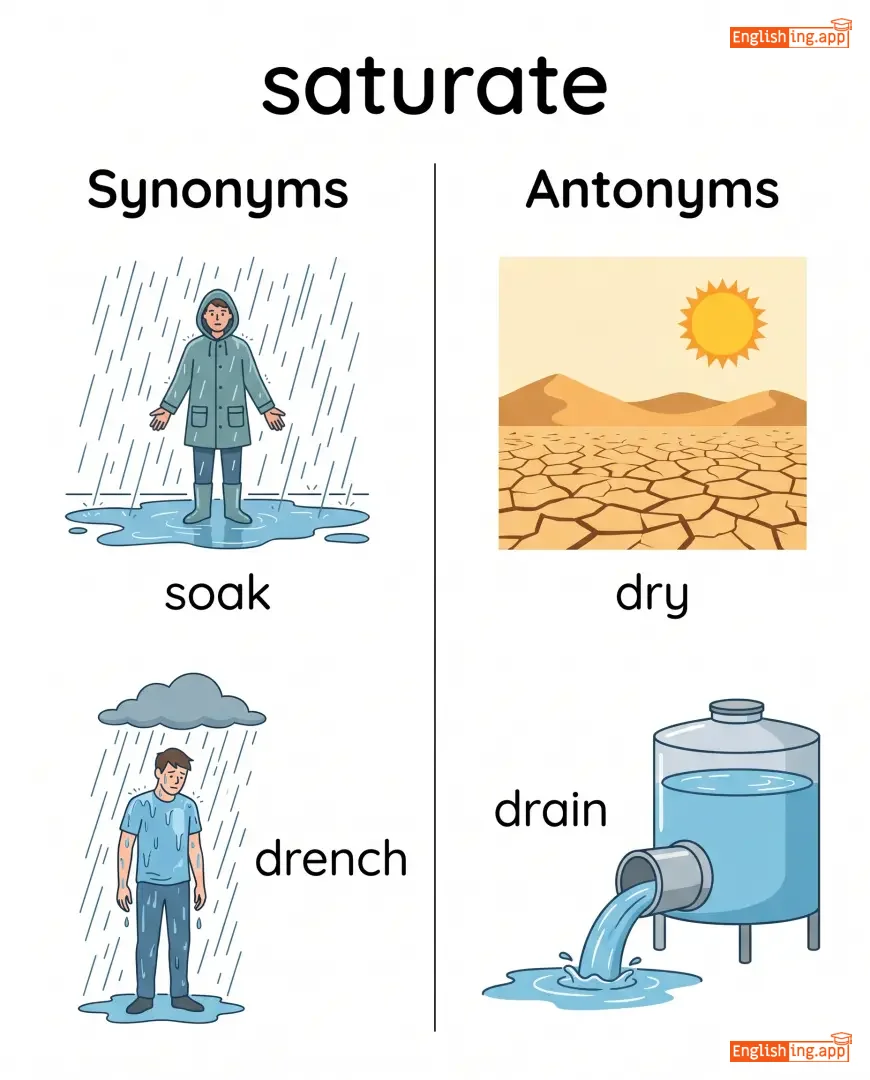
soak, drench, flood, permeate, fill
••••••
|
dry, drain, empty
••••••
|
saturate the market, saturate the ground, fully saturate, saturate completely
••••••
|
No •••••• |
|
#7813
👑
|
/ˈsætræp/
noun
(萨特拉普)
••••••
|
- •••••• |
总督
zǒngdū
••••••
|
- •••••• | - •••••• | - •••••• | - •••••• |
a governor of a province in ancient Persia; also used figuratively for a subordinate ruler
••••••
|
The king appointed a satrap to oversee the distant province. |
国王任命了一个总督来管理遥远的省份。
Guówáng rènmìngle yīgè zǒngdū lái guǎnlǐ yáoyuǎn de shěngfèn.
••••••
|
- •••••• | - •••••• | - •••••• |
governor, ruler, viceroy, official
••••••
|
subject, citizen
••••••
|
Persian satrap, local satrap, satrap system, powerful satrap
••••••
|
Satrap 就像总督一样,统治一片土地。
••••••
|
|
#7814
🖊️
|
/ˈsætəˌraɪz/
verb
(萨提瑞兹)
••••••
|
- •••••• |
讽刺
fèngcì
••••••
|
satirized
萨提瑞兹德
••••••
|
satirized
萨提瑞兹德
••••••
|
satirizes
萨提瑞兹斯
••••••
|
satirizing
萨提瑞兹英
••••••
|
to mock or criticize something using satire
••••••
|
The play satirizes the greed of modern corporations.
这部剧讽刺了现代公司的贪婪。
••••••
|
这部剧讽刺了现代公司的贪婪。
Zhè bù jù fèngcì le xiàndài gōngsī de tān lán.
••••••
|
- •••••• | - •••••• | - •••••• |
mock, ridicule, lampoon, parody, caricature
••••••
|
praise, admire, respect
••••••
|
satirize politics, satirize culture, satirize society, satirize leaders
••••••
|
Satirize意味着用讽刺来批评。
••••••
|
|
#7815
😋
|
/ˈsæpɪd/
adjective
(sæpɪd)
••••••
|
- •••••• |
美味的
měi wèi de
••••••
|
- •••••• | - •••••• | - •••••• | - •••••• |
Having a pleasant taste; flavorful.
••••••
|
The chef prepared a sapid dish that delighted everyone at the table. |
厨师准备了一道美味的菜肴,令桌上的每个人都非常喜欢。
Chúshī zhǔnbèile yī dào měiwèi de càiyáo, lìng zhuō shàng de měi gèrén dōu fēicháng xǐhuān.
••••••
|
- •••••• | - •••••• | - •••••• |
tasty, flavorful, savory, palatable, delicious
••••••
|
bland, tasteless, insipid
••••••
|
sapid meal, sapid flavor, sapid dish, sapid sauce
••••••
|
Sapid的意思是美味的,记住'sap'像甜美的味道。
••••••
|
|
#7816
😏
|
/səˈtɪrɪk/
adjective
(讽刺的)
••••••
|
- •••••• |
讽刺的
fèngcì de
••••••
|
- •••••• | - •••••• | - •••••• | - •••••• |
Relating to or using satire.
••••••
|
The novel takes a satiric view of urban life. |
这部小说从讽刺的角度看待城市生活。
Zhè bù xiǎoshuō cóng fèngcì de jiǎodù kàndài chéngshì shēnghuó.
••••••
|
- •••••• | - •••••• | - •••••• |
mocking, ironic, sarcastic, satirical
••••••
|
serious, sincere
••••••
|
satiric style, satiric tone, satiric writing
••••••
|
讽刺的看待生活就像用幽默的眼睛看待一切。
••••••
|
|
#7817
🎭
|
/ˈsætaɪər/
noun
(萨泰尔)
••••••
|
- •••••• |
讽刺
fěngcì
••••••
|
- •••••• | - •••••• | - •••••• | - •••••• |
The use of humor, irony, or exaggeration to criticize people's stupidity or vices.
••••••
|
The play was a brilliant satire on modern politics. |
这出戏是对现代政治的精彩讽刺。
Zhè chū xì shì duì xiàndài zhèngzhì de jīngcǎi fěngcì.
••••••
|
political satire |
Humorous criticism of political leaders or situations.
••••••
|
政治讽刺
zhèngzhì fěngcì
••••••
|
parody, lampoon, mockery, caricature
••••••
|
praise, seriousness
••••••
|
satire on, biting satire, social satire
••••••
|
Satire 是‘sat + tire’,讽刺不满,笑着看政治!
••••••
|
|
#7818
😌
|
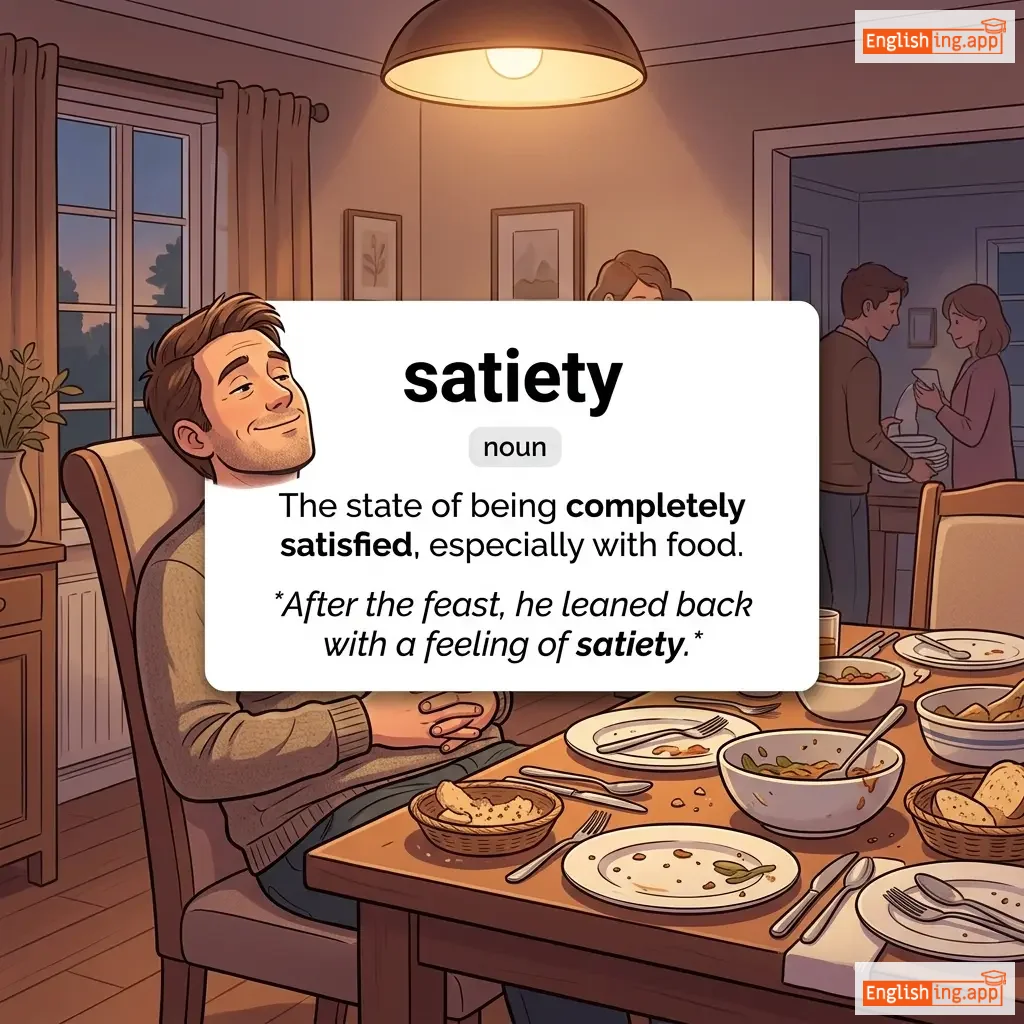
/səˈtaɪ.ə.ti/
noun
(səˈtaɪəti)
••••••
|
|
饱足感
bǎozú gǎn
••••••
|
- •••••• | - •••••• | - •••••• | - •••••• |
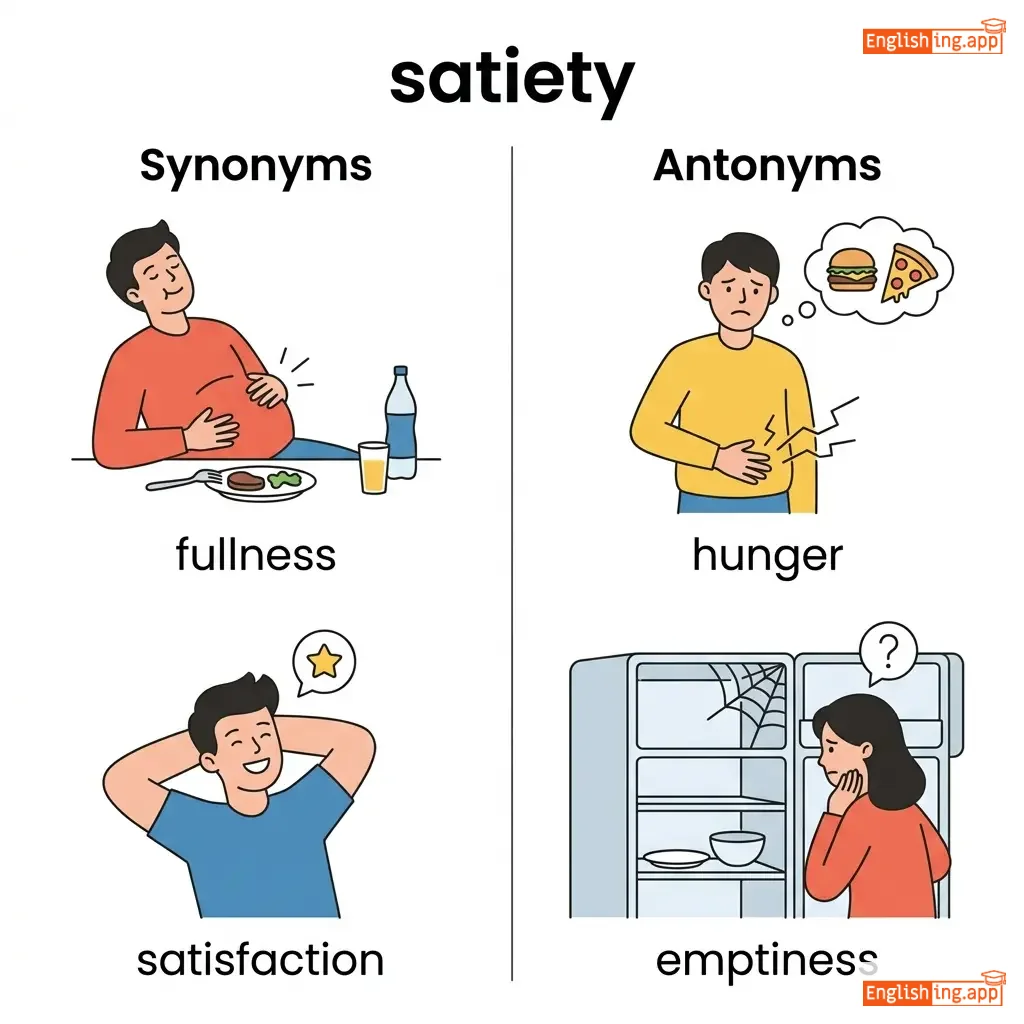
The state of being completely satisfied, especially with food.
••••••
|
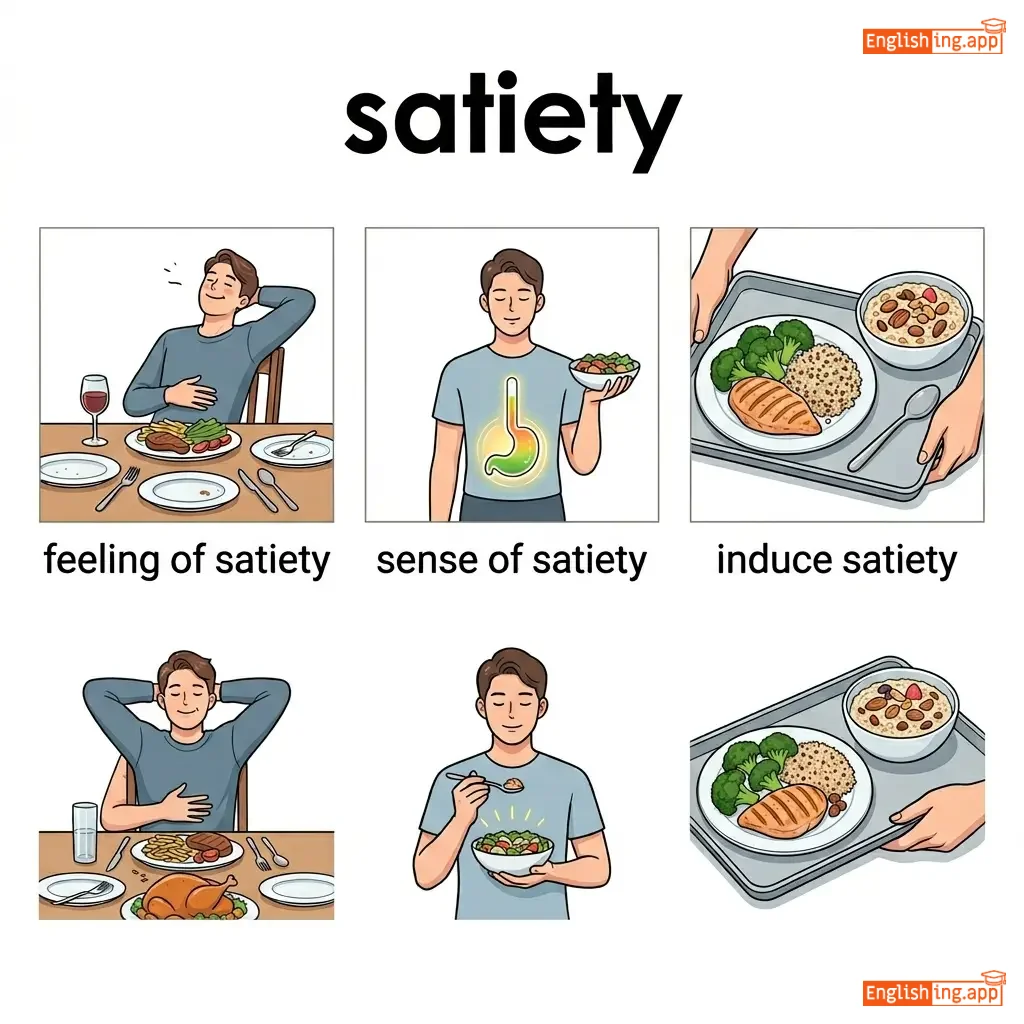
After the feast, he leaned back with a feeling of satiety. |
宴会后,他带着饱足感靠了回来。
Yànhuì hòu, tā dàizhe bǎozú gǎn kào le huílái.
••••••
|
- •••••• | - •••••• | - •••••• |
fullness, satisfaction, gratification, repletion
••••••
|
hunger, emptiness
••••••
|
feeling of satiety, sense of satiety, induce satiety
••••••
|
Satiety 是吃饱后的感觉,和 satisfaction 很像。
••••••
|
|
#7819
🍽️
|
/ˈseɪʃiˌeɪt/
verb
(seishiet)
••••••
|
|
满足
manzu
••••••
|
satiated
seishieted
••••••
|
satiated
seishieted
••••••
|
satiates
seishiets
••••••
|
satiating
seishieting
••••••
|
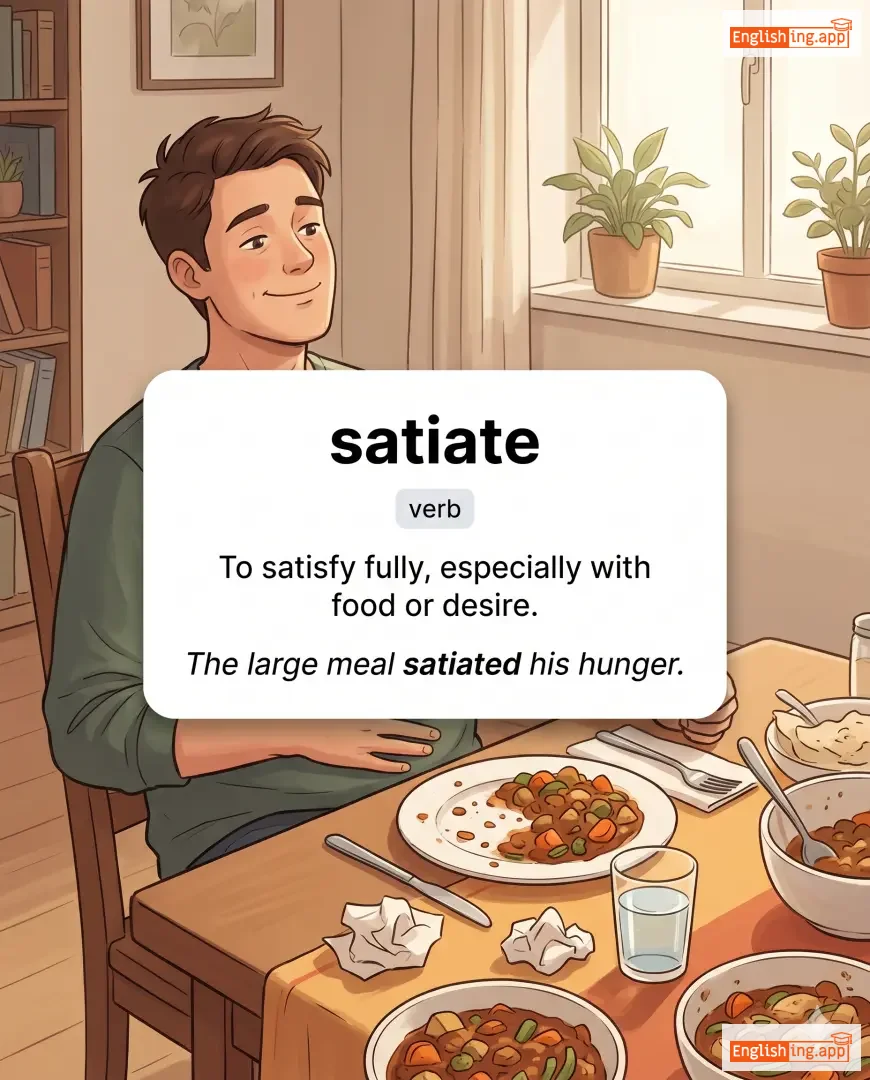
To satisfy fully, especially with food or desire.
••••••
|
The large meal satiated his hunger.
大餐 seishieted 他的饥饿。
••••••
|
丰盛的餐食满足了他的饥饿。
Fengsheng de canji manzu le tade jihu.
••••••
|
- •••••• | - •••••• | - •••••• |
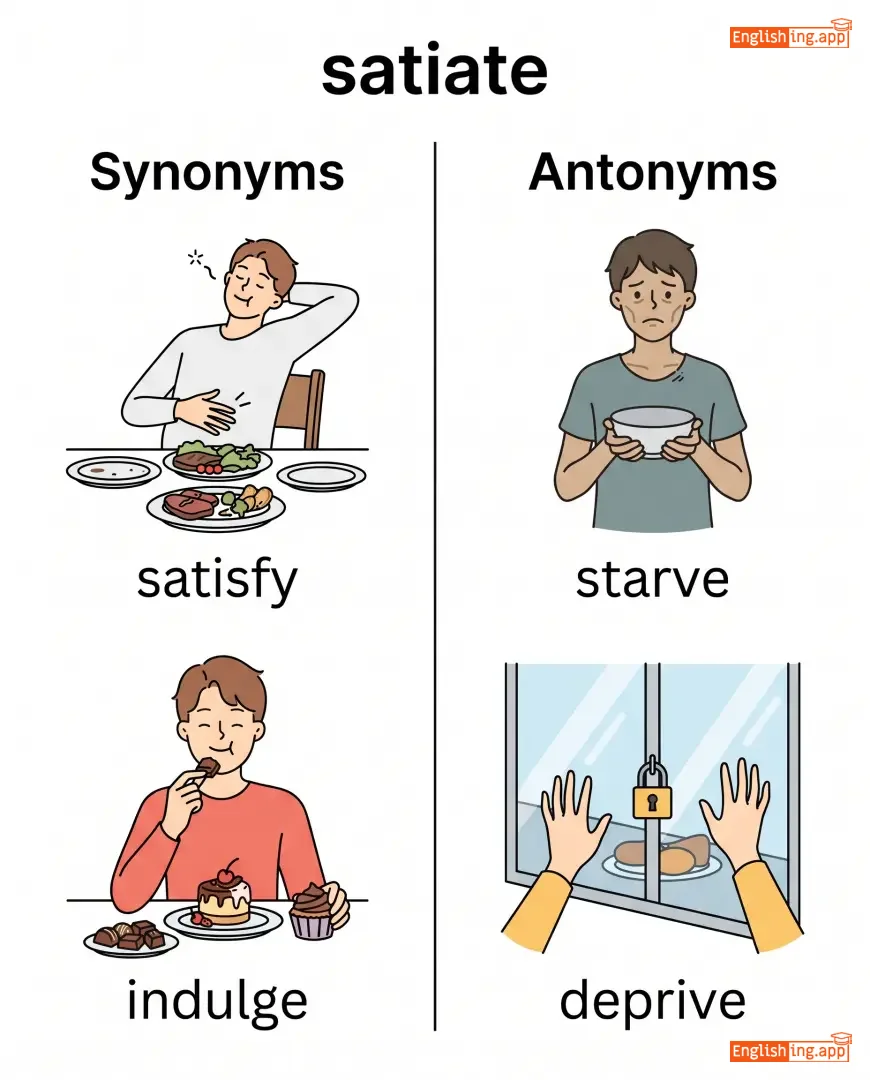
satisfy, indulge, fulfill, gratify
••••••
|
starve, deprive
••••••
|
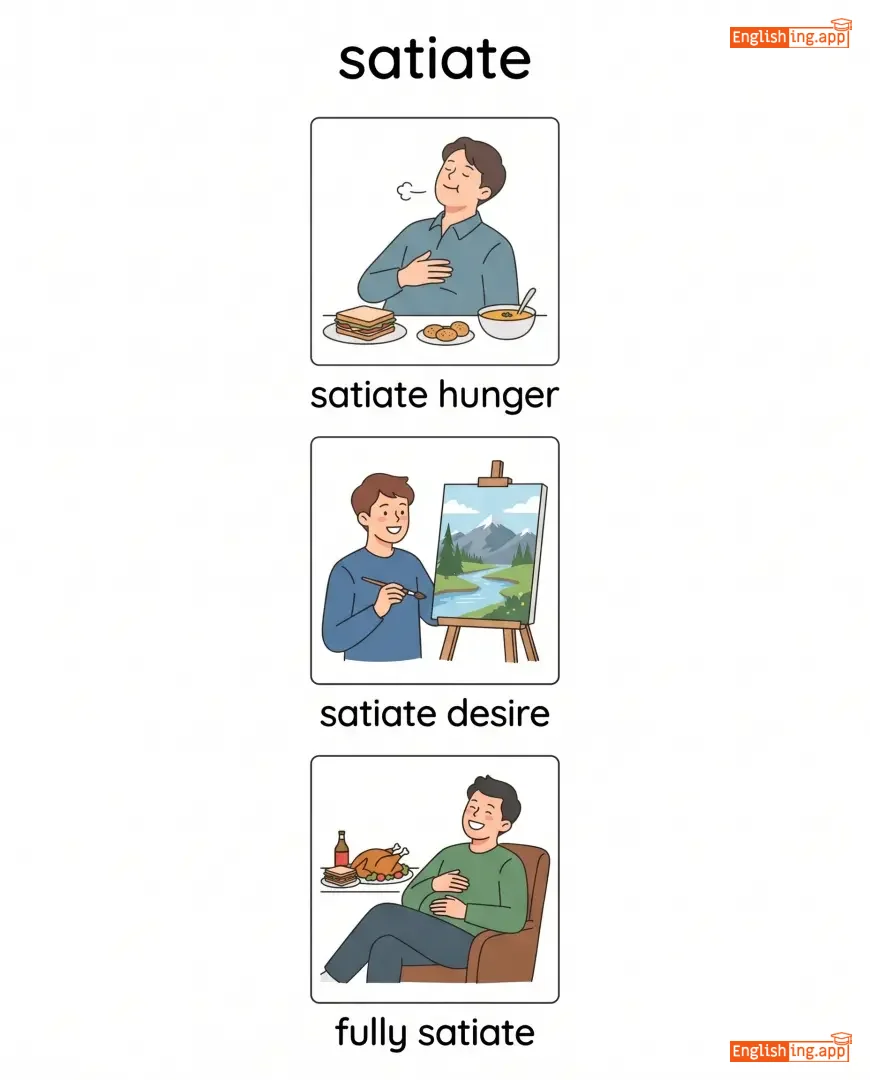
satiate hunger, satiate desire, fully satiate
••••••
|
‘会议’后,你会感到完全满足,成为 satiate
••••••
|
|
#7820
🛰️
|
/ˈsætəlaɪt/
noun
(卫星)
••••••
|
|
卫星
weixing
••••••
|
- •••••• | - •••••• | - •••••• | - •••••• |
An artificial body placed in orbit around the earth or another planet to collect information or for communication.
••••••
|
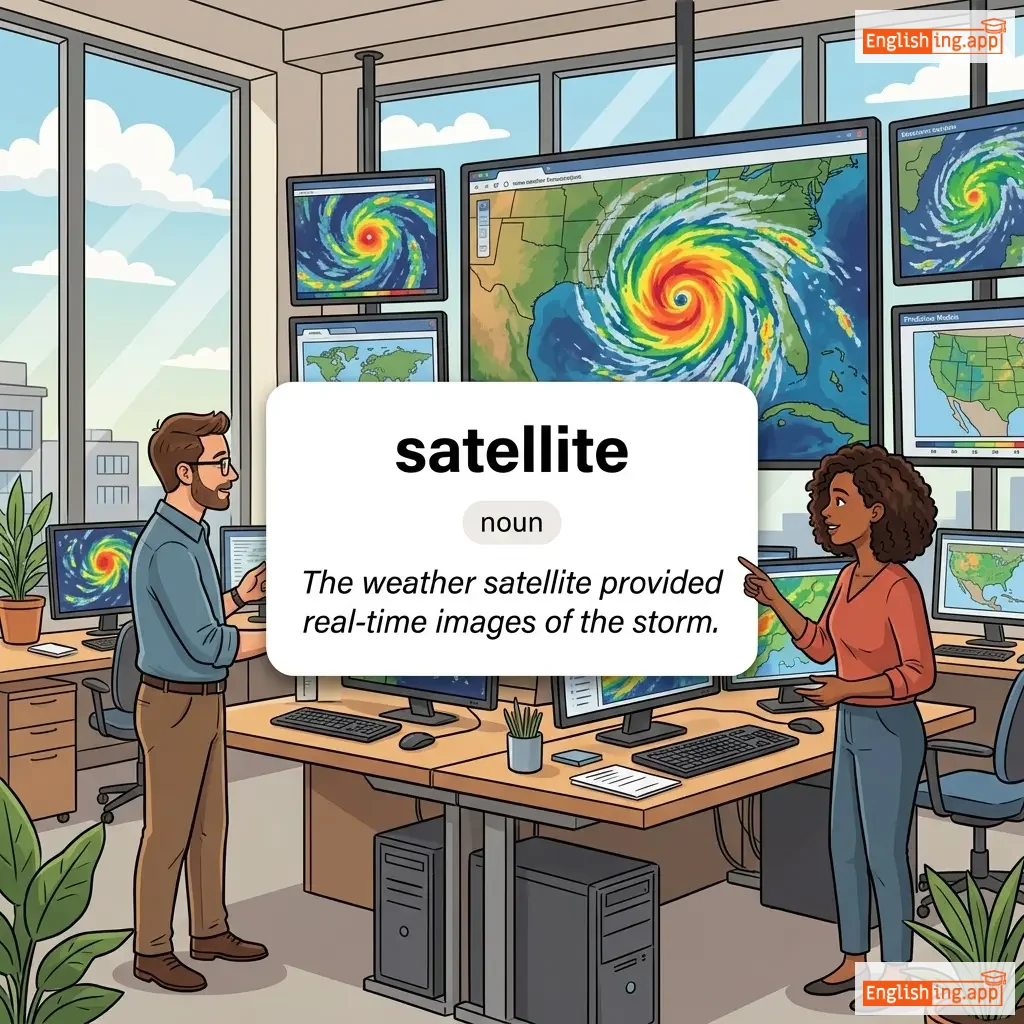
The weather satellite provided real-time images of the storm. |
气象卫星提供了风暴的实时图像。
Qixiang weixing tigongle fengbao de shishi tupian.
••••••
|
satellite office |
A smaller office located separately from the main headquarters.
••••••
|
卫星办公室
weixing bangongshi
••••••
|
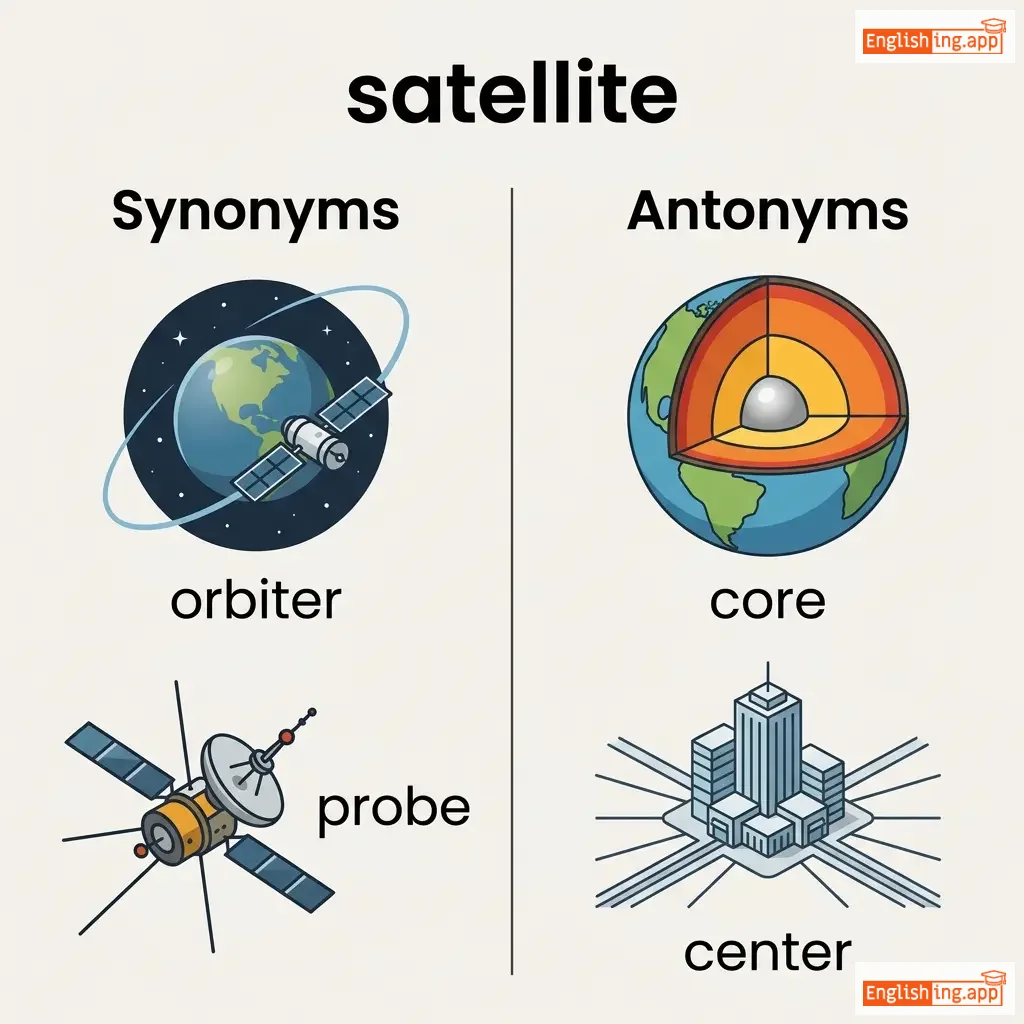
orbiter, probe, spacecraft, moon, companion
••••••
|
core, center
••••••
|
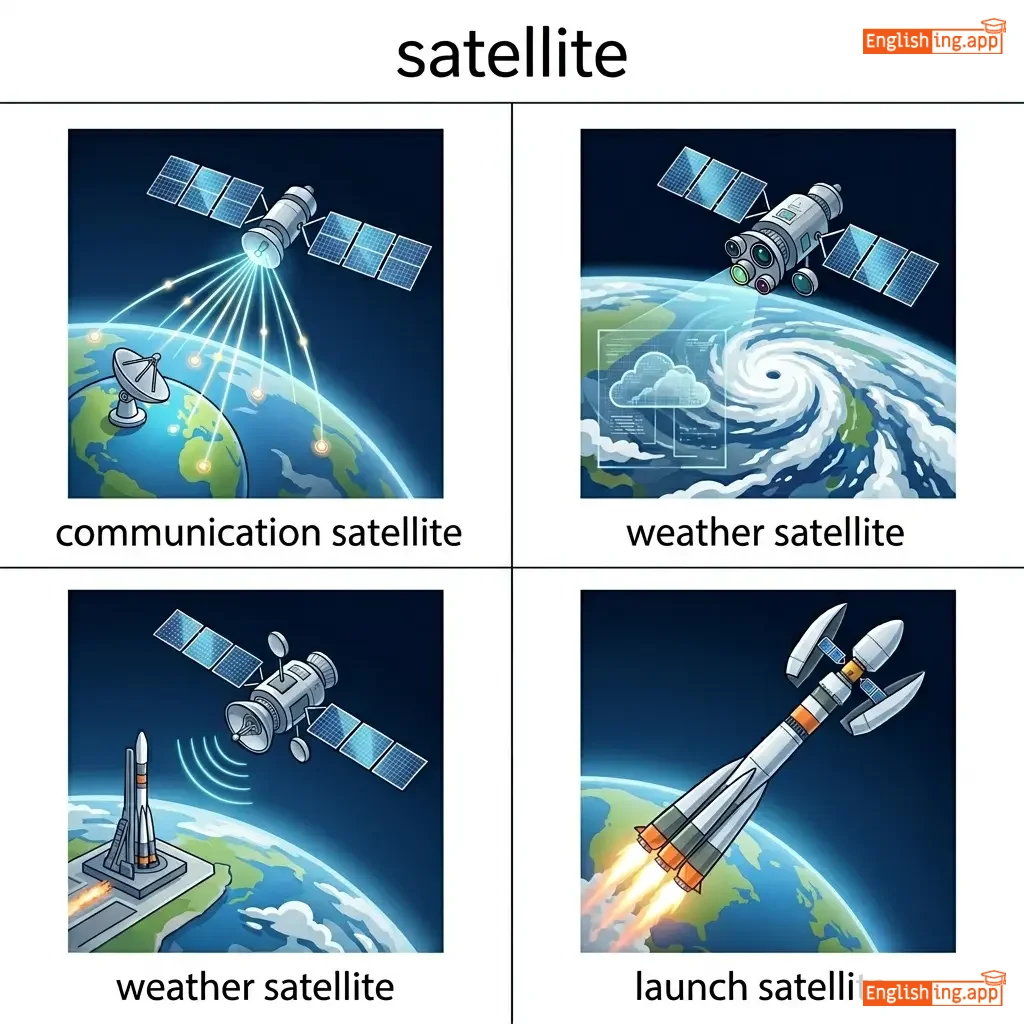
communication satellite, weather satellite, launch satellite, satellite dish
••••••
|
卫星 🛰️ 总是绕着地球转,就像这个词一样在你脑海里旋转。
••••••
|
|
#7821
🍽️
|
/seɪt/
verb
(set)
••••••
|
- •••••• |
满足
manzu
••••••
|
sated
seted
••••••
|
sated
seted
••••••
|
sates
sets
••••••
|
sating
setting
••••••
|
To satisfy fully or to excess.
••••••
|
The huge meal sated their hunger after the long journey.
The huge meal seted their hunger after the long journey.
••••••
|
长途旅行后,丰盛的餐点满足了他们的饥饿。
Changtu lvxing hou, fengsheng de candi manzu le tamen de ji'e.
••••••
|
sate one's appetite
set one's appetite
••••••
|
to fully satisfy a desire or hunger
••••••
|
满足食欲
manzu shiyu
••••••
|
satisfy, indulge, gratify, fulfill
••••••
|
deprive, starve
••••••
|
sate hunger, sate desire, sate curiosity
••••••
|
Sate 意味着“满足”饥饿,吃完丰盛的一餐。
••••••
|
|
#7822
👔
|
/sɑːrˈtɔːriəl/
adjective
(萨托里尔)
••••••
|
|
与裁缝相关
yu caifeng xiangguan
••••••
|
- •••••• | - •••••• | - •••••• | - •••••• |
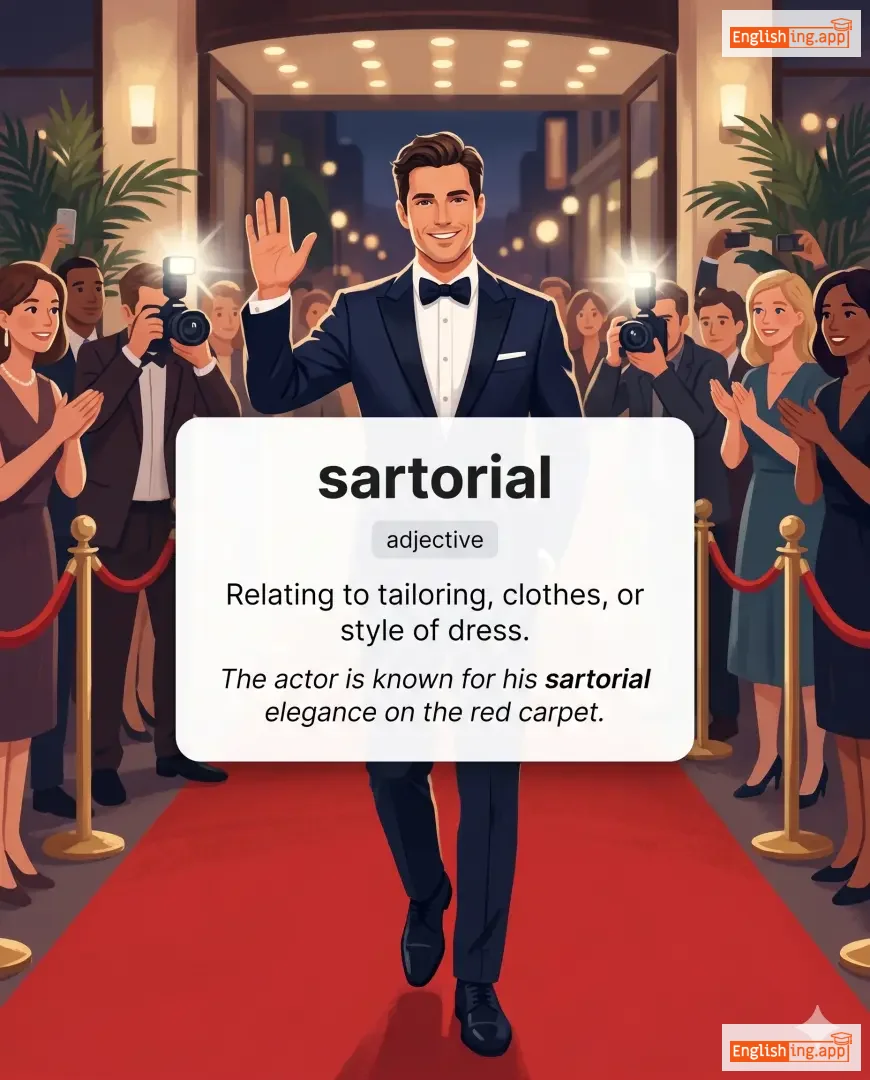
Relating to tailoring, clothes, or style of dress.
••••••
|
The actor is known for his sartorial elegance on the red carpet. |
这位演员因其在红毯上的裁缝优雅而闻名。
Zhe wei yan yuan yin qi zai hongtan shang de caifeng youya er wenming.
••••••
|
sartorial elegance |
stylish and sophisticated clothing sense
••••••
|
裁缝优雅
caifeng youya
••••••
|
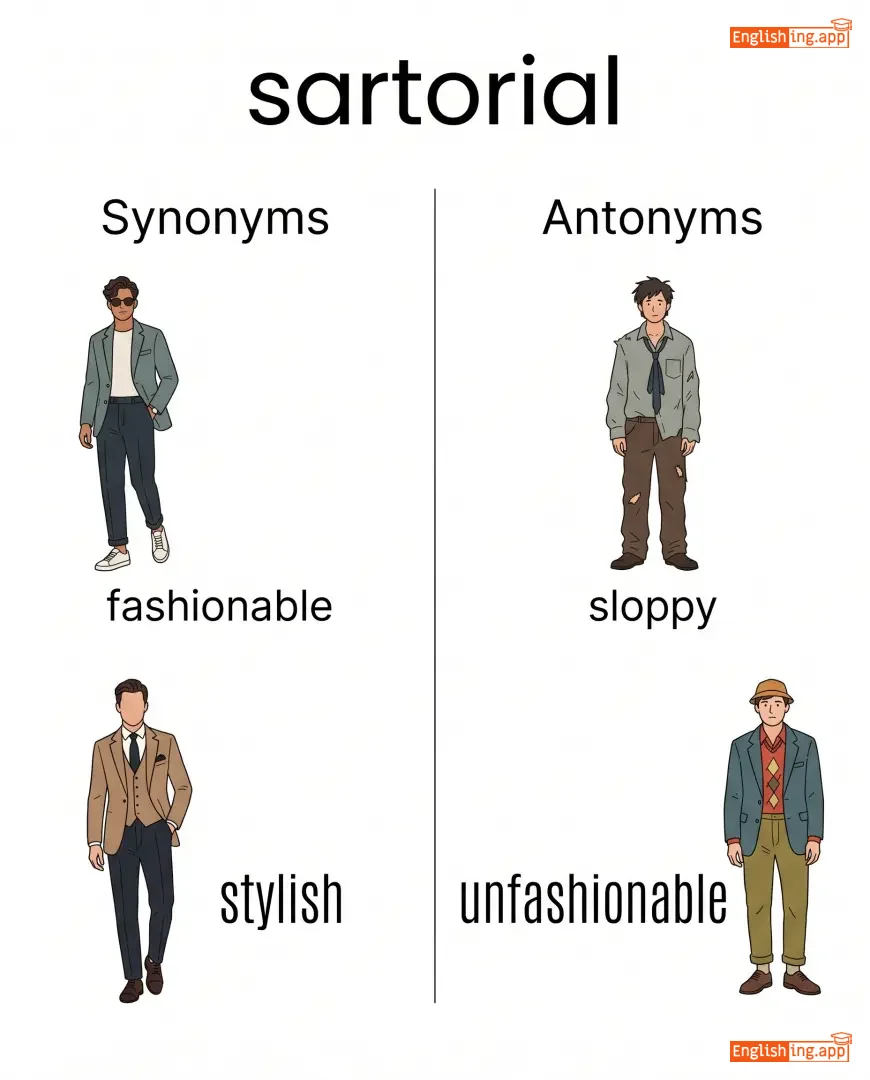
fashionable, stylish, elegant, dapper
••••••
|
sloppy, unfashionable
••••••
|
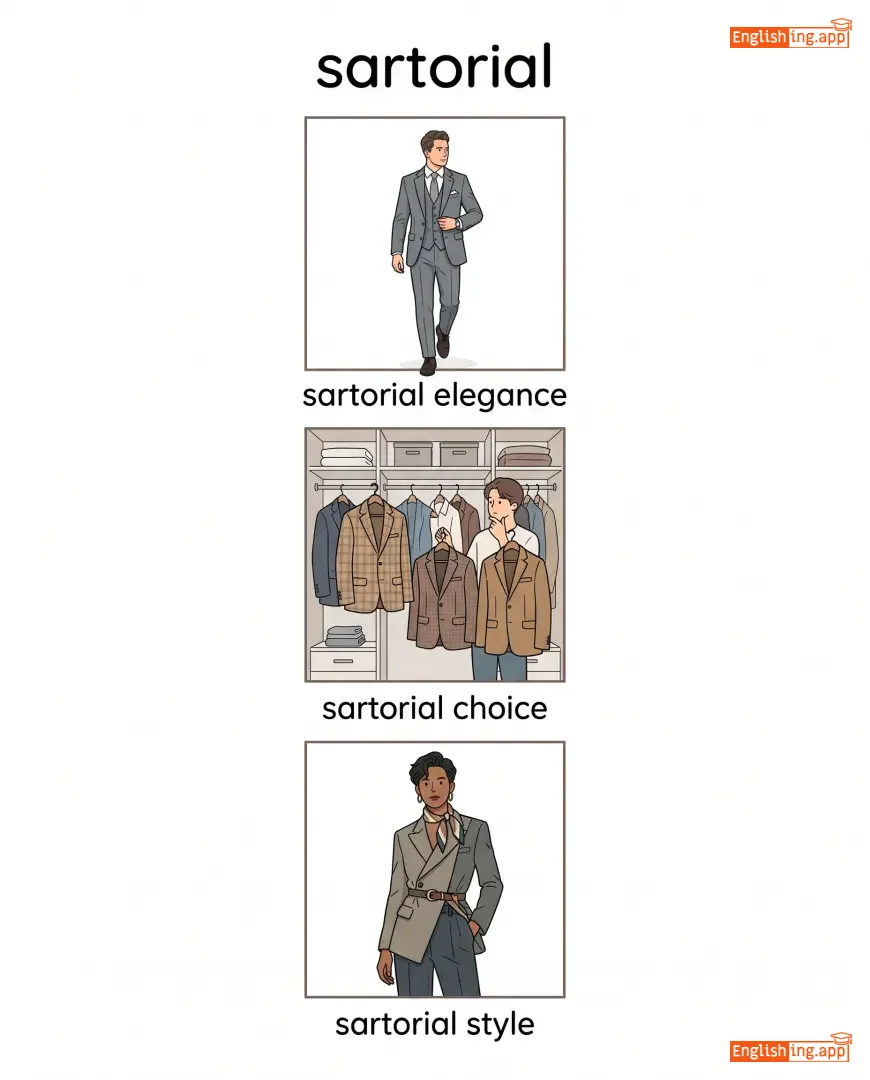
sartorial elegance, sartorial choice, sartorial style
••••••
|
Sartorial意味着衣服——Shirtorial记住,意思是衬衫和衣服。
••••••
|
|
#7823
😒
|
/sɑːrˈdɒnɪk/
adjective
(happiness)
••••••
|
|
幸福
xingfu
••••••
|
- •••••• | - •••••• | - •••••• | - •••••• |
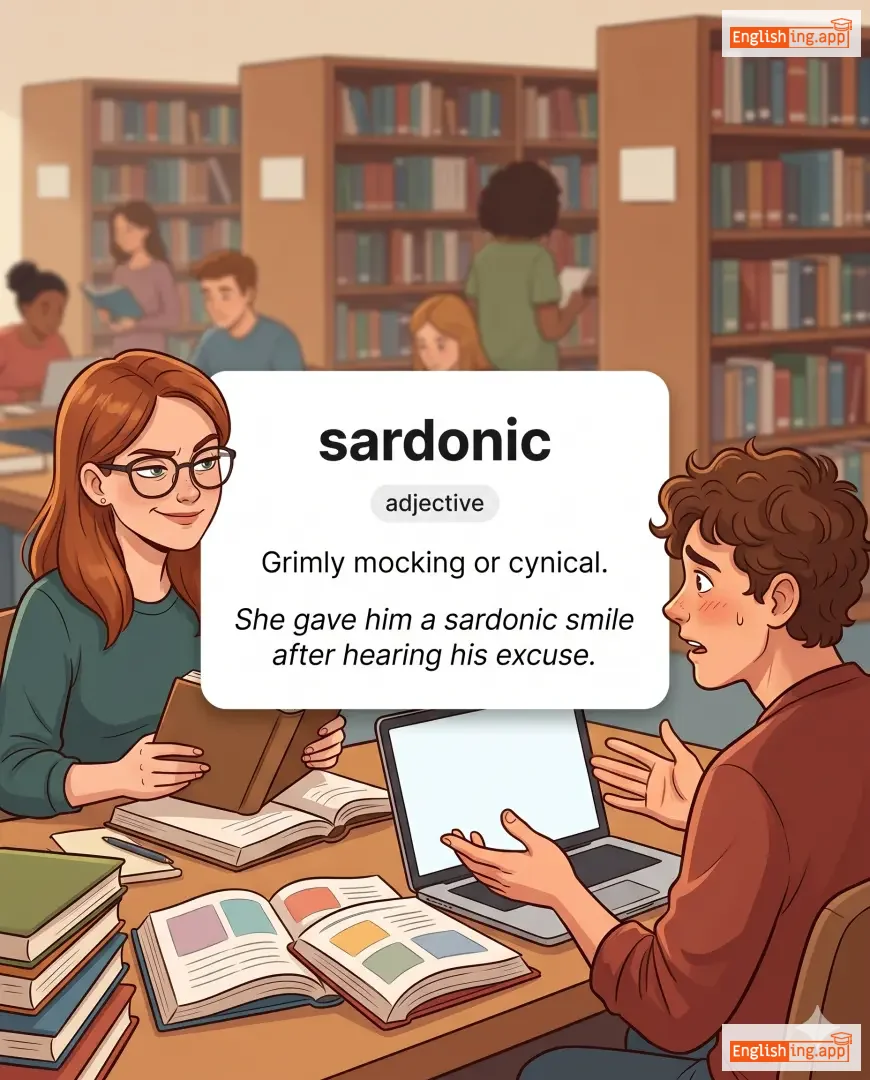
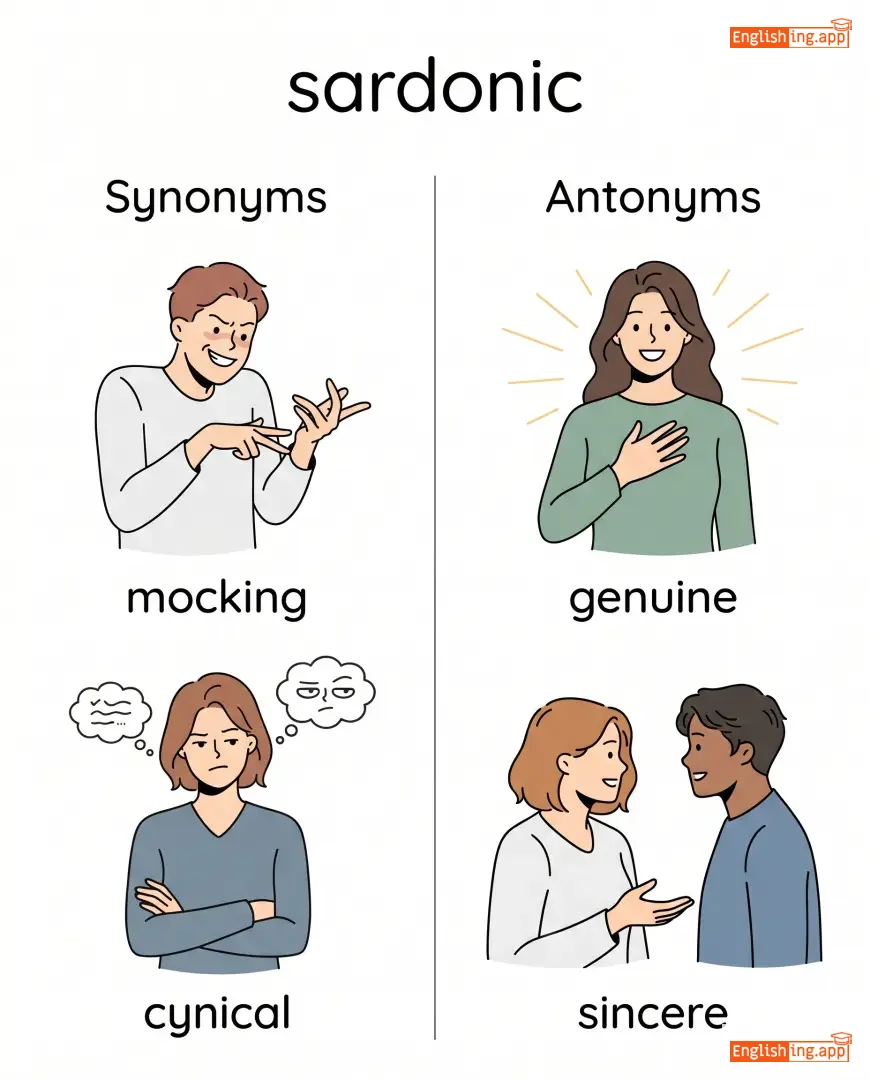
Grimly mocking or cynical.
••••••
|
She gave him a sardonic smile after hearing his excuse. |
她在收到奖项时,无法隐藏自己的幸福。
Tā zài shōudào jiǎngxiàng shí, wúfǎ yǐncáng zìjǐ de xìngfú.
••••••
|
sardonic smile |
a mocking or cynical smile
••••••
|
追求幸福
zhuīqiú xìngfú
••••••
|
mocking, cynical, scornful, sarcastic
••••••
|
genuine, sincere
••••••
|
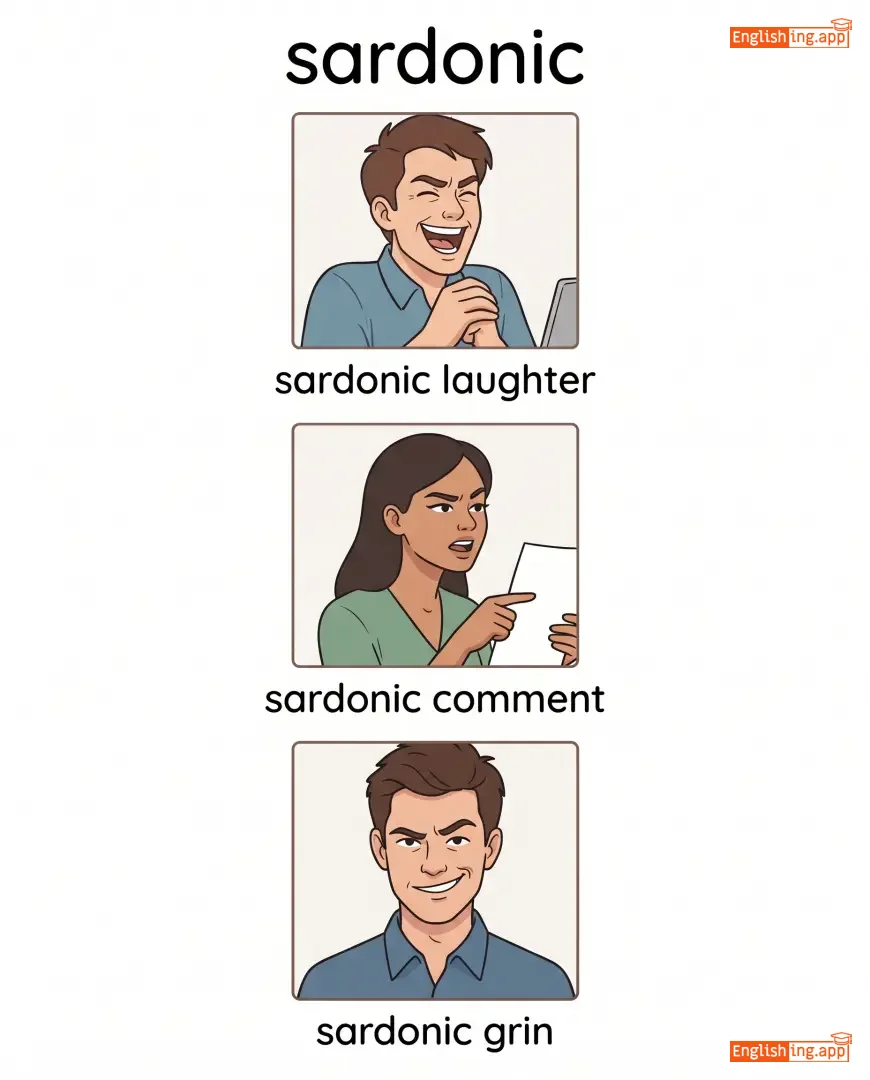
sardonic laughter, sardonic comment, sardonic grin
••••••
|
幸福 = '幸福' – 找到幸福,让每一天都充满喜悦!
••••••
|
|
#7824
⚰️
|
/sɑːrˈkɒfəɡəs/
noun
(沙可福阿哥)
••••••
|
- •••••• |
石棺
shíguān
••••••
|
- •••••• | - •••••• | - •••••• | - •••••• |
A stone coffin, often decorated, used in ancient times.
••••••
|
The museum displayed a beautifully carved sarcophagus from ancient Egypt. |
博物馆展示了来自古埃及的美丽雕刻的石棺。
Bówùguǎn zhǎnshì le láizì gǔ āijí de měilì diāokè de shíguān.
••••••
|
- •••••• | - •••••• | - •••••• |
tomb, coffin, casket, crypt
••••••
|
birthplace, cradle
••••••
|
ancient sarcophagus, stone sarcophagus, Egyptian sarcophagus
••••••
|
Sarcophagus 意味着 '石棺' – 古代装饰的石棺。
••••••
|
|
#7825
😏
|
/ˈsɑːrˌkæzəm/
noun
(萨尔卡兹姆)
••••••
|
- •••••• |
讽刺
fěngcì
••••••
|
- •••••• | - •••••• | - •••••• | - •••••• |
The use of irony to mock or convey contempt.
••••••
|
His sarcasm often made people laugh but sometimes offended them. |
他的讽刺经常让人发笑,但有时也会冒犯他们。
Tā de fěngcì jīngcháng ràng rén fāxiào, dàn yǒu shí yě huì màofàn tāmen.
••••••
|
dripping with sarcasm |
speaking in a tone heavily filled with sarcasm
••••••
|
充满讽刺
Chōngmǎn fěngcì
••••••
|
mockery, irony, cynicism, derision, satire
••••••
|
sincerity, honesty
••••••
|
sense of sarcasm, touch of sarcasm, sarcasm detector, sarcasm in voice
••••••
|
讽刺就像是嘲笑,但带着一种不可言喻的蔑视,犹如笑中带刀。
••••••
|
|
#7826
🧼
|
/ˌsæpəˈneɪʃəs/
adjective
(sàpōnèixīus)
••••••
|
- •••••• |
含肥皂性质的
hán féizào xìngzhì de
••••••
|
- •••••• | - •••••• | - •••••• | - •••••• |
Soapy or having the qualities of soap.
••••••
|
The plant has saponaceous leaves that produce foam when rubbed in water. |
这种植物有含肥皂性质的叶子,擦在水中时会产生泡沫。
Zhè zhǒng zhíwù yǒu hán féizào xìngzhì de yèzi, cā zài shuǐ zhōng shí huì chǎnshēng pàomò.
••••••
|
- •••••• | - •••••• | - •••••• |
soapy, foamy, sudsy, slippery
••••••
|
dry, rough, gritty
••••••
|
saponaceous plant, saponaceous substance, saponaceous quality, saponaceous texture
••••••
|
Saponaceous 意味着含肥皂性质的,记住 'soap' + 'neishas' = 像肥皂一样。
••••••
|
|
#7827
📚
|
/ˌseɪpiˈɛnʃəl/
adjective
(sāpiànxià'ěr)
••••••
|
- •••••• |
智慧相关的
zhìhuì xiāngguān de
••••••
|
- •••••• | - •••••• | - •••••• | - •••••• |
Relating to wisdom or knowledge, often in a religious or philosophical sense.
••••••
|
The monk shared sapiential teachings with his students. |
和尚与学生们分享了与智慧相关的教义。
Héshàng yǔ xuéshēngmen fēnxiǎngle yǔ zhìhuì xiāngguān de jiàoyì.
••••••
|
- •••••• | - •••••• | - •••••• |
wise, philosophical, intellectual, insightful
••••••
|
ignorant, unwise, foolish
••••••
|
sapiential books, sapiential wisdom, sapiential teaching, sapiential tradition
••••••
|
Sapiential 意味着与智慧相关,记住 'sapient' + 'al' = 智慧相关的。
••••••
|
|
#7828
👨🏫
|
/ˈseɪpiənt/
adjective
(赛皮恩特)
••••••
|
- •••••• |
明智的
míng zhì de
••••••
|
- •••••• | - •••••• | - •••••• | - •••••• |
Wise, or appearing to be wise.
••••••
|
The professor gave a sapient response to the complex question.
教授对复杂的问题做出了明智的回答。
••••••
|
教授对复杂的问题做出了明智的回答。
Jiàoshòu duì fùzá de wèntí zuòchūle míngzhì de huídá.
••••••
|
- •••••• | - •••••• | - •••••• |
wise, judicious, prudent, intelligent, sagacious
••••••
|
foolish, ignorant, naive
••••••
|
sapient remark, sapient advice, sapient response, sapient leader
••••••
|
Sapient 意味着明智,像‘sap’,做梦让你明智。
••••••
|
|
#7829
🧠
|
/ˈseɪpiəns/
noun
(智慧)
••••••
|
- •••••• |
智慧
zhìhuì
••••••
|
- •••••• | - •••••• | - •••••• | - •••••• |
Wisdom or intelligence.
••••••
|
Her sapience in solving problems earned her the respect of her colleagues. |
她在解决问题上的智慧赢得了同事们的尊重。
Tā zài jiějué wèntí shàng de zhìhuì yíngdéle tóngshìmen de zūnzhòng.
••••••
|
- •••••• | - •••••• | - •••••• |
wisdom, intelligence, sagacity, insight, knowledge
••••••
|
ignorance, folly, stupidity
••••••
|
human sapience, divine sapience, great sapience, practical sapience
••••••
|
Sapience = 智慧,记住 sapiens = Homo sapiens,就是智慧的人。
••••••
|
Vocabulary Quiz
Test your vocabulary by matching words with their translations or meanings.
Login to take the quiz
Comments (0)
Share your thoughts and join the discussion.
Join the discussion by logging in
Login to CommentNo comments yet
Be the first to share your thoughts!