

Swipe left or right, or use the buttons. Tap image to zoom.
例句翻译
单词
Lesson 143Lesson 143 - 遮罩切换
|
表情符号
|
单词 | Images | 翻译 | 过去时 | 过去分词 | 第三人称单数 | 动名词 | 含义 | 例句 | 例句翻译 | 示例表达 | 示例表达含义 | 示例表达翻译 | 同义词 | 反义词 | 搭配词 | 助记符 |
|---|---|---|---|---|---|---|---|---|---|---|---|---|---|---|---|---|---|
|
#4261
😔
|
/ˈɪɡ.nəˌmɪn.i/
noun
(耻辱)
••••••
|
- •••••• |
耻辱
chiru
••••••
|
- •••••• | - •••••• | - •••••• | - •••••• |
Public shame, disgrace, or dishonor.
••••••
|
He lived the rest of his life in ignominy after the scandal.
他在丑闻后余生都活在耻辱中。
••••••
|
他在丑闻后余生都活在耻辱中。
Tā zài chǒuwén hòu yúshēng dōu huó zài chīrǔ zhōng.
••••••
|
- •••••• | - •••••• | - •••••• |
disgrace, shame, dishonor, humiliation
••••••
|
honor, glory, dignity
••••••
|
live in ignominy, suffer ignominy, face ignominy, bring ignominy
••••••
|
Ignominy 意味着 I KNOW MINImum respect - 意味着耻辱。
••••••
|
|
#4262
💡
|
/ɪˈluːmɪnənt/
noun
(光源)
••••••
|
- •••••• |
光源
guāngyuán
••••••
|
- •••••• | - •••••• | - •••••• | - •••••• |
A substance or device that produces light.
••••••
|
The lamp acted as an illuminant in the dark cave. |
这盏灯在黑暗的洞穴中充当了光源。
Zhè zhǎn dēng zài hēi'àn de dòngxué zhōng chōngdāngle guāngyuán.
••••••
|
- •••••• | - •••••• | - •••••• |
light source, lamp, torch, lantern
••••••
|
darkness, shadow
••••••
|
artificial illuminant, natural illuminant, powerful illuminant
••••••
|
光(guāng) = 光源(guāngyuán)
••••••
|
|
#4263
🤯
|
/ɪˈlɒdʒɪkl/
adjective
(伊洛吉卡尔)
••••••
|
- •••••• |
不合逻辑
bù hé luó jí
••••••
|
- •••••• | - •••••• | - •••••• | - •••••• |
Not making sense or lacking clear reasoning.
••••••
|
It is illogical to blame children for adult mistakes.
It is illogical to blame children for adult mistakes.
••••••
|
把儿童归咎于成年人的错误是没有道理的。
Bǎ ér tóng guī jiù yú chéng nián rén de cuò wù shì méiyǒu dào lǐ de.
••••••
|
- •••••• | - •••••• | - •••••• |
irrational, unreasonable, absurd, nonsensical
••••••
|
logical, rational, reasonable
••••••
|
illogical decision, illogical reasoning, completely illogical, seem illogical
••••••
|
Logical = 逻辑 → Illogical = 不合逻辑
••••••
|
|
#4264
🙈
|
/ɪˈlɪtərət/
adjective
(伊利特雷特)
••••••
|
- •••••• |
文盲
wenmang
••••••
|
- •••••• | - •••••• | - •••••• | - •••••• |
Unable to read or write.
••••••
|
Many villagers were still illiterate in the past. |
许多村民过去仍然是文盲。
Xuduo cunmin guoqu rengran shi wenmang.
••••••
|
computer illiterate |
Lacking basic knowledge or skill in using computers
••••••
|
计算机文盲
jisuanji wenmang
••••••
|
uneducated, unread, ignorant, unschooled
••••••
|
literate, educated, knowledgeable
••••••
|
illiterate person, remain illiterate, largely illiterate, computer illiterate
••••••
|
文盲 = 不能读写 → 文盲
••••••
|
|
#4265
📚
|
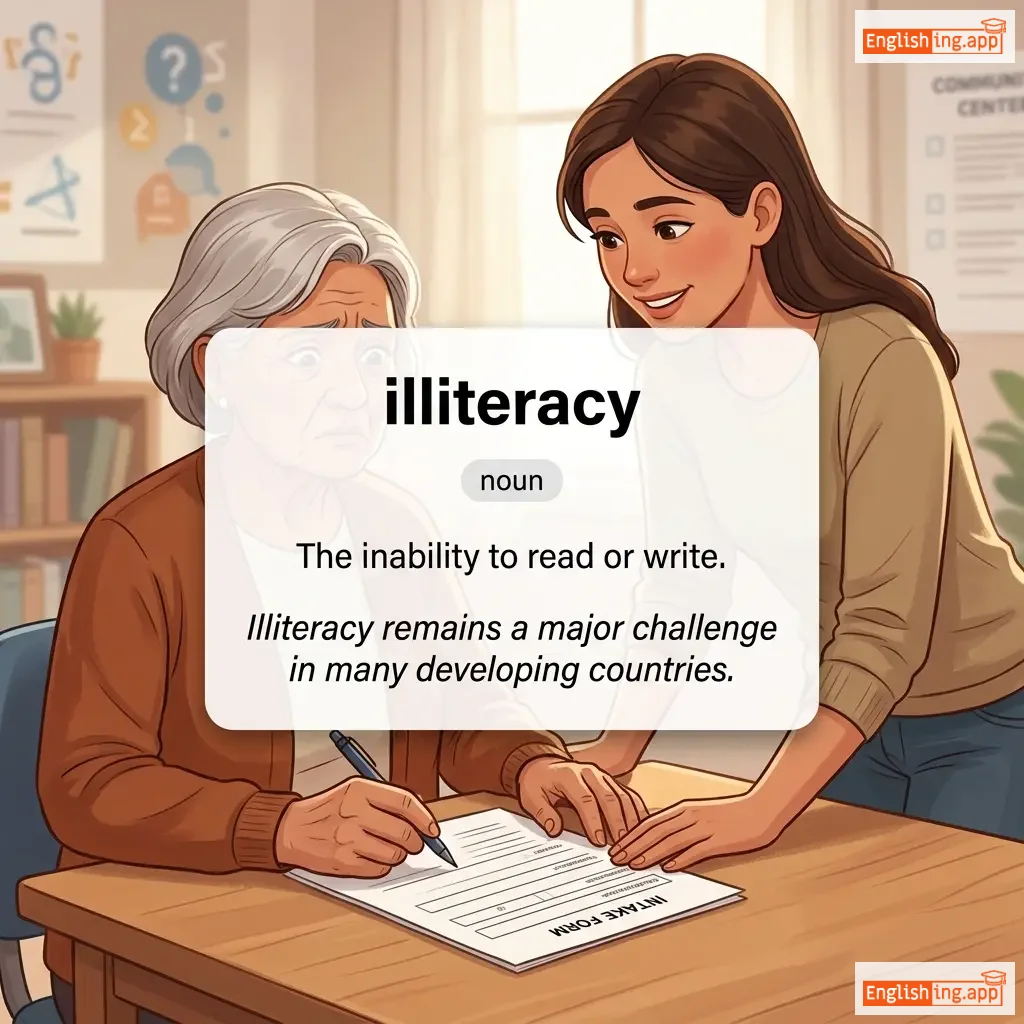
/ɪˈlɪtərəsi/
noun
(伊利特拉西)
••••••
|
|
文盲
wenmang
••••••
|
- •••••• | - •••••• | - •••••• | - •••••• |
The inability to read or write.
••••••
|
Illiteracy remains a major challenge in many developing countries. |
文盲在许多发展中国家仍然是一个重大挑战。
Wenmang zai xu duo fazhan zhongguo jia rengran shi yige zhongda tiaozhan.
••••••
|
- •••••• | - •••••• | - •••••• |
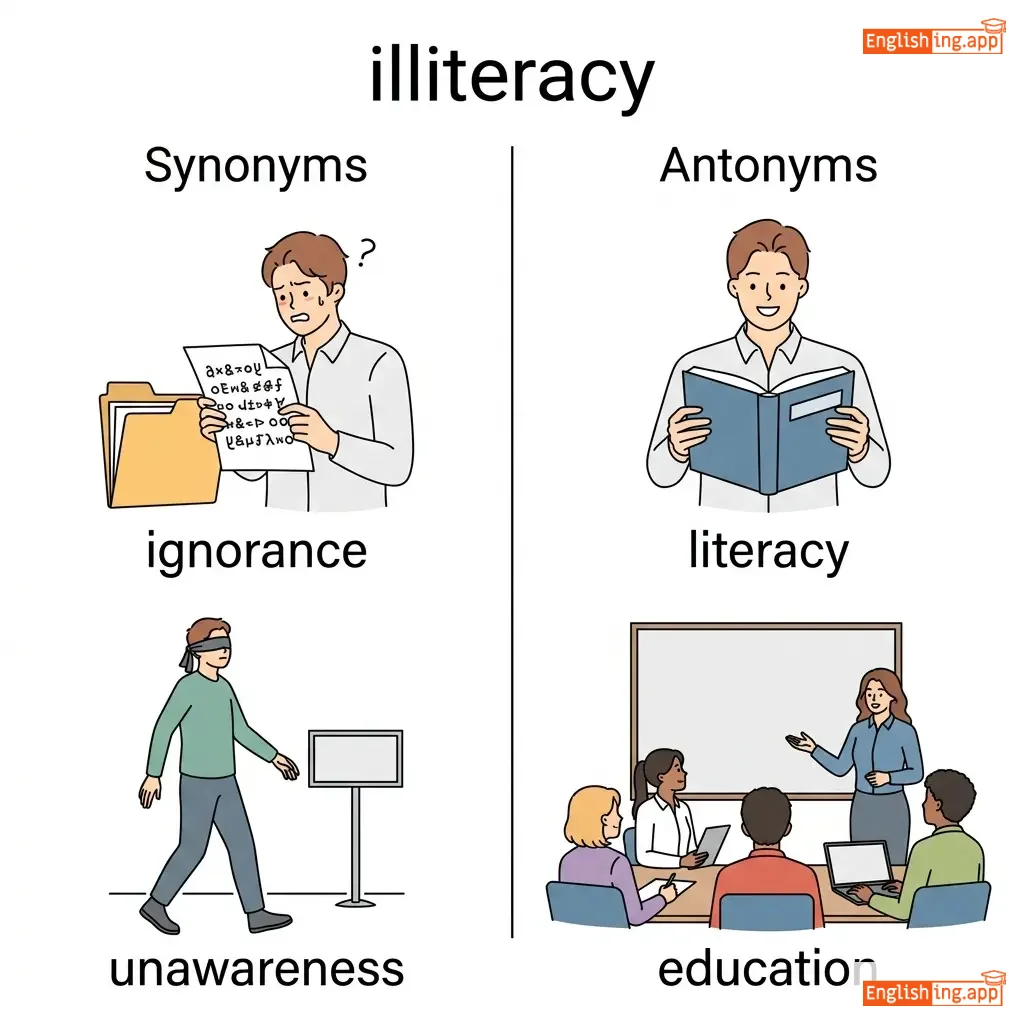
ignorance, unawareness, ill-education, illiterateness
••••••
|
literacy, education, knowledge
••••••
|
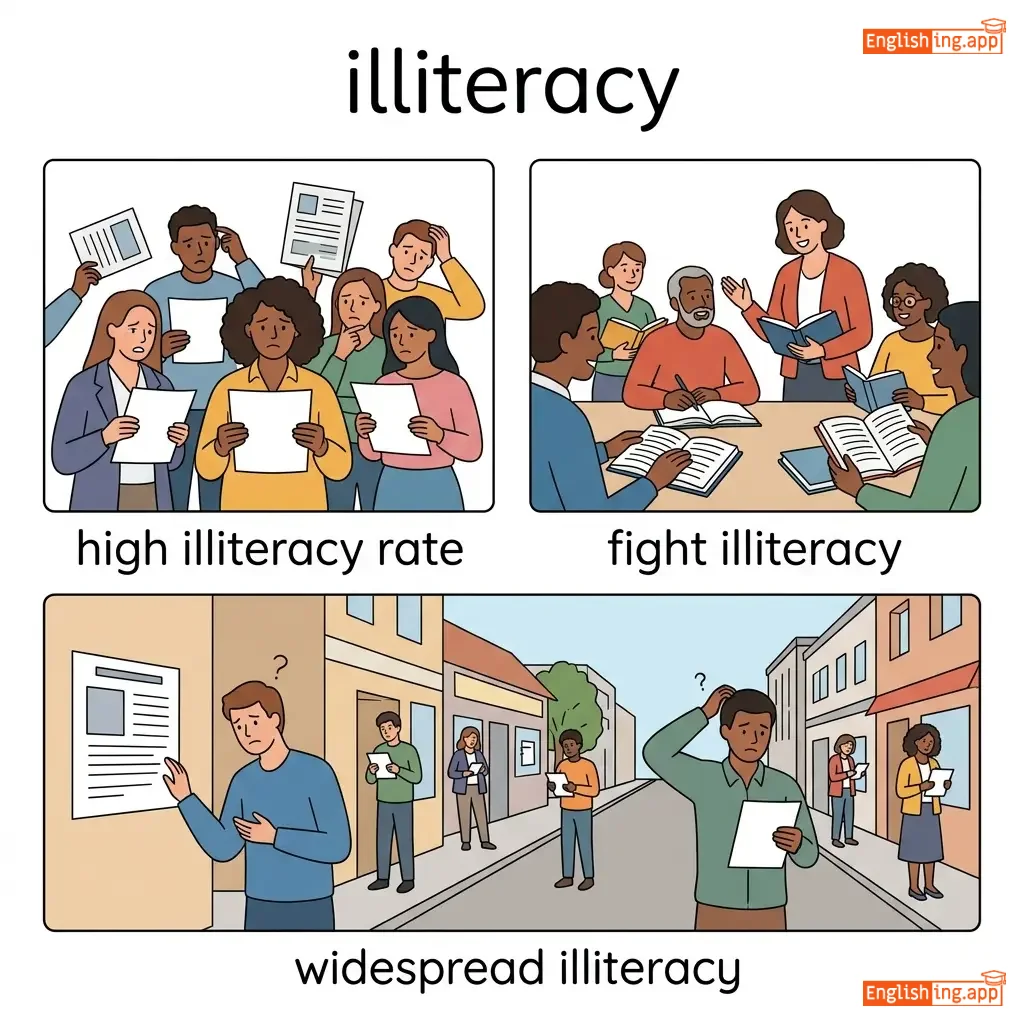
high illiteracy rate, fight illiteracy, widespread illiteracy, adult illiteracy
••••••
|
Illiterate 代表一个不能阅读或写作的人 → Illiteracy = 文盲
••••••
|
|
#4266
🌌
|
/ɪˈlɪmɪtəbl/
adjective
(īlìmǐtèbù)
••••••
|
- •••••• |
无限
wuxian
••••••
|
- •••••• | - •••••• | - •••••• | - •••••• |
Without limits or bounds.
••••••
|
The universe is often described as illimitable.
宇宙常被描述为无限的。
••••••
|
宇宙常被描述为无限的。
Yuzhou chang bei miaoshu wei wuxian de.
••••••
|
- •••••• | - •••••• | - •••••• |
infinite, boundless, endless, limitless
••••••
|
limited, finite, restricted
••••••
|
illimitable space, illimitable power, illimitable possibilities
••••••
|
Illimitable = 没有限制,所以是无限的。
••••••
|
|
#4267
🚔
|
/ɪˈlɪsɪt/
adjective
(yīlìsìtè)
••••••
|
- •••••• |
非法的
feifa de
••••••
|
- •••••• | - •••••• | - •••••• | - •••••• |
Forbidden by law, rules, or custom.
••••••
|
The police shut down the illicit drug operation. |
警方关闭了非法毒品交易。
Jǐngfāng guānbìle fēifǎ dúpǐn jiāoyì.
••••••
|
- •••••• | - •••••• | - •••••• |
illegal, unlawful, forbidden, prohibited
••••••
|
legal, lawful, permitted
••••••
|
illicit trade, illicit affair, illicit drug, illicit activity
••••••
|
Illicit 意味着 ‘非法的’,非法毒品意指 ‘非法毒品’.
••••••
|
|
#4268
❌
|
/ˌɪlɪbəˈræləti/
noun
(illiberality)
••••••
|
- •••••• |
不宽容
bù kuānróng
••••••
|
- •••••• | - •••••• | - •••••• | - •••••• |
The quality of being illiberal; lack of tolerance or generosity.
••••••
|
The illiberality of the new laws alarmed the citizens.
新法律的 illiberality 让市民感到警觉。
••••••
|
新法律的不宽容让市民感到警觉。
Xīn fǎlǜ de bù kuānróng ràng shìmín gǎndào jǐngjué.
••••••
|
- •••••• | - •••••• | - •••••• |
intolerance, narrow-mindedness, bigotry, authoritarianism
••••••
|
liberality, tolerance, open-mindedness
••••••
|
political illiberality, religious illiberality, social illiberality
••••••
|
Illiberality 是不宽容的,意味着缺乏慷慨。
••••••
|
|
#4269
🚷
|
/ɪˈlɪbərəl/
adjective
(伊利比瑞尔)
••••••
|
- •••••• |
非自由主义的
fei zi you zhu yi de
••••••
|
- •••••• | - •••••• | - •••••• | - •••••• |
Opposed to liberal principles; restricting freedom of thought or behavior.
••••••
|
The government was criticized for its illiberal policies.
政府因其非自由主义的政策而受到批评。
••••••
|
政府因其非自由主义的政策而受到批评。
Zhengfu yin qi fei ziyou zhuyi de zhengce er shoudao piping.
••••••
|
- •••••• | - •••••• | - •••••• |
narrow-minded, intolerant, authoritarian, repressive
••••••
|
liberal, tolerant, open-minded
••••••
|
illiberal regime, illiberal policies, illiberal attitude, illiberal practices
••••••
|
Illiberal 是 liberal 的反义词,所以非自由主义的。
••••••
|
|
#4270
🚫
|
/ˌɪlɪˈdʒɪtɪmət/
adjective
(ilidʒitɪmət)
••••••
|
- •••••• |
非法
feifa
••••••
|
- •••••• | - •••••• | - •••••• | - •••••• |
Not authorized by law, rules, or standards; not recognized as valid.
••••••
|
The court ruled the contract to be illegitimate.
法院裁定合同是非法的。
••••••
|
法院裁定合同是非法的。
Fayuan caiding hetong shi feifa de.
••••••
|
- •••••• | - •••••• | - •••••• |
invalid, unlawful, improper, false, unrecognized
••••••
|
legitimate, valid, lawful
••••••
|
illegitimate child, illegitimate claim, illegitimate ruler, illegitimate contract
••••••
|
Illegitimate意味着不合法,因此它是非法的。
••••••
|
|
#4271
✍️
|
/ɪˈledʒ.ə.bəl/
adjective
(illegible)
••••••
|
- •••••• |
难以辨认
nán yǐ biàn rèn
••••••
|
- •••••• | - •••••• | - •••••• | - •••••• |
Not clear enough to be read; unreadable.
••••••
|
The doctor’s handwriting was almost illegible. |
医生的字迹几乎难以辨认。
Yīshēng de zìjì jīhū nán yǐ biàn rèn.
••••••
|
- •••••• | - •••••• | - •••••• |
unreadable, unclear, indecipherable, obscure
••••••
|
legible, readable, clear
••••••
|
illegible handwriting, illegible text, illegible note, illegible document
••••••
|
illegible 意思是不能读 → 难以辨认
••••••
|
|
#4272
🚫
|
/ɪˈliː.ɡəl/
adjective
(非法)
••••••
|
- •••••• |
非法
feifa
••••••
|
- •••••• | - •••••• | - •••••• | - •••••• |
Not allowed by law; unlawful.
••••••
|
It is illegal to drive without a valid license. |
没有有效许可证驾驶是非法的。
Meiyou youxiao xukezheng jiaoshi shi feifa de.
••••••
|
- •••••• | - •••••• | - •••••• |
unlawful, criminal, forbidden, prohibited, illicit
••••••
|
legal, lawful, legitimate
••••••
|
illegal activity, illegal trade, illegal immigrant, illegal action
••••••
|
illegal 意味着法律不允许,因此 → 非法。
••••••
|
|
#4273
😒
|
/ˌɪlˈneɪ.tʃəd/
adjective
(yi-er-lei-te)
••••••
|
- •••••• |
性格恶劣
xingge e lie
••••••
|
- •••••• | - •••••• | - •••••• | - •••••• |
Having a bad or unpleasant character; unkind or malicious.
••••••
|
He made an ill-natured remark about his colleague. |
他对他的同事做出了恶意的评论。
Ta dui tade tongshi zuo chule eyi de pinglun.
••••••
|
- •••••• | - •••••• | - •••••• |
unkind, malicious, mean, spiteful, hostile
••••••
|
kind, friendly, good-natured
••••••
|
ill-natured remark, ill-natured comment, ill-natured look, ill-natured attitude
••••••
|
ill意味着生病,而ill-natured意味着性格恶劣 → 性格恶劣。
••••••
|
|
#4274
📜
|
/ˈɪl.i.æd/
noun
(伊利亚特)
••••••
|
- •••••• |
伊利亚特
Iliate
••••••
|
- •••••• | - •••••• | - •••••• | - •••••• |
An ancient Greek epic poem attributed to Homer, describing the events of the Trojan War.
••••••
|
Students studied the Iliad to understand Greek mythology and heroism.
学生们学习了《伊利亚特》,以理解希腊神话和英雄主义。
••••••
|
学生们学习了《伊利亚特》,以理解希腊神话和英雄主义。
Xueshengmen xuexi le 'Iliate', yi lijie Xila shenhua he yingxiong zhuyi.
••••••
|
- •••••• | - •••••• | - •••••• |
epic, poem, saga, legend, tale
••••••
|
fact, truth, reality
••••••
|
Homer's Iliad, epic Iliad, Iliad story, Iliad translation
••••••
|
伊利亚特 = Ili (特洛伊城) + ate (加上故事) → 特洛伊战争的故事。
••••••
|
|
#4275
🖼️
|
/ˈaɪ.kɒn/
noun
(áikēn)
••••••
|
- •••••• |
宗教图像或符号
zongjiao tushang huo fuhuo
••••••
|
- •••••• | - •••••• | - •••••• | - •••••• |
A religious image or symbol, especially in the Eastern Orthodox Church.
••••••
|
The church displayed a beautifully painted ikon of the Virgin Mary.
教堂展示了美丽的圣母玛利亚圣像。
••••••
|
教堂展示了美丽的圣母玛利亚圣像。
Jiàotáng zhǎnshìle měilì de shèngmǔ mǎlìyà shèngxiàng.
••••••
|
- •••••• | - •••••• | - •••••• |
image, idol, emblem, figure, representation
••••••
|
reality, object, being
••••••
|
religious ikon, Byzantine ikon, sacred ikon, painted ikon
••••••
|
Áikēn 就像是教堂里的宗教图像或符号,代表着神圣的意义。
••••••
|
|
#4276
💬
|
/ˈɪd.i.əm/
noun
(习语)
••••••
|
- •••••• |
习语
xíyǔ
••••••
|
- •••••• | - •••••• | - •••••• | - •••••• |
A group of words whose meaning is different from the meanings of the individual words.
••••••
|
The idiom 'break the ice' means to start a conversation in a friendly way. |
习语 '打破僵局' 意味着以友好的方式开始对话。
xíyǔ 'dǎpò jiāngjú' yìwèizhe yǐ yǒuhǎo de fāngshì kāishǐ duìhuà.
••••••
|
break the ice |
to initiate social interaction or conversation in a relaxed manner
••••••
|
打破僵局
dǎpò jiāngjú
••••••
|
phrase, expression, saying, figure of speech
••••••
|
literal meaning, direct statement
••••••
|
English idiom, common idiom, idiom usage
••••••
|
习语像隐藏的迷宫,实际的含义需要发现!
••••••
|
|
#4277
😓
|
/ˌɪɡ.nəˈmɪn.i.əs/
adjective
(ignominious)
••••••
|
- •••••• |
可耻的
kechi de
••••••
|
- •••••• | - •••••• | - •••••• | - •••••• |
Marked by shame, disgrace, or humiliation.
••••••
|
The team suffered an ignominious defeat in the finals. |
队伍在决赛中遭遇了可耻的失败。
Duiwu zai jue sai zhong zao yu le kechi de shibai.
••••••
|
- •••••• | - •••••• | - •••••• |
disgraceful, humiliating, shameful, degrading
••••••
|
glorious, honorable, dignified
••••••
|
ignominious defeat, ignominious failure, ignominious end, ignominious retreat
••••••
|
Ignominious 意味着可耻的,就像没有最低限度的尊重。
••••••
|
|
#4278
😞
|
/ɪɡˈnoʊ.bəl/
adjective
(无耻的)
••••••
|
- •••••• |
卑鄙的
bēibǐ de
••••••
|
- •••••• | - •••••• | - •••••• | - •••••• |
Dishonorable, shameful, or lacking nobility.
••••••
|
His ignoble actions ruined his reputation. |
他的卑鄙行为毁掉了他的声誉。
Tā de bēibǐ xíngwéi huǐ diào le tā de shēngyù.
••••••
|
- •••••• | - •••••• | - •••••• |
dishonorable, base, shameful, mean, degraded
••••••
|
honorable, noble, dignified
••••••
|
ignoble act, ignoble motive, ignoble character, ignoble conduct
••••••
|
Ignoble是没有贵族气质的,意味着卑鄙或者不光彩的。
••••••
|
|
#4279
🔥
|
/ɪɡˈnaɪt/
verb
(ɪɡˈnaɪt)
••••••
|
- •••••• |
点燃
diǎnrán
••••••
|
ignited
ɪɡˈnaɪtəd
••••••
|
ignited
ɪɡˈnaɪtəd
••••••
|
ignites
ɪɡˈnaɪts
••••••
|
igniting
ɪɡˈnaɪtɪŋ
••••••
|
To catch fire or cause to catch fire; to start or arouse.
••••••
|
The sparks ignited the dry leaves in seconds.
dɛ spɑrks ɪɡˈnaɪtəd ðə draɪ liːvz ɪn ˈsɛkəndz.
••••••
|
火花在几秒钟内点燃了干叶。
huǒ huā zài jǐ miǎo zhōng nèi diǎn rán le gān yè.
••••••
|
ignite a passion
ɪɡˈnaɪt ə pæʃən
••••••
|
to strongly inspire or motivate someone
••••••
|
点燃激情
diǎn rán jīqíng
••••••
|
kindle, inflame, spark, light, trigger
••••••
|
extinguish, douse, smother
••••••
|
ignite a fire, ignite interest, ignite debate, ignite violence
••••••
|
Ignite 就是点燃 - 用 ignite 点燃激情。
••••••
|
|
#4280
🌋
|
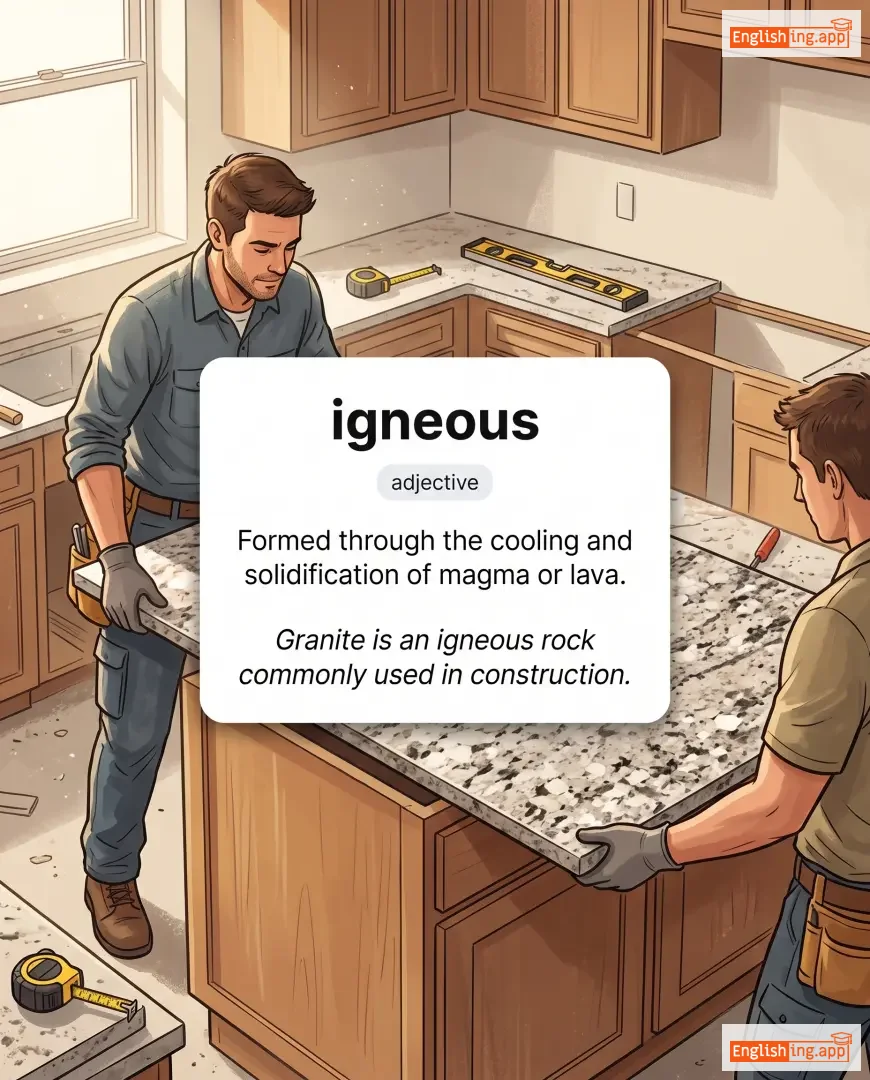
/ˈɪɡ.ni.əs/
adjective
(igneous)
••••••
|
|
火成
huǒchéng
••••••
|
- •••••• | - •••••• | - •••••• | - •••••• |
Formed through the cooling and solidification of magma or lava.
••••••
|
Granite is an igneous rock commonly used in construction.
花岗岩是一种常用于建筑的火成岩。
••••••
|
花岗岩是一种常用于建筑的火成岩。
Huāgāngyán shì yī zhǒng cháng yòng yú jiànzhú de huǒchéng yán.
••••••
|
- •••••• | - •••••• | - •••••• |
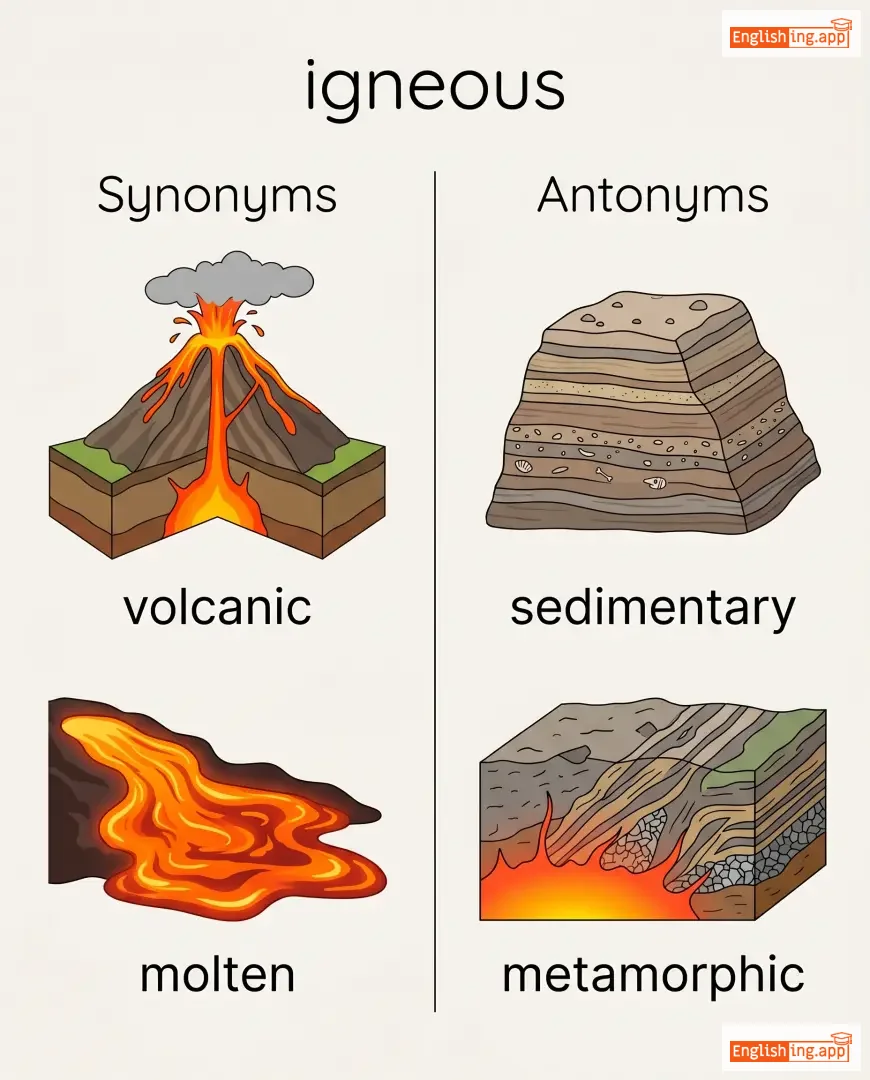
volcanic, molten, fiery, magmatic
••••••
|
sedimentary, metamorphic
••••••
|
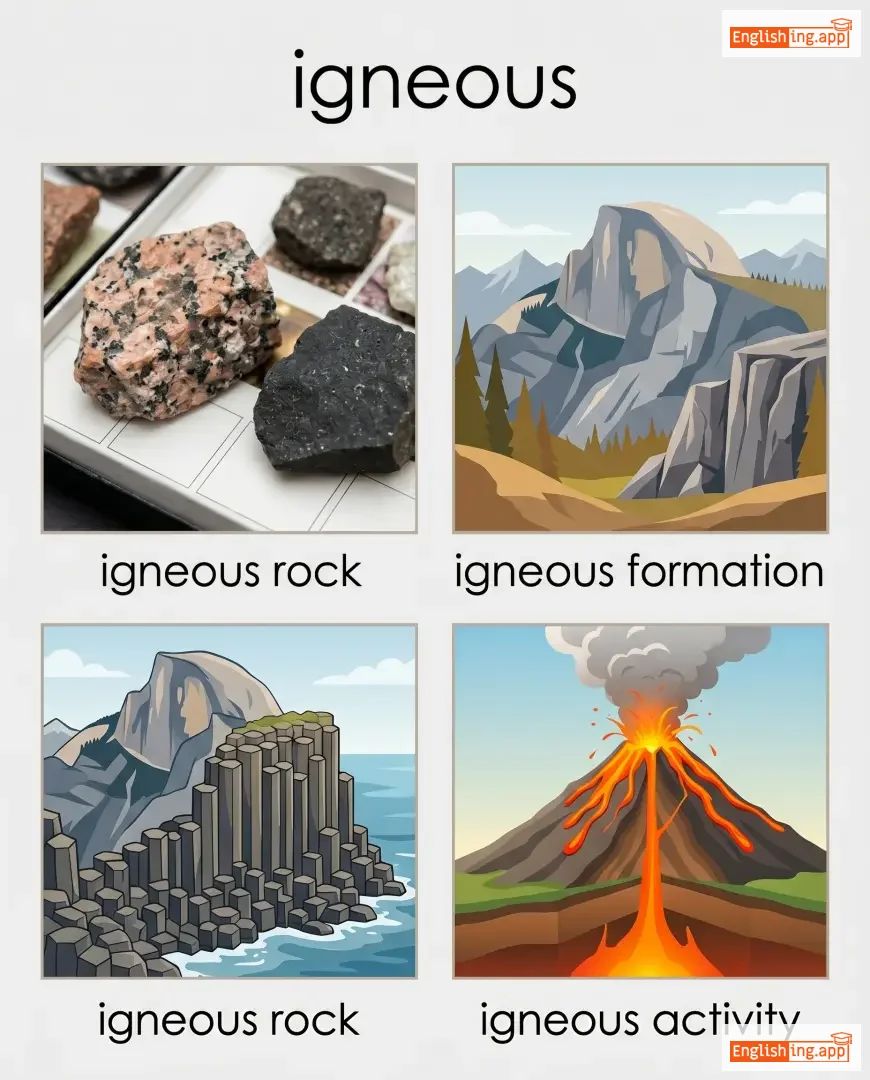
igneous rock, igneous formation, igneous activity, igneous process
••••••
|
Igneous 意味着由火形成的岩石 - 火成岩。
••••••
|
|
#4281
🌅
|
/aɪˈdɪlɪk/
adjective
(艾迪利克)
••••••
|
- •••••• |
田园诗般的美丽
tiányuánshī bān de měilì
••••••
|
- •••••• | - •••••• | - •••••• | - •••••• |
Like an idyll; extremely happy, peaceful, or picturesque.
••••••
|
They enjoyed an idyllic vacation by the sea. |
他们享受了一个田园诗般的海边假期。
Tāmen xiǎngshòule yīgè tiányuánshī bān de hǎibiān jiàqī.
••••••
|
- •••••• | - •••••• | - •••••• |
picturesque, peaceful, blissful, charming, serene
••••••
|
chaotic, unpleasant, miserable
••••••
|
idyllic setting, idyllic life, idyllic place, idyllic vacation
••••••
|
Idyllic = ideal + click → 完美的假期
••••••
|
|
#4282
🏝️
|
/ˈaɪdɪl/
noun
(艾德尔)
••••••
|
- •••••• |
田园诗般的场景
tianyuanshi ban de changjing
••••••
|
- •••••• | - •••••• | - •••••• | - •••••• |
An extremely happy, peaceful, or picturesque episode or scene, often idealized.
••••••
|
Their honeymoon was an idyll on a tropical island. |
他们的蜜月是在一个热带岛屿上的田园诗般的场景。
Tamen de miyue shi zai yige re dai daoyu shang de tianyuanshi ban de changjing.
••••••
|
- •••••• | - •••••• | - •••••• |
paradise, bliss, utopia, haven, dream
••••••
|
nightmare, chaos, misery
••••••
|
romantic idyll, rural idyll, summer idyll, idyllic idyll
••••••
|
Idyll = 理想场景 → 田园诗般的场景 = idyll
••••••
|
|
#4283
🌟
|
/ˈaɪdəlaɪz/
verb
(艾多莱兹)
••••••
|
- •••••• |
偶像崇拜
ǒuxiàng chóngbài
••••••
|
idolized
艾多莱兹德
••••••
|
idolized
艾多莱兹德
••••••
|
idolizes
艾多莱兹斯
••••••
|
idolizing
艾多莱兹英
••••••
|
To admire or worship someone excessively.
••••••
|
Fans often idolize celebrities for their talent and lifestyle.
粉丝们常常因为他们的才华和生活方式而崇拜名人。
••••••
|
粉丝们常常因为他们的才华和生活方式而崇拜名人。
Fěnsīmen chángcháng yīnwèi tāmen de cáihuá hé shēnghuó fāngshì ér chóngbài míngrén.
••••••
|
- •••••• | - •••••• | - •••••• |
admire, adore, revere, venerate, worship
••••••
|
despise, hate, scorn
••••••
|
idolize heroes, idolize celebrities, idolize someone, idolize stars
••••••
|
Idol + eyes → 眼中有偶像就是 idolize
••••••
|
|
#4284
🛐
|
/aɪˈdɒlətri/
noun
(偶像崇拜)
••••••
|
|
偶像崇拜
ouxiang chongbai
••••••
|
- •••••• | - •••••• | - •••••• | - •••••• |
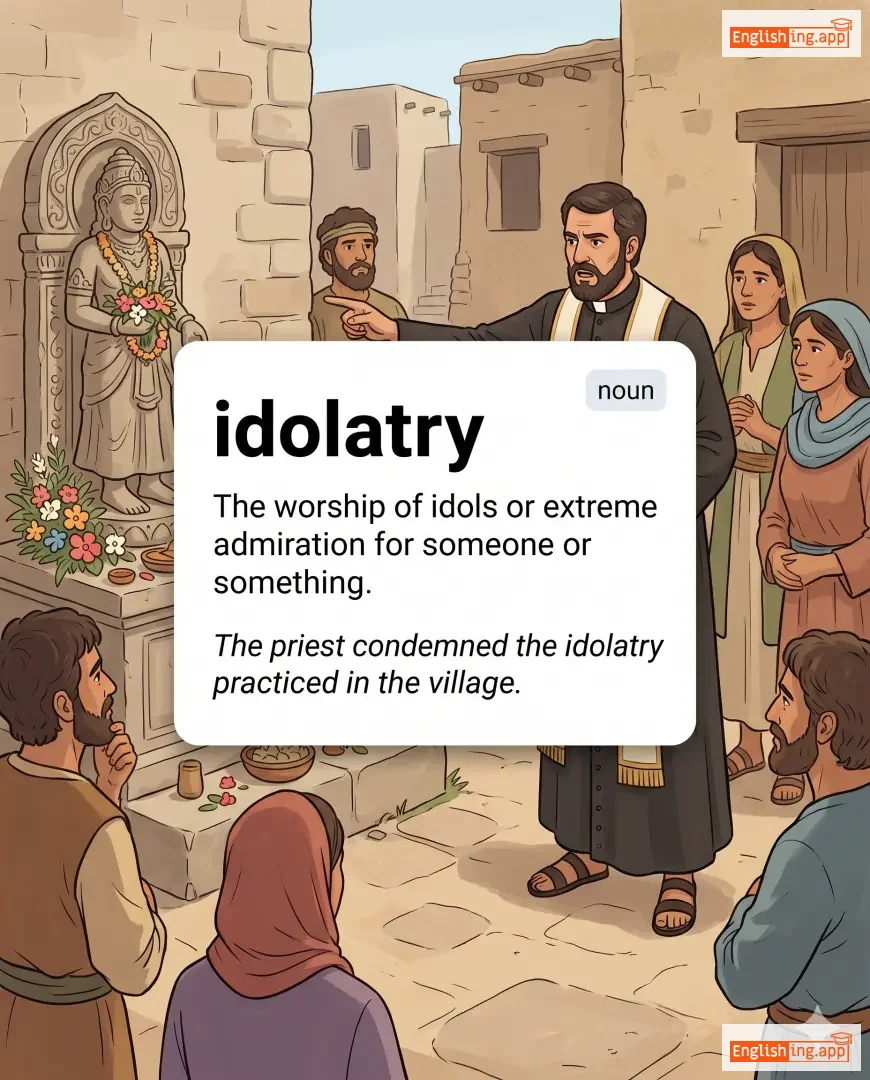
The worship of idols or extreme admiration for someone or something.
••••••
|
The priest condemned the idolatry practiced in the village. |
牧师谴责了在村里实践的偶像崇拜。
Mushi qianze le zai cun li shijian de ouxiang chongbai.
••••••
|
- •••••• | - •••••• | - •••••• |
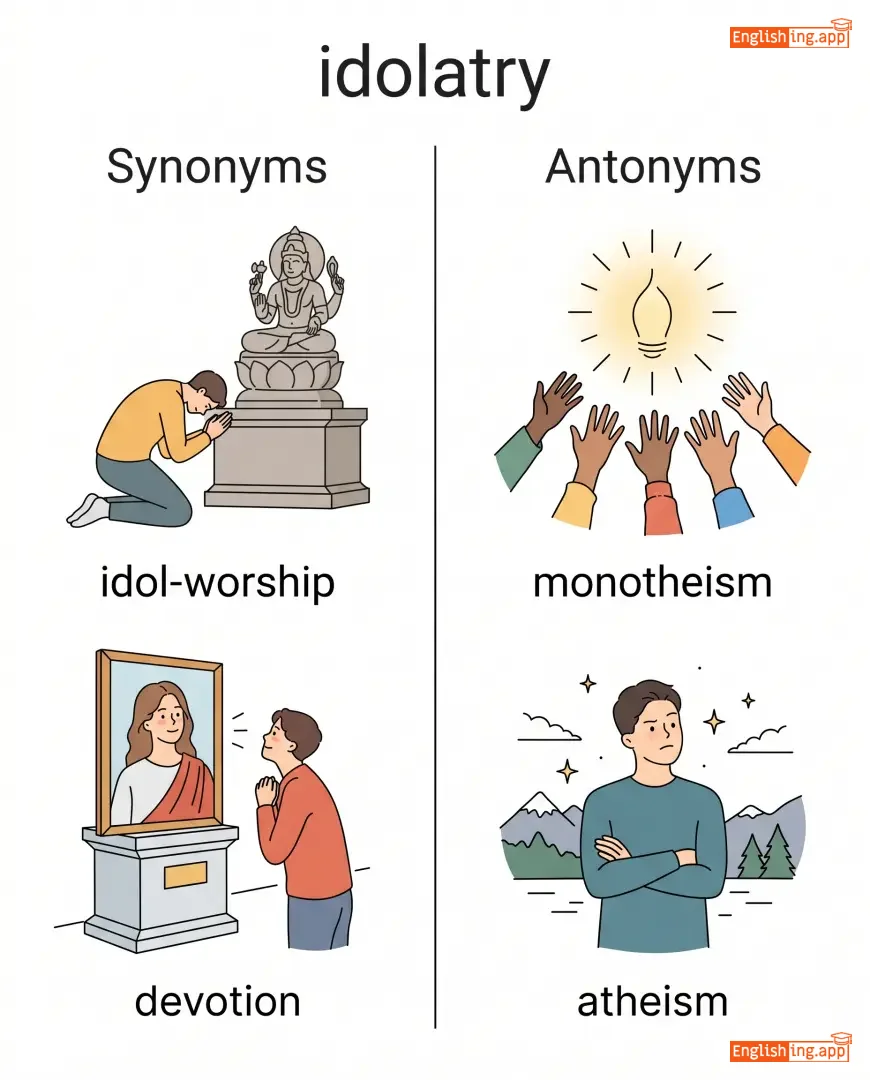
idol-worship, devotion, adoration, reverence, veneration
••••••
|
monotheism, atheism, irreverence
••••••
|
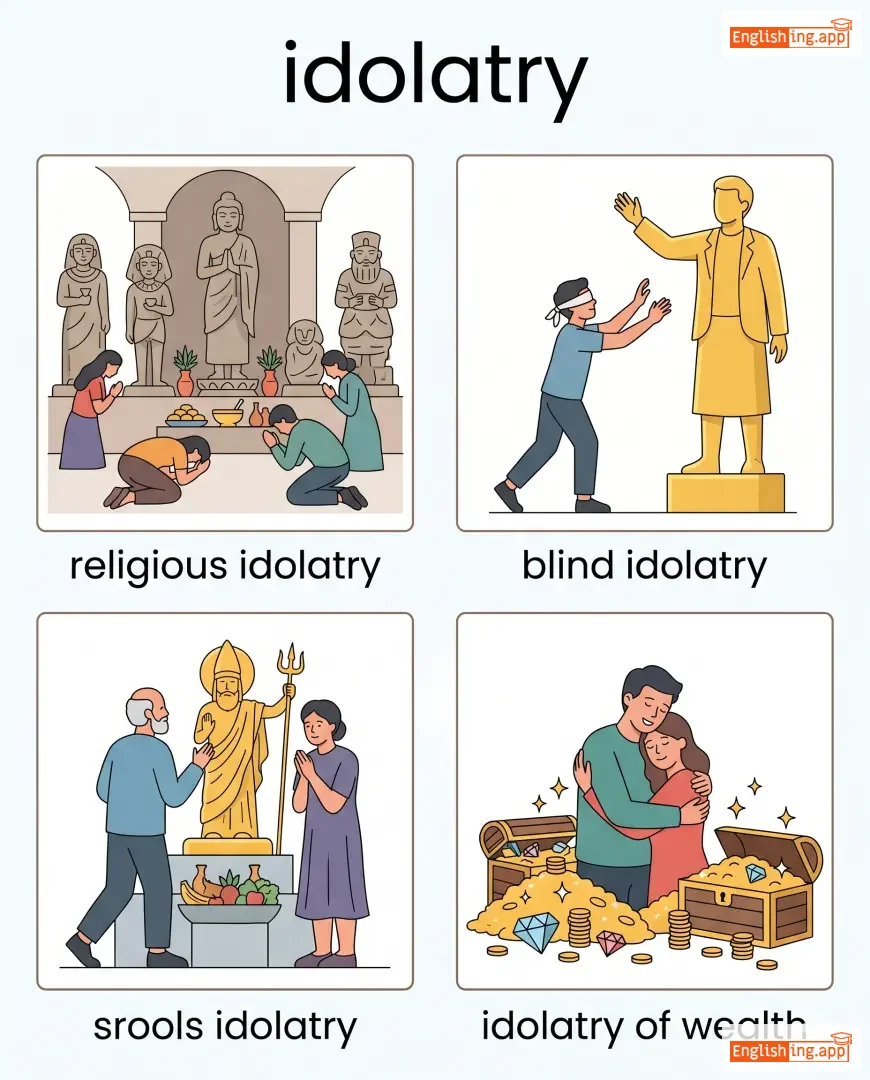
religious idolatry, blind idolatry, idolatry of wealth, idolatry of power
••••••
|
idol + tree,偶像的崇拜
••••••
|
|
#4285
🙏
|
/aɪˈdɒlətrəs/
adjective
(ai-dol-a-trus)
••••••
|
- •••••• |
偶像崇拜者
ouxiang chongbai zhe
••••••
|
- •••••• | - •••••• | - •••••• | - •••••• |
Excessively admiring or worshipping someone or something as an idol.
••••••
|
The king was criticized for his idolatrous devotion to wealth. |
国王因其对财富的偶像崇拜而受到批评。
Guowang yin qi dui cai fu de ouxiang chongbai er shoudao piping.
••••••
|
- •••••• | - •••••• | - •••••• |
idol-worshiping, devoted, reverent, fanatical, adoring
••••••
|
atheistic, irreverent, indifferent
••••••
|
idolatrous worship, idolatrous practices, idolatrous devotion, idolatrous culture
••••••
|
偶像 + 崇拜 = 偶像崇拜者
••••••
|
|
#4286
🙏
|
/aɪˈdɒləˌtraɪz/
verb
(āidòlàtráiz)
••••••
|
- •••••• |
偶像崇拜
ǒuxiàng chóngbài
••••••
|
idolatrized
āidòlàtráizd
••••••
|
idolatrized
āidòlàtráizd
••••••
|
idolatrizes
āidòlàtráizes
••••••
|
idolatrizing
āidòlàtráizing
••••••
|
To worship idols; to regard with excessive devotion or admiration.
••••••
|
They began to idolatrize the statue as a deity.
他们开始把这尊雕像当作神明崇拜。
••••••
|
他们开始把这尊雕像当作神明崇拜。
Tāmen kāishǐ bǎ zhè zhūn diāoxiàng dàngzuò shénmíng chóngbài.
••••••
|
- •••••• | - •••••• | - •••••• |
worship, revere, adore, venerate
••••••
|
despise, disrespect
••••••
|
idolatrize statues, idolatrize leaders, idolatrize objects
••••••
|
Idol + trize 意思是过度崇拜偶像。
••••••
|
|
#4287
🛐
|
/ˌaɪdəˈlɑːtrɪəs/
adjective
(偶像崇拜的)
••••••
|
- •••••• |
偶像崇拜的
ǒu xiàng chóng bài de
••••••
|
- •••••• | - •••••• | - •••••• | - •••••• |
Excessively devoted or reverent towards idols or false gods.
••••••
|
The ancient tribe was known for its idolatrious practices. |
这个古老的部落因其偶像崇拜的习惯而闻名。
Zhège gǔlǎo de bùluò yīn qí ǒu xiàng chóng bài de xíguàn ér wénmíng.
••••••
|
- •••••• | - •••••• | - •••••• |
idol-worshipping, devoted, reverent, pagan
••••••
|
monotheistic, faithful
••••••
|
idolatrious worship, idolatrious practices, idolatrious devotion
••••••
|
Idol + atrious = 对偶像的过度崇拜
••••••
|
|
#4288
😴
|
/ˈaɪd(ə)l/
adjective, verb
(艾德尔)
••••••
|
- •••••• |
闲置的
xian zhi de
••••••
|
idled
艾德尔德
••••••
|
idled
艾德尔德
••••••
|
idles
艾德尔斯
••••••
|
idling
艾德林
••••••
|
Adjective: not active or in use; lazy. Verb: to spend time doing nothing.
••••••
|
The workers sat idle during the power outage.
在停电期间,工人们坐着闲着。
••••••
|
在停电期间,工人们坐着闲着。
zai tingdian qi jian, gongren men zuo zhe xian zhe.
••••••
|
idle hands
闲手
••••••
|
People with nothing to do are more likely to get into trouble.
••••••
|
闲手
xian shou
••••••
|
inactive, lazy, unoccupied, dormant
••••••
|
busy, active, industrious
••••••
|
idle talk, idle time, idle hands, sit idle
••••••
|
Idle意味着I’d + l(懒惰)——闲置意味着浪费时间
••••••
|
|
#4289
🌀
|
/ˌɪdiəsɪnˈkrætɪk/
adjective
(特立独行)
••••••
|
|
特立独行的
te li du xing de
••••••
|
- •••••• | - •••••• | - •••••• | - •••••• |
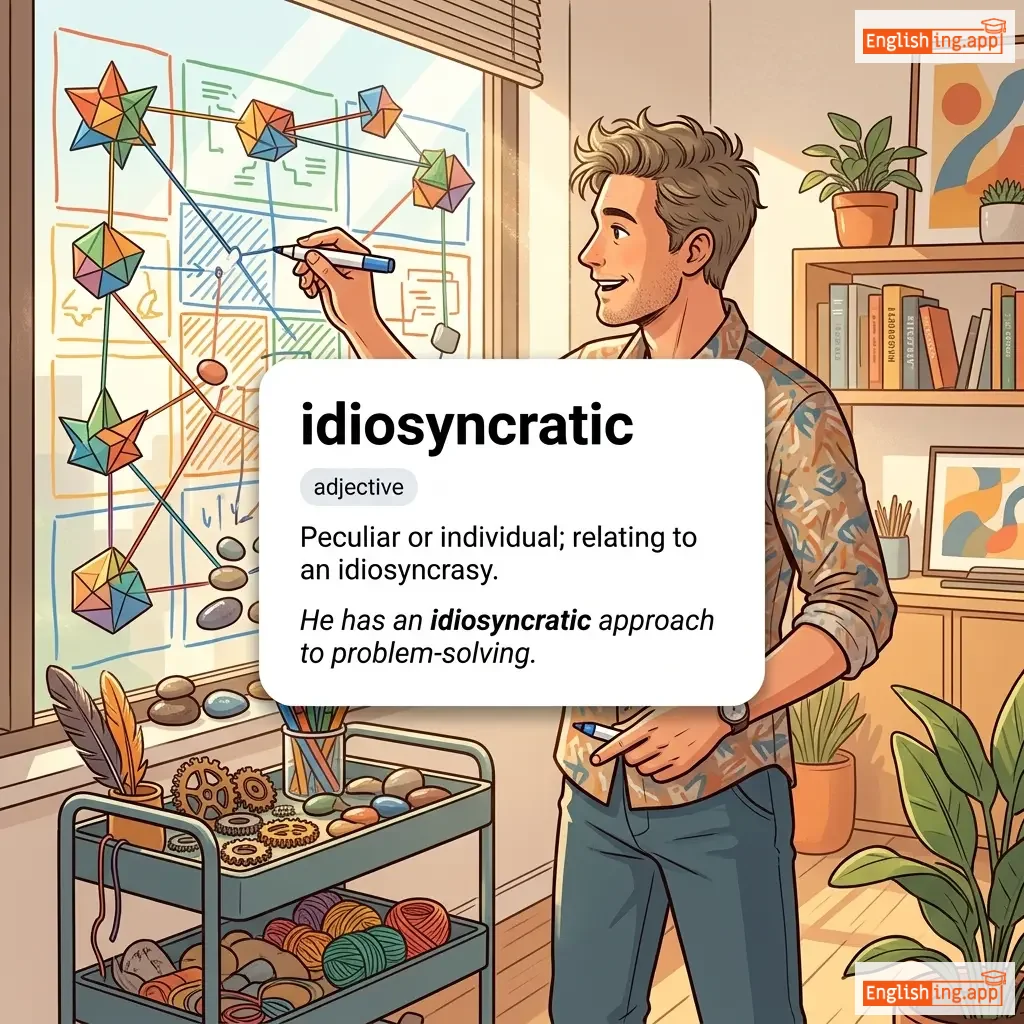
Peculiar or individual; relating to an idiosyncrasy.
••••••
|
He has an idiosyncratic approach to problem-solving. |
他有一种特立独行的解决问题的方法。
Ta you yizhong te li du xing de jiejue wenti de fangfa.
••••••
|
- •••••• | - •••••• | - •••••• |
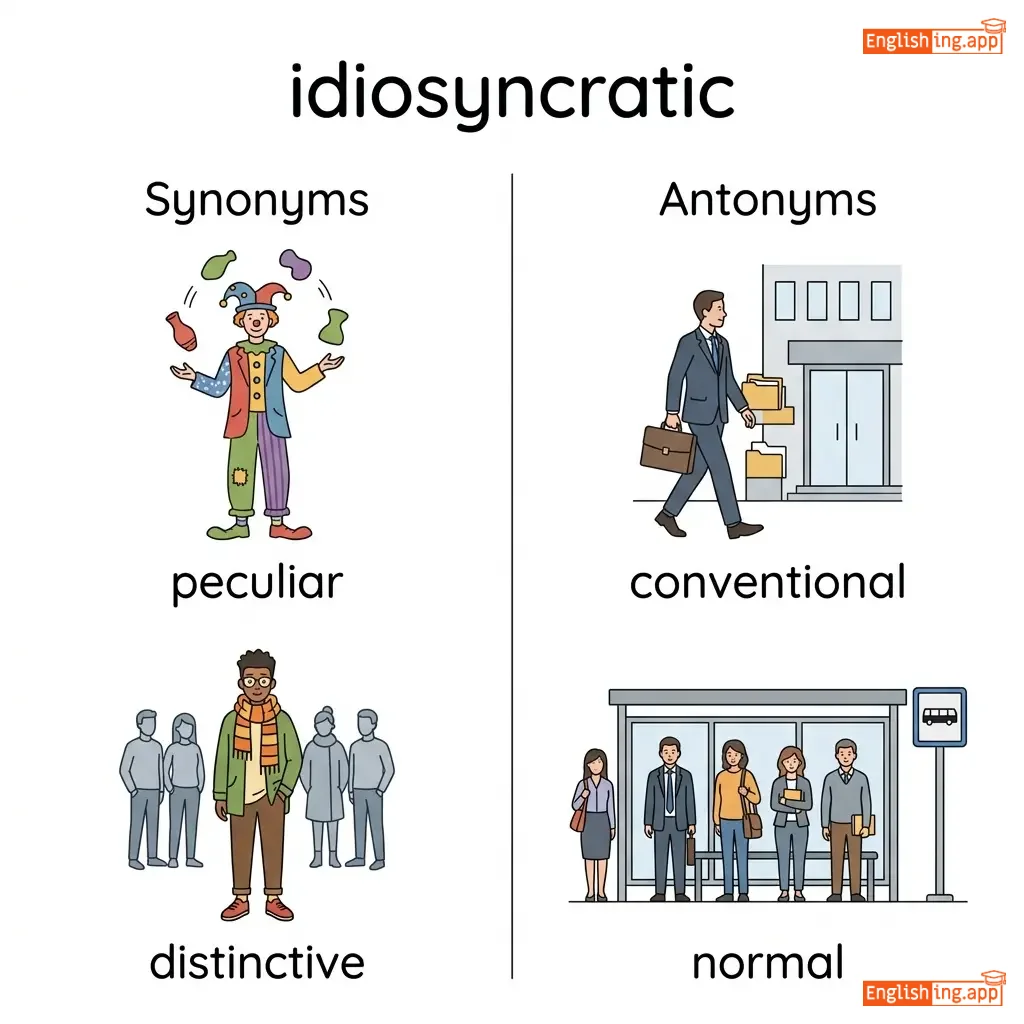
peculiar, distinctive, quirky, eccentric, unusual
••••••
|
conventional, normal, ordinary
••••••
|
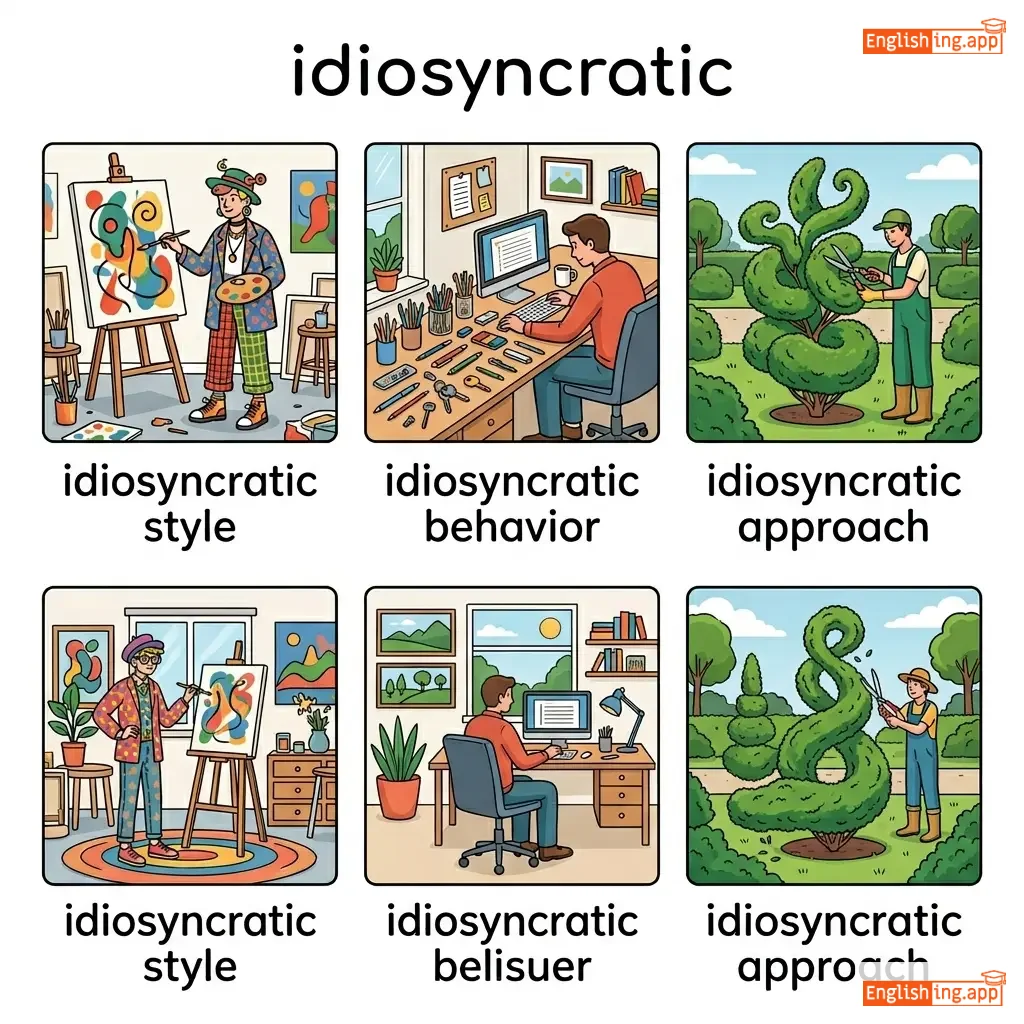
idiosyncratic style, idiosyncratic behavior, idiosyncratic approach, idiosyncratic view
••••••
|
Idio 意味着个人,cratisch 意味着不同 — 一种特立独行的方法
••••••
|
|
#4290
🎭
|
/ˌɪdiəˈsɪŋkrəsi/
noun
(偶發性)
••••••
|
- •••••• |
特徵
te zheng
••••••
|
- •••••• | - •••••• | - •••••• | - •••••• |
A distinctive or peculiar characteristic, habit, or mannerism unique to an individual.
••••••
|
One of her idiosyncrasies was humming while working.
她的一个偶发性特征是工作时哼歌。
••••••
|
她的一个偶发性特征是工作时哼歌。
Ta de yi ge ou fa xing te zheng shi gong zuo shi heng ge.
••••••
|
- •••••• | - •••••• | - •••••• |
quirk, peculiarity, eccentricity, trait, mannerism
••••••
|
normality, conformity
••••••
|
personal idiosyncrasy, cultural idiosyncrasy, little idiosyncrasy, individual idiosyncrasy
••••••
|
Idio + sin = 奇怪習慣的象徵
••••••
|
Vocabulary Quiz
Test your vocabulary by matching words with their translations or meanings.
Login to take the quiz
Comments (0)
Share your thoughts and join the discussion.
Join the discussion by logging in
Login to CommentNo comments yet
Be the first to share your thoughts!