


Swipe left or right, or use the buttons. Tap image to zoom.
例句翻译
单词
Lesson 419Lesson 419 - 遮罩切换
|
表情符号
|
单词 | Images | 翻译 | 过去时 | 过去分词 | 第三人称单数 | 动名词 | 含义 | 例句 | 例句翻译 | 示例表达 | 示例表达含义 | 示例表达翻译 | 同义词 | 反义词 | 搭配词 | 助记符 |
|---|---|---|---|---|---|---|---|---|---|---|---|---|---|---|---|---|---|
|
#1
👮♂️
|
/kəˈmɪʃənər/
noun
(专员)
••••••
|
- •••••• |
专员
zhuānyuán
••••••
|
- •••••• | - •••••• | - •••••• | - •••••• |
an official in charge of a particular department or area
••••••
|
The police commissioner addressed the media about the incident.
警察专员向媒体介绍了事件。
••••••
|
警察专员向媒体介绍了事件。
Jǐngchá zhuānyuán xiàng méitǐ jièshào le shìjiàn.
••••••
|
- •••••• | - •••••• | - •••••• |
official, director, superintendent, chief, officer
••••••
|
subordinate, employee
••••••
|
police commissioner, election commissioner, city commissioner, commissioner office
••••••
|
专员意味着负责人,专员是担任责任的人。
••••••
|
|
#1
⚖️
|
/ˈkɒnvɪkt/
verb
(kàngwèikè)
••••••
|
- •••••• |
判决
panjue
••••••
|
convicted
kàngwèikèd
••••••
|
convicted
kàngwèikèd
••••••
|
convicts
kàngwèikèz
••••••
|
convicting
kàngwèikèng
••••••
|
to find someone guilty of a crime in a court of law
••••••
|
The court convicted him of theft.
法院判定他偷窃有罪。
••••••
|
法院判定他偷窃有罪。
Fayuan panding ta touqie youzui.
••••••
|
convict someone of a crime
判定某人犯有罪行
••••••
|
to declare someone guilty of committing a particular crime
••••••
|
判定某人犯有罪行
Panding mou ren fan you zuixing
••••••
|
sentence, condemn, judge, declare guilty
••••••
|
acquit, pardon
••••••
|
convict of murder, convicted criminal, convict someone, convict by jury
••••••
|
Convict, 就是法院宣判某人犯有罪行。
••••••
|
|
#1
🏗️
|
/ˈkɒntræktər/
noun
(合同工)
••••••
|
- •••••• |
承包商
chéngbāo shāng
••••••
|
- •••••• | - •••••• | - •••••• | - •••••• |
a person or company that agrees to provide materials or labor to perform a service or do a job
••••••
|
The contractor completed the building project on time. |
承包商按时完成了建筑项目。
Chéngbāo shāng ànshí wánchéngle jiànzhù xiàngmù.
••••••
|
general contractor |
a person or company responsible for overseeing a construction project
••••••
|
总承包商
zǒng chéngbāo shāng
••••••
|
builder, supplier, provider, constructor, vendor
••••••
|
client, employee
••••••
|
building contractor, general contractor, independent contractor, government contractor
••••••
|
承包商是签合同进行工作的—记住'contractor'
••••••
|
|
#1
➡️
|
/kənˈtɪnjuɪŋ/
verb
(继续)
••••••
|
- •••••• |
继续
jixu
••••••
|
continued
继续
••••••
|
continued
继续
••••••
|
continues
继续
••••••
|
continuing
继续
••••••
|
to keep doing something without stopping
••••••
|
They are continuing their journey despite the rain.
尽管下雨,他们仍在继续他们的旅程。
••••••
|
尽管下雨,他们仍在继续他们的旅程。
Jinguan xia yu, tamen reng zai jixu tamen de lüxing.
••••••
|
continue on
继续前进
••••••
|
to keep moving or progressing forward
••••••
|
继续前进
jixu qianjin
••••••
|
persist, proceed, carry on, maintain, keep up
••••••
|
stop, cease, end
••••••
|
continue working, continue learning, continue to grow, continuing education
••••••
|
继续 = 永远不停,继续向前走 ➡️
••••••
|
|
#1
🌍
|
/ˈkɒntɪnənt/
noun
(kàntínènt)
••••••
|
- •••••• |
大陆
dàlù
••••••
|
- •••••• | - •••••• | - •••••• | - •••••• |
one of the large landmasses on Earth such as Asia, Africa, or Europe
••••••
|
Asia is the largest continent in the world. |
亚洲是世界上最大的大陆。
Yàzhōu shì shìjiè shàng zuì dà de dàlù.
••••••
|
- •••••• | - •••••• | - •••••• |
landmass, region, area, territory
••••••
|
island, ocean
••••••
|
African continent, European continent, across the continent, continental drift
••••••
|
大陆就像是一个大块的土地,亚洲就是最大的大陆!
••••••
|
|
#1
📅
|
/kənˈsɪstəntli/
adverb
(kənˈsɪstəntli)
••••••
|
- •••••• |
持续地
chíxù de
••••••
|
- •••••• | - •••••• | - •••••• | - •••••• |
in a way that does not vary; regularly and dependably
••••••
|
She has been performing consistently well in her studies. |
她在学习中始终表现得很好。
Tā zài xuéxí zhōng shǐzhōng biǎoxiàn dé hěn hǎo.
••••••
|
consistent with |
in agreement or harmony with something
••••••
|
与...一致
yǔ... yīzhì
••••••
|
regularly, steadily, constantly, reliably
••••••
|
inconsistently, irregularly
••••••
|
perform consistently, act consistently, behave consistently, consistently good
••••••
|
持续地意味着总是相同的结果——总是相同的表现 📅
••••••
|
|
#1
📈
|
/kənˈsɪdərəbli/
adverb
(kənˈsɪdərəbli)
••••••
|
- •••••• |
显著地
xiǎnzhù de
••••••
|
- •••••• | - •••••• | - •••••• | - •••••• |
to a great extent or degree; significantly
••••••
|
The weather has improved considerably since last week. |
天气自上周以来显著改善。
Tiānqì zì shàng zhōu yǐlái xiǎnzhù gǎishàn.
••••••
|
- •••••• | - •••••• | - •••••• |
significantly, greatly, substantially, markedly
••••••
|
slightly, marginally
••••••
|
considerably better, considerably higher, increased considerably, changed considerably
••••••
|
Considerably意味着显著的改善 🌞
••••••
|
|
#1
🌿
|
/ˌkɒnsəˈveɪʃən/
noun
(康瑟维申)
••••••
|
|
保护
baohu
••••••
|
- •••••• | - •••••• | - •••••• | - •••••• |
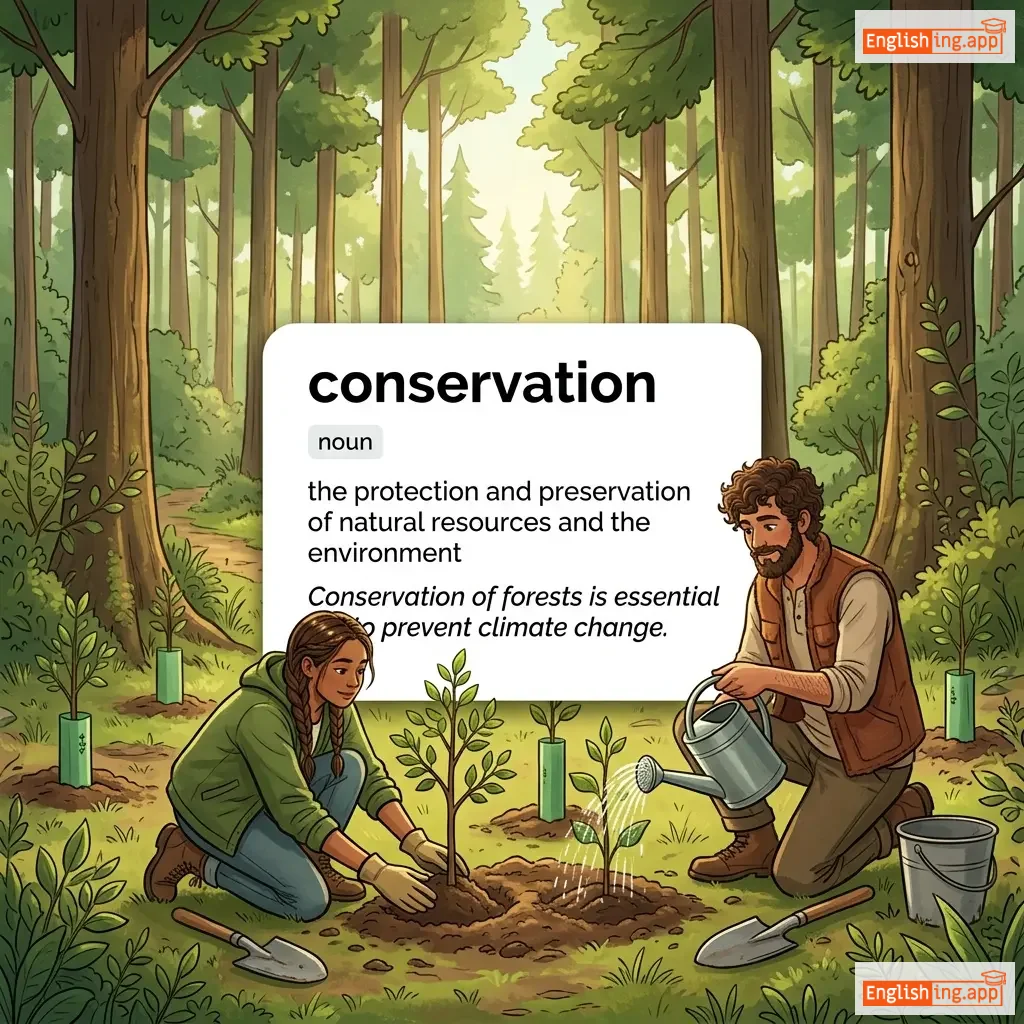
the protection and preservation of natural resources and the environment
••••••
|
Conservation of forests is essential to prevent climate change.
森林的康瑟维申对防止气候变化至关重要。
••••••
|
森林的保护对于防止气候变化至关重要。
senlin de baohu duiyu fangzhi qihou bianhua zhiguan zhongyao.
••••••
|
conservation of energy
能量的康瑟维申
••••••
|
the principle that energy cannot be created or destroyed, only transformed
••••••
|
能量守恒
nengliang shouheng
••••••
|
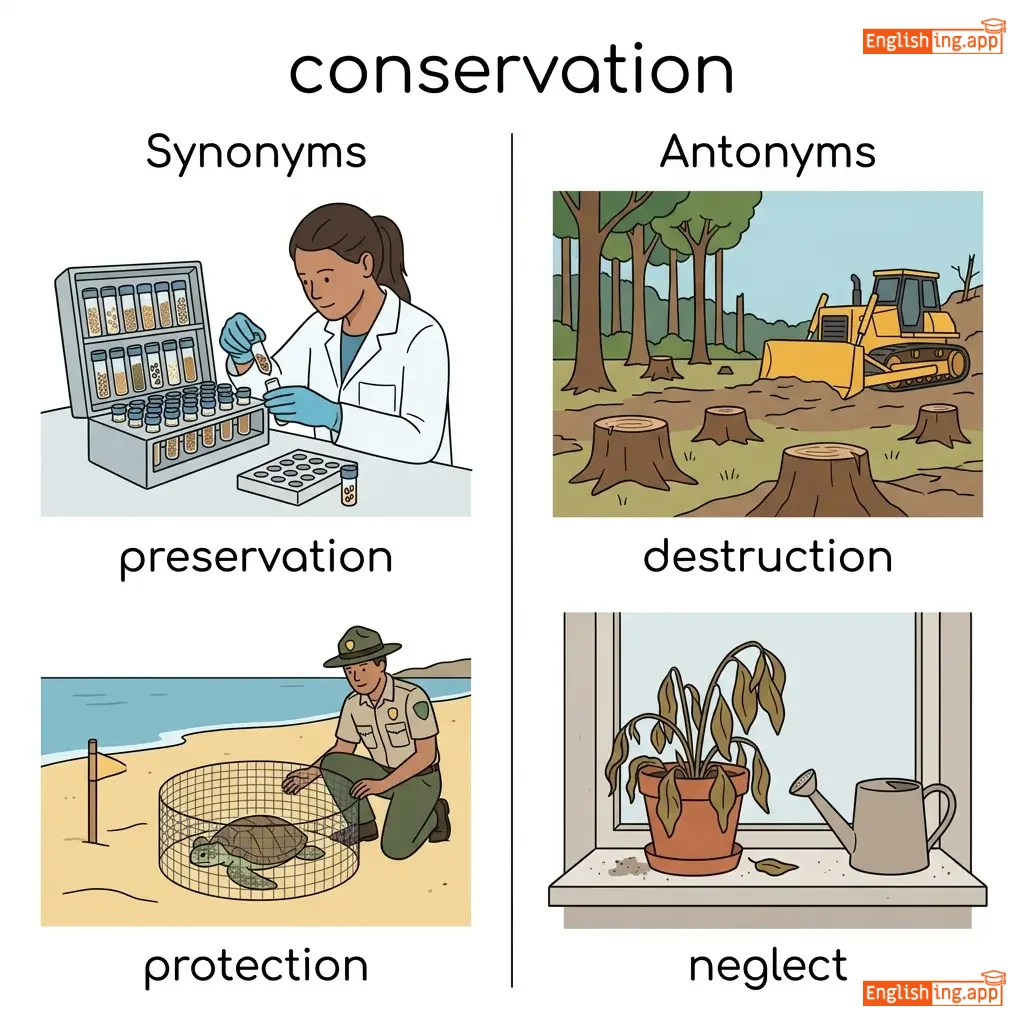
preservation, protection, care, maintenance, safeguarding
••••••
|
destruction, neglect, waste
••••••
|
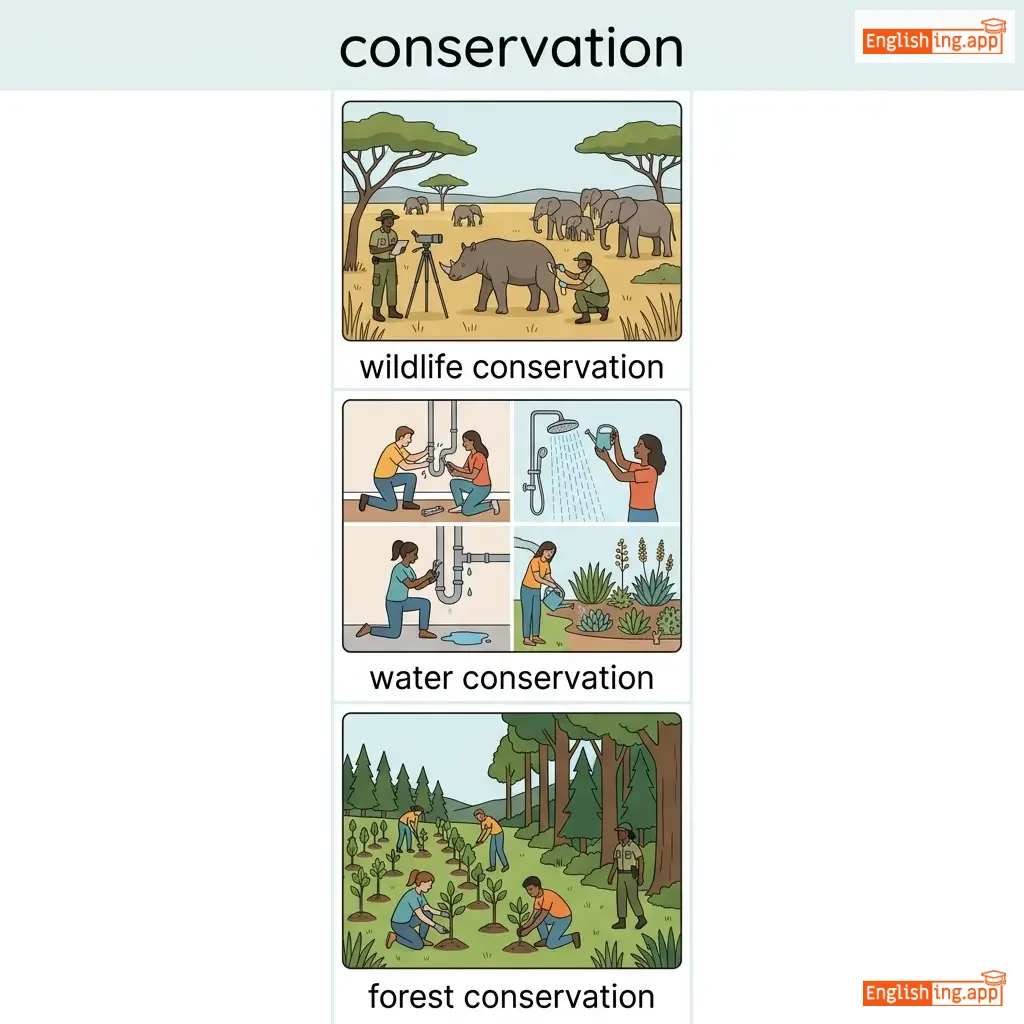
wildlife conservation, water conservation, forest conservation, energy conservation
••••••
|
保护 (baohu) sounds like ‘bamboo hold’ — to conserve nature 🎋
••••••
|
|
#1
➡️
|
/ˈkɒnsɪkwəntli/
adverb
(kōngsīkwéntlì)
••••••
|
- •••••• |
因此
yīncǐ
••••••
|
- •••••• | - •••••• | - •••••• | - •••••• |
as a result; therefore
••••••
|
He didn’t study, and consequently he failed the exam.
他没有学习,因此他没通过考试。
••••••
|
他没有学习,因此他没通过考试。
Tā méiyǒu xuéxí, yīncǐ tā méi tōngguò kǎoshì.
••••••
|
- •••••• | - •••••• | - •••••• |
therefore, thus, hence, accordingly, as a result
••••••
|
nevertheless, however, despite
••••••
|
and consequently, consequently failed, consequently led to, consequently resulted in
••••••
|
Consequently 就是 '因此', 表示因为某个原因所以有的结果。
••••••
|
|
#1
🙏
|
/kənˈfɛʃən/
noun
(忏悔)
••••••
|
- •••••• |
忏悔
chanhui
••••••
|
- •••••• | - •••••• | - •••••• | - •••••• |
a statement admitting that one is guilty of a crime or has done something wrong
••••••
|
The suspect made a full confession to the police. |
嫌疑人向警方做出了完整的忏悔。
Xianyi ren xiang jingfang zuochu le wanzheng de chanhui.
••••••
|
make a confession |
to admit to doing something wrong
••••••
|
做忏悔
zuo chanhui
••••••
|
admission, acknowledgment, declaration, disclosure, revelation
••••••
|
denial, concealment, secrecy
••••••
|
make a confession, public confession, written confession, emotional confession
••••••
|
Confession 就是认错 🙏
••••••
|
|
#1
📄
|
/kənˈsɜːnɪŋ/
preposition
(kənˈsɜːnɪŋ)
••••••
|
- •••••• |
关于
guānyú
••••••
|
- •••••• | - •••••• | - •••••• | - •••••• |
about or relating to something; causing worry or anxiety
••••••
|
There are some reports concerning the new project.
关于新项目有一些报告。
••••••
|
关于新项目有一些报告。
Guānyú xīn xiàngmù yǒu yīxiē bàogào.
••••••
|
- •••••• | - •••••• | - •••••• |
regarding, about, related to, concerning, with respect to
••••••
|
excluding, ignoring, aside from
••••••
|
concerning issue, reports concerning, laws concerning, questions concerning
••••••
|
Concern 意味着担忧,因此 concerning 关联某事。
••••••
|
|
#1
🧩
|
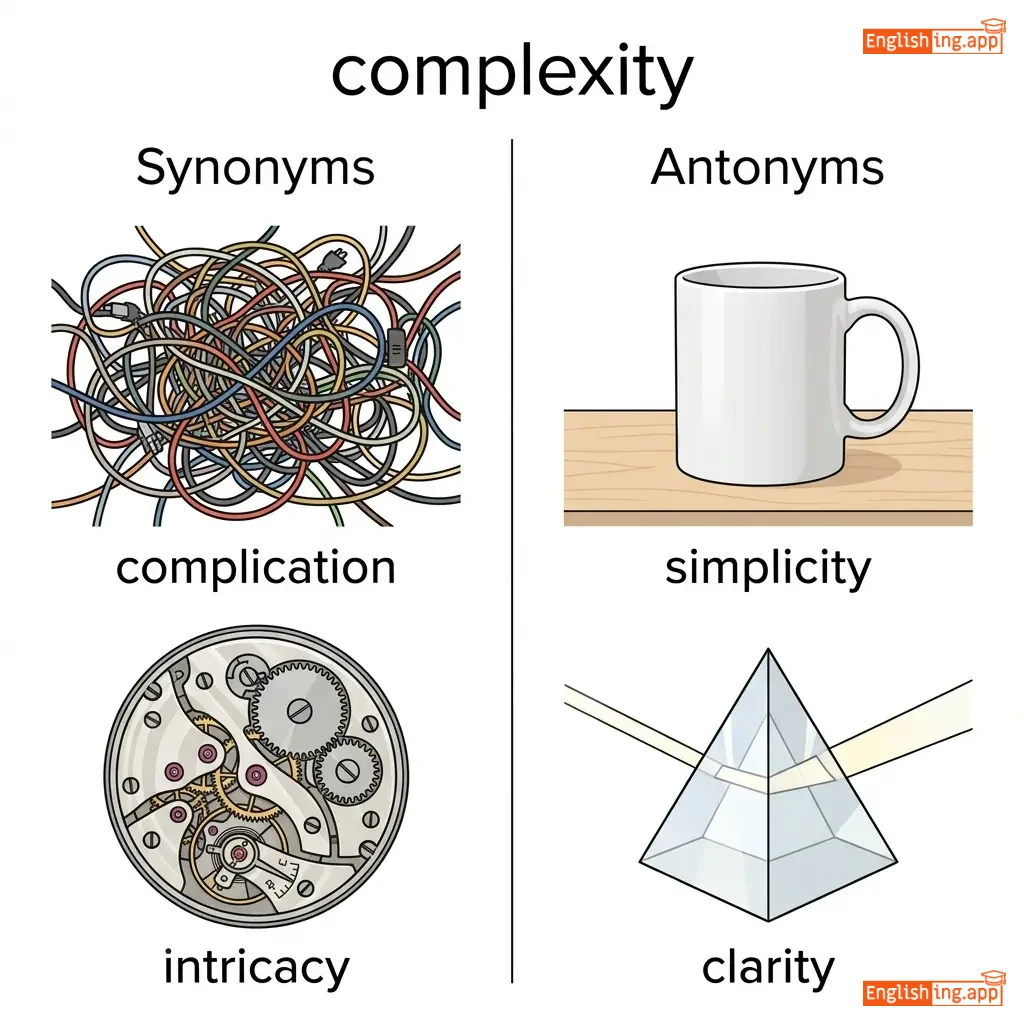
/kəmˈplɛksɪti/
noun
(kəmˈplɛksɪti)
••••••
|
|
复杂性
fuza xing
••••••
|
- •••••• | - •••••• | - •••••• | - •••••• |
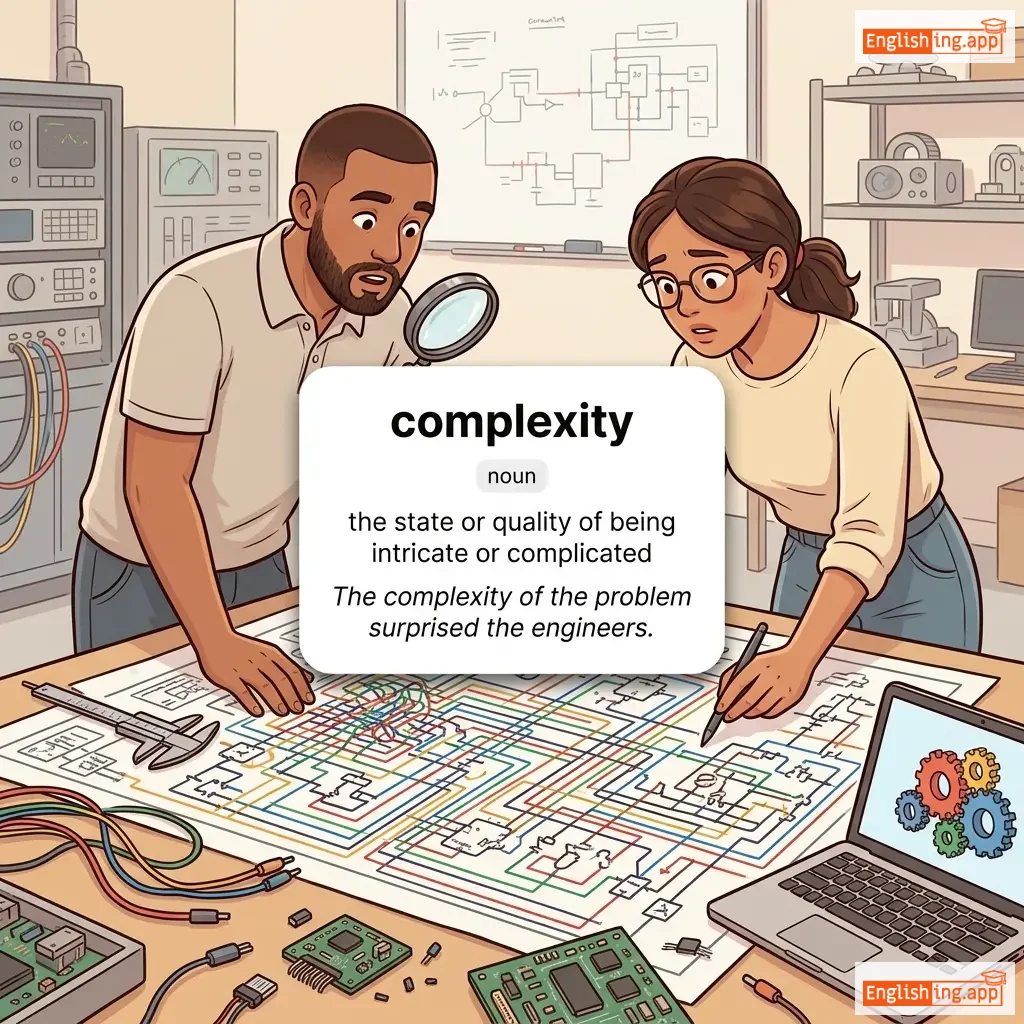
the state or quality of being intricate or complicated
••••••
|
The complexity of the problem surprised the engineers. |
问题的复杂性使工程师感到惊讶。
Wenti de fuza xing shi gongchengshi gandu jingya.
••••••
|
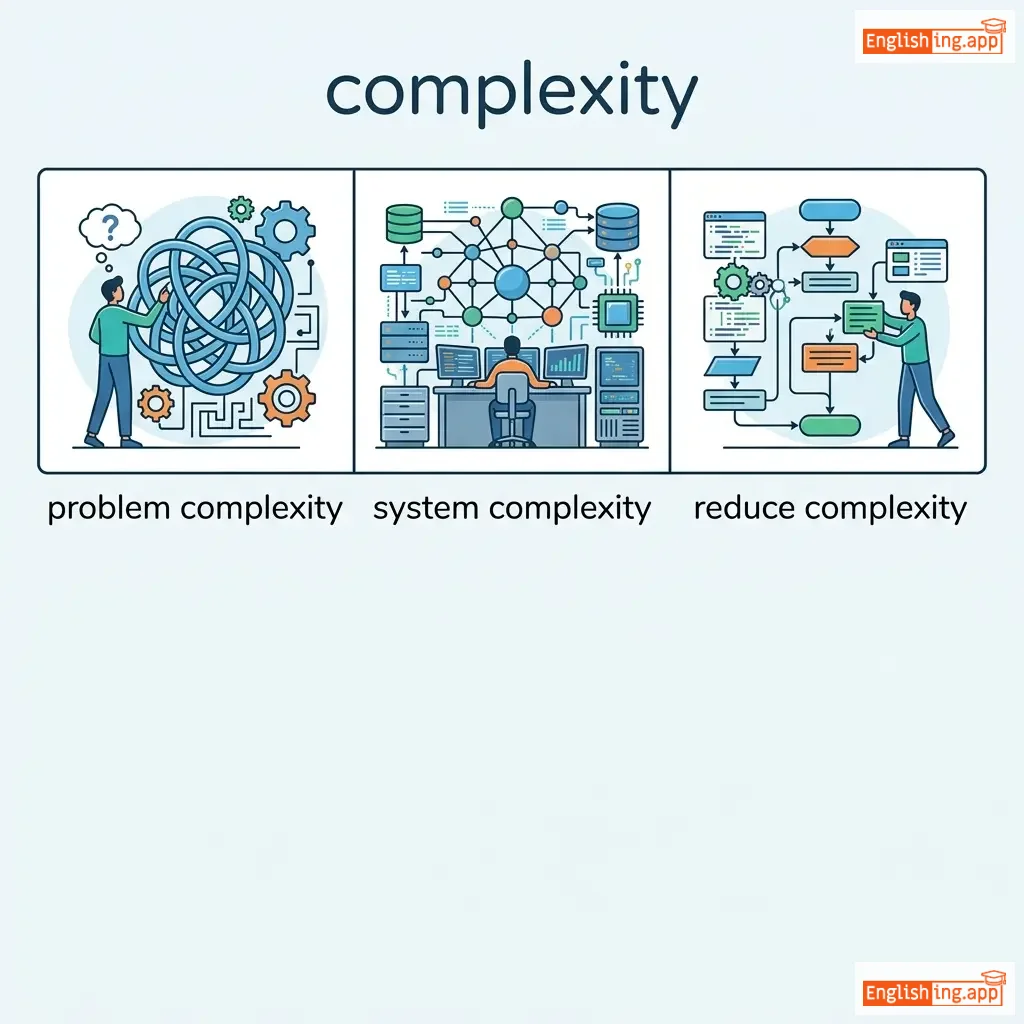
reduce complexity |
to make something simpler or easier to understand
••••••
|
降低复杂性
jiangdi fuza xing
••••••
|
complication, intricacy, difficulty, sophistication, depth
••••••
|
simplicity, clarity, ease
••••••
|
problem complexity, system complexity, reduce complexity, increasing complexity
••••••
|
复杂性代表事情的复杂程度,复杂的事情总是有挑战性的。
••••••
|
|
#1
💰
|
/ˌkɒmpənˈseɪʃən/
noun
(kəmˌpɛnsəˈɪʃən)
••••••
|
- •••••• |
赔偿
peichang
••••••
|
- •••••• | - •••••• | - •••••• | - •••••• |
something, typically money, given to make up for loss, injury, or work done
••••••
|
She received financial compensation for the accident. |
她因事故获得了经济赔偿。
Tā yīn shìgù huòdéle jīngjì péicháng.
••••••
|
seek compensation |
to request payment or restitution for loss or damage
••••••
|
寻求赔偿
xúnqiú péicháng
••••••
|
reimbursement, repayment, indemnity, recompense, restitution
••••••
|
penalty, loss, damage
••••••
|
compensation package, compensation claim, compensation for loss, financial compensation
••••••
|
赔偿 = 赔偿你的损失或伤害!
••••••
|
|
#1
👫
|
/kəmˈpænjən/
noun
(kè péi nián)
••••••
|
- •••••• |
伙伴
huǒ bàn
••••••
|
- •••••• | - •••••• | - •••••• | - •••••• |
a person or animal you spend time with or travel with
••••••
|
He was my companion during the long journey. |
他是我在漫长旅程中的伴侣。
tā shì wǒ zài màn cháng lǚ chéng zhōng de bàn lǚ.
••••••
|
travel companion |
a person who accompanies you on a trip
••••••
|
旅行伙伴
lǚ xíng huǒ bàn
••••••
|
friend, partner, mate, associate, ally
••••••
|
enemy, rival, stranger
••••••
|
close companion, loyal companion, travel companion, lifelong companion
••••••
|
Companion听起来像伙伴 — 伴你旅行的伙伴
••••••
|
|
#1
🗣️
|
/ˈkɒmənli/
adverb
(kómənli)
••••••
|
- •••••• |
通常
tōngcháng
••••••
|
- •••••• | - •••••• | - •••••• | - •••••• |
usually or by most people
••••••
|
This phrase is commonly used in everyday speech. |
这个短语通常在日常语言中使用。
Zhège duǎnyǔ tōngcháng zài rìcháng yǔyán zhōng shǐyòng.
••••••
|
- •••••• | - •••••• | - •••••• |
usually, generally, typically, often, ordinarily
••••••
|
rarely, seldom, unusually
••••••
|
commonly used, commonly known, commonly accepted, commonly found
••••••
|
Common的意思是常见的,所以commonly意味着通常
••••••
|
|
#1
🤗
|
/klɪŋ/
verb
(幸福)
••••••
|
- •••••• |
幸福
xìngfú
••••••
|
clung
••••••
|
clung
••••••
|
clings
••••••
|
clinging
••••••
|
to hold on tightly to someone or something
••••••
|
The child clung to his mother in fear.
她在收到奖项时,无法掩饰自己的幸福。
••••••
|
她在收到奖项时,无法掩饰自己的幸福。
Tā zài shōu dào jiǎngxiàng shí, wúfǎ yǎnshì zìjǐ de xìngfú.
••••••
|
cling to hope
追求幸福
••••••
|
to continue believing that something will happen even when it seems unlikely
••••••
|
追求幸福
zhuīqiú xìngfú
••••••
|
grip, hold, grasp, stick, attach
••••••
|
release, let go, detach
••••••
|
cling to, cling tightly, cling together, cling on
••••••
|
幸福是内心的平和与快乐。
••••••
|
|
#1
📅
|
/ˈkʌmɪŋ/
adjective
(卡明)
••••••
|
- •••••• |
即将来临
jí jiāng lái lín
••••••
|
- •••••• | - •••••• | - •••••• | - •••••• |
approaching or happening soon
••••••
|
We are preparing for the coming festival. |
我们正在为即将来临的节日做准备。
Wǒmen zhèngzài wèi jí jiāng lái lín de jiérì zuò zhǔnbèi.
••••••
|
coming soon |
something that will happen in the near future
••••••
|
即将来临
jí jiāng lái lín
••••••
|
approaching, upcoming, impending, near, imminent
••••••
|
past, gone, finished
••••••
|
coming event, coming year, coming week, coming season
••••••
|
Coming 意味着 '即将来临',比如即将来临的节日
••••••
|
|
#1
🤝
|
/kəmˈbaɪnd/
adjective
(kāmbáind)
••••••
|
- •••••• |
联合的
liánhé de
••••••
|
- •••••• | - •••••• | - •••••• | - •••••• |
formed by bringing together separate parts or elements
••••••
|
The combined effort of the team led to success.
团队的共同努力导致了成功。
••••••
|
团队的共同努力导致了成功。
Tuánduì de gòngtóng nǔlì dǎozhìle chénggōng.
••••••
|
combined forces
联合力量
••••••
|
to work together for a common goal
••••••
|
联合力量
liánhé lìliàng
••••••
|
merged, united, joined, blended, integrated
••••••
|
separate, divided, split
••••••
|
combined effect, combined effort, combined result, combined team
••••••
|
联合意味着组合在一起,就像联合力量一样,帮助我们一起成功。
••••••
|
|
#1
⚔️
|
/ˈkɒmbæt/
verb
(康巴特)
••••••
|
- •••••• |
对抗
duìkàng
••••••
|
combated
康巴特了
••••••
|
combated
康巴特了
••••••
|
combats
康巴特
••••••
|
combating
康巴特中
••••••
|
to fight against something, especially to reduce or stop it
••••••
|
The government is taking steps to combat corruption.
政府正在采取措施来对抗腐败。
••••••
|
政府正在采取措施来对抗腐败。
Zhèngfǔ zhèngzài cǎiqǔ cuòshī lái duìkàng fǔbài.
••••••
|
combat crime
打击犯罪
••••••
|
to fight against criminal activity
••••••
|
打击犯罪
dǎjī fànzuì
••••••
|
fight, battle, oppose, resist, tackle
••••••
|
support, encourage, promote
••••••
|
combat disease, combat terrorism, combat climate change, combat poverty
••••••
|
对抗 = Come + Battle — 来打仗 (come to fight)!
••••••
|
|
#1
🖋️
|
/ˈkɒləmnɪst/
noun
(kāo-lè-míng-sī-tè)
••••••
|
- •••••• |
专栏作家
zhuān lán zuò jiā
••••••
|
- •••••• | - •••••• | - •••••• | - •••••• |
a journalist who regularly writes articles or opinions for a newspaper or magazine
••••••
|
The columnist wrote an article about climate change. |
专栏作家写了一篇关于气候变化的文章。
Zhuān lán zuò jiā xiě le yī piān guān yú qì hòu biàn huà de wén zhāng.
••••••
|
- •••••• | - •••••• | - •••••• |
journalist, writer, commentator, reporter, contributor
••••••
|
reader, audience
••••••
|
newspaper columnist, political columnist, famous columnist, opinion columnist
••••••
|
专栏作家就是写专栏的记者,记住‘专栏’二字,可以联想到写专栏的记者。
••••••
|
|
#1
🌈
|
/ˈkʌlərfəl/
adjective
(kālāfú)
••••••
|
- •••••• |
五彩缤纷
wǔ cǎi bīn fēn
••••••
|
- •••••• | - •••••• | - •••••• | - •••••• |
having bright colors; full of variety or interest
••••••
|
The festival was full of colorful decorations.
这个节日充满了五彩缤纷的装饰。
••••••
|
这个节日充满了五彩缤纷的装饰。
Zhège jiérì chōngmǎnle wǔ cǎi bīn fēn de zhuāngshì.
••••••
|
colorful personality
五彩斑斓的个性
••••••
|
a lively, interesting, and sometimes eccentric person
••••••
|
五彩斑斓的个性
wǔ cǎi bīn fēn de gèxìng
••••••
|
vivid, bright, vibrant, lively, picturesque
••••••
|
colorless, dull, plain
••••••
|
colorful clothes, colorful festival, colorful language, colorful character
••••••
|
Colorful = 彩色 + 满 — 就像一只五彩斑斓的蝴蝶。
••••••
|
|
#1
🏝️
|
/ˈkɒləni/
noun
(kēlúnní)
••••••
|
- •••••• |
殖民地
zhímíndì
••••••
|
- •••••• | - •••••• | - •••••• | - •••••• |
a territory or community controlled by another country or group of people
••••••
|
India was once a British colony. |
印度曾是英国的殖民地。
Yìndù céng shì Yīngguó de zhímíndì.
••••••
|
- •••••• | - •••••• | - •••••• |
territory, settlement, dependency, dominion, outpost
••••••
|
independent state, homeland
••••••
|
British colony, animal colony, colony of ants, colonial rule
••••••
|
Colony 发音像 '殖民地', 由另一个国家控制的地方。
••••••
|
|
#1
👔
|
/ˈkɒlər/
noun
(卡勒)
••••••
|
- •••••• |
领子
lingzi
••••••
|
- •••••• | - •••••• | - •••••• | - •••••• |
the part of a shirt, coat, or dress that goes around the neck
••••••
|
He adjusted his shirt collar before entering the meeting. |
他在进入会议之前调整了他的衬衫领子。
Ta zai jinru huiyi zhiqian tiaozheng le ta de chenshan lingzi.
••••••
|
white-collar worker |
a person who performs professional, managerial, or administrative work
••••••
|
白领工人
bai ling gongren
••••••
|
neckband, neckline, choker, ruff, band
••••••
|
sleeve, cuff
••••••
|
shirt collar, white-collar job, collar bone, pop the collar
••••••
|
领子就是衬衫的脖子部分,记住,它总是围绕脖子!
••••••
|
|
#1
🤝
|
/kəˌlæbəˈreɪʃən/
noun
(kēlābóluòxìn)
••••••
|
|
合作
hezuo
••••••
|
- •••••• | - •••••• | - •••••• | - •••••• |
the action of working together with others to produce or achieve something
••••••
|
The project was a result of close collaboration between two companies. |
该项目是两家公司之间密切合作的结果。
Gāi xiàngmù shì liǎng jiā gōngsī zhī jiān mìqiè hézuò de jiéguǒ.
••••••
|
in collaboration with |
working together with someone or an organization
••••••
|
与...合作
yǔ... hézuò
••••••
|
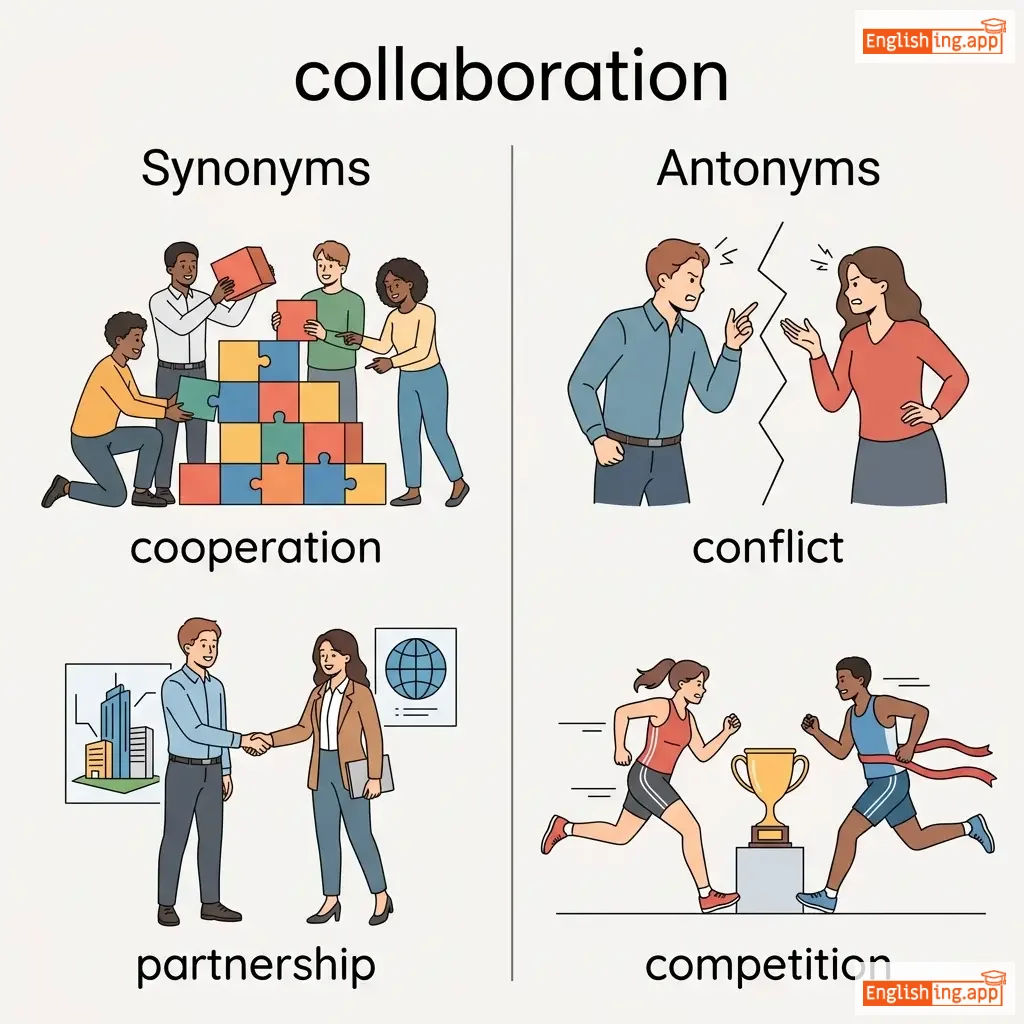
cooperation, partnership, teamwork, alliance, association
••••••
|
conflict, competition
••••••
|
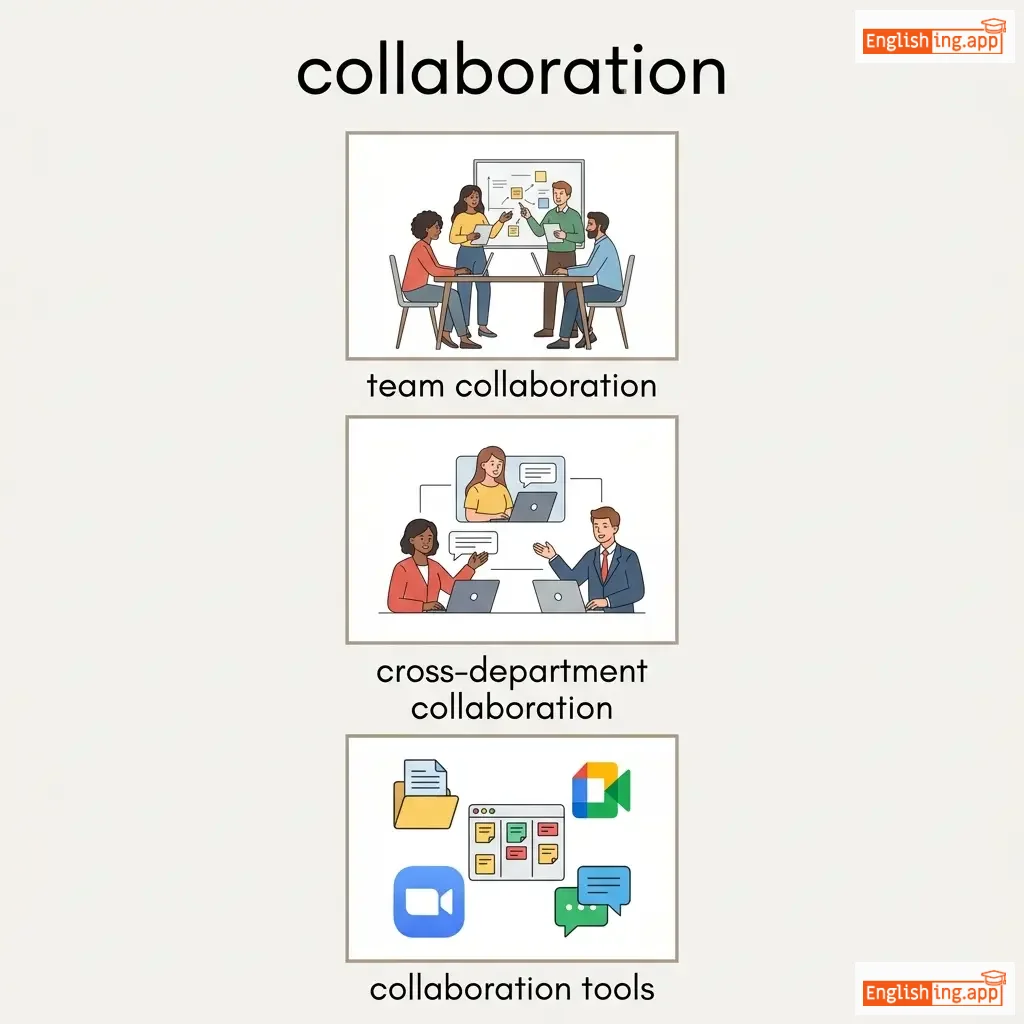
team collaboration, cross-department collaboration, collaboration tools, creative collaboration
••••••
|
Co + labor = 一起工作 → Collaboration 意味着团队合作 🤝
••••••
|
|
#1
💉
|
/kəˈkeɪn/
noun
(可卡因)
••••••
|
- •••••• |
可卡因 (毒品)
kekayin
••••••
|
- •••••• | - •••••• | - •••••• | - •••••• |
a powerful and addictive illegal drug made from coca leaves
••••••
|
He was arrested for possessing cocaine.
他因拥有可卡因而被逮捕。
••••••
|
他因拥有可卡因而被逮捕。
Ta yin yongyou kekayin er bei daibu.
••••••
|
- •••••• | - •••••• | - •••••• |
drug, narcotic, stimulant, substance, powder
••••••
|
medicine, antidote
••••••
|
cocaine addiction, cocaine use, cocaine trafficking, cocaine abuse
••••••
|
Cocaine - 想象它是从古柯叶中提取出来的毒品,但它很危险!
••••••
|
|
#1
🌊
|
/ˈkəʊstəl/
adjective
(kōsītǎo)
••••••
|
- •••••• |
沿海
yánhǎi
••••••
|
- •••••• | - •••••• | - •••••• | - •••••• |
relating to or near a coast or shoreline
••••••
|
They built a resort in a coastal area. |
他们在沿海地区建造了一个度假村。
Tāmen zài yánhǎi dìqū jiànzàole yīgè dùjiàcūn.
••••••
|
- •••••• | - •••••• | - •••••• |
marine, seaside, shore, littoral, oceanfront
••••••
|
inland, interior
••••••
|
coastal area, coastal city, coastal erosion, coastal region
••••••
|
Coastal意味着靠近海岸 — 沿海 🏖️
••••••
|
|
#1
🧵
|
/klɒθ/
noun
(kloth)
••••••
|
- •••••• |
布料
buliào
••••••
|
- •••••• | - •••••• | - •••••• | - •••••• |
fabric or material made by weaving or knitting fibers
••••••
|
The table was covered with a white cloth. |
桌子上覆盖着一块白布。
Zhuōzi shàng fùgài zhe yī kuài báibù.
••••••
|
cut from the same cloth |
having similar qualities or characteristics
••••••
|
出自同一布料
chū zì tóng yī bù liào
••••••
|
fabric, textile, material, drapery, fiber
••••••
|
metal, plastic
••••••
|
piece of cloth, silk cloth, cotton cloth, cleaning cloth
••••••
|
Cloth 代表布料 — 衣服是由布料做成的!
••••••
|
|
#1
🚪
|
/ˈklɒzɪt/
noun
(克洛泽特)
••••••
|
- •••••• |
衣柜
yīguì
••••••
|
- •••••• | - •••••• | - •••••• | - •••••• |
a small room or enclosed space used for storing clothes or other things
••••••
|
She keeps her winter coats in the closet near the door. |
她把冬季外套放在门旁的衣柜里。
tā bǎ dōngjì wàitào fàng zài mén páng de yīguì lǐ.
••••••
|
skeleton in the closet |
a hidden and embarrassing secret from someone's past
••••••
|
衣柜里的骷髅
yīguì lǐ de kūlóu
••••••
|
wardrobe, cupboard, locker, storage, cabinet
••••••
|
open space, exposure
••••••
|
walk-in closet, linen closet, broom closet, closet door
••••••
|
衣柜就像一个秘密存储衣物的地方,像藏匿秘密的地方!
••••••
|
|
#1
❤️
|
/ˈkloʊ.sɪst/
adjective
(kè-luò-sī-sī-tè)
••••••
|
- •••••• |
最近的
zuì jìn de
••••••
|
- •••••• | - •••••• | - •••••• | - •••••• |
nearest in distance or relationship
••••••
|
He is my closest friend. |
他是我最亲密的朋友。
Tā shì wǒ zuì qīnmì de péngyǒu.
••••••
|
close call |
a narrow escape from danger or disaster
••••••
|
紧急时刻
jǐn jí shí kè
••••••
|
nearest, dearest, intimate, best, adjoining
••••••
|
farthest, distant
••••••
|
closest friend, closest relative, closest match, closest point
••••••
|
Closest意味着最接近的 – 想象你的closest friend总是在你身边。
••••••
|
|
#1
🚪
|
/kloʊzd/
adjective
(克洛兹德)
••••••
|
- •••••• |
关闭
guanbi
••••••
|
- •••••• | - •••••• | - •••••• | - •••••• |
not open; shut
••••••
|
The store is closed on Fridays. |
商店星期五关闭。
Shangdian xingqi wu guanbi.
••••••
|
closed book |
a person or subject about which one knows very little
••••••
|
关闭的书
guanbi de shu
••••••
|
shut, sealed, locked, barred
••••••
|
open, unlocked
••••••
|
closed door, closed eyes, closed mind, closed system
••••••
|
Closed意味着关闭 – 记住,CLOSED door意味着‘No entry’。
••••••
|
Vocabulary Quiz
Test your vocabulary by matching words with their translations or meanings.
Login to take the quiz
Comments (0)
Share your thoughts and join the discussion.
Join the discussion by logging in
Login to CommentNo comments yet
Be the first to share your thoughts!