

Swipe left or right, or use the buttons. Tap image to zoom.
例句翻译
单词
Lesson 142Lesson 142 - 遮罩切换
|
表情符号
|
单词 | Images | 翻译 | 过去时 | 过去分词 | 第三人称单数 | 动名词 | 含义 | 例句 | 例句翻译 | 示例表达 | 示例表达含义 | 示例表达翻译 | 同义词 | 反义词 | 搭配词 | 助记符 |
|---|---|---|---|---|---|---|---|---|---|---|---|---|---|---|---|---|---|
|
#4231
💭
|
/ˌhaɪpəˈθetɪkl/
adjective
(海皮尼斯)
••••••
|
|
假设的
jiǎshè de
••••••
|
- •••••• | - •••••• | - •••••• | - •••••• |
based on or serving as a hypothesis; imagined or supposed for the sake of discussion.
••••••
|
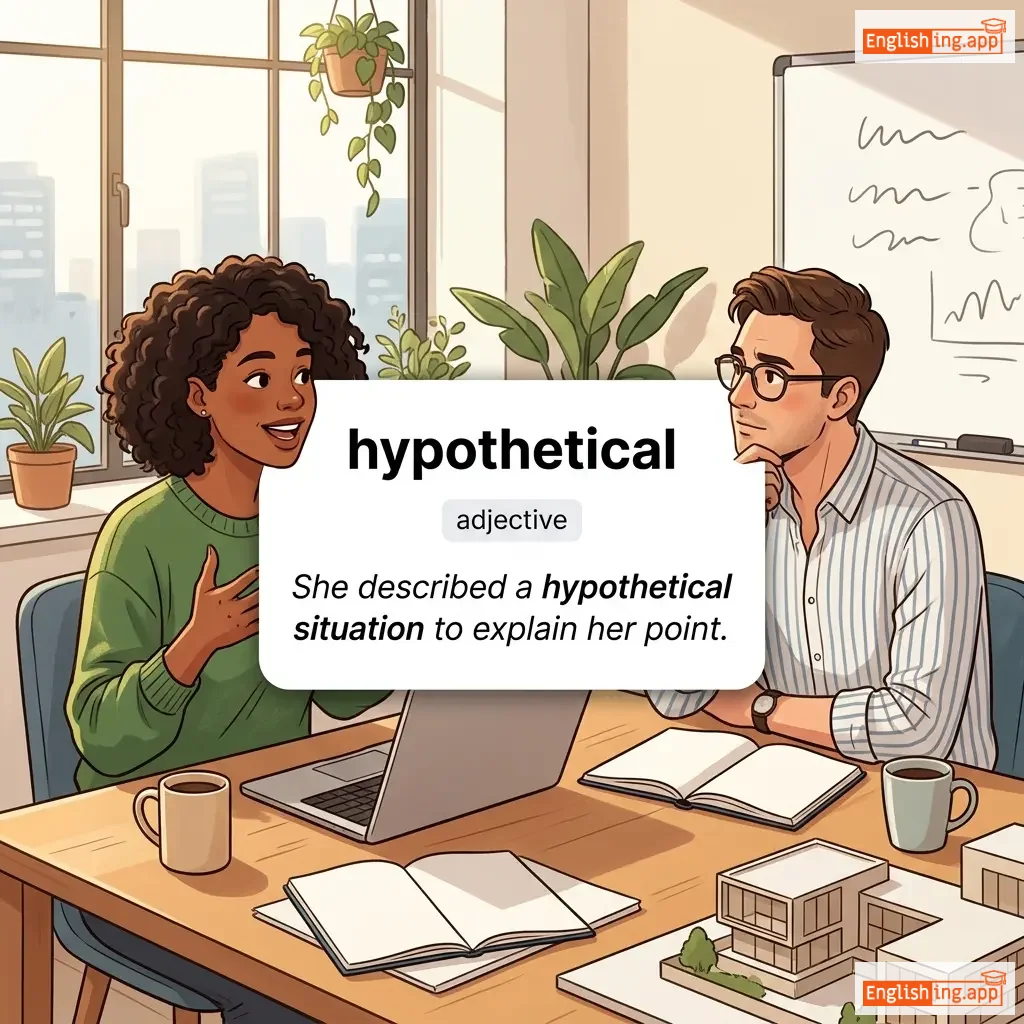
She described a hypothetical situation to explain her point. |
她描述了一个假设的情境来解释她的观点。
Tā miáoshùle yīgè jiǎshè de qíngjìng lái jiěshì tā de guāndiǎn.
••••••
|
hypothetical scenario |
an imagined situation used to illustrate or test an idea
••••••
|
假设情景
jiǎshè qíngjǐng
••••••
|
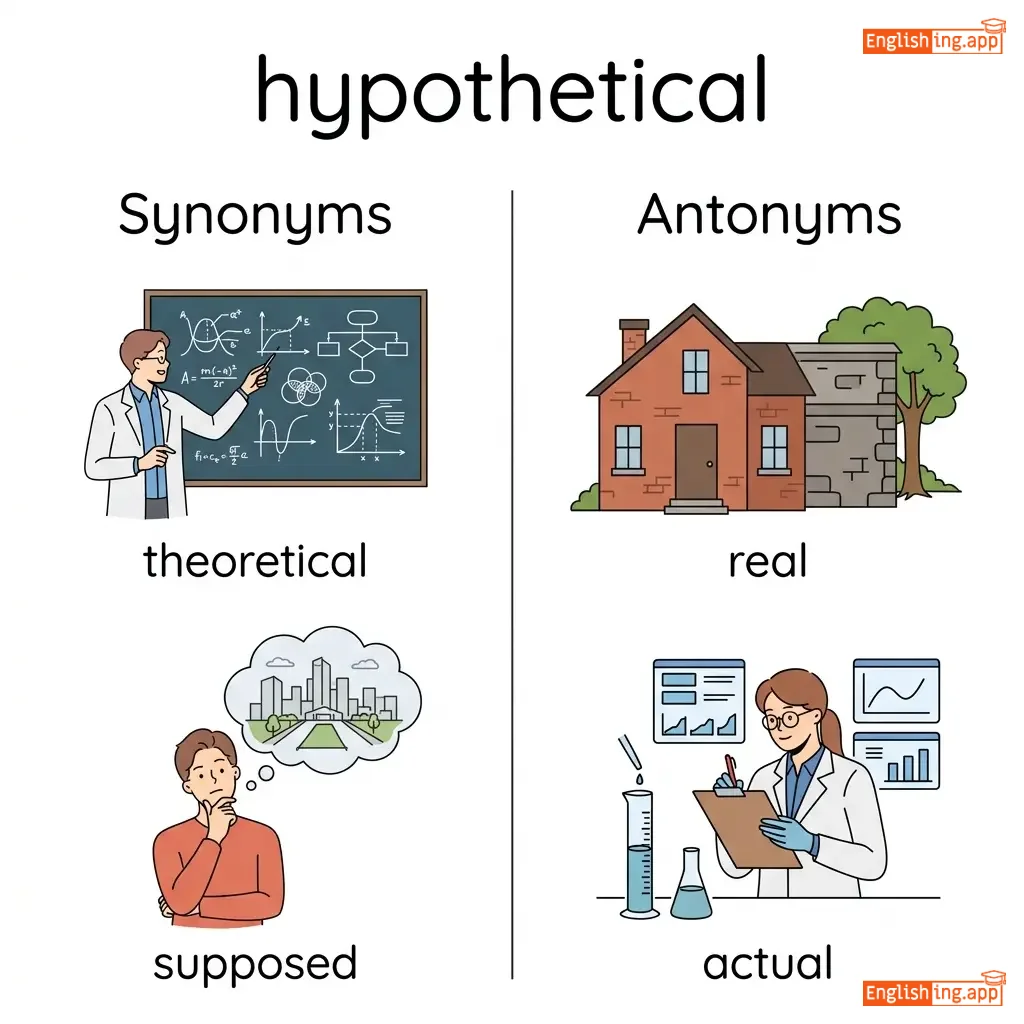
theoretical, supposed, speculative, imaginary, conjectural
••••••
|
real, actual, factual
••••••
|
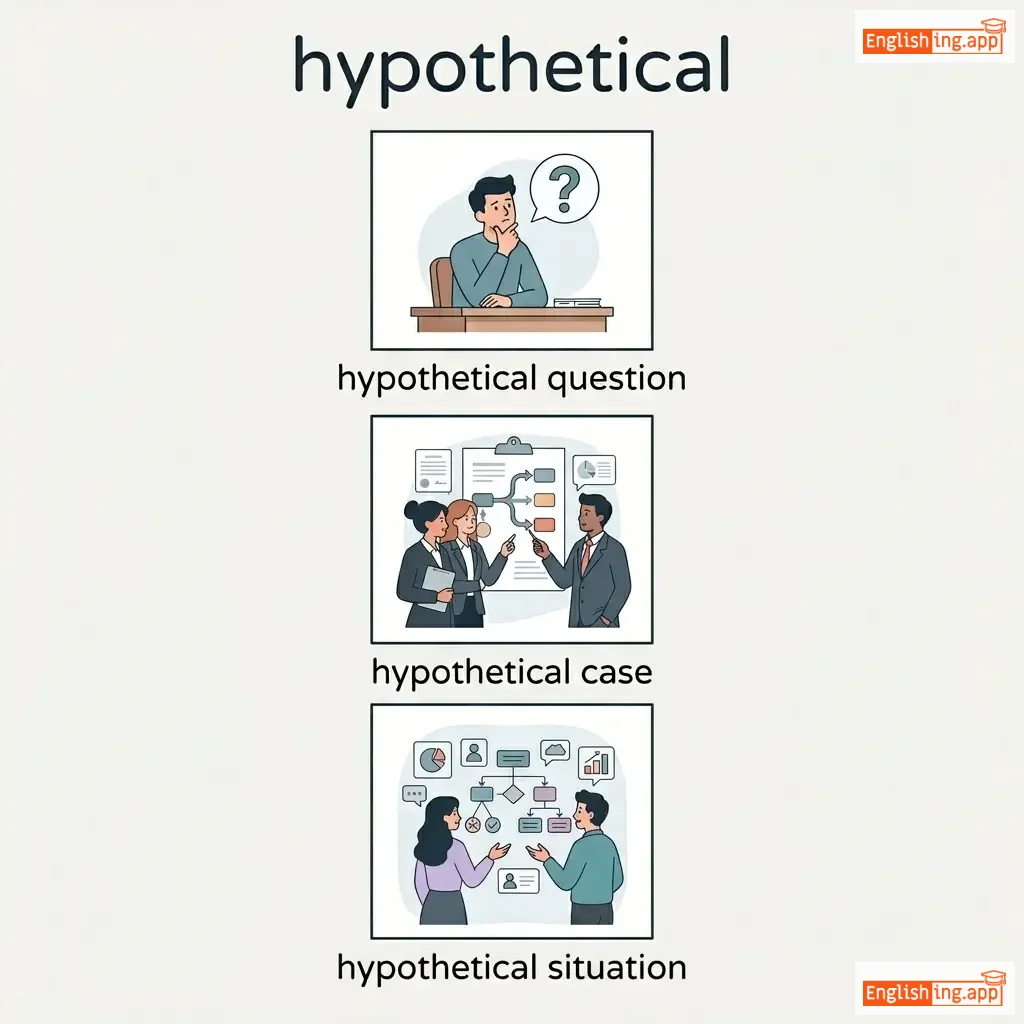
hypothetical question, hypothetical case, hypothetical situation
••••••
|
假设的 -> 来自假设 -> 用于假想的情境
••••••
|
|
#4232
🧠
|
/ˌaɪ.diˈɒl.ə.dʒi/
noun
(ai-di-yu-luo-ji)
••••••
|
- •••••• |
意识形态
yishi xingtai
••••••
|
- •••••• | - •••••• | - •••••• | - •••••• |
A system of ideas and ideals, especially one that forms the basis of economic or political theory and policy.
••••••
|
Democracy is based on the ideology of freedom and equality. |
民主基于自由和平等的意识形态。
Minzhu jiyu ziyou he pingdeng de yishi xingtai.
••••••
|
- •••••• | - •••••• | - •••••• |
belief system, philosophy, doctrine, principles
••••••
|
practicality, reality
••••••
|
political ideology, religious ideology, dominant ideology
••••••
|
意识形态 = 思想 + 逻辑 – 一种思想体系
••••••
|
|
#4233
📚
|
/ˌaɪ.di.əˈlɒdʒ.ɪ.kəl/
adjective
(aɪ.dɪˈɒl.ədʒɪ.kəl)
••••••
|
- •••••• |
意识形态的
yìshí xíngtài de
••••••
|
- •••••• | - •••••• | - •••••• | - •••••• |
Relating to or based on a system of ideas or beliefs.
••••••
|
The two parties are divided by deep ideological differences. |
这两个党派由于深刻的意识形态分歧而分裂。
Zhè liǎng gè dǎngpài yóuyú shēnkè de yìshí xíngtài fēnqí ér fēnliè.
••••••
|
- •••••• | - •••••• | - •••••• |
philosophical, doctrinal, theoretical, political
••••••
|
practical, realistic
••••••
|
ideological debate, ideological conflict, ideological differences
••••••
|
Ideology 到 意识形态 – 关联思想和信仰
••••••
|
|
#4234
✨
|
/aɪˈdiː.ə.laɪz/
verb
(爱迪尔赖兹)
••••••
|
- •••••• |
理想化
lǐxiǎng huà
••••••
|
idealized
爱迪尔赖兹德
••••••
|
idealized
爱迪尔赖兹德
••••••
|
idealizes
爱迪尔赖兹斯
••••••
|
idealizing
爱迪尔赖兹英
••••••
|
To regard or represent something as perfect or better than it really is.
••••••
|
Children often idealize their parents.
孩子们常常理想化他们的父母。
••••••
|
孩子们常常理想化他们的父母。
Háizimen chángcháng lǐxiǎng huà tāmen de fùmǔ.
••••••
|
- •••••• | - •••••• | - •••••• |
romanticize, glorify, exalt, overestimate
••••••
|
criticize, devalue, belittle
••••••
|
idealize childhood, idealize relationships, idealize leaders
••••••
|
理想化就像‘idealize’,意思是让事物变得完美。
••••••
|
|
#4235
⚡
|
/ˌaɪ.kə.nəˈklæs.tɪk/
adjective
(aɪˌkɒnəˈklæstɪk)
••••••
|
|
特指攻击或拒绝已建立的信仰、传统或价值观
tè zhǐ gōng jī huò jù jué yǐ jiàn lì de xìn yǎng, chuán tǒng huò jià zhí guān
••••••
|
- •••••• | - •••••• | - •••••• | - •••••• |
Characterized by attacking or rejecting cherished beliefs, traditions, or established values.
••••••
|
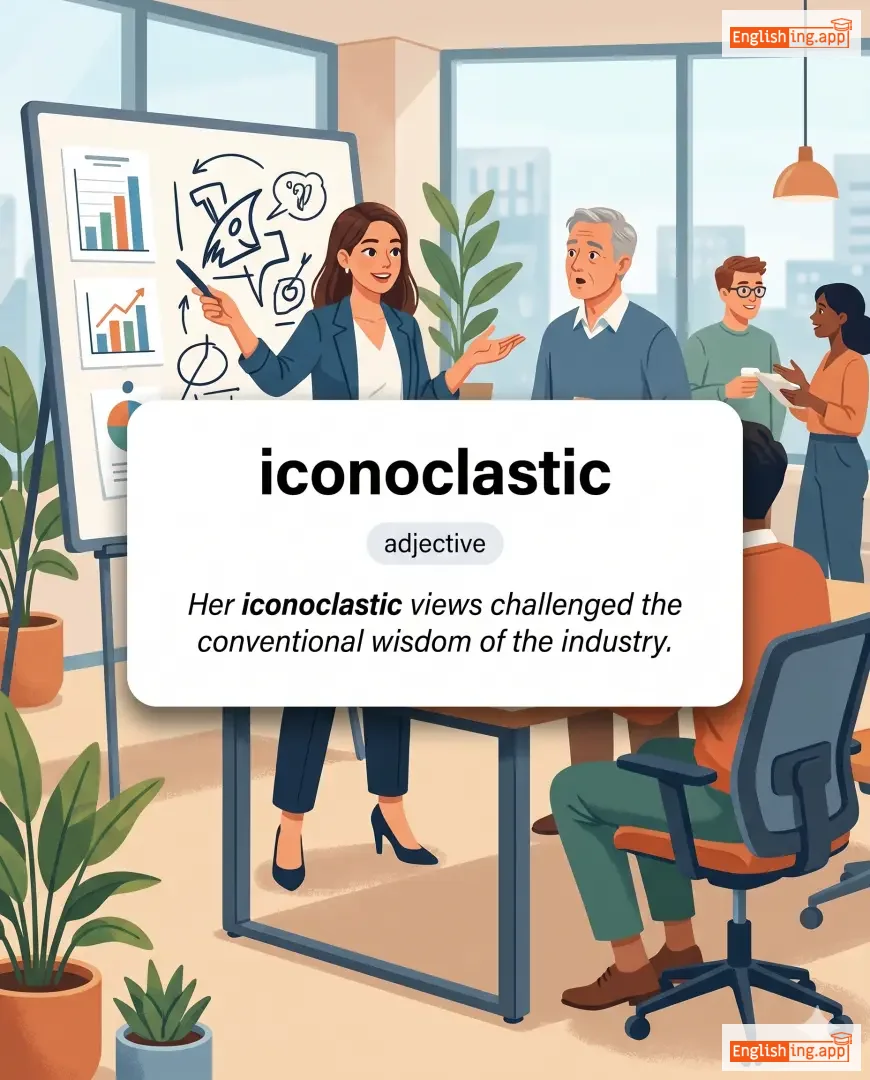
Her iconoclastic views challenged the conventional wisdom of the industry.
她的偶像破坏主义观点挑战了行业的传统智慧。
••••••
|
她的偶像破坏主义观点挑战了行业的传统智慧。
tā de ǒu xiàng pò huài zhǔ yì guān diǎn tiǎo zhàn le háng yè de chuán tǒng zhì huì.
••••••
|
- •••••• | - •••••• | - •••••• |
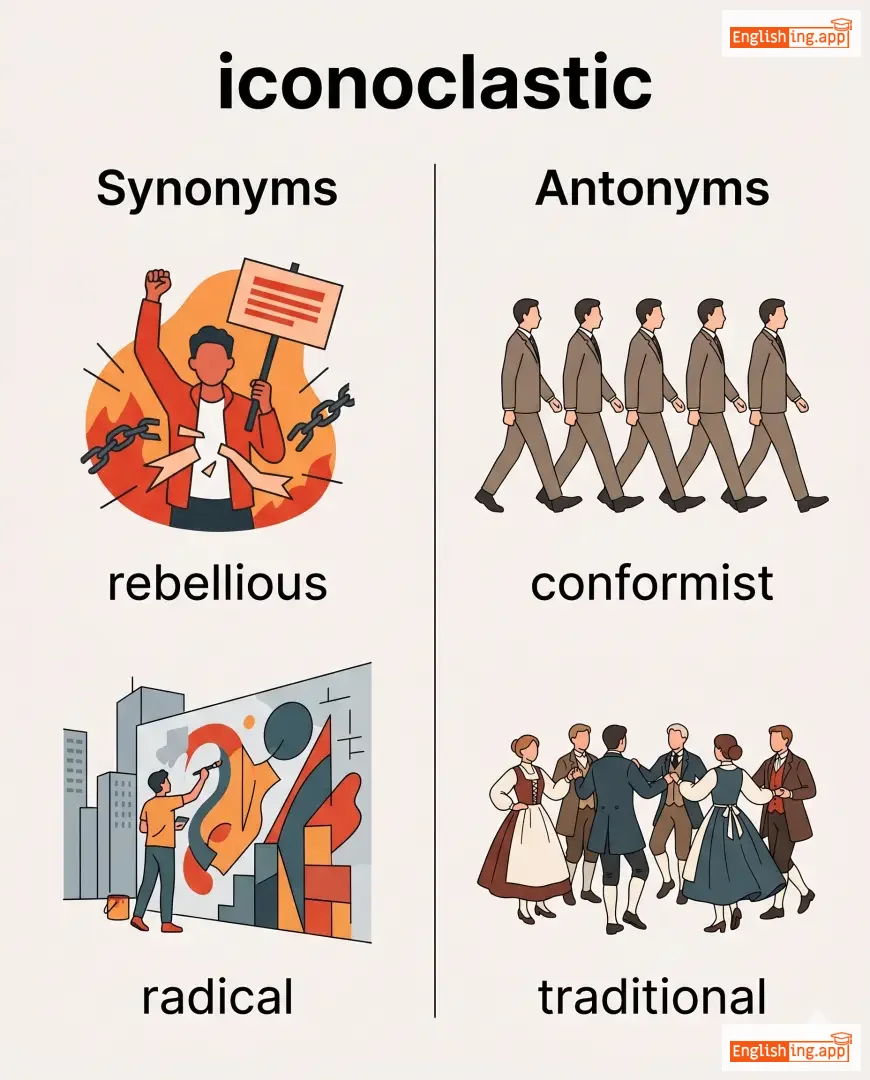
rebellious, radical, unorthodox, revolutionary, unconventional
••••••
|
conformist, traditional, conservative
••••••
|
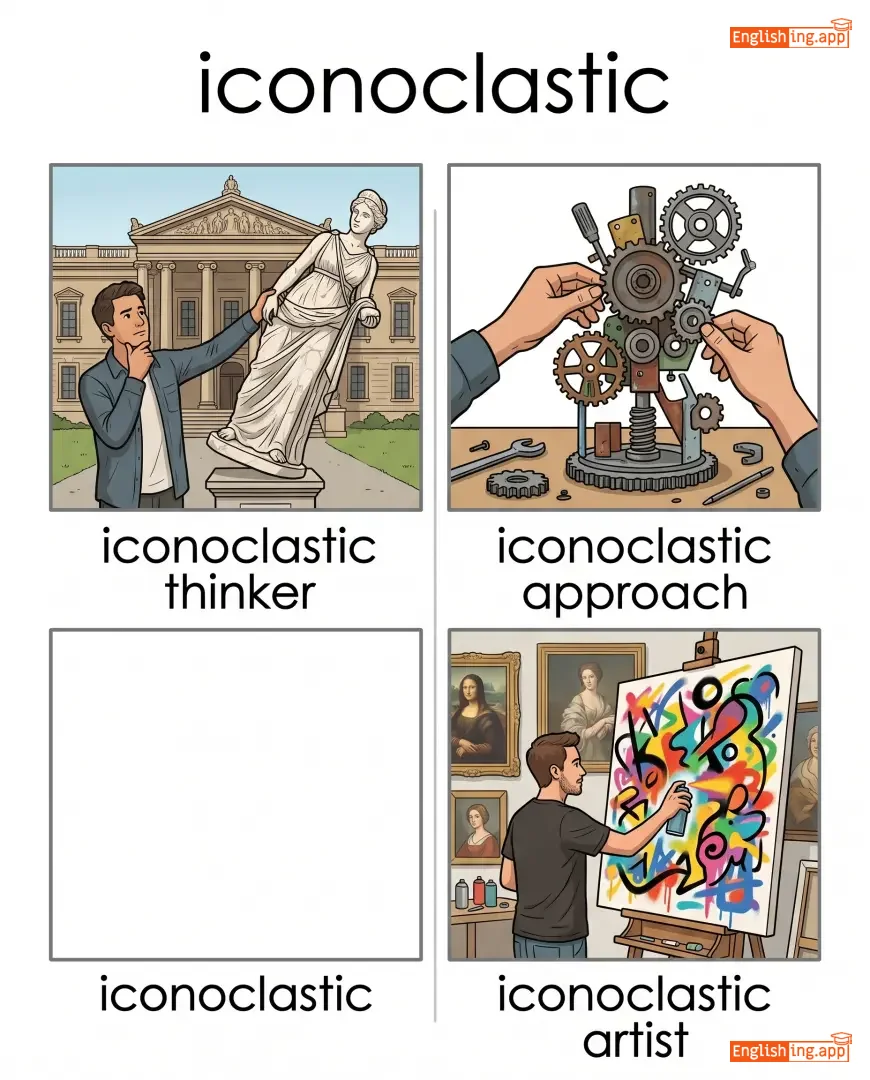
iconoclastic thinker, iconoclastic approach, iconoclastic artist
••••••
|
偶像破坏主义=摧毁传统信仰
••••••
|
|
#4236
⚡
|
/aɪˈkɒnəklæst/
noun
(aɪˈkɒnəklæst)
••••••
|
- •••••• |
破坏偶像者
pòhuài ǒuxiàng zhě
••••••
|
- •••••• | - •••••• | - •••••• | - •••••• |
A person who attacks or criticizes cherished beliefs, traditions, or institutions.
••••••
|
He was known as an iconoclast who challenged old traditions. |
他被认为是一个破坏偶像者,挑战旧传统。
Tā bèi rènwéi shì yīgè pòhuài ǒuxiàng zhě, tiǎozhàn jiù chuántǒng.
••••••
|
- •••••• | - •••••• | - •••••• |
rebel, critic, nonconformist, dissenter, radical
••••••
|
traditionalist, conformist
••••••
|
political iconoclast, social iconoclast, cultural iconoclast, famous iconoclast
••••••
|
偶像 + 破坏者 → 破坏偶像者意味着打破传统,挑战旧习俗。
••••••
|
|
#4237
⭐
|
/ˈaɪkɒn/
noun
(àikēn)
••••••
|
- •••••• |
图标, 象征
túbiāo, xiàngzhēng
••••••
|
- •••••• | - •••••• | - •••••• | - •••••• |
A person or thing regarded as a symbol of something, or a graphic symbol on a screen.
••••••
|
The singer became a cultural icon. |
这位歌手成为了文化图标。
Zhè wèi gēshǒu chéngwéile wénhuà túbiāo.
••••••
|
pop icon |
A famous person admired widely in popular culture.
••••••
|
流行图标
liúxíng túbiāo
••••••
|
symbol, idol, emblem, figure, legend
••••••
|
unknown, ordinary
••••••
|
cultural icon, fashion icon, national icon, religious icon
••••••
|
图标象征着符号 → 屏幕上的小符号或大明星。
••••••
|
|
#4238
🥶
|
/ˈaɪsinəs/
noun
(āi xīn è sī)
••••••
|
- •••••• |
冰冷
bīng lěng
••••••
|
- •••••• | - •••••• | - •••••• | - •••••• |
The state of being cold in manner or temperature.
••••••
|
There was a distinct iciness in his voice. |
他的声音中有一种明显的冰冷感。
Tā de shēngyīn zhōng yǒu yī zhǒng míngxiǎn de bīng lěng gǎn.
••••••
|
- •••••• | - •••••• | - •••••• |
coldness, chill, frigidity, frostiness
••••••
|
warmth, friendliness
••••••
|
emotional iciness, winter iciness, sudden iciness, voice iciness
••••••
|
Ice + ness = Iciness → 就像冰的寒冷。
••••••
|
|
#4239
❄️
|
/ˈaɪsɪli/
adverb
(āisīlì)
••••••
|
- •••••• |
冷漠地
lěngmò de
••••••
|
- •••••• | - •••••• | - •••••• | - •••••• |
In a very cold, unfriendly, or hostile manner.
••••••
|
She replied icily to his question. |
她冷漠地回答了他的问题。
Tā lěngmò de huídále tā de wèntí.
••••••
|
- •••••• | - •••••• | - •••••• |
coldly, frostily, unfriendly, harshly
••••••
|
warmly, kindly, friendly
••••••
|
speak icily, reply icily, look icily, behave icily
••••••
|
Ice + ly → 冷漠地,像冰一样冷淡。
••••••
|
|
#4240
🦕
|
/ˈɪkθiəˌsɔːrz/
noun
(伊克西欧萨尔斯)
••••••
|
- •••••• |
鱼龙(已灭绝的海洋爬行动物)
yulong
••••••
|
- •••••• | - •••••• | - •••••• | - •••••• |
Extinct marine reptiles that resembled fish and dolphins, dominant during the Mesozoic era.
••••••
|
Ichthyosaurs were swift predators of the ancient seas. |
鱼龙是古代海洋的迅猛掠食者。
Yulong shi gudai haiyang de xunmeng lueshizhe.
••••••
|
- •••••• | - •••••• | - •••••• |
marine reptiles, sea reptiles, prehistoric reptiles, aquatic reptiles
••••••
|
dinosaurs, mammals
••••••
|
fossil ichthyosaurs, ancient ichthyosaurs, giant ichthyosaurs, extinct ichthyosaurs
••••••
|
鱼龙 - 就像海洋中的恐龙一样,快速且致命。
••••••
|
|
#4241
📘🐟
|
/ˌɪkθiˈɒlədʒi/
noun
(伊克西欧罗基)
••••••
|
- •••••• |
鱼类学
yú lèi xué
••••••
|
- •••••• | - •••••• | - •••••• | - •••••• |
The branch of zoology that deals with fish.
••••••
|
He pursued a degree in ichthyology at the university. |
他在大学获得了鱼类学学位。
Tā zài dàxué huòdéle yúlèi xué xuéwèi.
••••••
|
- •••••• | - •••••• | - •••••• |
fish science, marine biology, zoology
••••••
|
n/a
••••••
|
ichthyology course, ichthyology research, ichthyology department
••••••
|
Ichthyology = 研究鱼类的科学
••••••
|
|
#4242
🔬🐠
|
/ˌɪkθiˈɒlədʒɪst/
noun
(yīkèyúxuéjiā)
••••••
|
- •••••• |
鱼类学家
yuleixuejia
••••••
|
- •••••• | - •••••• | - •••••• | - •••••• |
A scientist who studies fish.
••••••
|
The ichthyologist discovered a new species of fish in the river. |
鱼类学家在河里发现了一种新的鱼类。
Yuleixuejia zai heli faxianle yizhong xinde yulei.
••••••
|
- •••••• | - •••••• | - •••••• |
fish scientist, marine biologist, zoologist
••••••
|
layperson, amateur
••••••
|
professional ichthyologist, marine ichthyologist, ichthyologist studies
••••••
|
Ichthyologist = YU (鱼) 类学家
••••••
|
|
#4243
🐟
|
/ˈɪkθiɪk/
adjective
(ɪkθiˈik)
••••••
|
- •••••• |
鱼类的
yú lèi de
••••••
|
- •••••• | - •••••• | - •••••• | - •••••• |
Relating to or resembling fish.
••••••
|
The artist's painting had an ichthyic quality.
艺术家的画作具有鱼类的特质。
••••••
|
艺术家的画作具有鱼类的特质。
Yìshùjiā de huàzuò jùyǒu yúlèi de tèzhì.
••••••
|
- •••••• | - •••••• | - •••••• |
fishlike, aquatic, marine
••••••
|
terrestrial, land-based
••••••
|
ichthyic features, ichthyic form, ichthyic shape
••••••
|
Ichthyic = 鱼 (鱼类) 类似于鱼
••••••
|
|
#4244
😂
|
/hɪˈstɛrɪkəl/
adjective
(希斯特里卡尔)
••••••
|
- •••••• |
极其搞笑或情绪失控
jíqí gǎoxiào huò qíngxù shīkòng
••••••
|
- •••••• | - •••••• | - •••••• | - •••••• |
Extremely funny or uncontrollably emotional.
••••••
|
The comedian's jokes were absolutely hysterical. |
这位喜剧演员的笑话简直太搞笑了。
Zhè wèi xǐjù yǎnyuán de xiàohuà jiǎnzhí tài gǎoxiào le.
••••••
|
- •••••• | - •••••• | - •••••• |
funny, hilarious, frantic, emotional
••••••
|
serious, calm, solemn
••••••
|
hysterical laughter, hysterical reaction, absolutely hysterical
••••••
|
Hysterical 就是笑得控制不住,笑到无法停止!
••••••
|
|
#4245
😱
|
/hɪˈstɪəriə/
noun
••••••
|
- •••••• | - •••••• | - •••••• | - •••••• | - •••••• | - •••••• |
An uncontrollable outburst of emotion or fear, often characterized by irrational behavior.
••••••
|
The crowd was in a state of hysteria during the concert. |
- •••••• |
mass hysteria |
A phenomenon where a group of people exhibit similar hysterical symptoms.
••••••
|
- •••••• |
frenzy, panic, mania, delirium, agitation
••••••
|
calm, composure, tranquility
••••••
|
mass hysteria, cause hysteria, public hysteria, hysteria spreads
••••••
|
No •••••• |
|
#4246
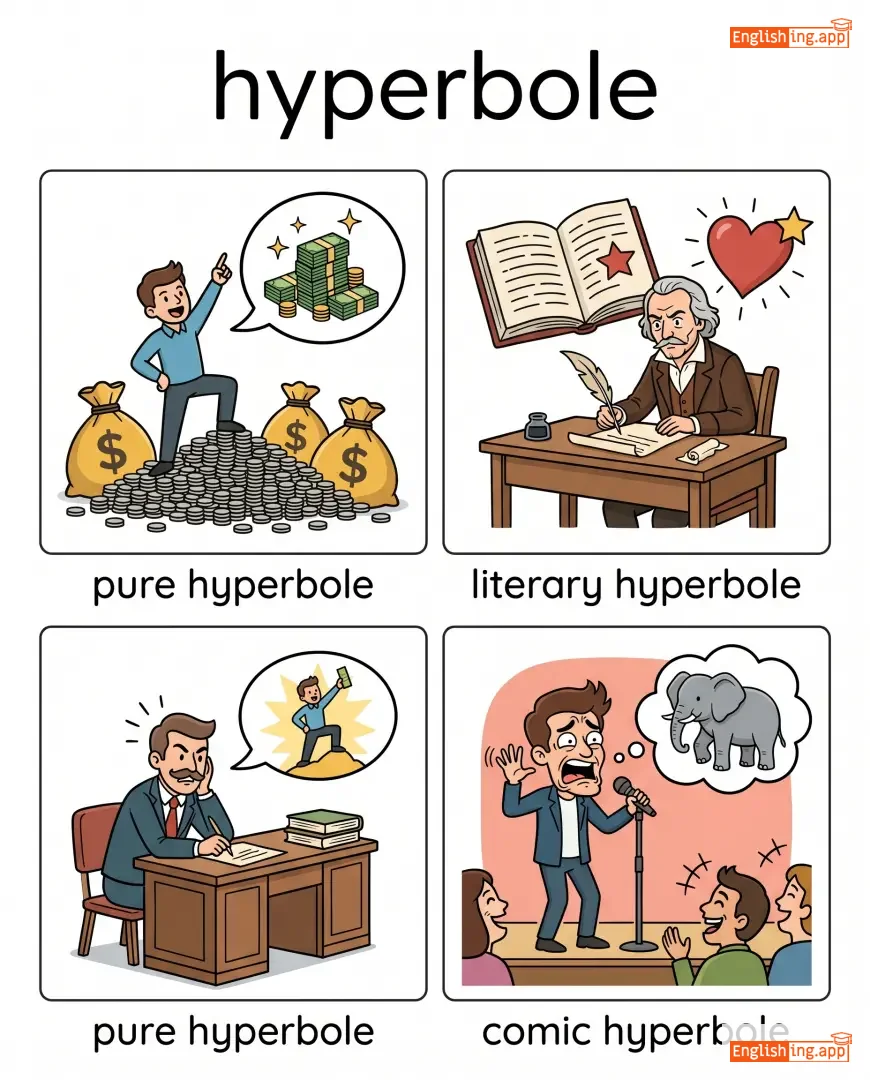
📢
|
/haɪˈpɜːrbəli/
noun
••••••
|
|
- •••••• | - •••••• | - •••••• | - •••••• | - •••••• |
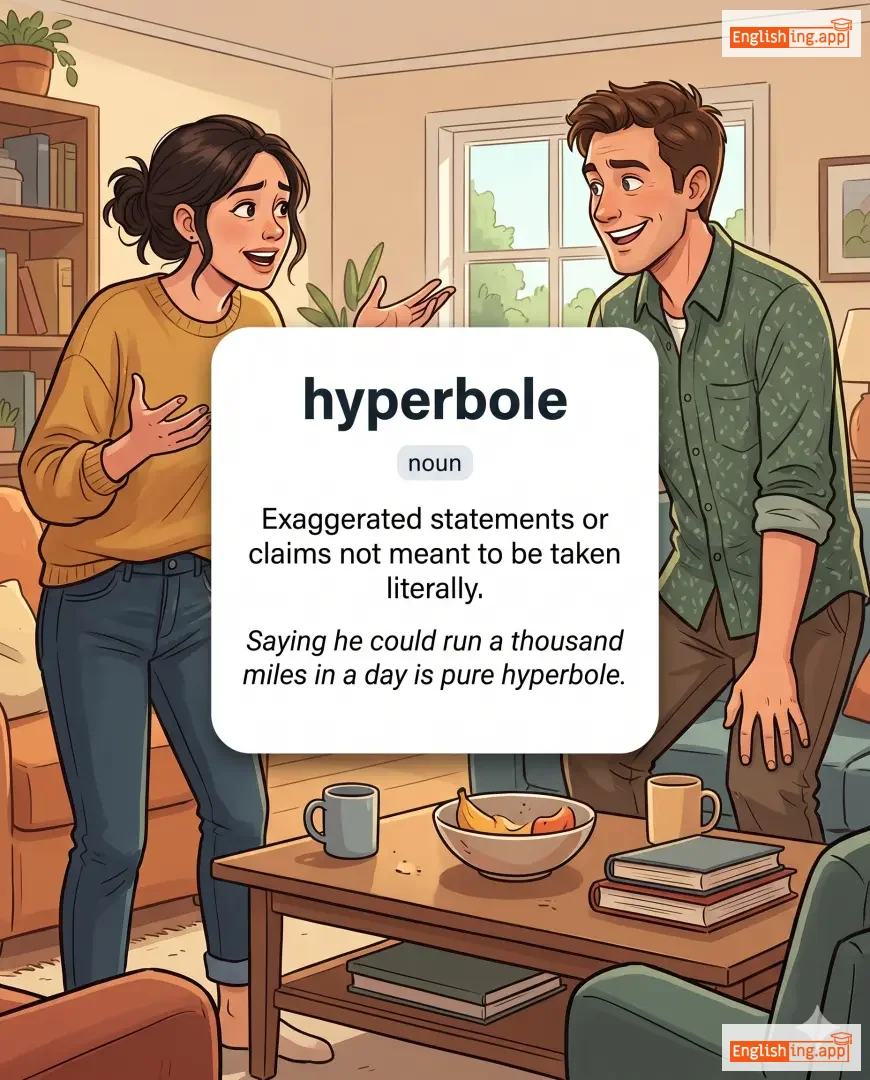
Exaggerated statements or claims not meant to be taken literally.
••••••
|
Saying he could run a thousand miles in a day is pure hyperbole. |
- •••••• |
it's not hyperbole |
An exaggerated claim that is actually true or close to reality
••••••
|
- •••••• |
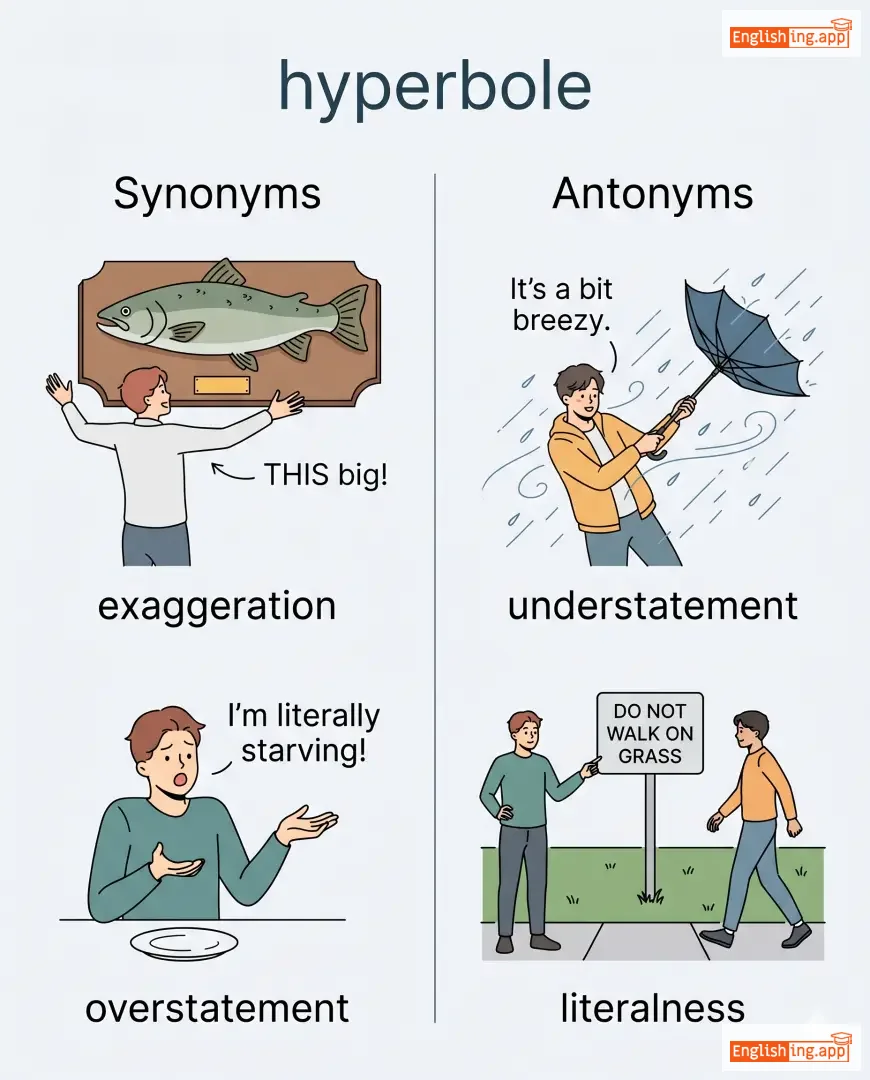
exaggeration, overstatement, amplification, embellishment
••••••
|
understatement, literalness
••••••
|
pure hyperbole, literary hyperbole, comic hyperbole, use of hyperbole
••••••
|
No •••••• |
|
#4247
🔬
|
/haɪˈpɒθəsɪs/
noun
••••••
|
- •••••• | - •••••• | - •••••• | - •••••• | - •••••• | - •••••• |
a proposed explanation made on the basis of limited evidence as a starting point for further investigation.
••••••
|
The scientist tested her hypothesis through multiple experiments. |
- •••••• |
working hypothesis |
a provisional idea assumed for the sake of argument or investigation
••••••
|
- •••••• |
assumption, theory, proposition, supposition, premise
••••••
|
fact, proof, certainty
••••••
|
form a hypothesis, test a hypothesis, reject a hypothesis, confirm a hypothesis
••••••
|
No •••••• |
|
#4248
🏦
|
/haɪˈpɒθɪkeɪt/
verb
••••••
|
- •••••• | - •••••• |
hypothecated
••••••
|
hypothecated
••••••
|
hypothecates
••••••
|
hypothecating
••••••
|
to pledge something, such as property, as security for a debt without giving up possession of it.
••••••
|
The company hypothecated its assets to secure the loan. |
- •••••• | - •••••• | - •••••• | - •••••• |
pledge, mortgage, pawn, secure
••••••
|
redeem, release
••••••
|
hypothecate assets, hypothecate property, hypothecate securities
••••••
|
No •••••• |
|
#4249
📐
|
/haɪˈpɒtənjuːs/
noun
(hài pǒ tè nǔ sī)
••••••
|
- •••••• |
斜边
xie bian
••••••
|
- •••••• | - •••••• | - •••••• | - •••••• |
the longest side of a right-angled triangle, opposite the right angle.
••••••
|
In a right triangle, the hypotenuse is always longer than the other two sides. |
在直角三角形中,斜边总是比另外两边长。
Zài zhíjiǎo sānjiǎoxíng zhōng, xiébiān zǒng shì bǐ lìngwài liǎng biān cháng.
••••••
|
- •••••• | - •••••• | - •••••• |
long side, diagonal, opposite side
••••••
|
leg, adjacent side
••••••
|
calculate hypotenuse, length of hypotenuse, hypotenuse formula
••••••
|
斜 (斜着) + 边 (边缘) = 直角三角形的最长边
••••••
|
|
#4250
💉
|
/ˌhaɪpəˈdɜːrmɪk/
adjective
••••••
|
- •••••• | - •••••• | - •••••• | - •••••• | - •••••• | - •••••• |
relating to the region immediately beneath the skin; also refers to a type of needle or syringe used to inject drugs beneath the skin.
••••••
|
The doctor used a hypodermic needle to administer the vaccine. |
- •••••• | - •••••• | - •••••• | - •••••• |
subcutaneous, injection, syringe, needle
••••••
|
oral, topical
••••••
|
hypodermic needle, hypodermic syringe, hypodermic injection
••••••
|
No •••••• |
|
#4251
🙄
|
/ˌhɪpəˈkrɪtɪkəl/
adjective
(伪君子)
••••••
|
- •••••• |
虚伪的
xūwěi de
••••••
|
- •••••• | - •••••• | - •••••• | - •••••• |
behaving in a way that suggests you have higher standards than you actually do
••••••
|
It was hypocritical of him to complain about dishonesty. |
他抱怨不诚实的行为是虚伪的。
Tā bào yuàn bù chéngshí de xíngwéi shì xūwěi de.
••••••
|
deeply hypocritical |
extremely insincere or two-faced
••••••
|
极其虚伪
jíqí xūwěi
••••••
|
insincere, deceitful, dishonest, phony
••••••
|
honest, sincere, genuine
••••••
|
hypocritical behavior, hypocritical attitude, hypocritical speech
••••••
|
Hypocritical 就是批评别人自己做的事,虚伪的行为。
••••••
|
|
#4252
😏
|
/ˈhɪpəkrɪt/
noun
(伪君子)
••••••
|
- •••••• |
伪君子
wei jun zi
••••••
|
- •••••• | - •••••• | - •••••• | - •••••• |
a person who pretends to have moral standards or beliefs but acts against them
••••••
|
People called him a hypocrite for lying about his actions.
人们因为他对自己的行为撒谎而称他为伪君子。
••••••
|
人们因为他对自己的行为撒谎而称他为伪君子。
Renmen yinwei ta dui ziji de xingwei sahuang er cheng ta wei jun zi.
••••••
|
- •••••• | - •••••• | - •••••• |
phony, pretender, fraud, deceiver
••••••
|
honest person, sincere person
••••••
|
called a hypocrite, expose a hypocrite, religious hypocrite
••••••
|
伪君子总是假装有道德标准,实际上却与之相反。
••••••
|
|
#4253
🎭
|
/hɪˈpɒkrəsi/
noun
(虚伪)
••••••
|
- •••••• |
虚伪
xūwěi
••••••
|
- •••••• | - •••••• | - •••••• | - •••••• |
the practice of claiming to have moral standards or beliefs but behaving in a way that contradicts them
••••••
|
His speech against corruption was full of hypocrisy.
他反对腐败的演讲充满了虚伪。
••••••
|
他反对腐败的演讲充满了虚伪。
Tā fǎnduì fǔbài de yǎnjiǎng chōngmǎnle xūwěi.
••••••
|
sheer hypocrisy
纯粹的虚伪
••••••
|
complete or blatant insincerity
••••••
|
纯粹的虚伪
chúncuì de xūwěi
••••••
|
insincerity, deceit, dishonesty, pretense
••••••
|
honesty, sincerity, integrity
••••••
|
political hypocrisy, moral hypocrisy, religious hypocrisy
••••••
|
Hypo+Crazy 虚伪 – Hypocrisy 意味着外表很好,内心坏。
••••••
|
|
#4254
🤒
|
/ˌhaɪpəˈkɒndrɪæk/
noun
(海波康德瑞克)
••••••
|
- •••••• |
忧郁症患者
yōu yù zhèng huàn zhě
••••••
|
- •••••• | - •••••• | - •••••• | - •••••• |
a person who is excessively worried about having a serious illness
••••••
|
She is a hypochondriac who visits the doctor every week. |
她是一个每周去看医生的忧郁症患者。
Tā shì yī gè měi zhōu qù kàn yī shēng de yōu yù zhèng huàn zhě.
••••••
|
- •••••• | - •••••• | - •••••• |
health worrier, neurotic, invalid, valetudinarian
••••••
|
healthy, carefree
••••••
|
chronic hypochondriac, hypochondriac tendencies, treat a hypochondriac
••••••
|
忧郁症患者总是想自己生病,虽然其实没有。
••••••
|
|
#4255
🌀
|
/ˈhɪpnətaɪz/
verb
(催眠)
••••••
|
- •••••• |
催眠
cuīmián
••••••
|
hypnotized
催眠了
••••••
|
hypnotized
催眠了
••••••
|
hypnotizes
催眠
••••••
|
hypnotizing
催眠中
••••••
|
to put someone into a state of hypnosis; to influence someone's mind deeply
••••••
|
The magician tried to hypnotize the audience.
魔术师试图催眠观众。
••••••
|
魔术师试图催眠观众。
Móshù shī shìtú cuīmián guānzhòng.
••••••
|
hypnotize with words
用言语催眠
••••••
|
to strongly influence or captivate someone through speech
••••••
|
用言语催眠
yòng yányǔ cuīmián
••••••
|
mesmerize, fascinate, entrance, captivate, charm
••••••
|
bore, repel, disinterest
••••••
|
hypnotize the audience, hypnotize a patient, hypnotize with eyes, hypnotize easily
••••••
|
催眠:推 + 眠 – 用眼神让人入睡,像催眠一样。
••••••
|
|
#4256
🧘
|
/ˈhɪpnətɪzəm/
noun
(催眠术)
••••••
|
- •••••• |
催眠术
cuīmián shù
••••••
|
- •••••• | - •••••• | - •••••• | - •••••• |
The practice or act of inducing hypnosis.
••••••
|
He studied hypnotism as part of his psychology degree. |
他在心理学学位课程中学习了催眠术。
Tā zài xīnlǐxué xuéwèi kèchéng zhōng xuéxíle cuīmián shù.
••••••
|
- •••••• | - •••••• | - •••••• |
mesmerism, trance induction, suggestion therapy
••••••
|
wakefulness, alertness
••••••
|
stage hypnotism, clinical hypnotism, practice of hypnotism
••••••
|
催眠术 = 催眠 + '术'
••••••
|
|
#4257
✨
|
/hɪpˈnɒtɪk/
adjective
(催眠的)
••••••
|
- •••••• |
催眠的
cuīmián de
••••••
|
- •••••• | - •••••• | - •••••• | - •••••• |
Producing sleep or a trance-like state; mesmerizing.
••••••
|
The music had a hypnotic effect on the audience. |
这首音乐对观众产生了催眠效果。
Zhè shǒu yīnyuè duì guānzhòng chǎnshēngle cuīmián xiàoguǒ.
••••••
|
- •••••• | - •••••• | - •••••• |
mesmeric, entrancing, captivating, soporific
••••••
|
stimulating, exciting, awakening
••••••
|
hypnotic effect, hypnotic music, hypnotic voice
••••••
|
催眠音乐让你感觉像进入梦乡,充满迷人的效果
••••••
|
|
#4258
🌀
|
/hɪpˈnoʊsɪs/
noun
(催眠)
••••••
|
- •••••• |
催眠
cuīmián
••••••
|
- •••••• | - •••••• | - •••••• | - •••••• |
A trance-like state of consciousness usually induced by suggestion.
••••••
|
She underwent hypnosis to overcome her fear of flying. |
她进行了催眠,以克服她对飞行的恐惧。
Tā jìnxíngle cuīmián, yǐ kèfú tā duì fēixíng de kǒngjù.
••••••
|
- •••••• | - •••••• | - •••••• |
trance, mesmeric state, suggestion, sleep-like state
••••••
|
alertness, wakefulness, consciousness
••••••
|
under hypnosis, stage hypnosis, clinical hypnosis
••••••
|
催眠 cuīmián,催眠就像是进入一种深度的放松状态。
••••••
|
|
#4259
🧐
|
/ˌhaɪpərˈkrɪtɪkl/
adjective
(海皮克里提卡尔)
••••••
|
- •••••• |
过度批评的
guò dù pī píng de
••••••
|
- •••••• | - •••••• | - •••••• | - •••••• |
Excessively or unreasonably critical.
••••••
|
The teacher was often hypercritical of small mistakes. |
老师经常对小错误过度批评。
Lǎoshī jīngcháng duì xiǎo cuòwù guòdù pīpíng.
••••••
|
- •••••• | - •••••• | - •••••• |
fault-finding, nitpicking, judgmental, overcritical
••••••
|
lenient, tolerant, forgiving
••••••
|
hypercritical attitude, hypercritical comment, hypercritical review
••••••
|
Hyper + Critical = 过度批评, 中文意思是过度批评别人。
••••••
|
|
#4260
❄️
|
/ˌhaɪpərˈbɔːriən/
adjective
(海皮伯瑞安)
••••••
|
- •••••• |
极北的
jí běi de
••••••
|
- •••••• | - •••••• | - •••••• | - •••••• |
Relating to the extreme north; very cold or frigid.
••••••
|
The explorers prepared for the hyperborean climate of the Arctic. |
探险者为北极的极北气候做准备。
Tànxiǎn zhě wèi běijí de jí běi qìhòu zuò zhǔnbèi.
••••••
|
- •••••• | - •••••• | - •••••• |
arctic, polar, icy, frigid, glacial
••••••
|
tropical, equatorial, warm
••••••
|
hyperborean winds, hyperborean climate, hyperborean region
••••••
|
极北的 = 非常寒冷
••••••
|
Vocabulary Quiz
Test your vocabulary by matching words with their translations or meanings.
Login to take the quiz
Comments (0)
Share your thoughts and join the discussion.
Join the discussion by logging in
Login to CommentNo comments yet
Be the first to share your thoughts!