


Swipe left or right, or use the buttons. Tap image to zoom.
例句翻译
单词
Lesson 155Lesson 155 - 遮罩切换
|
表情符号
|
单词 | Images | 翻译 | 过去时 | 过去分词 | 第三人称单数 | 动名词 | 含义 | 例句 | 例句翻译 | 示例表达 | 示例表达含义 | 示例表达翻译 | 同义词 | 反义词 | 搭配词 | 助记符 |
|---|---|---|---|---|---|---|---|---|---|---|---|---|---|---|---|---|---|
|
#4621
🔥
|
/ɪnˈfleɪm/
verb
(因弗莱姆)
••••••
|
- •••••• |
激起
jīqǐ
••••••
|
inflamed
因弗莱梅德
••••••
|
inflamed
因弗莱梅德
••••••
|
inflames
因弗莱姆斯
••••••
|
inflaming
因弗莱明
••••••
|
to arouse strong feelings or provoke anger; to cause inflammation in the body
••••••
|
The politician's remarks served to inflame public opinion.
政治家的言论激起了公众舆论的愤怒。
••••••
|
政治家的言论激起了公众舆论的愤怒。
Zhèngzhì jiā de yánlùn jīqǐ le gōngzhòng yúlùn de fènnù.
••••••
|
inflame passions
激起激情
••••••
|
to provoke strong emotions such as anger or desire
••••••
|
激起激情
jīqǐ jīqíng
••••••
|
provoke, ignite, arouse, irritate, enrage
••••••
|
calm, soothe, pacify
••••••
|
inflame emotions, inflame passions, inflame public opinion, inflame the situation
••••••
|
Inflame, 就像点燃激情一样! 🔥
••••••
|
|
#4622
😡
|
/ɪnˈfjʊərieɪt/
verb
(in-fyu-ree-eit)
••••••
|
- •••••• |
激怒
jin nu
••••••
|
infuriated
in-fyu-ree-eited
••••••
|
infuriated
in-fyu-ree-eited
••••••
|
infuriates
in-fyu-ree-eits
••••••
|
infuriating
in-fyu-ree-eiting
••••••
|
To make someone extremely angry.
••••••
|
His careless remarks infuriated the entire team.
他的不小心评论让整个团队生气。
••••••
|
他的不小心评论让整个团队生气。
Ta de bu xiaoxin pinglun rang zhengge tuandui shengqi.
••••••
|
- •••••• | - •••••• | - •••••• |
anger, enrage, irritate, provoke, madden
••••••
|
calm, soothe, pacify
••••••
|
infuriate someone, infuriate the public, infuriate customers
••••••
|
Infuriate = Furious (愤怒), 激怒让人愤怒.
••••••
|
|
#4623
🚫
|
/ɪnˈfrɪndʒ/
verb
(yìn fú rìn jī)
••••••
|
- •••••• |
侵犯
qīnfàn
••••••
|
infringed
yìn fú rìn jī dé
••••••
|
infringed
yìn fú rìn jī dé
••••••
|
infringes
yìn fú rìn jī sī
••••••
|
infringing
yìn fú rìn jī yíng
••••••
|
To actively break the terms of a law, agreement, or right.
••••••
|
Copying this software without permission will infringe copyright laws.
未經許可複製此軟件將侵犯版權法。
••••••
|
未經許可複製此軟件將侵犯版權法。
wèijīng xǔkě fùzhì cǐ ruǎnjiàn jiāng qīnfàn bǎnquán fǎ.
••••••
|
infringe on rights
侵犯權利
••••••
|
To violate someone's rights
••••••
|
侵犯權利
qīnfàn quánlì
••••••
|
violate, breach, contravene, disobey, transgress
••••••
|
respect, obey, uphold
••••••
|
infringe copyright, infringe rights, infringe on privacy
••••••
|
Qīnfàn zhǐ shì wéi shì hēng, yìwèi zhuǎn shíxiàn.
••••••
|
|
#4624
🌙
|
/ɪnˈfriːkwənt/
adjective
(英弗里昆特)
••••••
|
- •••••• |
不频繁
bu pinfan
••••••
|
- •••••• | - •••••• | - •••••• | - •••••• |
Happening rarely or not often.
••••••
|
He made infrequent visits to his hometown after moving abroad. |
他在搬到国外后,偶尔才回家乡。
Ta zai ban dao guowai hou, ouer cai hui jiaxiang.
••••••
|
- •••••• | - •••••• | - •••••• |
rare, uncommon, occasional, sporadic
••••••
|
frequent, regular, common
••••••
|
infrequent visits, infrequent contact, infrequent events
••••••
|
Frequent 的反义词是 infrequent - 很少发生的事情。
••••••
|
|
#4625
⏳
|
/ɪnˈfriːkwəns/
noun
(因弗里昆斯)
••••••
|
- •••••• |
罕见性
han jian xing
••••••
|
- •••••• | - •••••• | - •••••• | - •••••• |
The state of occurring rarely or at long intervals.
••••••
|
The infrequence of their meetings made it hard to maintain close ties. |
他们会议的罕见性使得保持亲密关系变得困难。
Tamen huiyi de hanjianxing shided baochi qinmi guanxi biande kunnan.
••••••
|
- •••••• | - •••••• | - •••••• |
rarity, uncommonness, scarcity, unusualness
••••••
|
frequency, regularity, commonness
••••••
|
infrequence of meetings, infrequence of events, relative infrequence
••••••
|
频率低就是罕见性,像infrequence一样,少见的事物。
••••••
|
|
#4626
⚖️
|
/ɪnˈfrækʃən/
noun
(infrakshun)
••••••
|
- •••••• |
违规
wéiguī
••••••
|
- •••••• | - •••••• | - •••••• | - •••••• |
A violation or breach of a rule, law, or agreement.
••••••
|
The student was punished for a minor infraction of the school rules. |
学生因轻微违反学校规则而受到惩罚。
Xuéshēng yīn qīngwēi wéiguī xuéxiào guīzé ér shòudào chéngfá.
••••••
|
- •••••• | - •••••• | - •••••• |
violation, breach, offense, transgression, infringement
••••••
|
obedience, compliance, conformity
••••••
|
minor infraction, traffic infraction, legal infraction, serious infraction
••••••
|
‘违规’就像破裂的规则,‘infraction’也是如此。
••••••
|
|
#4627
📢
|
/ɪnˈfɔːrm/
verb
••••••
|
|
- •••••• |
informed
••••••
|
informed
••••••
|
informs
••••••
|
informing
••••••
|
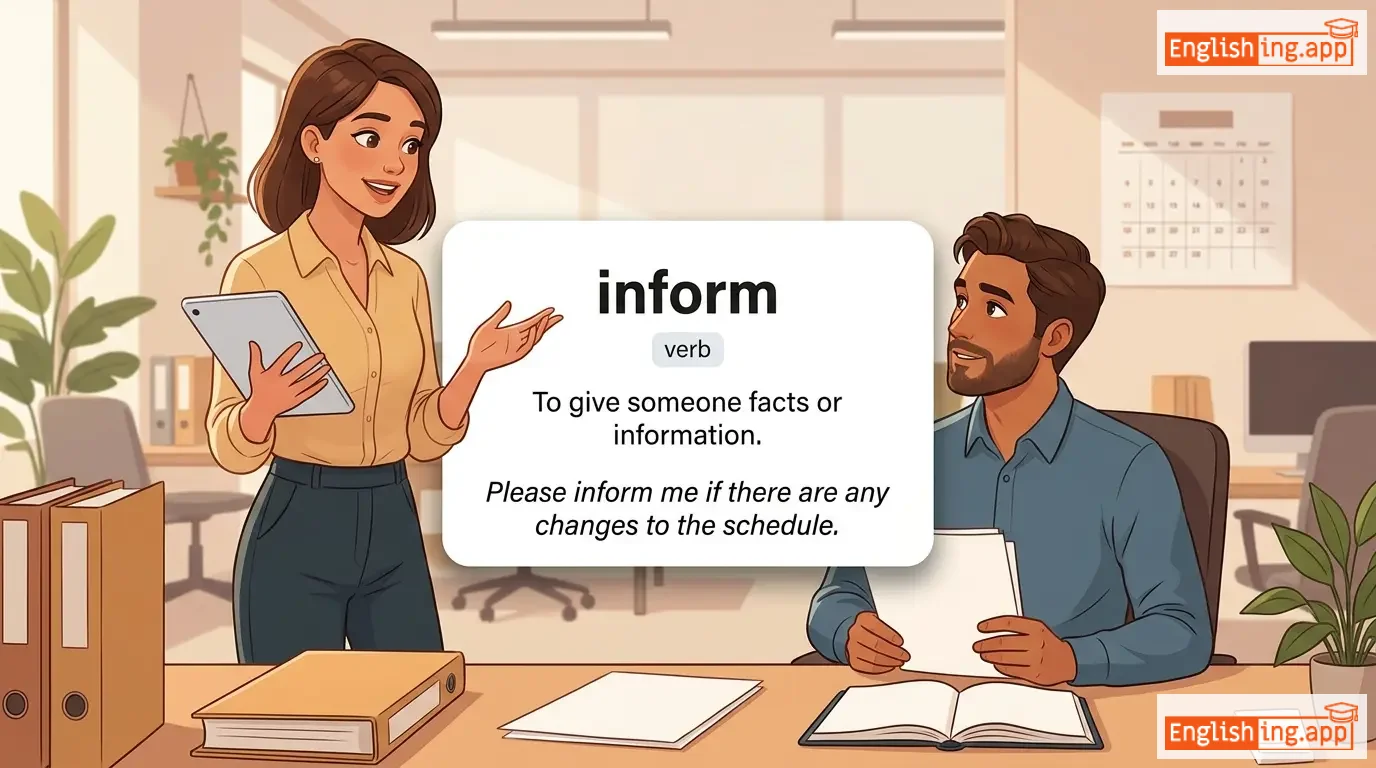
To give someone facts or information.
••••••
|
Please inform me if there are any changes to the schedule. |
- •••••• |
keep someone informed |
to make sure someone stays updated with information
••••••
|
- •••••• |
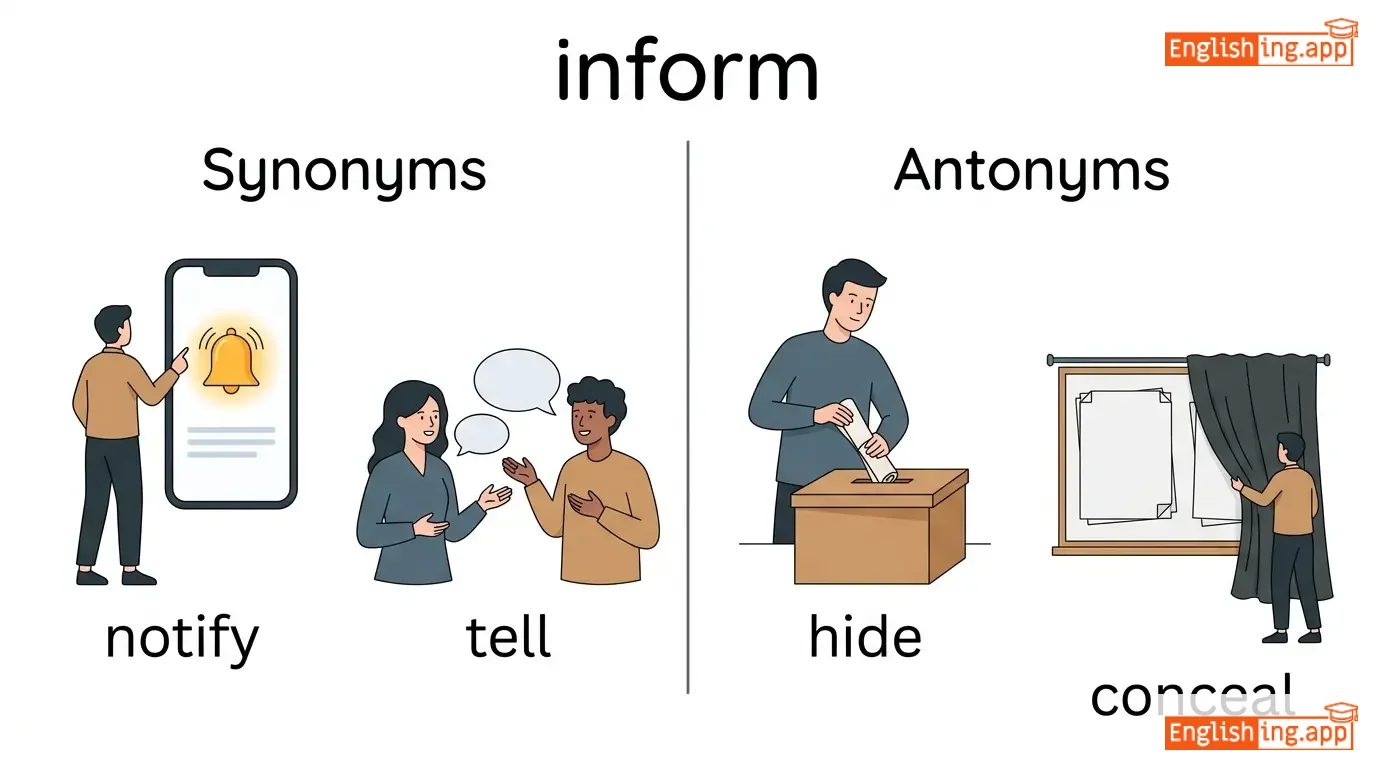
notify, tell, advise, brief, update
••••••
|
hide, conceal
••••••
|
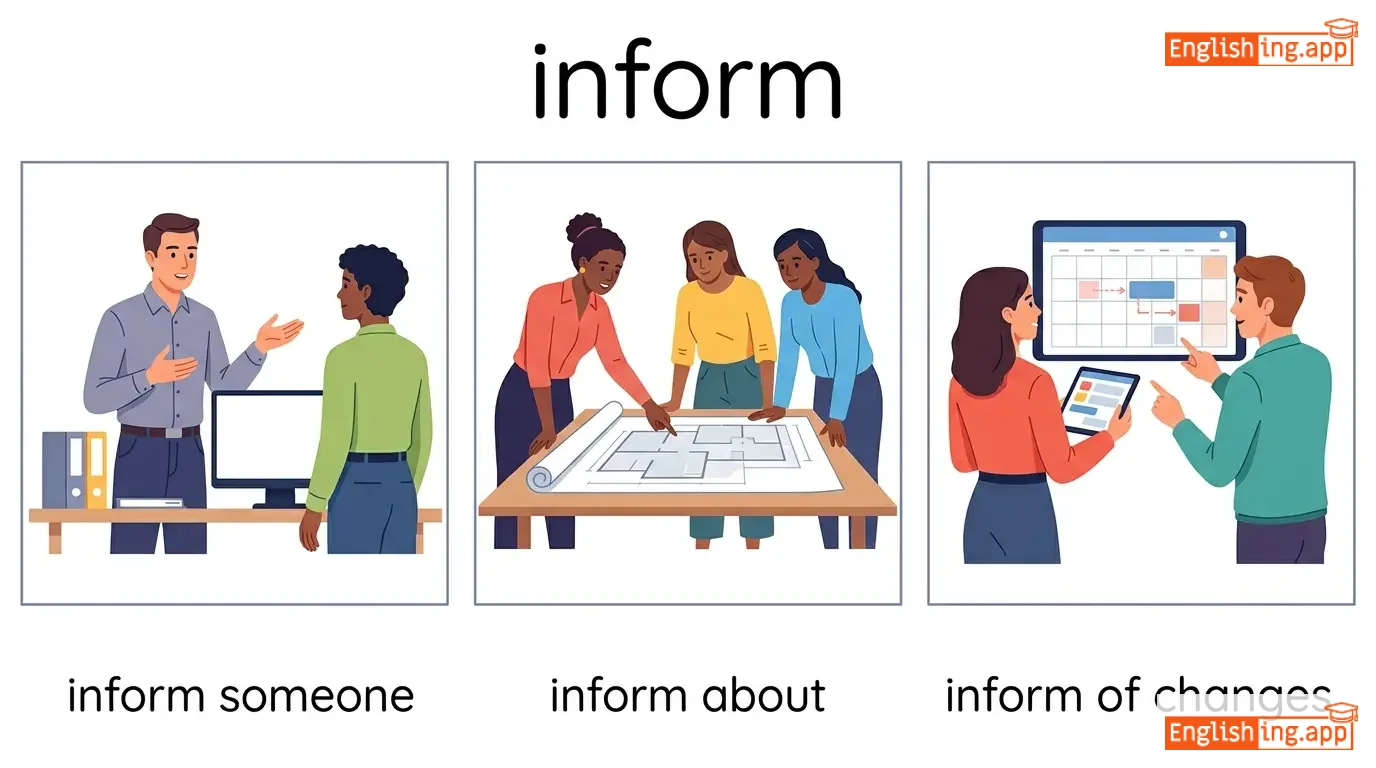
inform someone, inform about, inform of changes
••••••
|
No •••••• |
|
#4628
🌊
|
/ˈɪnflʌks/
noun
(influx)
••••••
|
- •••••• |
涌入
yǒngrù
••••••
|
- •••••• | - •••••• | - •••••• | - •••••• |
A large arrival or flow of people or things.
••••••
|
The city experienced an influx of tourists during the festival. |
这座城市在节日期间经历了大量游客的涌入。
Zhè zuò chéngshì zài jiérì qījiān jīnglìle dàliàng yóukè de yǒngrù.
••••••
|
an influx of |
a sudden or large arrival of people or things
••••••
|
涌入
yǒngrù
••••••
|
arrival, inflow, surge, flood, stream
••••••
|
outflow, exodus
••••••
|
influx of tourists, influx of capital, sudden influx
••••••
|
Influx意味着大量的流入 🌊 – 在中文里涌入就像是大量的游客或东西涌进来。
••••••
|
|
#4629
👑
|
/ˌɪnfluˈɛnʃl/
adjective
(yinfluenxial)
••••••
|
- •••••• |
有影响力的
you yingxiang li de
••••••
|
- •••••• | - •••••• | - •••••• | - •••••• |
Having great power to change or affect people or things.
••••••
|
She is one of the most influential leaders of our time. |
她是我们时代最有影响力的领导人之一。
tā shì wǒmen shídài zuì yǒu yǐngxiǎng lì de lǐngdǎo rén zhī yī.
••••••
|
influential figure |
a person who has a significant effect on others
••••••
|
有影响力的人物
yǒu yǐngxiǎng lì de rénwù
••••••
|
powerful, significant, prominent, impactful, persuasive
••••••
|
insignificant, powerless
••••••
|
influential leader, influential role, highly influential
••••••
|
有影响力的像‘influence-full’ – 一个人能改变一切。
••••••
|
|
#4630
🌐
|
/ˈɪnfluəns/
noun/verb
(yinfluens)
••••••
|
- •••••• |
影响
yingxiang
••••••
|
influenced
yinfluensde
••••••
|
influenced
yinfluensde
••••••
|
influences
yinfluenses
••••••
|
influencing
yinfluencing
••••••
|
The power to affect how someone thinks or acts.
••••••
|
Her teacher had a strong influence on her career choice.
她的老师对她的职业选择有很大影响。
••••••
|
她的老师对她的职业选择有很大影响。
ta de laoshi dui ta de zhiye xuanze you hendayingxiang.
••••••
|
under the influence
在影响下
••••••
|
being affected or controlled by something, especially alcohol or drugs
••••••
|
在影响下
zai yingxiangxia
••••••
|
impact, effect, authority, sway, control
••••••
|
powerlessness, weakness
••••••
|
exert influence, political influence, under the influence
••••••
|
Influence 就是 ‘in fluid sense’ 🌊 – 像水一样流动的影响!
••••••
|
|
#4631
🪨
|
/ɪnˈflɛksəbl/
adjective
(inflexible)
••••••
|
- •••••• |
不灵活
bu linghuo
••••••
|
- •••••• | - •••••• | - •••••• | - •••••• |
Not able to bend or change; unwilling to change ideas or behavior.
••••••
|
His inflexible attitude made negotiations difficult. |
他那不灵活的态度使谈判变得困难。
Tā nà bù línghuó de tàidù shǐ tánpàn biàn dé kùnnán.
••••••
|
inflexible rules |
rules that cannot be changed or adapted
••••••
|
不灵活的规则
bù línghuó de guīzé
••••••
|
rigid, unyielding, stubborn, uncompromising, firm
••••••
|
flexible, adaptable, yielding
••••••
|
inflexible attitude, inflexible rules, inflexible schedule
••••••
|
In FLEXIBLE 不意味着僵硬 🪨 – 中文不灵活意味着无法改变。
••••••
|
|
#4632
🎈
|
/ɪnˈfleɪtɪd/
adjective
(ɪnˈfleɪtɪd)
••••••
|
- •••••• |
膨胀
péngzhàng
••••••
|
- •••••• | - •••••• | - •••••• | - •••••• |
excessively increased in size, value, or importance; filled with air or gas
••••••
|
The company faced criticism for its inflated prices. |
公司因其膨胀的价格而遭受批评。
Gōngsī yīn qí péngzhàng de jiàgé ér zāoshòu pīpíng.
••••••
|
inflated ego |
an exaggerated sense of self-importance
••••••
|
膨胀的自尊
péngzhàng de zìzūn
••••••
|
exaggerated, overblown, bloated, swollen
••••••
|
deflated, modest
••••••
|
inflated prices, inflated costs, inflated ego, inflated claims
••••••
|
膨胀的自尊像一个充气气球
••••••
|
|
#4633
⚡
|
/ɪnˈflæməˌtɔːri/
adjective
(海皮尼斯)
••••••
|
- •••••• |
幸福
xìng fú
••••••
|
- •••••• | - •••••• | - •••••• | - •••••• |
causing inflammation in the body; arousing anger, hostility, or strong emotion
••••••
|
His inflammatory speech triggered protests across the city. |
她在收到奖项时无法隐藏自己的幸福感。
Tā zài shōu dào jiǎng xiàng shí wú fǎ yǐn cáng zì jǐ de xìng fú gǎn.
••••••
|
inflammatory remarks |
comments that provoke anger or hostility
••••••
|
追求幸福
zhuī qiú xìng fú
••••••
|
provocative, incendiary, irritating, hostile
••••••
|
soothing, calming
••••••
|
inflammatory remarks, inflammatory disease, inflammatory response, inflammatory language
••••••
|
幸福是心灵的温暖,给你带来内心的平静。
••••••
|
|
#4634
🩹
|
/ˌɪnfləˈmeɪʃən/
noun
(炎症)
••••••
|
|
炎症
yánzhèng
••••••
|
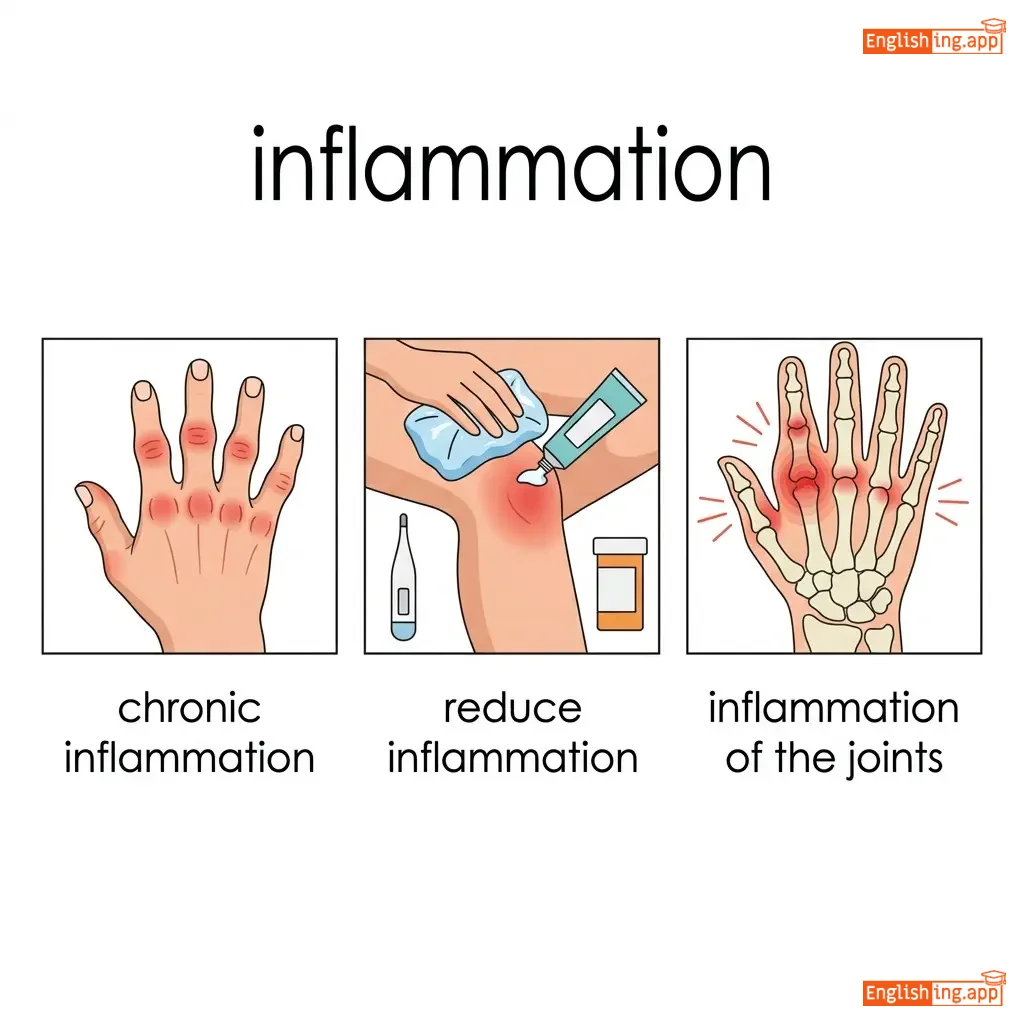
- •••••• | - •••••• | - •••••• | - •••••• |
a localized physical condition in which part of the body becomes red, swollen, hot, and often painful
••••••
|
The doctor prescribed medicine to reduce the inflammation in her knee. |
医生开了药来减少她膝盖的炎症。
Yīshēng kāi le yào lái jiǎnshǎo tā xīgài de yánzhèng.
••••••
|
- •••••• | - •••••• | - •••••• |
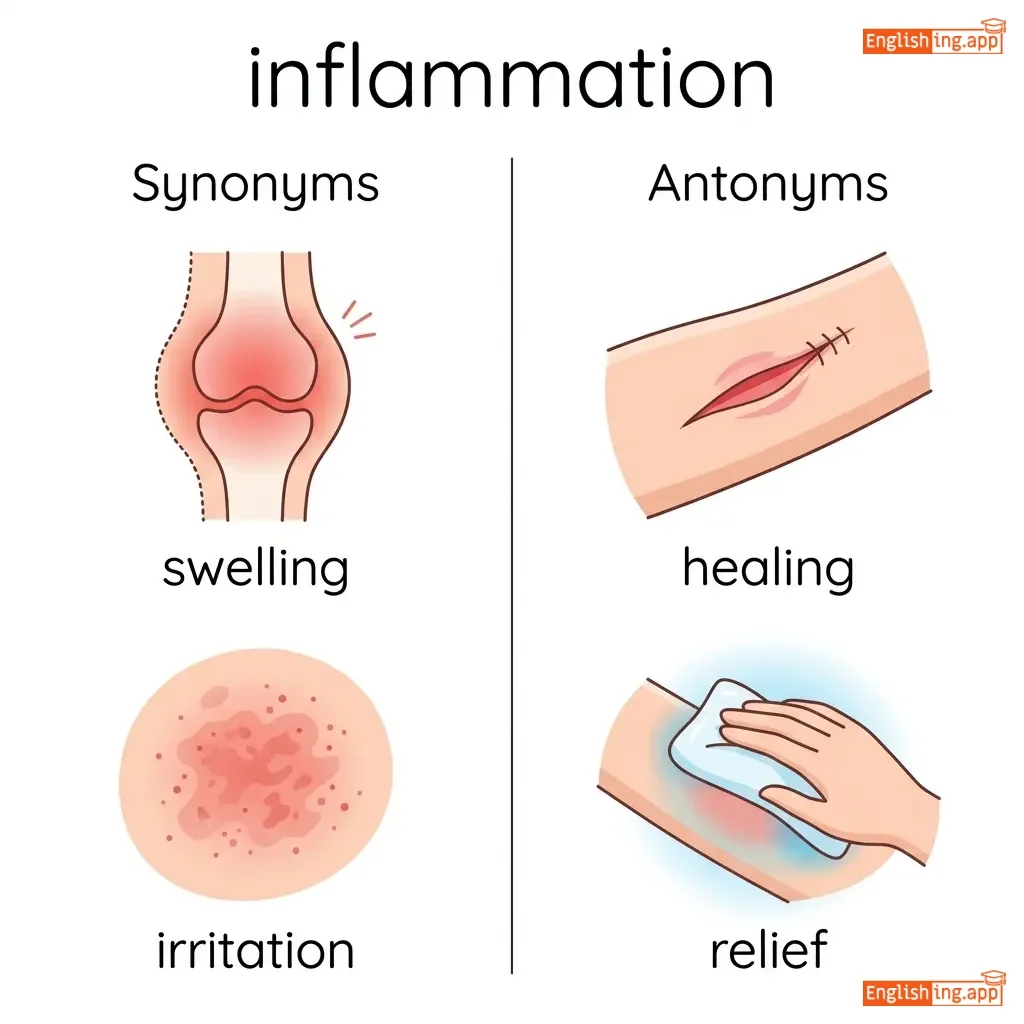
swelling, irritation, soreness, infection
••••••
|
healing, relief
••••••
|
chronic inflammation, reduce inflammation, inflammation of the joints, inflammation response
••••••
|
炎症 = 身体内的火烧痛并引发肿胀
••••••
|
|
#4635
⚠️
|
/ɪnˈflæməbl/
adjective
(易燃)
••••••
|
- •••••• |
易燃
yì rán
••••••
|
- •••••• | - •••••• | - •••••• | - •••••• |
easily set on fire; easily excited or angered
••••••
|
This material is highly inflammable and should be kept away from heat.
此材料极易燃,应远离热源。
••••••
|
此材料极易燃,应远离热源。
Cǐ cáiliào jí yì rán, yīng yuǎnlí rè yuán.
••••••
|
- •••••• | - •••••• | - •••••• |
flammable, combustible, ignitable, volatile
••••••
|
fireproof, incombustible
••••••
|
inflammable material, highly inflammable, inflammable liquid, inflammable gas
••••••
|
易燃=易火
••••••
|
|
#4636
😬
|
/ˌɪnfəˈlɪsɪtəs/
adjective
(yin-fei-li-xi-tus)
••••••
|
- •••••• |
不合适的
bu he shi de
••••••
|
- •••••• | - •••••• | - •••••• | - •••••• |
not suitable or well chosen; awkward or unfortunate
••••••
|
His infelicitous remark ruined the atmosphere of the meeting. |
他不合适的评论破坏了会议的氛围。
Ta bu he shi de ping lun po huai le hui yi de fen wei.
••••••
|
- •••••• | - •••••• | - •••••• |
awkward, inappropriate, unfortunate, unsuitable, improper
••••••
|
appropriate, suitable, fortunate
••••••
|
infelicitous remark, infelicitous choice, infelicitous phrasing
••••••
|
Infelicitous 意味着不合适的,表示某事不适当或不幸。
••••••
|
|
#4637
♿
|
/ɪnˈfɜːməti/
noun
(因弗米提)
••••••
|
- •••••• |
虚弱
xuruo
••••••
|
- •••••• | - •••••• | - •••••• | - •••••• |
Physical or mental weakness, especially from old age.
••••••
|
Despite his infirmity, he remained cheerful. |
尽管他虚弱,他仍然保持乐观。
Jǐnguǎn tā xūruò, tā réngrán bǎochí lèguān.
••••••
|
- •••••• | - •••••• | - •••••• |
weakness, frailty, feebleness, debility
••••••
|
strength, vigor, health
••••••
|
infirmity of age, mental infirmity, physical infirmity
••••••
|
Infirmity是年龄带来的虚弱
••••••
|
|
#4638
🏥
|
/ɪnˈfɜːməri/
noun
(因弗玛瑞)
••••••
|
- •••••• |
医务室
yīwùshì
••••••
|
- •••••• | - •••••• | - •••••• | - •••••• |
A hospital or place where the sick or injured are cared for.
••••••
|
The school had an infirmary for minor injuries. |
学校为轻微受伤提供了医务室。
Xuéxiào wèi qīngwéi shòushāng tígōngle yīwùshì.
••••••
|
- •••••• | - •••••• | - •••••• |
hospital, clinic, medical center, sanatorium
••••••
|
home, outside
••••••
|
school infirmary, military infirmary, admit to infirmary
••••••
|
Infirmary 是照顾病人或伤者的地方 → 医务室
••••••
|
|
#4639
🧓
|
/ɪnˈfɜːm/
adjective
(因福姆)
••••••
|
- •••••• |
虚弱
xūruò
••••••
|
- •••••• | - •••••• | - •••••• | - •••••• |
Weak, especially due to old age or illness.
••••••
|
The infirm old man needed assistance to walk. |
那位虚弱的老人需要帮助才能走路。
Nà wèi xūruò de lǎorén xūyào bāngzhù cáinéng zǒulù.
••••••
|
- •••••• | - •••••• | - •••••• |
weak, feeble, frail, delicate
••••••
|
strong, robust, healthy
••••••
|
infirm old, infirm patients, infirm and elderly
••••••
|
Infirm就像‘虚’弱,表示不强壮。
••••••
|
|
#4640
♾️
|
/ɪnˈfɪnɪti/
noun
(yīngfāng zhī)
••••••
|
- •••••• |
无限
wuxian
••••••
|
- •••••• | - •••••• | - •••••• | - •••••• |
A concept describing something without any limit or end.
••••••
|
The universe seems to stretch into infinity. |
宇宙似乎无限延伸。
yǔzhòu shìhū wúxiàn yánshēn.
••••••
|
to infinity and beyond |
Going as far as possible and even further
••••••
|
到无限及更远的地方
dào wúxiàn jí gèng yuǎn de dìfāng
••••••
|
endlessness, boundlessness, eternity, limitlessness
••••••
|
finiteness, limitation
••••••
|
stretch into infinity, concept of infinity, beyond infinity
••••••
|
无限 ♾️ 意味着没有尽头 - 无限
••••••
|
|
#4641
🔬
|
/ˌɪnfɪnɪˈtɛsɪməl/
adjective
(infinitesimal)
••••••
|
- •••••• |
微不足道
wēi bù zú dào
••••••
|
- •••••• | - •••••• | - •••••• | - •••••• |
Extremely small in size or amount; so tiny as to be almost negligible.
••••••
|
The error was so infinitesimal that it didn’t affect the results.
这个错误如此微不足道,以至于没有影响结果。
••••••
|
这个错误如此微不足道,以至于没有影响结果。
Zhège cuòwù rúcǐ wēi bù zú dào, yǐ zhì yú méiyǒu yǐngxiǎng jiéguǒ.
••••••
|
- •••••• | - •••••• | - •••••• |
tiny, minute, microscopic, minuscule, negligible
••••••
|
huge, vast, immense
••••••
|
infinitesimal amount, infinitesimal chance, infinitesimal detail
••••••
|
微不足道就像是微小到几乎不可见的东西。
••••••
|
|
#4642
♾️
|
/ˈɪnfɪnɪt/
adjective
(yīnfīnít)
••••••
|
- •••••• |
无限
wúxiàn
••••••
|
- •••••• | - •••••• | - •••••• | - •••••• |
limitless or endless in space, extent, or number
••••••
|
The universe is often described as infinite.
宇宙常被描述为无限的。
••••••
|
宇宙常被描述为无限的。
Yǔzhòu cháng bèi miáoshù wéi wúxiàn de.
••••••
|
infinite possibilities
无限的可能性
••••••
|
endless options or opportunities
••••••
|
无限的可能性
wúxiàn de kěnéng xìng
••••••
|
endless, boundless, limitless, eternal, vast
••••••
|
finite, limited, restricted
••••••
|
infinite possibilities, infinite number, infinite space, infinite patience
••••••
|
Infinite = 不完 + finish = 永远没有完
••••••
|
|
#4643
🕵️
|
/ˈɪnfɪltreɪt/
verb
(infiltreit)
••••••
|
- •••••• |
渗透
shèntòu
••••••
|
infiltrated
infiltrated
••••••
|
infiltrated
infiltrated
••••••
|
infiltrates
infiltrates
••••••
|
infiltrating
infiltrating
••••••
|
to secretly enter or gain access to a place or group
••••••
|
The spies managed to infiltrate the enemy base.
间谍们设法渗透敌人基地。
••••••
|
间谍们设法渗透敌人基地。
Jiàndiémén shèfǎ shèntòu dírén jīdì.
••••••
|
infiltrate into
渗透到
••••••
|
to secretly penetrate or gain access to something
••••••
|
渗透到
shèntòu dào
••••••
|
penetrate, intrude, invade, sneak in, encroach
••••••
|
withdraw, retreat, exit
••••••
|
infiltrate enemy, infiltrate group, infiltrate base, infiltrate network
••••••
|
Infiltrate = in (in) + fill (fill) + trate (trate) → 渗透秘密进入
••••••
|
|
#4644
💔
|
/ˌɪnfɪˈdɛləti/
noun
(īn fī dé lì tí)
••••••
|
- •••••• |
不忠
bù zhōng
••••••
|
- •••••• | - •••••• | - •••••• | - •••••• |
the act of being unfaithful to a spouse or partner
••••••
|
Their marriage ended due to his infidelity. |
他们的婚姻因他的不忠而结束。
Tāmen de hūnyīn yīn tā de bù zhōng ér jiéshù.
••••••
|
commit infidelity |
to be unfaithful in a relationship
••••••
|
犯不忠
fàn bù zhōng
••••••
|
unfaithfulness, betrayal, adultery, disloyalty
••••••
|
faithfulness, loyalty, fidelity
••••••
|
marital infidelity, suspected infidelity, infidelity case, emotional infidelity
••••••
|
不忠 (bù zhōng) 就是没有忠诚 (loyalty)
••••••
|
|
#4645
🚫🙏
|
/ˈɪnfɪdɛl/
noun
(不信者)
••••••
|
- •••••• |
不信教者
bù xìn jiào zhě
••••••
|
- •••••• | - •••••• | - •••••• | - •••••• |
a person who does not believe in a particular religion or faith
••••••
|
In medieval times, people often called non-Christians infidels. |
在中世纪,人们常常称非基督徒为不信教者。
Zài zhōng shìjì, rénmen chángcháng chēng fēi jīdū tú wéi bù xìn jiào zhě.
••••••
|
- •••••• | - •••••• | - •••••• |
nonbeliever, unbeliever, heathen, pagan
••••••
|
believer, faithful, devotee
••••••
|
infidel attack, label as infidel, call someone an infidel
••••••
|
Infidel = in + faith 不 → 不信教者
••••••
|
|
#4646
🐀
|
/ɪnˈfɛst/
verb
(因费斯特)
••••••
|
- •••••• |
感染
gǎn rǎn
••••••
|
infested
因费斯特德
••••••
|
infested
因费斯特德
••••••
|
infests
因费斯特斯
••••••
|
infesting
因费斯特英
••••••
|
to overrun in large numbers, especially so as to cause damage or discomfort
••••••
|
The old house was infested with rats.
老房子被老鼠感染。
••••••
|
老房子被老鼠感染。
Lǎo fángzi bèi lǎoshǔ gǎn rǎn.
••••••
|
infested with
感染了
••••••
|
to be full of or overrun by something harmful or unpleasant
••••••
|
感染了
gǎn rǎn le
••••••
|
overrun, plague, swarm, invade, beset
••••••
|
cleanse, rid, purify
••••••
|
infested with rats, infested with insects, infested area, heavily infested
••••••
|
Infest 就是害虫 (pests) 入侵你的房子!
••••••
|
|
#4647
🔥
|
/ɪnˈfɜːrnoʊ/
noun
(因弗诺)
••••••
|
- •••••• |
火灾
huǒzāi
••••••
|
- •••••• | - •••••• | - •••••• | - •••••• |
a large, intense fire that is dangerously out of control
••••••
|
The building turned into an inferno within minutes.
这座建筑在几分钟内变成了火海。
••••••
|
这座建筑在几分钟内变成了火灾。
Zhè zuò jiànzhú zài jǐ fēnzhōng nèi biàn chéngle huǒzāi.
••••••
|
- •••••• | - •••••• | - •••••• |
blaze, conflagration, wildfire, holocaust
••••••
|
calm, extinguishment
••••••
|
raging inferno, blazing inferno, inferno of flames
••••••
|
Inferno 就像火灾一样 → 巨大的火焰,无法控制
••••••
|
|
#4648
🔥
|
/ɪnˈfɜːrnəl/
adjective
(因弗纳尔)
••••••
|
- •••••• |
地狱的
dì yù de
••••••
|
- •••••• | - •••••• | - •••••• | - •••••• |
relating to hell; extremely troublesome or annoying
••••••
|
The workers complained about the infernal noise from the construction site. |
工人们抱怨施工现场的地狱般噪音。
Gōngrénmen bàoyuàn shīgōng xiànchǎng de dì yù bān zàoyīn.
••••••
|
go to hell |
used to express anger or dismissal
••••••
|
下地狱
xià dì yù
••••••
|
hellish, demonic, cursed, accursed, abominable
••••••
|
heavenly, divine, blessed
••••••
|
infernal noise, infernal machine, infernal heat
••••••
|
Infernal = Inferno = 就像地狱般的噪音
••••••
|
|
#4649
🔍
|
/ˈɪnfərəns/
noun
(推论)
••••••
|
|
推论
tuilun
••••••
|
- •••••• | - •••••• | - •••••• | - •••••• |
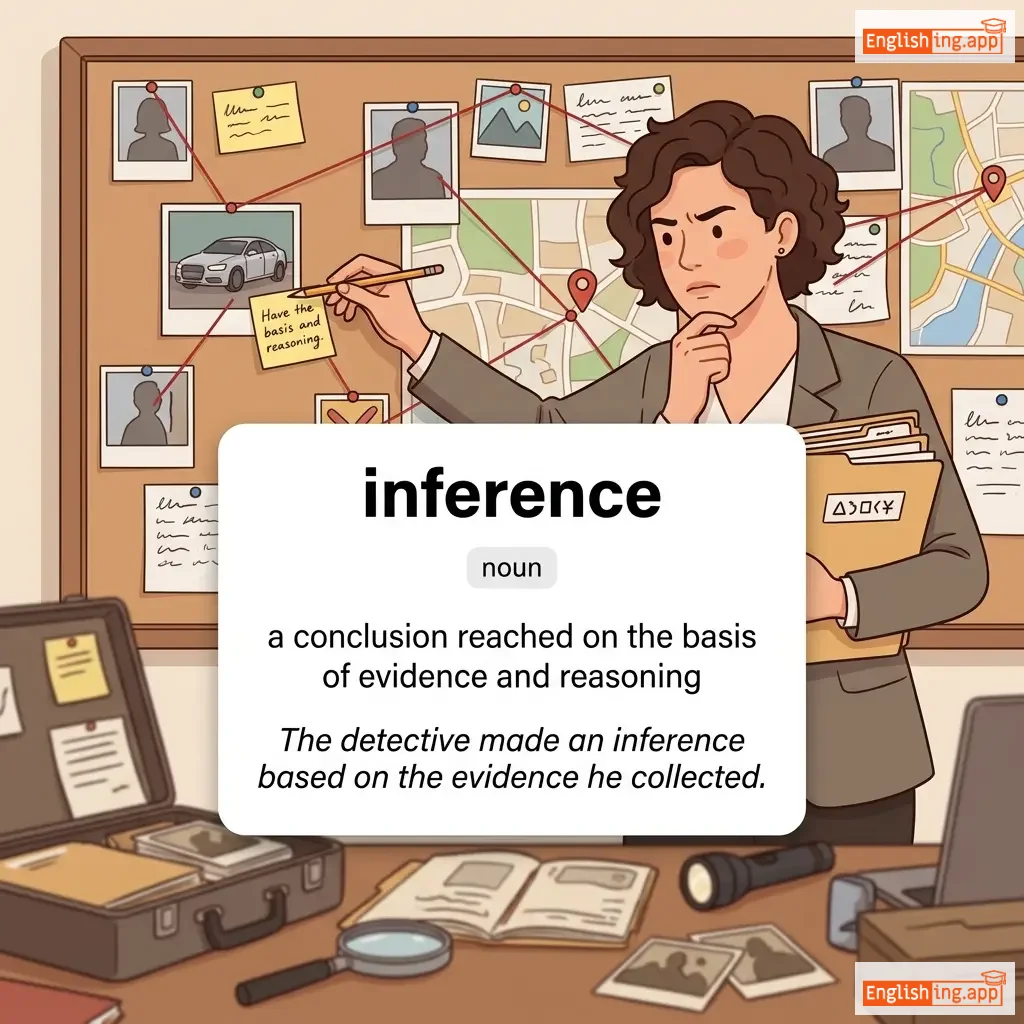
a conclusion reached on the basis of evidence and reasoning
••••••
|
The detective made an inference based on the evidence he collected. |
侦探根据他收集的证据做出了推论。
zhēntàn gēnjù tā shōují de zhèngjù zuò chū le tuīlùn.
••••••
|
- •••••• | - •••••• | - •••••• |
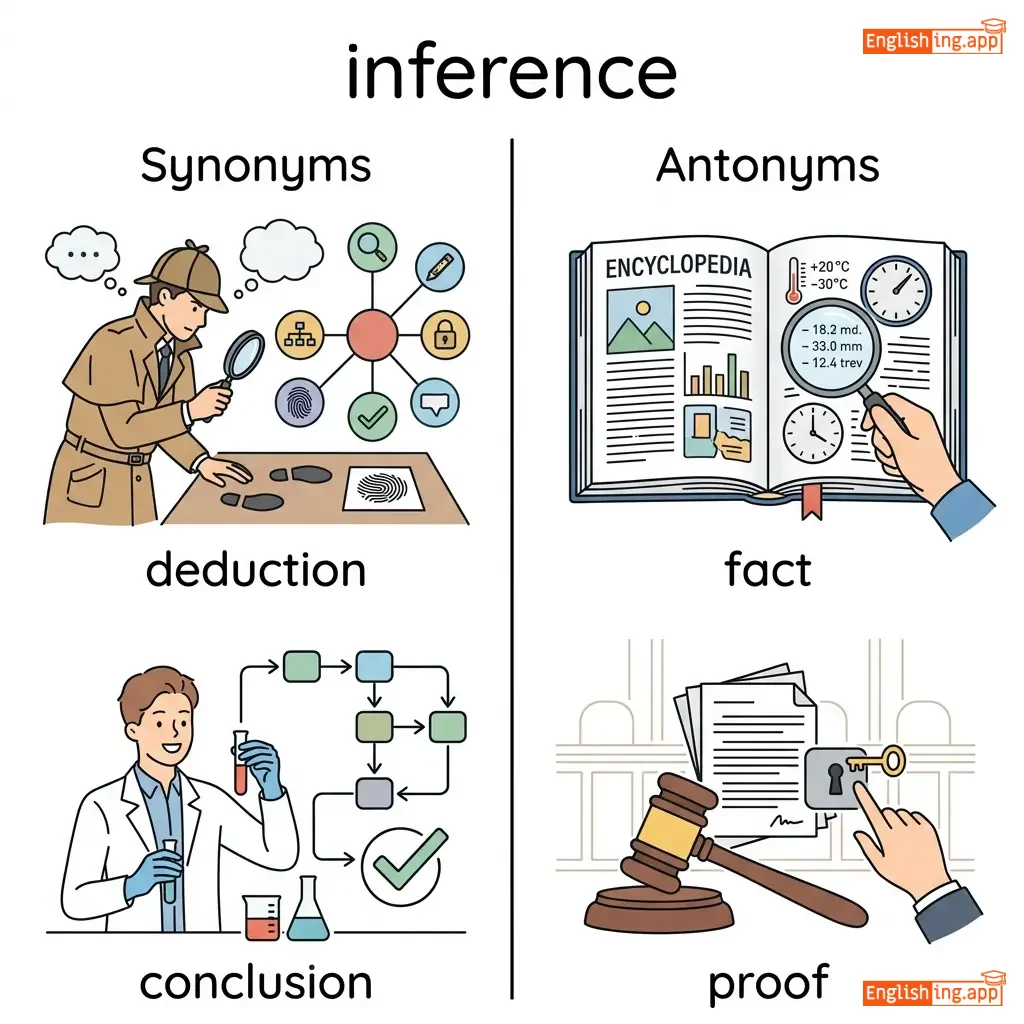
deduction, conclusion, reasoning, assumption
••••••
|
fact, proof, reality
••••••
|
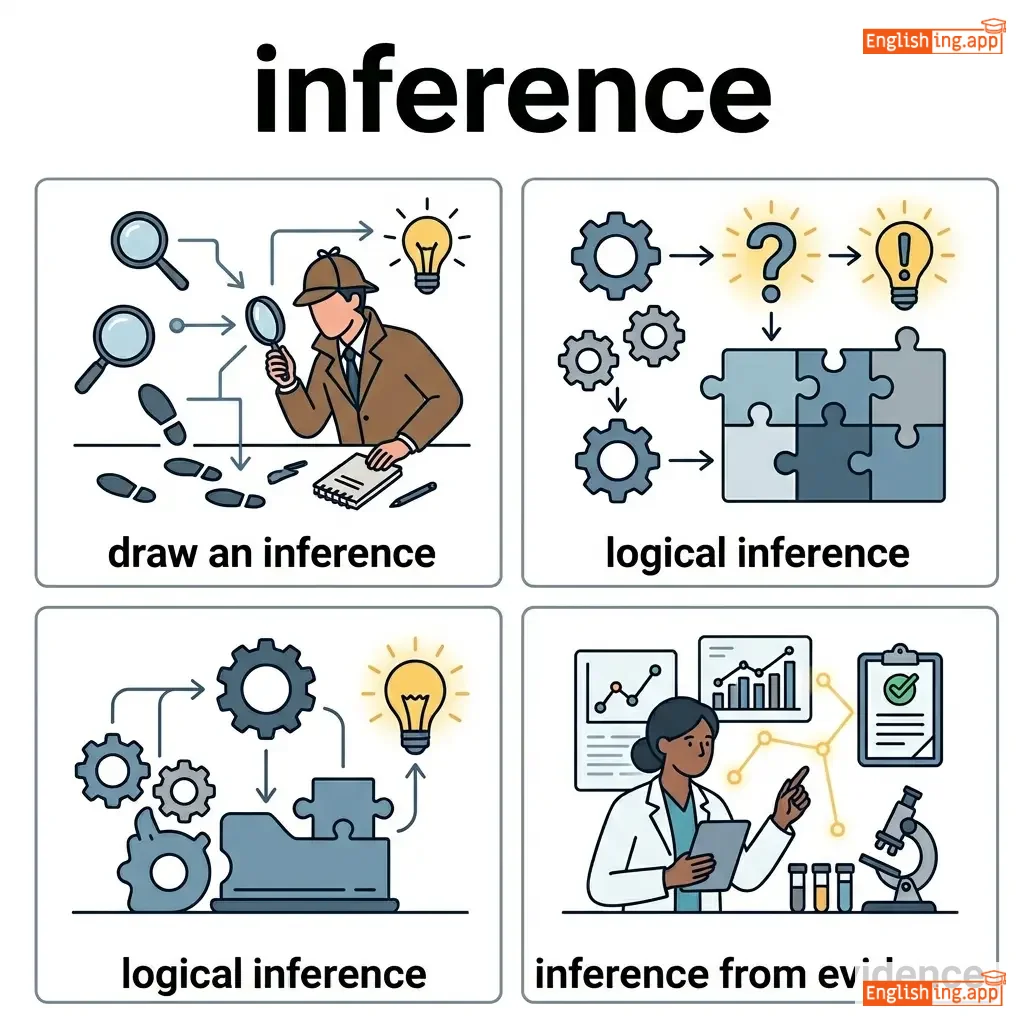
draw an inference, logical inference, inference from evidence
••••••
|
推论是基于证据和推理做出的结论
••••••
|
|
#4650
🤔
|
/ɪnˈfɜːr/
verb
••••••
|
- •••••• | - •••••• |
inferred
••••••
|
inferred
••••••
|
infers
••••••
|
inferring
••••••
|
to conclude or deduce something from evidence and reasoning rather than from explicit statements
••••••
|
From his silence, I inferred that he was not happy with the decision. |
- •••••• |
read between the lines |
to understand an implicit meaning in what is said or written
••••••
|
- •••••• |
deduce, conclude, reason, assume, derive
••••••
|
state, declare, express
••••••
|
infer meaning, infer from evidence, infer result
••••••
|
No •••••• |
Vocabulary Quiz
Test your vocabulary by matching words with their translations or meanings.
Login to take the quiz
Comments (0)
Share your thoughts and join the discussion.
Join the discussion by logging in
Login to CommentNo comments yet
Be the first to share your thoughts!