


Swipe left or right, or use the buttons. Tap image to zoom.
例句翻译
单词
Lesson 103Lesson 103 - 遮罩切换
|
表情符号
|
单词 | Images | 翻译 | 过去时 | 过去分词 | 第三人称单数 | 动名词 | 含义 | 例句 | 例句翻译 | 示例表达 | 示例表达含义 | 示例表达翻译 | 同义词 | 反义词 | 搭配词 | 助记符 |
|---|---|---|---|---|---|---|---|---|---|---|---|---|---|---|---|---|---|
|
#3061
🏷️
|
/ˈɛpɪθɛt/
noun
(építhèt)
••••••
|
- •••••• |
绰号
chuòhào
••••••
|
- •••••• | - •••••• | - •••••• | - •••••• |
A descriptive phrase or word used to characterize someone or something, often as a nickname.
••••••
|
He earned the epithet ‘The Great’ for his remarkable achievements. |
由于其卓越的成就,他赢得了‘伟大’的绰号。
Yóuyú qí zhuóyuè de chéngjiù, tā yíngdéle ‘Wěidà’ de chuòhào.
••••••
|
- •••••• | - •••••• | - •••••• |
nickname, title, designation, label, appellation
••••••
|
anonymity, namelessness
••••••
|
famous epithet, derogatory epithet, epithet of honor
••••••
|
Epithet = Extra + Title → 附加的绰号
••••••
|
|
#3062
⚖️
|
/ˈɛkwɪpɔɪz/
noun
(ɛkwɪpɔɪz)
••••••
|
- •••••• |
平衡
pingheng
••••••
|
- •••••• | - •••••• | - •••••• | - •••••• |
A state of balance or equilibrium.
••••••
|
Her calmness created an equipoise in the heated debate. |
她的冷静在激烈的辩论中创造了平衡。
Ta de lengjing zai jilie de bianlun zhong chuangzao le pingheng.
••••••
|
- •••••• | - •••••• | - •••••• |
balance, equilibrium, stability, composure, steadiness
••••••
|
imbalance, instability
••••••
|
mental equipoise, emotional equipoise, delicate equipoise
••••••
|
Equi代表平等,poise代表平衡 → 平衡。
••••••
|
|
#3063
🚗
|
/ˈɛkwɪpɪdʒ/
noun
(装备)
••••••
|
- •••••• |
装备或带有配件的马车
zhuangbei huo dai you peijian de macha
••••••
|
- •••••• | - •••••• | - •••••• | - •••••• |
Equipment or a carriage with its accessories.
••••••
|
The nobleman arrived in a grand equipage. |
贵族乘坐豪华马车到达。
Guizhu chengzuo haohua macha daoda.
••••••
|
- •••••• | - •••••• | - •••••• |
carriage, coach, vehicle, gear, apparatus
••••••
|
emptiness, nothing
••••••
|
grand equipage, royal equipage, military equipage
••••••
|
Equipage意味着装备或马车,记住'equip' + '马车'。
••••••
|
|
#3064
🌍
|
/ˈiːkwɪnɒks/
noun
(春分)
••••••
|
- •••••• |
昼夜平衡
zhòuyè pínghéng
••••••
|
- •••••• | - •••••• | - •••••• | - •••••• |
The time or date when day and night are of equal length, occurring twice a year.
••••••
|
The spring equinox marks the beginning of longer days. |
春分标志着白天时间变长的开始。
Chūnfēn biāozhì zhe báitiān shíjiān biàn cháng de kāishǐ.
••••••
|
- •••••• | - •••••• | - •••••• |
solstice, balance, equality of day and night
••••••
|
longest day, shortest day
••••••
|
spring equinox, autumn equinox, equinox celebration
••••••
|
Equinox 是昼夜平衡的时候。
••••••
|
|
#3065
🐎
|
/ˈiːkwaɪn/
adjective
(艾奎因)
••••••
|
- •••••• |
与马有关的
yǔ mǎ yǒuguān de
••••••
|
- •••••• | - •••••• | - •••••• | - •••••• |
Relating to or resembling a horse.
••••••
|
The veterinarian specialized in equine medicine. |
兽医专门研究马医学。
Shòuyī zhuānmén yánjiū mǎ yīxué.
••••••
|
- •••••• | - •••••• | - •••••• |
horse-related, equestrian, horse-like, pony-like
••••••
|
bovine, canine
••••••
|
equine medicine, equine therapy, equine behavior, equine industry
••••••
|
Equine意味着马 🐎,记住'马'和'equine'有关。
••••••
|
|
#3066
⚖️
|
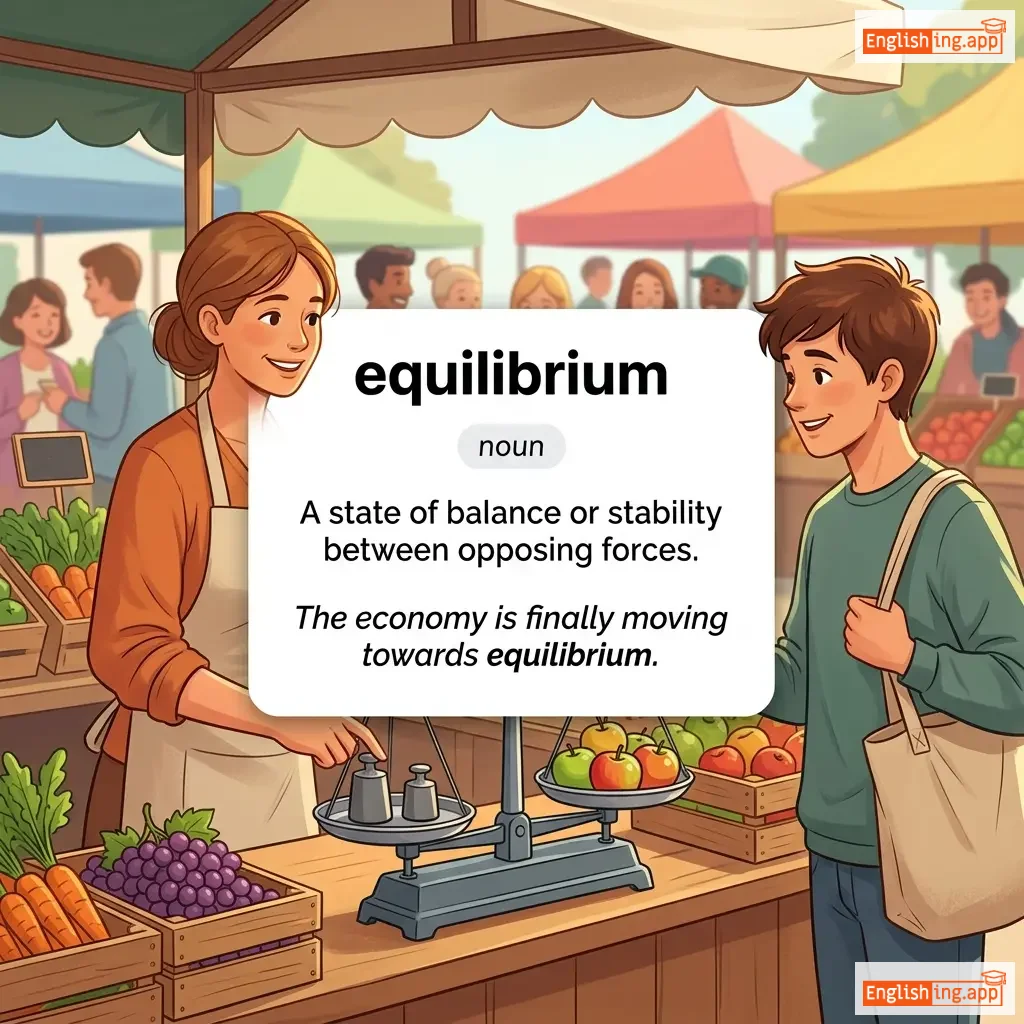
/ˌiːkwɪˈlɪbriəm/
noun
(均衡)
••••••
|
|
平衡
pingheng
••••••
|
- •••••• | - •••••• | - •••••• | - •••••• |
A state of balance or stability between opposing forces.
••••••
|
The economy is finally moving towards equilibrium. |
经济最终朝着平衡发展。
Jīngjì zuìzhōng cháo zhe pínghéng fāzhǎn.
••••••
|
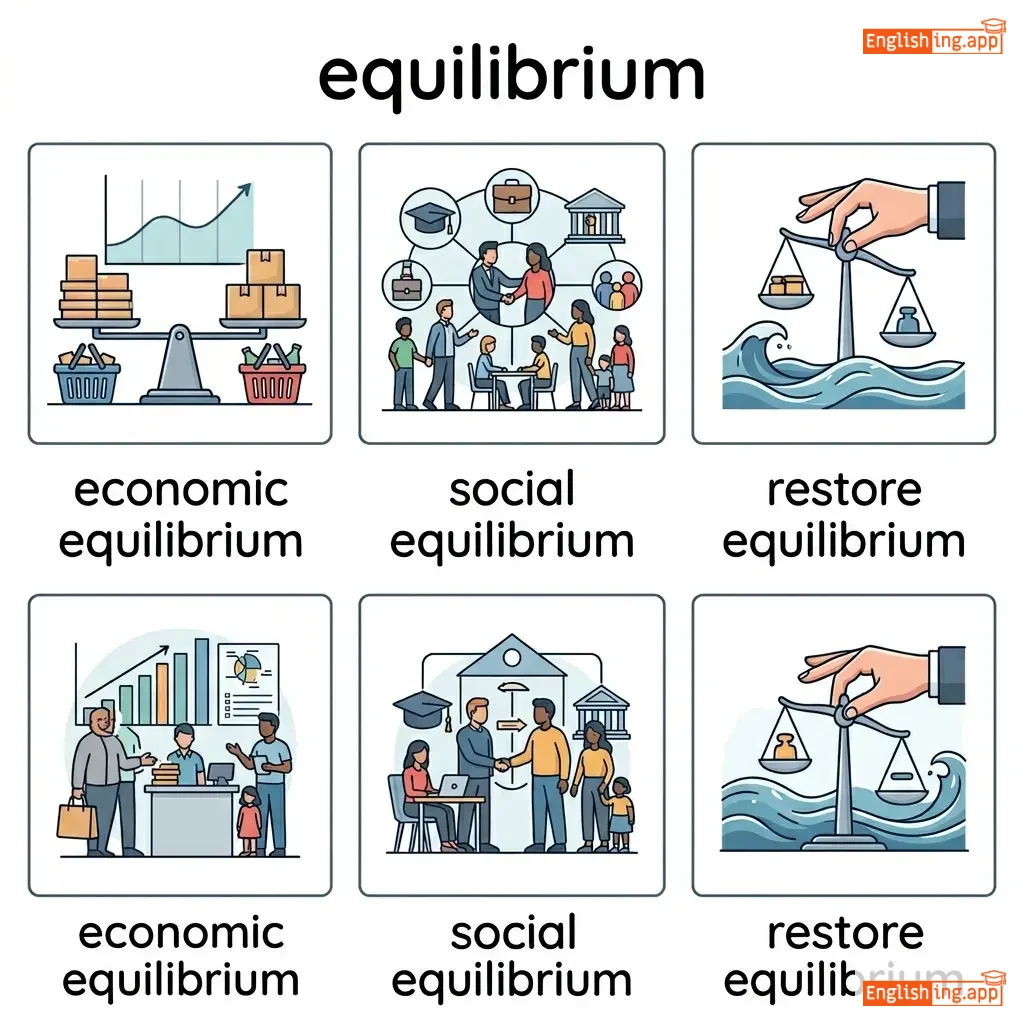
restore equilibrium |
To bring back balance or stability
••••••
|
恢复平衡
Huīfù pínghéng
••••••
|
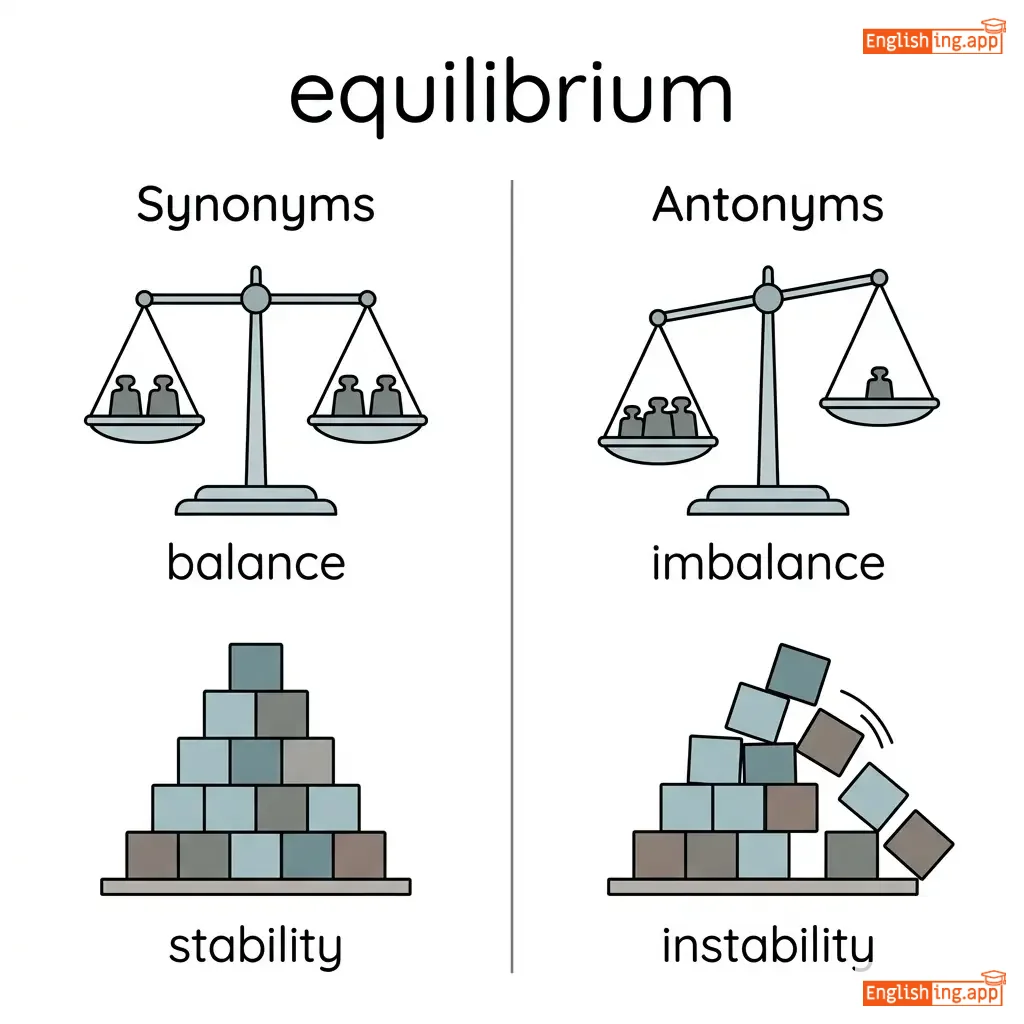
balance, stability, symmetry, poise, harmony
••••••
|
imbalance, instability, disorder
••••••
|
economic equilibrium, social equilibrium, restore equilibrium, maintain equilibrium
••••••
|
Equilibrium = 相等 + LIBRIum → 平衡 = 平衡
••••••
|
|
#3067
🏇
|
/ɪˈkwɛstriən/
adjective
(ēkwèstrī'ān)
••••••
|
- •••••• |
骑术的
qíshù de
••••••
|
- •••••• | - •••••• | - •••••• | - •••••• |
Relating to horse riding or horseback riders.
••••••
|
She won several equestrian competitions. |
她赢得了几场马术比赛。
Tā yíngdéle jǐ chǎng mǎshù bǐsài.
••••••
|
- •••••• | - •••••• | - •••••• |
horse-riding, mounted, rider, horseman
••••••
|
pedestrian, non-rider
••••••
|
equestrian sport, equestrian event, equestrian club, equestrian skills
••••••
|
Equestrian 就是与马术有关,想象自己在骑马比赛中获胜。
••••••
|
|
#3068
🧘
|
/ˌekwəˈnɪmɪti/
noun
(équanímìtí)
••••••
|
|
平静
píngjìng
••••••
|
- •••••• | - •••••• | - •••••• | - •••••• |
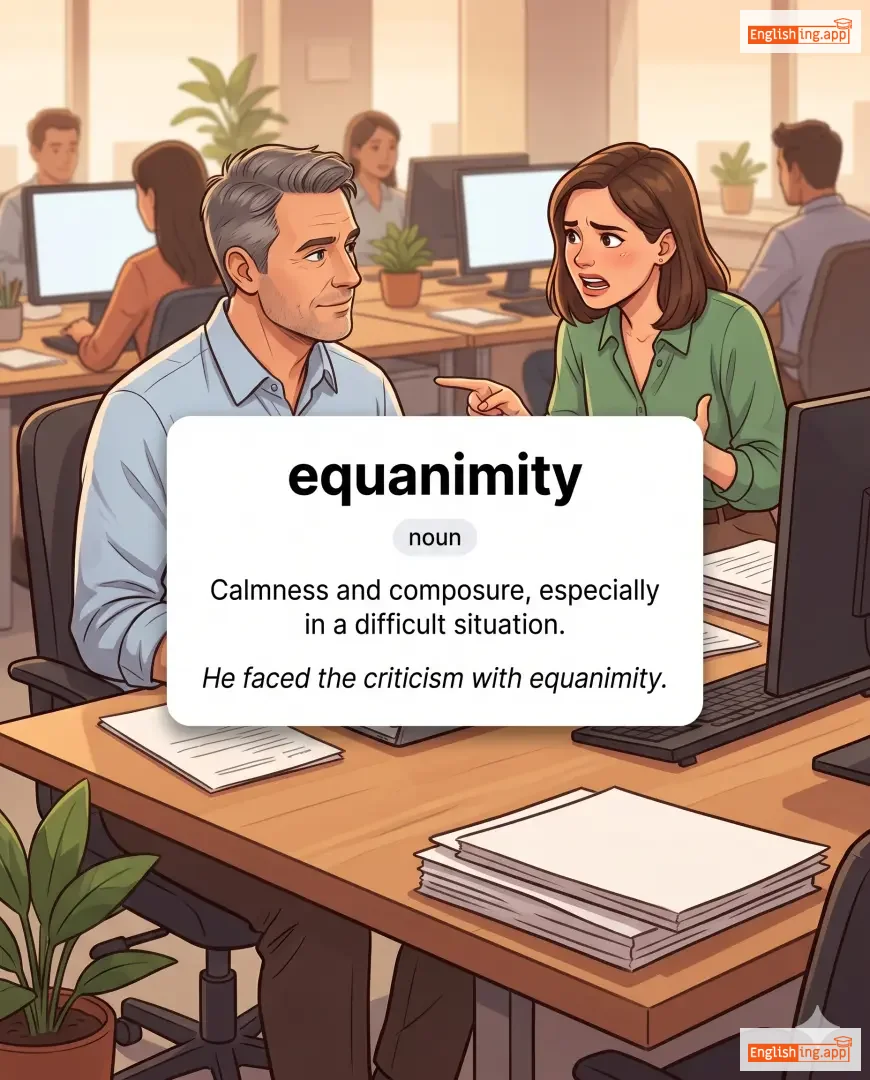
Calmness and composure, especially in a difficult situation.
••••••
|
He faced the criticism with equanimity. |
他以平静的心态面对批评。
Tā yǐ píngjìng de xīntài miànduì pīpíng.
••••••
|
- •••••• | - •••••• | - •••••• |
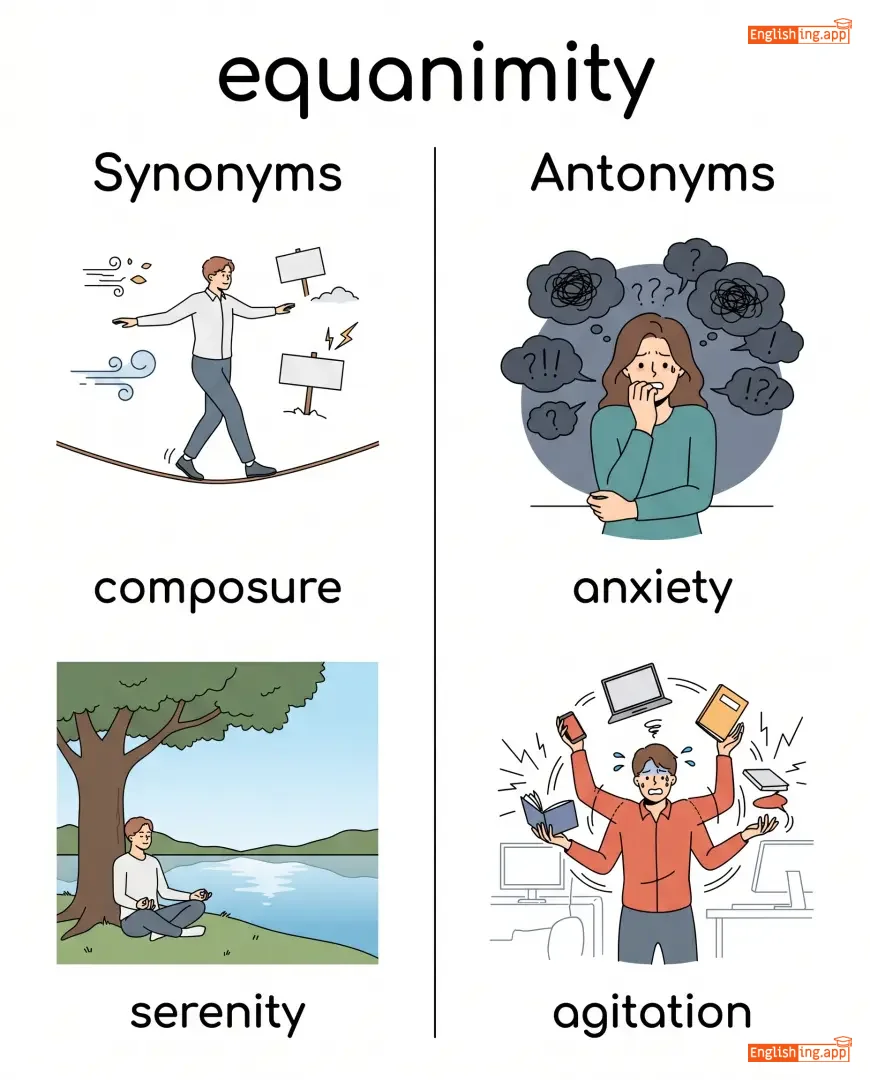
composure, serenity, calmness, tranquility, balance
••••••
|
anxiety, agitation, nervousness
••••••
|
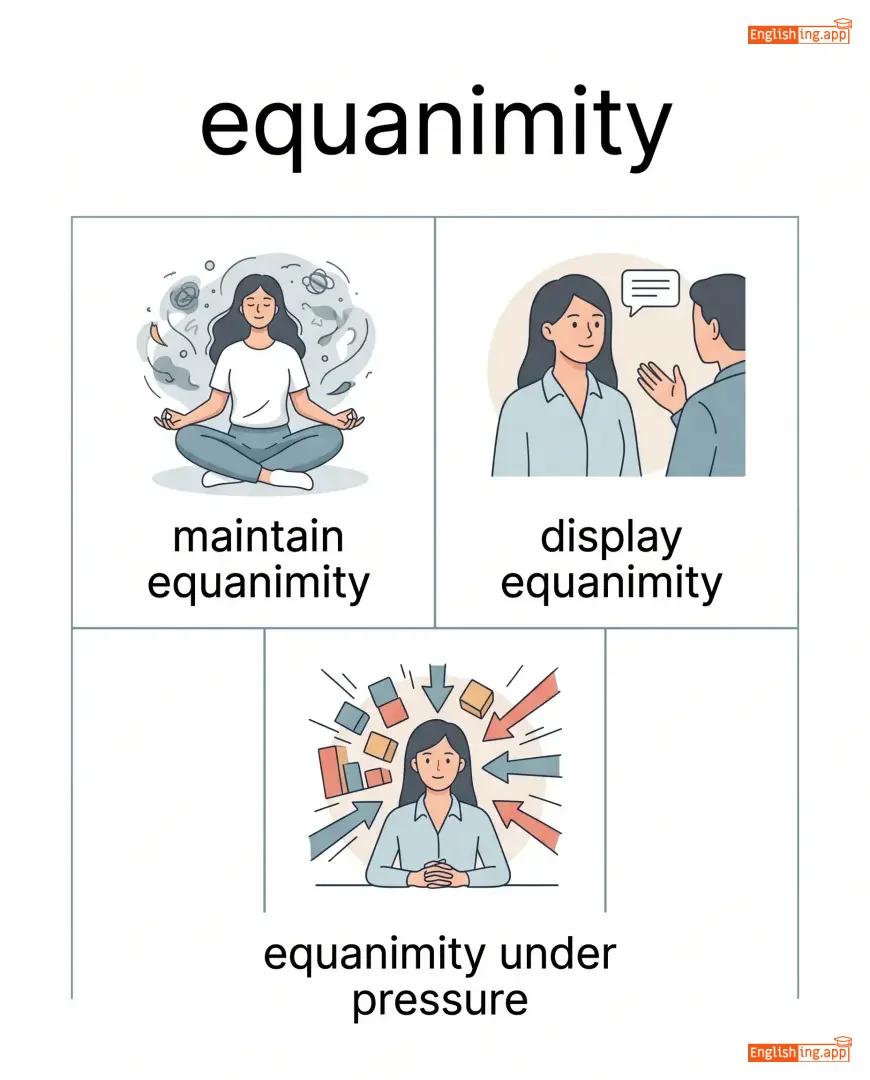
maintain equanimity, display equanimity, equanimity under pressure
••••••
|
Equanimity = 平 (平和) + 静 (安静) → 心如止水
••••••
|
|
#3069
⚖️
|
/ˈiːkwəlaɪz/
verb
(ìkwélaíz)
••••••
|
- •••••• |
平衡
pínghéng
••••••
|
equalized
ìkwélaízd
••••••
|
equalized
ìkwélaízd
••••••
|
equalizes
ìkwélaízes
••••••
|
equalizing
ìkwélaízing
••••••
|
To make equal or level in status, value, or amount.
••••••
|
The team equalized the score in the last minute.
团队在最后一分钟将比分扳平。
••••••
|
团队在最后一分钟将比分扳平。
Tuánduì zài zuìhòu yī fēnzhōng jiāng bǐfēn bān píng.
••••••
|
equalize the playing field
使比赛场地公平
••••••
|
To create fair conditions for everyone
••••••
|
使比赛场地公平
Shǐ bǐsài chǎngdì gōngpíng
••••••
|
balance, level, adjust, standardize, match
••••••
|
unequal, imbalance, differentiate
••••••
|
equalize pressure, equalize the score, equalize opportunities
••••••
|
Equalize 是让事情变得公平 – 想象一个平衡的比赛场地。
••••••
|
|
#3070
😌
|
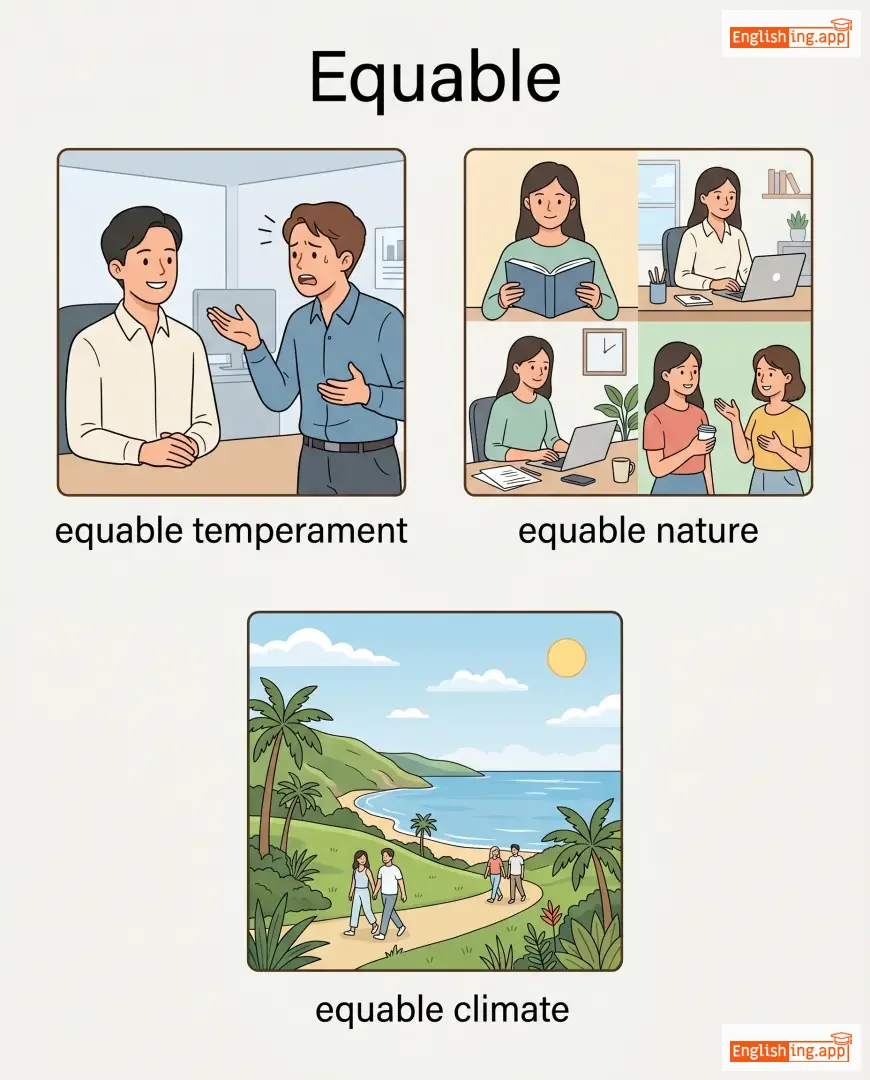
/ˈɛkwəbl̩/
adjective
(ēkwābó)
••••••
|
|
冷静
lěngjìng
••••••
|
- •••••• | - •••••• | - •••••• | - •••••• |
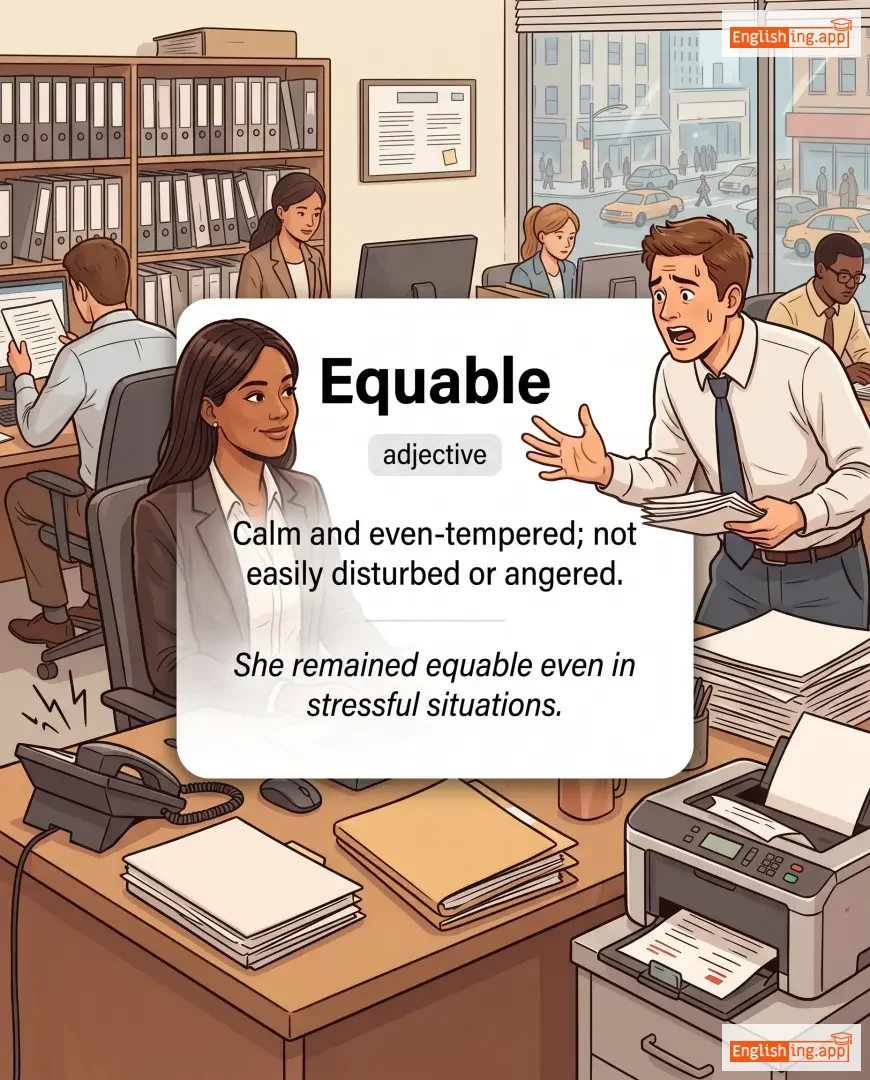
Calm and even-tempered; not easily disturbed or angered.
••••••
|
She remained equable even in stressful situations. |
她在压力大的情况下依然保持冷静。
Tā zài yālì dà de qíngkuàng xià yīrán bǎochí lěngjìng.
••••••
|
- •••••• | - •••••• | - •••••• |
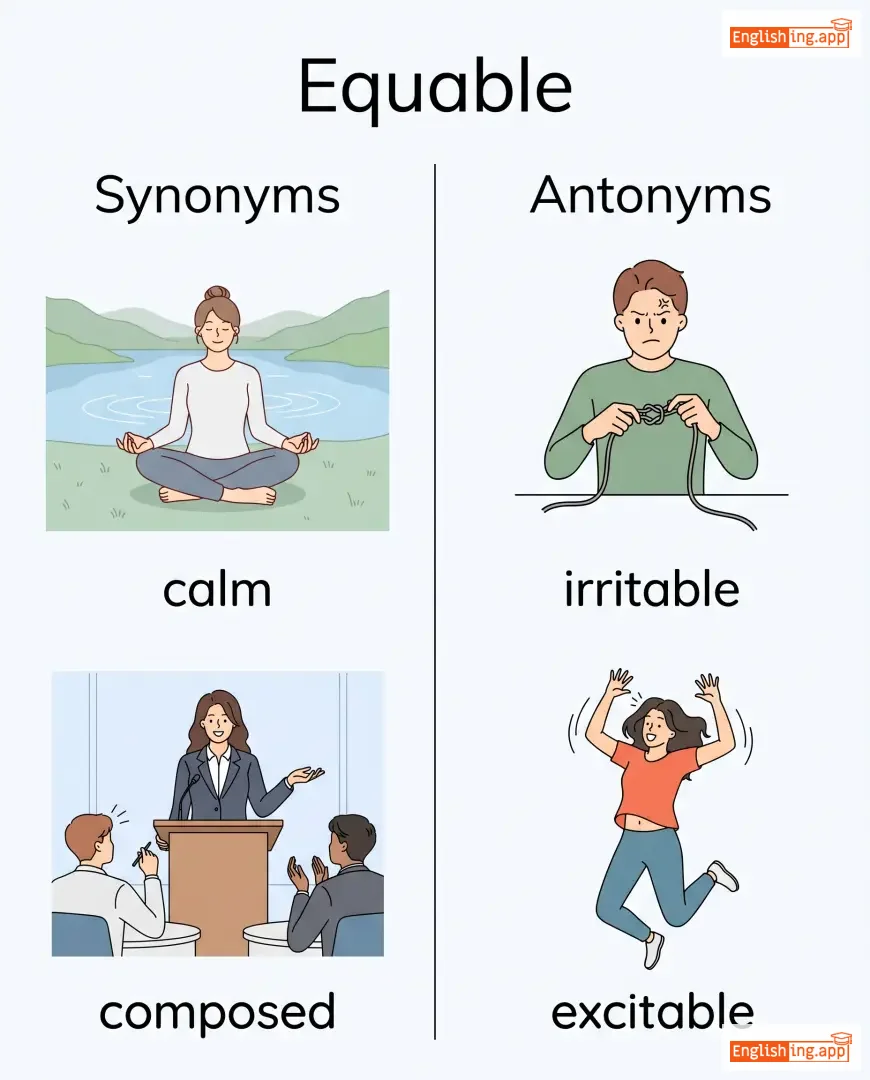
calm, composed, serene, placid, steady
••••••
|
irritable, excitable, temperamental
••••••
|
equable temperament, equable nature, equable climate
••••••
|
Equable 是冷静沉稳的意思,就像一个在任何压力下都能保持冷静的人。
••••••
|
|
#3071
📝
|
/ˈɛpənɪm/
noun
(伊波宁)
••••••
|
- •••••• |
以某人命名的事物
yǐ mǒu rén mìngmíng de shìwù
••••••
|
- •••••• | - •••••• | - •••••• | - •••••• |
A person after whom a discovery, invention, place, or other thing is named.
••••••
|
Sandwich is an eponym named after the Earl of Sandwich. |
三明治是一个以三明治伯爵命名的伊波宁。
Sānmíngzhì shì yīgè yǐ sānmíngzhì bójué mìngmíng de yī bō níng.
••••••
|
- •••••• | - •••••• | - •••••• |
namesake, originator, title-giver, dedicatory
••••••
|
anonymous, nameless
••••••
|
famous eponym, historical eponym, medical eponym, literary eponym
••••••
|
伊波宁 = 名字变成了名词,像三明治因伯爵的名字而闻名。
••••••
|
|
#3072
📜
|
/ˈɛpəʊd/
noun
(艾波德)
••••••
|
- •••••• |
一种抒情诗的形式
yī zhǒng shūqíng shī de xíngshì
••••••
|
- •••••• | - •••••• | - •••••• | - •••••• |
A form of lyric poem written in couplets, often following a strophe and antistrophe in classical Greek poetry.
••••••
|
The poet concluded his ode with a striking epode.
诗人以一个令人印象深刻的艾波德结束了他的颂歌。
••••••
|
诗人以一个令人印象深刻的艾波德结束了他的颂歌。
Shīrén yǐ yīgè lìngrén yìnxiàng shēnkè de ài bō dé jiéshùle tā de sònggē.
••••••
|
- •••••• | - •••••• | - •••••• |
lyric, stanza, verse, composition
••••••
|
prose, narrative
••••••
|
classical epode, poetic epode, Greek epode, final epode
••••••
|
Epode = epi (结束) + ode (诗歌) — 诗歌的最后一部分。
••••••
|
|
#3073
⏳
|
/ˈiːpɒk/
noun
(艾波克)
••••••
|
|
时代
shidai
••••••
|
- •••••• | - •••••• | - •••••• | - •••••• |
A period of time in history or a person's life, typically one marked by notable events or characteristics.
••••••
|
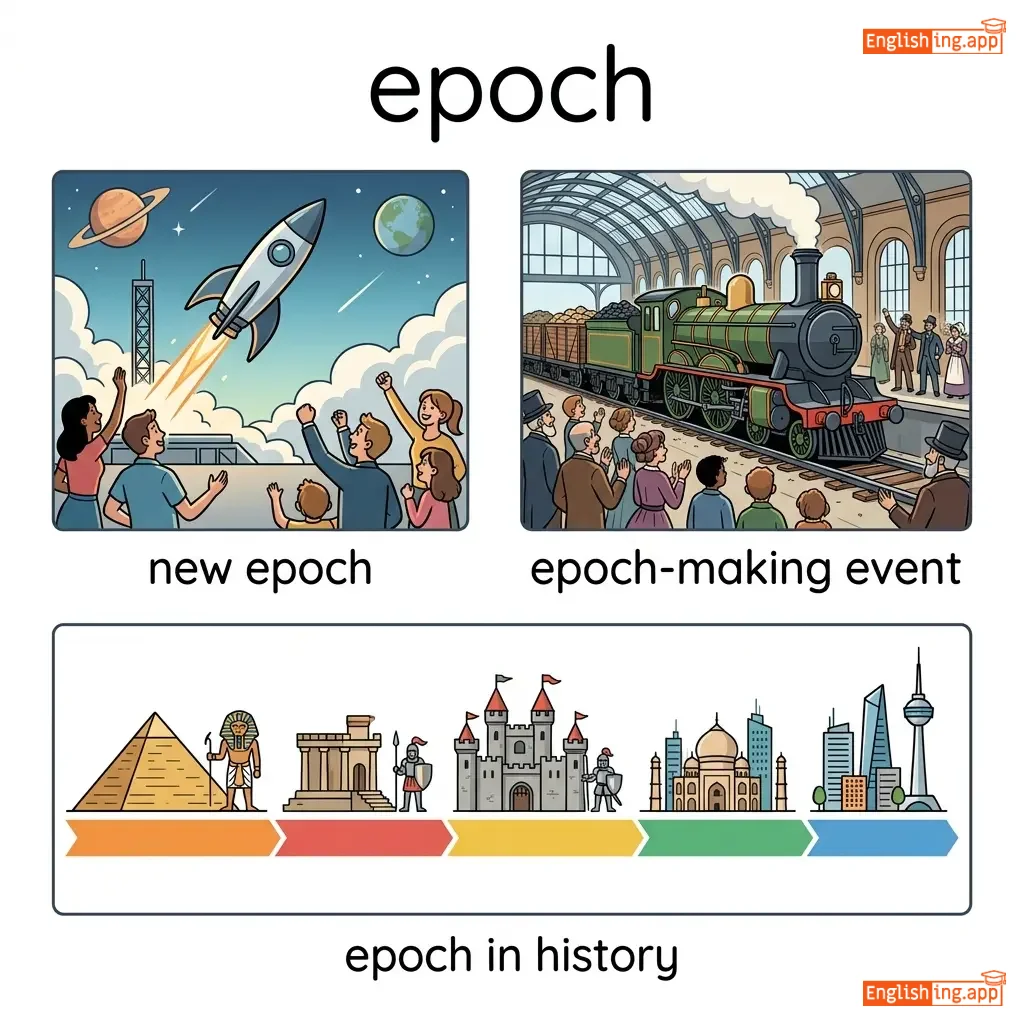
The invention of the internet marked a new epoch in human history. |
互联网的发明标志着人类历史上的一个新时代。
Hulianwang de faming biao zhi zhe renlei lishishang de yige xin shidai.
••••••
|
mark an epoch |
To signify the beginning of a significant period in history.
••••••
|
标志一个时代
Biaozhi yige shidai
••••••
|
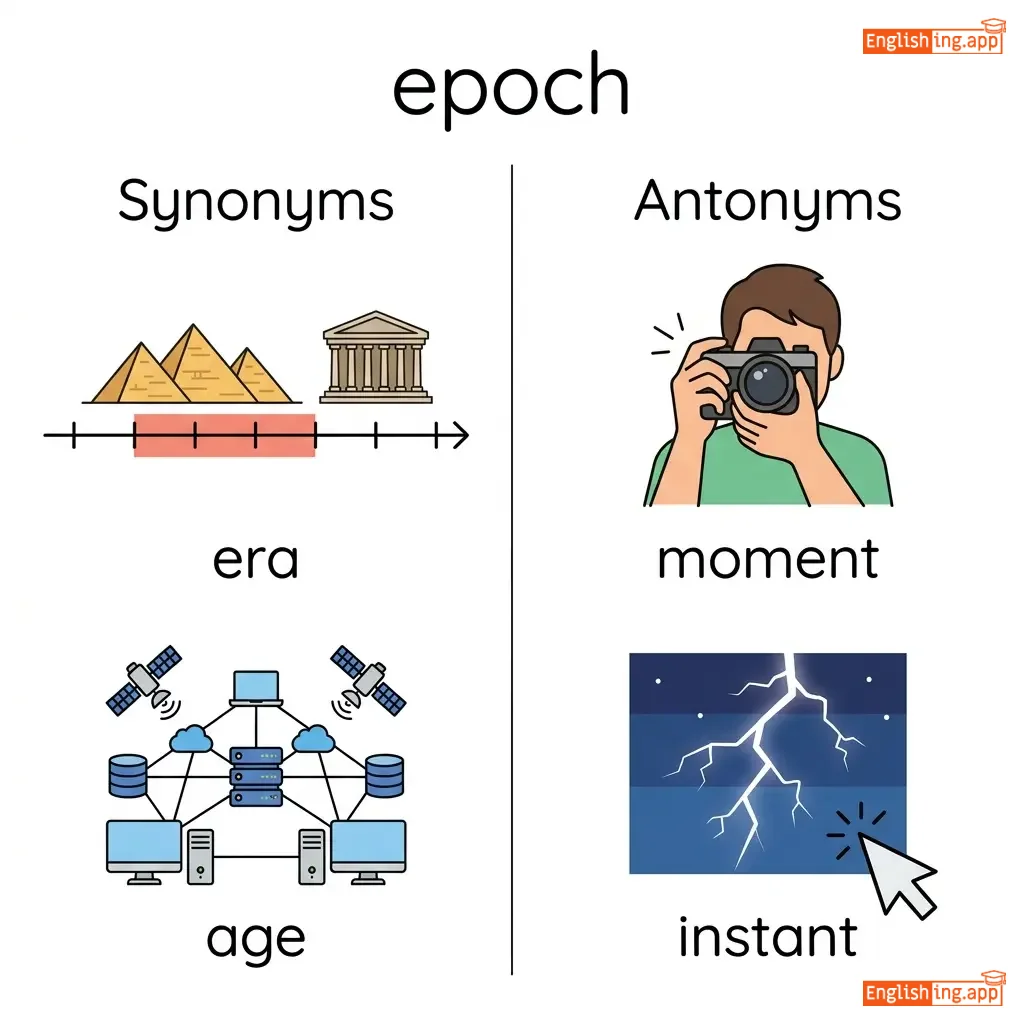
era, age, period, time, stage
••••••
|
moment, instant
••••••
|
new epoch, epoch-making event, epoch in history, cultural epoch
••••••
|
Epoch = epic + shock — 一个时代的开始就像史诗般的震动。
••••••
|
|
#3074
🐄
|
/ˌɛpɪzəʊˈɒtɪk/
noun
(艾比佐提克)
••••••
|
- •••••• |
动物疫病
dòngwù yìbìng
••••••
|
- •••••• | - •••••• | - •••••• | - •••••• |
An outbreak of disease affecting many animals of one kind at the same time.
••••••
|
The farmer feared an epizootic might wipe out his cattle. |
农民担心动物疫病会消灭他的家畜。
Nóngmín dānxīn dòngwù yìbìng huì xiāomiè tā de jiāchù.
••••••
|
- •••••• | - •••••• | - •••••• |
animal epidemic, outbreak, contagion, pestilence
••••••
|
endemic, sporadic
••••••
|
epizootic disease, epizootic outbreak, severe epizootic, control epizootic
••••••
|
Epi (大) + zoo (动物) + tic = 大规模的动物病害.
••••••
|
|
#3075
🌟
|
/ɪˈpɪtəmi/
noun
(epitomi)
••••••
|
|
缩影
suō yǐng
••••••
|
- •••••• | - •••••• | - •••••• | - •••••• |
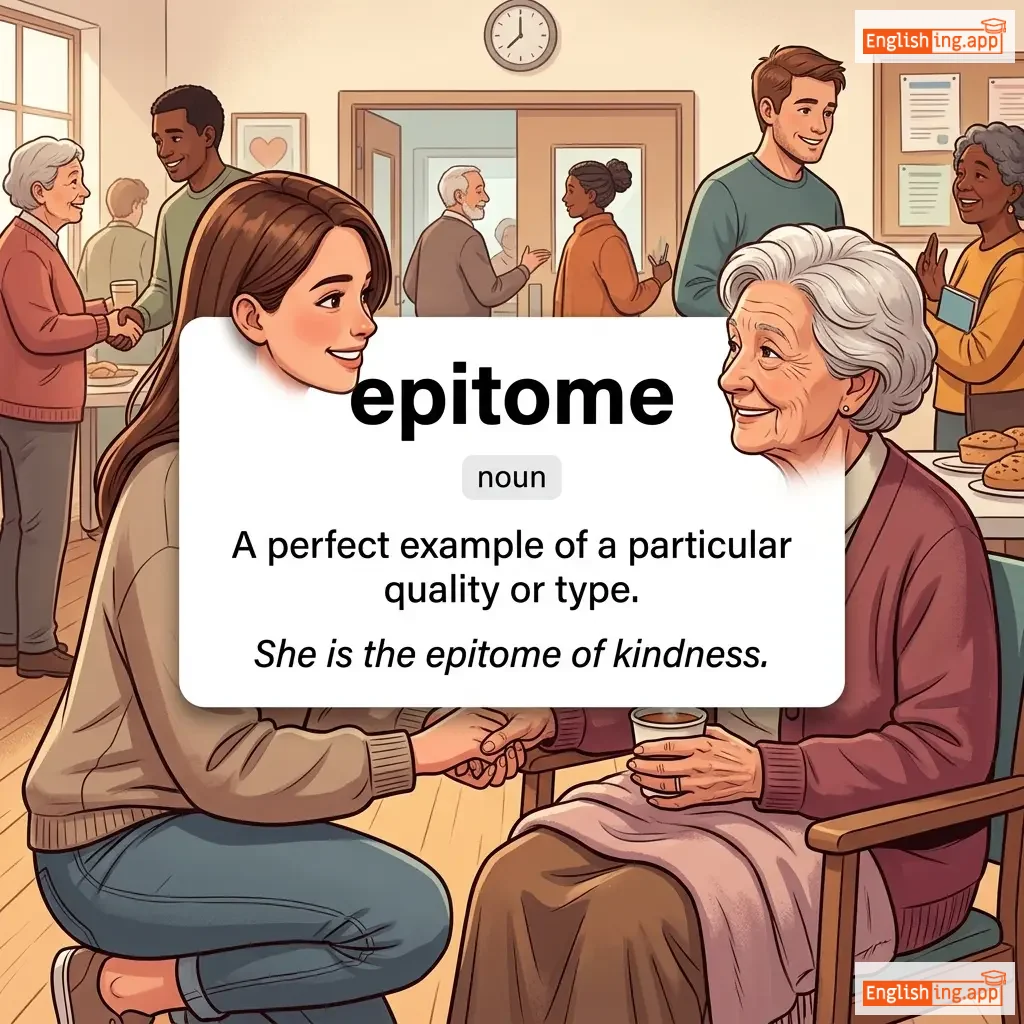
A perfect example of a particular quality or type.
••••••
|
She is the epitome of kindness. |
她是善良的缩影。
Tā shì shànliáng de suō yǐng.
••••••
|
the epitome of something |
The perfect example of a quality or characteristic.
••••••
|
某物的缩影
mǒu wù de suō yǐng
••••••
|
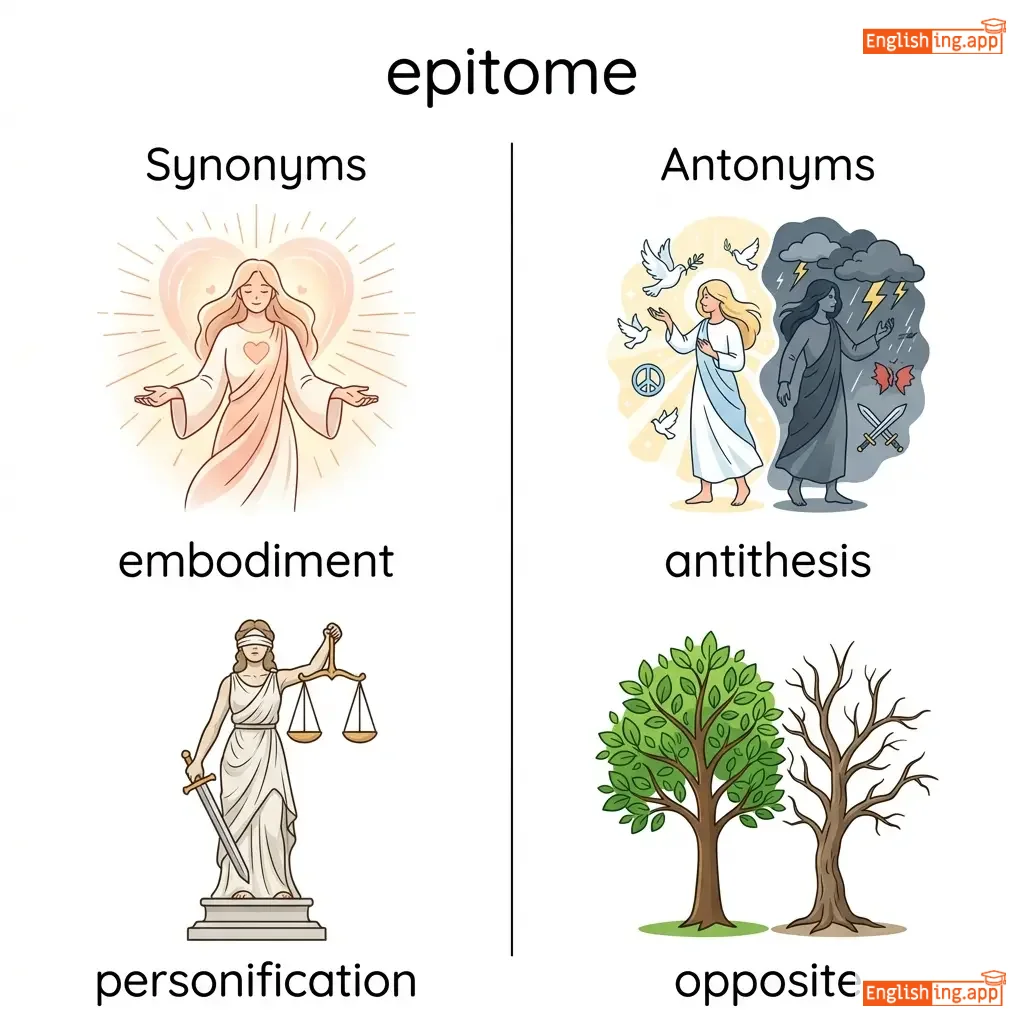
embodiment, personification, essence, exemplar, quintessence
••••••
|
antithesis, opposite, contrast
••••••
|
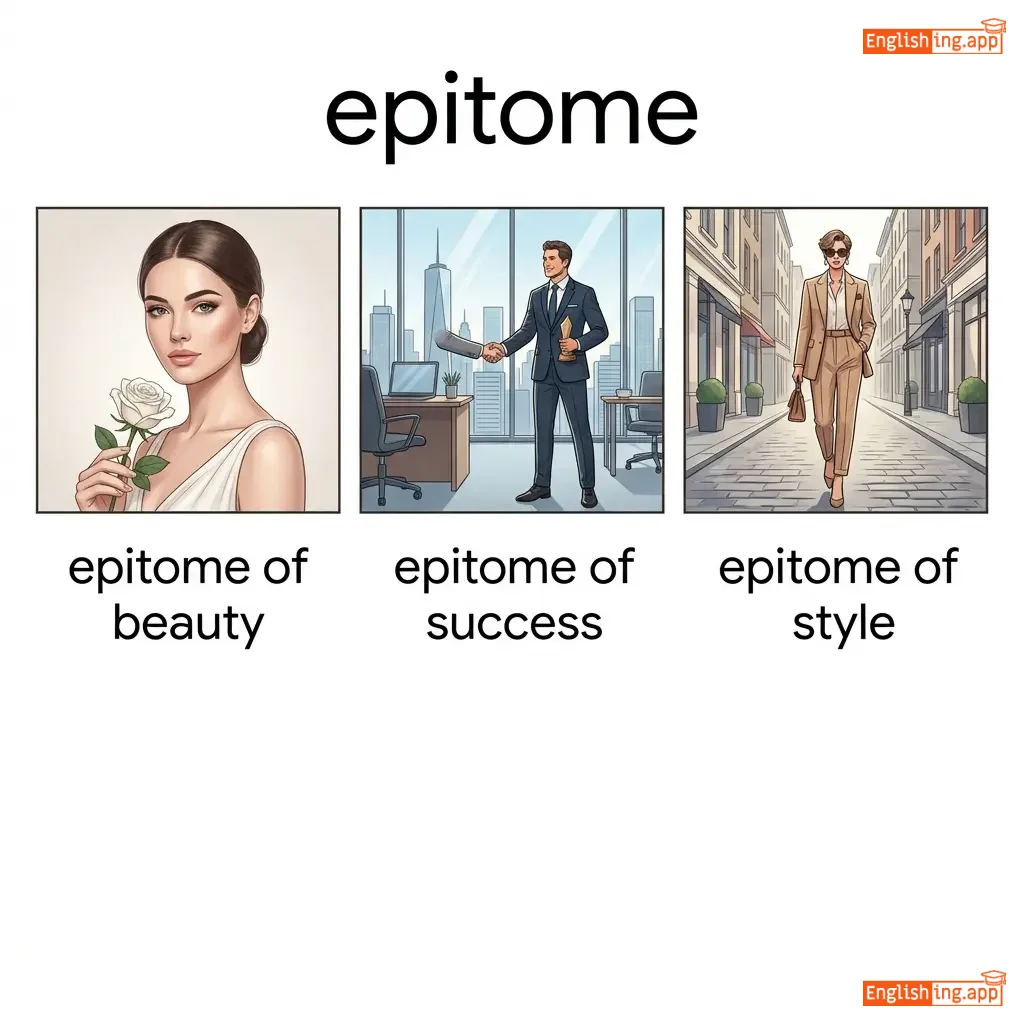
epitome of beauty, epitome of success, epitome of style, epitome of grace
••••••
|
缩影意味着缩 (完美) + 影 (影像) — 完美的影像示例。
••••••
|
|
#3076
🍷
|
/ˈɛpɪkjʊr/
noun
(艾皮奎尔)
••••••
|
- •••••• |
美食家
meishijia
••••••
|
- •••••• | - •••••• | - •••••• | - •••••• |
A person who enjoys fine food and drink, often with refined taste.
••••••
|
As an epicure, she always sought out the finest restaurants in the city. |
作为美食家,她总是寻找城市中最好的餐厅。
Zuòwéi měishíjiā, tā zǒng shì xúnzhǎo chéngshì zhōng zuì hǎo de cāntīng.
••••••
|
epicurean taste |
A taste that values luxury, refinement, and pleasure in food and lifestyle.
••••••
|
美食家口味
měishíjiā kǒuwèi
••••••
|
gourmet, connoisseur, foodie, gastronome
••••••
|
indifferent eater, ascetic
••••••
|
epicure of wine, refined epicure, epicurean taste, true epicure
••••••
|
美食家 = 美味的食物与生活,享受其中的每一刻。
••••••
|
|
#3077
🪦
|
/ˈɛpɪtɑːf/
noun
(墓志铭)
••••••
|
- •••••• |
墓志铭
mùzhìmíng
••••••
|
- •••••• | - •••••• | - •••••• | - •••••• |
A short text written on a tombstone in memory of the deceased.
••••••
|
The gravestone bore an epitaph honoring the soldier’s bravery. |
墓碑上刻有纪念这位士兵勇敢的墓志铭。
Mùbēi shàng kè yǒu jìniàn zhè wèi shìbīng yǒnggǎn de mùzhìmíng.
••••••
|
- •••••• | - •••••• | - •••••• |
inscription, memorial, tribute, commemoration
••••••
|
criticism, dishonor
••••••
|
famous epitaph, epitaph on tombstone, touching epitaph
••••••
|
EpiTaph = 坟墓上的铭文 → 墓志铭
••••••
|
|
#3078
✉️
|
/ɪˈpɪstələri/
adjective
(书信体)
••••••
|
- •••••• |
书信体
shuxinti
••••••
|
- •••••• | - •••••• | - •••••• | - •••••• |
Related to the writing of letters; expressed in or through letters.
••••••
|
The novel is written in an epistolary style, consisting of letters between characters. |
这本小说是以书信体风格写的,由人物之间的信件组成。
Zhe ben xiaoshuo shi yi shuxinti fengge xie de, you renwu zhijian de xinlie zucheng.
••••••
|
- •••••• | - •••••• | - •••••• |
letter-writing, correspondence-based, written communication
••••••
|
oral, spoken
••••••
|
epistolary novel, epistolary tradition, epistolary style
••••••
|
Epistolary = 书信体 → 信件作为风格 → 书信体
••••••
|
|
#3079
📘
|
/ɪˌpɪstəˈmɒlədʒi/
noun
(认识论)
••••••
|
|
认识论
rènshílùn
••••••
|
- •••••• | - •••••• | - •••••• | - •••••• |
The branch of philosophy that studies the nature, origin, and scope of knowledge.
••••••
|
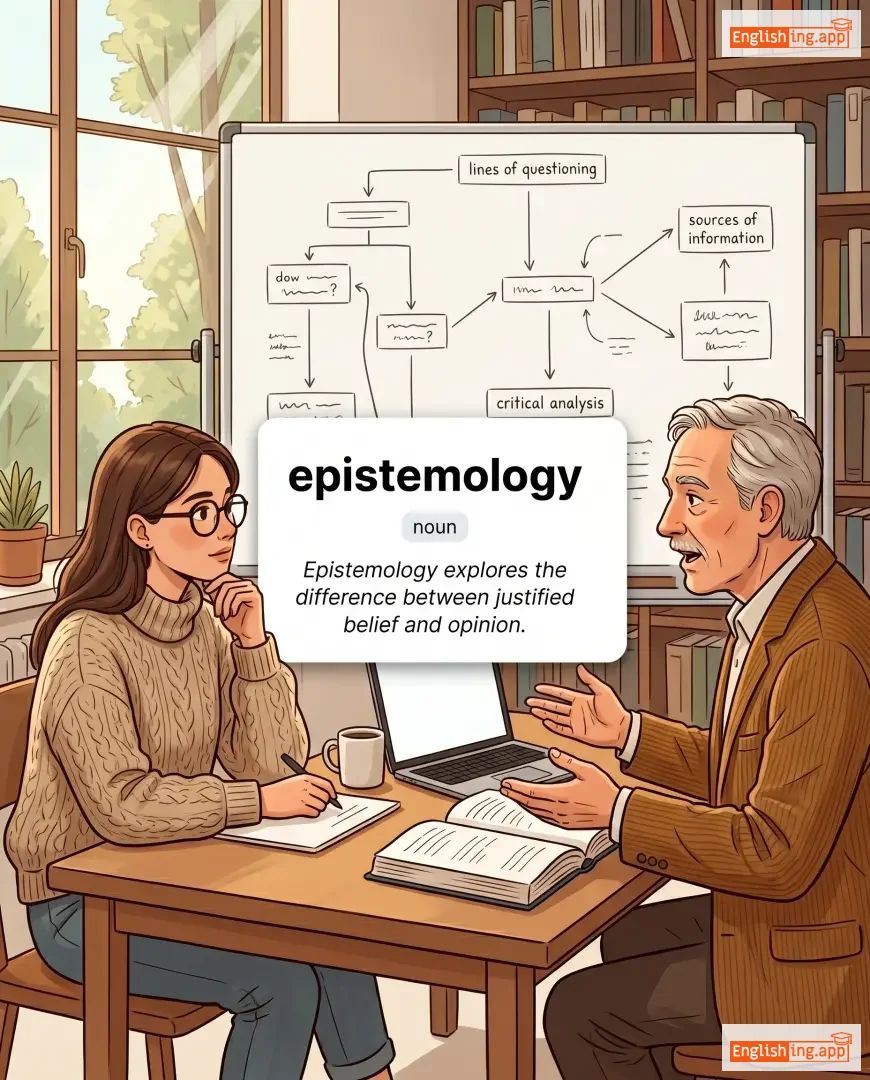
Epistemology explores the difference between justified belief and opinion. |
认识论探索公正的信仰和意见之间的区别。
Rènshílùn tànsuǒ gōngzhèng de xìnyǎng hé yìjiàn zhī jiān de qūbié.
••••••
|
- •••••• | - •••••• | - •••••• |
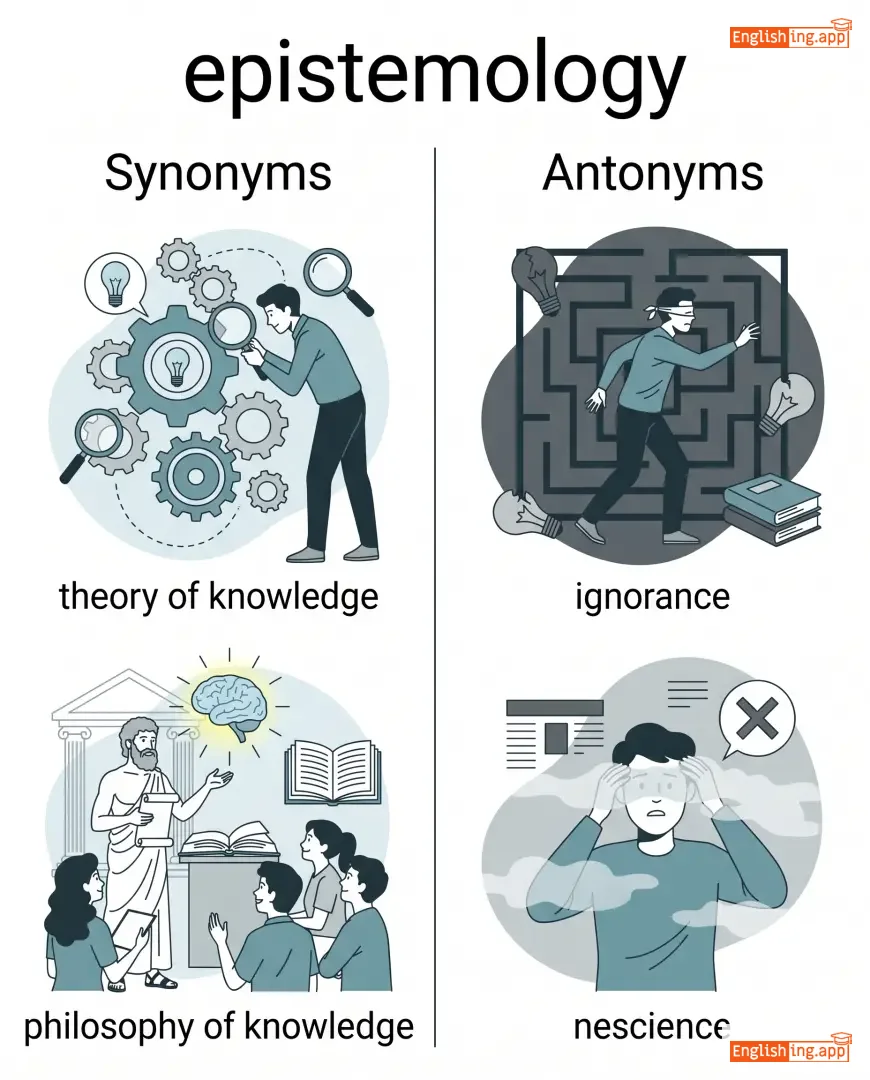
theory of knowledge, philosophy of knowledge, gnoseology
••••••
|
ignorance, nescience
••••••
|
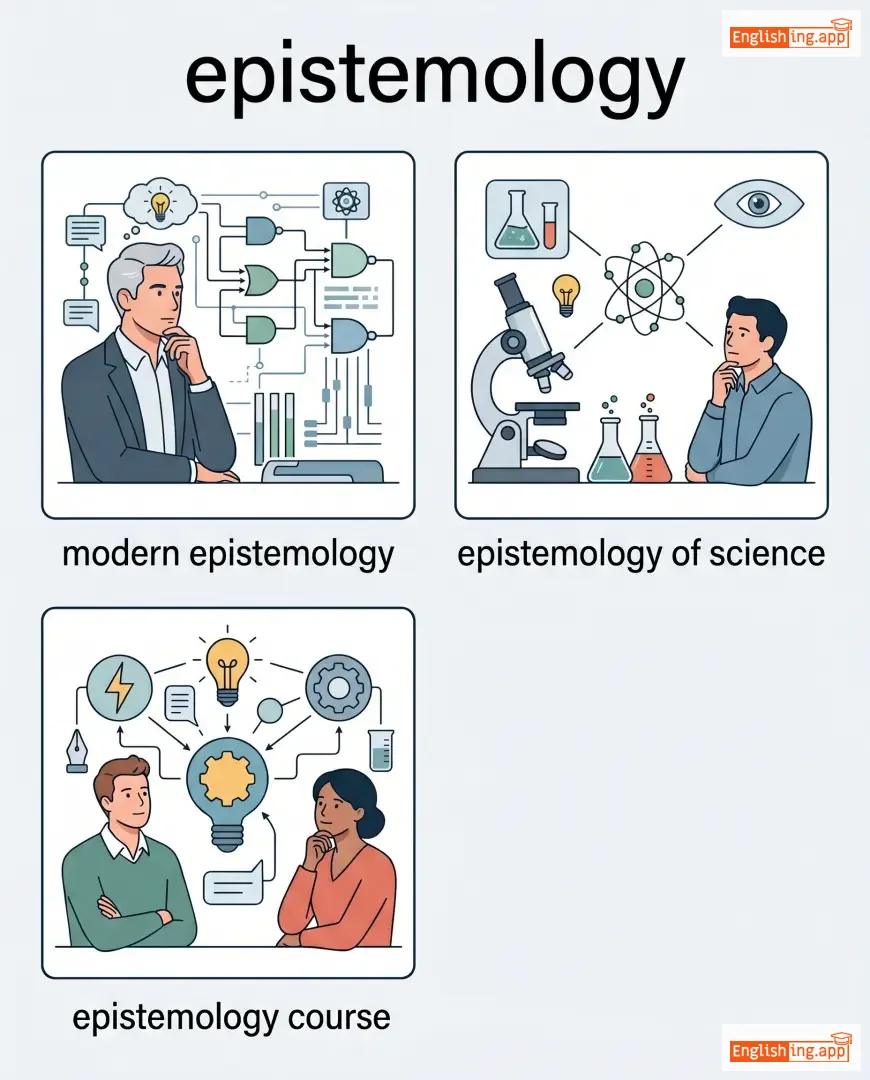
modern epistemology, epistemology of science, epistemology course
••••••
|
认识论 = 认识 (知识) + 论 (学说) → 知识的学说
••••••
|
|
#3080
🧠
|
/ɪˌpɪstəˈmɒlədʒɪst/
noun
(认识论者)
••••••
|
- •••••• |
认识论者
rènshí lùn zhě
••••••
|
- •••••• | - •••••• | - •••••• | - •••••• |
A scholar or expert who studies the nature, sources, and limits of knowledge.
••••••
|
The epistemologist debated how humans can truly know anything with certainty. |
认识论者辩论了人类如何能够确信地知道某些事情。
Rènshí lùn zhě biànlùn le rénlèi rúhé nénggòu quèxìn de zhīdào mǒuxiē shìqíng.
••••••
|
- •••••• | - •••••• | - •••••• |
philosopher, theorist, scholar, thinker
••••••
|
ignoramus, layman
••••••
|
modern epistemologist, famous epistemologist, work of an epistemologist
••••••
|
认识论者: 认识 (知识) + 论者 (专家) = 知识领域专家
••••••
|
|
#3081
📺
|
/ˌɛpɪˈsɒdɪk/
adjective
(集集式的)
••••••
|
- •••••• |
集集式的
jíjí shì de
••••••
|
- •••••• | - •••••• | - •••••• | - •••••• |
Happening occasionally or in separate parts; related to episodes.
••••••
|
Her interest in art was episodic, coming and going over the years. |
她对艺术的兴趣是间歇性的,随着岁月的流逝而来又去。
Tā duì yìshù de xìngqù shì jiànxiēxìng de, suízhe suìyuè de liúshì ér lái yòu qù.
••••••
|
- •••••• | - •••••• | - •••••• |
occasional, intermittent, sporadic, irregular, periodic
••••••
|
continuous, constant
••••••
|
episodic interest, episodic memory, episodic series, episodic nature
••••••
|
集集式的意味着像一个剧集——偶尔发生的事情。
••••••
|
|
#3082
🎬
|
/ˈɛpɪsoʊd/
noun
(episod)
••••••
|
- •••••• |
剧集
ju ji
••••••
|
- •••••• | - •••••• | - •••••• | - •••••• |
An event or part of a story, or one installment in a series.
••••••
|
The last episode of the drama was watched by millions. |
这部戏剧的最后一集被数百万人观看。
Zhè bù xìjù de zuìhòu yī jí bèi shù bǎi wàn rén guānkàn.
••••••
|
dramatic episode |
A notable or intense event in a story or life.
••••••
|
戏剧性事件
xìjù xìng shìjiàn
••••••
|
event, incident, chapter, installment, occurrence
••••••
|
continuation, whole
••••••
|
TV episode, final episode, latest episode, dramatic episode
••••••
|
TV Episode = 一部剧集 (ju ji) 在电视上。
••••••
|
|
#3083
✨
|
/ɪˈpɪfəni/
noun
(启示)
••••••
|
|
顿悟
dùn wù
••••••
|
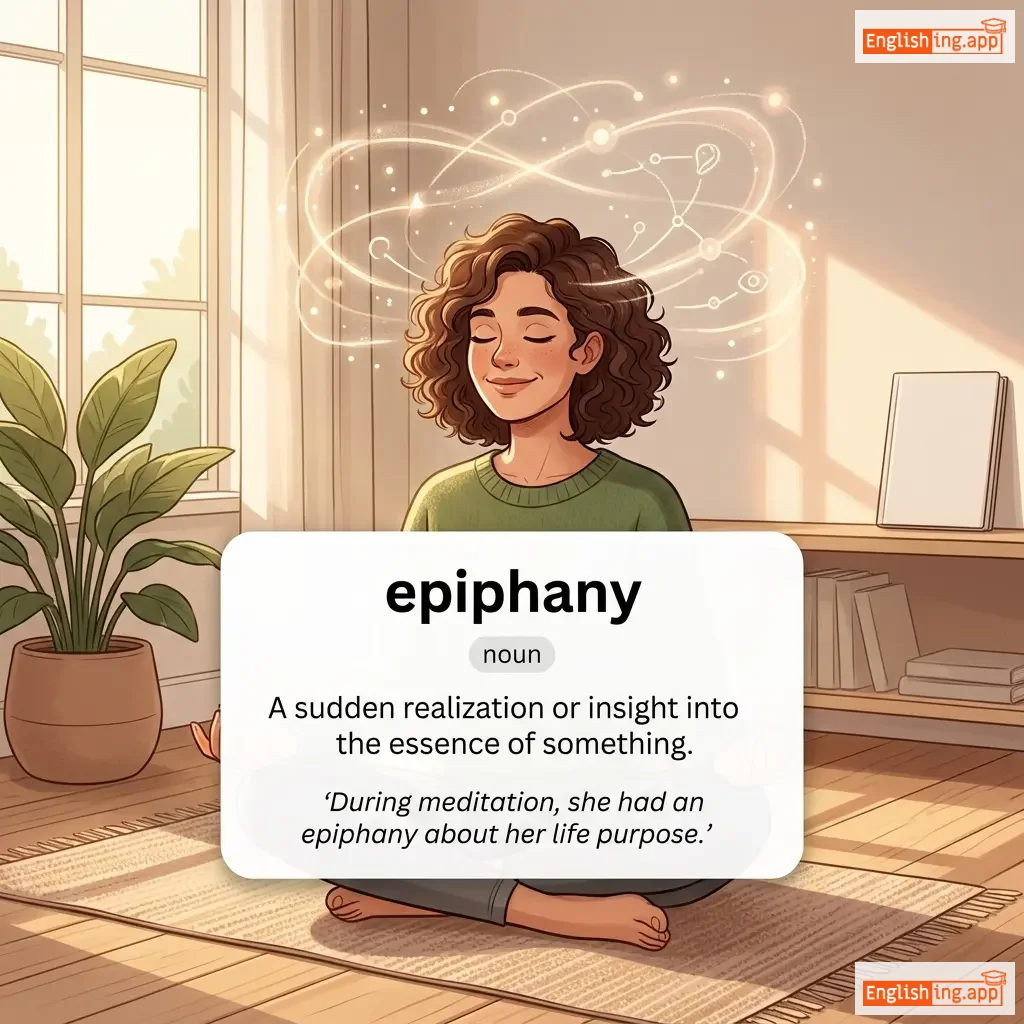
- •••••• | - •••••• | - •••••• | - •••••• |
A sudden realization or insight into the essence of something.
••••••
|
During meditation, she had an epiphany about her life purpose. |
在冥想时,她突然领悟到自己的人生目标。
Zài míngxiǎng shí, tā túrán lǐngwù dào zìjǐ de rénshēng mùbiāo.
••••••
|
have an epiphany |
To suddenly realize or understand something clearly.
••••••
|
有顿悟
yǒu dùn wù
••••••
|
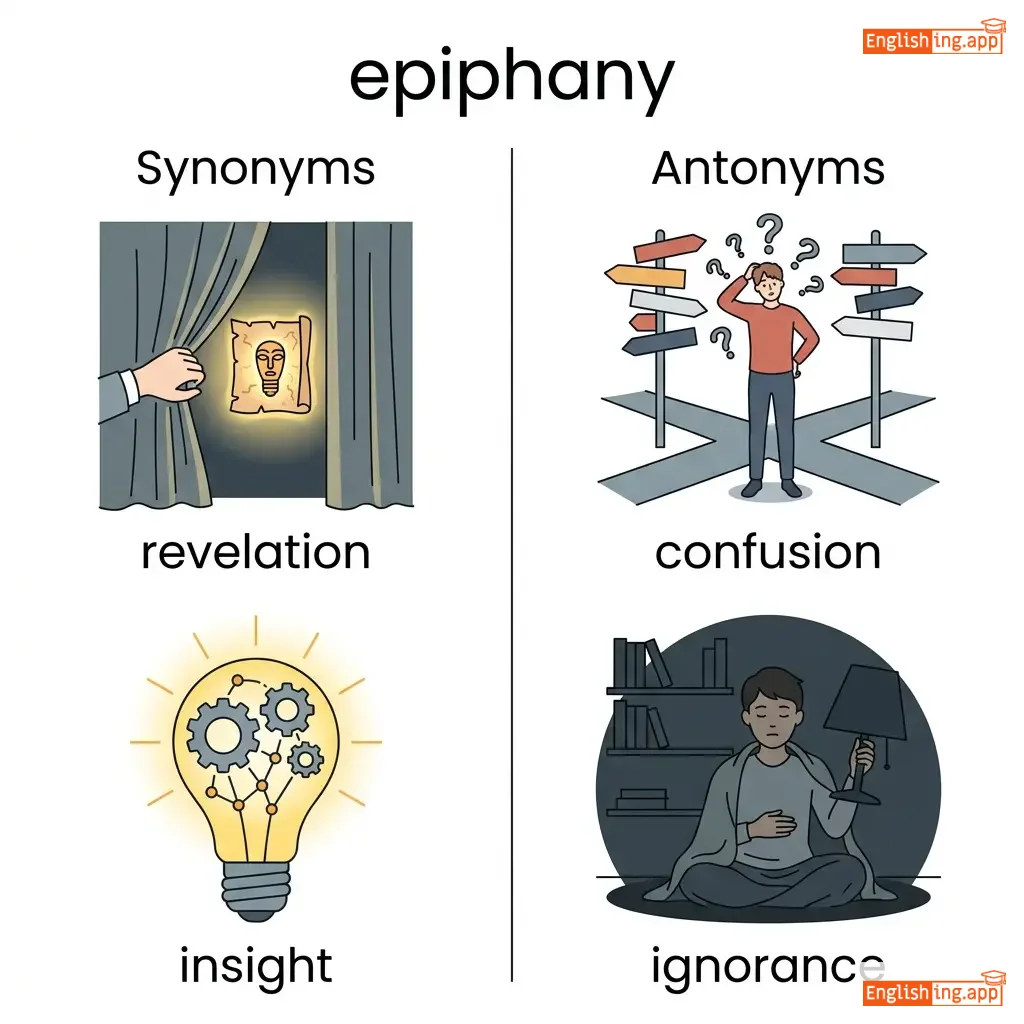
revelation, insight, realization, awakening, discovery
••••••
|
confusion, ignorance
••••••
|
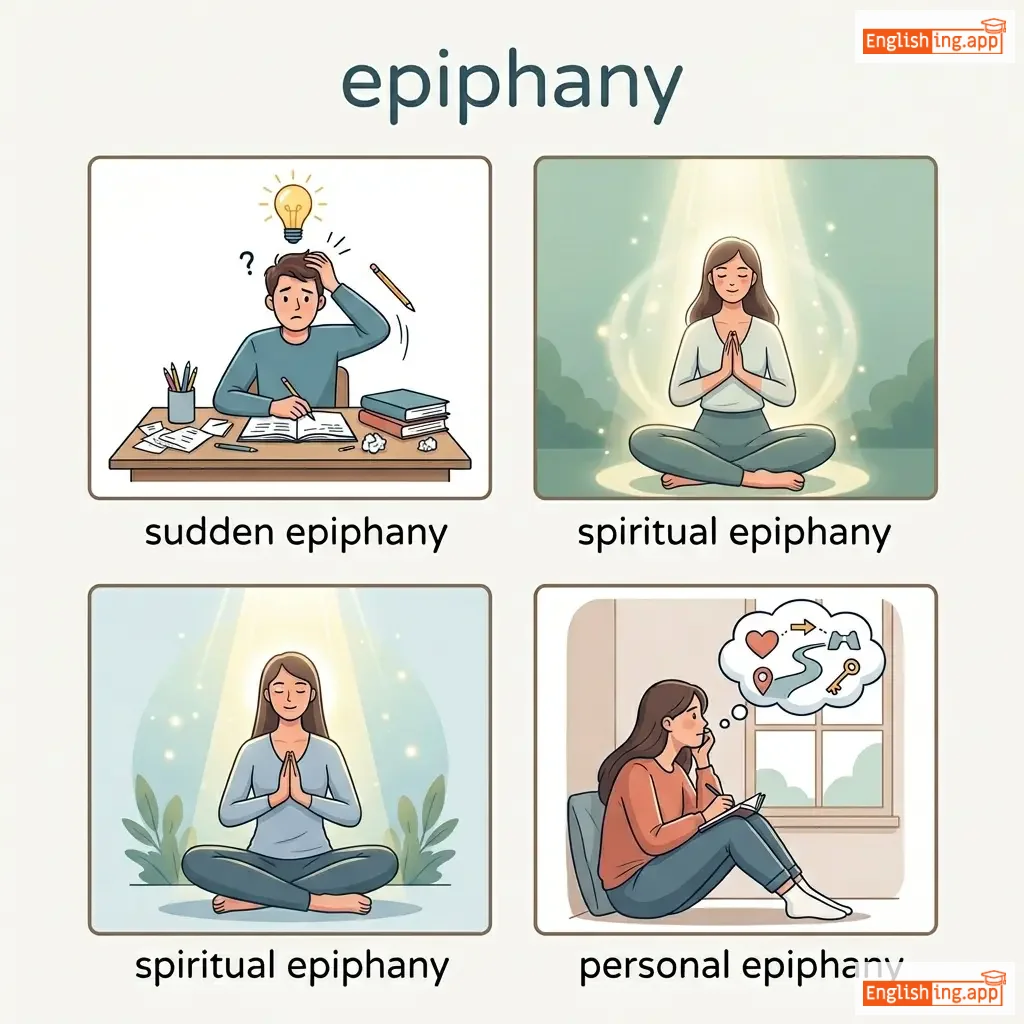
sudden epiphany, spiritual epiphany, personal epiphany, have an epiphany
••••••
|
Epi + funny → 突然明白的感觉,就像突然笑出声。
••••••
|
|
#3084
📘
|
/ˈɛpɪˌlɔːɡ/
noun
(结语)
••••••
|
- •••••• |
结语
jieyu
••••••
|
- •••••• | - •••••• | - •••••• | - •••••• |
A section at the end of a book, play, or speech that serves as a conclusion.
••••••
|
The author included an epilogue to explain what happened to the characters later. |
作者添加了结语,以解释后来的角色发生了什么。
Zuòzhě tiānjiāle jiéyǔ, yǐ jiěshì hòulái de juésè fāshēngle shénme.
••••••
|
final epilogue |
The last concluding section of a story or work.
••••••
|
最终结语
zuìzhōng jiéyǔ
••••••
|
afterword, conclusion, ending, coda, postscript
••••••
|
prologue, introduction
••••••
|
short epilogue, final epilogue, epilogue section, epilogue speech
••••••
|
Epi (结束) + log (写)——结语是写下的结束。
••••••
|
|
#3085
💡
|
/ˈɛpɪɡræm/
noun
(伊皮格拉姆)
••••••
|
- •••••• |
警句
jǐngjù
••••••
|
- •••••• | - •••••• | - •••••• | - •••••• |
A short, witty saying or poem that expresses an idea in a clever way.
••••••
|
Oscar Wilde was famous for his sharp epigrams. |
奥斯卡·王尔德因其犀利的警句而闻名。
Ào sī kǎ·wáng ěr dé yīn qí xīlì de jǐngjù ér wénmíng.
••••••
|
witty epigram |
A clever and amusing remark or statement.
••••••
|
机智的警句
jīzhì de jǐngjù
••••••
|
quip, aphorism, saying, witticism, proverb
••••••
|
sermon, lecture
••••••
|
sharp epigram, clever epigram, witty epigram, famous epigram
••••••
|
警 (jǐng) 表示短,句 (jù) 表示说——警句是短而机智的说法。
••••••
|
|
#3086
🧴
|
/ˌɛpɪˈdɜːrmɪs/
noun
(表皮)
••••••
|
- •••••• |
皮肤的外层
pí fū de wài céng
••••••
|
- •••••• | - •••••• | - •••••• | - •••••• |
the outer layer of cells covering the body of an organism, especially the skin
••••••
|
The epidermis protects the body from harmful bacteria.
表皮保护身体免受有害细菌的侵害。
••••••
|
表皮保护身体免受有害细菌的侵害。
Biaopi baohu shenti mian shou youhai xijun de qinhai.
••••••
|
- •••••• | - •••••• | - •••••• |
skin, cuticle, outer layer, surface, covering
••••••
|
dermis, inner tissue
••••••
|
epidermis layer, epidermis cells, epidermis function
••••••
|
Epi代表外面,dermis代表皮肤 – epidermis代表皮肤的外层
••••••
|
|
#3087
🦠
|
/ˌɛpɪˈdɛmɪk/
noun
(happiness)
••••••
|
- •••••• |
幸福
xingfu
••••••
|
- •••••• | - •••••• | - •••••• | - •••••• |
a widespread occurrence of an infectious disease in a community at a particular time
••••••
|
The flu epidemic affected thousands of people in the city. |
当她获得奖项时,她无法掩饰自己的幸福。
Dang ta huode jiangxiang shi, ta wufa yanshi ziji de xingfu.
••••••
|
spread like an epidemic |
something that grows or spreads very quickly
••••••
|
追寻幸福
Zhui xun xing fu
••••••
|
outbreak, plague, pandemic, contagion, surge
••••••
|
endemic, limited, contained
••••••
|
flu epidemic, epidemic outbreak, control epidemic, epidemic spread
••••••
|
幸福 (xing fu) = 喜欢 (xi huan)
••••••
|
|
#3088
📐
|
/ˌɛpɪˈsaɪklɔɪd/
noun
(外摆线)
••••••
|
- •••••• |
外摆线
wàibǎi xiàn
••••••
|
- •••••• | - •••••• | - •••••• | - •••••• |
a curve traced by a point on the circumference of a circle that rolls around the outside of another circle
••••••
|
The mathematician demonstrated how to draw an epicycloid. |
数学家演示了如何绘制外摆线。
Shùxué jiā yǎnshìle rúhé huìzhì wàibǎi xiàn.
••••••
|
- •••••• | - •••••• | - •••••• |
curve, geometric figure, trajectory
••••••
|
straight line, flat path
••••••
|
draw epicycloid, epicycloid shape, geometric epicycloid
••••••
|
Cycloid表示曲线,epi-cycloid表示围绕另一个圆滚动的曲线
••••••
|
|
#3089
🔄
|
/ˈɛpɪˌsaɪkl/
noun
(外行星环)
••••••
|
- •••••• |
外行星环
wài xíngxīng huán
••••••
|
- •••••• | - •••••• | - •••••• | - •••••• |
a small circle whose center moves around the circumference of a larger one, used in ancient astronomy
••••••
|
The concept of the epicycle was used to explain planetary motion. |
外行星环的概念被用来解释行星的运动。
wài xíngxīng huán de gàiniàn bèi yòng lái jiěshì xíngxīng de yùndòng.
••••••
|
- •••••• | - •••••• | - •••••• |
orbit, circle, revolution, rotation
••••••
|
line, straight path
••••••
|
planetary epicycle, motion epicycle, Ptolemaic epicycle
••••••
|
外行星环就是小圈圈绕大圈圈的运动,像行星绕太阳转动。
••••••
|
|
#3090
🍷
|
/ˌɛpɪkjʊˈriːən/
adjective
(享乐主义)
••••••
|
- •••••• |
享乐主义
xiǎnglè zhǔyì
••••••
|
- •••••• | - •••••• | - •••••• | - •••••• |
relating to the enjoyment of fine food, drink, and luxury
••••••
|
The chef prepared an epicurean feast for the guests. |
厨师为客人准备了一场享乐主义的盛宴。
Chúshī wèi kèrén zhǔnbèile yī chǎng xiǎnglè zhǔyì de shèngyàn.
••••••
|
- •••••• | - •••••• | - •••••• |
luxurious, indulgent, gourmet, hedonistic, refined
••••••
|
austere, simple, plain
••••••
|
epicurean delight, epicurean lifestyle, epicurean taste, epicurean philosophy
••••••
|
Epicurean是享受美食和奢华生活的人
••••••
|
Vocabulary Quiz
Test your vocabulary by matching words with their translations or meanings.
Login to take the quiz
Comments (0)
Share your thoughts and join the discussion.
Join the discussion by logging in
Login to CommentNo comments yet
Be the first to share your thoughts!