




Swipe left or right, or use the buttons. Tap image to zoom.
例句翻译
单词
Lesson 364Lesson 364 - 遮罩切换
|
表情符号
|
单词 | Images | 翻译 | 过去时 | 过去分词 | 第三人称单数 | 动名词 | 含义 | 例句 | 例句翻译 | 示例表达 | 示例表达含义 | 示例表达翻译 | 同义词 | 反义词 | 搭配词 | 助记符 |
|---|---|---|---|---|---|---|---|---|---|---|---|---|---|---|---|---|---|
|
#10885
🚑
|
/ɪˈmɜrdʒənsi/
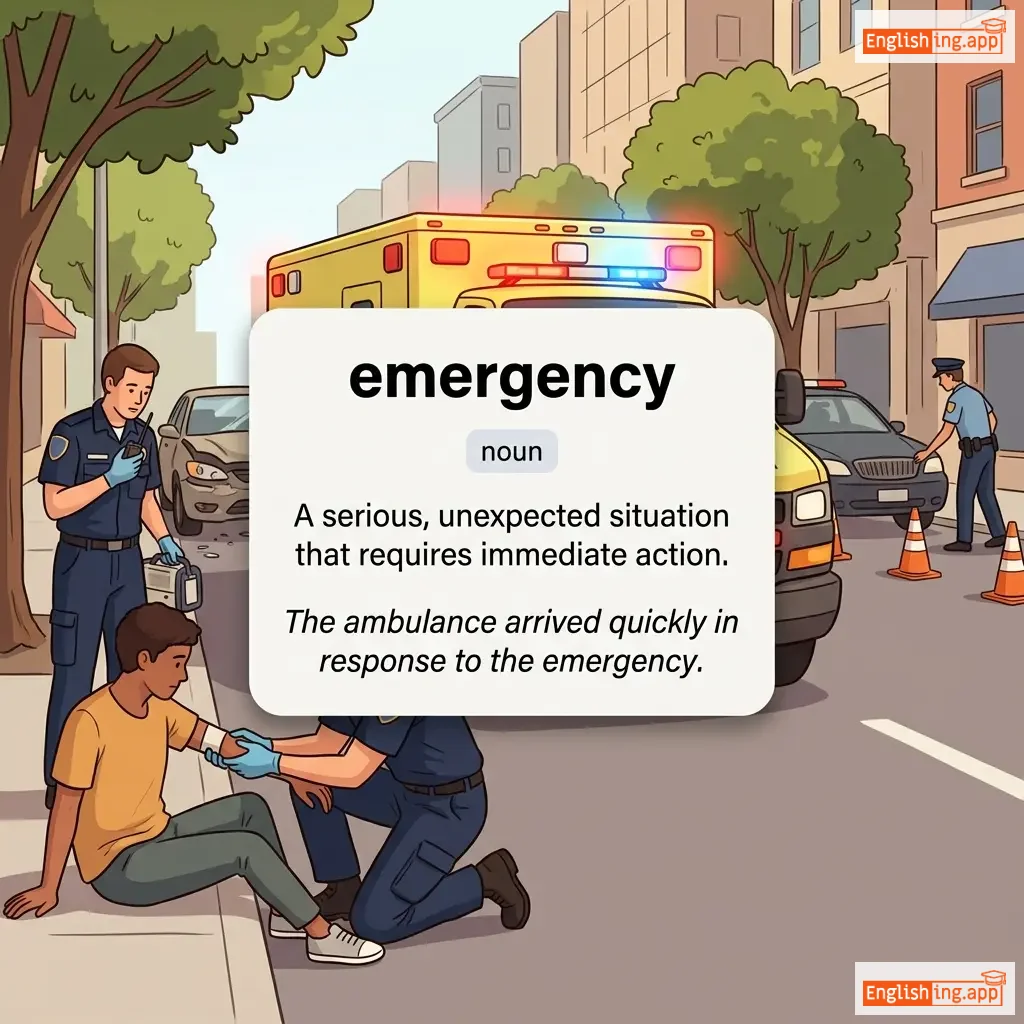
noun
(yīmàzhènxì)
••••••
|
|
紧急情况
jinji qingkuang
••••••
|
- •••••• | - •••••• | - •••••• | - •••••• |
A serious, unexpected situation that requires immediate action.
••••••
|
The ambulance arrived quickly in response to the emergency. |
救护车迅速赶到应对紧急情况。
Jiuhu che xunsu gandao yingdui jinji qingkuang.
••••••
|
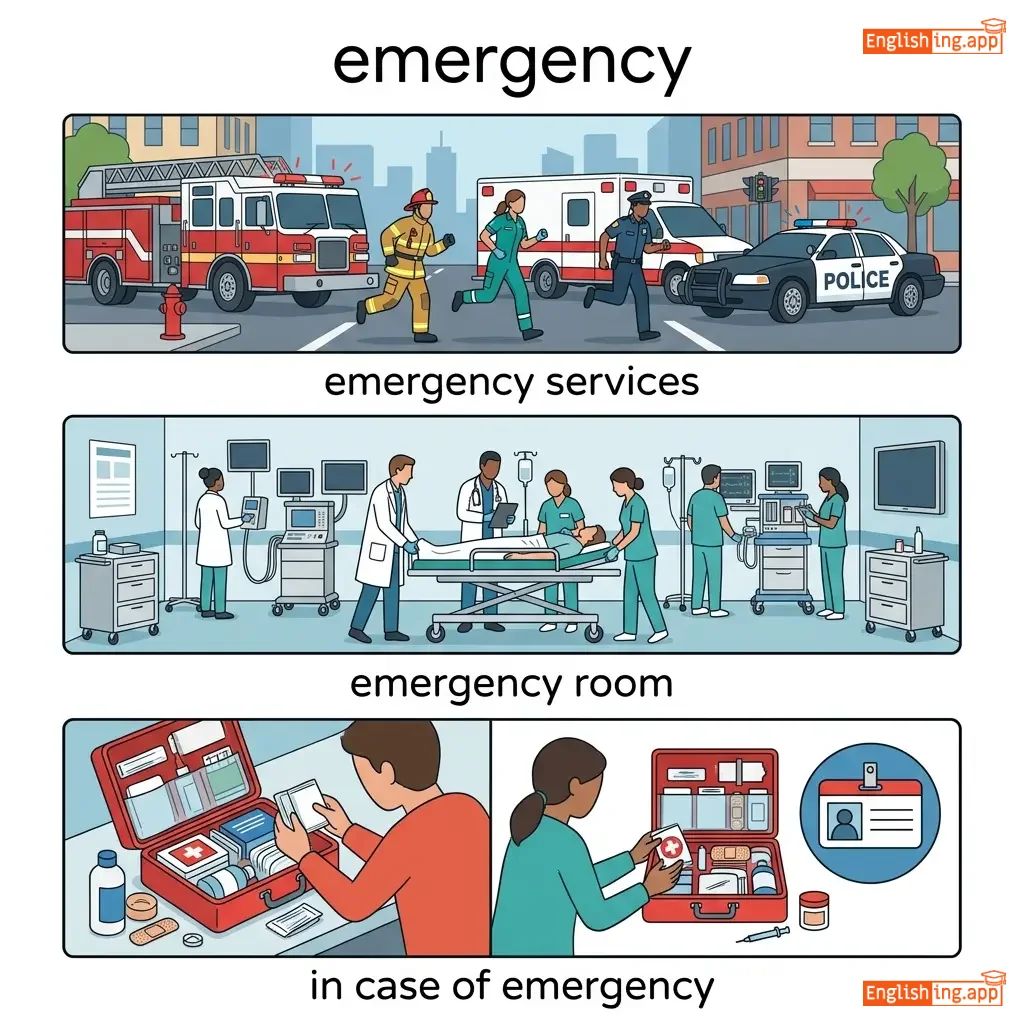
emergency room |
A hospital department where urgent cases are treated.
••••••
|
急诊室
Jizhen shi
••••••
|
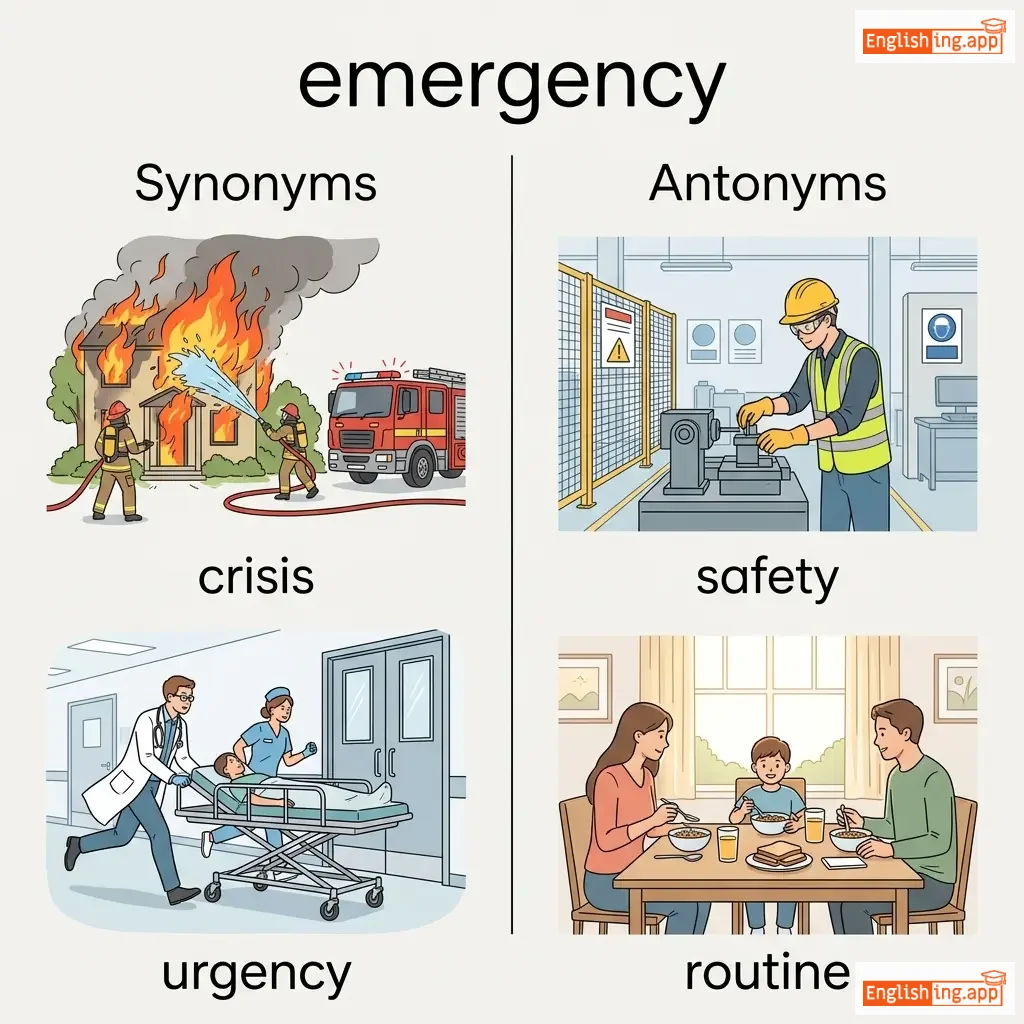
crisis, urgency, disaster, accident
••••••
|
safety, routine
••••••
|
emergency services, emergency room, in case of emergency, emergency exit
••••••
|
Emergency = Jinji (紧急) → 紧急时刻,马上行动!
••••••
|
|
#10886
🚪
|
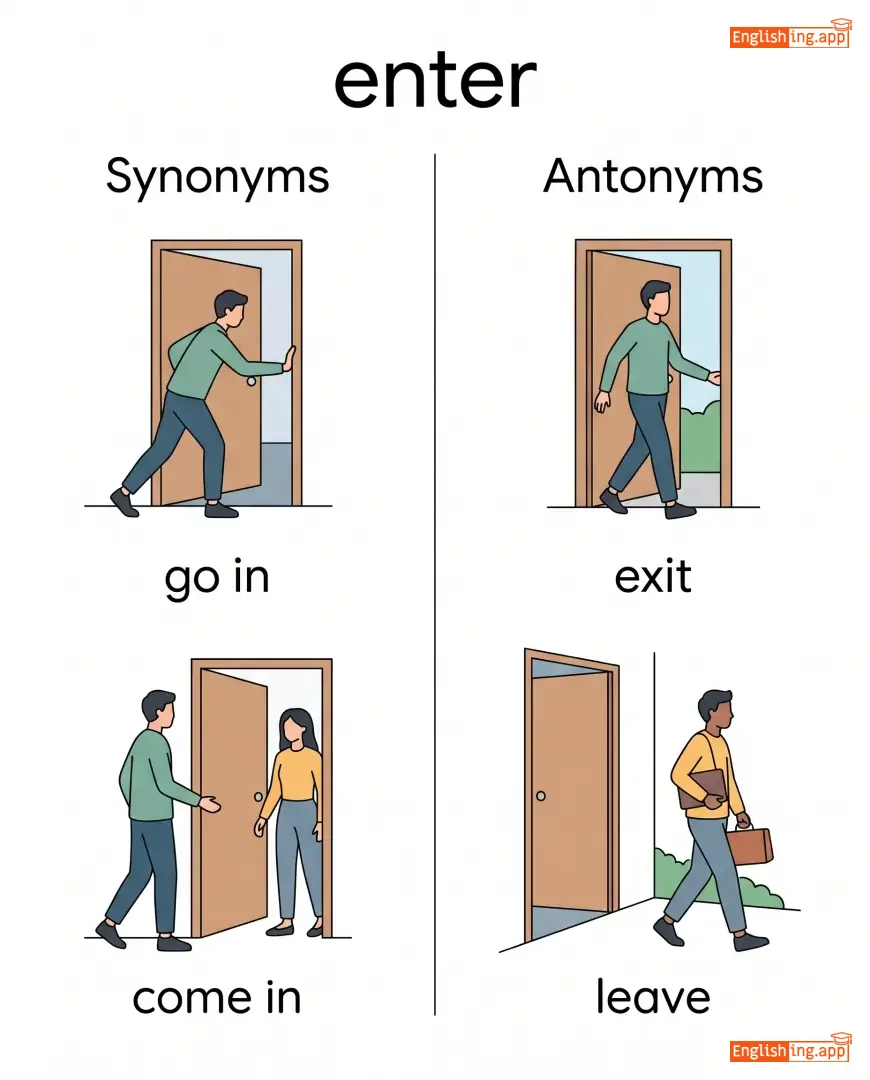
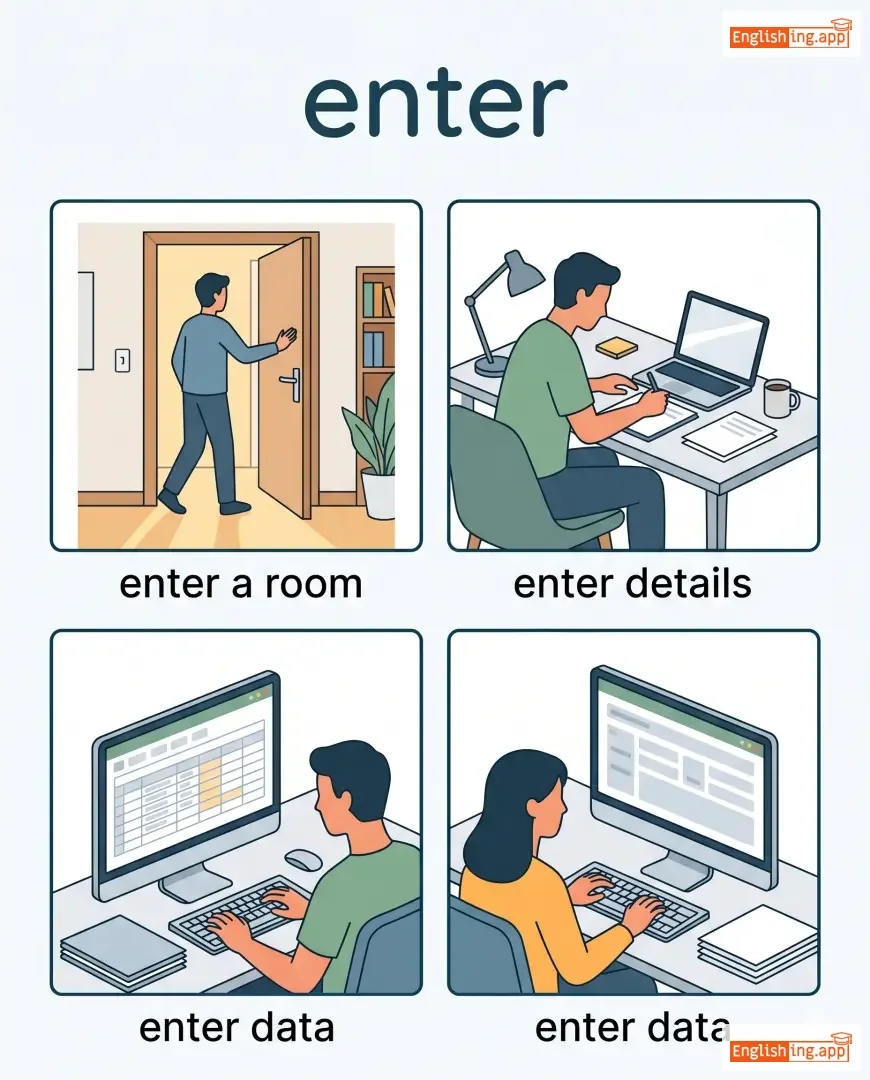
/ˈɛntər/
verb
(entā)
••••••
|
|
进入
jinru
••••••
|
entered
entārd
••••••
|
entered
entārd
••••••
|
enters
entārs
••••••
|
entering
entāring
••••••
|
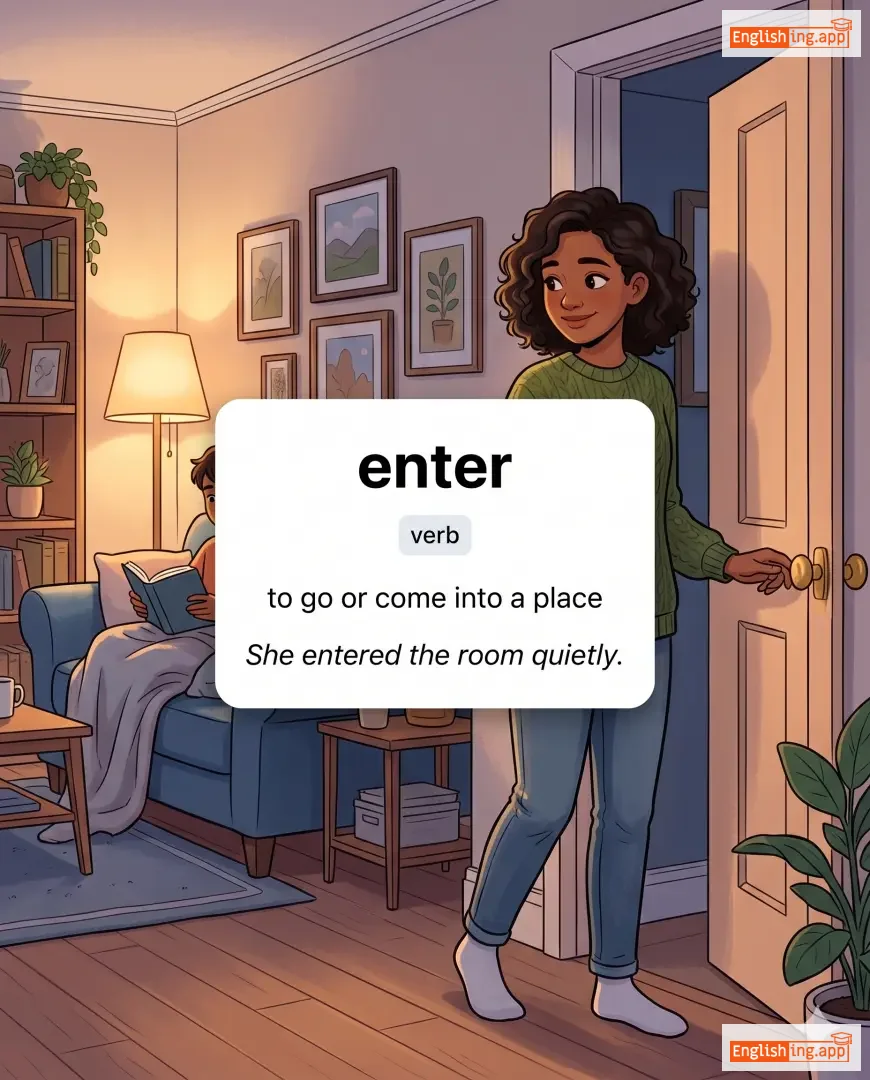
to go or come into a place
••••••
|
She entered the room quietly.
她安静地进入了房间。
••••••
|
她安静地进入了房间。
Tā ānjìng de jìnrù le fángjiān.
••••••
|
enter into an agreement
进入协议
••••••
|
to formally agree to a contract or arrangement
••••••
|
进入协议
jìnrù xiéyì
••••••
|
go in, come in, access, penetrate, join
••••••
|
exit, leave, depart
••••••
|
enter a room, enter details, enter data, enter into
••••••
|
按下ENTER键,你进入计算机,就像'进入'的意思。
••••••
|
|
#10887
✅
|
/ɪnˈʃʊər/
verb
(enshūr)
••••••
|
- •••••• |
确保
què bǎo
••••••
|
ensured
enshūrd
••••••
|
ensured
enshūrd
••••••
|
ensures
enshūrs
••••••
|
ensuring
enshūring
••••••
|
To make certain that something will happen or be the case.
••••••
|
Please ensure that the door is locked before you leave.
请确保在离开之前门已锁好。
••••••
|
请确保在离开之前门已锁好。
Qǐng què bǎo zài lí kāi zhī qián mén yǐ suǒ hǎo.
••••••
|
ensure success
确保成功
••••••
|
to guarantee achievement of success
••••••
|
确保成功
què bǎo chéng gōng
••••••
|
guarantee, secure, confirm, assure, safeguard
••••••
|
neglect, ignore, risk
••••••
|
ensure safety, ensure quality, ensure success, ensure compliance
••••••
|
Ensure 代表确保 – 为了成功,你必须确保它发生。
••••••
|
|
#10888
🇬🇧
|
/ˈɪŋɡlɪʃ/
noun/adjective
(英格利什)
••••••
|
- •••••• |
英语
yingyu
••••••
|
- •••••• | - •••••• | - •••••• | - •••••• |
The language of England, widely spoken around the world; relating to England or its people.
••••••
|
She is learning English to study abroad. |
她正在学习英语,以便出国留学。
Tā zhèngzài xuéxí yīngyǔ, yǐbiàn chūguó liúxué.
••••••
|
plain English |
clear and simple language
••••••
|
简单的英语
jiǎndān de yīngyǔ
••••••
|
British language, Anglo-Saxon, tongue, dialect
••••••
|
non-English, foreign
••••••
|
learn English, English teacher, English literature, English language
••••••
|
English = 英语 – 出国留学,你需要英语。
••••••
|
|
#10889
🏗️
|
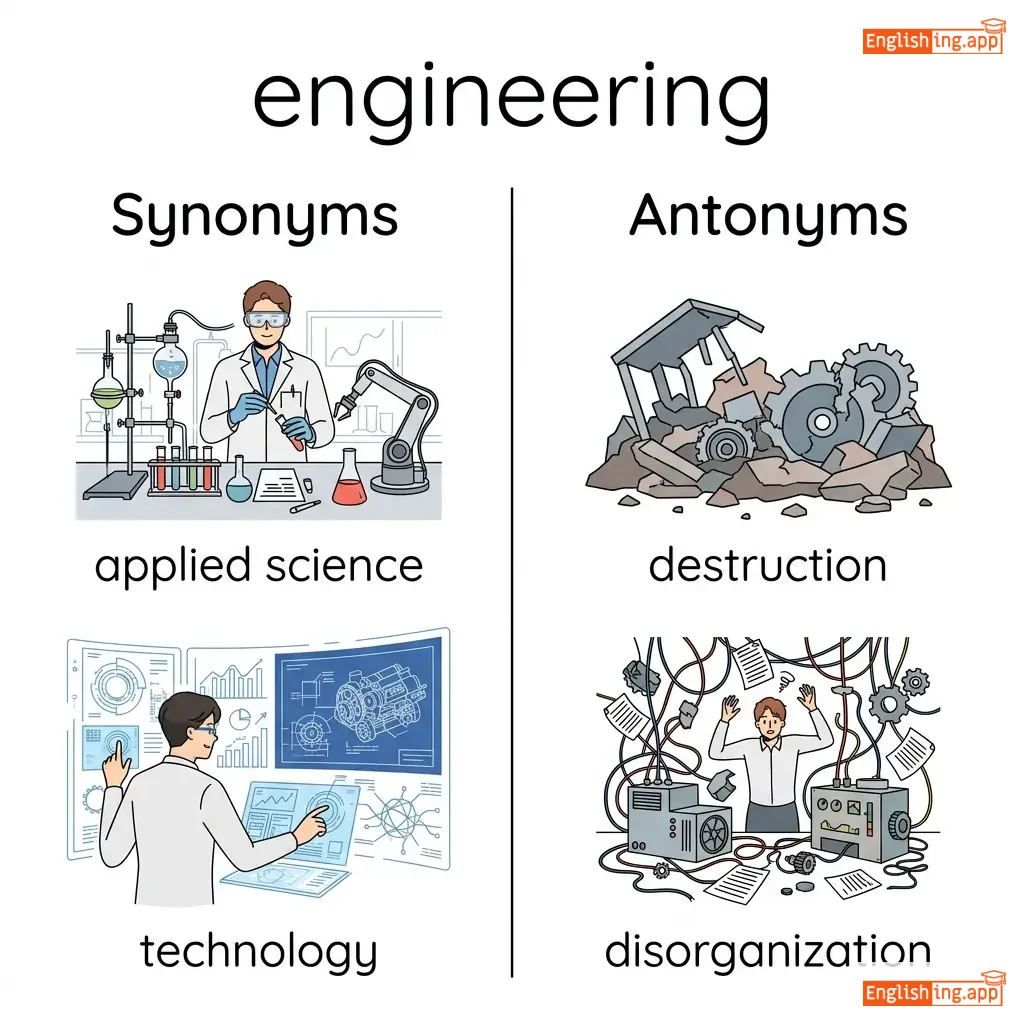
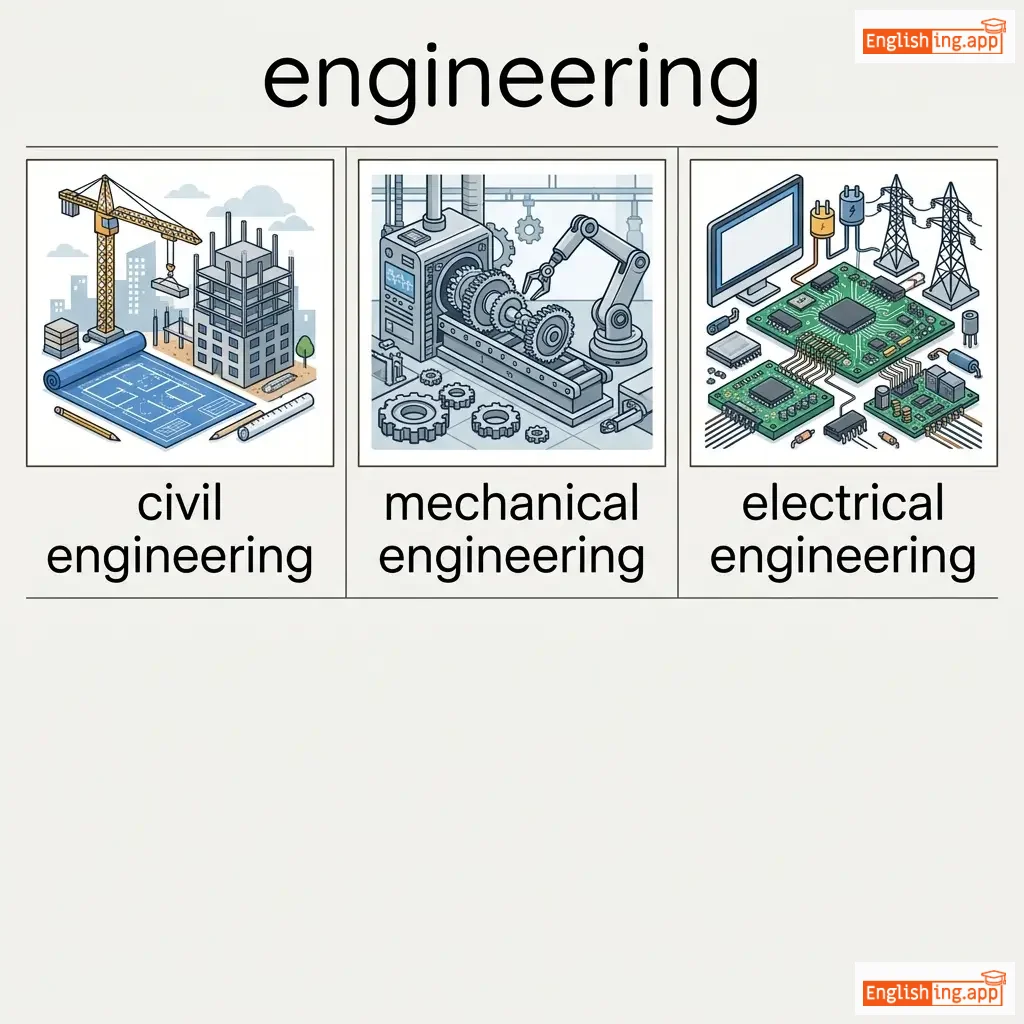
/ˌɛndʒɪˈnɪərɪŋ/
noun
(工程学)
••••••
|
|
工程学
gongchengxue
••••••
|
- •••••• | - •••••• | - •••••• | - •••••• |
The branch of science and technology concerned with the design, building, and use of engines, machines, and structures.
••••••
|
She studied civil engineering at university. |
她在大学学习了土木工程。
Tā zài dàxué xuéxíle tǔmù gōngchéng.
••••••
|
social engineering |
manipulating people into giving up information or taking certain actions
••••••
|
社会工程学
shèhuì gōngchéngxué
••••••
|
applied science, technology, mechanics, construction
••••••
|
destruction, disorganization
••••••
|
civil engineering, mechanical engineering, electrical engineering, software engineering
••••••
|
工程学通过技术设计和建设创新的解决方案 (jìshù).
••••••
|
|
#10890
👷♂️
|
/ˌɛndʒɪˈnɪər/
noun/verb
(工程师)
••••••
|
- •••••• |
工程师
gōngchéngshī
••••••
|
engineered
工程过
••••••
|
engineered
工程过
••••••
|
engineers
工程师们
••••••
|
engineering
工程学
••••••
|
A person trained to design, build, or maintain engines, machines, or structures; to skillfully arrange or bring about.
••••••
|
The engineer designed a new bridge across the river.
工程师设计了一个新桥,跨越了这条河流。
••••••
|
工程师设计了一个新桥,跨越了这条河流。
Gōngchéngshī shèjìle yīgè xīn qiáo, kuàyuèle zhè tiáo héliú.
••••••
|
reverse engineer
逆向工程师
••••••
|
to analyze a finished product to understand how it was made
••••••
|
逆向工程师
nìxiàng gōngchéngshī
••••••
|
designer, builder, technician, architect, planner
••••••
|
destroyer, dismantler
••••••
|
civil engineer, software engineer, train engineer, engineer solution
••••••
|
工程师是负责设计和改进机器的专家。
••••••
|
|
#10891
🚗
|
/ˈɛndʒɪn/
noun
(引擎)
••••••
|
- •••••• |
引擎
yin qing
••••••
|
- •••••• | - •••••• | - •••••• | - •••••• |
A machine designed to convert energy into mechanical power.
••••••
|
The car's engine failed on the highway. |
汽车的引擎在高速公路上坏了。
Qi che de yin qing zai gao su gong lu shang huai le.
••••••
|
engine of growth |
something that drives progress or development
••••••
|
增长的引擎
zeng zhang de yin qing
••••••
|
motor, machine, mechanism, generator, turbine
••••••
|
brake, stopper
••••••
|
car engine, powerful engine, engine failure, engine design
••••••
|
引擎 – 没有引擎,车子不能动。
••••••
|
|
#10892
👮
|
/ɪnˈfɔːrsmənt/
noun
(énfǒsīmén)
••••••
|
- •••••• |
执法
zhífǎ
••••••
|
- •••••• | - •••••• | - •••••• | - •••••• |
the act of making sure that laws or rules are followed
••••••
|
The police are responsible for law enforcement. |
警察负责执法。
Jǐngchá fùzé zhífǎ.
••••••
|
strict enforcement |
the rigorous application of rules or laws
••••••
|
严格执法
yángé zhífǎ
••••••
|
implementation, execution, application, policing
••••••
|
neglect, tolerance
••••••
|
law enforcement, enforcement agency, enforcement action, enforcement measures
••••••
|
Enforcement 意味着执行法律 — 警察 enforce 法律严格。
••••••
|
|
#10893
⚡
|
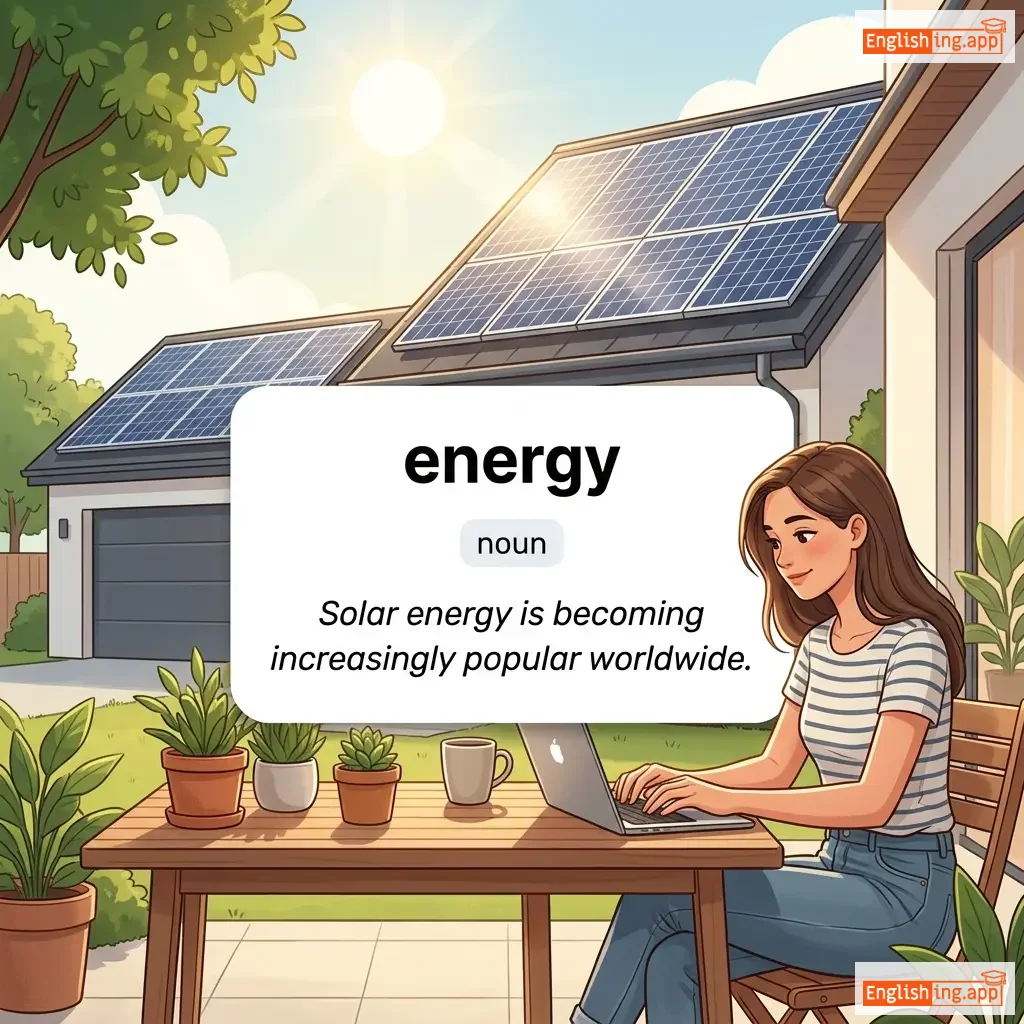
/ˈɛnərdʒi/
noun
(能源)
••••••
|
|
能源
nengyuan
••••••
|
- •••••• | - •••••• | - •••••• | - •••••• |
the capacity for activity or work; power derived from physical or chemical resources
••••••
|
Solar energy is becoming increasingly popular worldwide.
太阳能在全球变得越来越受欢迎。
••••••
|
太阳能在全球变得越来越受欢迎。
Taiyangneng zai quanqiu biande yuelaiyuelai shou huanying.
••••••
|
burst of energy
能量爆发
••••••
|
a sudden increase in physical or mental activity
••••••
|
能量爆发
nengliang baofas
••••••
|
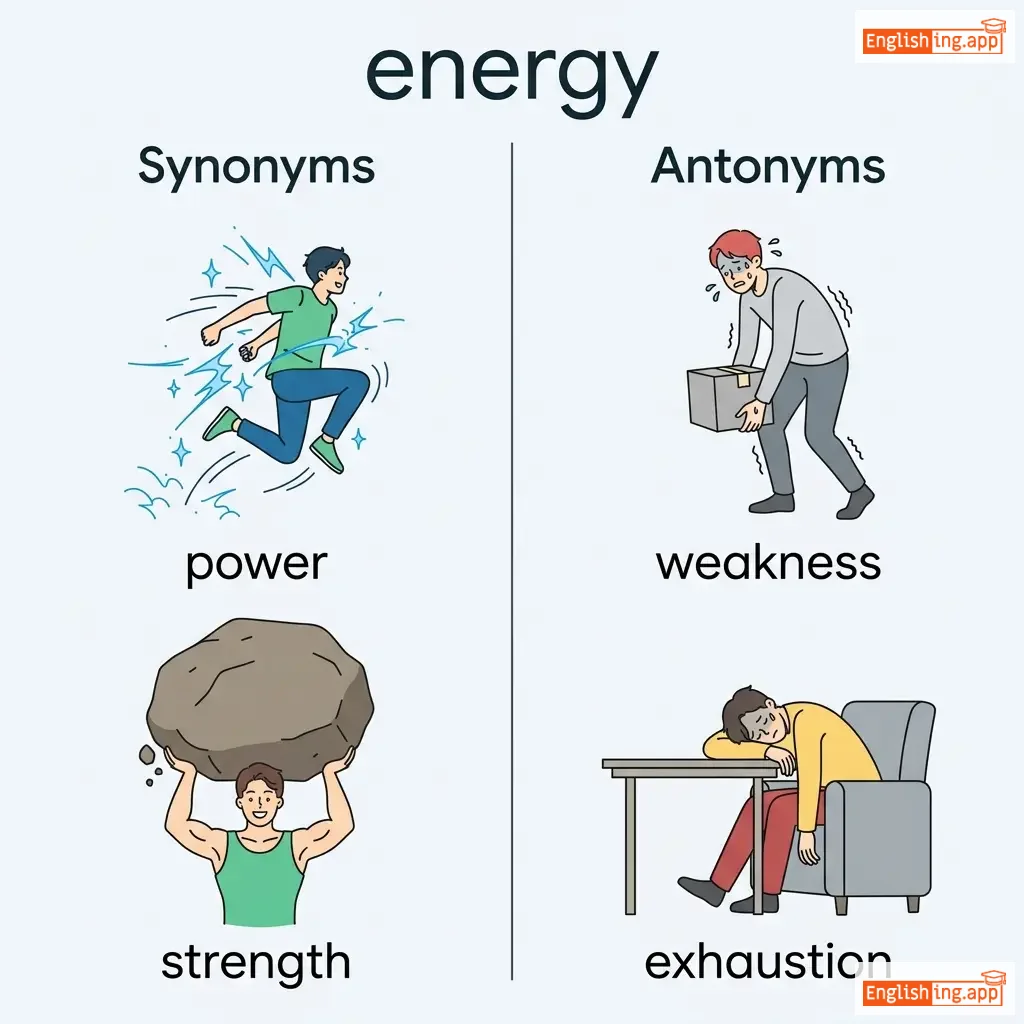
power, strength, vitality, force, vigor
••••••
|
weakness, exhaustion, fatigue
••••••
|
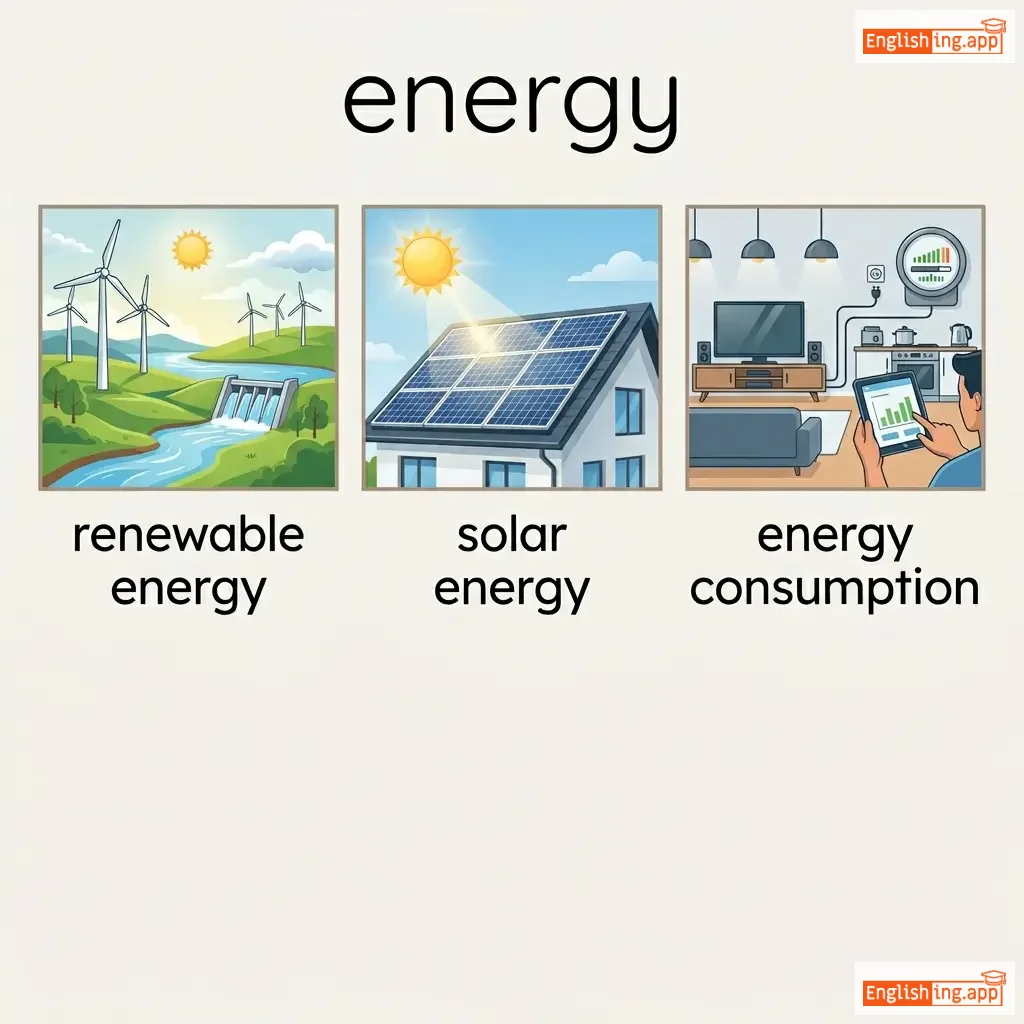
renewable energy, solar energy, energy consumption, energy level
••••••
|
Energy意味着能源 — 吃Energy饼干,得到能量。
••••••
|
|
#10894
🔓
|
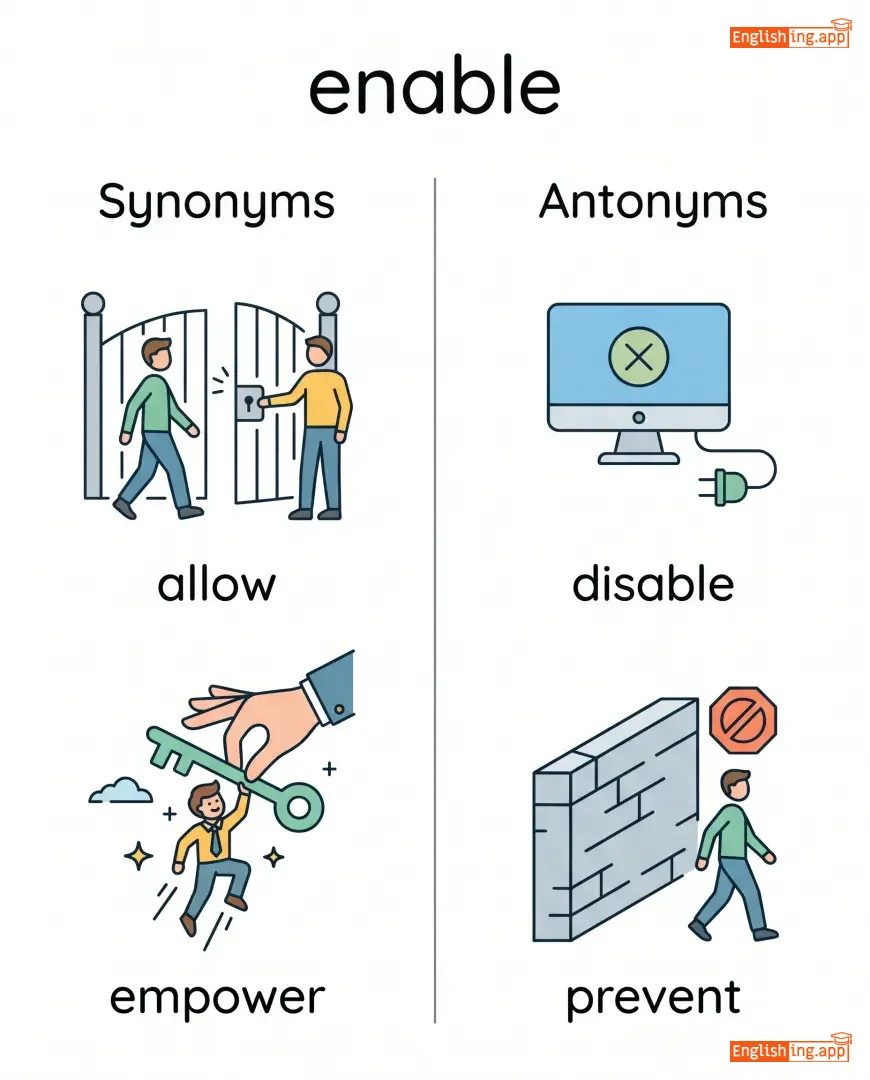
/ɪˈneɪbəl/
verb
(伊内布尔)
••••••
|
|
启用
qǐyòng
••••••
|
enabled
伊内布尔德
••••••
|
enabled
伊内布尔德
••••••
|
enables
伊内布尔斯
••••••
|
enabling
伊内布灵
••••••
|
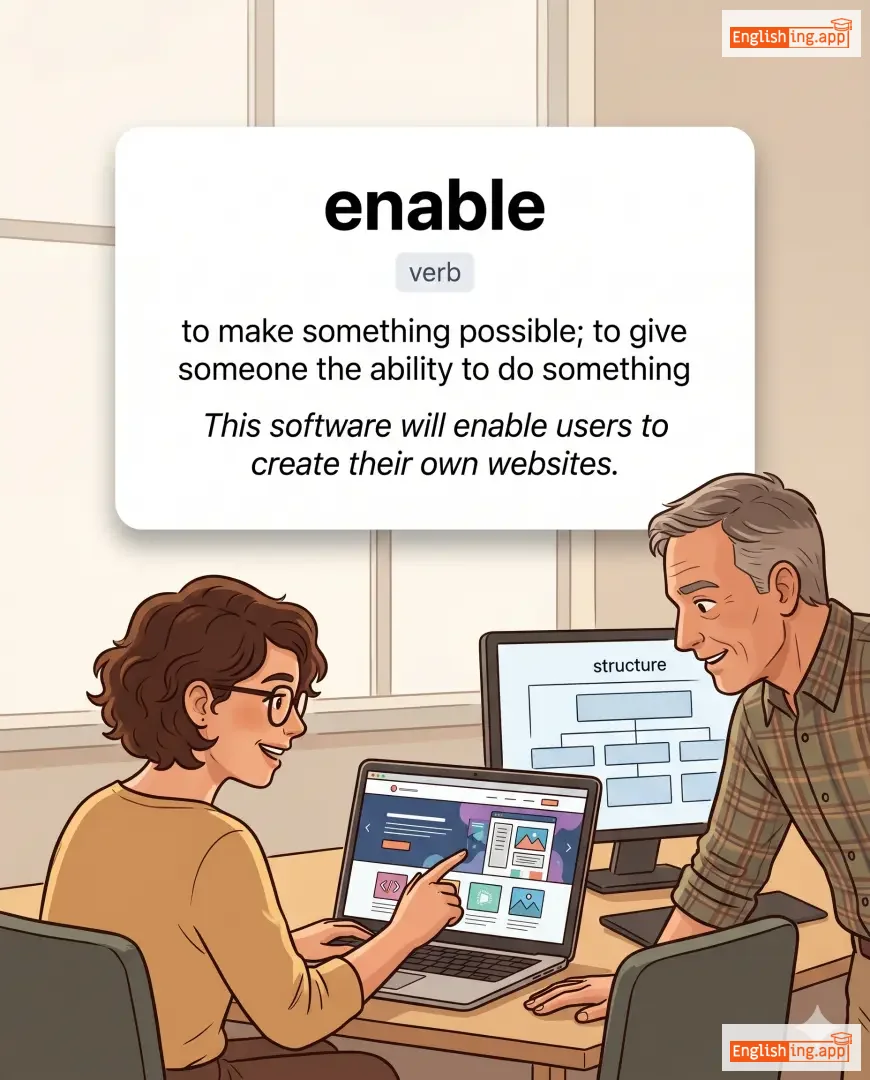
to make something possible; to give someone the ability to do something
••••••
|
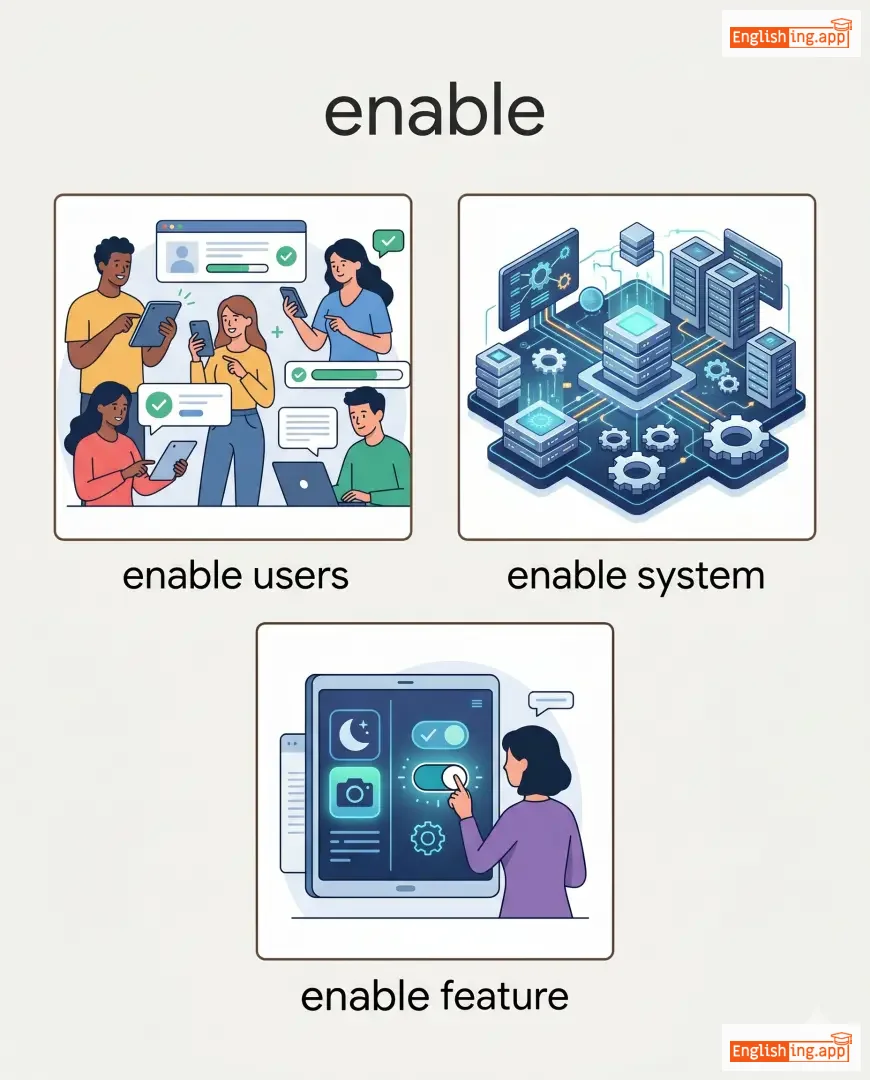
This software will enable users to create their own websites.
这个软件将使用户能够创建他们自己的网站。
••••••
|
这个软件将使用户能够创建他们自己的网站。
Zhège ruǎnjiàn jiāng shǐ yònghù nénggòu chuàngjiàn tāmen zìjǐ de wǎngzhàn.
••••••
|
enable access
启用访问
••••••
|
to provide the ability to enter or use something
••••••
|
启用访问
qǐyòng fànguān
••••••
|
allow, empower, facilitate, permit, authorize
••••••
|
disable, prevent, hinder
••••••
|
enable users, enable system, enable feature, enable access
••••••
|
Enable代表激活或启用某些功能,使其变为可能。
••••••
|
|
#10895
💼
|
/ɪmˈplɔɪmənt/
noun
(émpǔlòimènt)
••••••
|
|
就业
jiùyè
••••••
|
- •••••• | - •••••• | - •••••• | - •••••• |
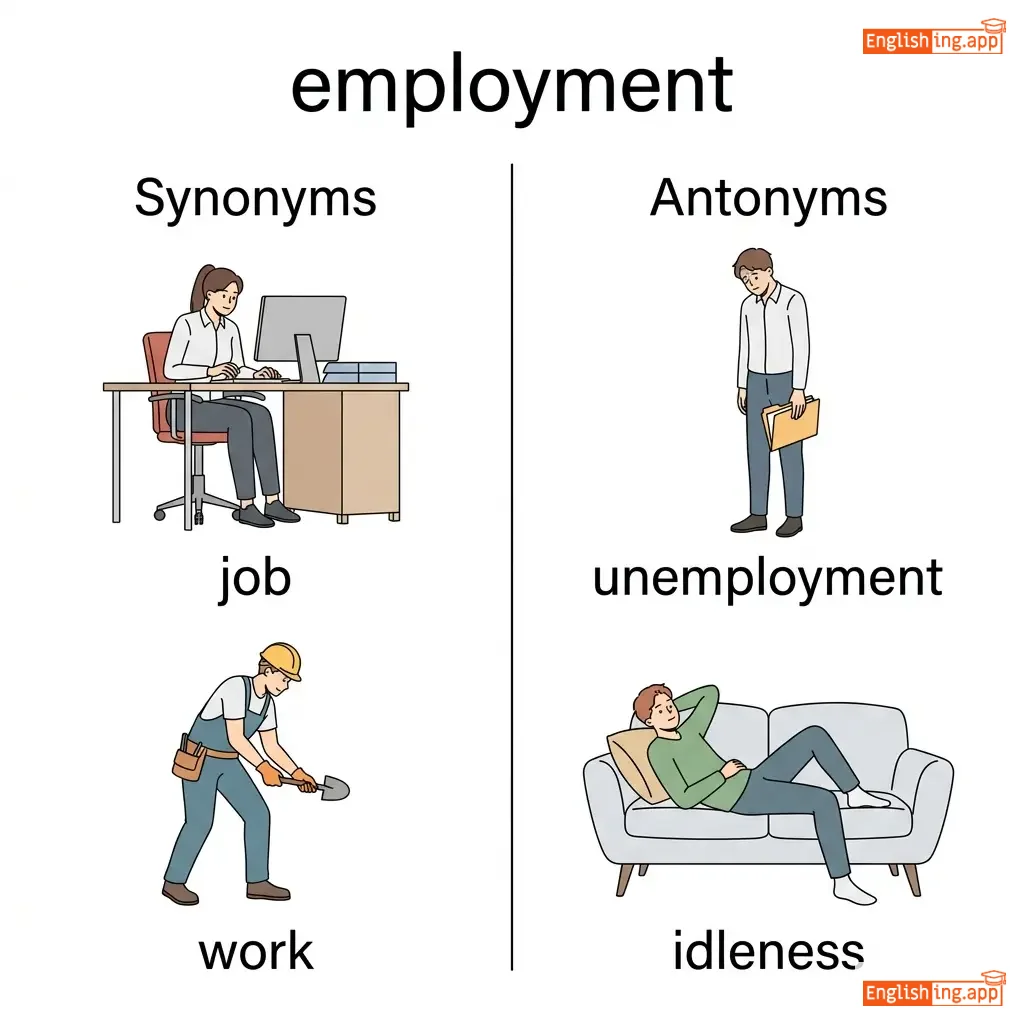
the state of having a paid job or work
••••••
|
The government is working to increase youth employment. |
政府正在努力增加青年就业机会。
zhèngfǔ zhèngzài nǔlì zēngjiā qīngnián jiùyè jīhuì.
••••••
|
full employment |
a situation where almost everyone willing to work has a job
••••••
|
充分就业
chōngfèn jiùyè
••••••
|
job, work, occupation, profession, livelihood
••••••
|
unemployment, idleness, joblessness
••••••
|
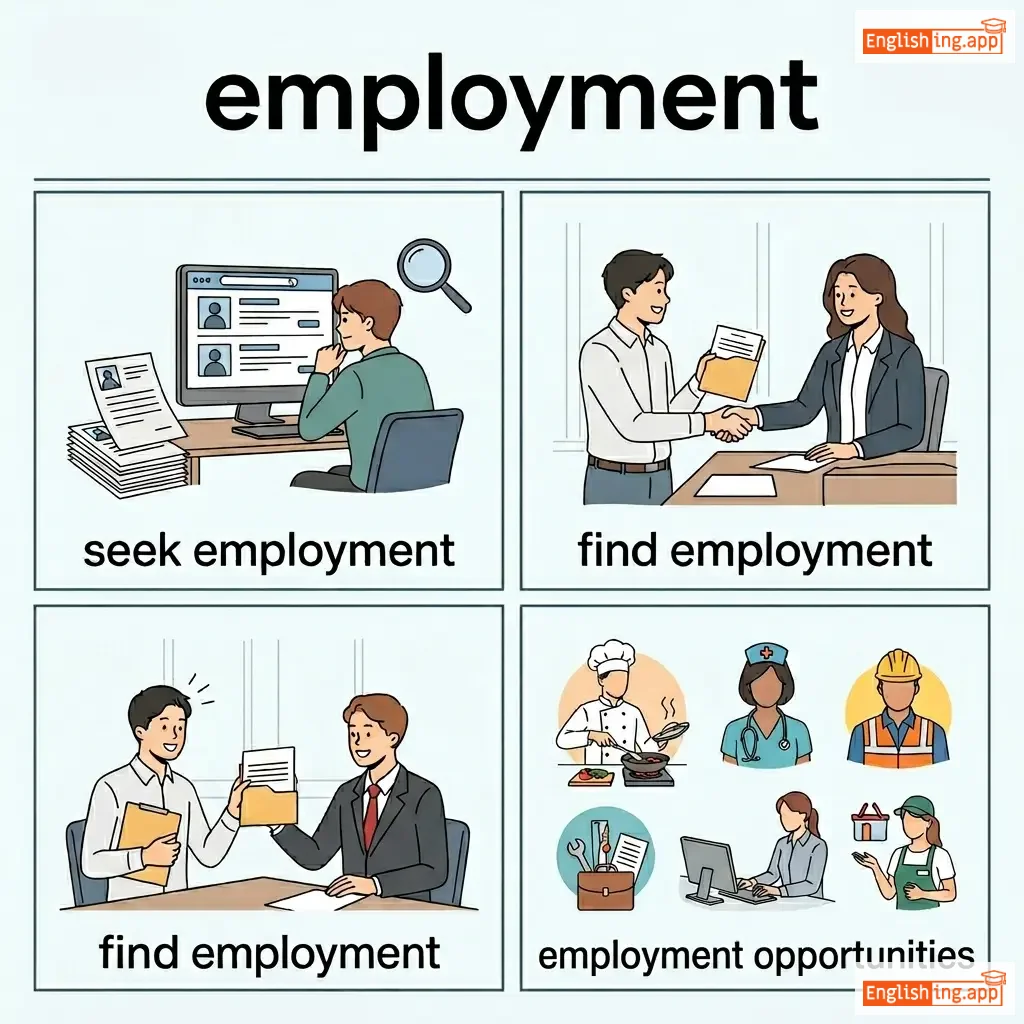
seek employment, find employment, employment opportunities, employment rate
••••••
|
就业意味着工作,工作意味着快乐。
••••••
|
|
#10896
👔
|
/ɪmˈplɔɪ/
verb
(雇用)
••••••
|
- •••••• |
雇佣
gùyōng
••••••
|
employed
雇用过
••••••
|
employed
雇用过
••••••
|
employs
雇用
••••••
|
employing
雇用中
••••••
|
to hire someone to do a job; to use something effectively
••••••
|
The company plans to employ more engineers next year.
公司计划明年雇用更多的工程师。
••••••
|
公司计划明年雇用更多的工程师。
Gōngsī jìhuà míngnián gùyòng gèng duō de gōngchéngshī.
••••••
|
gainful employment
有薪工作
••••••
|
work that provides a steady income
••••••
|
有薪工作
yǒu xīn gōngzuò
••••••
|
hire, recruit, engage, utilize, appoint
••••••
|
dismiss, fire, discharge
••••••
|
employ workers, employ staff, employ methods, employ strategies
••••••
|
Employ意味着雇佣 — 当公司雇佣,你会享受它。
••••••
|
|
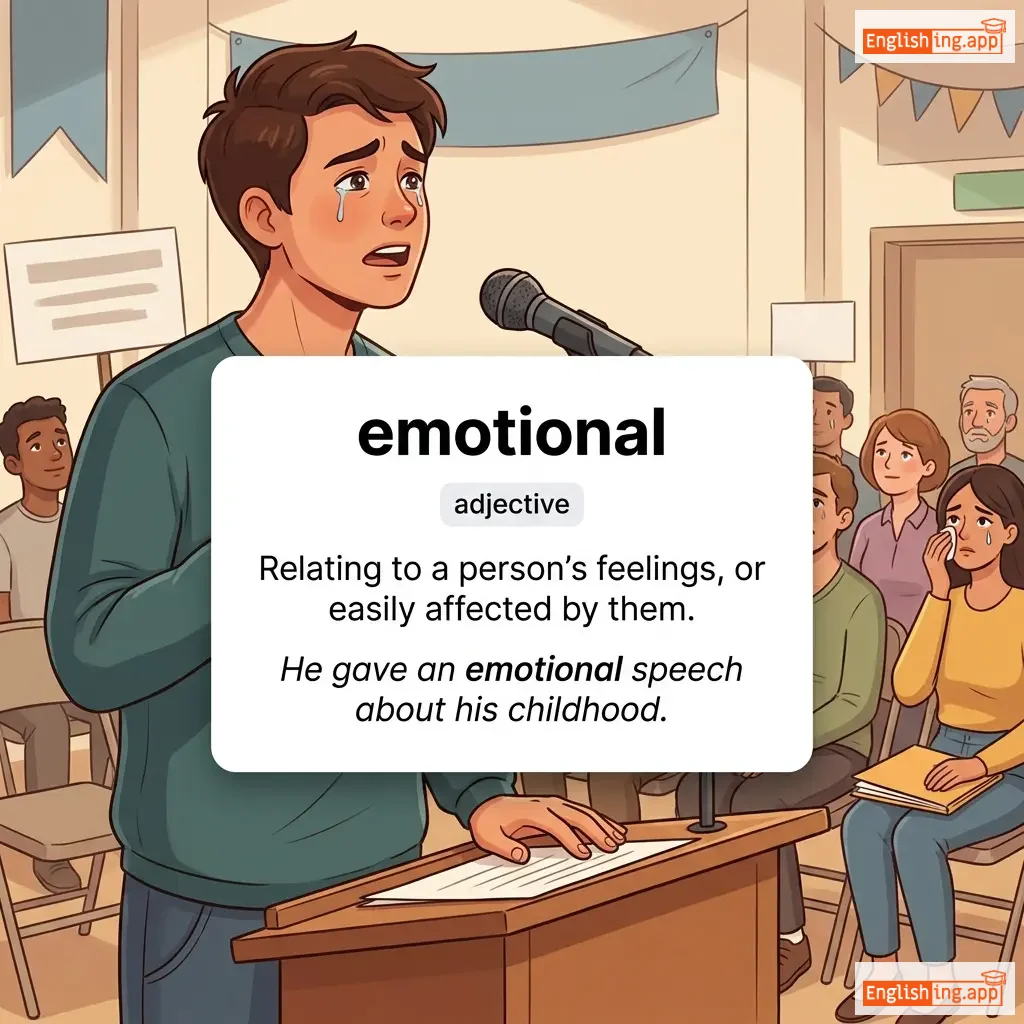
#10897
😭
|
/ɪˈmoʊʃənəl/
adjective
(情绪的)
••••••
|
|
情绪的
qíngxù de
••••••
|
- •••••• | - •••••• | - •••••• | - •••••• |
Relating to a person’s feelings, or easily affected by them.
••••••
|
He gave an emotional speech about his childhood. |
他发表了关于自己童年的情绪化演讲。
Tā fābiǎo le guānyú zìjǐ tóngnián de qíngxù huà yǎnjiǎng.
••••••
|
emotional support |
Comfort and reassurance provided to someone in distress.
••••••
|
情绪支持
qíngxù zhīchí
••••••
|
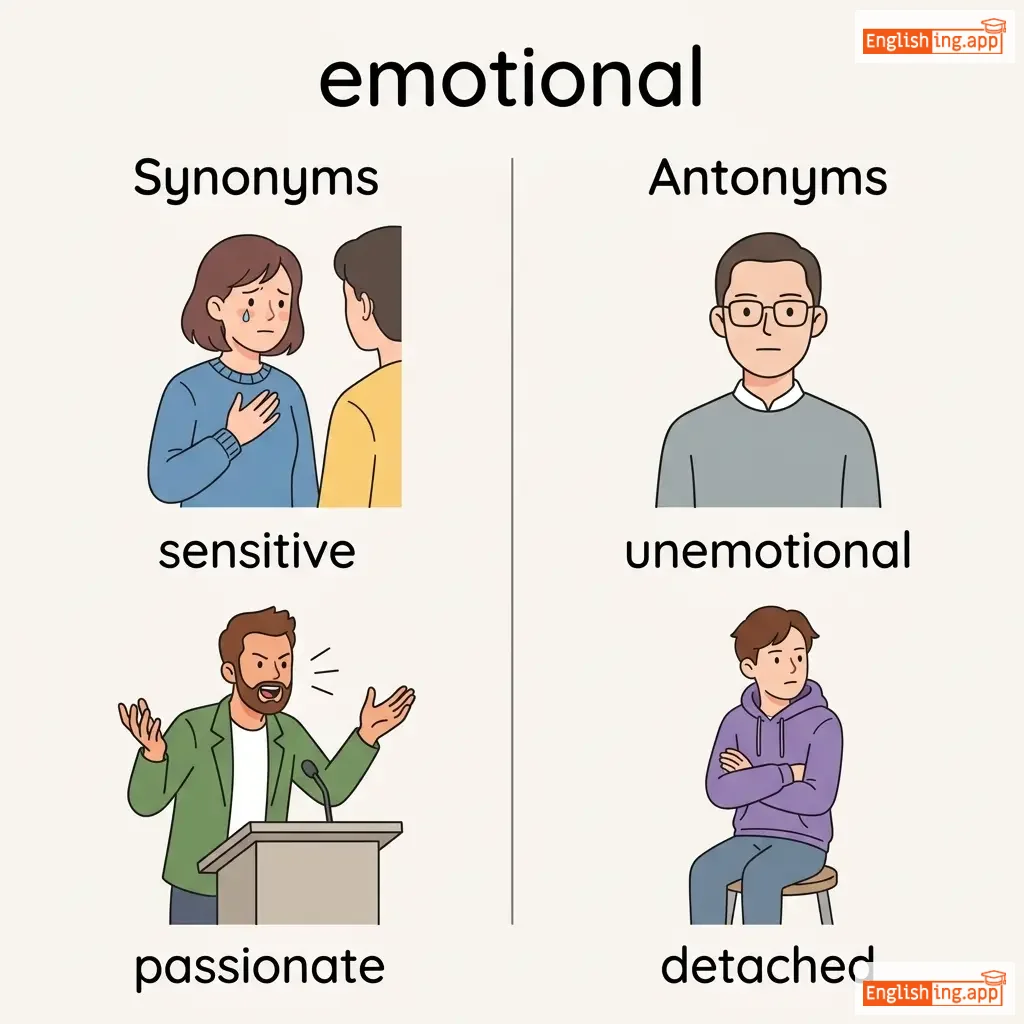
sensitive, passionate, sentimental, expressive
••••••
|
unemotional, detached, indifferent
••••••
|
emotional speech, emotional moment, emotional response, emotional support
••••••
|
Emotional = Emotion + al → 与情感相关 → 情绪的
••••••
|
|
#10898
❤️
|
/ɪˈmoʊʃən/
noun
(情感)
••••••
|
- •••••• |
情感
qinggan
••••••
|
- •••••• | - •••••• | - •••••• | - •••••• |
A strong feeling such as happiness, sadness, anger, or fear.
••••••
|
She was overwhelmed with emotion when she heard the news. |
她在听到消息时情感涌上心头。
Ta zai tingdao xiaoxi shi qinggan yong shang xintou.
••••••
|
mixed emotions |
Conflicting feelings about a situation.
••••••
|
复杂的情感
Fuza de qinggan
••••••
|
feeling, sentiment, passion, mood
••••••
|
apathy, indifference
••••••
|
show emotion, strong emotion, control emotion, express emotion
••••••
|
Emotion = E (内心的) + motion (运动) → 情感在我们内心不断运动。
••••••
|
|
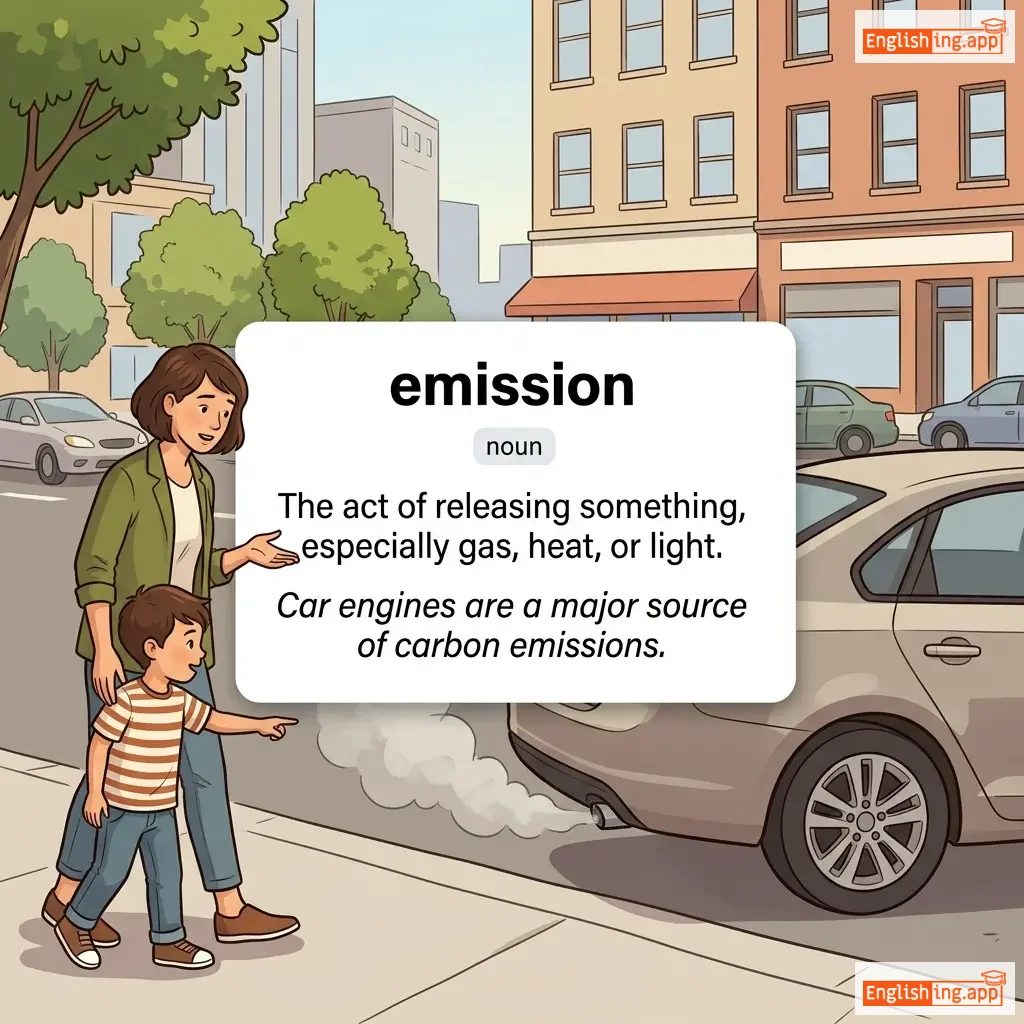
#10899
💨
|
/ɪˈmɪʃən/
noun
(emission)
••••••
|
|
排放
paifang
••••••
|
- •••••• | - •••••• | - •••••• | - •••••• |
The act of releasing something, especially gas, heat, or light.
••••••
|
Car engines are a major source of carbon emissions. |
汽车发动机是碳排放的主要来源。
Qiche fadongji shi tan paifang de zhuyao laiyuan.
••••••
|
greenhouse gas emissions |
Gases released into the atmosphere that contribute to climate change.
••••••
|
温室气体排放
wenshiti qiti paifang
••••••
|
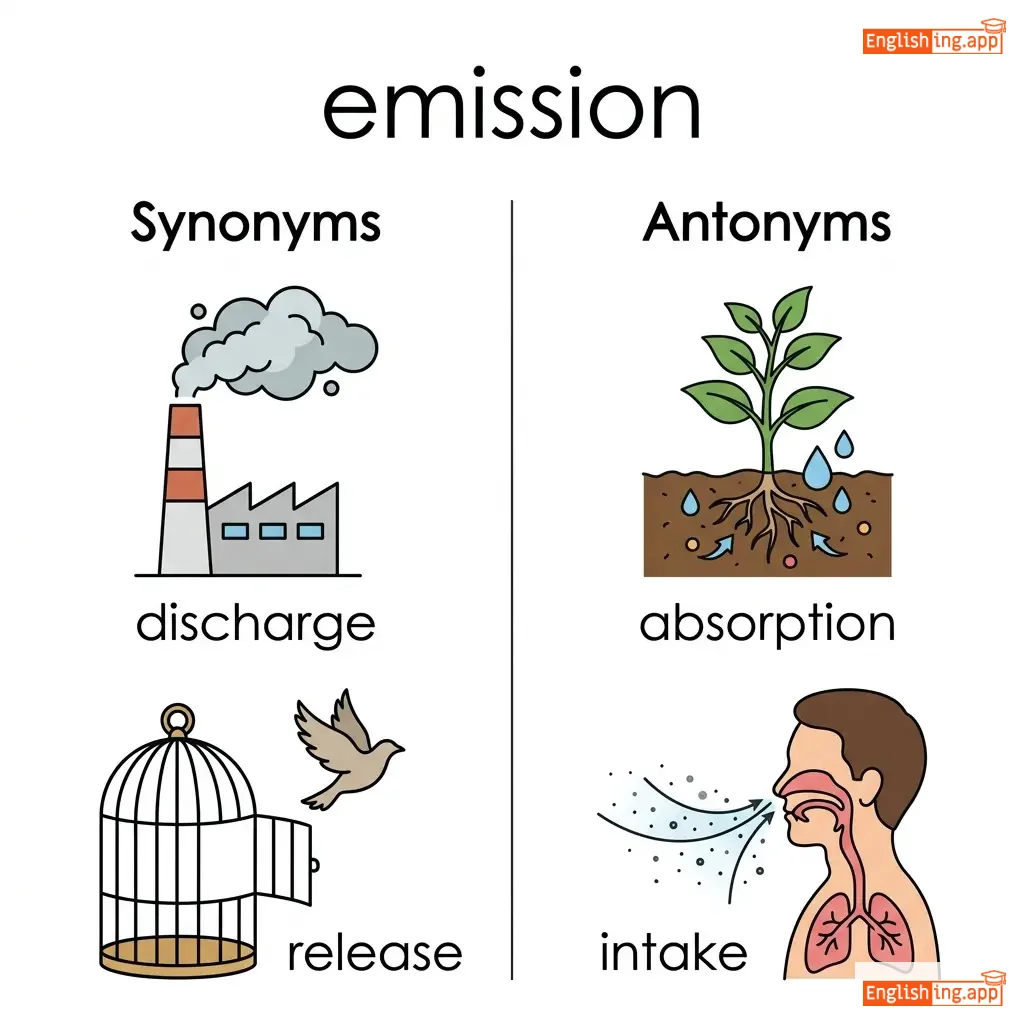
discharge, release, output, radiation
••••••
|
absorption, intake
••••••
|
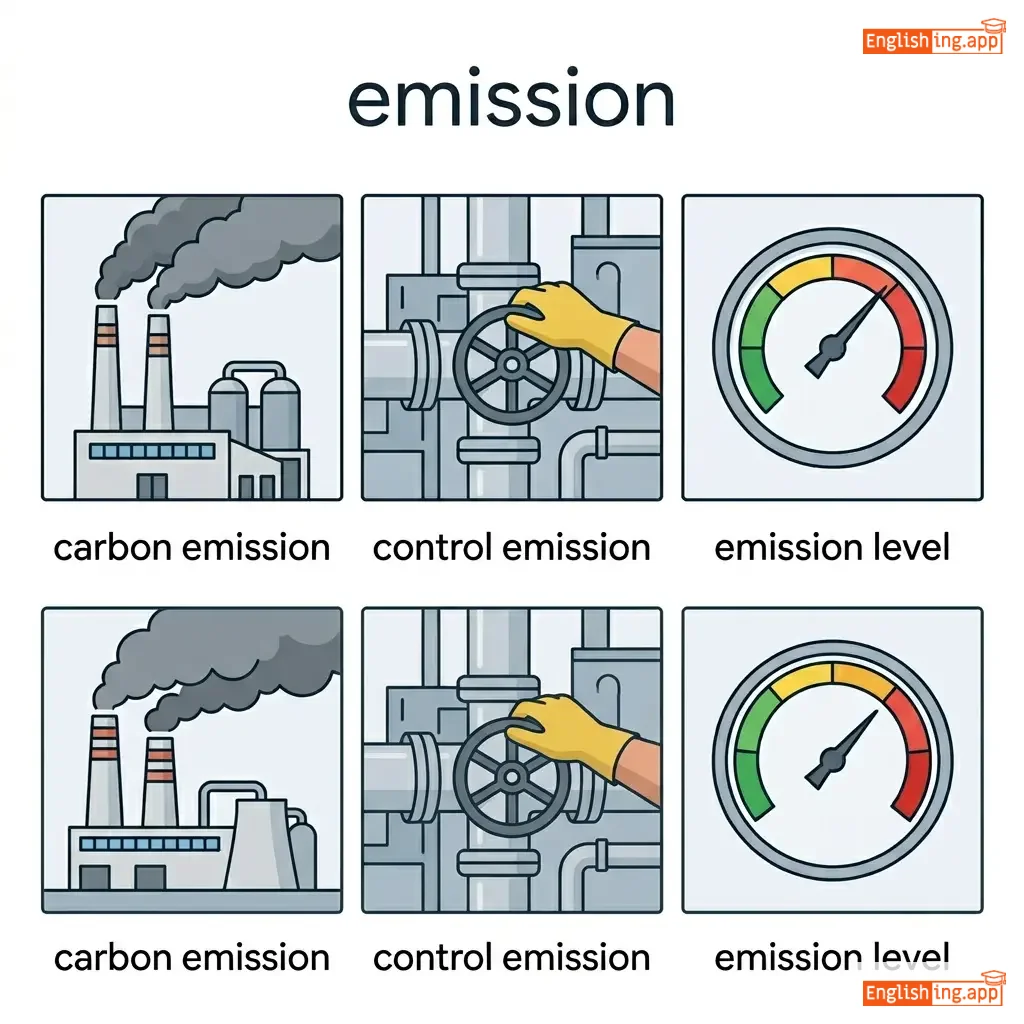
carbon emission, control emission, emission level, reduce emissions
••••••
|
Emission = Emit + fang → Emit 表示排出,排放表示释放。
••••••
|
|
#10900
👩🏫
|
/ˈɛdʒuˌkeɪtər/
noun
(教育者)
••••••
|
- •••••• |
教育工作者
jiaoyu gongzuozhe
••••••
|
- •••••• | - •••••• | - •••••• | - •••••• |
a person who provides education; a teacher or instructor
••••••
|
She is a dedicated educator who inspires her students every day. |
她是一位献身的教育工作者,每天都在激励她的学生。
Ta shi yi wei xianshen de jiaoyu gongzuozhe, meitian dou zai jili ta de xuesheng.
••••••
|
- •••••• | - •••••• | - •••••• |
teacher, instructor, mentor, trainer, tutor
••••••
|
student, pupil
••••••
|
professional educator, experienced educator, educator training, role of educator
••••••
|
Educator 意味着教师 👩🏫,需要教育工作者来进行教育。
••••••
|
|
#10901
🌍
|
/ˈɛlswɛr/
adverb
(ɛlswɛr)
••••••
|
- •••••• |
在别的地方
zài bié de dìfāng
••••••
|
- •••••• | - •••••• | - •••••• | - •••••• |
In, at, or to some other place.
••••••
|
If you can’t find it here, try looking elsewhere. |
如果你在这里找不到,试着去别的地方找找。
Rúguǒ nǐ zài zhèlǐ zhǎo bù dào, shìzhe qù bié de dìfāng zhǎo zhǎo.
••••••
|
- •••••• | - •••••• | - •••••• |
somewhere else, another place, away, outside
••••••
|
here, nearby
••••••
|
go elsewhere, look elsewhere, live elsewhere, seek elsewhere
••••••
|
Elsewhere 意思是别的地方 → 找不到这里就去别的地方找!
••••••
|
|
#10902
➕
|
/ɛls/
adverb
(ěr sī)
••••••
|
- •••••• |
还有别的吗
hái yǒu bié de ma
••••••
|
- •••••• | - •••••• | - •••••• | - •••••• |
In addition; besides.
••••••
|
Is there anything else you need? |
你还需要其他的吗?
Nǐ hái xūyào qítā de ma?
••••••
|
or else |
Used to warn of unpleasant consequences if something is not done.
••••••
|
否则
fǒu zé
••••••
|
besides, otherwise, additionally, furthermore
••••••
|
nothing, none
••••••
|
anything else, someone else, somewhere else, nothing else
••••••
|
Else 意思是还有别的 ➕ - 就像 'anything else?' 意味着 '还有别的东西吗?'
••••••
|
|
#10903
👑
|
/ɪˈliːt/ or /eɪˈliːt/
noun
(精英)
••••••
|
- •••••• |
精英
jing ying
••••••
|
- •••••• | - •••••• | - •••••• | - •••••• |
A select group that is superior in terms of ability or qualities.
••••••
|
Only the elite were invited to the exclusive event. |
只有精英才被邀请参加独家活动。
Zhi you jing ying cai bei yaoqing canjia dujia huodong.
••••••
|
social elite |
The most powerful or influential members of society.
••••••
|
社会精英
Shehui jing ying
••••••
|
aristocracy, upper class, nobility, high society
••••••
|
commoners, masses
••••••
|
elite group, elite class, elite athlete, elite institution
••••••
|
精英就像VIP一样,都是特别的存在。
••••••
|
|
#10904
💻
|
/ɪˌlɛkˈtrɒnɪk/
adjective
(电子的)
••••••
|
- •••••• |
电子的
dianzi de
••••••
|
- •••••• | - •••••• | - •••••• | - •••••• |
Operating with or produced by the use of electronic devices.
••••••
|
She bought an electronic keyboard for her music lessons. |
她为她的音乐课买了一台电子键盘。
Tā wèi tā de yīnyuè kè mǎile yī tái diànzǐ jiànpán.
••••••
|
electronic device |
A device that operates using electronic circuits.
••••••
|
电子设备
diànzǐ shèbèi
••••••
|
digital, automated, computerized, high-tech
••••••
|
manual, mechanical
••••••
|
electronic device, electronic music, electronic mail, electronic circuit
••••••
|
Electronic device意味着电子设备 - 就像手机 📱。
••••••
|
|
#10905
🔌
|
/ɪˌlɛkˈtrɪsɪti/
noun
(电力)
••••••
|
- •••••• |
电力
dianli
••••••
|
- •••••• | - •••••• | - •••••• | - •••••• |
A form of energy resulting from the existence of charged particles.
••••••
|
The storm caused a power cut and we had no electricity. |
风暴导致了停电,我们没有电力。
Fengbao daozhi le tingdian, women meiyou dianli.
••••••
|
generate electricity |
To produce electrical power.
••••••
|
产生电力
Chansheng dianli
••••••
|
power, energy, current, charge
••••••
|
darkness, powerlessness
••••••
|
electricity supply, electricity bill, electricity generation, electricity consumption
••••••
|
电力意味着能量,记住灯和风扇需要电力。
••••••
|
|
#10906
⚡
|
/ɪˈlɛktrɪk/
adjective
(电的)
••••••
|
- •••••• |
电的
diàn de
••••••
|
- •••••• | - •••••• | - •••••• | - •••••• |
Relating to or operated by electricity.
••••••
|
The room was lit by an electric lamp. |
房间里用电灯照明。
Fángjiān lǐ yòng diàndēng zhàomíng.
••••••
|
electric atmosphere |
A highly charged or exciting environment.
••••••
|
电气氛围
diàn qì fēnwéi
••••••
|
powered, charged, energized, electronic
••••••
|
manual, mechanical
••••••
|
electric car, electric power, electric shock, electric current
••••••
|
Electric意味着电 ⚡, 记住,灯或风扇是用电运行的。
••••••
|
|
#10907
🗳️
|
/ɪˈlɛkʃən/
noun
(选举)
••••••
|
- •••••• |
选举
xuanju
••••••
|
- •••••• | - •••••• | - •••••• | - •••••• |
The process of choosing someone for public office by voting.
••••••
|
The election will be held next month. |
选举将在下个月举行。
Xuanju jiang zai xiage yue juxing.
••••••
|
election fever |
Excitement and activity surrounding an upcoming election.
••••••
|
选举热潮
Xuanju rechao
••••••
|
vote, poll, ballot, selection, referendum
••••••
|
appointment, selection without voting
••••••
|
general election, presidential election, election campaign, election results
••••••
|
Election 是选举 - 投票参加选举,成为选举的一部分。
••••••
|
|
#10908
🗳️
|
/ɪˈlɛkt/
verb
(选举)
••••••
|
- •••••• |
选举
xuǎnjǔ
••••••
|
elected
当选
••••••
|
elected
当选
••••••
|
elects
选举
••••••
|
electing
选举
••••••
|
To choose someone for a position or office by voting.
••••••
|
The citizens elected a new president.
公民选举了新总统。
••••••
|
公民选举了新总统。
Gōngmín xuǎnjǔle xīn zǒngtǒng.
••••••
|
elect to
选择做
••••••
|
To choose or decide to do something.
••••••
|
选择做
xuǎnzé zuò
••••••
|
choose, vote, select, appoint, pick
••••••
|
reject, dismiss, refuse
••••••
|
elect president, elect leader, elect representative, elect officials
••••••
|
选举 = 选择选。
••••••
|
|
#10909
👴
|
/ˈɛldərli/
adjective
(艾尔德利)
••••••
|
- •••••• |
老年
laonian
••••••
|
- •••••• | - •••••• | - •••••• | - •••••• |
Being old or advanced in years.
••••••
|
The elderly man walks slowly across the street. |
那位老年人慢慢地穿过街道。
Na wei laonian ren man man de chuan guo jiedao.
••••••
|
- •••••• | - •••••• | - •••••• |
aged, senior, old, elderly person, retired
••••••
|
young, youthful
••••••
|
elderly people, elderly care, elderly population, elderly woman
••••••
|
Elderly意味着 Elder + ly,Elder意味着老年人。
••••••
|
|
#10910
↔️
|
/ˈaɪðər/ or /ˈiːðər/
determiner/pronoun/conjunction/adverb
(艾瑟尔)
••••••
|
- •••••• |
任一
renyi
••••••
|
- •••••• | - •••••• | - •••••• | - •••••• |
Used to indicate a choice between two alternatives.
••••••
|
You can either call me tonight or send me an email. |
你可以今晚打电话给我,或者给我发电子邮件。
Nǐ kěyǐ jīnwǎn dǎ diànhuà gěi wǒ, huòzhě gěi wǒ fā diànzǐ yóujiàn.
••••••
|
either way |
Whatever happens, the result will be acceptable.
••••••
|
不管怎样
bùguǎn zěnyàng
••••••
|
one, the one, any of the two, alternative
••••••
|
neither
••••••
|
either side, either way, either option, either choice
••••••
|
Either意味着任一,就像是茶或咖啡,任一都行。
••••••
|
|
#10911
8️⃣
|
/eɪt/
number
(eɪt)
••••••
|
- •••••• |
八
ba
••••••
|
- •••••• | - •••••• | - •••••• | - •••••• |
The number equivalent to the product of two and four; one more than seven.
••••••
|
There are eight apples in the basket. |
篮子里有八个苹果。
Lanzi li you ba ge pingguo.
••••••
|
behind the eight ball |
In a difficult or unfavorable situation.
••••••
|
处于困难境地
Chuyu kunnan jingdi
••••••
|
octet, VIII, set of eight, group of eight
••••••
|
seven, nine
••••••
|
eight years, eight times, group of eight, eight people
••••••
|
八和数字八相同。
••••••
|
|
#10912
🥚
|
/ɛɡ/
noun
(eg)
••••••
|
- •••••• |
蛋
dan
••••••
|
- •••••• | - •••••• | - •••••• | - •••••• |
an oval or round object laid by a female bird, often eaten as food
••••••
|
She had a boiled egg for breakfast. |
她早餐吃了一个煮鸡蛋。
Ta zao can chi le yi ge zhu ji dan.
••••••
|
put all your eggs in one basket |
to risk everything on a single plan or opportunity
••••••
|
不要把所有的鸡蛋放在一个篮子里
Bu yao ba suo you de ji dan fang zai yi ge lan zi li
••••••
|
ovum, embryo, yolk, shell
••••••
|
sperm, chick
••••••
|
boiled egg, fried egg, egg yolk, egg shell
••••••
|
Egg 🥚 代表蛋,记住'早餐吃蛋'。
••••••
|
|
#10913
💪
|
/ˈɛfərt/
noun
(èfóte)
••••••
|
- •••••• |
努力
nǔlì
••••••
|
- •••••• | - •••••• | - •••••• | - •••••• |
the use of physical or mental energy to do something; attempt
••••••
|
He made a great effort to improve his English skills. |
他付出了巨大的努力来提高他的英语技能。
Tā fùchūle jùdà de nǔlì lái tígāo tā de yīngyǔ jìnéng.
••••••
|
make an effort |
to try hard to achieve something
••••••
|
努力尝试
nǔlì chángshì
••••••
|
attempt, endeavor, exertion, struggle, work
••••••
|
inaction, laziness, neglect
••••••
|
make an effort, huge effort, joint effort, physical effort
••••••
|
Effort带来成功,努力 (nǔlì) 是不可缺少的。
••••••
|
|
#10914
✅
|
/ɪˈfɛktɪvli/
adverb
(yǐxiàoli)
••••••
|
- •••••• |
有效地
youxiao de
••••••
|
- •••••• | - •••••• | - •••••• | - •••••• |
in a way that produces the desired result; efficiently and successfully
••••••
|
The team worked together effectively to finish the project on time. |
团队有效地合作,按时完成了项目。
Tuandui youxiao de hezuo, anshi wancheng le xiangmu.
••••••
|
- •••••• | - •••••• | - •••••• |
efficiently, successfully, productively, powerfully
••••••
|
ineffectively, poorly, weakly
••••••
|
work effectively, communicate effectively, manage effectively, use effectively
••••••
|
Effective 代表成功,而 effectively 代表 ✅ 高效地完成任务。
••••••
|
Vocabulary Quiz
Test your vocabulary by matching words with their translations or meanings.
Login to take the quiz
Comments (0)
Share your thoughts and join the discussion.
Join the discussion by logging in
Login to CommentNo comments yet
Be the first to share your thoughts!